Kerala Fish Fry: One Whole Fish, a Red Spice Paste, and Hot Oil
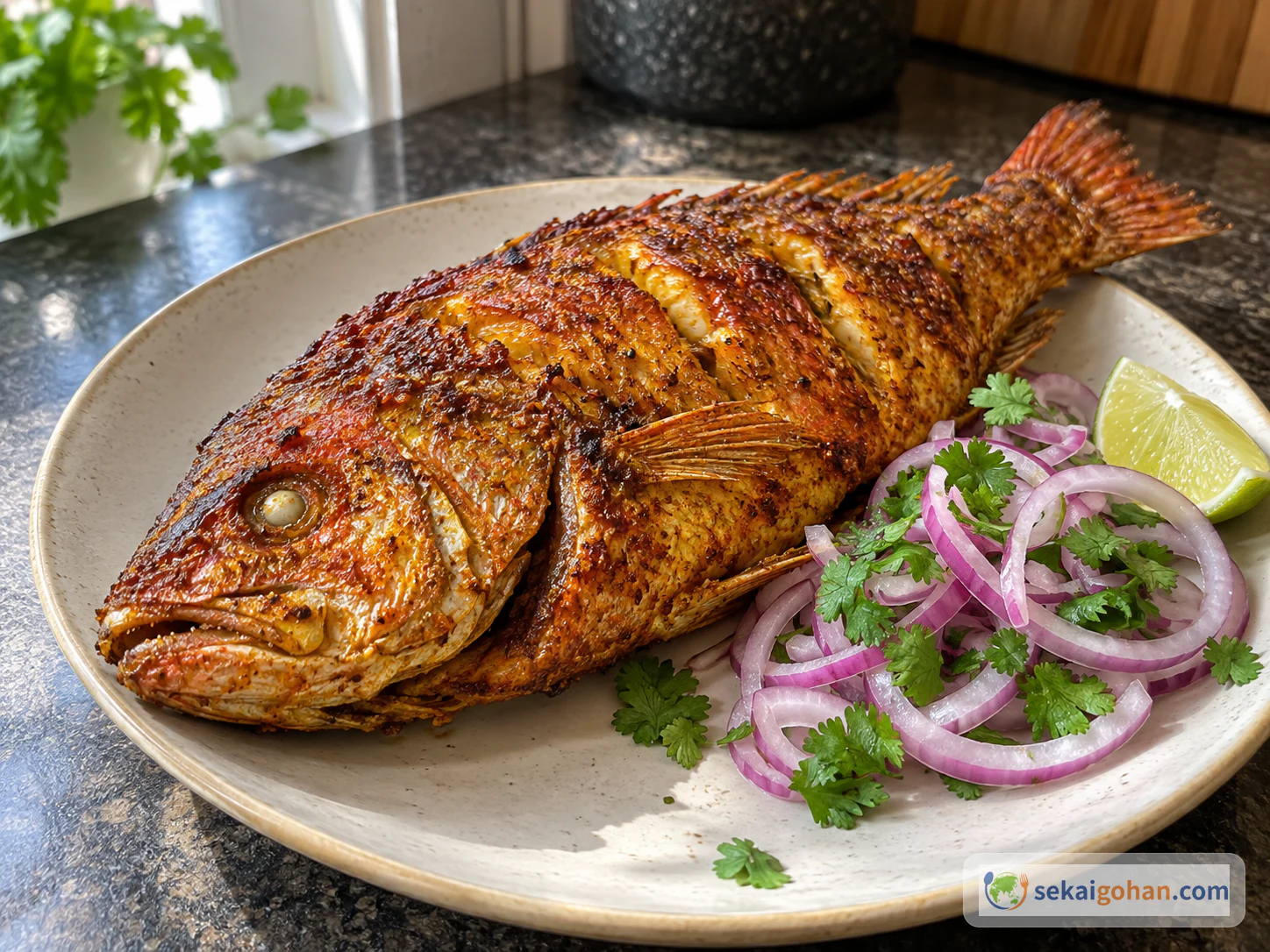
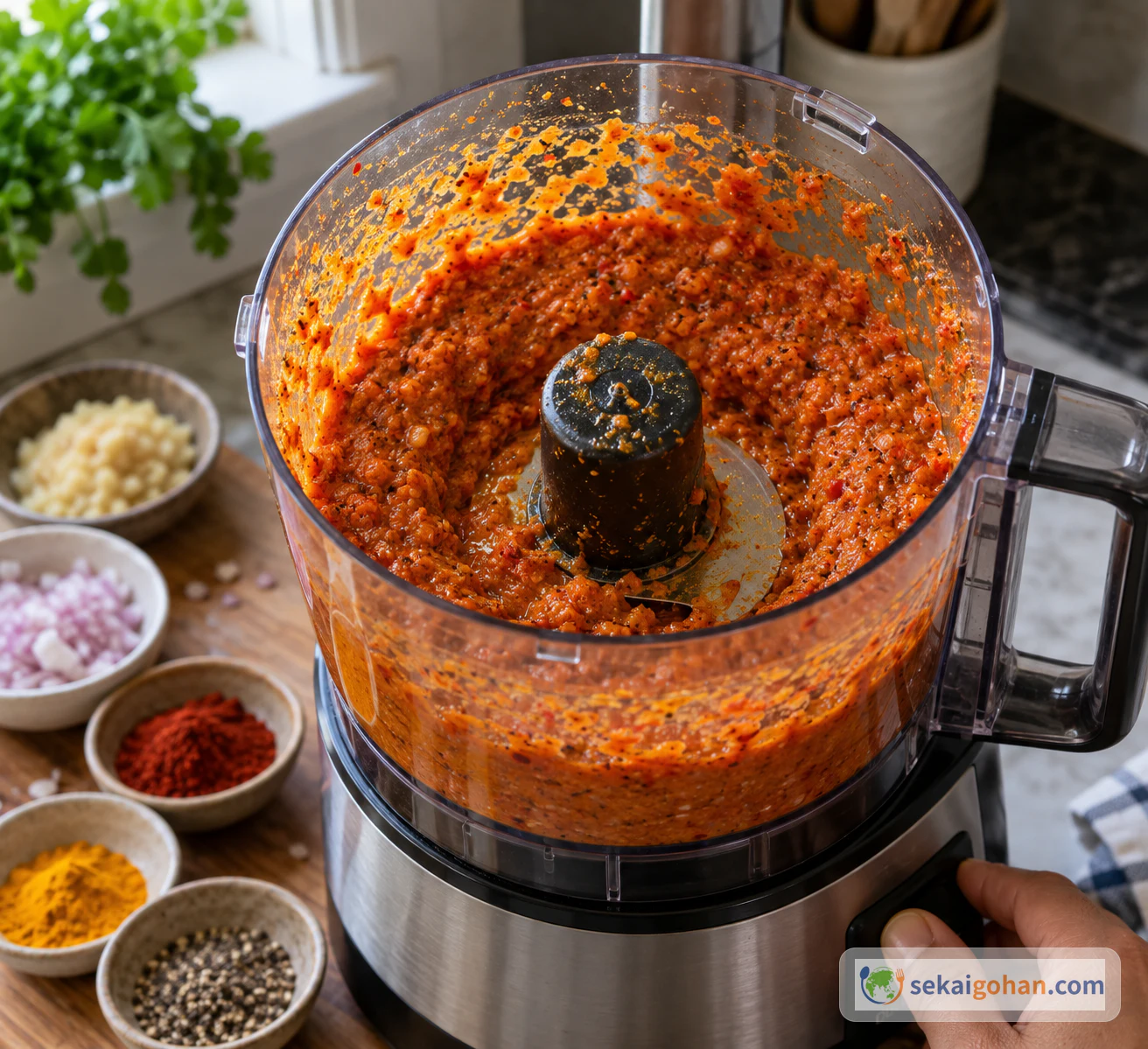
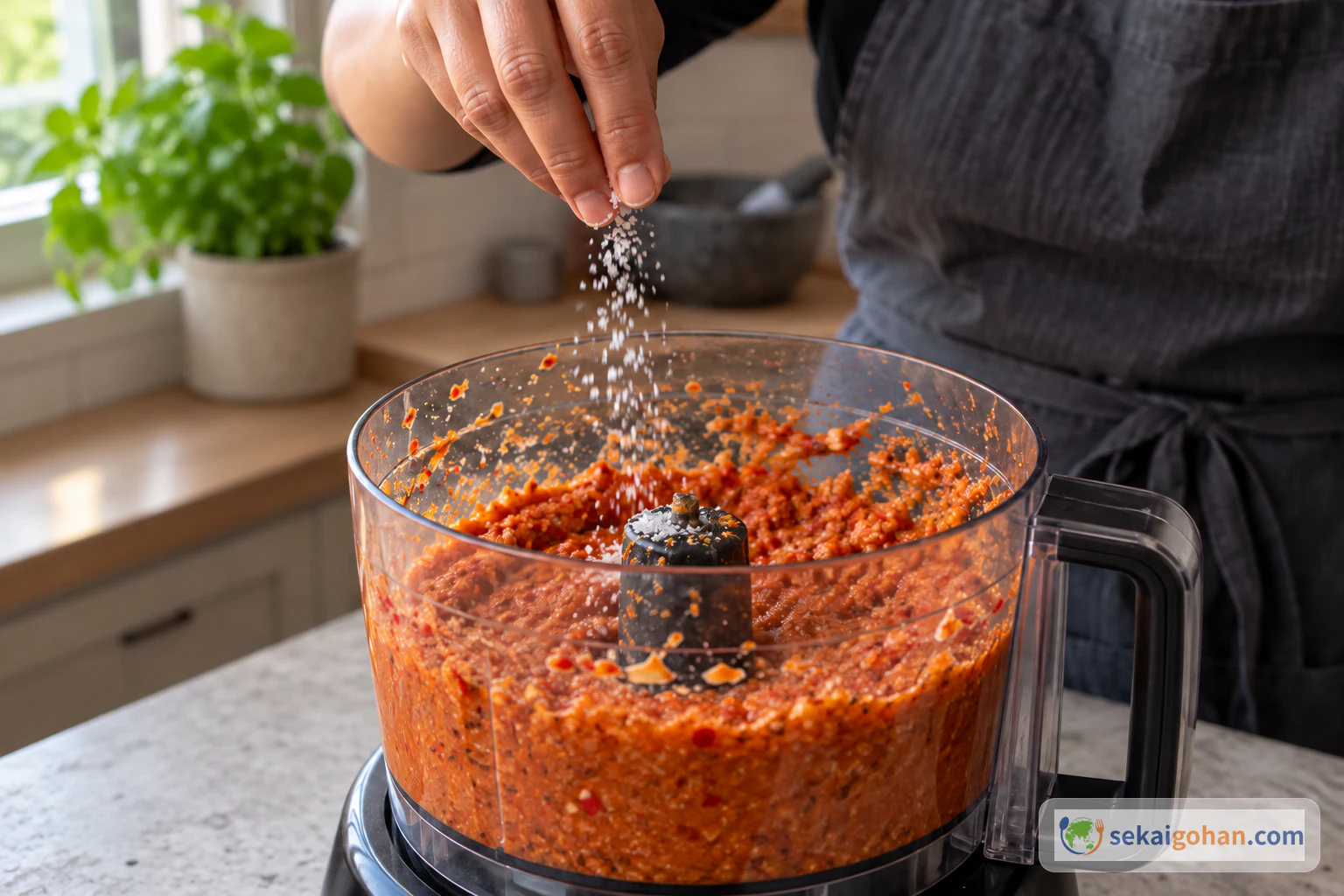
One whole cleaned fish with shallow cuts in the skin, a short marinade of ginger-garlic paste, shallot, vinegar and ground spices, a light rice-flour dredge, and a deep fry in coconut and vegetable oil. Red onion, cilantro and lime go on the plate. Nothing more.
In the headnote to this recipe on Food Network, chef Maneet Chauhan recalls her university days: an inexpensive plate of fried fish eaten at a beach, and the smell of frying fish that drew her in near a train station. That is her own memory, and it is the starting point for this article. It is not a description of how everyone in Kerala eats fish fry.
This article follows a single published recipe: the "Kerala Fish Fry" credited to Maneet Chauhan on Food Network, adapted and reprinted there from Chaat by Maneet Chauhan and Jody Eddy (Clarkson Potter, 2020). Its quantities, order and timings are kept as they are. The recipe serves four and is built around one whole cleaned red snapper of about 1 lb (approximately 450 g). Food Network lists about 1 hour 5 minutes in all, including the 30-minute chilled marinade, with 35 minutes of active time.
This recipe has not been kitchen-tested by Sekai Gohan.
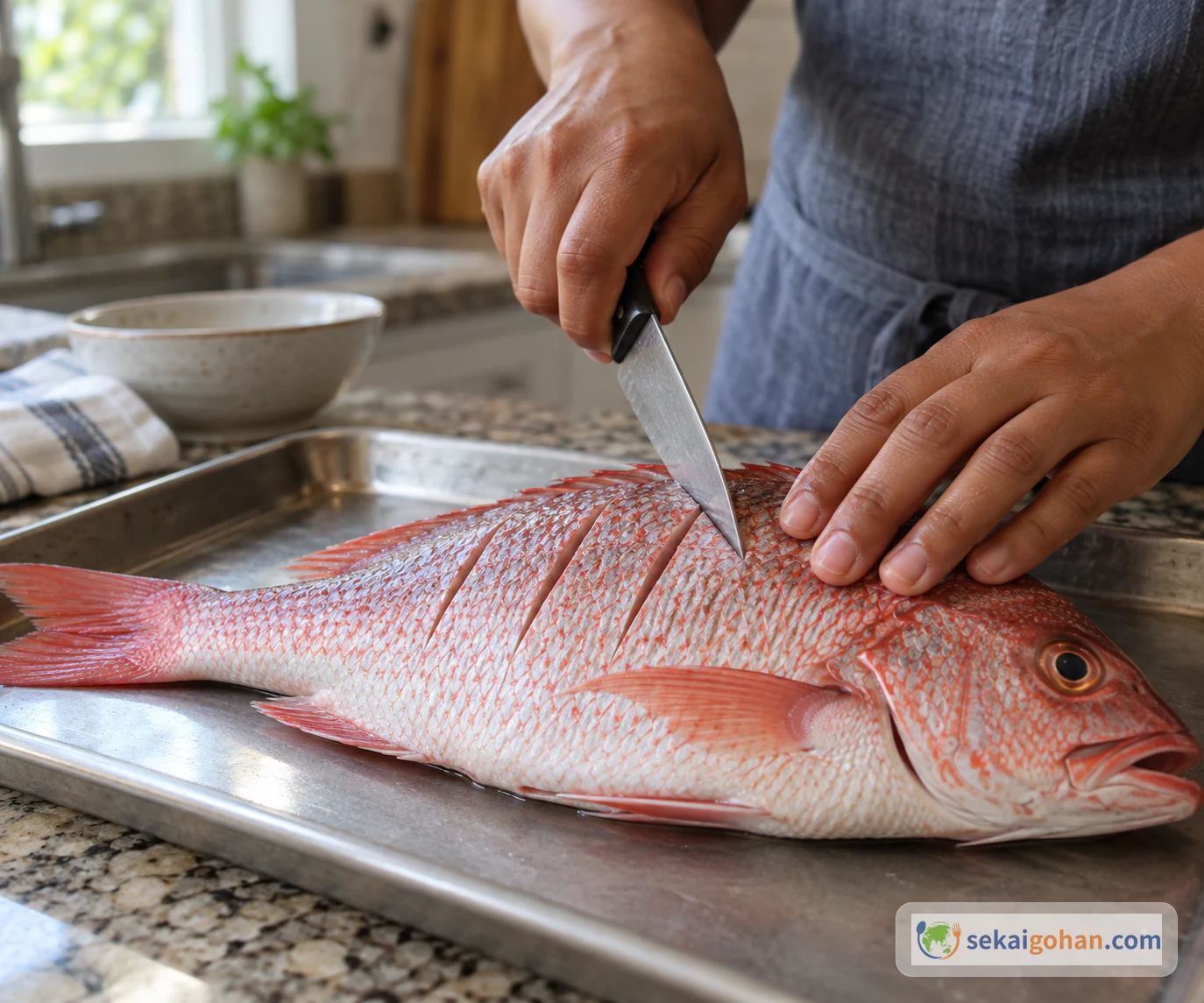
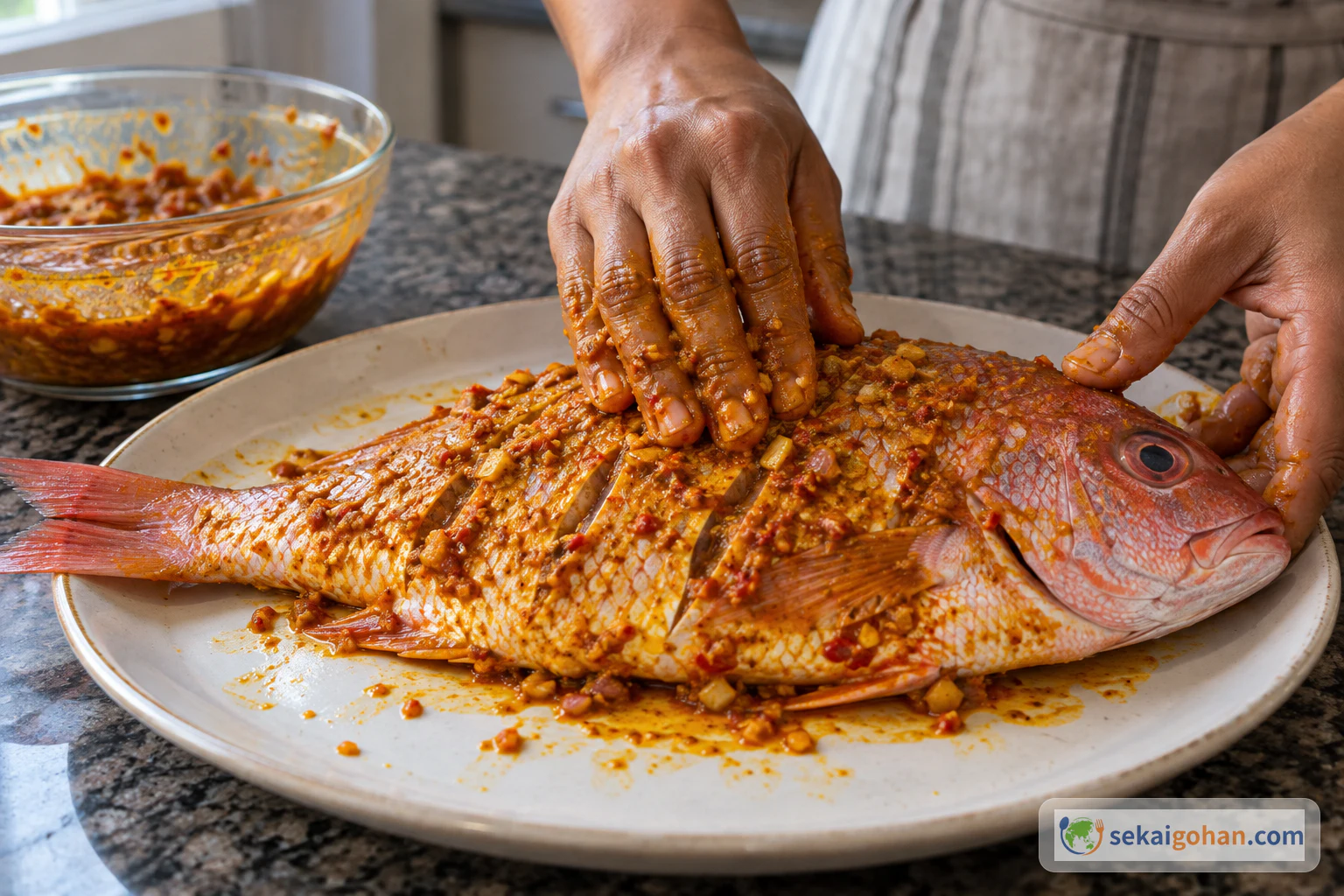
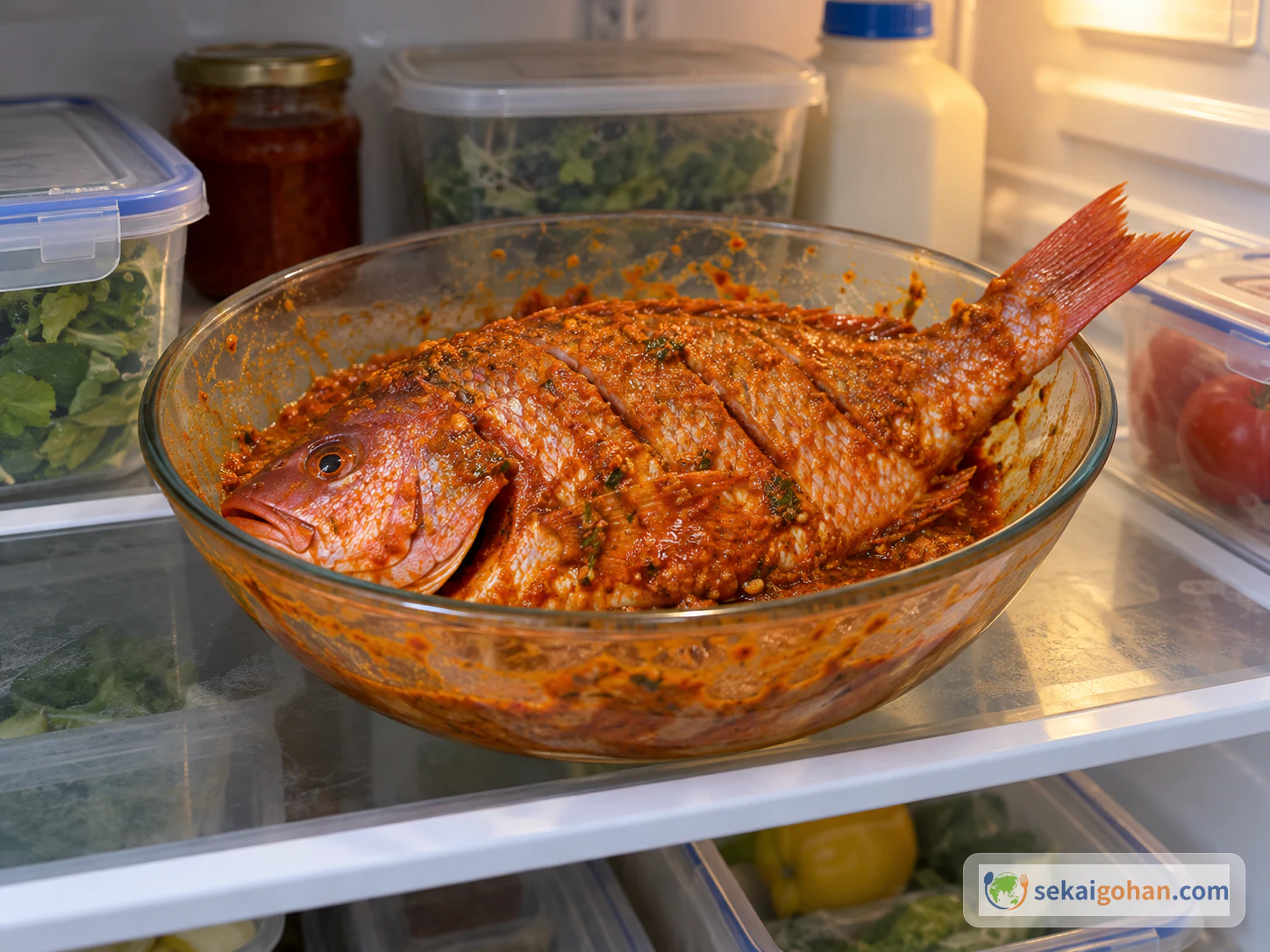
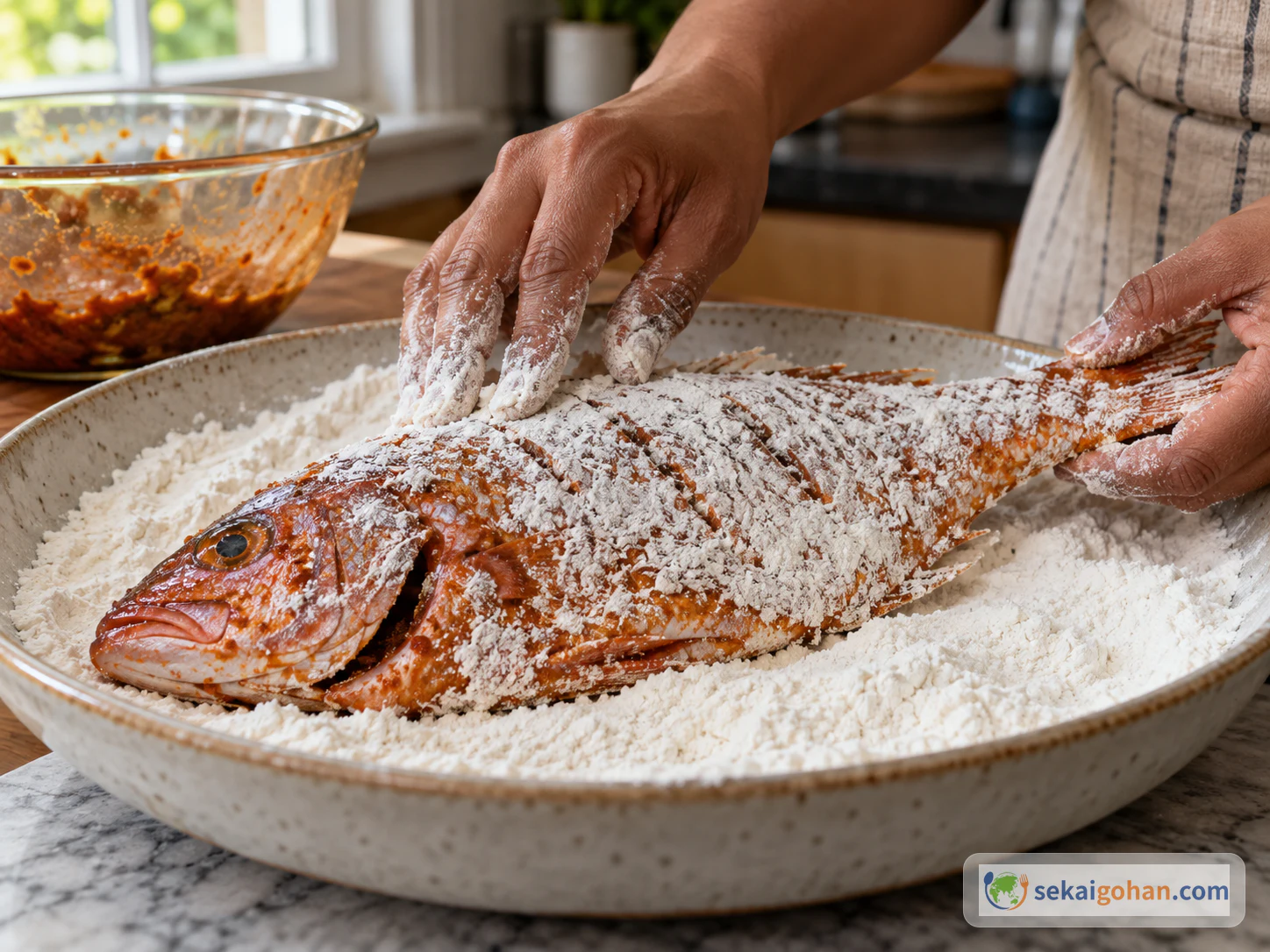
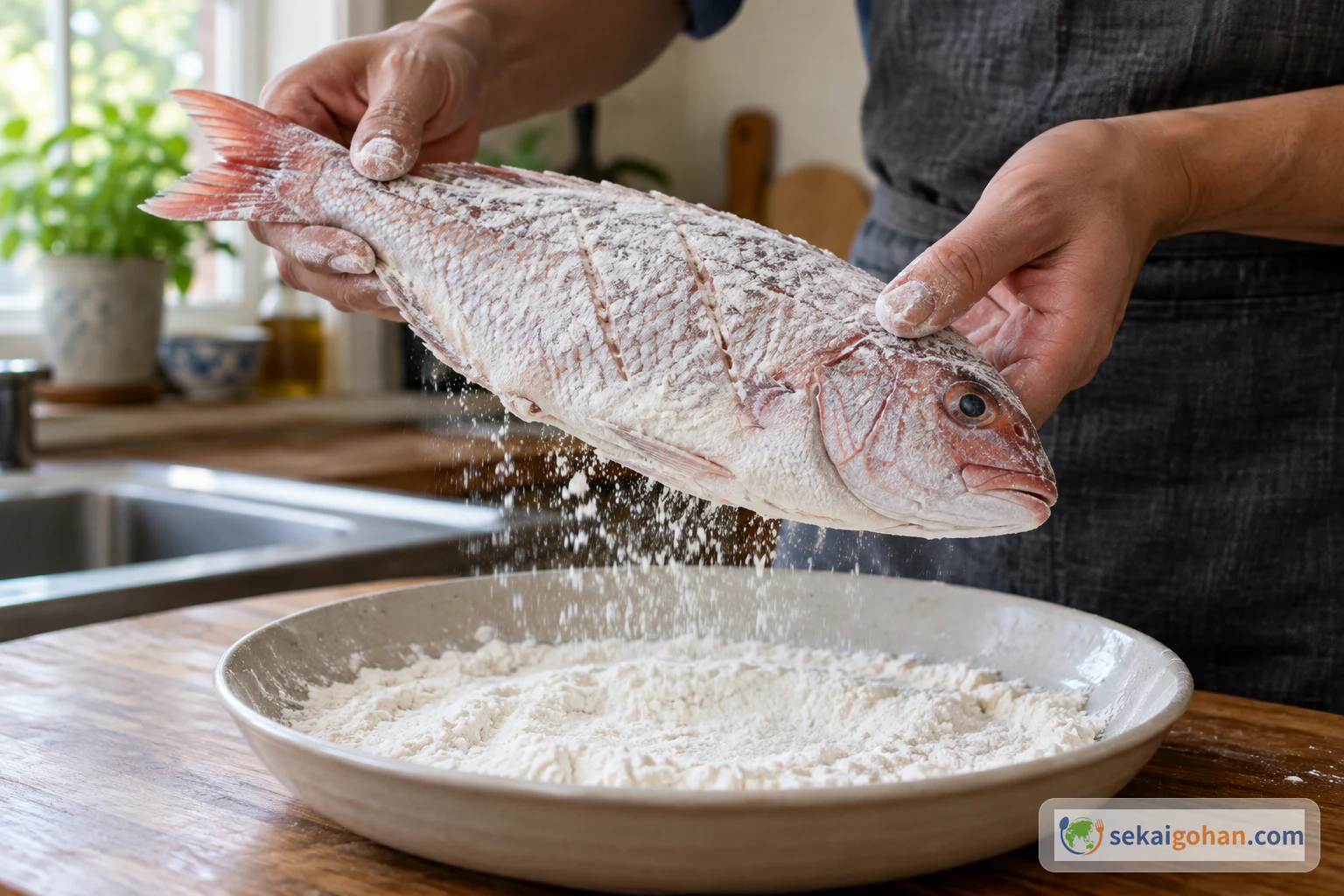
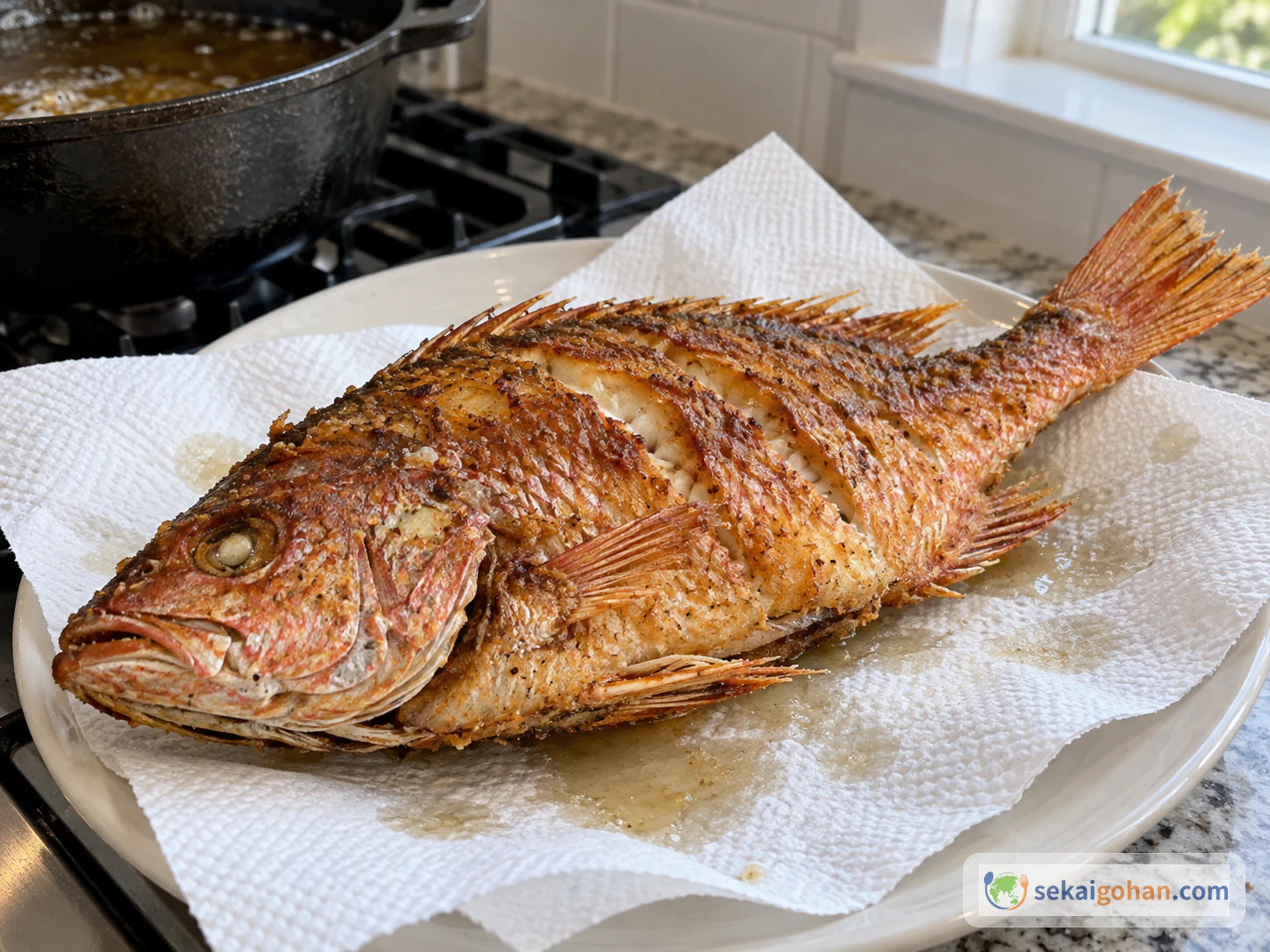
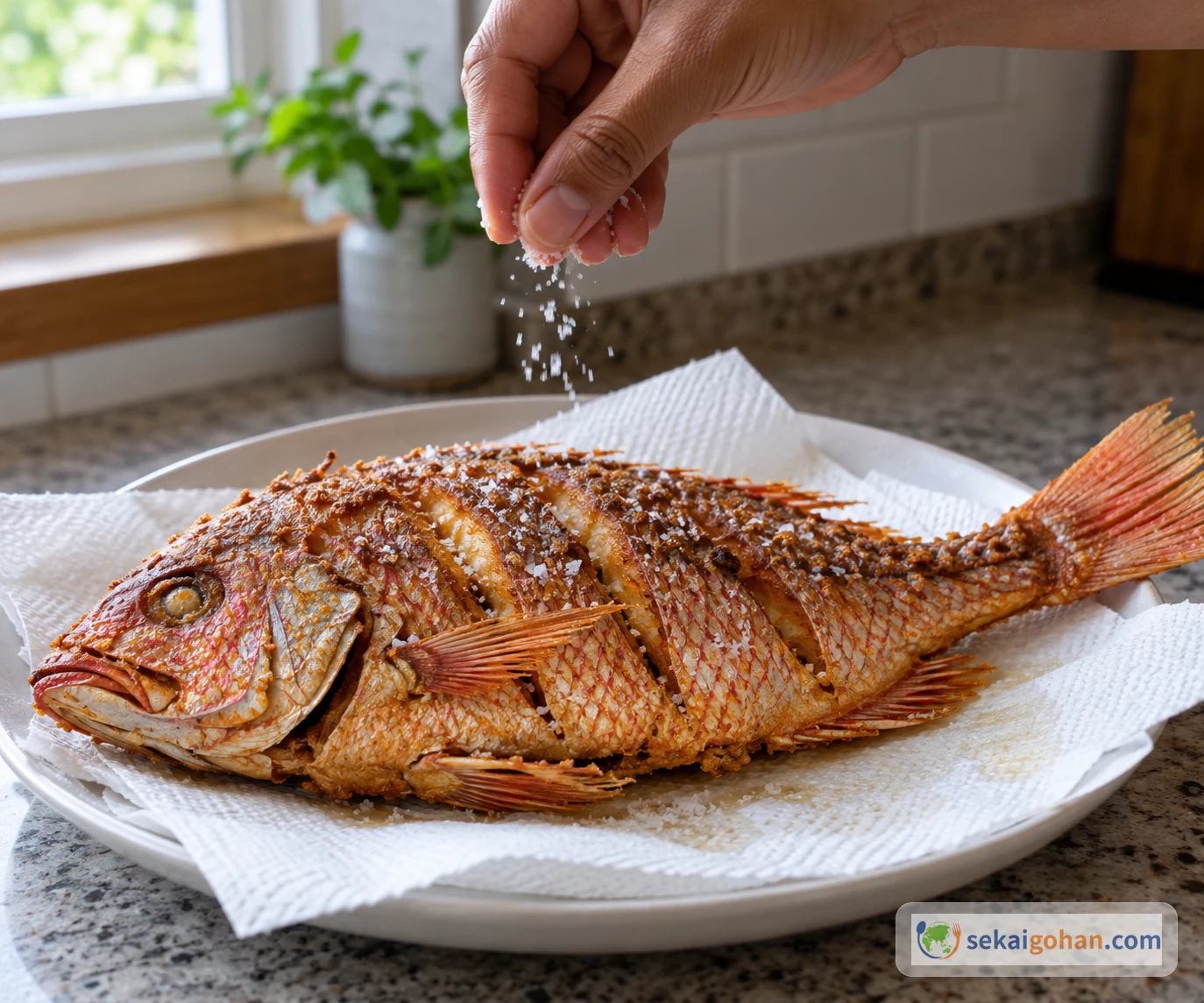
The method is short but specific. The skin gets three or four shallow cuts on each side so the marinade can settle into them. The fish rests in the refrigerator, takes a thin coat of rice flour, and goes into oil that was heated to 350°F before the burner is turned down to medium. After frying, it is drained, salted again, and served hot.
One Recipe Within Kerala's Many Fish Dishes
Kerala's fish cooking is not a single dish. Kerala Tourism, the state government's tourism site, presents a range of fish preparations, including Fish Mappas, Fish Moilee, prawn chilli fry and grilled fish, and says the recipes it selected were compiled from households across the state. Against that variety, the recipe here is best read as one Kerala-style example from a cookbook, not as the authentic version or as India's representative fish fry. The Food Network page does not establish where or when this preparation began, so this article makes no claim about its origin.
It also differs clearly from fish moilee, which is a fish curry. Here the fish is not simmered in any sauce: it is marinated whole, dredged and fried. If you want to explore other dishes from the same country, see more dishes from India.
Chauhan's headnote mentions that kingfish is a popular choice in Kerala, but the fish actually listed in the recipe is red snapper. This article keeps red snapper as the main fish and treats other species as options (see "Choosing the Fish, Oil and Chile" below).
Ingredients (Serves 4)
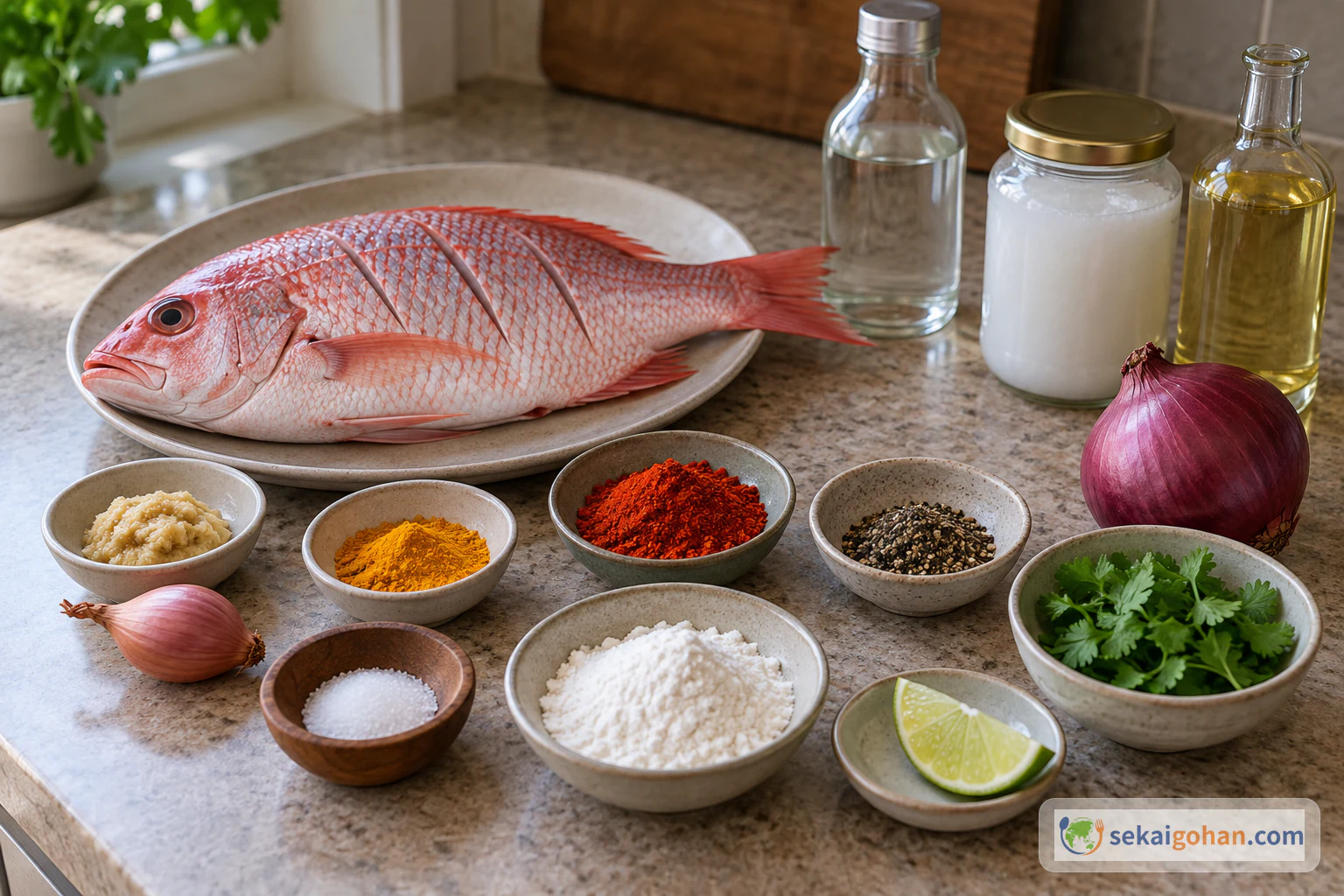
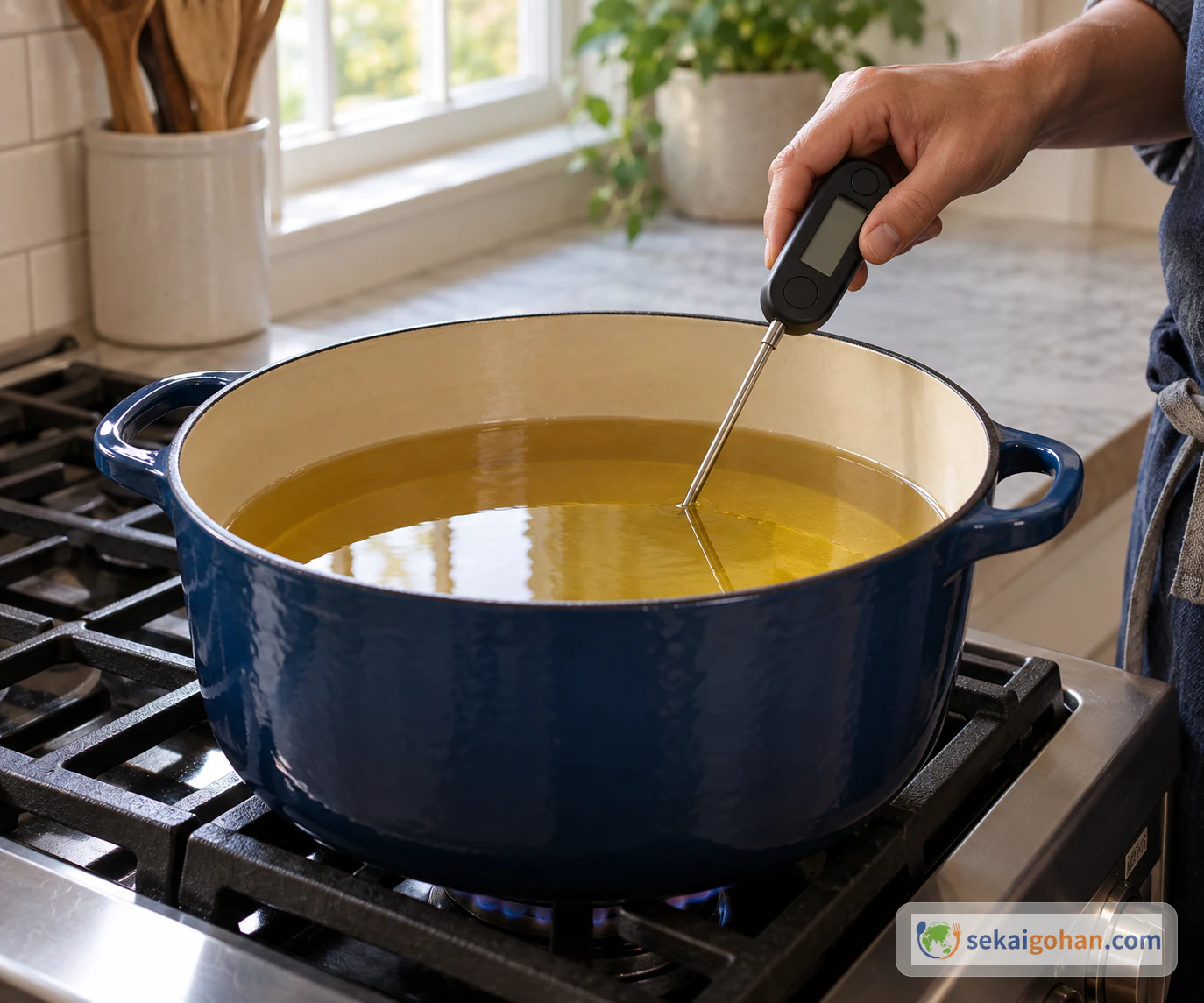
The vegetable oil is added on top of the coconut oil until both together are about 3 inches deep. It is not 3 inches of vegetable oil on its own.
Equipment
- Small food processor
- Sharp kitchen knife and a tray or board for the whole fish
- Bowl that holds the fish in the refrigerator
- Dutch oven or other large, heavy pot
- Instant-read thermometer
- Shallow bowl for the rice flour
- Long spatula or similar tool for turning the fish
- Plate lined with paper towels
Choosing the Fish, Oil and Chile
These options keep the same order of steps.
- Fish. Use one whole cleaned red snapper of about 1 lb. Other options are kingfish, popular in Kerala, or firm-fleshed white fish: halibut, cod, flounder or tilapia. If you change species, stay with a whole cleaned fish of a similar size, so the shallow skin cuts and the 12–15-minute frying time still describe what is happening in the pot. Fillets are not part of this recipe; frying them would be your own adaptation, and its timing has not been worked out here.
- Oil. Vegetable oil can replace the coconut oil, at the cost of the coconut's tropical note. Refined coconut oil is more neutral; unrefined coconut oil is more aromatic. These change the aroma, not the steps.
- Chile powder. Kashmiri chile powder or another red chile powder. A mixed seasoning blend is not the same thing and is not suggested here.
- Ginger-garlic paste. Use ready-made ginger-garlic paste.
- Rice flour. Keep it at 1/4 cup. Use rice flour rather than wheat flour, starch or breadcrumbs.
Do not add curry leaves, coconut milk, tamarind, rice or sauce.
Method: Marinate, Chill, Dredge, Fry
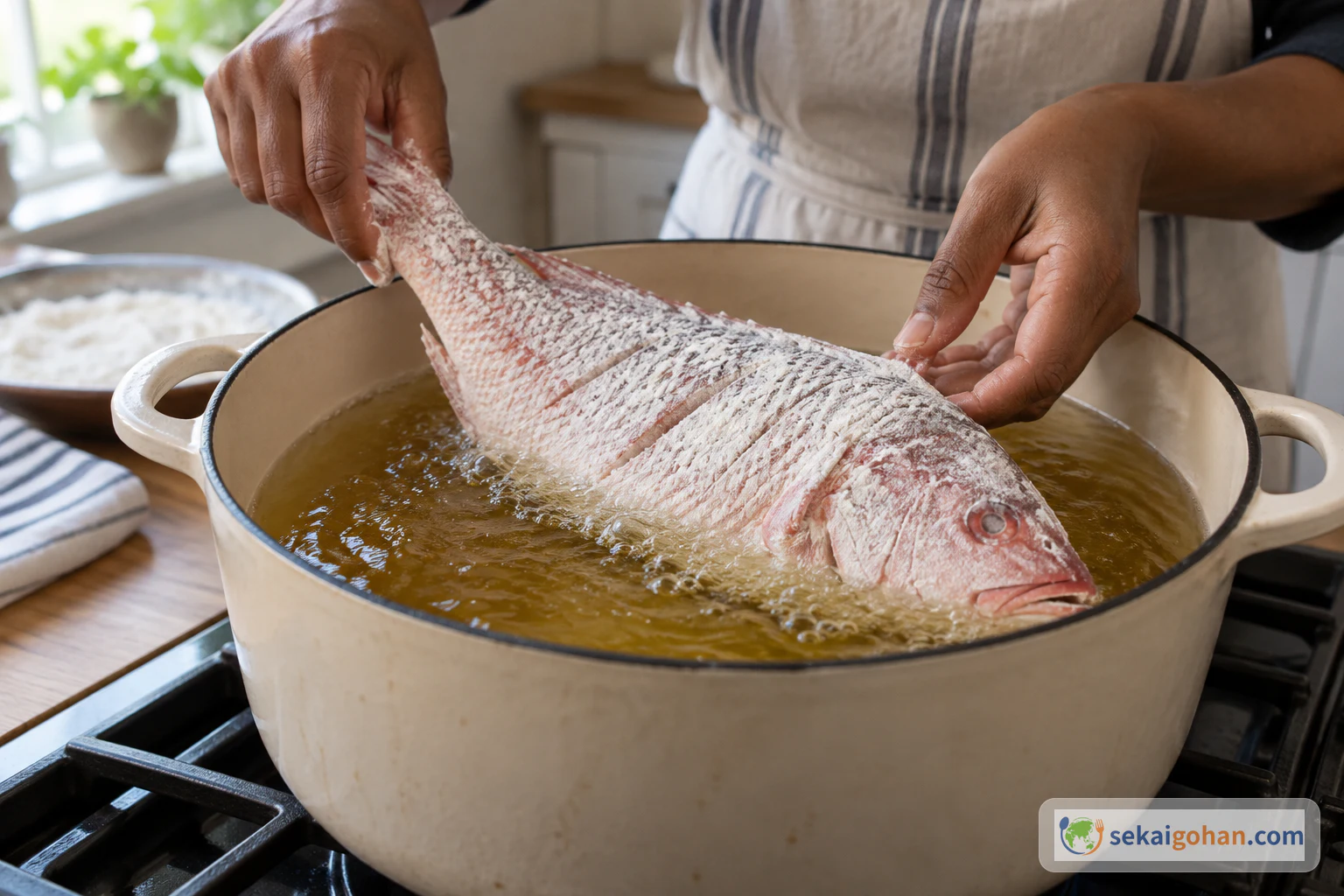
Hot oil and the marinade can sputter when the fish goes in and when you turn it. Use a large heavy pot, keep the oil to the stated depth, and lower the fish in carefully.
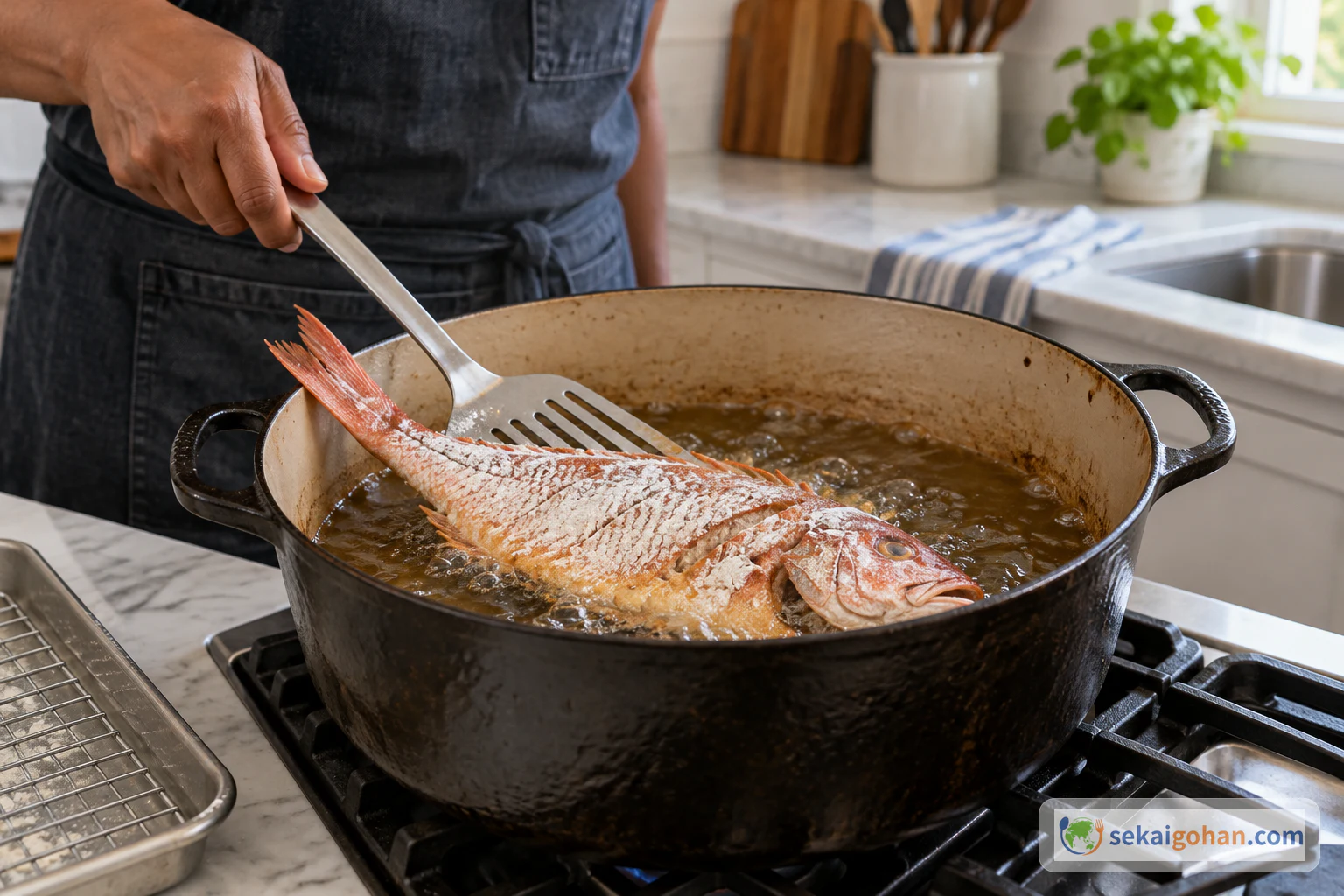
Heat the frying oil to 350°F before the fish goes in, then turn the burner down to medium before frying. This is the oil temperature, not the temperature inside the fish. As a separate food-safety check, cook most seafood to an internal temperature of 145°F. The 12–15-minute frying time is a guide; the time a particular fish actually needs can vary with its size and your equipment.
When Something Looks Off
These points stay within what the recipe and the FDA guidance actually say. They are things to check, not guarantees.
| What you see | What to check | What to do |
|---|---|---|
| A pinch of flour does not sizzle | The oil has not passed the flour-sizzle check | Keep heating over medium-high and check again with the thermometer or another pinch of flour |
| Oil and marinade sputter hard | Careful handling and oil depth | Lower the fish slowly with hands above the rim; next time, measure the oil to about 3 inches total in a large heavy pot |
| Thick patches of flour on the fish | Excess flour was not shaken off | Before frying, lift the fish and shake it over the bowl until only a light coat remains |
| Golden outside at 12–15 minutes, but you are unsure about the inside | Fish size and equipment change the time needed | Use the FDA's separate check: most seafood should reach 145°F inside. Do not read the 350°F oil temperature as proof the fish is done |
| The fish is much larger or thinner than about 1 lb | The listed time describes a whole fish of about that size | Choose a whole fish close to the listed size; with a different size, rely on the internal-temperature check rather than the clock |
Handling Raw Fish and Storage
The recipe does not give storage guidance for the cooked fish. The following comes from the U.S. FDA's general seafood safety advice.
- If you will use the fish within two days, keep it refrigerated at 40°F or below; otherwise, freeze it.
- Keep raw fish away from ready-to-eat foods, including the red onion, cilantro and lime you will serve with it.
- After handling raw fish, wash your hands, cutting boards, utensils and counters.
- Do not leave perishable food out of the refrigerator for more than two hours, or more than one hour when the temperature is above 90°F.
Variations Within the Recipe
Each option below is one the recipe allows. Keep the whole fish, the skin cuts, the chilled marinade, the dredge and the frying order as they are.
| Option | What changes | What stays the same |
|---|---|---|
| Red snapper (as listed) | Nothing | Everything |
| Kingfish | The species, named as popular in Kerala | A whole cleaned fish, all steps |
| Halibut, cod, flounder or tilapia | The species, among firm-fleshed white fish | A whole fish of similar size, all steps |
| Vegetable oil only | Loses the coconut's tropical note | Oil depth, temperature, timing |
| Refined or unrefined coconut oil | Refined is more neutral, unrefined more aromatic | Everything else |
| Another red chile powder instead of Kashmiri | The chile powder | All amounts and steps |
Frequently Asked Questions
Do I really need a whole fish?
The recipe is written for one whole cleaned fish of about 1 lb, and the skin cuts, the halfway turn and the 12–15-minute fry all describe that fish. Fillets are not part of it. If you try them, treat it as your own adaptation, since no timing for fillets is given.
Can I use a fish other than red snapper?
Yes, within the recipe's own range. Chauhan's headnote mentions kingfish as popular in Kerala and allows firm-fleshed white fish such as halibut, cod, flounder or tilapia. Choose a whole fish of a similar size.
Why two kinds of oil?
The recipe uses coconut oil for its tropical aroma, then tops it up with vegetable oil to the frying depth. The headnote allows vegetable oil alone, noting that the coconut note is lost. Refined coconut oil is more neutral, unrefined more aromatic.
Does 350°F mean the fish is cooked through?
No. The 350°F is the oil's temperature before the fish goes in, and the heat is lowered to medium before frying. For the inside of the fish, the FDA separately advises an internal temperature of 145°F for most seafood.
Is there a Malayalam name for this dish?
Malayalam names for fried fish may appear online, but none has been checked against this particular recipe, so this article uses only the recipe's own title, "Kerala Fish Fry."
What should I serve it with?
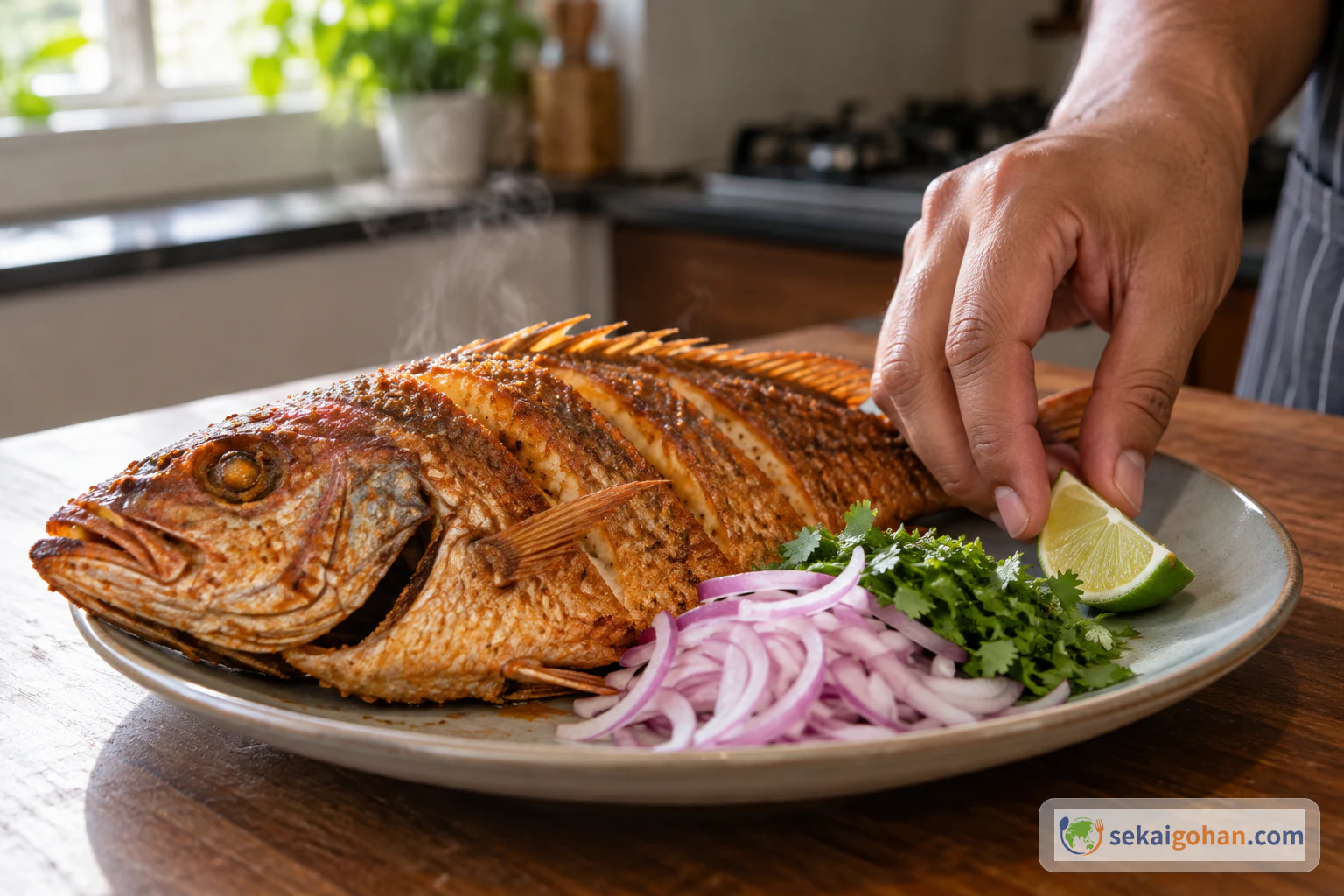
The recipe serves the fish hot with thinly sliced red onion, chopped cilantro and a lime wedge. It does not call for rice, curry or a sauce.
Sources
- Food Network, "Kerala Fish Fry Recipe | Maneet Chauhan." Recipe courtesy of Maneet Chauhan, adapted from and reprinted with permission from Chaat by Maneet Chauhan and Jody Eddy (copyright 2020, Clarkson Potter, a Penguin Random House imprint). Used for the ingredient list, quantities, yield, whole-fish handling and skin cuts, marinade and refrigeration, oil depth and temperature, rice-flour dredge, heat reduction, halfway turn, 12–15-minute frying time, draining and salting, garnish, total and active time, the fish/oil/chile options in the headnote, and the author's beach and train-station memory. https://www.foodnetwork.com/recipes/maneet-chauhan/kerala-fish-fry-22137172
- Kerala Tourism / Government of Kerala, "Spicy fish dishes recipes from Kerala." Used only for the range of Kerala fish preparations (including Fish Mappas, Fish Moilee, prawn chilli fry and grilled fish) and the note that its recipes were compiled from households across the state. It does not supply this recipe. https://www.keralatourism.org/kerala-food/fish/
- U.S. Food and Drug Administration, "Selecting and Serving Fresh and Frozen Seafood Safely." Used for the separate food-safety guidance: 145°F internal temperature for most seafood, refrigeration at 40°F or below, separating raw seafood from ready-to-eat food, cleaning after handling raw seafood, and room-temperature time limits. It is not the source of the recipe's oil temperature or method. https://www.fda.gov/food/buy-store-serve-safe-food/selecting-and-serving-fresh-and-frozen-seafood-safely