Kichadi: A Kerala Side Dish, Not Rice and Lentils
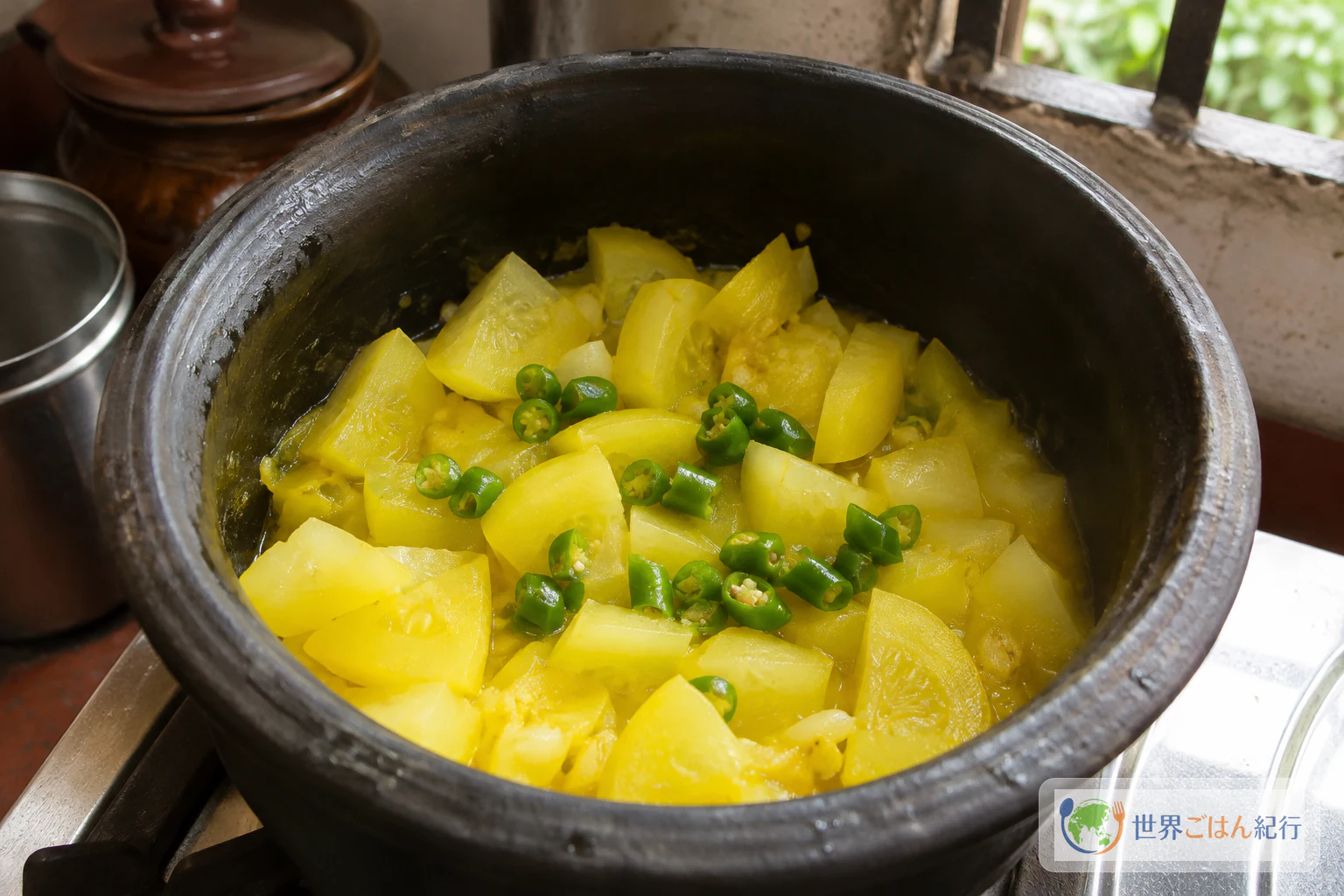
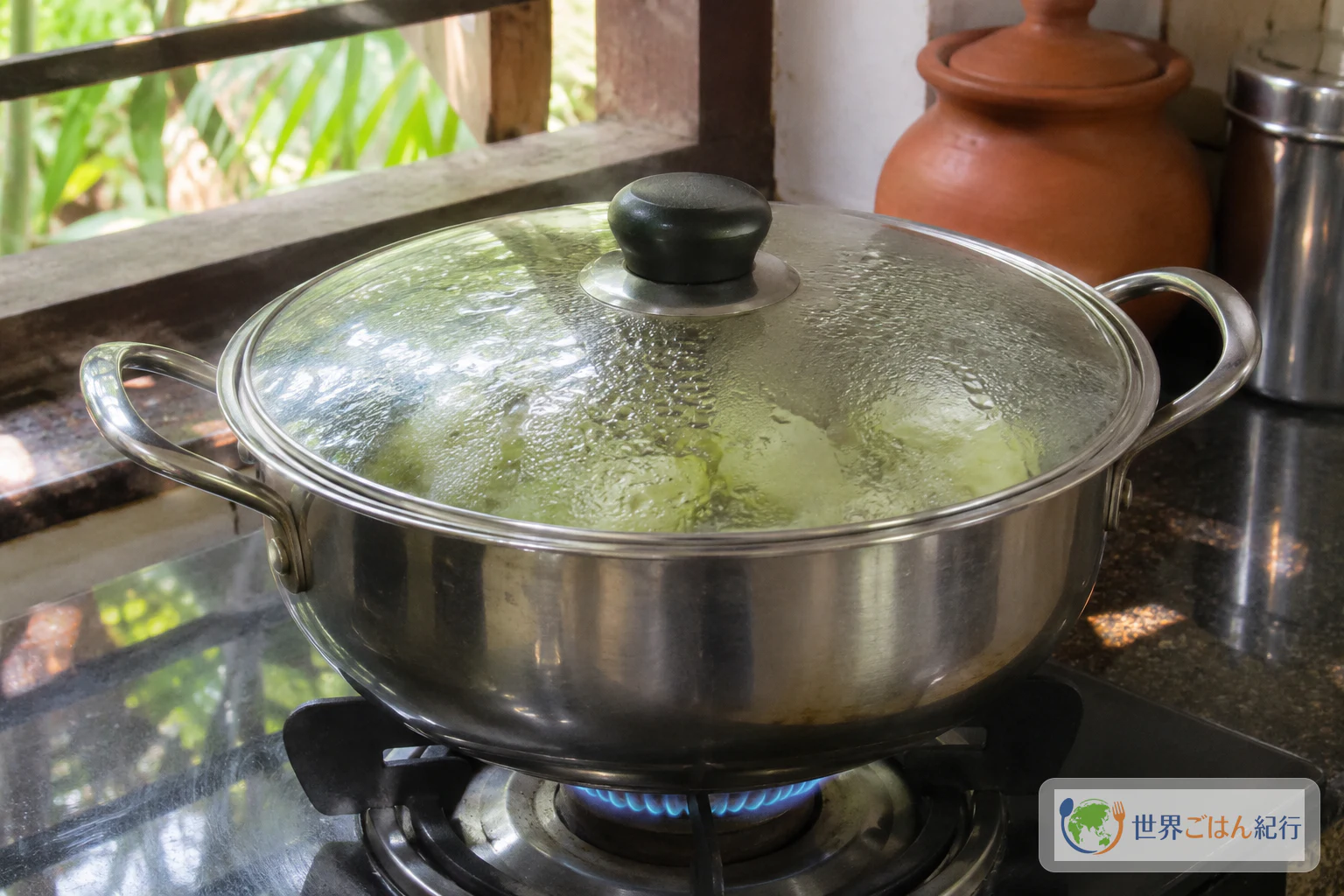
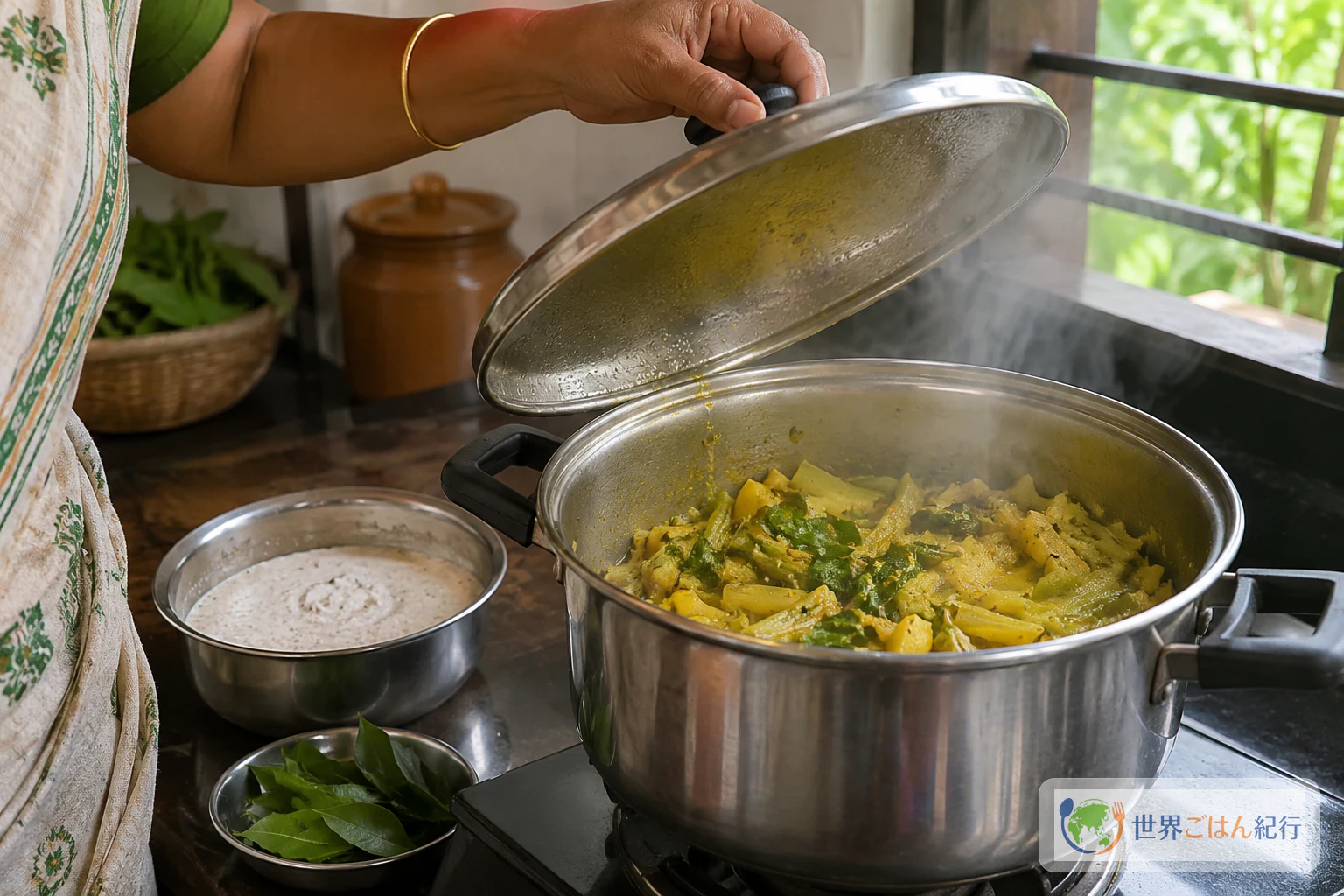
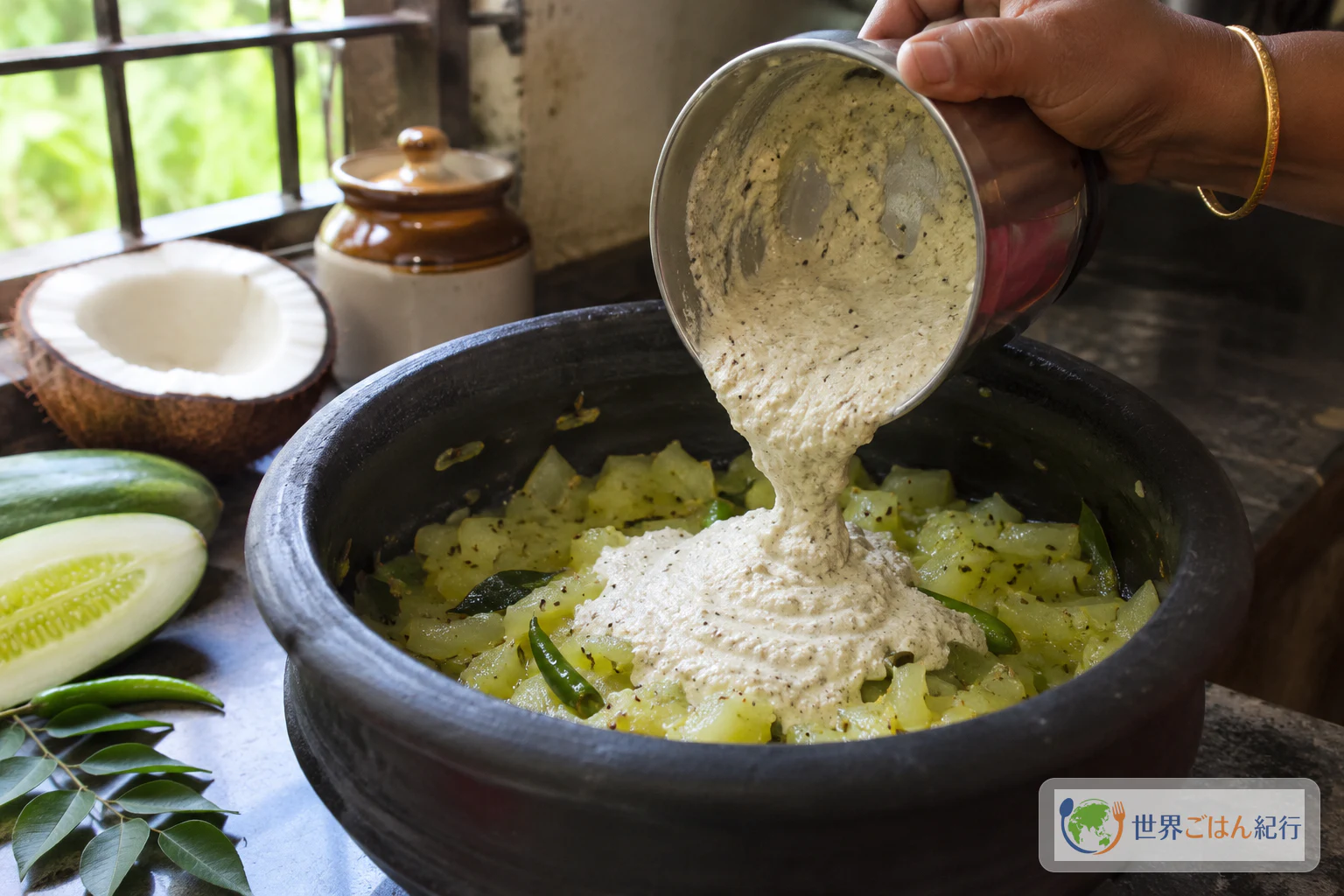
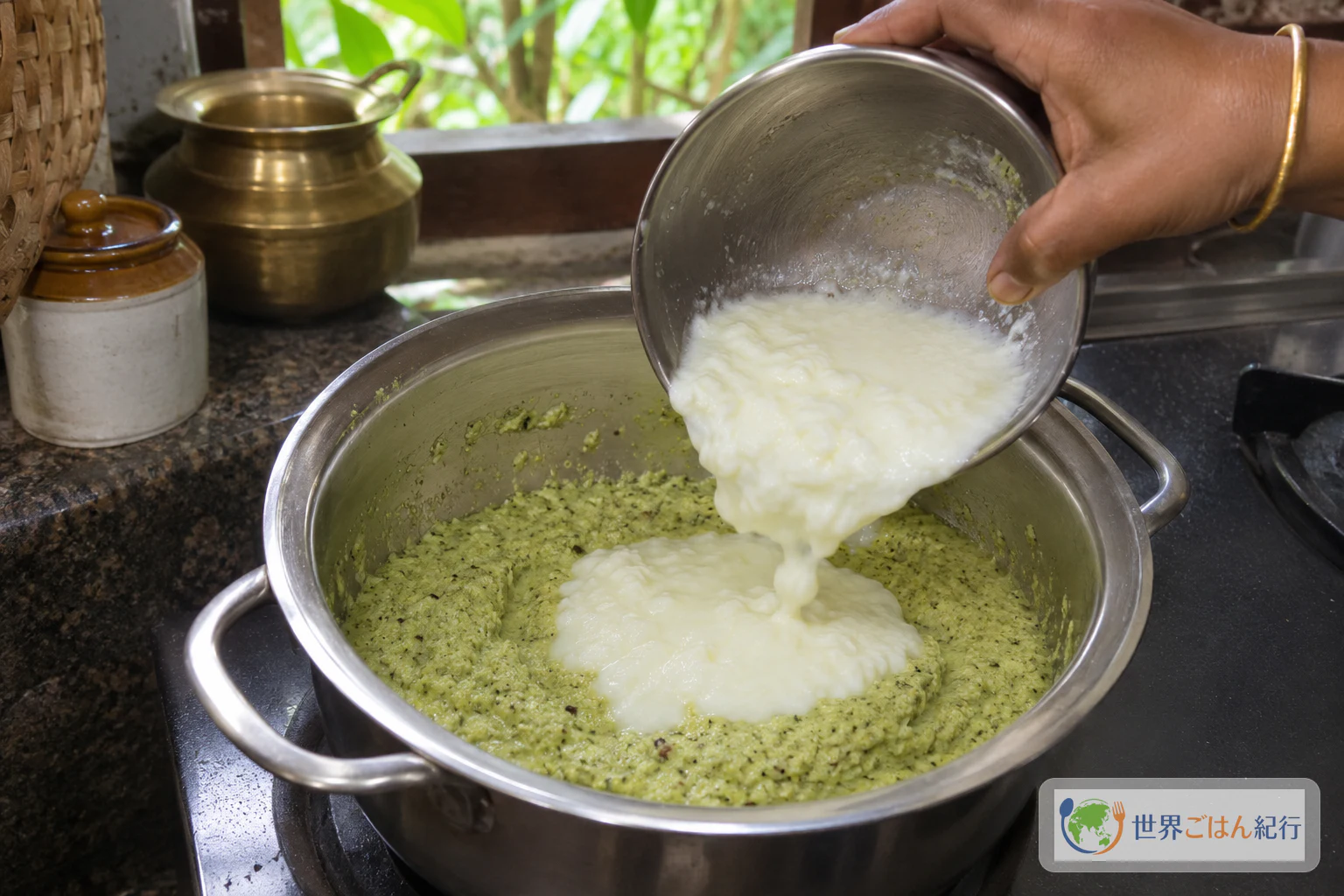
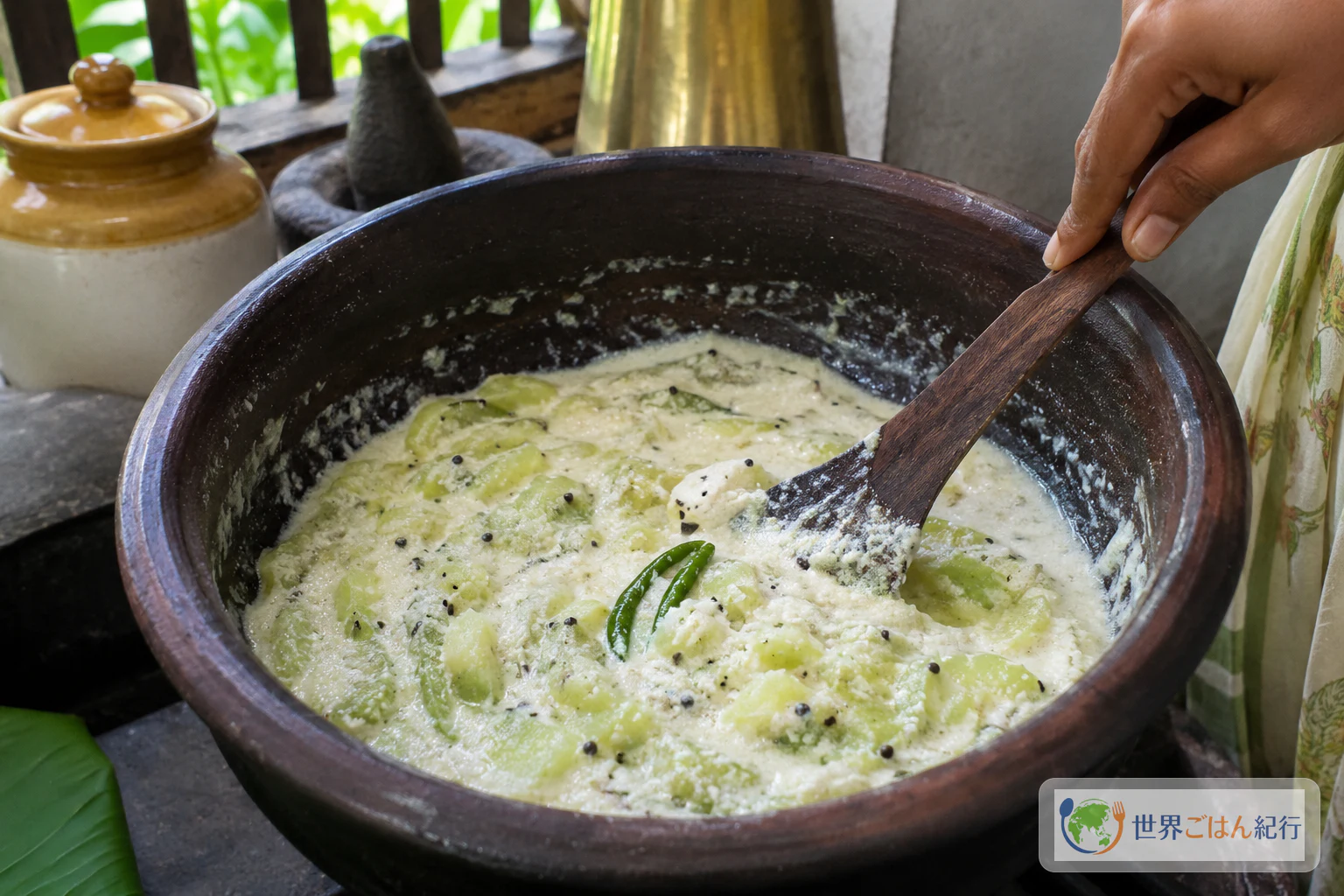
Cook the yellow cucumber well, turn off the heat, and only then add the unheated coconut paste and the remaining curd. Once the curd is in, the pot does not go back on the heat.
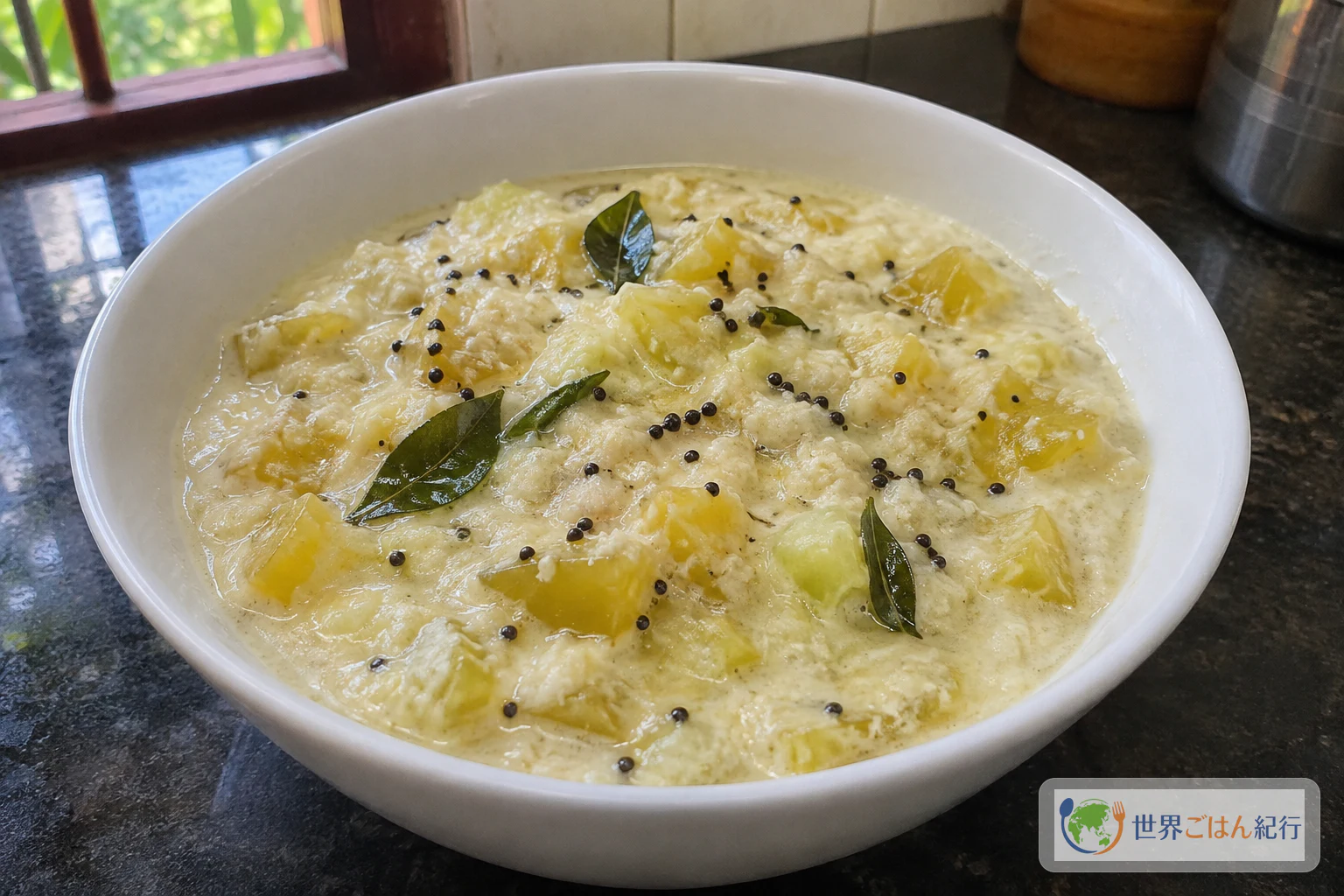
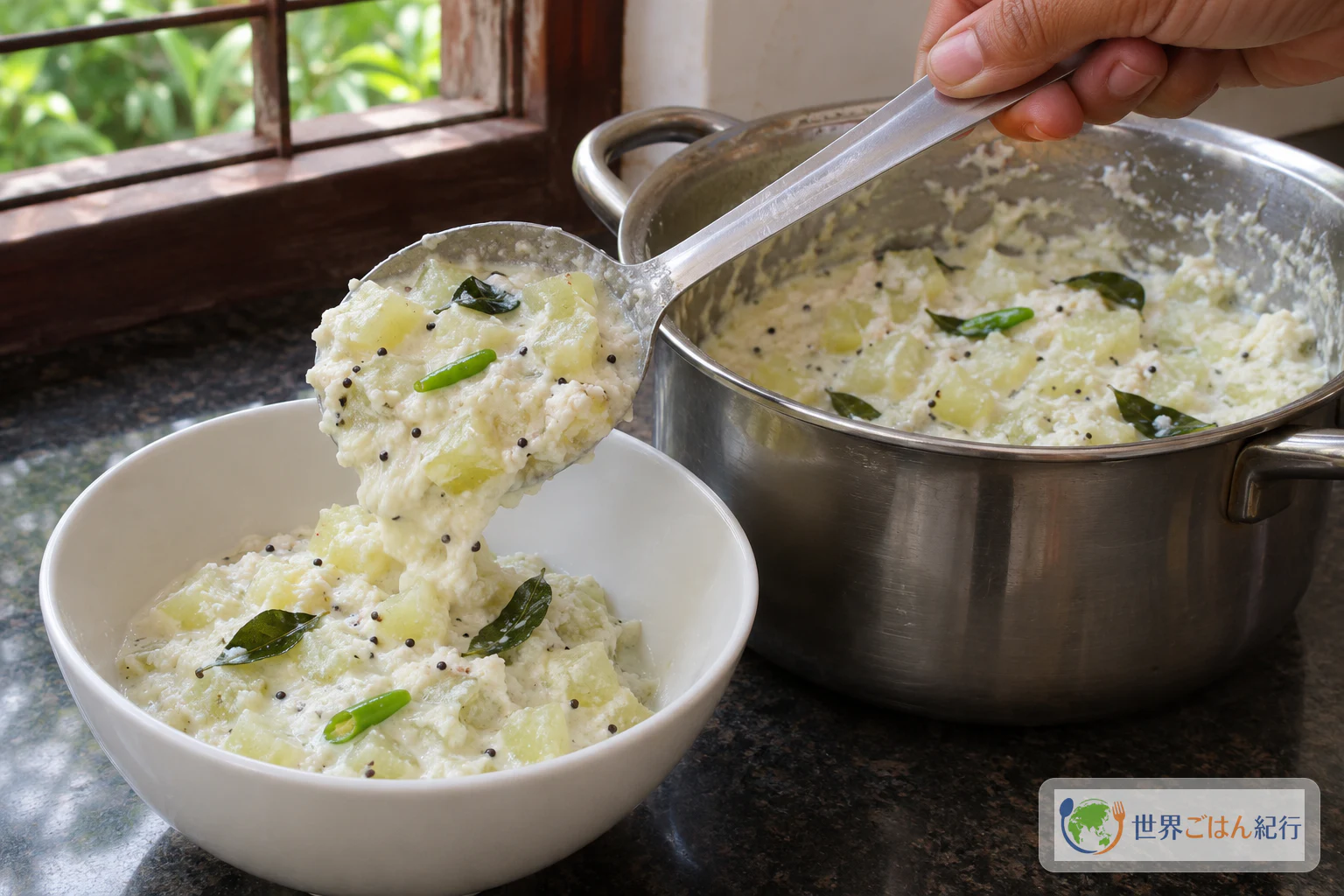
At a sadya, the Kerala meal served on a leaf, rice sits alongside a number of side dishes. Kichadi is one of them: a vegetable cooked with curd and seasoned with mustard, curry leaves and coconut oil.
The name causes confusion. It looks and sounds close to khichdi, the rice-and-lentil dish, but this is a different dish. There is no rice or lentil in this pot. Shaan Geo, whose recipe on TastyCircle is the one followed here, describes it as a Kerala side dish to eat with rice.
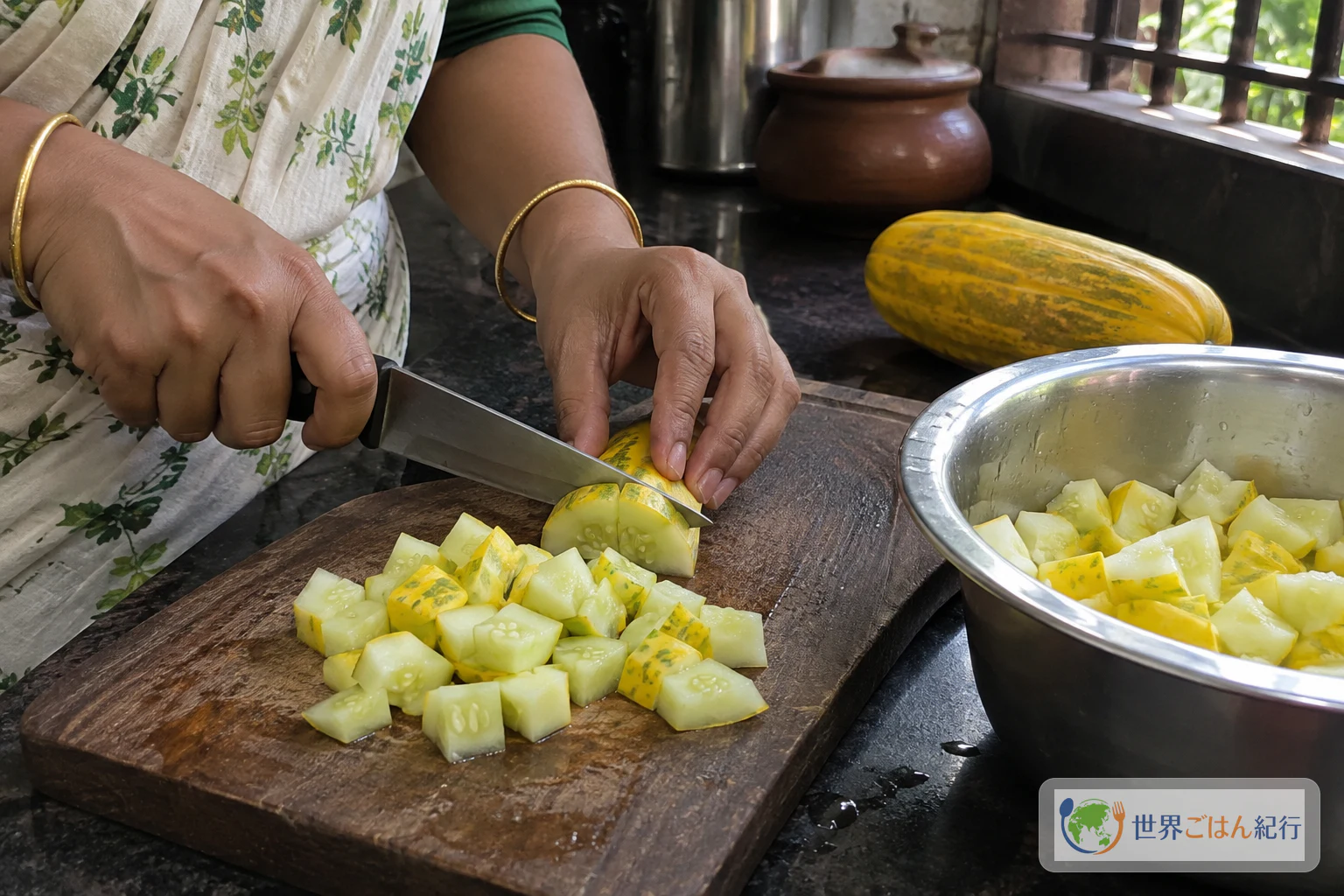
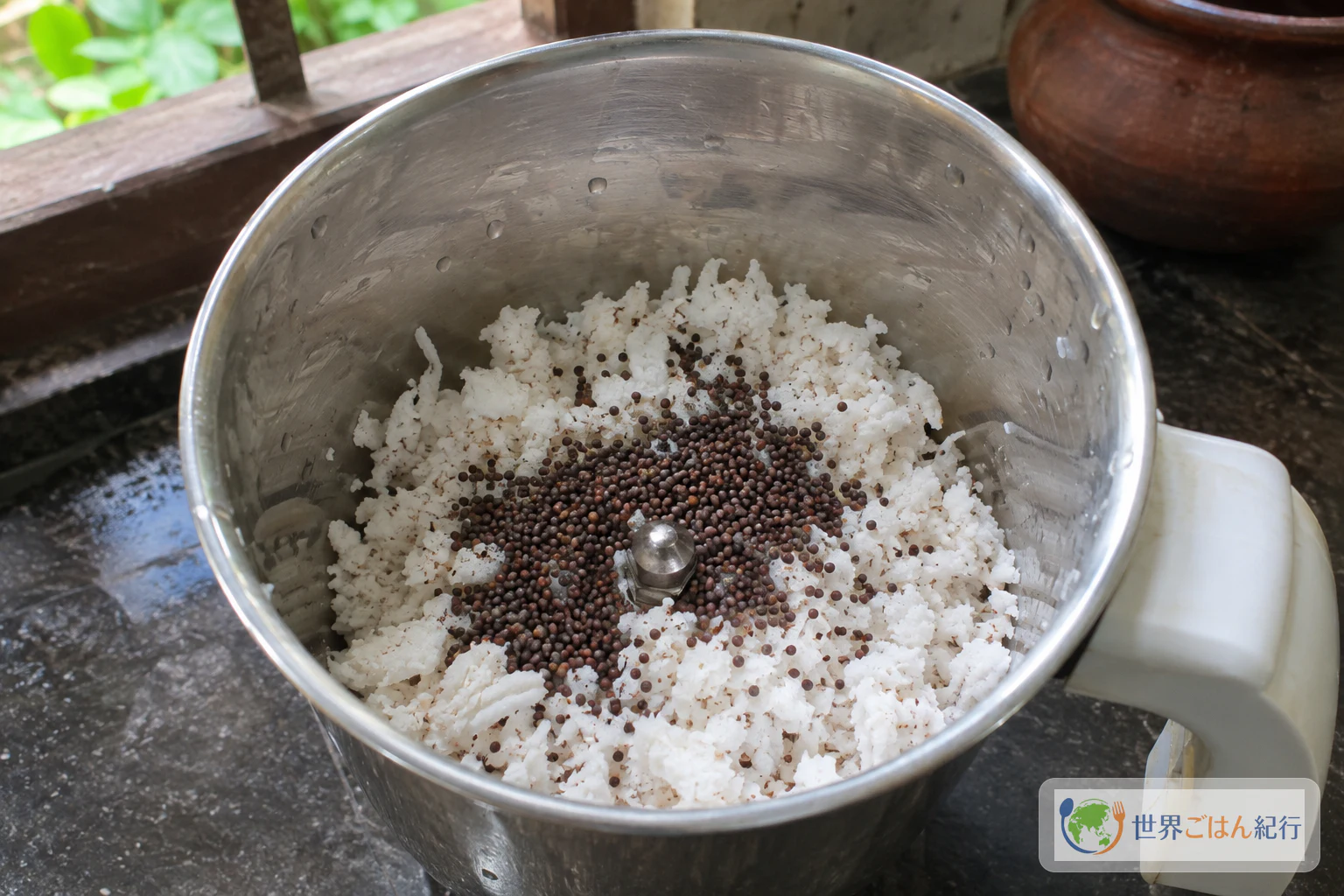
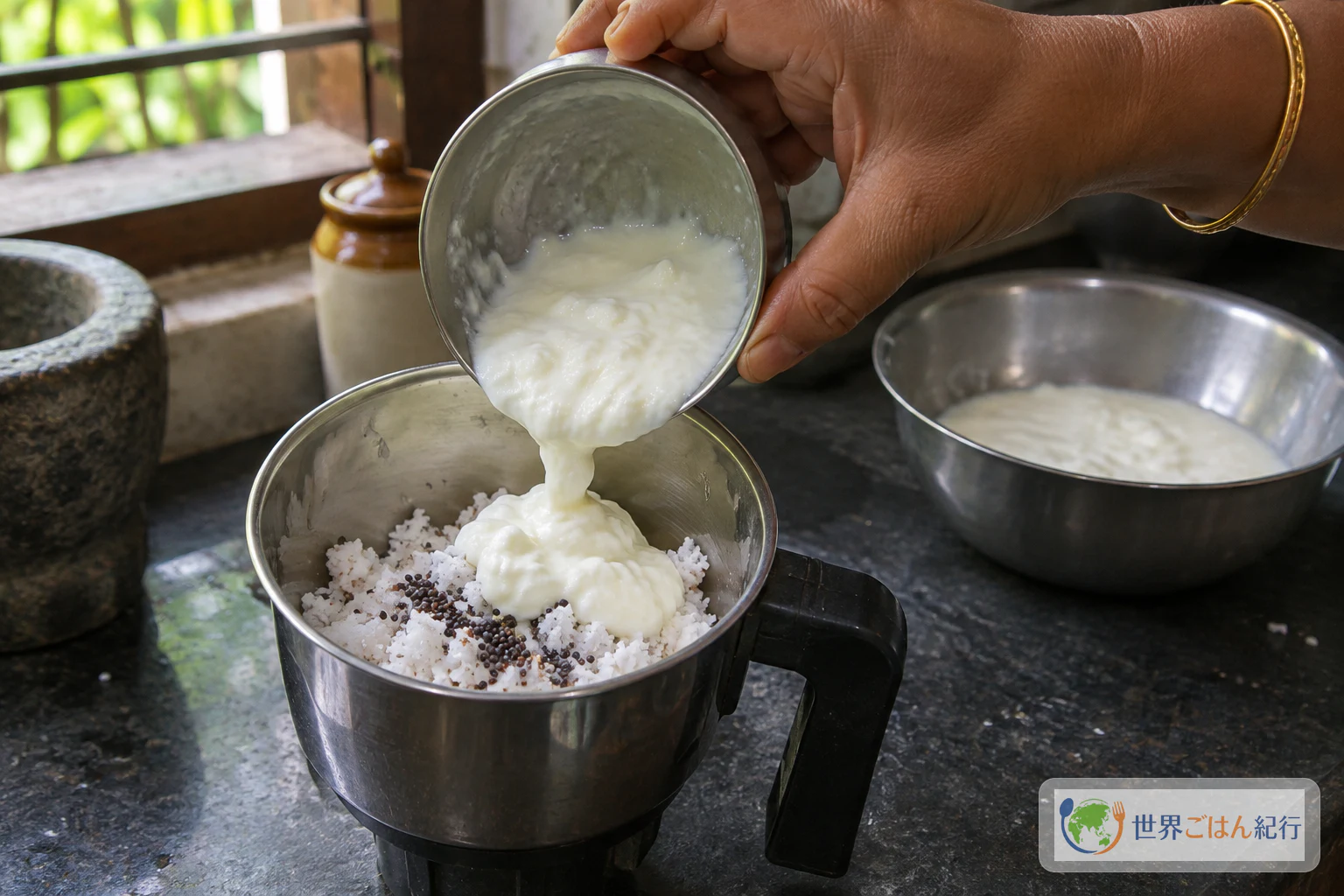
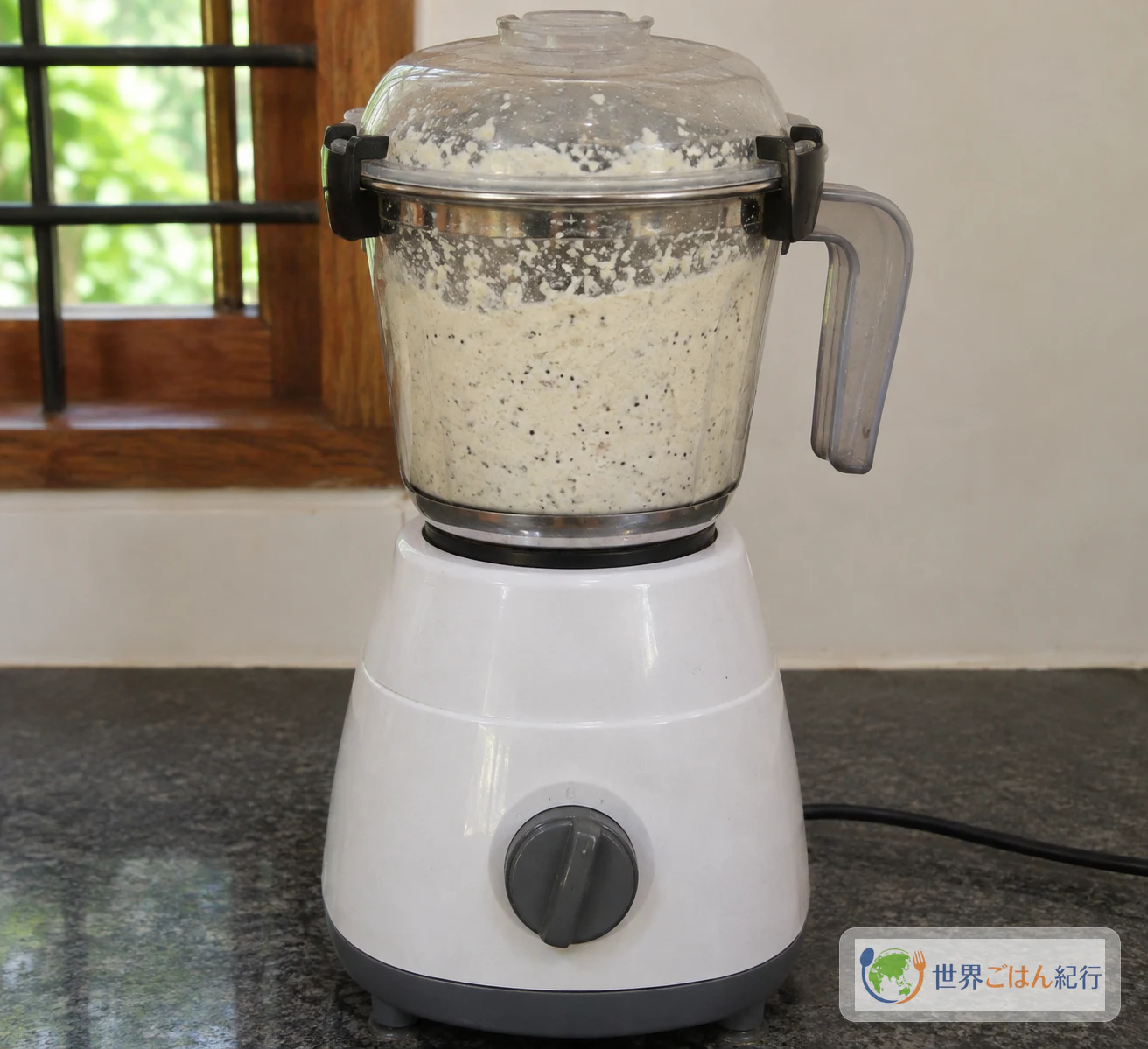
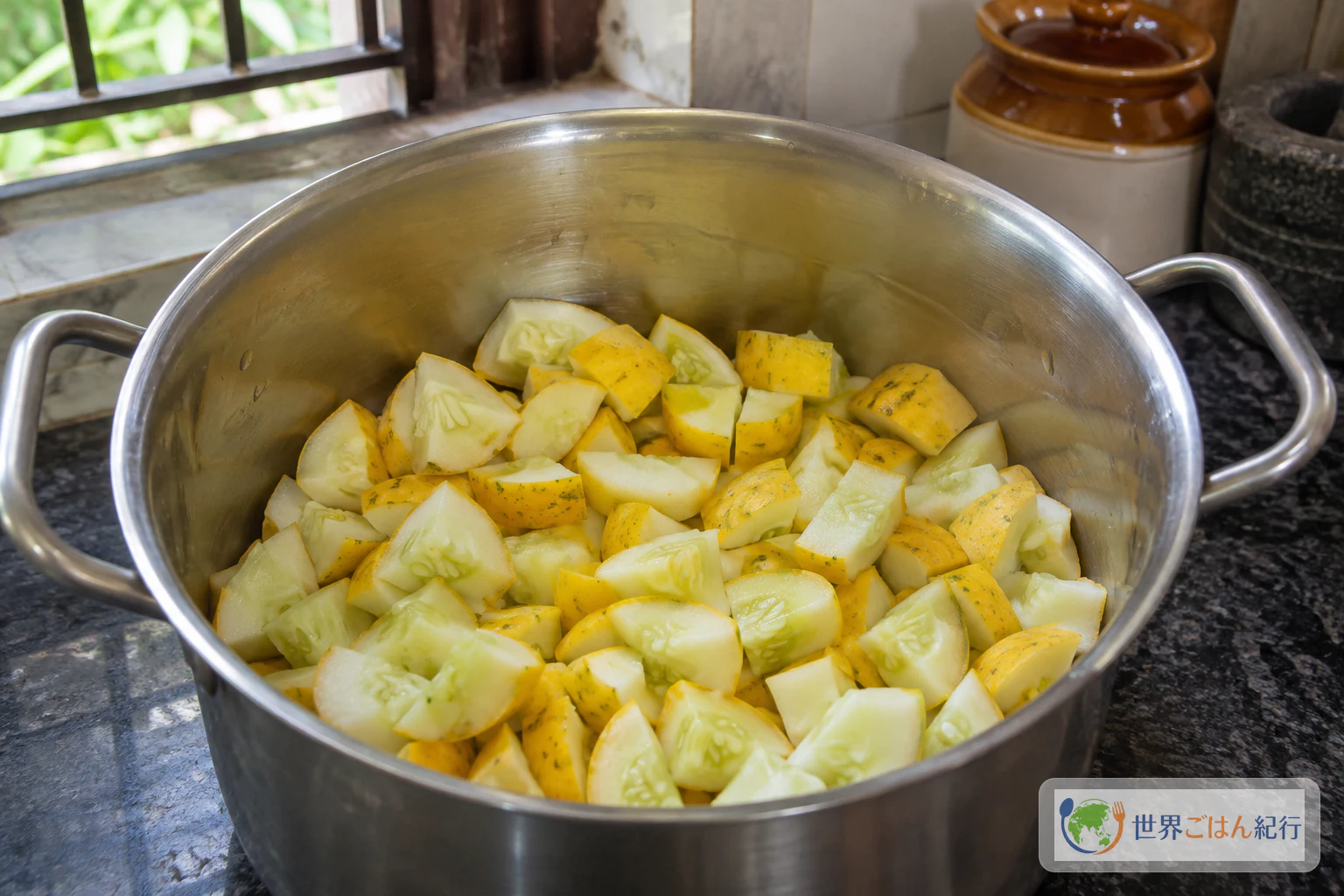
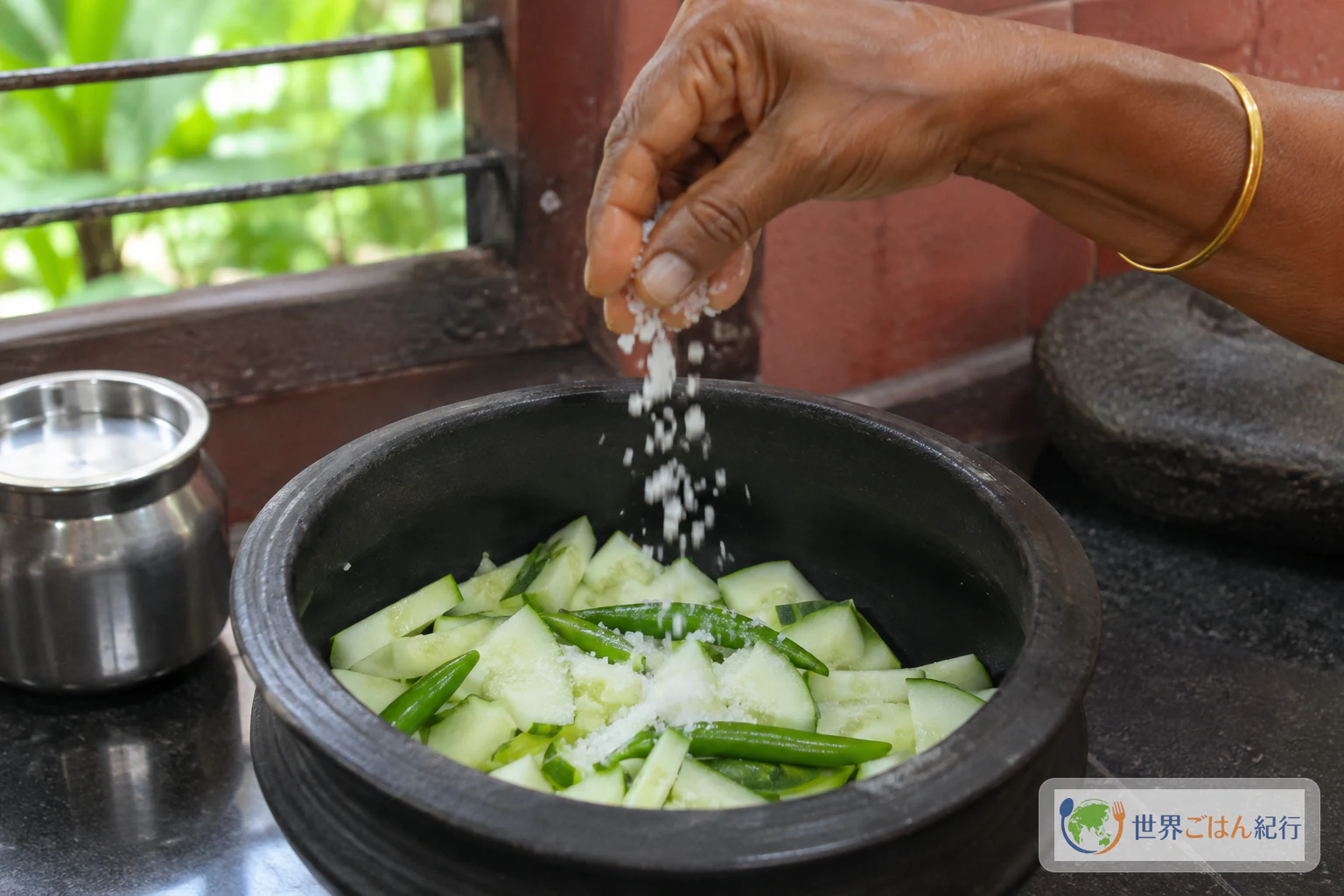
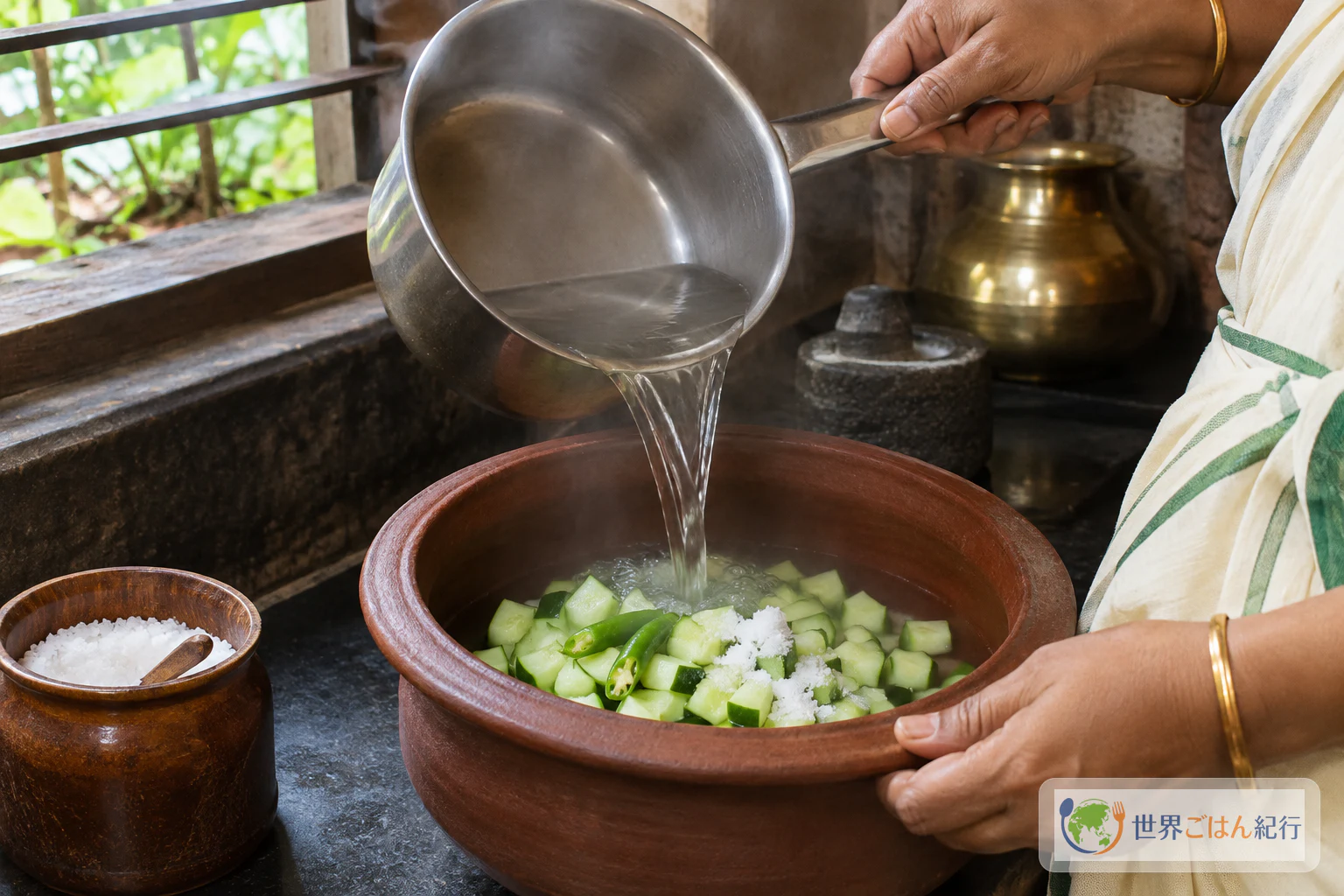
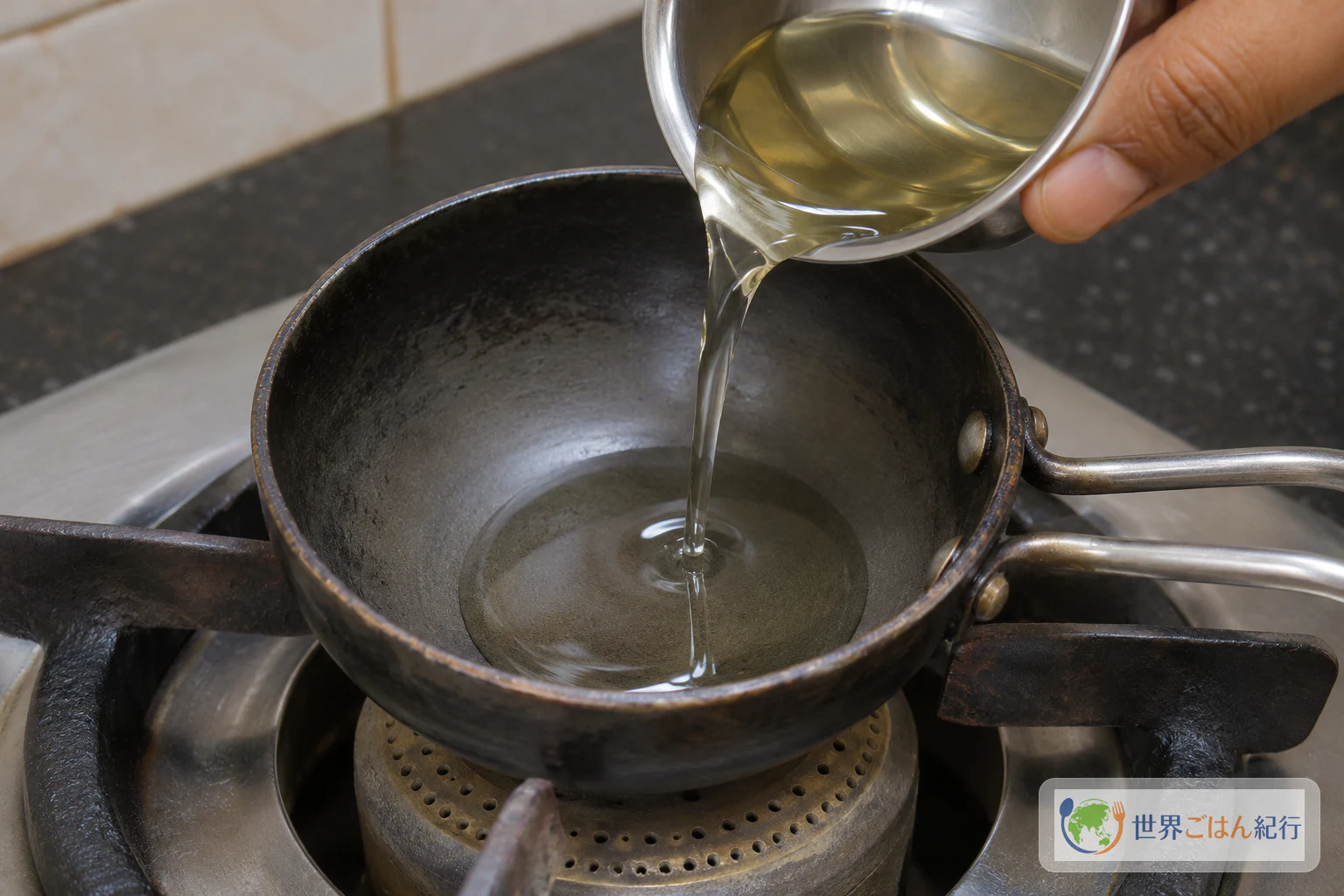
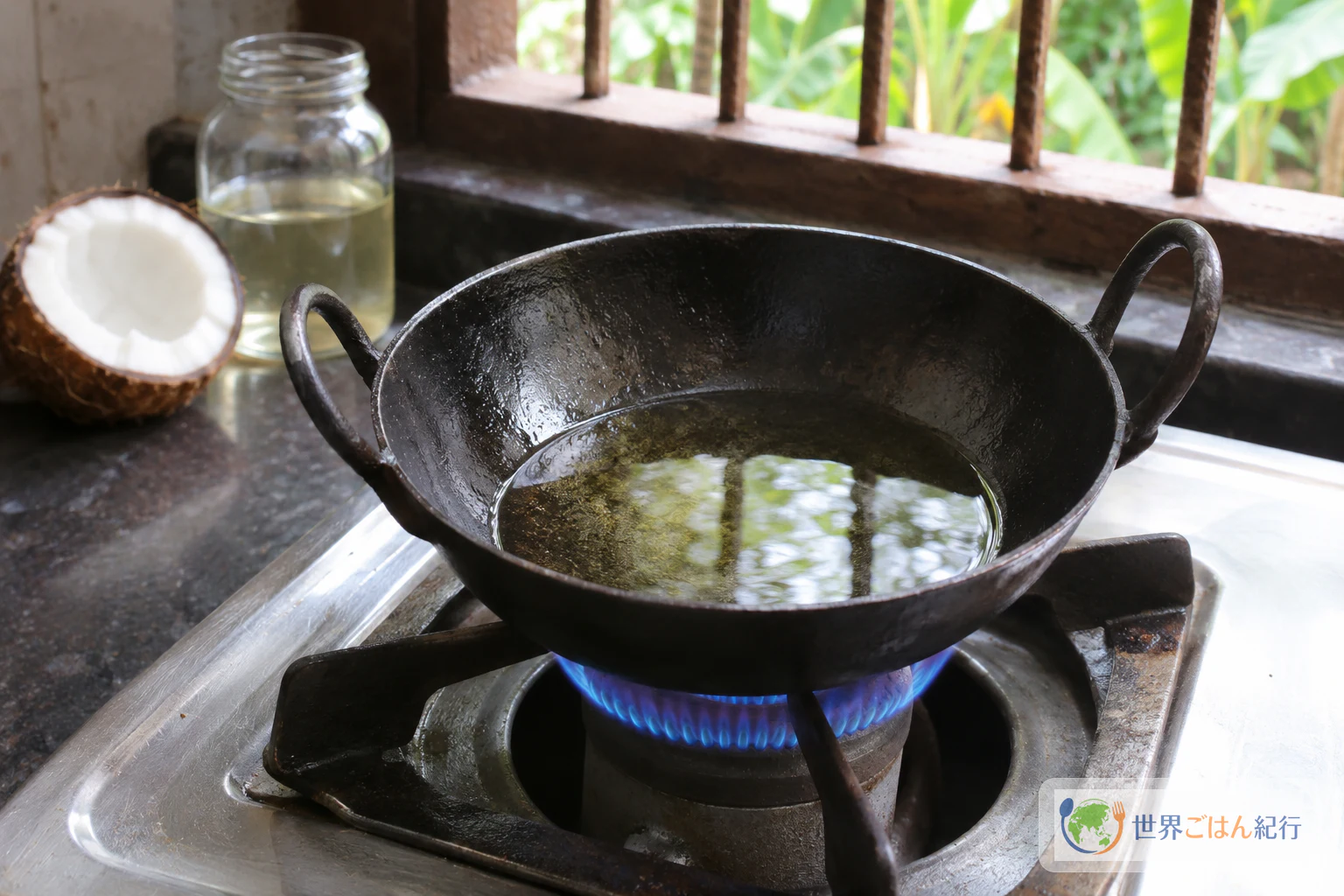
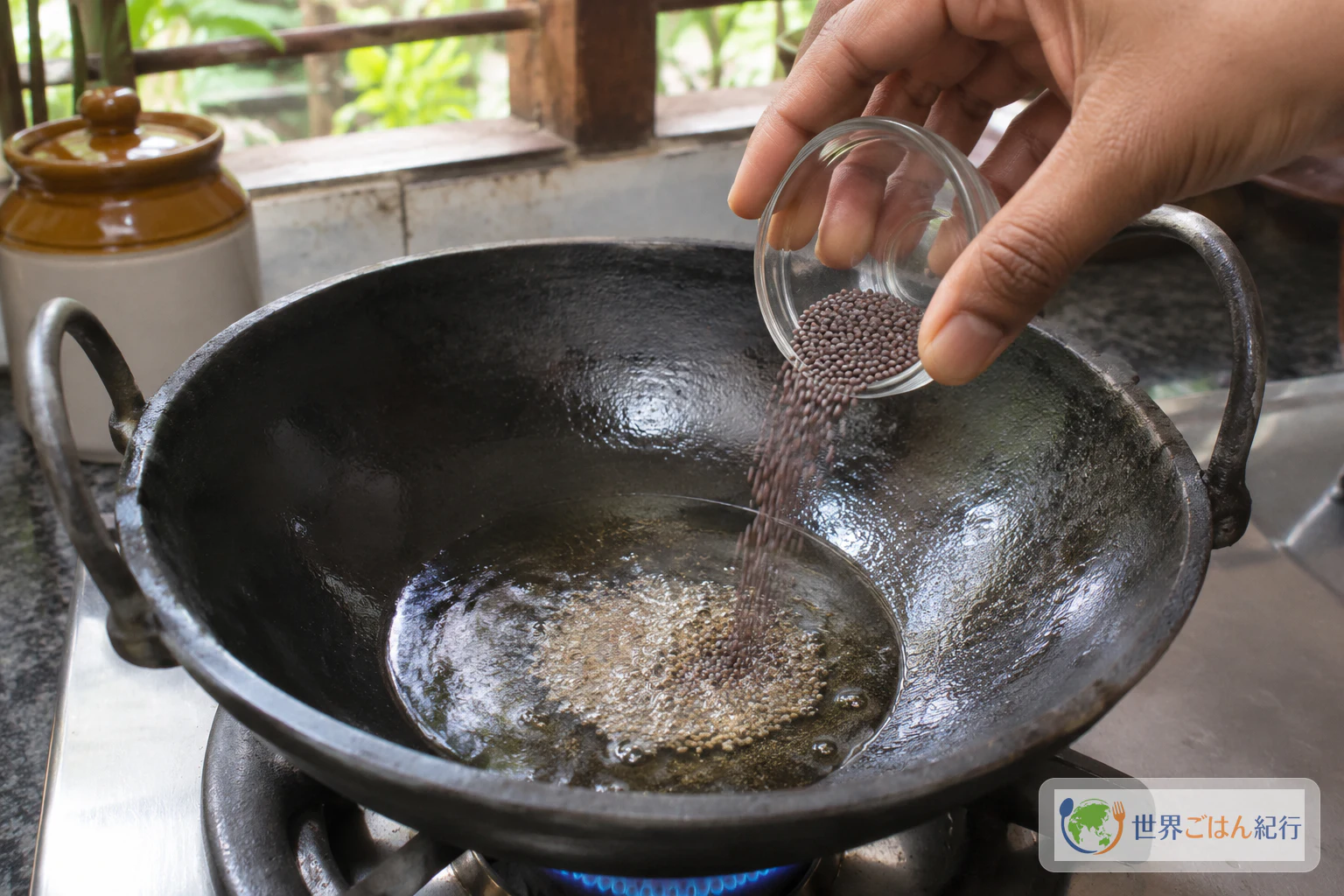
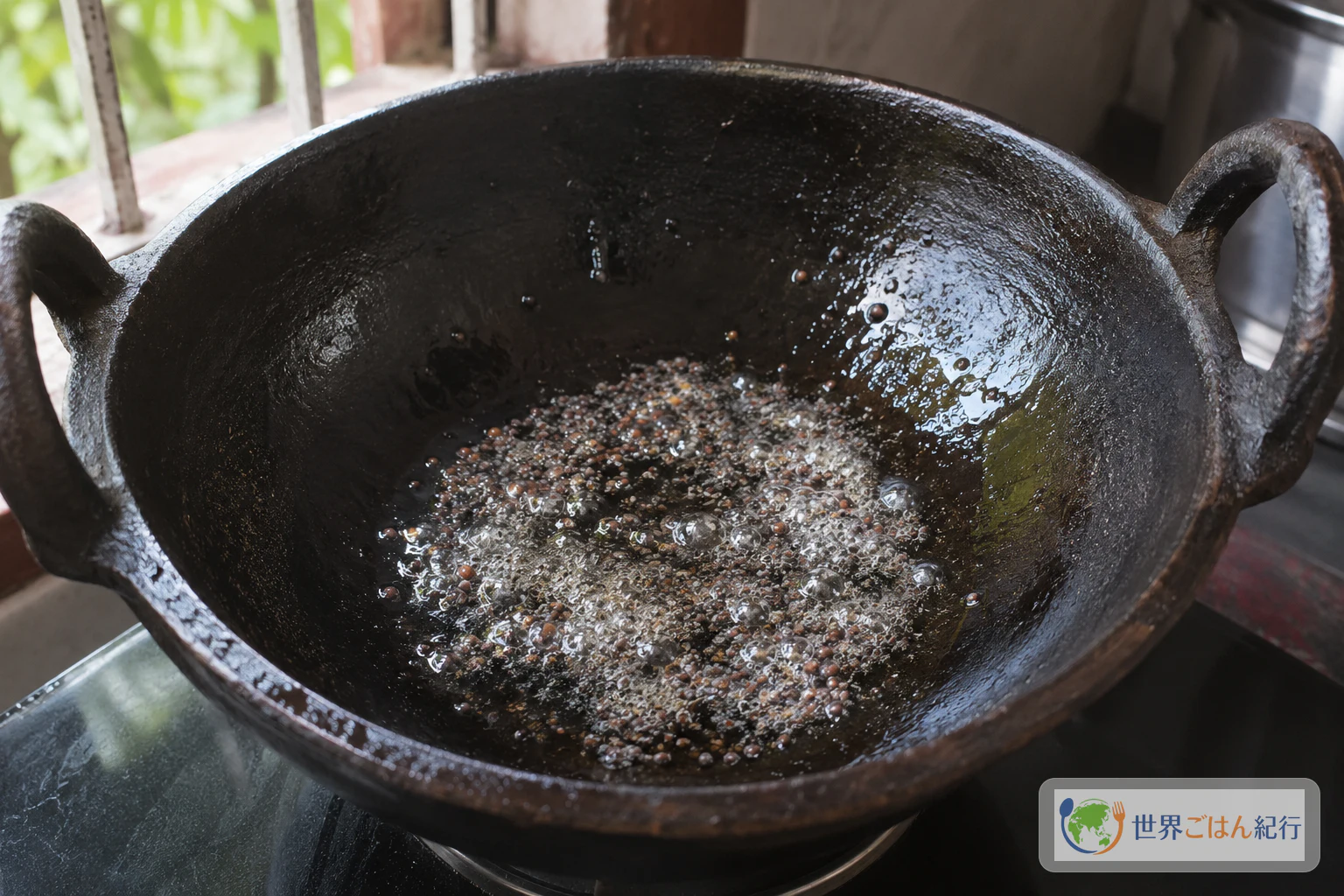
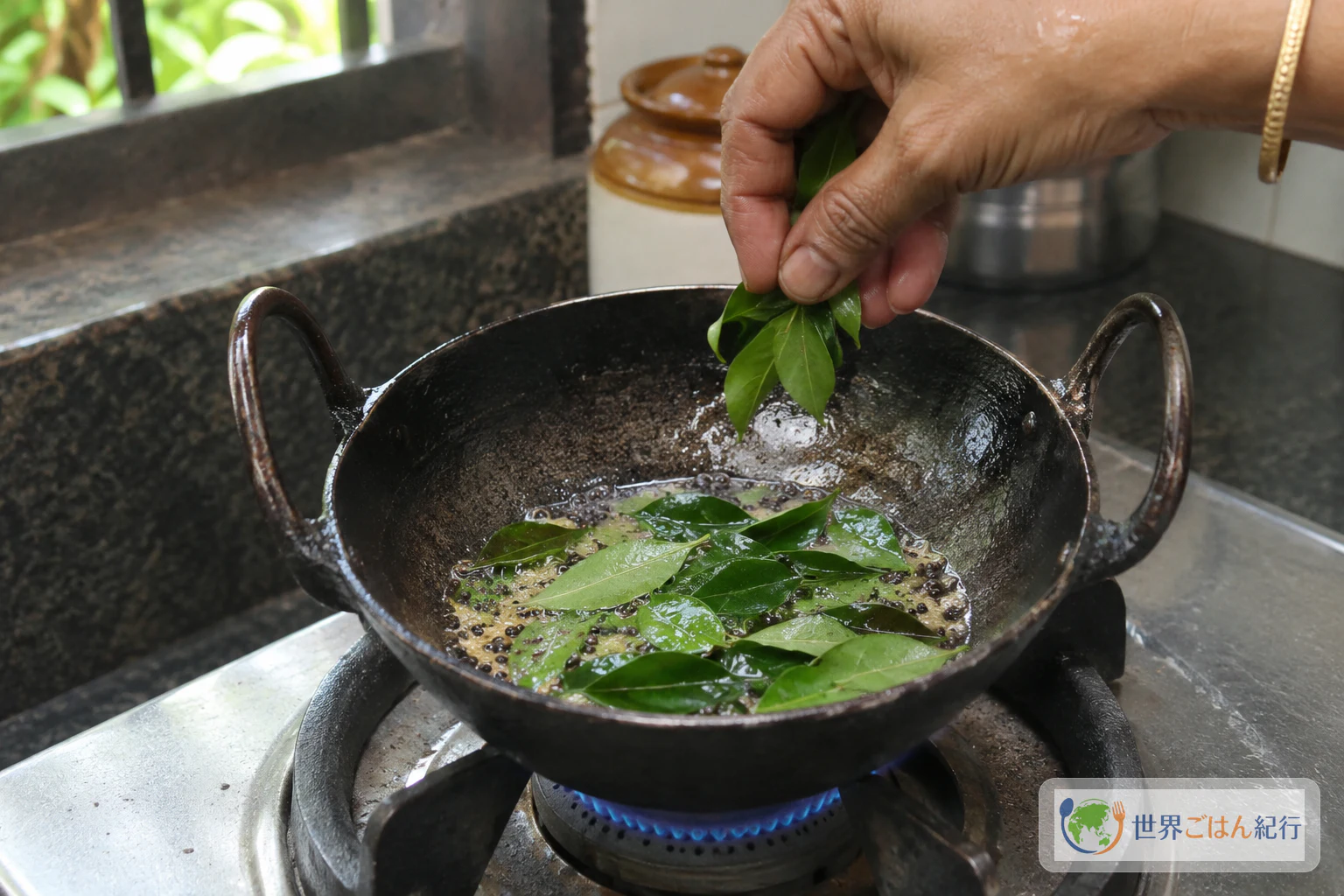
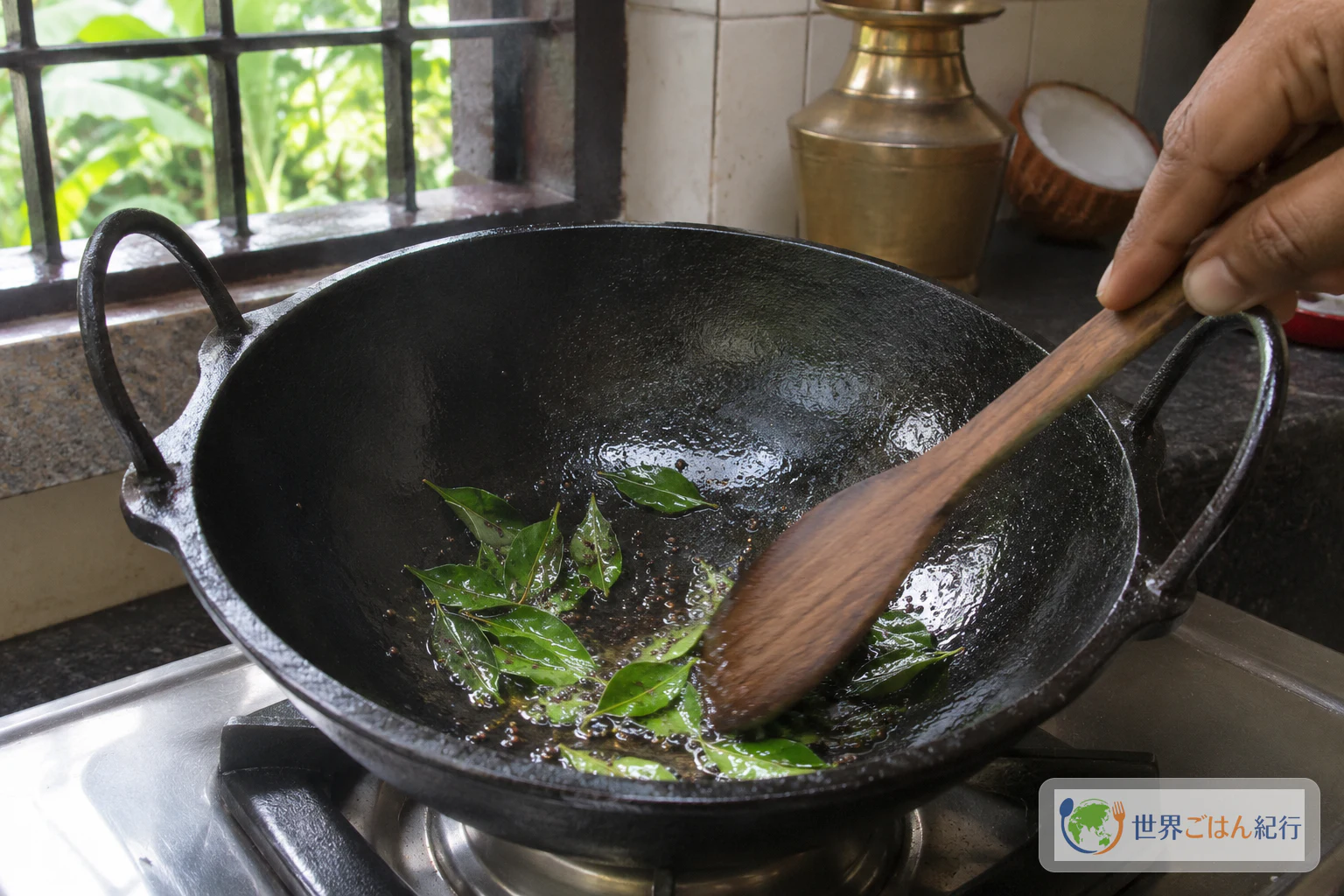
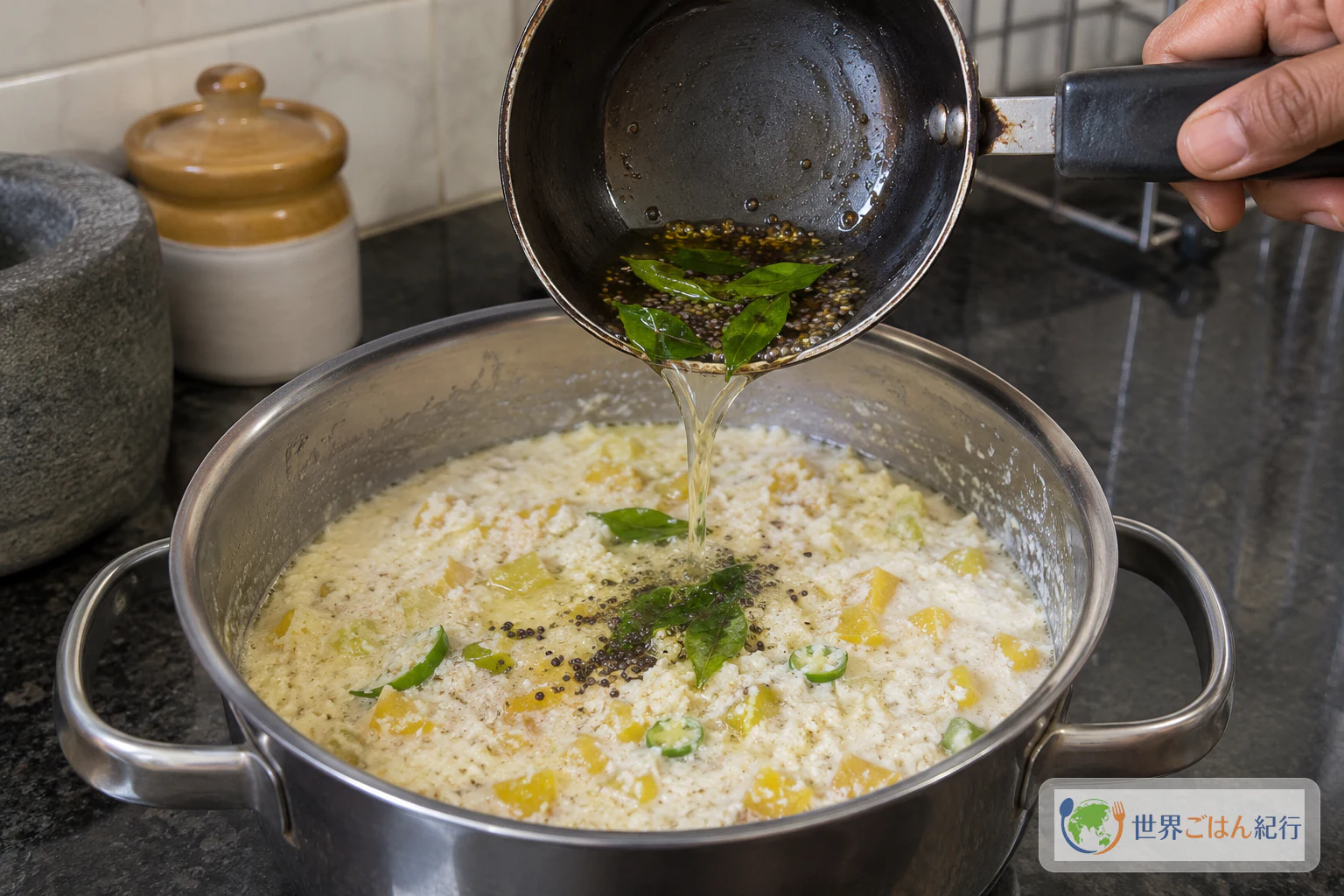
This version belongs to the cooking of India's Kerala and has three parts: yellow cucumber cooked with green chilli and salt, an unheated paste of coconut, mustard seeds and curd, and a hot tempering of mustard seeds and curry leaves in coconut oil.
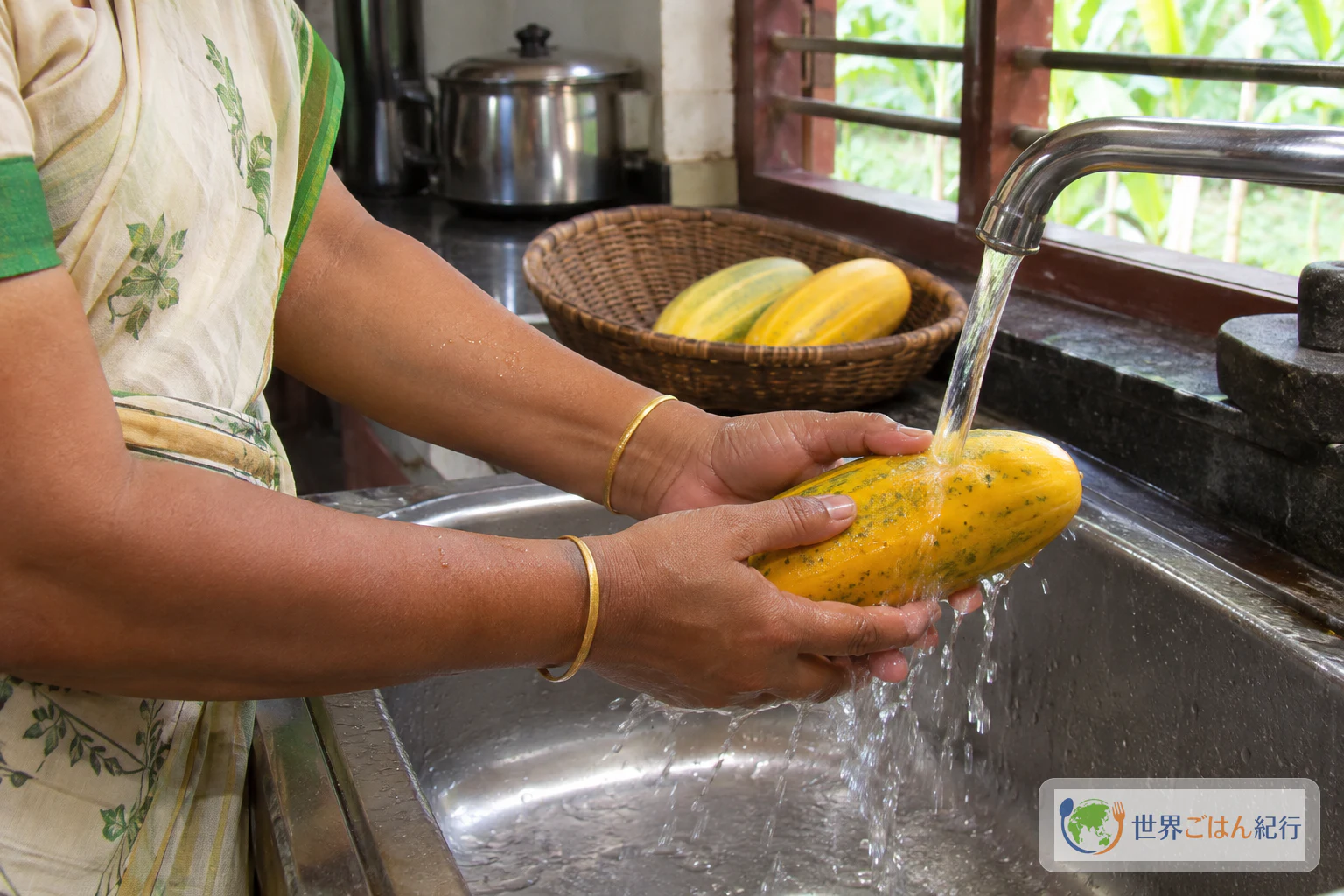
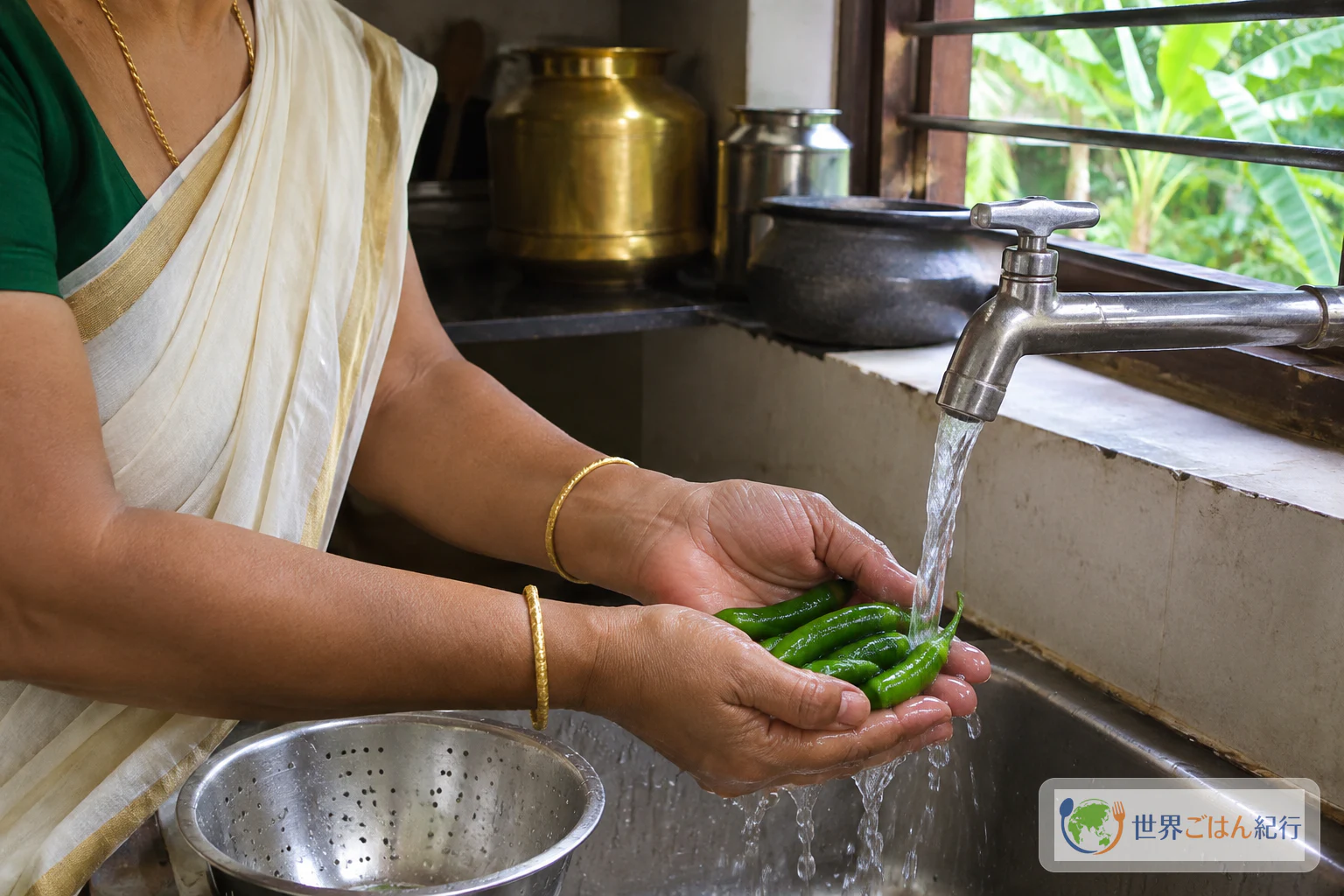
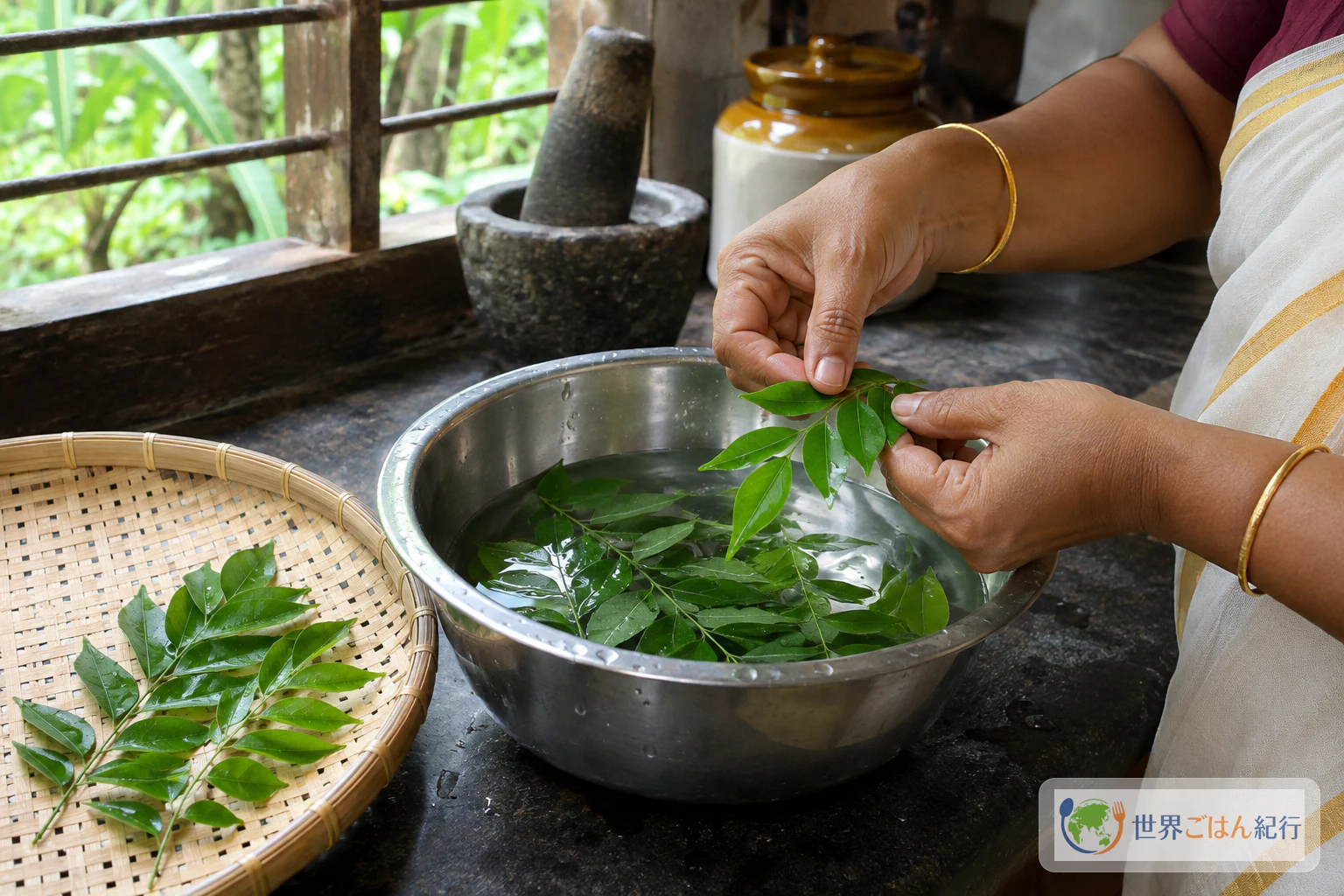
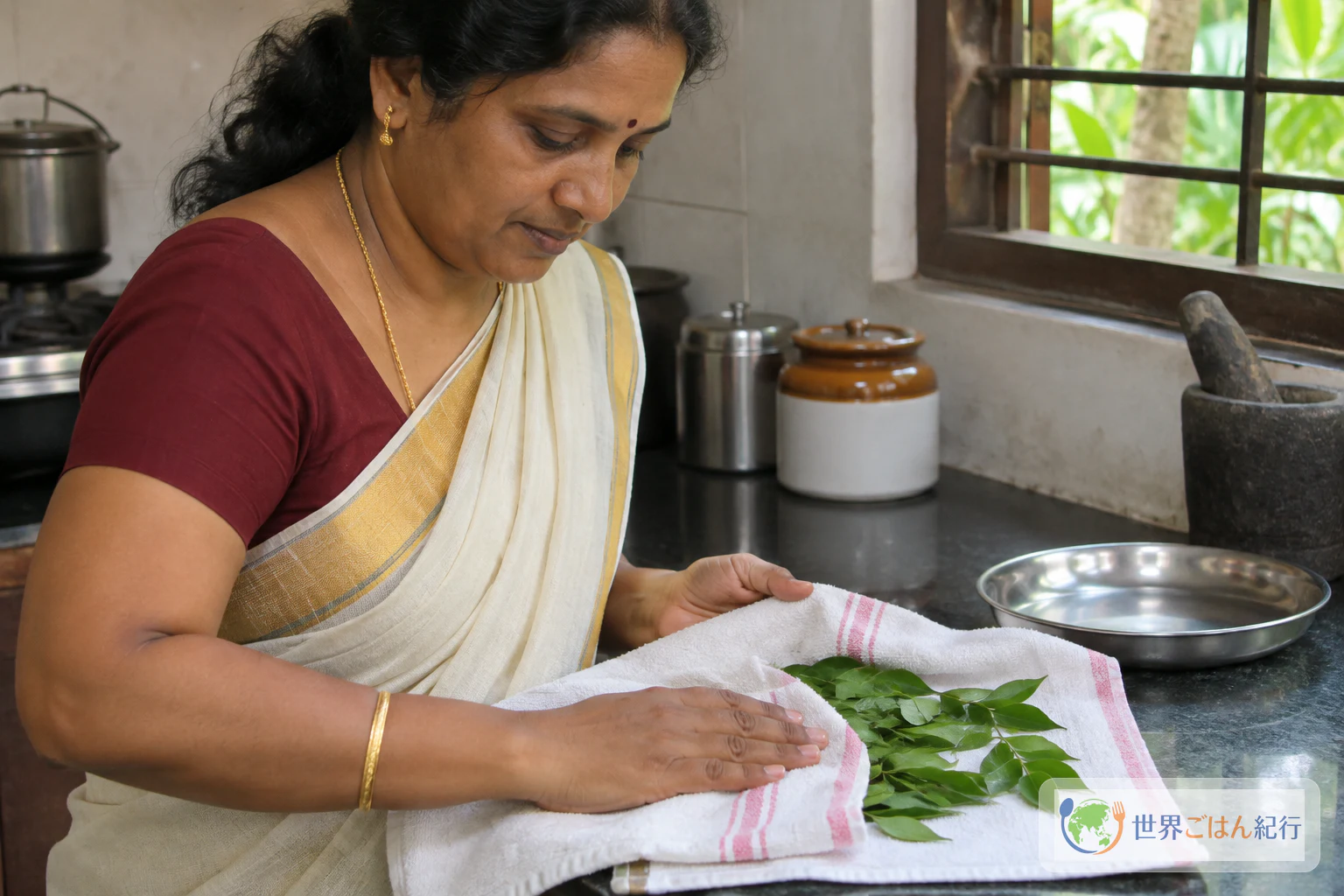
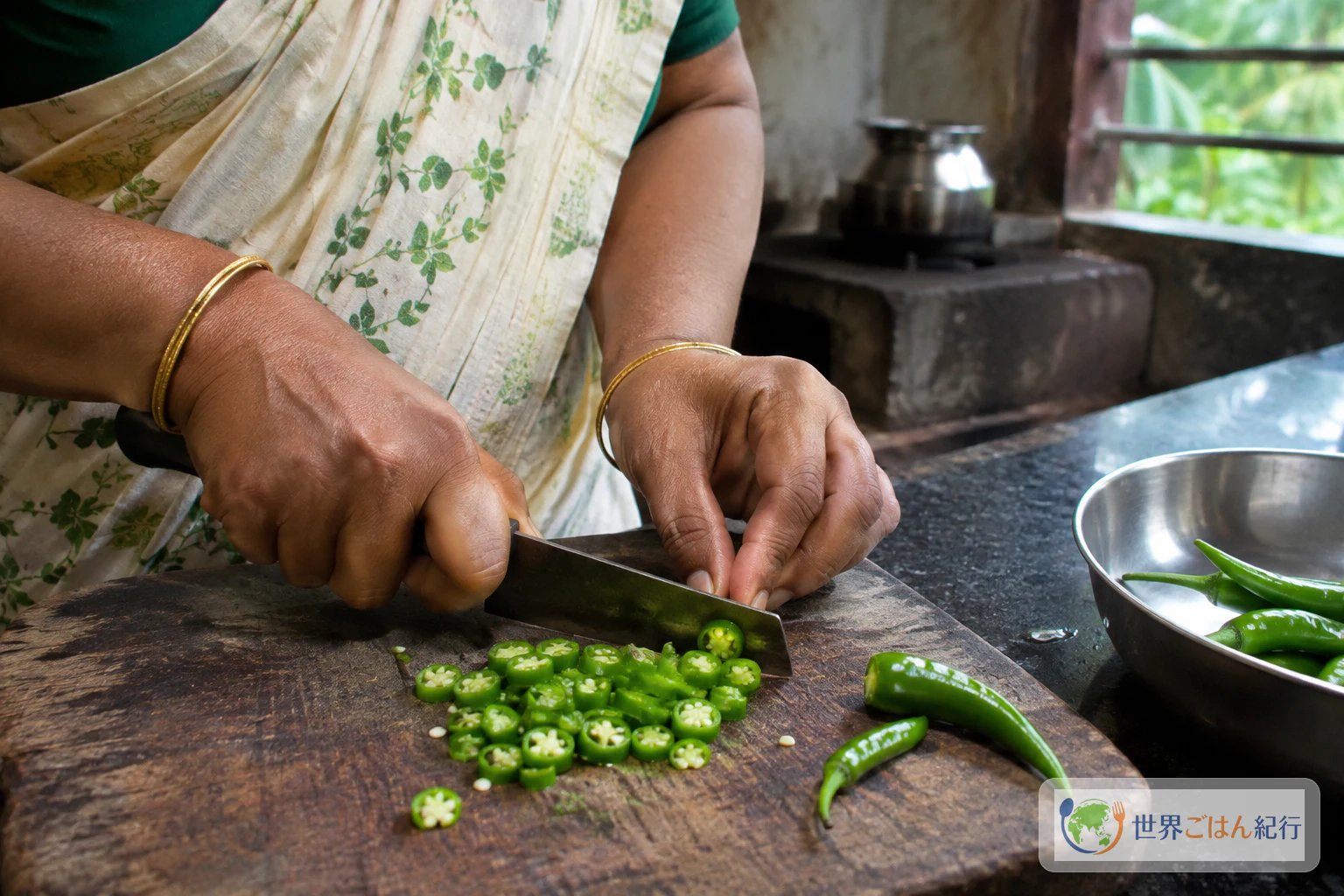
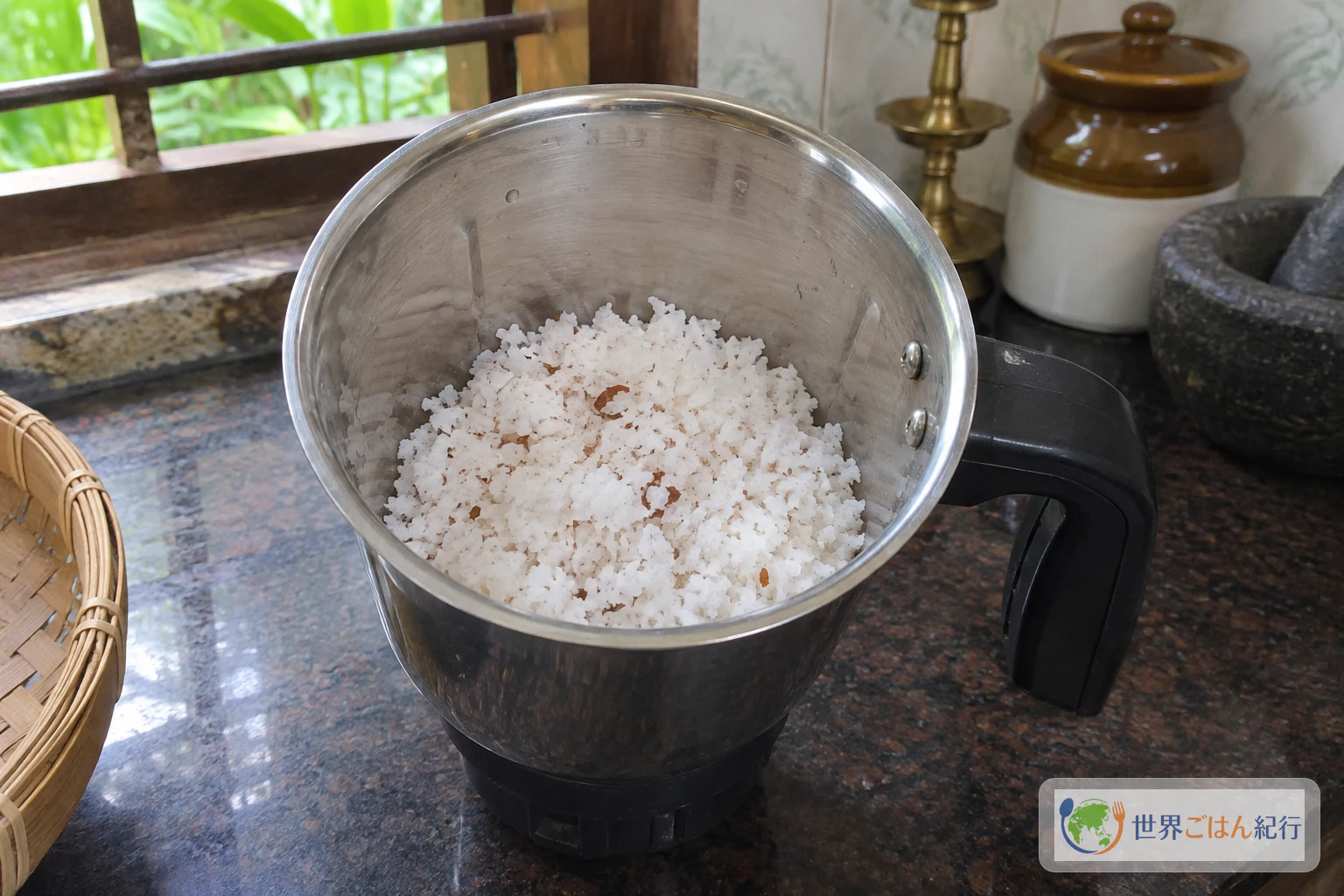
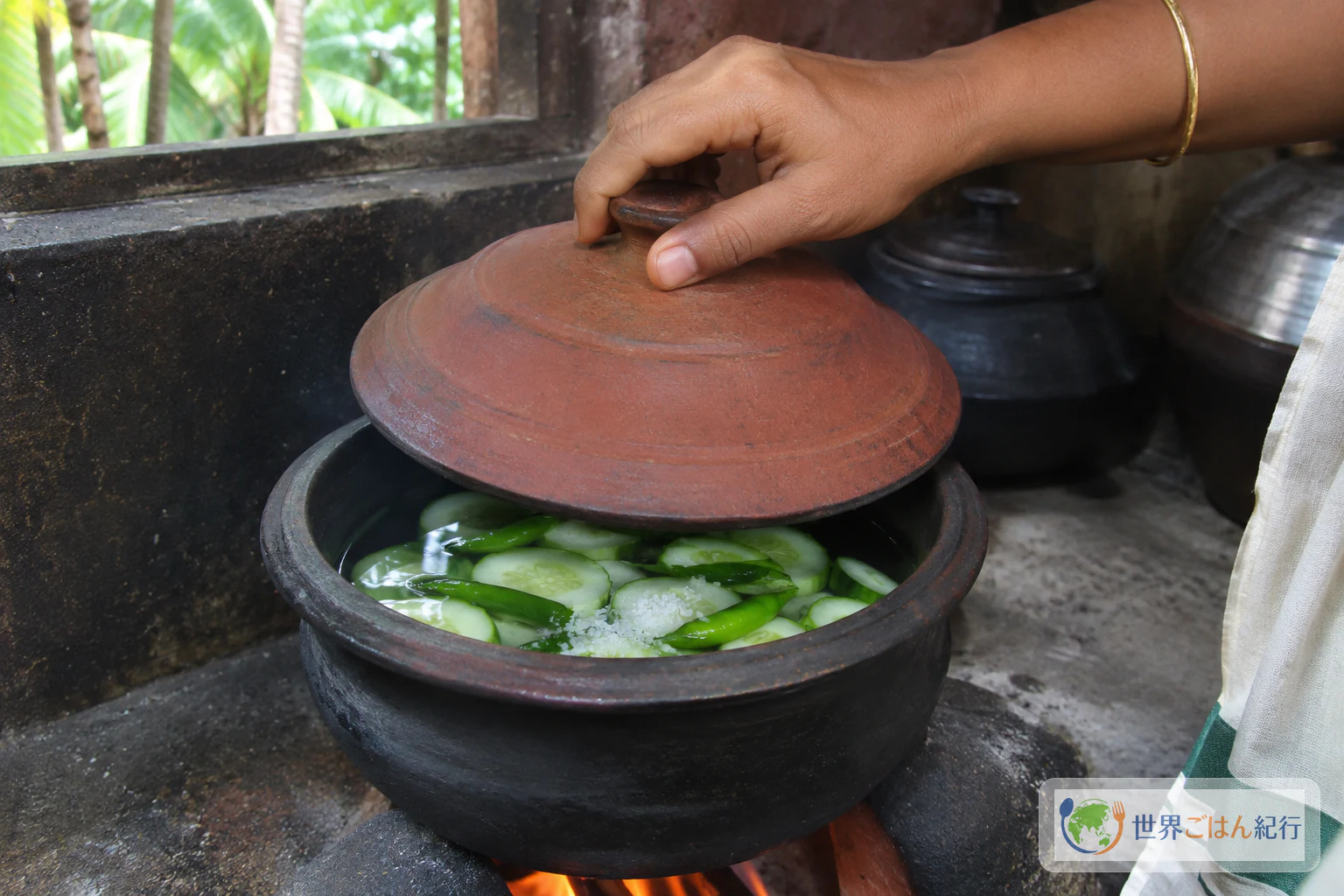
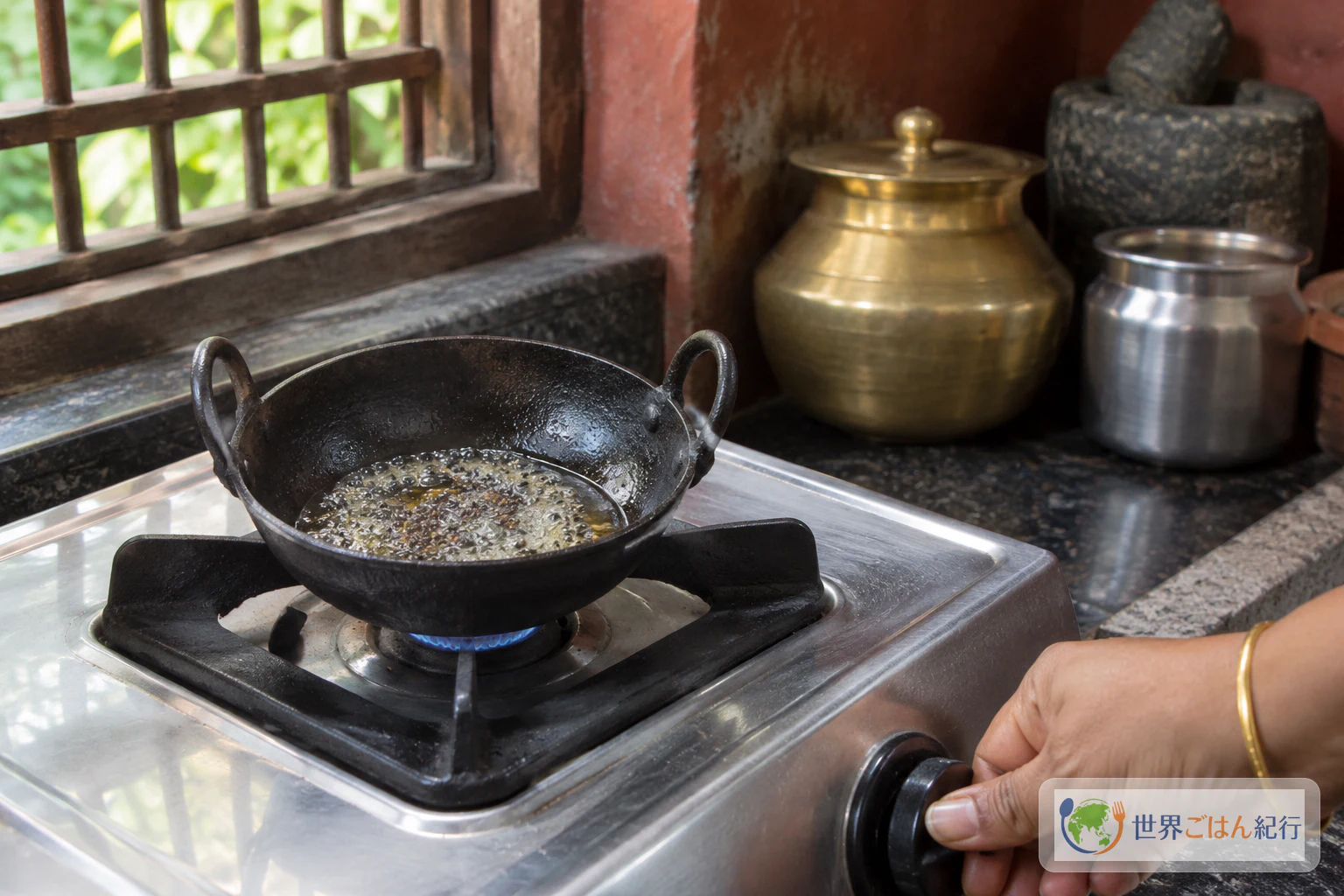
Sekai Gohan has not test-cooked this recipe. The amounts and method follow Shaan Geo's published recipe, with one editorial addition: washing the produce and your hands, based on U.S. FDA guidance. The recipe gives no storage or reheating directions, and none are added here. The step images illustrate each action; they do not show exact amounts, temperatures or timing, and they are not evidence of food safety.
What Kerala Kichadi Is
Kerala Tourism describes sadya as a meal with a set of dishes around rice, and describes kichadi as a side dish of cucumber or ladies' finger (okra) cooked in curd, seasoned with mustard, red chillies, curry leaves and coconut oil. That is the cultural outline of the dish. The recipe below is one specific form of it, made with yellow cucumber and green chillies and without red chillies.
Names overlap from one cook and region to another. You may see vellarikka kichadi, cucumber kichadi, vellarikka pachadi or cucumber pachadi, and the same name does not always mean the same recipe. Here the dish is defined by its ingredients: yellow cucumber, curd and coconut, served as a Kerala side dish.
Ingredients for 5 Servings
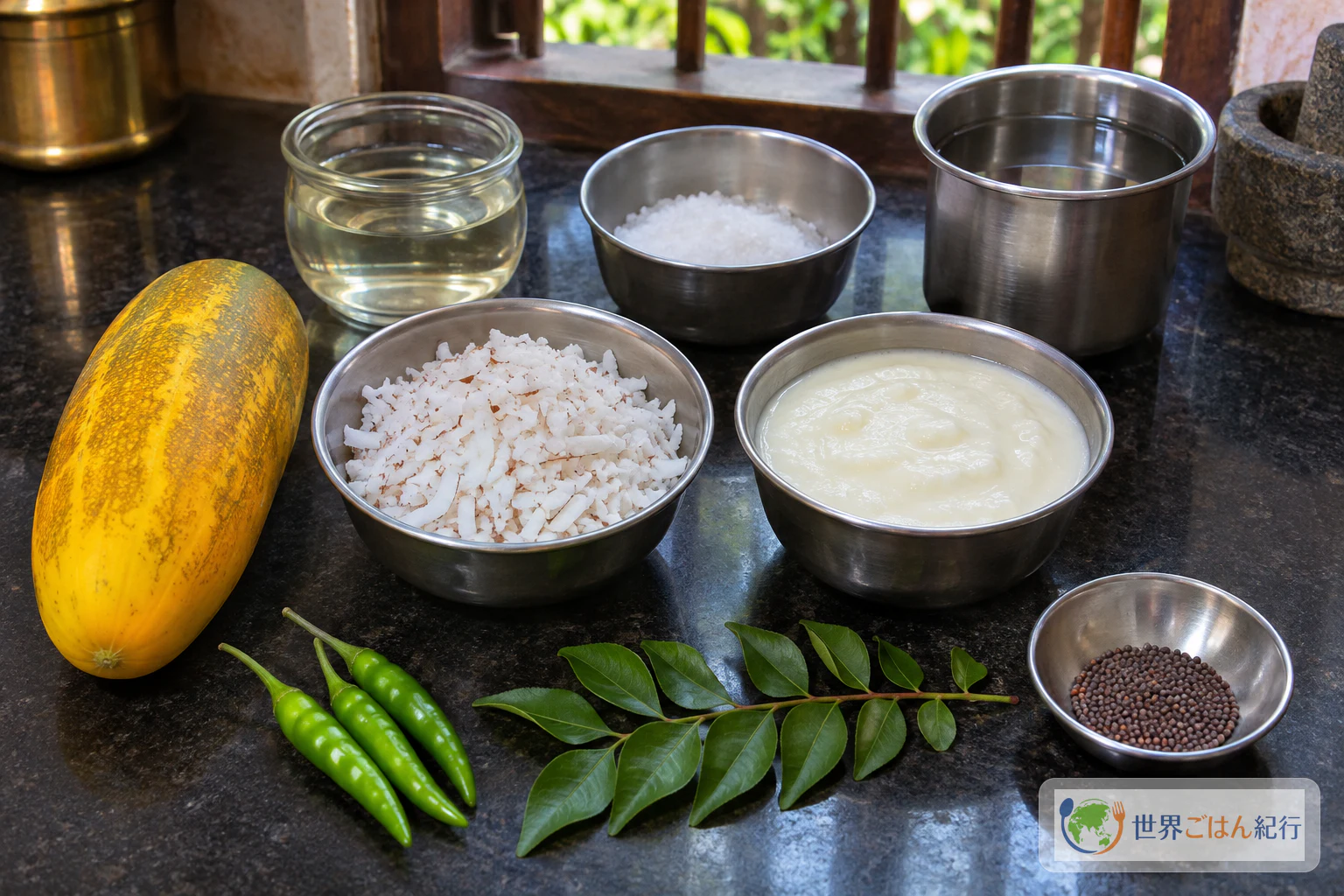
The coconut, the mustard seeds for the paste and the curd go into the pot without further cooking. Choose store-bought grated coconut, mustard seeds and plain curd or yogurt of a kind you would normally eat without cooking.
Equipment
- Knife and cutting board
- Clean cloth or paper towels
- Grinder or blender with a lid
- Ordinary non-pressurized cooking pot with a lid
- Small separate pan for the tempering
- Spoon for mixing and serving
- Serving bowl
Choosing and Swapping
If you cannot find yellow cucumber. An ordinary green cucumber, such as a Japanese cucumber, is our editorial suggestion only. Its water content and texture differ from yellow cucumber, and we have not tried the swap, so we cannot promise the same result or say the same amounts will suit it.
Coconut. Use coconut that is already grated. This article does not cover opening or grating a whole coconut.
Curd. Use store-bought plain curd or plain yogurt. This is not a home fermentation recipe, and products vary.
Other ingredients. Rice, lentils, onion, garlic and red chilli are not part of this version.
Method
The order matters more than speed: prepare, grind, cook, turn off the heat, add the paste and curd, then make the tempering in a separate pan.
Serve it as a side dish with rice.
If Something Goes Off Course
| What you notice | What to do |
|---|---|
| The cucumber is still underdone when you check it | Keep it covered over medium heat until well cooked. Do this before the paste goes in, because nothing is cooked after that point |
| The burner is still on when you reach for the paste | Turn off the heat first, then add the paste and the remaining curd |
| You are tempted to warm the finished pot | Leave it off the heat. This recipe does not heat the pot again after the curd goes in |
| The paste is hard to grind | Stop the machine, scrape down the jar and grind again. The recipe does not use grinding water |
| The mustard seeds are not spluttering | Keep the pan over the heat and wait. Hold back the curry leaves until the seeds splutter and the heat has been reduced |
| Green cucumber gives a different texture or looseness | Expect a difference. This swap is untested, and we have no verified adjustment for it |
Variations and Other Kichadi
Kichadi and pachadi recipes vary widely, so treat each one as its own recipe. Padhu Sankar's Kerala-style vellarikka pachadi on Padhuskitchen is a good contrast because it is also a cucumber, coconut and yogurt side dish for Onam sadya, yet it differs in both proportions and method.
| Point | Shaan Geo's version (used here) | Padhu Sankar's version |
|---|---|---|
| Cucumber | 2 cups chopped yellow cucumber | 1 heaped cup cucumber |
| Curd or yogurt | 1 cup | ¾ cup |
| Coconut | 1 cup grated | ⅓ cup |
| Green chillies | 3 | 2 |
| Other additions | None | Pearl onion, red chilli and others |
| The paste | Added unheated, with the heat off | Heated for a few minutes |
Use one recipe or the other rather than mixing their amounts and steps. Beyond cucumber, Kerala Tourism also describes kichadi made with ladies' finger (okra), and Shaan Geo's page includes bitter gourd, ash gourd and papaya recipes. Those are separate recipes and are not covered here.
Frequently Asked Questions
Is this the same as khichdi?
No. Khichdi is cooked with rice and lentils. This kichadi contains neither and is a Kerala vegetable and curd side dish served with rice.
When does the curd go in?
Half goes into the grinder with the coconut and mustard seeds. The other half goes into the pot after the heat is off, right after the paste. The recipe does not boil the mixture after that.
Why is the mustard divided?
The two portions do different jobs. In this recipe, 1 tsp is ground raw into the coconut paste, and ½ tsp is spluttered in hot coconut oil for the tempering.
Can I use an ordinary green cucumber?
You can try it as an editorial substitute, but it differs from yellow cucumber in water content and texture. We have not tested it and cannot promise the same result.
Do I need to peel and seed the cucumber?
Shaan Geo's recipe calls for chopped yellow cucumber and does not ask for peeling or seeding. Padhu Sankar's separate recipe does include those steps.
How long does it take?
Shaan Geo's page estimates 10 minutes of preparation and 15 minutes of cooking, 25 minutes in total. Treat those as estimates and judge the cooking by whether the cucumber is well cooked.
Why are the amounts only in cups?
The recipe does not define the capacity of its cup, so we have not converted the amounts to grams or milliliters. Using the same cup throughout keeps the proportions consistent.
Sources
- Shaan Geo, TastyCircle, "Kichadi (വെള്ളരിക്ക കിച്ചടി) - Vellarikka Kichadi - Kerala Sadhya Recipe." The recipe followed in this article: its description, ingredients, 5 servings, time estimates and method, plus the author's 2016 reply describing it as a Kerala rice side dish. https://www.tastycircle.com/recipe/kichadi/
- Department of Tourism, Government of Kerala, "Sadya." Used for the makeup of a sadya and its description of kichadi as a side dish of cucumber or ladies' finger in curd, seasoned with mustard, red chillies, curry leaves and coconut oil. Not used for this recipe's amounts or method. https://www.keralatourism.org/oriya/kerala-food/sadya.php
- PadhuSankar, Padhuskitchen, "Vellarikka Pachadi Kerala Style-Cucumber Kichadi Recipe-Onam Sadya Recipes." Used only as a comparison with a different formula and cooking order. https://www.padhuskitchen.com/2014/09/vellarikka-pachadi-kerala-style.html
- U.S. Food and Drug Administration, "Selecting and Serving Produce Safely." Used for rinsing produce under running water, drying it with a clean cloth or paper towel, and washing hands with soap and warm water for at least 20 seconds. Not a basis for storage rules or safety guarantees. https://www.fda.gov/food/buy-store-serve-safe-food/selecting-and-serving-produce-safely