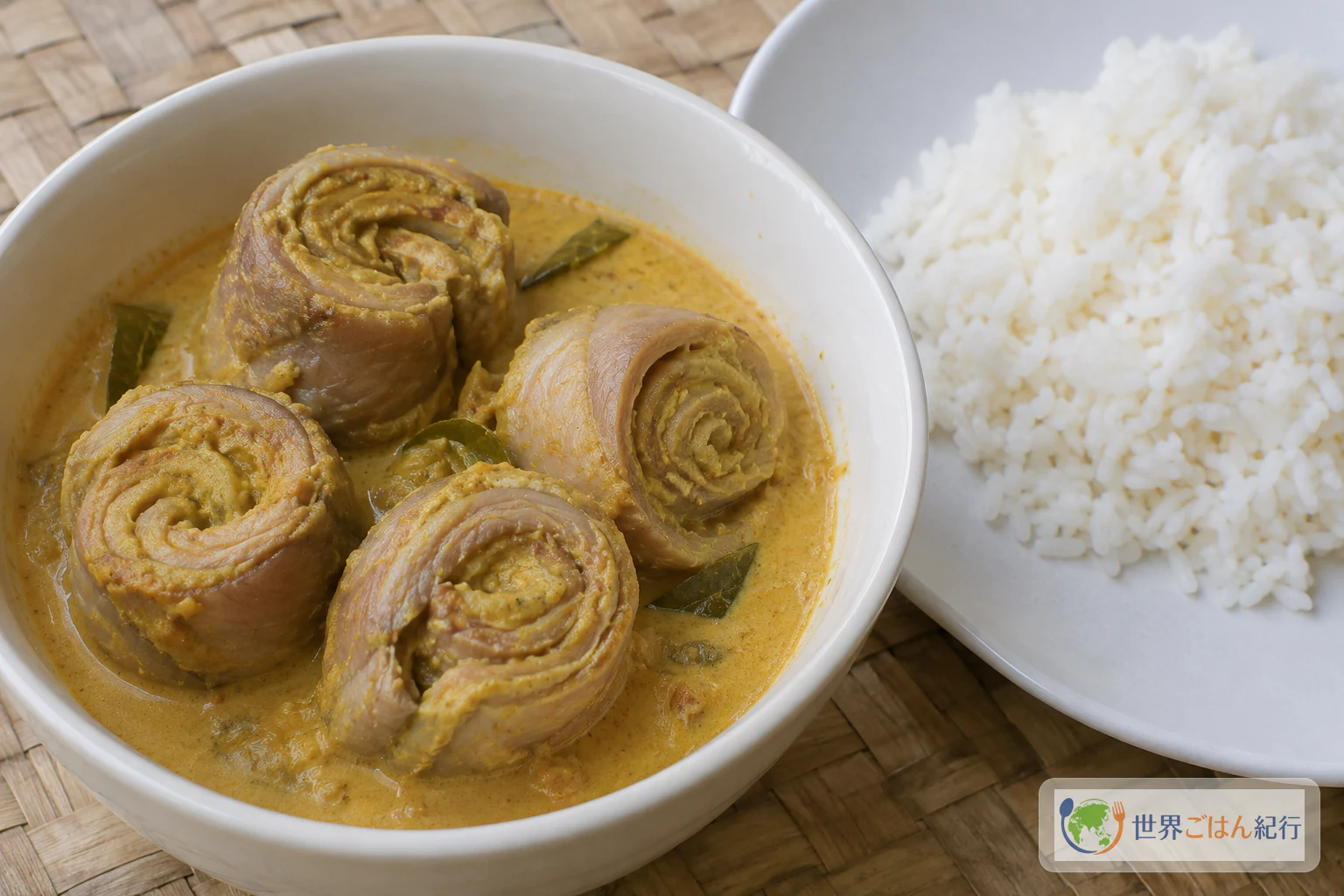
Kandu Kukulhu: Tuna Rolled Around Spice Paste, Then Simmered
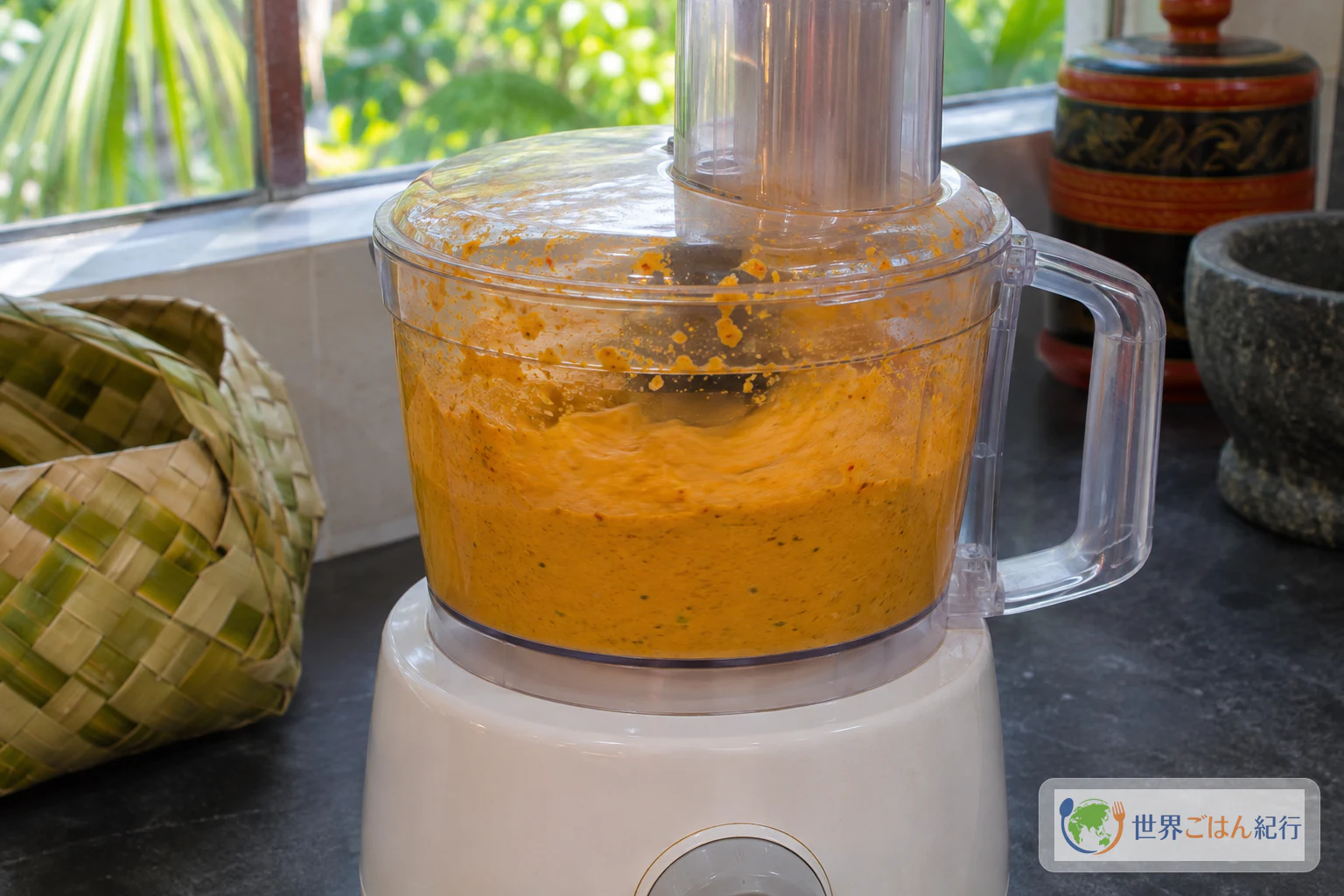
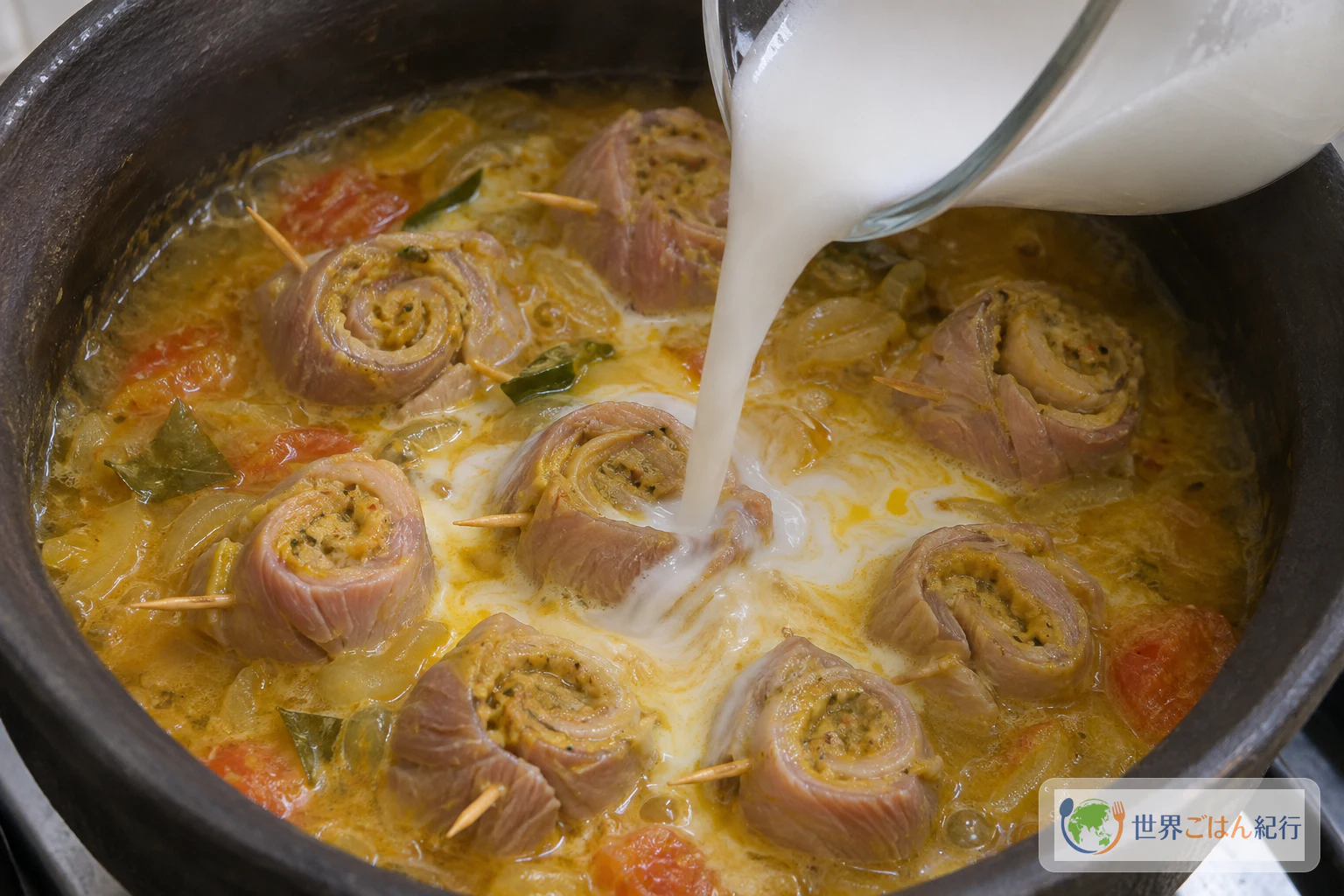
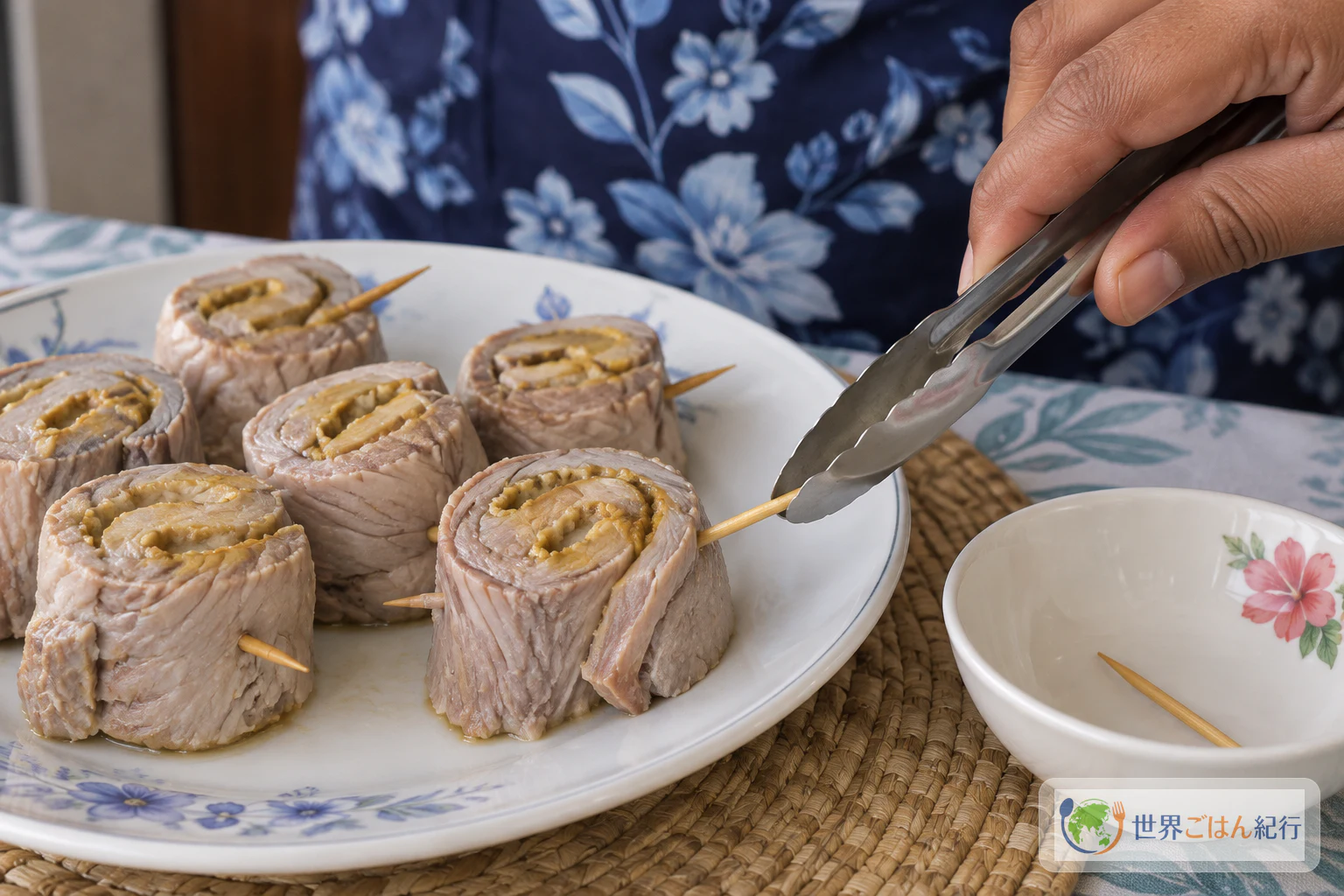
Blend the paste until smooth, keep the tuna in tight rolls, and add the dissolved coconut milk only near the end. Take out every toothpick before anyone eats.
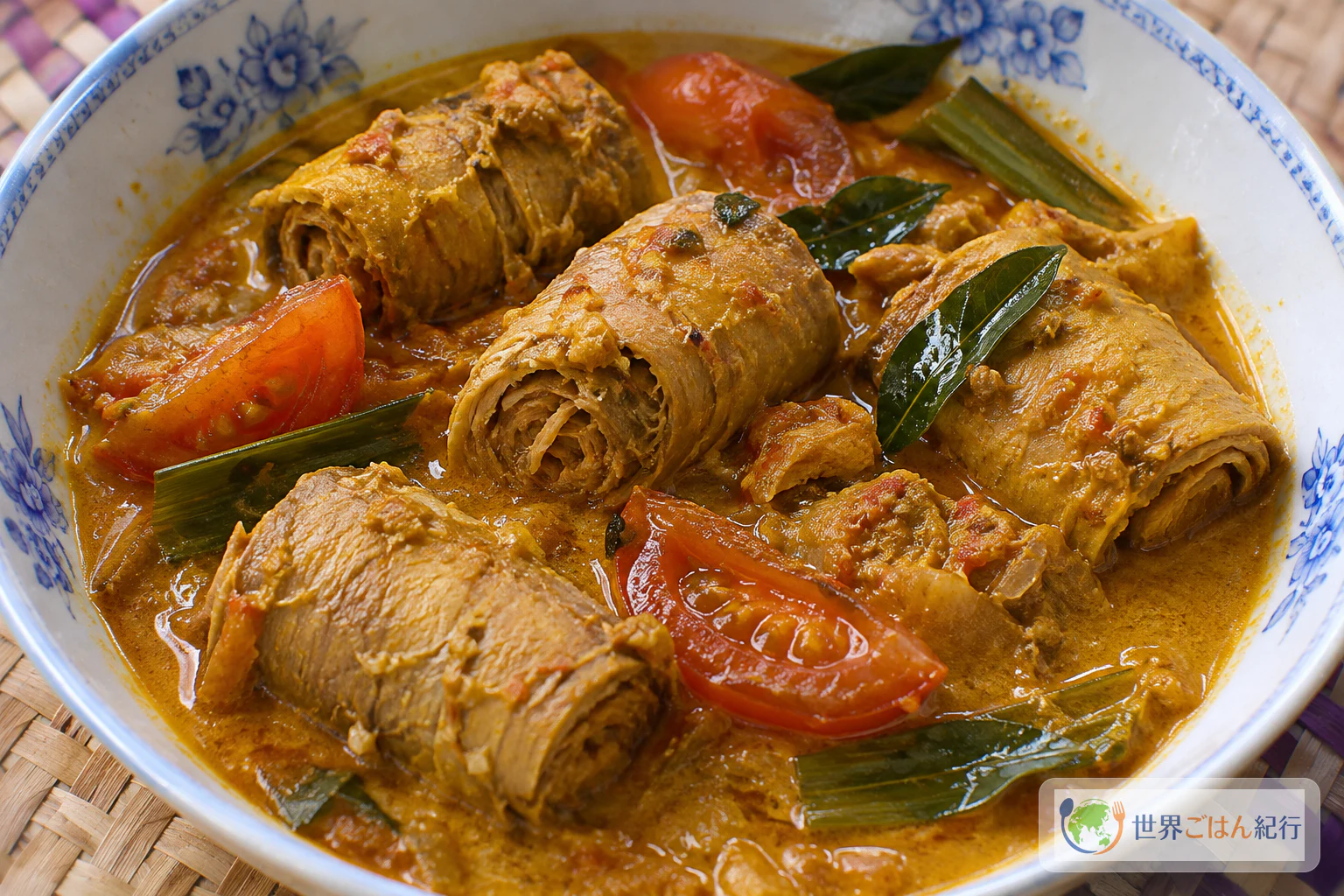
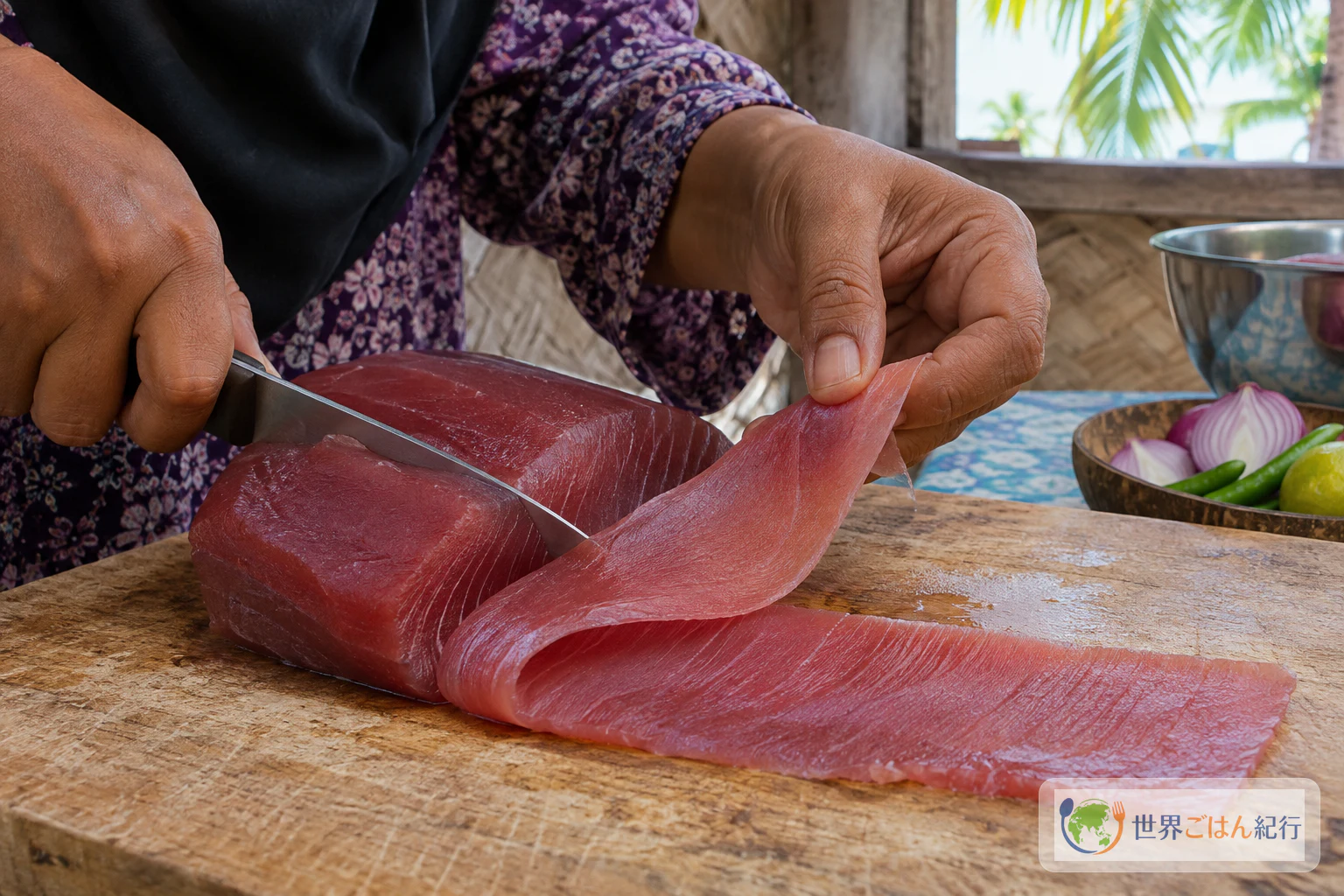
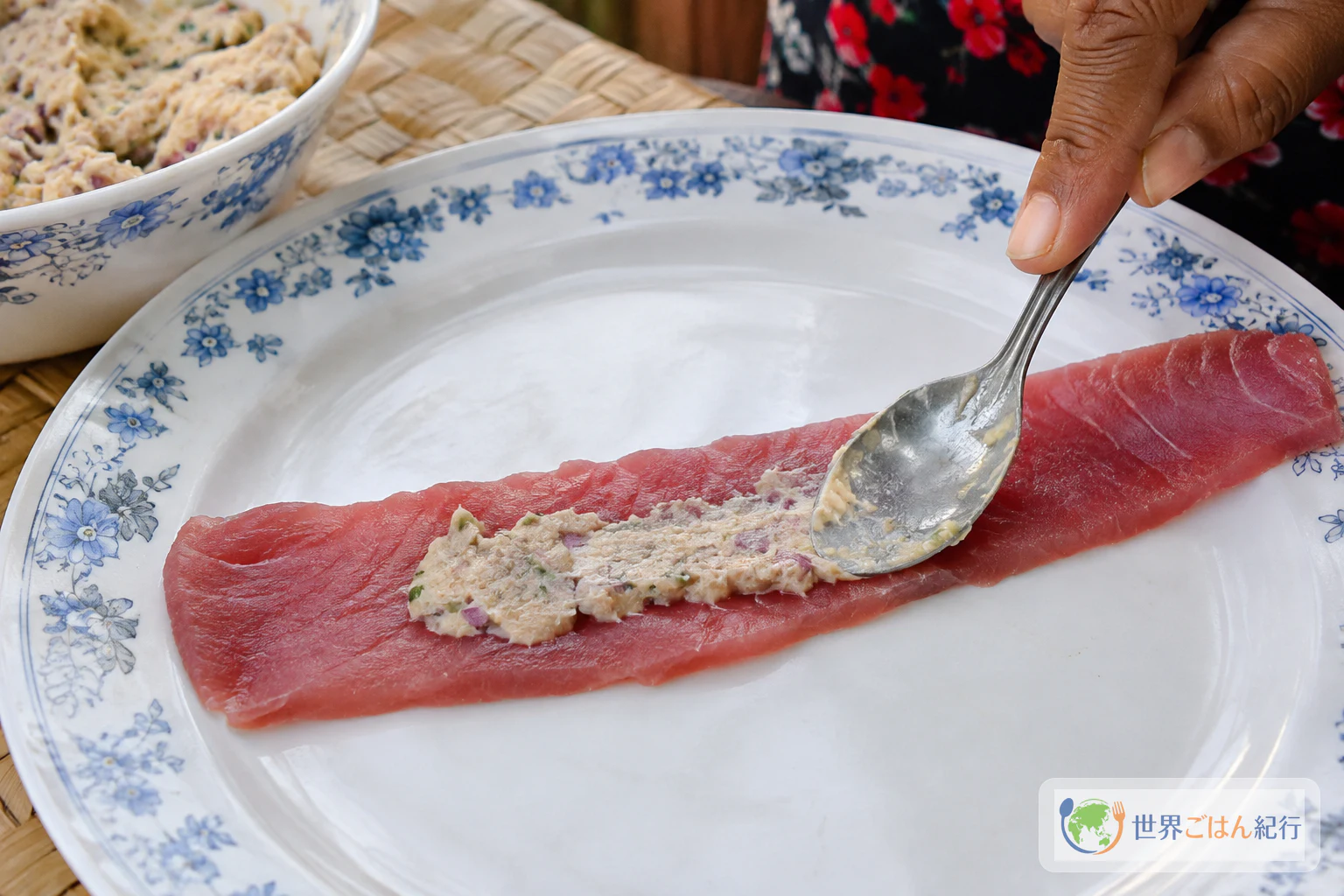
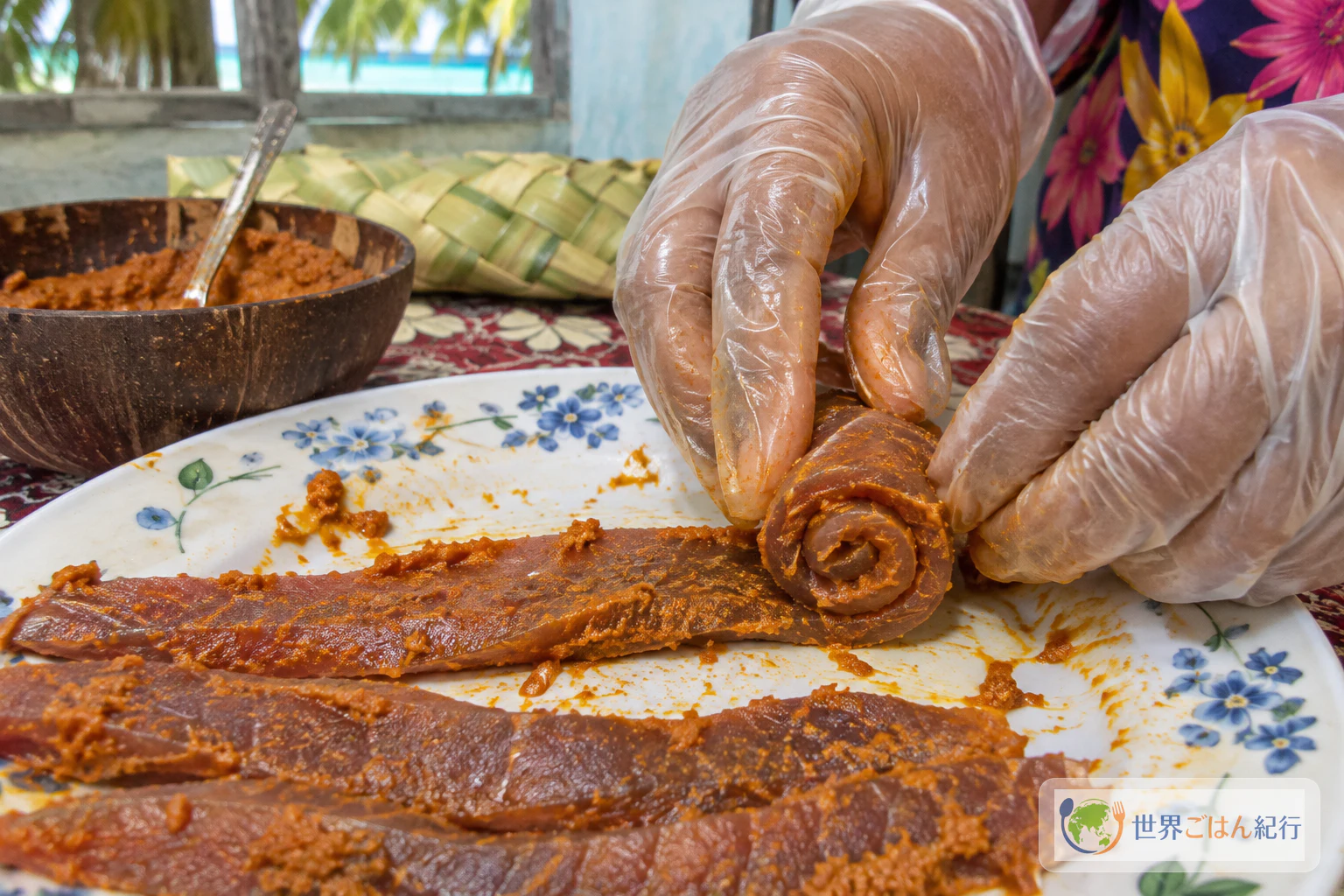
In an iftar menu for Edition.mv, the cook Aishath Nashida, known as Nattulicious, recalls the family table on the first day of Ramadan. That memory belongs to Nashida's own family and is not a custom claimed for the whole country, but it gives this curry a warm setting. Long strips of fresh tuna are spread with a coconut and spice paste, rolled up, and simmered in a curry made from the same paste.
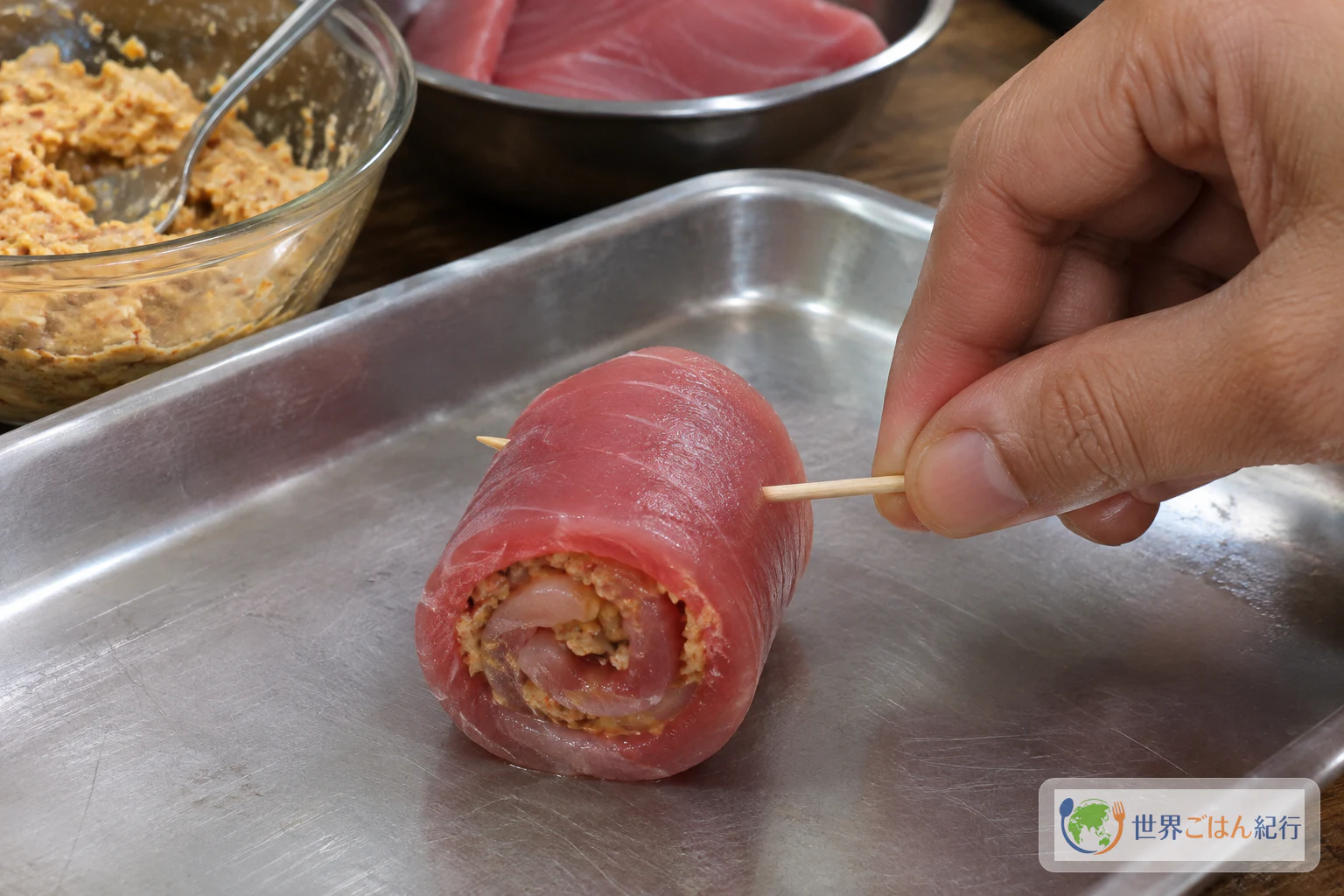
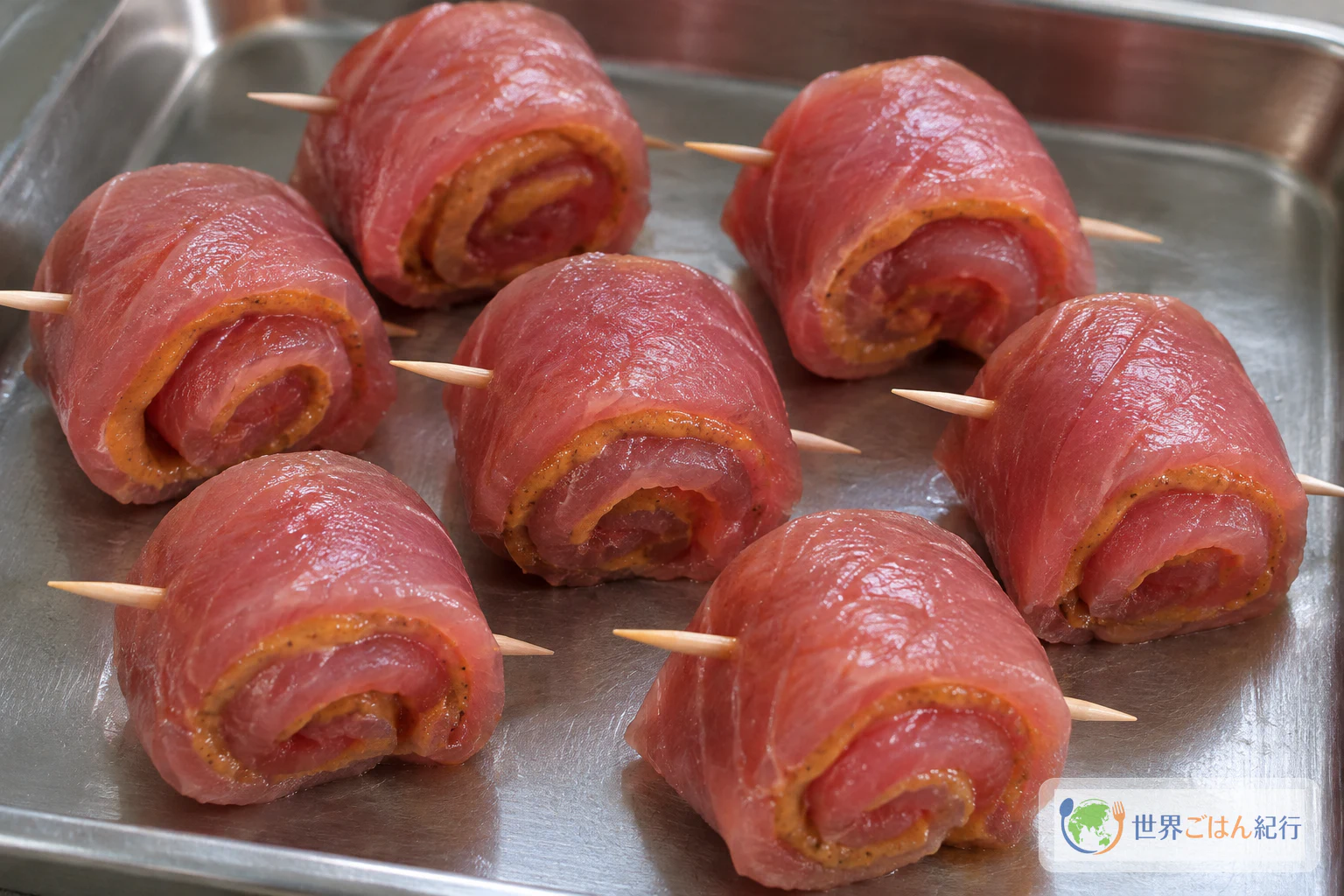
The rolling is what sets kandu kukulhu apart. It is not a general fish curry (mas riha), a chicken curry (kukulhu riha), or maskurolhi, the uncooked tuna-and-coconut side dish. Here, each piece of fish carries a thin layer of paste inside it.
About this version
Sekai Gohan has not kitchen-tested this recipe as a whole.
All amounts and the cooking order come from one recipe: Nashida's Special Tuna Curry, which serves 6 and lists 30 minutes of prep and 30 minutes of cooking. Nashida's article calls its menu a "modern twist," so treat this as a modern home version and not as the only traditional form.
The recipe offers a few alternatives. This article uses whole garlic cloves, toothpicks, habanero and plain rice on the side, and the other options appear under variations.
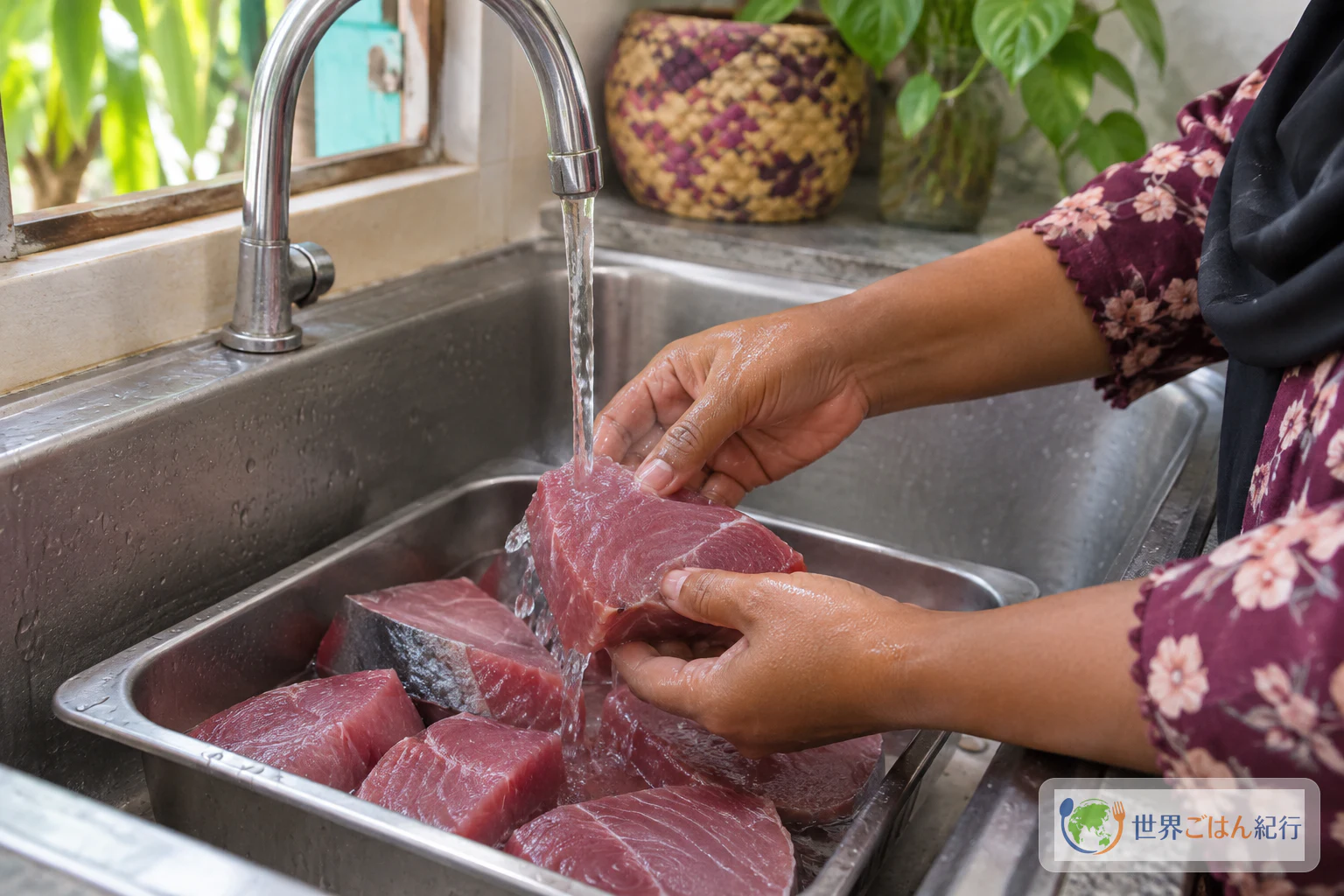
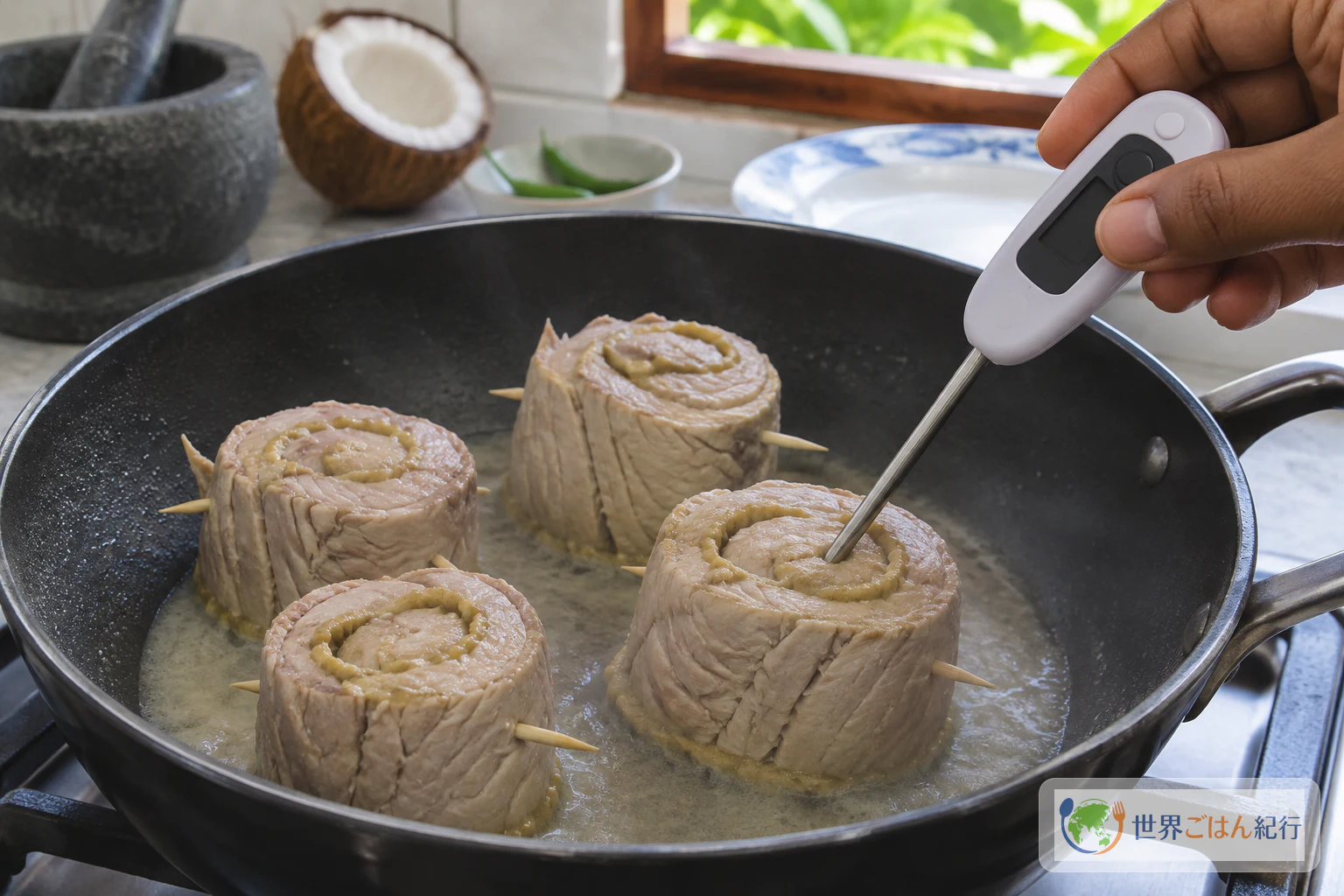
This curry is meant to be eaten thoroughly cooked. Japan's Ministry of Health, Labour and Welfare gives a general home-cooking guide of 75°C at the centre for at least 1 minute. That guide is not specific to this dish, and the recipe's simmering times, the colour of the fish and the photos here do not prove it has been met. The ministry also advises keeping raw fish from contaminating other foods. Rinsing tuna is only a prep step and does not sterilize it.
Ingredients: Paste, Tuna and Pot (Serves 6)
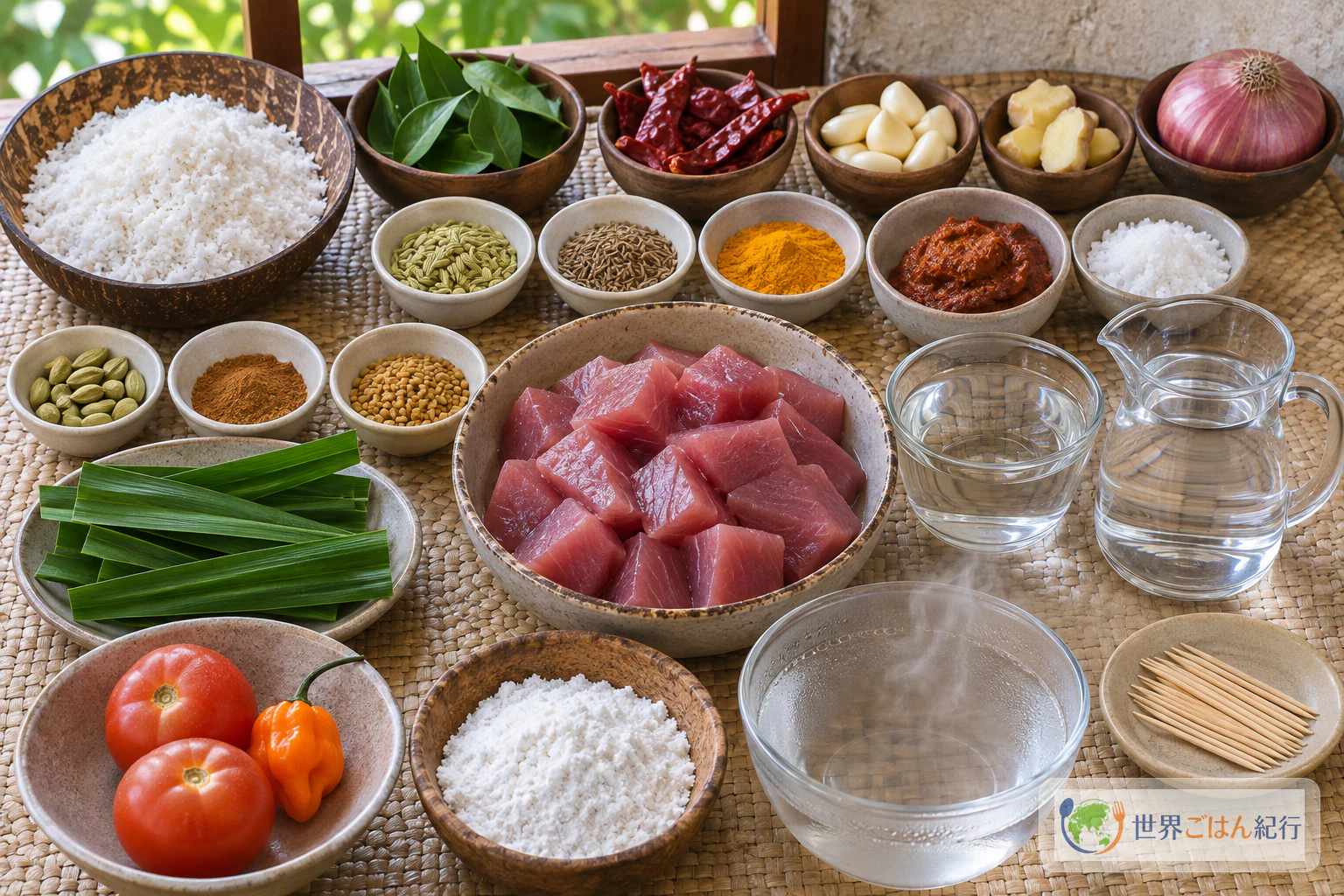
Salt appears three times and curry leaves twice, so measure each one separately. The water for the paste, the water for the pot and the hot water for the coconut milk are also separate.
Equipment
- Food processor
- Grater
- Sharp knife and cutting board for vegetables
- Separate cutting board, knife and tray for raw fish
- Toothpicks
- Medium cooking pan
- Clean tongs and a spoon
- Heatproof jug and whisk
- Food thermometer
- Small dish for discarded toothpicks
Choosing and Substituting
| Item | What to choose | What changes |
|---|---|---|
| Tuna | Fresh tuna in a block you can open into long strips | Choose a block that can be cut into long strips |
| Desiccated coconut | Unsweetened | Sweetened baking coconut makes the curry sweet |
| Coconut milk powder | The powder, dissolved separately | Keep the powder-and-water formula |
| Curry leaves and pandan | Keep both if you can | Leaving them out changes the aroma, and bay leaf does not smell the same |
| Dried chilies and habanero | Reduce either one for less heat | Less heat, but this departs from the listed amounts |
| Tomatoes | Fresh medium tomatoes | Use the 2 fresh medium tomatoes, quartered |
Useful shopping terms are tuna block, unsweetened desiccated coconut, coconut milk powder, curry leaves, pandan leaf, fennel seeds, green cardamom and fenugreek seeds.
Method: Paste, Rolls, Simmer, Finish
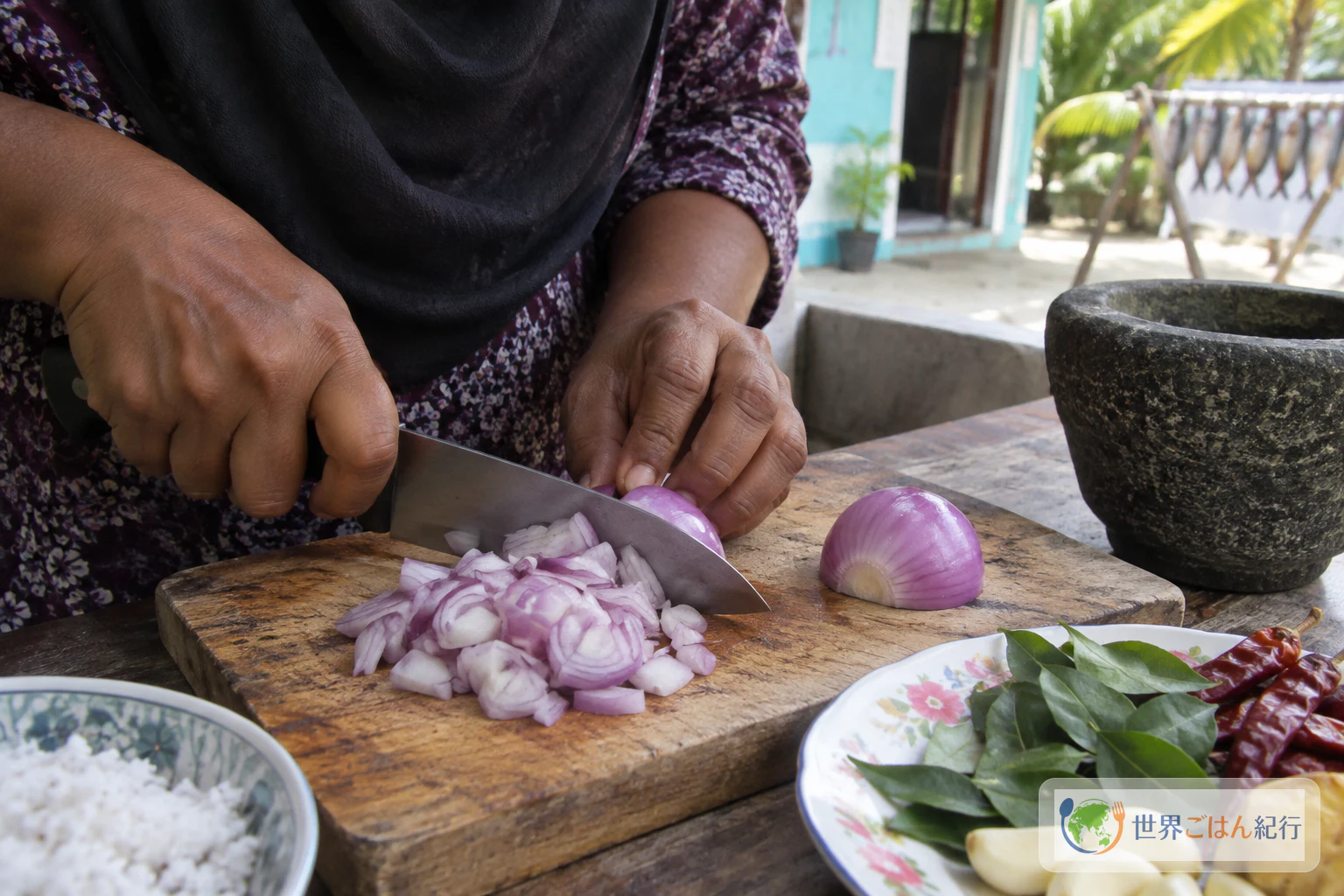
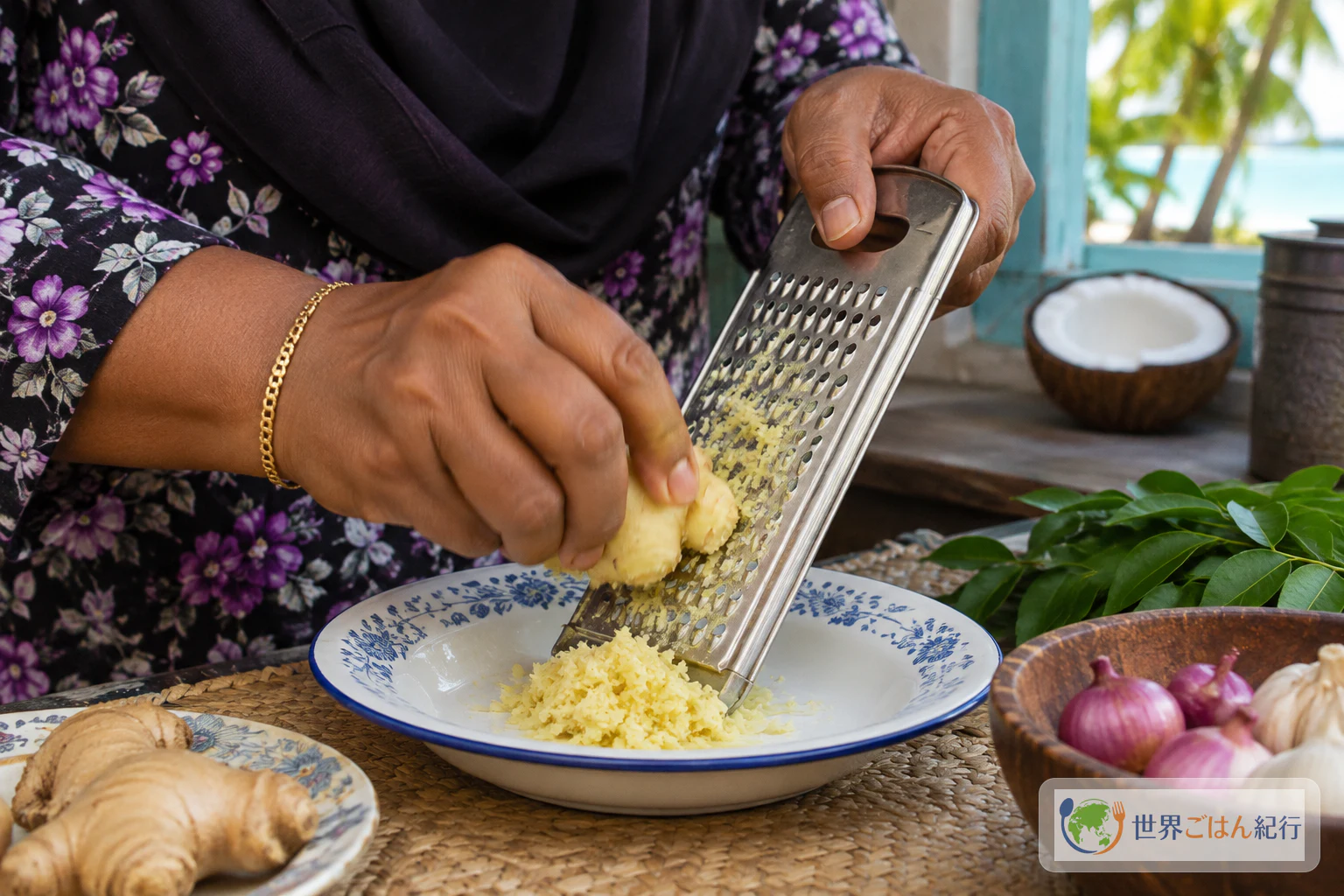
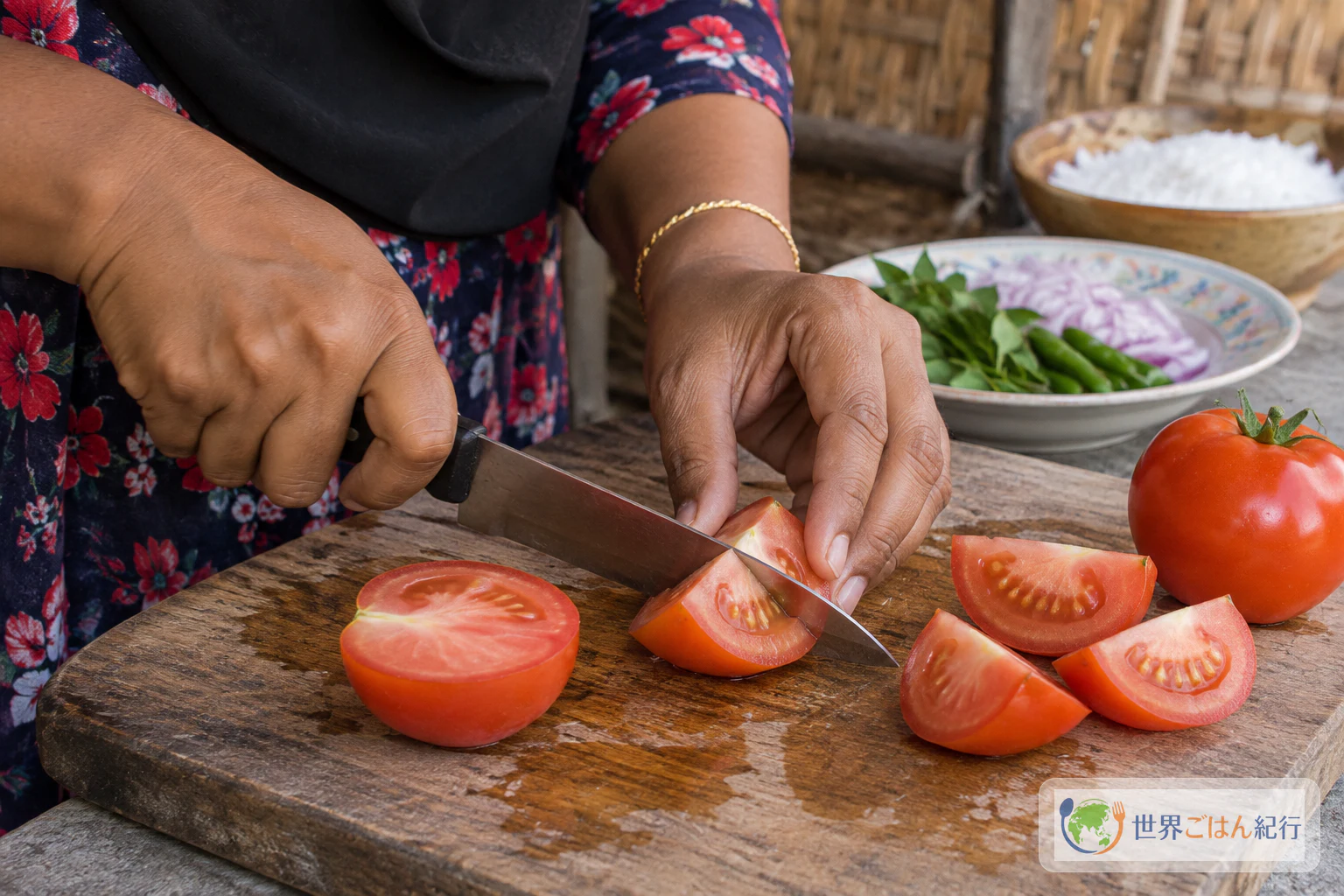
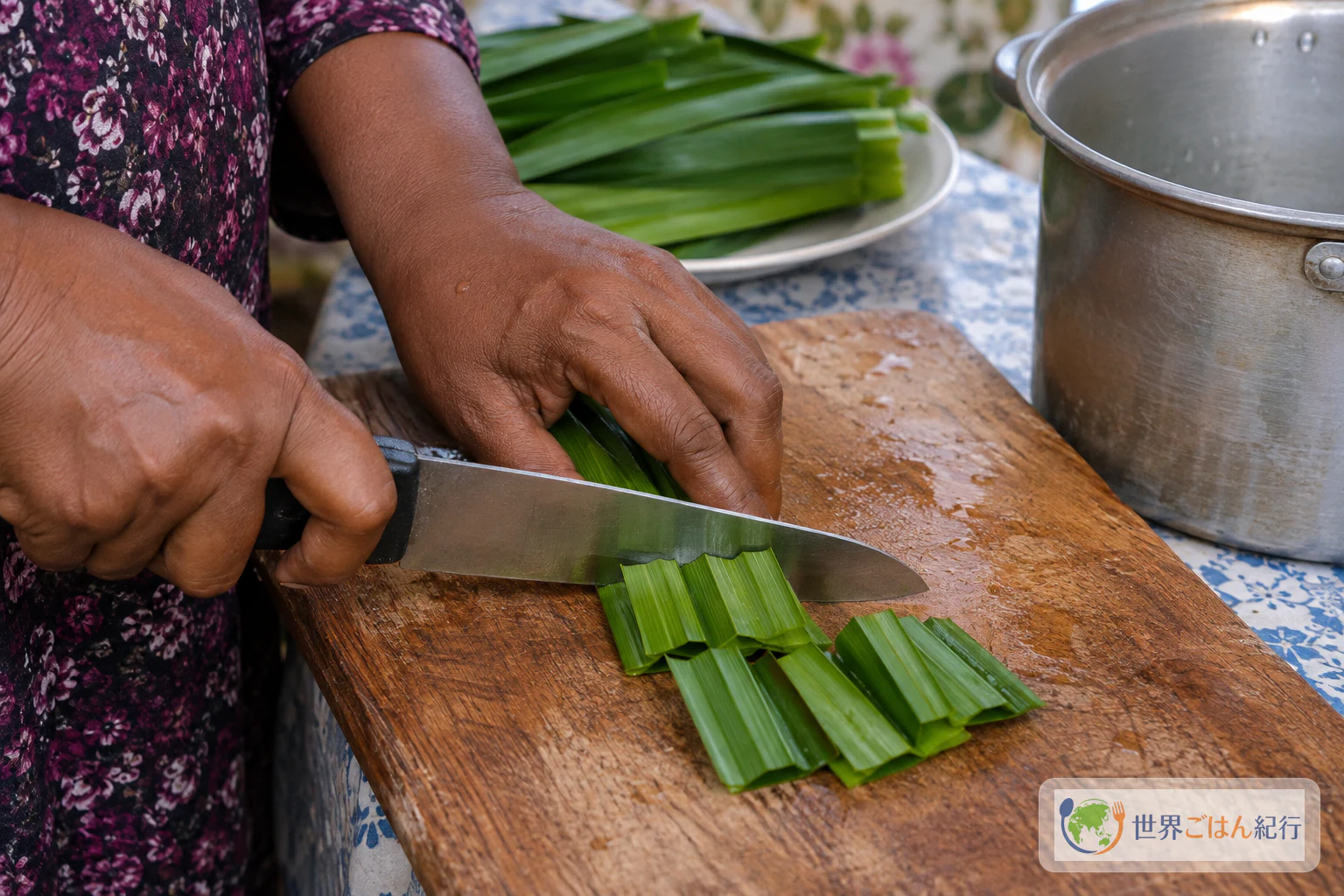
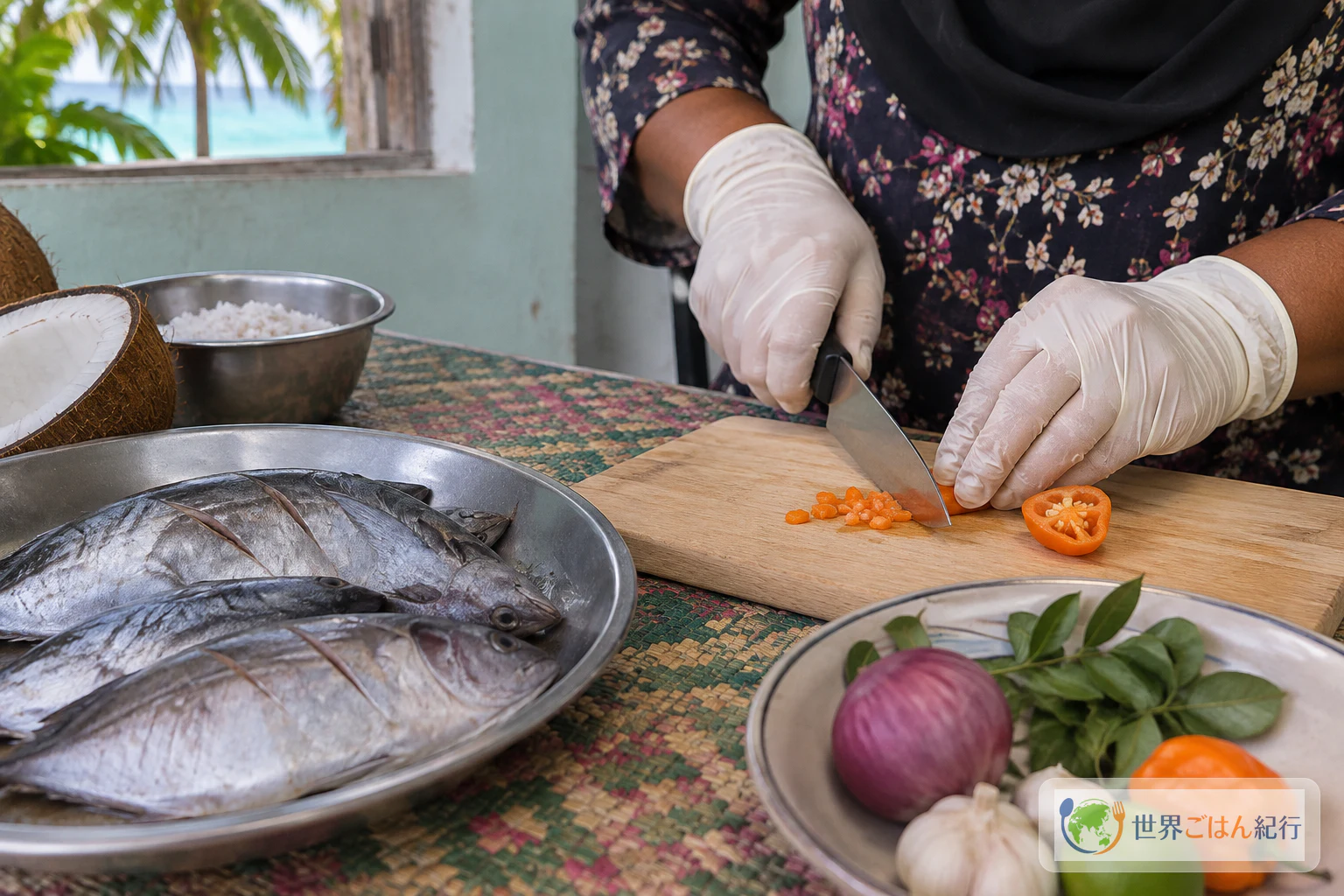
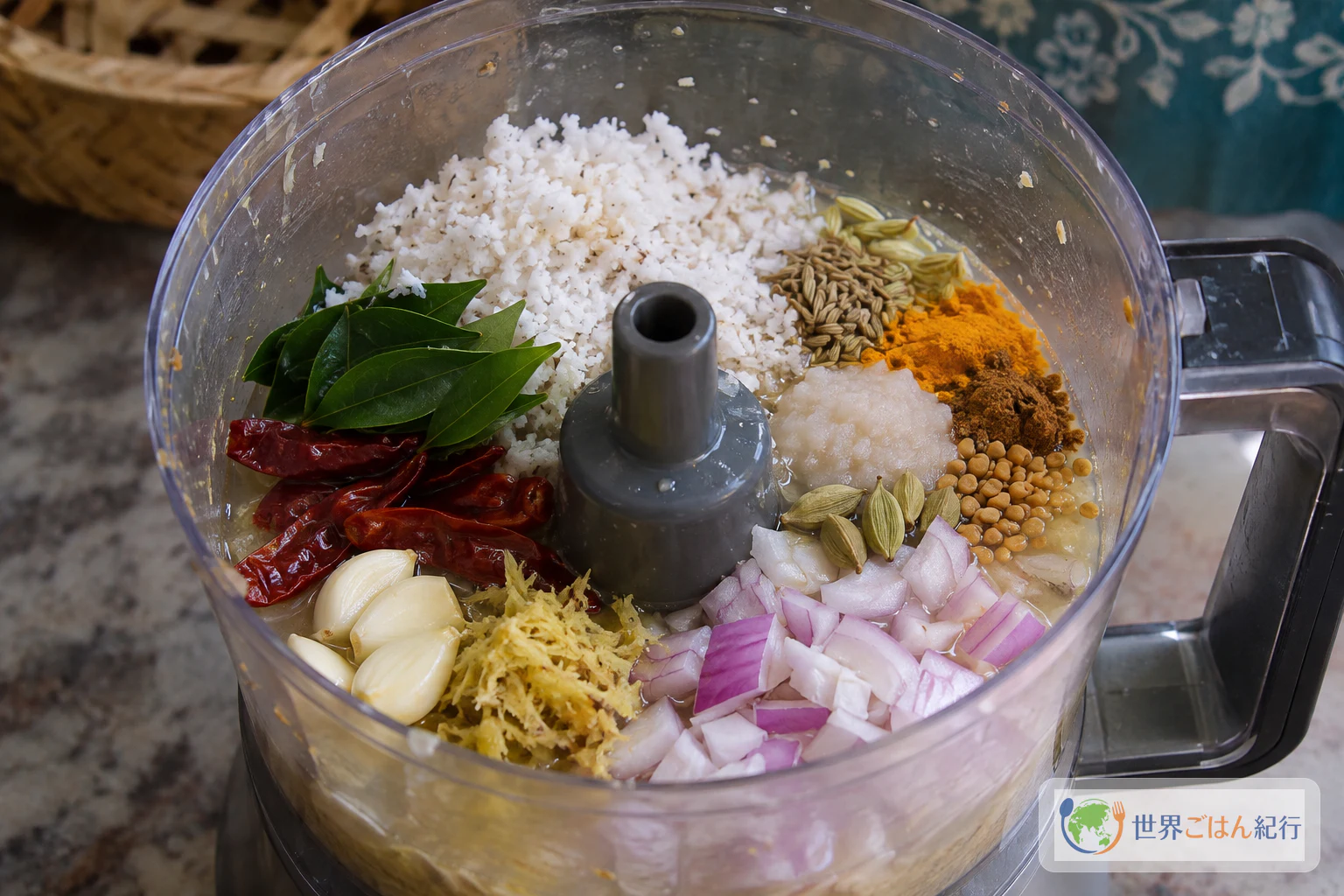
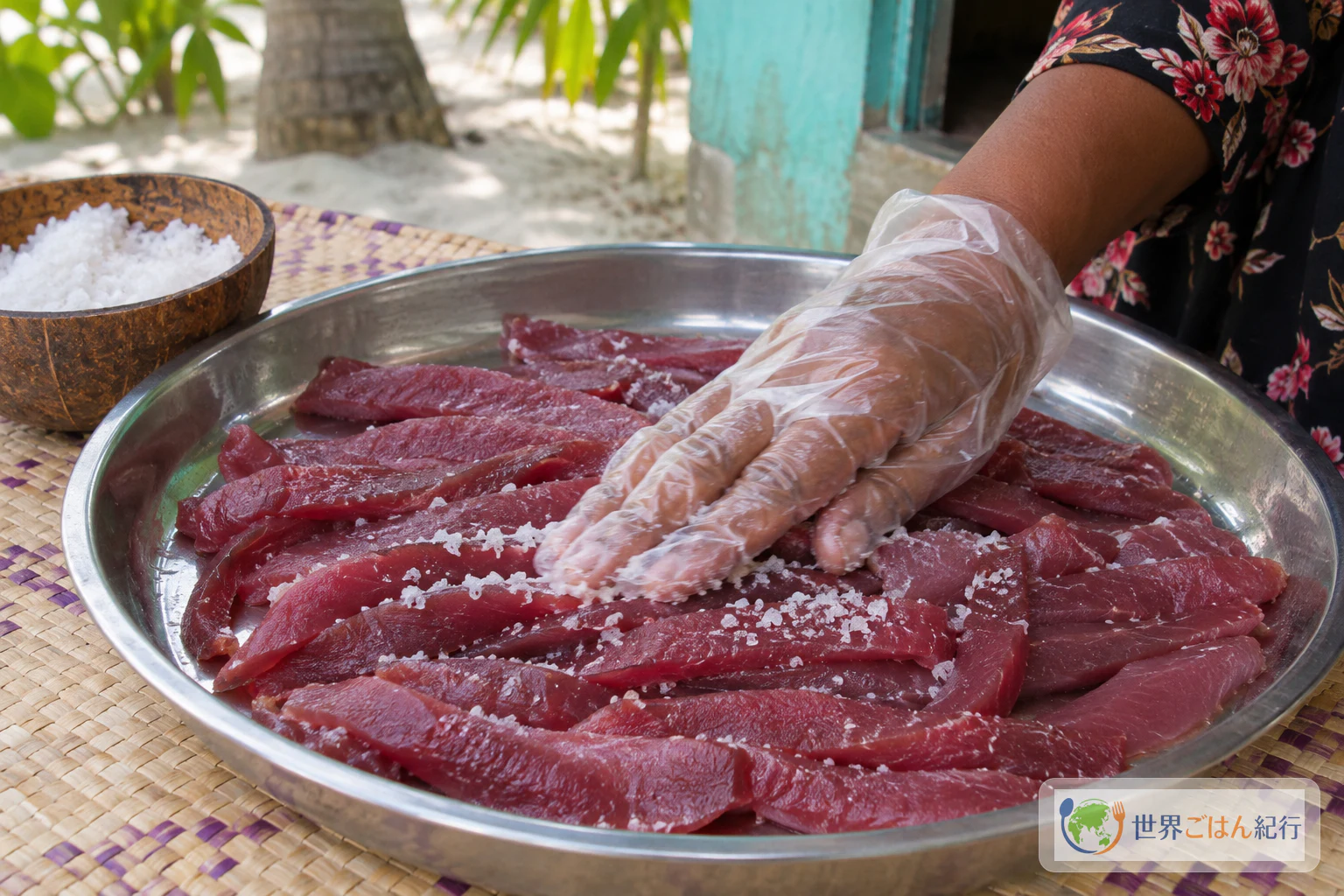
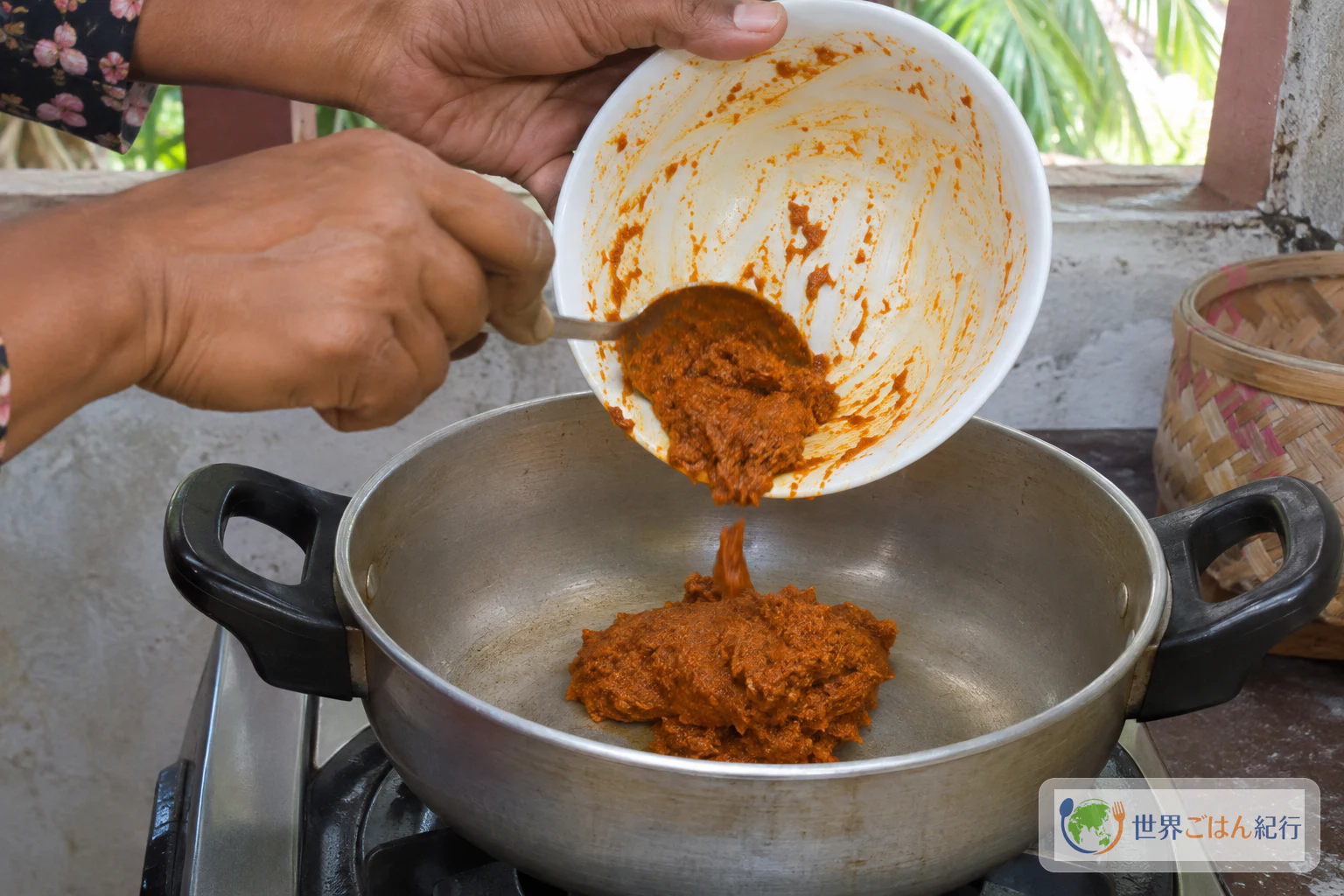
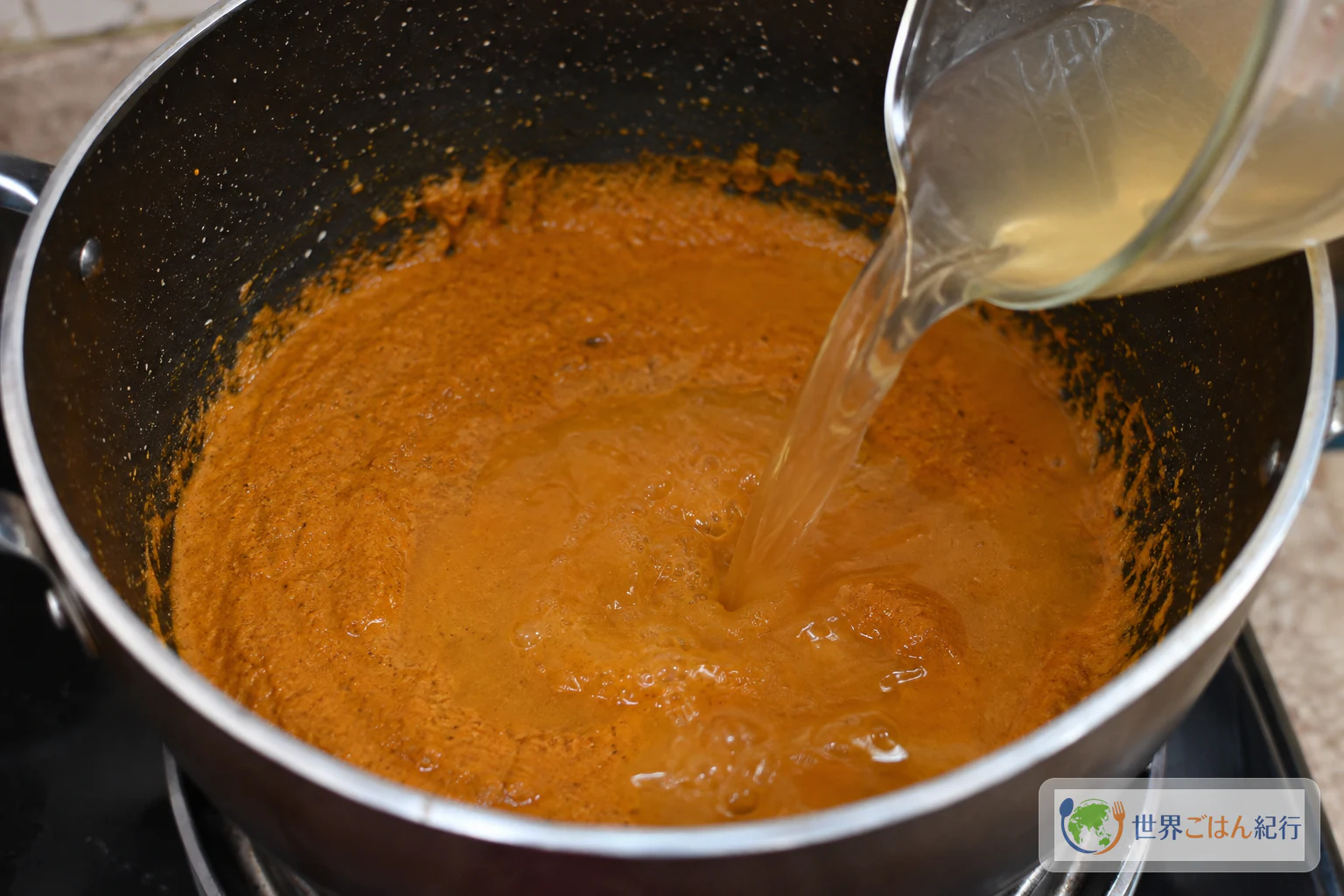
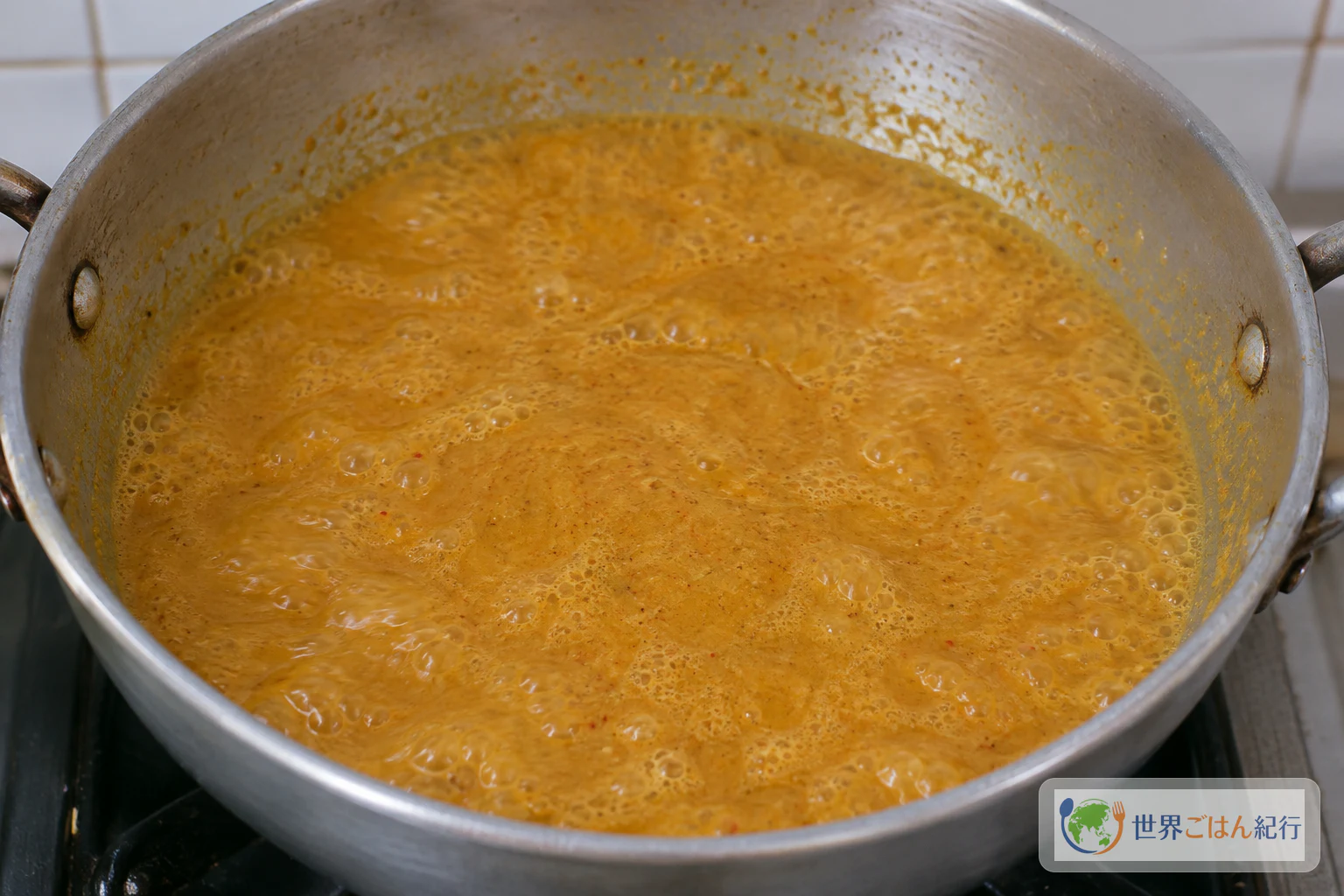
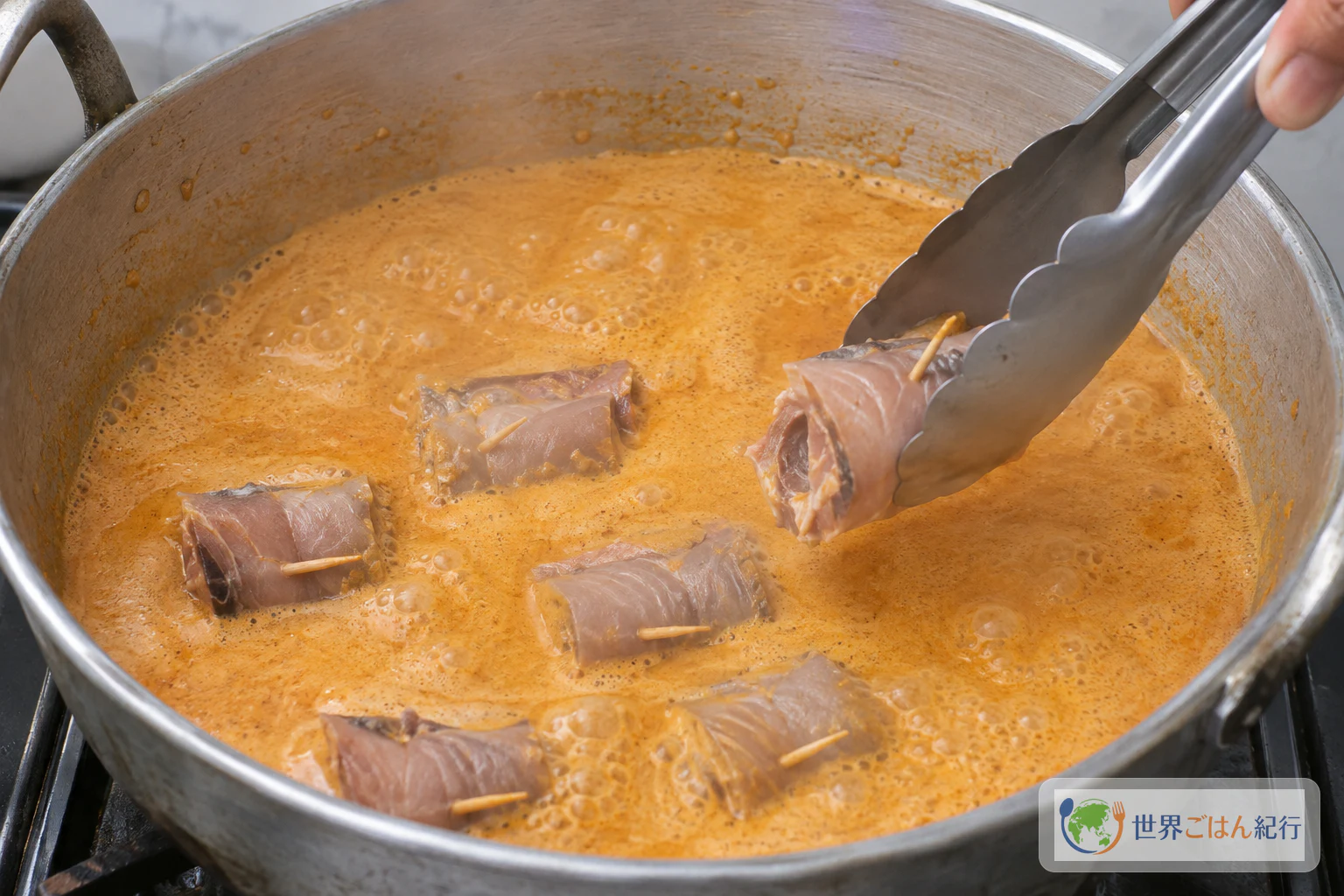
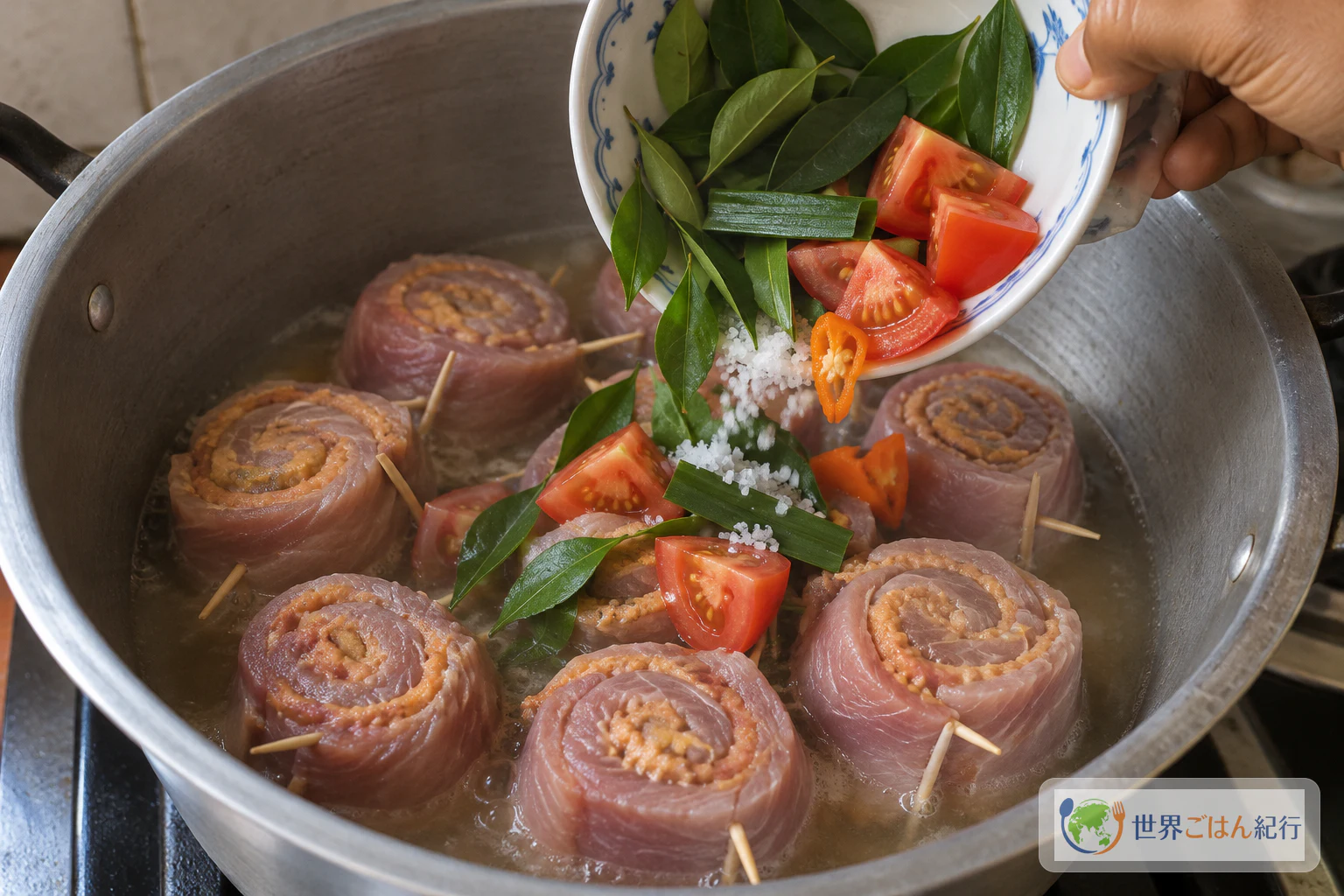
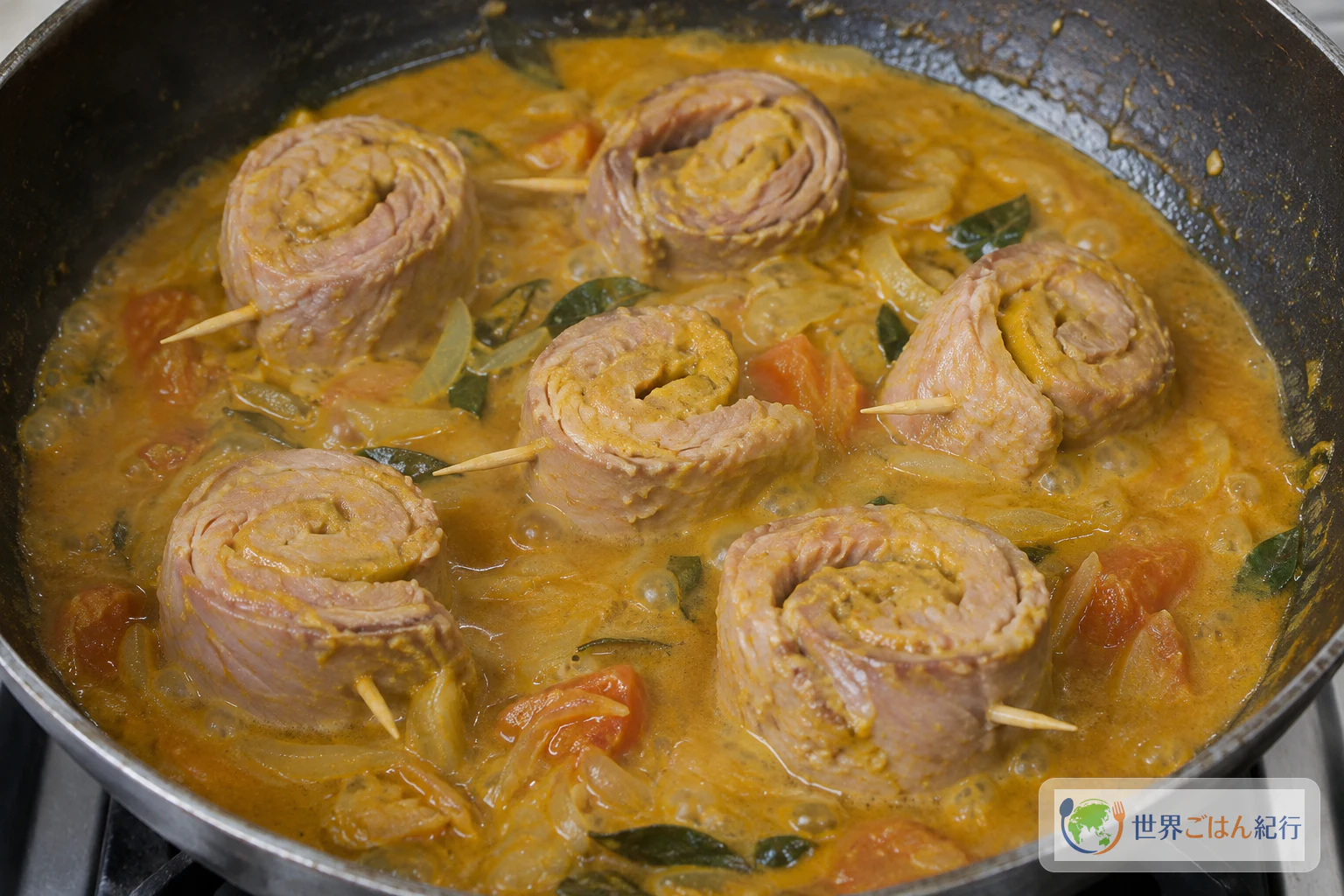
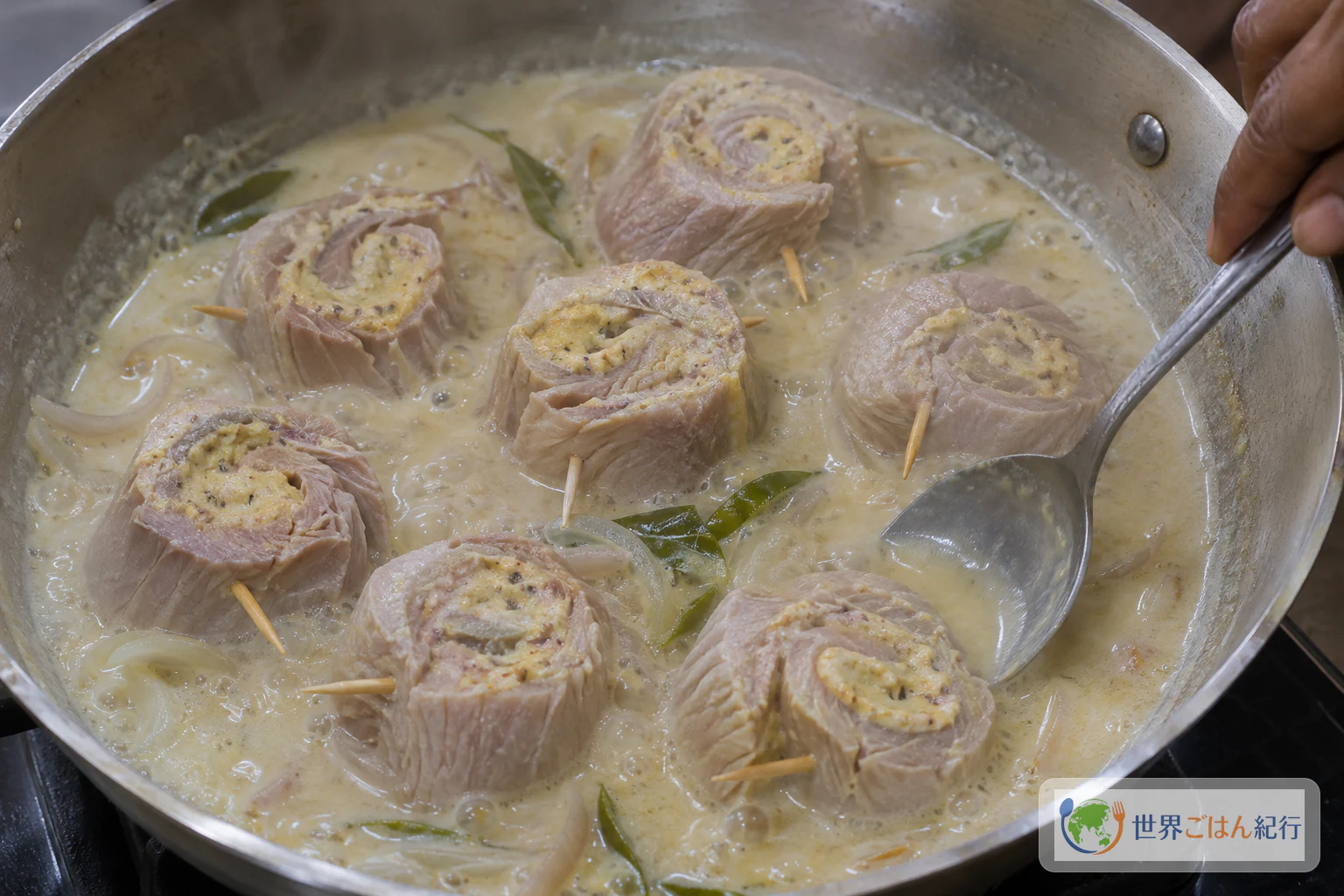
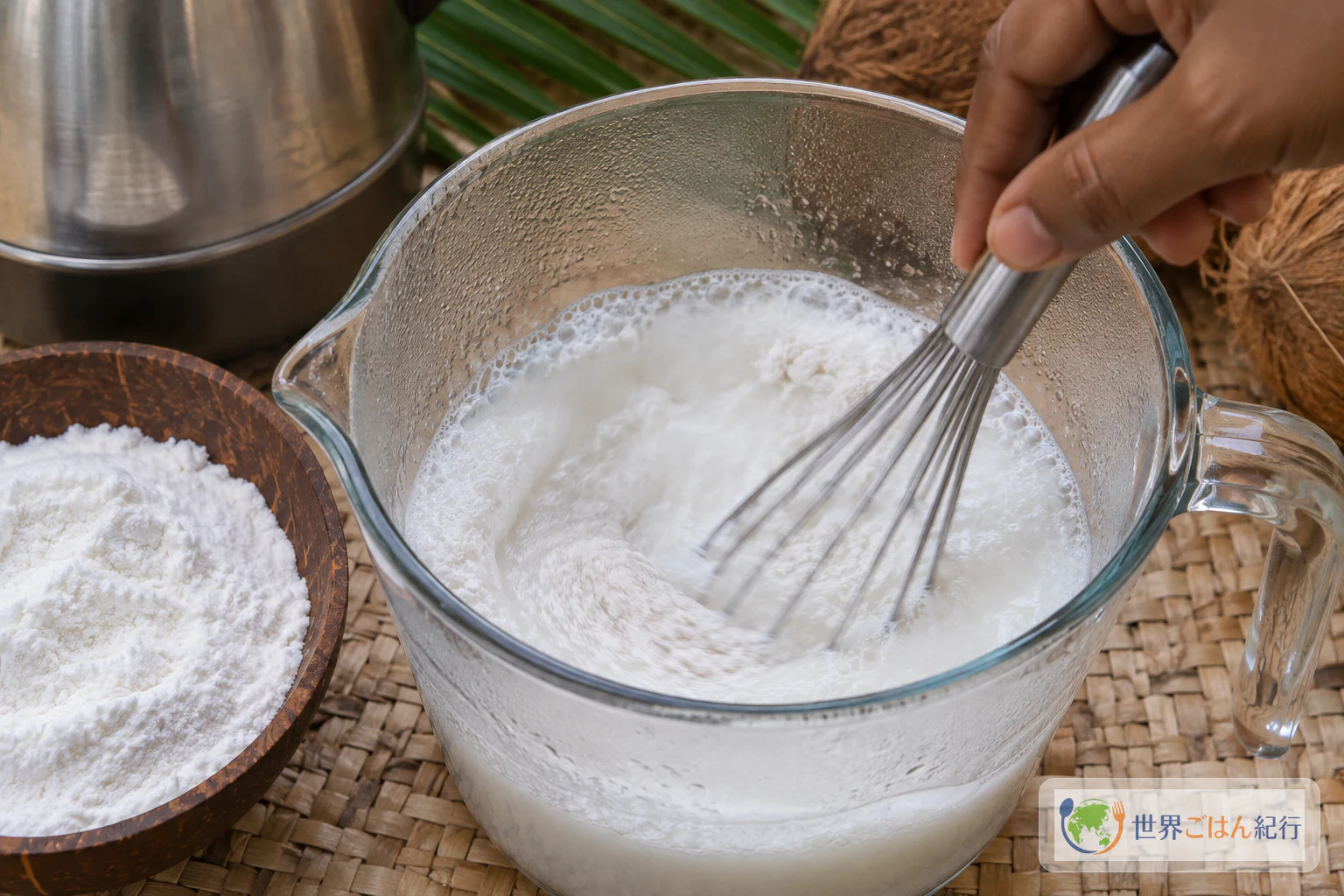
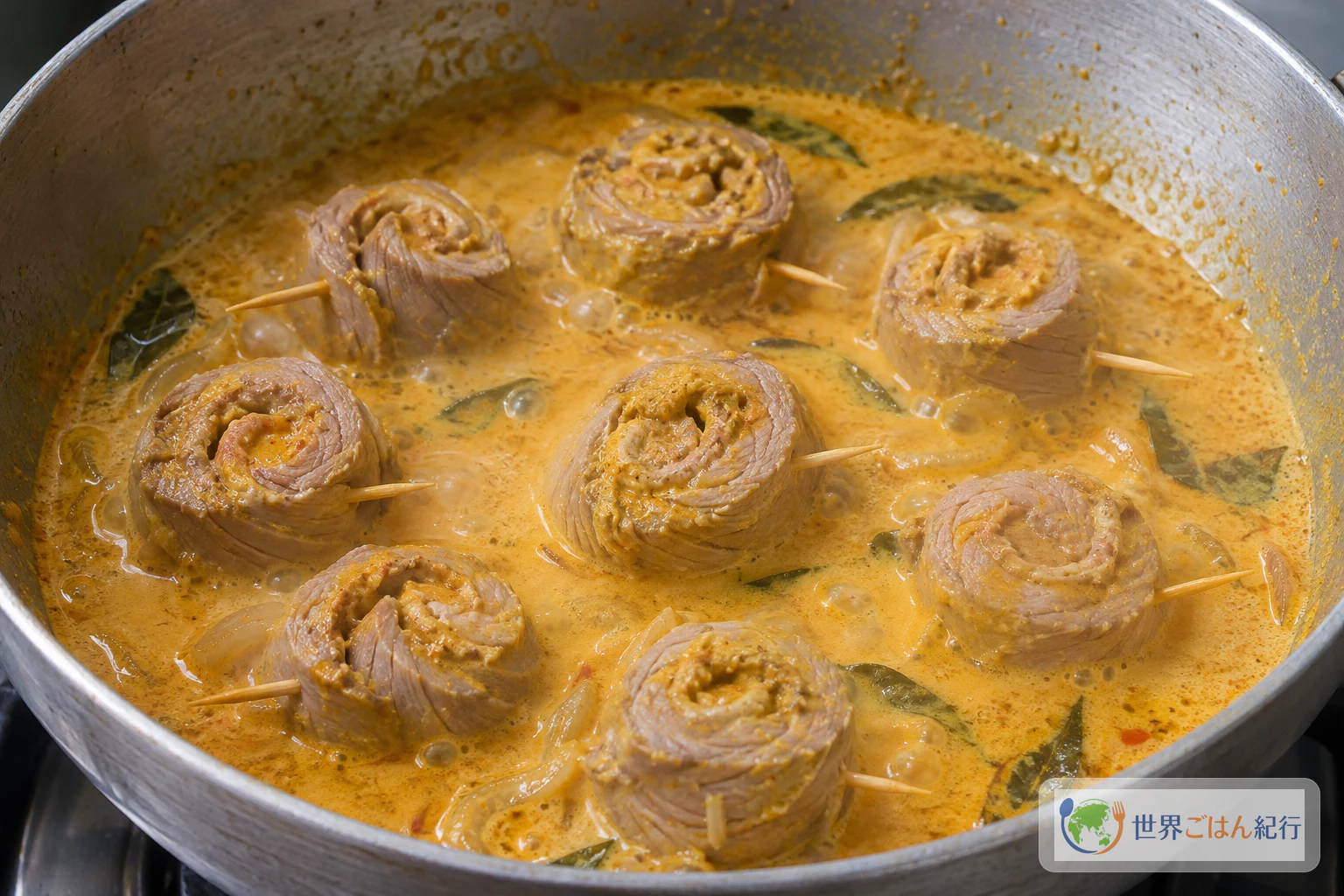
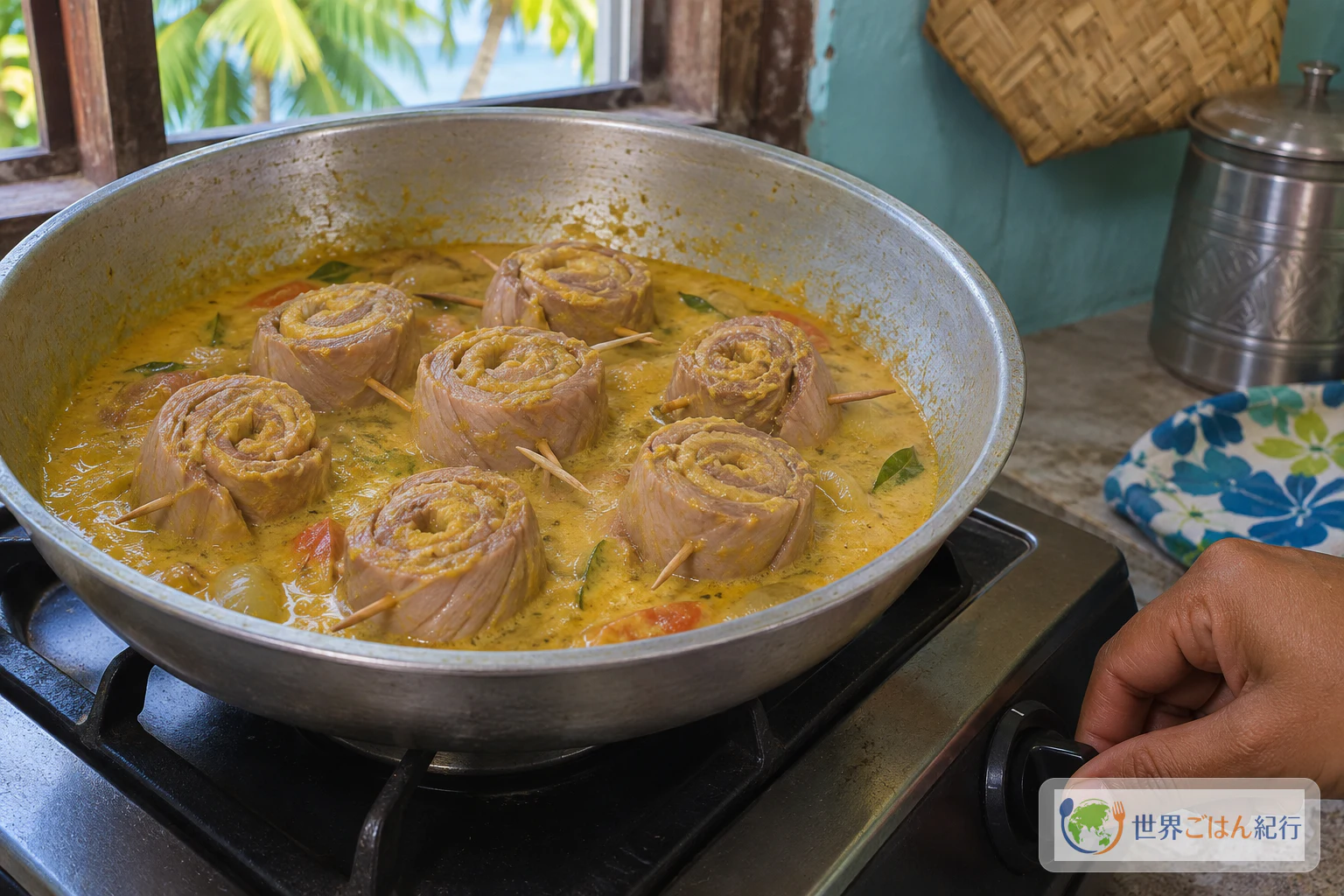
The photos show the action at each stage. They do not measure amounts, heat or doneness. The curry may look pale and opaque before the coconut milk goes in because the paste already contains desiccated coconut.
Fixing Problems Along the Way
| What you notice | What to look at | What to do |
|---|---|---|
| The paste feels coarse | It has not finished blending | Blend longer before any of it touches the fish |
| Powder clumps in the jug | It has not fully dissolved | Keep whisking in the jug before adding it to the curry |
| The curry looks pale before the coconut milk | The paste already contains desiccated coconut | Colour alone does not mean anything went wrong, so carry on |
| A roll starts to open | The toothpick or your stirring | Stir more gently around the rolls, and secure them firmly next time |
| The centre has not reached temperature | The thickest roll | Return to the heat, keep cooking and check again |
| A toothpick is missing from your count | The pan and the servings | Find it before anyone eats |
| The curry is too hot for you | Dried chilies and habanero | Next time, reduce either one, knowing the flavour will shift from this version |
Variations
These alternatives change one choice at a time. The method stays the same unless noted.
- Garlic: use 2 tsp chopped garlic in place of the 6 whole cloves.
- Fresh chilli: use Scotch bonnet in place of habanero, at 1/4 or to taste.
- Securing the rolls: tie the rolls with pandan strips in place of toothpicks. Use pandan strips as needed for tying, keeping them separate from the piece used in the pot.
- What to serve with it: serve roti or folhi in place of rice.
Tuna, Coconut and Trade: Where This Dish Sits
Find more dishes from the same islands among our Maldivian recipes.
UN Tourism's gastronomy guide to the Maldives, produced with the country's tourism ministry, describes a cuisine built around tuna, coconut and rice. It names cumin as a spice used in dishes including kandu kukulhu, and it describes influences from several regions arriving along Indian Ocean trade routes. The guide also includes a Kandu Kukulhu recipe by the Maldivian cook Jeehan Saleem, in which tuna is rolled with spices. We do not assign the dish an origin date or a single place of origin here.
Other cooks make it differently. Chef Sobah, a Maldivian-born cook writing on Chef's Pencil, also rolls the tuna, but ties it with coconut leaf and simmers it in coconut milk using a different formula. These versions confirm the rolled-tuna format, and none of their amounts or steps are mixed into the recipe above.
Nashida's article also has a separate plate of seared tuna with spinach salad. That is a different dish, so its oil, searing and salad are not part of this curry.
Frequently Asked Questions
Can I leave the tuna in fillets or chunks?
This version depends on thin strips rolled around paste. Plain chunks would give you a different dish.
How thick should the strips be, and how many will I get?
The recipe gives strips of about 2 × 17 cm, but it states neither thickness nor number of pieces. We have not added figures for either one.
What if I can't find pandan?
You can still make the curry, but the aroma will change. Since this version secures the rolls with toothpicks, pandan is only needed in the pot.
Can I use canned coconut milk?
The recipe calls for powder dissolved in hot water, and no equal-amount conversion to canned milk is available. Any swap would be your own adjustment.
Which cup and spoon sizes should I use?
The recipe does not state a measuring standard, nor the weight of a sprig or pinch. The amounts are left in their listed units without conversion.
Why check for 75°C if the recipe gives times?
The times are the recipe's guide, while 75°C for at least 1 minute at the centre is general home-cooking advice from Japan's Ministry of Health, Labour and Welfare. The two are separate, and the time does not guarantee the temperature.
How long does it keep, and how should I reheat it?
The materials behind this recipe give no storage period or reheating method, so we do not state any.
Sources
- UN Tourism, with the Maldives Ministry of Tourism, "A Tour Around the World's Gastronomy: Maldives." Used for general food culture context: Jeehan Saleem's introduction of Kandu Kukulhu, the rolled spiced tuna format, cumin and trade-route influences. No recipe amounts taken. https://webunwto.s3.eu-west-1.amazonaws.com/s3fs-public/webimages/UNWTO_Maldivas_final.pdf
- Aishath Nashida (Nattulicious), Edition.mv, "Maldivian Recipes: A 5-dish authentic Maldivian Iftar menu." The basis for all ingredients, amounts, servings, listed times and method in the Special Tuna Curry. https://edition.mv/ramazan/10757
- Chef Sobah, Chef's Pencil, "Maldivian Tuna Curry (Kandu Kukulhu)." Used only for comparison with another version: rolled tuna tied with coconut leaf and simmered in coconut milk. https://www.chefspencil.com/kandu-kukulhu-maldivian-tuna-curry/
- Ministry of Health, Labour and Welfare (Japan), "家庭での食中毒予防" (Preventing food poisoning at home). Used for the general guide of 75°C at the centre for at least 1 minute and for preventing cross-contamination from raw fish. Not specific to this dish. https://www.mhlw.go.jp/stf/seisakunitsuite/bunya/kenkou_iryou/shokuhin/syokuchu/01_00008.html