Kanthari Mulaku Chammanthi: Green Chilli Heat Beside a Plate of Boiled Kappa
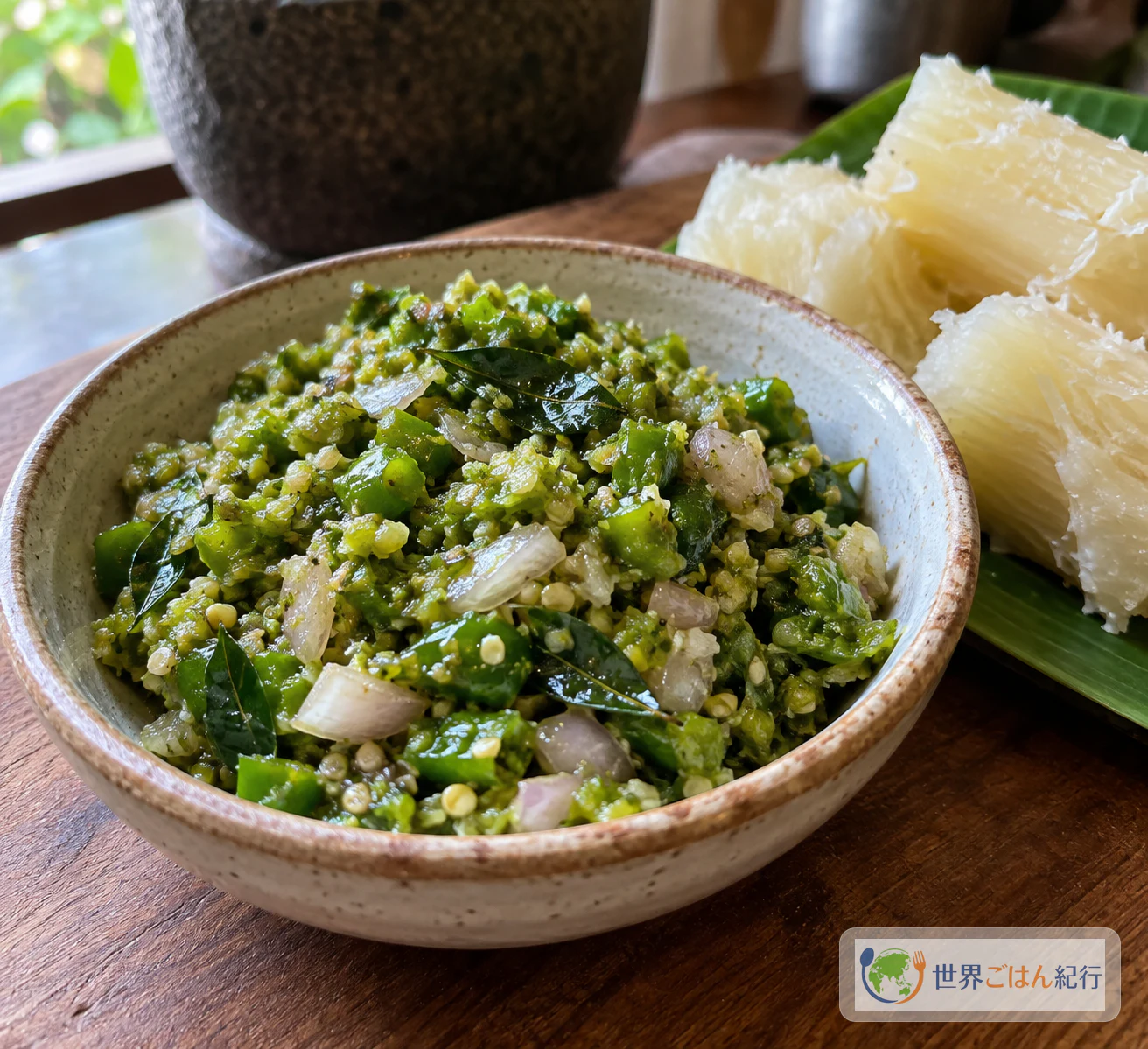
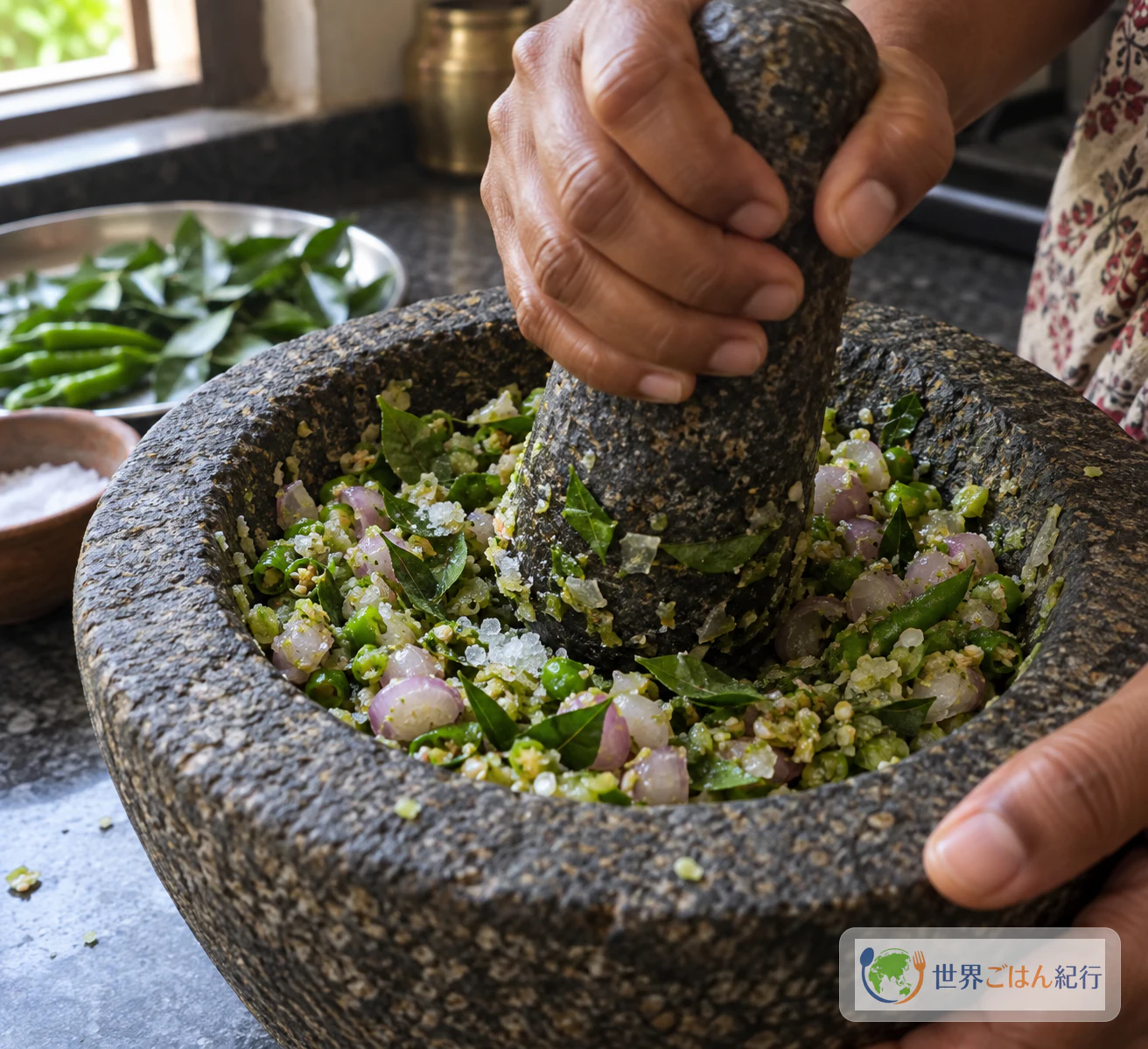
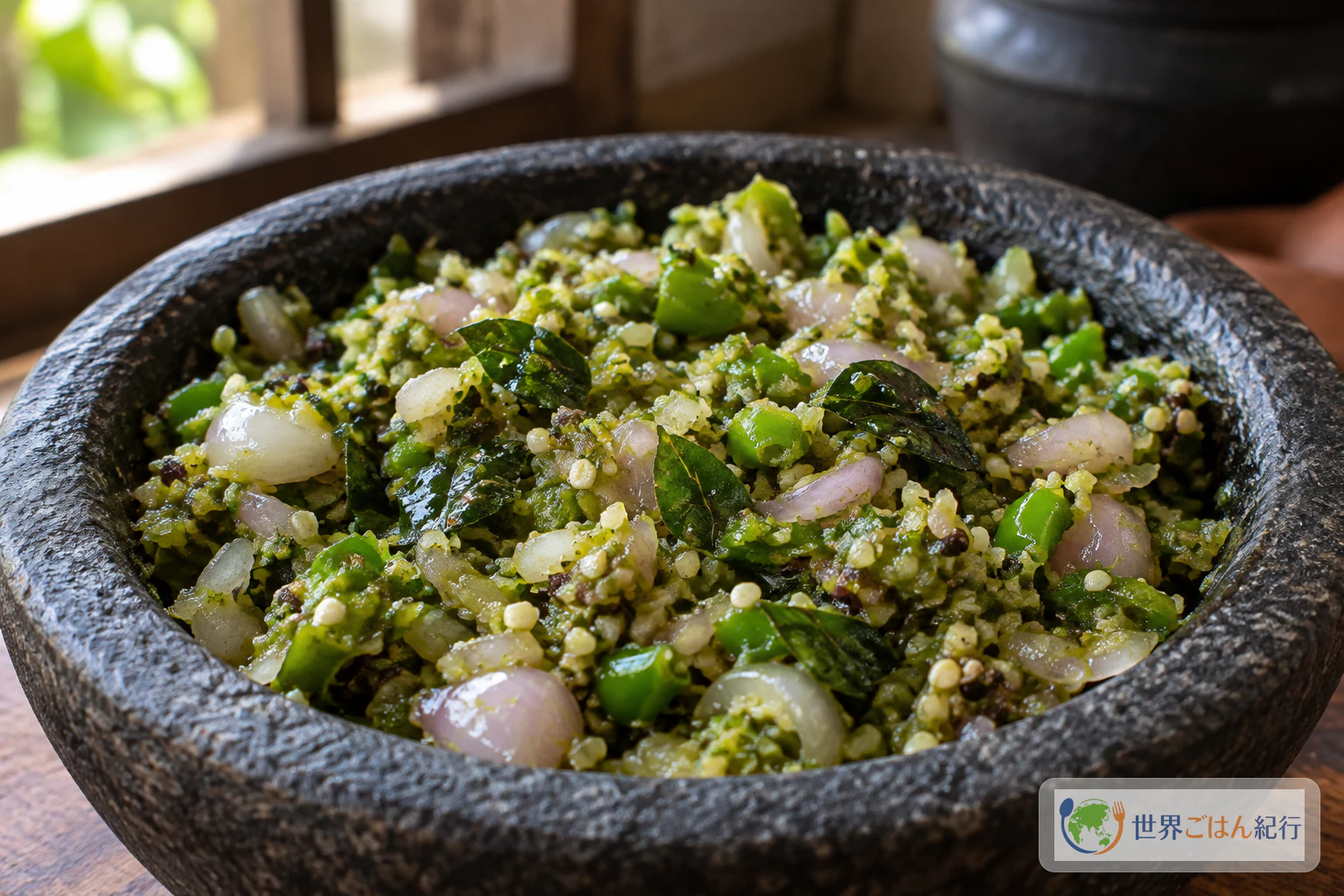
Pound it coarsely, not into a smooth paste. Keep the green heat of the chillies, the sweetness of the pearl onions, the scent of curry leaves and the aroma of coconut oil, and serve only a little at a time beside something plain.
A plate of plainly boiled kappa (tapioca, or cassava) sits on the table, and beside it a small bowl of something rough, green and glistening. A piece of kappa is broken off and pressed into just a little of it. Kanthari mulaku chammanthi is a raw Kerala chutney made by crushing small green chillies with pearl onions and curry leaves, then loosening it with coconut oil. Recipes from Kerala present it as a home-style side for boiled kappa; Gulf News describes it with kappa puzhungiyathu as a breakfast or light meal, and Pachakam pairs it with kappa and raw jackfruit puzhukku.
This is a condiment, not a sauce. It is strong, sharp and meant to be eaten in small amounts with a starchy, mild staple. This article follows one published home recipe from Yummy O Yummy: 10 chillies, 15 pearl onions, a few curry leaves, 2–3 tbsp coconut oil and salt to taste. It has not been kitchen-tested by us; the amounts and method below come from that source, and any suggestions beyond it are marked as our own editorial adjustments.
In Malayalam, the dish also appears as കാന്താരി മുളകു ഇടിച്ചത്. Pachakam uses "bird's eye chilli" as the English name for kanthari mulaku. "Chammanthi" covers a broad family of Kerala chutneys, so this five-ingredient version is one recipe among many, not the only correct one.
What Kanthari Mulaku Chammanthi Is
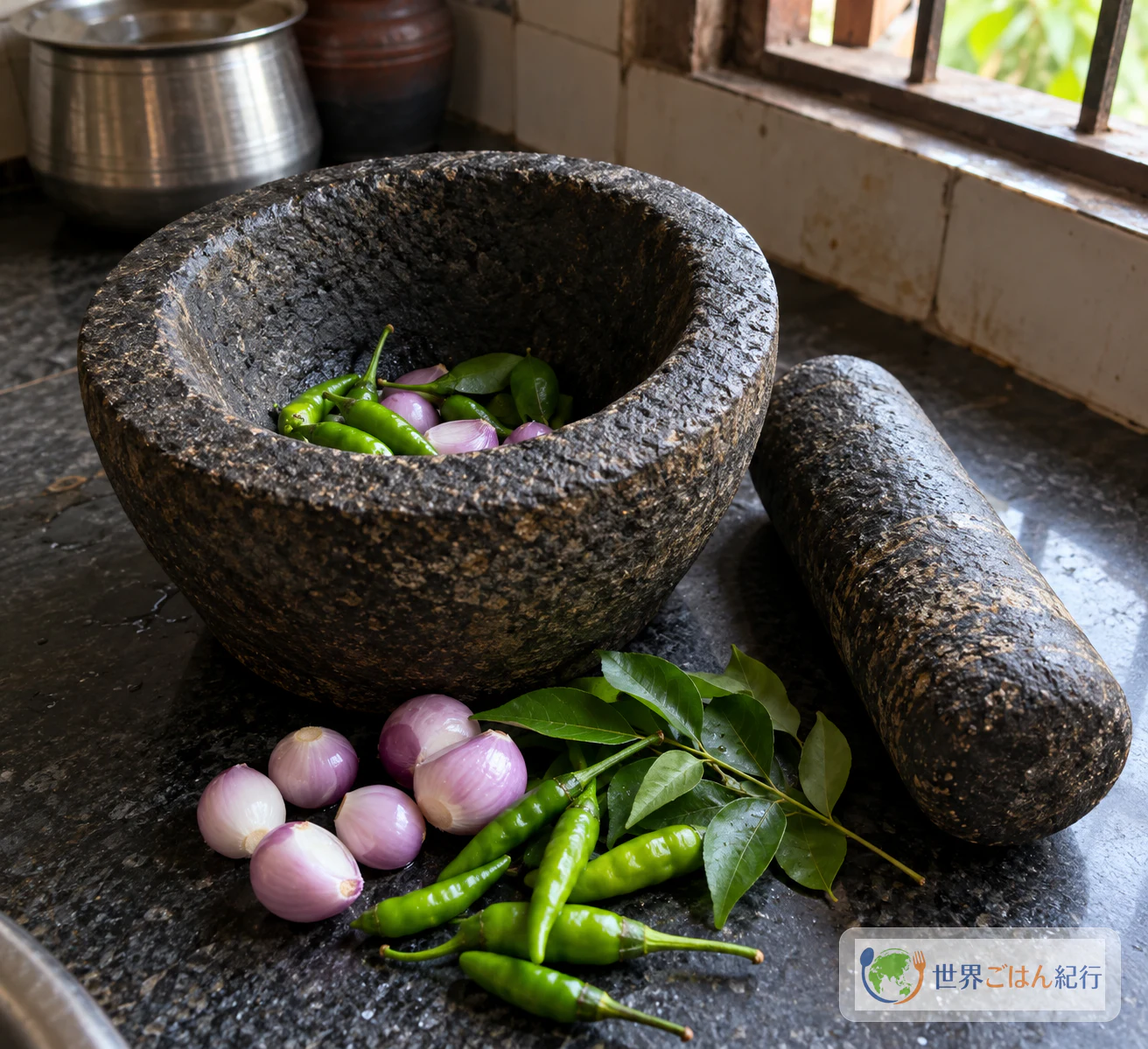
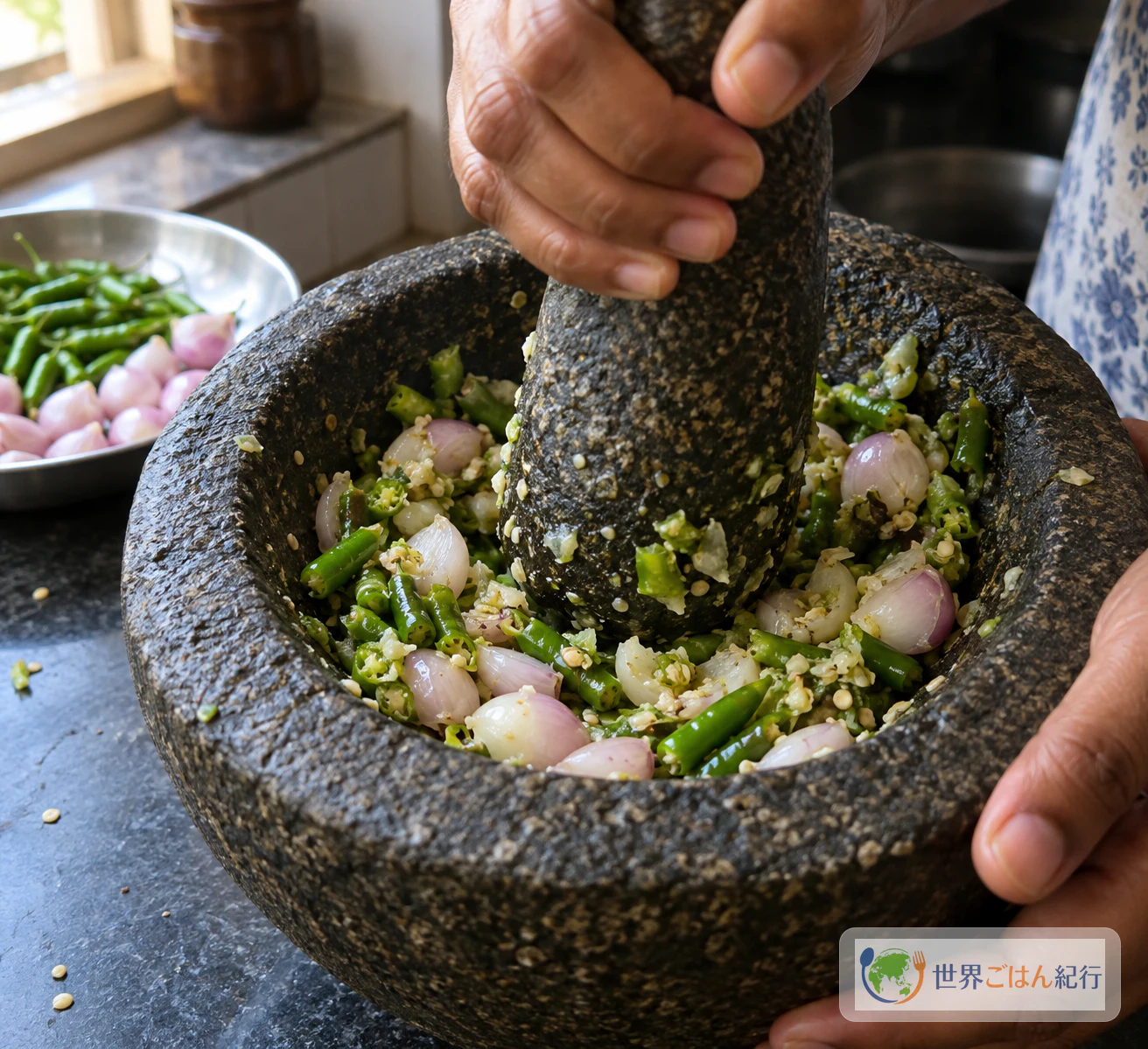
Kanthari mulaku are small chillies used in Kerala cooking, and this chammanthi is built almost entirely on them and on shallots. Pachakam introduces it as a traditional Kerala home dish and recommends crushing it on an ammi kallu (a grinding stone) or with a masher. The recipe followed here uses a mortar and pestle, and allows a mixer if it is run only in 2–3 short pulses.
It is easy to confuse with other chammanthis. Thenga chammanthi, for example, is built on grated coconut; Cheena Chatti's Kerala version is a different, coconut-based chutney served with kanji, idli or dosa. Some kanthari chammanthi recipes also add tamarind. The version here contains no coconut flesh, no tamarind and no water.
More about the food of the country is collected on the India page.
Ingredients: One Source Recipe, Kept in Its Own Units
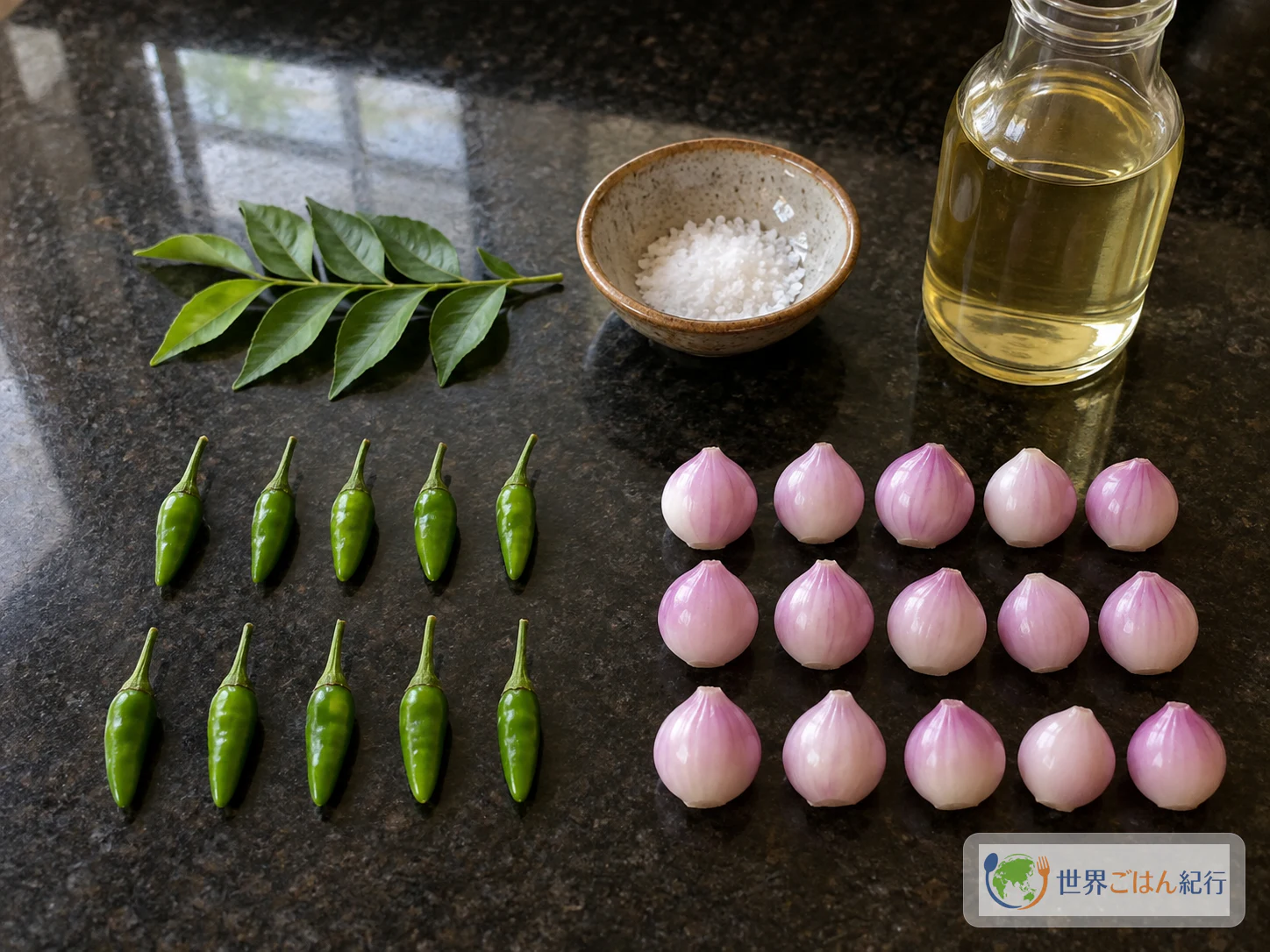
Salt is added to taste.
Equipment
- Mortar and pestle (a grinding stone or masher also works; a mixer is possible if used only in 2–3 short pulses)
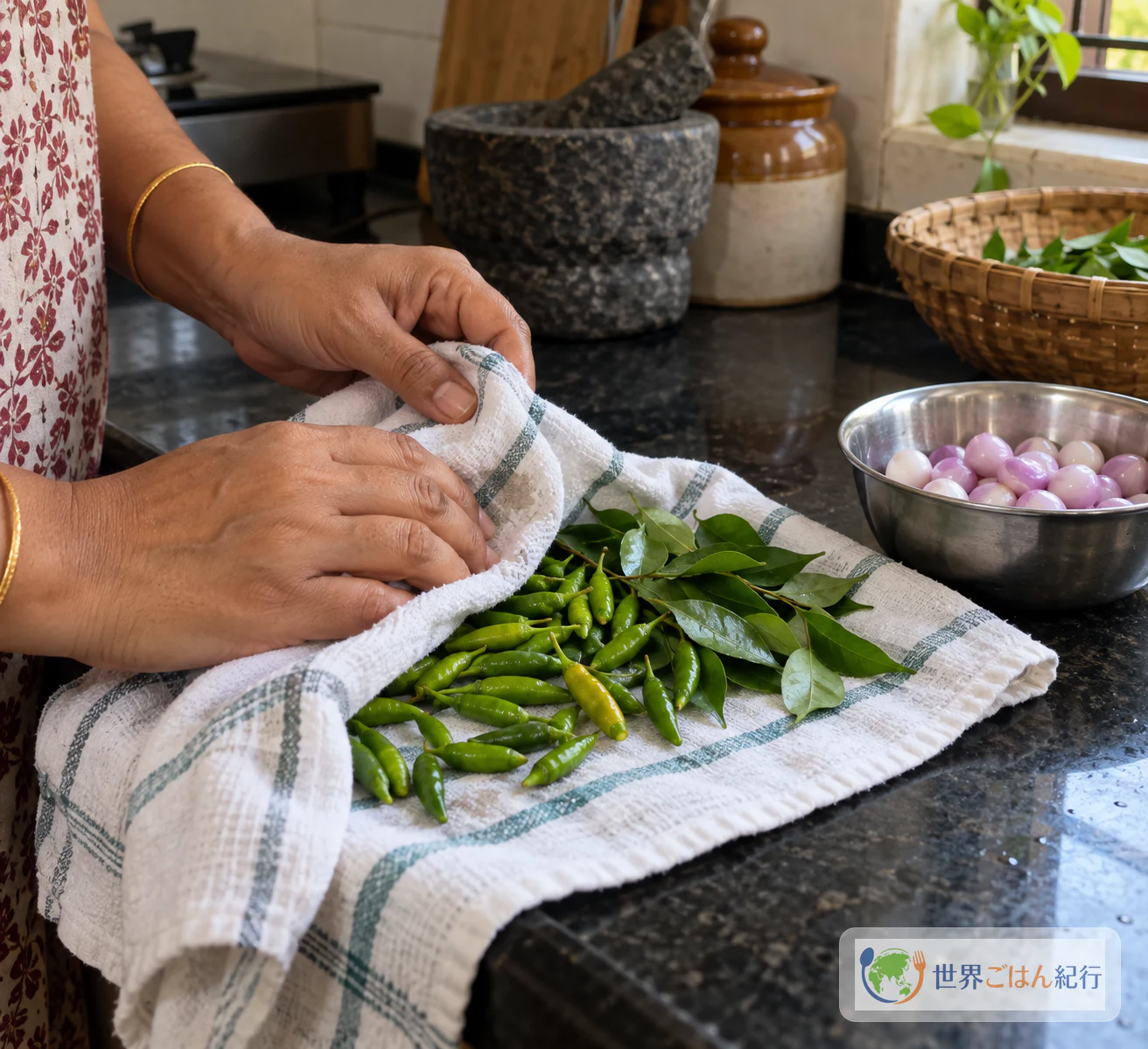
- Clean kitchen cloth for drying the chillies and leaves
- Tablespoon measure
- Small serving bowl
If you already own a mortar and pestle, there is nothing extra to buy.
Choosing and Substituting the Chillies and Onions
Chillies. Kanthari chillies may be hard to find outside Kerala. Green chillies also work; a locally available small green chilli may differ in aroma and heat from kanthari. 10 larger or hotter green chillies can make it much hotter than intended. Start with fewer, taste, and pound in the rest only if you want more heat.
Pearl onions. If you cannot find small shallots or pearl onions, cutting up a small onion is another editorial substitute. Expect a change in sweetness and moisture.
Curry leaves. Use fresh leaves if you can find them. Dried leaves have a weaker aroma; if none are available, leaving them out is an editorial adjustment, and the chutney will smell less like the original.
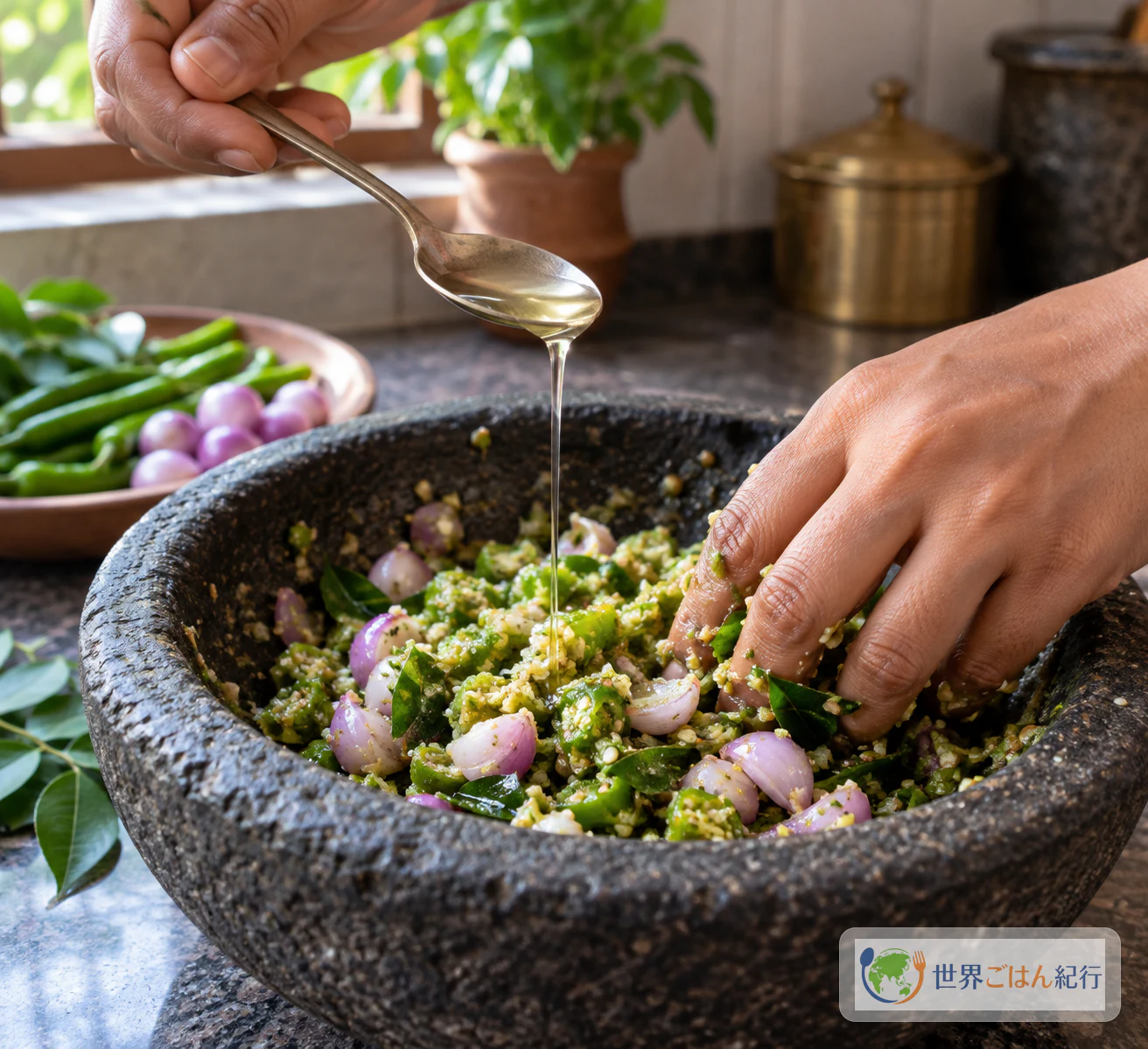
Coconut oil. Keep to 2–3 tbsp. Starting with the smaller amount is the point of step 3 below; don't stretch it into a much oilier version.
After touching raw chillies, keep your hands away from your eyes and face, and wash your hands and tools. Check all product labels for allergens and cross-contact statements; the five-ingredient list is not an allergen-free guarantee.
Method: Pound Coarsely, Then Bring It Together with Oil
Aim for a mixture where pieces of chilli and onion are still visible, all mixed together; inspect the texture without handling the raw chilli mixture directly. The whole recipe takes about 5 minutes as a guide; how long it takes in your kitchen will vary.
Turning the Heat Down: A Separate Yogurt Version
If the chammanthi is too hot for you, the source suggests a different version: mix in yogurt to soften the heat. That version does not use coconut oil, so treat it as a separate recipe rather than adding yogurt on top of the oiled chutney. The source gives no yogurt amount, so add it gradually and taste.
Using fewer chillies is another way to reduce the heat, but that is our editorial adjustment for chillies of different size and strength, not the source recipe. If you plan to make it this way, keep the other ingredients the same and add chillies back gradually.
What to Serve It With: Kappa First
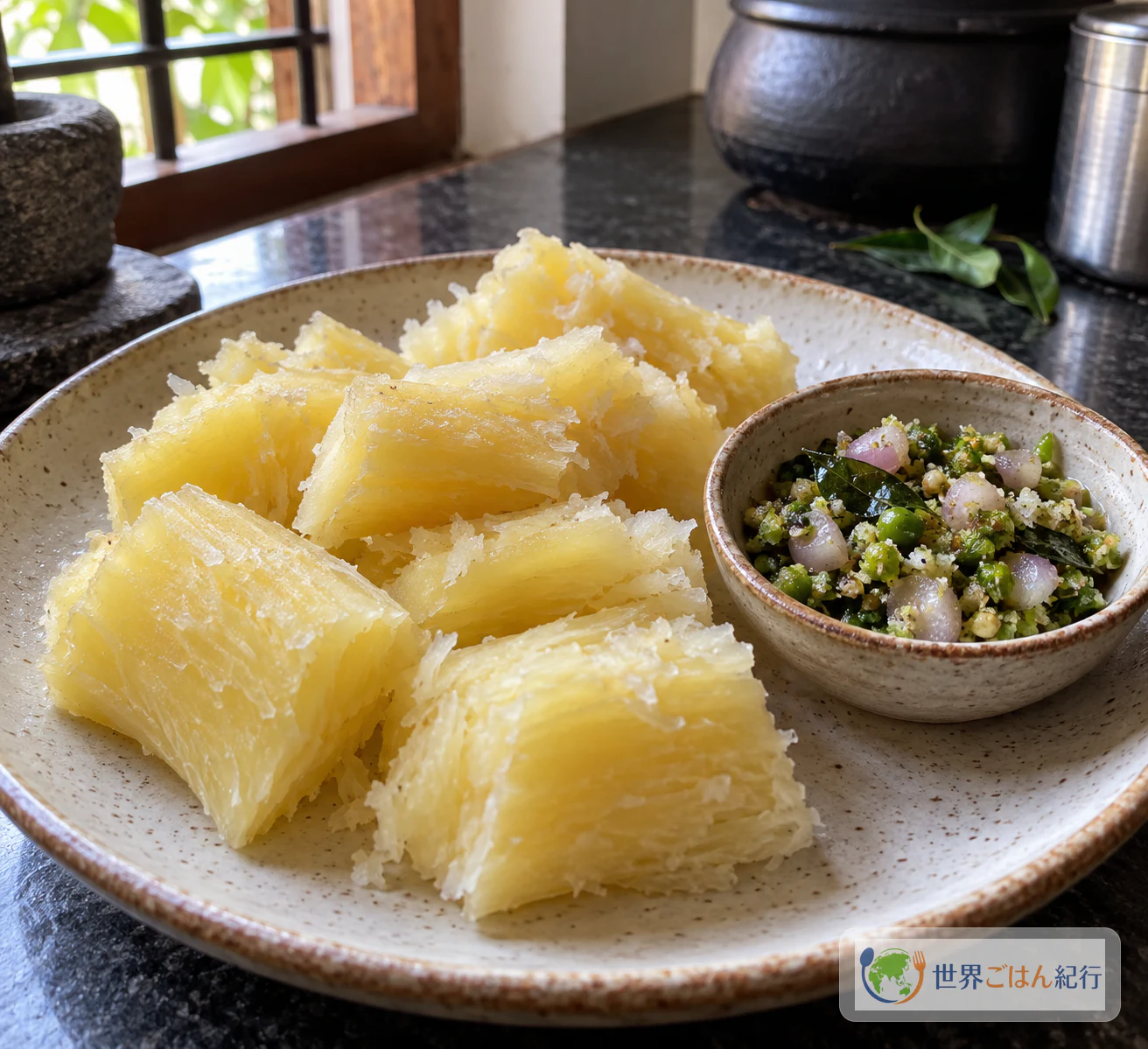
All three kanthari chammanthi sources pair it with boiled kappa. Gulf News presents a recipe from Kerala home cook Sobha Varghese with kappa puzhungiyathu as breakfast or a light meal, and Pachakam also mentions raw jackfruit puzhukku as a partner. The chutney stays on the side; it is not spread over the kappa.
Beyond kappa, kanji, idli and dosa appear as partners for Kerala chammanthis, as in Cheena Chatti's coconut chammanthi. Treat these as examples of how chammanthis are eaten, not as a fixed rule for this particular chutney.
Other Household Versions
Kanthari chammanthi varies a great deal from kitchen to kitchen. Pachakam's version lists 5–6 kanthari chillies, 15 shallots, a lemon-sized piece of tamarind, salt and 1 tsp of an ingredient labeled coconut; it is unclear whether that means oil or flesh. Gulf News's version uses 18–20 kanthari and 15–20 shallots with tamarind, oil and salt, but its ingredient list and method differ on oil and water quantities. These are contextual comparisons, not alternative instructions to follow here; do not mix their ingredients or quantities into the adopted Yummy O Yummy recipe.
Troubleshooting
| Problem | Likely cause | What to do |
|---|---|---|
| It turned into a smooth paste | Pounded too long, or the mixer ran too long | A paste can't be made coarse again. Next time, pound in short bursts, or use only 2–3 short pulses |
| Far too hot | Chillies larger or hotter than the original; or simply strong heat | Make the separate yogurt version without oil, or, as an editorial adjustment, start with fewer chillies next time |
| Oily or loose | All the oil went in at once | Start with 2 tbsp and add more only if needed, up to 3 tbsp |
| Flat-tasting | Not enough salt | Add salt a little at a time and taste |
| Watery | Ingredients were wet when pounded | Dry the chillies, leaves and onions well before crushing; this recipe uses no water |
Leftovers and Storage
This is a raw, uncooked side, and the source gives no storage period, yield or freezing guidance. We are not giving a number of days. As an editorial suggestion, make only as much as you will eat.
Frequently Asked Questions
What can I use if I can't find kanthari chillies?
You can try other small green chillies as an editorial substitute, but the aroma and heat will not be the same as kanthari. Because chilli size and strength vary, start with fewer than 10 and add more after tasting.
Should I add grated coconut?
Not to this recipe. Coconut flesh belongs to a different type, such as thenga chammanthi, which is built on grated coconut. This version uses coconut only as oil.
How many days does it keep?
The sources give no storage tests or time limits, so we can't state a number of days. Make it in amounts you will eat.
Can I use a mixer instead of a mortar?
Yes. The source allows 2–3 short pulses. Running the mixer longer moves it toward a smooth paste and away from the hand-pounded texture.
Sources
- Yummy O Yummy, "Kappa Puzhungiyathu / Boiled Tapioca with Kanthari Mulaku Chammanthi." The recipe followed in this article: 10 kanthari or green chillies, 15 pearl onions, a few curry leaves, 2–3 tbsp coconut oil and salt; crushing with a mortar and pestle or 2–3 mixer pulses; mixing in salt and oil; serving with boiled kappa; and the yogurt suggestion for less heat. https://www.yummyoyummy.com/2011/11/chendamuriyan-kappa-kappa-puzhungiyath.html
- Pachakam, "Kanthari Mulaku Chammanthi | Bird's Eye Chilli Chammanthi." Kerala home-dish context, pairing with kappa and raw jackfruit puzhukku, the ammi kallu or masher, the use of "bird's eye chilli" for kanthari mulaku, and its separate tamarind version. https://www.pachakam.com/recipes/kanthari-mulaku-chammanthi-birds-eye-chilli-chammanthi
- Gulf News, "Video guide for Kappa Puzhungiyathu with Kanthari Mulaku chammanthi." Pairing with kappa puzhungiyathu as breakfast or a light meal, and a Kerala home cook's separate tamarind version. https://gulfnews.com/food/guide-cooking/video-guide-for-kappa-puzhungiyathu-with-kanthari-mulaku-chammanthi-or-steamed-tapioca-with-spicy-chilli-dip-1.1673444320428
- Cheena Chatti, "Kerala Thenga chammanthi recipe / Coconut chutney." The coconut-based thenga chammanthi as a different type, and serving chammanthi with kanji, idli and dosa. https://www.cheenachatti.com/recipe/thenga-chammanthi-recipe-coconut-chutney-kerala/