Background of the Dish: A Kebab Marinated at Night and Grilled the Next Day
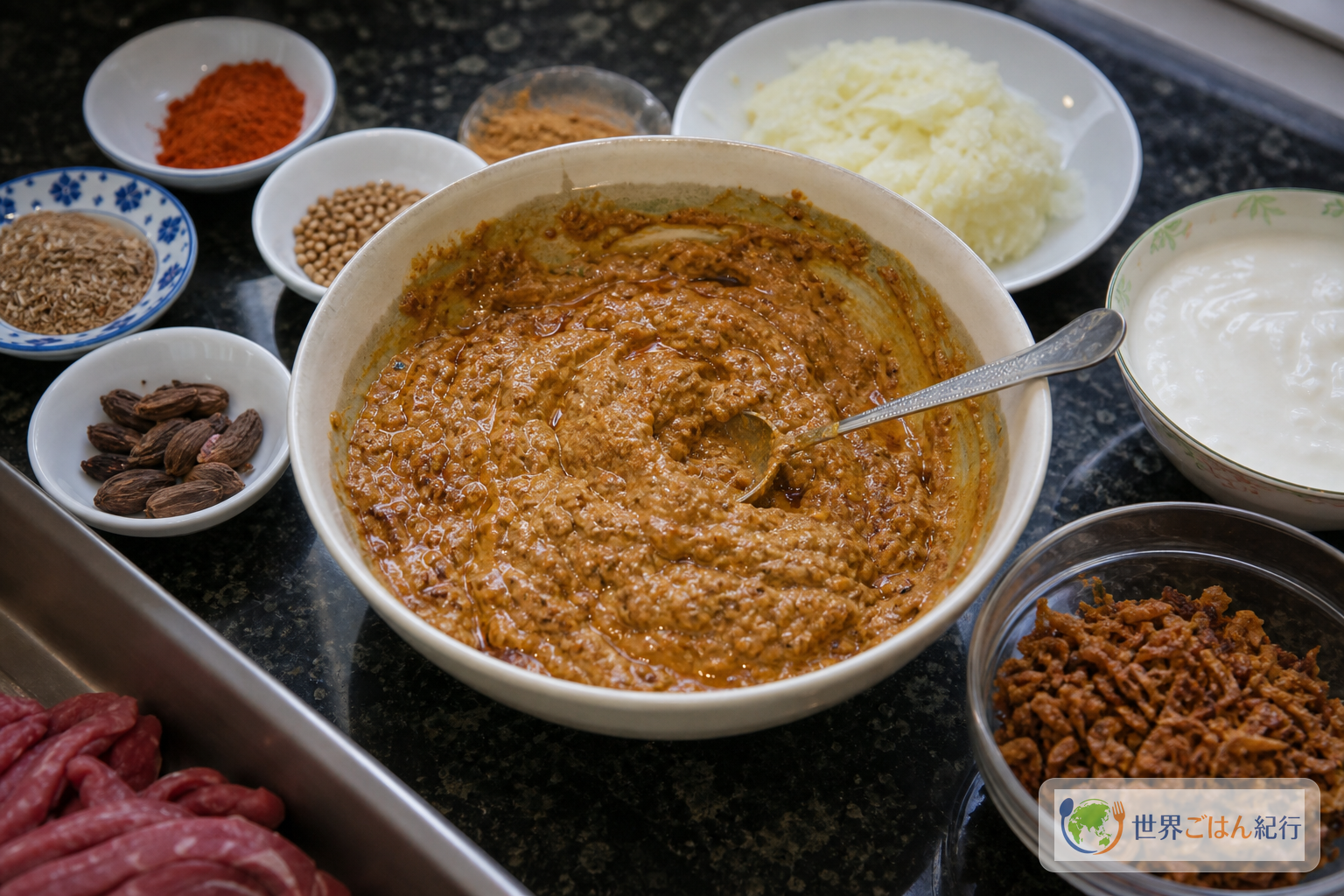
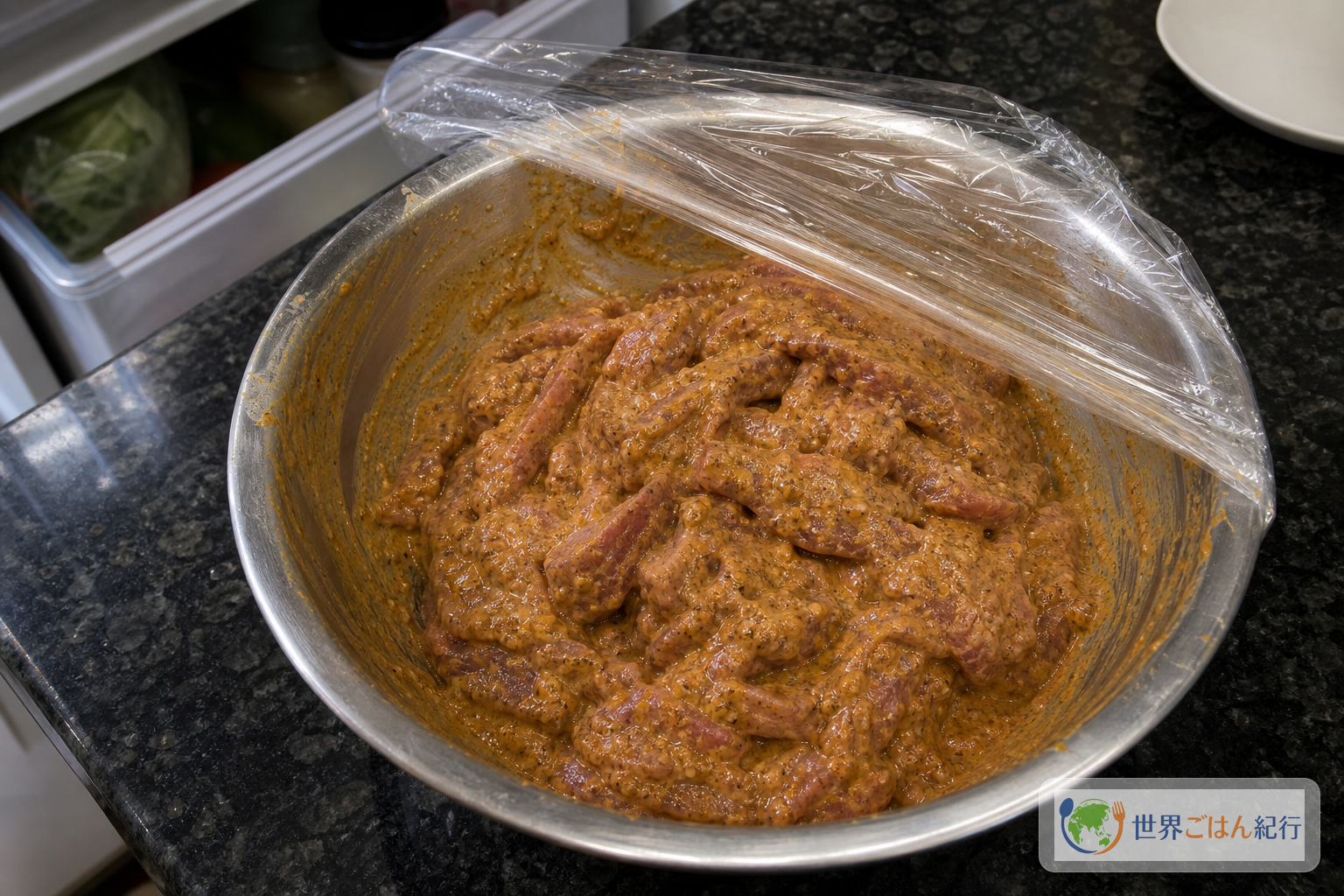
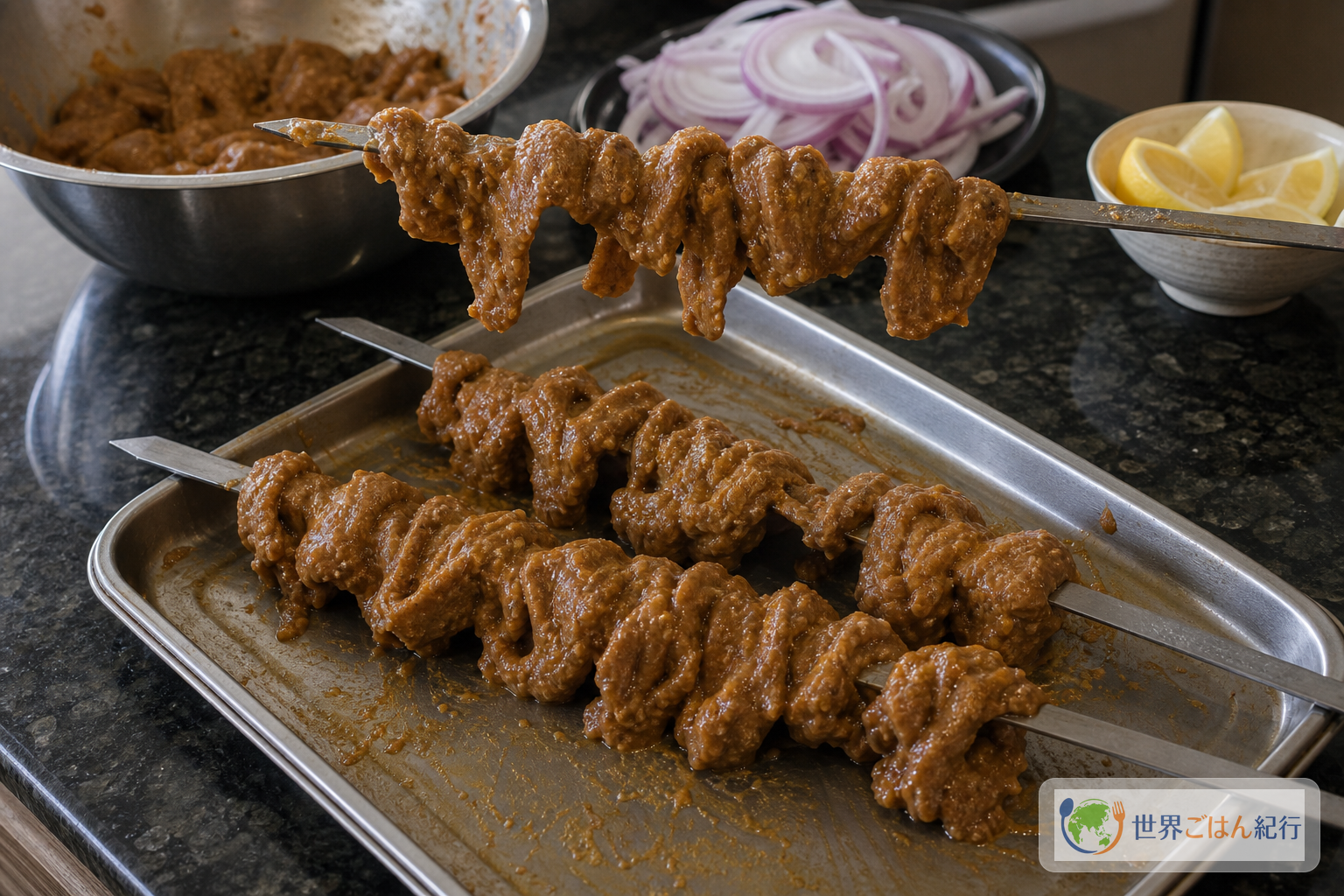
When you open a bottle of mustard oil in the kitchen, a sharp, green smell rises first, different from ordinary grilled meat. Into it go yogurt, onion cooked without burning, grated green papaya, and crushed spices. When you sink thin slices of beef into it, it feels less like making tonight's dinner and more like preparing tomorrow's. Bihari kebab is a dish that is delicious including this waiting time.
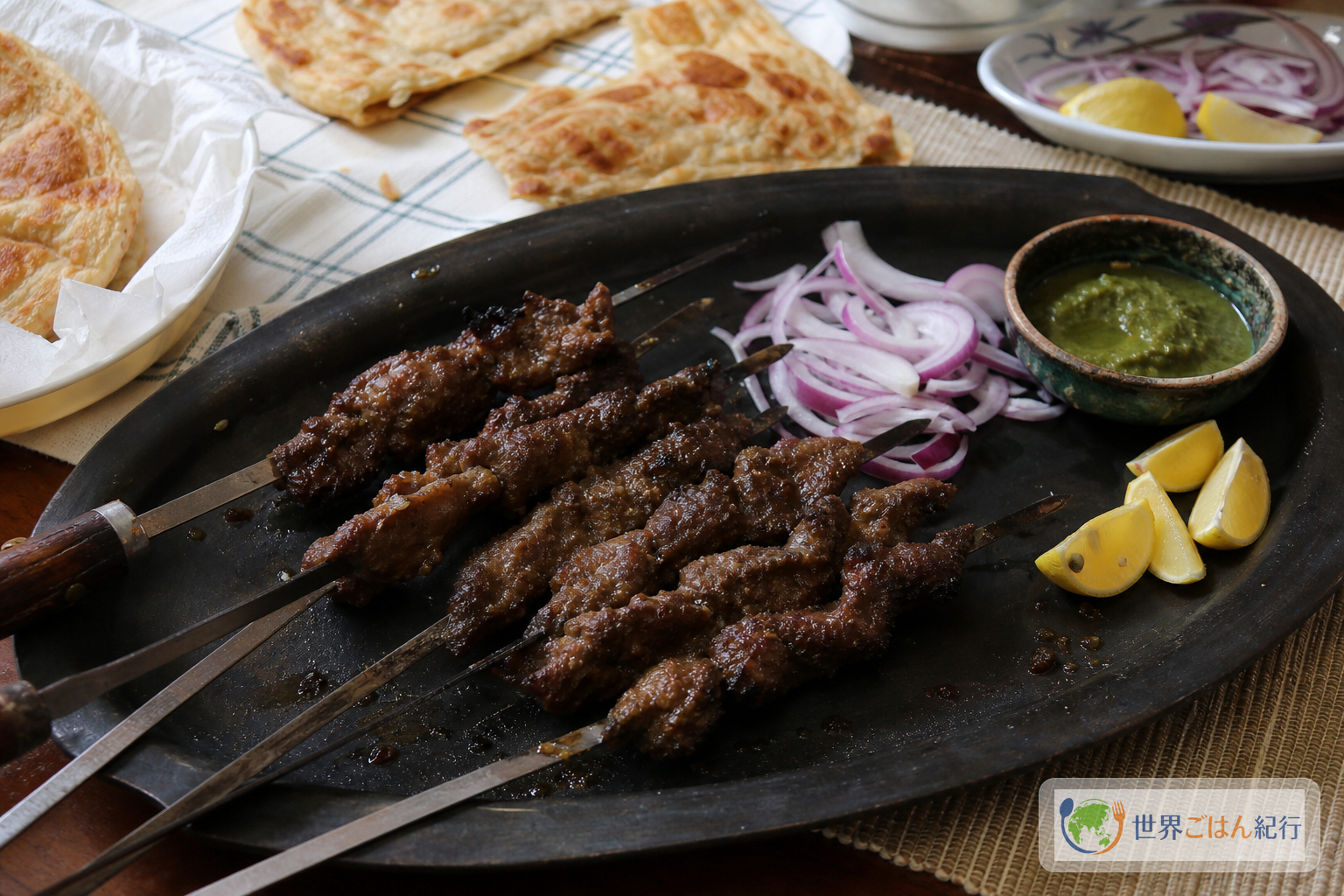
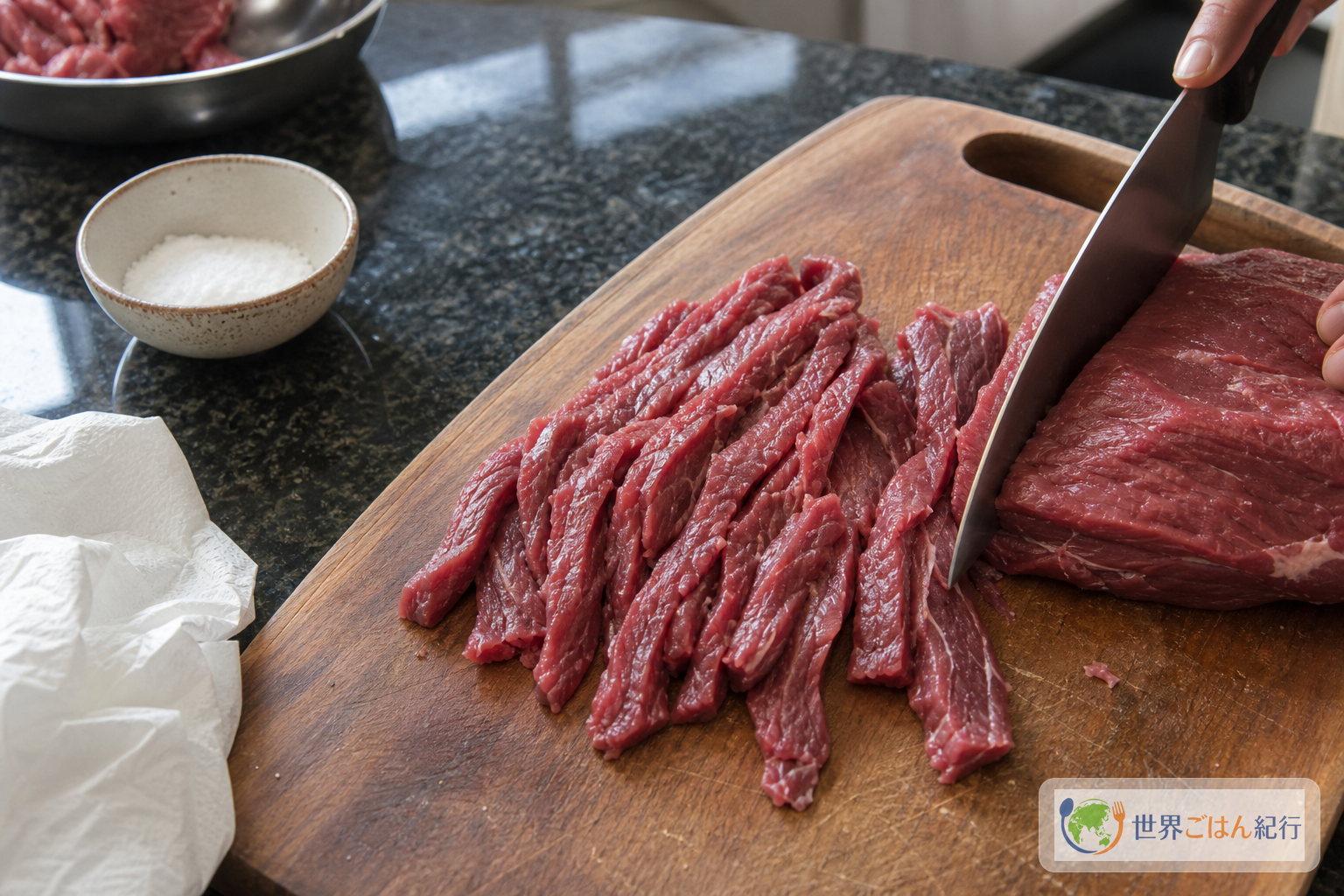
Bihari kebab (Bihari kebab / Bihari kabab, Urdu spelling example: بہاری کباب) is said to originate in the Bihar region of northern India and is also loved as a barbecue dish in Pakistan, especially around Karachi, a kebab of thinly sliced beef. Unlike chapli kebab (in Japanese), in which minced meat is kneaded, here the meat is sliced thin across the grain, tenderized in a marinade, and then gathered onto skewers. English-language recipes from there also often explain cutting the meat into thin fillet-like pieces called pasanday.
The heart of this dish is green papaya and mustard oil. Green papaya has an enzyme that tenderizes meat, and with a long marinade thin beef becomes easy to bite through. But too much makes the meat crumble even before grilling. Mustard oil adds the aroma of mustard greens that canola or vegetable oil cannot give. To get closer to the original in a home kitchen, it matters more to carefully handle slicing thin, the amount of green papaya, and how you treat the mustard oil than to buy expensive tenderloin.
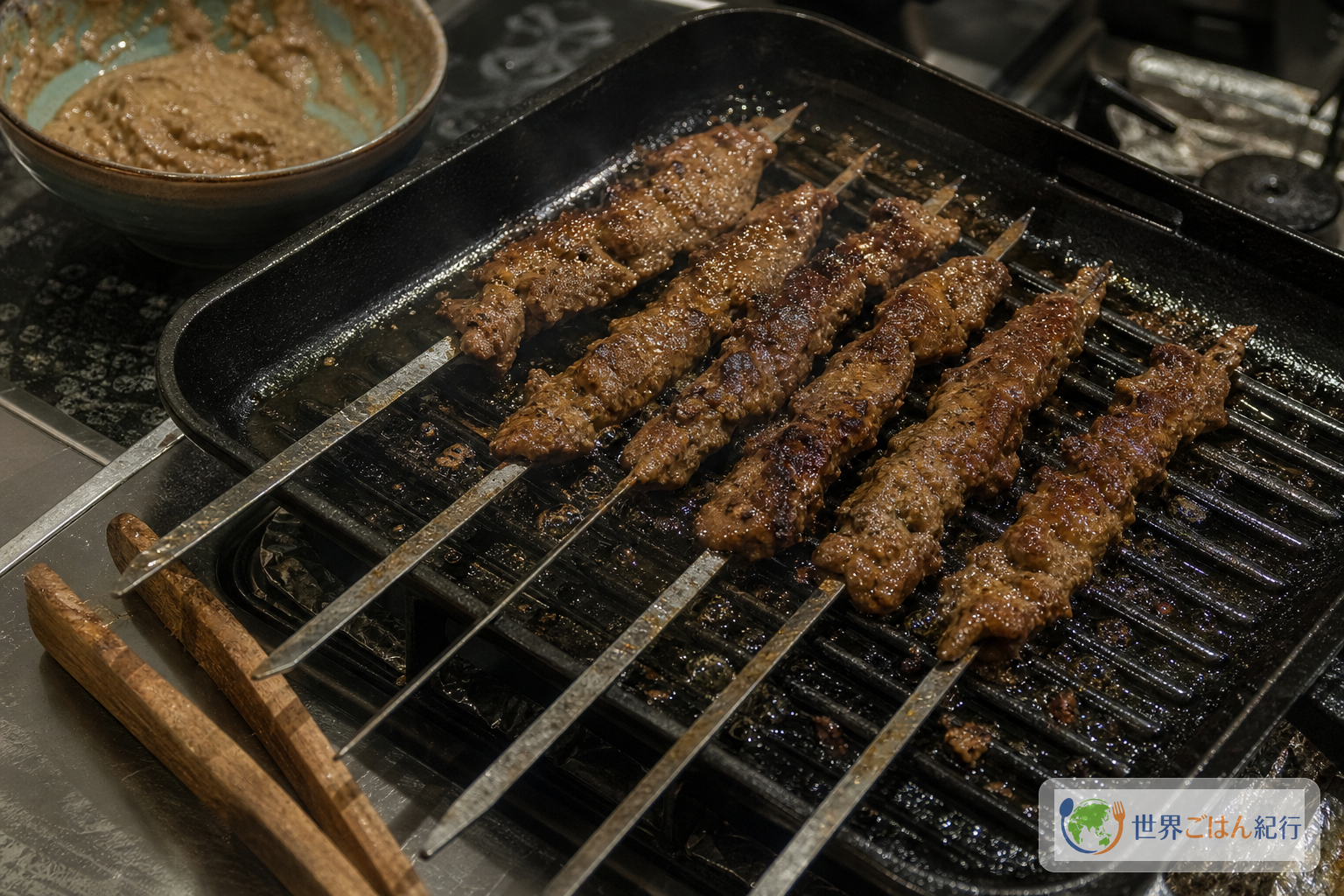
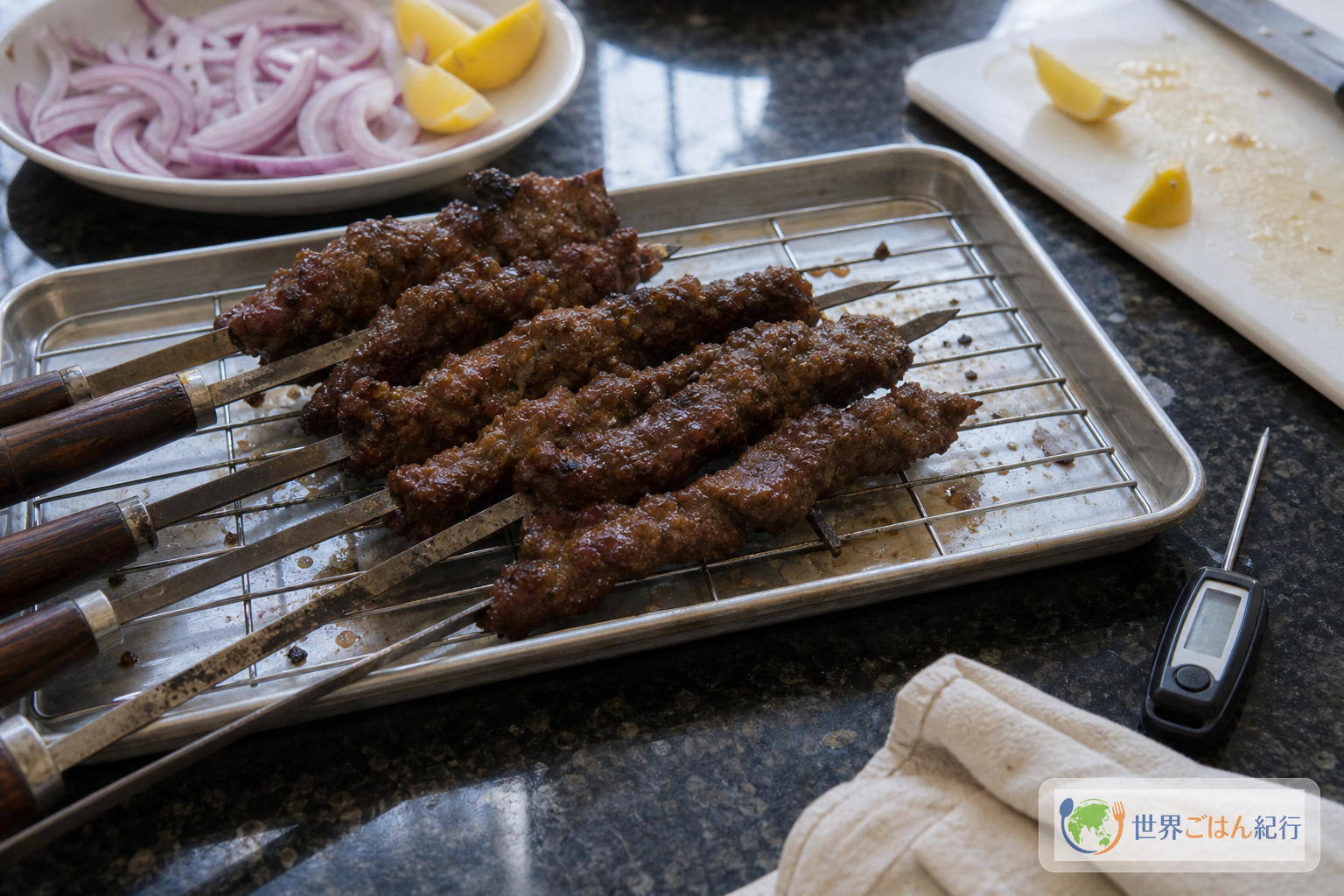
Charcoal is best if you have it, but at home a grill pan or a broiler is enough. The important things are not to wipe off too much marinade, to brown the surface first, and to rest it briefly at the end. From behind the charred edge, the rounded aroma of onion, yogurt, and spices comes back. Wrap it in naan or paratha and bite it together with onion and lemon, and the fat of the meat does not feel heavy.
Marinated, grilled thin slices of beef said to originate in the Bihar region. It is widely presented as a Pakistani barbecue dish, using beef, yogurt, green papaya, mustard oil, onion, cumin, coriander, black cardamom, and more. The meat is gathered on skewers and grilled over charcoal or under a grill, and eaten with paratha, naan, chutney, onion, and lemon.
Ingredients (serves 4)
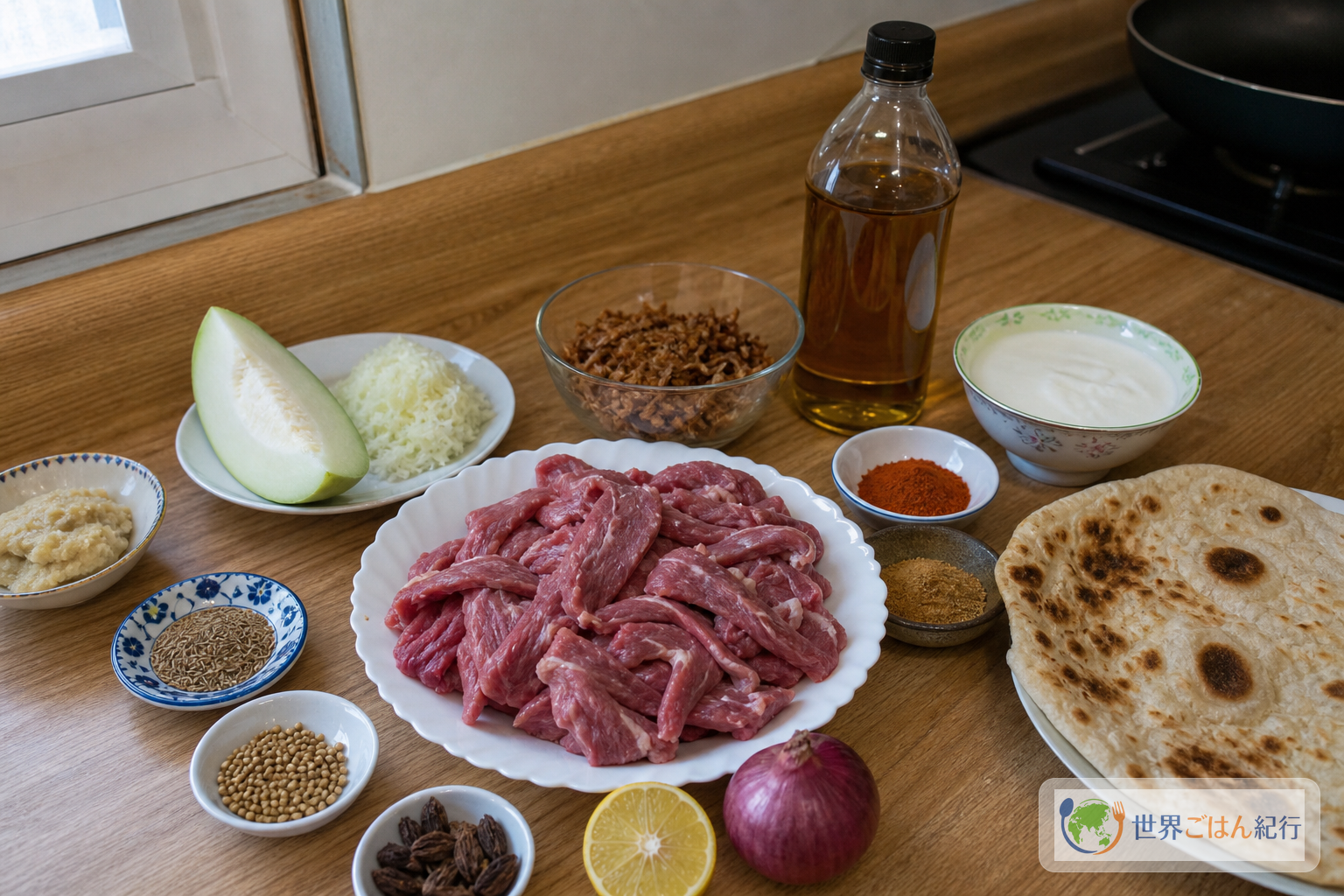
Spices
| Spice | Amount | Role |
|---|---|---|
| Cumin seeds | 1 tsp | Dry-toasted and coarsely crushed. More aromatic than ground alone |
| Ground coriander | 2 tsp | The base that lightens the meat's aroma |
| Garam masala | 1 tsp | Depth in the finish. Too much makes it heavy |
| Black cardamom | 1 | Crack the pod and coarsely crush only the seeds |
| Red chili powder | 1/2 tsp | Mild. 1 tsp for hot |
| Black pepper | 1/2 tsp | Coarsely ground |
| Nutmeg | a pinch | Adds the meat's sweet aroma |
This recipe contains milk. Store-bought naan and paratha may contain wheat, milk, and eggs. Cook the beef through to the center, and do not bring the marinade the meat sat in to the table raw.
Substitute ingredients
| Ingredient you may struggle with | Closer to the original | Realistic version | Effect on the result |
|---|---|---|---|
| Beef | Tenderloin or thin fillet from the undercut | Chuck roll, rump, or round, in a block sliced 3–4 mm thick | Round tightens easily. Chuck roll brings out aroma from fat |
| Green papaya | Raw green papaya paste | 12 g of grated kiwi, shortening the marinating time to 45 minutes | Marinating overnight makes the meat crumble. Use for a short time only |
| Mustard oil | Sarson ka tel | Indian mustard oil labeled for edible use | Leaving it out weakens the nose-clearing aroma typical of Bihari kebab |
| Black cardamom | Crushed whole pod | If ground, 1/4 tsp | Green cardamom does not give the same smoky aroma |
| Paratha | A layered, fat-enriched flatbread | Frozen paratha, store-bought naan, thin pita | Bread catches meat juices better than rice |
When you cannot find green papaya, kiwi is handy, but marinating overnight in the same way fails. On days you use kiwi, slice the meat thin, finish the salt and lemon, mix the kiwi into the marinade, and leave it for only 45 to 60 minutes. It is not suited to a long marinade started before work.
What is worth hunting for when shopping
With Bihari kebab, the flavor changes more with getting the ingredients that set the aroma than with the beef itself. Buy the meat, yogurt, and onions locally, and secure only mustard oil, black cardamom, whole cumin, and garam masala from an Indian or South Asian grocer or an online seller; they can then go into other South Asian dishes as well.
Method
Bihari kebab is not a dish you "mix and grill right away". Because of the green papaya, the thickness of the meat and the marinating time decide the result. Marinating the night before and gathering the meat onto skewers the next day to grill keeps the kitchen calm.
This recipe uses thinly sliced beef rather than ground meat. As a guide from the US FSIS, beef steaks and roasts should reach 63°C or more and rest 3 minutes, while ground meat should reach 71°C or more. At home the risk changes with the shape, thickness, and hygiene condition of the meat, so if any red raw color remains, grill 1 more minute at a time, and if you make this with ground meat, aim for 71°C.
How to Eat It and Menus
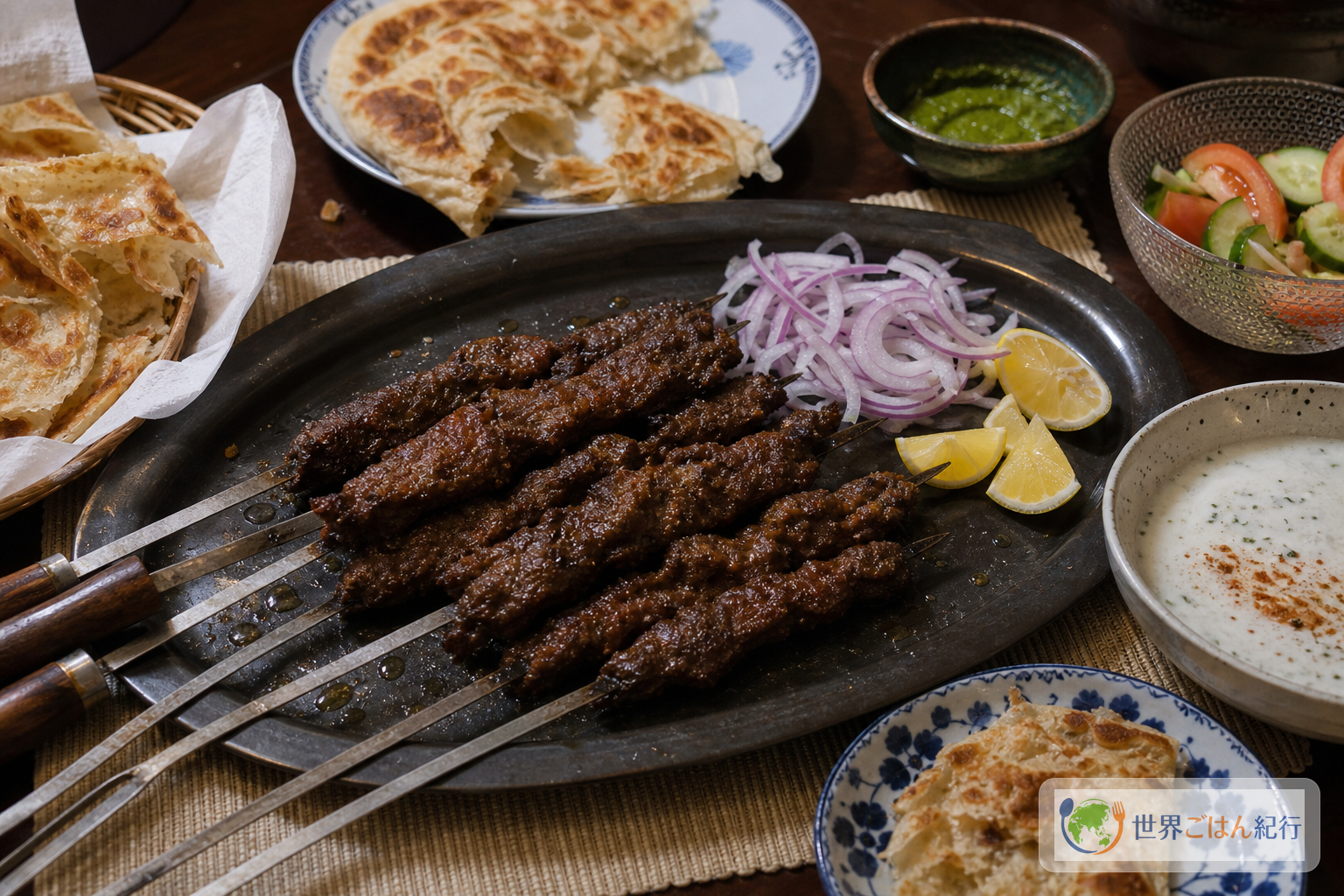
Bihari kebab suits being grabbed with bread and carried to the mouth, aroma and all, more than being eaten elegantly one piece at a time from a plate. Tear off paratha, loosen a little meat, and top it with onion, lemon, cilantro, and raita. When the aroma of mustard oil and the acidity of yogurt come together, it is much lighter than eating the meat alone.
When building a menu, it is interesting to compare it with chapli kebab (in Japanese), another Pakistani meat dish that goes in a different direction. Chapli is a dish of ground meat and coarse spices cooked flat; Bihari is a dish where thin slices are tenderized in marinade and gathered onto skewers. On days you don't want to line up too many heavy meat dishes, adding the bean dish chana masala, the yogurt raita, and the vegetable dish aloo gobi (in Japanese) pulls the table together in a South Asian way.
If you want to eat slowly in the flow of Pakistani cuisine, nihari (in Japanese), known as a breakfast or celebration stew, and haleem, which blends wheat, beans, and meat, are also candidates. Both take time, but with Bihari kebab, if you prepare it the night before, on the day you only grill. On days with guests, finish the meat through marinating the day before, and on the day lay out the onion, lemon, raita, and bread first, so the kitchen doesn't get jammed.
To bring it closer to a Japanese table, using thin bread rather than wrapping in lettuce keeps the aroma. If you must pair it with rice, take the meat off the skewers and cut it small, squeeze plenty of lemon, and add extra cucumber raita. With rice alone the fat comes forward, so add acidity and raw vegetables.
| How to eat | When it suits | Finishing tip |
|---|---|---|
| Wrapped in paratha | Days you make freshly grilled meat the main dish | Warm the paratha lightly and layer the meat, onion, and raita in small amounts |
| On naan | Days the family gathers around a platter | Don't cut the naan large; tear it and eat it while catching the juices |
| As a roll | Next day's lunch | Cut the meat taken off the skewers thin and use extra cucumber and yogurt sauce |
| Over rice | Days with no bread | Increase the lemon, onion, and cilantro so the meat alone doesn't weigh down |
What you most want to avoid at the table is a lineup of meat, meat, and only starch. Because Bihari kebab has a strong aroma, without sides with acidity and moisture it gets heavy in the second half. Cucumber, onion, lemon, and yogurt look like supporting players, but they are the seasoning that lets you enjoy it to the last bite.
Why It Fails, and Storage
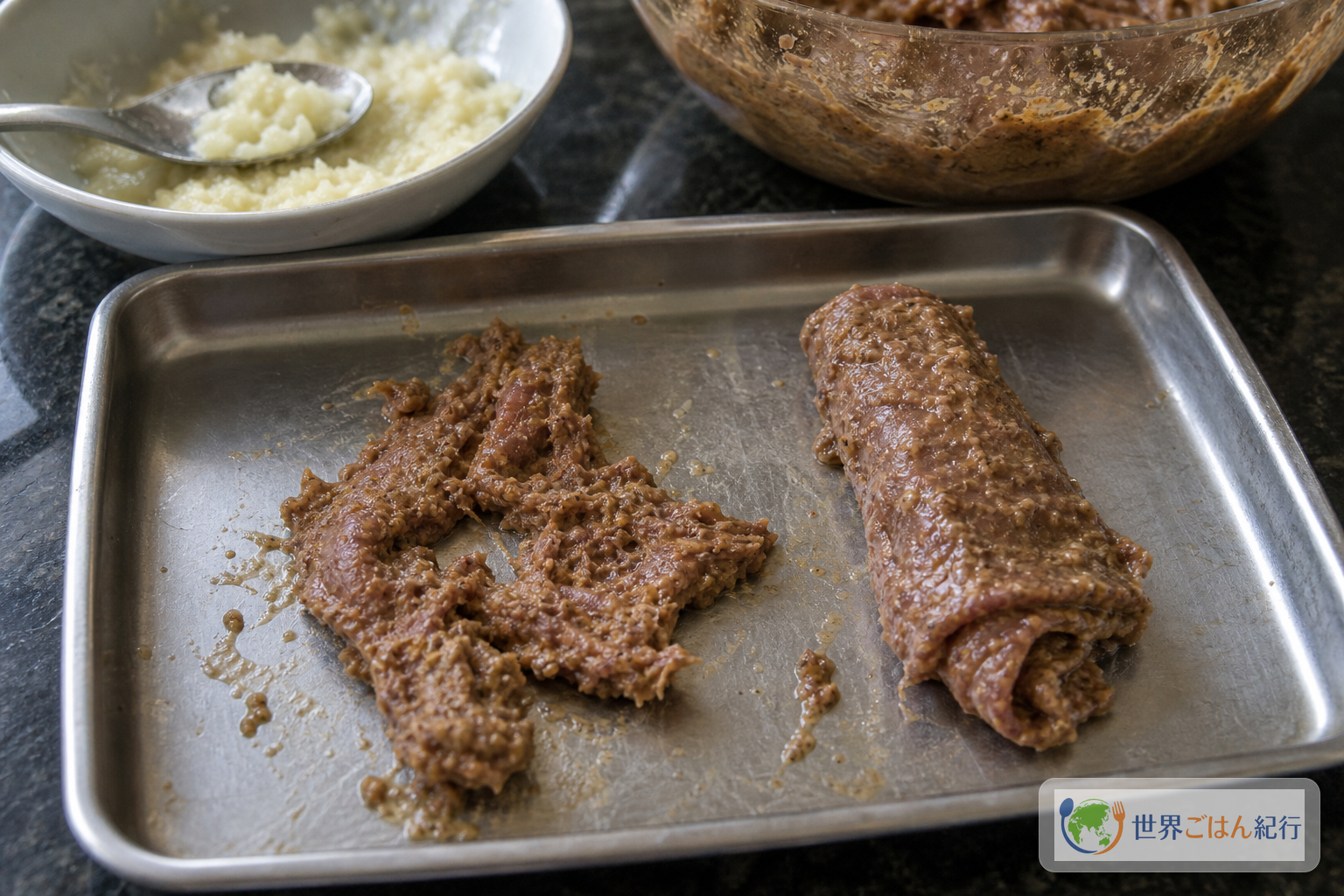
The meat falls apart
Too much green papaya or too long a marinade. For 650 g of beef, 25 g of green papaya is the upper limit. The first time, check the state at 6 hours, and if the meat keeps its shape when you lift it, you may stop there. If you substituted kiwi, only 45 to 60 minutes.
It is tough and hard to bite through
Review the cutting direction and thickness. If you cut long along the grain, it stays hard to bite through however long you marinate. Cut at a right angle to the grain of the meat, 3–4 mm thick. When using round, which tightens more easily than chuck roll, take care not to lengthen the cooking time too much.
The marinade is bitter
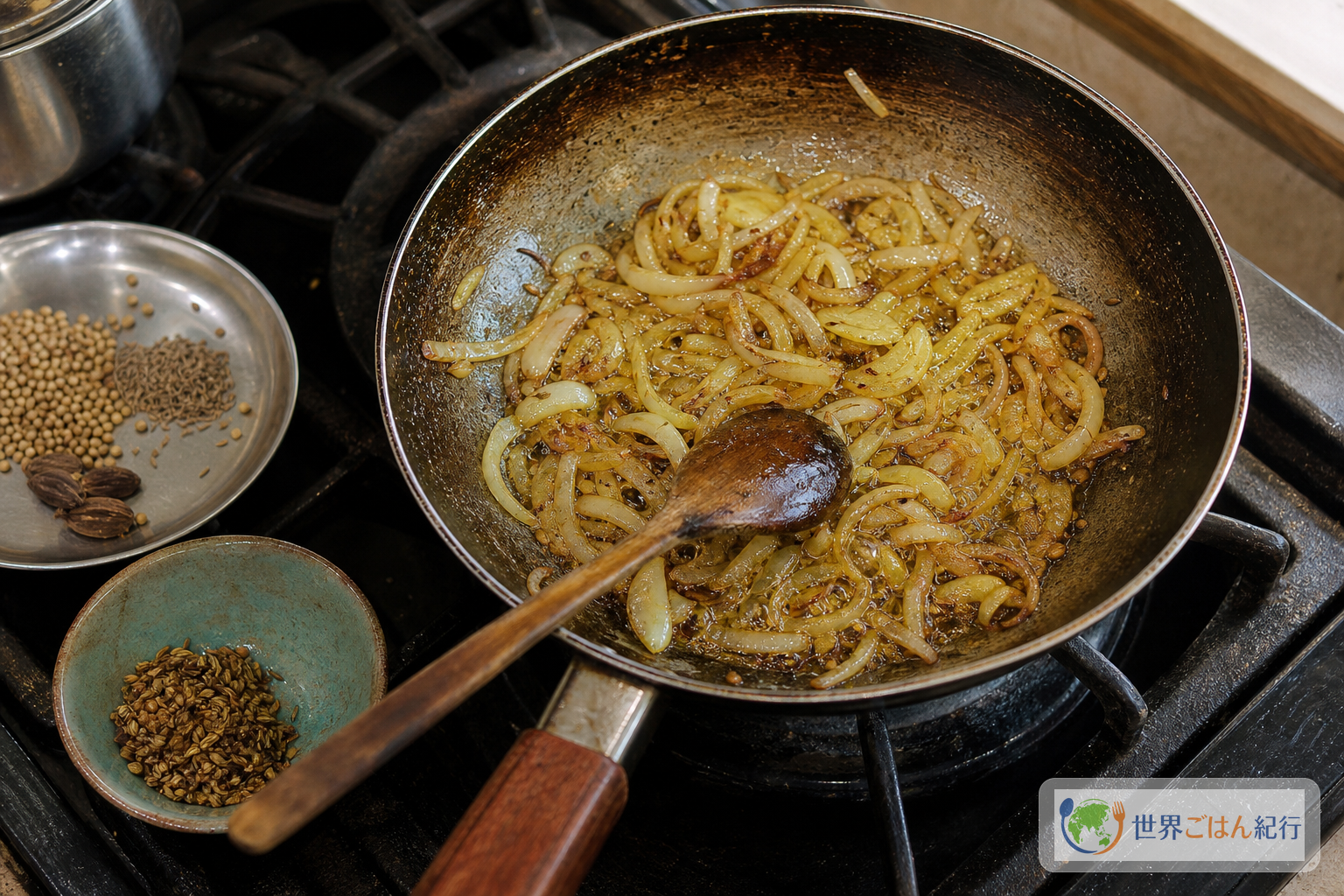
Likely causes are burnt onion, too much mustard oil, or grinding the black cardamom with the pod. Stop the onion at a pale golden brown and remove the black parts. Crack the black cardamom pod and use only the seeds. The pod's aroma is strong, and grinding it fine brings out bitterness.
It turns watery in the frying pan
The heat is too low, or the meat is packed too tight. Preheat the grill pan well over medium-high heat and leave 1 cm or more between skewers. Turning before the surface dries lets the marinade peel off and turns it watery. Don't touch for the first 3 minutes and wait until the edges are dark brown.
Storage and make-ahead
Grill marinated raw meat all the way within the next day. Leaving it long with green papaya makes the texture collapse before it gets tender. After grilling, let it cool slightly and keep it in an airtight container for about 2 days in the refrigerator. To reheat, a microwave alone traps the aroma, so crisp it back in a frying pan over medium-low heat for 1 minute per side and squeeze lemon over it at the end.
For freezing, after grilling is easier to handle. Wrap each skewer in plastic wrap, put it in a freezer bag, and eat within 2 weeks. Thaw in the refrigerator for half a day and warm briefly in a frying pan or under a grill. It dries out easily on reheating, so adding raita or onion makes it easier to eat.
Frequently Asked Questions
Can I really make it without green papaya?
You can, but the tenderness typical of Bihari kebab is a little weaker. If using 12 g of kiwi, make the marinating time 45 to 60 minutes. If using a store-bought meat-tenderizing enzyme powder, follow the amount on the label and avoid long marinades for safety.
Can I leave out the mustard oil?
Leaving it out moves it toward an ordinary yogurt-and-spice grill. The green mustard aroma is the outline of this dish, so the first time we recommend using at least 1 tbsp of the 3 tbsp. If the aroma is too strong, heating it once in the step of sautéing the onion rounds it out.
Can I use thinly sliced beef?
Shabu-shabu slices are too thin and crumble easily with green papaya. If you use them, leave out the green papaya, marinate for 30 minutes in only yogurt, spices, and mustard oil, and cook briefly in a frying pan without threading onto skewers. It will be Bihari kebab-style, but cutting a block of meat 3–4 mm thick is closer in texture.
Does it get the aroma without charcoal?
It does. If you preheat the grill pan well and put color on it without moving at first, you get quite close even at home. If you really want to add charcoal aroma, don't force charcoal indoors; do it only when cooking outdoors where you can ventilate. The thickness of the meat and the amount of marinade affect the flavor more than the show of smoke.
How should I change it for chicken?
Cut 600 g of chicken thighs into long strips 2 cm wide on the bias, reduce the green papaya to 10 g, and shorten the marinating time to 3–4 hours. Aim for an internal temperature of 75°C, and cook so no red part remains. Chicken breast dries out easily, so increasing the yogurt to 120 g makes it easier to eat.
How much can I prepare the day before?
You can slice the beef and marinate it the day before. Prepare the onion, lemon, raita, and bread on the day to preserve texture. For guests, gathering the meat onto skewers 30 minutes before grilling, returning it to the refrigerator, and taking it out 20 minutes before grilling is easy to manage.