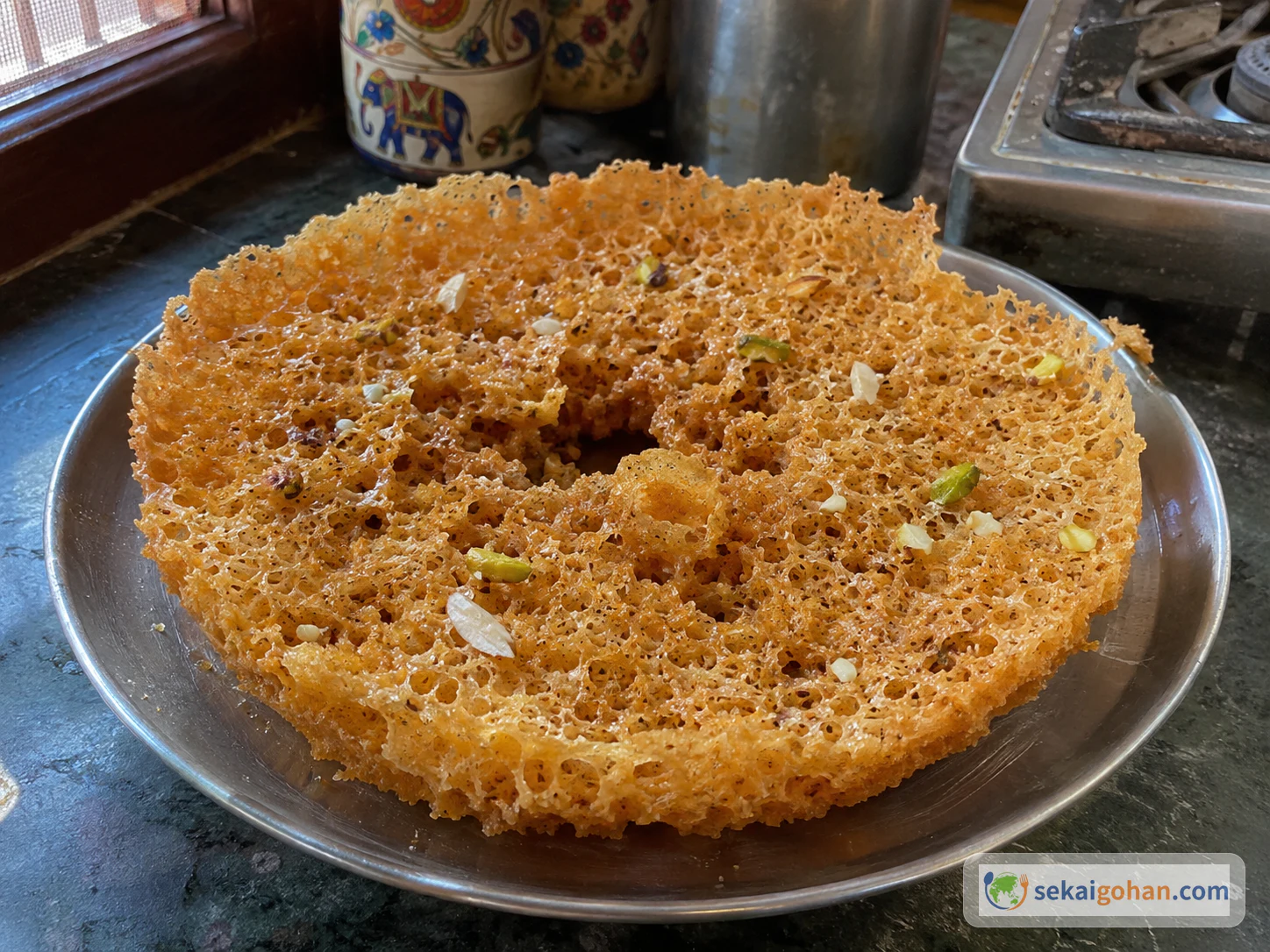
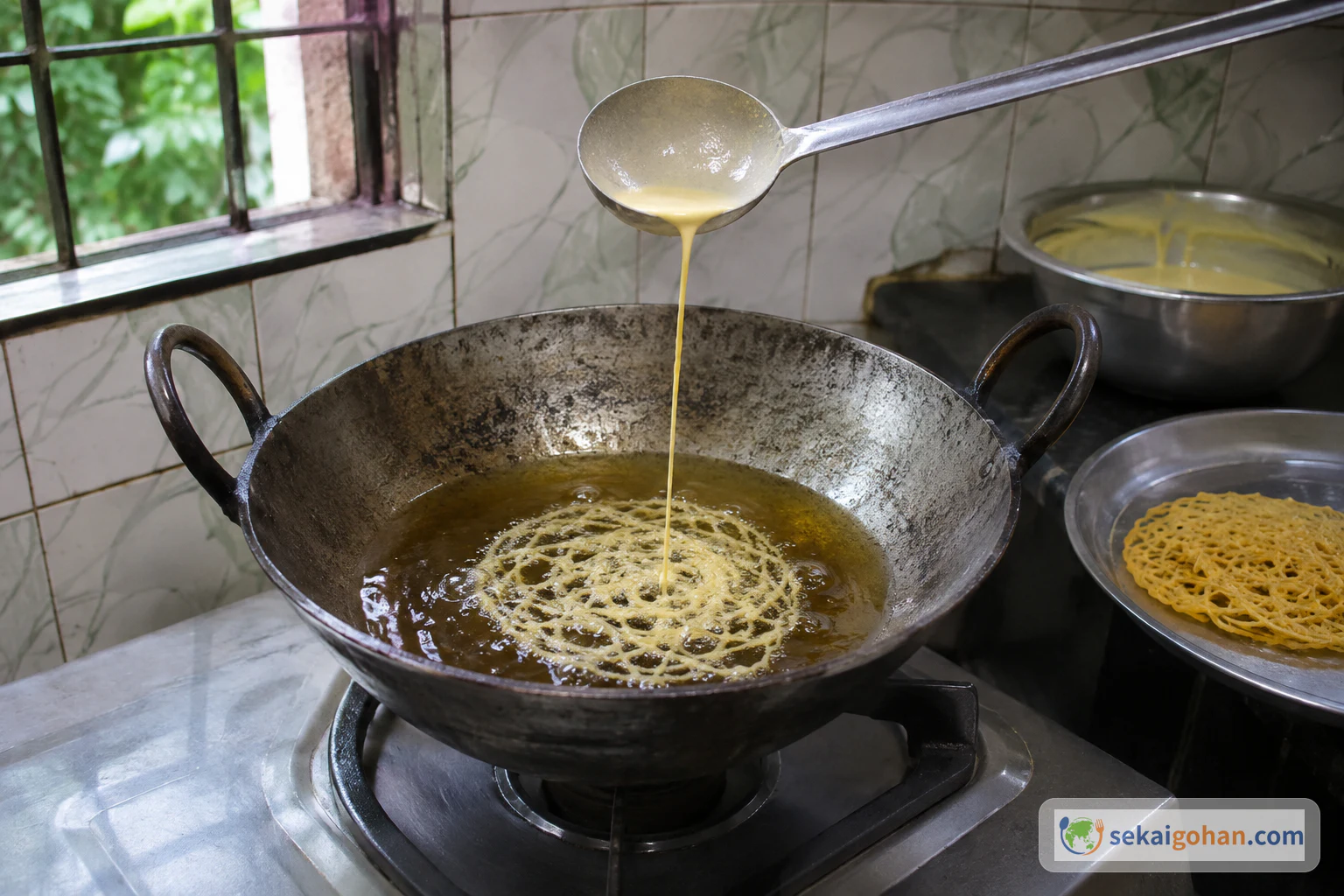
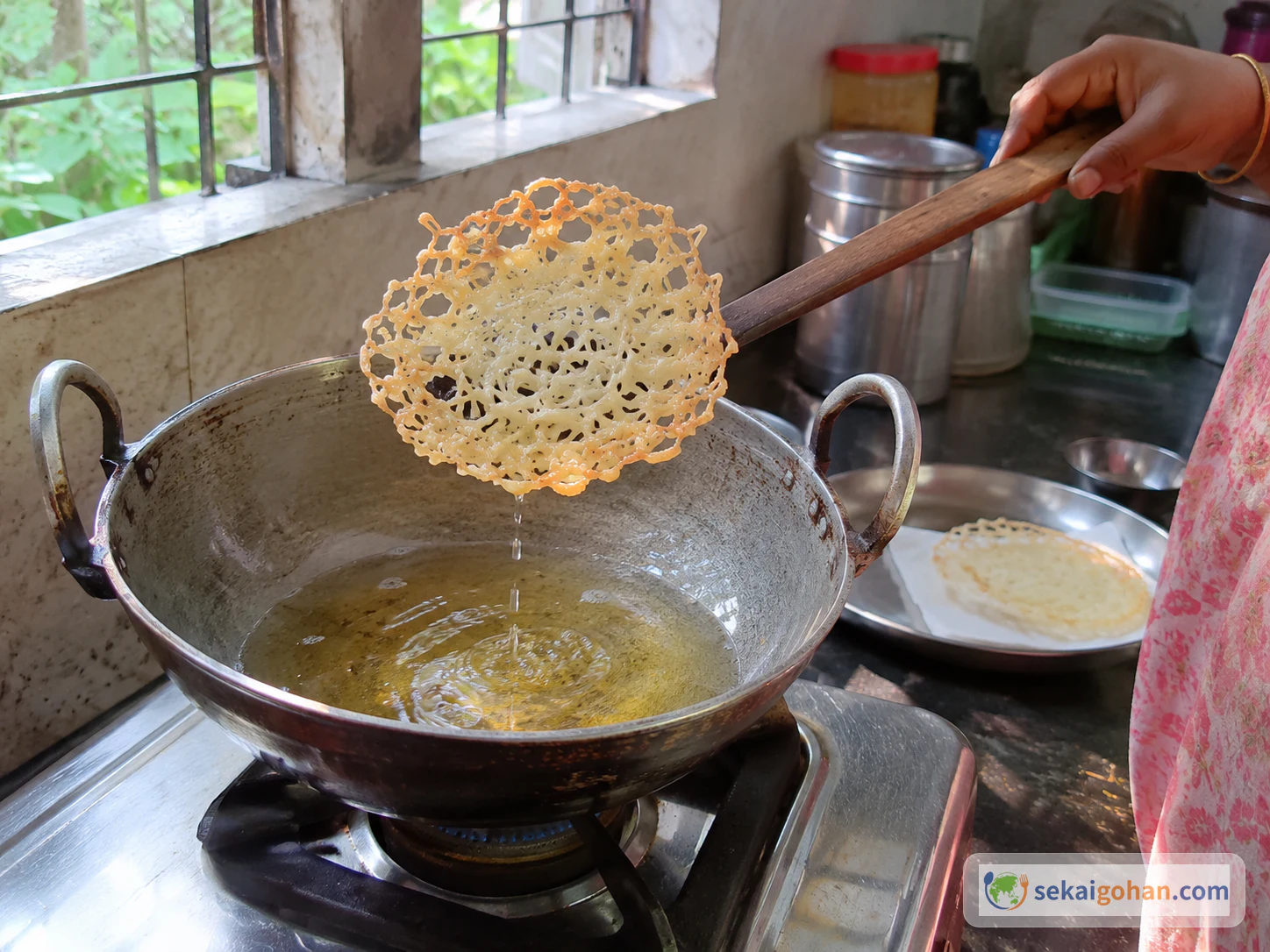
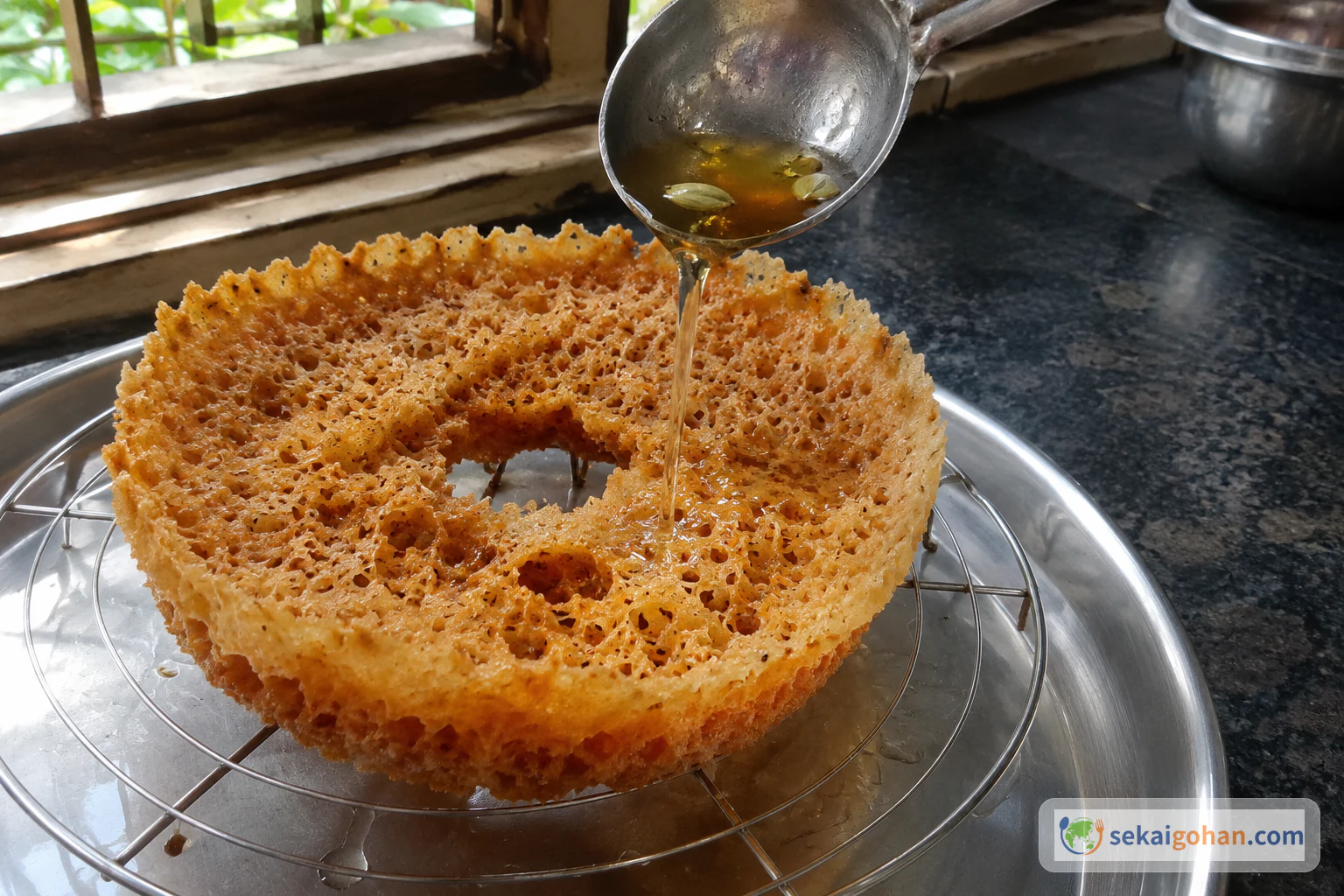
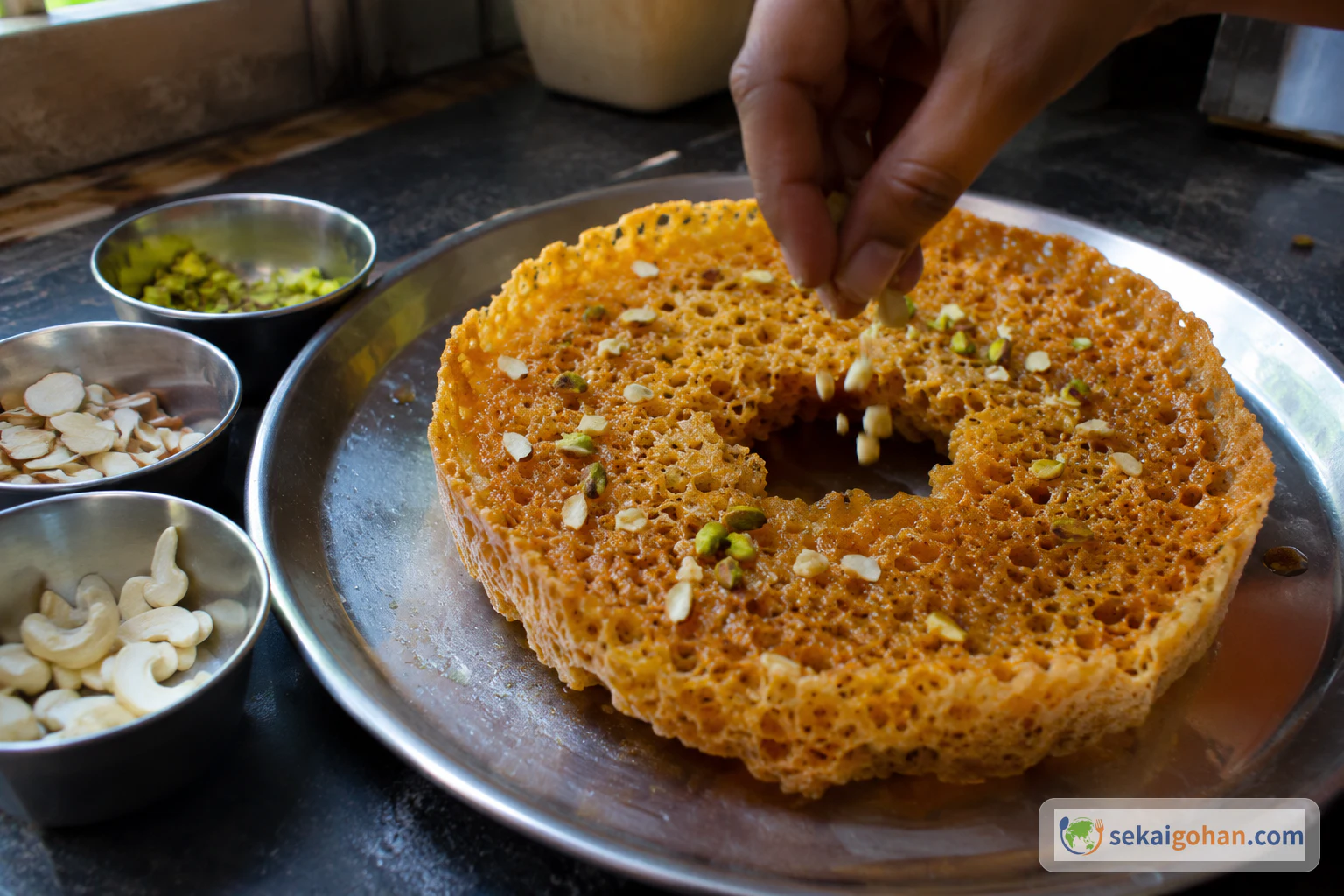
A ladle of batter, thin as milk, falls from high above the kadhai and hits the centre of the hot oil. It does not sink into a blob. It spreads out across the surface in tiny holes, and with every new pour the web grows outward until a whole lacy disc fills the pan. That disc is ghevar. It is fried in light brown rounds from ghee and flour, then finished with cardamom sugar syrup and a scatter of chopped nuts. On the plate it looks like a honeycomb made of fried batter, glossy where the syrup has run into the holes.
A Monsoon Sweet With Many Homes
Ghevar is a North Indian sweet, and Rajasthan is the state most people connect it with. It does not stop at the Rajasthani border. It is also made in Uttar Pradesh, Haryana, Delhi and Gujarat. Where it was first made is not settled. It belongs to the wide family of Indian festival sweets that are fried and then sweetened with syrup.
Its season is the monsoon, and its festival is Teej. In western Uttar Pradesh, Hariyali Teej falls in the month of Shravan, and that is when the local halwai, the professional sweet-makers, fry ghevar in their shops. Households buy it as a mark of Teej, so the sweet stands for the festival as much as it feeds people at it. There it shows up as a deep-fried flour-batter disc soaked in sugar syrup. Some come plain, and others are heaped with mawa (milk solids), nuts or varq, the thin silver leaf used on Indian sweets.
In this recipe, "plain" does not mean bare. A plain ghevar still gets its syrup and its nuts. The name separates it from the richer kinds: ghevar topped with rabri, a thickened milk, or with custard cream. There is also malai ghevar, which starts from another batter altogether. Under every one of them is the same fried lattice. Make it plain first, because that is how you learn the disc itself.
Both spellings are in common use for the same sweet. Search under both when you shop for it or read about it, because Indian grocers, sweet shops and menus use whichever spelling they prefer.
Ingredients (serves 3)
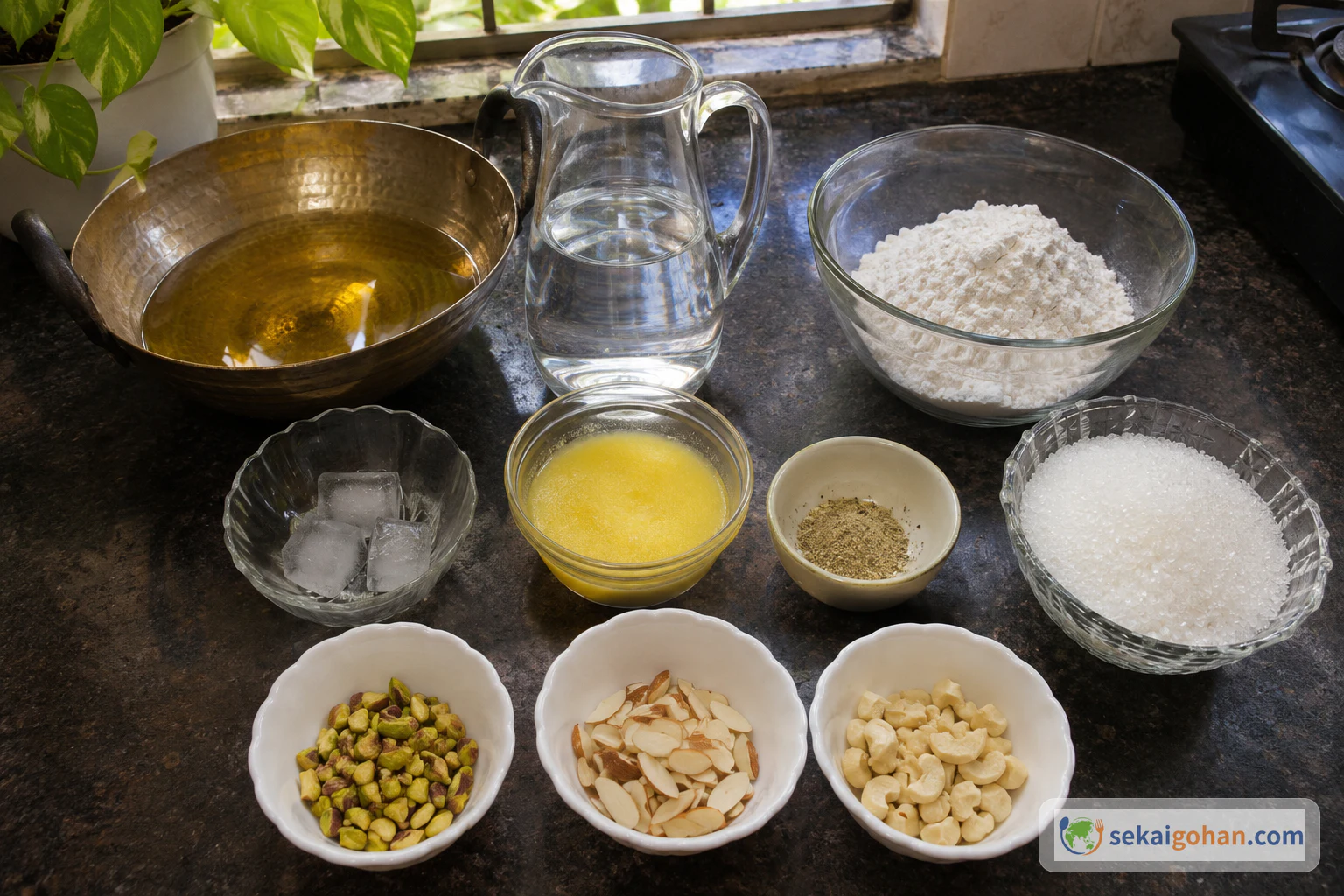
This recipe uses three separate waters. The batter water goes into the flour. The syrup water goes into the sugar. The ice melt from chilling the ghee is poured off and thrown away. Never count the ice melt as batter water, and never top up the syrup from the batter jug.
Ghevar contains wheat (maida) and milk (desi ghee). The topping has tree nuts: pistachios, almonds and cashews.
Equipment
- A heavy kadhai about 12–15 inches (30–38 cm) wide at the top
- A ladle for pouring the batter
- A wooden ladle, for lifting the disc out with its handle
- A flat, shallow utensil or tray for chilling and rubbing the ghee
- A wide mixing bowl
- A fine sieve and a clean bowl
- A ring cutter or a cup to drain the fried disc on
- A small saucepan for the syrup
- A serving platter
What to Buy and What to Keep
Get maida and desi ghee from an Indian grocer or order them online. Both are sold under those names. Maida is the refined wheat flour this batter is built on. Desi ghee is the clarified butter that you melt, chill and rub into a white cream before any flour goes in, so it shapes the dough as well as the flavour. For frying, use plain frying oil. The kadhai is the piece of equipment that matters most. It needs to be heavy and wide enough for the web to spread across the oil, with room for the oil to sit only halfway up.
Some things decide whether the result tastes like ghevar, and those are worth keeping. One is the ghee in the batter. Another is the cardamom in the syrup, the main scent of the finished sweet. The third is the finish of syrup and chopped nuts. Pistachios, almonds and cashews are the three nuts for the top. Chop them before you start frying so they are ready the moment the syrup goes on.
Method
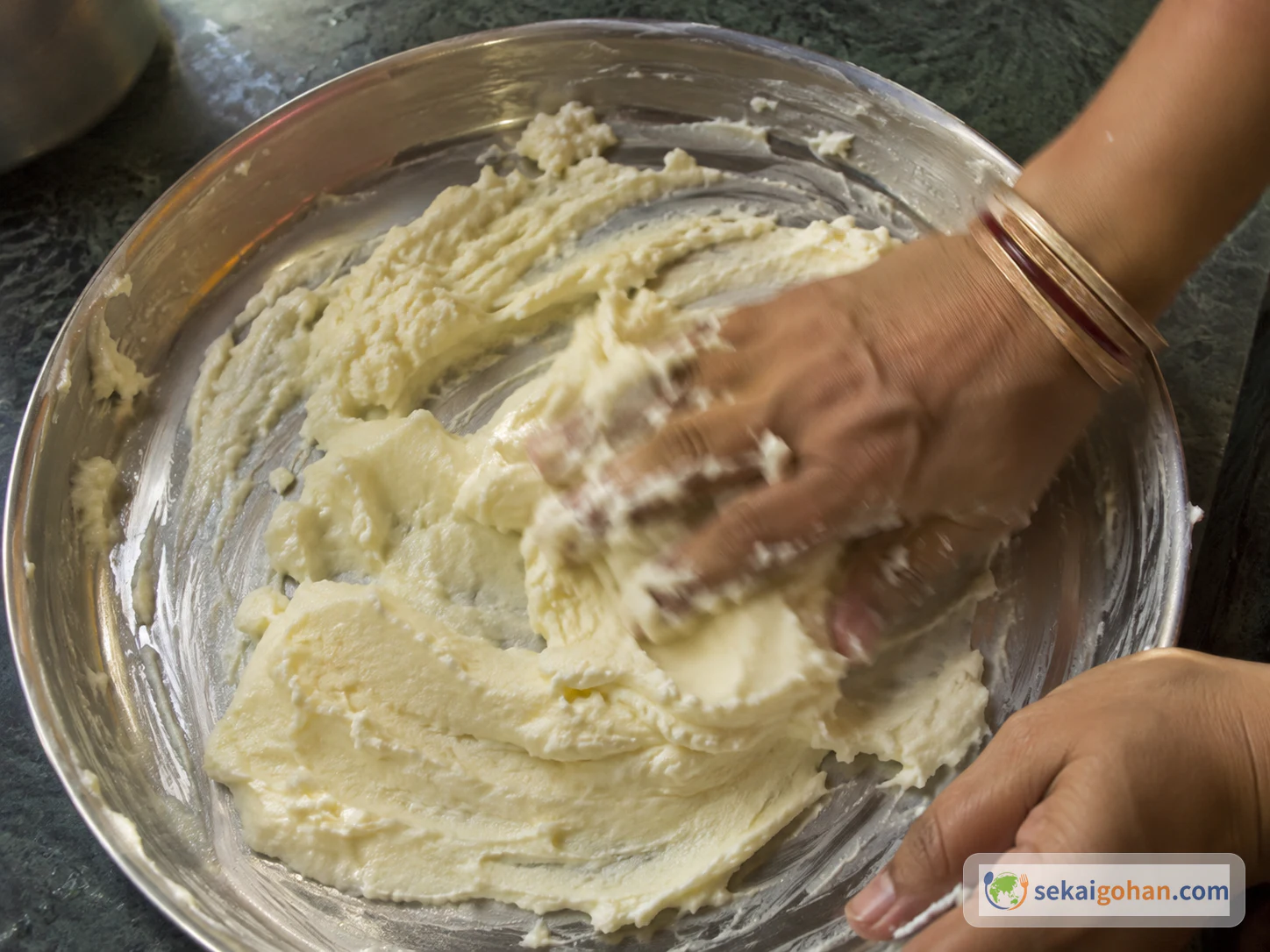
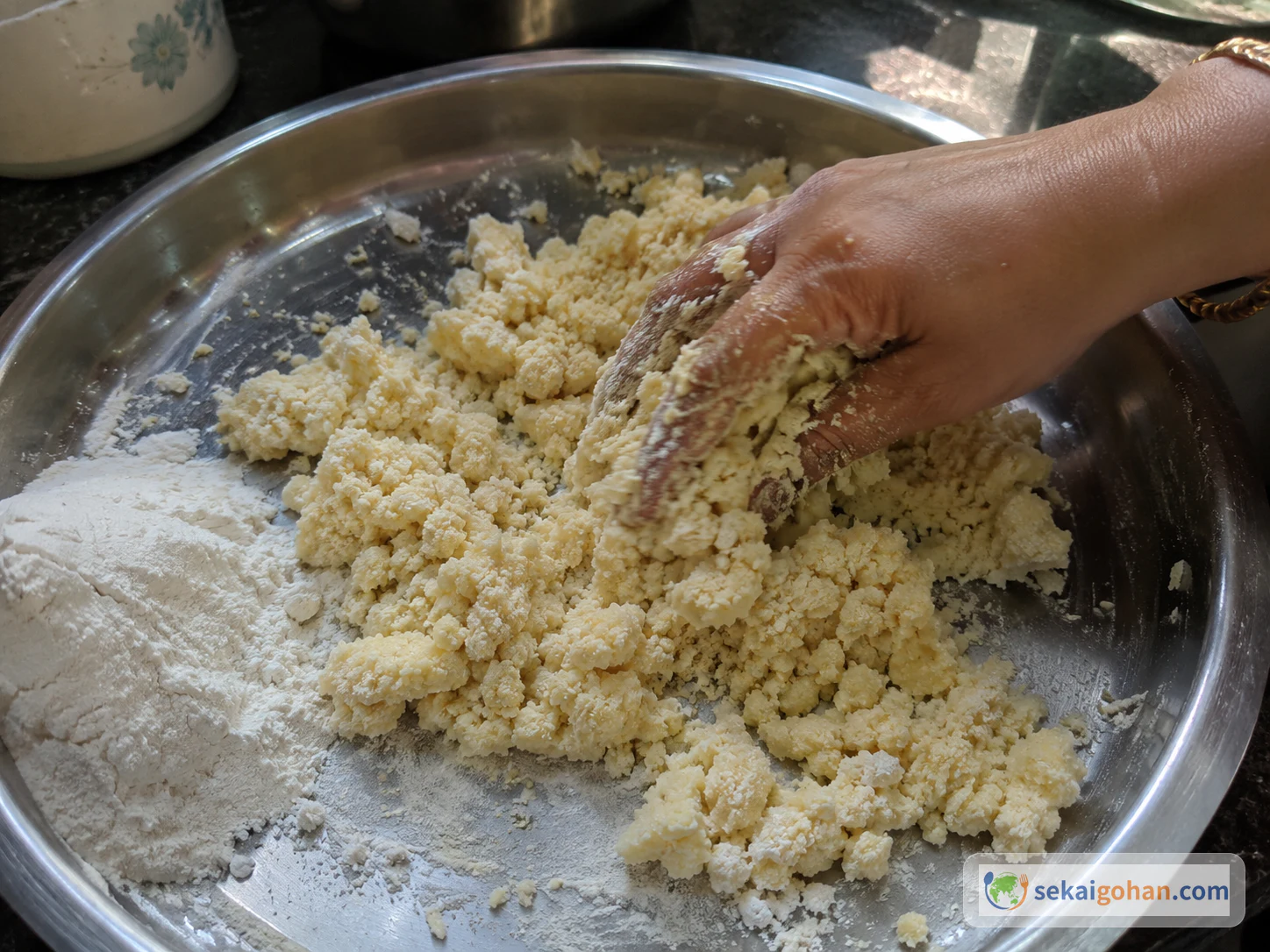
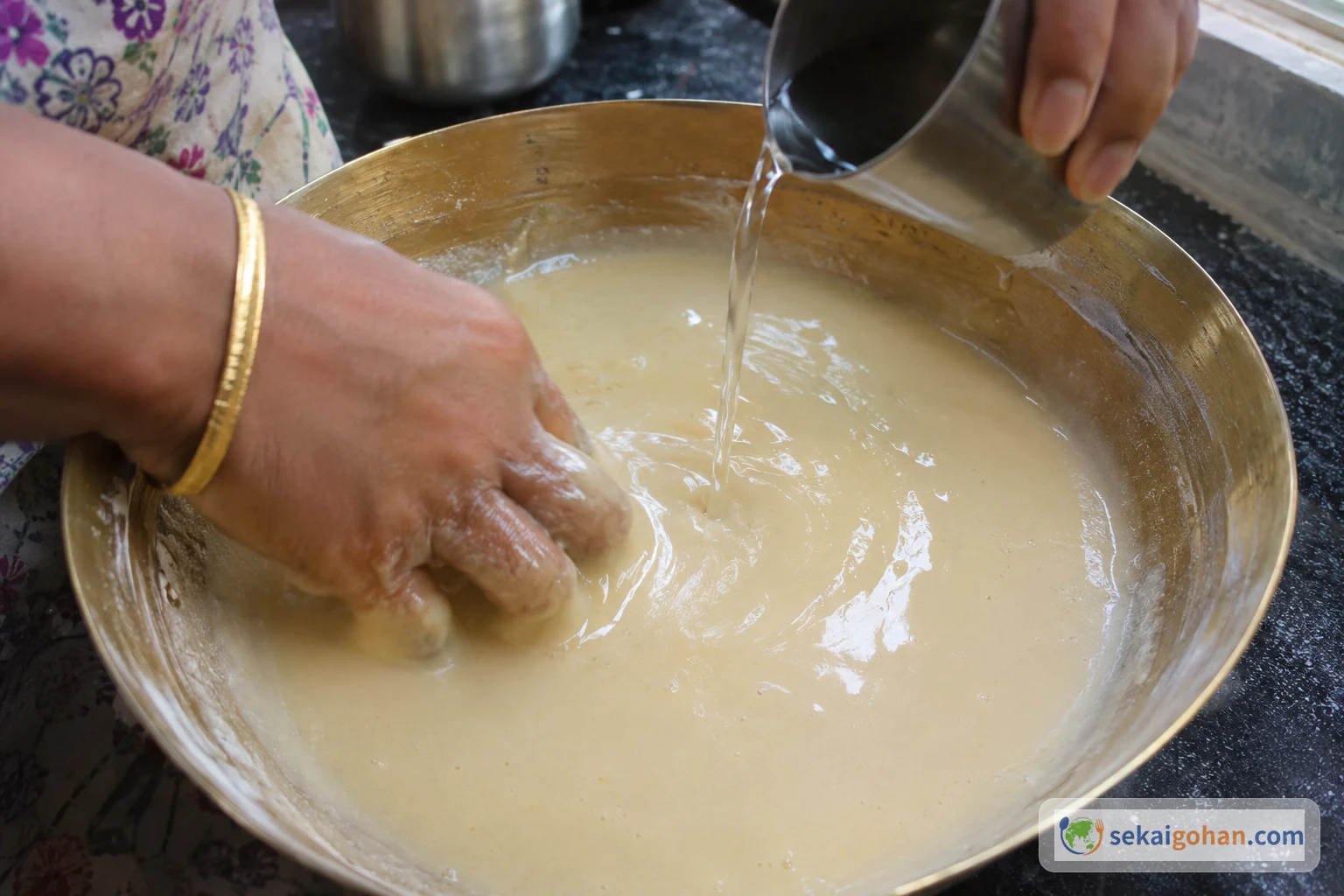
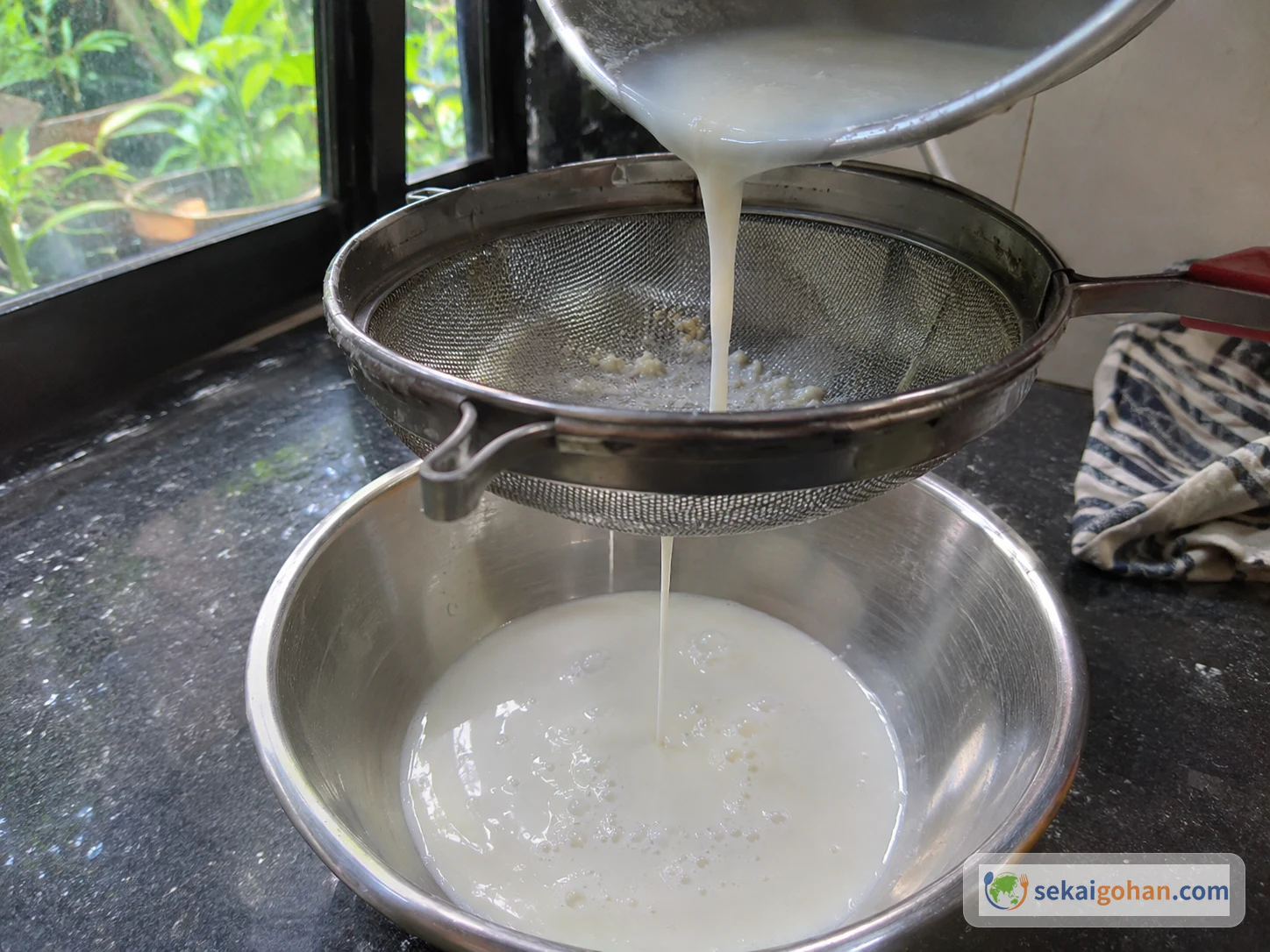
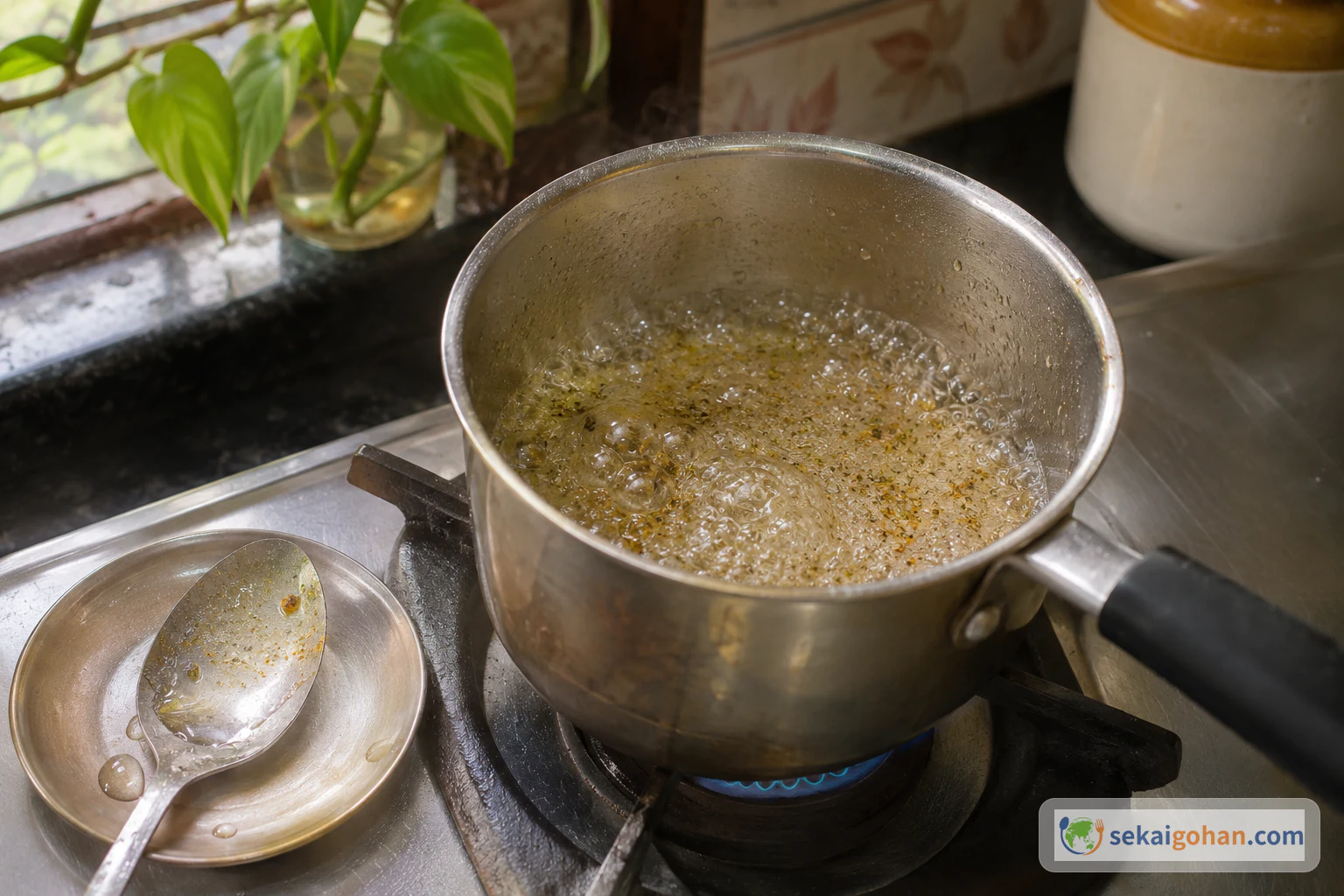
The work comes in three parts. First, at the counter, you turn the ghee into a cream with your hands, work in the flour, thin it with water and strain it. Second, at the stove, you pour the batter into hot oil and fry it into a lattice. Third, you cook the syrup. The pauses all come late: the discs and the syrup both cool completely before they meet, and the finished ghevar rests before serving.
This batter is mostly water, and it goes into hot oil. Fill the heavy kadhai only to the middle. Pour from the ladle into the centre of the oil. Lift each disc out with the handle of a wooden ladle and let it drain over the kadhai. Keep the area around the stove clear while you fry.
Do not cut short the 4–5 minutes of rubbing in step 2. The ghee has to turn fully white and creamy before any flour goes in, and the flour has to go in a little at a time. Done this way, the batter thins out smoothly instead of separating into lumps.
Every ladleful goes into the centre of the kadhai, from at least 10 inches (25 cm) up. Each pour adds a new ring of web around what is already there, so keep aiming at the same spot as the disc grows.
When It Goes Wrong
| What you see | Why | What to do |
|---|---|---|
| The ghee stays yellow and greasy and will not go creamy | Water is still trapped in it, or it has not been rubbed long enough | Squeeze it again and rub for the full 4–5 minutes, until it is white |
| The batter has lumps | Flour or water went in too fast | Pour it through the fine sieve. Next time, add both in small batches |
| Water splashes out of the bowl | Too much went in at once | Add smaller amounts and rub each one in before the next |
| The disc goes darker than light brown | It stayed in the oil too long | Lift the next disc with the wooden handle as soon as it is lightly browned |
| The syrup is thin and runny | It was not boiled to a single string | Bring it back to a boil until it is thick, then cool it completely again |
The order of cooling matters most at the end. The disc is fully cool before the syrup goes on, and the syrup is fully cool when it goes on. Wait for both every time.
Serving and Variations
At the table
Ghevar comes to the table during the monsoon and around Teej, set whole on a platter so everyone can see the lattice before it is broken into. Bring it out once the 15-minute rest is over, when the syrup has settled and the nuts are holding in place. Serve it on its own. With syrup, nuts and ghee in it, ghevar is a complete sweet.
Other ways to finish it
- Rabri ghevar. The fried disc is topped with rabri, a thickened milk. The dish becomes rich and creamy, and the lattice softens under the topping.
- Custard cream ghevar. The same fried disc is finished with custard cream. It becomes a softer, dessert-plate sweet.
- Malai ghevar. This one starts from another batter. The ghee is beaten with cold milk, saffron goes in, the batter is fried as a thin stream in hot ghee, and the finished disc is dipped briefly in syrup instead of having syrup poured over it. It has milk, saffron and a different syrup ratio, so it is a recipe of its own.
- Halwai-style toppings. In western Uttar Pradesh, the shop versions for Teej are piled with mawa, nuts or silver varq. This turns the plain disc into a festive one.
Frequently Asked Questions
Should the ghevar be soaked in the syrup?
No. For plain ghevar you pour some cooled syrup over a cooled disc and let it rest, which keeps the holes open. Some shop and festival versions are soaked in syrup, and malai ghevar is dipped briefly. Those are different finishes, and each gives a different texture.
Is the batter warm when it goes into the oil?
No. The ghee is warmed and then chilled at the very start, but the batter itself is never heated. Mix the water in, strain the batter and take it straight to the stove. What makes the lattice is the batter being thin and the oil being hot.
Why does the ghee get melted and then chilled again?
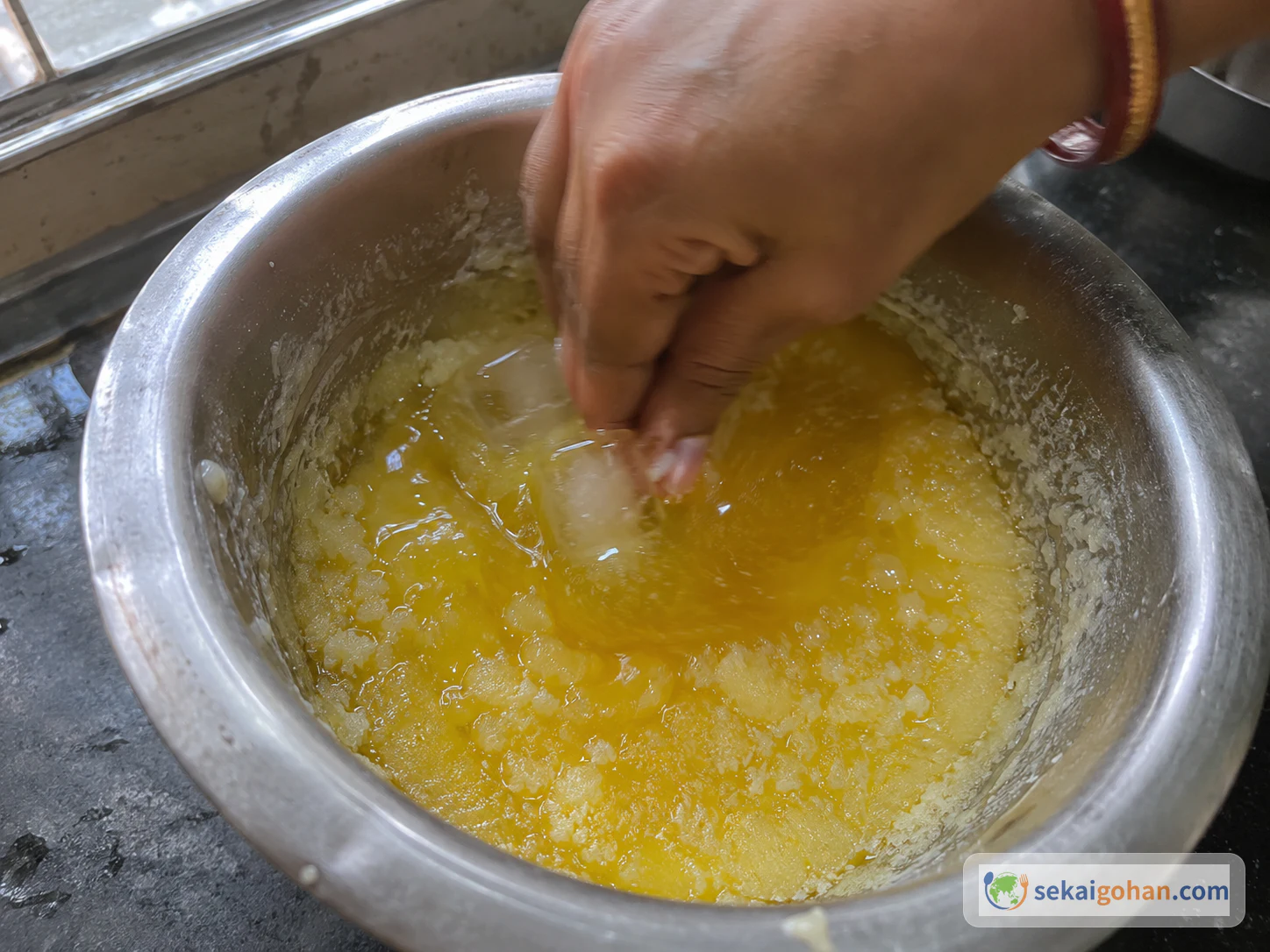
Chilling the warm ghee with ice sets it again into a soft, workable fat. Rubbing turns that fat white and creamy, and the flour takes in creamy ghee smoothly. Skip the chilling or the rubbing and the flour has no cream to blend into.
Can I make ghevar ahead and finish it later?
The method cools the fried discs completely and the syrup completely before they meet, and the syrup, nuts and 15-minute rest come last. No keeping time is given for the finished ghevar, so this article does not offer one.