Kulhi Boakibaa: A Savory Bake Built From Raw Rice, Fish and Coconut
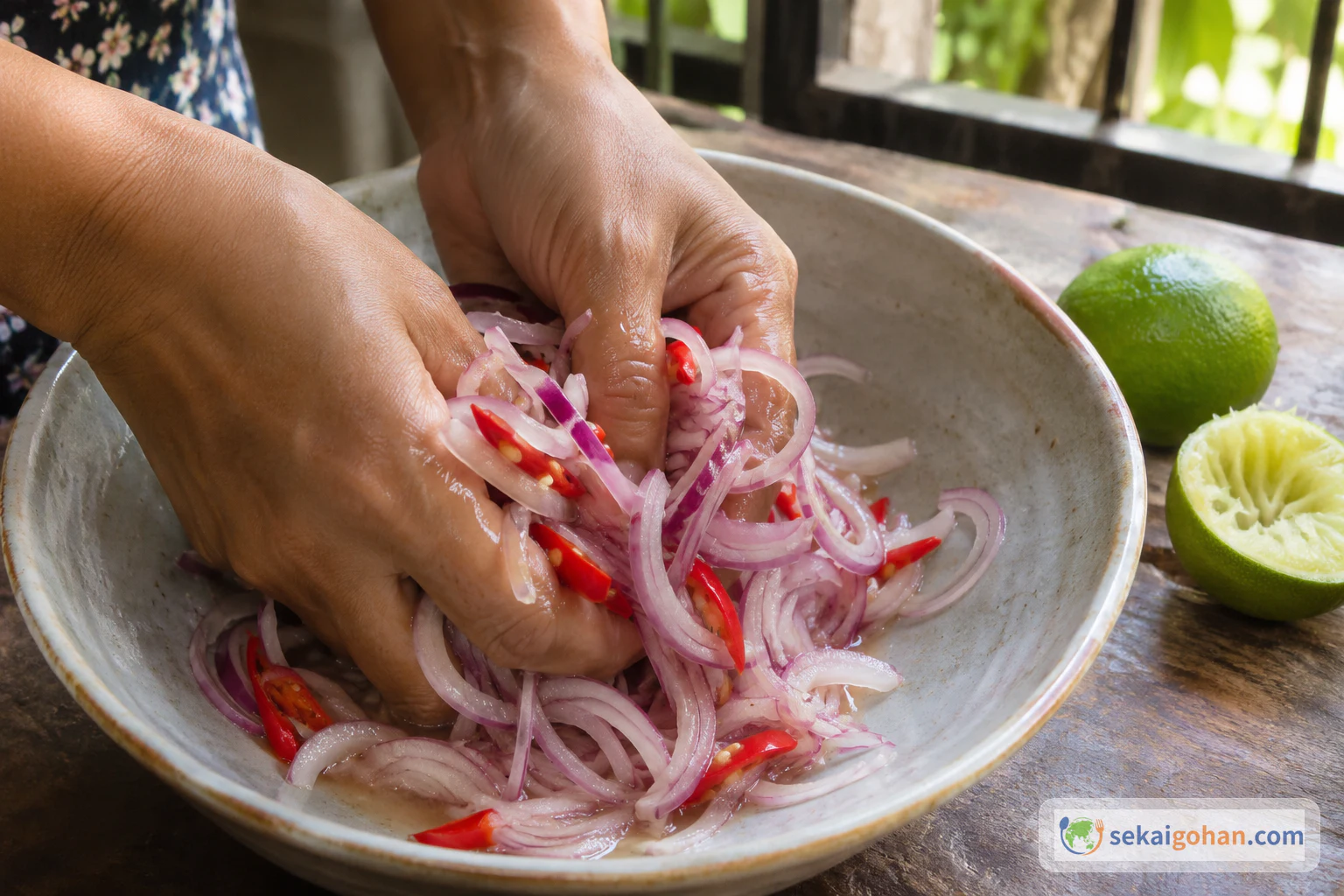
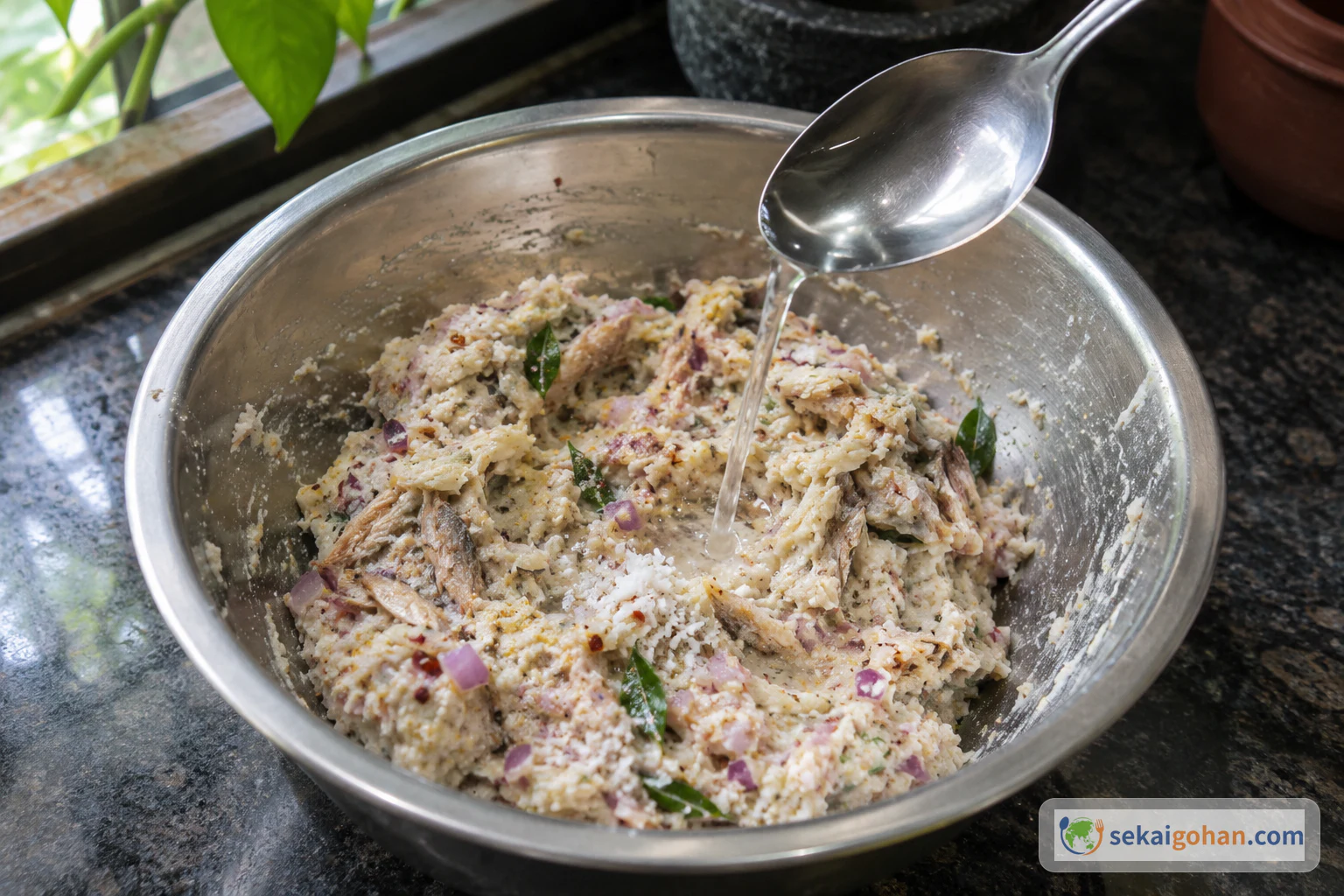
Soak the rice raw and grind it coarse, not smooth. Soften the onion with lime before the fish goes in, and add water only until the batter is wet but not watery.
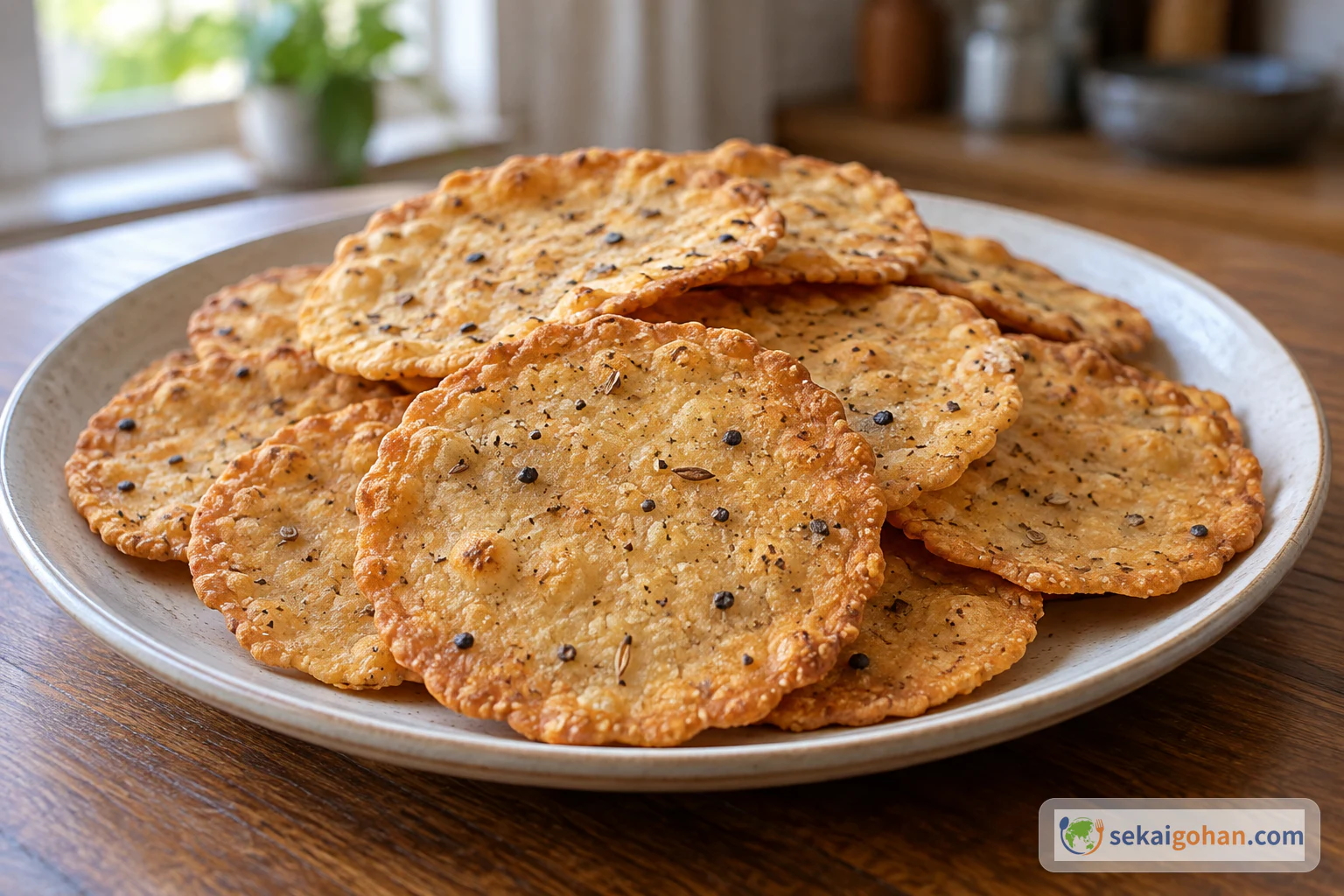
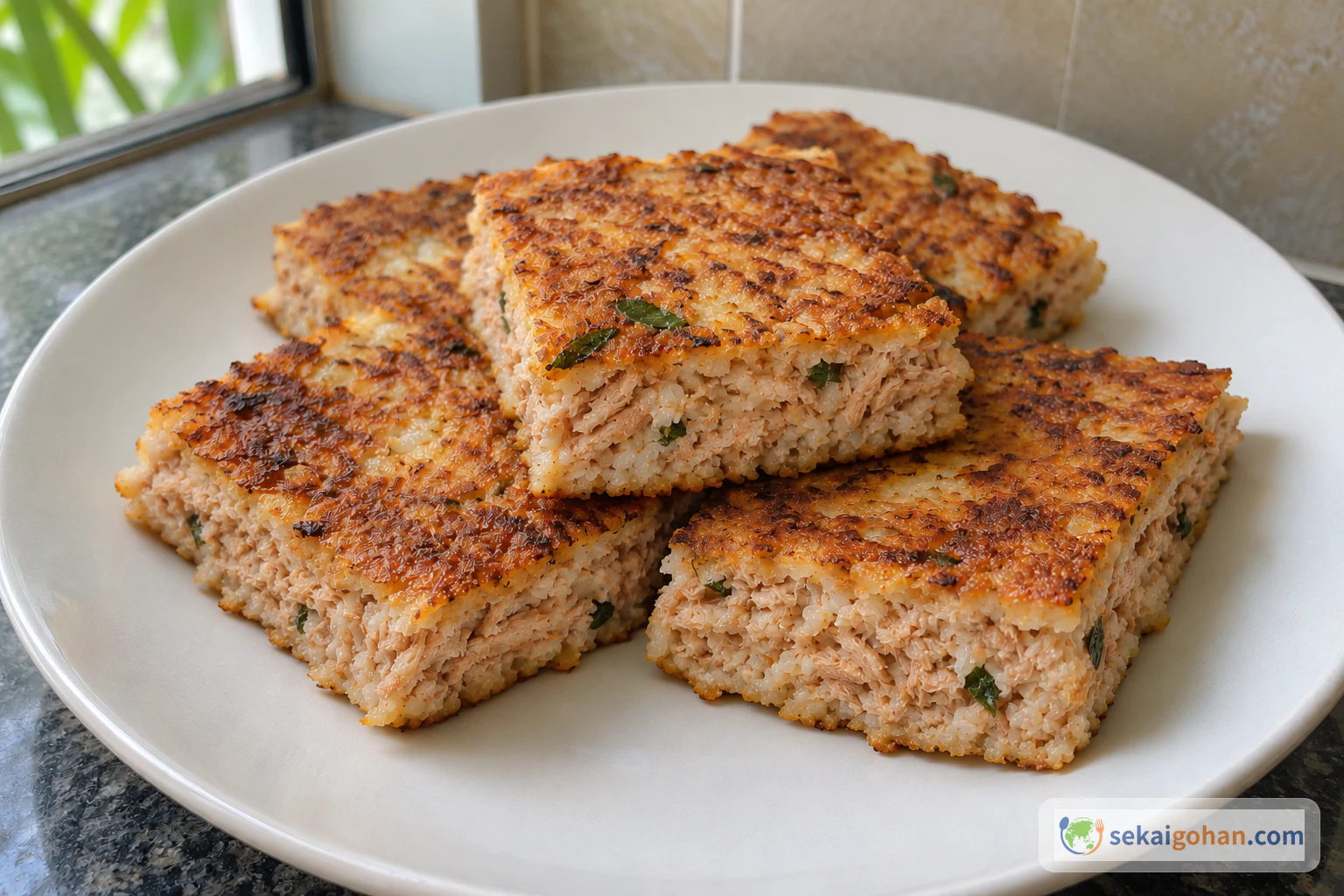
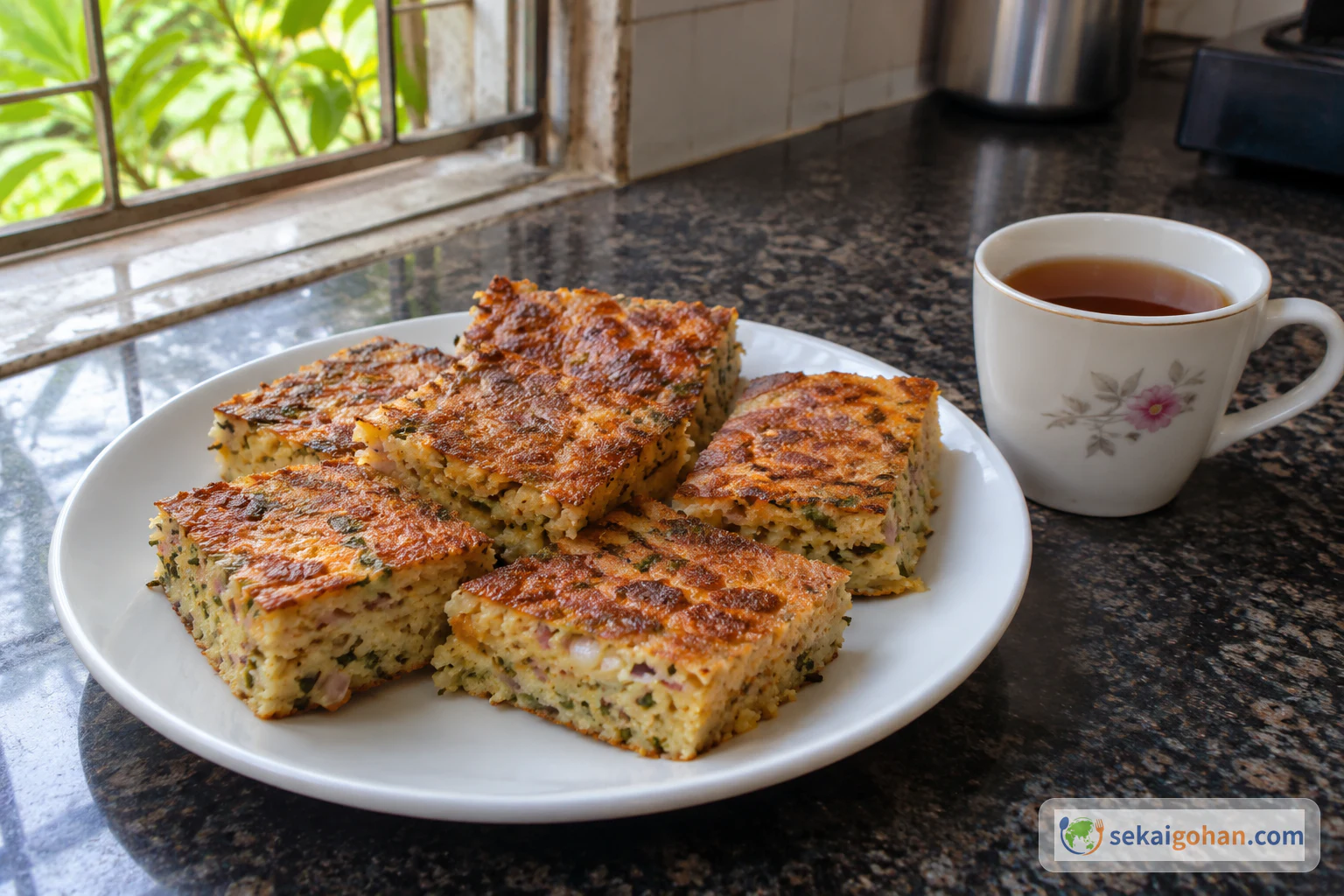
Kulhi boakibaa is a savory Maldivian bake of fish, rice and coconut, cut into squares once it comes out of the oven. Visit Maldives, the country's tourism body, lists it among the fish cakes and pies of Maldivian cooking, and places it within hedhi'kaa, the short eats served alongside evening tea.
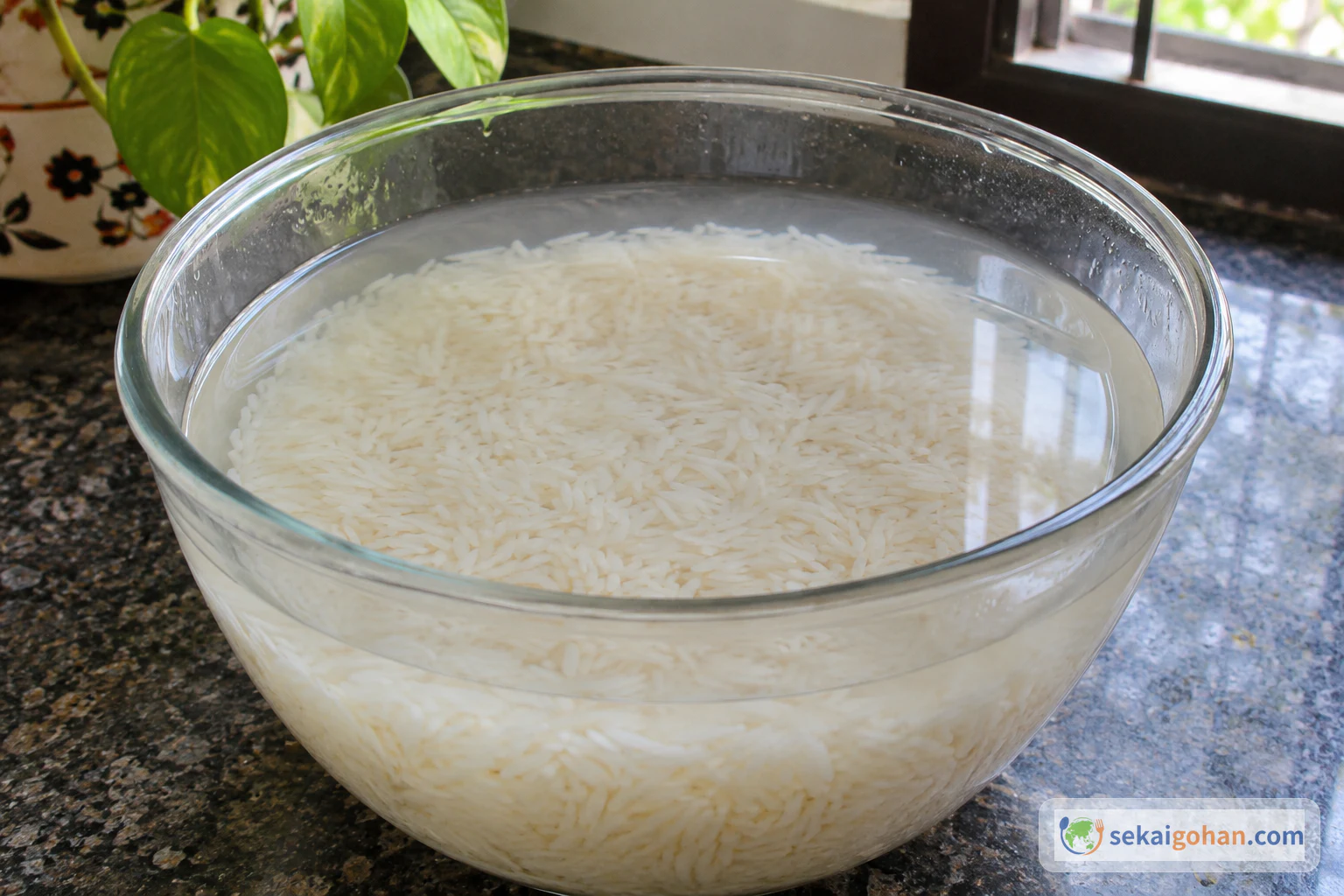
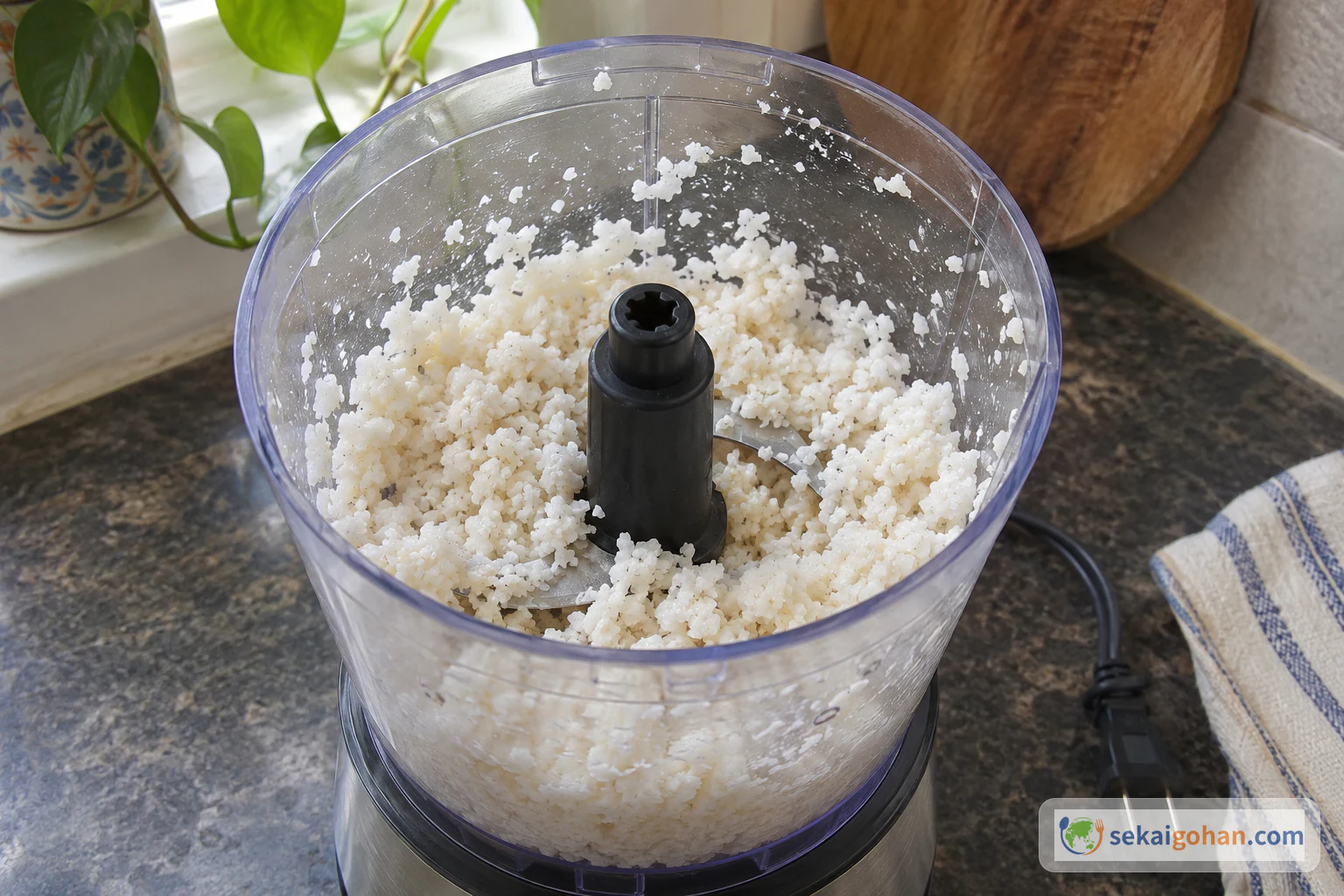
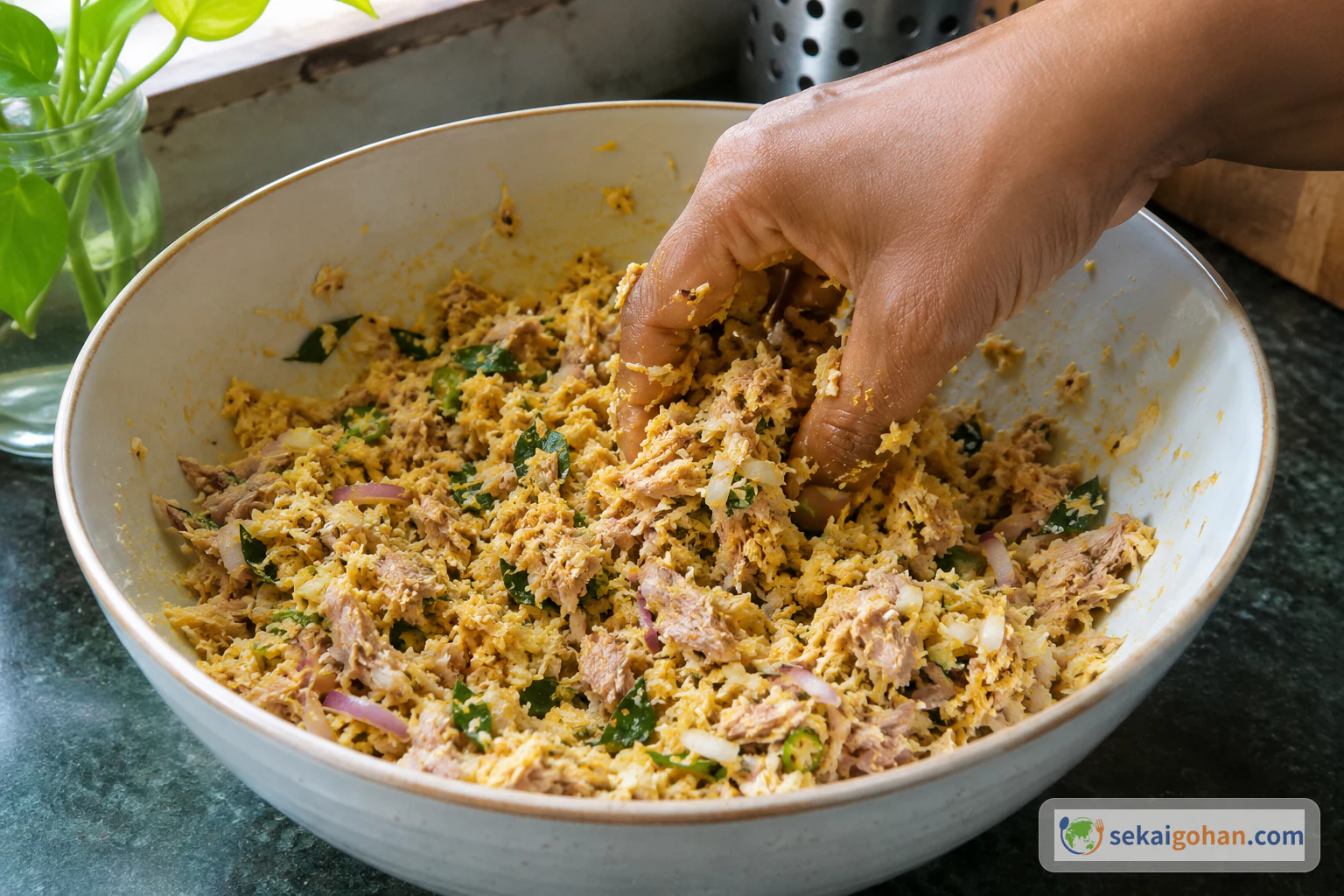
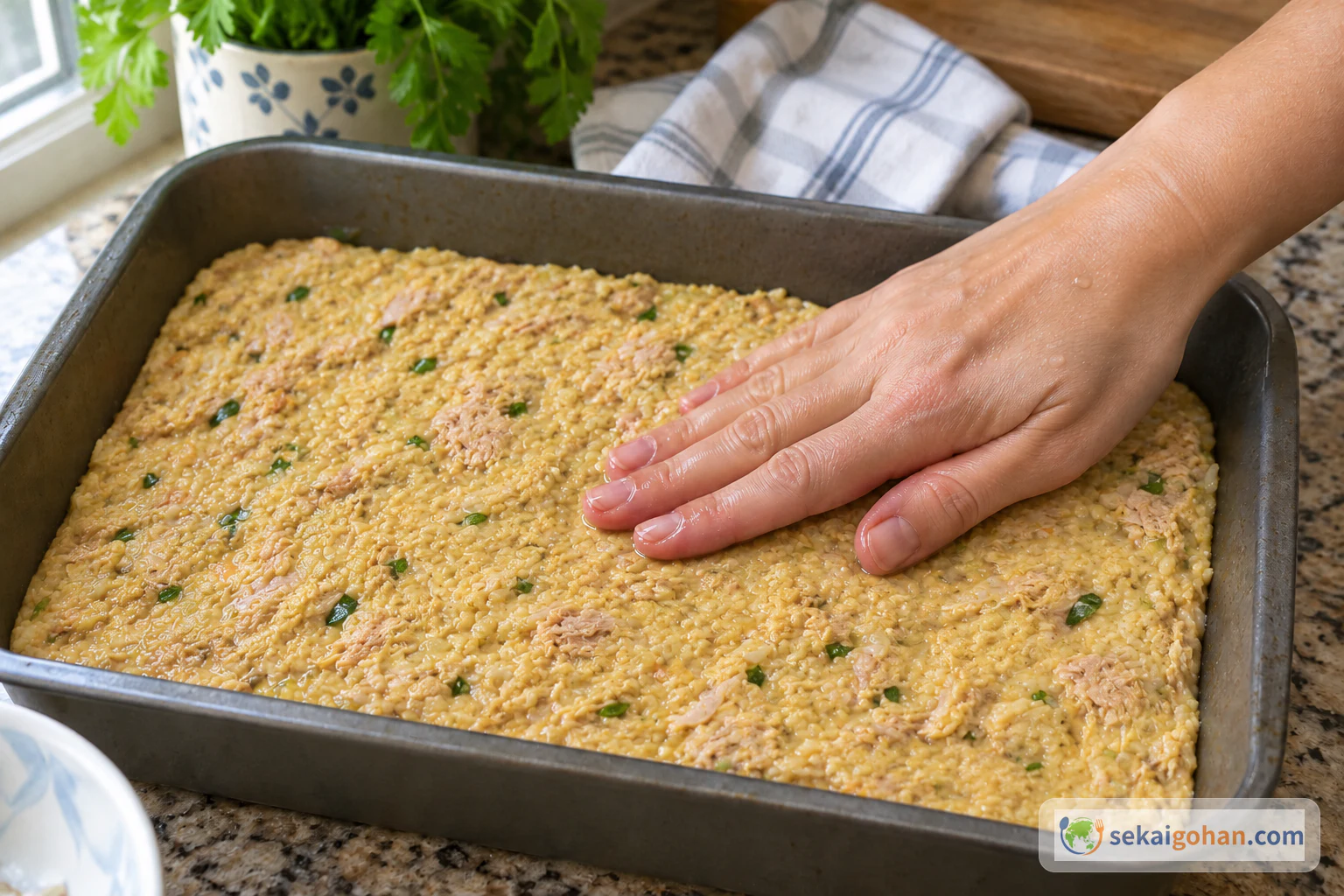
What sets it apart from many fish cakes is the rice. It is not cooked first. Uncooked rice is soaked, drained and ground into a coarse, uneven meal, then worked into a mixture of fish, grated coconut, onion, chili and curry leaves. The legacy Visit Maldives cuisine page describes the traditional dish in just these terms: soaked rice, valhoamas (smoked fish), onion, chili and coconut, kneaded well, baked in a greased dish and cut into squares.
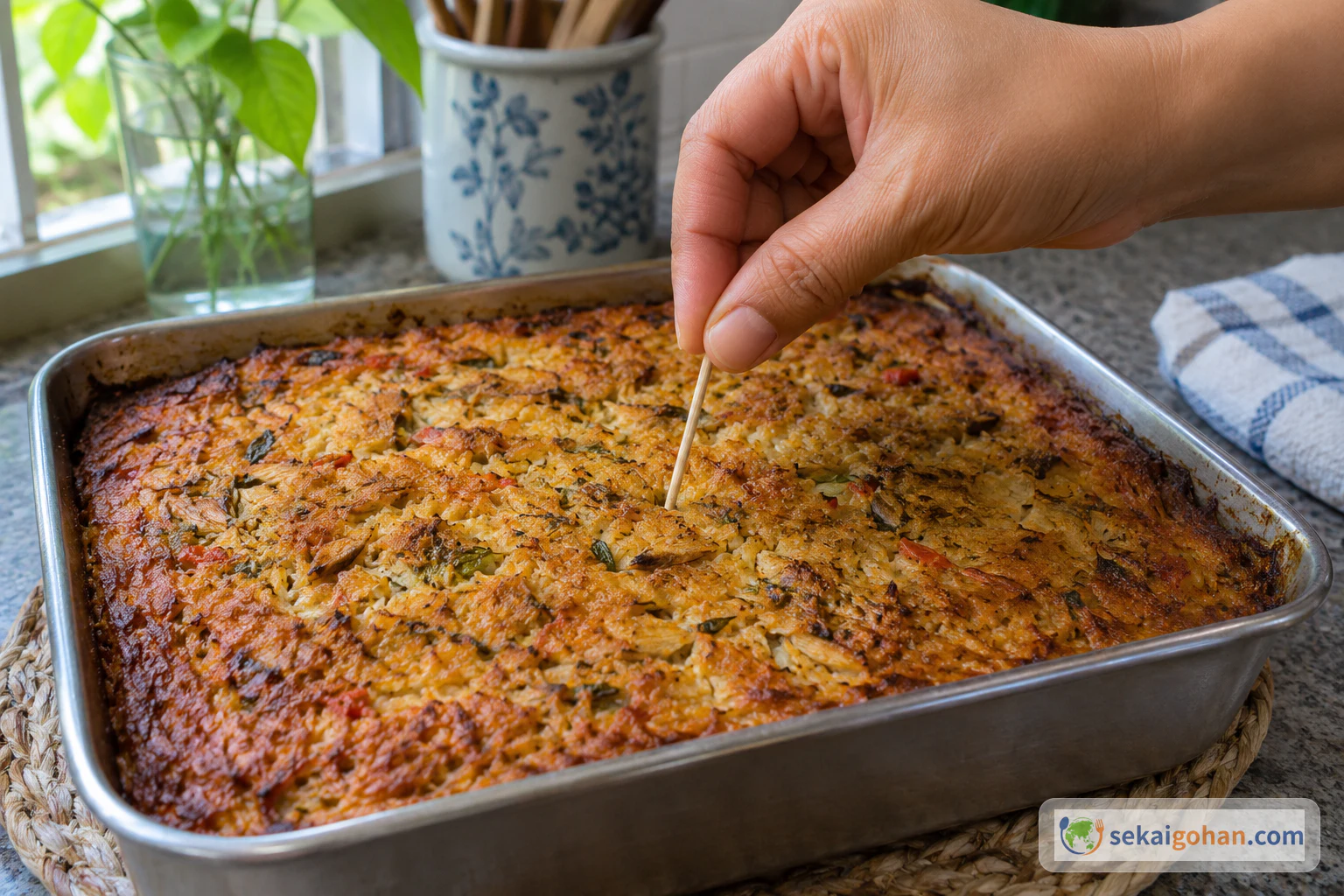
The recipe here follows the version published by the Maldivian food site Lonumedhu, using canned tuna and an oven. Lonumedhu bakes it in a 7 × 11 inch tray at 200°C for about 45 minutes and states that it makes 12 to 15 pieces. Those figures are Lonumedhu's own; this recipe has not been kitchen-tested by Sekai Gohan, so treat the time and yield as a guide and judge doneness by color and a toothpick. For more dishes from the islands, see our Maldives country page.
You will see it written kulhi boakibaa or kulhi boakiba. Kulhi marks the savory, spicy kind, distinct from sweet boakibaa such as foni boakibaa.
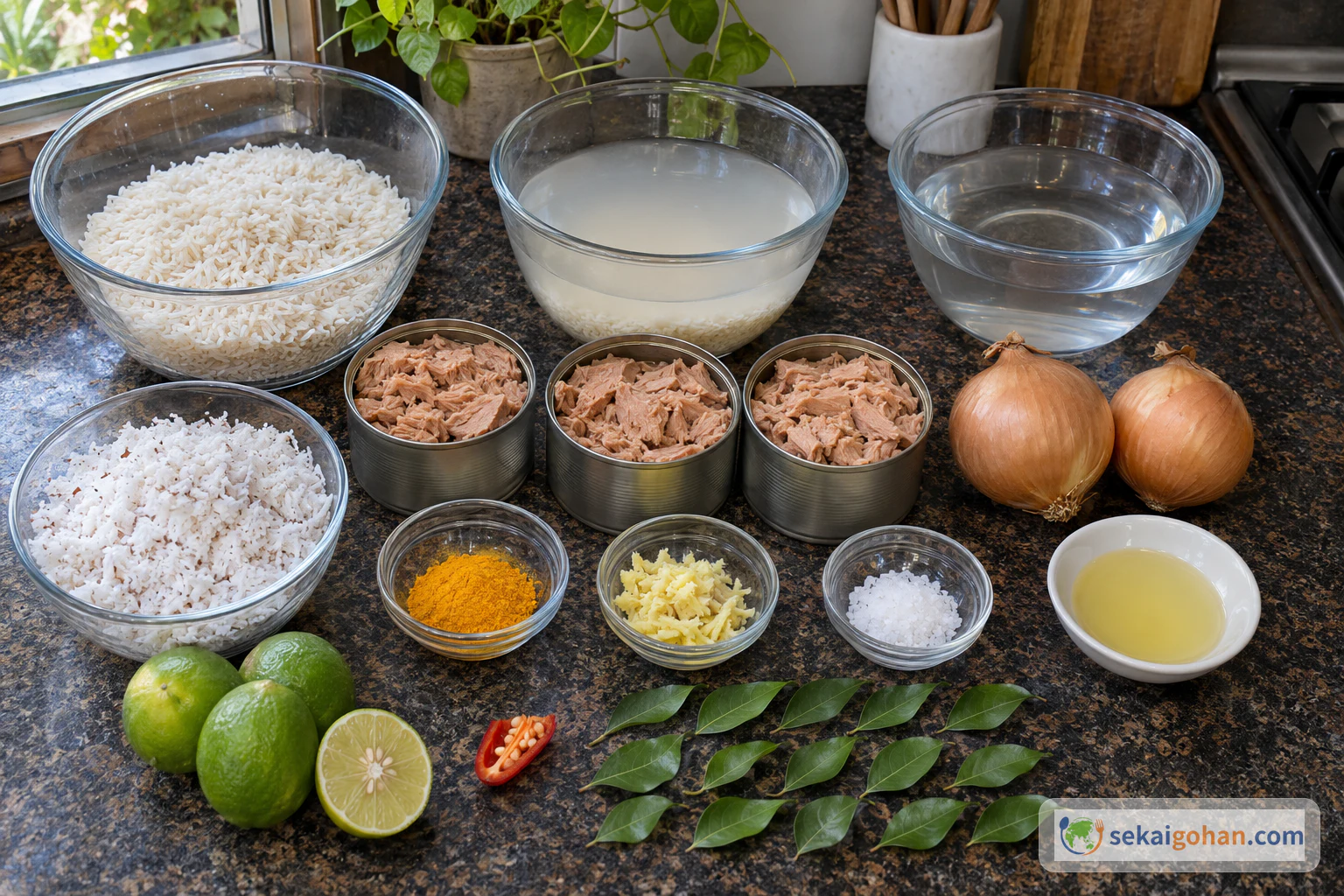
Ingredients: Soaked Rice, Canned Tuna, Coconut and Curry Leaves
Choosing and Substituting
Canned tuna. Use canned tuna alone for this version. Smoked fish brings a different, smokier flavor.
Batter moisture. Adjust the water in step 5 until the batter is wet but not watery.
Chili. Githeyo mirus is described as a very hot local chili. If you cannot find it, use a different fresh hot chili sparingly; the heat and aroma will not be the same.
Coconut. Use fresh grated coconut or unsweetened desiccated coconut, not the sweetened kind sold for baking.
Curry leaves. Fresh leaves are chopped finely so they spread through the batter.
This dish contains fish. The formula itself contains no egg, milk or wheat, but check the labels of canned tuna and coconut products for allergens and shared-facility statements. Follow the storage instructions on the tuna can, cook soon after opening it, and do not leave the opened fish or the mixed batter standing at room temperature. The batter contains raw ground rice, so do not taste it before baking.
Equipment
- A bowl for soaking the rice
- A small food processor or grinder for the soaked rice
- A large mixing bowl
- A 7 × 11 inch baking tray
- An oven
- A toothpick or thin bamboo skewer
- A heatproof surface or trivet for the hot tray
Method: From Soaked Rice to a Browned Tray
Grease the tray and preheat the oven once the rice has soaked, before you grind and mix. That way the batter goes straight into a hot oven.
The rice needs at least several hours of soaking, ideally overnight, so allow time for soaking. Do not assume a warm room overnight is safe; follow normal kitchen hygiene.
When It Goes Wrong
| Condition | Likely cause | What to do |
|---|---|---|
| The crumb is pasty and dense | The rice was ground too smooth | Next time stop grinding while small uneven pieces remain |
| Whole hard grains in the crumb | The rice was under-soaked or barely ground | Soak longer and grind until no whole grains are left |
| The batter is runny | Too much water went in at once | Add water a spoonful at a time and stop as soon as the batter is wet and holds together |
| The batter feels dry and crumbly | Not enough water for your rice and fish | Add more water, a little at a time |
| The top is pale after about 45 minutes | Oven runs cool or differs from others | Keep baking and check color and the toothpick again |
| The top browns but the center is wet | Oven or tray differences | Keep baking until a toothpick from the center comes out clean |
Adding flour or starch to rescue a wet batter is not part of this recipe; control the water from the start instead.
Variations Found in Maldivian Kitchens
These are distinct versions, not tweaks to fold into the recipe above.
- Smoked fish (valhomas): Lonumedhu allows valhomas instead of canned tuna, and the legacy Visit Maldives description of the traditional dish uses valhoamas. Expect a smokier flavor.
- A mix of tuna and smoked fish: Lonumedhu also allows mixing the two, without giving a ratio.
- Rice flour: A reader-contributed recipe in The Edition's Ramadan Treats series uses rice flour, preferably coarse, with soaked and ground rice as an alternative, along with a different mix of tinned tuna and smoked fish and more coconut, baked at 200°C for about 40 minutes. Its quantities and water are its own and should not be mixed into the soaked-rice version.
- Stovetop: Lonumedhu mentions cooking it over low heat on the stove until the top dries, then turning it to brown the underside. The Edition's contributor cooks it in a covered pan over a medium flame. Each is a separate method.
Hedhi'kaa and Evening Tea
In Maldivian food culture, kulhi boakibaa belongs to hedhi'kaa, the short eats that Visit Maldives describes as accompanying evening tea. It is one of many small savory and sweet bites set out at that hour.
The ingredients tell the story of island cooking: fish, coconut and rice, sharpened with onion, chili and lime and scented with curry leaves. The legacy Visit Maldives page describes the mixture being kneaded vigorously, baked in a greased dish and cut into squares, which is the same shape the dish takes today. The sources used here do not establish an origin date or tie it to a particular festival, so we do not claim one. The Edition includes it in a Ramadan series, which shows one occasion when it is made, not a rule.
Frequently Asked Questions
What kind of dish is kulhi boakibaa?
A savory Maldivian bake of fish, rice and coconut with onion, chili and curry leaves, cut into squares. Visit Maldives lists it among the country's fish cakes and pies and among the hedhi'kaa served with evening tea.
Do I cook the rice first?
No. In this version the rice is soaked raw, drained and ground coarse, then baked in the batter. Using cooked rice or smooth rice flour gives a different texture.
Can I use canned tuna instead of Maldive fish?
Yes. Lonumedhu's recipe lists canned tuna and allows valhomas as an alternative. The two do not taste the same: smoked fish is more pronounced, canned tuna milder.
What size are the cans, and should I drain the tuna?
Lonumedhu does not give a can size, a fish weight, the packing medium or a draining instruction, so we have not invented one. Use a common can size and adjust with water in step 5 until the batter is wet but not watery.
Can I use rice flour?
A different home recipe published by The Edition uses rice flour. It has its own quantities and method, so treat it as a separate recipe rather than a swap here.
How many pieces does it make?
Lonumedhu states 12 to 15 pieces from a 7 × 11 inch tray. This recipe has not been kitchen-tested by Sekai Gohan, so we have not confirmed that count ourselves.
What cup size should I use?
Lonumedhu does not say which cup standard it uses. Keep the cup and spoon measures consistent with each other, and rely on the batter's texture in step 5.
How should I keep leftovers?
The sources give no storage times or reheating guidance, so we do not give any. Follow the label instructions for the canned fish, and do not leave the opened tuna or the mixed batter at room temperature.
Sources
- Lonumedhu, "Kulhi Boakibaa." Maldivian food site; the main recipe used here: soaking 1 cup uncooked rice in 2 cups water and discarding it, coarse grinding, the lime-massaged onion and chili, canned tuna or valhomas and their mix, the other ingredient amounts, about 6 tbsp batter water added as needed, a 7 × 11 inch tray, 200°C for about 45 minutes with browning and a clean toothpick as the test, the stovetop alternative, and a stated yield of 12–15 pieces. https://d7.lonumedhu.com/content/maldivian-kulhi-boakibaa-recipe
- The Edition, "Ramadan Treats: Kulhi Boakiba." An anonymous reader-contributed home recipe, used only to show a different version: rice flour or soaked ground rice, tinned tuna with smoked fish, 200°C for about 40 minutes, and a covered-pan method. https://edition.mv/news/32590
- Visit Maldives (legacy page), "Maldivian Side of Life — Local Cuisine." Kulhi boakibaa as a savory hedhikaa; the traditional description of soaked rice, valhoamas, onion, chili and coconut kneaded, baked in a greased dish and cut into squares; valhoamas as smoked-only fish and hikimas as smoked and sun-dried. https://old.visitmaldives.com/portfolio-item/maldivian-side-of-life/
- Visit Maldives Corporation, "Maldivian cuisine: A myriad of rich tastes and flavors." Kulhi boakibaa listed as a fish cake or pie; hedhi'kaa as short eats served with evening tea. https://visitmaldives.com/en/experience/maldivian-cuisine-a-myriad-of-rich-tastes-and-flavors