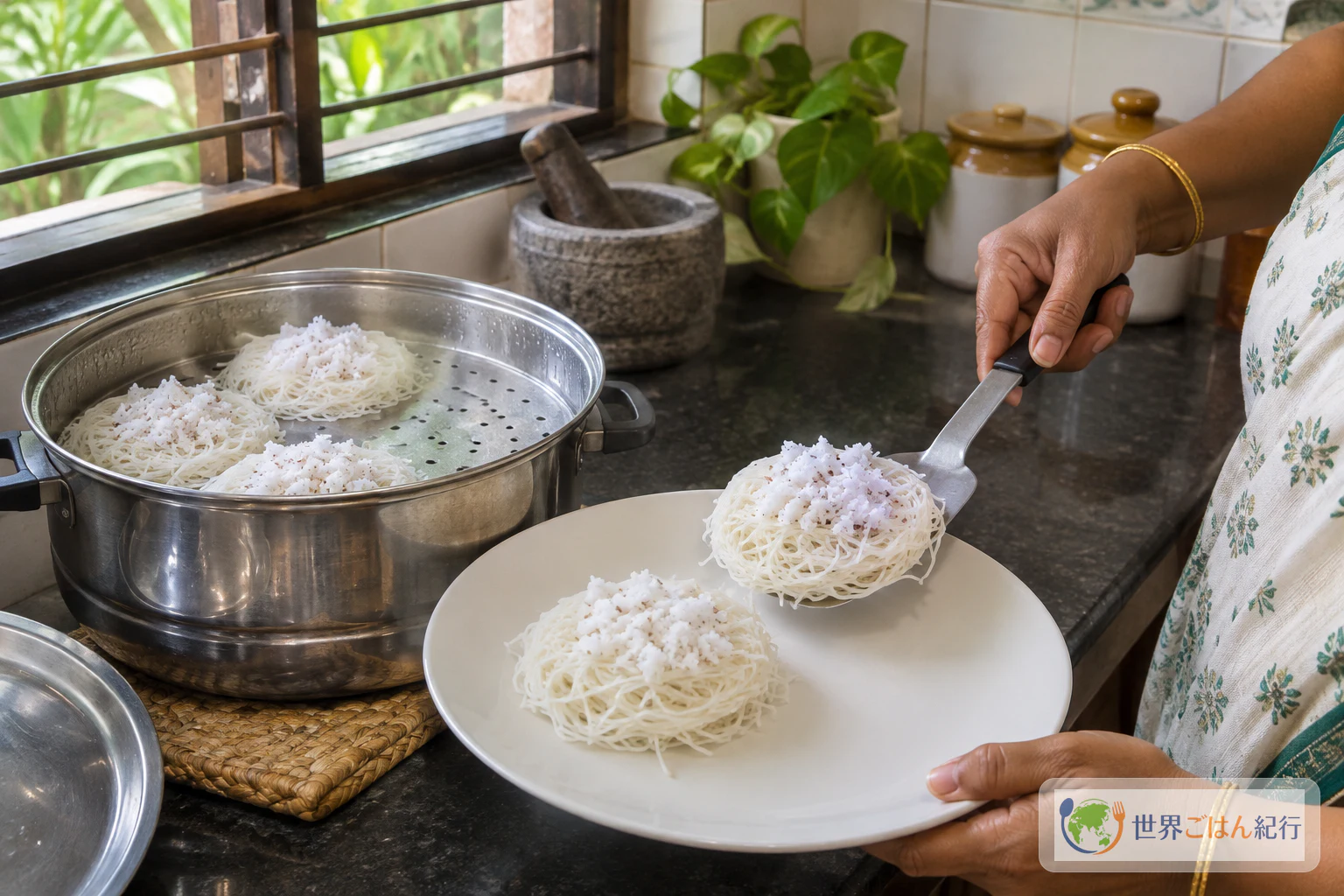
Idiyappam: Fine Rice Strands, Pressed and Steamed
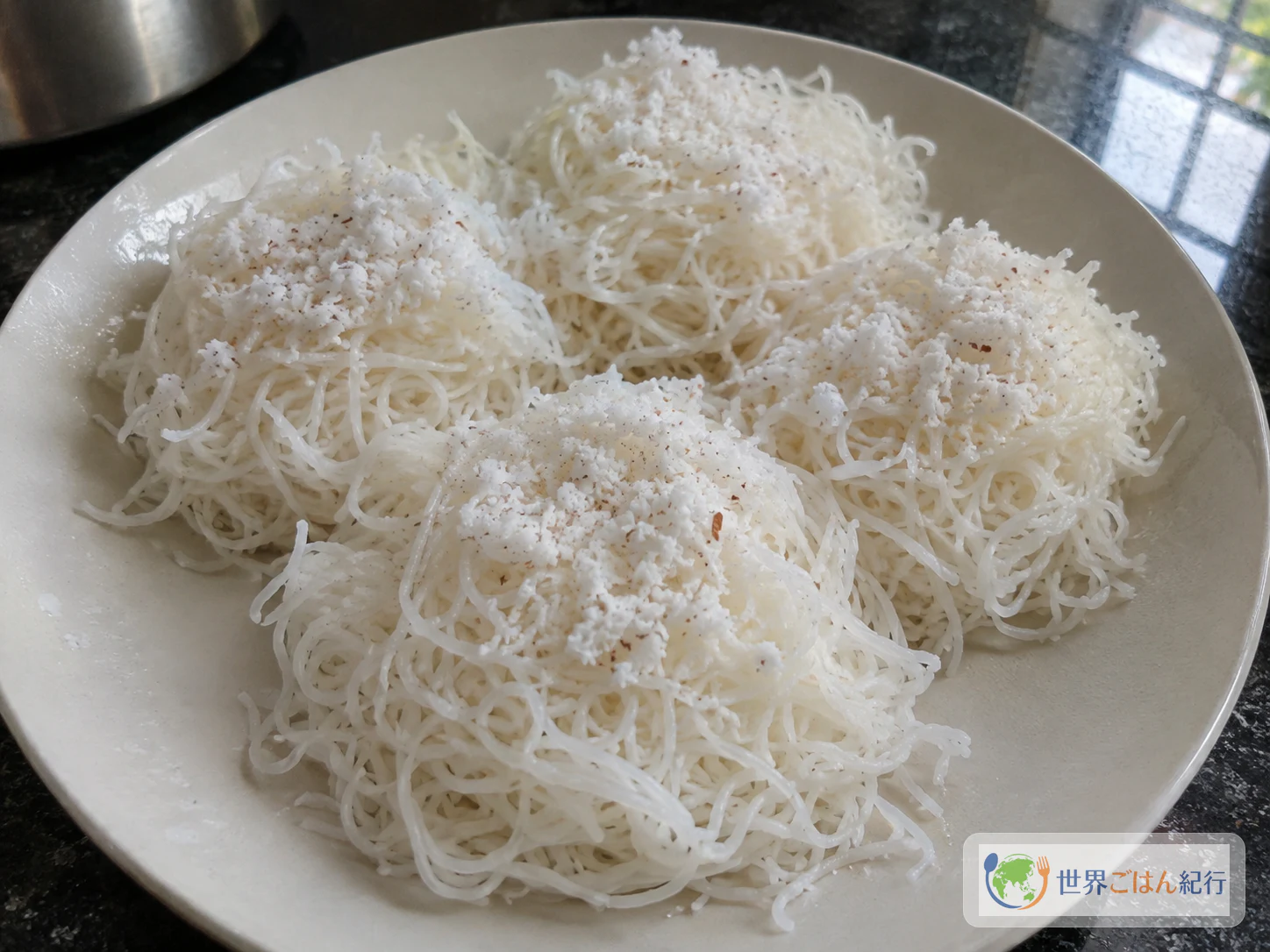
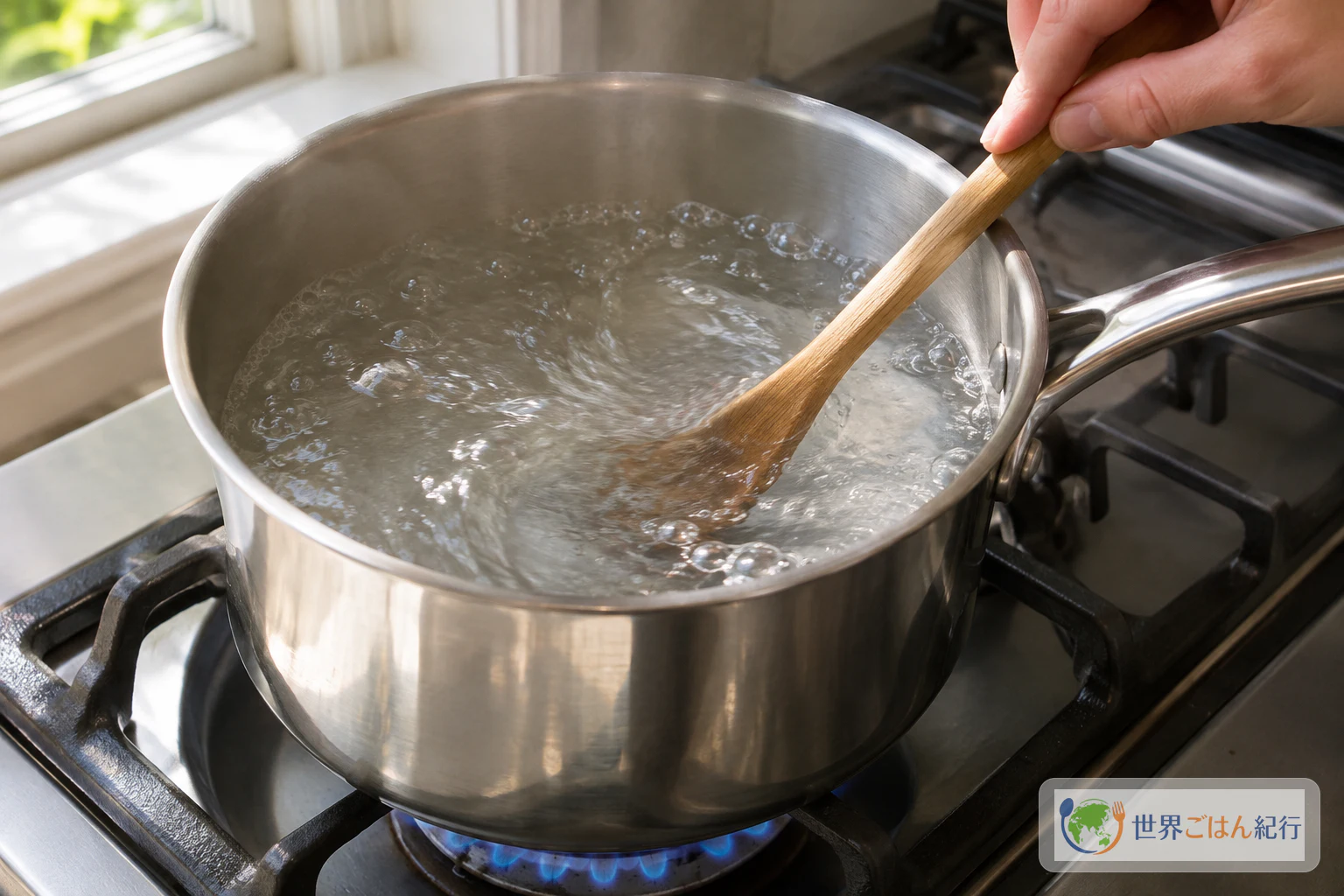
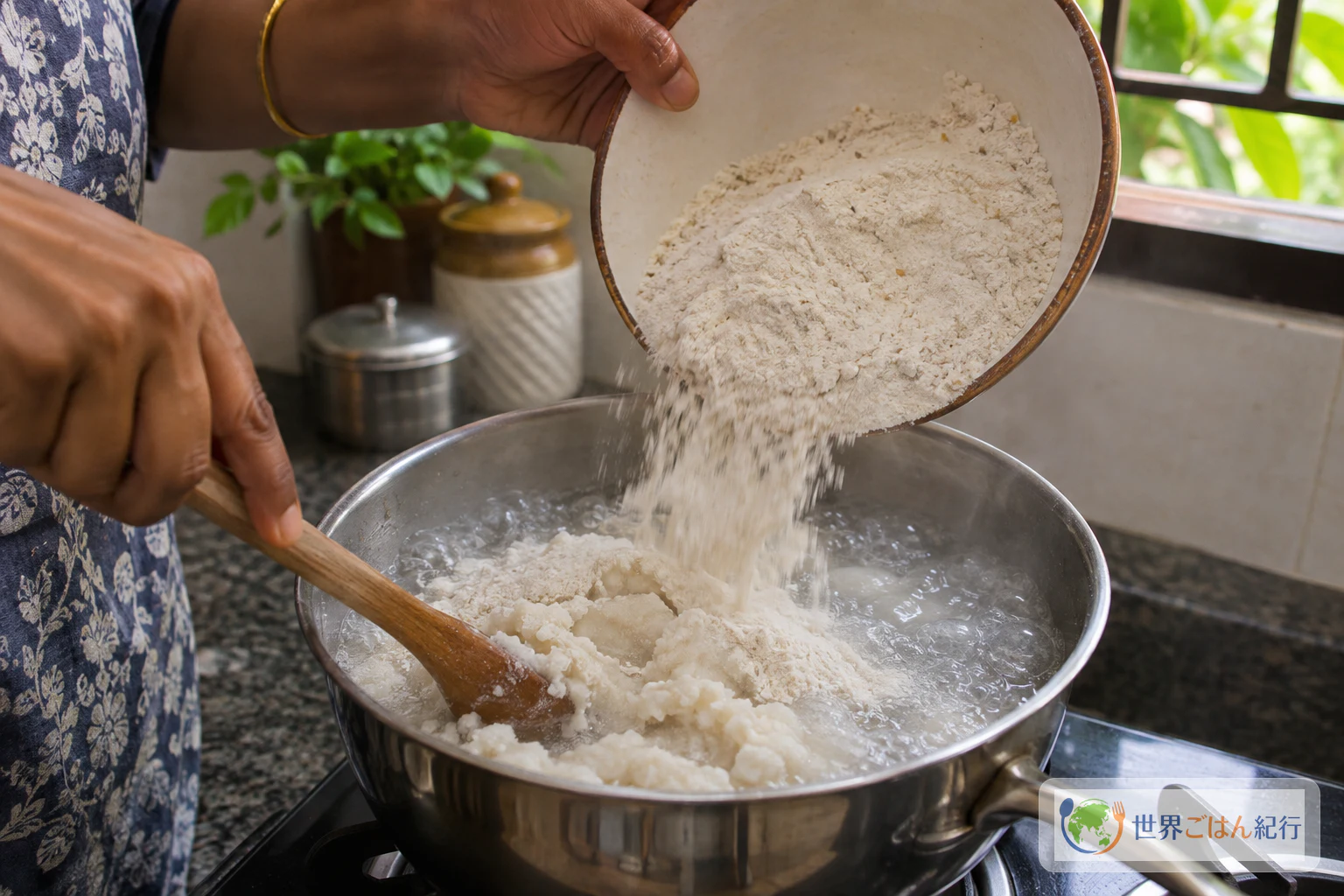
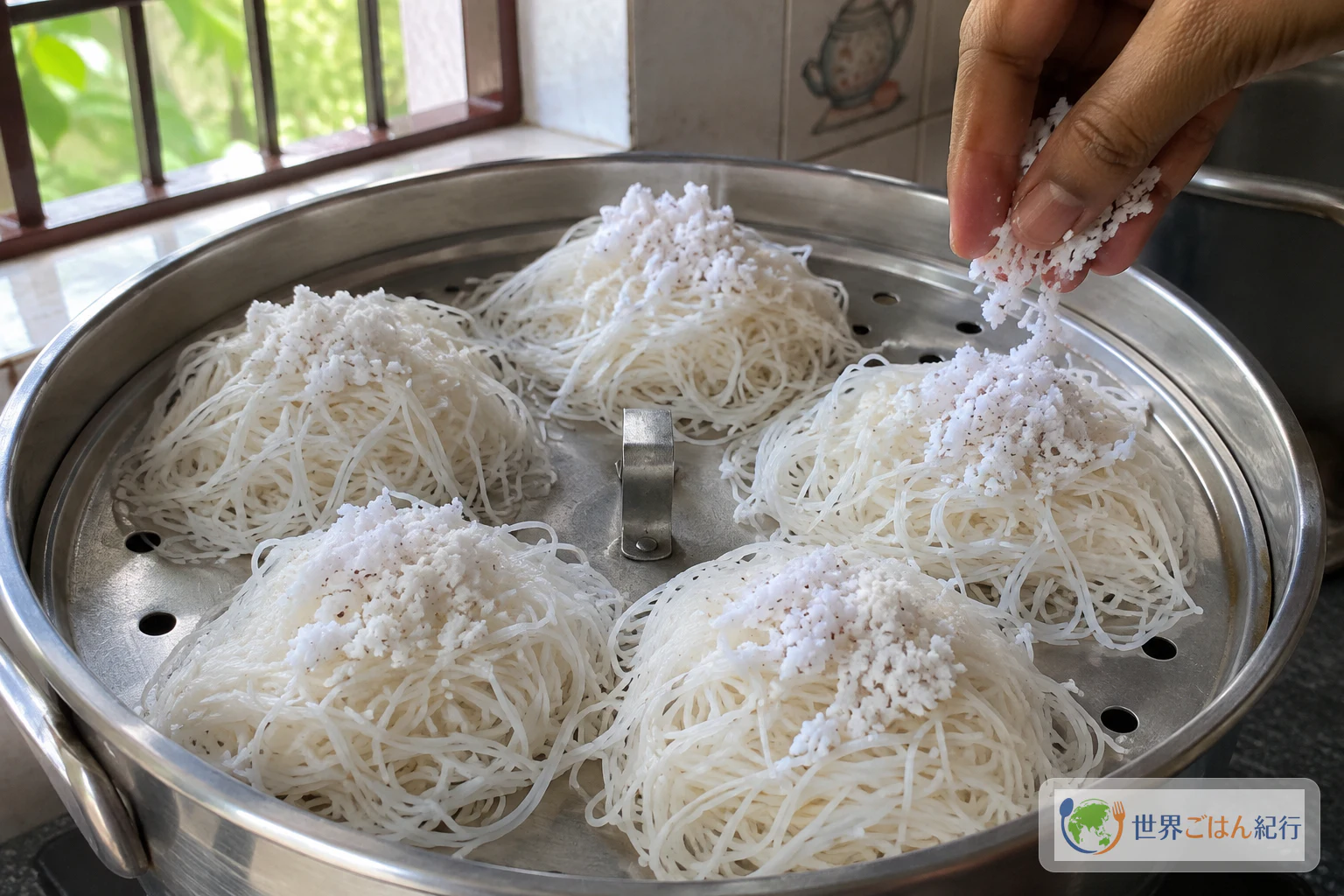
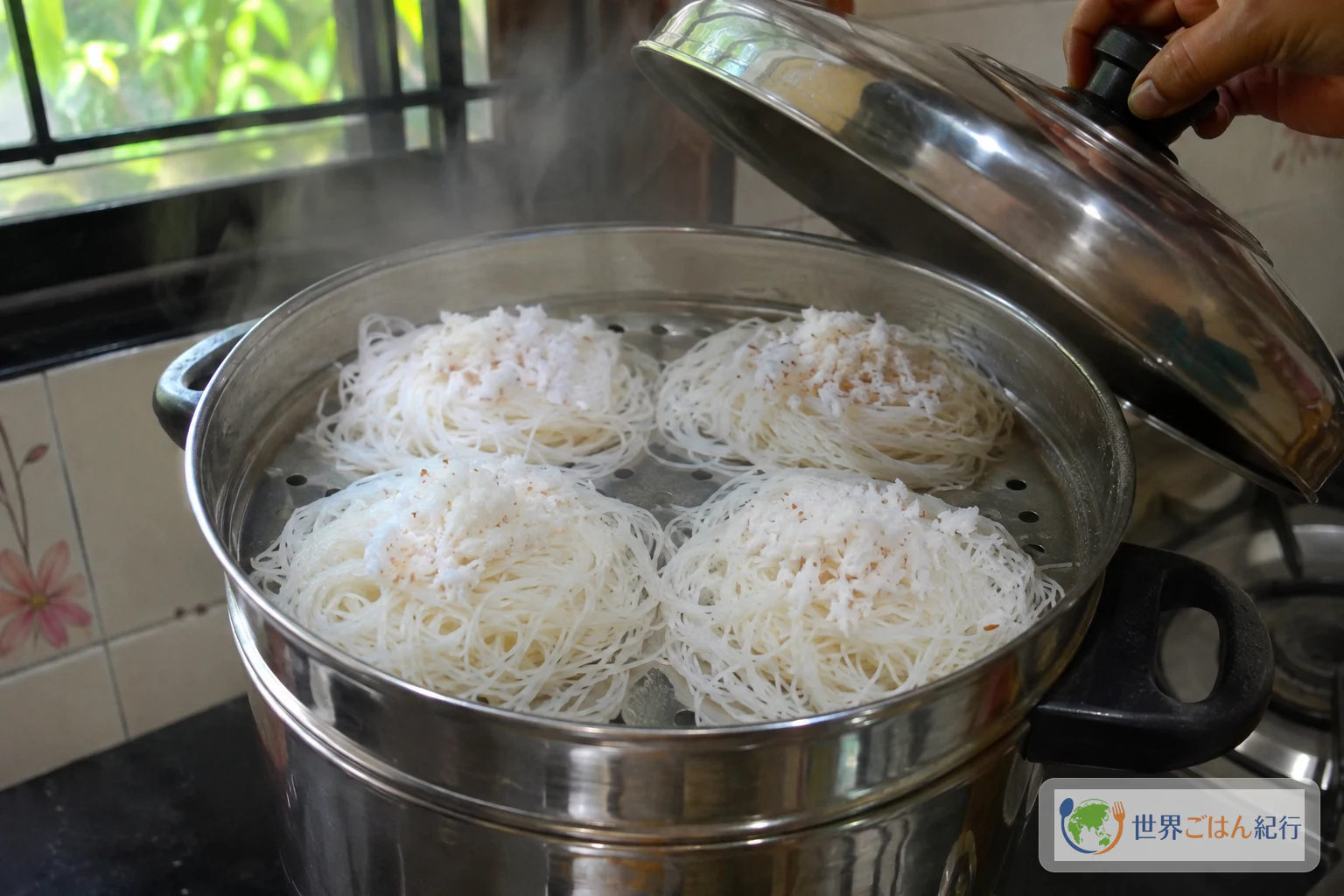
Roasted rice powder goes into salted water as it starts to boil. The soft dough is pressed into fine strands, grated coconut goes on top, and the strands steam for 5–10 minutes. There is no oil in this version.
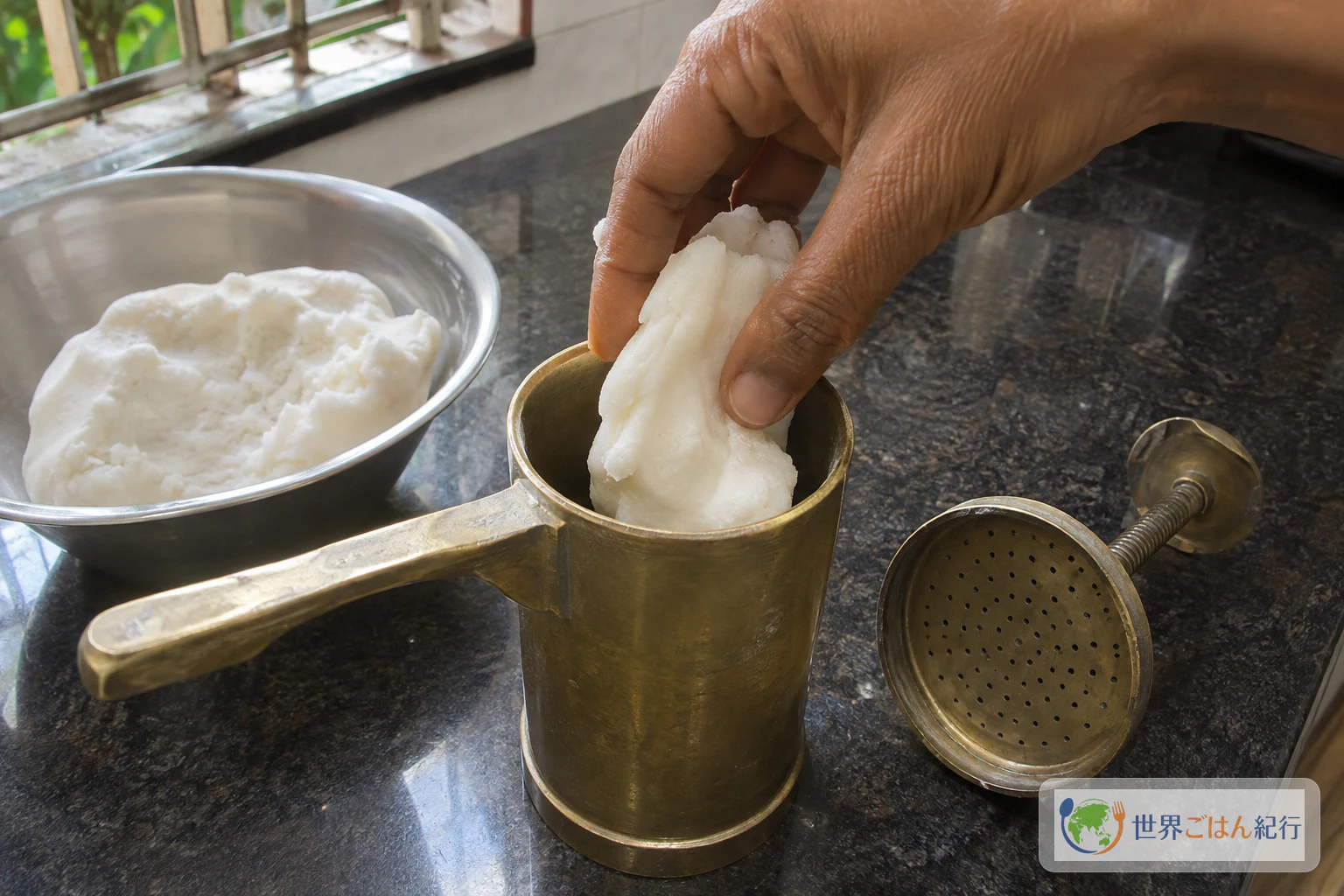
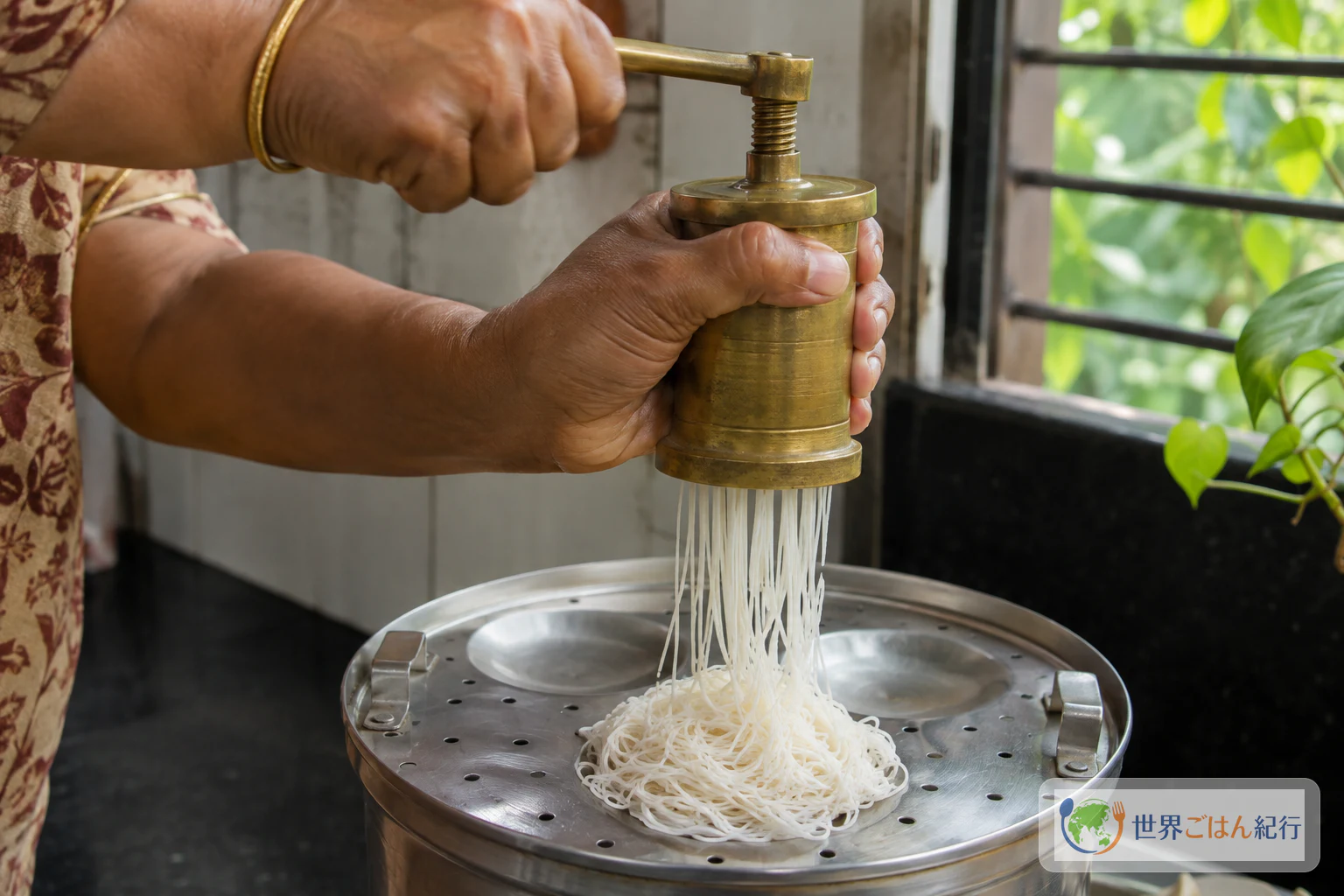
A soft, warm dough goes into a hand press. As the press turns, fine white strands fall through the small holes of its disc and gather on a steaming mould. That motion is what sets idiyappam apart: it isn't grains of rice like a bowl of plain rice, and it isn't a flat griddled bread.
Kerala Tourism, the tourism department of the Government of Kerala, lists idiyappam, also known as nool puttu, among its breakfast recipes. This article follows that recipe's ingredients and order of work. It is one South Indian version of the dish, not the only authentic form, and we don't claim that the dish originated only in India.
Two things are worth knowing before you start. Kerala Tourism gives amounts for the rice powder and coconut, but not for the water or salt. It also doesn't state the cup size, the weight of the flour or the yield. We haven't filled those gaps with numbers from other recipes, so you will need to judge the water by how the dough feels. Sekai Gohan has not kitchen-tested this recipe.
Ingredients: Roasted Rice Powder and Grated Coconut
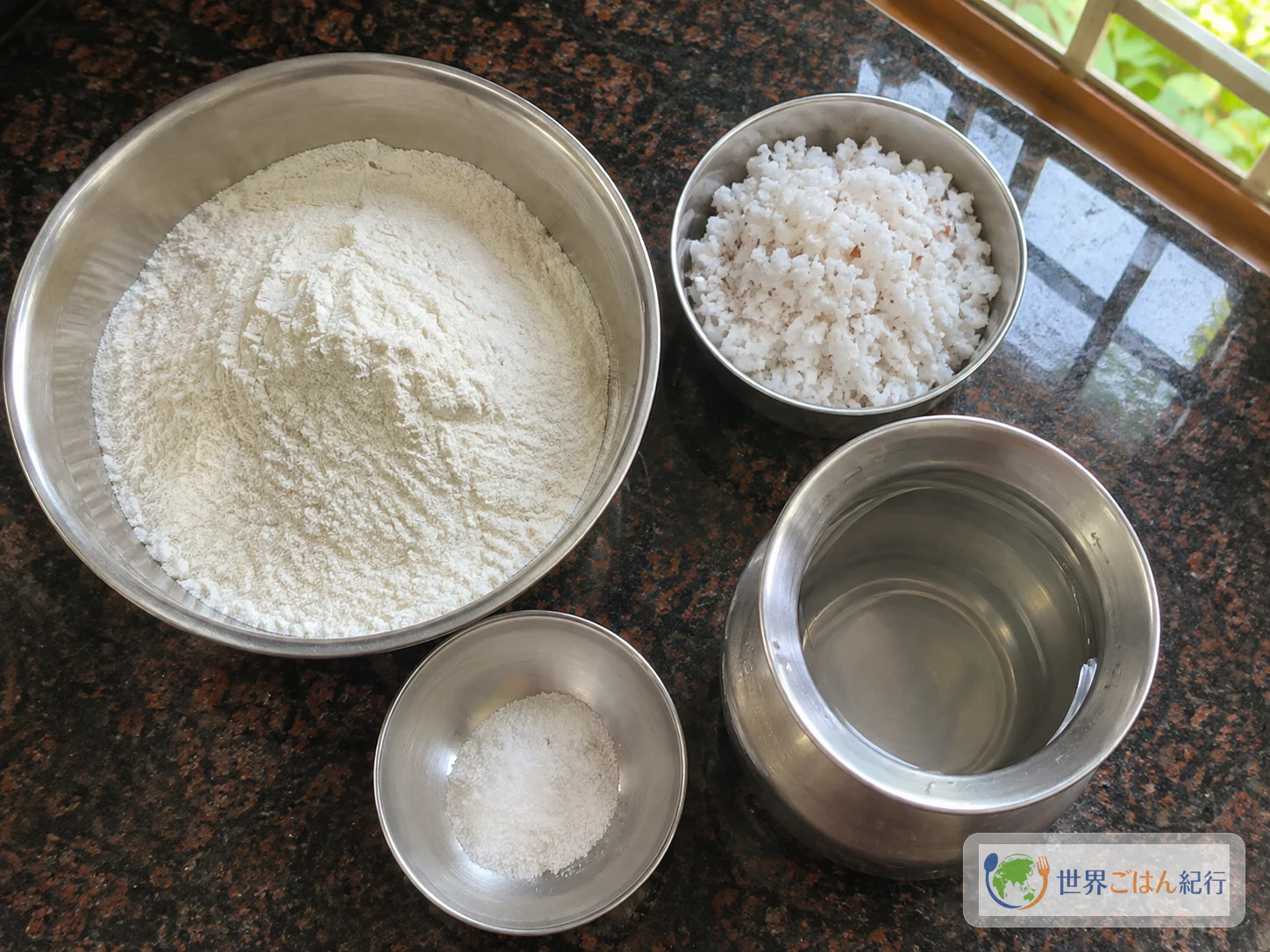
This dough contains no oil, and the mould isn't oiled either.
Equipment
- Saucepan
- Wooden spoon or spatula
- Mixing bowl for kneading
- Idiyappam press (Sevanazhi) with a fine perforated disc
- Steaming moulds or a perforated steaming tray
- Steamer with a lid
- Flat spatula for lifting the steamed strands
Choosing Flour and Coconut
Rice flour. Look for roasted rice powder sold for idiyappam. Plain raw rice flour and Japanese joshinko haven't been confirmed as equal replacements, so a straight swap may not behave the same way.
Coconut. Use grated coconut. Coconut milk is a different ingredient and can't do the job of a topping. Dried coconut flakes haven't been confirmed as equivalent either.
The press. A Sevanazhi is made for this job, and its fine disc shapes the strands. We can't promise the same result from other tools.
This dish contains coconut. Check the labels on your rice powder and coconut products for allergen and cross-contact information, especially if you buy a packaged flour or a ready-grated product.
Troubleshooting: Dough, Press and Strands
These are general suggestions and haven't been measured or tested against this recipe. Change one thing at a time, in small amounts.
| Problem | Possible cause | What to try |
|---|---|---|
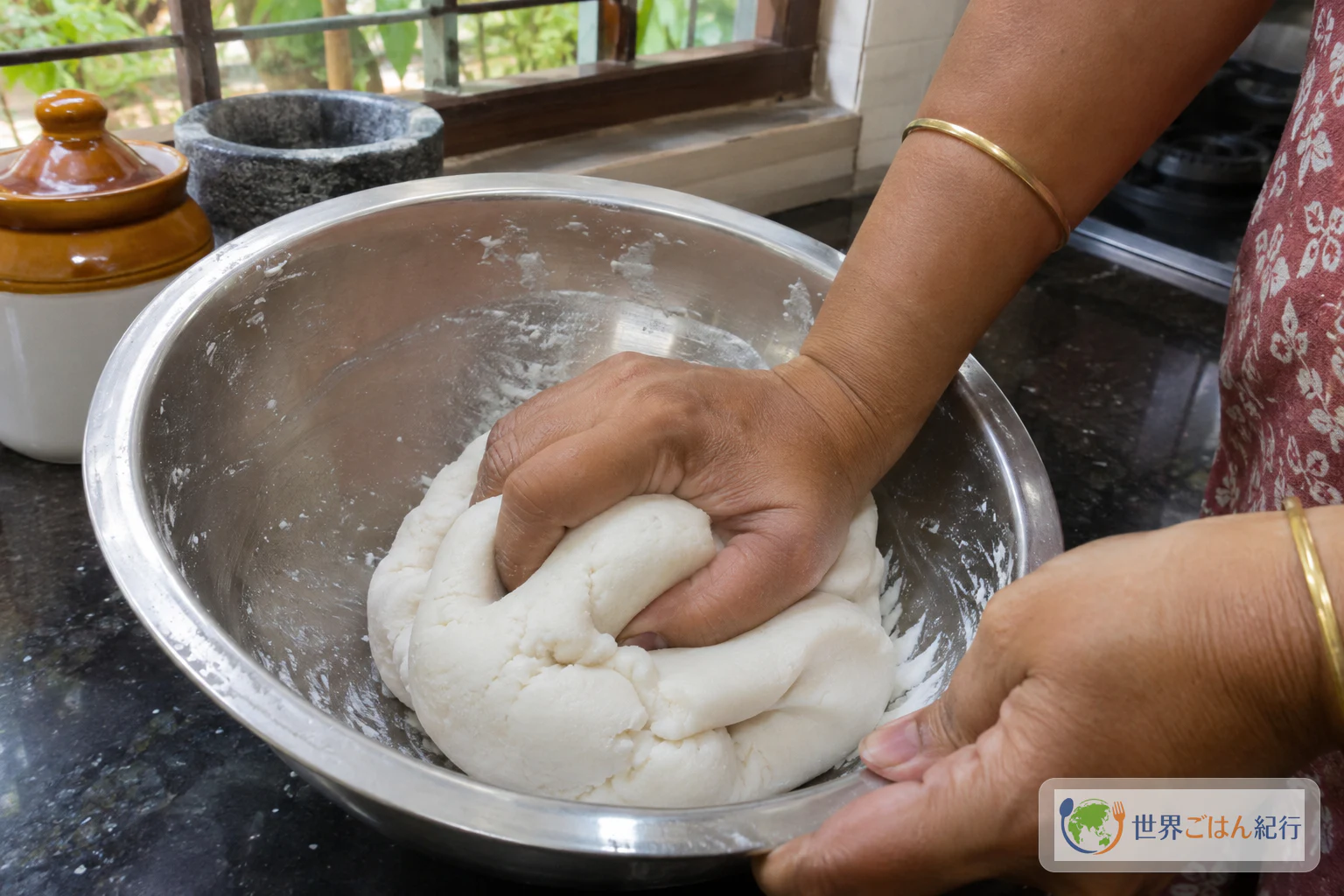
| The dough is too hot to knead | It hasn't cooled enough | Keep working it with a spoon and wait until it is comfortable to touch |
| The press is very hard to turn | The dough is too stiff, or the chamber is too full | Take some dough out. If it is still hard to turn, knead in a little hot water |
| The strands break as they come out | The dough may be too dry | Return it to the bowl and knead in a little hot water |
| The dough is sticky or the strands clump | The dough may be too wet | Knead in a little more roasted rice powder |
| The coconut has disappeared into the dough | It was mixed in too early | Next time, keep the dough plain and add the coconut after pressing |
Variations: Keep Each Version Separate
Idiyappam recipes differ even under the same name, and even from the same publisher. The ratios and methods below belong to their own recipes, so we haven't combined them with the one above.
| Version | How it differs | Note |
|---|---|---|
| Kerala Tourism's idiyappam with egg roast | Uses rice flour, warm water, salt, oil and more coconut. The coconut goes in the mould before the strands are pressed | Part of a combined recipe with egg roast. The page doesn't state the amount of water or oil, or a steaming time |
| Instant idiyappam mix | A processed mix described in Kerala Agricultural University teaching material | An industrial method, not a standard home recipe |
Serving ideas are a separate matter too. Kerala Tourism's egg roast pairing is a good example, but it isn't part of the recipe in this article.
Background: A Pressed-Rice Family Across Regions
Kerala Tourism presents idiyappam, or nool puttu, as a steamed breakfast dish, and its separate page introduces idiyappam and egg roast as a pairing from Kerala homes. Beyond what these sources show, we don't assign the dish a date of origin or describe it as a custom shared across all of India.
Other rice dishes can sound similar but are made differently: idli is made from a fermented batter, dosa is griddled, and Sri Lankan hoppers are cooked in a pan.
Sri Lanka Tourism describes string hoppers, or idiappa, as nests of red or white roasted rice flour and water pressed through a sieve-like tool and steamed for morning and evening meals, which places them in the same family of pressed, steamed rice strands as a regional form, without making them either the same dish or an unrelated one.
For more dishes from the country, see our India page.
Frequently Asked Questions
How much water and salt should I use?
Kerala Tourism doesn't give amounts for either one, and we don't want to borrow numbers from a different recipe. Salt to your taste, and judge the water by whether the dough becomes soft enough to knead and press.
What size is the cup?
Kerala Tourism doesn't state the cup size or the flour's weight. We suggest using the same cup for the rice powder and the coconut so that the 2 cups to 1/2 cup proportion stays the same.
How many servings does this make?
The recipe doesn't state a yield, and we haven't estimated one. The number of nests will also depend on how large you press them.
Can I use regular rice flour or joshinko in the same amount?
That hasn't been confirmed. Kerala Tourism's recipe calls for roasted rice powder, so look for flour sold for idiyappam if you want to stay close to it.
Can I make it without an idiyappam press?
Kerala Tourism uses a Sevanazhi, and we can't guarantee the same strands from another tool.
Should I oil the press or the mould?
Kerala Tourism's recipe doesn't use oil, so we haven't added any. Some other recipes do include it, including the egg roast version above.
How do I know it is done?
Kerala Tourism gives a steaming time of 5–10 minutes, with no temperature or specific sign of doneness. Treat that time as the recipe's guide, not as a guarantee for every steamer and mould size or as a food-safety assurance.
How should I store leftovers?
Kerala Tourism gives no storage or reheating guidance, so we don't state a storage time here. Check the food-safety guidance from your local public authority.
Sources
- Department of Tourism, Government of Kerala (Kerala Tourism), "Idiyappam | Nool Puttu | Steamed Food | Breakfast Recipes | Kerala Cuisine." Main recipe: the ingredients, order of work, 5–10 minute steaming time and classification as a breakfast recipe. https://www.keralatourism.org/kerala-food/idiyappam-noolputtu/171//
- Department of Tourism, Government of Kerala (Kerala Tourism), "Recipe of Idiappam, Egg Roast, Breakfast items, Cuisine, Video, Kerala Food." Idiyappam and egg roast as a Kerala home pairing, and a separate version with different coconut placement. https://www.keralatourism.org/kerala-food/idiappam-egg-roast/89/
- Kerala Agricultural University, Centre for e-Learning, "Instant Mixes – Preparation of Instant Idiyappam Mix." Context on the instant mix method, which is separate from home recipes. https://www.celkau.in/Agrienterprises/enerprise/12.Value%20Addition%20of%20Rice/4.%20INSTANT%20MIXES.pdf
- Sri Lanka Tourism, "So Rich In Flavours — String Hoppers." Description of string hoppers, or idiappa, used for the regional comparison. https://www.srilanka.travel/culinary-tourism/food-range.php