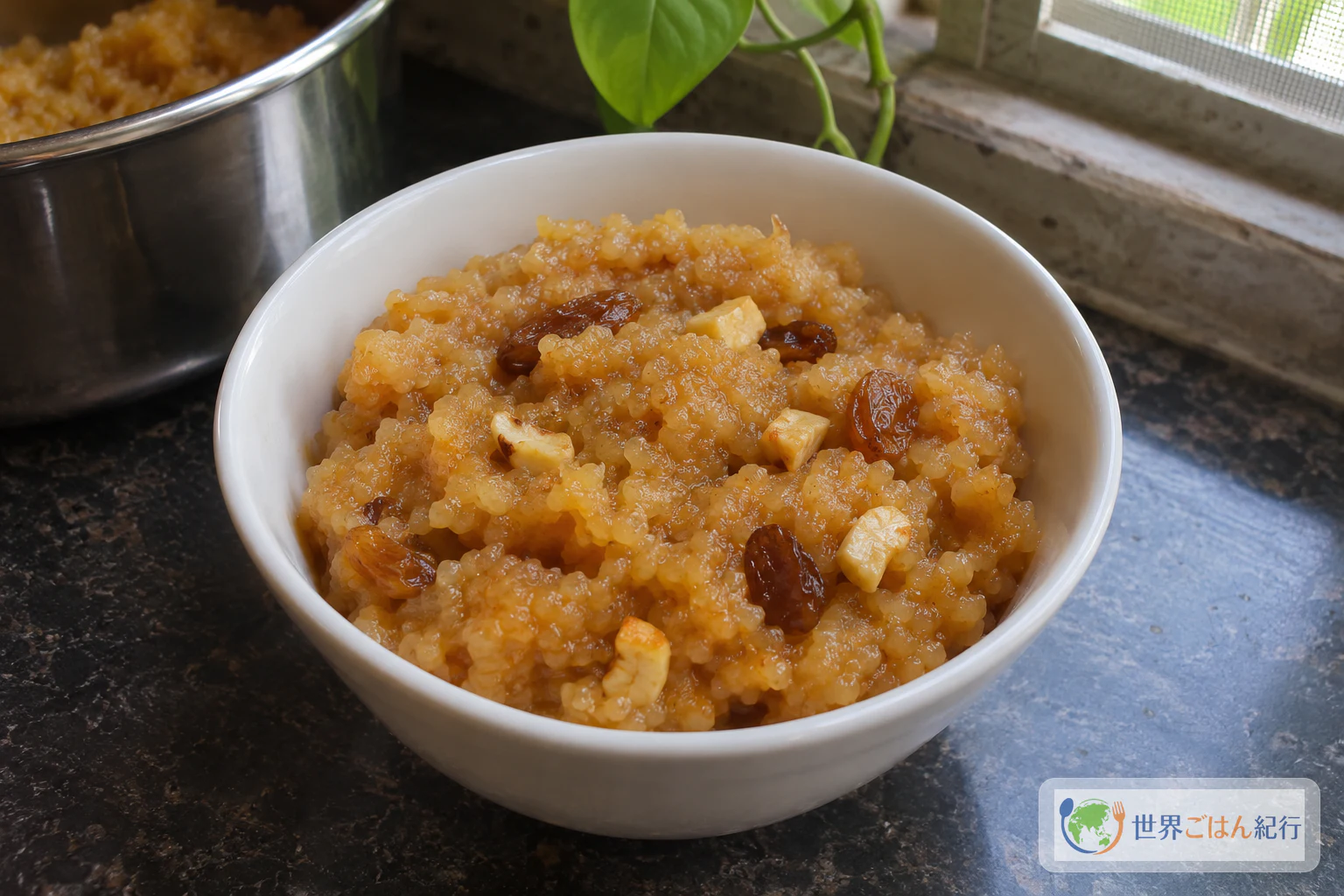
Laapsi: Golden Wheat Grains That Stay Separate
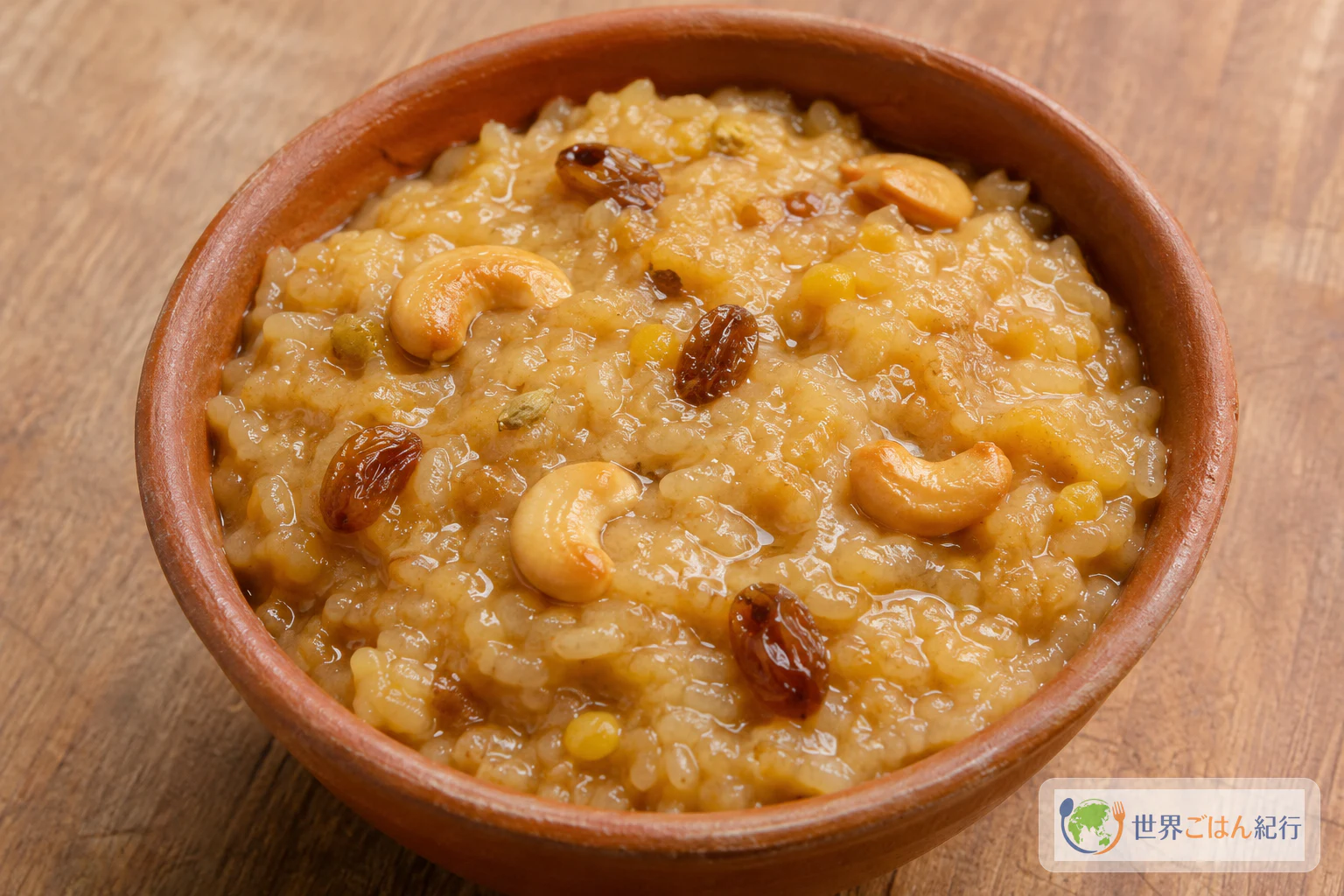
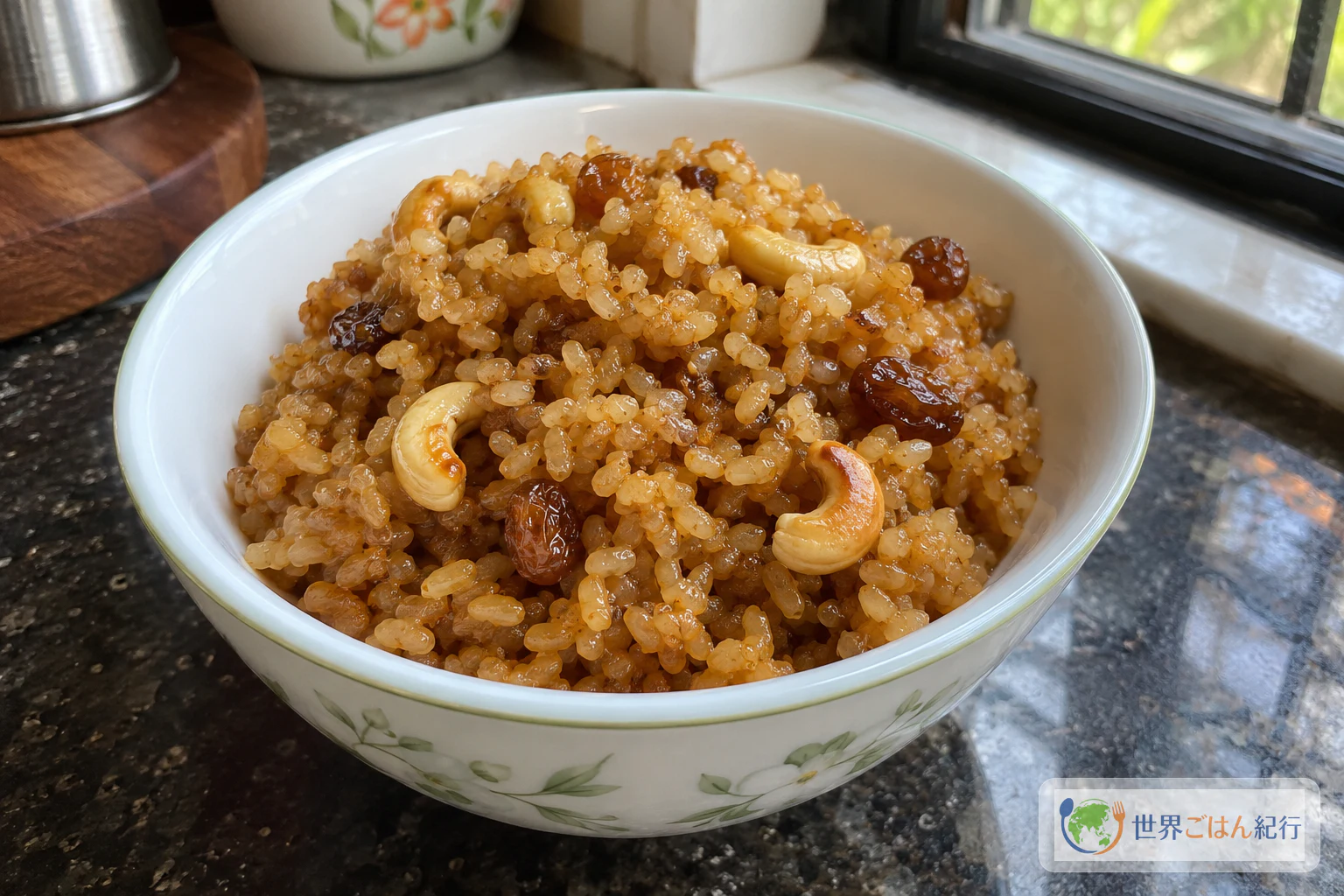
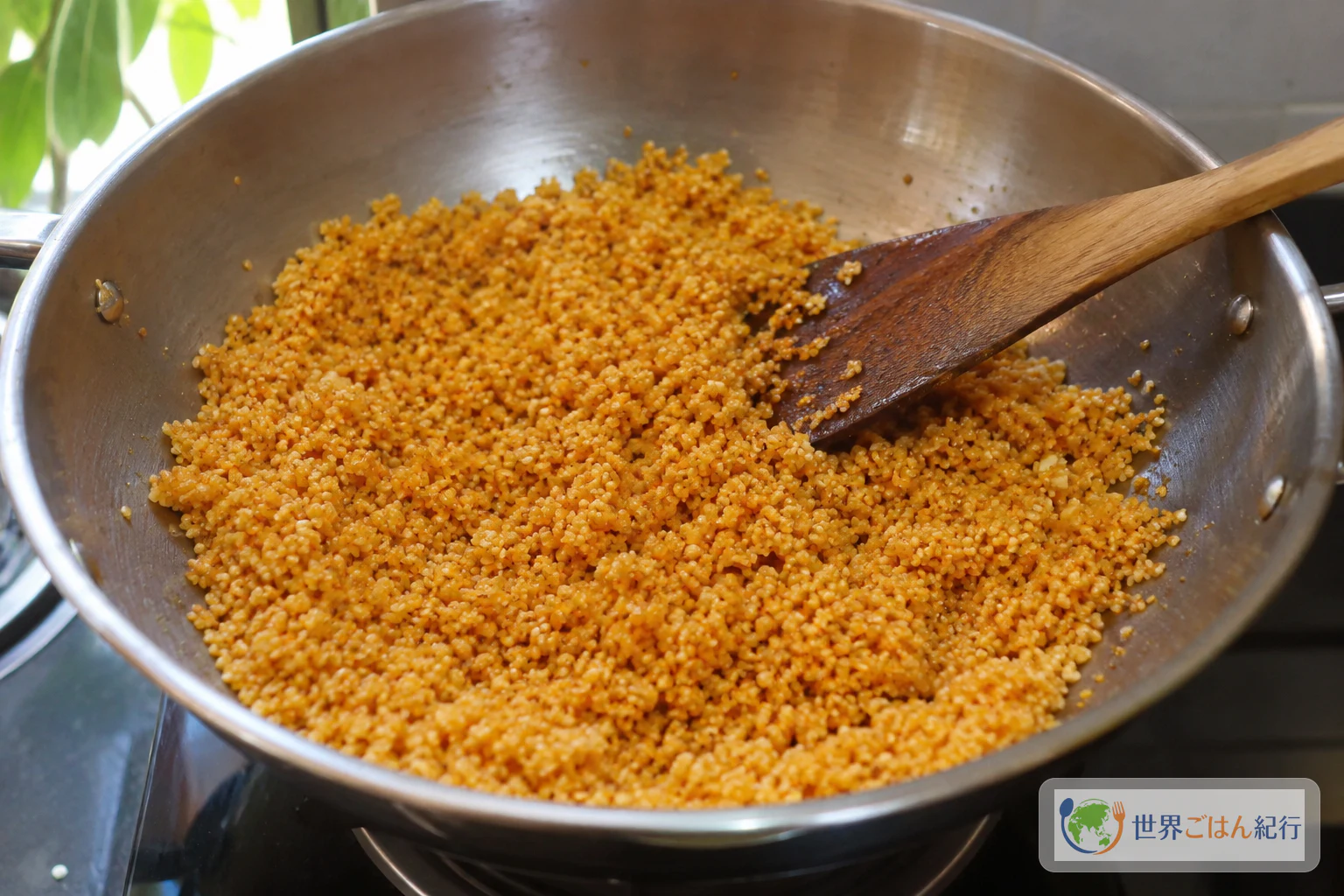
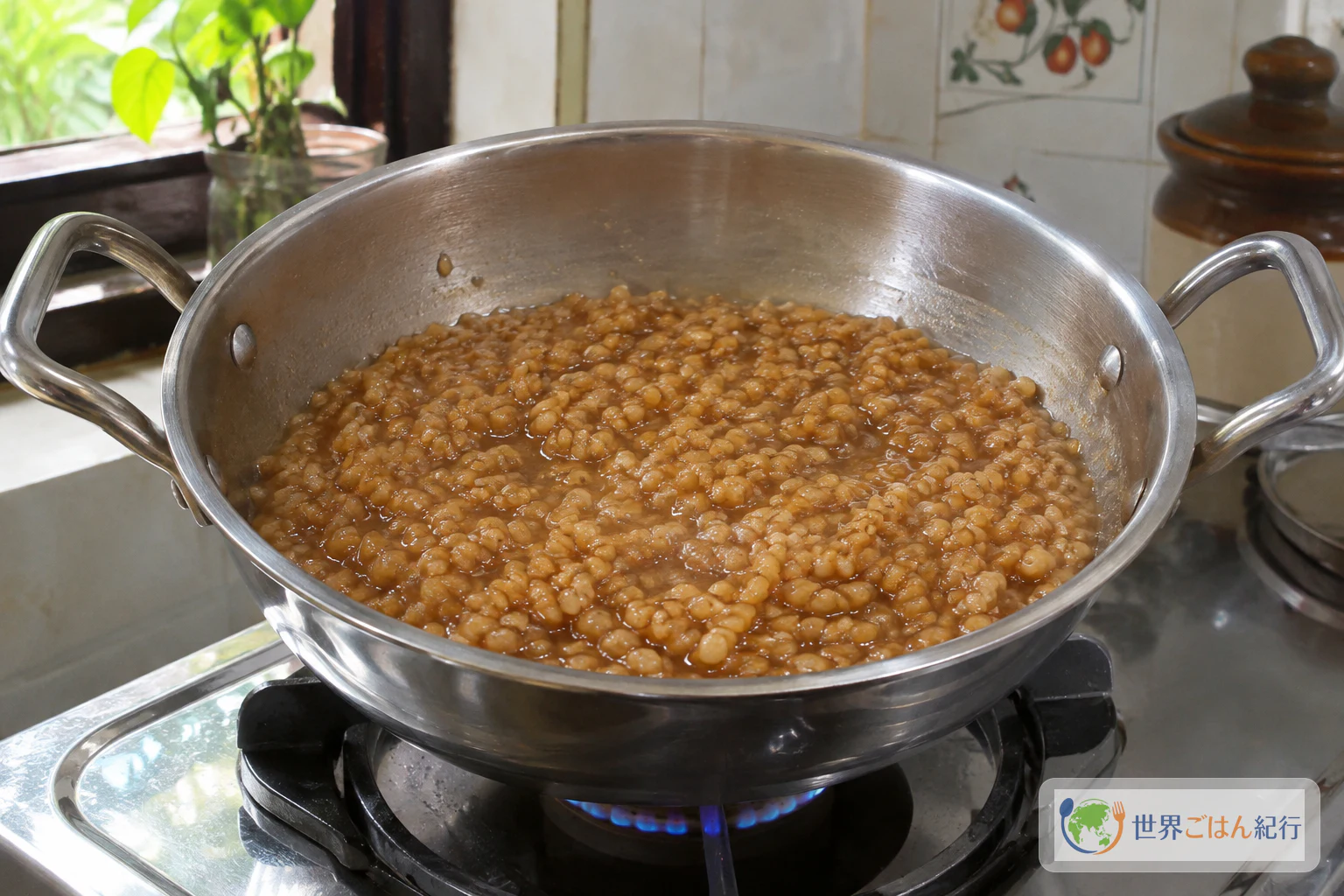
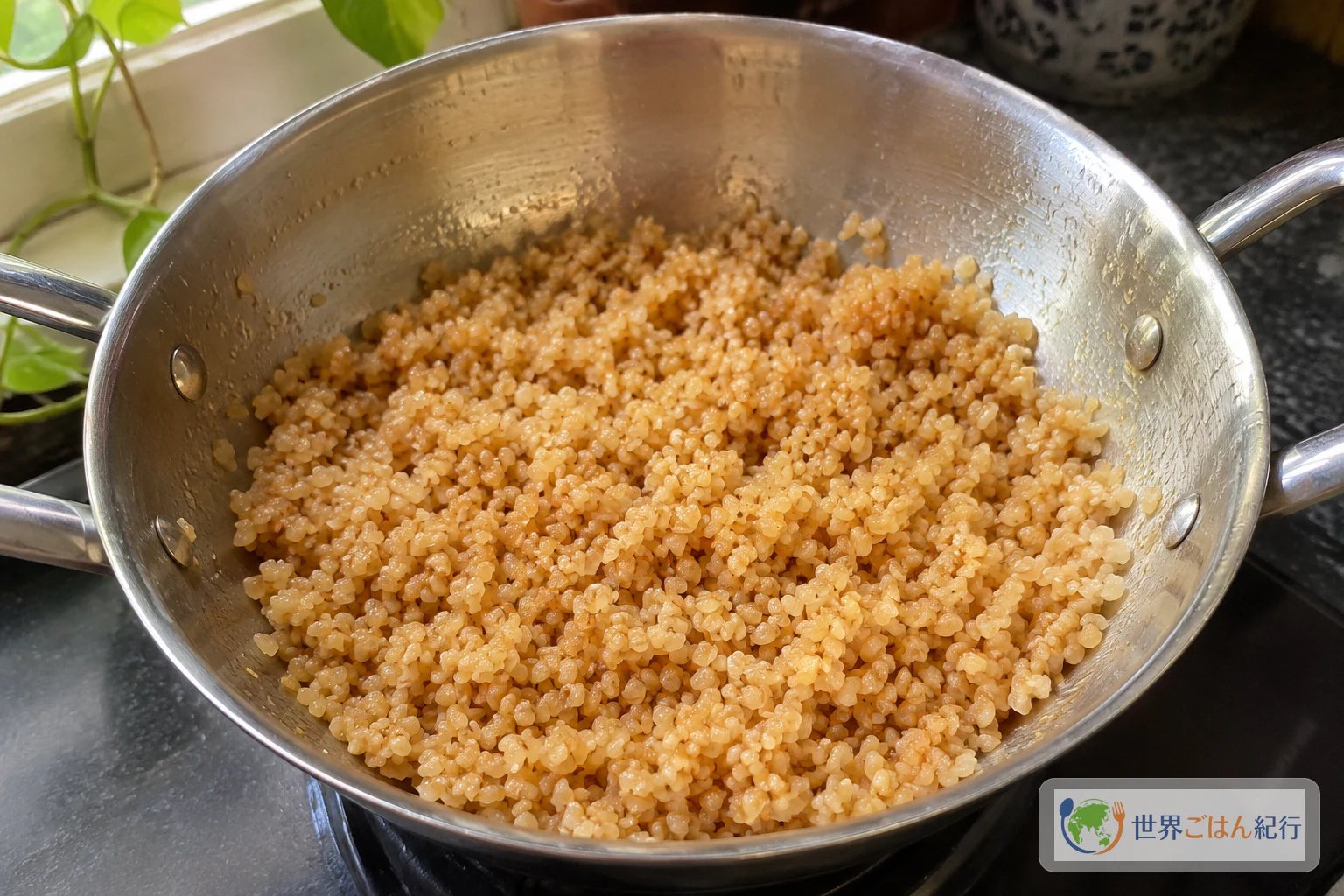
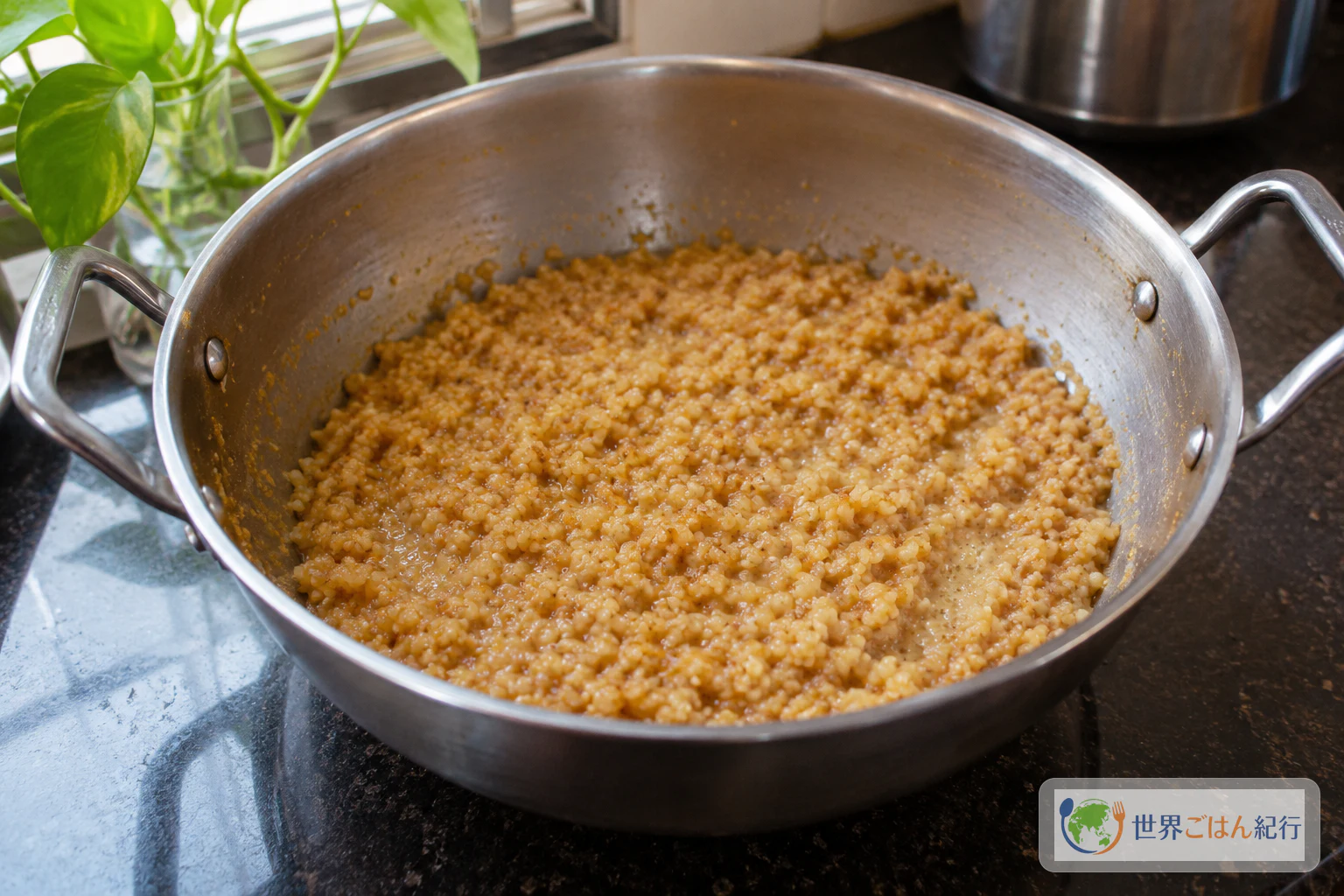
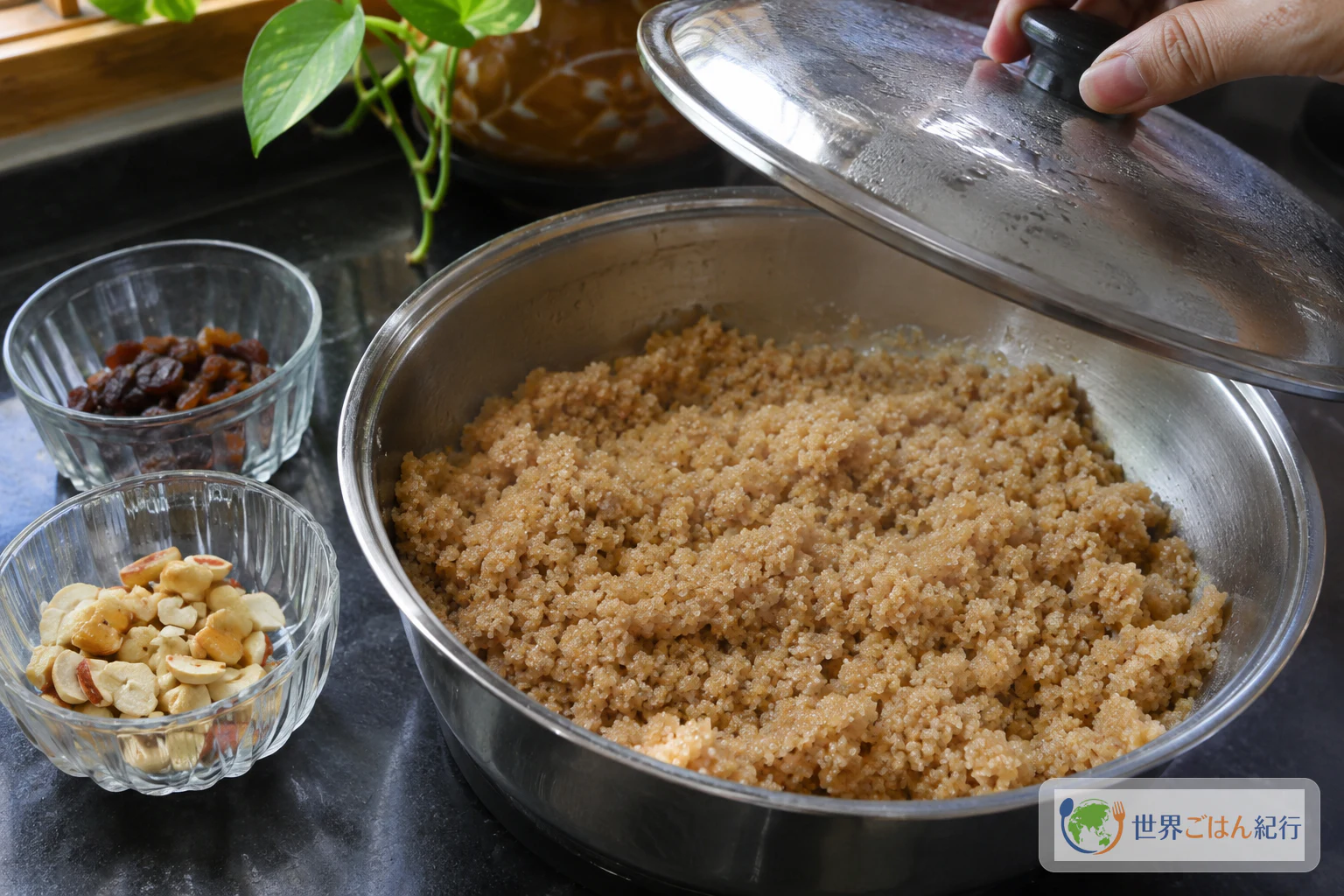
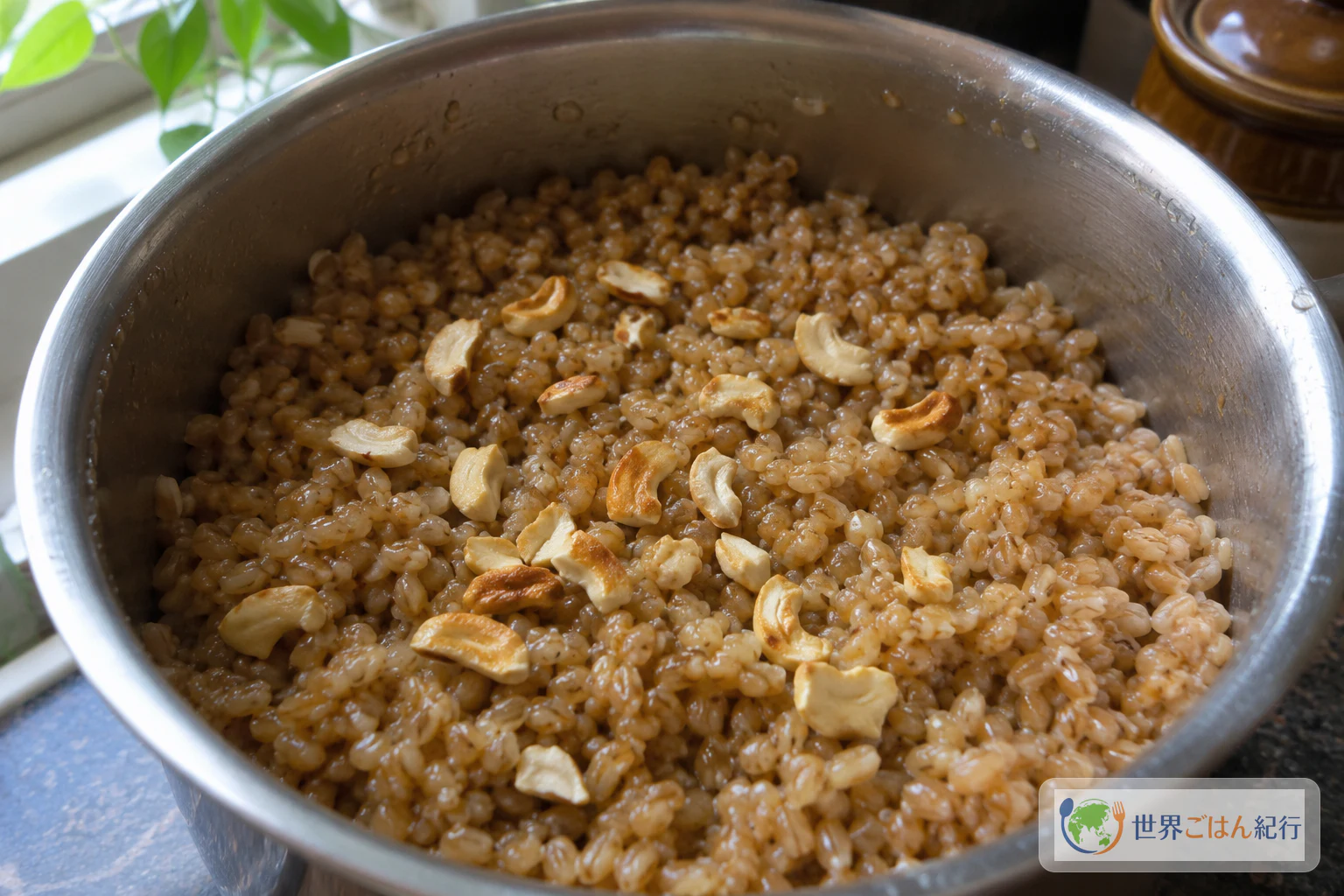
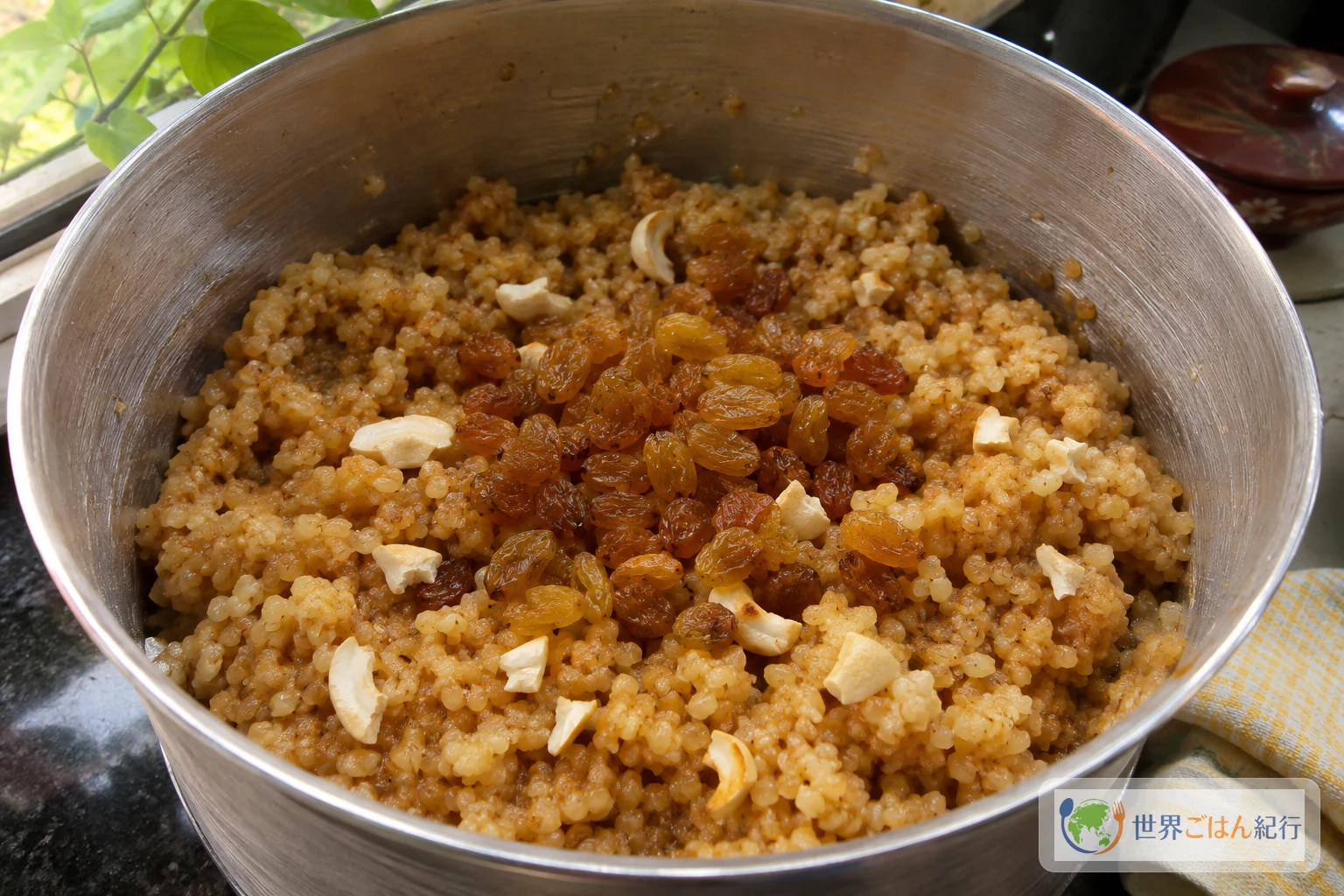
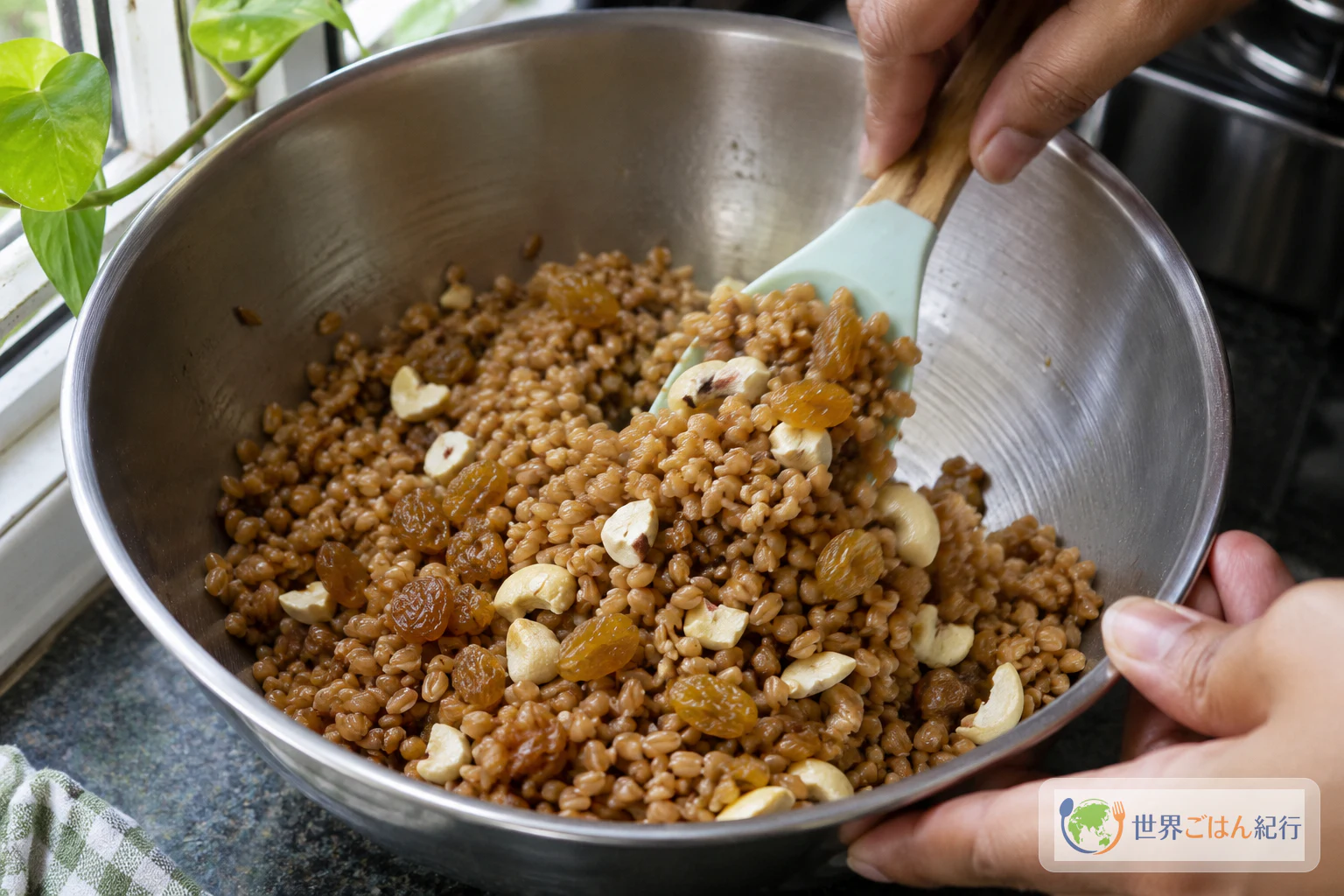
Roast the broken wheat until it smells toasted and turns golden-orange, then simmer it gently until the grains are tender and separate, not a sticky paste. The cashews and sultanas wait until after the covered rest.
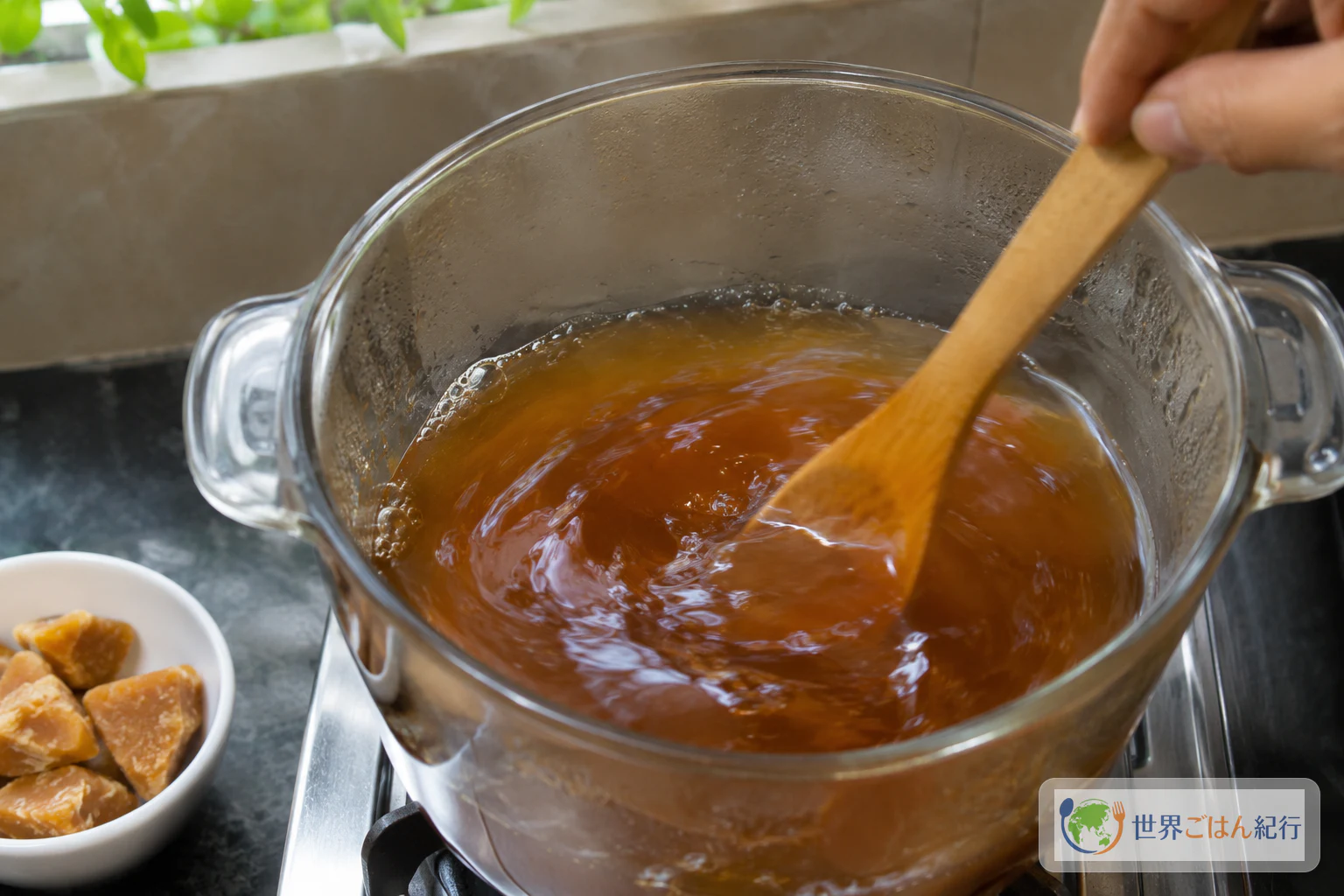
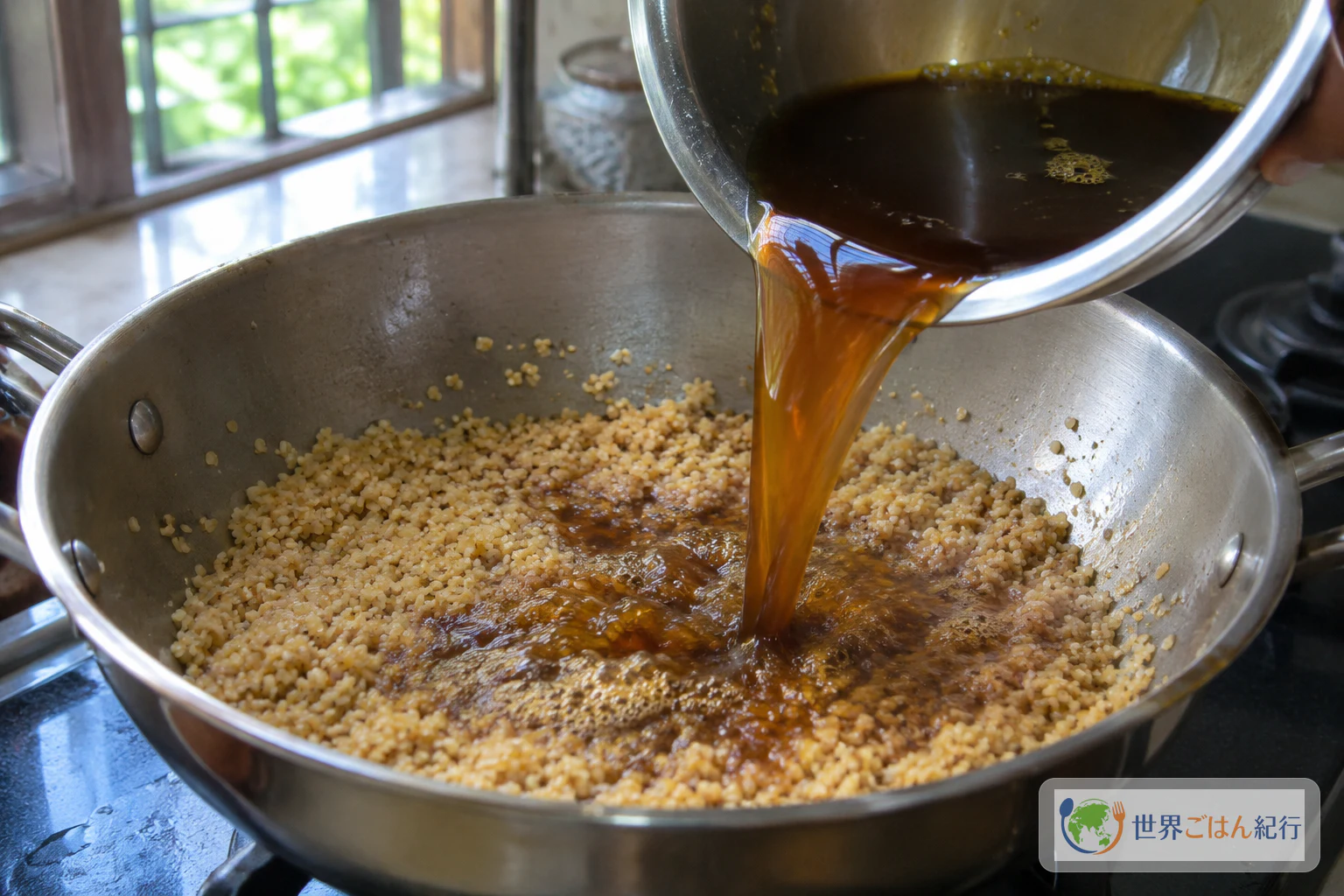
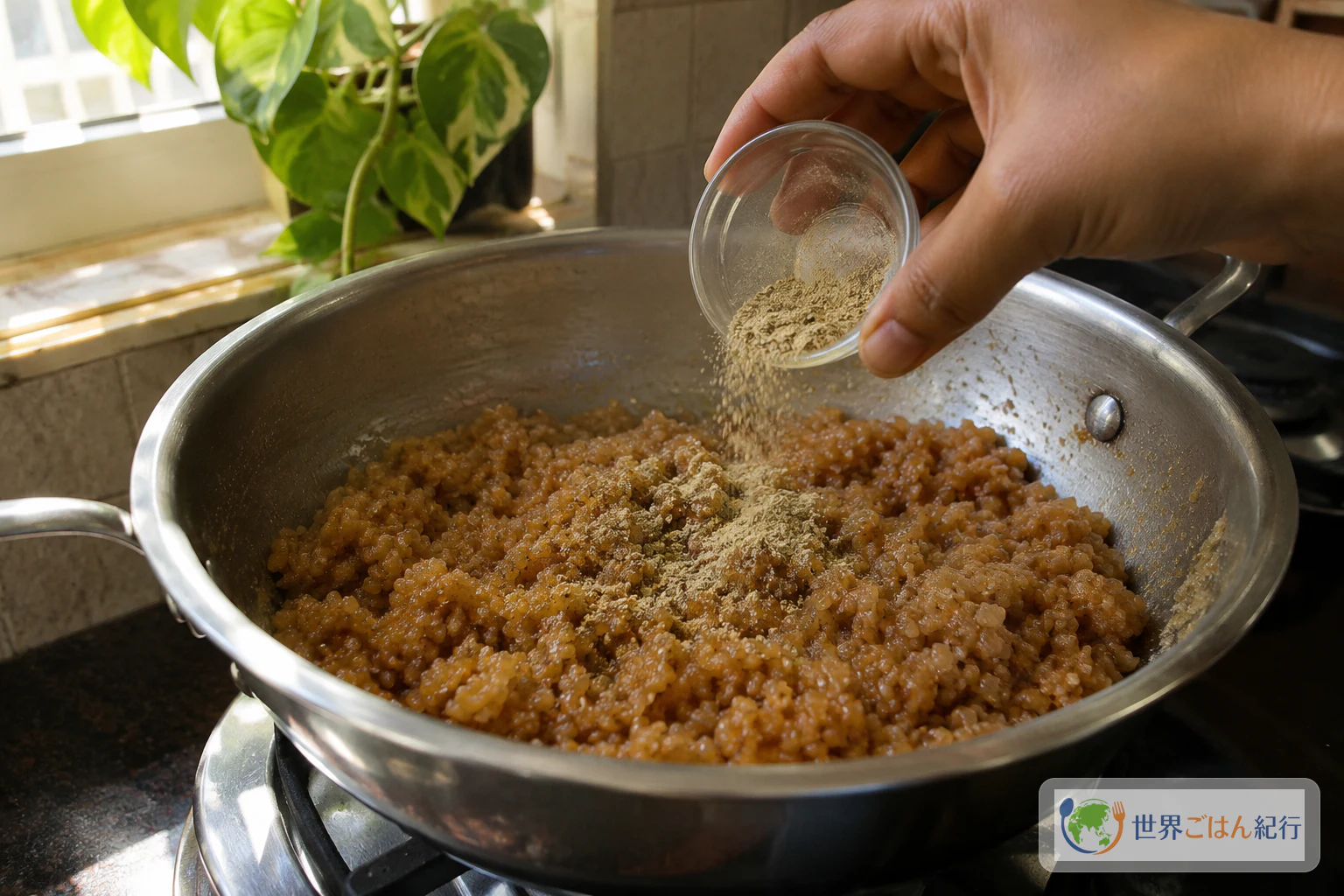
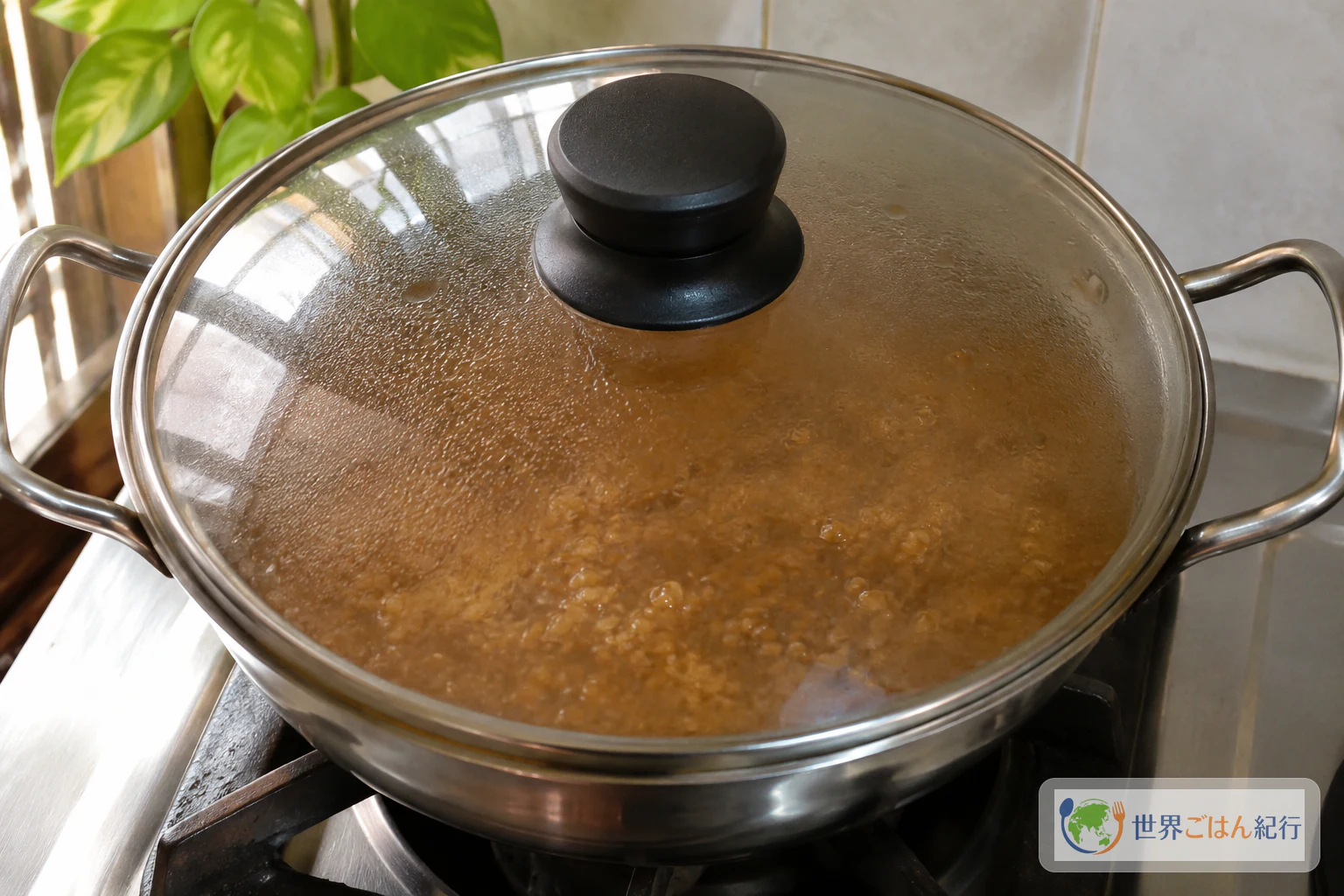
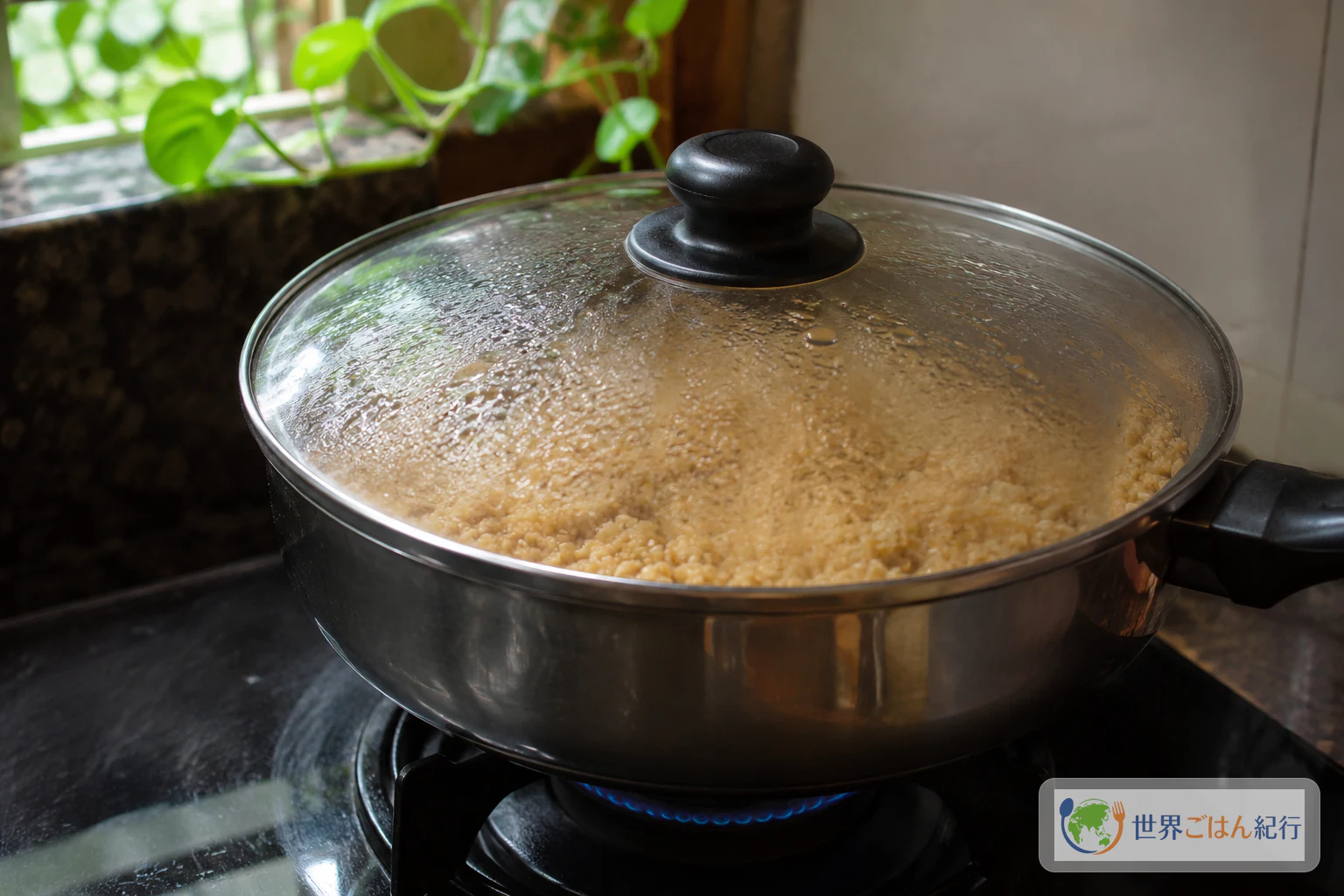
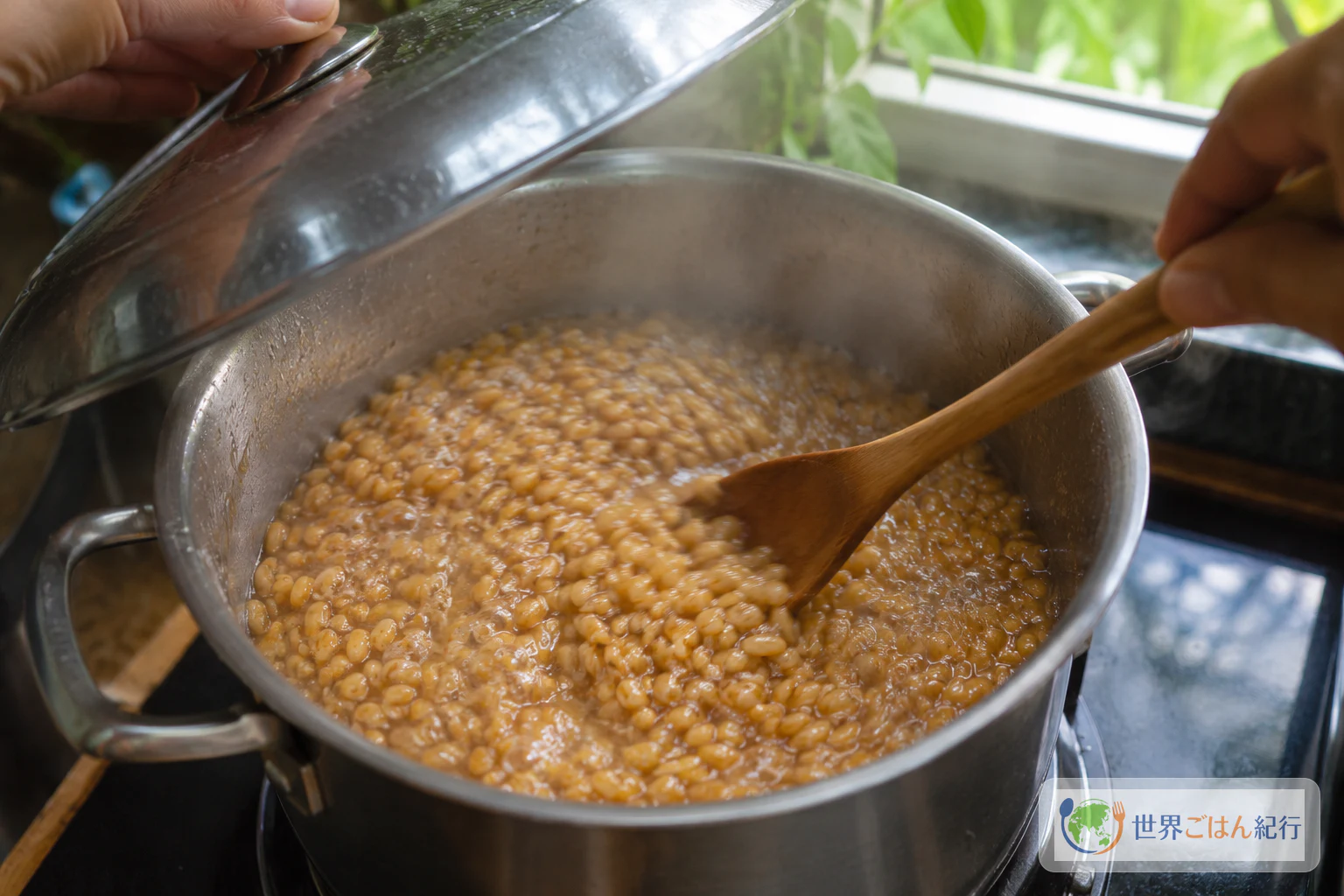
Jaggery dissolves in hot water. In a separate wide pan, broken wheat turns golden-orange in ghee. When the two meet with a little cardamom, the pan goes on low heat under a lid and the wheat cooks until tender.
Laapsi, also spelled lapsi, is the name of this dish, and also of some others. This article follows one recipe: Archana Doshi's sweetened Gujarati broken wheat, published on Archana's Kitchen, which she describes as a sweet for special occasions, served warm. It is the enriched version with broken cashews and sultanas, made with wheat grains and not flour.
Sekai Gohan has not kitchen-tested this recipe as a whole. The amounts and times below are the ones that recipe publishes, not results we have measured. Your best guide at the stove is the state of the grains.
Ingredients: Serves 4
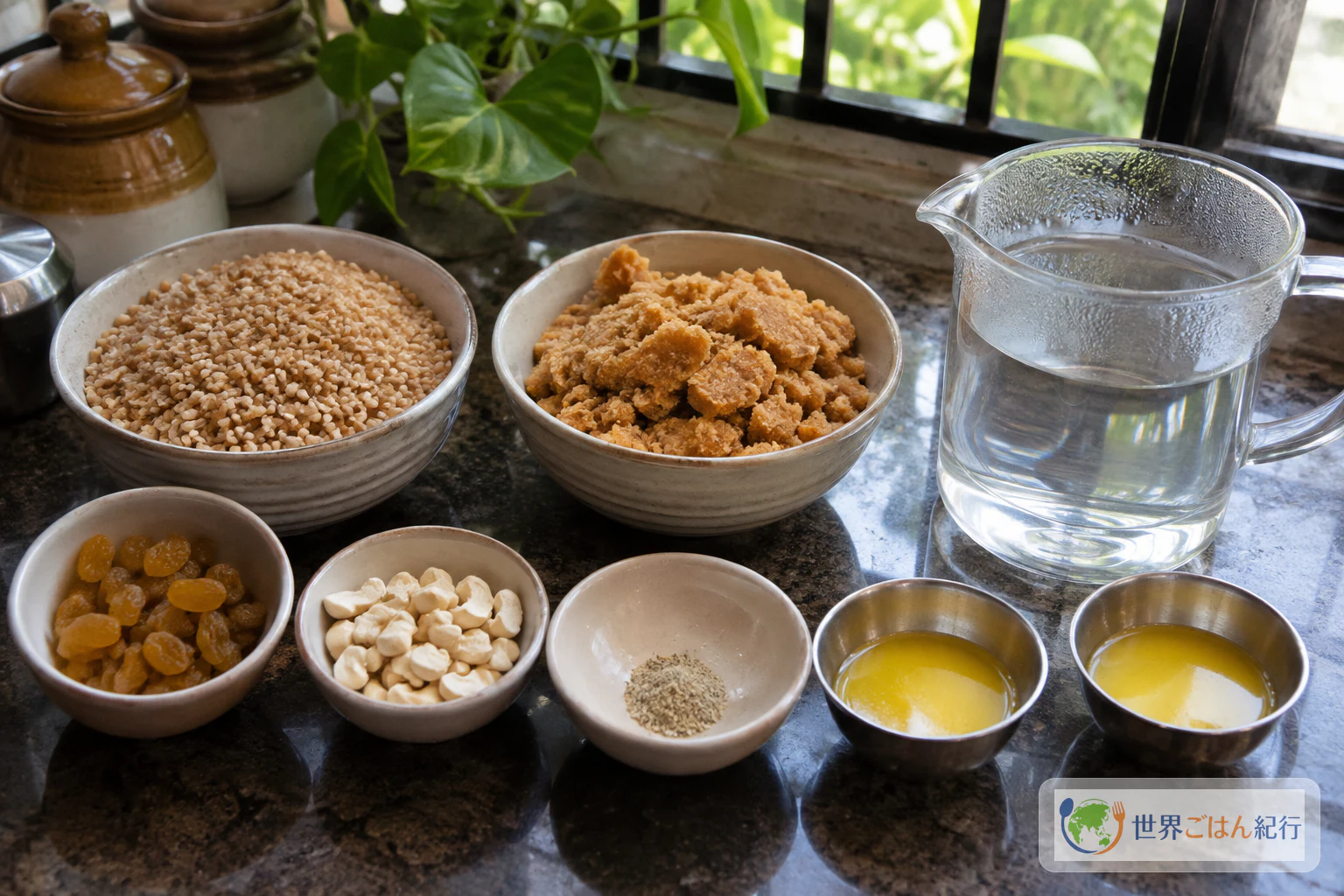
There is no extra ghee, sugar, milk or garnish at the finish.
This dish contains wheat, milk-derived ghee and cashews. Check the labels of the products you buy.
Equipment
- Heatproof vessel for dissolving the jaggery
- Strainer
- Second clean heatproof vessel for the strained liquid
- Small pan for the cashews
- Small dish for the roasted cashews
- Wide pan with a lid for the wheat
- Wooden spoon or spatula
- Measuring cups and spoons
- Serving bowls
Choosing and Measuring
Broken wheat. Choose actual grains (dalia). Fine flour leads to a different dish, as explained under Variations below. The type of wheat affects how much water is needed, so grains may not behave identically from one package to the next.
Jaggery. Dissolving and straining the jaggery is what prepares the liquid for the wheat.
Sultanas and cashews. Use dried sultanas sold ready to eat, and broken cashews. Both belong to this version, so they stay in. No substitutions are offered.
Method: Syrup, Nuts, Wheat, Then the Rest
The method runs in four stages:
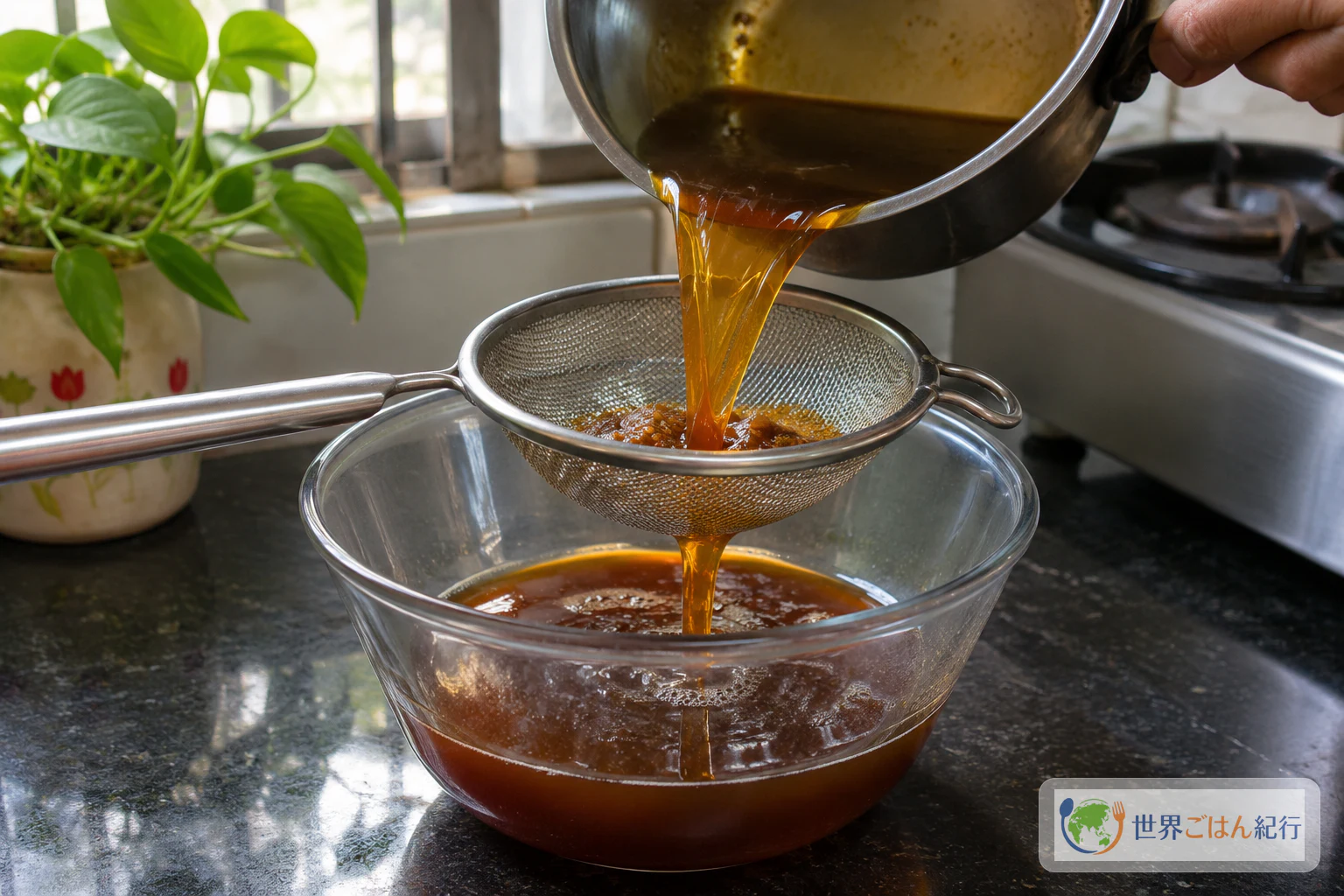
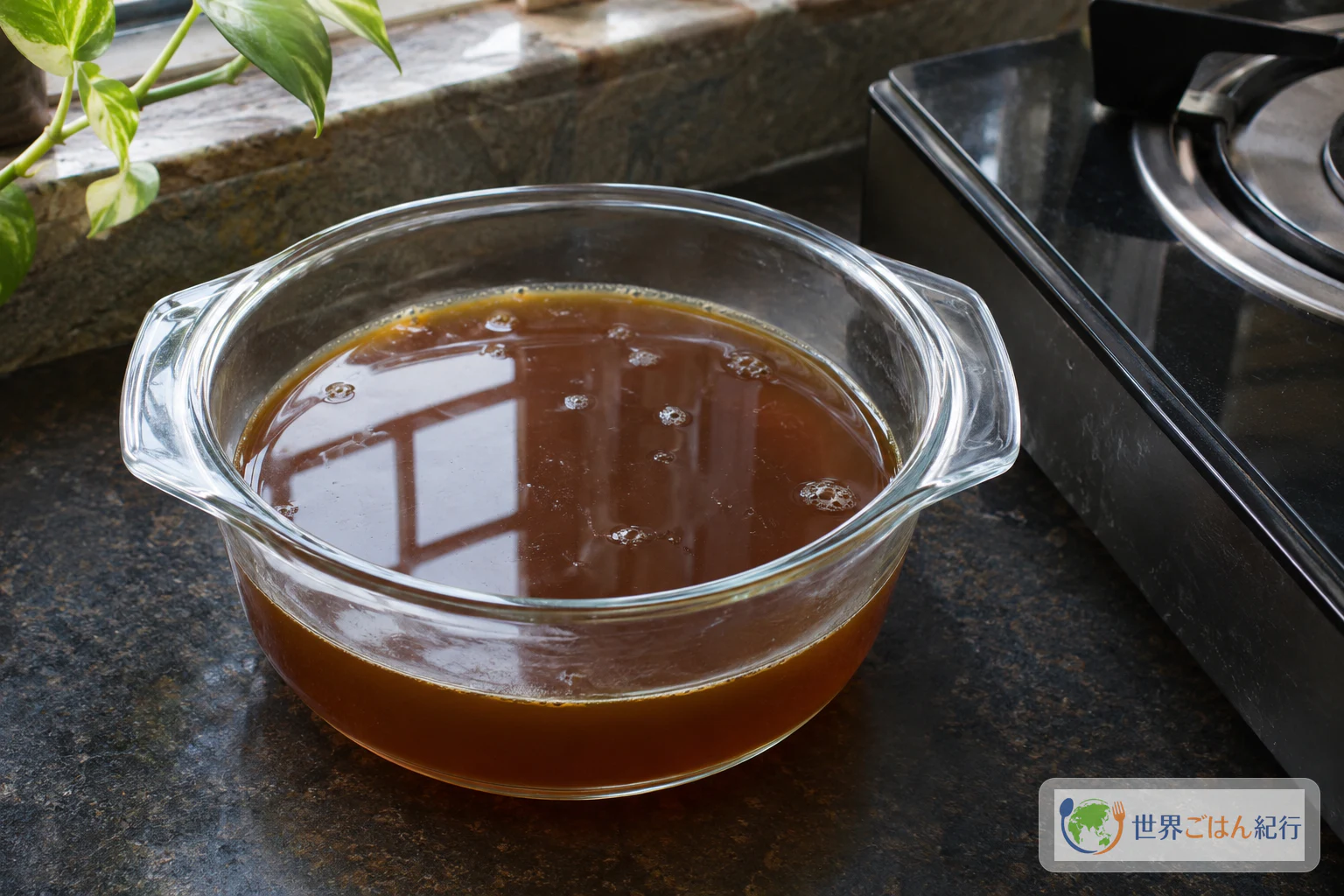
- The syrup: Straining the jaggery water catches any residue, and the liquid then waits on its own.
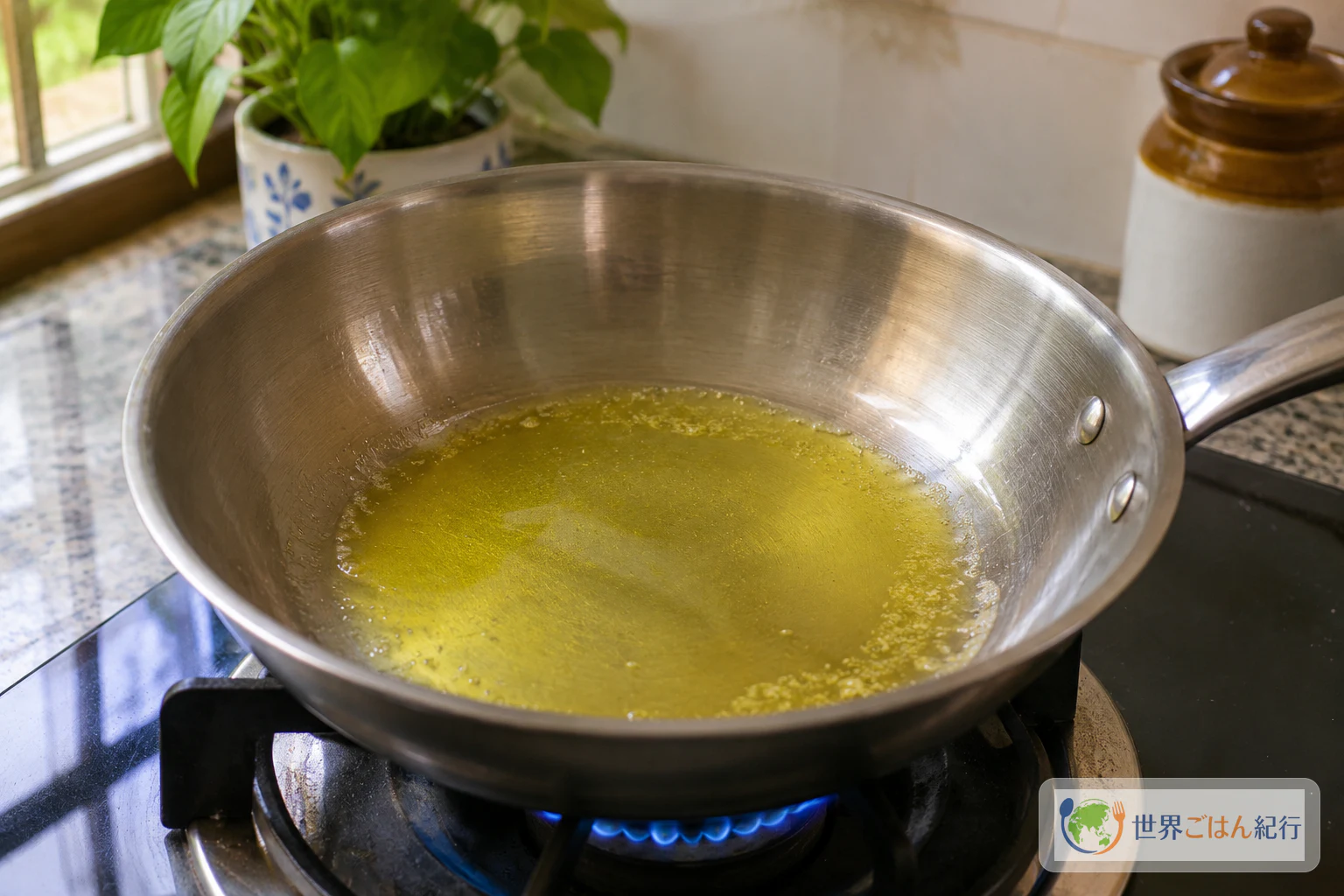
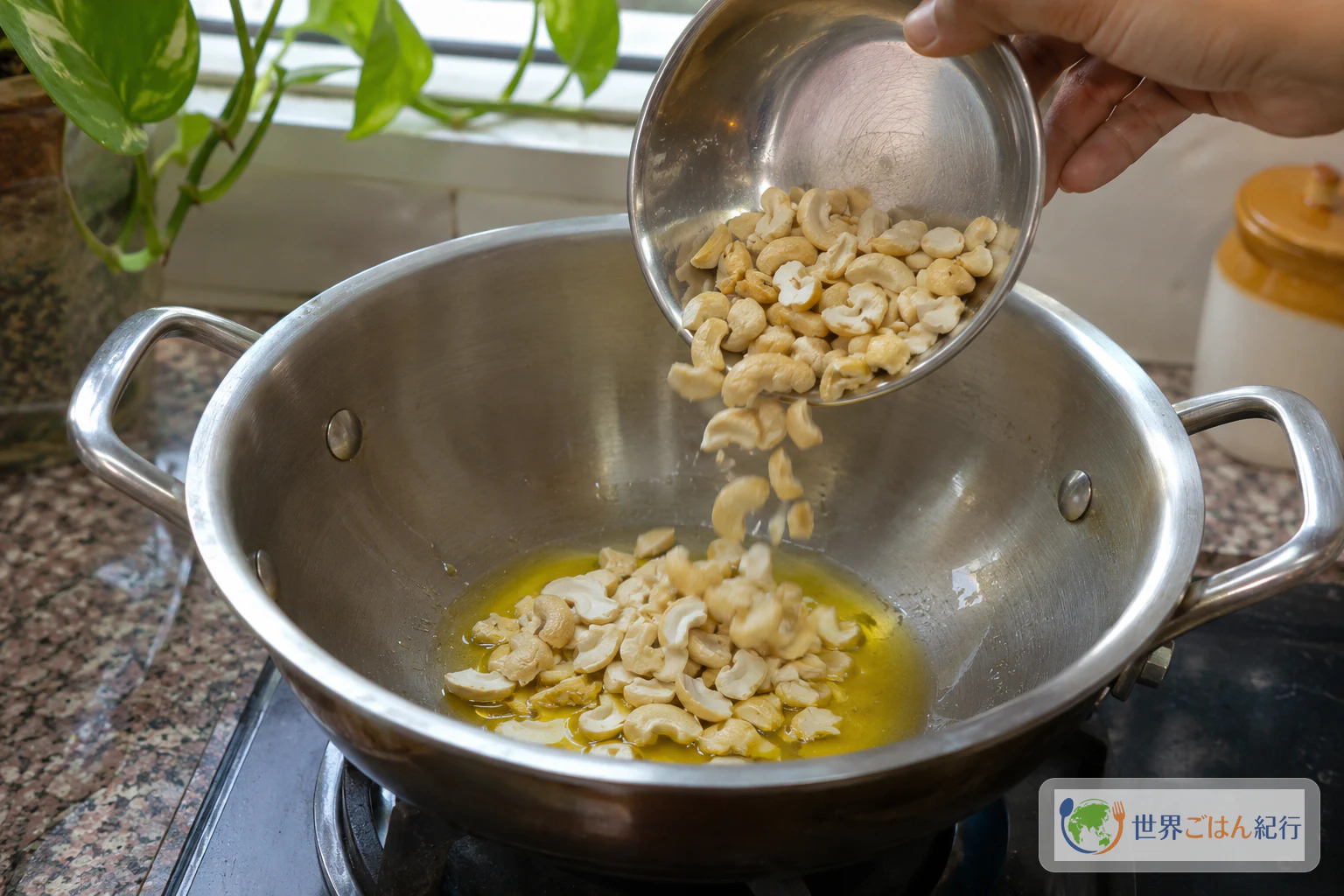
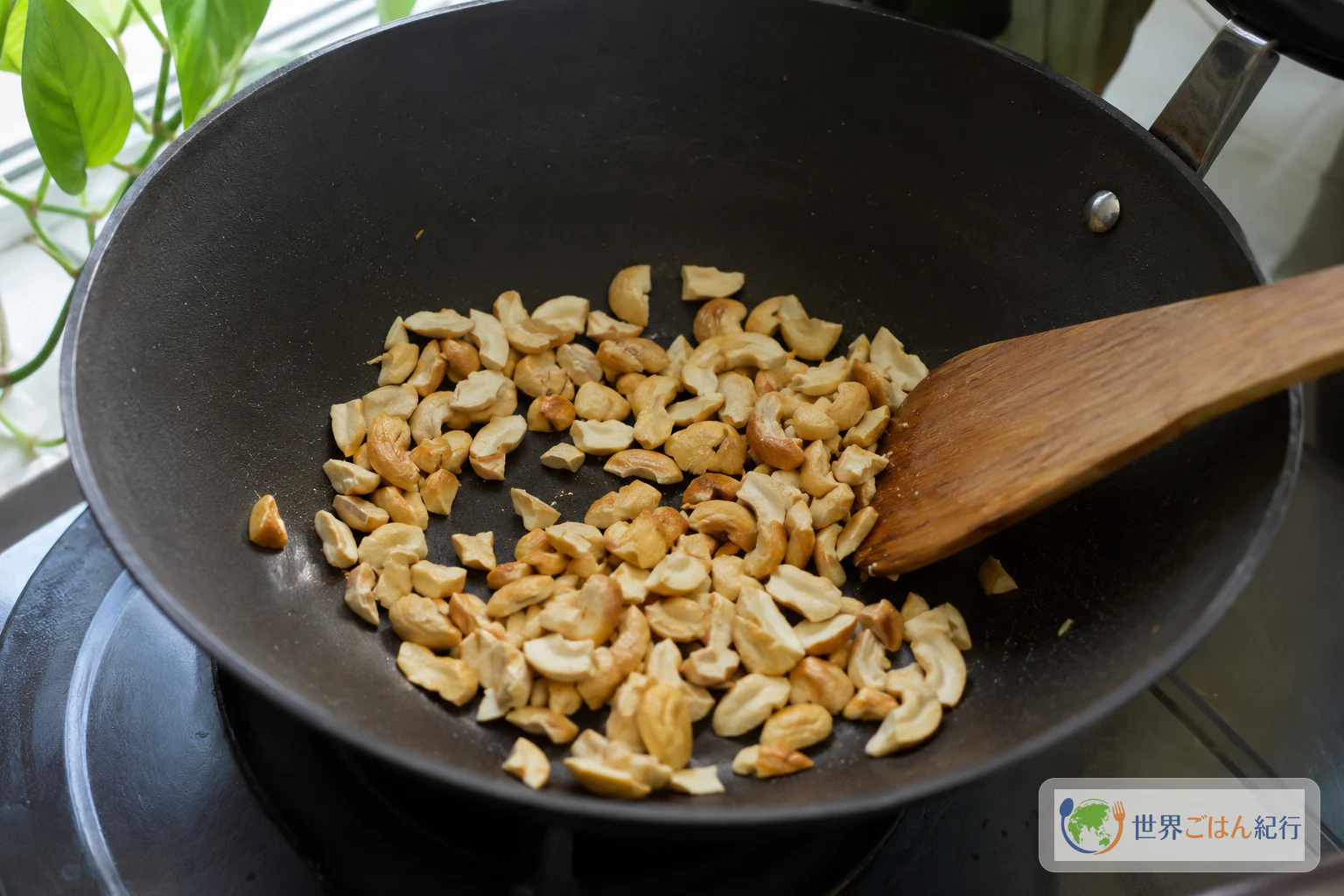
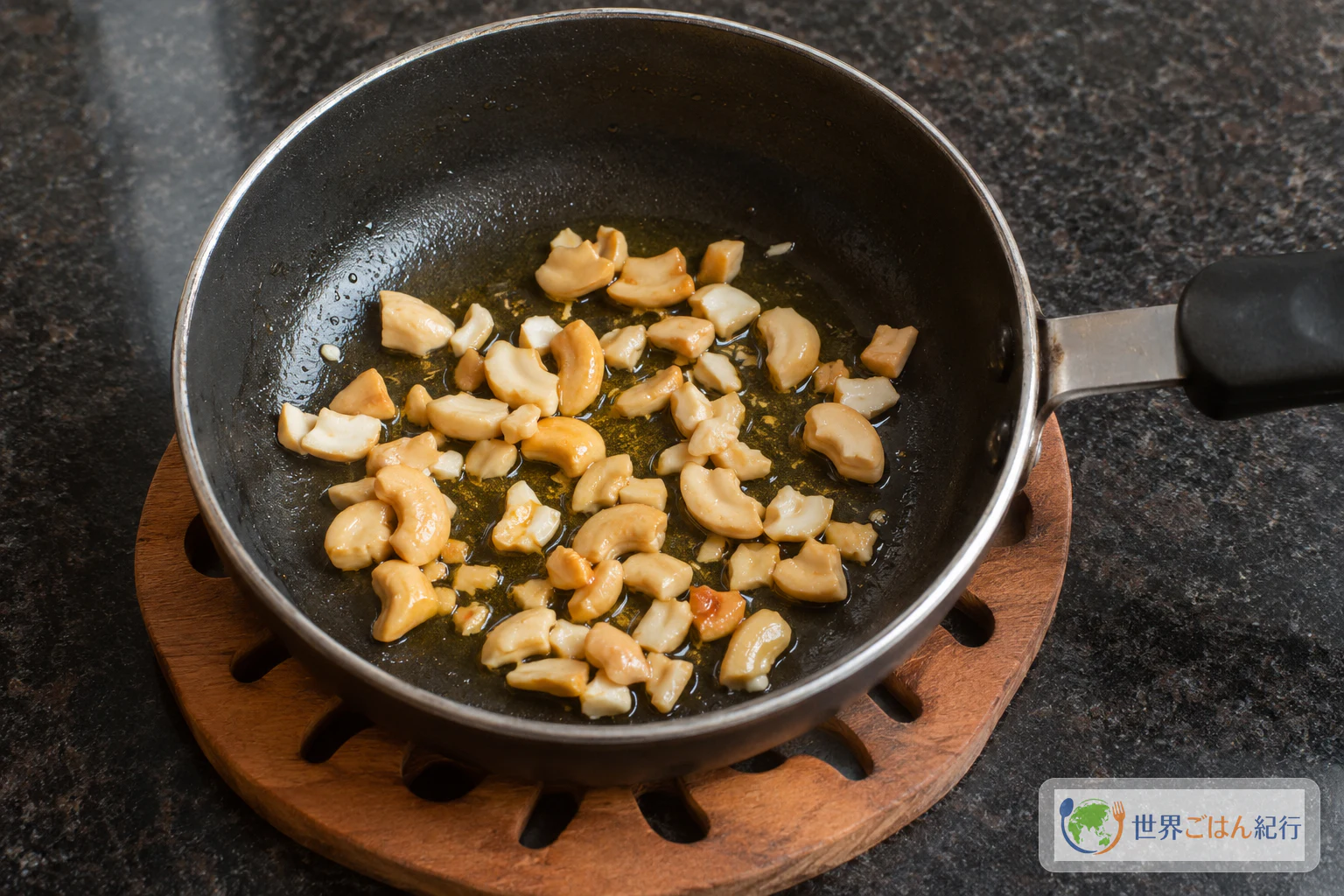
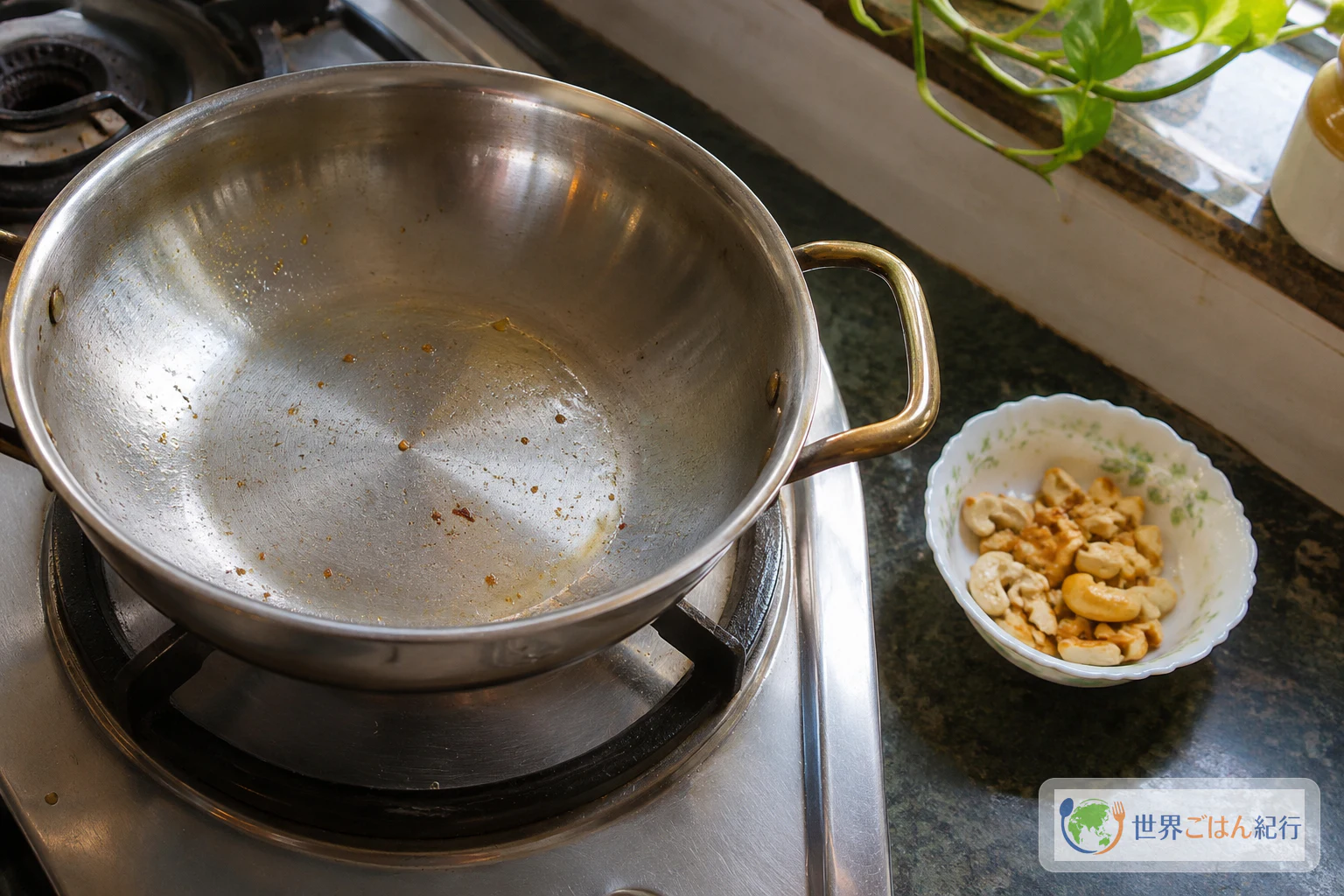
- The cashews: They need only reach a pale gold before they come out of the pan.
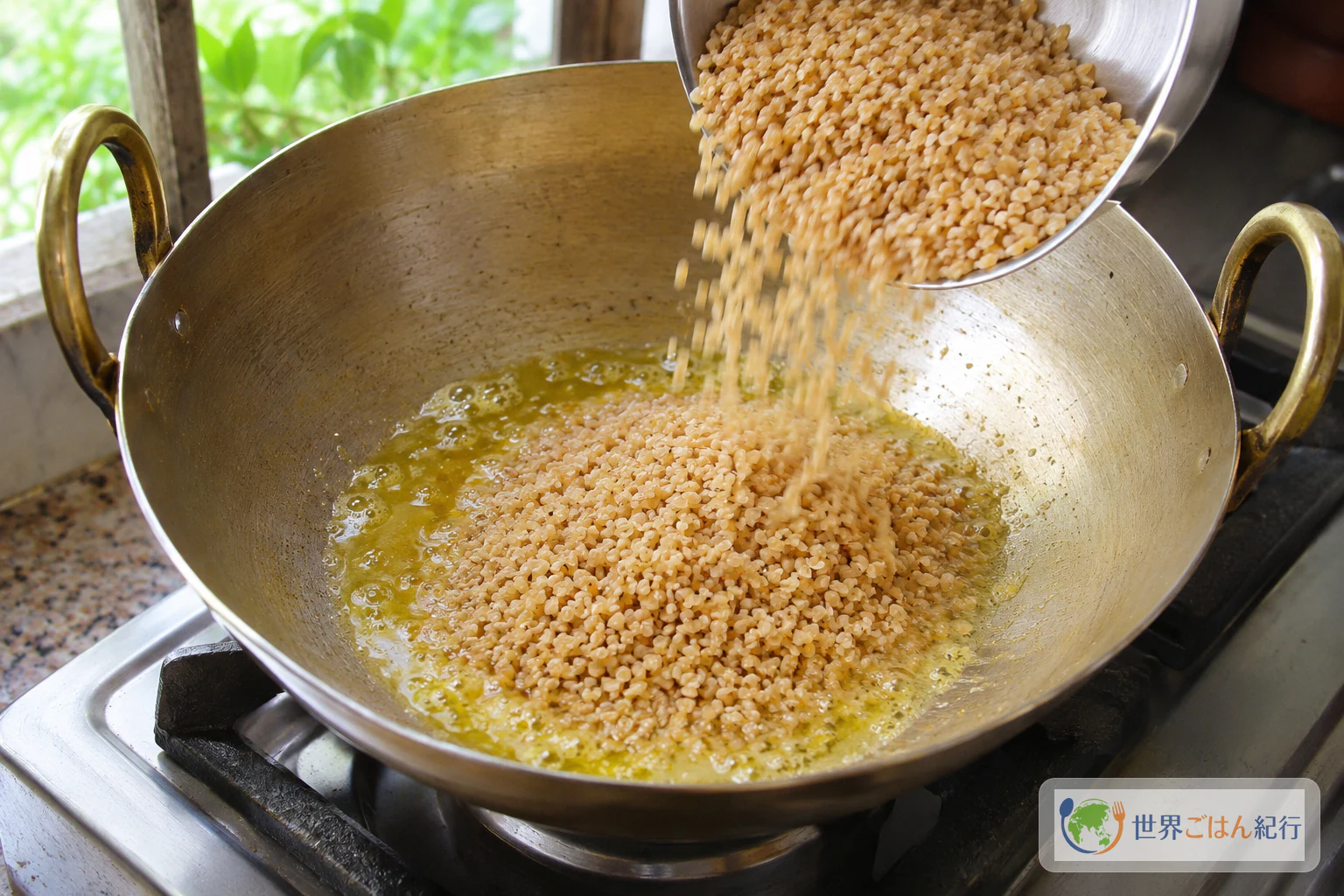
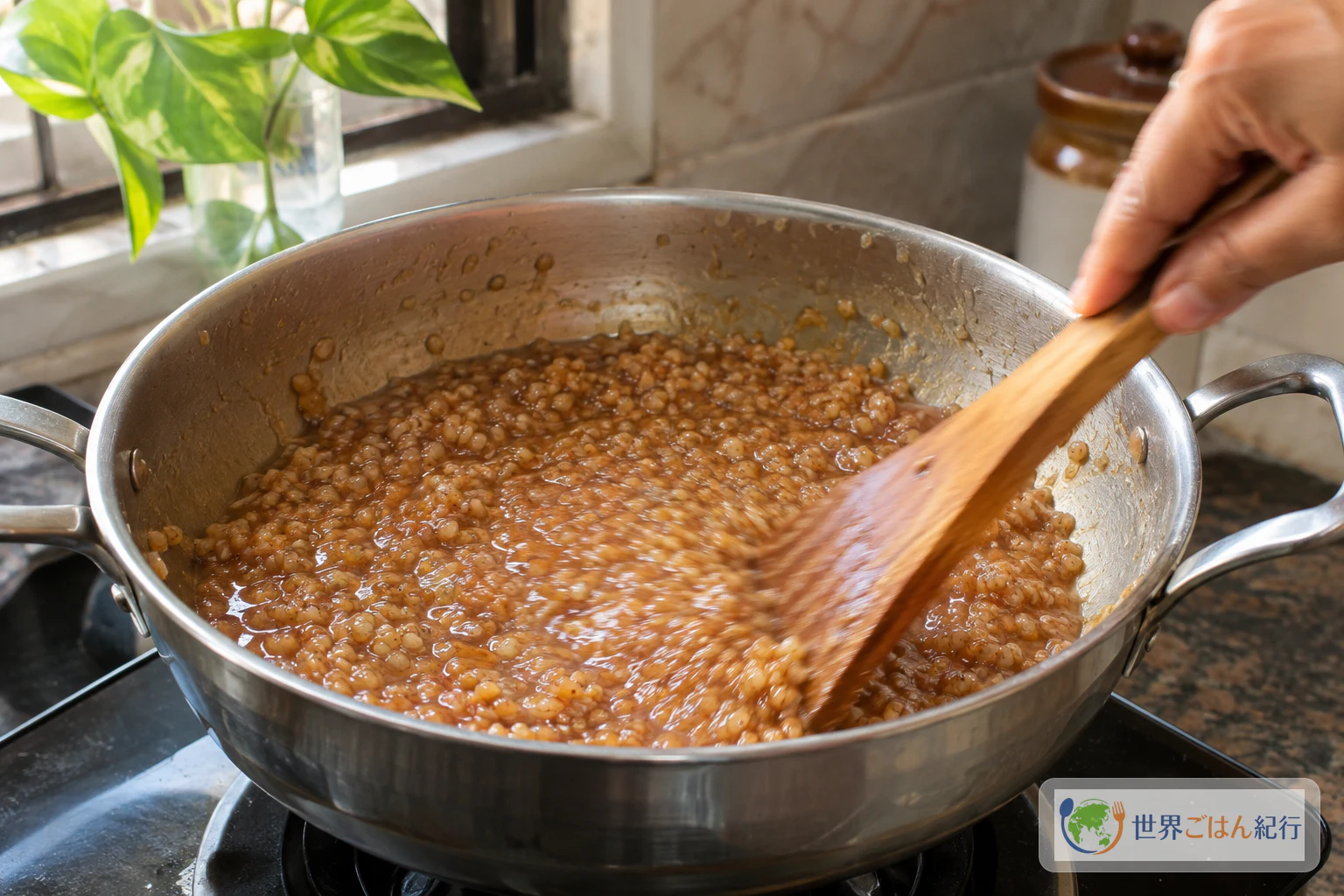
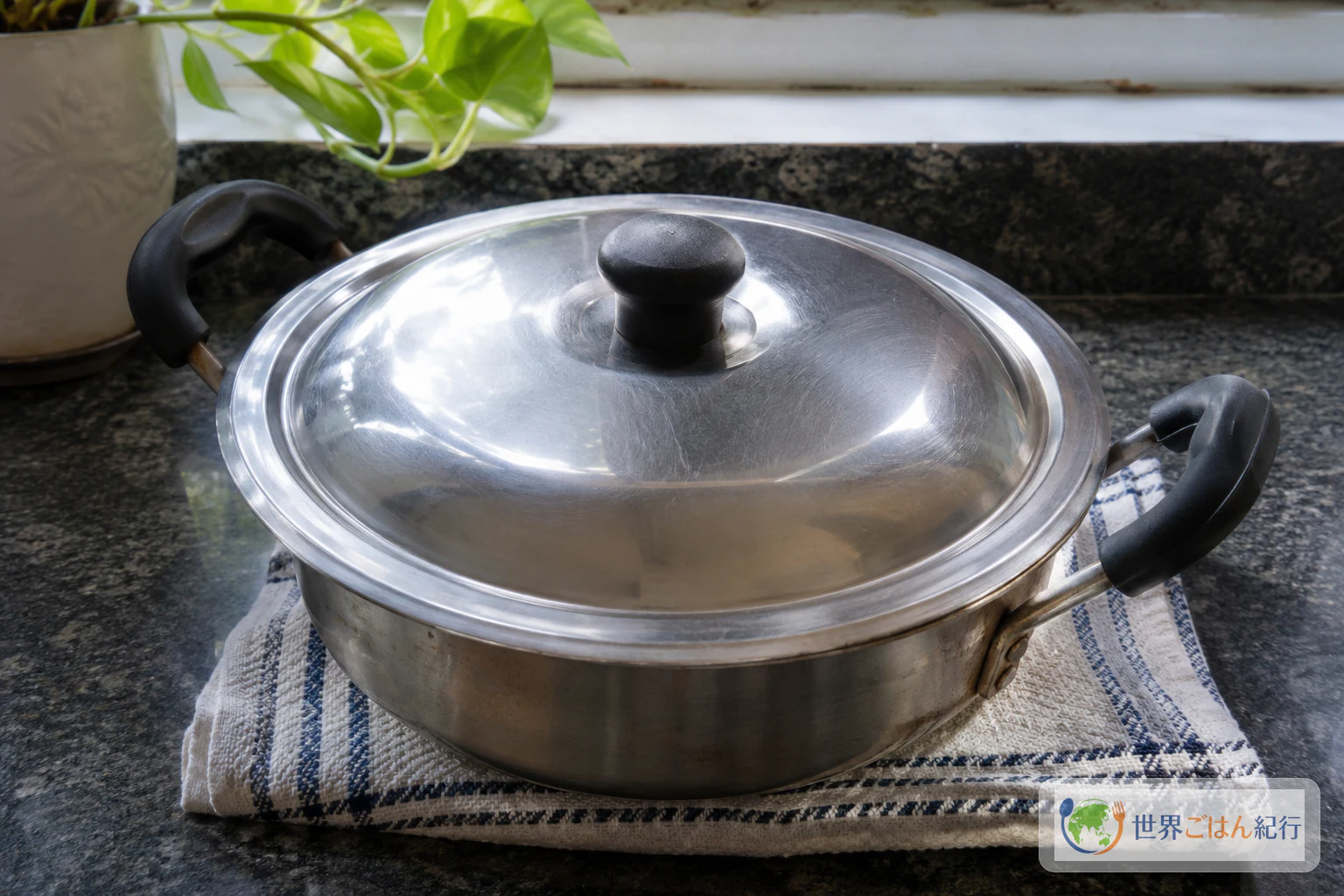
- The wheat: It roasts over medium heat, then simmers on low under a lid with an occasional stir.
- The finish: After a covered rest, the cashews and sultanas go in.
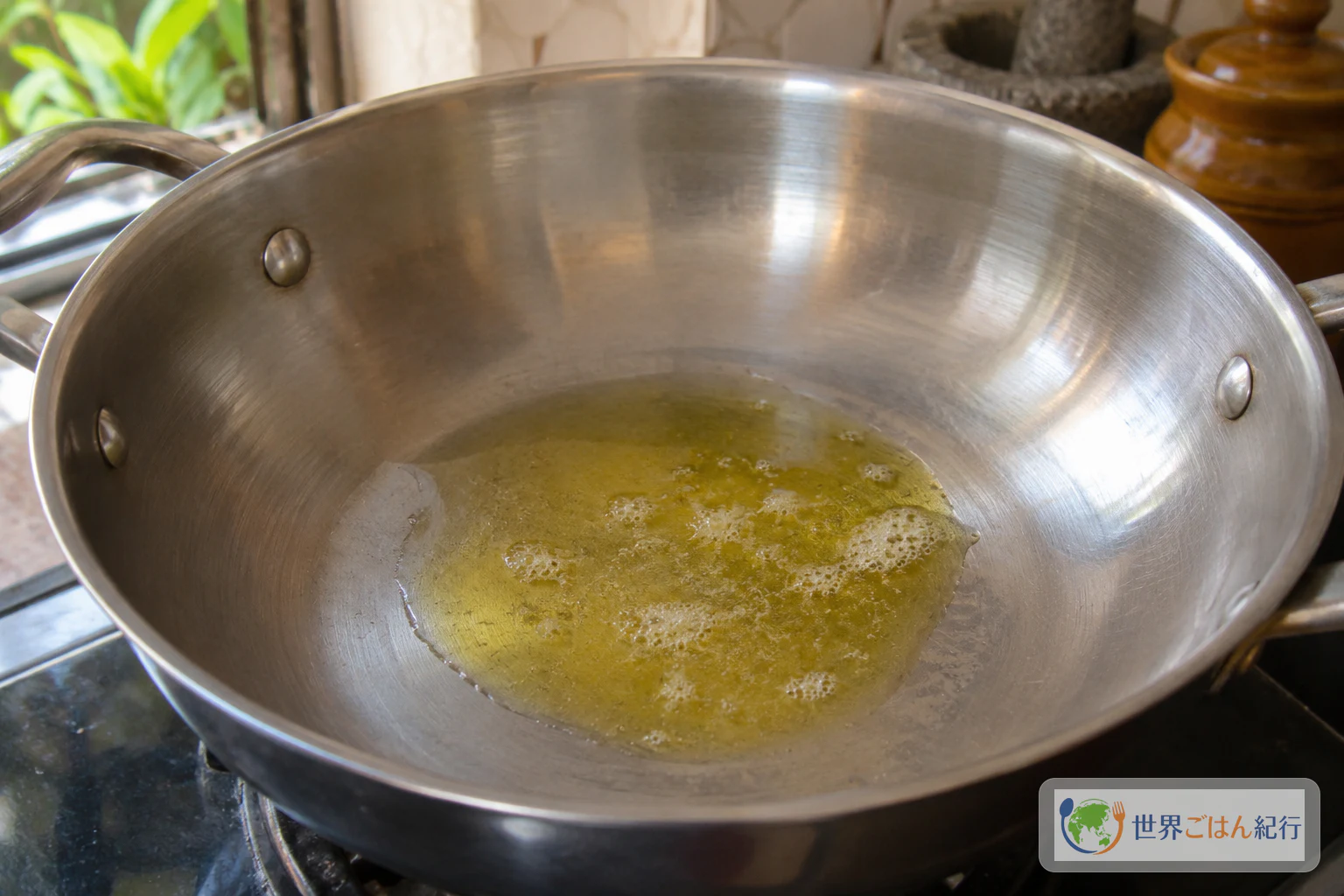
Treat the pictures as a guide to each stage, not as proof of an amount, time or temperature.
Troubleshooting
The recipe offers few fixes, so this table sticks to what its method supports and says where it stops.
| What you see | What to check | What to do |
|---|---|---|
| Grains are still firm after about 10 minutes | The 10 minutes is a guide, and wheat types differ in how much water they need | Go by the grains. Keep the pan covered on low, stir occasionally and check again. The recipe sets no amount of extra water, so we do not suggest one |
| The wheat is turning into a sticky paste | The target is tender, separate grains | Check the grains during the simmer next time and stop as soon as they are tender. The recipe gives no way to reverse this |
| Cashews have gone darker than light golden | They should only reach a light golden color | Take the pan off the heat as soon as they turn light golden |
| Wheat is darker than golden-orange | It should be golden-orange and smell roasted | Keep the heat at medium and keep stirring during the roast |
| Residue in the jaggery liquid | The liquid should go through a strainer before it meets the wheat | Strain it before pouring it into the pan |
| Cashews or sultanas went in early | They belong after the covered rest | Keep them in separate dishes until the lid comes off |
Variations: Same Name, Different Dishes
This article gives one method only. The other forms below are for orientation, and their ingredients and amounts should not be mixed into this one.
| Version | What sets it apart | Where it appears |
|---|---|---|
| Broken wheat with cashews and sultanas (this article) | Wheat grains, jaggery liquid and cardamom, with cashews and sultanas folded in after the rest | Archana Doshi, Archana's Kitchen |
| Plain, nutless laapsi | A simpler form mentioned in general terms | Introduction to the same Archana's Kitchen recipe; not the version given in its ingredient list |
| Churma lapsi or kansar made with wheat flour | Dry-roasted wheat flour with boiling water, jaggery and ghee | Zeel Patel, Zeel's Kitchen |
Culture: A Wheat Sweet for Auspicious Days
Laapsi belongs to the food of India, and the version here comes from Gujarat. Archana Doshi presents it as a sweet for special occasions, served warm. The Government of Gujarat's overview of Gujarati food lists kansar, lapsi and sheera separately among the wheat sweets made on such occasions. Zeel Patel's page also places a wheat-flour preparation in festive and prasad settings.
The same overview separates fine wheat flour (loat) from coarse wheat (fada) and notes that the type of wheat affects how much water is needed. It also describes Gujarati food as varying among South Gujarat, North Gujarat and Saurashtra. It is a general overview and does not give a laapsi recipe, so it frames the variety without changing the method above.
Names are not uniform either. The government overview lists kansar and lapsi separately, while Zeel Patel's page uses Churma Lapsi and Kansar for one preparation. That is one cook's account and not an official classification, and neither this recipe nor any other is the single household formula. When you read "lapsi" elsewhere, check whether it means grains or flour before comparing amounts.
Frequently Asked Questions
How long does laapsi take?
Archana's Kitchen displays 10 minutes of preparation, 40 minutes of cooking and 50 minutes in total. These are the page's stated figures, not measured guarantees. The method itself names about 10 minutes for the covered simmer and 5 minutes for the rest.
Why is the hot water not in the published ingredient list?
Archana's Kitchen lists six ingredients and specifies the 2 cups of hot water in its method. We include it in the table so you have everything ready before you start.
Does the pan really come off the heat before the rest?
The recipe calls for a 5-minute covered rest. Moving the pan off the burner first is our explicit description of ordinary handling, so that the rest is clearly separate from the simmer.
Can I use whole wheat flour?
Not in this method. Flour-based versions, such as the one published by Zeel Patel, follow their own method and proportions. If you want that dish, follow a recipe written for it.
Can I leave out the cashews or sultanas?
They are part of the version this article follows, so the recipe here keeps them. Archana Doshi's introduction mentions plainer laapsi in general terms, but we do not offer tested amounts or a method for a nut-free or fruit-free pot. Anyone avoiding cashews should not rely on this recipe as written.
Can I add saffron, milk, sugar or a spoonful of ghee at the end?
None of these belongs to this version, so they are not part of the method above.
How do I store or reheat leftovers?
The recipe gives no storage or reheating directions, so we do not give a shelf life or a reheating method. It is meant to be served warm.
Sources
- Archana Doshi, "Lapsi Recipe - Sweetened Gujarati Broken Wheat," Archana's Kitchen. The adopted ingredients, 4-serving yield, method, doneness target, displayed times, and its description of the dish as a warm sweet for special occasions. https://www.archanaskitchen.com/recipe/lapsi-recipe
- Gujarat State Non-Resident Gujaratis' Foundation, Government of Gujarat NRI Division, "Gujarati-Food." Regional variation in Gujarati food, wheat sweets for auspicious occasions including kansar, lapsi and sheera, and the distinction between fine loat and coarse fada. https://nri.gujarat.gov.in/home/gujaratifood
- Zeel Patel, "Lapsi | Traditional Gujarati Lapsi Recipe | Churma Lapsi," Zeel's Kitchen. Comparison only: name overlap with churma lapsi and kansar, a wheat-flour method, and festive and prasad contexts. None of its amounts or timing are used here. https://zeelskitchen.com/recipe/lapsi-festival-special-sweet-dish/