Imarti: A Flower Drawn in Batter, Then Sent into Hot Syrup
This recipe has not been kitchen-tested. The amounts come from one published recipe, but the short rest is an editorial change, so we can't promise how the finished imarti will puff or crisp.
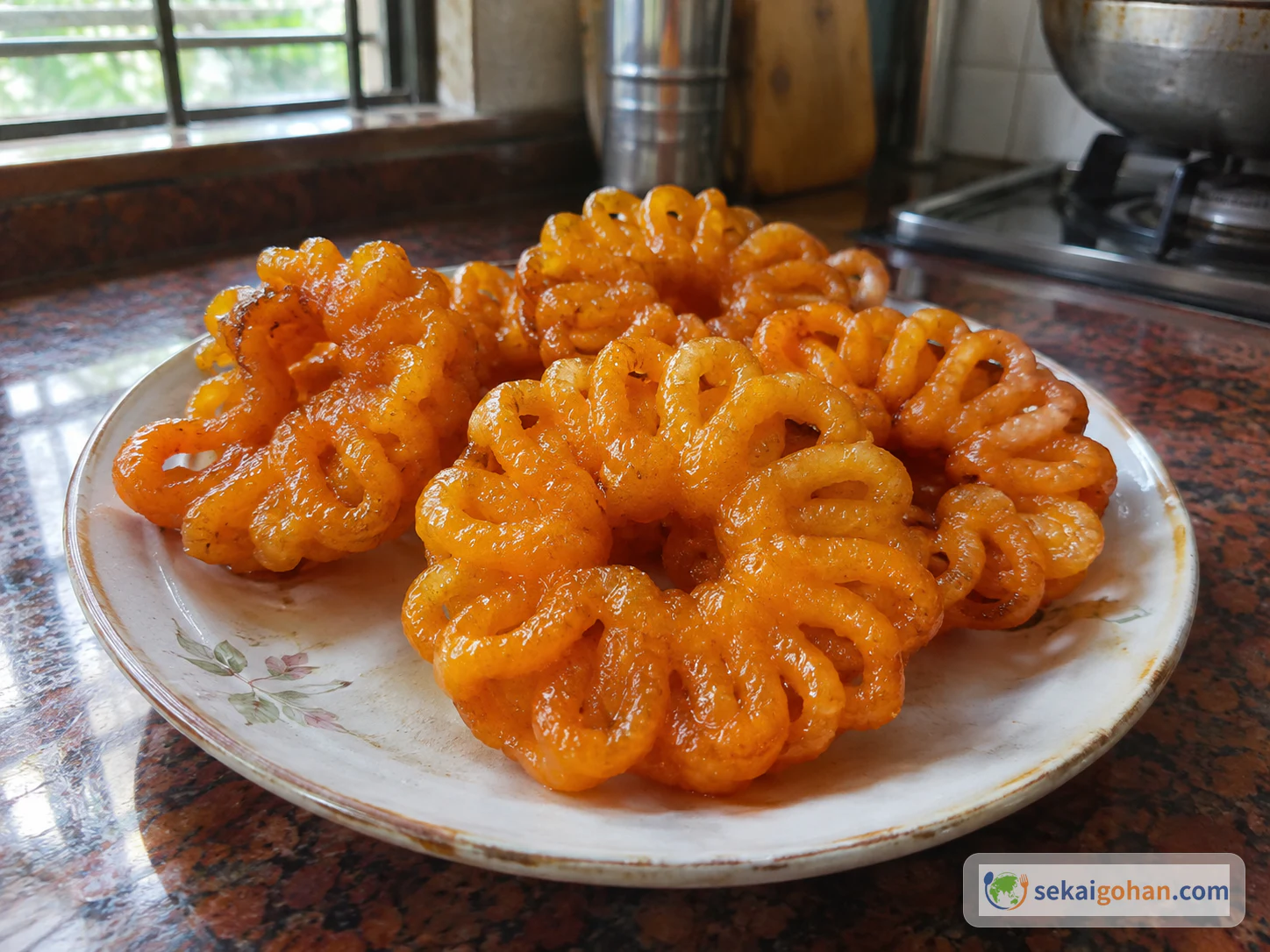
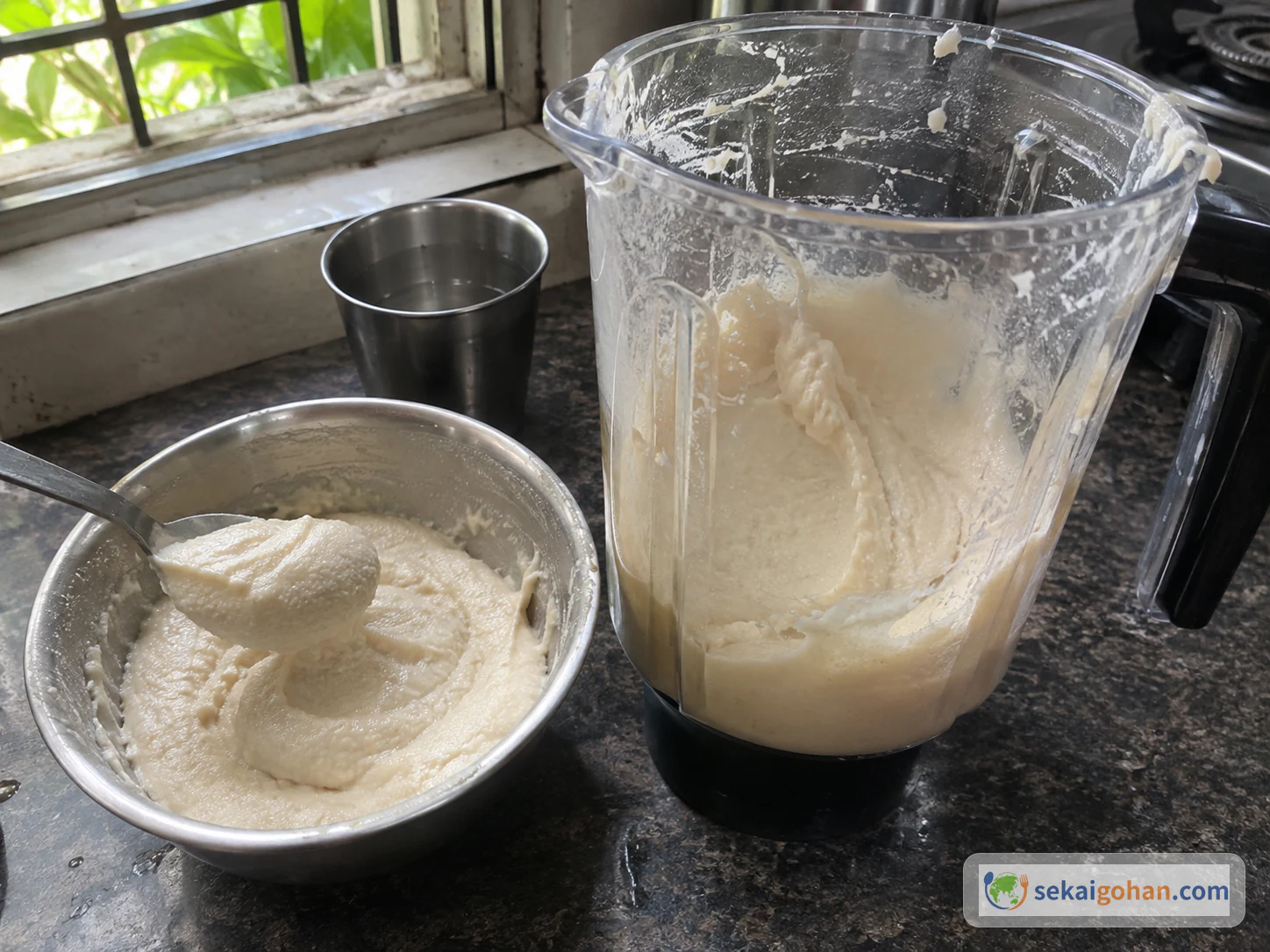
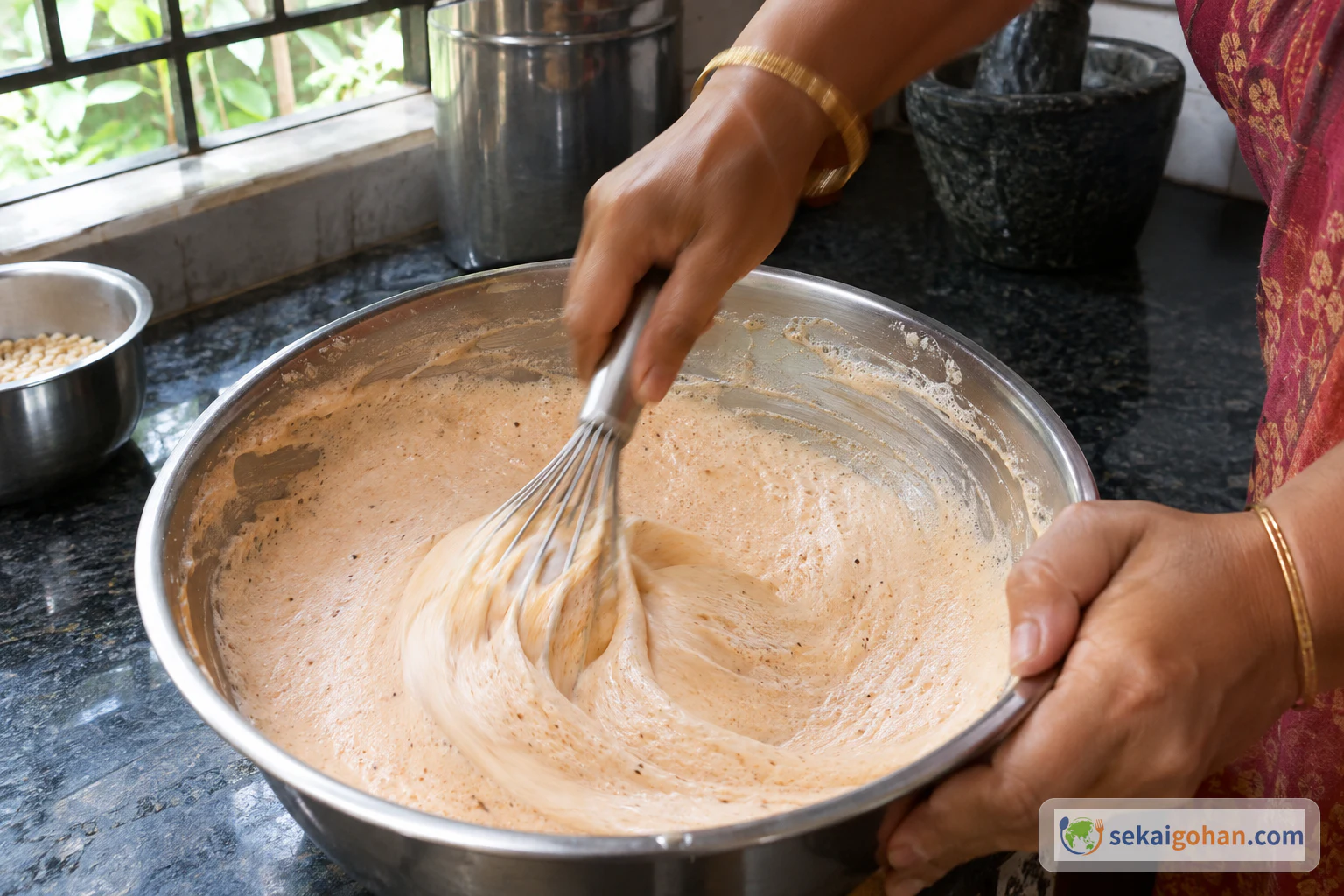
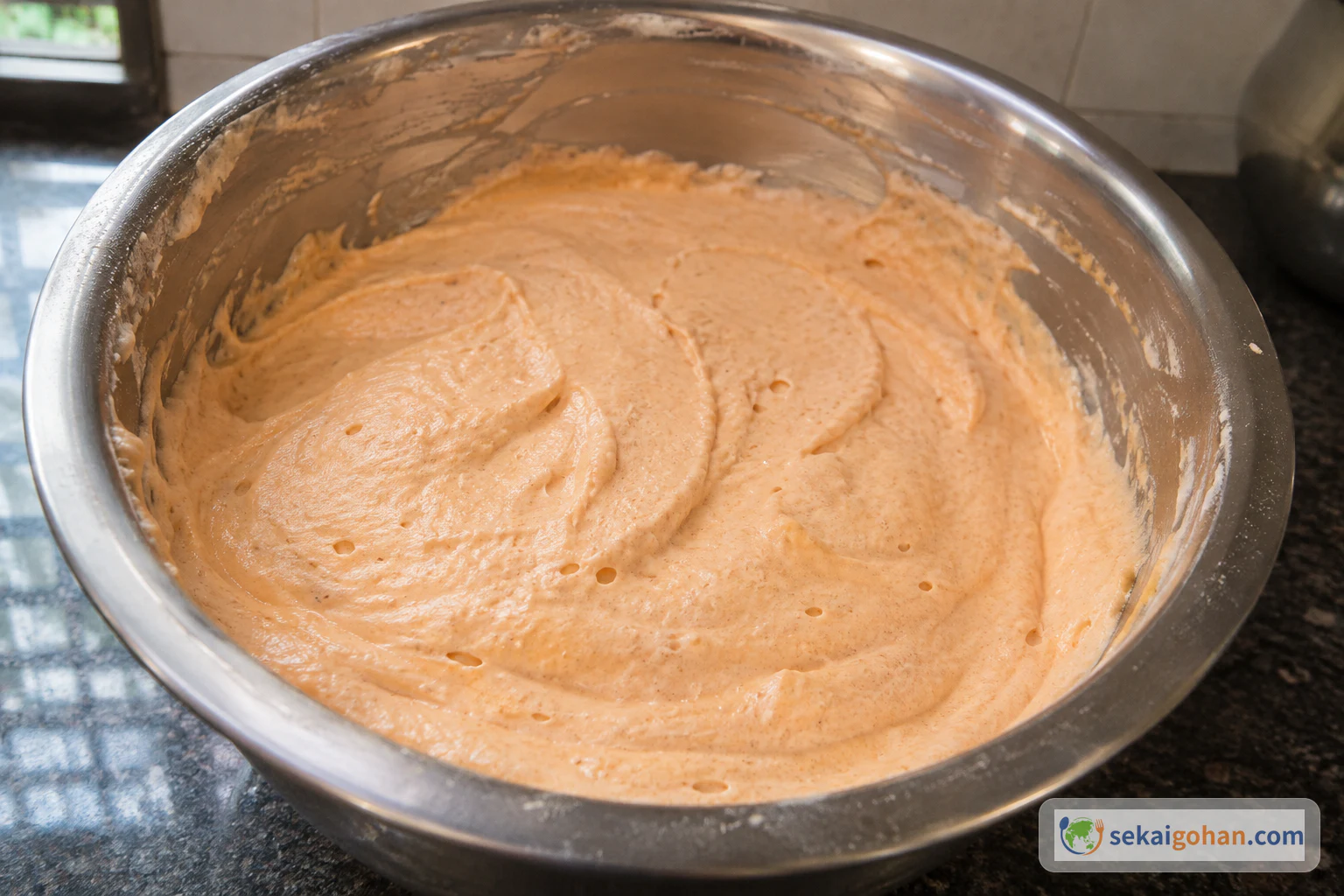
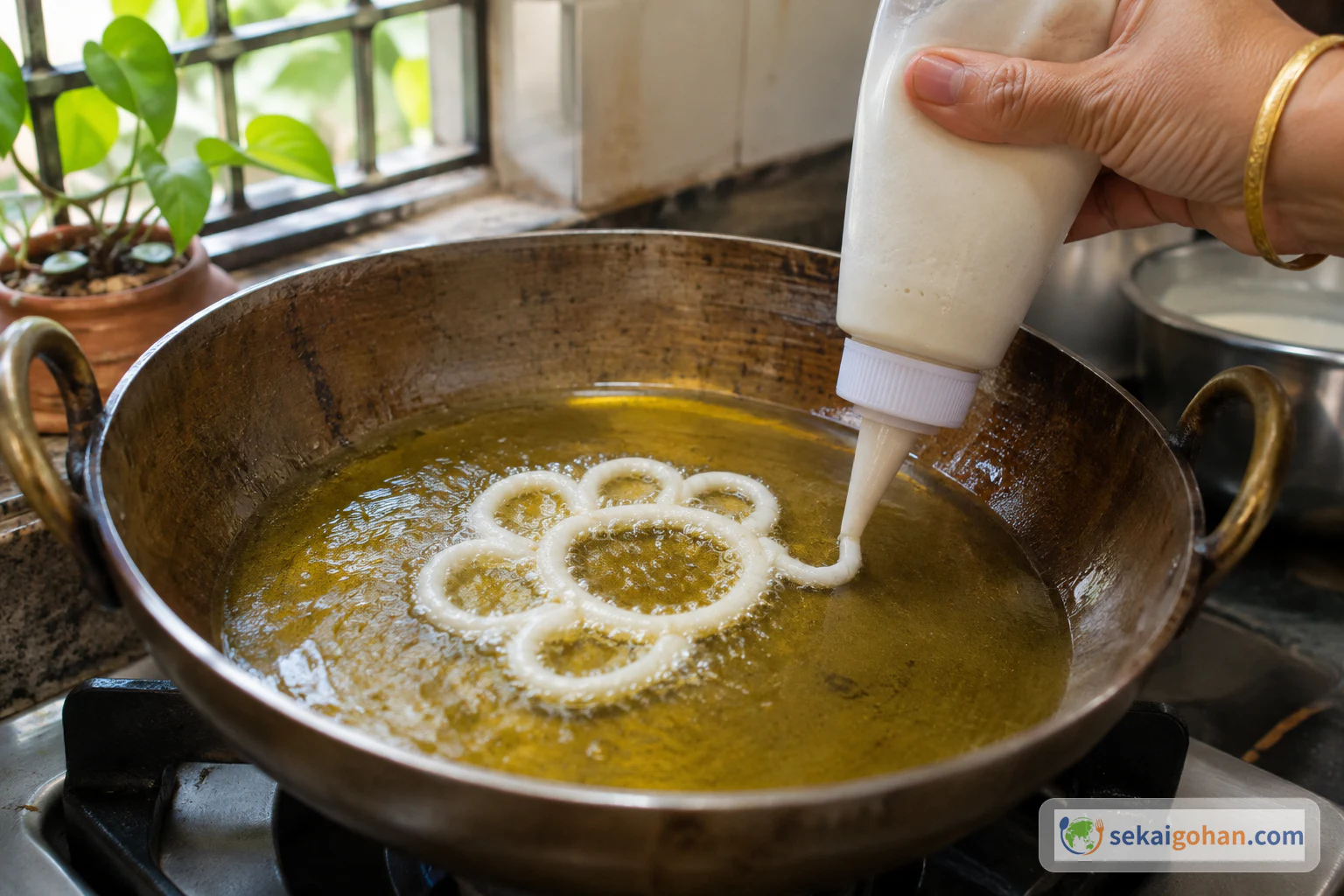
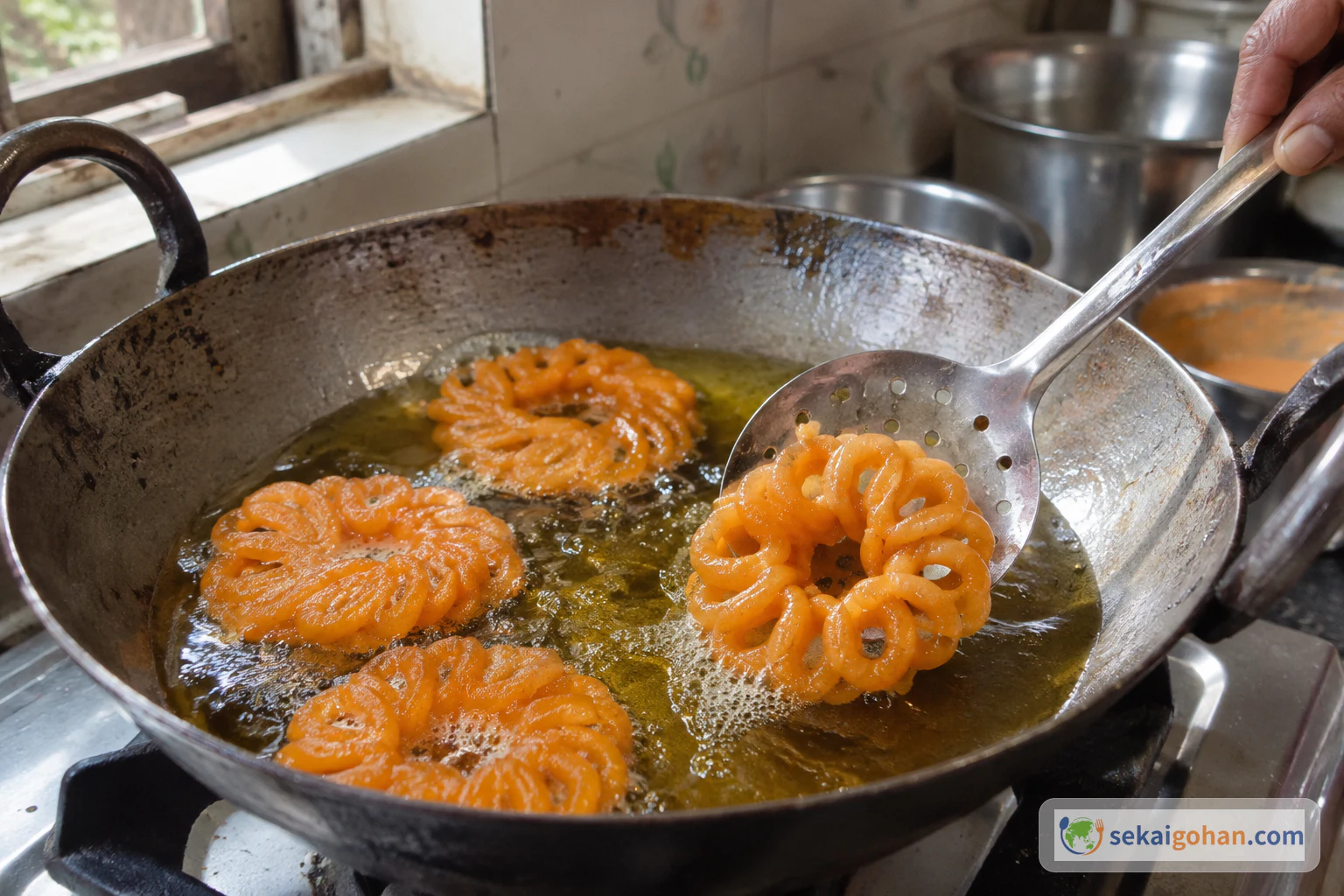
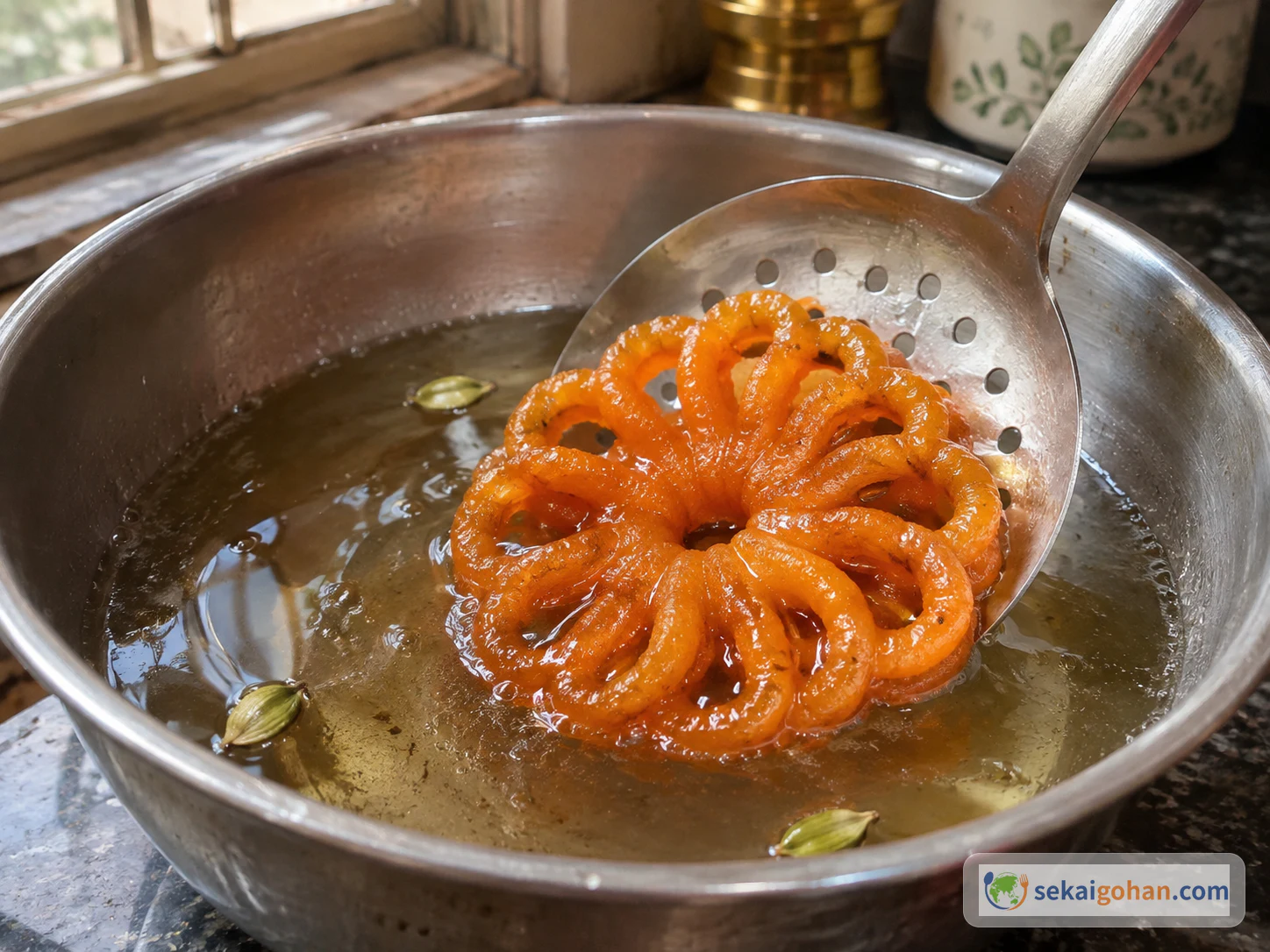
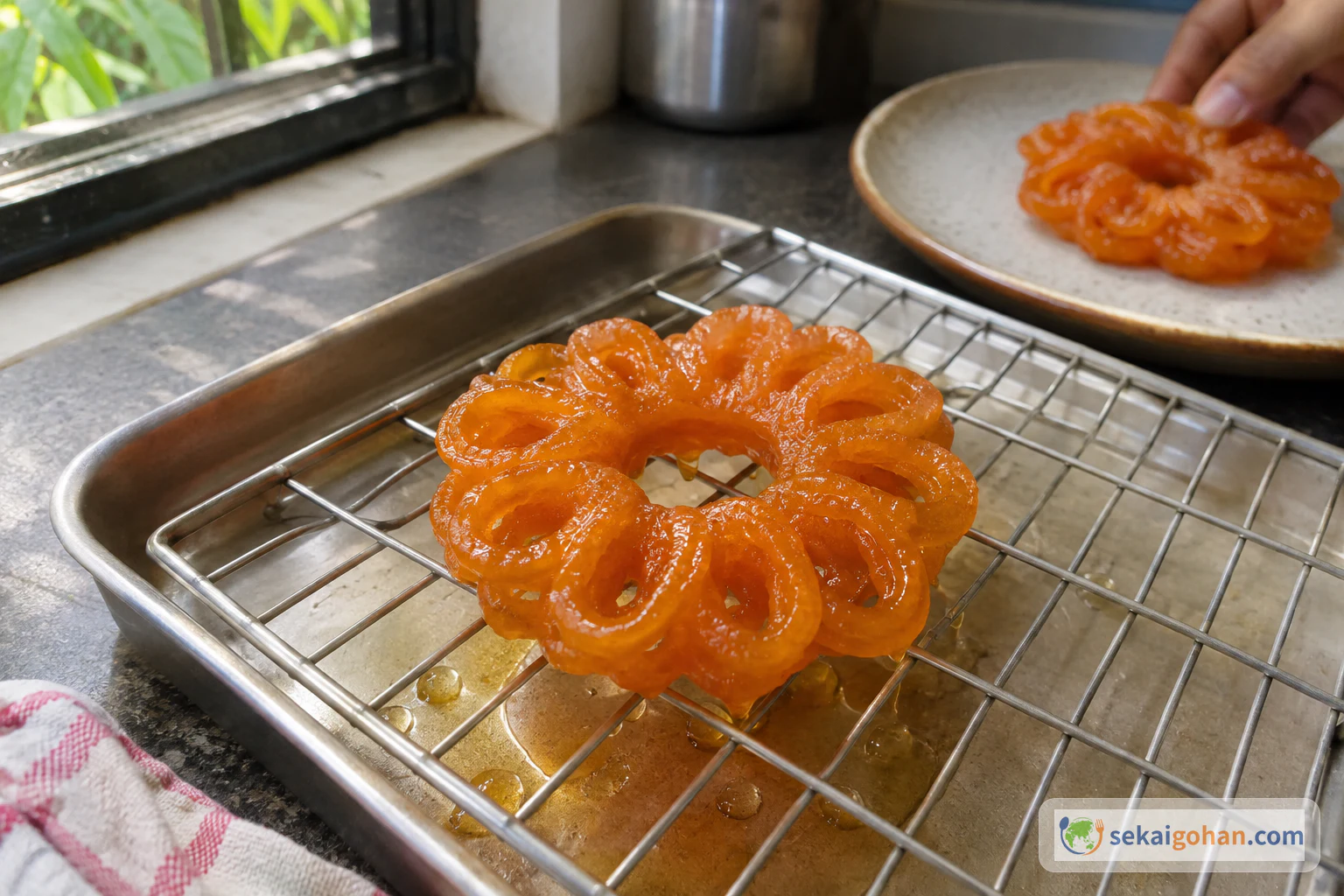
Soaked urad dal goes through the grinder with very little water and comes out as a thick paste. It is beaten until a drop floats in water, then piped straight into hot ghee as a central ring with small loops joined around it. Once both sides are crisp, the flower goes directly into hot syrup.
That is imarti (इमरती): a batter of split, skinned urad dal, piped, fried and soaked in syrup. The appeal is easy to see in the steps: the lightness of the beaten batter, the pattern of the piping, and the quick move from pan to syrup.
The recipe here is credited to Niru Gupta on NDTV Food. It lists 4 servings but gives no piece count, so we don't give one either.
Imarti and Jalebi Are Not the Same Sweet
Imarti and jalebi can look alike at a glance, but this article treats them as separate sweets. The GI Journal text on Jaunpur Imarti tells the two apart by shape and thickness. The imarti here is built on urad dal, piped in a thick line and formed into a ring with connected outer loops.
Names vary too. The NDTV page also uses the name Jaangiri. That is the page's own naming, not a universal rule, and it doesn't settle where the sweet comes from.
How This Version Differs from the Published Recipe
The long rest is left out. NDTV's recipe ferments the beaten batter for 3–4 hours in summer and longer in winter. One section of the GI Journal document describes three to five hours, and a recipe on ISKCON Desire Tree rests the batter for about 3 hours, longer in cold weather. We could not confirm the temperature, hygiene, endpoint or discard conditions for leaving this batter out that long in a home kitchen, so this article doesn't do it.
We are not saying fermentation is unnecessary or that long-rested versions are dangerous. Published methods simply differ:
- The Preparation section of the GI Journal's method of production goes from soaking to grinding, syrup and frying, with no rest.
- Cook with Manali makes the syrup while the batter rests for 15–20 minutes.
- The recipes on pulses.org and Beauty Without Cruelty India fry soon after grinding, with no fermentation step.
- Bless My Food beats the batter until it floats, and its steps include no fermentation stage.
Those recipes use other ingredients, such as rice, rice flour or cornstarch. None of these are added here, so this exact combination of amounts and method is untested.
The time limit is an editorial judgment. The CDC and FDA advise against leaving perishable food out for more than 2 hours, or 1 hour above 32°C (90°F). This is general guidance, not a test of urad dal batter, and we apply it here as a precaution. Staying within it does not guarantee safety.
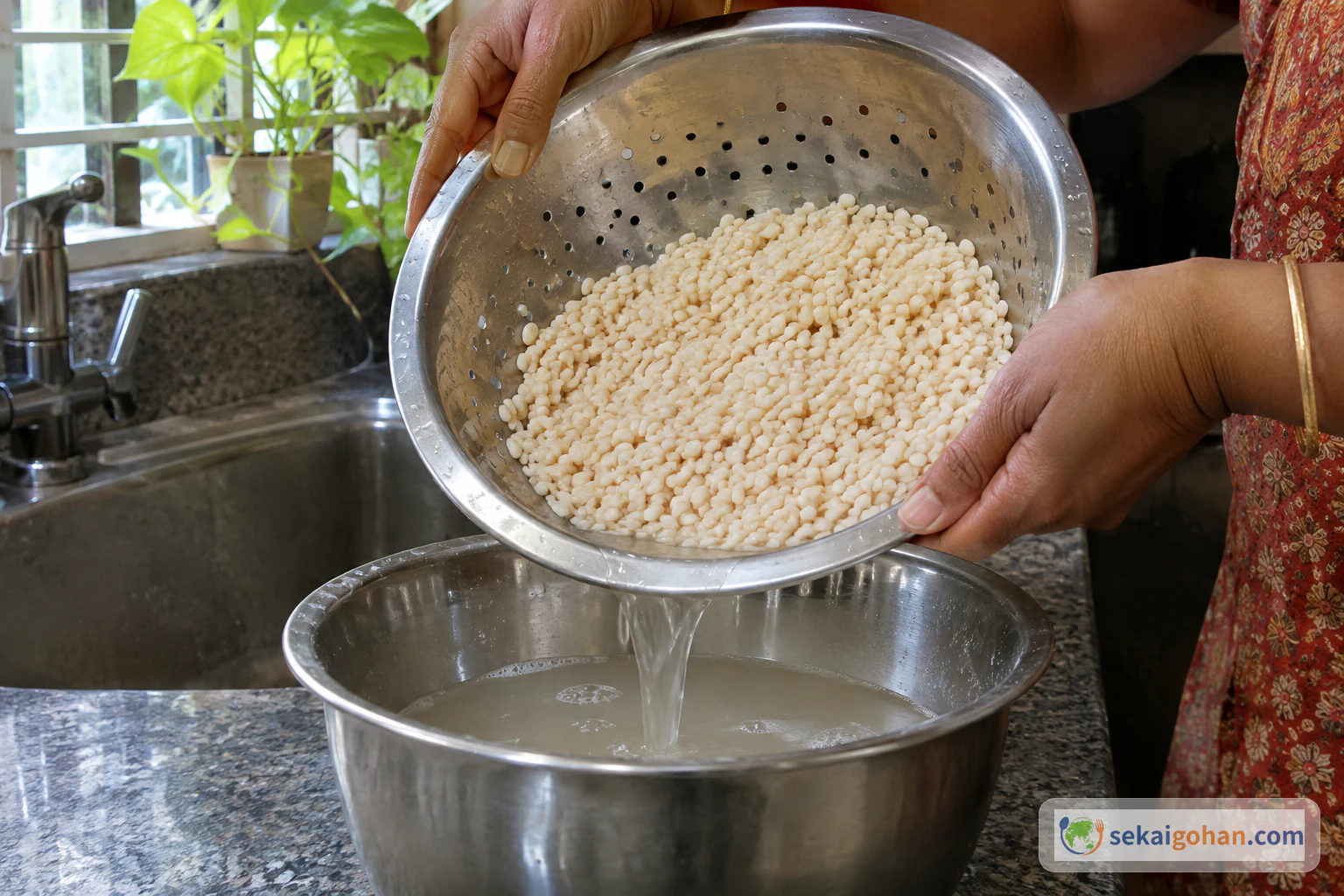
The overnight soak goes in the refrigerator. NDTV specifies the overnight soak. Covering and refrigerating it is our addition, based on University of Maine Extension's general advice for dried beans.
Some details are unstated. NDTV doesn't define the cup size, the grinding water, the amount or type of saffron color, the oil temperature or the frying time. It also doesn't say outright that the 2 cups of dal are measured dry. We read it that way, but that reading is unconfirmed. We keep cups as cups, with no gram conversions, and we don't repeat the page's listed prep and cook times because they don't fit an overnight soak and a long rest.
The dal is urad, not Bengal gram. The NDTV page's parenthetical calls dhuli urad dal "husked Bengal Gram". Tamil Nadu Agricultural University lists blackgram (Vigna mungo) and Bengal gram (Cicer arietinum) as different crops. We follow the name urad dal.
Ingredients: Urad Dal Batter and Cardamom Syrup
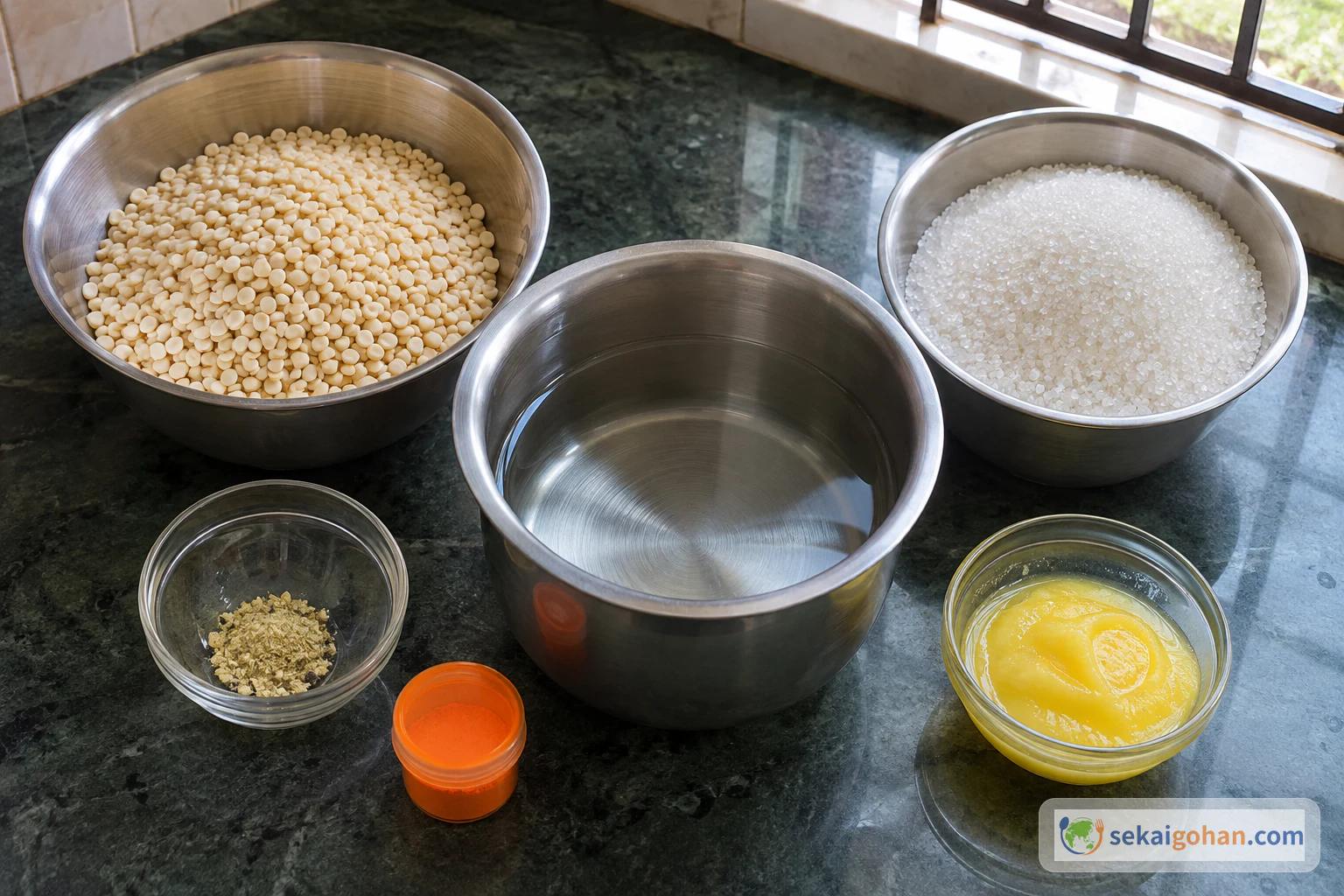
For 4 servings.
This recipe contains pulses. Ghee is made from milk, so this sweet is not dairy-free. Avoid cross-contact when cooking for anyone with an allergy.
Choosing and Substituting
- Urad dal: Look for split, skinned urad dal, sometimes sold as white urad dal or
urad dal white split. Don't use whole dal, and don't use chana dal, which is a different pulse. - Saffron color: This is a coloring, not saffron threads. Don't assume another red or orange food coloring is the same product. If you can't find it, leave it out and expect a different color.
- No added binders: Rice, cornstarch, lemon, rose essence and pistachios are not part of this recipe.
Equipment
- Measuring cups and a 1/2 tsp measure
- Bowl with a cover, for soaking
- Colander
- Blender or wet grinder
- Large bowl and whisk
- Small bowl of water, for the float test
- Saucepan and spoon, for the syrup
- Deep, heavy pan (kadhai) with a lid that fits
- Fine metal skimmer or slotted spoon, completely dry
- Nozzle bottle or heat-resistant cloth with a hole, for piping
- Rack over a tray, or a plate, for draining
Method: Soak, Beat, Boil, Pipe, Fry, Soak Again
Stay at the pan the whole time you are frying. Keep sleeves and anything flammable away from the heat, and keep children clear of the stove. Use only dry tools, and don't let water or wet hands reach the ghee. Never touch hot syrup with your fingers.
If the ghee catches fire, never use water or flour. If you can do so safely, cover the pan with a lid and turn off the heat. Leave it covered until it has cooled, and call emergency services.
When the Shape or Syrup Goes Wrong
These are points to review, based on the recipe's own checks rather than test batches.
| What you see | What to review | What to do |
|---|---|---|
| A drop of batter sinks | Too little beating, or too much grinding water | Keep beating and test again. Next time, add the grinding water more slowly |
| The rings come apart | Batter too thin, or an unsteady hand | Keep the batter thick and pipe in one spot on the surface. Don't add cornflour |
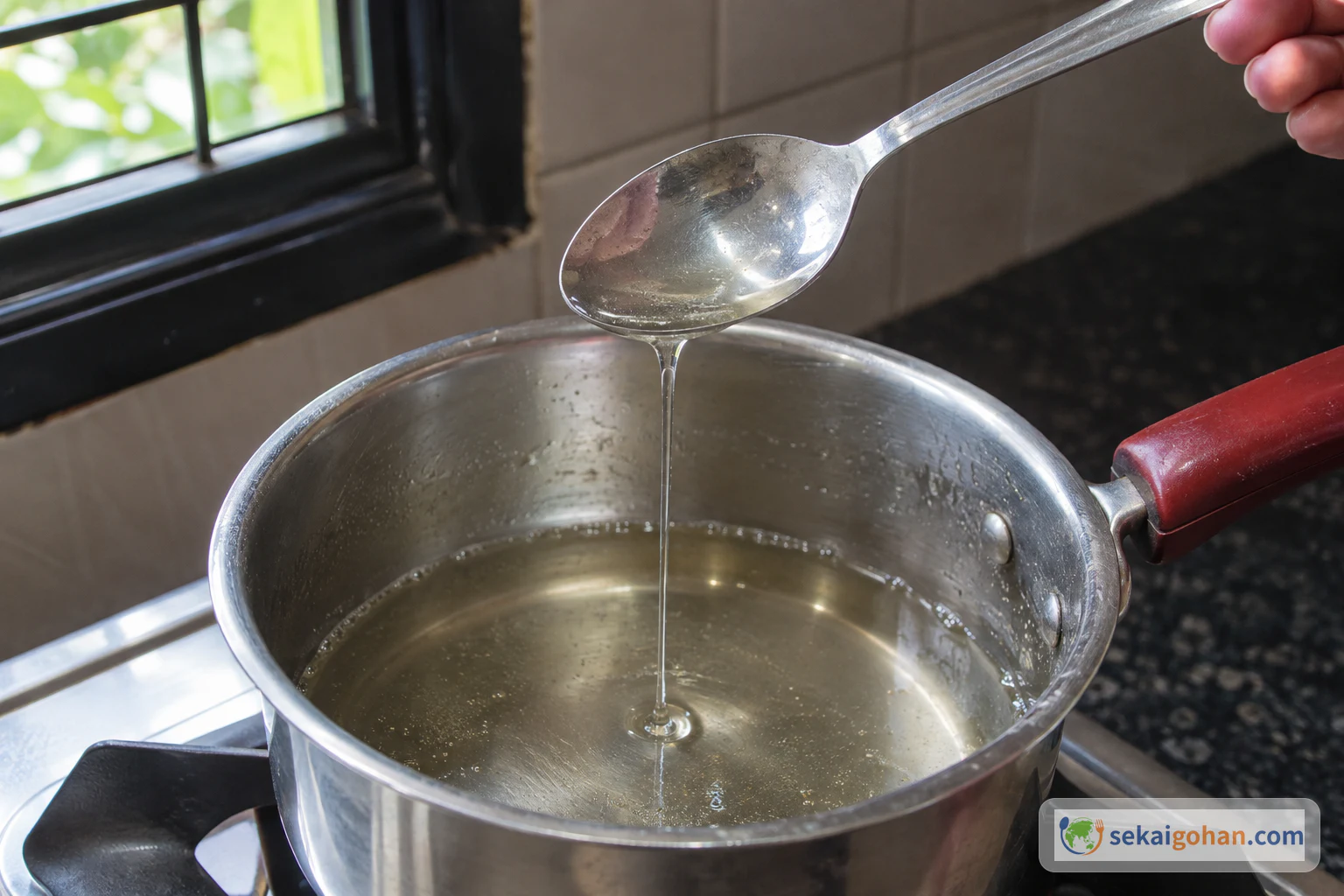
| The syrup doesn't form a thread | Not boiled far enough | Keep boiling and test again with a spoon. Don't add acid |
| The finish is sticky or hard | Soak time, or how crisp the piece was | Fry until both sides are crisp and soak for 3–4 minutes |
| The batter has passed the time limit | Time since grinding ended | Discard it |
Serving, Storage and Used Ghee
Serve the imarti once drained. The syrup may change the texture as it sits, but we have no reliable storage period or reheating method for the finished sweet, so we don't give one.
Used ghee needs care too. India's food safety authority, FSSAI, advises home cooks to avoid reusing frying fat for more frying. Blue-gray smoke, heavy persistent foam, a dark and cloudy look, or a change in thickness are all signs of deterioration. Let the fat cool before handling it and don't pour it down the drain. Small amounts can be soaked up in absorbent material and put in the trash.
Variations
None of these has been tested with this recipe.
- Omit the saffron color: This changes only the color. Don't guess at an amount of another coloring.
- Change the piping tool: A nozzle bottle and a cloth with a hole are both fine. Only the tool changes.
- Fry in neutral oil: This is an editorial variation, not the recipe as published. Expect a different aroma and a step away from the ghee-based sweet.
- Make a Jaunpur-style imarti with rice: Some parts of the GI document mention rice. Treat that as a separate recipe with its own amounts and order, and don't add rice to this one.
- Shorten the syrup soak: Other recipes use different soak times. We don't mix them in here.
Jaunpur Imarti and the Table
GI Journal No. 185 records Jaunpur Imarti as a regional product of Jaunpur district in Uttar Pradesh. It describes urad dal as the main ingredient, a flower-like ring pattern, and frying followed by soaking in syrup. This recipe is a general imarti, not a Jaunpur Imarti, and the two shouldn't be treated as one.
The document doesn't describe a single fixed formula. Some passages mention rice, while one list of raw materials names only urad dal, sugar, desi ghee, cardamom and water. Its accounts of color, soaking time and resting time also vary. Its historical claims aren't fully consistent either, and we haven't confirmed them against independent records, so we make no claims about the sweet's origin or any royal connection.
The same document places Jaunpur Imarti at festivals, weddings and rituals, as gifts, as bhog or prasad, and at iftar. That describes this regional document's account, not all of India. For more from the country, see India on Sekai Gohan.
Frequently Asked Questions
Is imarti the same as jalebi?
No. They can look similar, but the GI document on Jaunpur Imarti distinguishes them by shape and thickness. This recipe uses a thick urad dal batter piped into a flower.
Which dal should I buy?
Buy split, skinned urad dal, also called dhuli urad dal. Urad is black gram (Vigna mungo). NDTV's parenthetical says "Bengal Gram", but that is a different crop (Cicer arietinum), so don't use chana dal.
Doesn't the batter need to ferment?
Sources differ. NDTV, one section of the GI document and ISKCON Desire Tree all let the batter stand for hours, while other published methods fry after a short rest or none at all. We couldn't confirm safe conditions for a long rest at home, so this version rests only while the syrup is made. We don't claim that fermentation is unnecessary or that fermented versions are dangerous, and this version is untested.
Can I use vegetable oil instead of ghee?
The recipe uses ghee. Neutral oil would be an editorial change, and the aroma won't be the same. It also doesn't make the recipe a tested dairy-free version.
How many pieces does this make?
We don't know. NDTV lists 4 servings without a piece count, and the size of each piece depends on your piping.
Can I make imarti ahead?
We can't recommend a storage period because none of our references establishes one. Don't keep the batter for the next day, and don't reuse the frying ghee for more frying.
Sources
- NDTV Food, recipe credited to Niru Gupta, "Imarti Recipe." Ingredients, amounts, order of the main recipe, listed servings, and the fermentation step not adopted here. https://food.ndtv.com/recipe-imarti-219625
- GI Journal No. 185, "Jaunpur Imarti" application and method of production. Regional scope, shape, contrast with jalebi, serving occasions, internal differences, and method sections with and without a rest. https://www.upkrishivipran.in/GI/images/JaunpurImarti/JaunpurImarti.pdf
- ISKCON Desire Tree, credited to Bhaktin Malathy, "Imarti." A separate formula used to compare method and resting time; its amounts are not used here. https://food.iskcondesiretree.com/imarti/
- Food Safety and Standards Authority of India (FSSAI), "Guidance Note No. 06/2018: Handling and Disposal of Used Cooking Oil." Avoiding reuse, signs of deterioration, and disposal. https://www.fssai.gov.in/upload/uploadfiles/files/Guidance_Note_Used_Oil_12_11_2018.pdf
- U.S. Consumer Product Safety Commission, "Recipe for Safer Cooking." Attending the pan and handling a grease fire. https://www.cpsc.gov/safety-education/safety-guides/home-fire/recipe-safer-cooking
- Tamil Nadu Agricultural University, "Blackgram (Vigna mungo)." Identification of the pulse only. https://agritech.tnau.ac.in/CropProduction/Pulses/pulses_blackgram.html
- Tamil Nadu Agricultural University, "Bengalgram (Cicer arietinum)." Identification of the separate crop only. https://agritech.tnau.ac.in/agriculture/agri_seasonandvarieties_bengalgram.html
- Cook with Manali, "Imarti." A 15–20 minute rest during which the syrup is made; a different formula, used for method only. https://www.cookwithmanali.com/wprm_print/imarti
- pulses.org, "Imarti." A method with no fermentation or rest; a different formula, used for method only. https://pulses.org/recipes/recipe/74-imarti
- Beauty Without Cruelty India, "Imarti." A method with no fermentation step; a different formula, used for method only. https://bwcindia.org/Web/Recipes/Imarti.html
- Bless My Food by Payal, "How to Make Imarti Recipe." The float test and steps without a fermentation stage; a different formula, and not used as evidence that fermentation is unnecessary. https://blessmyfoodbypayal.com/how-to-make-imarti-recipe/
- University of Maine Cooperative Extension, "How to Store and Cook Dried Beans." General guidance on covered, refrigerated overnight soaking and discarding the soaking water. https://extension.umaine.edu/food-health/2021/09/02/how-to-store-and-cook-dried-beans/
- U.S. Centers for Disease Control and Prevention, "Preventing Food Poisoning." General time limits for perishable food at room temperature. https://www.cdc.gov/food-safety/prevention/index.html
- U.S. Food and Drug Administration, "Are You Storing Food Safely?" General time limits for food that needs refrigeration. https://www.fda.gov/consumers/consumer-updates/are-you-storing-food-safely