Indori Poha: Soft Rice Flakes Under a Crisp, Sharp Finish
Keep the flakes soft but whole, warm them only briefly on low heat, and add the raw and crisp toppings at the very end.
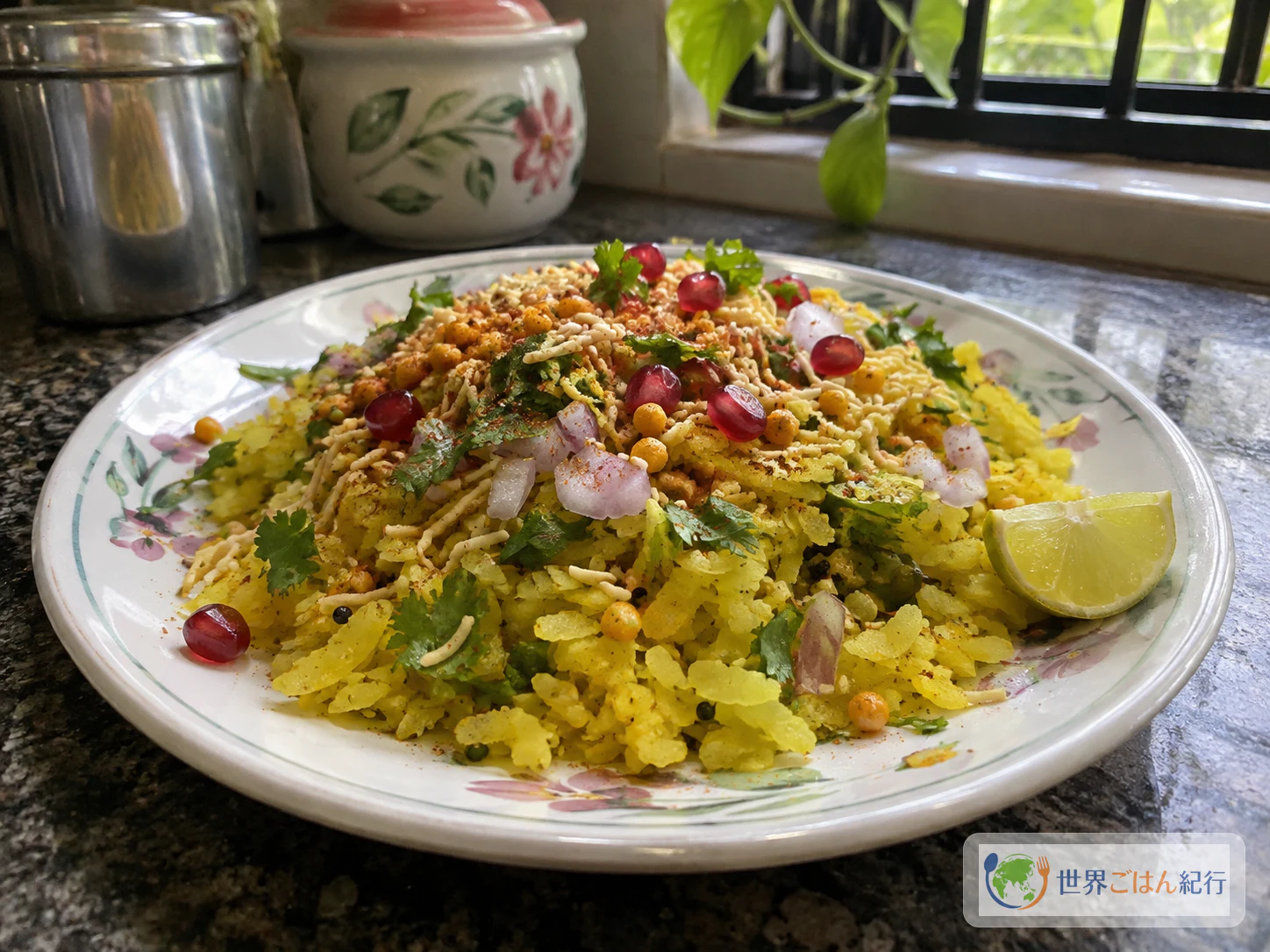
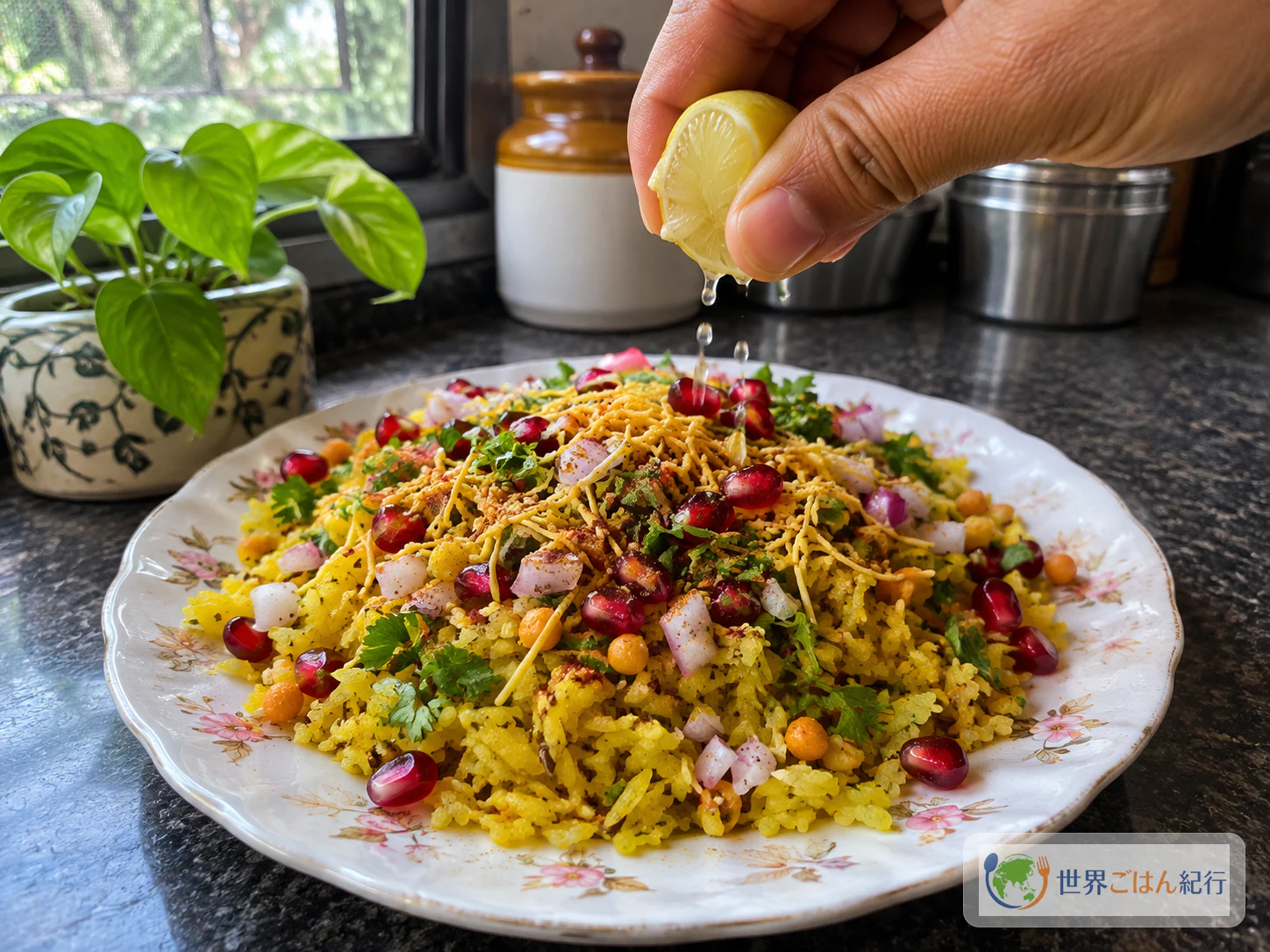
A mound of soft yellow rice flakes comes off the heat, then raw onion, coriander, jeeravan masala and salted sev go on top. In Indore, in the Indian state of Madhya Pradesh, the district administration presents poha as a local dish and describes poha with jalebi as a breakfast pairing. Its description brings together flattened rice, salted sev, jeeravan, fennel, curry leaves, onion and lemon juice.
The appeal is in the contrast. Fennel gives the warm flakes a sweet aroma, while the onion stays sharp and the sev and boondi stay crunchy, so most of the work is keeping those layers apart until the plate is ready. For more dishes from the country, see the India page.
The Version Used Here
This recipe follows one home version by Dassana Amit of Dassana's Veg Recipes. The author explains that it was adjusted after eating the dish in Indore and consulting a recipe video, so it is a clear, cookable example rather than the single traditional standard. Sekai Gohan has not kitchen-tested this recipe.
A few choices shape this version:
- Masala boondi is included. The base recipe uses 1/4 cup. Leaving it out or changing it is treated as a variation.
- Pomegranate is included. It is optional in Dassana Amit's recipe, and we chose to keep it.
- Curry leaves are left out. Dassana Amit's page allows them as an option and the Indore district description mentions them, but they are not part of this base set.
- Lemon is used in small amounts. The step-by-step preparation list on Dassana Amit's page has 1 lemon and the finish uses some juice or a few drops. The recipe card's ingredient list omits lemon. We follow the steps, and you need not squeeze the whole lemon.
Ingredients: 3 Servings
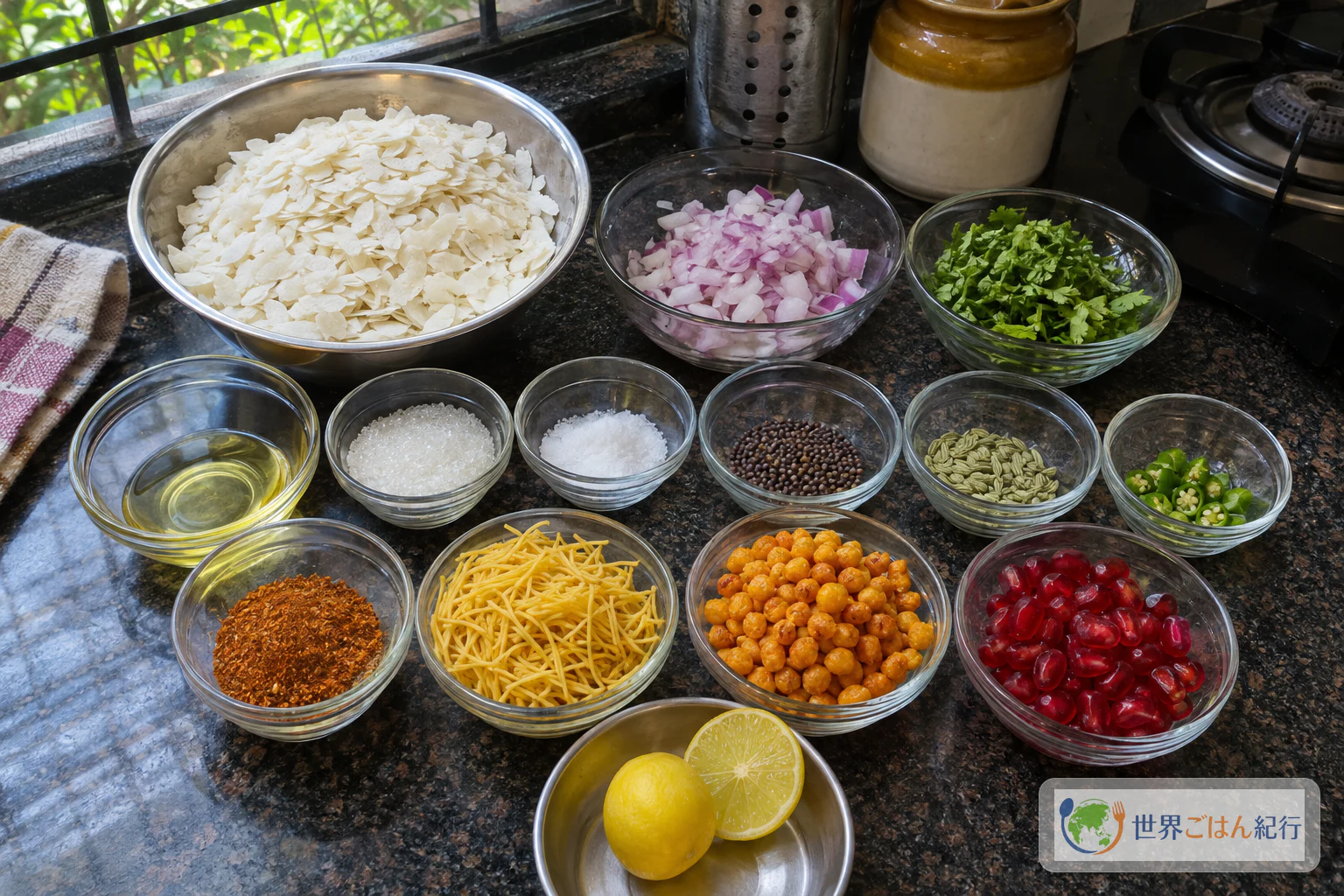
Choosing the Flakes, Sev and Jeeravan
Poha: Look for thick or medium-thick flattened rice. Thin poha is not part of this version.
Sev and boondi: Look for Indori or Ratlami sev and masala boondi. Any other sev you use will change the heat and saltiness of the plate, so adjust the salt to match.
Jeeravan masala: This is the most specialized item on the list. If you cannot find it, mix the blend below. It is a stand-in and not a traditional recipe for jeeravan.
| Substitute blend | Amount |
|---|---|
| Coriander powder | 1/4 tsp |
| Cumin powder | 1/4 tsp |
| Garam masala | 1/4 tsp |
| Red chili powder | 1/4 tsp |
| Black salt | 1–2 pinches |
| Dry ginger powder | 1–2 pinches |
Ingredients in store-bought sev, boondi and jeeravan vary by product. Read the ingredient and allergen labels on the packs you actually buy.
Equipment
- Fine-mesh strainer or colander
- Mixing bowl
- Heavy kadai or frying pan with a lid
- Flat spatula
Hard, Broken or Soggy: What to Adjust
| Problem | Likely cause | What to do |
|---|---|---|
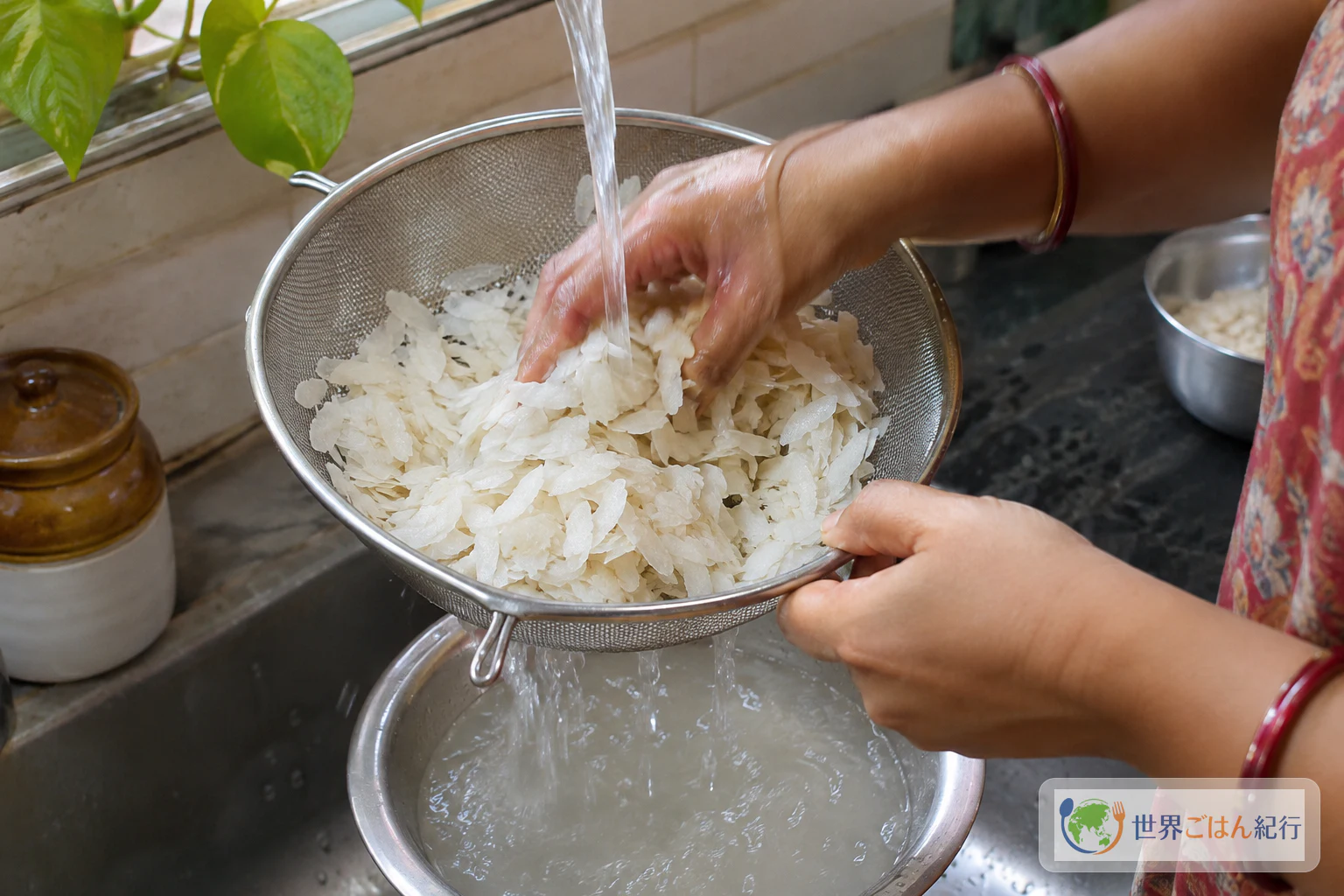
| Flakes are still hard after rinsing | Not enough water reached them | Sprinkle over a few drops of water, rest for a few minutes in the strainer and check again |
| Flakes are breaking down after rinsing | Too much water or handling | Next time use a light stream of water and check sooner, without rubbing |
| Flakes break in the pan | Heat too high or too much stirring | Stay on low heat and fold lightly |
| Sev or boondi has gone soft | Added too early or sitting in lemon juice | Add them just before serving and keep the lemon to a little juice |
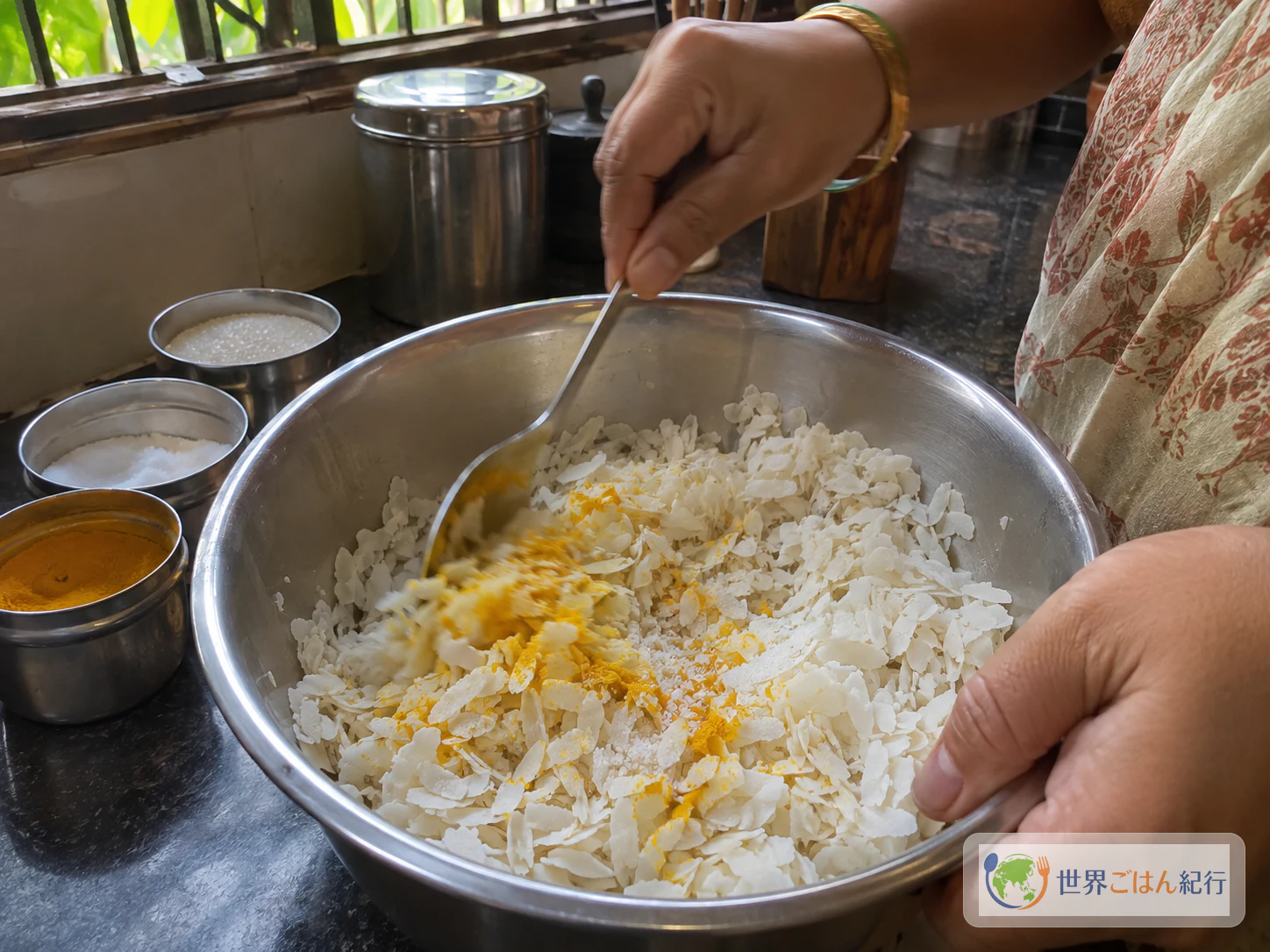
| The plate tastes too salty | Salty toppings on top of the salted flakes | Salt the flakes lightly next time, allowing for the jeeravan and sev |
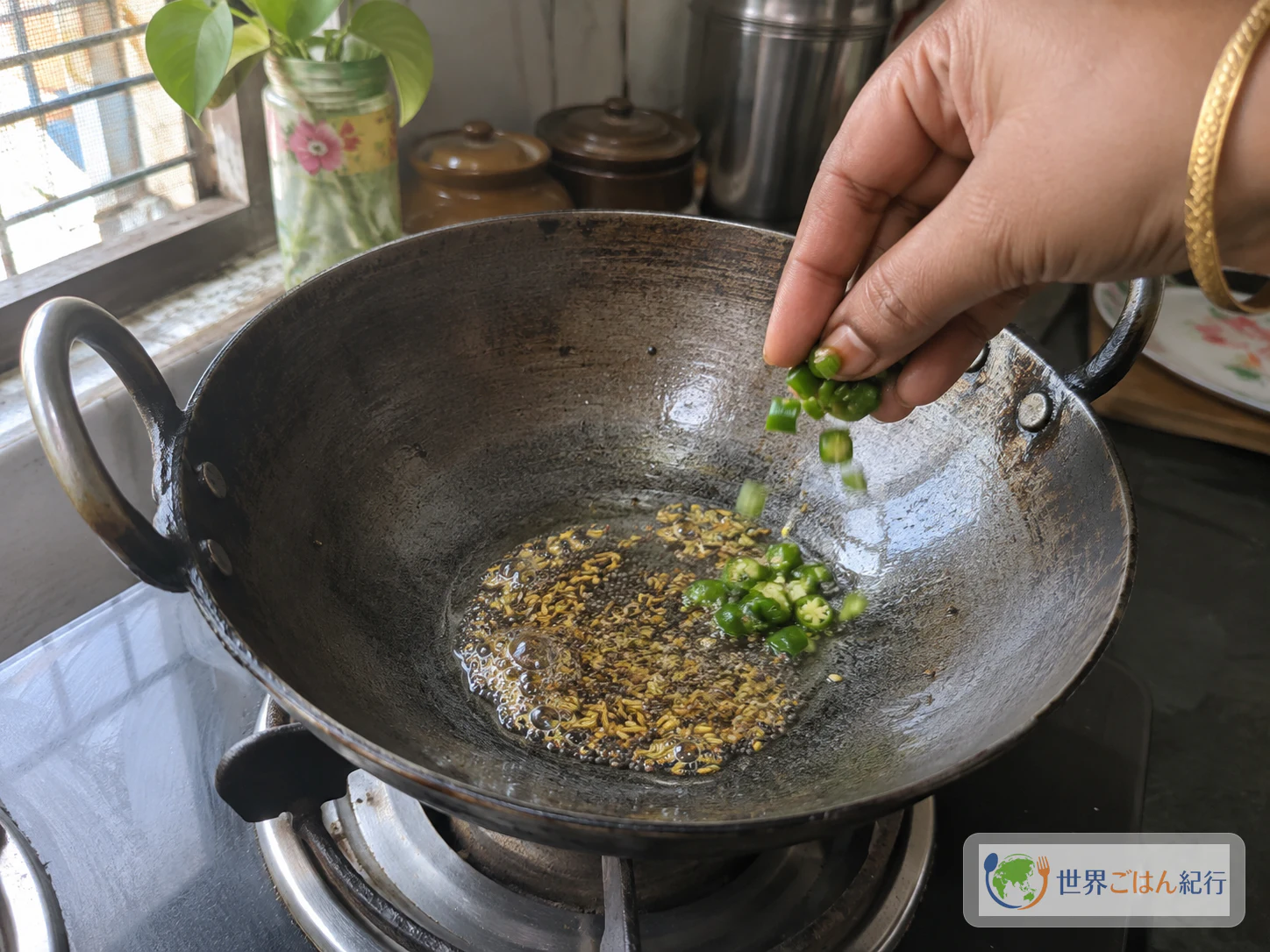
| The plate is too spicy | Too much jeeravan or chili | Start with a smaller amount of jeeravan, or omit the green chili next time |
Serving: Straight to the Table
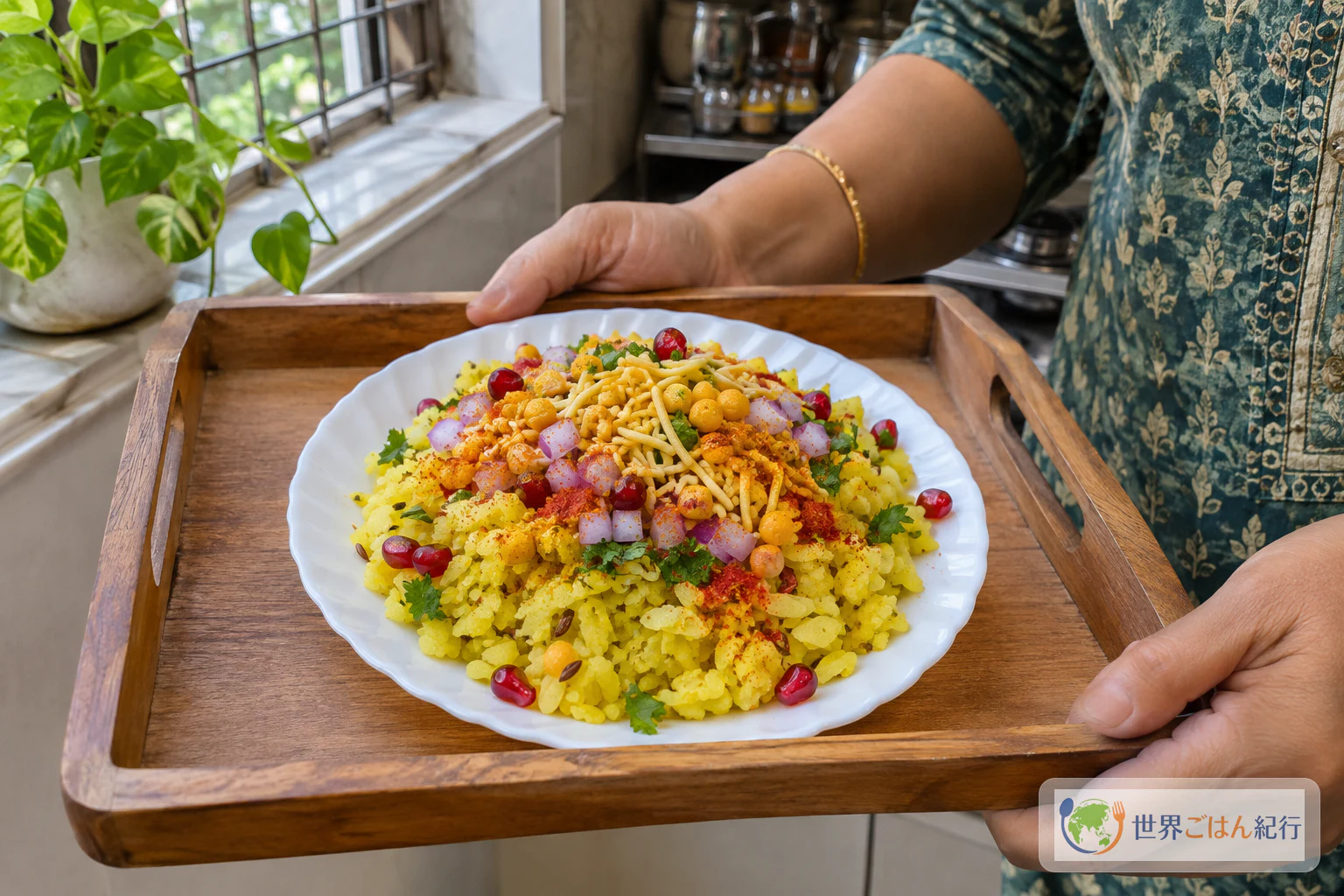
Eat Indori poha soon after the toppings go on, while the flakes are warm and the sev and boondi are crisp. If you want to follow the Indore breakfast pairing, serve jalebi as a separate dish. Its sweetness sits beside the salt and spice of the poha rather than being mixed into it.
Variations
- Less heat: Leave out the green chili.
- Without pomegranate: Omit the arils.
- With curry leaves: Add them to the tempering. They are an extra here, so there is no set amount.
- Different boondi: Leave out the masala boondi or use another boondi. The plate will lose or change one layer of crunch and spice.
- Without jeeravan masala: Use the substitute blend above, and keep in mind that it is not a traditional mix.
Indore's Poha and Other Versions
The Indore district administration's page establishes poha as a dish of the region and poha with jalebi as a breakfast combination. It does not give a date of origin or an inventor, and it does not show that every household cooks one fixed recipe, so we make no such claims here.
Other recipes under the same name can differ widely. A GIZ booklet of recipes for children under 6 includes an Indori poha for 4 servings with 150 g/2.5 cups of poha, curry leaves, peas or raw peanuts and optional raisins, heated for 5–7 minutes after the poha goes in. It was written for a different purpose, with different ingredients and heating, so none of it is mixed into the recipe above.
Frequently Asked Questions
Which poha should I use?
Use thick or medium-thick poha, as Dassana Amit's recipe specifies. Thin poha is not part of this version.
What if I rinse the poha too much?
The flakes can lose their shape, and over-rinsed flakes may not hold up in the pan. Next time, use a light stream of water and check them sooner. It is easier to correct flakes that are too hard, since a few drops of water and a few minutes of rest can soften them.
What can I use instead of jeeravan masala?
Dassana Amit's page suggests the blend of coriander powder, cumin powder, garam masala, red chili powder, black salt and dry ginger powder listed earlier in this article. It is a practical substitute, not a traditional jeeravan recipe.
How do I keep the sev crisp?
Add sev just before serving and do not stir it into the poha. Lemon juice can make it soggy, so squeeze over only a little and bring the plate to the table right away.
Is jalebi mixed into the poha?
No. Jalebi is a separate dish served alongside poha in the Indore breakfast pairing.
How long does it take?
Dassana Amit's recipe card lists 10 minutes of preparation and 5 minutes of cooking, for 15 minutes in total. It does not say whether any resting time for the rinsed flakes is included, so treat this as a rough guide and go by the texture of the flakes.
Can I make it ahead?
We don't recommend making it ahead or reheating it. The recipes used here give no storage time or reheating method, so this article does not offer any. Serve it soon after cooking. If you do have leftovers, follow your local food-safety authority's guidance.
What to Remember
Keep the flakes whole, steam them on low heat for just 1–2 minutes and leave the toppings until the poha is on the plate. The contrast between soft flakes, sharp onion and crisp sev is what makes this plate work.
Sources
- Dassana Amit, "Indori Poha (Indore Street Food)," Dassana's Veg Recipes. The main recipe: ingredients, amounts, steps, texture cues, optional items, substitute jeeravan blend and the author's account of how this version was developed. It is an author-developed recipe and does not establish a single traditional standard. https://www.vegrecipesofindia.com/indori-poha-recipe/
- District Administration, Indore, Government of Madhya Pradesh / NIC, "Poha Jalebi." Regional context: poha as a local dish of Indore, the ingredients it describes, and poha with jalebi as a breakfast pairing. It gives no amounts or cooking steps. https://indore.nic.in/en/culinary-delight/poha-jalebi/
- Deutsche Gesellschaft für Internationale Zusammenarbeit (GIZ), "Recipes for Children Under 6 Years of Age: India Nutritious Local Cuisine," recipe 21, Indori Poha. Used only to compare a separate version with different ingredients and heating. https://www.giz.de/de/downloads/giz2023-en-india-nutritious-local-cuisine.pdf