
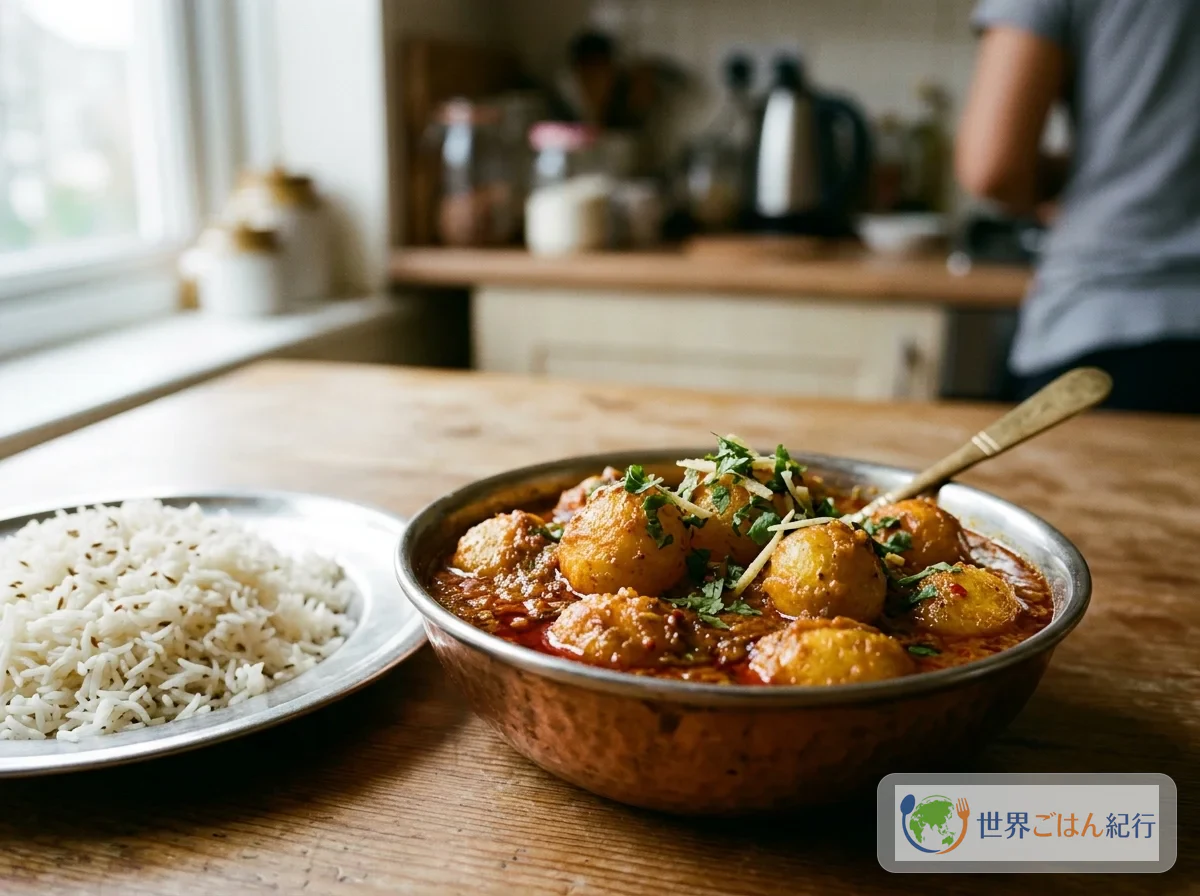
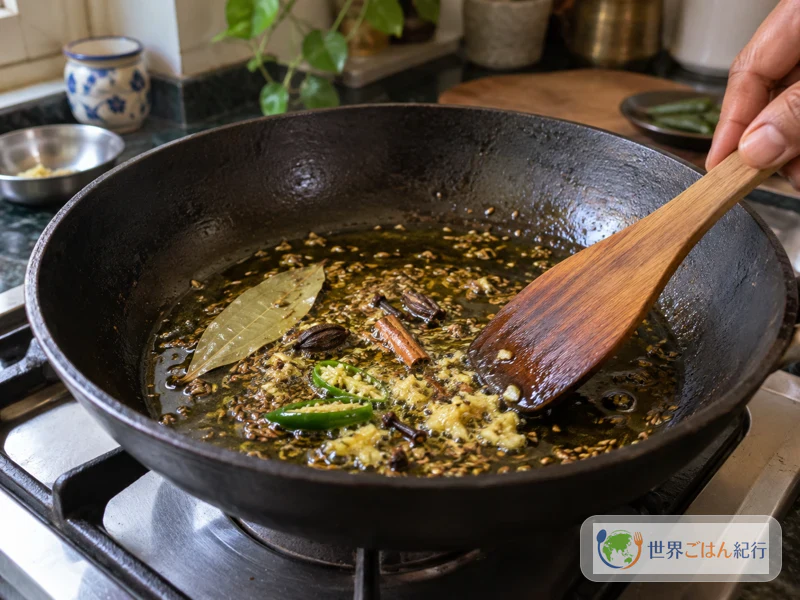
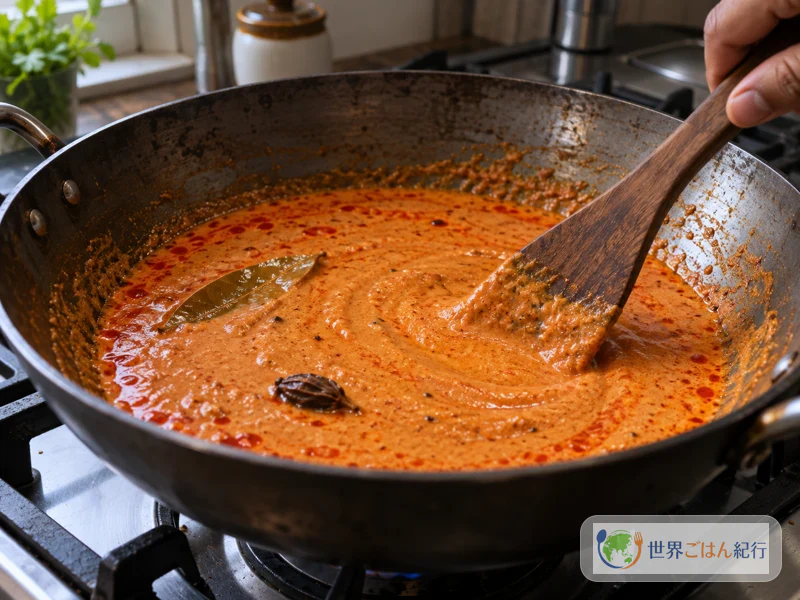
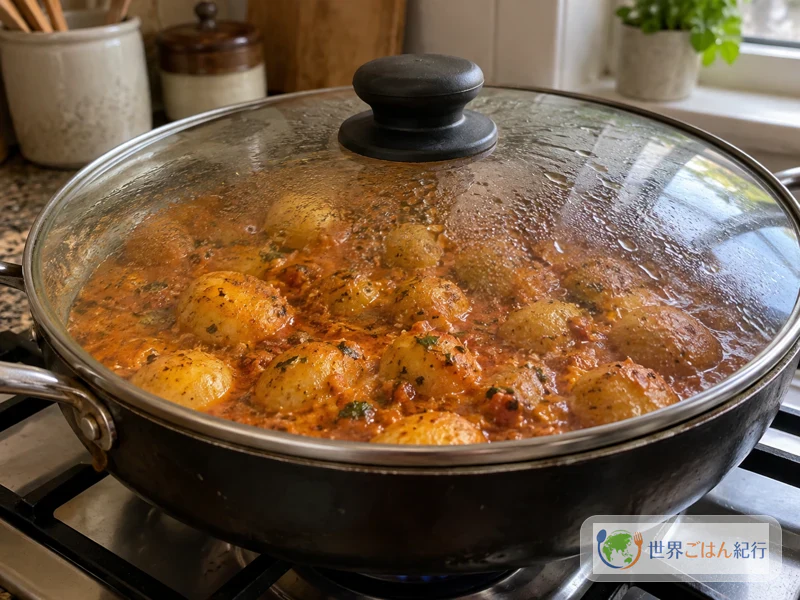
In the pot, small potatoes are wrapped in a sauce of blazing red. And yet in the mouth it is surprisingly not hot. What stays on the tongue is the soft sourness of yogurt, the sweet scent of fennel and the gentle warmth of dried ginger. There is no onion, no garlic, no tomato. This is Kashmiri dum aloo, a potato dish handed down in the homes of the Hindu Kashmiri Pandits in Kashmir, in the Himalayan valley of the far north of India.
Red but not hot: the kitchen of the Kashmir valley
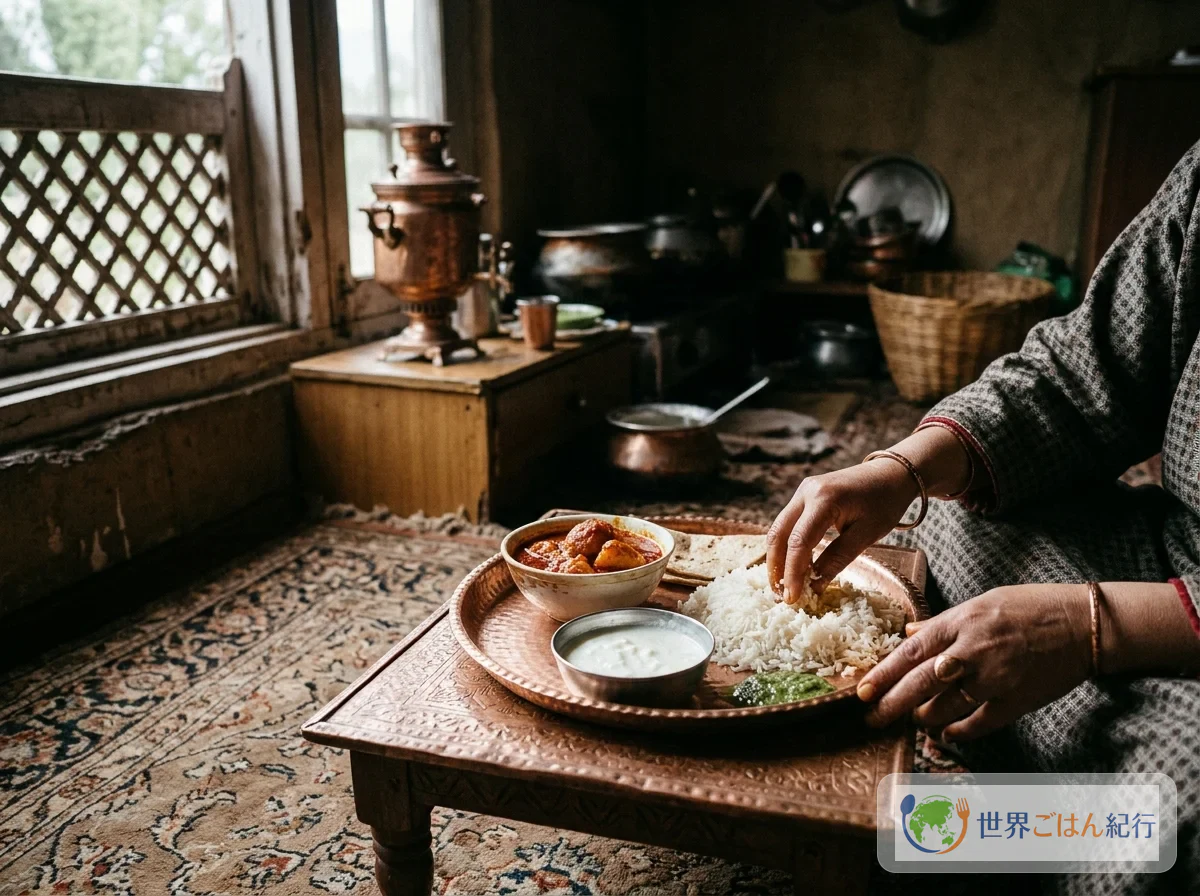
Kashmiri cooking falls into several broad traditions. Wazwan, known as a Muslim banquet cuisine, and the Dogra cooking of the Jammu region use plenty of onion and tomato and a wide range of spices. In contrast, the cooking of the Pandits, the Kashmiri Brahmins, is distinguished by using no onion or garlic. The Indian food blog Essence of Life presents Pandit cooking as the least known tradition within Kashmiri cuisine.
In place of onion and garlic, the foundations of aroma in the Pandit kitchen are turmeric, Kashmiri chili, asafoetida (hing), dried ginger powder and fennel. Add plenty of yogurt, and eating it with rice, especially basmati, is the basis of the Pandit table.
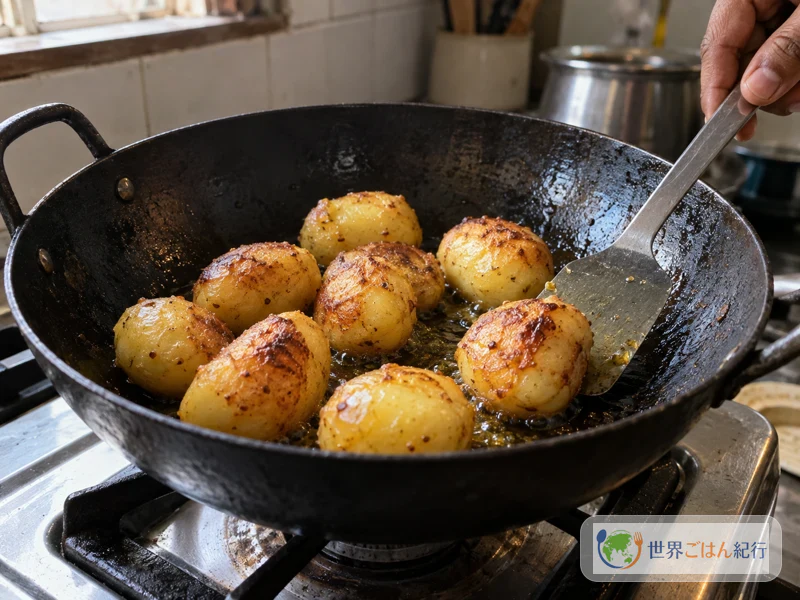
"Dum" in the dish's name refers to the cooking method of covering the pot and cooking slowly in its trapped steam. "Aloo" is potato. Small potatoes that have been fried are braised with the sauce under a lid so that flavor soaks all the way in.
The red color of dum aloo comes from Kashmiri chili powder. It is a chili with a vivid color and very gentle heat. In some households, the root of a plant called ratanjot is steeped in the oil to give an even deeper red. The author at Essence of Life also advises against coloring it with red food dye.
What to know before you cook it at home
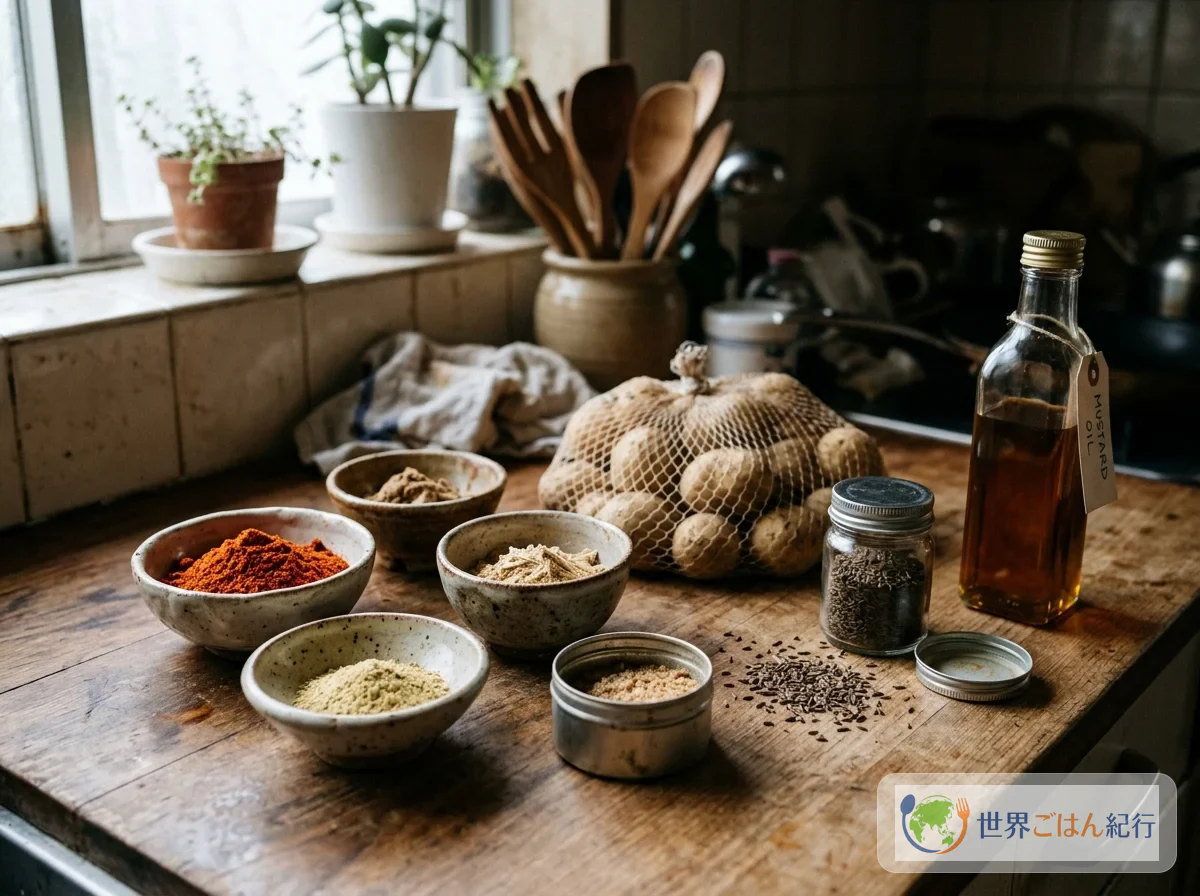
The method in this article is based on the onion-and-garlic-free dum aloo from the cooking blog Binjal's VEG Kitchen, adjusted for home cooks by leaving out the cashew paste and mixed spices so that fennel, dried ginger and asafoetida, the pillars of Pandit aroma, come forward. The potatoes that suit best are small new potatoes that can be eaten in one bite. For large potatoes, peel and cut into 4 cm cubes.
Of the spices, the three you want to get are Kashmiri chili powder, fennel powder and asafoetida. All are available at Indian groceries or online. Asafoetida is a powdered resin with an aroma similar to onion and garlic, and just a pinch gives the whole dish a depth like umami. Ginger powder (dried ginger) can be found at the supermarket spice aisle.
Asafoetida is extremely pungent, and opening the bag alone spreads the smell through the kitchen. After using it, close it tightly and store it in an airtight container separate from the other spices. When it goes into hot oil, the harsh smell settles and turns into a gentle aroma.
For the yogurt, use fresh plain yogurt that isn't very sour. If you only have yogurt that has turned sour, pour off the liquid that has floated to the top before using it, and the sauce won't become too sharp.
Ingredients (serves 4)
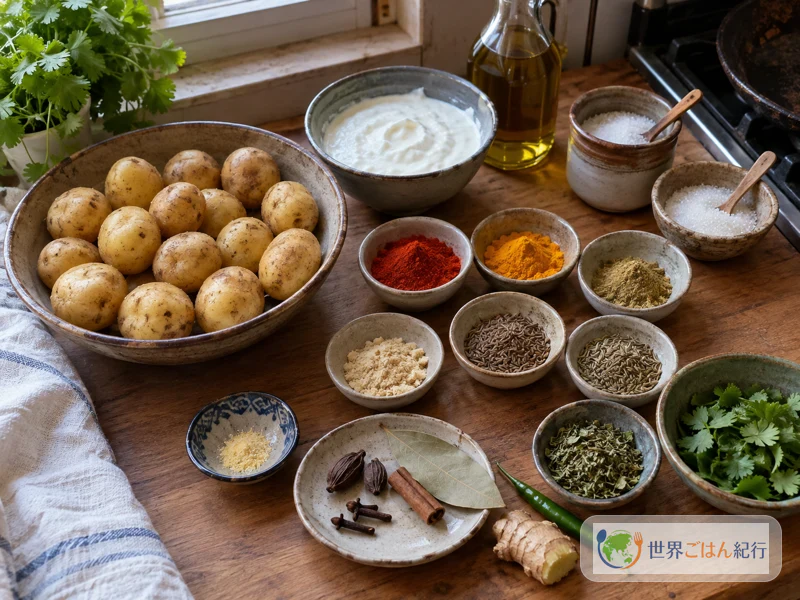
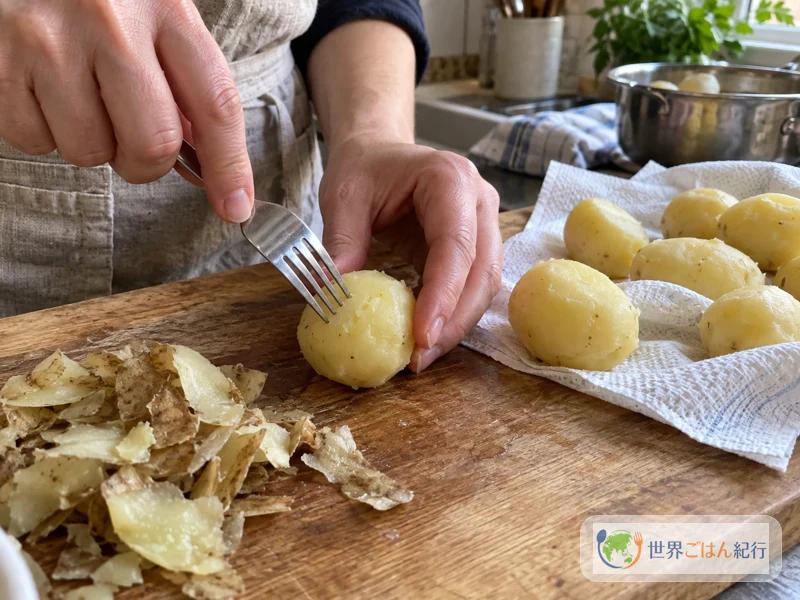
Store-bought asafoetida powder is often mixed with wheat flour to make it easier to handle, so people with a wheat allergy should check the ingredients. Mustard oil is an oil from a seed of the same Brassicaceae family as mustard, and yogurt is a dairy product. Putting boiled potatoes into hot oil makes it spatter, so wipe them dry before adding.
How to make Kashmiri dum aloo
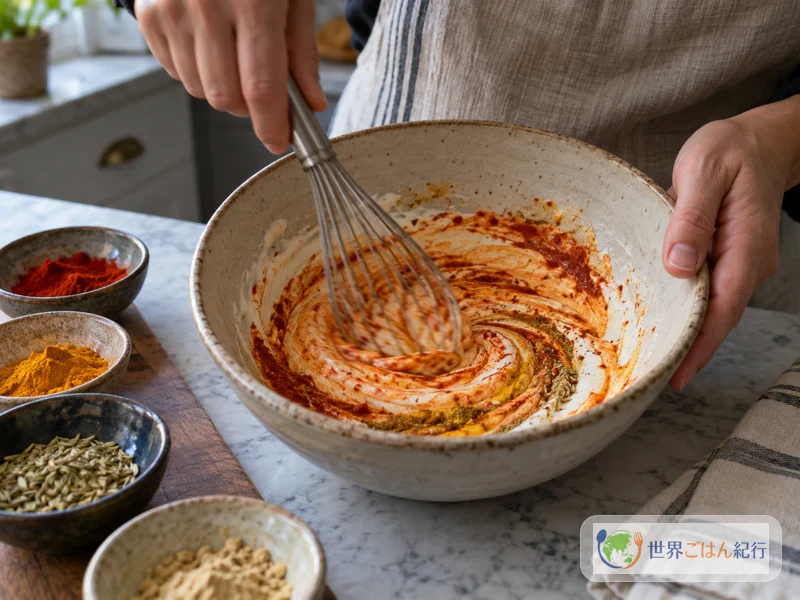
Including the time to boil the potatoes, it takes about 1 hour in all. Mixing the yogurt sauce while the potatoes boil speeds things along.
If yogurt is heated quickly over high heat, it splits into curds. The trick is to lower the heat to its lowest, add it little by little, and return the heat after it is all mixed in. Even if it splits a little, keep stirring and cook until the oil seeps out, and the flavor is fine.
Putting boiled potatoes into hot mustard oil makes the oil spatter easily. Wipe the potatoes well with paper towels and add them gently, keeping your face away from the pan.
With basmati rice and a bowl of yogurt
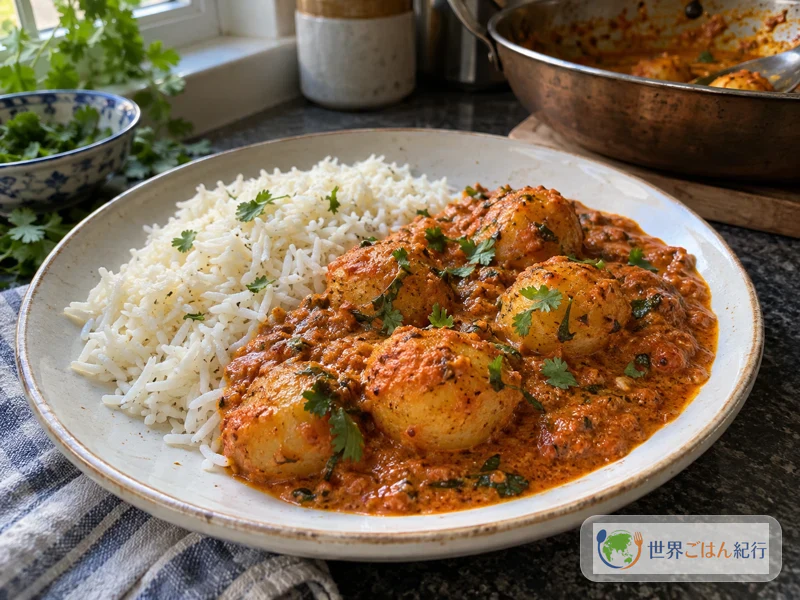
In a Pandit home, Kashmiri dum aloo is eaten with basmati rice. Mix the red sauce into the rice and break up the potatoes as you eat, and the aroma of fennel and dried ginger spreads in your mouth. Because the heat is mild, even people who dislike spicy food should find it easy to eat. It is also good with chapati or roti.
Among Kashmiri dishes, set beside rogan josh (in Japanese), lamb simmered in red, it makes a table of Kashmir's red dishes. Among Indian potato dishes, comparing it with the northern Indian home dish aloo gobi (in Japanese) shows clearly how spices are used differently.
It is said that the Kashmiri Pandit cooking's avoidance of onion and garlic stems from food rules from the Vedic era. Asafoetida, which they use in their place, has long been a prized spice in India in the kitchens of people who do not eat onion or garlic.
Variations
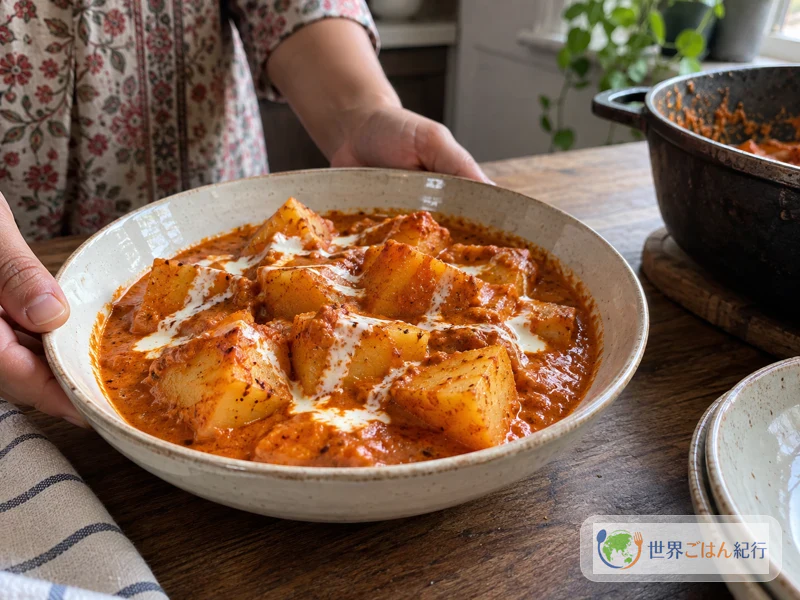
In seasons without baby potatoes, you can cut ordinary potatoes into 4 cm cubes. In that case shorten the boiling to 8–10 minutes and roll them gently while pan-frying so the corners don't break. As in Binjal's VEG Kitchen's method, drizzling about 2 tbsp cream over the finish gives a mellow, restaurant-style flavor.
If you like it hot, raising the Kashmiri chili powder to 3 tsp makes it no more than slightly hotter while deepening the color further. Using 2 green chilies adds a solid heat. Using plant-based yogurt in place of yogurt makes it a dairy-free dish.
FAQ
Can't I make it without asafoetida?
You can make it without, but in this dish, which uses no onion or garlic, asafoetida is the base of the aroma. Leaving it out makes the flavor a bit lacking. Try to get some if you can.
Is it really not hot?
Kashmiri chili powder has a vivid color and very gentle heat. Even 2 tsp gives only a mild tingle. The same amount of crushed red pepper or ordinary chili powder would make it fiery, so if substituting, use paprika.
Can I make it ahead?
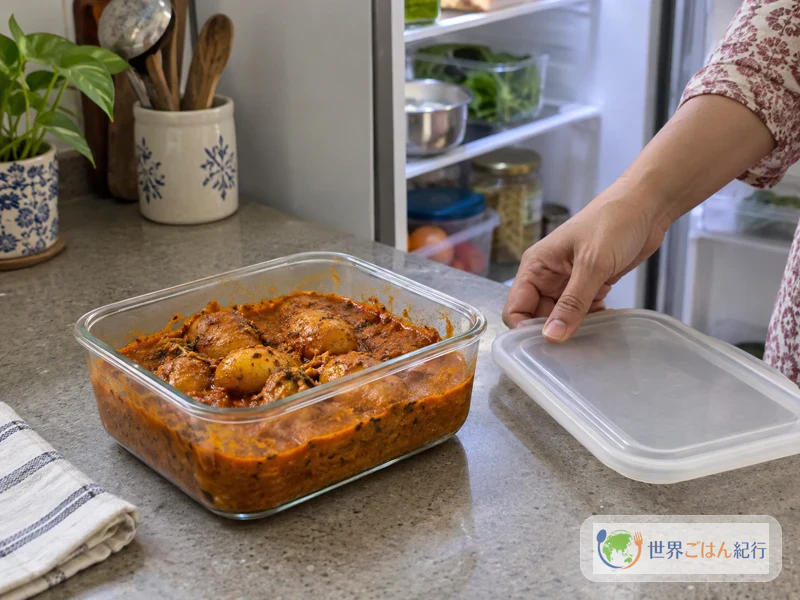
Once cooled slightly, put it in a storage container and refrigerate, and finish it within 2 days. As time passes the potatoes absorb the sauce and the flavors blend further. When reheating, add a little water and warm slowly over low heat.
The yogurt split.
The cause is heat that was too high or yogurt added all at once. The flavor doesn't change, so keep stirring and cook until the oil seeps out. If the look bothers you, turn off the heat and whisk quickly, which brings back some smoothness.
Sources
- Binjal Pandya, "Kashmiri Dum Aloo," Binjal's VEG Kitchen. Accessed and checked 22 October 2026. https://binjalsvegkitchen.com/wprm_print/kashmiri-dum-aloo
- Essence of Life, "Kashmiri Dum Aloo," June 2017. Accessed and checked 22 October 2026. https://essenceoflife-food.com/2017/06/kashmiri-dum-aloo.html


