Kashmiri Pulao: Saffron Rice Crowned with Fried Onion, Nuts and Fresh Fruit
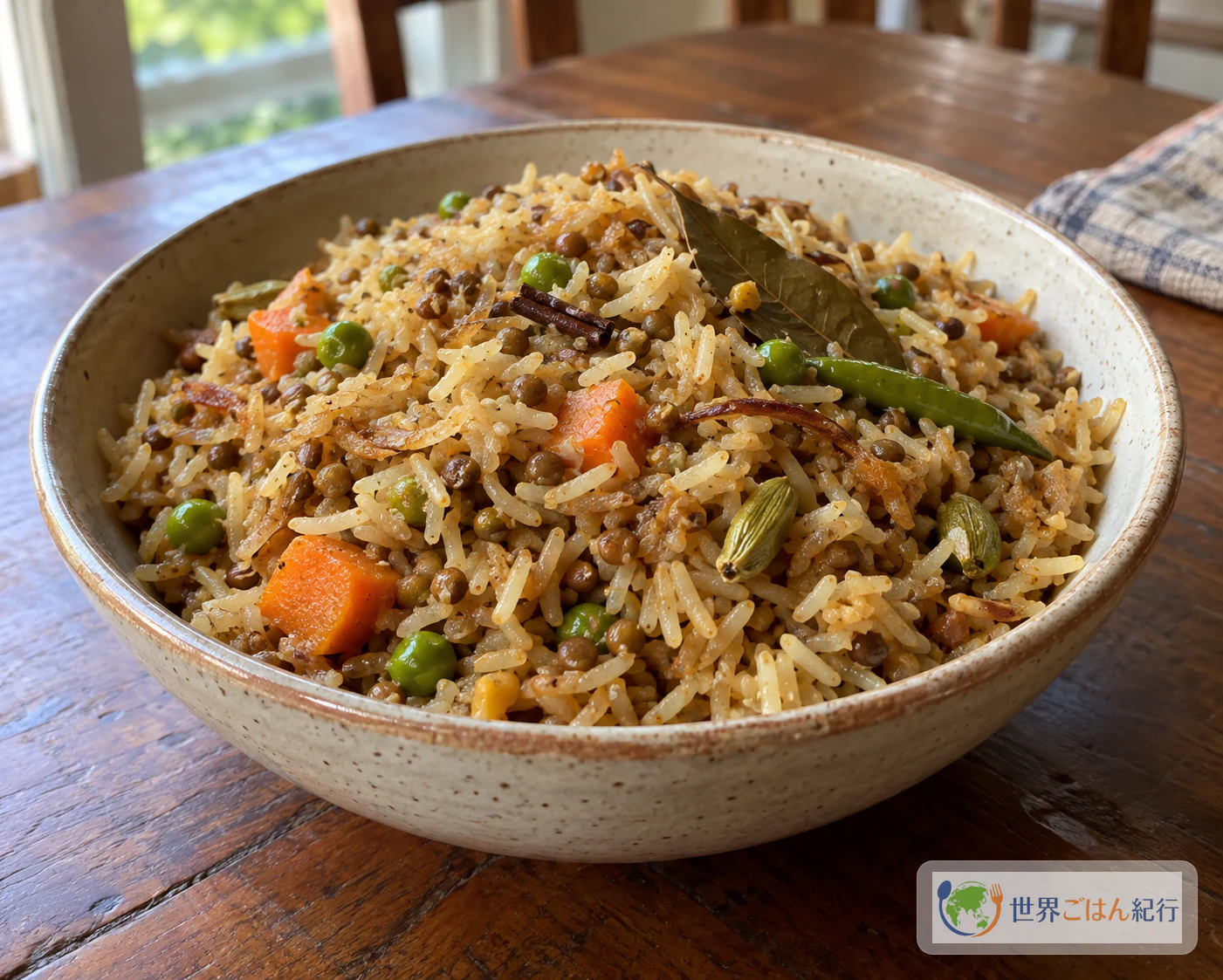
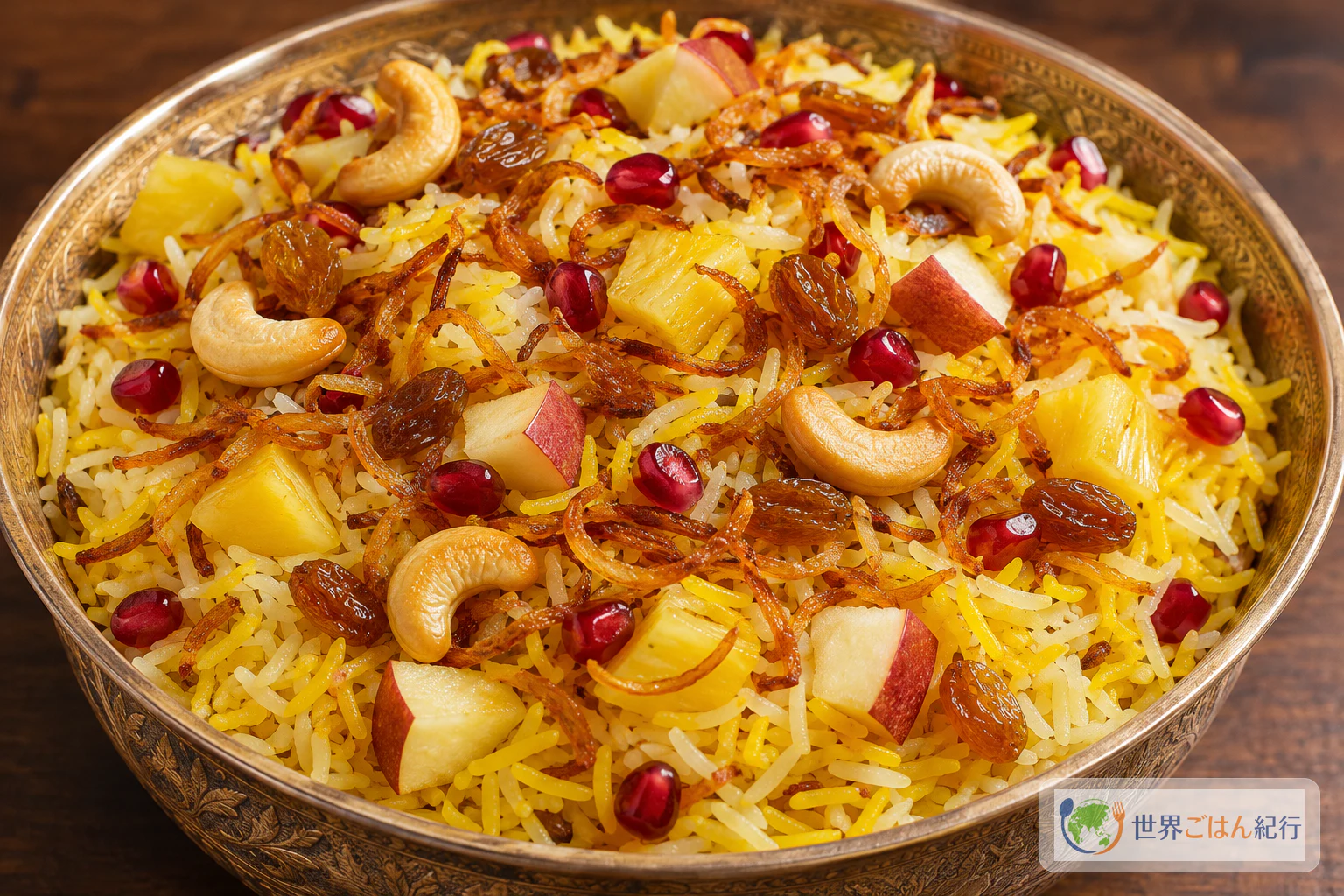
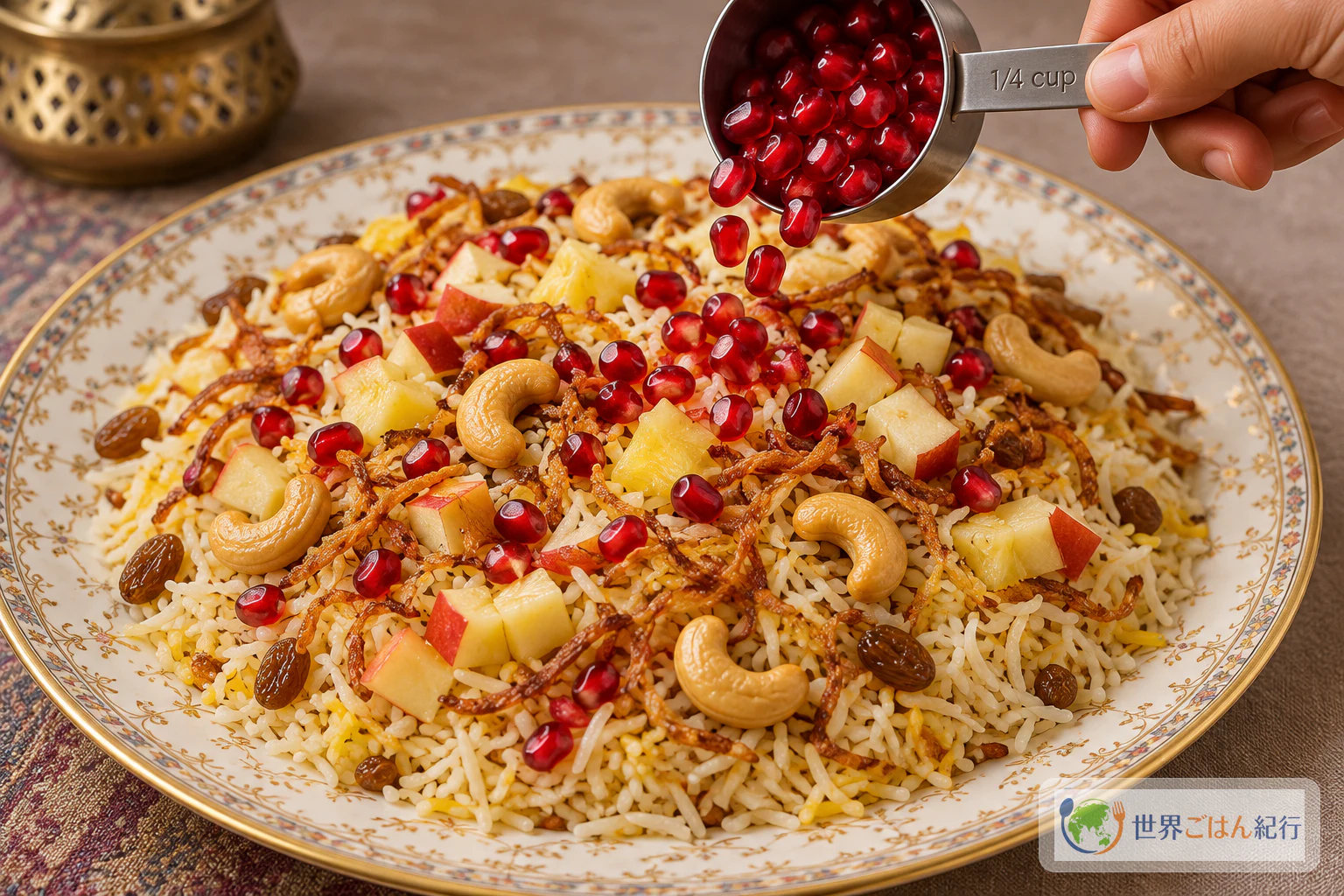
Basmati rice cooked with whole spices and saffron milk, topped with deep-golden onion, light-golden cashews, plump raisins, pomegranate, apple and pineapple.
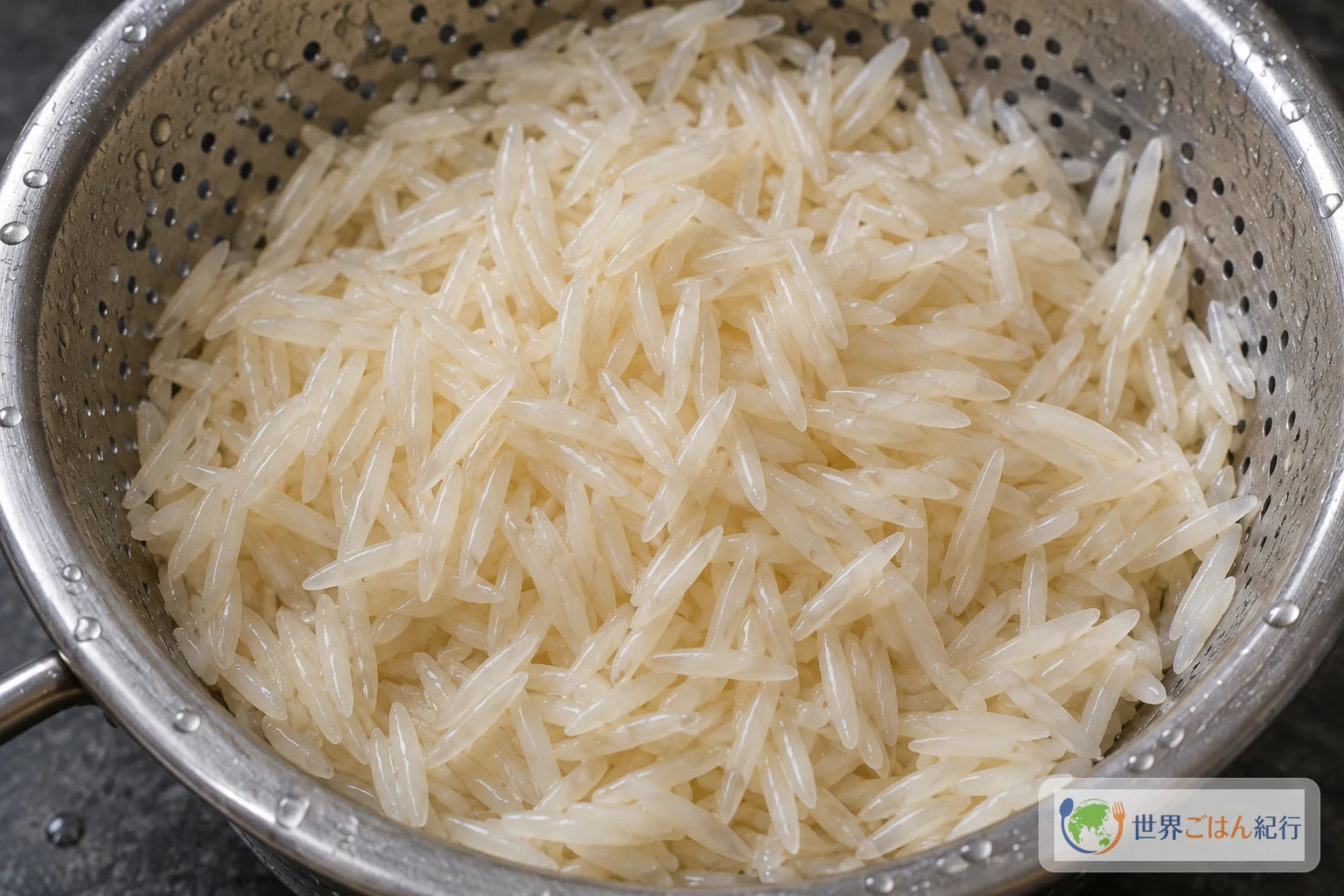
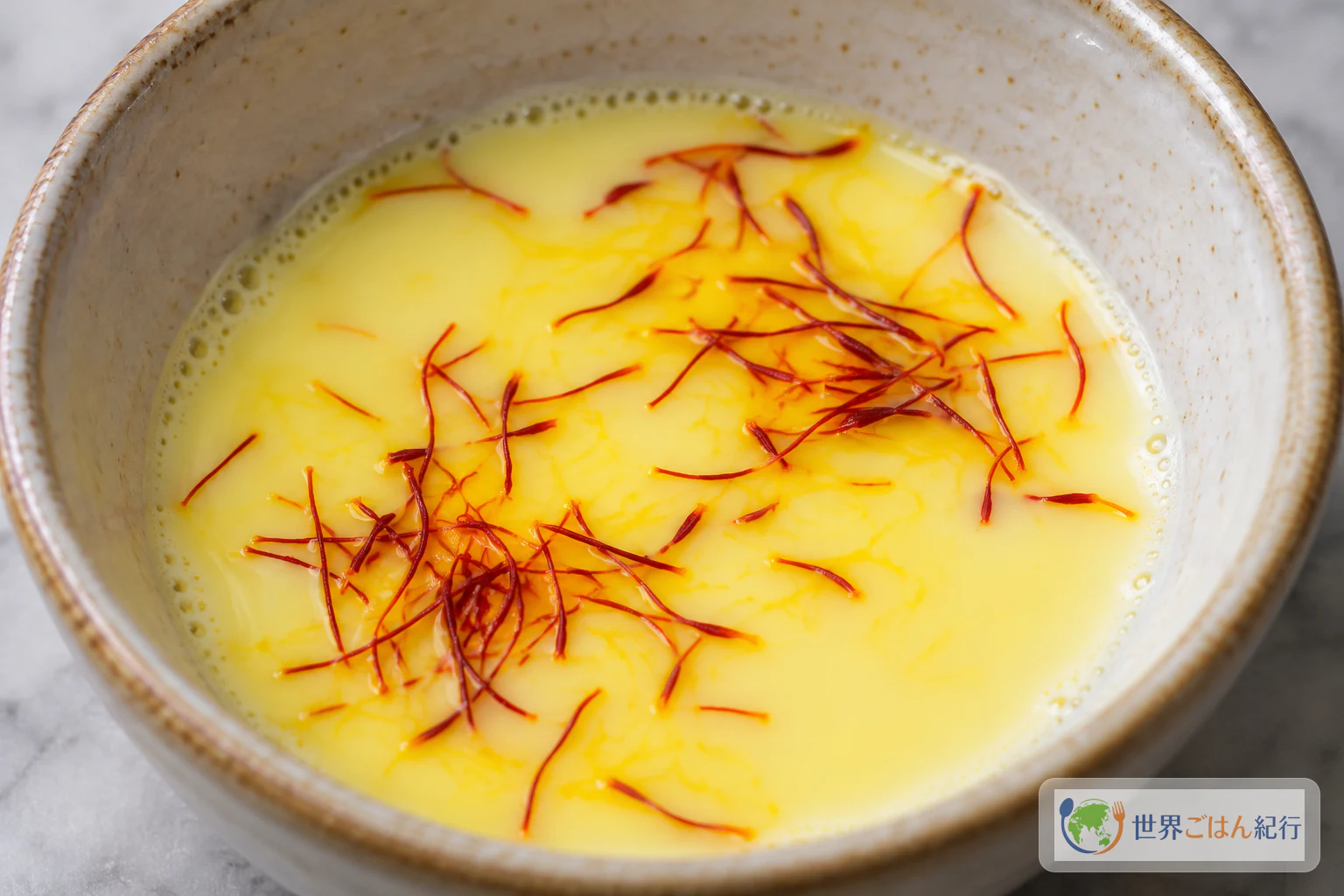
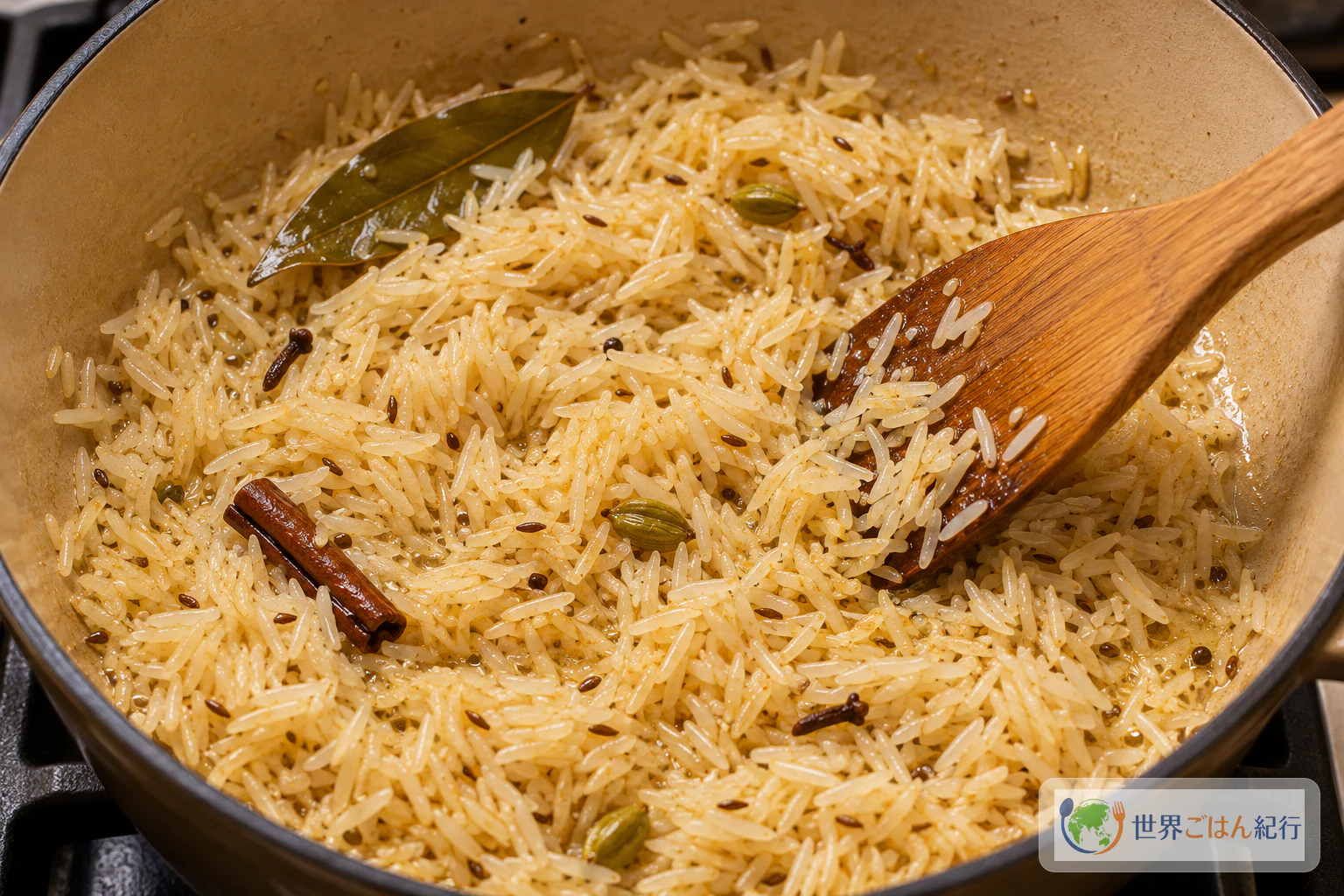
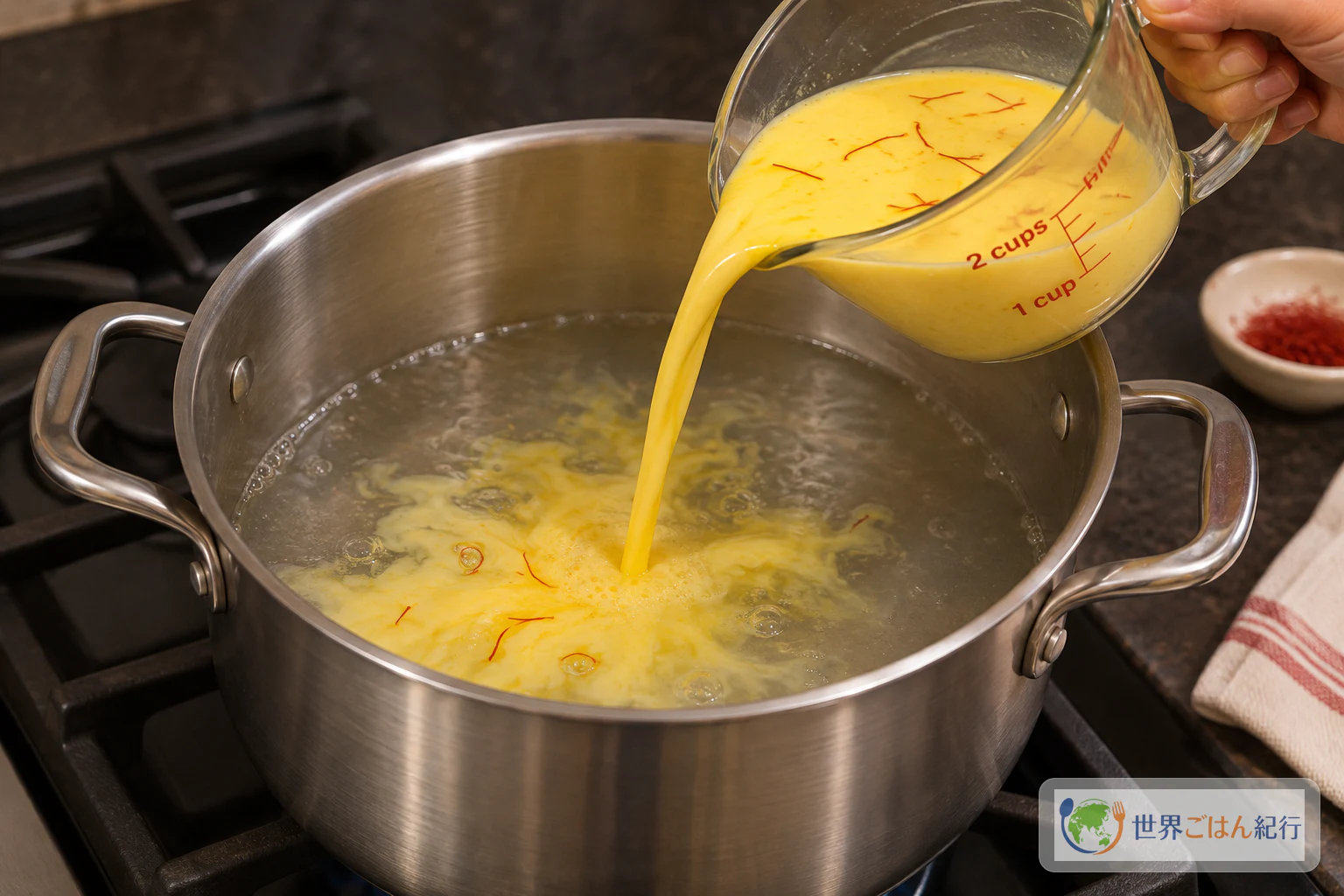
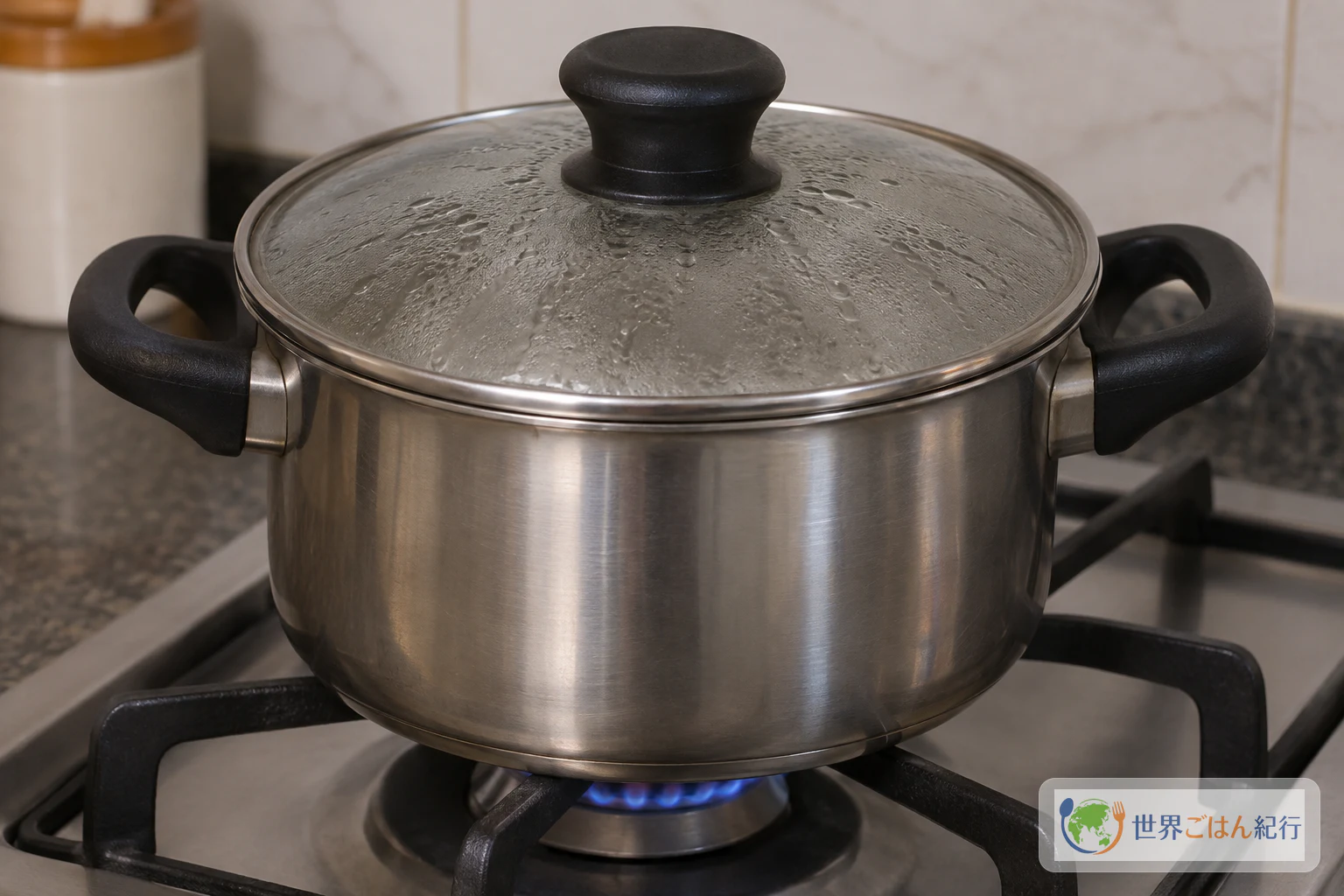
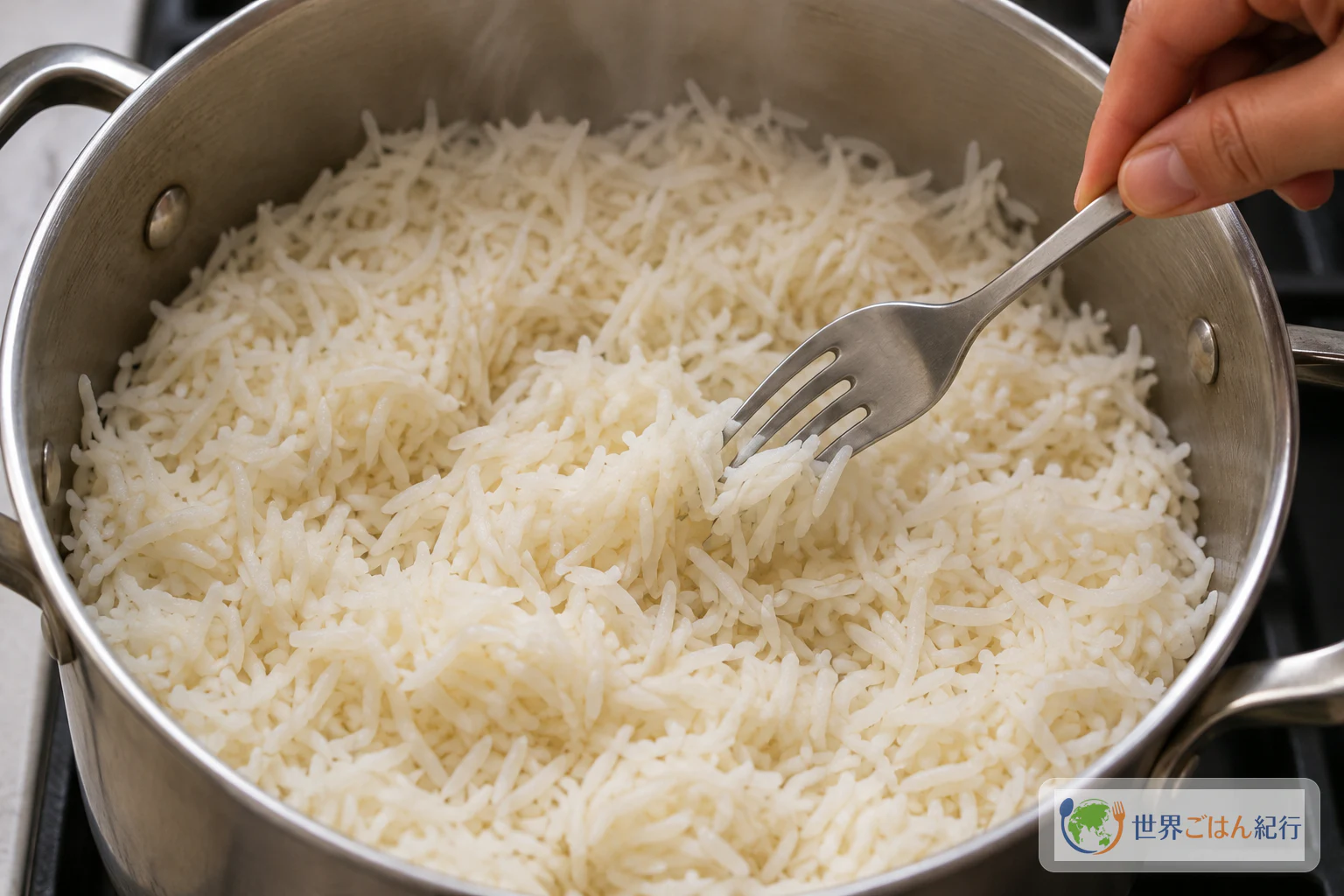
Whole spices sizzle in ghee, soaked basmati turns glossy as it fries, and saffron milk colors the cooking water gold. When the pot is opened and the rice fluffed, everything that was fried and set aside earlier goes back on top, finished with bright pomegranate, apple and pineapple.
This article follows one specific version: the restaurant-style vegetarian fruit-and-nut Kashmiri pulao published by Swasthi Shreekanth on Swasthi's Recipes. We use the amounts and order of the recipe card on that page, cooked in a regular stovetop pot. The recipe card lists 2 servings. This recipe has not been kitchen-tested by Sekai Gohan; the amounts and steps below are written from the recipe card, not from our own trial.
"Kashmiri pulao" is a broad name, and this is one clearly attributed version, not the only or the definitive traditional form. For more dishes from the same country, see our India page.
Nothing here is complicated, but it moves in stages. The rice soaks, the garnish is fried in two batches and set aside, the spices and rice are fried in the same pot, and then the rice cooks covered until done. Read through all ten steps once before you start.
Ingredients for One Pot
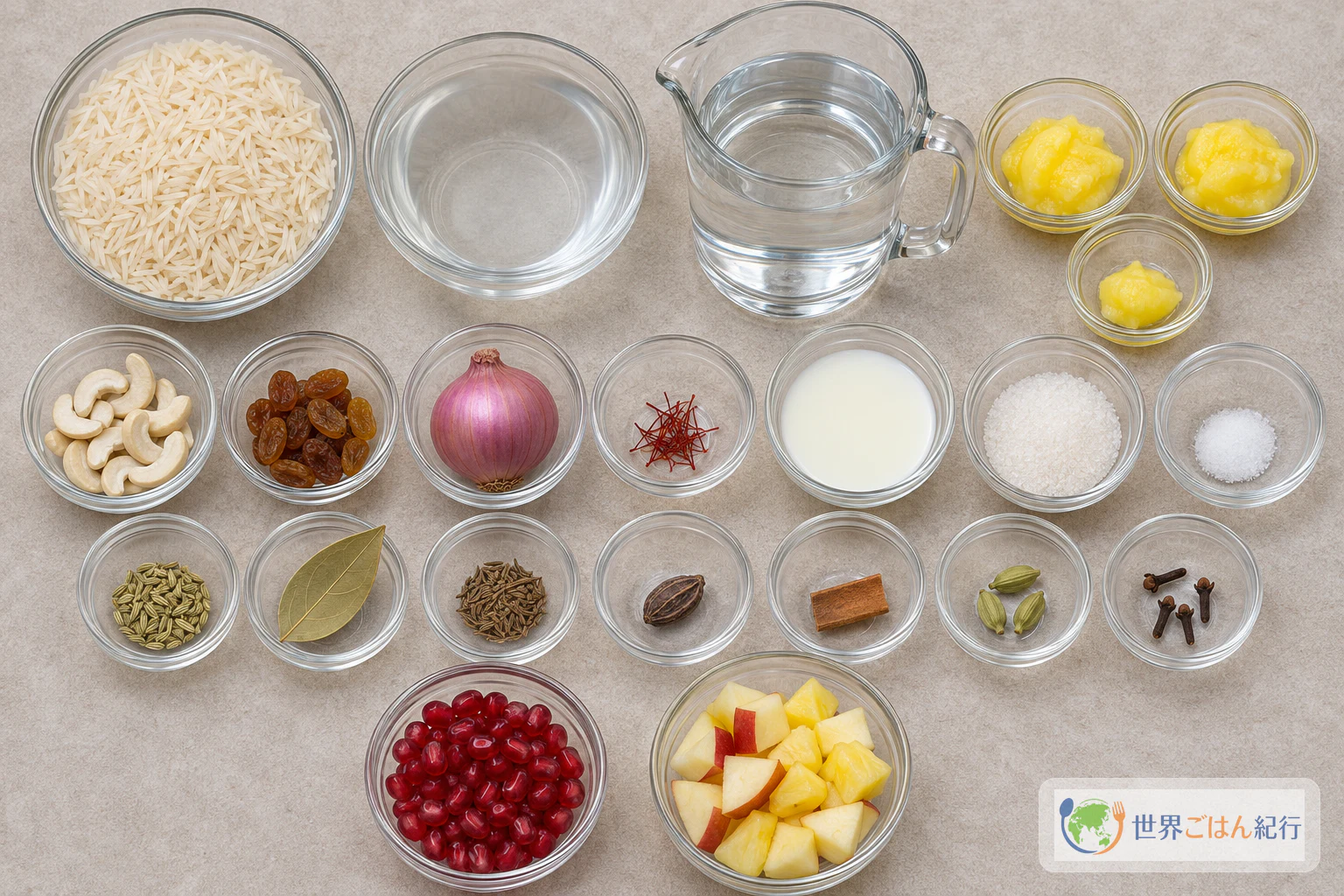
The ghee is listed in three portions because each goes in at a different stage.
Equipment
- A regular stovetop pot with a lid
- A fine strainer or colander for draining the rice
- A small bowl for the saffron milk
- A plate for holding the fried garnish
- A fork for fluffing the rice
- A serving bowl
- Measuring cups and spoons
Choosing and Swapping
Rice. Look for basmati labeled as aged. The 2 cups of cooking water are matched to aged basmati, so use aged basmati for this method.
Sugar. The sugar is optional. Leave it out if you want the rice itself to stay savory and let the raisins and fruit carry the sweetness.
Black cardamom. It is optional too. If you leave it out, keep the other whole spices the same.
Fruit. Divide the ½ cup between apple and pineapple however you like, as long as the two together come to ½ cup.
Method: Ten Steps in One Pot
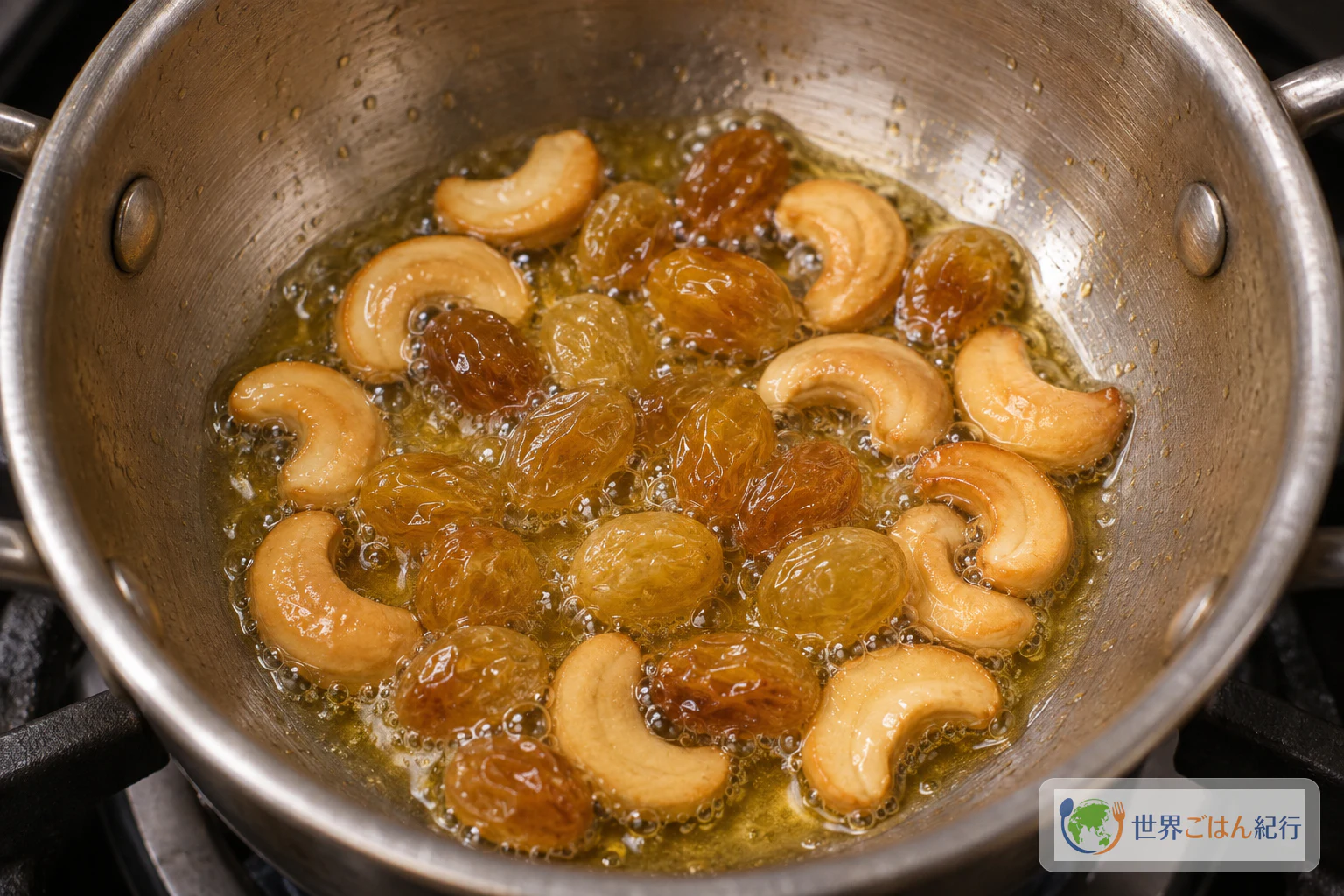
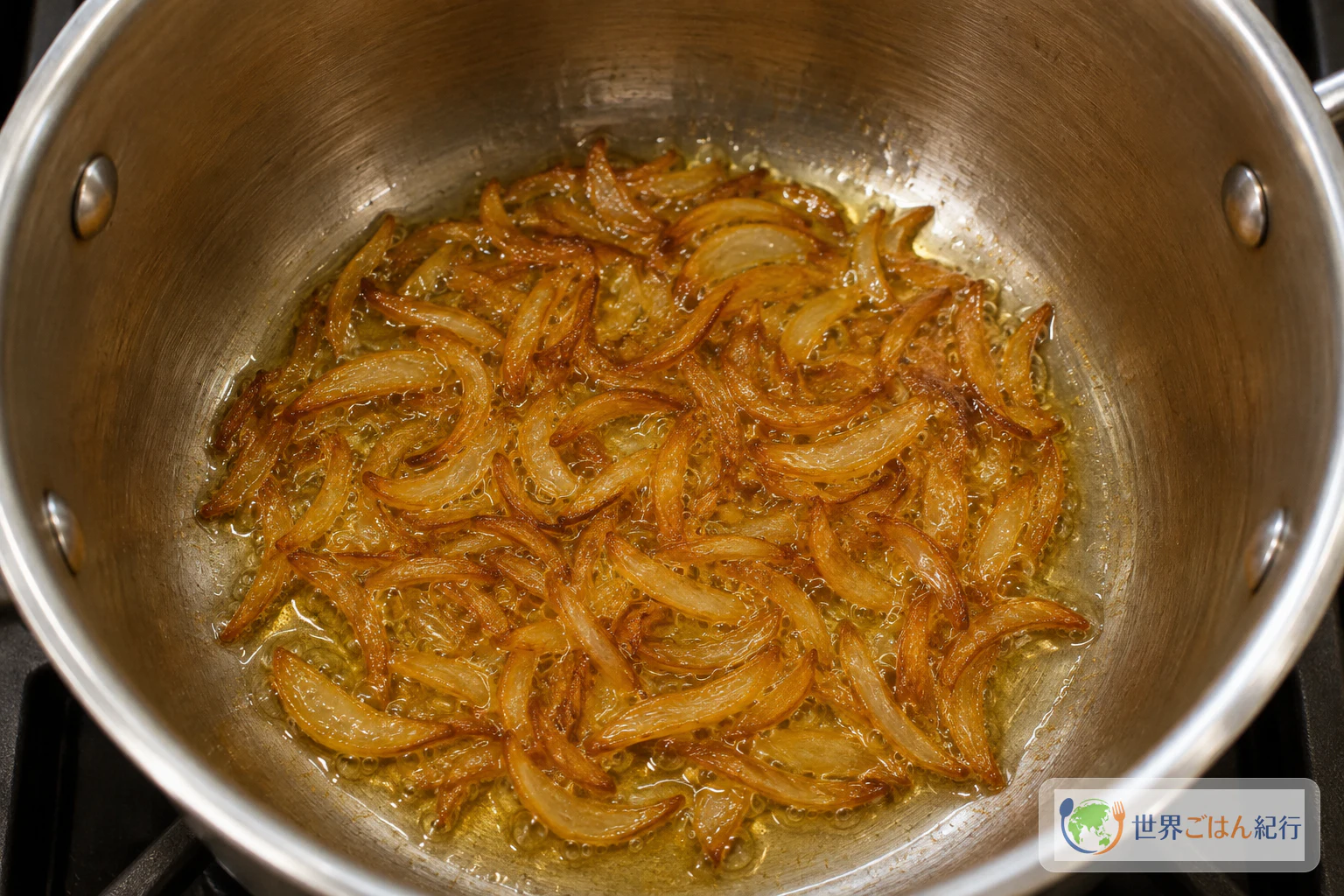
The cashews, raisins and onion are fried first, lifted out and kept on a plate until the very end. Any ghee that clings to them goes back into the pot in step 5.
Watch Points at Each Stage
| What you notice | Where it happens | What to do |
|---|---|---|
| The onion is darkening quickly | Step 4 | Lower the heat as soon as it reaches light golden, and take it to deep golden slowly. Lift it out before it burns |
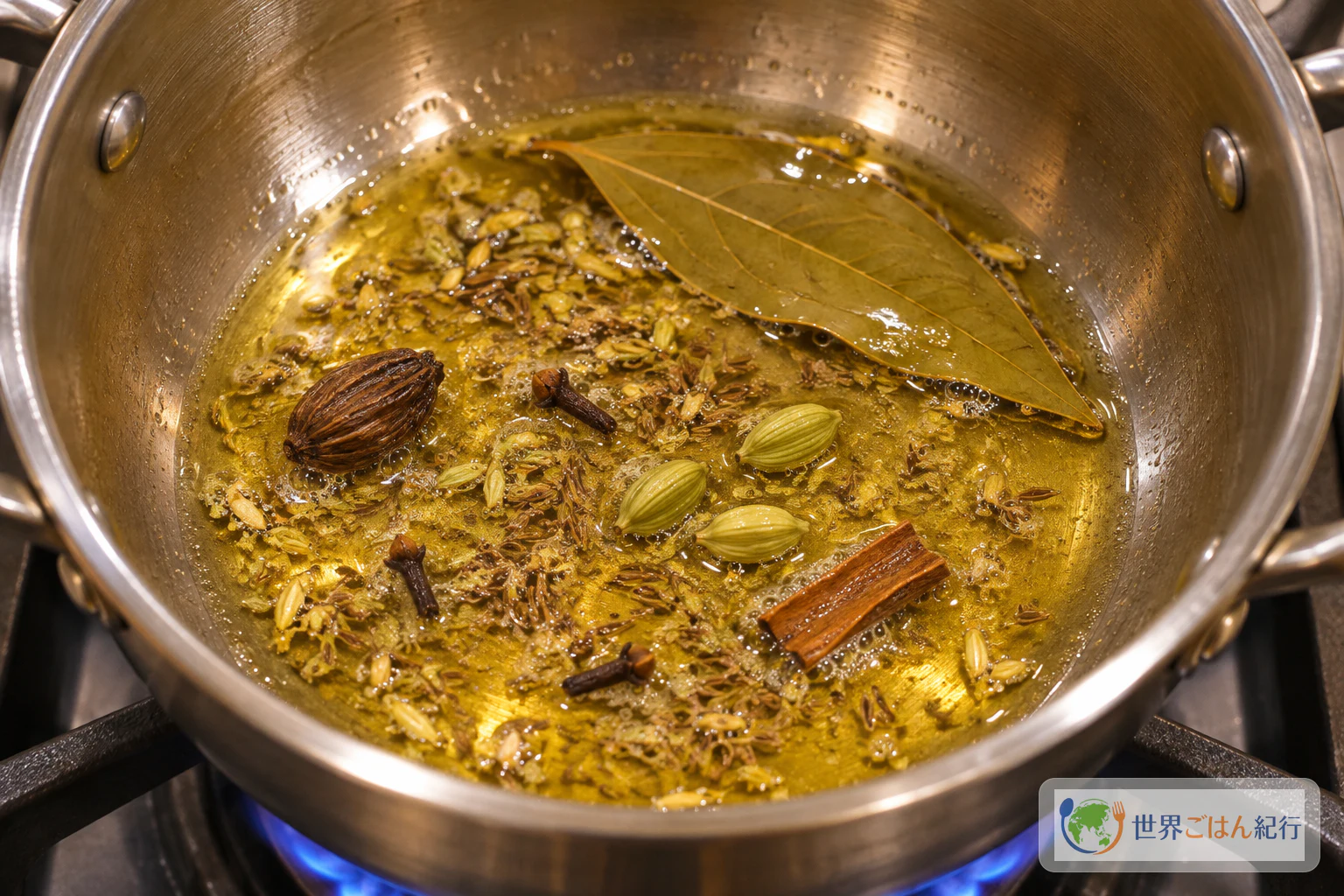
| The spices start to smell scorched | Step 5 | They only need to become aromatic. Move on to the rice promptly once they do |
| The garnish ghee was left on the plate | Step 5 | Tip it back into the pot. It is part of the ghee in the recipe, not extra |
| The liquid tastes under- or over-salted | Step 7 | Taste after the water and milk go in; this is the point to correct the salt |
| The rice is not done when you check | Step 8 | Cover again and keep cooking on low until it is |
| You used rice that is not aged basmati | Steps 1 and 8 | The water amount here is matched to aged basmati. Keep a close eye on the grains as they cook |
Ways to Change the Pot
Every change below keeps the same order: soak, fry the garnish, fry the spices and rice, cook covered, fluff and top.
- Less sweet: Leave out the optional sugar. The raisins and fresh fruit still give sweetness on top.
- Gentler spice: Leave out the black cardamom, which is optional.
- Fruit balance: Lean the ½ cup toward apple or toward pineapple, keeping the two together at ½ cup.
Where This Version Sits
Swasthi Shreekanth, the recipe developer and writer behind Swasthi's Recipes, presents this pulao as a restaurant-style vegetarian Kashmiri pulao. That framing matters. The name "Kashmiri pulao" is used broadly, and this fruit-and-nut rice with saffron milk is one attributed version rather than a definition of the whole dish. We have not adopted the page's wider historical narrative as verified history, so this article does not make claims about where or when the dish arose.
What defines this version is its build: aged basmati cooked with whole spices in ghee, tinted with saffron milk, and finished with separately fried onion, cashews and raisins plus fresh pomegranate, apple and pineapple.
Frequently Asked Questions
Is this the traditional Kashmiri pulao?
It is one version, which its author presents as restaurant-style and vegetarian. We do not describe it as the only or the traditional form of the dish.
Why is there no cooking time?
The recipe card's time summary is shorter than the soak alone, which needs at least 30 minutes, so we leave those figures out. The card also gives no fixed cooking time for an ordinary pot. Cook covered on low heat until the rice is done.
Can I use a pressure cooker or Instant Pot?
The author's page also gives pressure-cooker and Instant Pot versions, with different water amounts and methods. This article covers only the regular stovetop pot with 2 cups of water. If you use an appliance, follow that page rather than mixing its amounts into this recipe.
Can I add rose water or almonds?
The recipe card lists rose water as an alternative to saffron, or as an addition, but its method does not say when to add it. The card also mentions almonds as an alternative to cashews. This version uses saffron with milk and cashews only, and leaves out rose water, almonds and the optional dry ginger powder.
The step-by-step text on the author's page looks slightly different. Which should I follow?
On that page, the step-by-step text and the recipe card differ in a few places, including the fennel and cinnamon amounts and how long the rice is fried. This article follows the recipe card throughout, so use the amounts and timings above together.
How many people does it serve?
The recipe card lists 2 servings. We have not cooked this version ourselves, so we pass that figure on as given rather than as a tested yield.
Sources
- Swasthi Shreekanth, "Kashmiri Pulao Recipe (Fruit & Nut Pilaf)," Swasthi's Recipes. The recipe card was used for the restaurant-style vegetarian framing, the ingredient amounts, the rinse-soak-drain step, the saffron-and-milk option, the order of frying the cashews, raisins, onion, spices and rice, the uses of ghee, the regular-pot water amount, the covered-pot endpoint, the fluffing, the fruit garnish and the listed servings. https://www.indianhealthyrecipes.com/kashmiri-veg-pulao-restaurant-style/