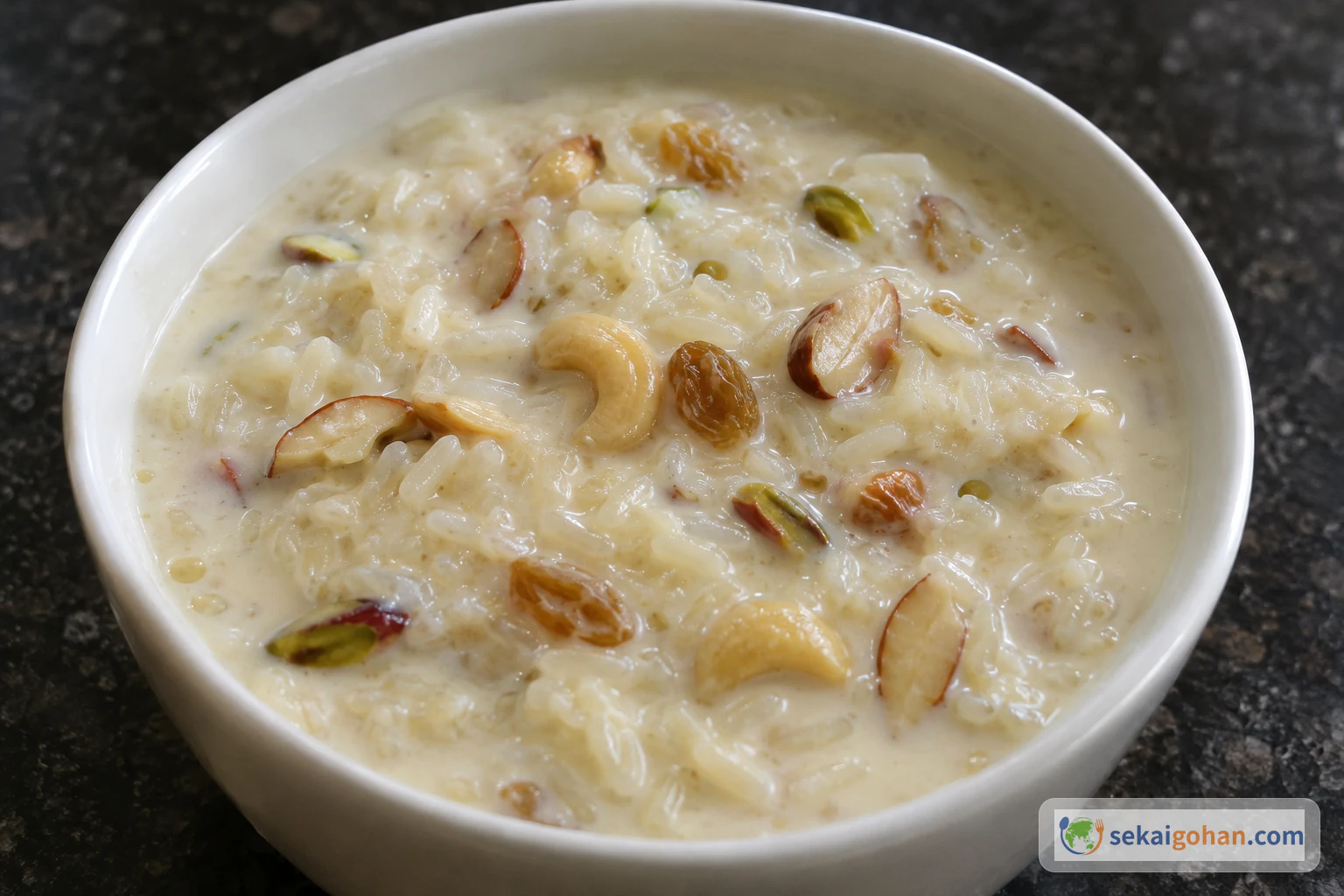
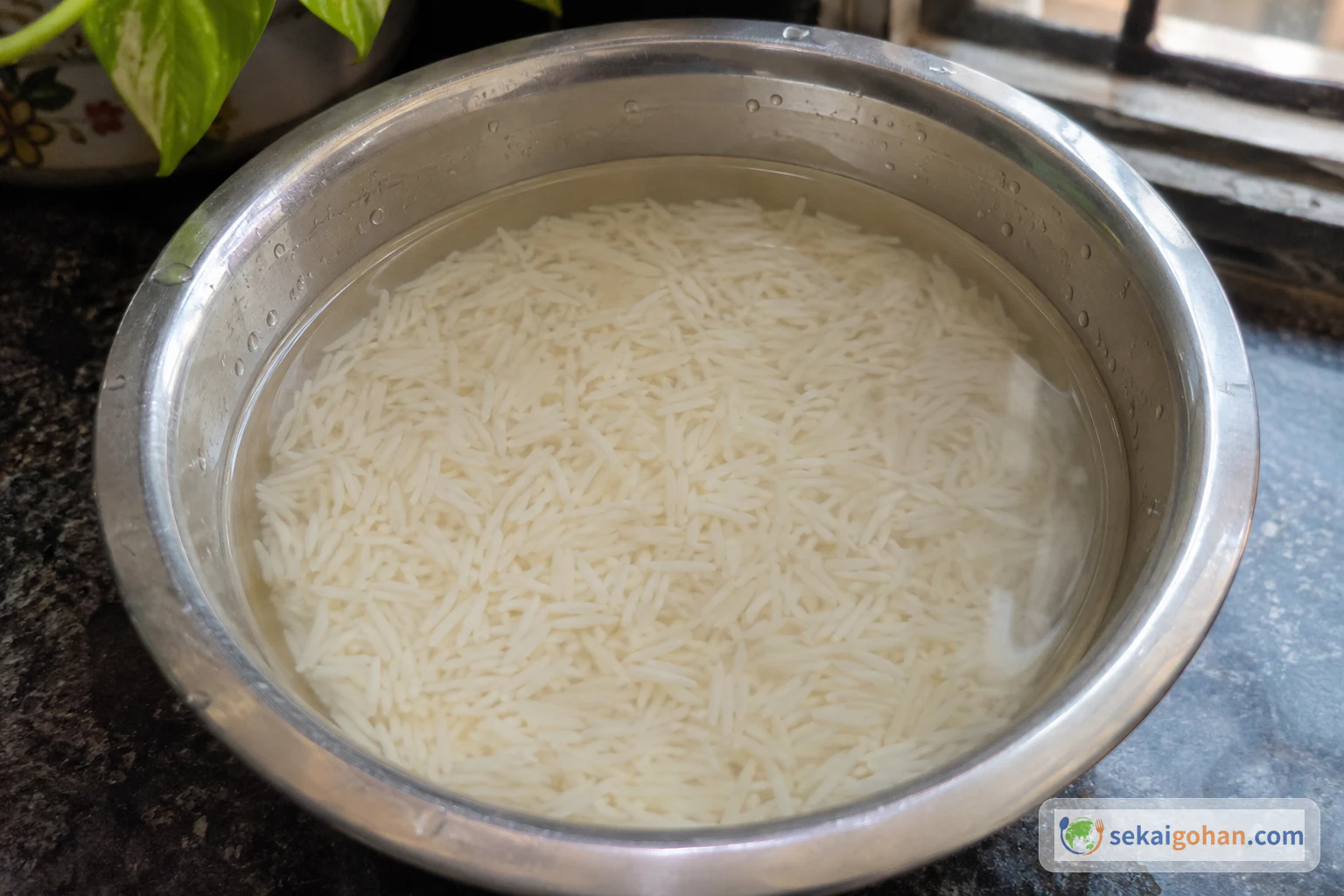
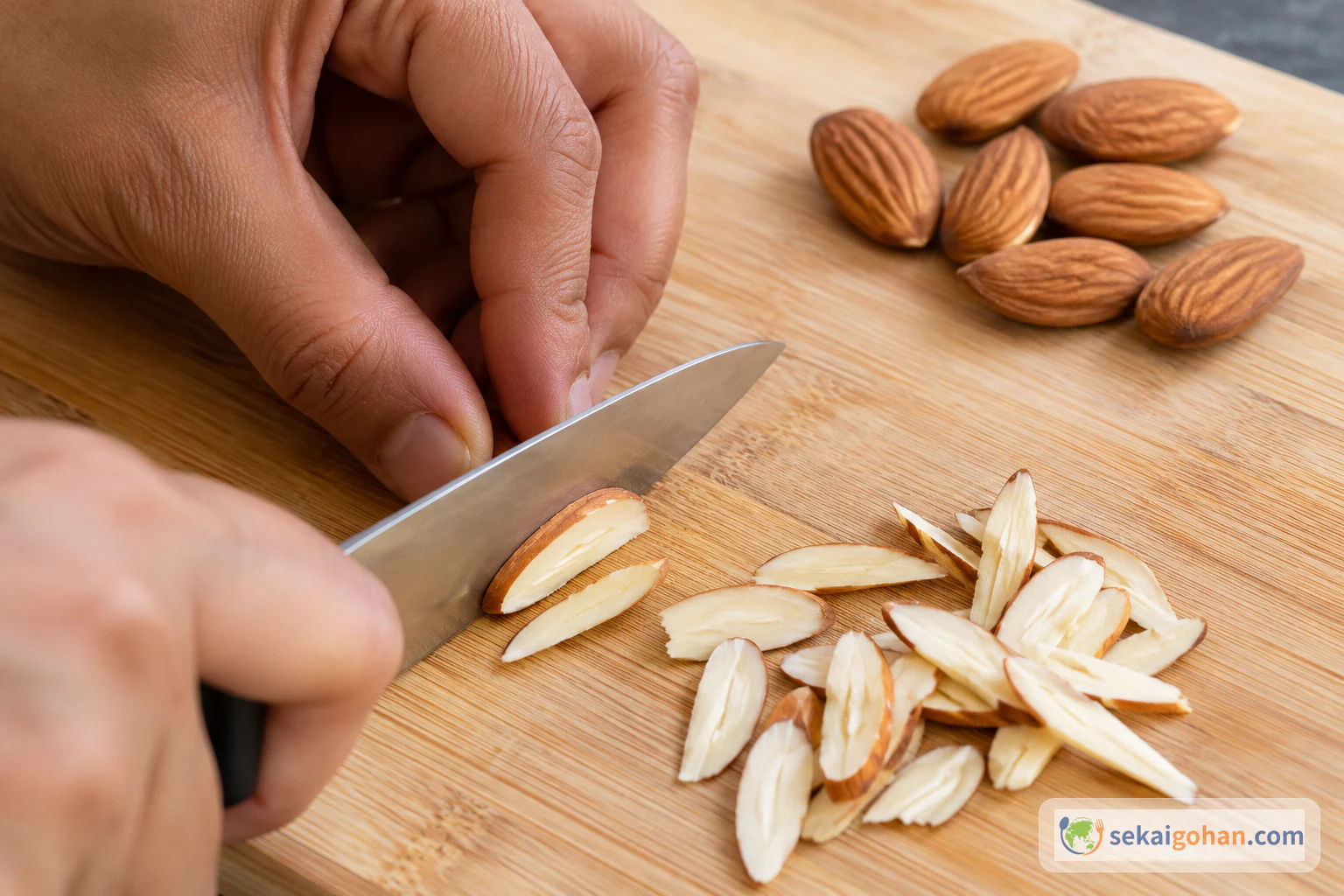
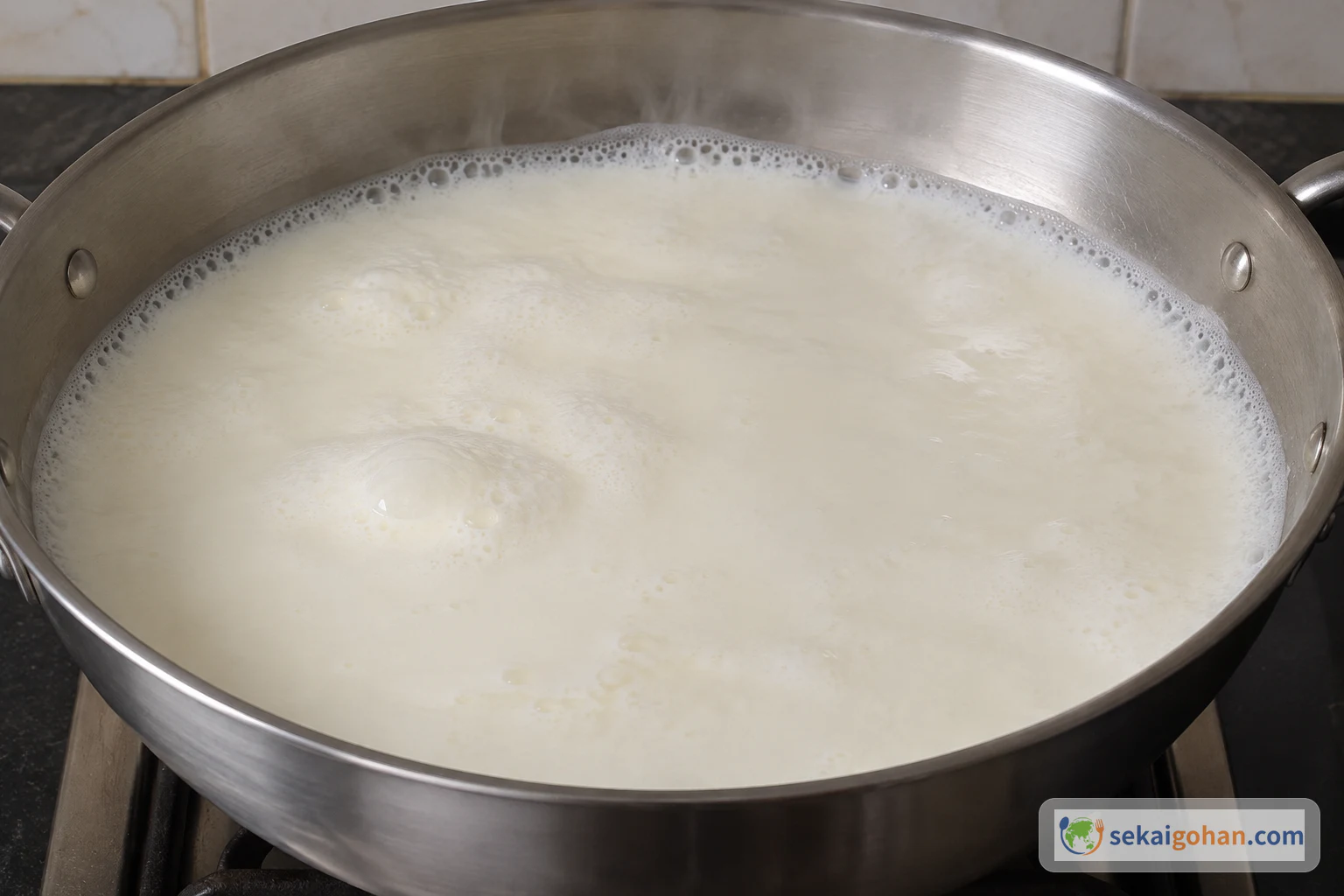
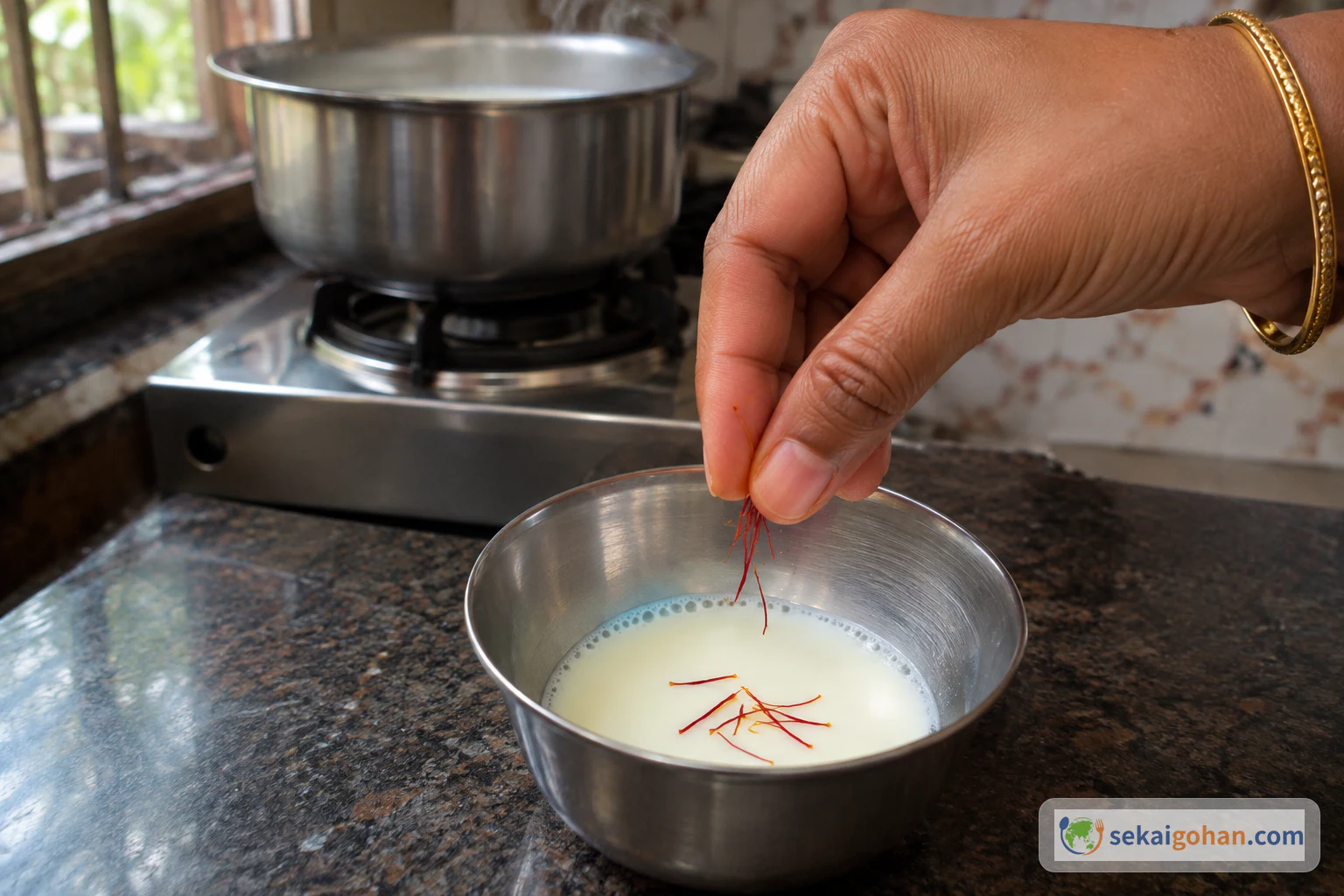
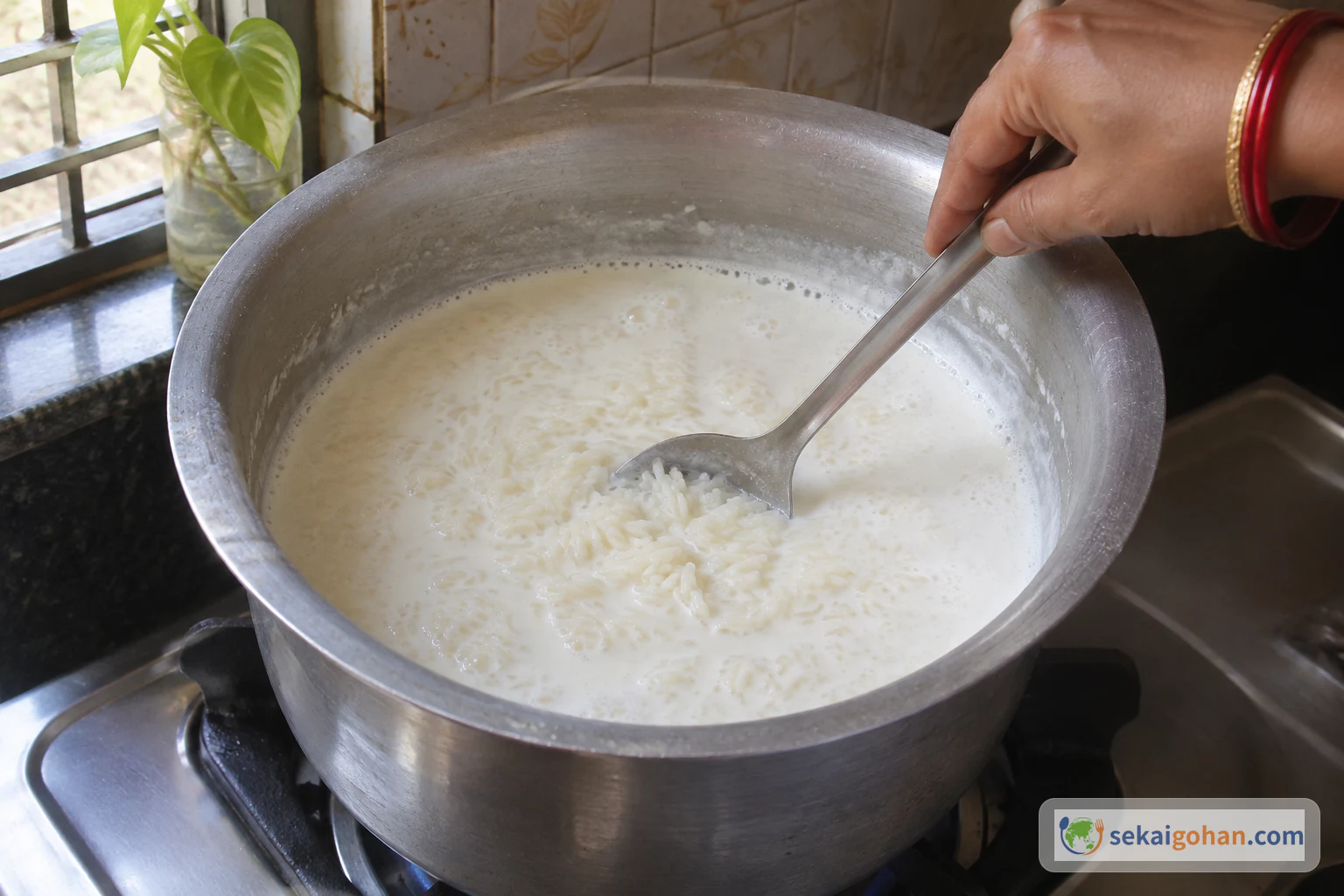
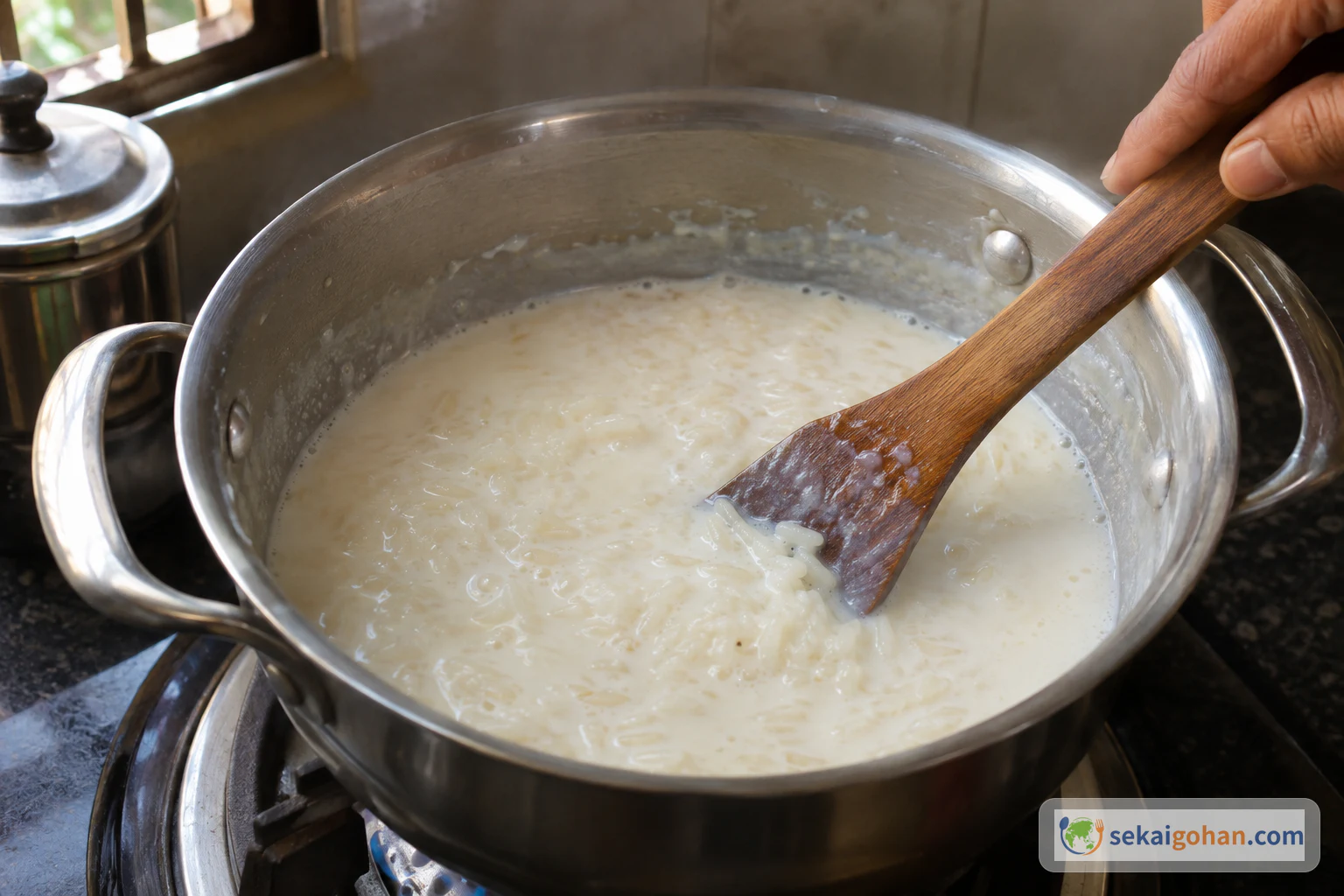
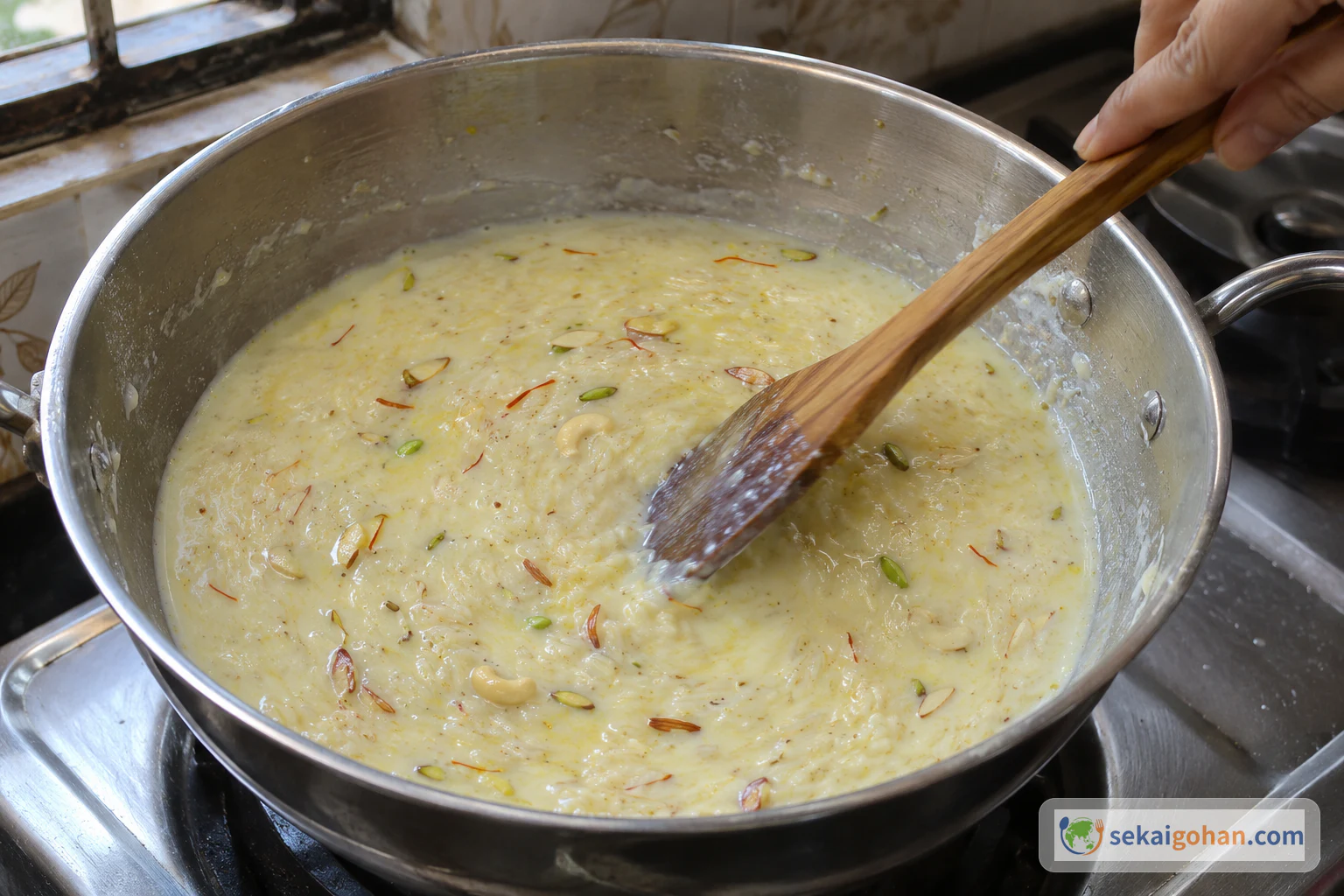
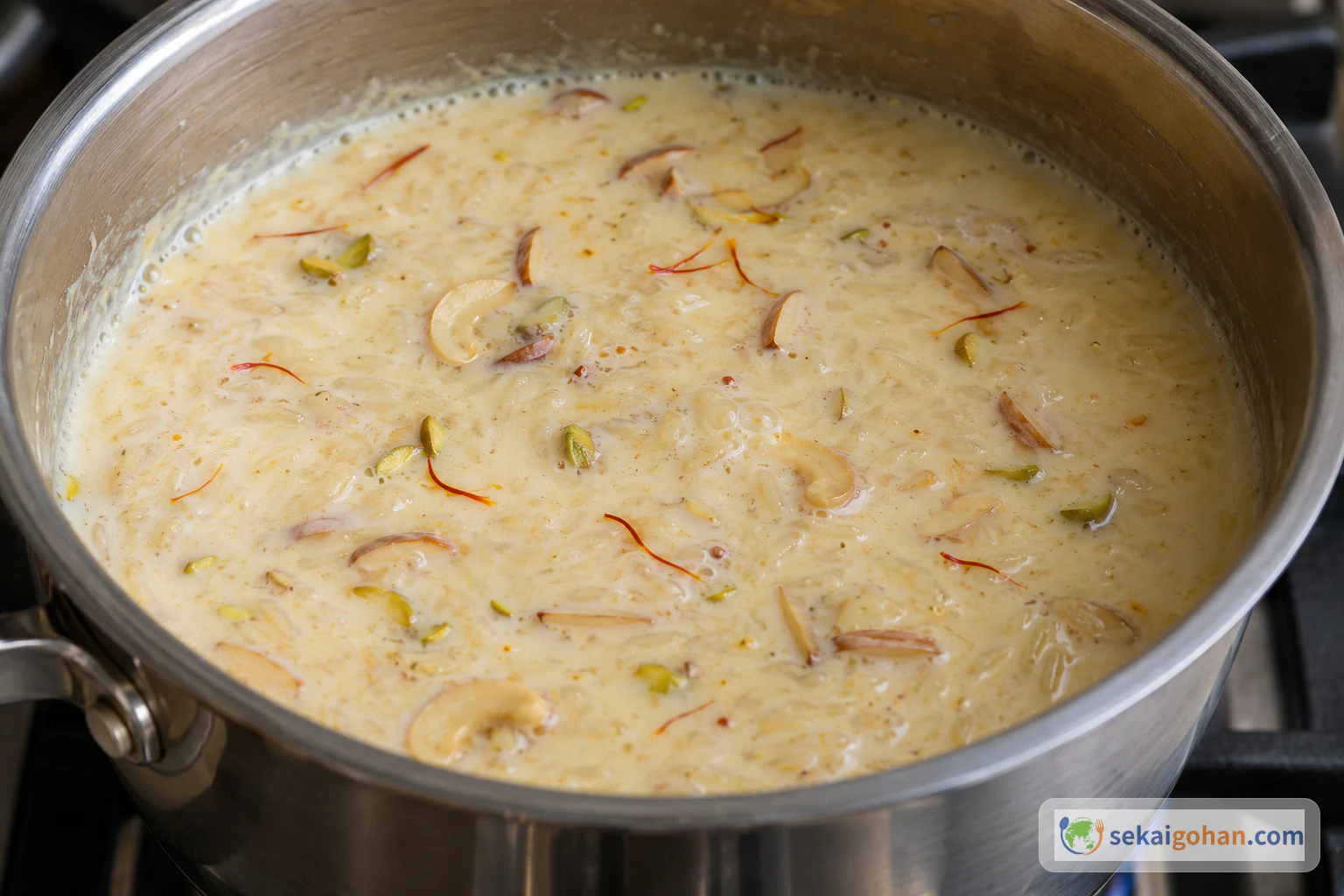
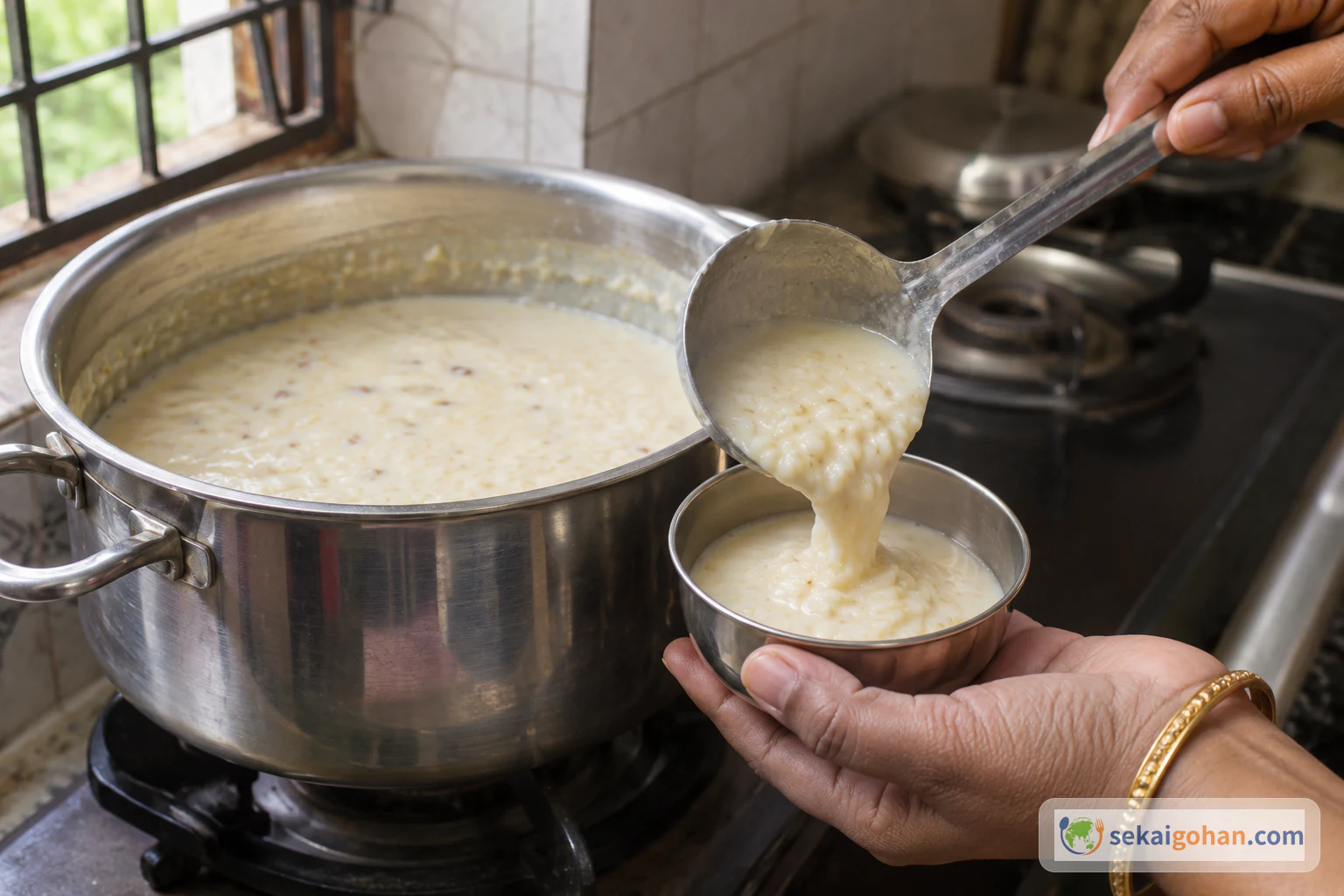
A wide, heavy pan of milk comes up to a boil over gentle heat, and drained basmati rice slides in. From there the pot changes slowly. The grains swell as they take in the milk, the milk grows richer, and a pale film of milk solids collects on the sides of the pan. Even with the heat off, kheer keeps changing and thickens as it cools. This is chawal ki kheer, the North Indian version, in which rice is cooked whole in full-fat milk until soft, then scented with cardamom and saffron and studded with nuts and golden raisins.
About Chawal ki Kheer
Kheer is a name for a family of rice-and-milk desserts, not a single fixed formula. This version is made for 5 servings with basmati rice, full-fat milk, sugar, green cardamom powder, saffron, three kinds of nuts and golden raisins. The whole grains stay soft and distinct instead of melting into a smooth cream, and that sets it apart from phirni, which starts from ground rice.
Cooks who use whole grains still differ. One North Indian-style rice kheer cooks basmati in milk in its own proportions: 1/4 cup rice to 3.5 cups whole milk and 1/3 cup sugar, with cardamom, almonds, saffron, cashews and raisins. Further afield, Bengal's payesh and South India's payasam have their own names and methods, and in the northeast, Chak Hao Kheer from Manipur is made with the black rice Chak-hao Amubi, soaked for 4–6 hours before cooking in milk.
| Dish | What sets it apart |
|---|---|
| Chawal ki kheer (this recipe) | Whole basmati grains cooked in full-fat milk until fully soft |
| Phirni | Made with ground rice rather than whole grains |
| Payesh (Bengal) / payasam (South India) | Regional rice-and-milk desserts with their own names and ways of making |
| Chak Hao Kheer (Manipur) | Made with Manipuri black rice, soaked for hours before cooking in milk |
If you want to try another style, follow that dish's own recipe rather than adjusting this one; the proportions and order of additions differ.
For more dishes from the same country, see the India page.
Ingredients: Serves 5
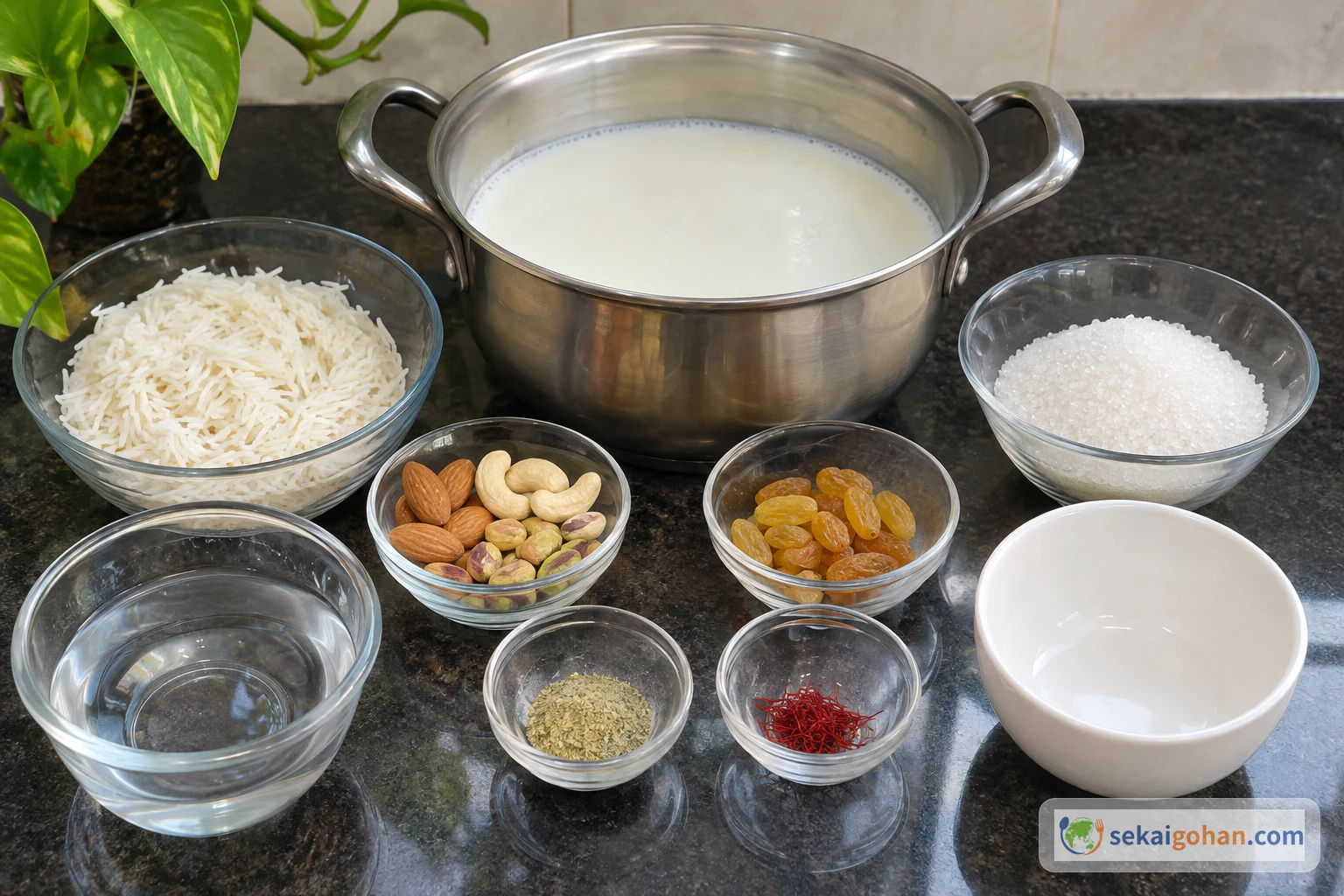
The tablespoon of milk for the saffron comes out of the 1 litre in the pan, so there is no extra milk to buy or add.
This kheer contains milk and tree nuts (almonds, cashews, pistachios).
Equipment
- Heavy, wide pan
- Bowl for rinsing and soaking the rice
- Sieve
- Knife and cutting board
- Small bowl for the saffron milk
- Wooden spatula
- Measuring spoons
- Ladle and small serving bowls
Choosing Rice, Milk and Nuts for Kheer
Rice. Basmati gives this kheer its fragrance and is the first choice. Other aromatic rice, long-grain rice or ordinary rice will also work, though the aroma will be milder, and stickier everyday rice makes a stickier pot. Use the same amount whichever rice you choose.
Milk. Look for whole milk that hasn't had its fat adjusted, because low-fat milk makes a less rich kheer. Plant-based milks need a different recipe.
Nuts and raisins. Choose plain, unsalted cashews and unsalted pistachios. Ordinary dark raisins can stand in for golden raisins, with a different color and sweetness.
Pan. A heavy, wide pan spreads the heat and gives you room to stir. Over the long cook, that helps keep the milk from catching on the bottom.
Method: Watch the Rice, Not the Clock
The sugar, the aromatics and the final switch-off are each decided by how far the rice has cooked: half cooked, nearly cooked, then fully soft. Keep the heat at low to medium-low throughout and stir now and then so the milk doesn't stick.
Kheer Problems and Fixes
Cook the whole grains until fully soft in milk that has thickened around them. Add the sugar only once the rice is half cooked, and the aromatics and nuts only once it is nearly done.
Every decision here follows the rice. When something looks off, check the grains and the pan before you add anything.
| What you see | Likely reason | What to do |
|---|---|---|
| Milk catching on the bottom | Heat too high, or not stirred often enough | Keep the heat at low to medium-low, stir now and then, and use a heavy, wide pan |
| Rice still firm when you expected it to be done | Grains cook at different speeds in different pans and stoves | Keep cooking over low heat, stirring now and then, until fully soft; go by the rice, not the clock |
| A pale film on the sides of the pan | Milk solids collect there as the milk reduces | After switching off the heat, scrape them back into the kheer |
| Kheer thicker after standing | Kheer thickens as it cools | Expected; serve soon after making for the texture shown here |
| Milder aroma than expected | Rice other than basmati was used | Choose basmati when you want the full fragrance |
Serving Kheer
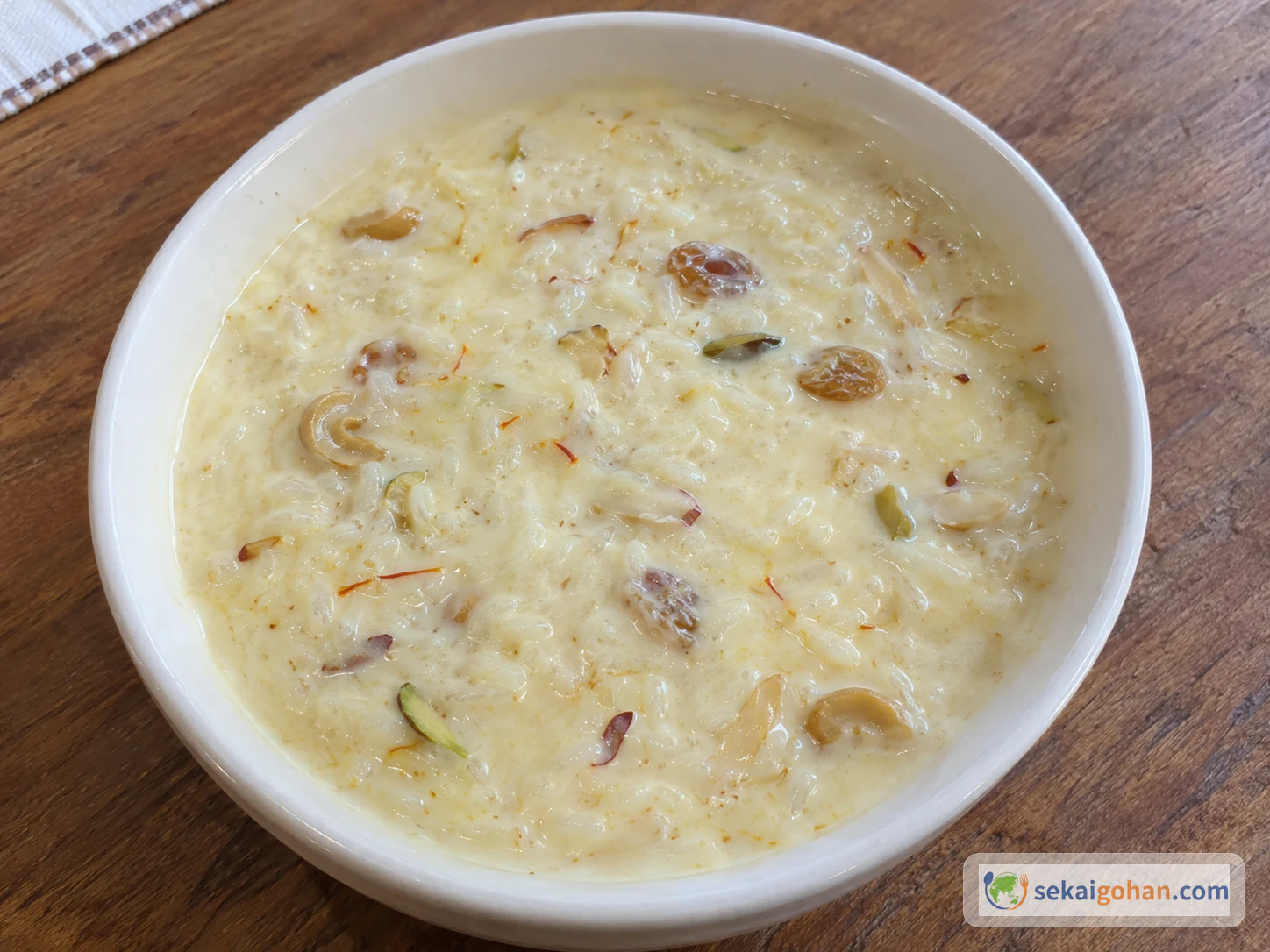
This kheer is best eaten soon after it's made, while it's still warm. The nuts cooked in the milk and the raisins stirred in off the heat are already in every spoonful, so it goes to the table as is, with no extra topping.
Frequently Asked Questions
Is kheer the same as phirni?
No. Phirni is made with ground rice, while chawal ki kheer cooks the grains whole. Both use milk, sugar and aromatics, but the texture of the rice sets them apart.
Why 6 tablespoons of sugar?
Some versions use 5–6 tablespoons. This recipe goes with the full 6.
Can I leave out the nuts?
Yes. You can leave them out, for example if someone has a nut allergy. This version cooks all three kinds into the milk.
Can kheer be served cold?
Kheer can be served hot, warm or chilled, and it thickens as it cools. This recipe is meant to be served freshly made and warm.