Kabiraji: A Crumbed Fish Cutlet Wrapped in Egg
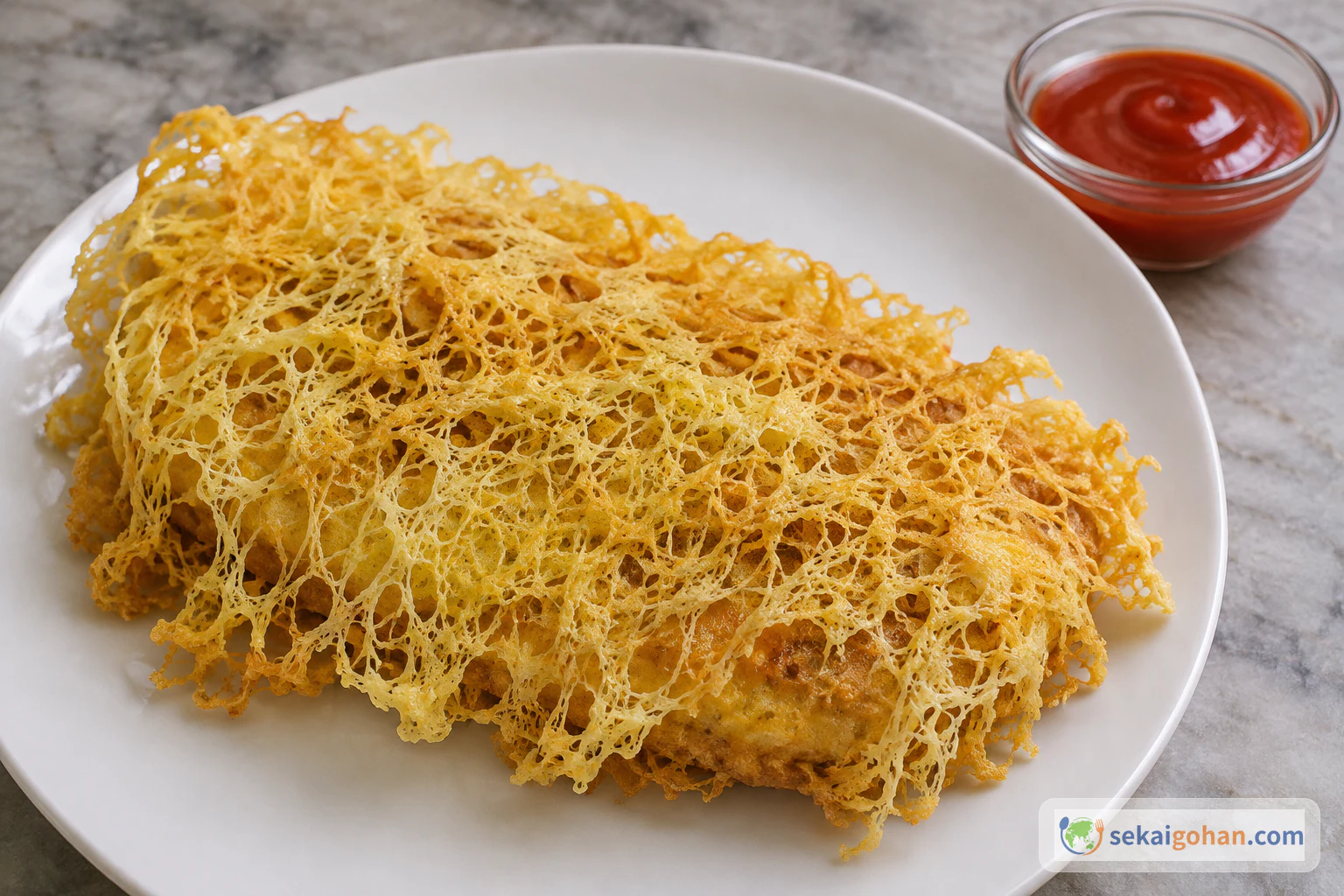
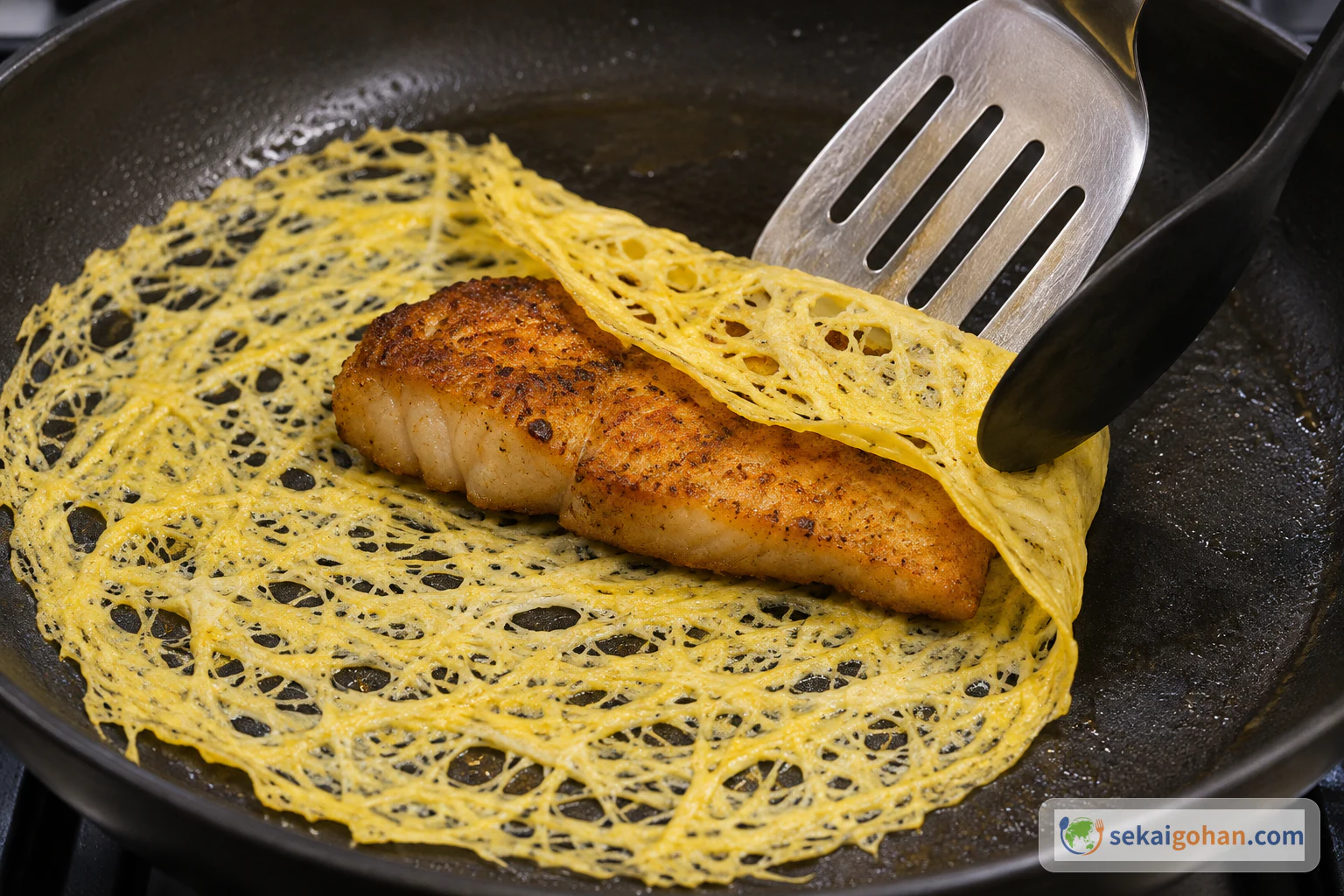
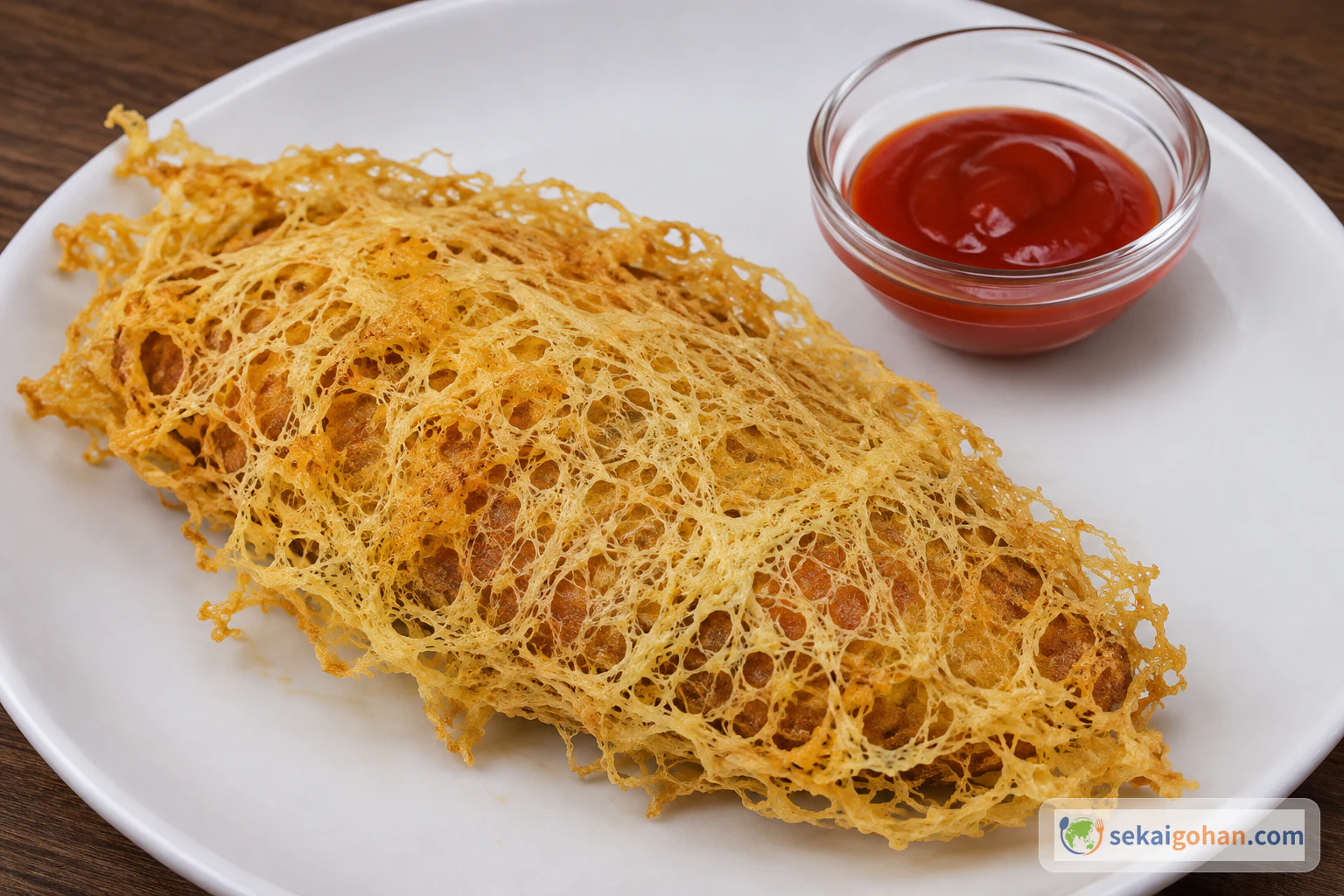
Two layers define this dish: a crumbed fried bhetki fillet and a thin, lacy net of egg folded around it.
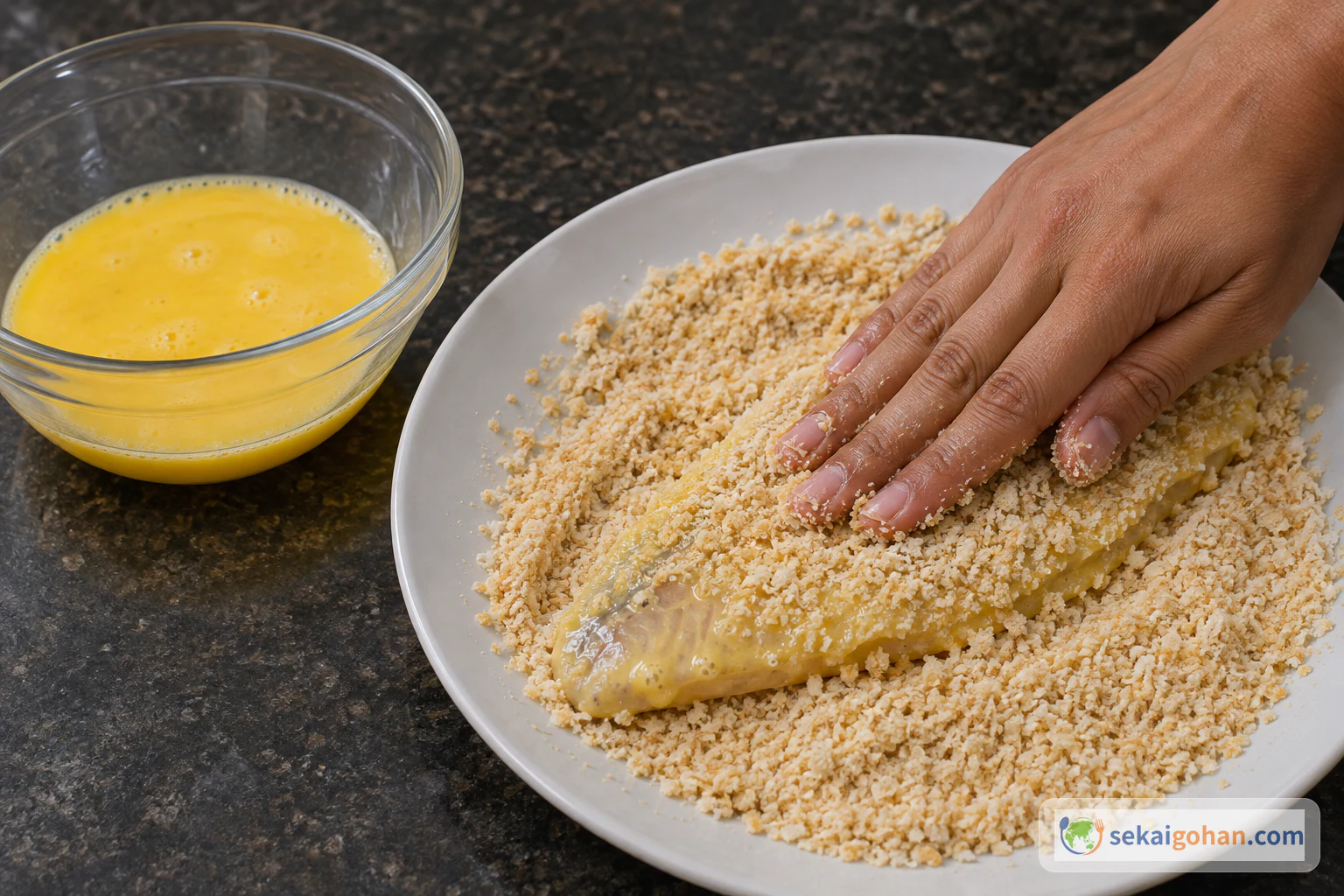
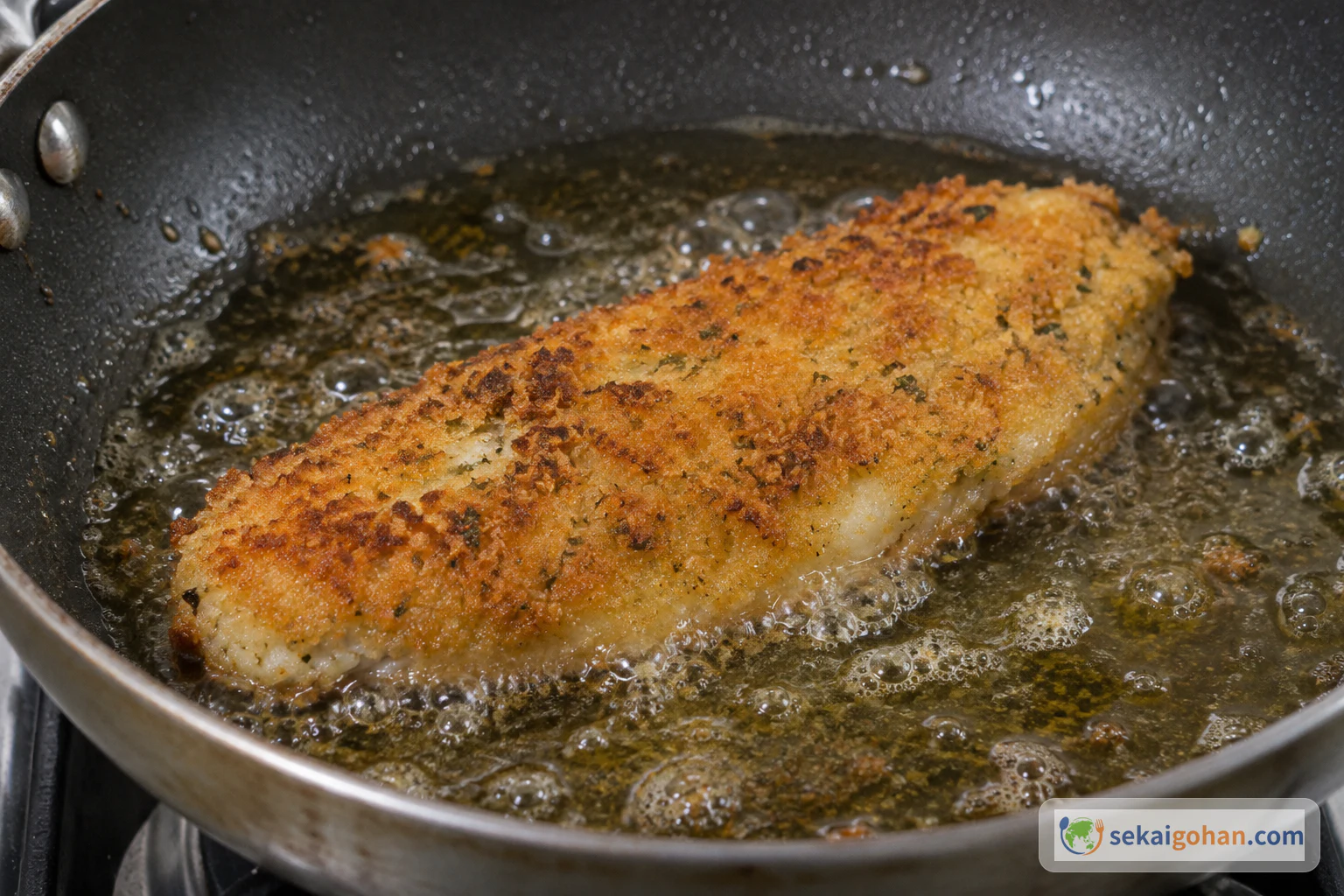
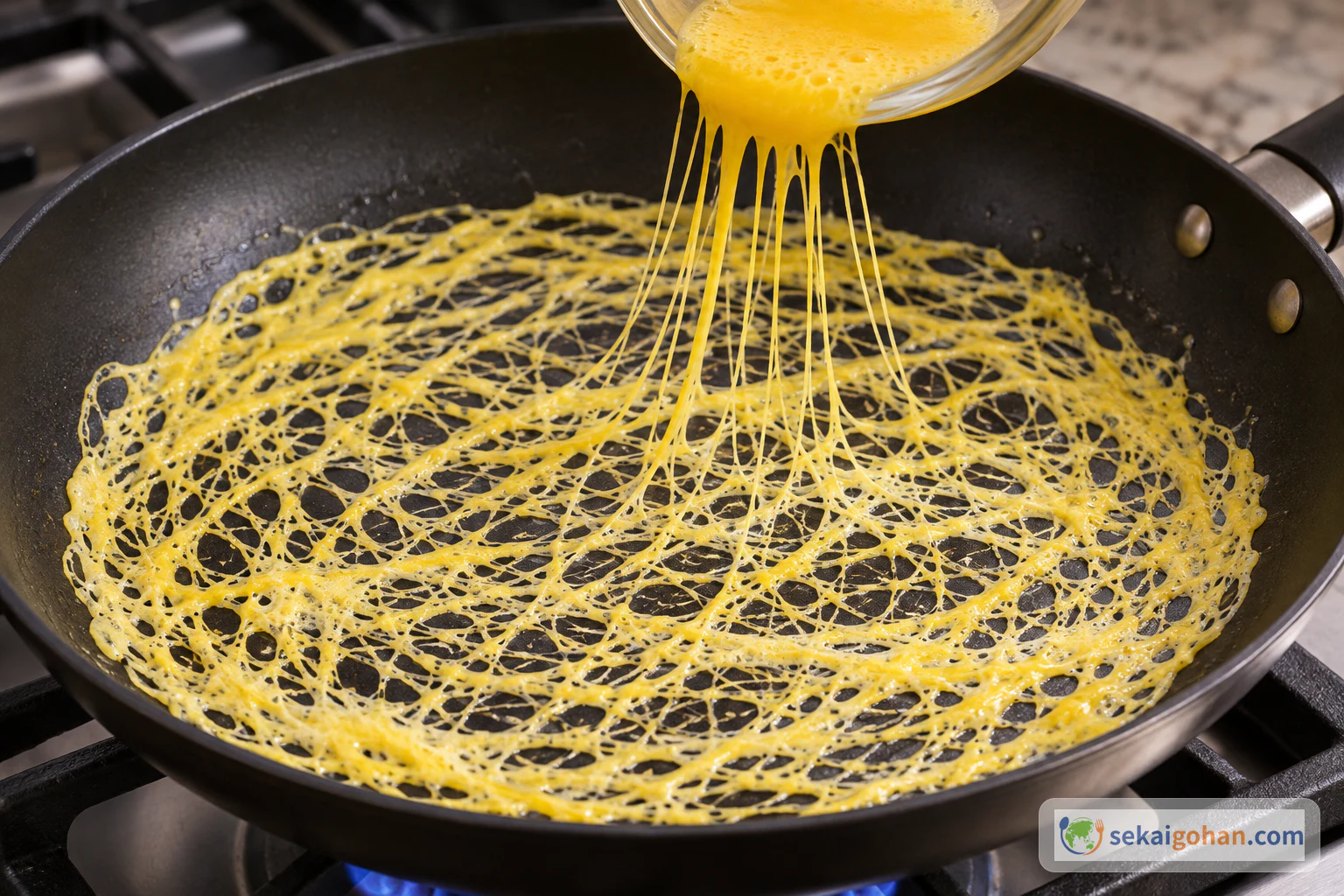
Thin threads of egg batter meet hot oil and set into a lacy net. A piece of fried, crumbed fish goes on top, and the net is folded around it. That fish-cutlet-and-egg-net sequence is the outline of the fish kabiraji described in The Telegraph's My Kolkata feature on Mitra Cafe. The name also appears as kobiraji, and it covers chicken and mutton versions too. This article stays with bhetki.
The recipe here is built on Mita Mondal's home recipe on Mitar Cooking: 500 g bhetki and four whole eggs for 4 servings. Her page takes the fish and the net through as one recipe, from soak to serving. We changed a few points on purpose, and you should know what they are before you cook.
This combined recipe has not been test-cooked. Treat its times and the batter split as starting points, and rely on the temperature checks in the method.
What differs from Mita Mondal's recipe
| Point | Mita Mondal's recipe | This article | Why |
|---|---|---|---|
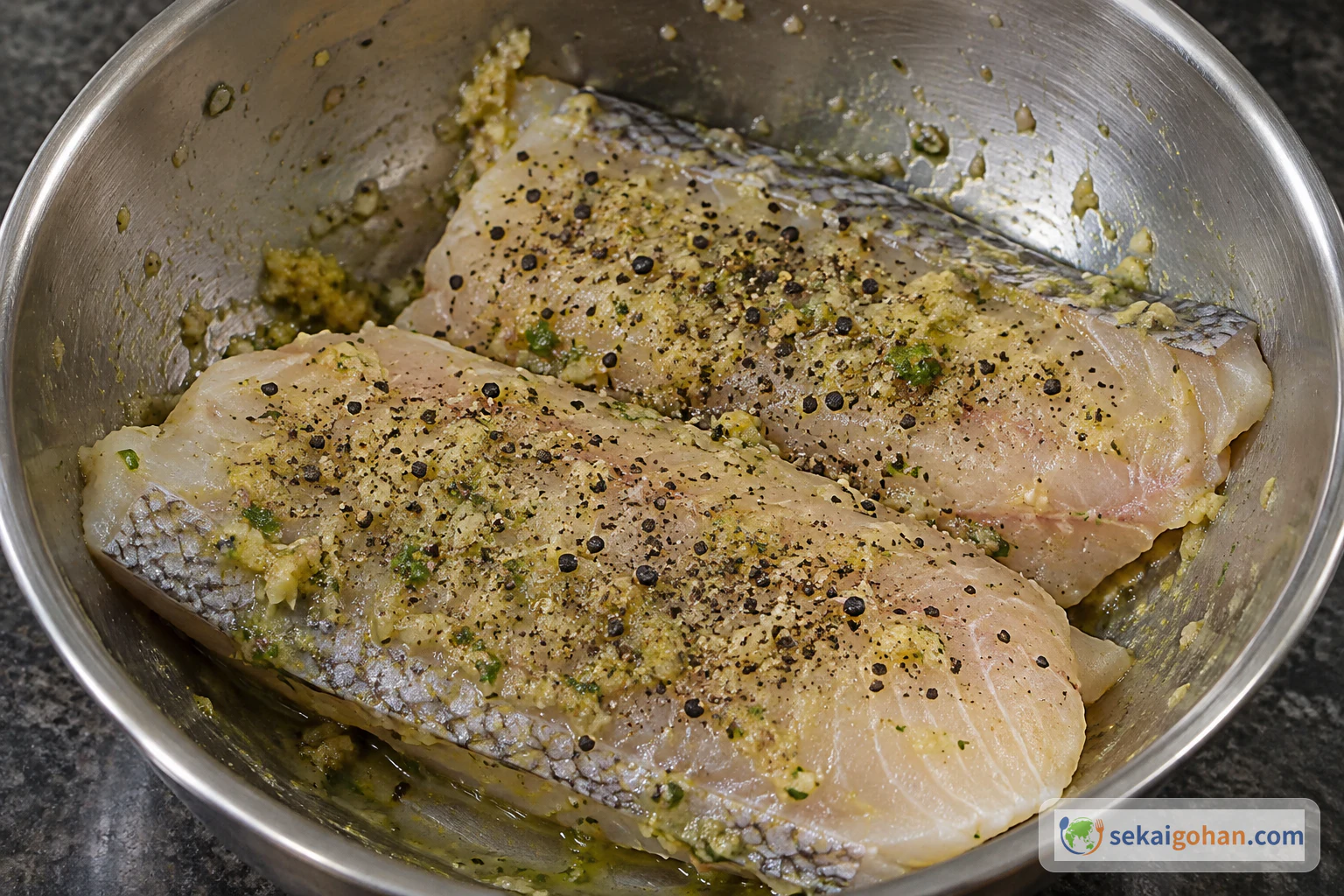
| Black pepper | Printed as 3 tbsp black pepper powder | 2 tsp | Experiences of a Gastronomad uses 2 tsp for 4 large bhetki fillets, and Bong Eats' Fish fry uses 4 g for 1.5 kg of fish. We found nothing that supports 3 tbsp. We don't call the printed figure a misprint, because no source corrects it. The fillet weight behind the 2 tsp is not stated, so this is not an exact conversion to 500 g. |
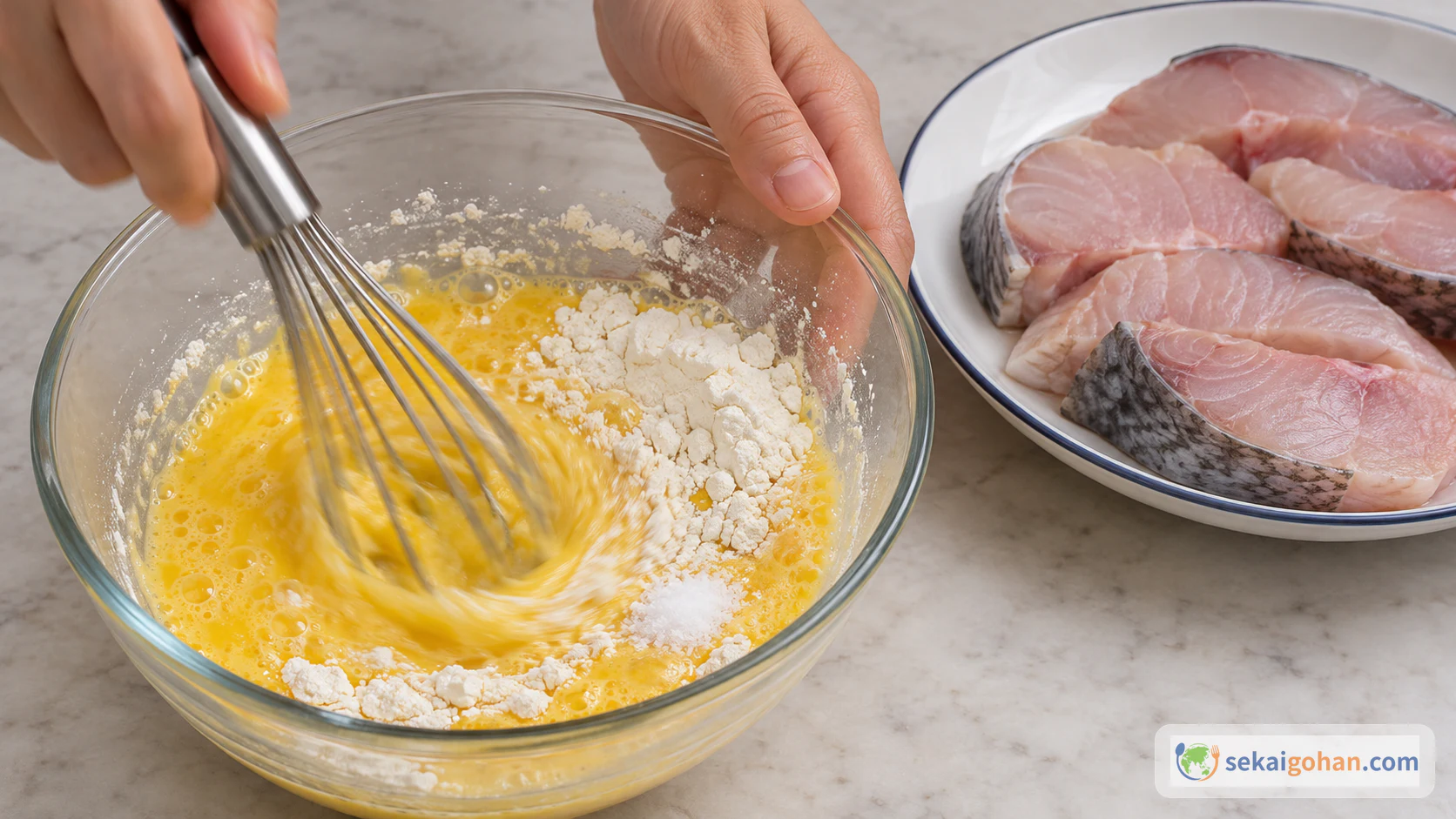
| Egg batter | One batter dips the raw fish, then makes the net | Split before any fish touches it: about 1/3 for the fish, about 2/3 for the net | Experiences of a Gastronomad's 2-egg and 4-egg batter allocation guides the ratio. It and Bong Eats both keep the fish's egg apart from the net batter. The FDA says not to reuse marinades used on raw food unless they are boiled first, and Safe Food Queensland advises discarding leftover egg wash. Those are general principles; neither names this batter. |
| "Corn flour" | Listed but not defined | Identified as cornstarch | Bong Eats lists cornstarch and calls it cornflour in the method for the same batter. India's food standards define maize starch (corn starch) as a white powder and whole maize flour as a separate product. This is an inference from usage, because Mita Mondal's page does not define it. |
| Making the net | Fingers dipped in batter and flicked over the hot oil | Thin pour from a spoon or spouted vessel | An editorial change to reduce the risk of burns. Flicking with the fingers is the method on Mita Mondal's page and on Bong Eats and Experiences of a Gastronomad. |
| Soak and marinade | No refrigeration step | In the refrigerator | The FDA says to always marinate food in the refrigerator. This is our addition, not Mita Mondal's instruction. |
| When it is done | About 5 minutes, then a little longer, with color as a cue | Those times are guides; a food thermometer sets the endpoint | FDA guidance lists 145°F (about 63°C) for fin fish and 160°F (about 71°C) for egg dishes. This is general guidance, not a validation of this method. |
Ingredients: 4 Servings
Choosing What You Buy
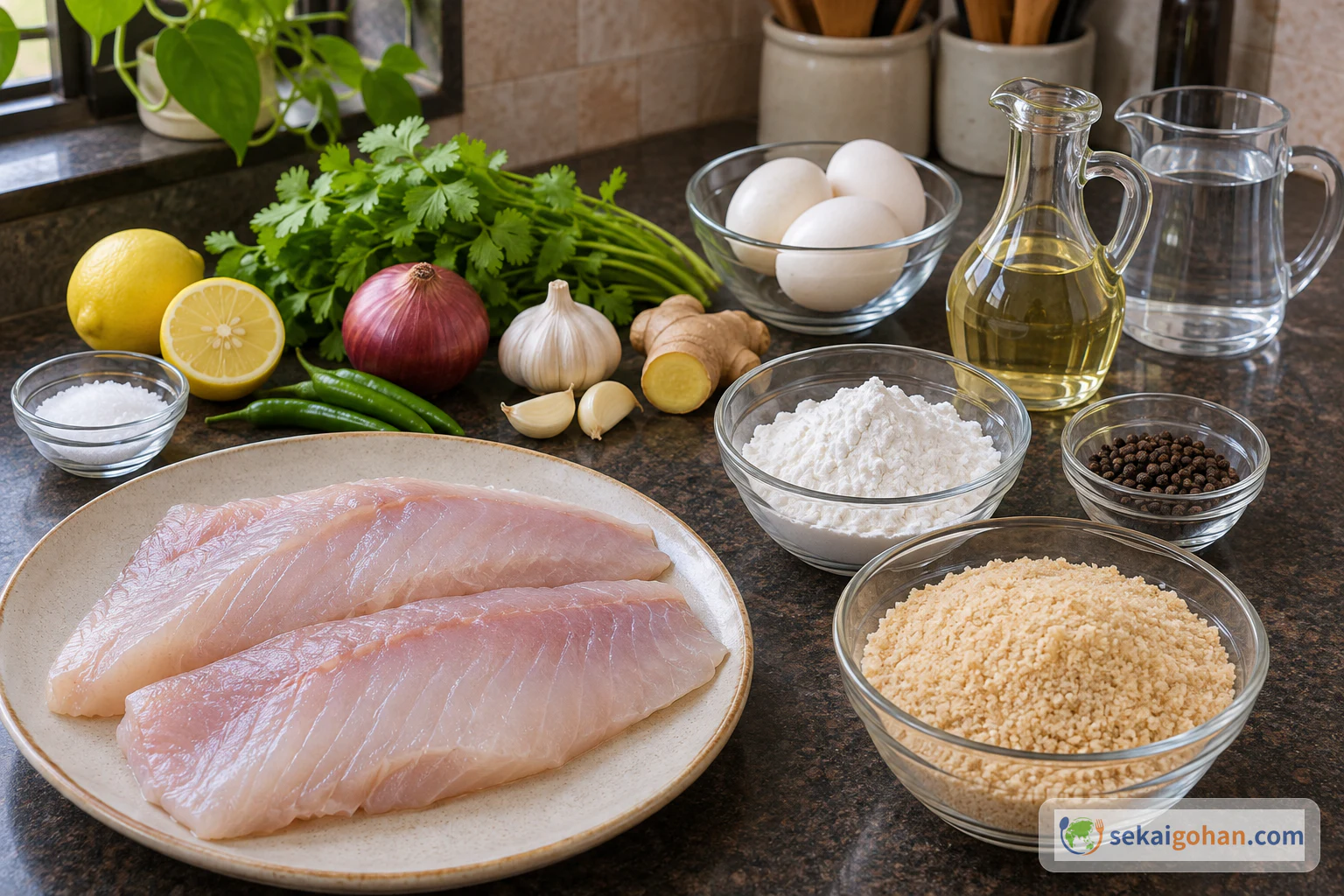
- Cornstarch: Look for a fine white powder. Yellow cornmeal and maize flour (makki ka atta) are different products, so don't use them here. Potato starch is also a different product, and it is not offered as a substitute.
- Eggs: Use whole eggs, not just the whites. Keep one more on hand in case the net batter runs short.
- Black pepper: If you have whole peppercorns, grind them before measuring.
- Bhetki: Use bhetki; no replacement fish is suggested.
- Allergens: This dish contains fish and egg, and breadcrumbs may contain wheat. Check the labels on the products you buy.
Equipment
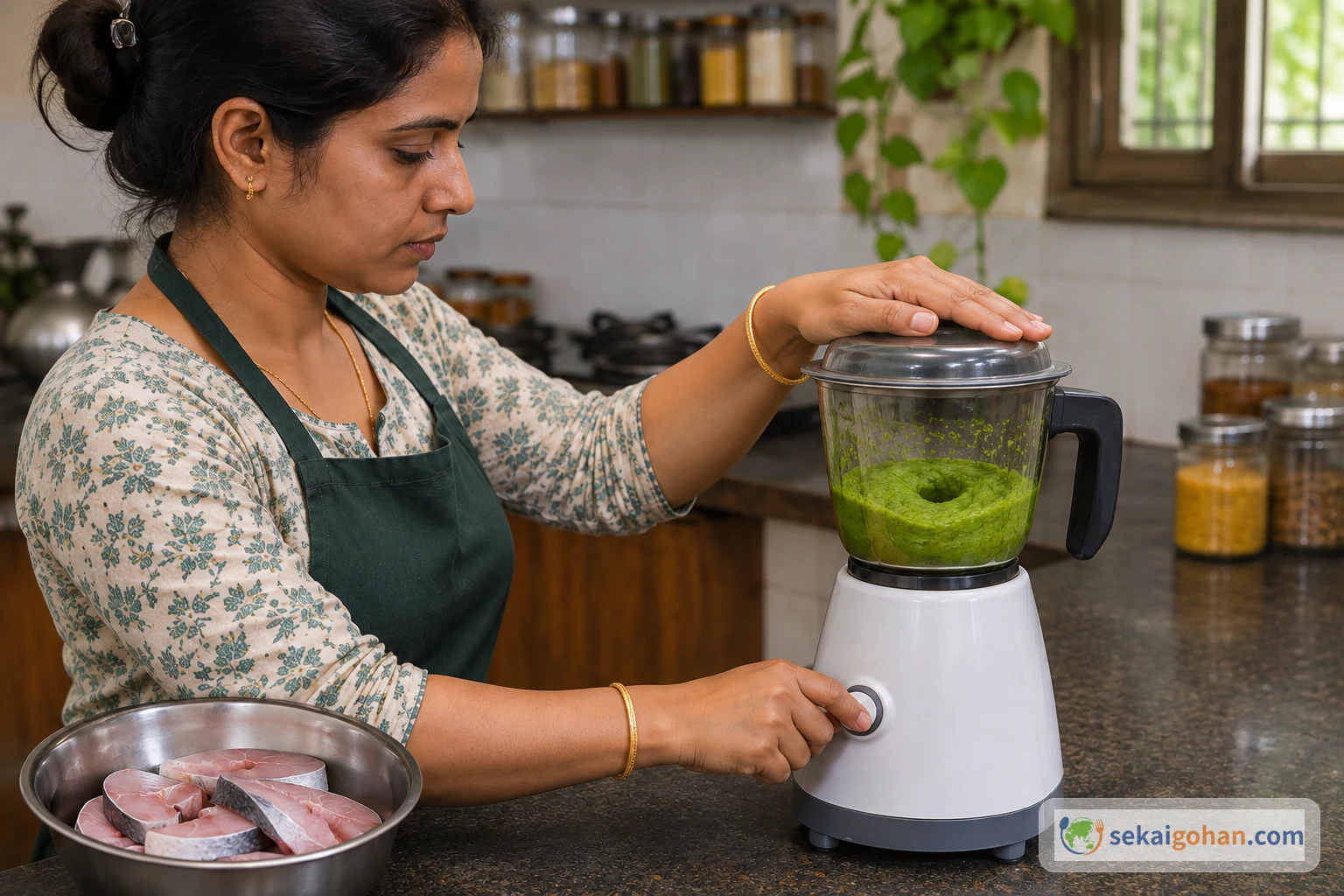
- Blender
- Cutting board and knife
- Separate bowls for the soak, the marinade, the fish batter and the net batter
- Whisk
- Plate for the breadcrumbs
- Frying pan
- Spoon or spouted vessel for pouring the net
- Clean utensils for lifting and folding
- Food thermometer
- Clean paper or a clean plate for draining
Method: Fish First, Then the Net
Keep the net batter away from raw fish from the moment you divide it. Wash anything that touches raw fish, including cutting boards, dishes, utensils and counters, with hot soapy water. Wash your hands with soap for at least 20 seconds. Hot oil can spatter, especially when you pour the net.
Leftovers
Refrigerate leftovers within 2 hours, or within 1 hour if the air temperature is above 90°F (32°C). This recipe does not set a storage period or give reheating instructions.
Fixing Problems at the Pan
| What happens | Likely reason | What to do |
|---|---|---|
| The time is up, but the fish center is below 145°F (about 63°C) | Time is only a guide | Keep frying and check again |
| The crumbs have color, but the temperature is low | Color does not show the center's temperature | Don't go by color; keep frying until the thermometer reading is right |
| The net batter runs out | The split is scaled from another recipe and may not stretch far enough | Beat a fresh egg. Don't add fish batter |
| Fish touched the net batter | The bowls got mixed up or a utensil was shared | Don't use that batter for the net. Discard it and beat fresh egg |
| The oil spatters as you pour | The stream is too heavy | Stand back and pour a thinner stream |
| The paste won't blend | There is too little liquid to move the blades | Stop the blender and scrape it down rather than adding water |
| The batter looks yellow and gritty | Cornmeal or maize flour may have been used instead of cornstarch | Start again with white cornstarch |
How Other Kabiraji Recipes Differ
These recipes show how much the dish varies. Their ingredients and amounts are not combined with the recipe above.
| Recipe | What it does | How it is used here |
|---|---|---|
| Bong Eats, Fish Kabiraji and Fish fry | Keeps the egg wash separate from the kabiraji batter. The egg web serves 3 cutlets and draws on a separate 20-cutlet Fish fry batch. It adds maida, jowan and parsley across those recipes | Supports separating the batter and reading corn flour as cornstarch, and provides a pepper comparison |
| Experiences of a Gastronomad (Maumita Paul) | Uses 2 tsp pepper for 4 large bhetki fillets, 2 eggs for the wash, 4 eggs in the net batter and 1 egg to bind | Supplies the pepper amount and the batter ratio. It is a personal food blog, not an institution |
| Slurrp | Lists 2 fillets, 2 coating eggs and 4 net eggs | Comparison only; firsthand authorship could not be established |
| Prothom Alo | Lists 4 bhetki fillets and 4 eggs, then calls for another egg in the method | Comparison only, because the egg count doesn't reconcile |
| Aaj Tak Bangla | Uses bhetki with a rohu stuffing and describes no egg net | Comparison only, because it is a different form of the dish |
The batter ratio also differs among these recipes. Bong Eats uses 8 g cornstarch and 8 g maida to 200 g egg, which is less flour than Mita Mondal's 4 tbsp corn flour to 4 eggs.
Kabiraji in Kolkata
Fish kabiraji is linked with Kolkata's cabin-style cutlets covered in egg. The Telegraph's feature on Mitra Cafe offers a view of how one Kolkata restaurant presents it, while Mita Mondal's page is a measured recipe for home cooks. These are different kinds of evidence, and neither settles where the dish or its name came from, so we leave those questions open. You can explore more of the country's dishes on our India page.
Frequently Asked Questions
Why 2 tsp of black pepper when Mita Mondal's recipe prints 3 tbsp?
Her page prints 3 tbsp black pepper powder for 500 g bhetki, and we found no other material that supports that figure. Experiences of a Gastronomad uses 2 tsp for 4 large fillets, so we adopted that as an editorial change. No source corrects her figure, so we do not call it a misprint.
Is corn flour the same as cornstarch?
In this recipe, we treat it as cornstarch. That is an inference: Bong Eats uses both words for the same batter, and India's food standards separate corn starch from whole maize flour. Mita Mondal's page does not define the term, and no manufacturer label was read for this article.
Why divide the batter instead of using one bowl?
Dividing it means the net batter never touches raw fish. Mita Mondal's page uses one batter for both, and we found no agency guidance on that exact handling. With the split, the question doesn't arise. The 1/3 and 2/3 split is scaled from a different recipe, so we don't know whether the net portion will always be enough. That is why the method allows for a fresh egg.
Can I flick the batter with my fingers instead?
Flicking is how Mita Mondal, Bong Eats and Experiences of a Gastronomad make the net, but it puts your hand close to hot oil. This recipe uses a thin pour from a spoon or spouted vessel to reduce the risk of burns.
Does the lemon soak make the fish safe?
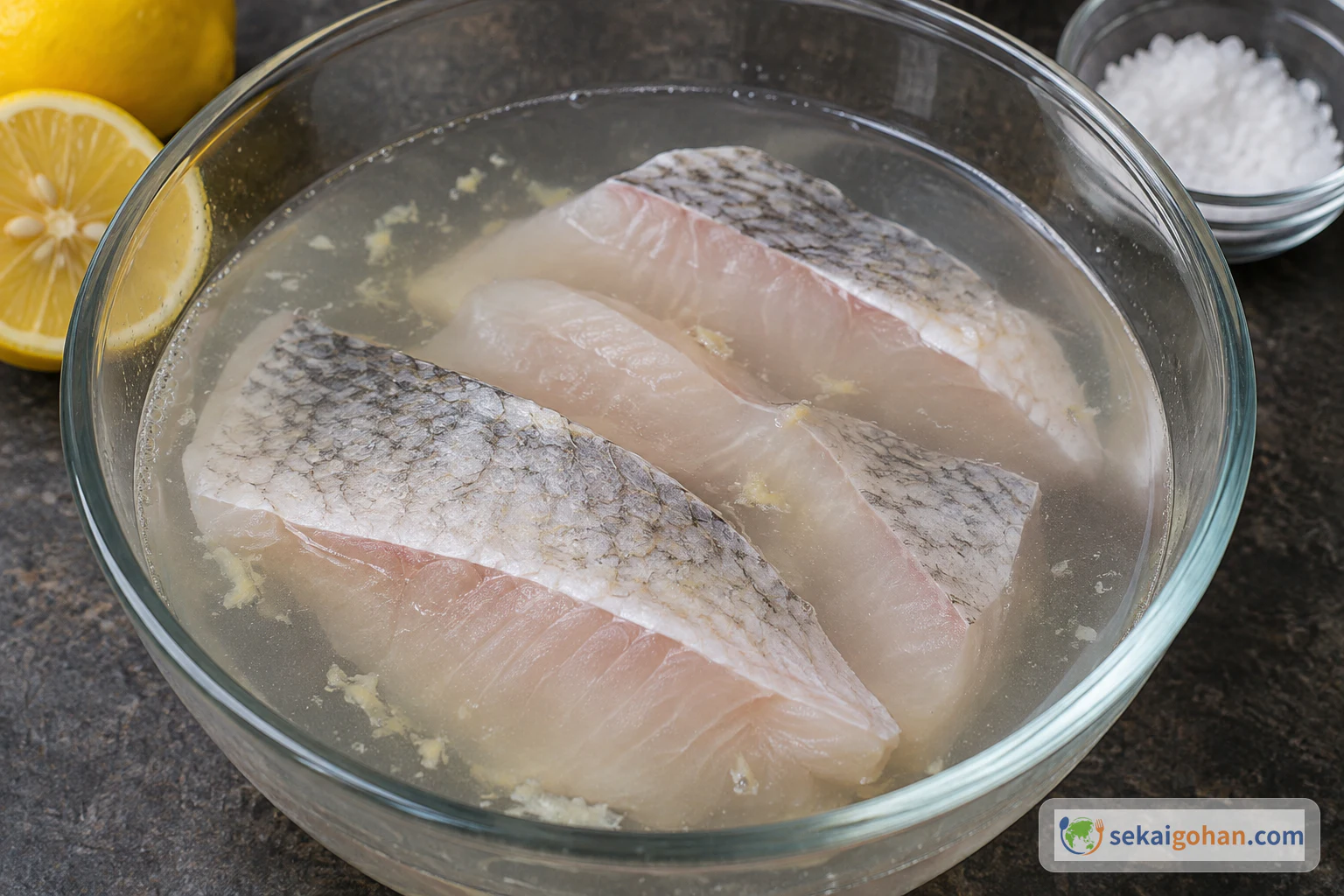
No. Don't treat the lemon water as a way to sanitize the fish. Keep the fish in the refrigerator while it soaks and marinates, then cook it to the temperatures in the method. The refrigeration follows FDA advice and is not part of Mita Mondal's recipe.
Can I use a different fish?
This recipe is written only for bhetki, which is associated with the English name barramundi. We have not worked out a version for another fish or checked where bhetki is sold outside India.
Has this recipe been tested?
No. The combined recipe, with its changes to pepper, batter and net-making, has not been test-cooked. Its times are guides, and the thermometer checks set the endpoint.
Sources
- Mita Mondal, "Fish Kabiraji Recipe," Mitar Cooking, 2025. The base recipe: 4 servings, 500 g bhetki, whole-egg and corn flour batter, the printed 3 tbsp black pepper powder, the shared batter, and the approximate frying times. https://mitarcooking.com/fish-kabiraji/
- U.S. Food and Drug Administration, "Safe Food Handling." Fin fish at 145°F and egg dishes at 160°F, food thermometer use, refrigerated marinating, not reusing marinades from raw food unless boiled first, washing, and refrigerating within 2 hours (1 hour above 90°F). General guidance, not a validation of this method. https://www.fda.gov/food/buy-store-serve-safe-food/safe-food-handling
- Bong Eats, "Fish Kabiraji." Cornstarch and cornflour used for the same batter, and the egg wash kept separate from the web batter. https://www.bongeats.com/recipe/fish-kabiraji/
- Bong Eats, "Fish fry." Pepper comparison of 4 g for 1.5 kg bhetki, and the separate 20-cutlet batch. https://www.bongeats.com/recipe/fish-fry/
- Maumita Paul, "Fish Kobiraji," Experiences of a Gastronomad, 2017. Black pepper at 2 tsp for 4 large bhetki fillets, separate eggs for the wash and the net, and fingertip flicking. https://experiencesofagastronomad.com/fish-kobiraji
- Food Safety and Standards Authority of India, "Chapter 2.4 Cereals and Cereal Products." Separate standards for maize starch (corn starch) and whole maize flour. https://fssai.gov.in/upload/uploadfiles/files/Chapter%202_4_Cereals_and_Cereal_products.pdf
- Safe Food Queensland, "Your winter baking safety guide," 2018. Discarding leftover egg wash; baking guidance applied here as a general principle. https://www.safefood.qld.gov.au/newsroom/baking-food-safety/
- Aatreyee Mohanta, "Sunday Classics: Fish Kabiraji from Mitra Cafe," The Telegraph India / My Kolkata. A restaurant feature on the presentation of the dish and its fish-cutlet and egg-net sequence. https://www.telegraphindia.com/my-kolkata/try-this/eat/sunday-classics-fish-kabiraji-from-mitra-cafe/cid/1840878
- Shreya Goswami, "Fish Kabiraji, A Must-Have Iconic Treat From West Bengal," Slurrp, 2023. Comparison only. https://www.slurrp.com/web-stories/fish-kabiraji-a-must-have-iconic-treat-from-west-bengal/
- Prothom Alo / Naksha desk, recipe credited to Shubhagata Debashish, "ফিশ কবিরাজি তৈরি হবে বাড়িতেই." Comparison only. https://www.prothomalo.com/lifestyle/recipe/cheqpc9u80
- Aaj Tak Bangla, "Fish Kabiraji: সময় লাগবে মাত্র ৫ মিনিট, কেবিন স্টাইল কবিরাজি হাজির টেবিলে," 2025. Comparison only. https://bangla.aajtak.in/lifestyle/story/how-to-make-fish-kabiraji-recipe-at-home-kolkata-street-food-bengali-food-lifestyle-news-sum-1240929-2025-07-07