Kombdi Vade: A Chicken Curry and a Fried Bread on One Table
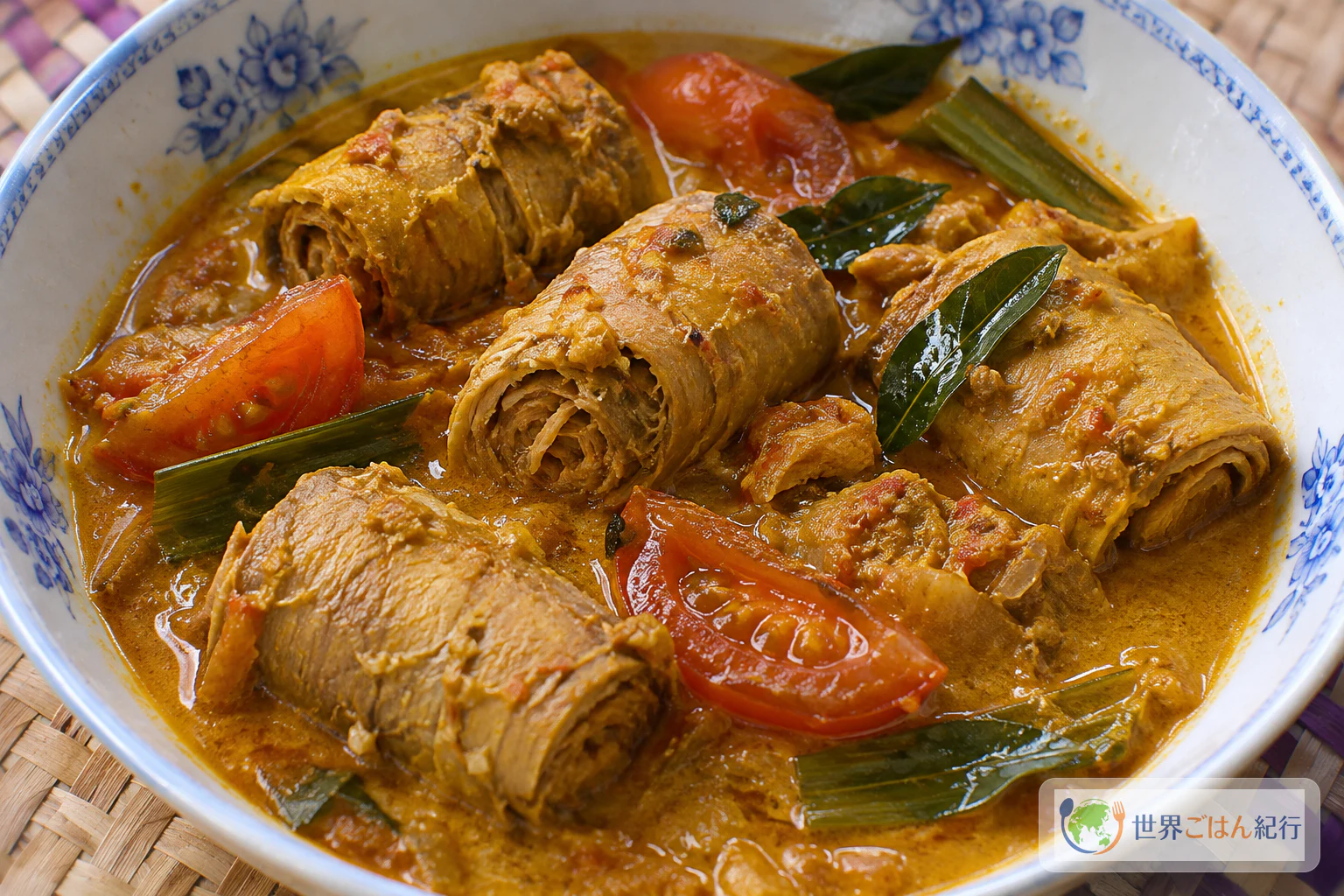
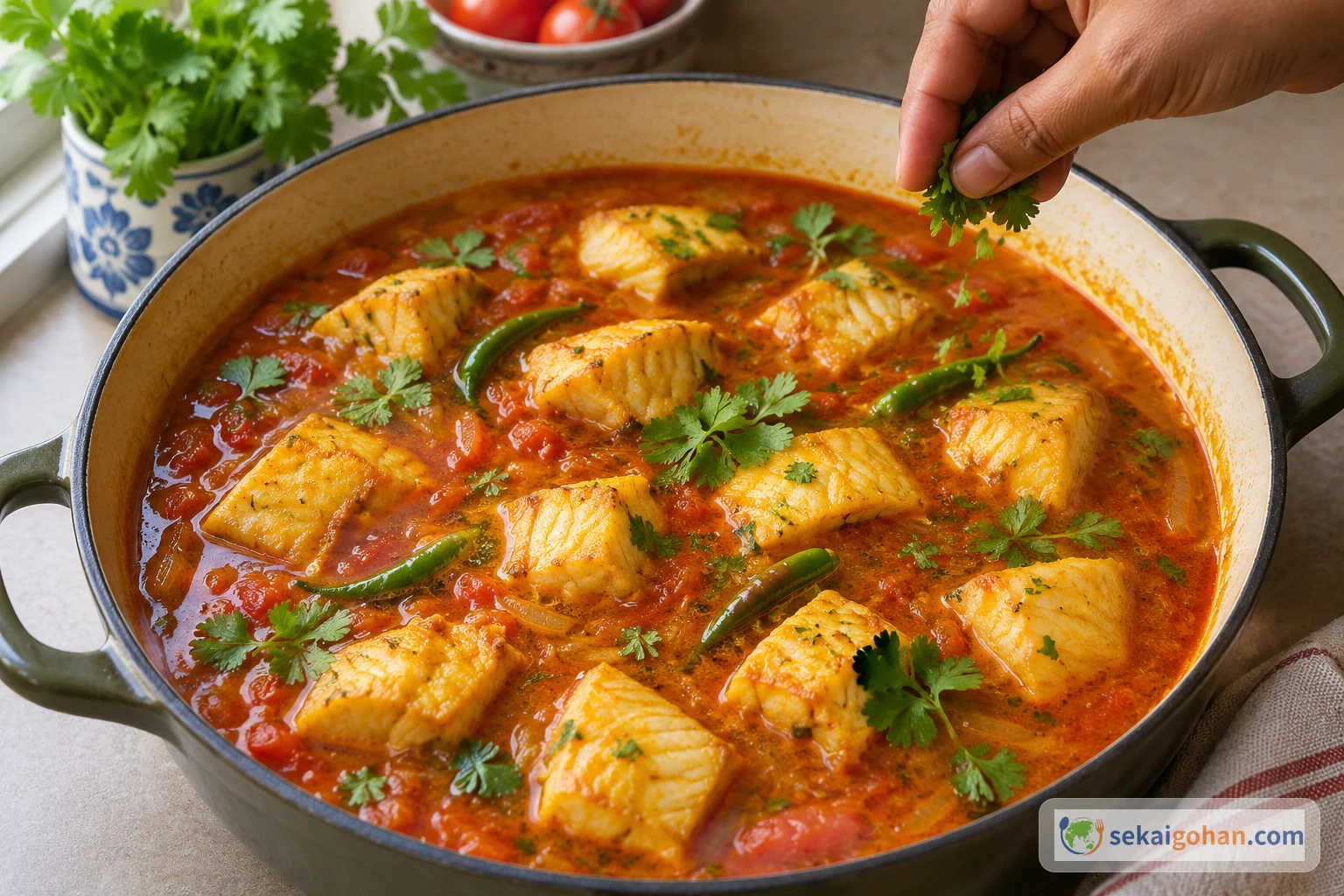
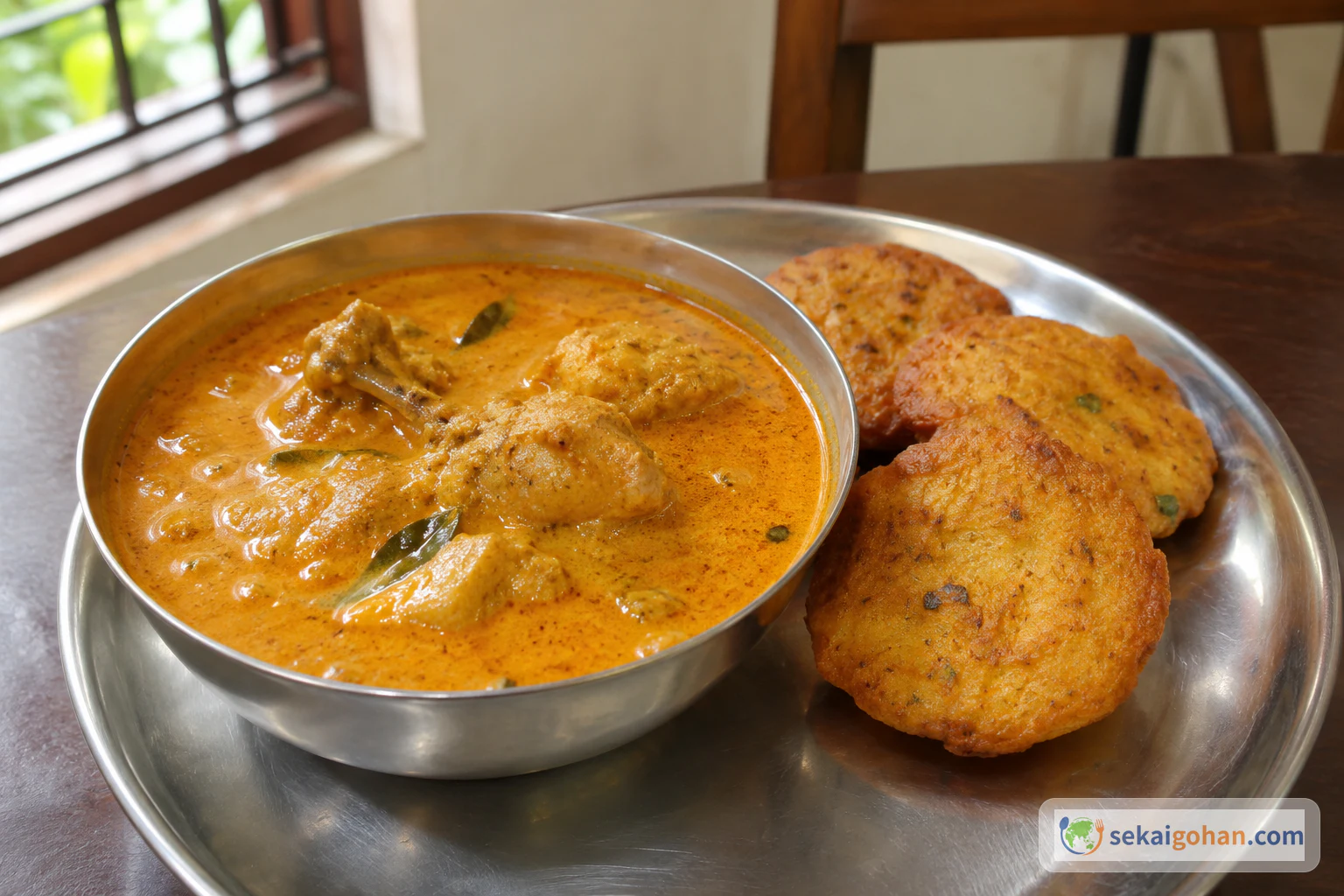
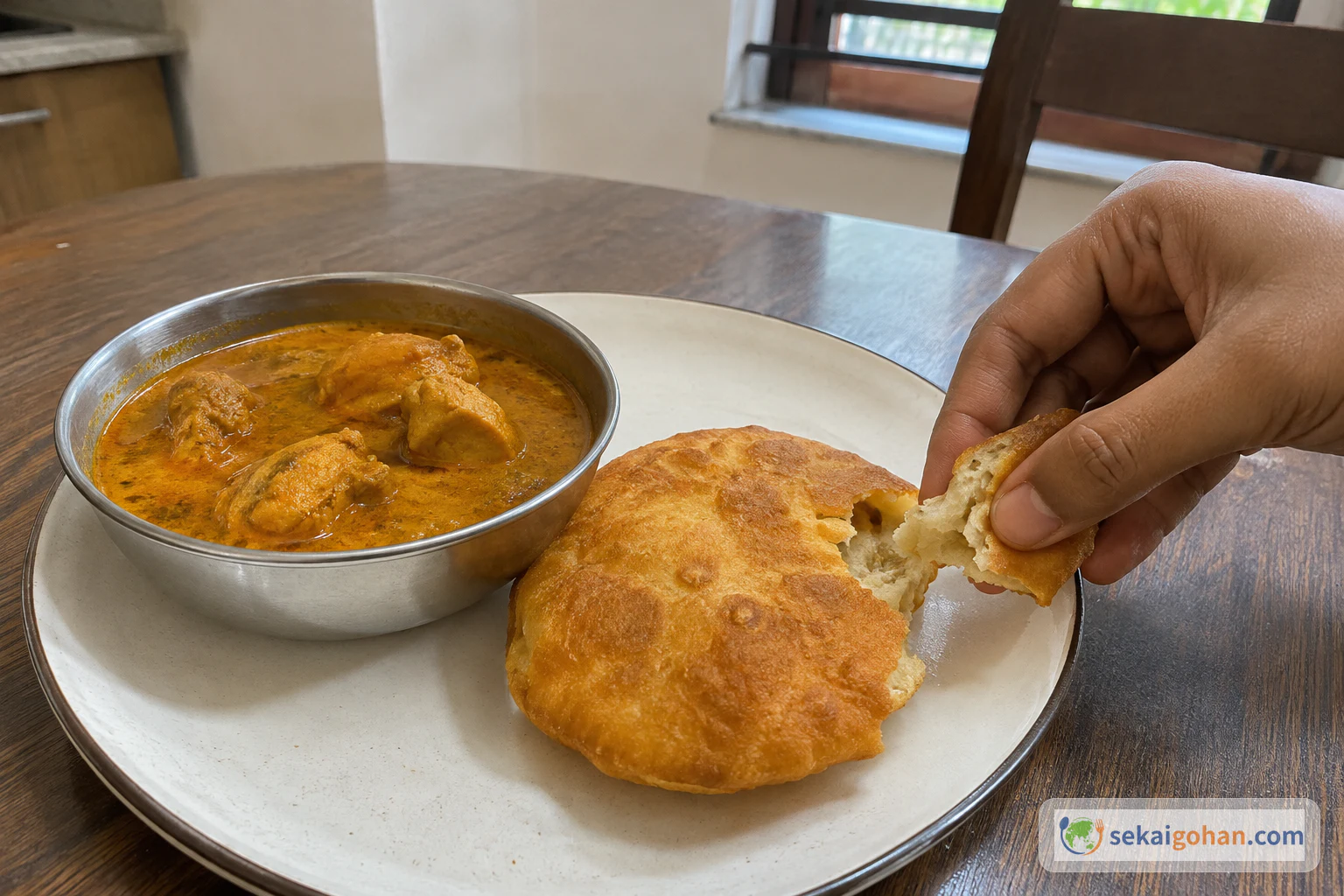
Two textures meet here: a coconut chicken curry with plenty of gravy, and a thick fried vade to tear and dip into it. Treat the curry and the vade as one dish, not a chicken curry with an optional side.
Maharashtra Tourism's pocket guide describes kombdi vade as a dish of coastal Konkan Maharashtra: a spicy chicken curry served with vade, a fried bread. The same guide places it at festivals, special occasions and Sunday family meals. That does not mean every household eats it that way, but it gives a sense of the dish as something cooked for a gathered table.
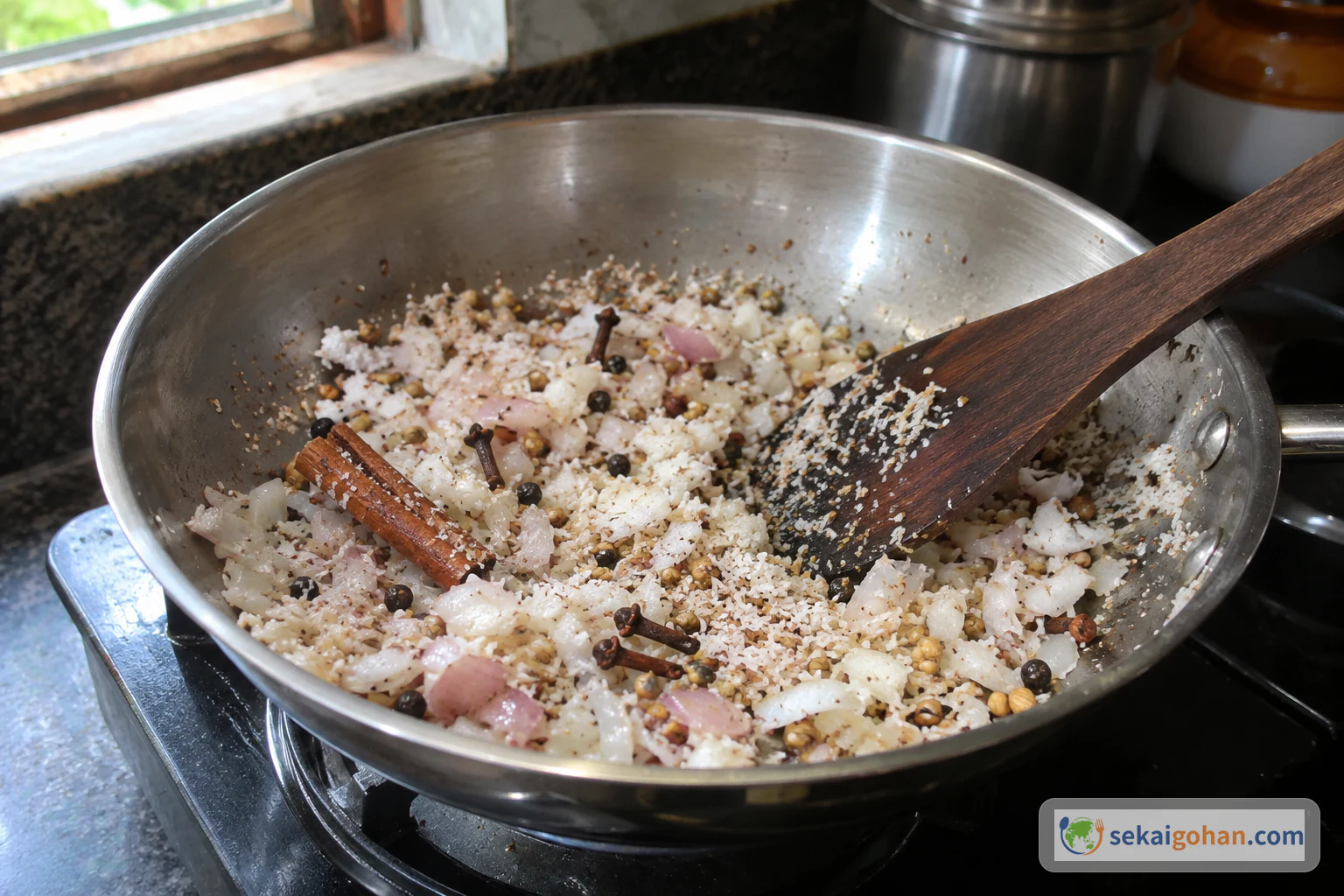
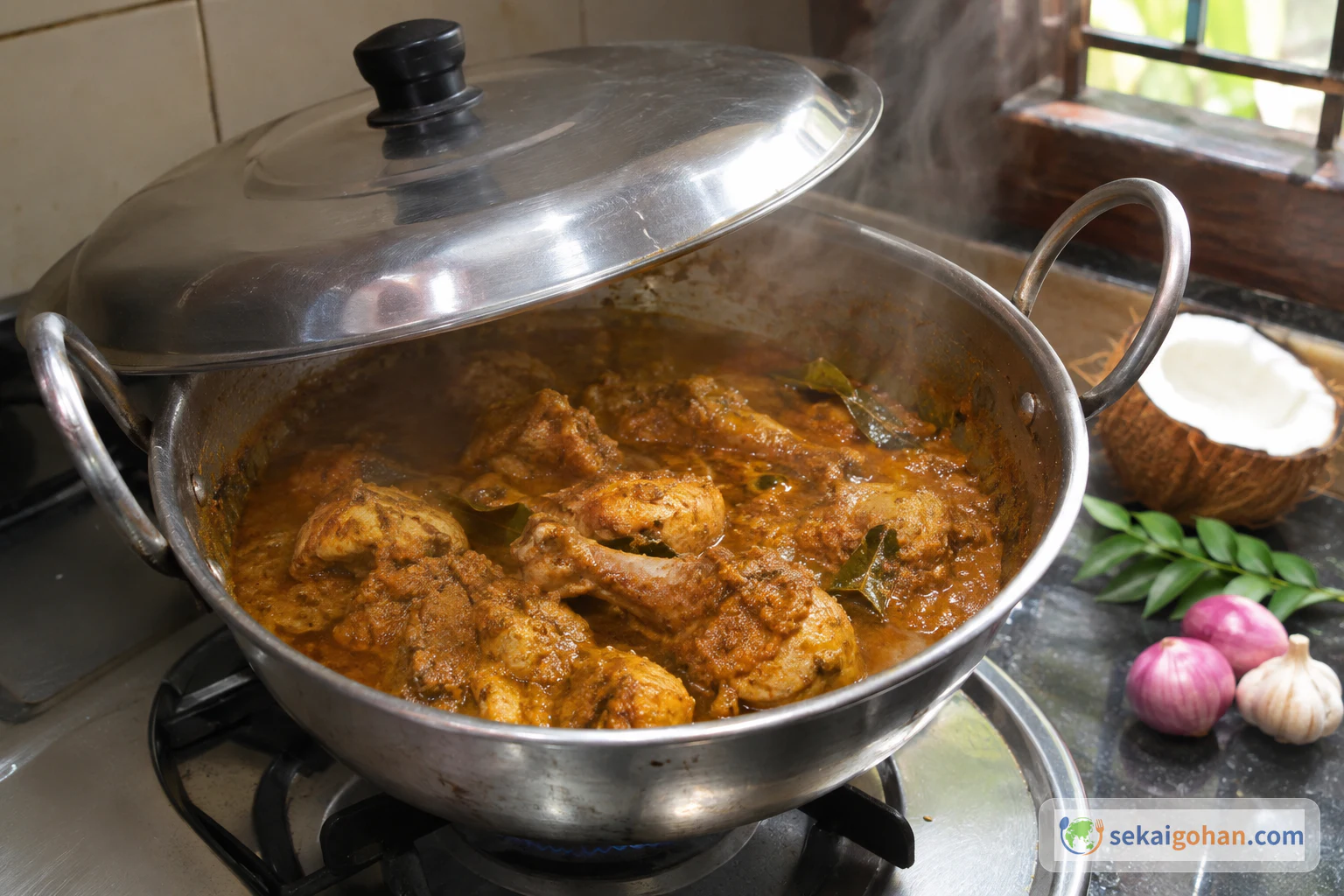
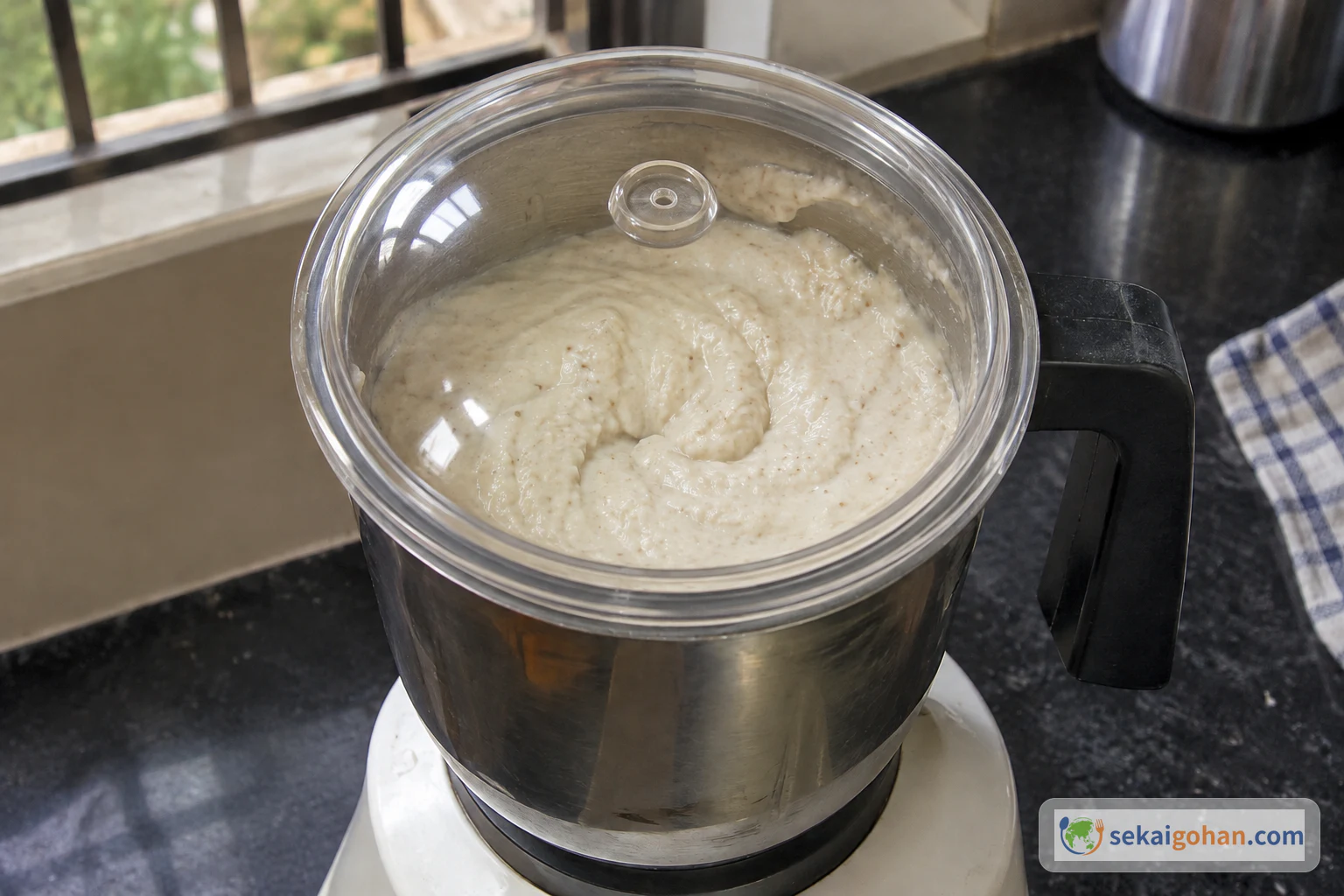
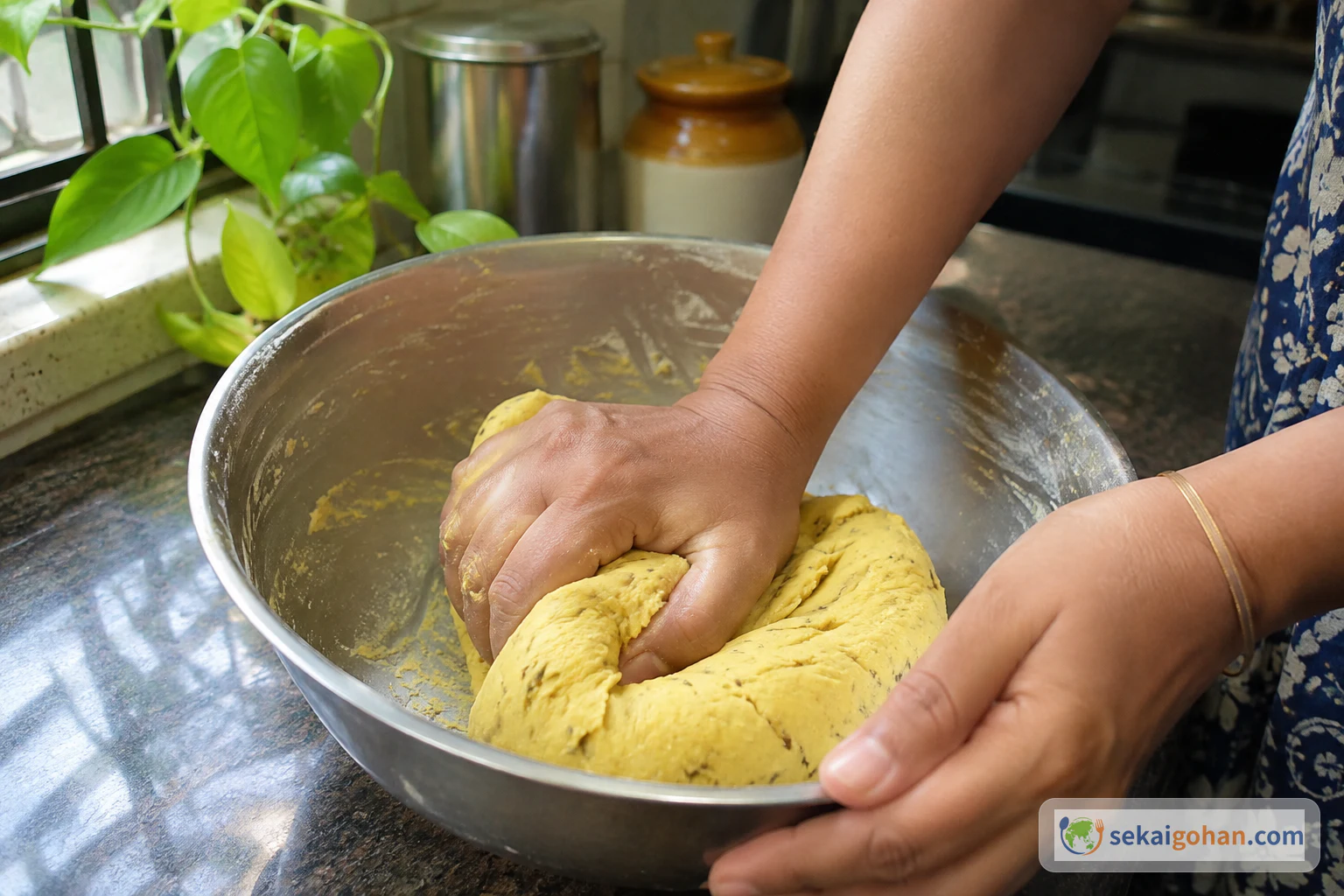
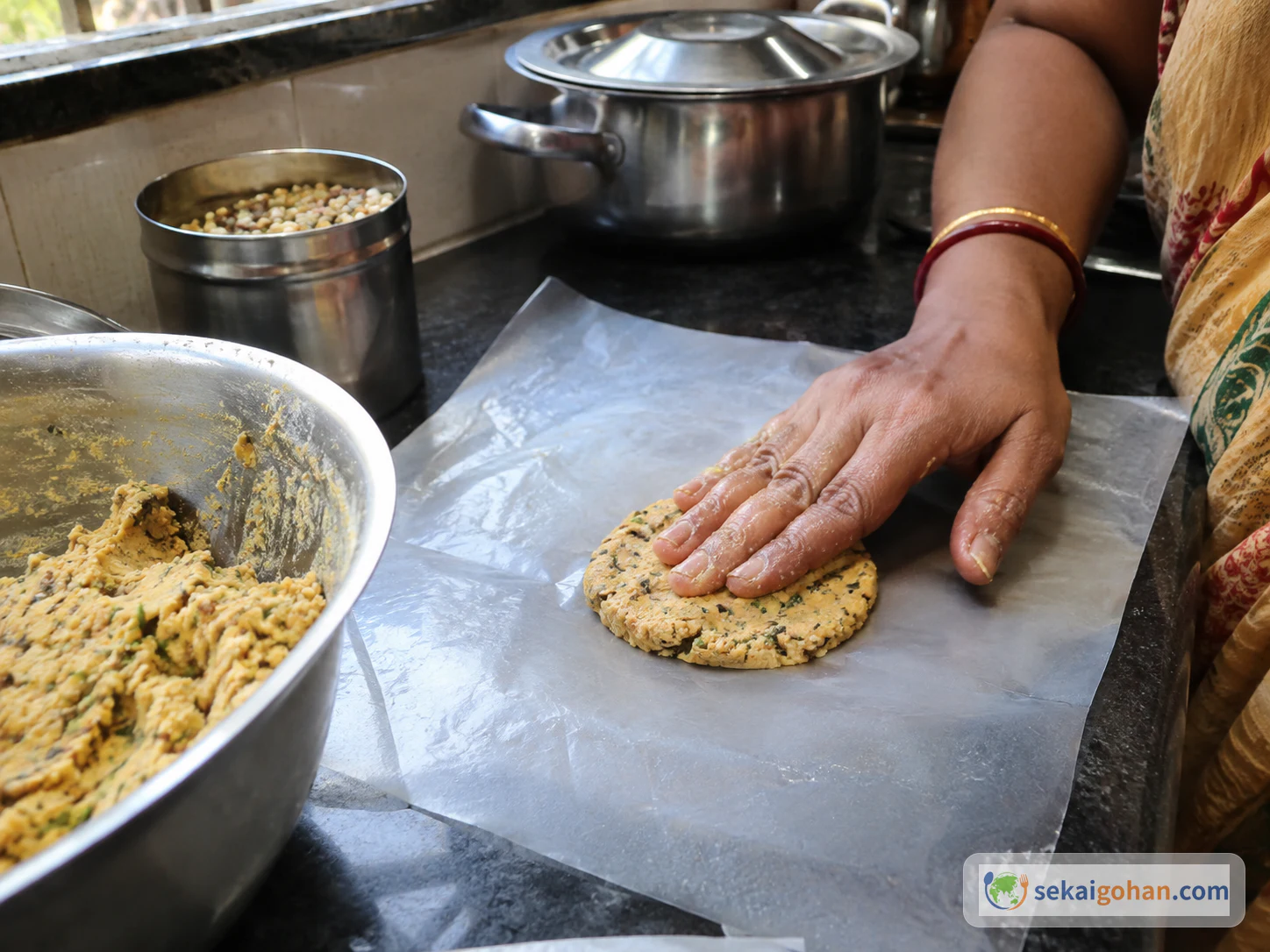
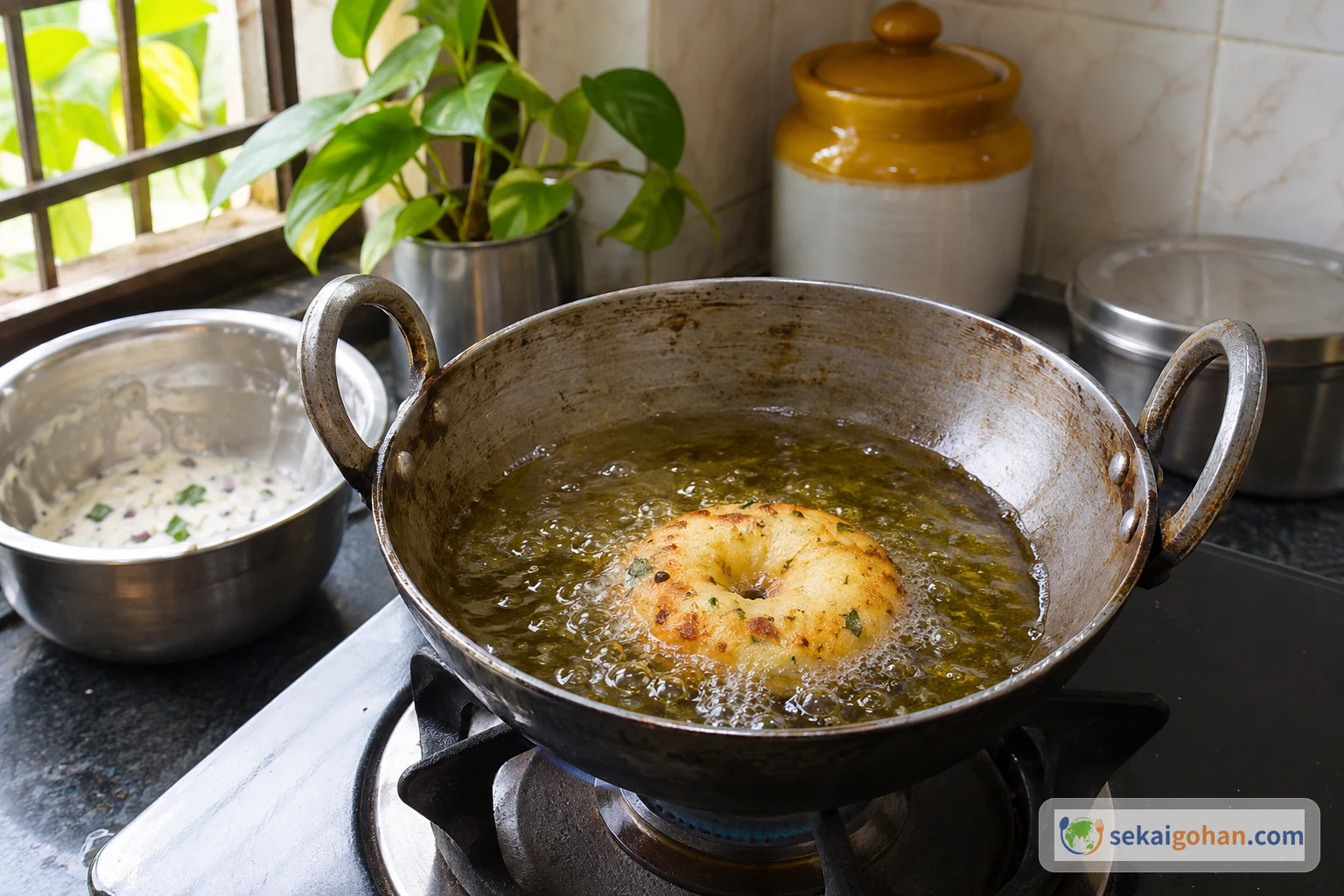
The name says what is on the plate. Kombdi is the Marathi word for chicken, and vade here means fried flatbreads. The curry is built from a paste of whole spices, onion and grated coconut, then finished with coconut milk. The vade are made from a soaked and ground paste of urad dal, cumin and fenugreek, mixed into rice flour, besan and wheat flour, shaped by hand and deep-fried.
This article follows one complete recipe: the Konkan-style kombadi vade credited to Archana and published by Ruchkar Mejwani. Its amounts are used as listed, without mixing in quantities from other versions. Sekai Gohan has not kitchen-tested this recipe. Where the published recipe leaves something open (how much water and salt, which chicken cut, how many vade it makes, how hot the frying oil should be), this article leaves it open too rather than filling in numbers.
For more dishes from the country, see our Indian recipes.
Konkan, Malvani and the Many Kinds of Vade Flour
Different sources name and build this dish in slightly different ways. Maharashtra Tourism ties it to the Konkan coast. Archana's recipe is presented as "Konkan style." A hospitality textbook hosted by Yashwantrao Chavan Maharashtra Open University also calls it Chicken Malvani, describing a Malvani curry with bone-in chicken. This article does not claim a single town or origin for the dish.
The vade flour varies most of all. The tourism guide mentions rice flour and urad dal. The university textbook describes vade of wheat or nachni (finger millet) flour. MarathiMati's home recipe uses a bhajani, a mix of rice, jowar, wheat, chana, urad and poha that is roasted ingredient by ingredient, cooled, coarsely ground, kneaded with warm water and rested before frying. Hema Shet, writing about her own first attempt, made the vade with a store-bought bhajani atta alongside a different Malvani chicken rassa.
None of these is the one correct version. Archana's recipe uses rice flour, besan and wheat flour, plus a fresh paste of urad dal, cumin and fenugreek soaked overnight. It is a clear, complete recipe with both the curry and the vade, which is why it is the version followed here.
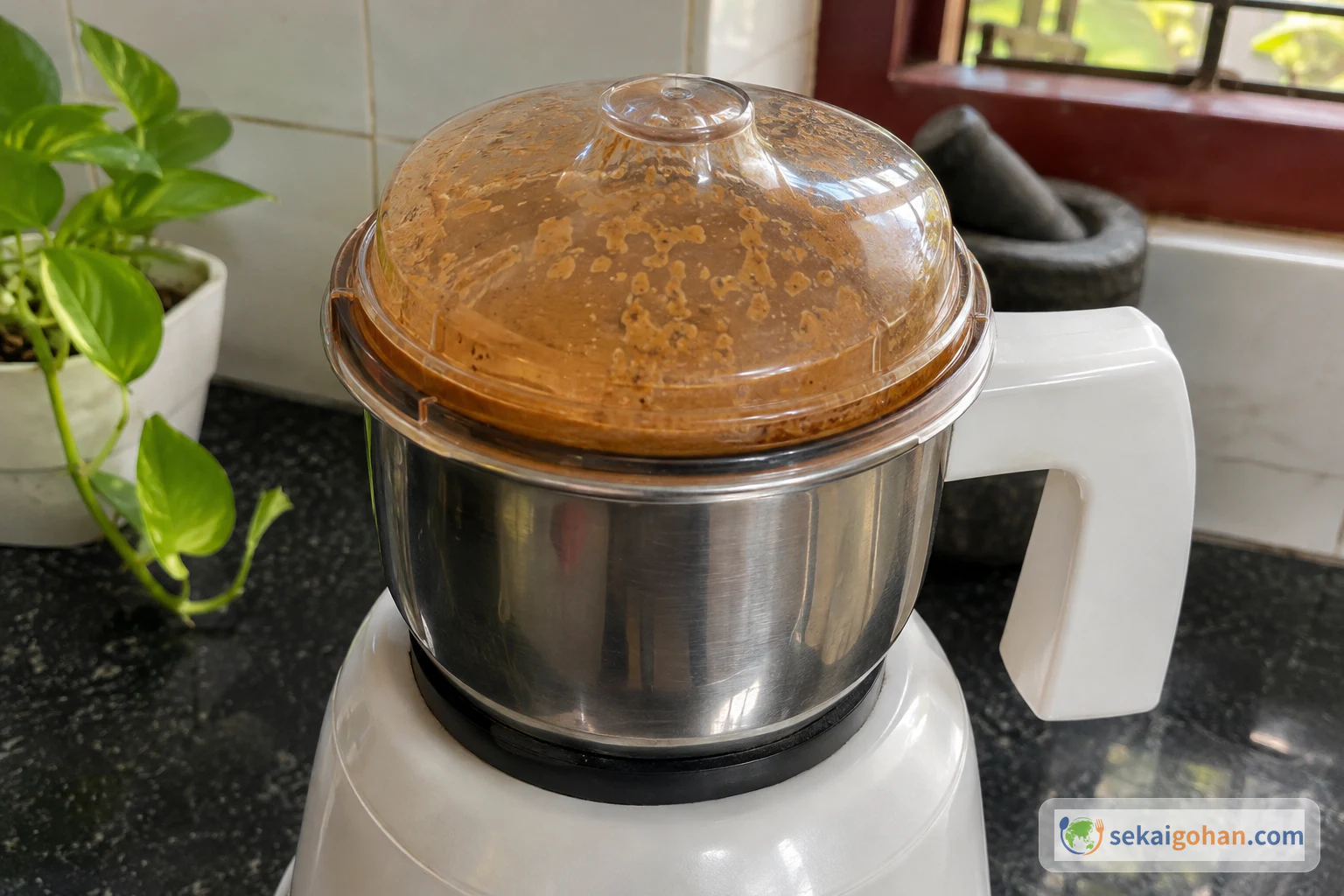
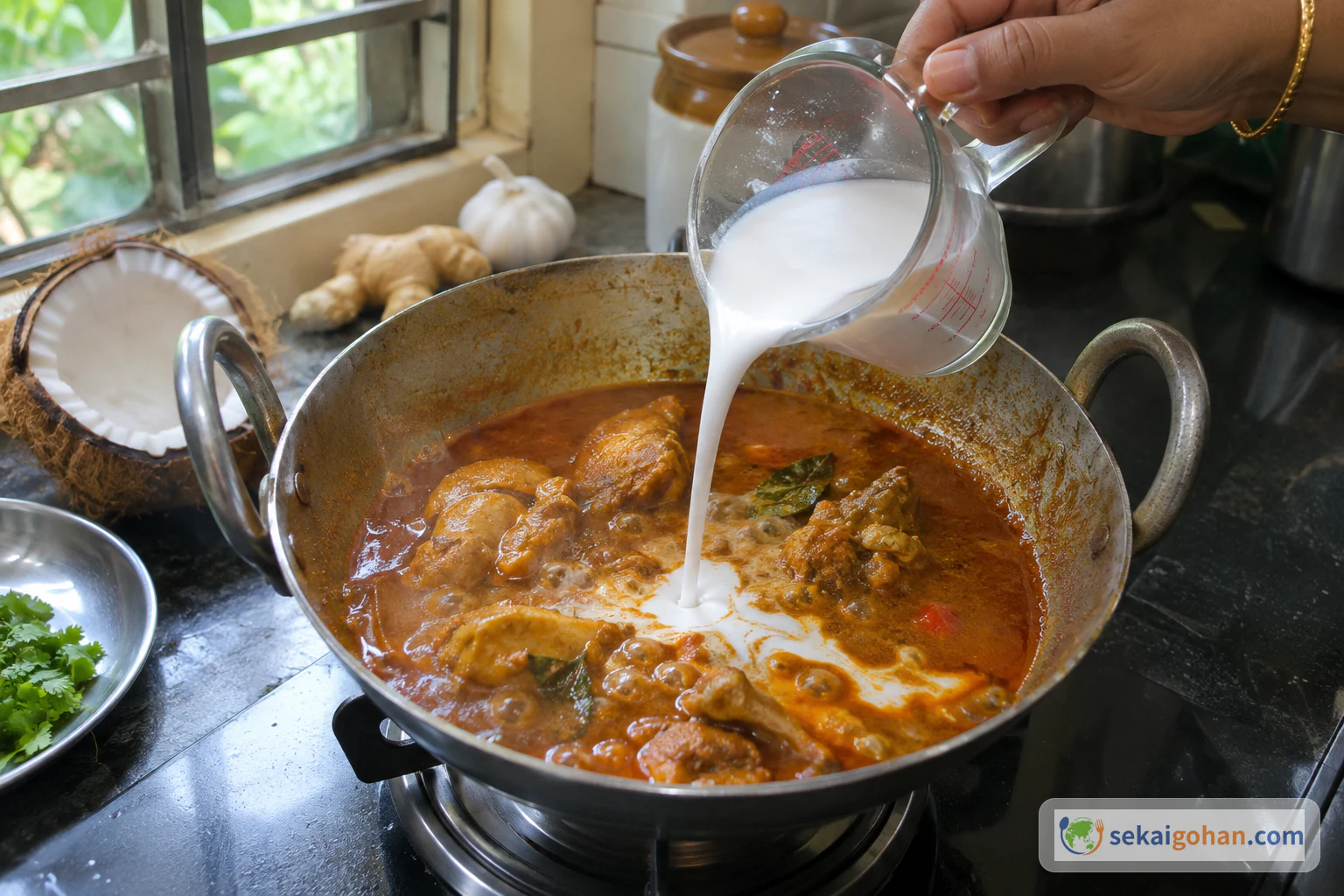
Coconut appears twice in this curry: grated coconut is sautéed and ground into the spice paste, and coconut milk goes in at the end. The tourism guide describes Malvani masala in general as roasted spices, coconut and red chilies. Archana's recipe instead calls for a "mix masala" without saying which blend. For that reason this article does not treat Malvani masala or curry powder as identical to it.
A few notes on how this version is handled
- Oil. The recipe lists 2 tbsp of oil twice for the curry and uses oil at two stages: once for the aromatics, once for the gravy. Here, 2 tbsp goes to each stage. This keeps the listed total and is our allocation, not an amount the recipe states for each stage.
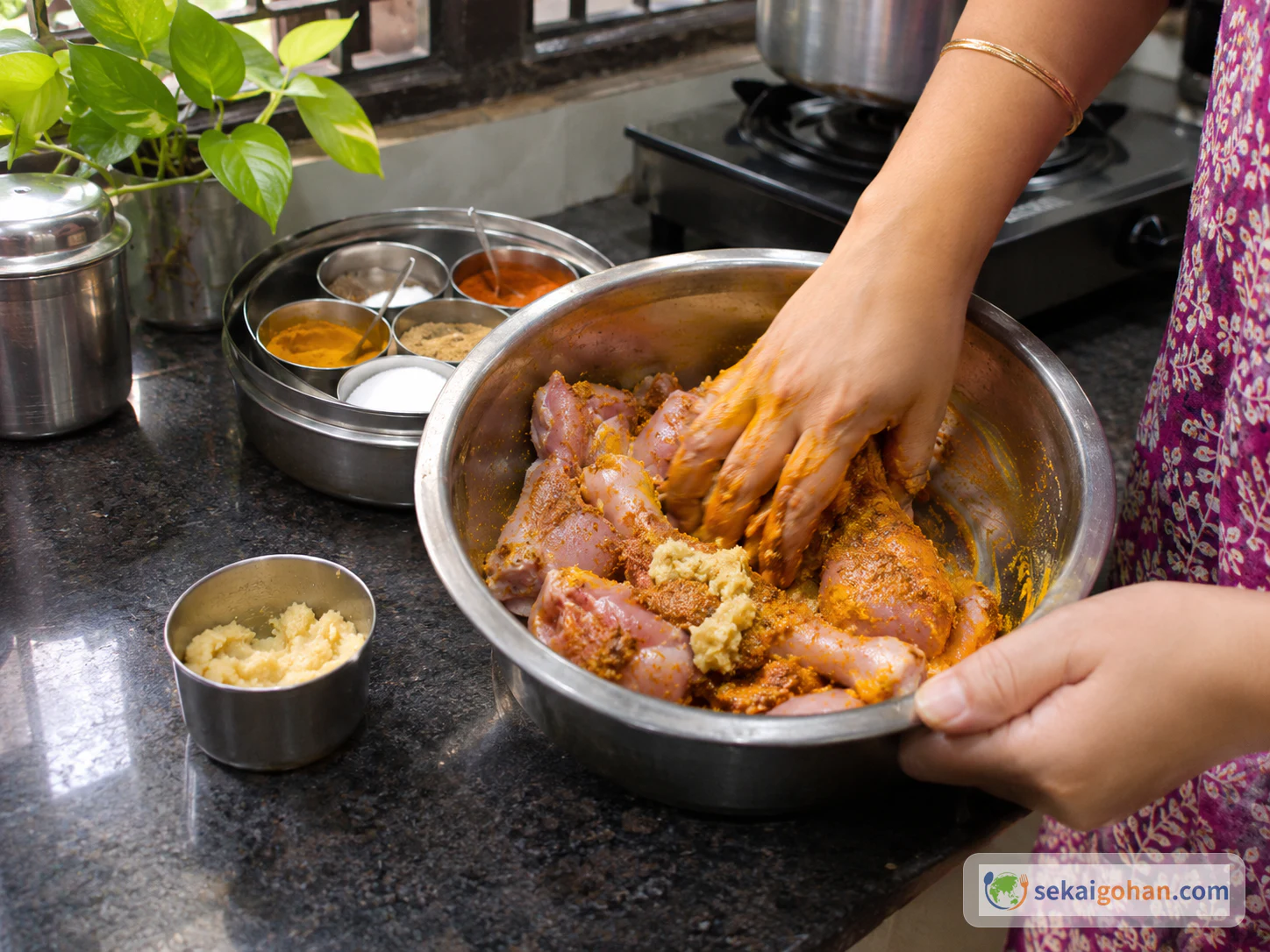
- Handling choices. The recipe says to soak the dal overnight and grind it the next day. Soaking it in the refrigerator, resting the marinated chicken in the refrigerator, cooling the sautéed aromatics before grinding, flattening the dough on a food-safe sheet, and draining the fried vade are added handling choices. They are not part of the published method, and the soak is not a fermentation.
- Chicken safety. The recipe's 15–20 minutes over medium heat is a cooking phase, not a safety guarantee. FoodSafety.gov's minimum internal temperature for all poultry, 165°F (74°C), checked with a thermometer, is the finish line used here.
Ingredients for the Curry and the Vade
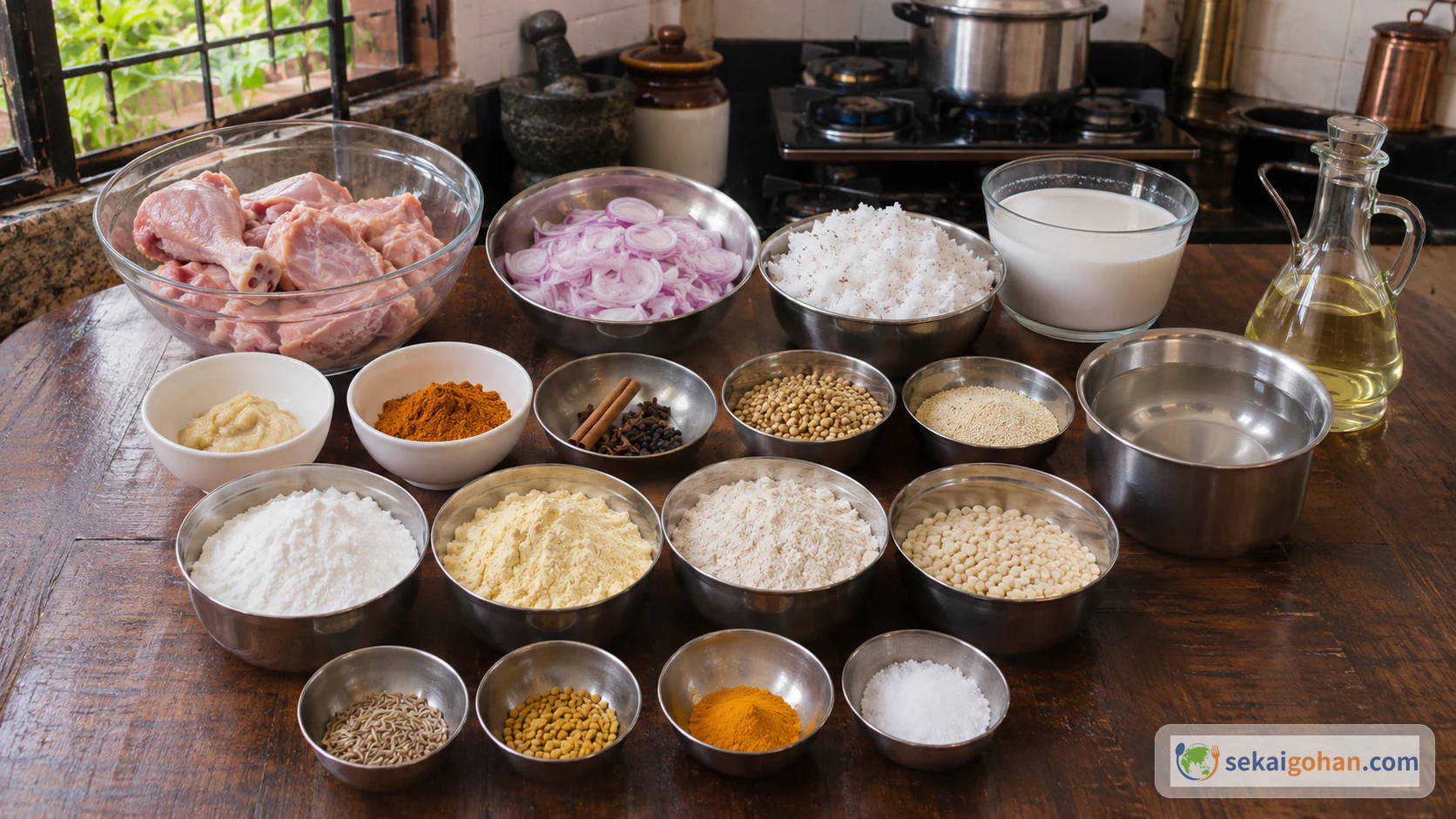
Equipment
- Bowl kept only for the raw chicken, plus a separate cutting board and utensils for it
- Frying pan for sautéing the aromatics
- Heavy pot for the curry
- Mixer or grinder with a secure lid
- Large bowl for mixing the vade dough
- Clean food-safe sheet for shaping the vade
- Kadai or deep, heavy pan for frying
- Slotted spoon and a rack or paper towels for draining
- Food thermometer
Choosing and Substituting Ingredients
Mix masala. Choose a general Indian spice blend you like. Products differ in their spices and heat, so a Malvani masala or curry powder will give a different curry, not the same one. If you want less heat, pick a blend that is milder in chili.
Chicken. Use your preferred cut and check the thickest pieces with a thermometer, keeping the probe away from any bone.
Urad dal. Whole black urad, split urad and skinned white urad dal can give the paste different colors and textures. Keep the urad dal in this version of the vade; leaving it out makes a different dough.
Flours. Rice flour, besan (chickpea flour) and wheat flour each play a part. Corn flour, other bean flours or other dal flours are not interchangeable with them. Do not swap besan for potato or corn starch.
Ready-made vade bhajani. A store-bought bhajani or vade flour is a real shortcut used in other versions, but its blend differs from this one, so it makes a different vade. Follow the package directions and check its ingredient list.
Allergens. This dish contains wheat (gluten), legumes (urad dal and chickpea flour) and coconut. Check the labels on the mix masala and any packaged flours for other allergens and shared-facility statements.
Method: Curry First, Then the Vade
Step 6 comes after the curry in the order of the recipe, but its soak starts the evening before. Put the urad dal, cumin and fenugreek to soak the night before you cook, then make the curry and the vade on the day.
When Things Go Wrong
| Problem | What to try |
|---|---|
| The dough cracks when you flatten it | Work in a little more water, a small amount at a time, and knead again. Do not change the flour amounts. |
| The dough is too sticky to shape | Next time, add the water more slowly, a little at a time. |
| You are unsure the oil is hot enough | Fry one small piece of dough first and watch how it colors before frying the rest. |
| The vade brown before they cook through | Lower the heat and fry fewer at a time so each one gets enough time in the oil. |
| The chicken looks done but the thermometer reads below 165°F (74°C) | Keep cooking and check again in the thickest piece, away from the bone. |
Keep the tools for raw chicken apart from those for cooked food, and keep raw dough off surfaces where cooked vade will go.
Variations
These are suggestions for adapting the meal. Each one moves away from the version above, so treat them as your own variations.
- Milder heat. Choose a mix masala with less chili. Blends differ; taste the curry only after the chicken is fully cooked.
- Smaller frying batches. Fry a few vade at a time instead of crowding the pan, so each one cooks evenly.
- Without wheat. This recipe contains wheat flour. A gluten-free vade means leaving this recipe behind and working out a new rice and legume flour ratio; the texture and how the dough holds together will change.
- Bhajani shortcut. A store-bought vade bhajani skips the soaking and grinding but follows a different blend, so expect a different vade.
- Solkadhi alongside. The university textbook describes solkadhi, a drink of kokum and coconut milk, served after spicy Konkan and Malvani meals. It is an optional side, not part of this recipe; the textbook also mentions onion and lemon at the table.
Frequently Asked Questions
How many vade does this make, and how big should they be?
The recipe does not give a yield, a number of vade, or a size, and Sekai Gohan has not tested it, so this article does not state those numbers. Shape small, thick discs that will cook through.
Can I leave out the urad dal?
In this version, the urad dal paste is a key part of the vade dough. Without it you are making a different vade. If you want to skip the soaking and grinding, a ready-made bhajani is a different version, not the same recipe.
Can I make it without wheat flour?
This recipe uses wheat flour. Other vade versions use different grains, but without wheat this becomes a new recipe with a different texture and a different way of holding together, and the proportions need to be worked out again.
Why is the oil split 2 tbsp and 2 tbsp?
The recipe lists 2 tbsp of oil twice for the curry and uses oil at two stages without assigning an amount to each. This article puts 2 tbsp into the aromatics and 2 tbsp into the gravy, keeping the same total.
Is cooking the chicken for 15–20 minutes enough?
That timing is the recipe's cooking phase, not a safety check. FoodSafety.gov gives 165°F (74°C) as the safe minimum internal temperature for poultry. Measure the thickest piece with a food thermometer, away from the bone.
Why soak the dal in the refrigerator?
The recipe only says to soak overnight and grind the next day. Soaking it covered in the refrigerator is a hygiene choice made here. It is a simple soak, not a fermentation.
What about leftovers?
No storage period is given here. FoodSafety.gov advises chilling food without delay and keeping the refrigerator at 40°F (4°C) or below. Refrigerate leftovers without delay in a covered container.
Sources
- Ruchkar Mejwani, "Kombadi Vade | Konkan Style Chicken Curry | Recipe by Archana | Main Course in Marathi," Dailymotion. The recipe followed in this article: ingredients and amounts for the 500 g chicken curry and the vade, the order of marinating, sautéing and grinding the spice paste, cooking the chicken, adding coconut milk, and soaking, grinding, shaping and frying the vade. https://www.dailymotion.com/video/x47w41k
- Ruchkar Mejwani, "Kombadi Vade | Konkan Style Chicken Curry | Recipe by Archana | Main Course in Marathi," YouTube. The creator's listing of the same recipe, with written ingredients and method, credited to host Archana Arte (copyright REPL). https://www.youtube.com/watch?v=cd6nNpteCdg
- Maharashtra Tourism, "The Best of Maharashtra Pocket Guide." Describes kombdi vade as a dish of coastal Konkan Maharashtra pairing a spicy chicken curry with fried vade; mentions rice flour and urad dal for vade, Malvani masala in general, and festivals, special occasions and Sunday family meals. https://maharashtratourism.gov.in/wp-content/uploads/2025/06/Maharashtra-Booklet_compressed.pdf
- Yashwantrao Chavan Maharashtra Open University, "Quantity Food Production (HTS 514)," pp. 150–151. Describes Kombdi Vade / Chicken Malvani with bone-in chicken, wheat or nachni flour vade, onion, lemon and solkadhi, and solkadhi made from kokum and coconut milk. https://ycmou.ac.in/media/publication/ycmou_book/RVV_YB_128.pdf
- Swati Khandare, "कोंबडी वडे - पाककृती," MarathiMati. A different home version linking the dish to Konkan and Malvan with chicken rassa, using a bhajani of several grains and legumes roasted, cooled, ground, kneaded with warm water and rested before frying. https://www.marathimati.com/2019/06/kombadi-vade-recipe.html
- Hema Shet, "KOMBDI VADE (Malvani Chicken Rassa)." The author's own first attempt at a Konkan pairing, with a different Malvani chicken rassa and vade made from store-bought bhajani atta. https://www.hemafoodstudio.com/post/kombdi-vade-malvani-chicken-rassa
- FoodSafety.gov, "Cook to a Safe Minimum Internal Temperature." The 165°F (74°C) minimum internal temperature for poultry, checked with a food thermometer. https://www.foodsafety.gov/food-safety-charts/safe-minimum-internal-temperatures
- U.S. Food and Drug Administration, "Handling Flour Safely: What You Need to Know." Do not taste raw dough or flour, keep tools and surfaces clean, and cook fully. https://www.fda.gov/food/buy-store-serve-safe-food/handling-flour-safely-what-you-need-know
- FoodSafety.gov, "4 Steps to Food Safety." Clean, separate, cook and chill; marinate in the refrigerator, keep the refrigerator at 40°F (4°C) or below, and chill food without delay. https://www.foodsafety.gov/keep-food-safe/4-steps-to-food-safety