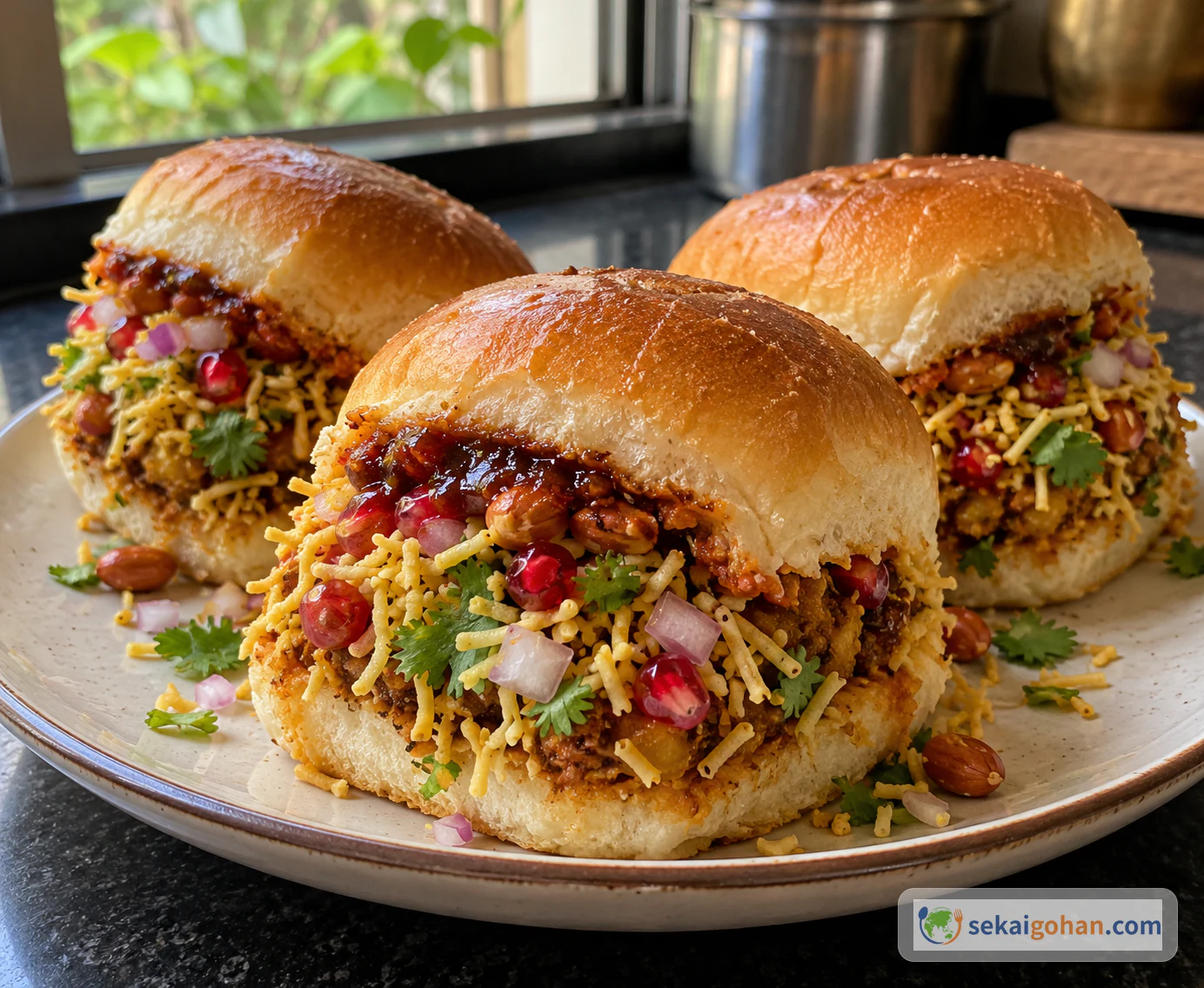
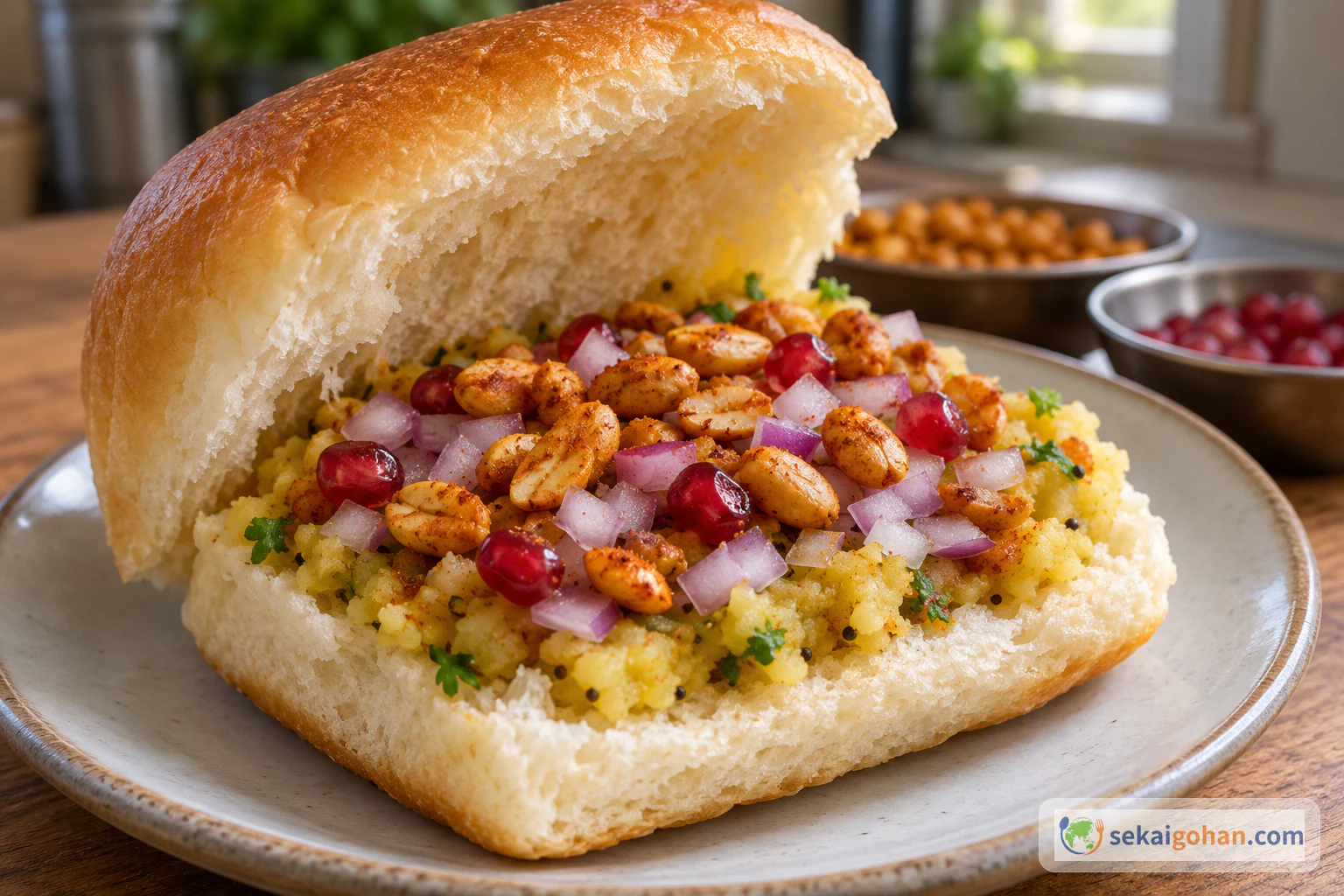

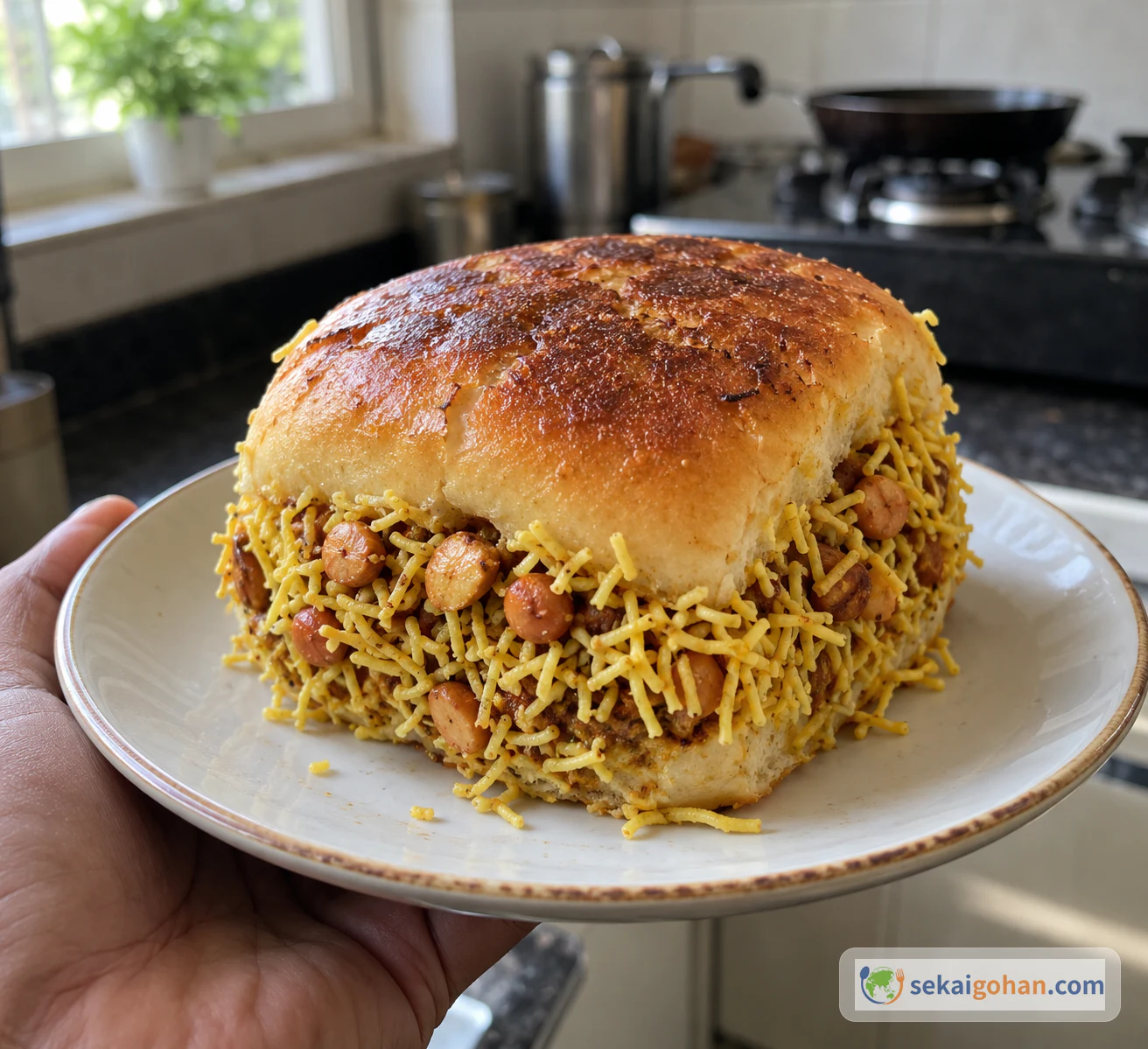
Gujarati dabeli: pav coated in sev and peanuts, filled with spiced potato and two chutneys
Serves8 dabeli
CuisineIndian (Gujarati)

Dabeli: Kutchi Potato-Filled Pav with Homemade Masala and Two Chutneys

How to make dabeli, the Kutchi Dabeli snack from Gujarat, from scratch: a homemade Dabeli masala, a tamarind-date chutney, a red garlic chutney, spiced peanuts and a potato filling, layered inside soft pav, coated on three sides on two separate plates and toasted in butter. Covers where the recipe comes from, which amounts and choices this version uses, specialty items, variations and common questions.

Level: Intermediate

Cooking flow

Cooking steps

STEP 11 / 55

Fill the inner bowl

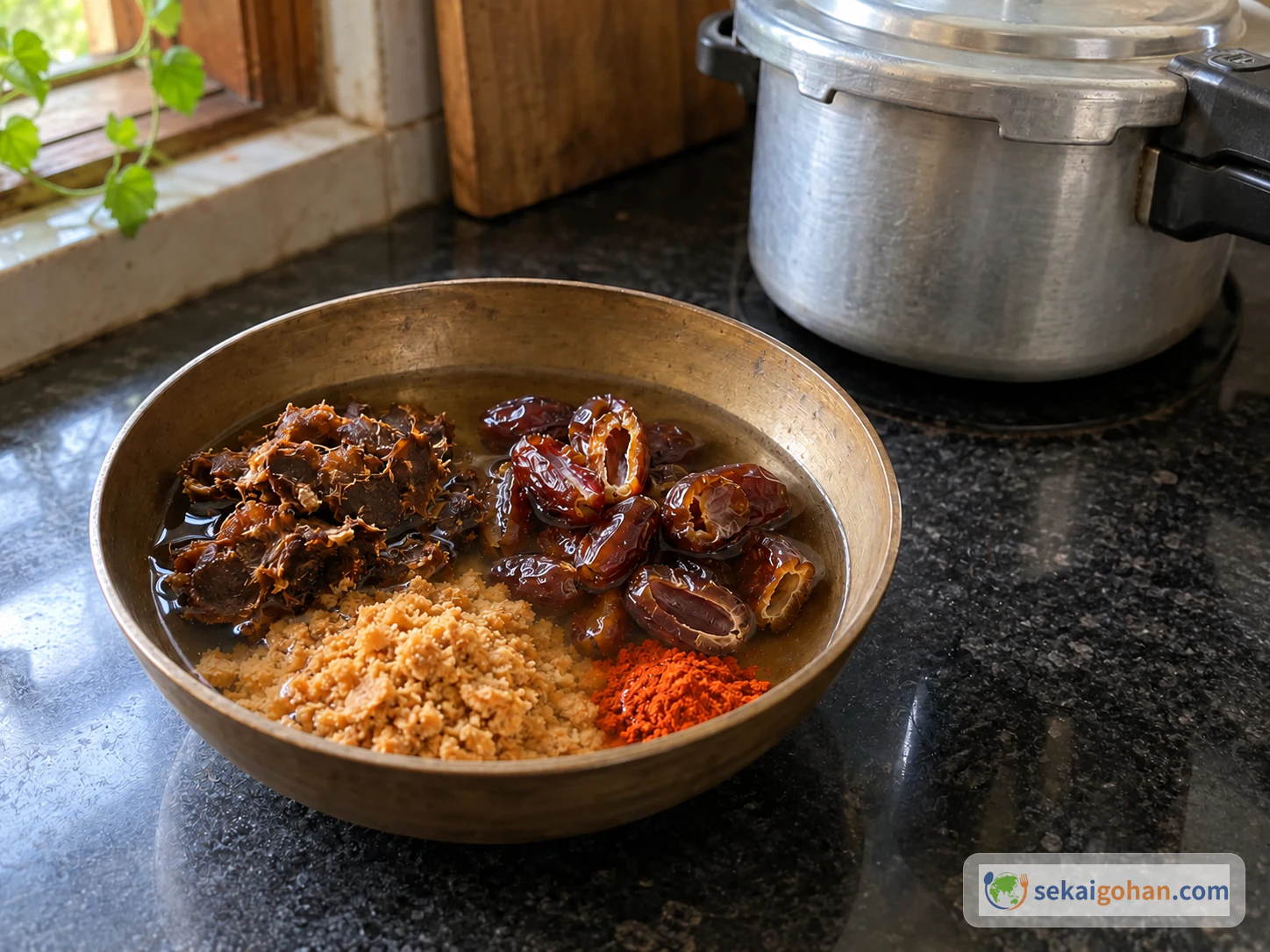
Inner bowl with tamarind, dates, jaggery, chili powder and 2 cups of water

In the inner bowl, combine 1/2 cup (50 g) deseeded tamarind, 1/2 cup (100 g) pitted dates, 1/2 cup (100 g) grated jaggery, 1/2 tsp red chili powder and 2 cups water.

STEP 22 / 55

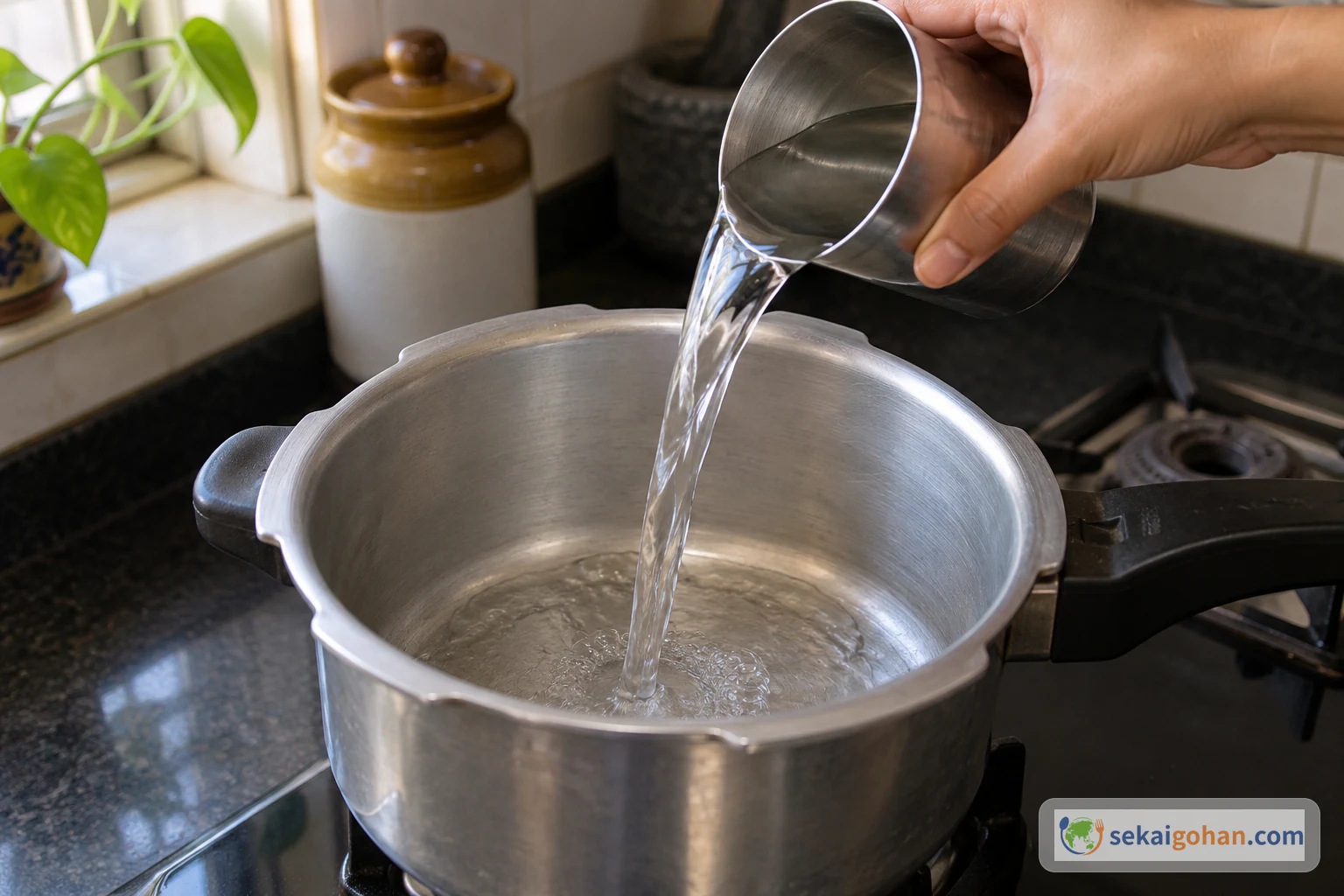
Pour water into the cooker

1 cup of water poured into the outer pressure cooker

Pour 1 cup water into the bottom of the pressure cooker. This water stays in the cooker and is not added to the chutney.

STEP 33 / 55

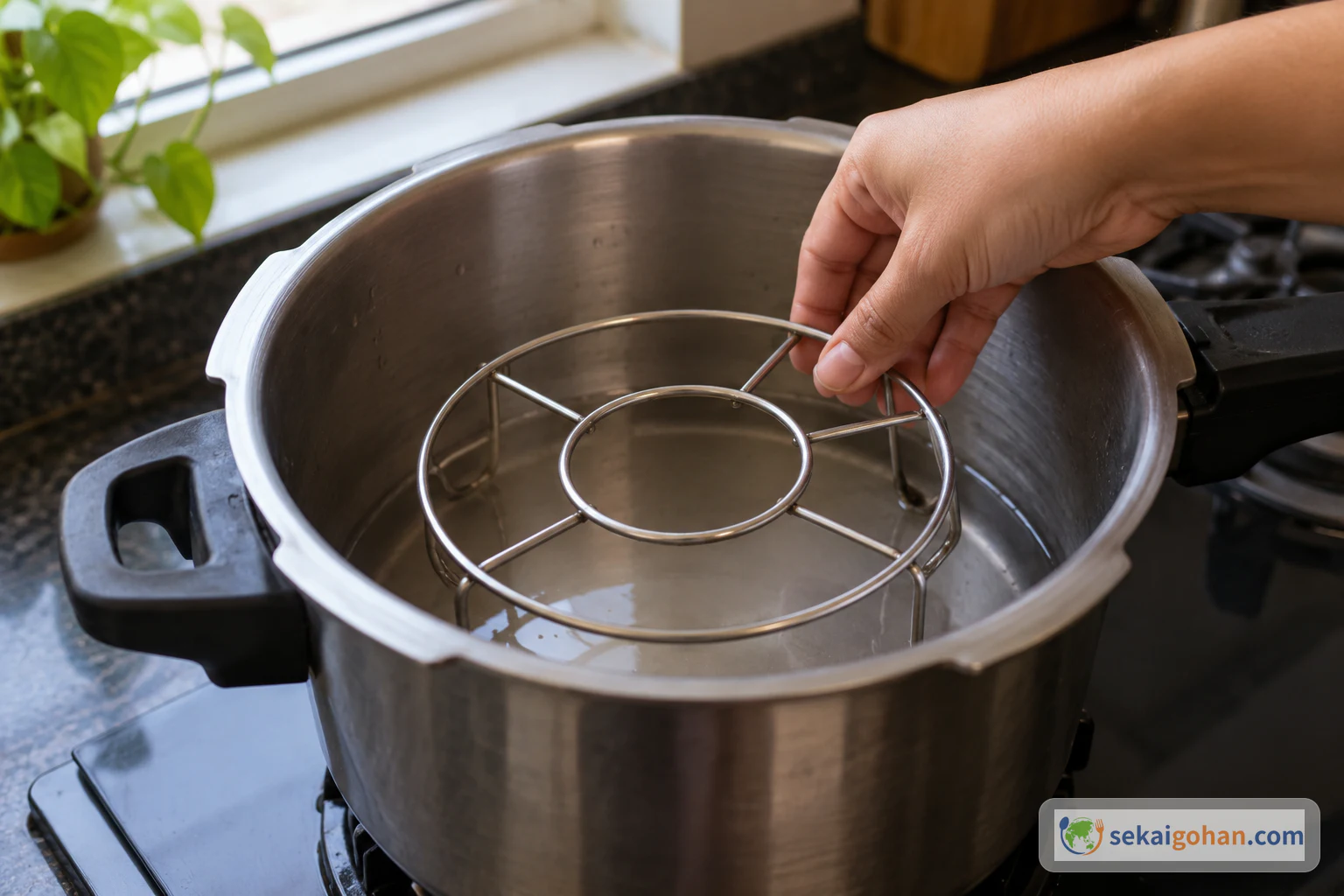
Set the trivet

Trivet being set inside the outer pressure cooker

Set the trivet inside the cooker, over the water.

STEP 44 / 55

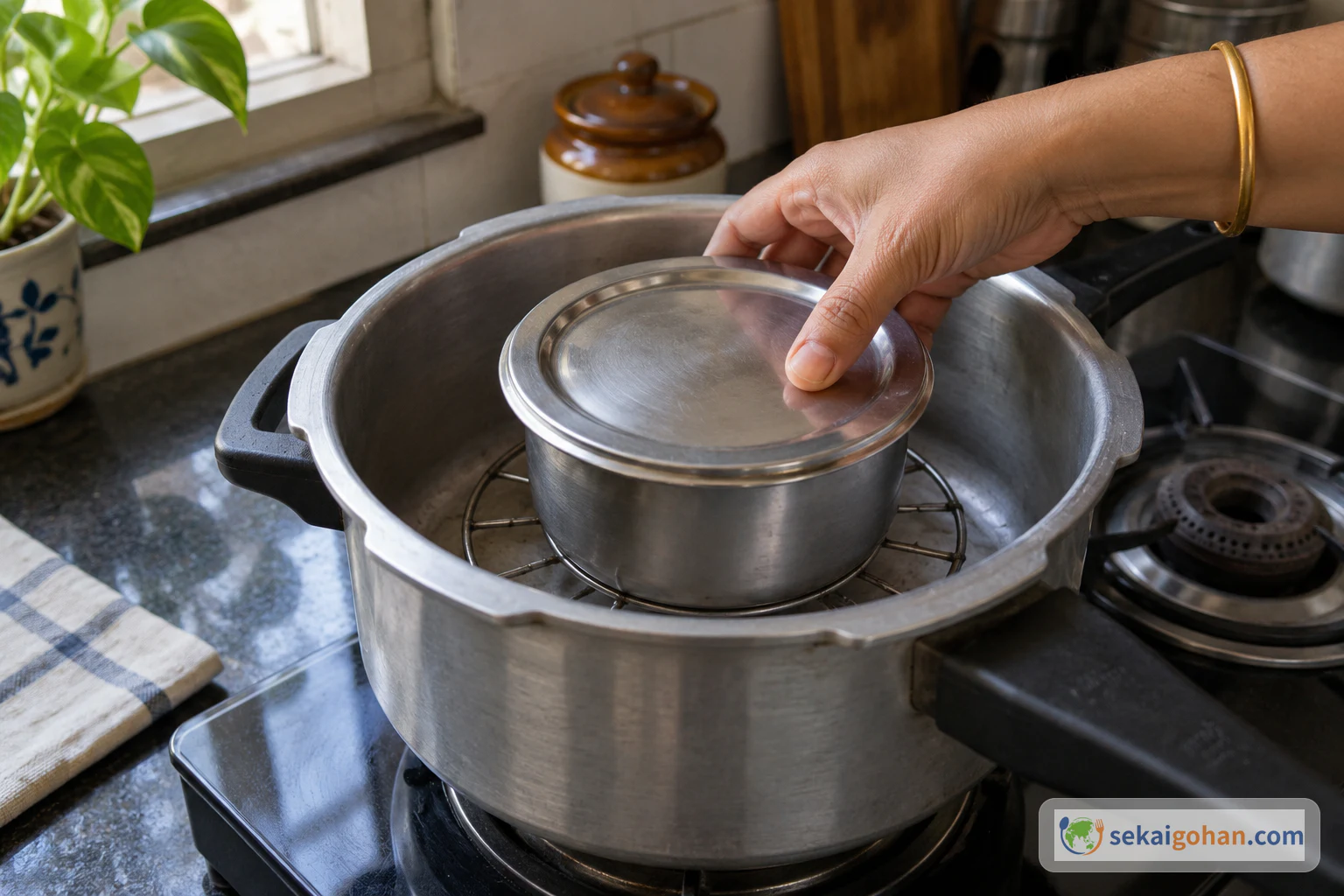
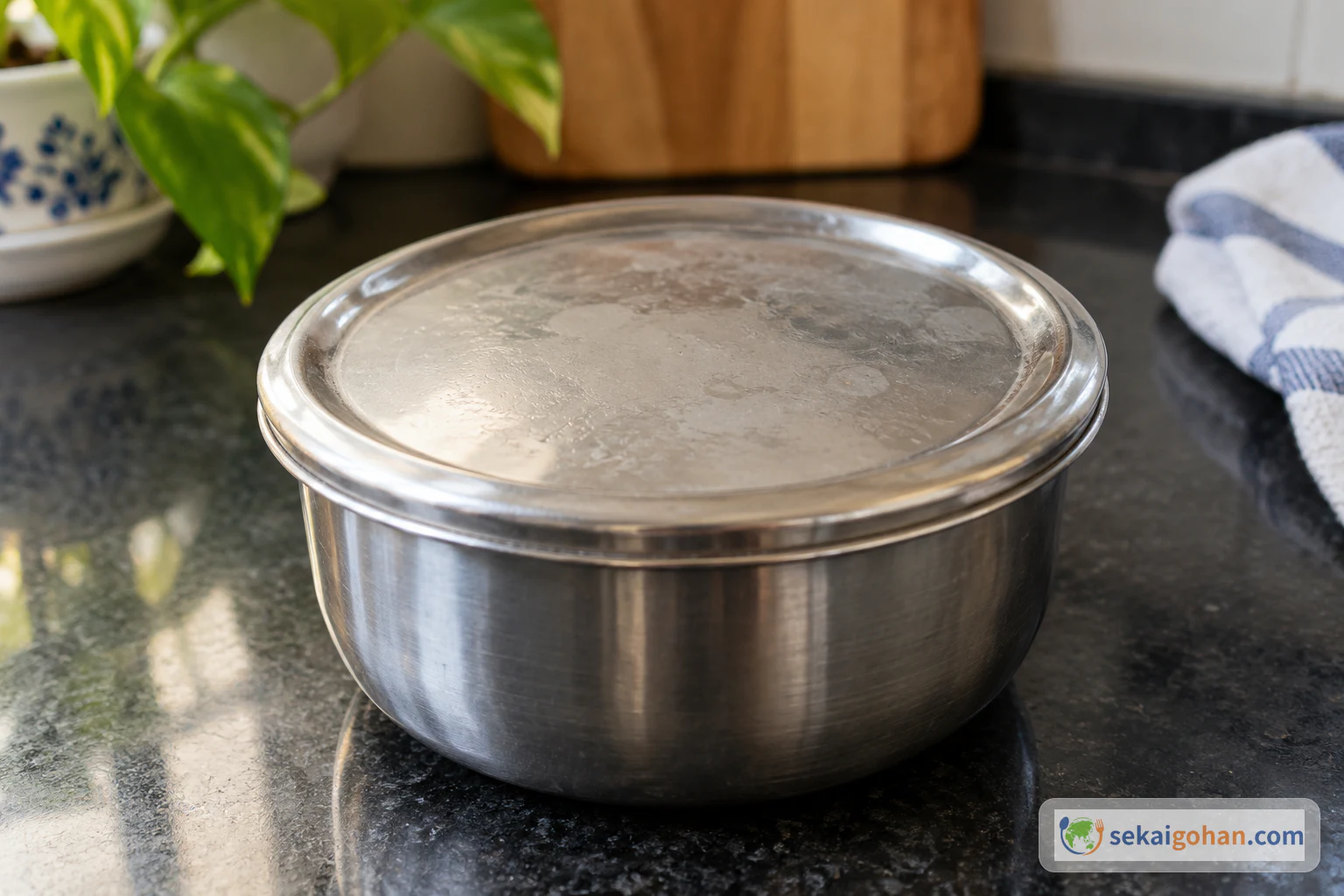
Place the covered inner bowl

Covered chutney inner bowl placed on the trivet

Cover the inner bowl and set it on the trivet.

STEP 55 / 55

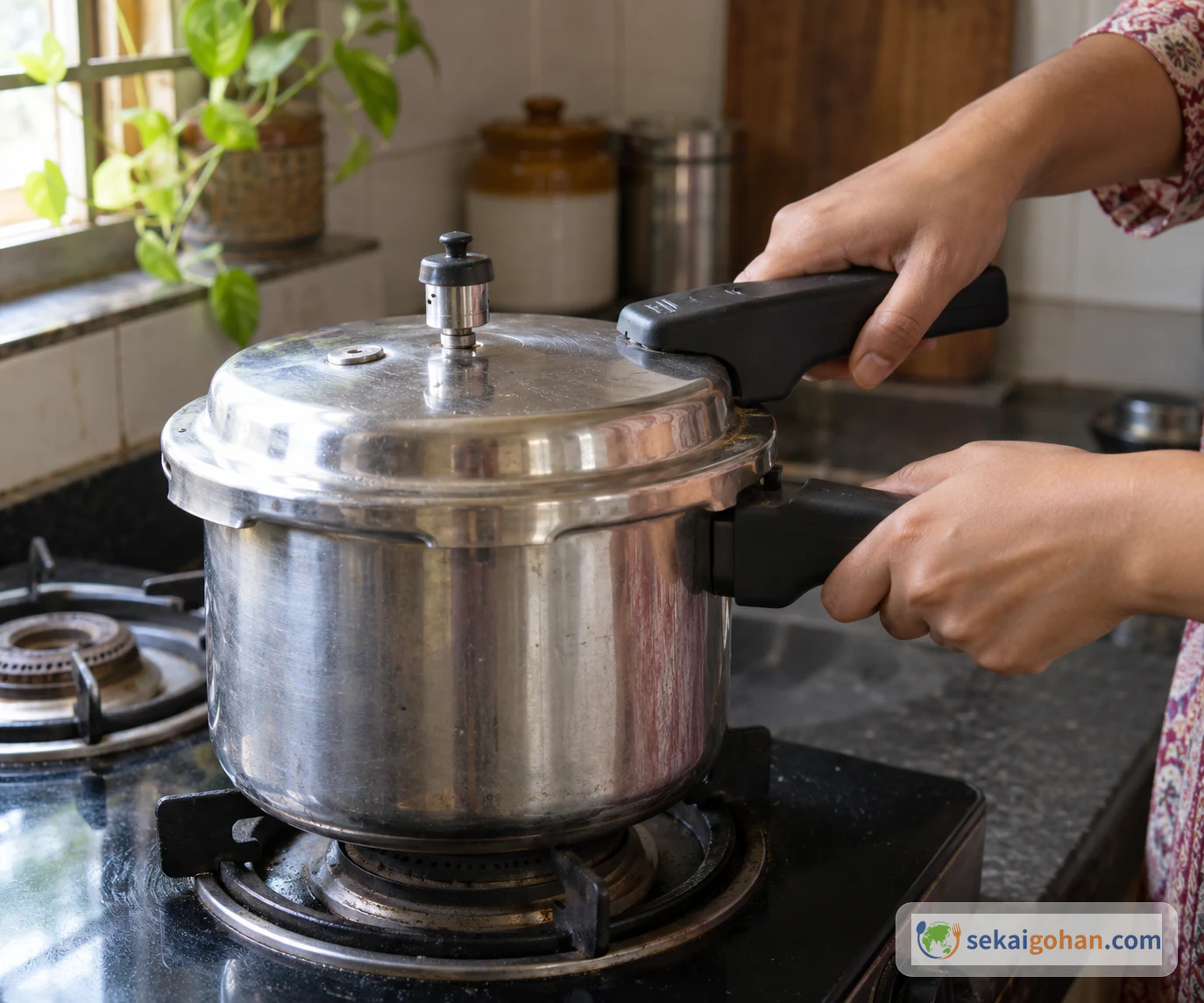
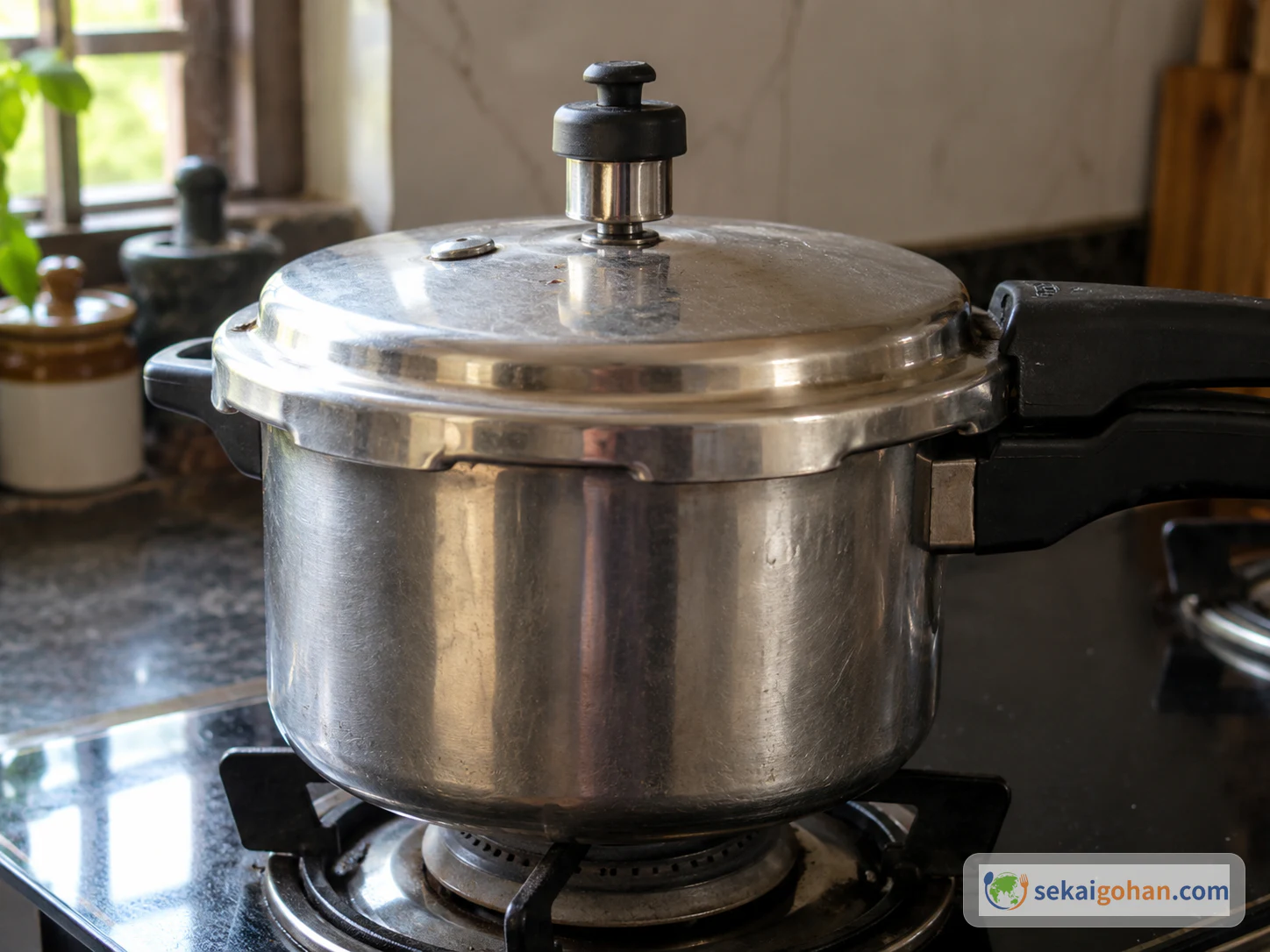
Close the cooker

Pressure cooker closed in the usual way, before heating

Close the pressure cooker in the usual way.

STEP 66 / 55

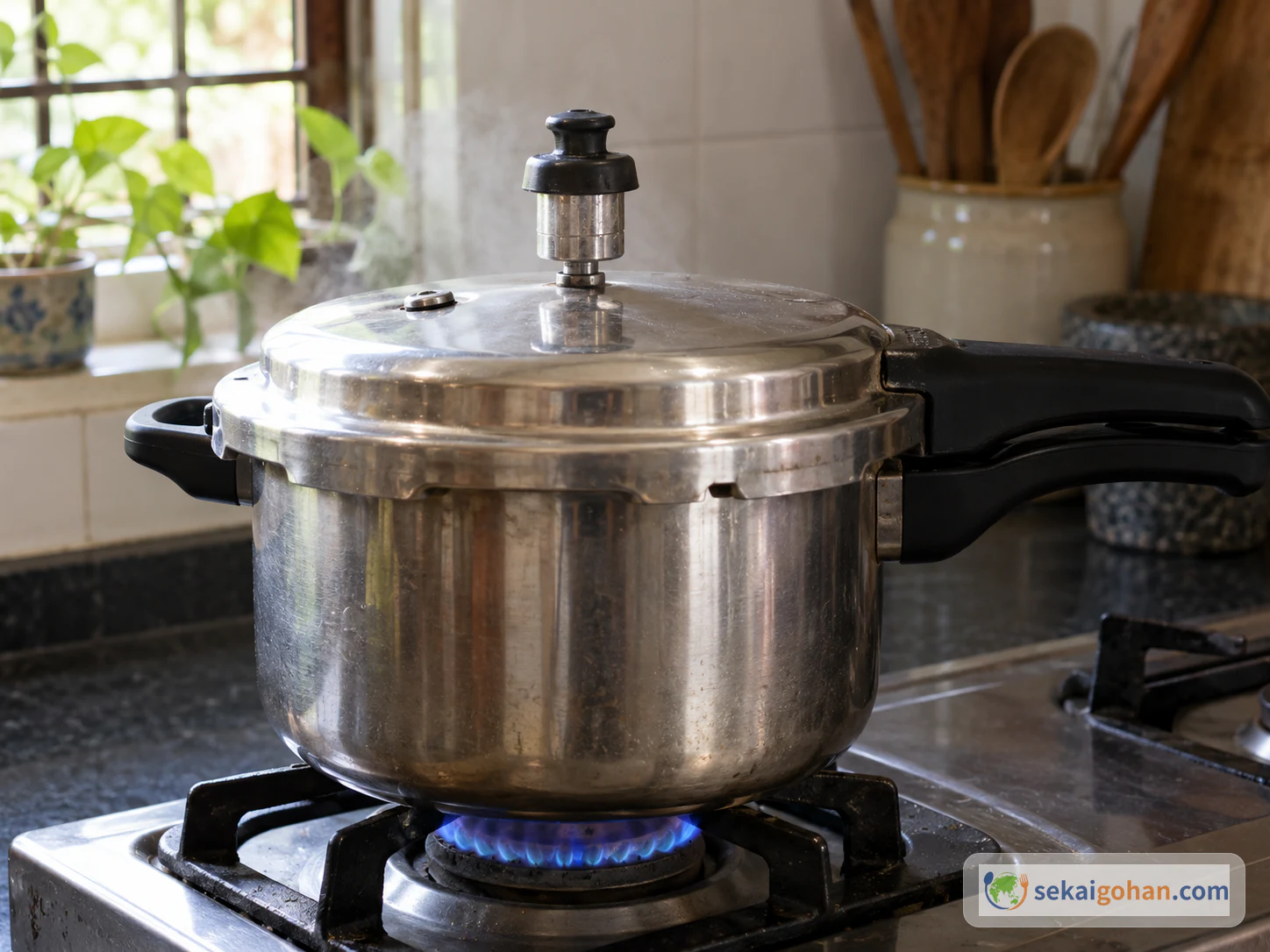
Cook for 3 whistles

Closed 6 L stovetop pressure cooker cooking over medium heat

Cook over medium heat for 3 whistles. Do not touch the lid or valve while it is under pressure.

STEP 77 / 55

Let the pressure release naturally

Closed pressure cooker left undisturbed until natural release is complete

Turn off the heat. Leave the cooker closed and do not touch the valve until the pressure has released completely on its own.

STEP 88 / 55

Take out the inner bowl

Covered inner bowl resting on the counter after full natural release

Once the pressure has fully released, open the cooker in the usual way for your cooker and lift out the covered inner bowl.

STEP 99 / 55

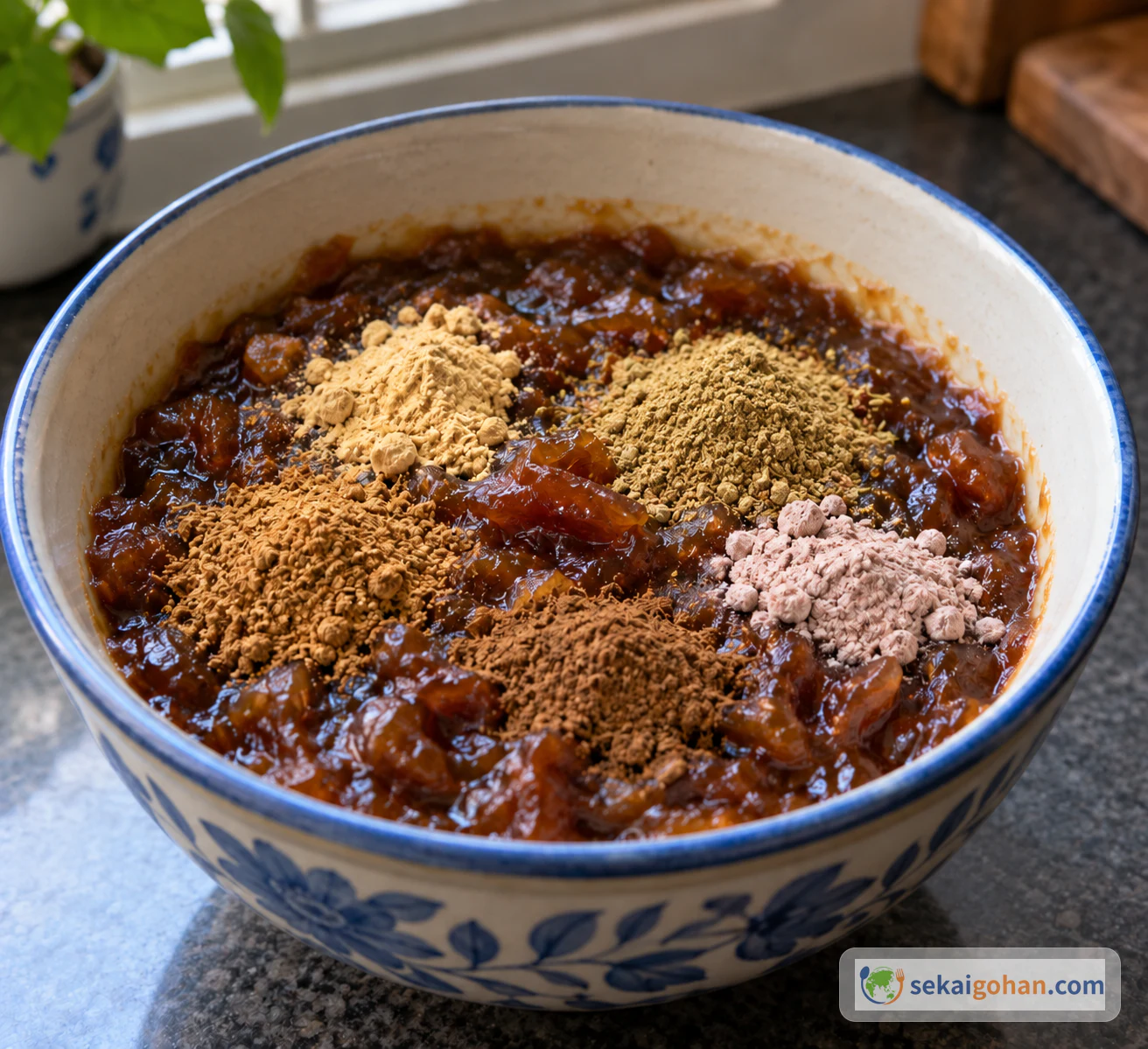
Add the five powders

Chutney with the five post-cooking powders added, not yet stirred

Add 1/2 tsp ginger powder, 1/2 tsp roasted fennel powder, 3/4 tsp roasted coriander powder, 1/2 tsp roasted cumin powder and 1/2 tsp kala namak.

STEP 1010 / 55

Stir in the powders

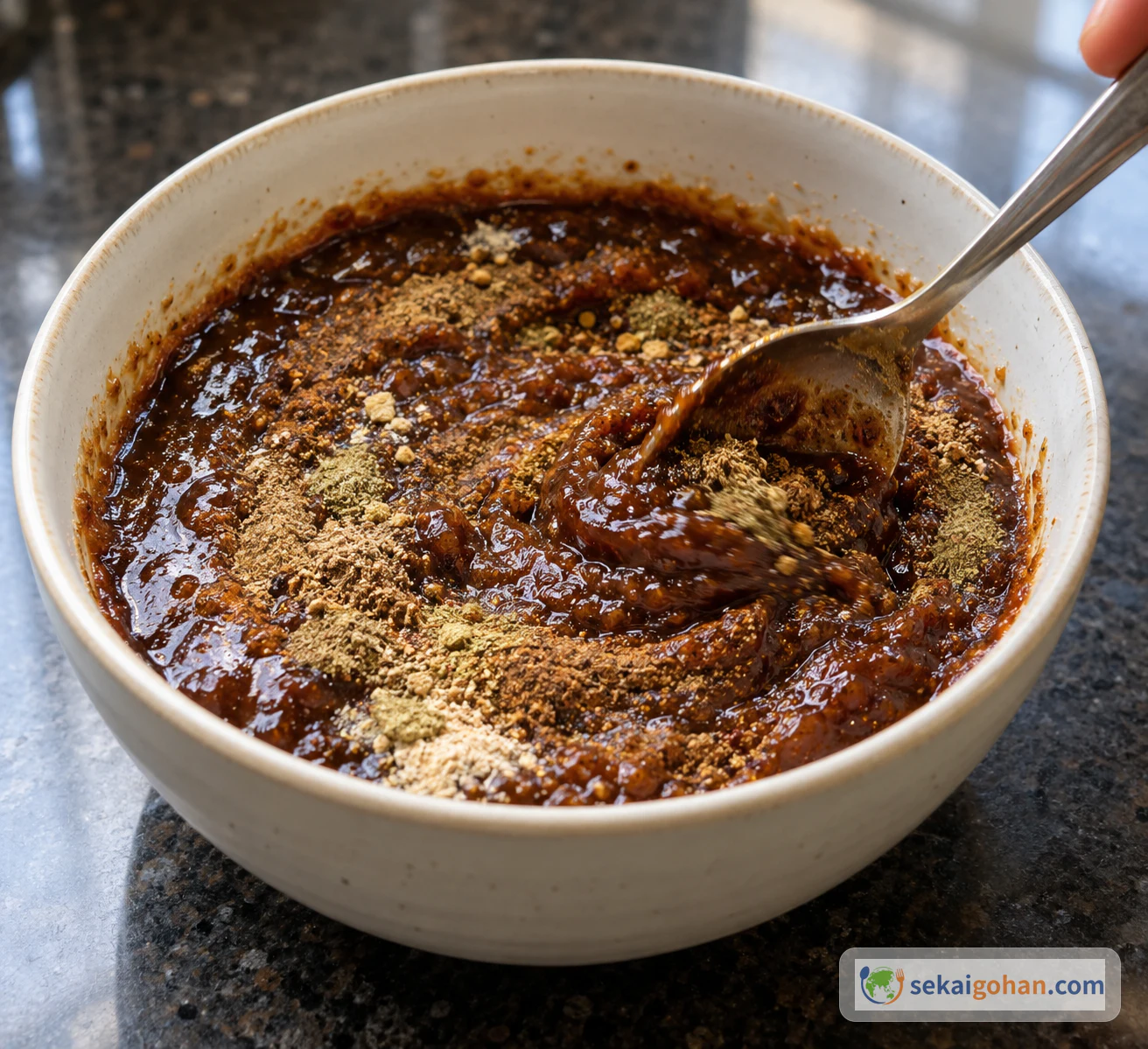
A spoon stirring the powders evenly through the chutney

Stir until the powders are evenly mixed in.

STEP 1111 / 55

Cover briefly

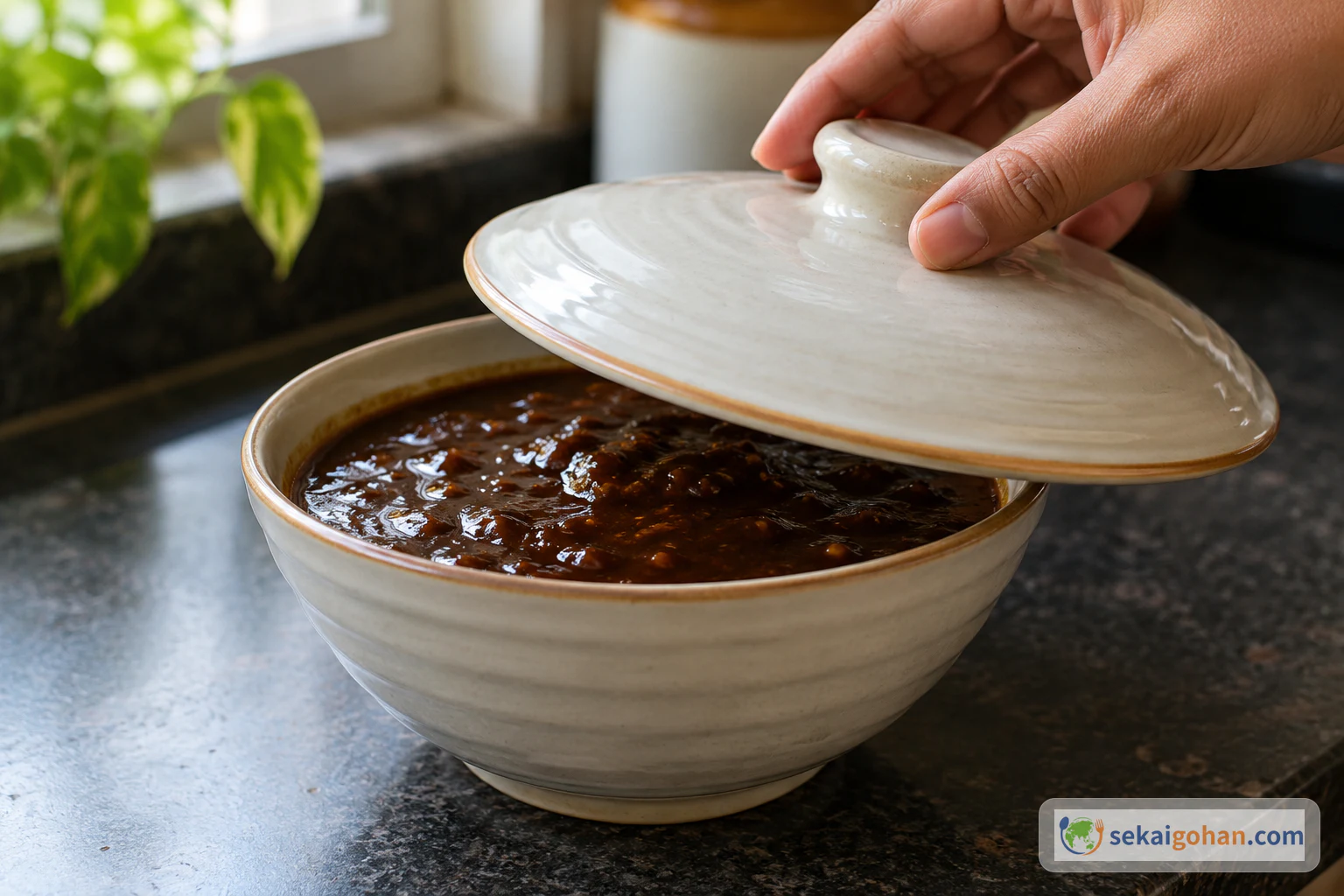
Inner bowl covered for a brief rest after mixing

Cover the bowl right away and let it sit briefly.

STEP 1212 / 55

Cool completely

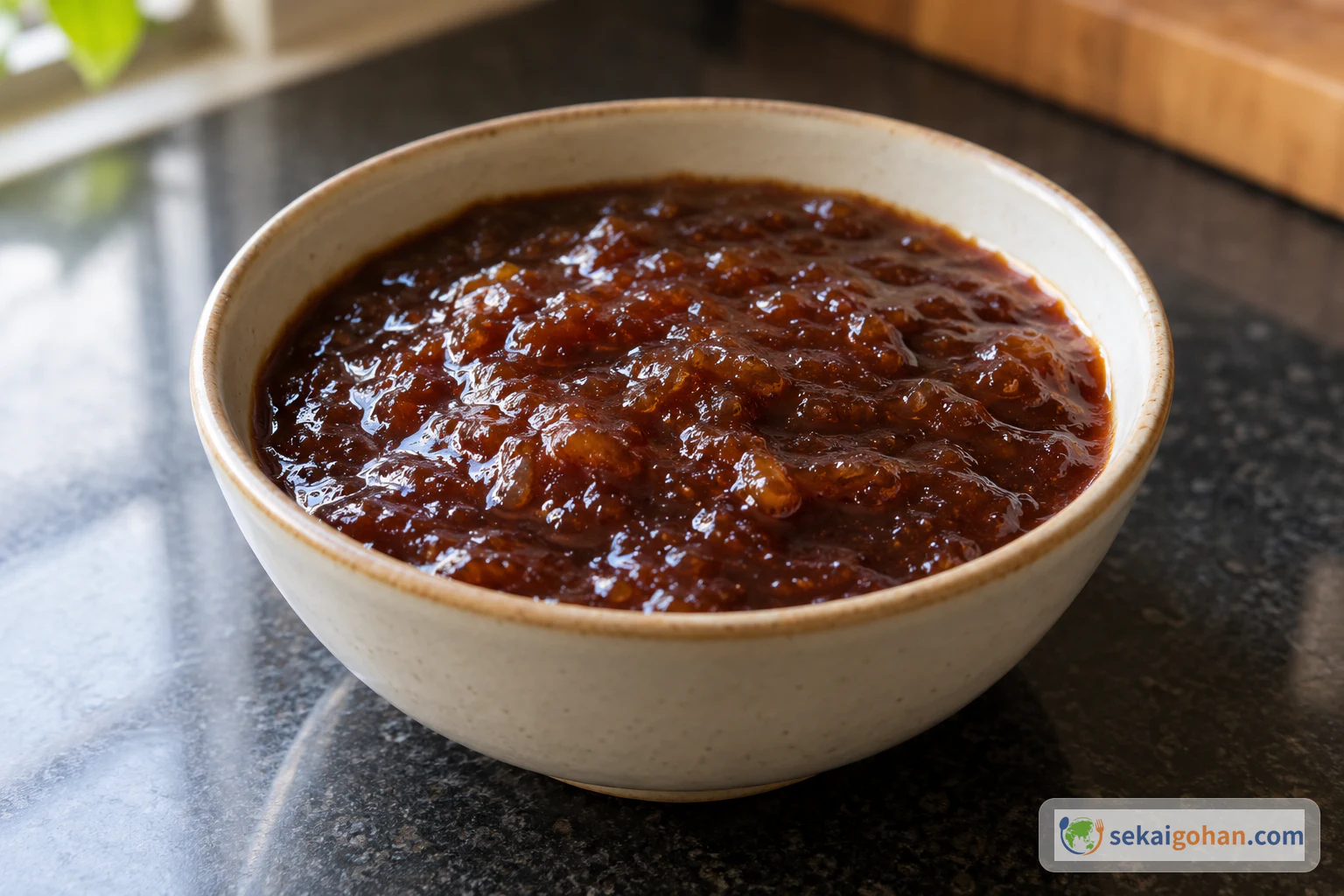
Tamarind-date chutney left to cool completely

Let the chutney cool completely.

STEP 1313 / 55

Mash

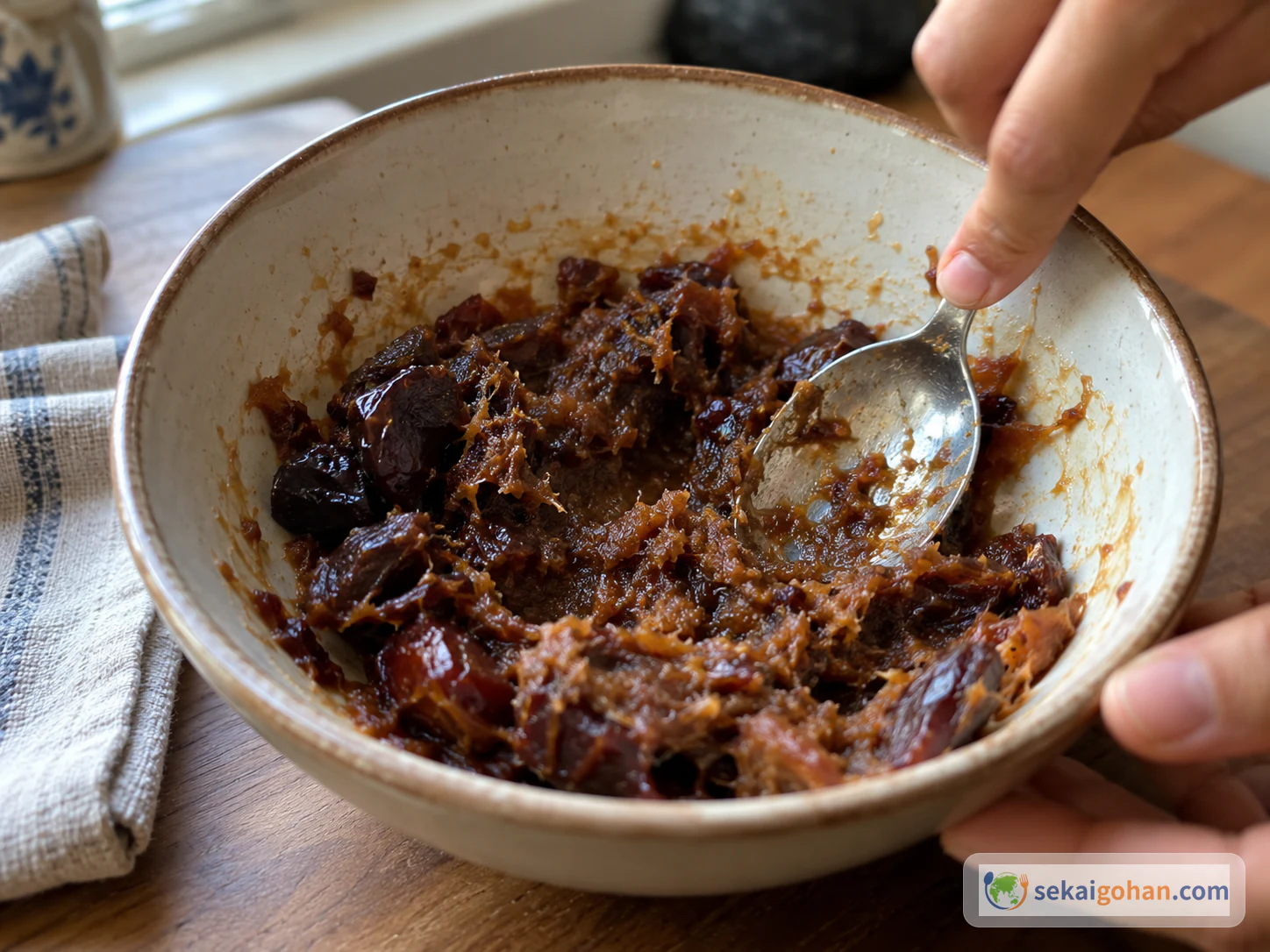
Completely cooled tamarind and dates being mashed

Mash the cooled tamarind and dates well with a spoon.

STEP 1414 / 55

Strain

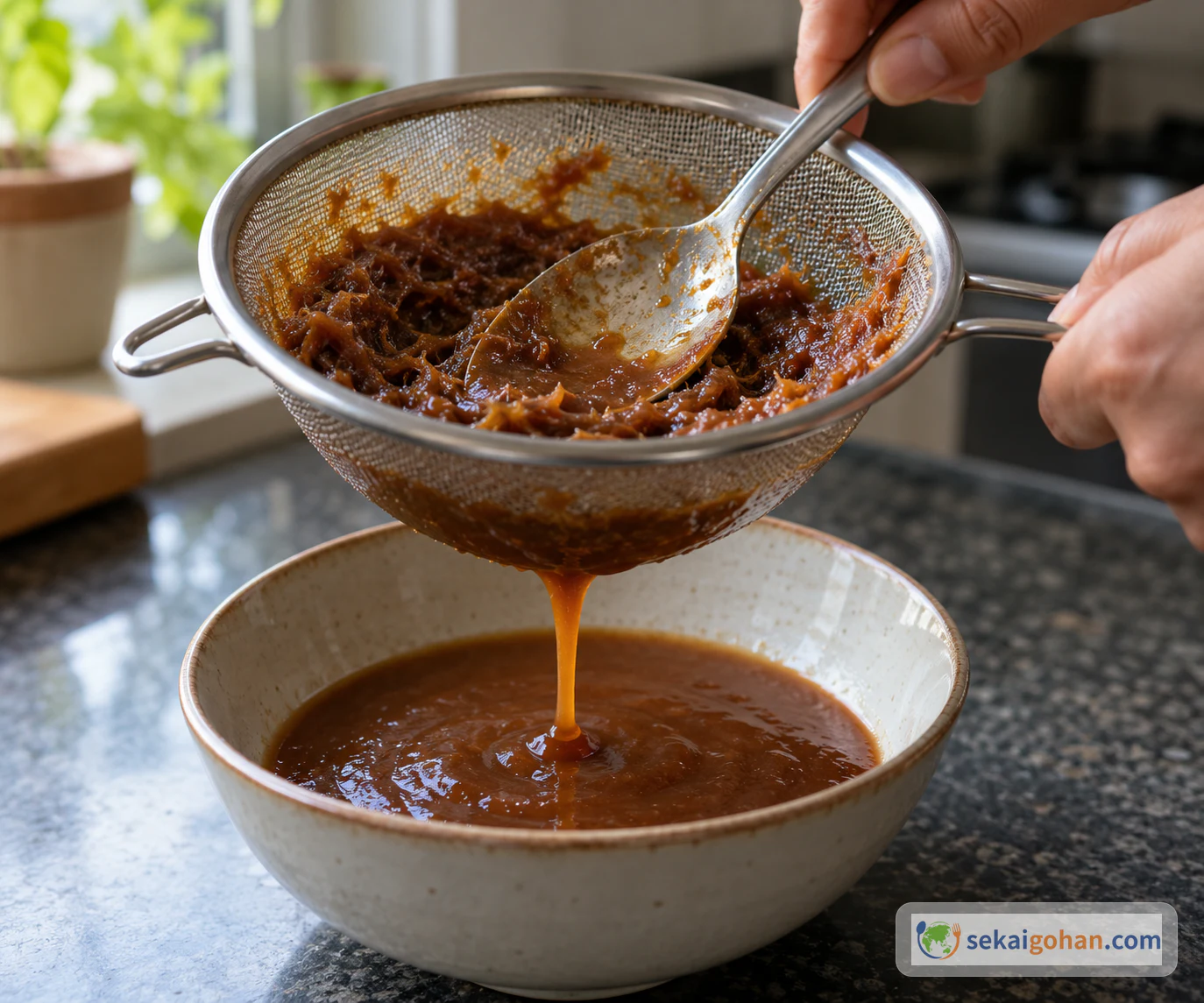
Mashed chutney being pressed through a fine sieve

Press the mashed chutney through a fine sieve to remove fibers and solid bits.

STEP 1515 / 55

Refrigerate if making ahead

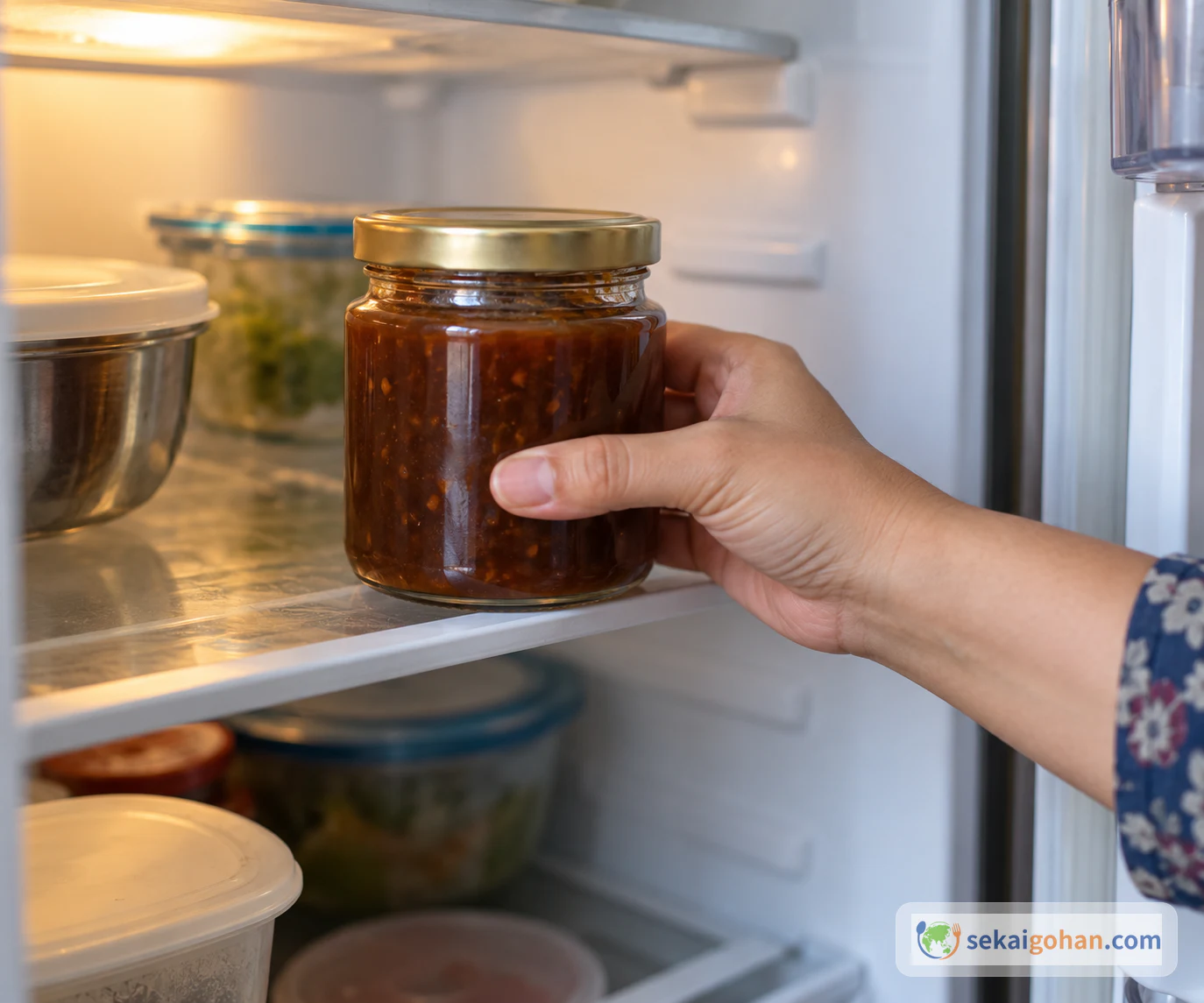
Chutney in a clean container being refrigerated to use later

If you are making the chutney ahead, put it in a clean container and refrigerate it.

STEP 1616 / 55

Dry-roast the whole spices

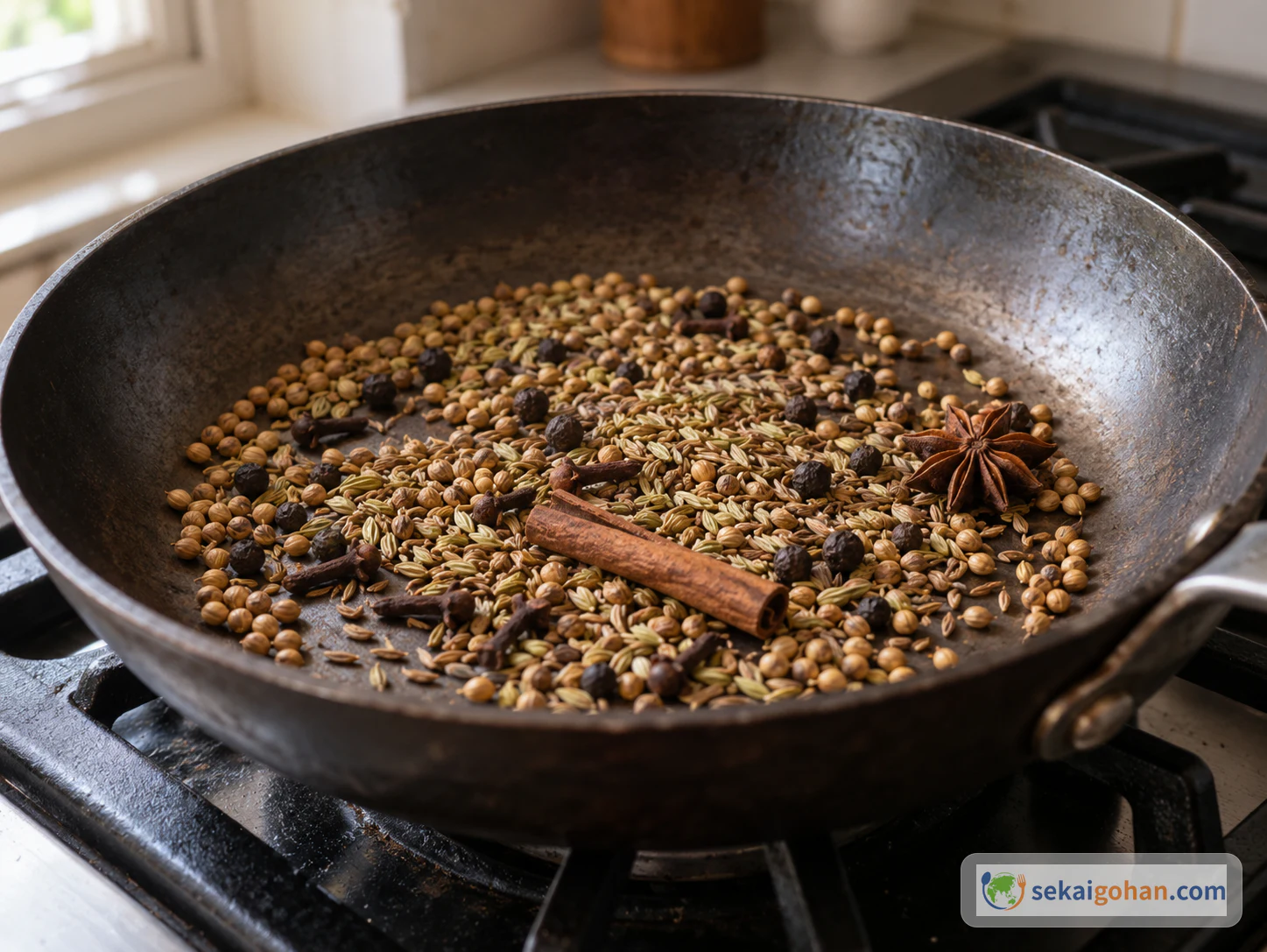
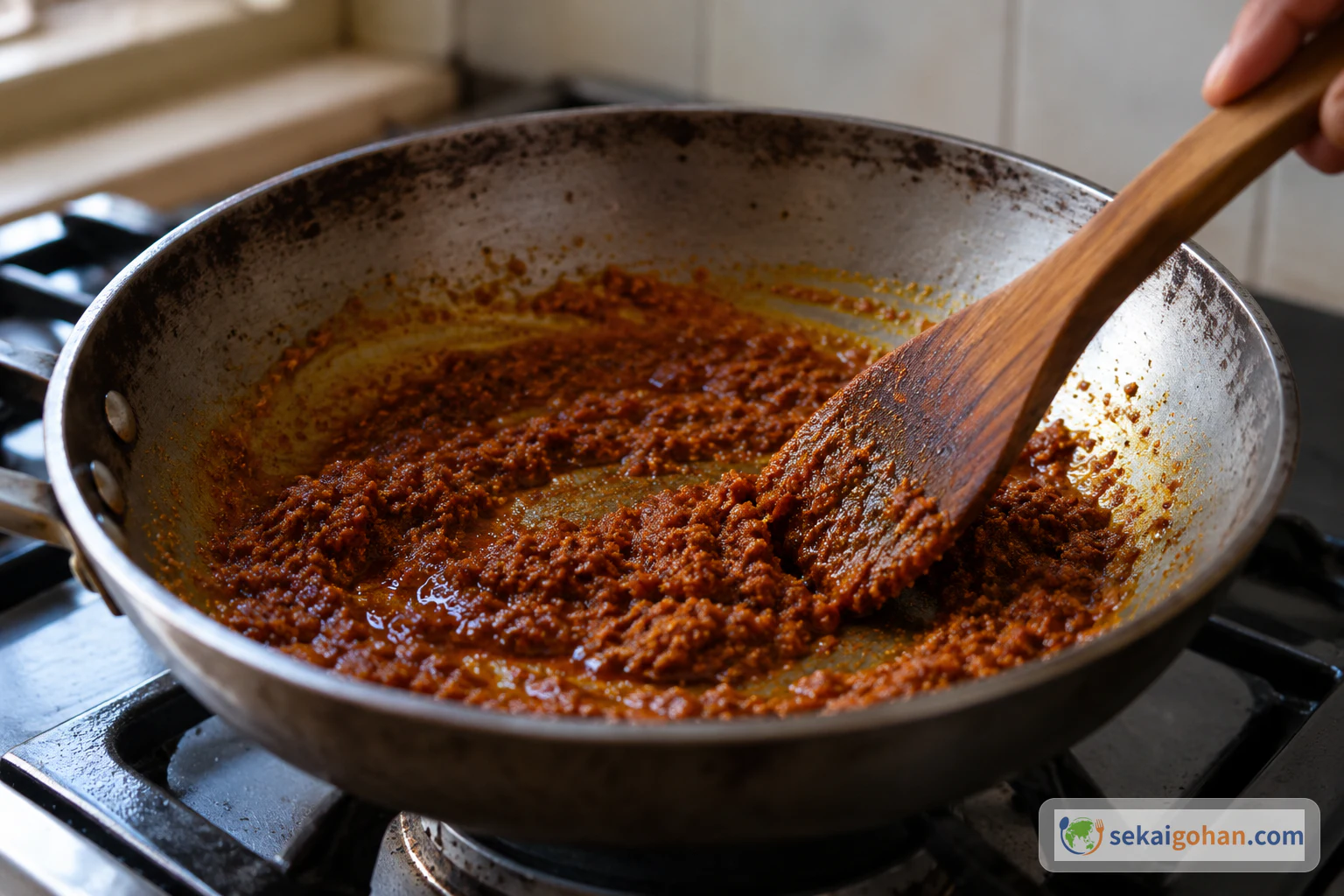
Whole Dabeli masala spices dry-roasting in a pan over low to medium heat

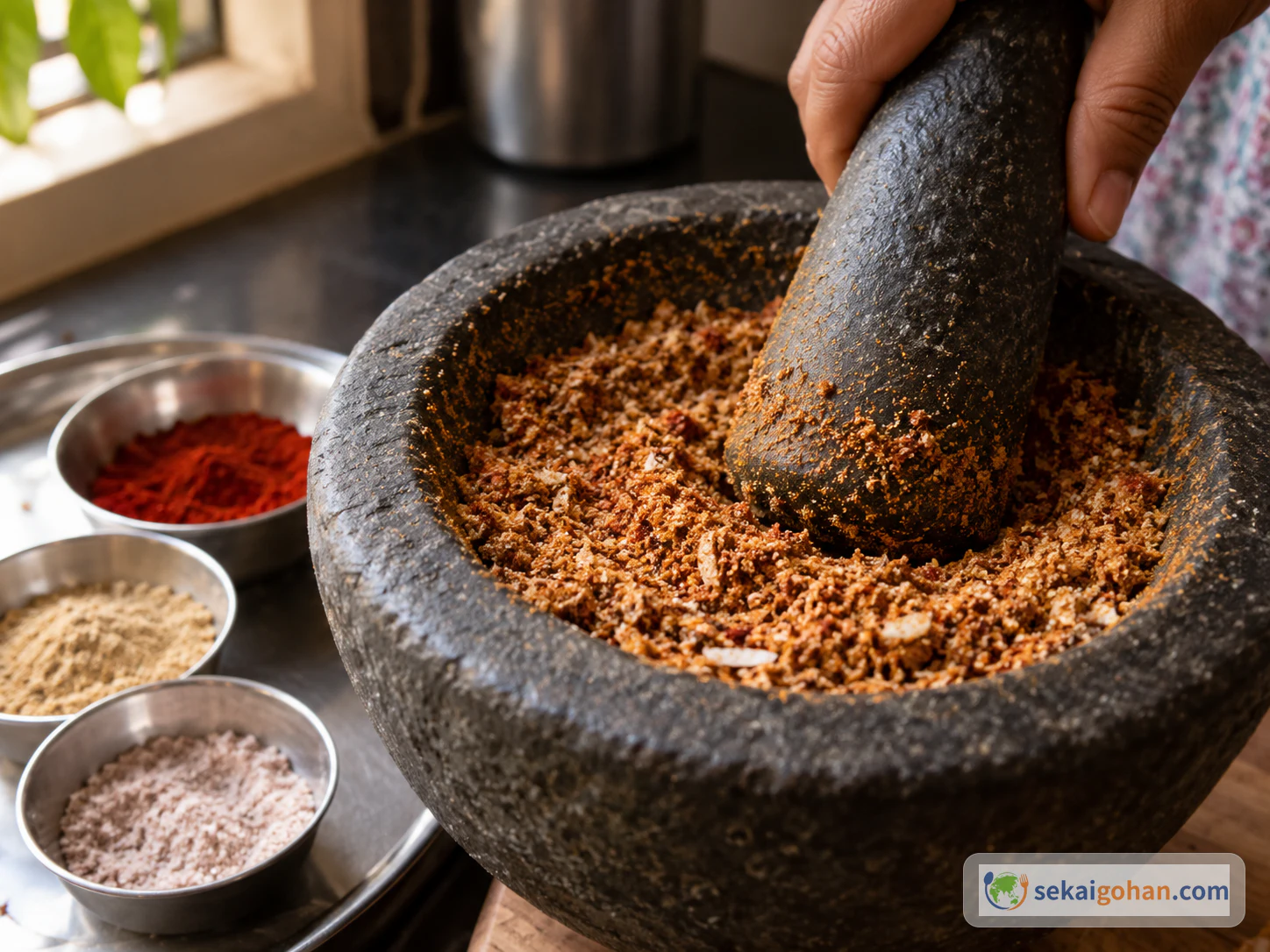
In a dry pan over low to medium heat, roast 2 tbsp coriander seeds, 4 cloves, 1 inch cinnamon, 1 tsp cumin seeds, 1 tsp fennel seeds, 1 small star anise and 1/2 tsp black peppercorns until aromatic.

STEP 1717 / 55

Roast the coconut

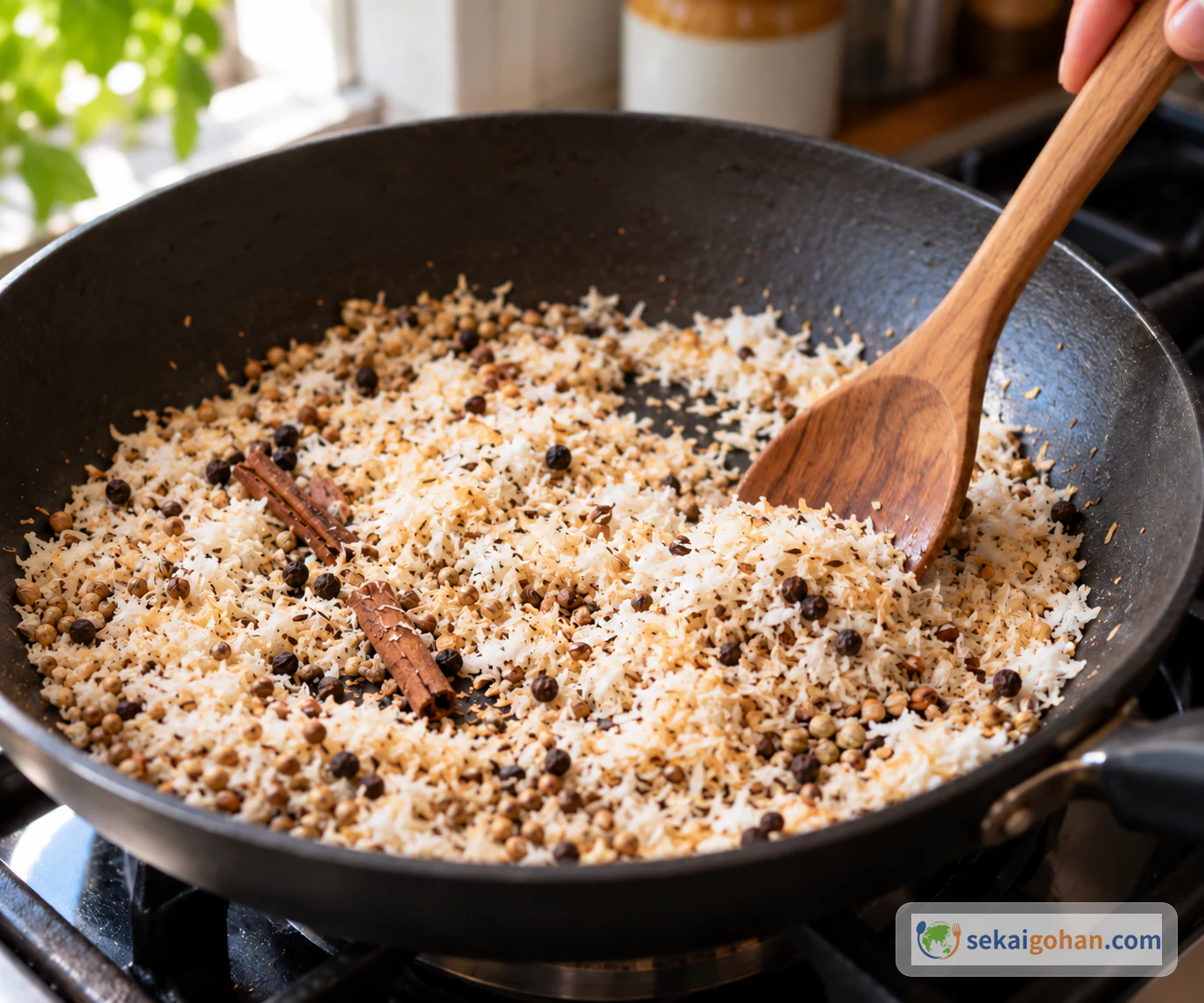
Coconut stirred with the whole spices as they dry-roast

Add 2 tbsp unsweetened coconut and keep roasting, stirring, until it smells aromatic.

STEP 1818 / 55

Grind the masala

Masala ground with chili powder, amchur and black salt after the heat is off

Turn off the heat. Grind the roasted spices and coconut with 1 tbsp Kashmiri red chili powder, 1 tsp amchur and 1 tsp black salt to a fine powder.

STEP 1919 / 55

Soak the chilies

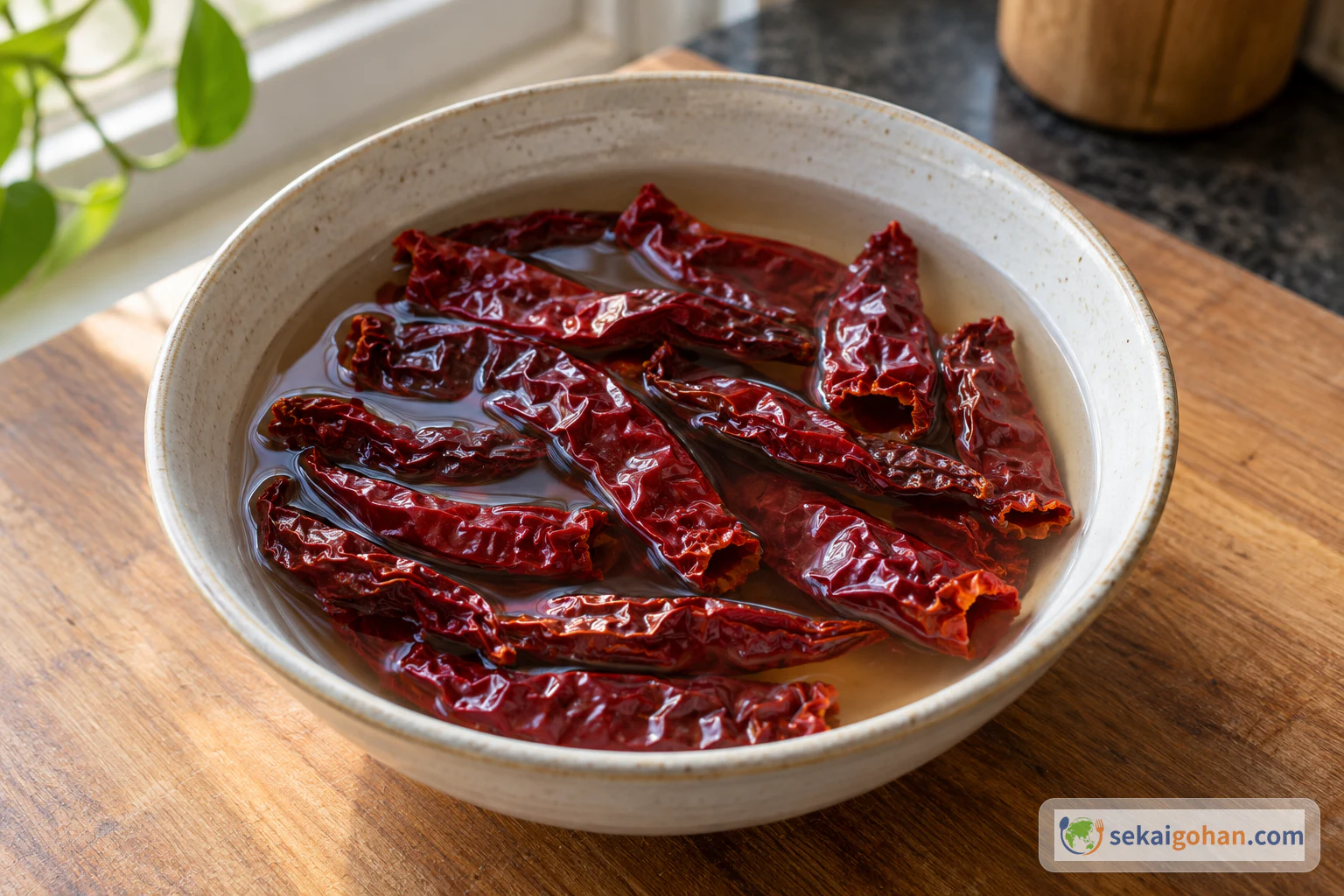
Twelve deseeded Kashmiri chilies soaking in 1 cup of boiling water

Put the 12 destemmed, deseeded Kashmiri chilies in 1 cup boiling water and soak for about 10 minutes.

STEP 2020 / 55

Lift out the chilies

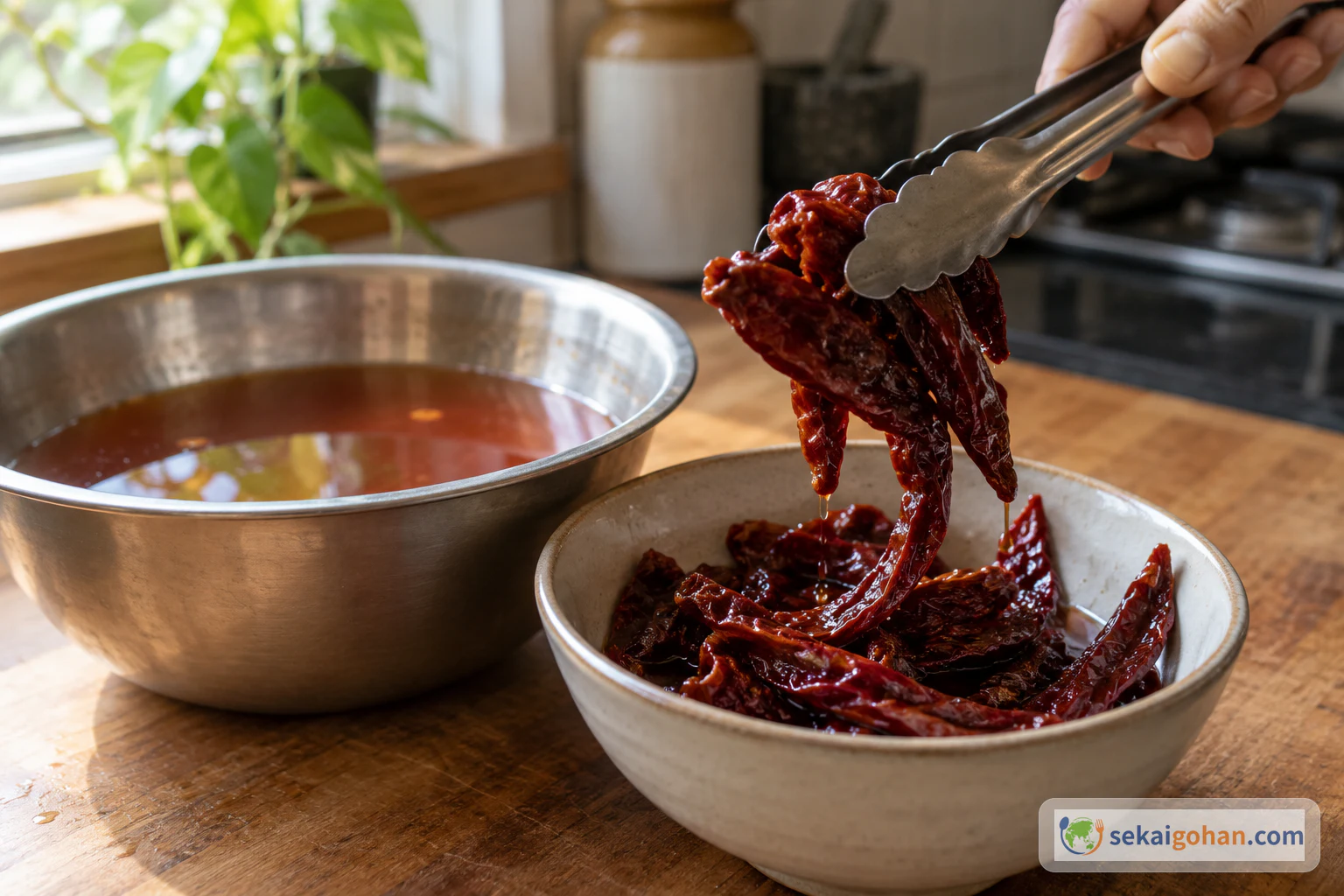
Chilies lifted out and kept apart from the soaking water

Lift the chilies out of the soaking water. Set the soaking water aside; it is not used as the grinding water.

STEP 2121 / 55

Grind the garlic chutney

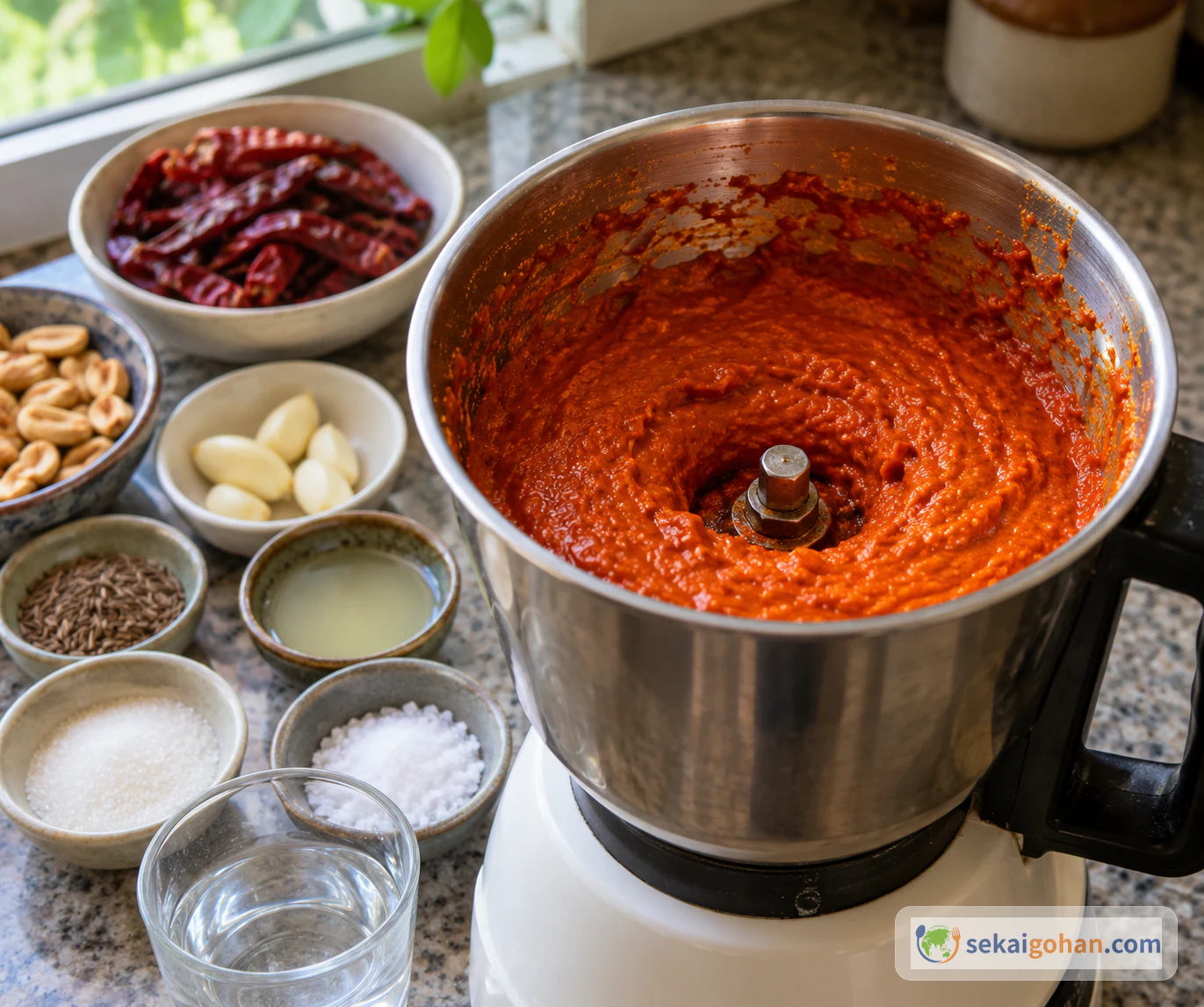
Red chutney ground with garlic, cumin, salt, sugar, lemon, 2 tbsp roasted peanuts and grinding water

Grind the chilies with 6 large garlic cloves (20 g), 1/2 tsp cumin seeds, 1/2 tsp sea salt, 1 tsp sugar, 1 tbsp lemon juice, 2 tbsp roasted peanuts and 1/4 cup water until thick and smooth. Add a little more water only if needed.

STEP 2222 / 55

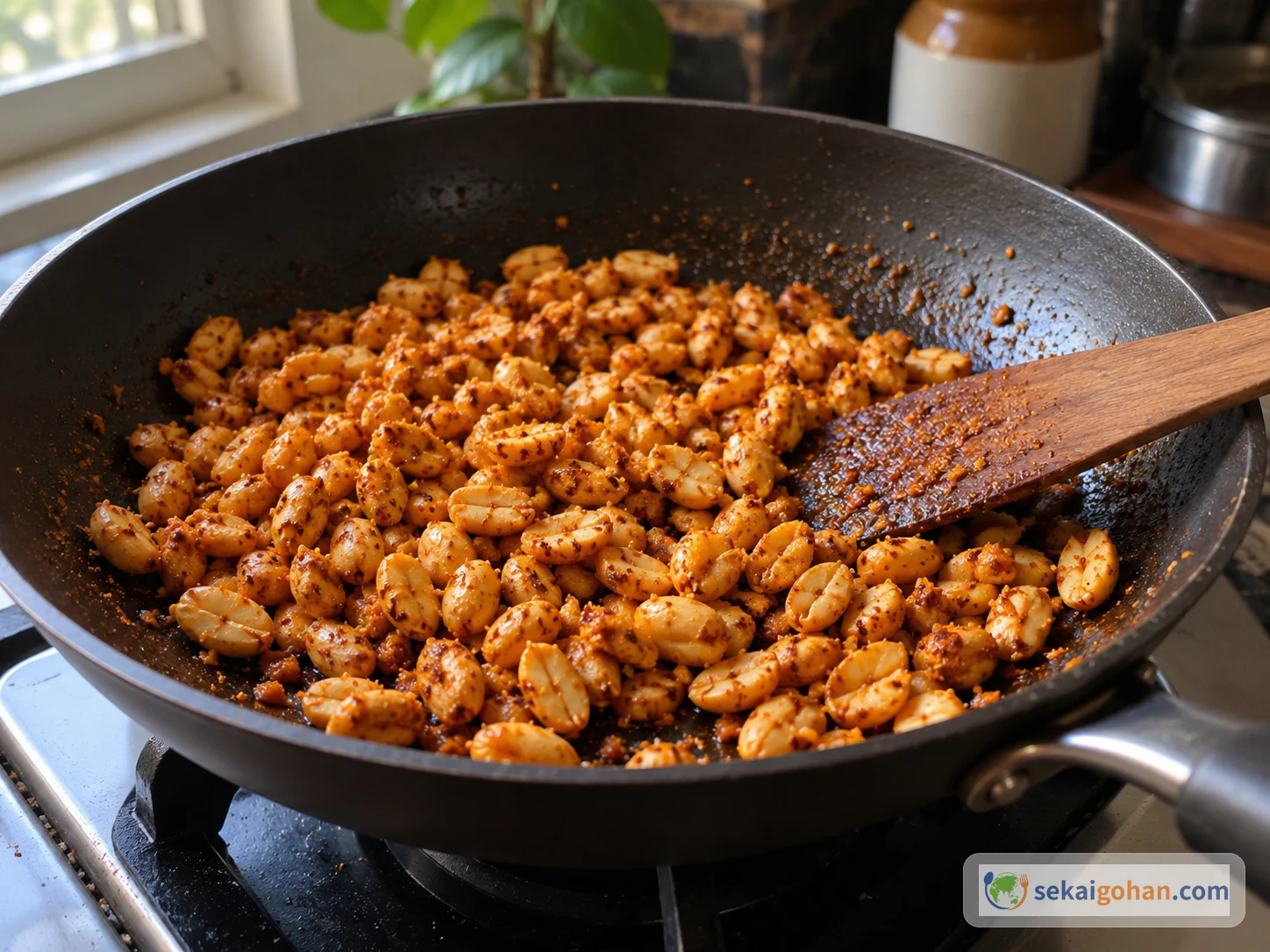
Roast the spiced peanuts

Roasted peanuts and masala tossed over medium heat for 2 minutes

Put 1 cup roasted, skinned, split peanuts, 1 tbsp oil and 1 tbsp Dabeli masala in a pan. Toss over medium heat for 2 minutes, until aromatic. Do not add salt.

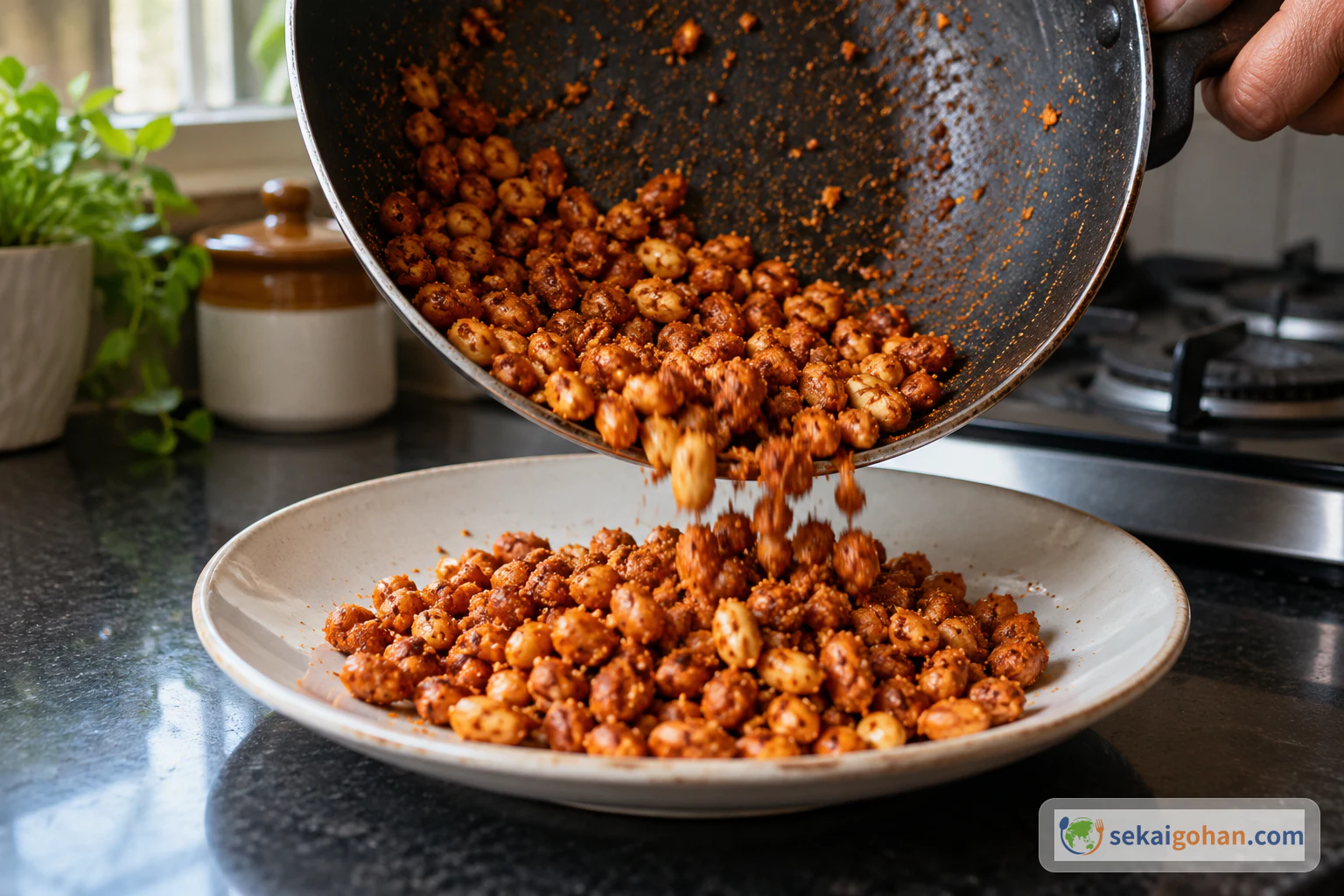
STEP 2323 / 55

Move the peanuts to a plate

Roasted spiced peanuts being moved to a plate

Transfer the spiced peanuts to a plate. Keep the pan for the filling.

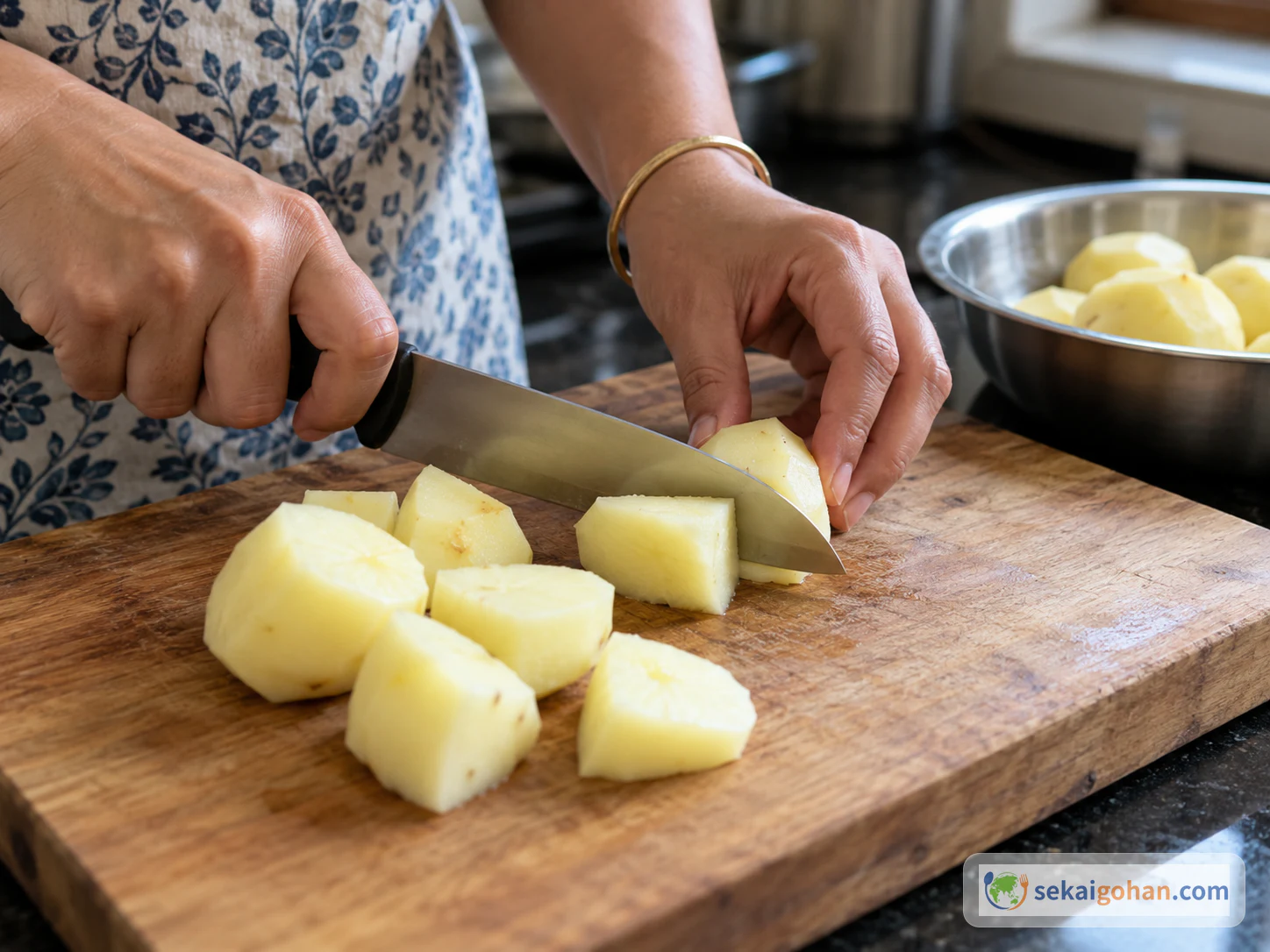
STEP 2424 / 55

Peel and cut the potatoes

450 g of potatoes peeled and cut into pieces about 2 inches in size

Peel 450 g potatoes and cut them into pieces about 2 inches in size.

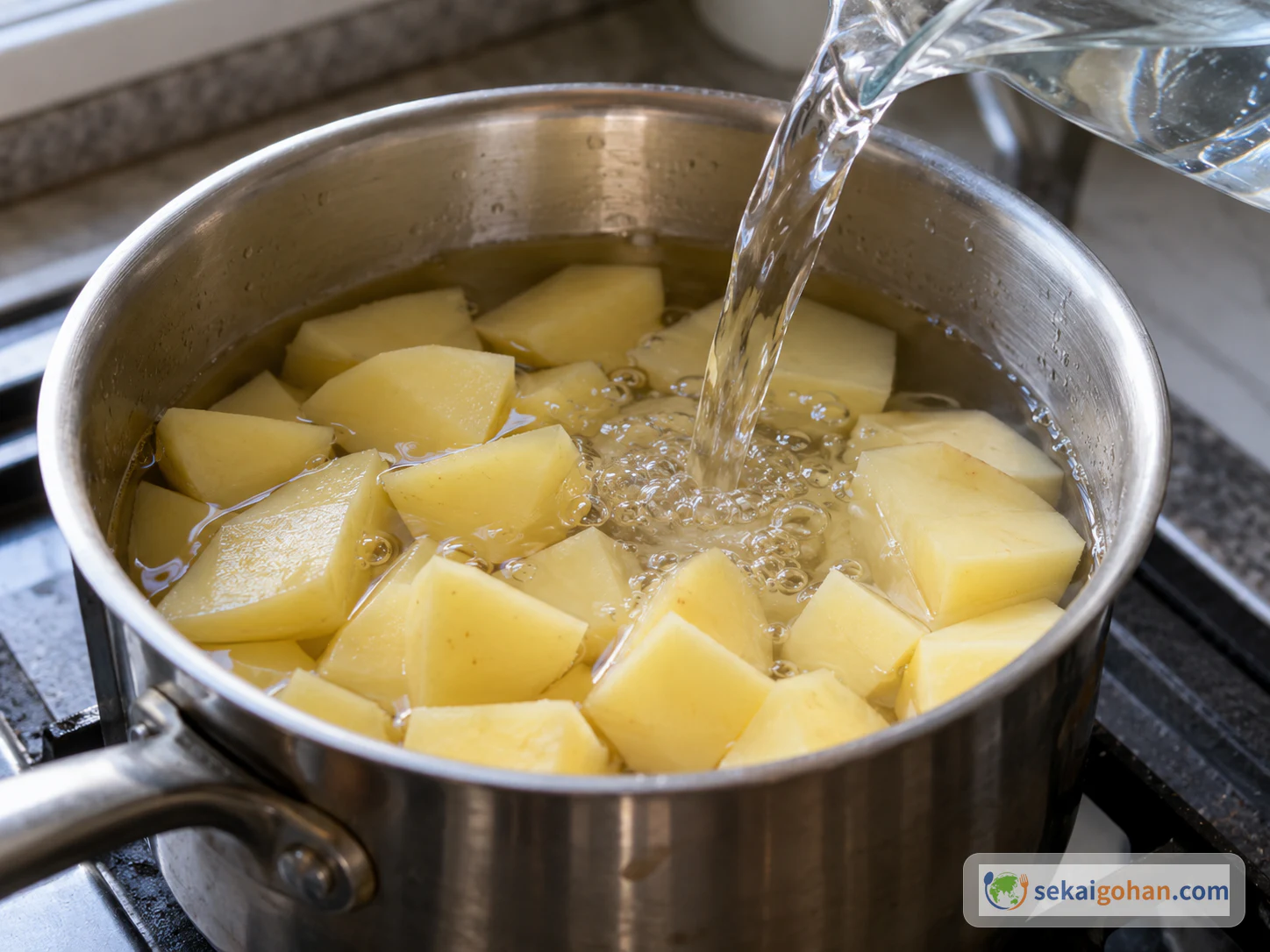
STEP 2525 / 55

Cover with water

Potatoes covered with water in a saucepan

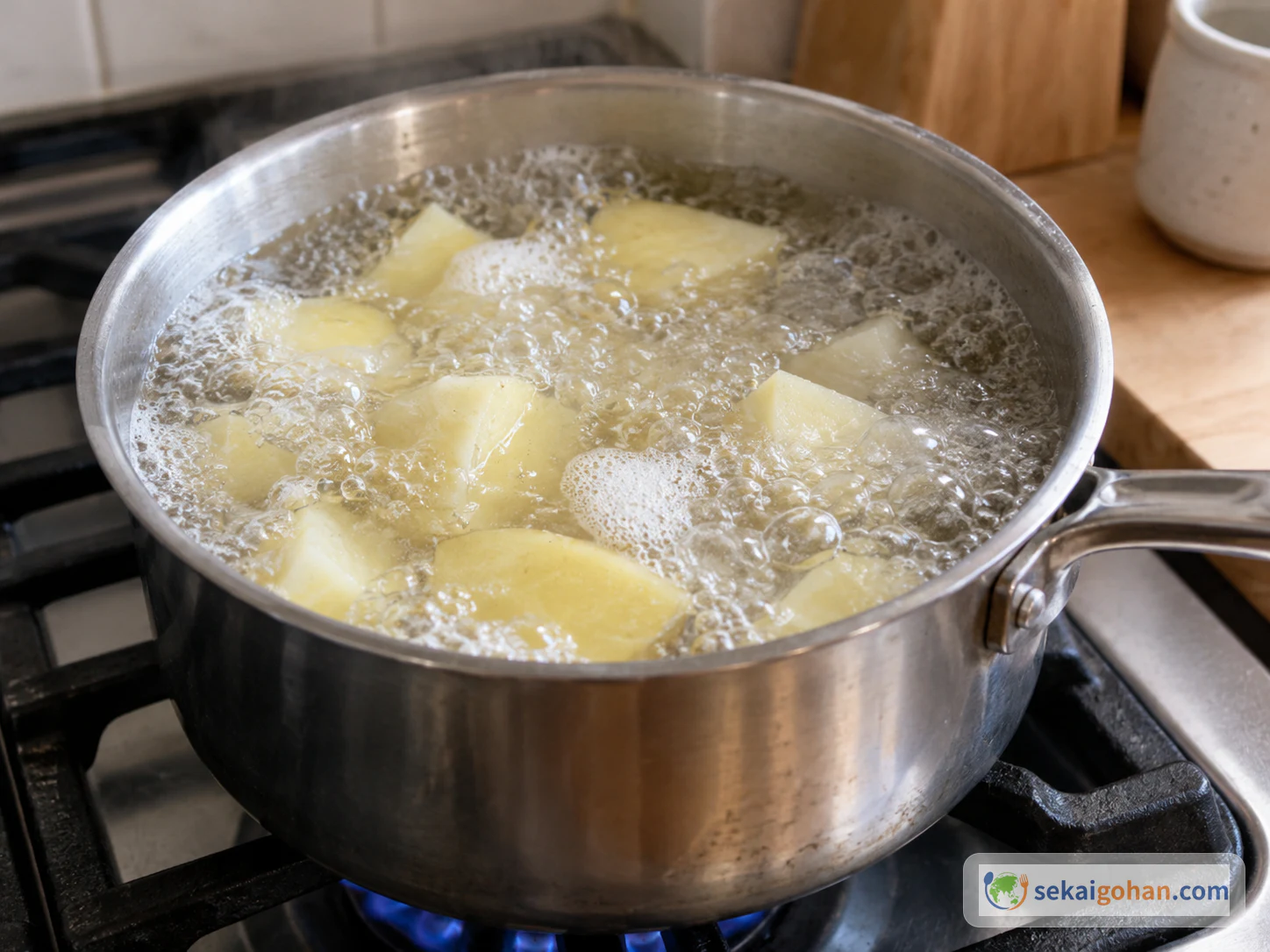
Put the potatoes in a saucepan and add water to cover.

STEP 2626 / 55

Bring to a rolling boil

Saucepan of potatoes at a rolling boil

Bring the water to a rolling boil.

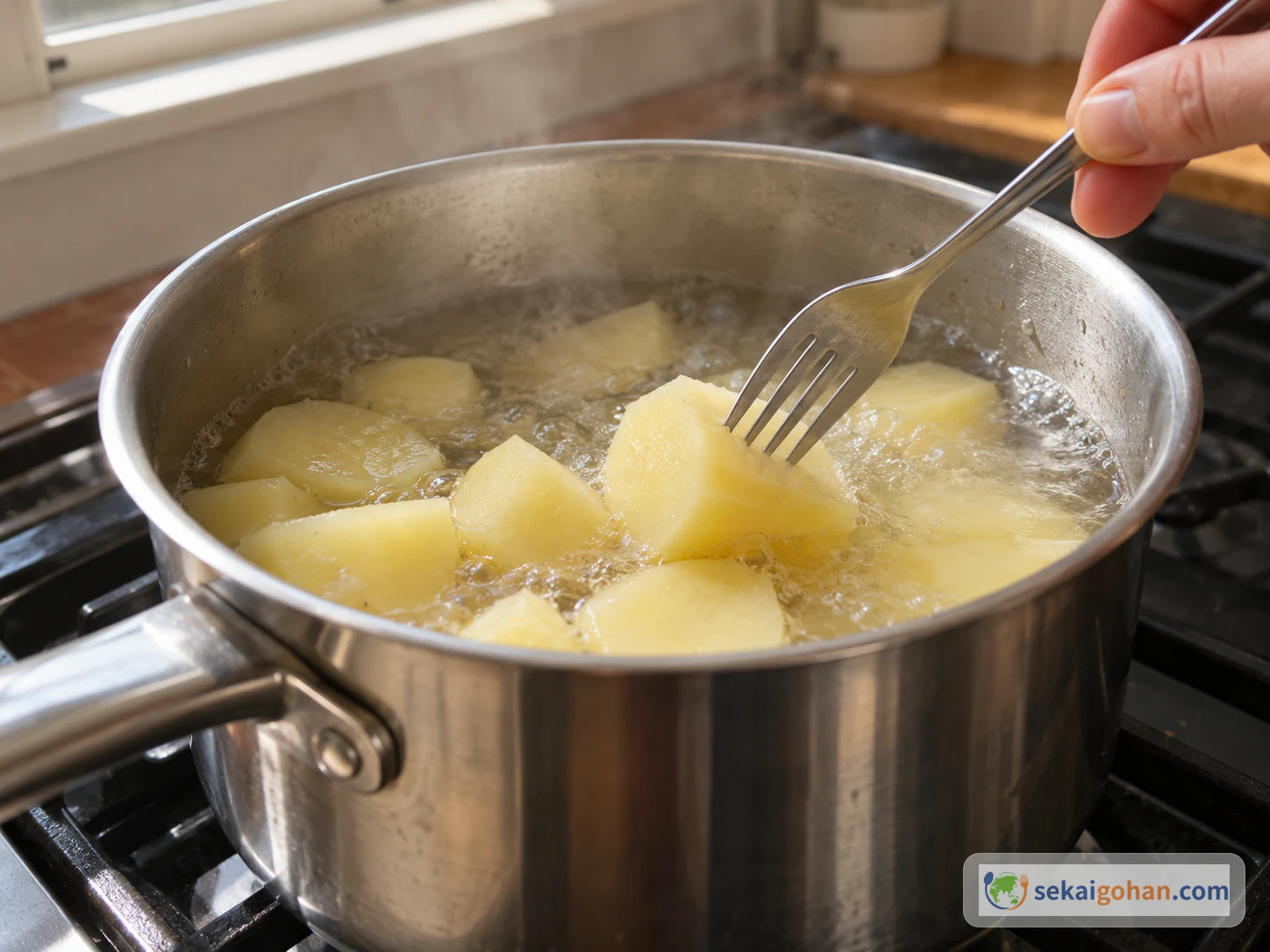
STEP 2727 / 55

Cook until fork-tender

Potatoes cooking over medium heat until fork-tender

Cook over medium heat until a fork goes easily into the potatoes.

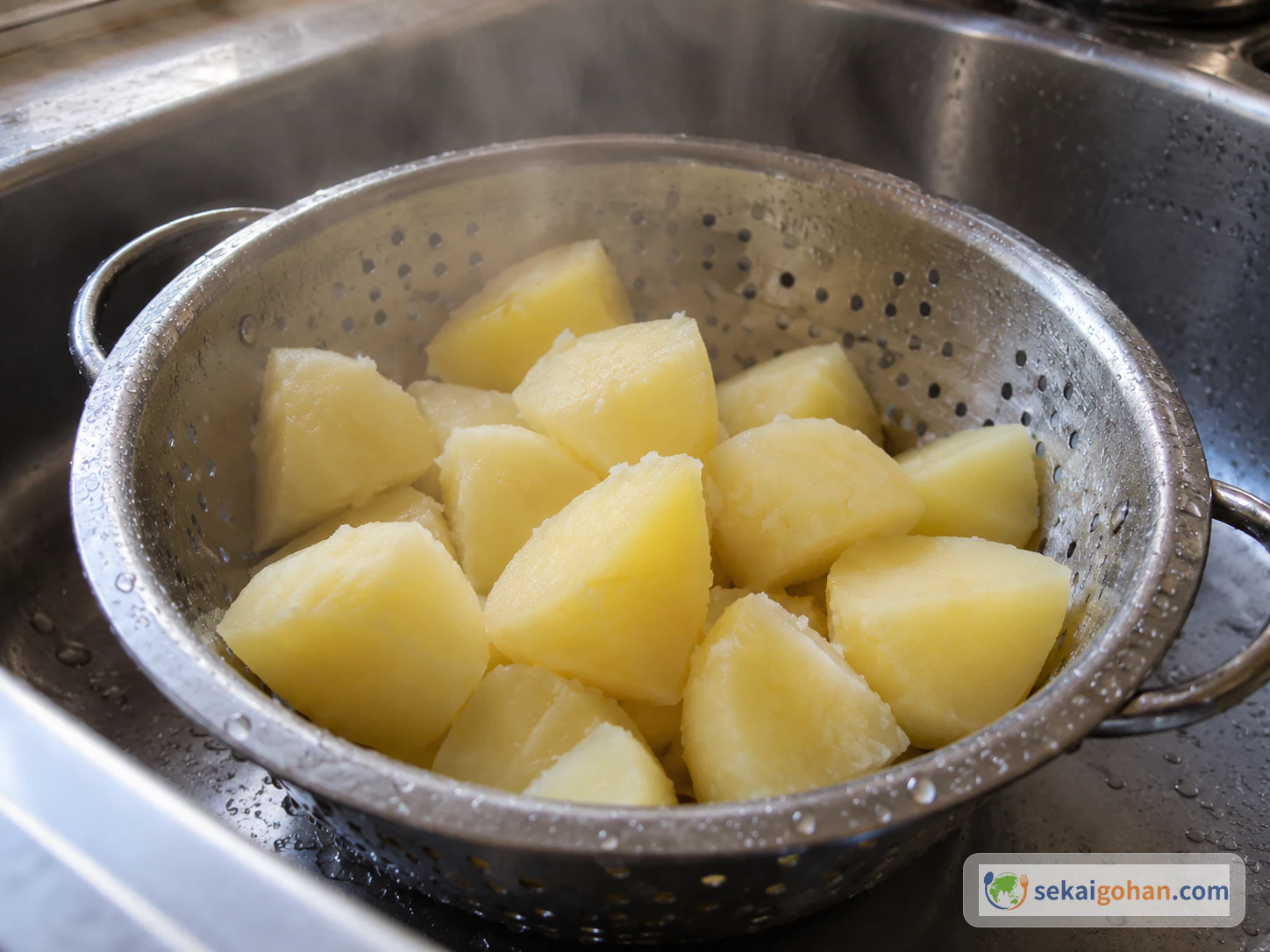
STEP 2828 / 55

Drain

Boiled potatoes draining in a colander

Drain the potatoes in a colander.

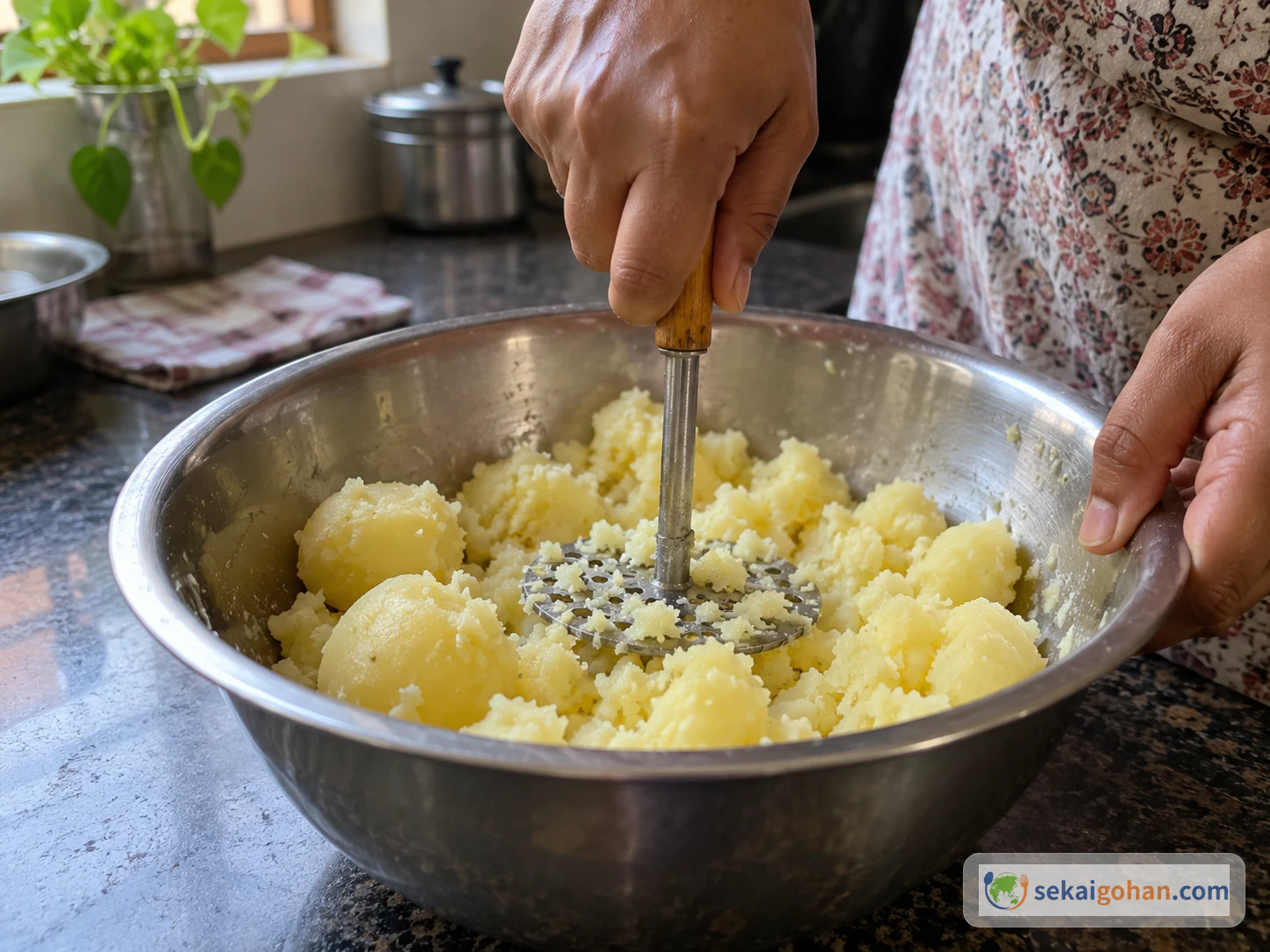
STEP 2929 / 55

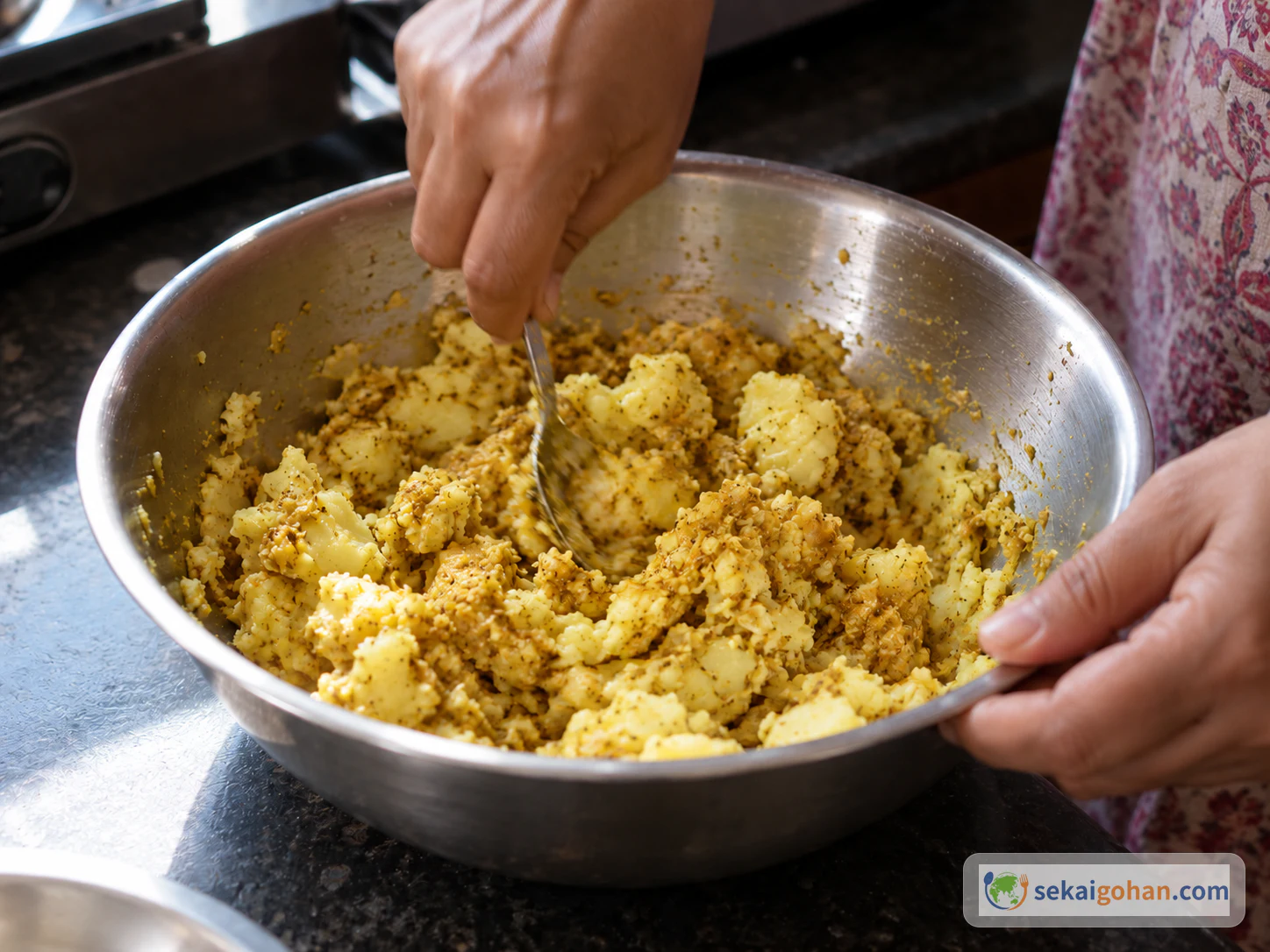
Mash the potatoes

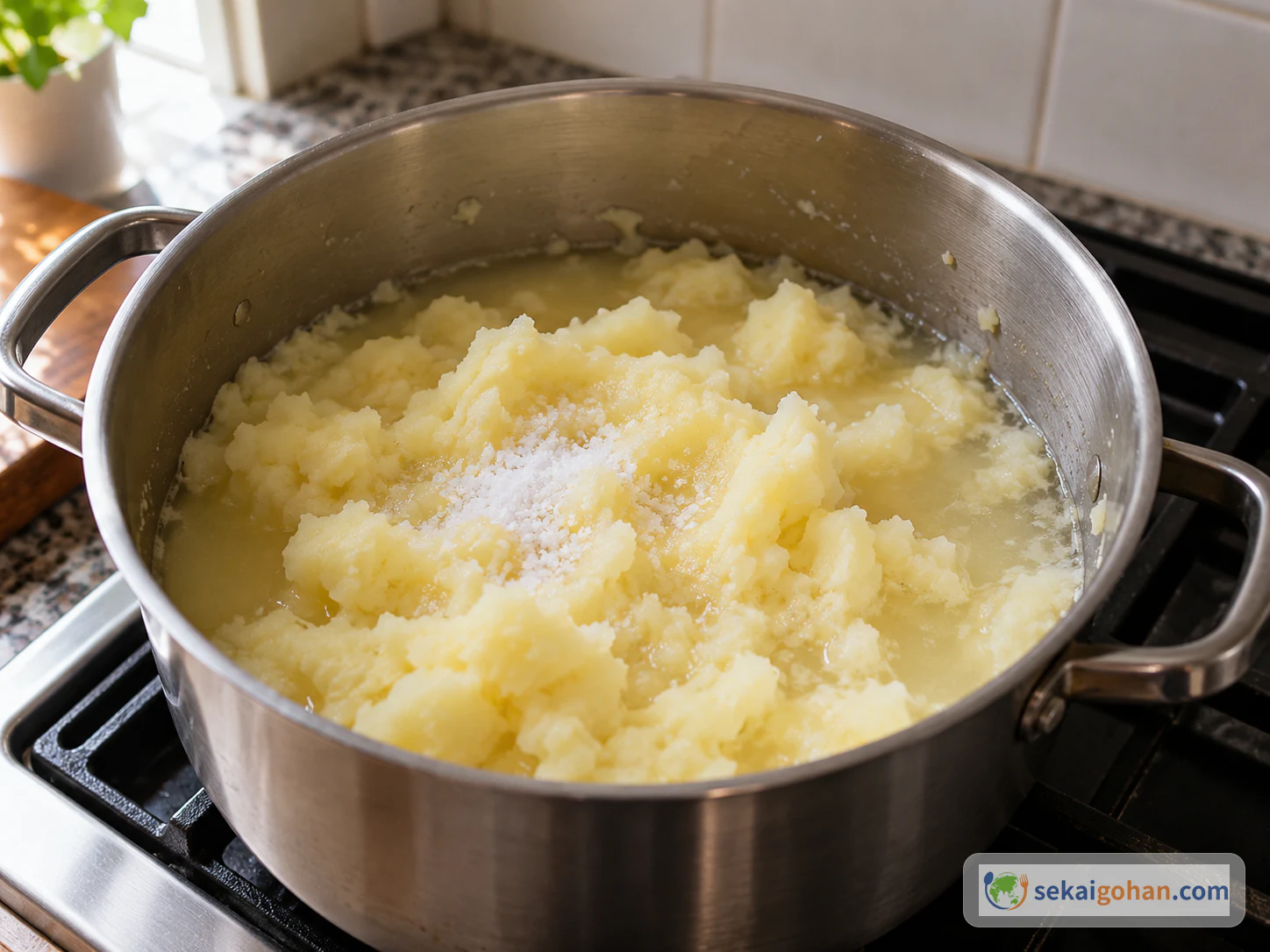
Boiled potatoes being mashed on their own

Mash the potatoes on their own, with nothing else added yet.

STEP 3030 / 55

Mix oil and masala in the same pan

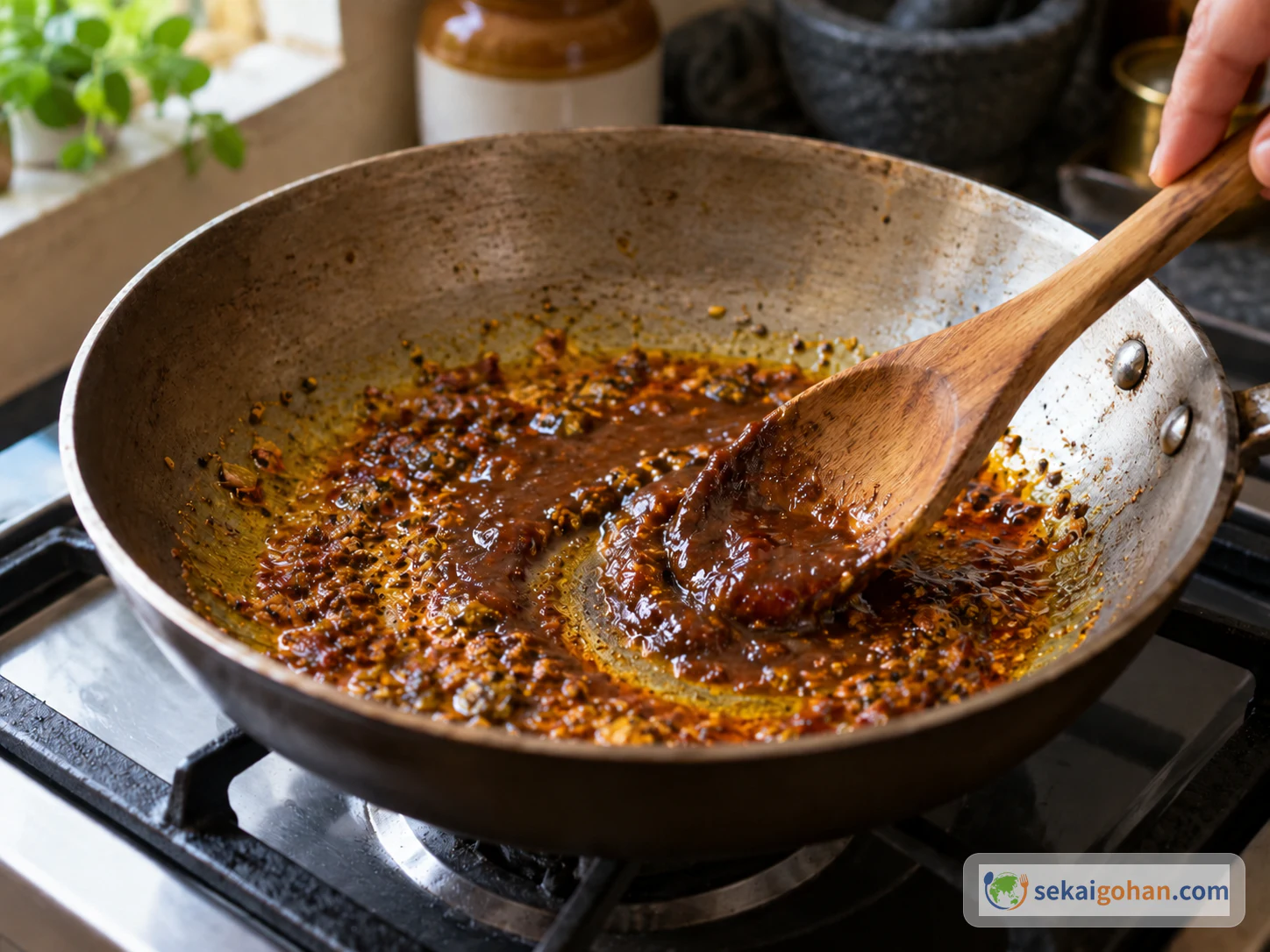
The same pan with 1 tbsp oil and 1 1/2 tbsp masala

In the pan used for the peanuts, stir together 1 tbsp oil and 1 1/2 tbsp Dabeli masala.

STEP 3131 / 55

Add the tamarind chutney

Masala with 2 tbsp tamarind chutney added, cooking until aromatic

Add 2 tbsp tamarind-date chutney and cook for 1 minute, until aromatic.

STEP 3232 / 55

Add water and bring to a boil

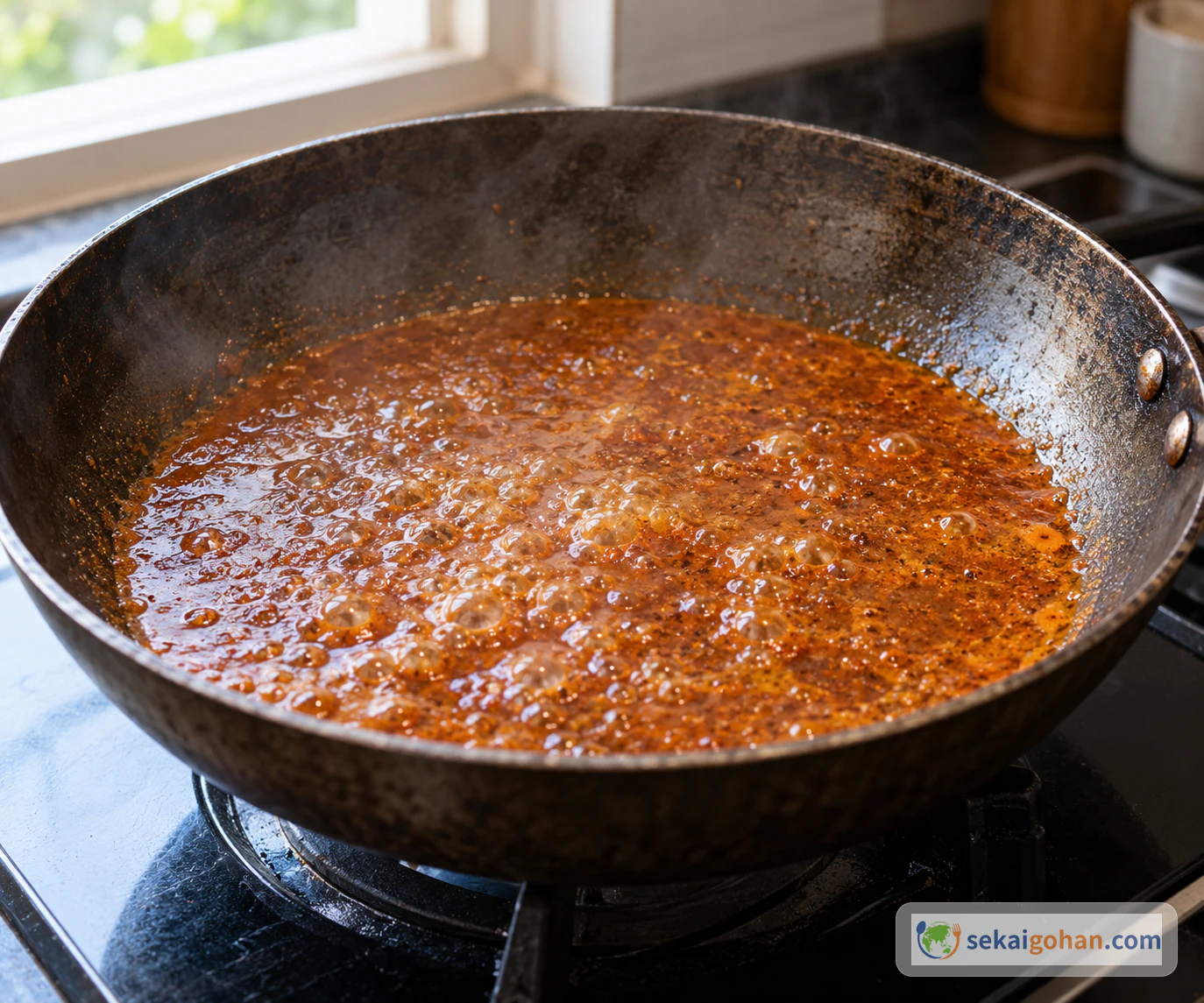
Seasoned liquid boiling after 1/2 cup of water is added

Pour in 1/2 cup water and bring it to a boil.

STEP 3333 / 55

Add the potatoes and salt

Pan with potatoes and salt added, before stirring

Add all the mashed potato and 3/4 tsp sea salt.

STEP 3434 / 55

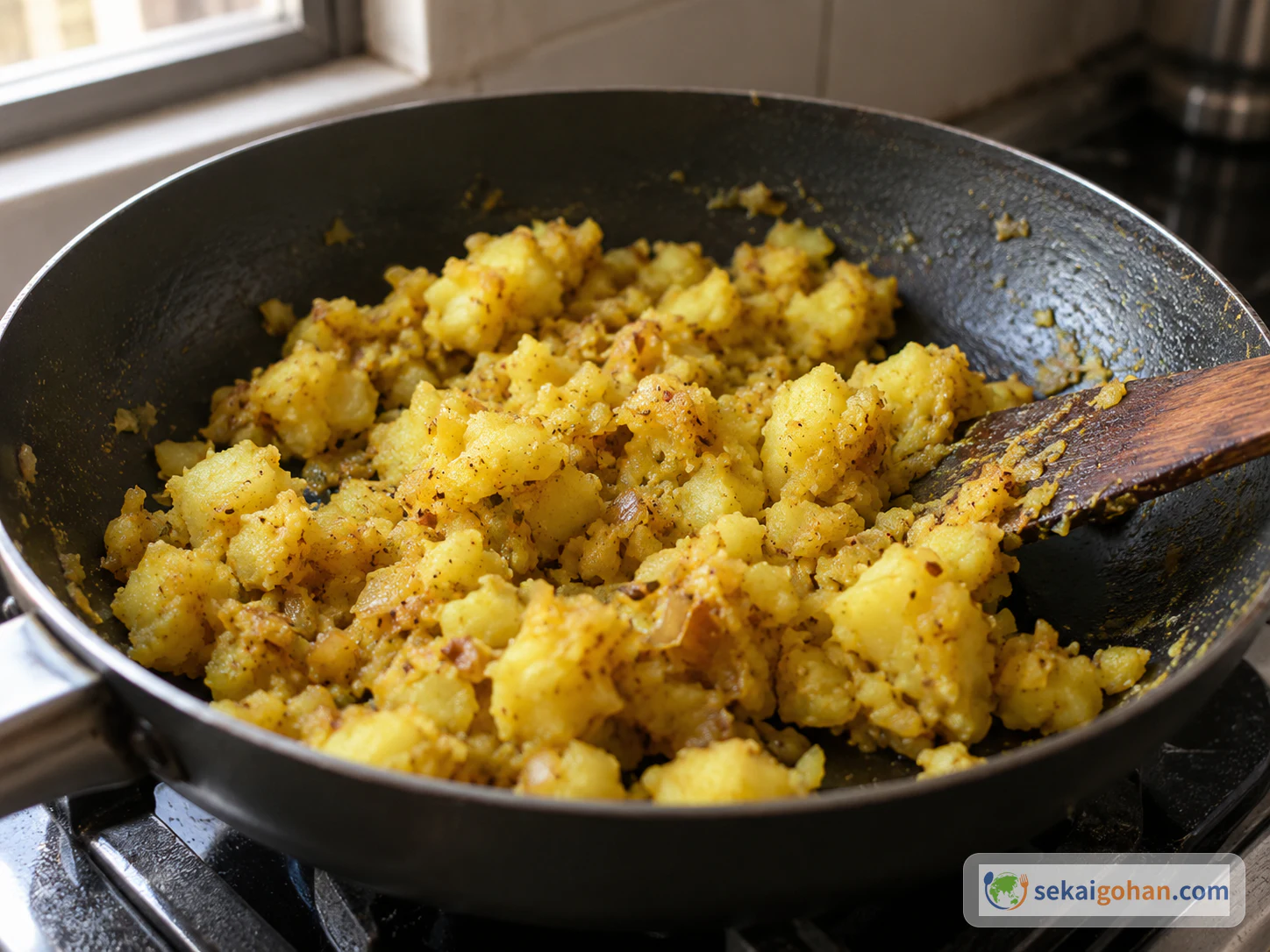
Mix and taste

Spiced potato filling being mixed until even

Mix until the potato is evenly coated, then taste. Adjust salt, tang and spice to taste.

STEP 3535 / 55

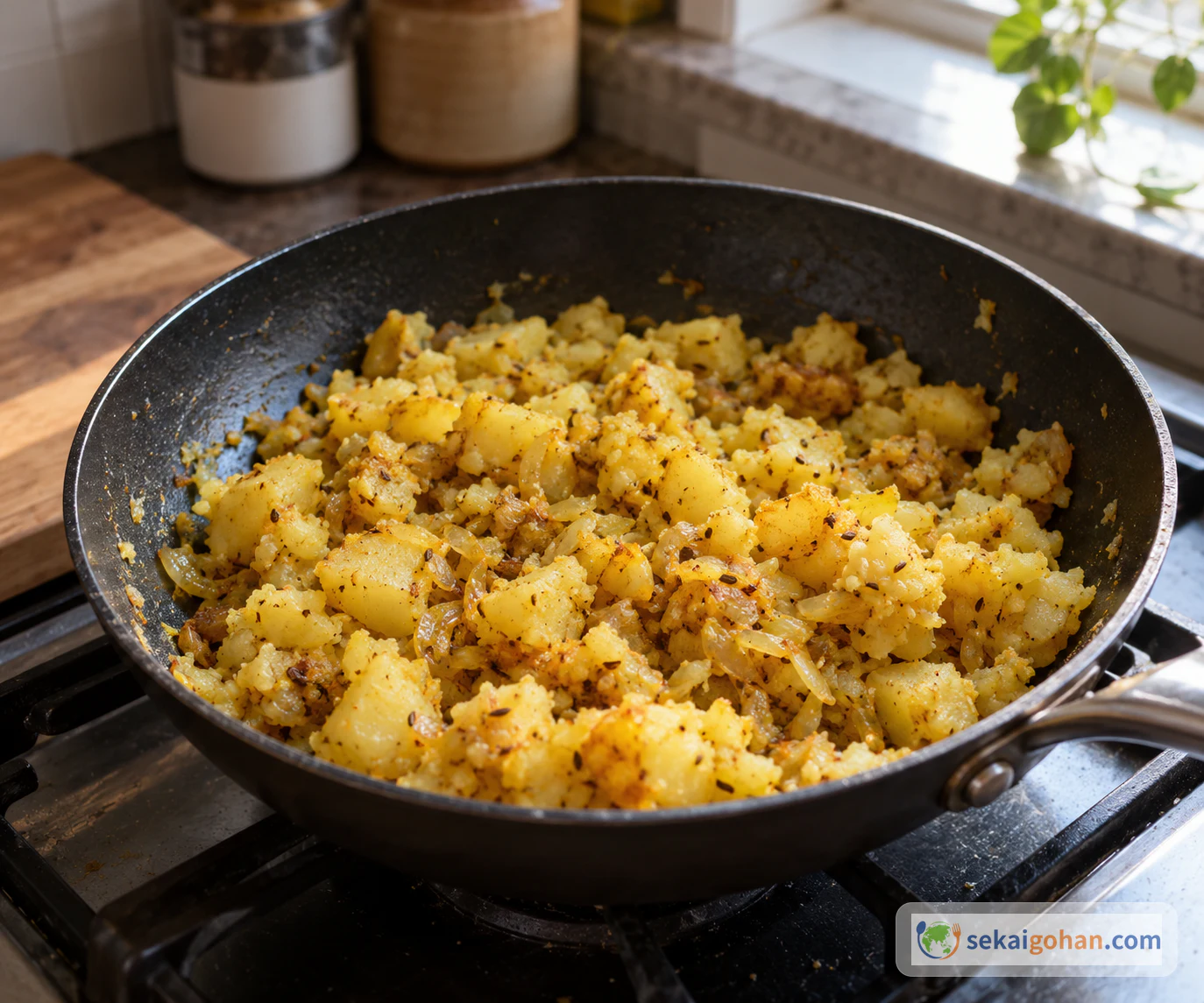
Cook for 2–3 minutes

Potato filling cooking in the pan for 2–3 minutes

Cook the filling for 2–3 minutes.

STEP 3636 / 55

Cool slightly

Potato filling cooled slightly off the heat

Turn off the heat and let the filling cool slightly.

STEP 3737 / 55

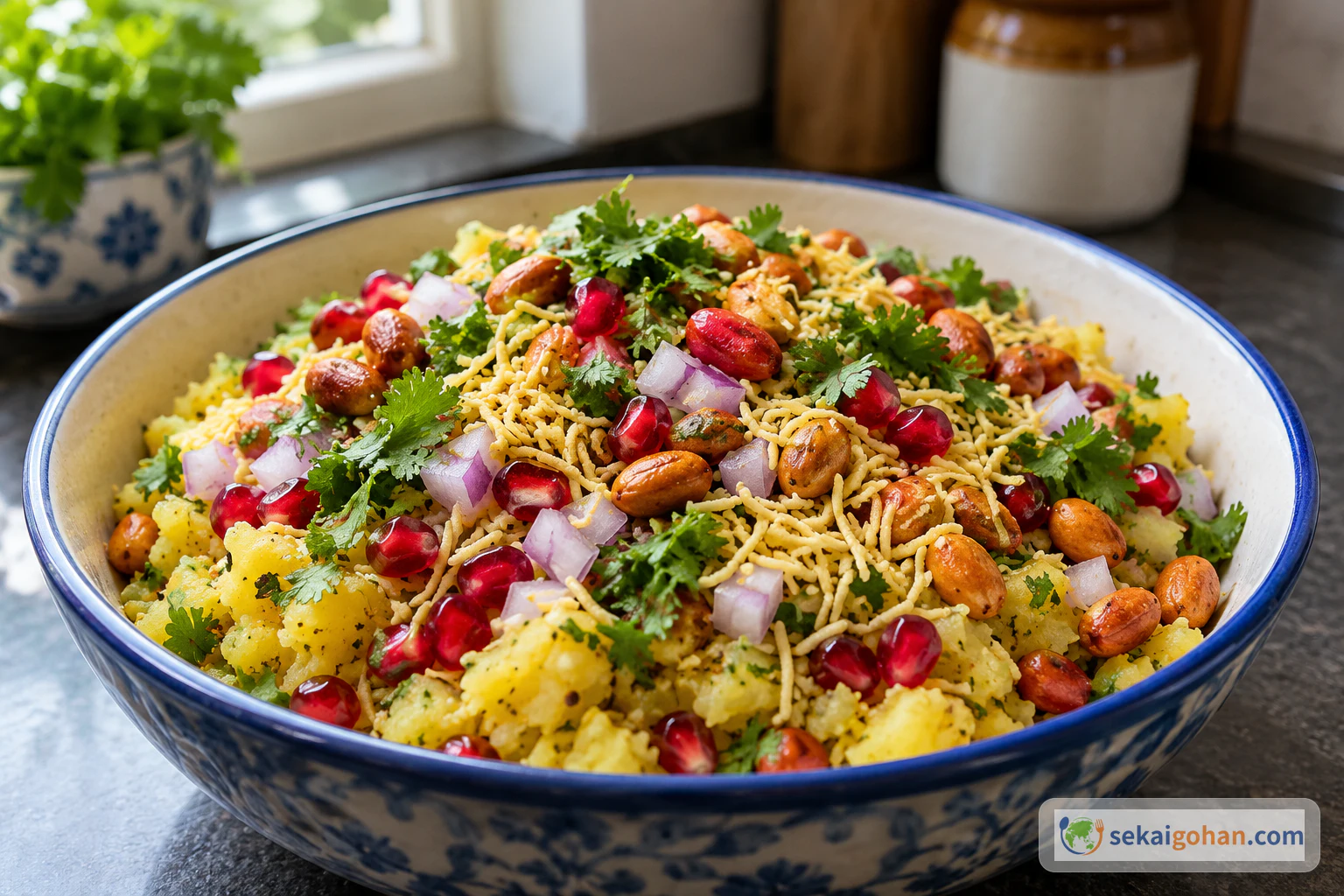
Spread in a bowl and garnish

Level filling with all five garnishes scattered over it

Spread the filling level in a serving bowl. Scatter 2 tbsp each of spiced peanuts, sev, chopped onion, pomegranate arils and chopped coriander over the top.

STEP 3838 / 55

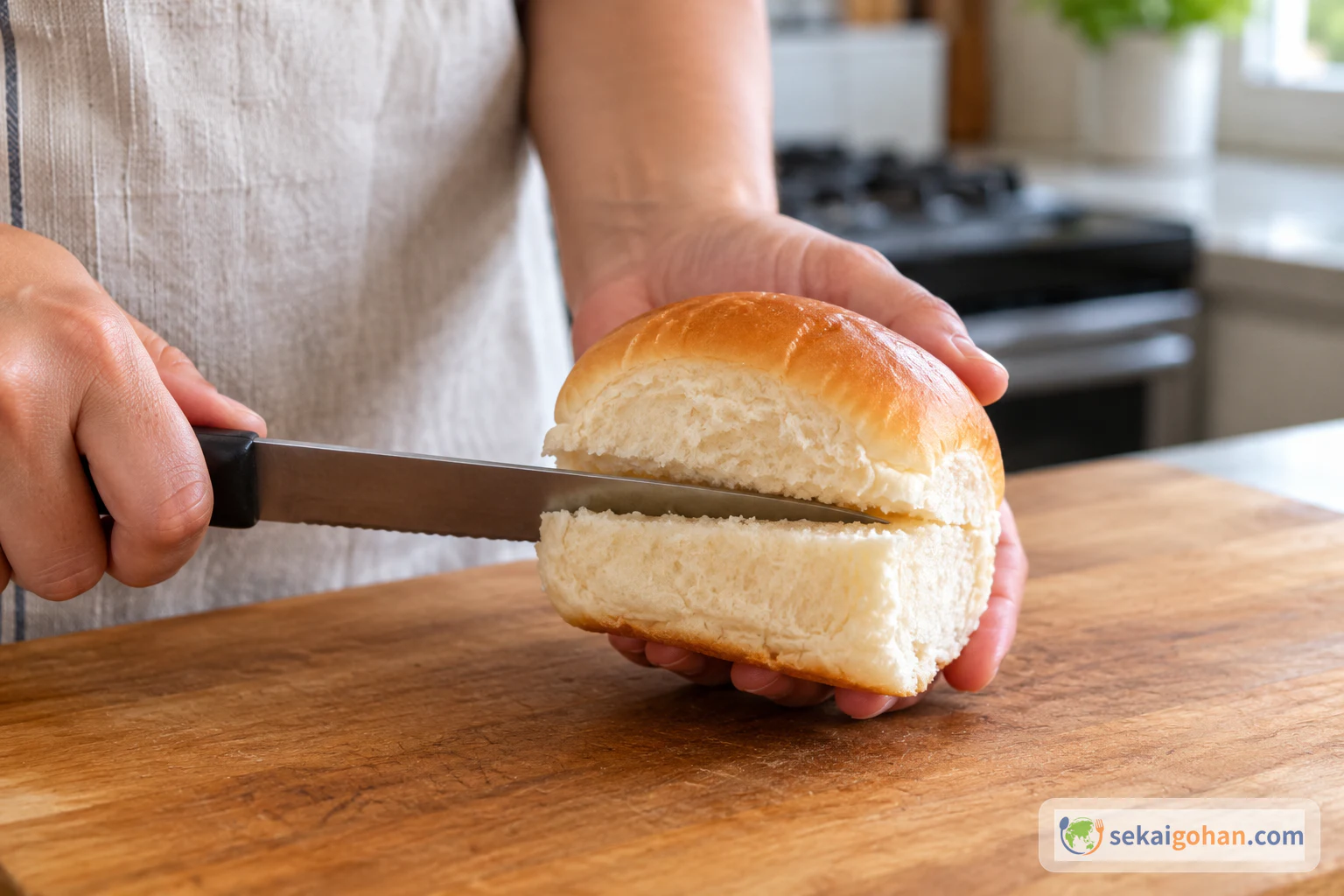
Slit the pav

One pav from the batch of eight slit horizontally, still joined on one side

Slit each of the 8 pav horizontally along three sides, leaving the fourth side joined.

STEP 3939 / 55

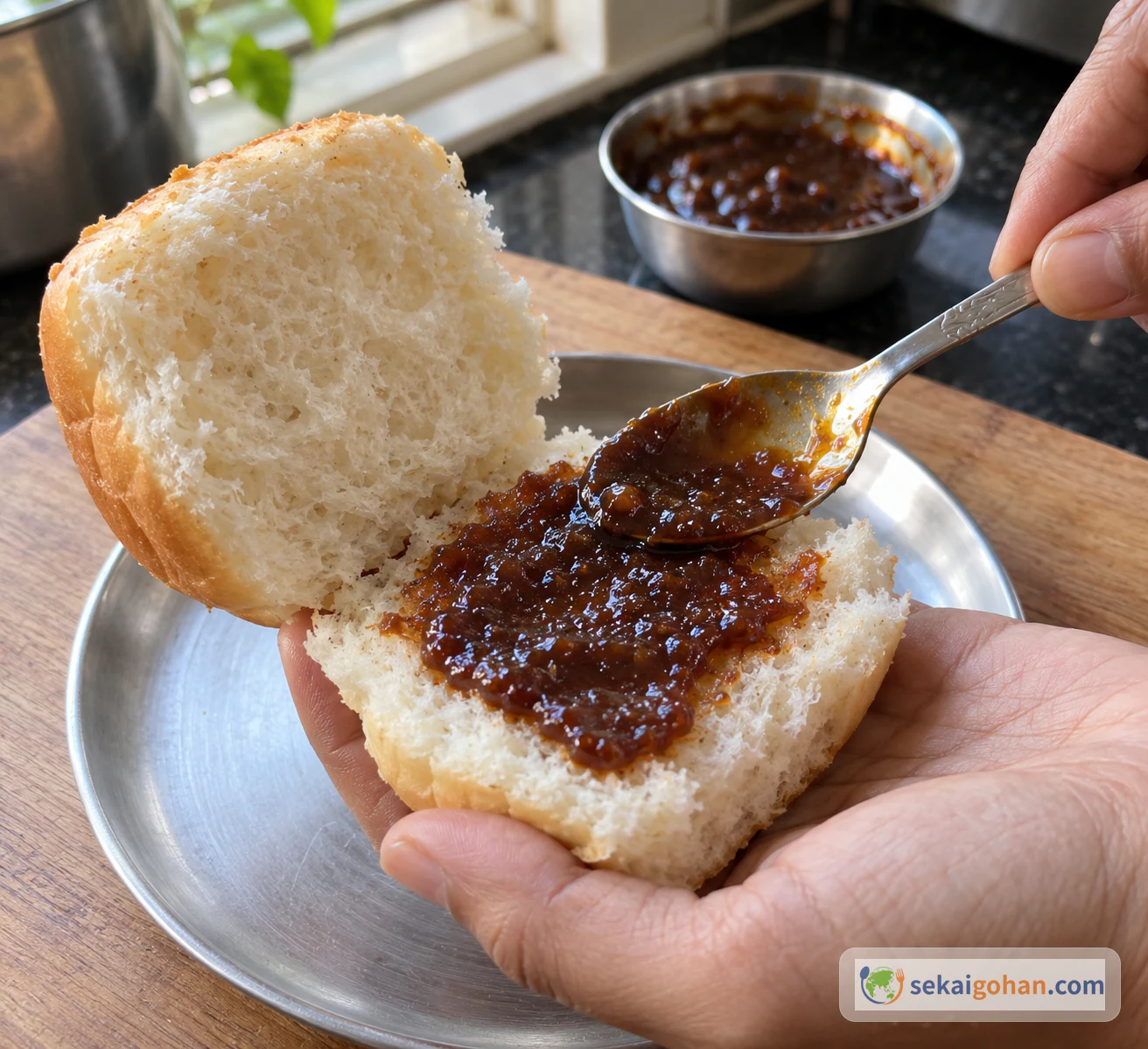
Spread tamarind chutney

Tamarind chutney spread on one inside face of the pav

Spread 1 tbsp tamarind-date chutney on one inside face of a pav.

STEP 4040 / 55

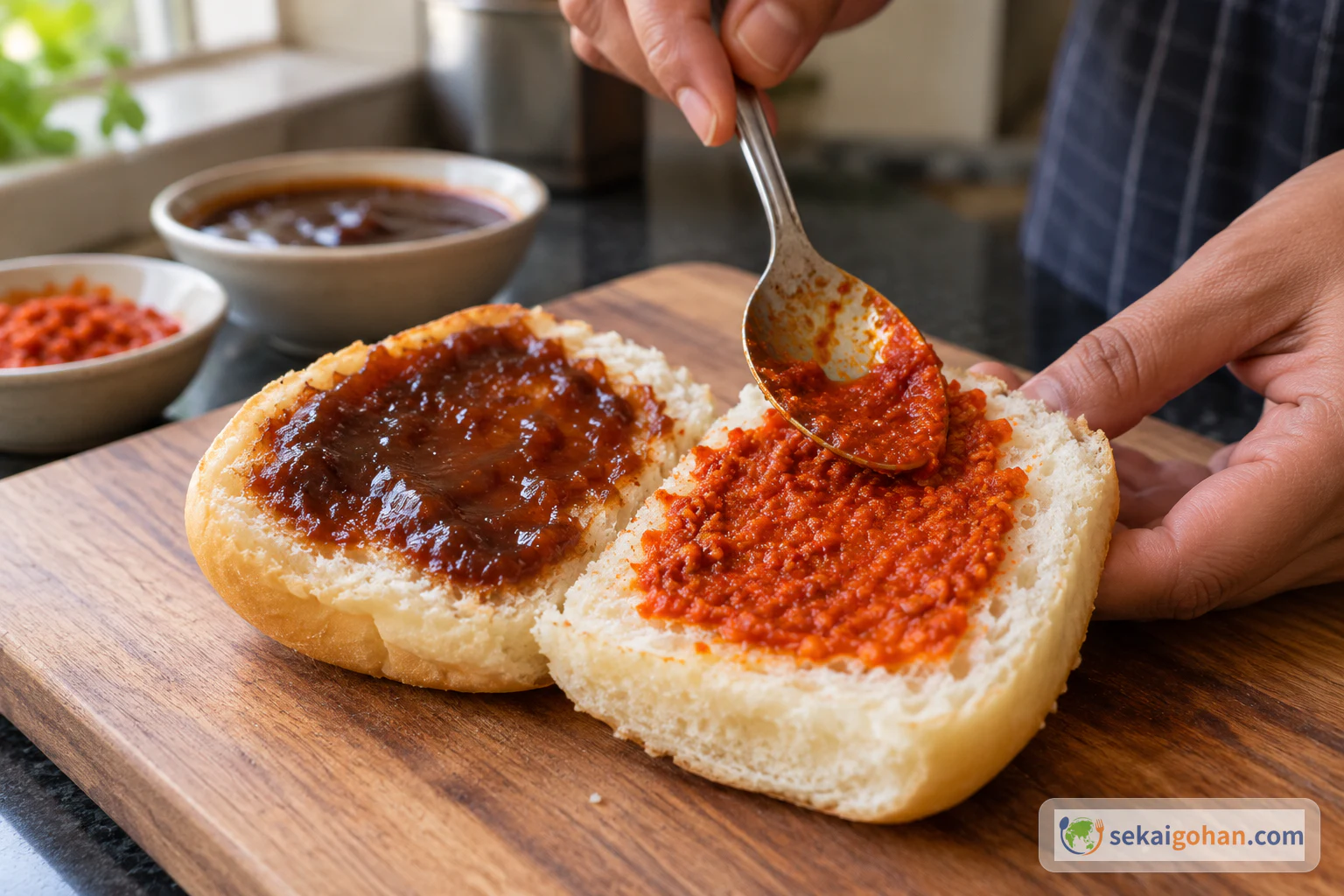
Spread garlic chutney

Red chutney being spread on the other inside face of the pav

Spread 1/2 tbsp red garlic chutney on the other inside face.

STEP 4141 / 55

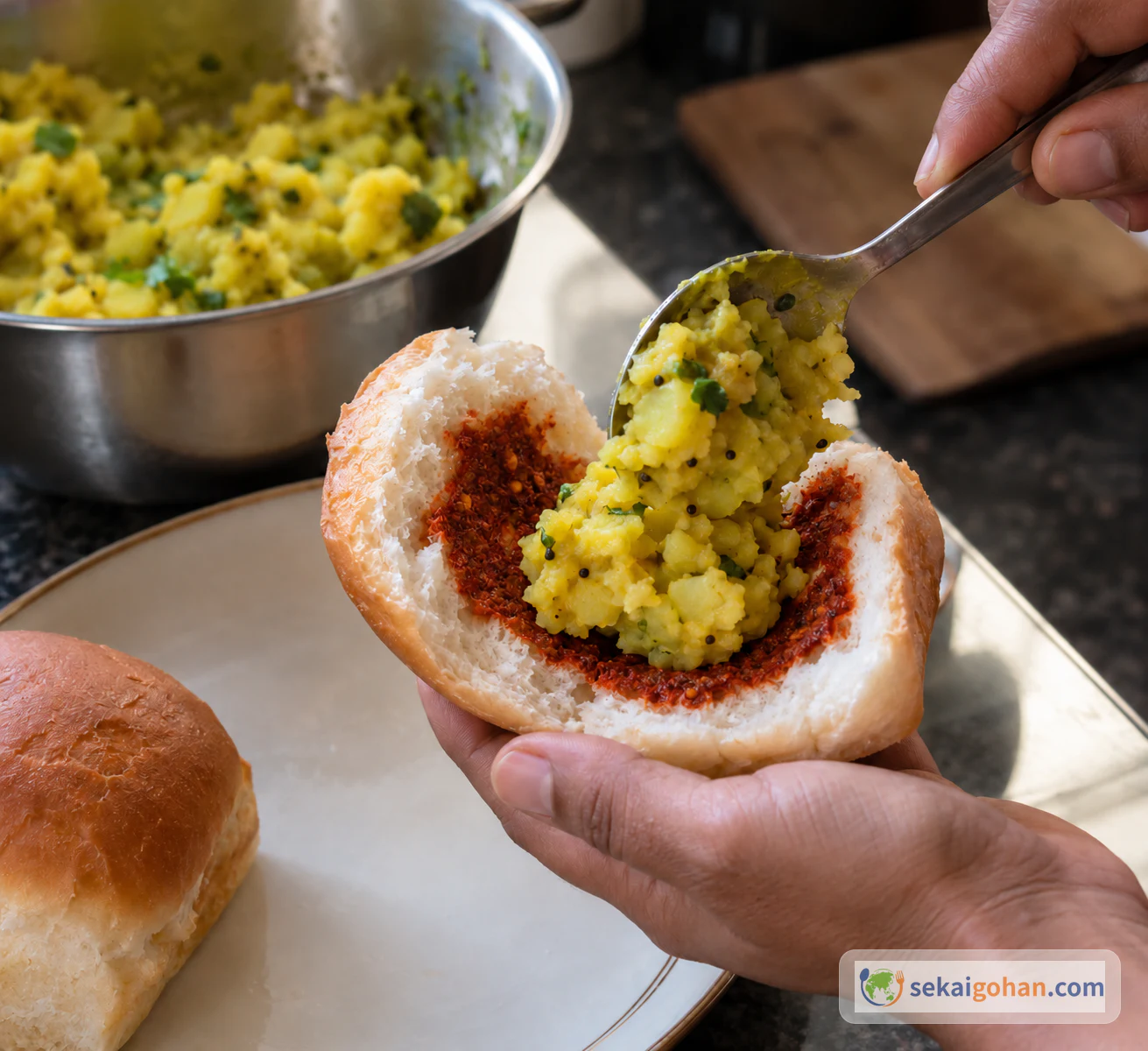
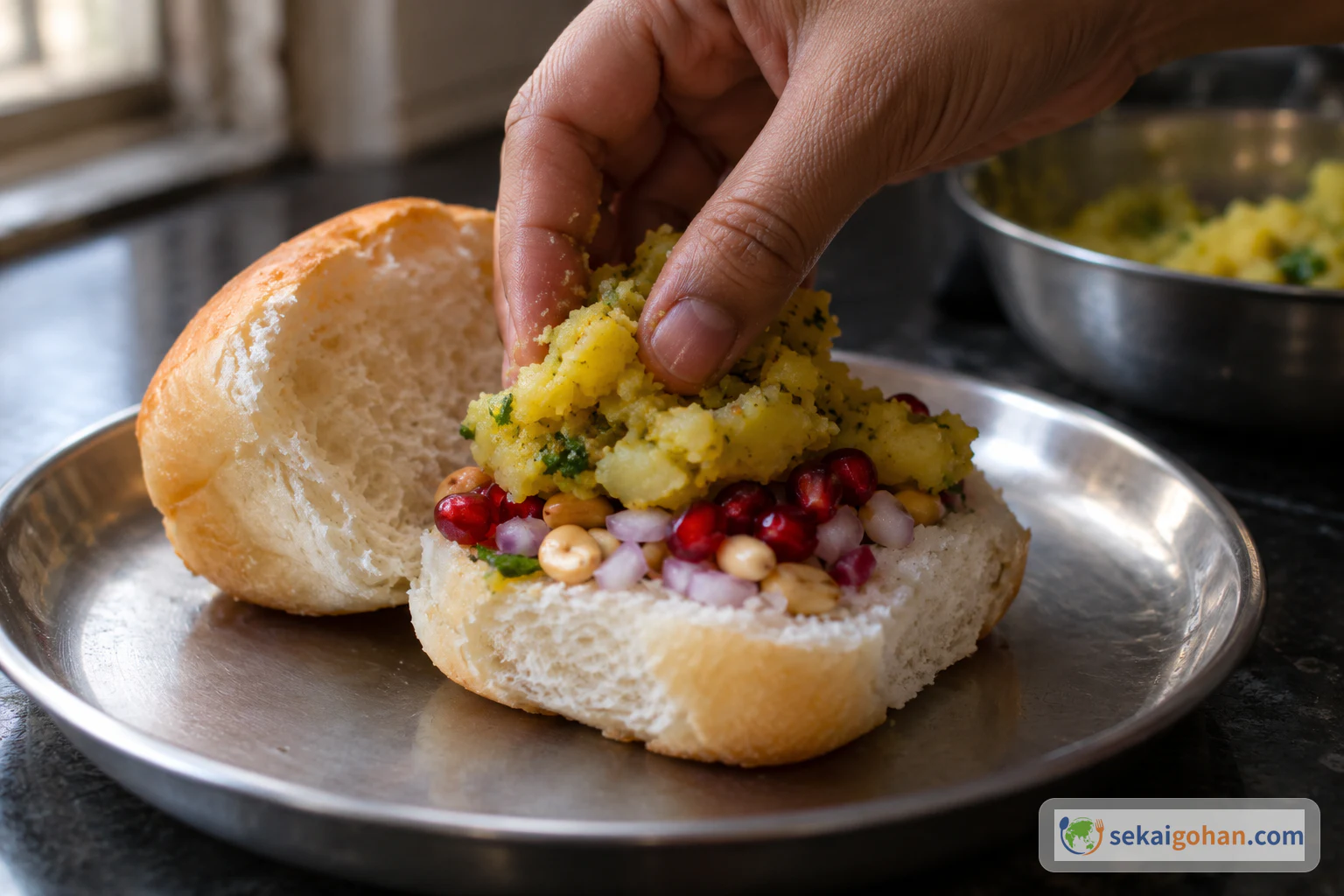
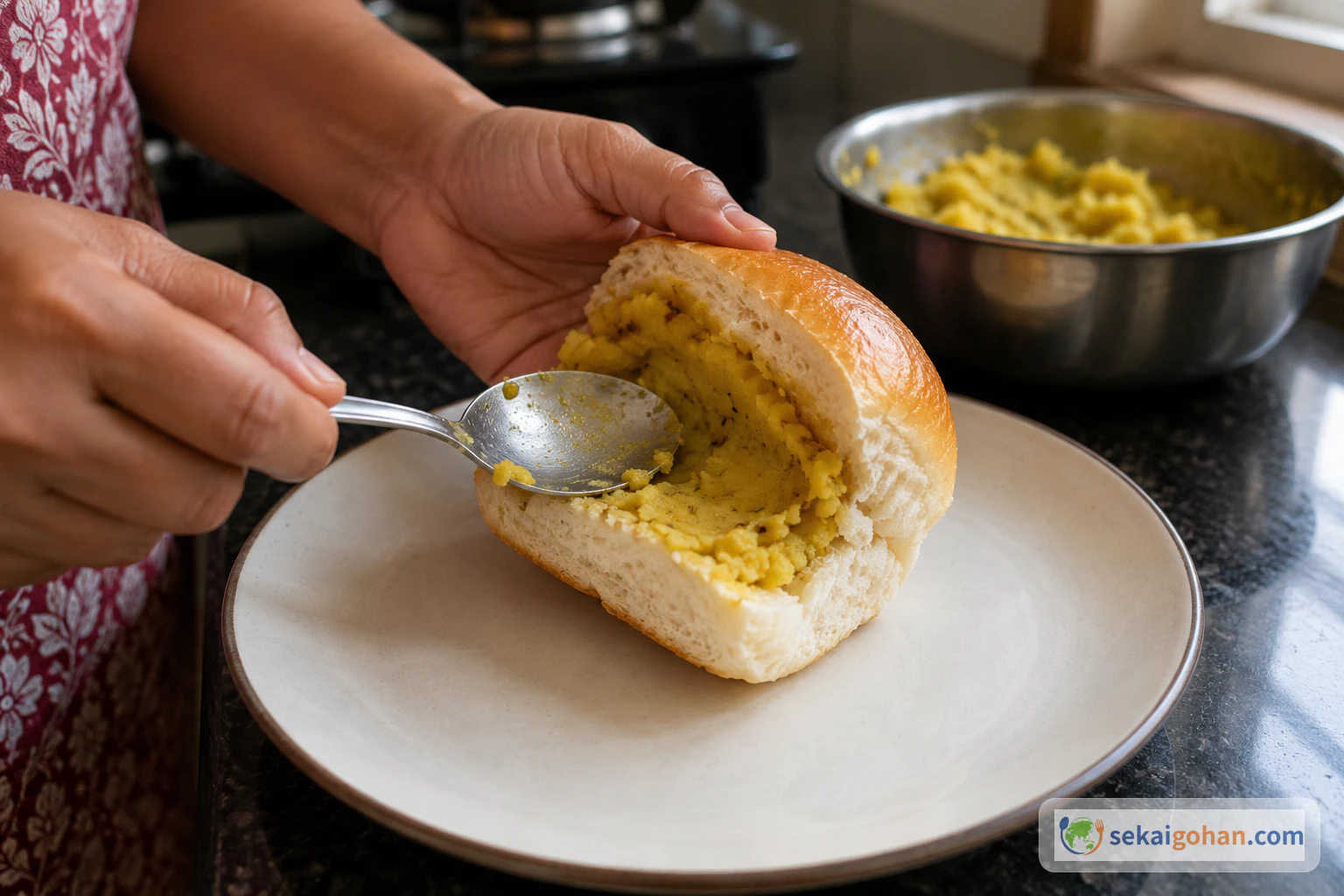
Add the first potato layer

Pav with 1 1/2 tbsp of potato filling placed inside

Place 1 1/2 tbsp potato filling inside.

STEP 4242 / 55

Add onion, peanuts and pomegranate

First potato layer topped with onion, spiced peanuts and pomegranate

Top the potato with 1 tsp chopped onion, 1 tbsp spiced peanuts and a few pomegranate arils.

STEP 4343 / 55

Add the second potato layer

A second layer of potato filling

Cover with a little more potato filling.

STEP 4444 / 55

Smooth the open sides

Filling smoothed along the three open sides of the pav

Smooth the filling along the three open sides. Fill the remaining pav in the same way.

STEP 4545 / 55

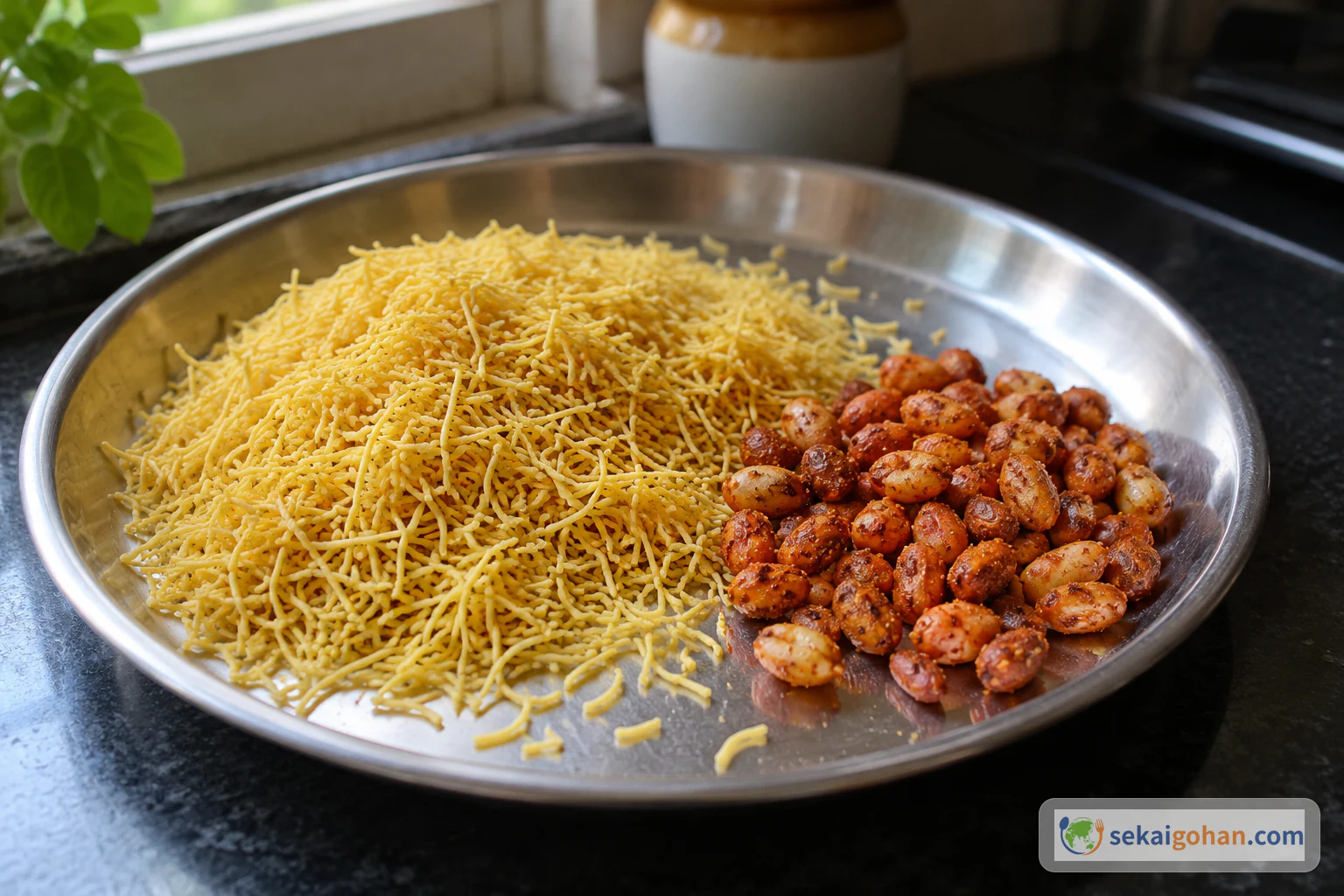
Set up the first coating plate

First plate with the remaining sev and half of the remaining peanuts

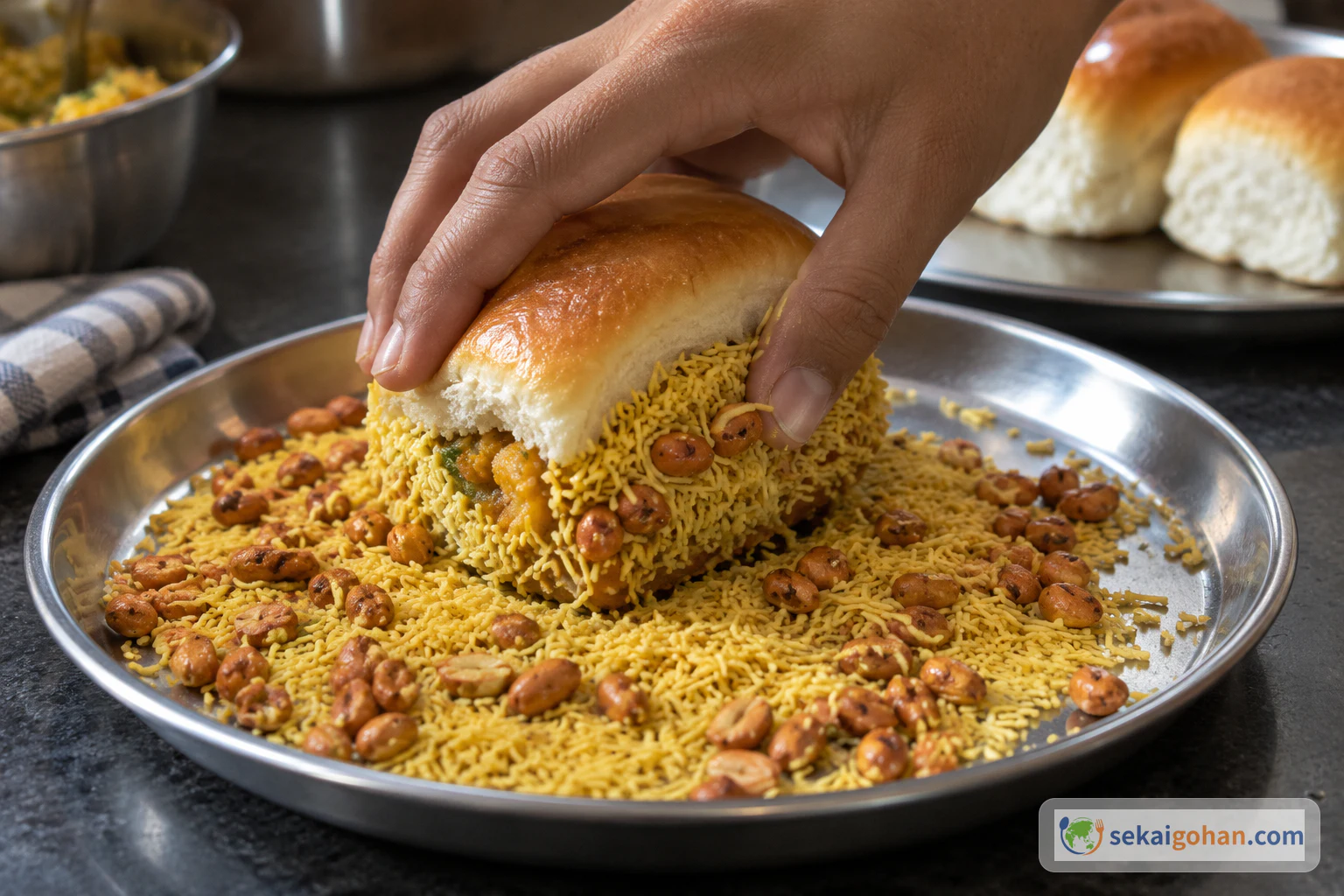
On the first plate, put the remaining sev and half of the remaining spiced peanuts.

STEP 4646 / 55

Coat in the first plate

Three open sides pressed into the sev and peanuts on the first plate

Press and roll the three open sides of each filled pav in the first plate.

STEP 4747 / 55

Set up the second coating plate

Second plate with the remaining onion, 2 tbsp pomegranate and the remaining coriander

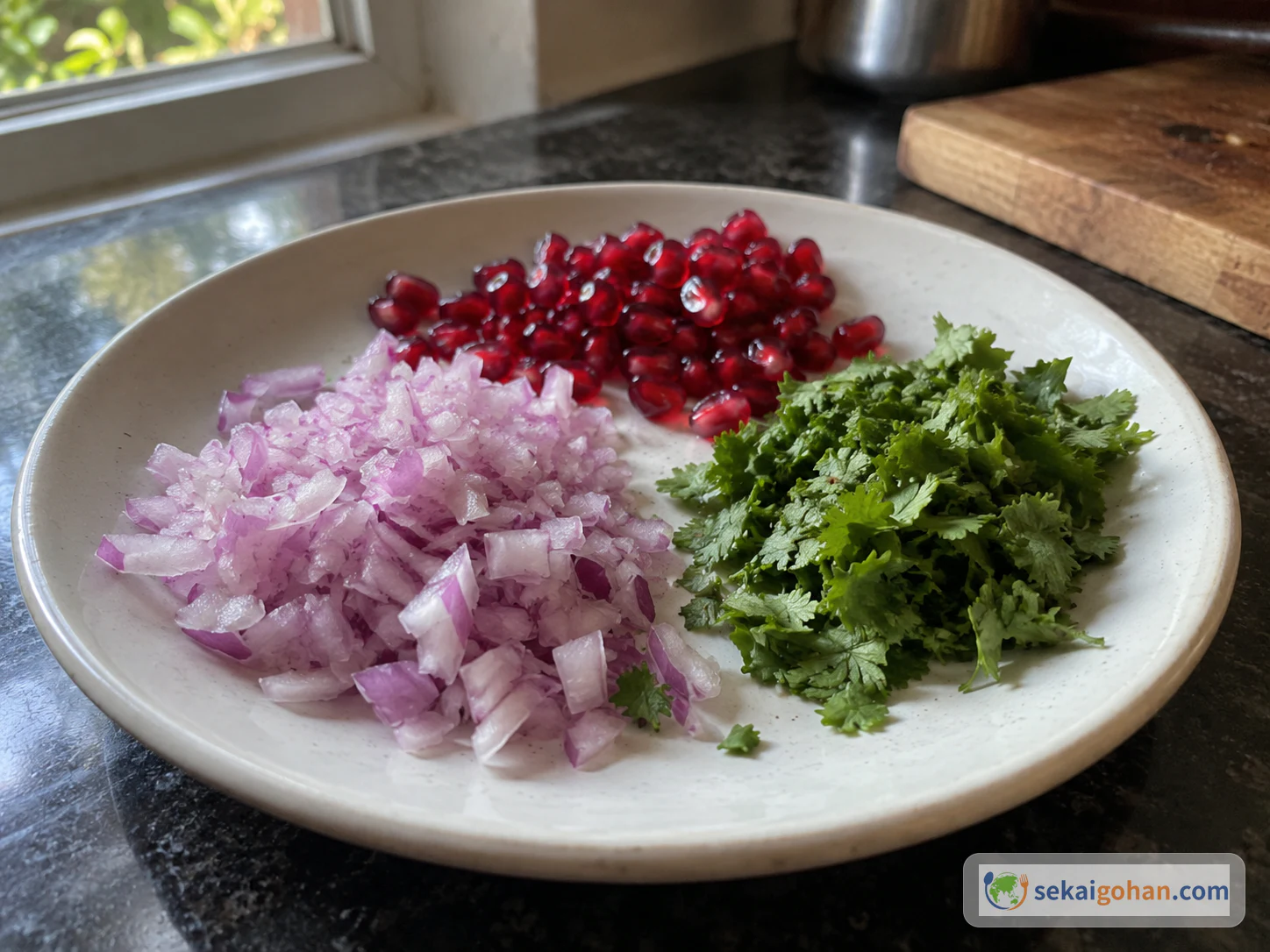
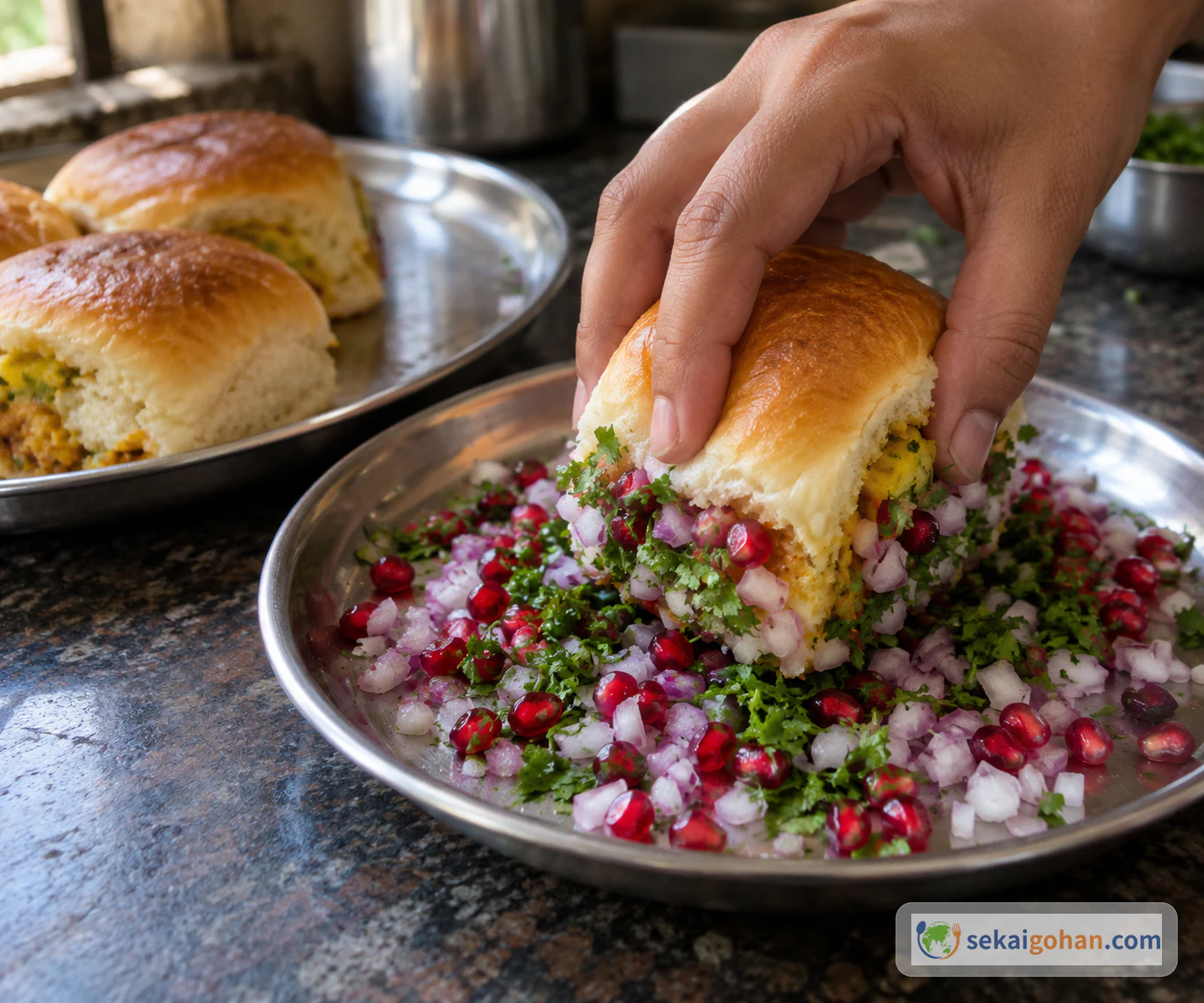
On a separate second plate, put the remaining onion, 2 tbsp pomegranate arils and the remaining coriander.

STEP 4848 / 55

Coat in the second plate

Three open sides pressed into the toppings on the second plate

Press and roll the three open sides of each pav in the second plate. Keep the two plates separate.

STEP 4949 / 55

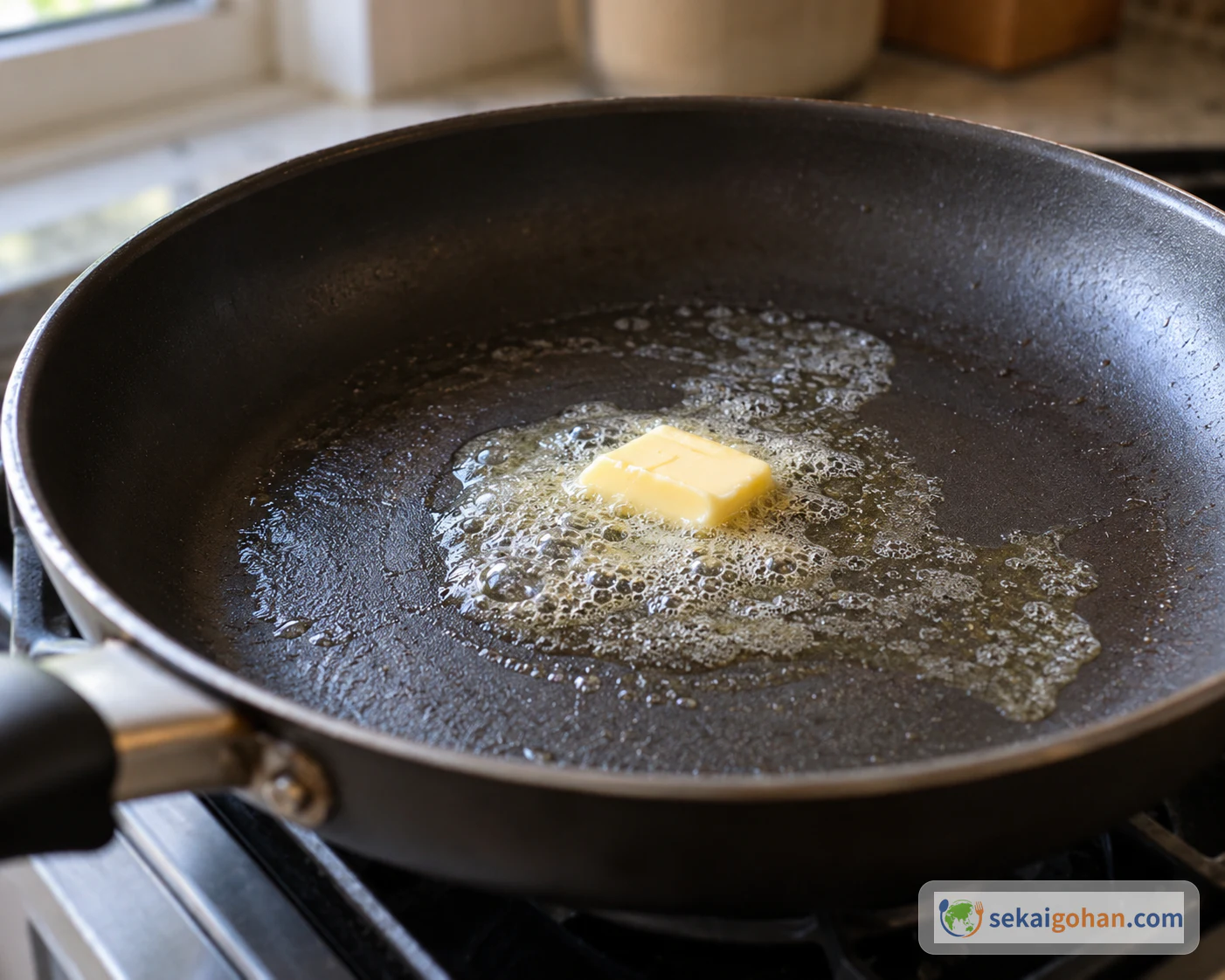
Melt butter in the skillet

1 tsp of butter melting in the skillet

Melt 1 tsp butter in a skillet for this pan load.

STEP 5050 / 55

Place the dabeli in the pan

Dabeli placed in the skillet with melted butter

Place the coated dabeli in the buttered skillet.

STEP 5151 / 55

Butter the tops

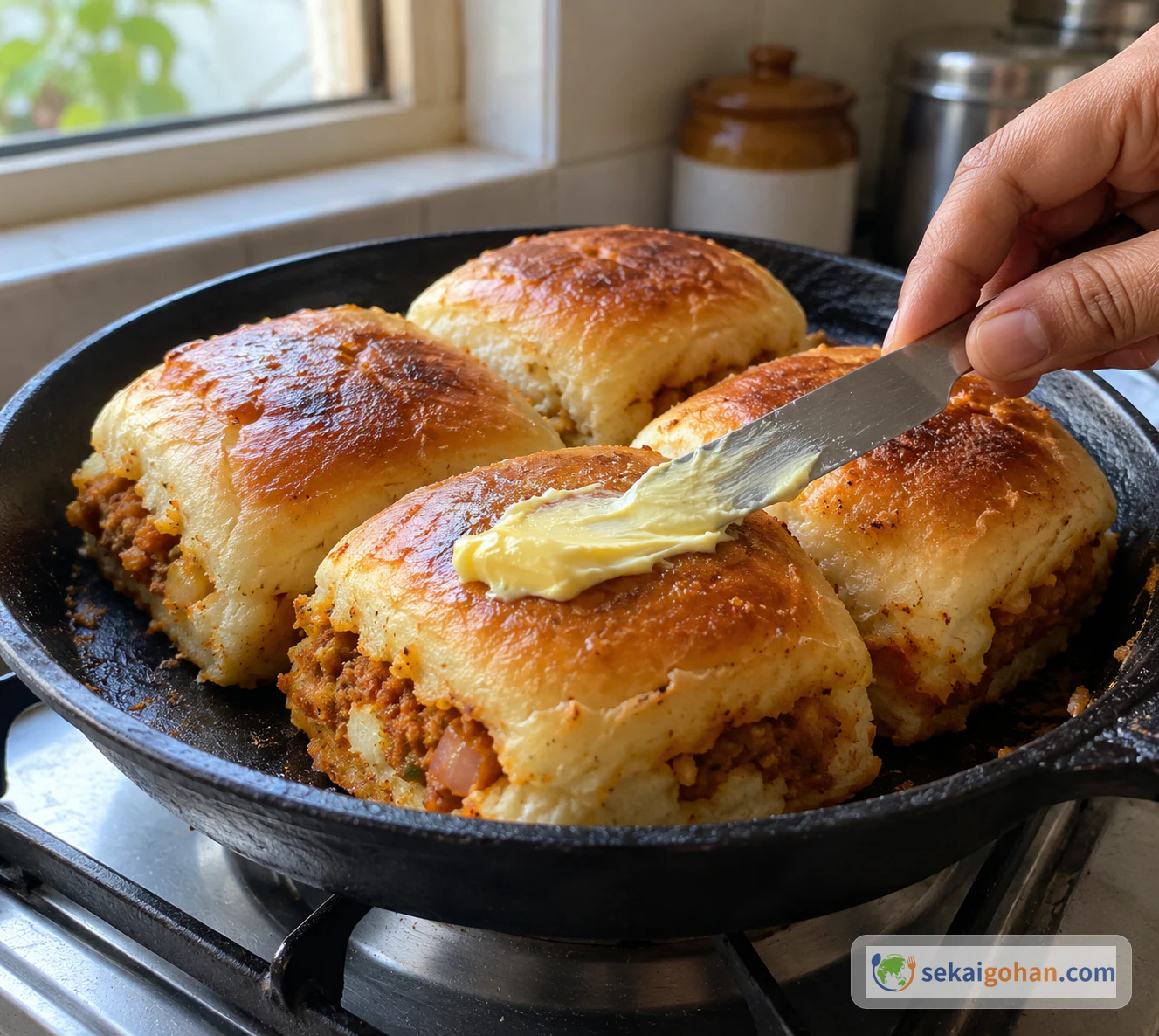
Soft butter being spread over the top

Spread a little soft butter over the tops.

STEP 5252 / 55

Toast the first side

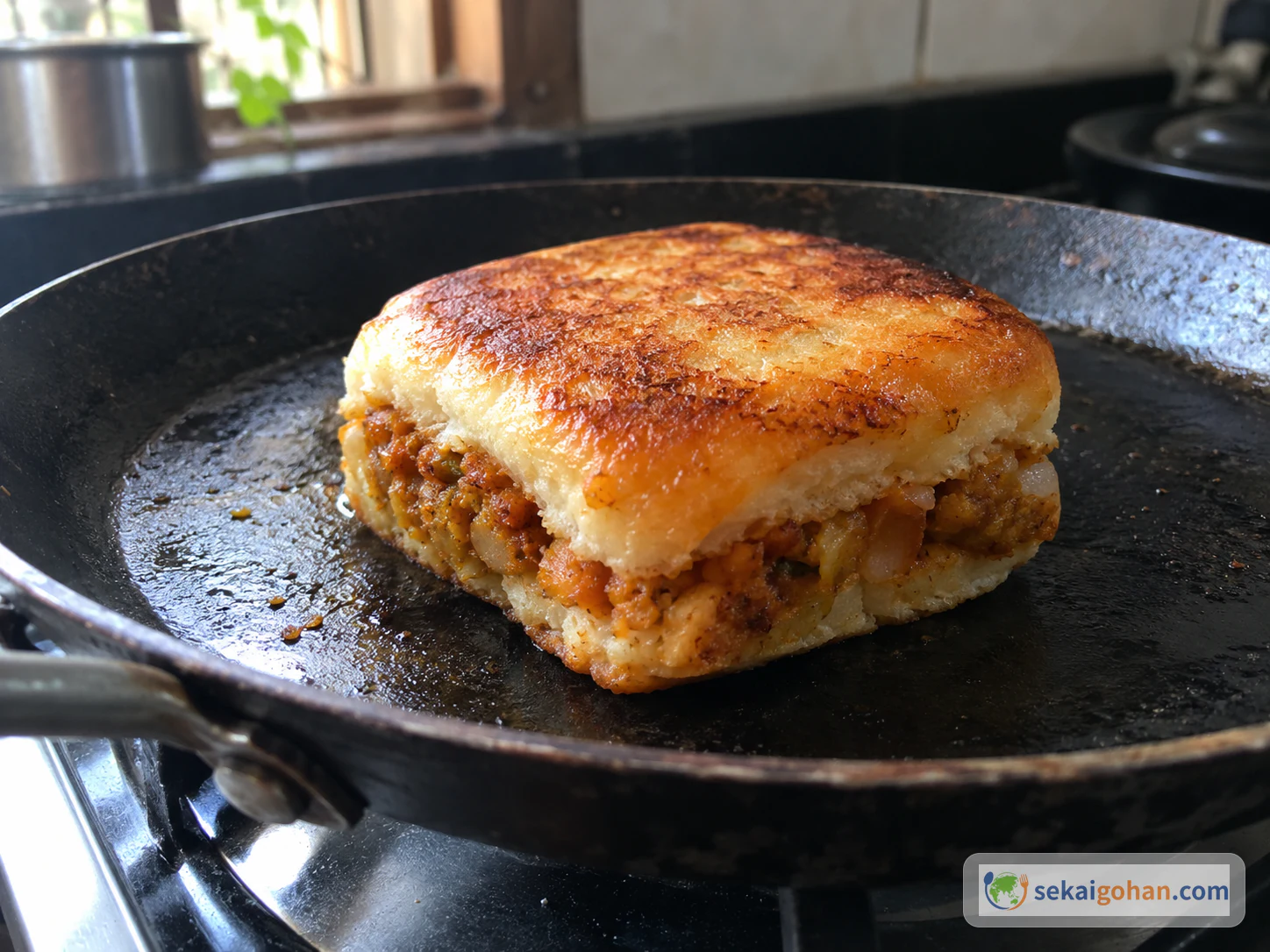
Dabeli toasting on one side until hot and crisp

Toast until the first side is hot and crisp.

STEP 5353 / 55

Flip

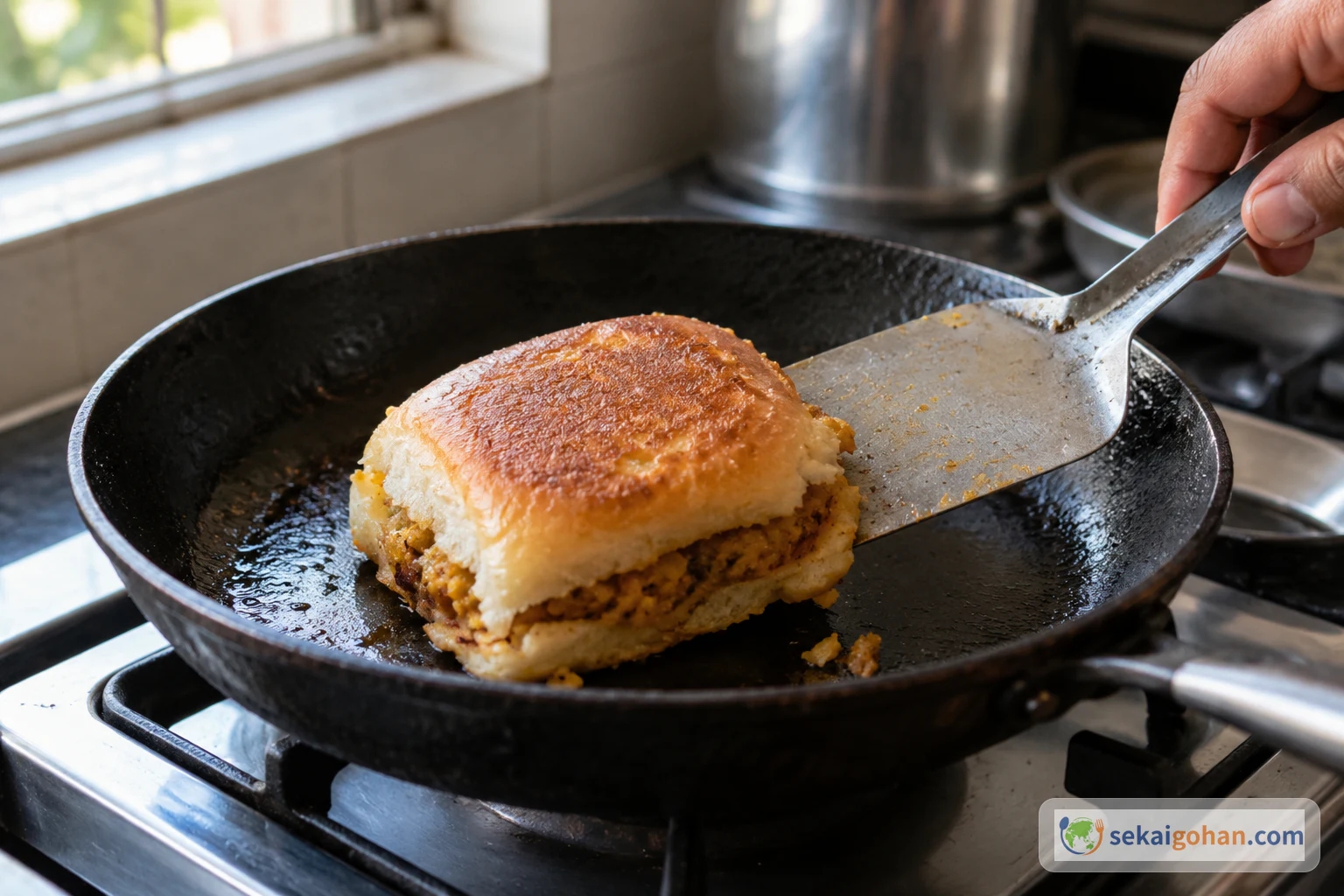
A hand turning the toasting dabeli over once

Turn the dabeli over.

STEP 5454 / 55

Toast the second side

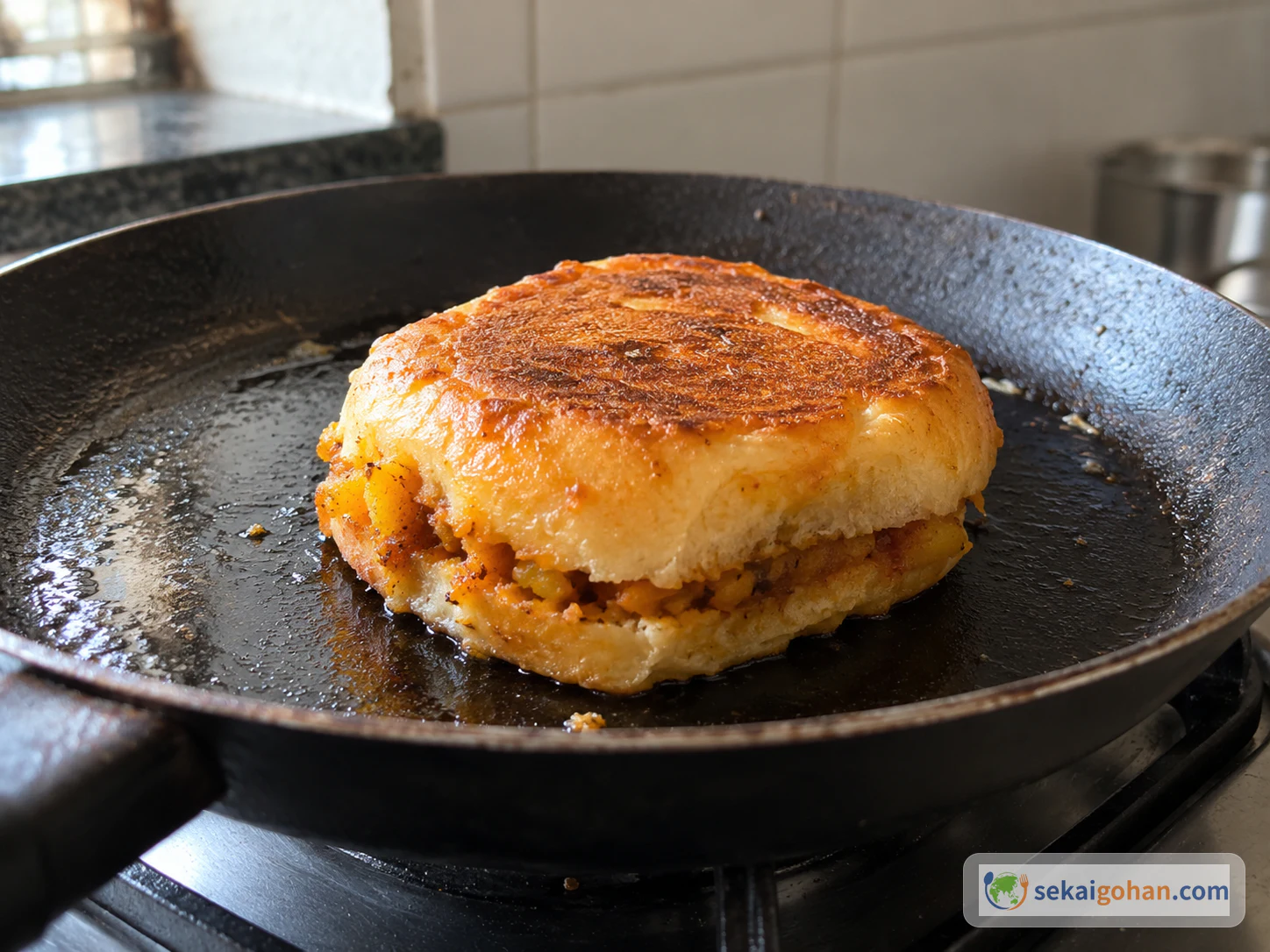
Dabeli toasting on the other side until hot and crisp

Toast until the second side is hot and crisp. Repeat steps 49–54 with the remaining dabeli.

STEP 5555 / 55

Serve immediately

Freshly toasted dabeli served right away

Serve the dabeli right away, while hot.

0 / 0
Ingredients

Ingredients

1 / 1

Ingredients

Ingredient Amount Role
Coriander seeds 2 tbsp Masala: Dry-roasted whole
Cloves 4 Masala: Whole spice
Cinnamon 1 inch Masala: Whole spice
Cumin seeds 1 tsp Masala: Dry-roasted whole
Fennel seeds 1 tsp Masala: Dry-roasted whole
Star anise 1 small Masala: Whole spice
Black peppercorns 1/2 tsp Masala: Whole spice
Unsweetened shredded or desiccated coconut 2 tbsp Masala: Roasted after the whole spices
Black salt (kala namak) 1 tsp Masala: Ground in at the end; seasons the peanuts and filling
Kashmiri red chili powder 1 tbsp Masala: Ground in at the end
Amchur (dried mango powder) 1 tsp Masala: Ground in at the end; sourness
Deseeded tamarind 1/2 cup (50 g) Tamarind-date chutney: Sourness; cooked in the inner bowl
Grated jaggery 1/2 cup (90–100 g; use 100 g) Tamarind-date chutney: Sweetness; cooked in the inner bowl
Pitted dates 1/2 cup (100 g) Tamarind-date chutney: Sweetness and body; cooked in the inner bowl
Red chili powder 1/2 tsp Tamarind-date chutney: Heat; cooked in the inner bowl
Water for the inner bowl 2 cups Tamarind-date chutney: Cooks the tamarind, dates and jaggery
Water for the outer cooker 1 cup Tamarind-date chutney: Goes in the cooker under the trivet only; never into the chutney
Ginger powder 1/2 tsp Tamarind-date chutney: Added after cooking
Roasted fennel powder 1/2 tsp Tamarind-date chutney: Added after cooking
Roasted coriander powder 3/4 tsp Tamarind-date chutney: Added after cooking
Roasted cumin powder 1/2 tsp Tamarind-date chutney: Added after cooking
Kala namak 1/2 tsp Tamarind-date chutney: Added after cooking
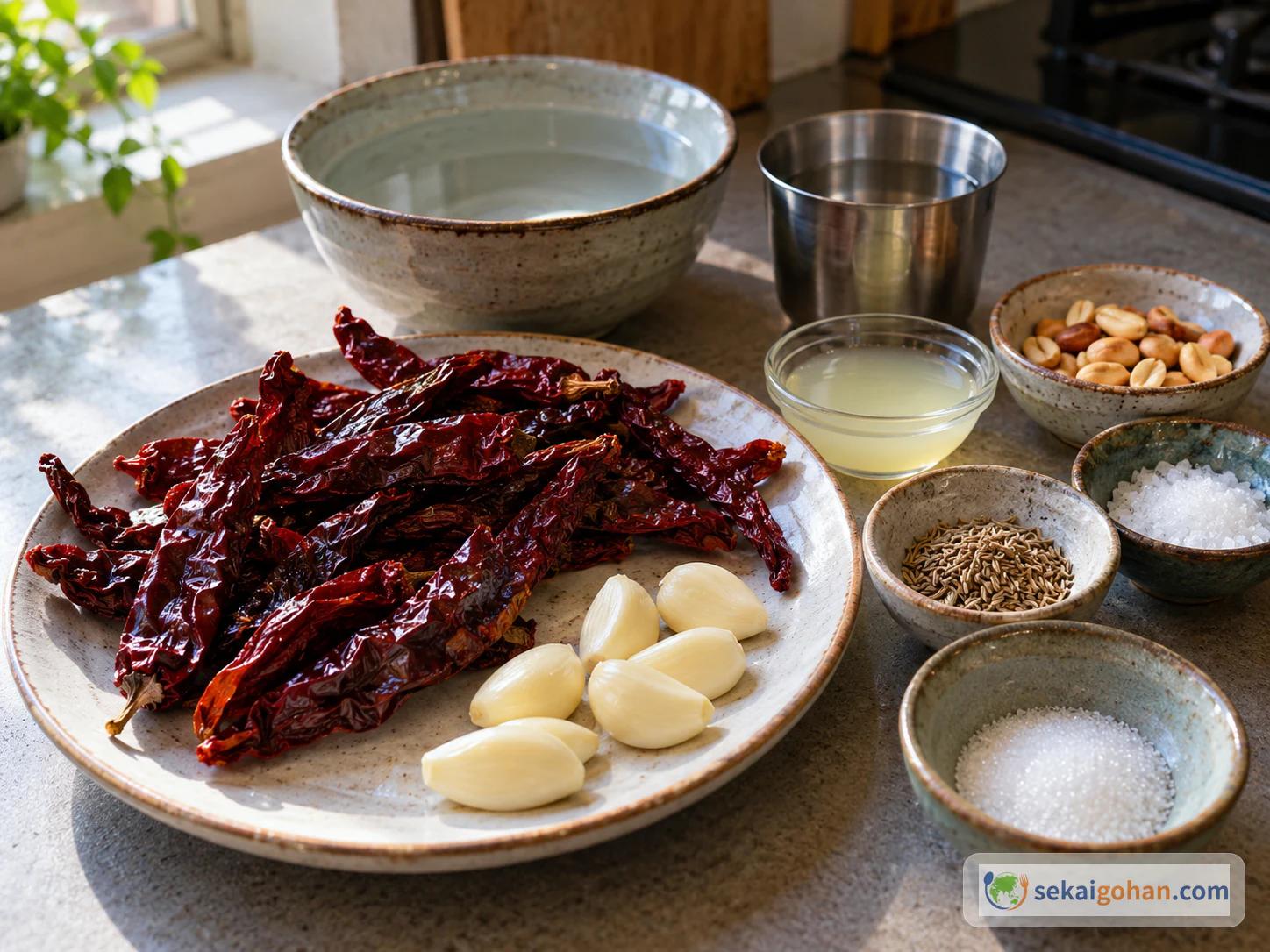
Dried Kashmiri red chilies 12 Garlic chutney: Stems and seeds removed; color and heat
Boiling water for soaking 1 cup Garlic chutney: Softens the chilies; kept apart from the grinding water
Garlic 6 large cloves (20 g) Garlic chutney: Peeled
Cumin seeds 1/2 tsp Garlic chutney: Ground with the chilies
Sea salt 1/2 tsp Garlic chutney: Seasoning
Sugar 1 tsp Garlic chutney: Rounds the heat
Lemon juice 1 tbsp Garlic chutney: Brightness
Roasted peanuts 2 tbsp Garlic chutney: Body; separate from the 1 cup for spiced peanuts
Water for grinding 1/4 cup, plus a little more only if needed Garlic chutney: Loosens the chutney while grinding
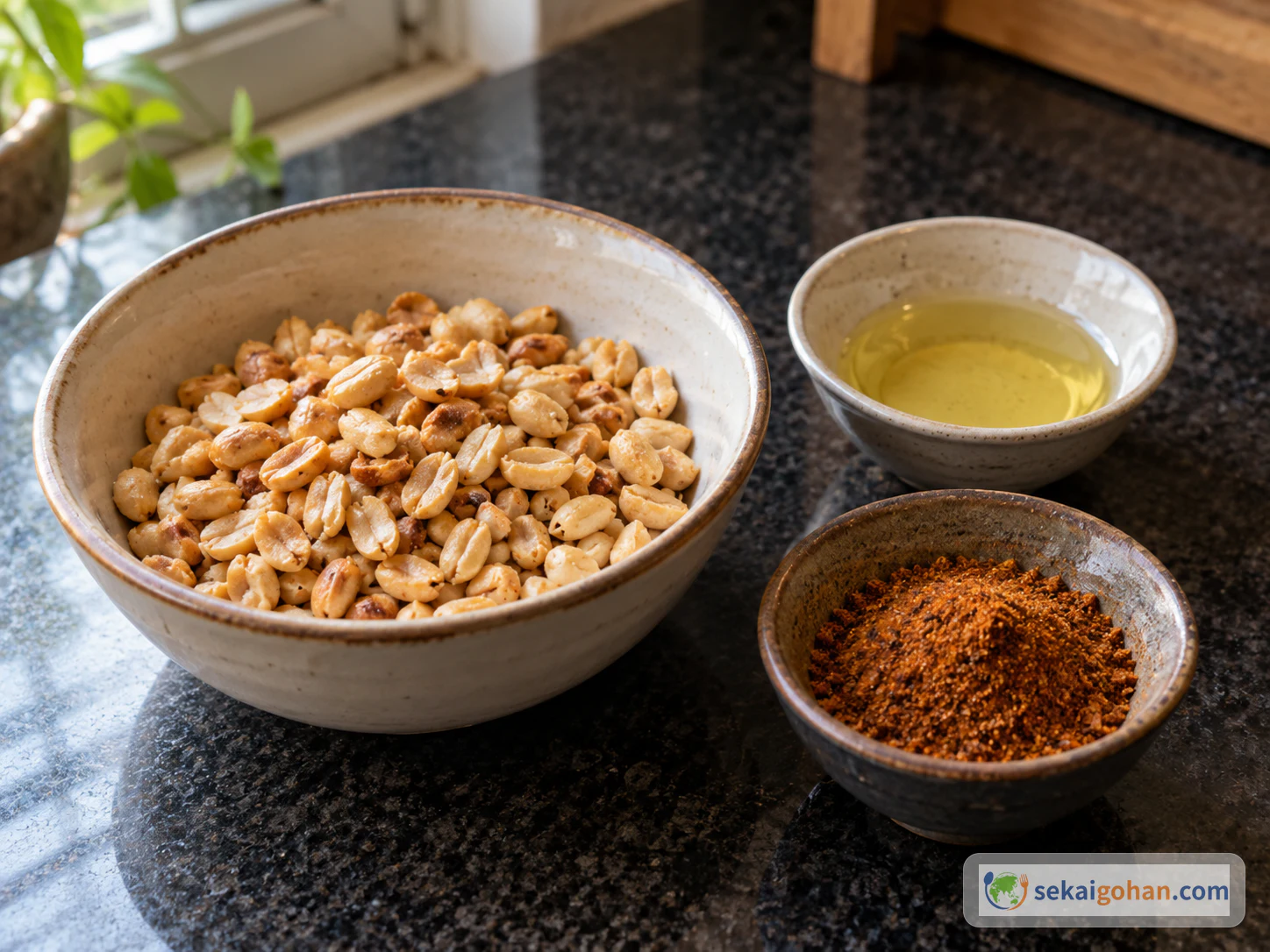
Roasted, skinned, split peanuts 1 cup Spiced peanuts: For the filling bowl, inside each pav and the first coating plate
Oil 1 tbsp Spiced peanuts: Coats the peanuts
Dabeli masala (above) 1 tbsp Spiced peanuts: Seasoning; no extra salt
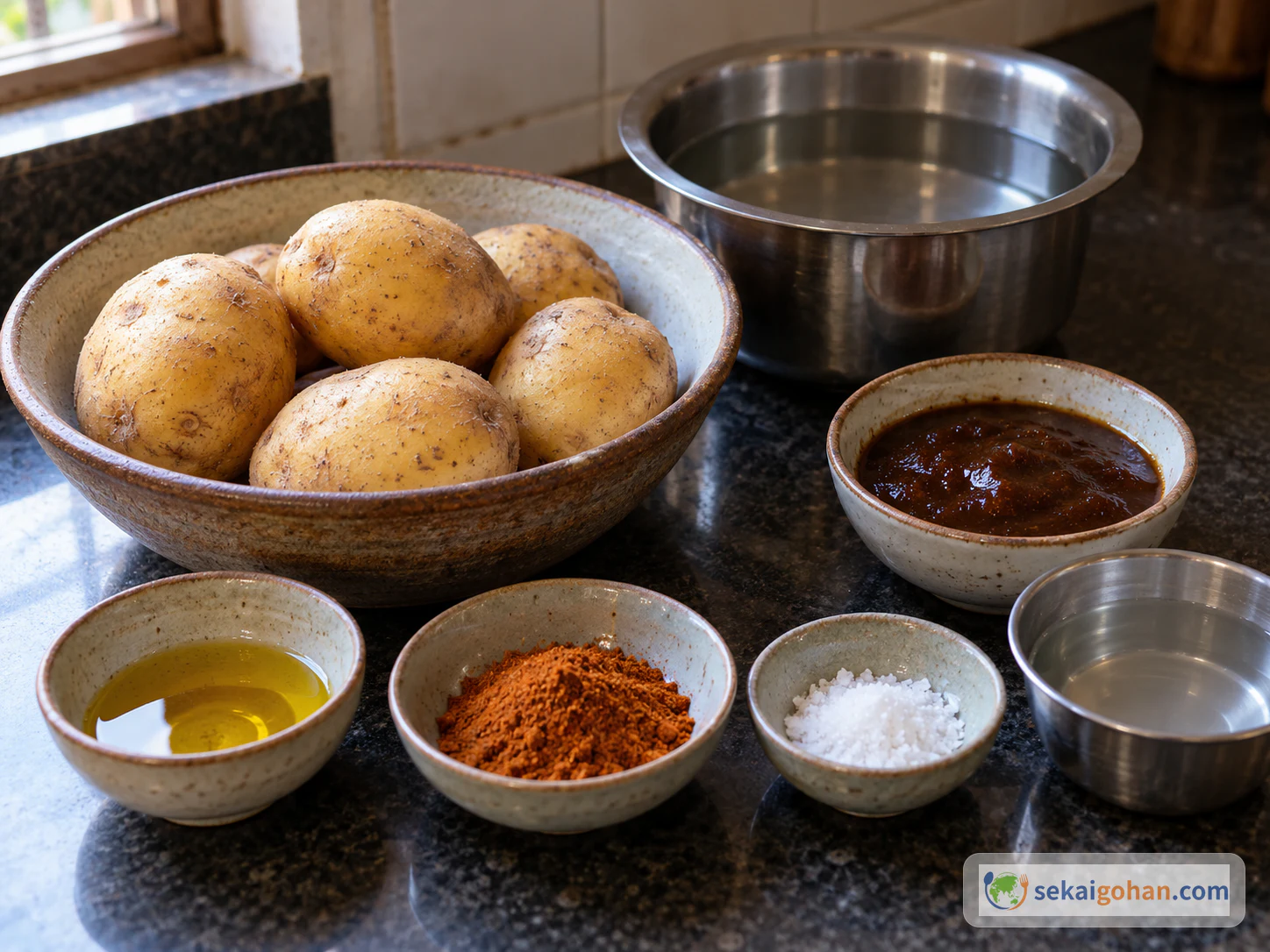
Potatoes 450 g (2 large or 4 medium) Filling: Peeled and cut into about 2 inch pieces
Water for boiling the potatoes Enough to cover Filling: Boils the potatoes
Oil 1 tbsp Filling: Cooks the masala
Dabeli masala (above) 1 1/2 tbsp Filling: The main spicing
Tamarind-date chutney (above) 2 tbsp Filling: Sweet-sour depth
Water for the filling 1/2 cup Filling: Brought to a boil with the masala and chutney
Sea salt 3/4 tsp Filling: Seasoning
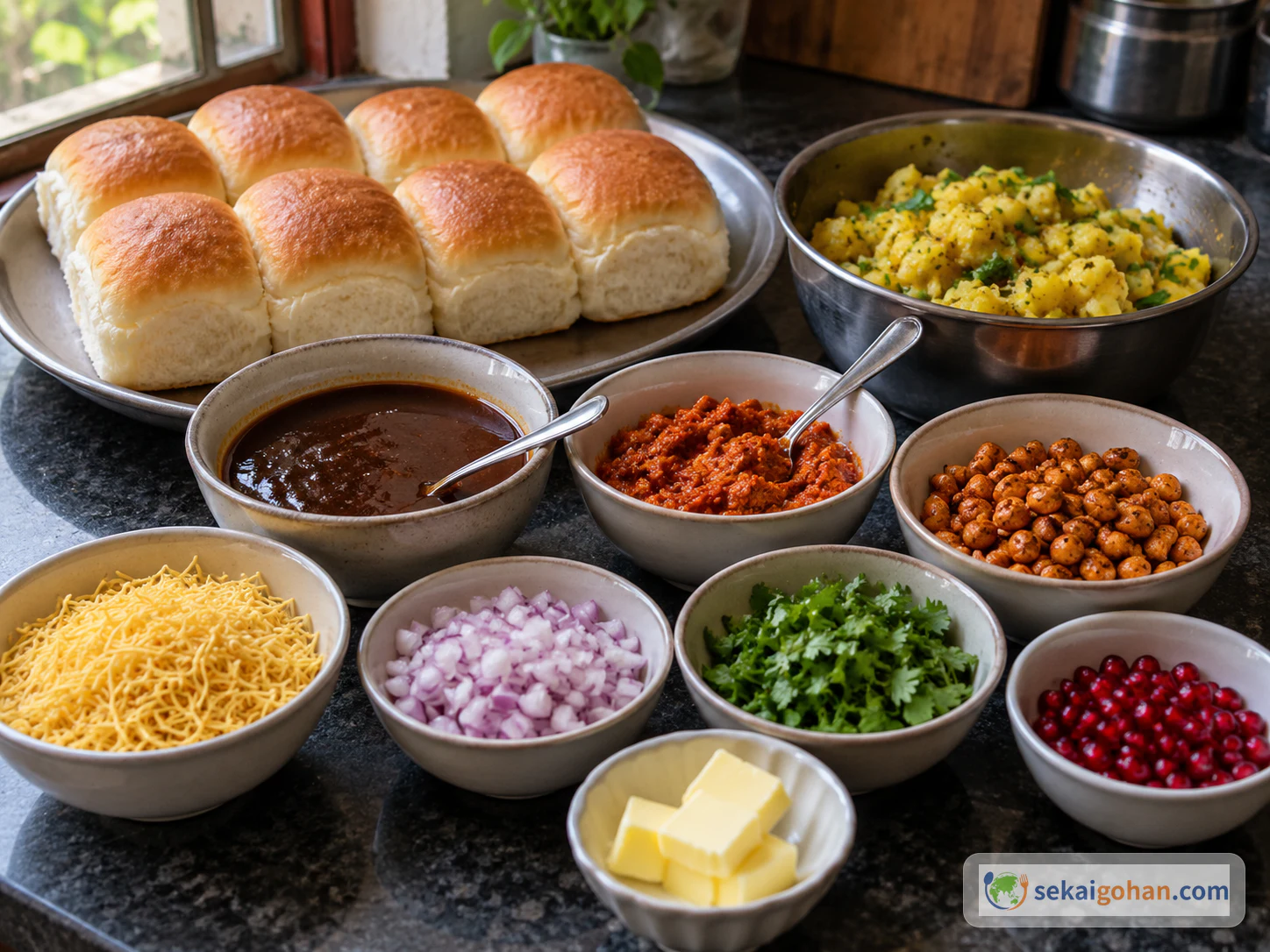
Pav (small soft rolls; dinner rolls or buns also work) 8 Assembly: The bread
Tamarind-date chutney 3/4 cup Assembly: 2 tbsp for the filling; 1 tbsp on one inside face of each pav
Red garlic chutney 1/2 tbsp per pav Assembly: On the other inside face of each pav
Finely chopped onion 1/2 cup Assembly: 2 tbsp on the filling bowl, 1 tsp inside each pav, the rest on the second coating plate
Chopped coriander leaves 1/4 cup Assembly: 2 tbsp on the filling bowl, the rest on the second coating plate
Pomegranate arils 3/4 cup Assembly: 2 tbsp on the filling bowl, a few inside each pav, 2 tbsp on the second coating plate
Sev (thin fried gram-flour noodles) 3/4 cup Assembly: 2 tbsp on the filling bowl, the rest on the first coating plate
Spiced peanuts (above) the 1 cup batch Assembly: 2 tbsp on the filling bowl, 1 tbsp inside each pav, half of the rest on the first coating plate
Unsalted butter 1 tsp per pan load, plus a little soft butter for the tops Assembly: Toasting
0 / 0

Dabeli: Different Textures Inside and Outside One Soft Roll

What this recipe should keep

Keep the inside and the outside as two separate jobs. Inside the pav goes a spiced potato filling with two chutneys. On the three open sides goes a coating of sev, peanuts, onion, pomegranate and coriander. The pav is toasted in butter only after both are done.

Gujarat Tourism introduces Kutchi Dabeli as a Gujarati dish: boiled, mashed potato mixed with a special masala, tucked into ladi pav, finished with pomegranate and roasted peanuts, and served with a chutney of tamarind, dates, garlic and red chilies. That short description already holds the whole idea of the dish: a soft bread, a spiced filling, something sweet-sour, something hot with garlic, and crunchy, fresh things on top.

This recipe builds that idea from scratch, in a form for 8 dabeli. The Dabeli masala, the tamarind-date chutney and the red garlic chutney are all homemade, and the spiced peanuts are roasted in the masala. Two things are not made at home: the pav (small soft rolls) and the sev (thin fried gram-flour noodles). Both are bought as base ingredients.

The work falls into clear stages. First the tamarind-date chutney, which needs time to cool. Then the masala, the garlic chutney and the peanuts. Then the potato filling. Finally each pav is filled, pressed into two coating plates one after the other, and toasted on both sides until hot and crisp.

This recipe has not been kitchen-tested

Sekai Gohan has not kitchen-tested this recipe. The amounts and times come from the recipe author's published recipes, with a few choices made where those recipes give a range or disagree with themselves; those choices are explained in the background section and FAQ below. The photographs are illustrations of each stage; they do not prove amounts, times, temperatures or safety.

Kutchi Dabeli: A Gujarati Snack, and the Recipes Behind This Version

Gujarat Tourism presents the dish as Kutchi Dabeli, placing it in the Kutch region of Gujarat. For more dishes from the country, see our India page. The materials used for this article do not establish who created dabeli, when, how its name came about or how it is written in Gujarati script, so this article uses only the Latin spellings Dabeli and Kutchi Dabeli and does not tell an origin story.

The recipe follows Swasthi Shreekanth's Dabeli recipe on Indian Healthy Recipes: her masala, red garlic chutney, spiced peanuts, potato filling, two-plate coating and skillet toast. For the tamarind-date chutney, it uses the separate chutney recipe she links to from that page, made by her stovetop pressure-cooker method. Dassana Amit's dabeli on Veg Recipes of India was read only as a comparison. Her version is a different recipe with its own amounts and, among other things, cooks onion into the filling. None of that is mixed in here: in this version, onion never goes into the cooked filling. It is only scattered on the filling bowl, tucked inside each pav, and used on the second coating plate.

A few points needed a decision, because the main recipe page gives a range or its written method and its recipe card do not match:

  • Garlic chutney sweetener. The written method calls for 1 1/2–2 tbsp jaggery, while the recipe card lists 1–1 1/2 tsp jaggery powder. Rather than guess between them, this version uses the sugar alternative that both give: 1 tsp sugar. The tamarind-date chutney keeps its own jaggery (1/2 cup, 90–100 g; 100 g is used here), which is a separate ingredient.
  • Butter. The card lists 1 1/2 tbsp unsalted butter in total. The method instead says to put 1–2 tsp butter or ghee in the pan and spread soft butter on top, without measuring the top butter. This version follows the method: 1 tsp butter in the pan for each pan load, and soft butter on top in an unmeasured amount. These two descriptions remain unreconciled; this version does not turn them into a per-dabeli amount or a total.
  • Ranges. Where a range is given, this version uses the lower or middle value: 1/2 tbsp garlic chutney per pav (from 1/2–1 tbsp), 1 1/2 tbsp potato for the first layer (from 1 1/2–2 tbsp), 3/4 tsp salt in the filling (from 3/4–1 tsp), 1/2 tsp chili powder in the tamarind chutney (from 1/2–1 tsp), and no extra salt on the peanuts, because the homemade masala already contains black salt.

You may know pav bhaji or panipuri from Indian street food. Pav bhaji also serves pav, but with a vegetable bhaji alongside; panipuri shares a tamarind chutney but fills fried hollow shells with liquid. Dabeli is its own dish: the filling and coating are built around the bread itself.

Ingredients for 8 Dabeli

The recipe has six groups. The masala, both chutneys and the spiced peanuts are made first and then used in the filling and assembly. The masala is enough for about 12 dabeli, and the tamarind-date chutney makes 200 ml. Keep the different waters apart; each one has its own job.
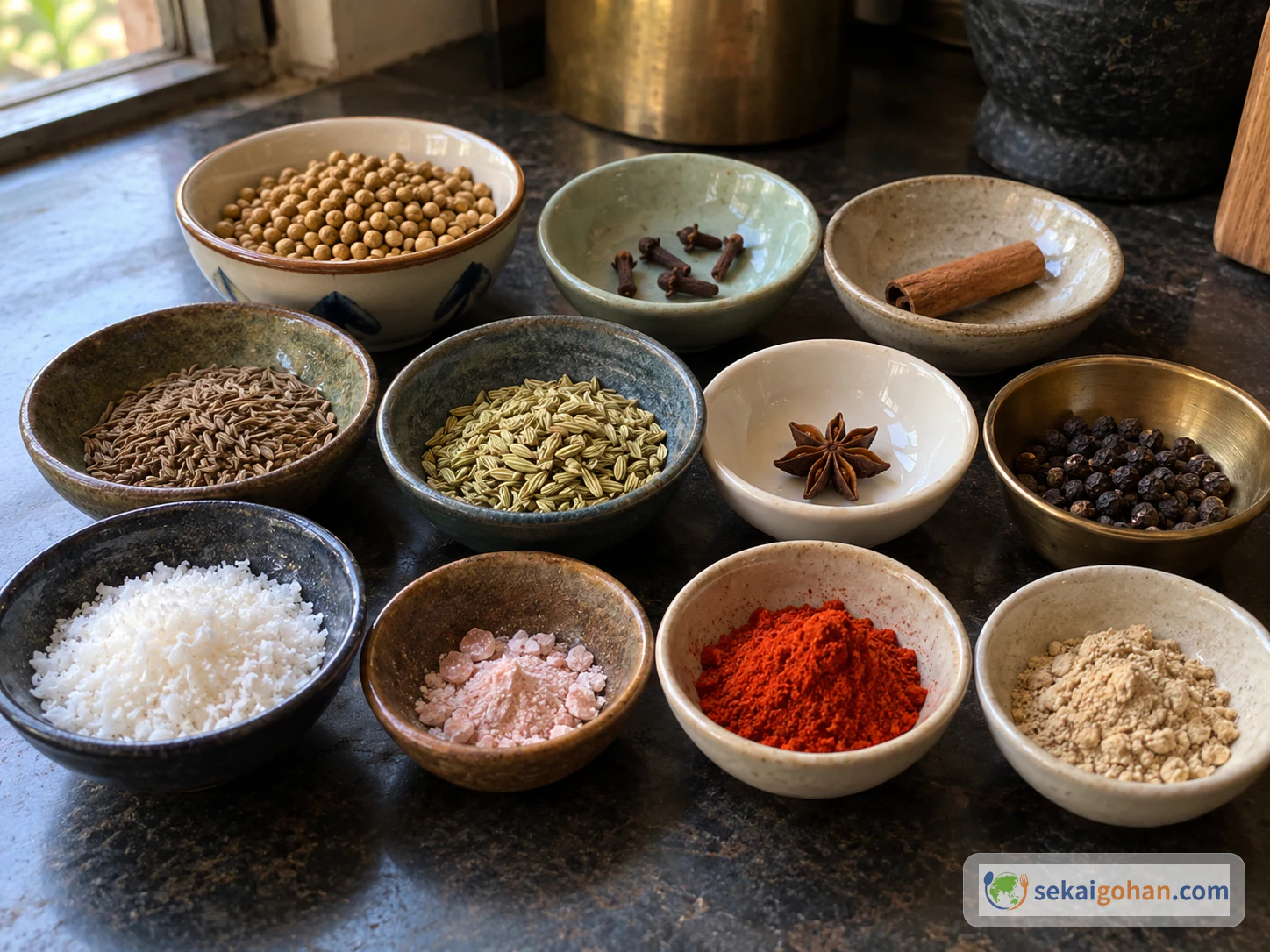
Whole spices and powdered ingredients for Dabeli masala

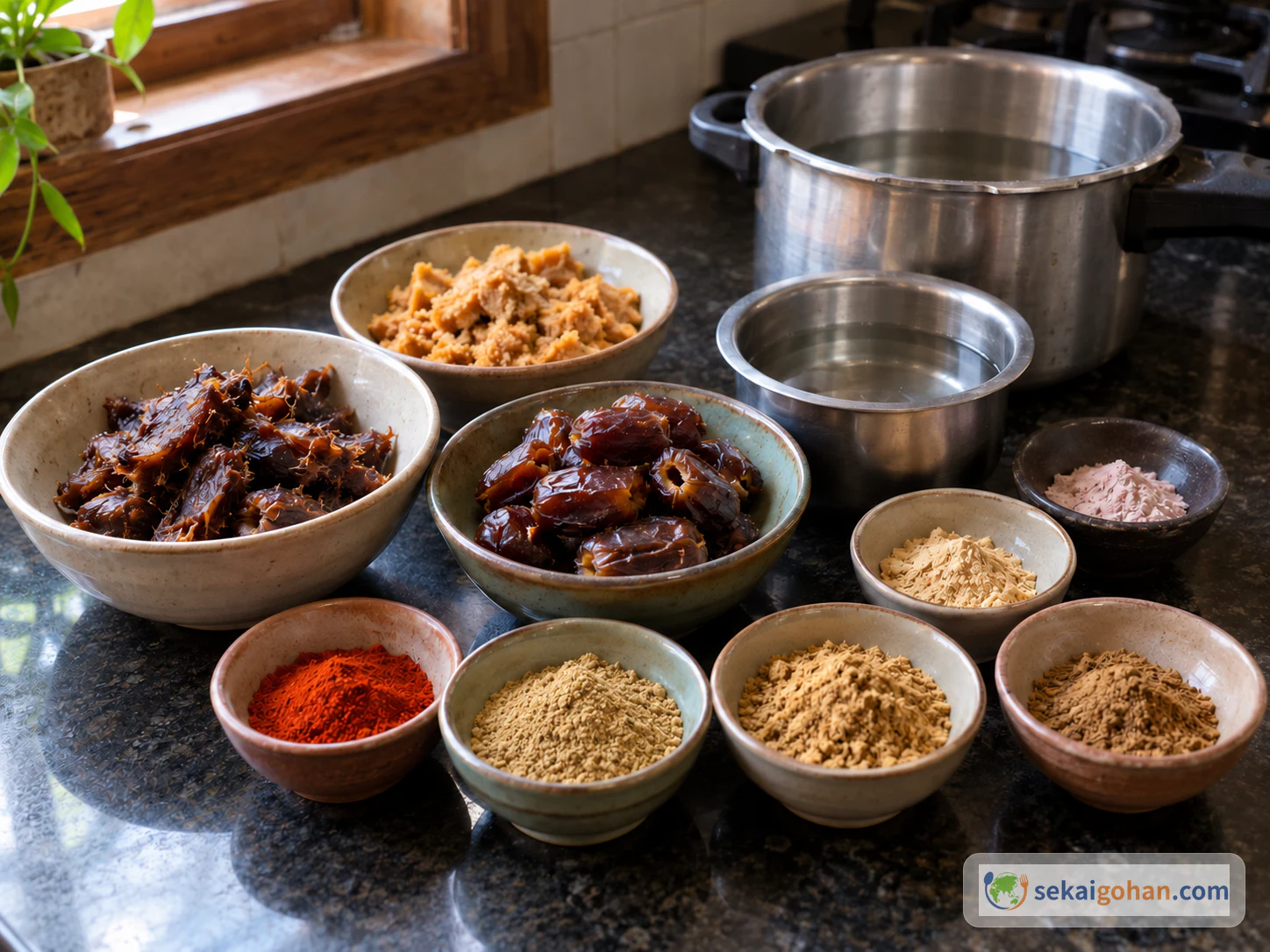
Tamarind-date chutney ingredients with the two separate waters

Garlic chutney ingredients with separate soaking and grinding water

Ingredients for the spiced peanuts

Ingredients for the potato filling

Base ingredients for assembling, coating and toasting

Equipment

  • 6 L stovetop pressure cooker with a trivet
  • Heatproof inner bowl with a cover that fits inside the cooker
  • Spoon for mashing, and a fine sieve
  • Clean lidded container for the tamarind-date chutney
  • Dry pan for roasting the masala
  • Grinder for the masala and the garlic chutney
  • Saucepan, colander and potato masher
  • Pan for the peanuts and filling, and a serving bowl
  • Bread knife
  • Two separate plates for coating
  • Skillet and spatula for toasting

Choosing the Specialty Items

Most of the produce here (potatoes, onion, lemon, coriander, pomegranate, garlic) needs no special shopping. The items worth looking for by name, usually at an Indian or South Asian grocer, are:

  • Amchur (dried mango powder) and black salt / kala namak, both used in the masala and the tamarind chutney.
  • Kashmiri chili powder and dried Kashmiri chilies. The chili powder goes into the masala; the whole dried chilies are for the garlic chutney.
  • Jaggery and deseeded tamarind for the tamarind-date chutney.
  • Sev, the thin, crunchy fried noodles made from gram flour.
  • Pav. Small, soft rolls; dinner rolls or buns also work.

This version makes the masala and both chutneys at home, so ready-made Dabeli masala or bottled chutney is not on the shopping list.

Allergens and labels

This recipe contains peanuts and butter. The ingredients of pav and sev differ by product, so check the package labels for wheat, milk and other allergens before you buy. No product or version here is guaranteed free of any allergen.

Method: Chutneys First, Then the Filling, Then Eight Pav

Pressure cooker

The tamarind-date chutney is cooked for 3 whistles over medium heat in a 6 L stovetop pressure cooker. Do not convert this to minutes or pressure settings for a different cooker. Never touch the lid or valve while it is under pressure, and wait for the pressure to release completely on its own before opening.

Steps 1–15 make the tamarind-date chutney, 16–18 the masala, 19–21 the garlic chutney, 22–23 the spiced peanuts, 24–37 the potato filling, and 38–55 the assembly, coating and toasting.

Keeping the Parts Separate: Where This Recipe Goes Wrong

Most of what can go wrong here is mixing things that should stay apart: the waters, the plates, the timing of the powders.

Point What to do Why it matters
Waters Keep the 2 cups inner-bowl water, 1 cup cooker water, 1 cup chili-soaking water, 1/4 cup grinding water, potato-boiling water and 1/2 cup filling water separate Each has its own job; the cooker water and chili soaking water never go into a chutney
Pressure cooker Do not open or touch the valve until the pressure has released completely on its own The method relies on full natural release before the inner bowl comes out
Tamarind chutney powders Add the five powders only after pressure cooking, then cover briefly They are part of the finish, not the cooking liquid
Chutney texture Press the mashed chutney through a fine sieve Straining is what removes the fibers and solids
Salt Don't salt the peanuts The homemade masala already contains black salt
Onion Keep onion out of the cooked filling In this version onion is a fresh garnish only
Coating plates Coat in the sev-and-peanut plate first, then the onion-pomegranate-coriander plate Mixing the plates blurs the two coatings
Leftover toppings Amounts left after the plates are not fixed Use "remaining" and "half of the remaining" as written; don't plan other uses for them

Variations from the Recipe Author

These alternatives appear in the author's recipes. None of them is part of the version above; if you choose one, use it in place of the base choice, not alongside it.

  • Chili powder in the garlic chutney. 1 tbsp Kashmiri chili powder can replace the 12 dried chilies. Use one or the other, not both.
  • Milder star anise. If star anise tastes too strong to you, use half of the small star anise in the masala.
  • Garam masala in the tamarind chutney. 1/4 tsp garam masala can replace the 3/4 tsp roasted coriander powder. Don't use both.
  • Other ways to cook the tamarind chutney. The author also gives an Instant Pot method (pressure cook 9–10 minutes, natural release) and a stovetop-pot method. The pot method comes with its own ghee (1/2 tsp), hing (1/8 tsp) and extra water; those belong to that method only and are not added to the pressure-cooker version.
  • Other ways to cook potatoes and toast. Potatoes can also be pressure-cooked (10 minutes on high pressure, or 3 whistles in a stovetop pressure cooker) instead of boiled. For a larger batch, the dabeli can be toasted for 2 minutes in an oven preheated to 350°F / 175°C instead of in a skillet.

Frequently Asked Questions

Is 8 dabeli the same as 8 servings?

No. The recipe makes 8 dabeli; that is a count of pieces, not a number of servings. How many one person eats is up to you.

How long does it take?

The main recipe page lists 25 minutes prep, 25 minutes cooking and 50 minutes total, and the linked tamarind chutney recipe lists 15, 15 and 30 minutes. These are the author's separate published figures. It is not clear whether the main figures include making the chutneys and masala from scratch, so don't add them together and treat the result as the total time for everything here.

Can I make the chutneys ahead?

The author suggests preparing the chutneys and masala the day before, and says to refrigerate the tamarind-date chutney when made ahead, in a clean container (step 15). Her pages also mention storage, but those notes have not been verified for this version, so no storage period is given here. The finished dabeli should be served immediately after toasting.

How much tamarind chutney do I need, 200 ml or 3/4 cup?

The tamarind chutney recipe states a yield of 200 ml. The main recipe lists 3/4 cup of tamarind chutney, used as 2 tbsp in the filling and 1 tbsp inside each pav. These two figures come from different recipe cards; this article keeps both as written and does not convert one into the other or calculate what might be left over.

Why sugar, not jaggery, in the garlic chutney?

The main page's written method and its recipe card give different jaggery amounts (1 1/2–2 tbsp versus 1–1 1/2 tsp). Rather than pick one, this version uses the sugar alternative that both mention: 1 tsp. The tamarind-date chutney still uses jaggery.

How much butter do I need in total?

There is no confirmed total. The recipe card lists 1 1/2 tbsp unsalted butter, while the method calls for 1–2 tsp in the pan plus unmeasured soft butter on top. This version follows the method: 1 tsp in the pan per pan load and a little soft butter on top. How many dabeli fit in one pan load is not specified, so the amount is not multiplied out.

Do I need to make the pav and sev?

No. Both are listed as base ingredients, so this recipe uses store-bought pav (or dinner rolls or buns) and sev. Check their package labels for allergens.

Is there nutrition information?

The author's recipe card includes nutrition figures, but they were not calculated for the specific choices made in this version, such as the butter amount, so they are not reproduced here.

Sources

  • Swasthi Shreekanth, "Dabeli Recipe," Indian Healthy Recipes. The base recipe: 8 dabeli; the Dabeli masala, red garlic chutney, spiced peanuts, potato filling, layered assembly, two-plate coating and skillet toast; the alternatives listed under Variations; the published times. Its quantities and times are the author's published values, not results of an independent kitchen test. https://www.indianhealthyrecipes.com/dabeli/
  • Swasthi Shreekanth, "Tamarind Chutney Recipe (Imli Chutney)," Indian Healthy Recipes. The tamarind-date chutney linked from the dabeli recipe: 200 ml yield, ingredients with volume and weight, the stovetop pressure-cooker method with separate inner-bowl and cooker water, complete natural release, post-cooking powders, cooling, mashing, straining and refrigerating when made ahead. https://www.indianhealthyrecipes.com/tamarind-chutney/
  • Dassana Amit, "Dabeli Recipe | Kacchi Dabeli," Veg Recipes of India. A separate dabeli recipe used only for comparison; its amounts and its onion-in-the-filling method are not used here. https://www.vegrecipesofindia.com/dabeli-recipe-kutchi-dabeli-recipe/
  • Gujarat Tourism, "Dabeli." Regional context: Kutchi Dabeli as a Gujarati dish of mashed potato and masala in ladi pav, with pomegranate, roasted peanuts and a tamarind, date, garlic and red chili chutney. https://gujarattourism.com/gujarati-cuisines/dabeli.html