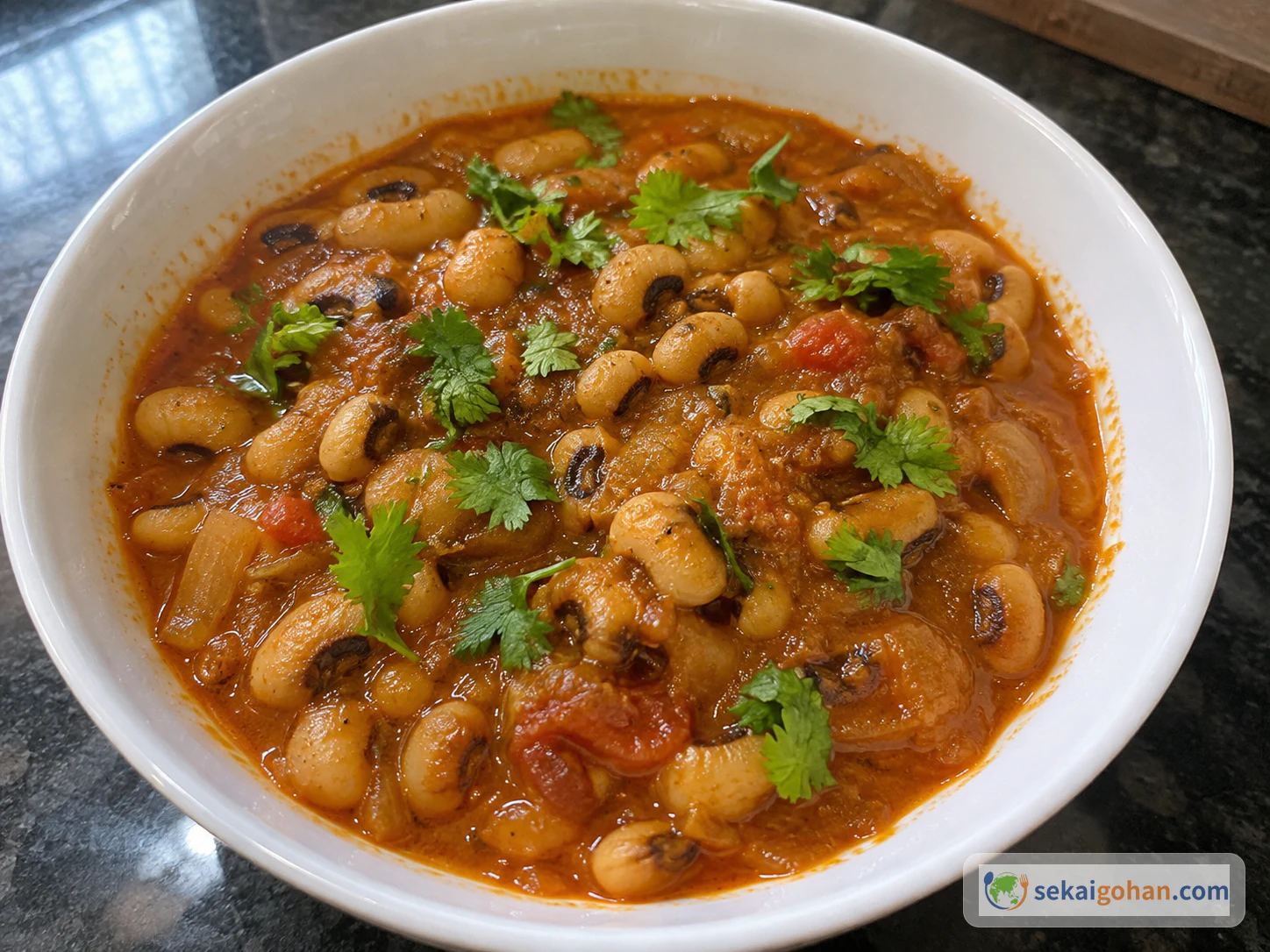

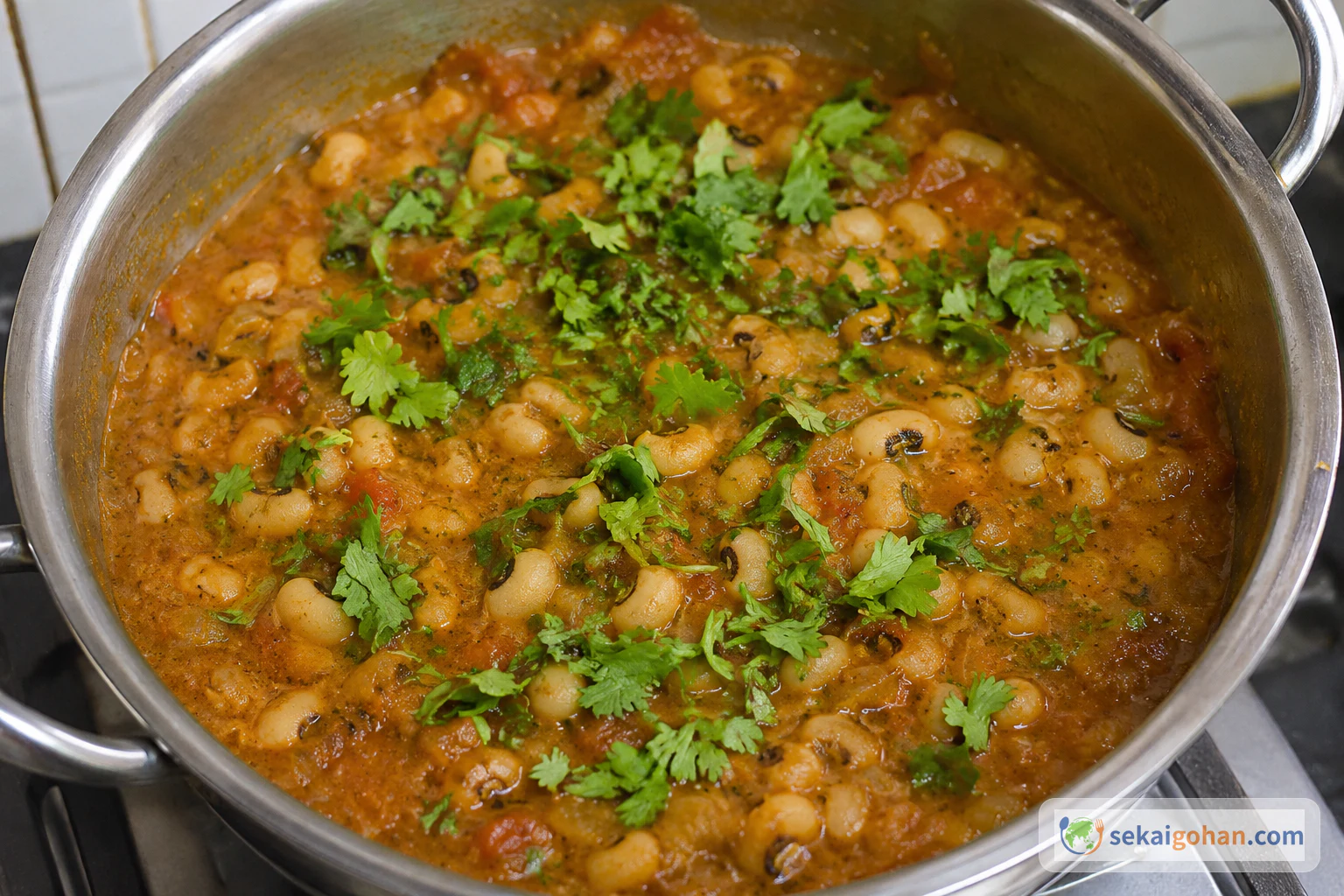
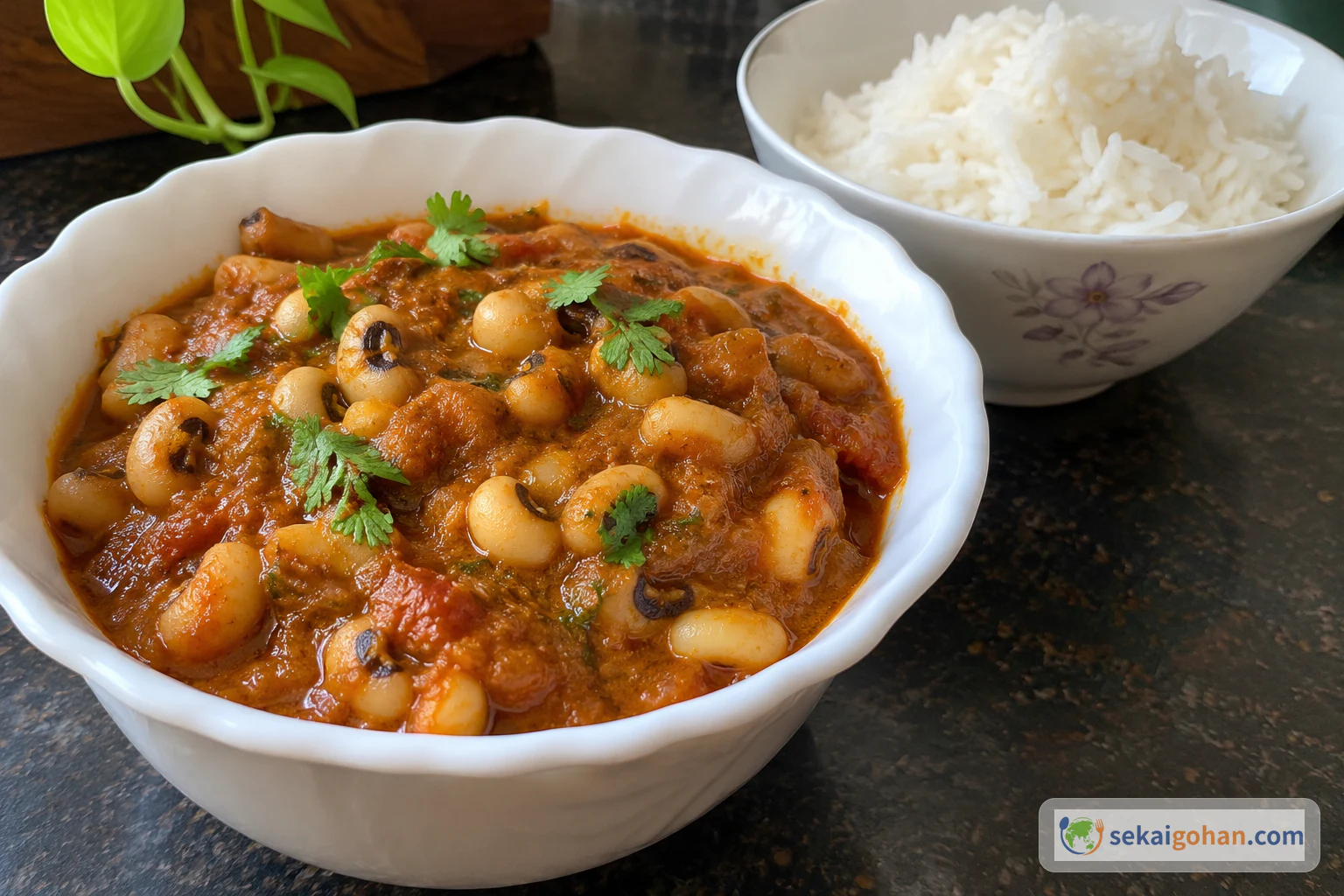
A bowl of finished lobiya: black-eyed beans in a medium-thick onion and tomato gravy, garnished with coriander leaves
Serves4 servings
CuisineIndian

Lobiya: Punjabi-Style Black-Eyed Bean Curry (Lobia)

How to make lobiya, a Punjabi-style curry of black-eyed beans in an onion, tomato and spice masala. Covers the 30-minute soak, cooking the masala down, sizing and using a pressure cooker safely, and reaching a medium-thick gravy.

Cooking flow

Cooking steps

STEP 11 / 30

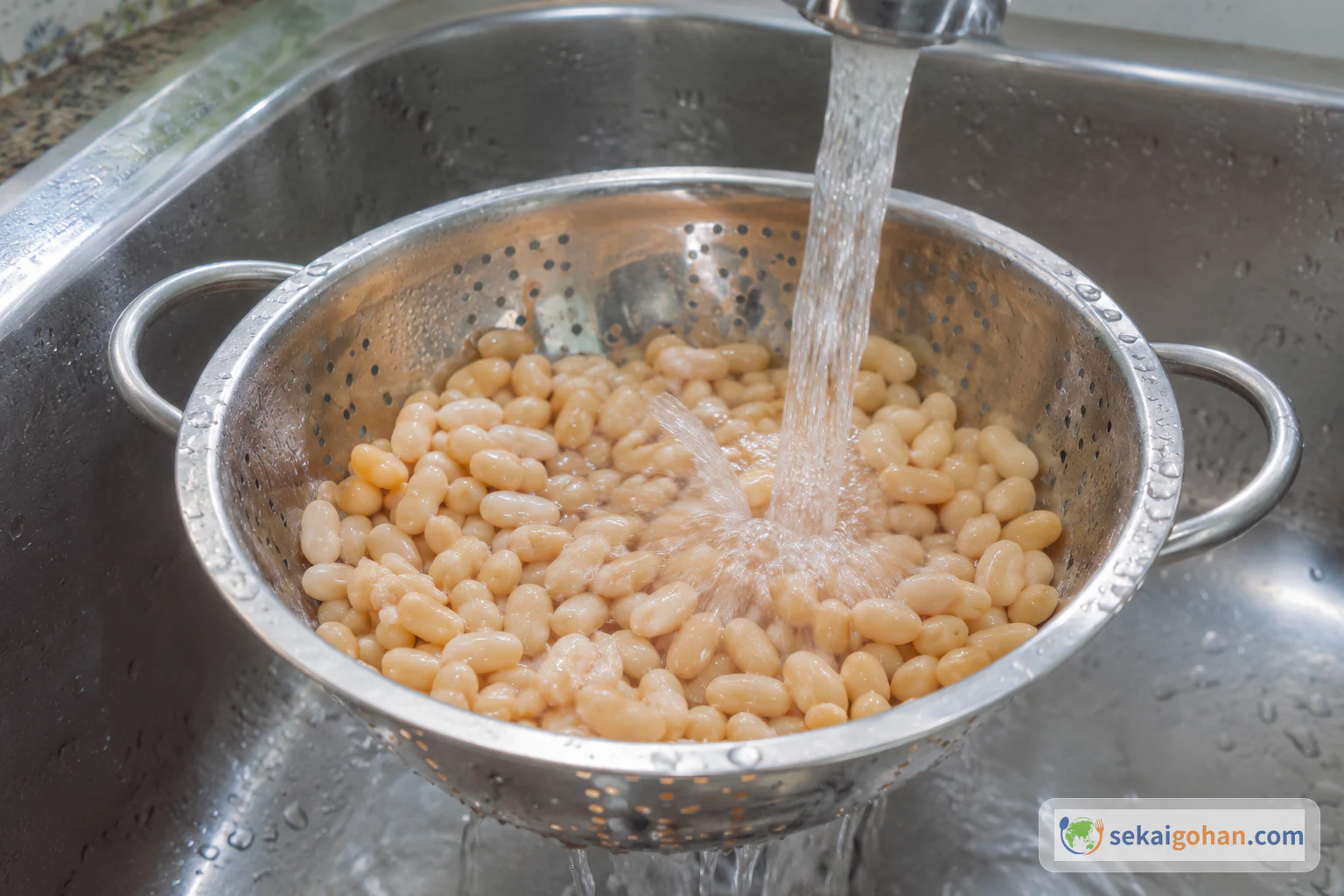
Rinse the beans

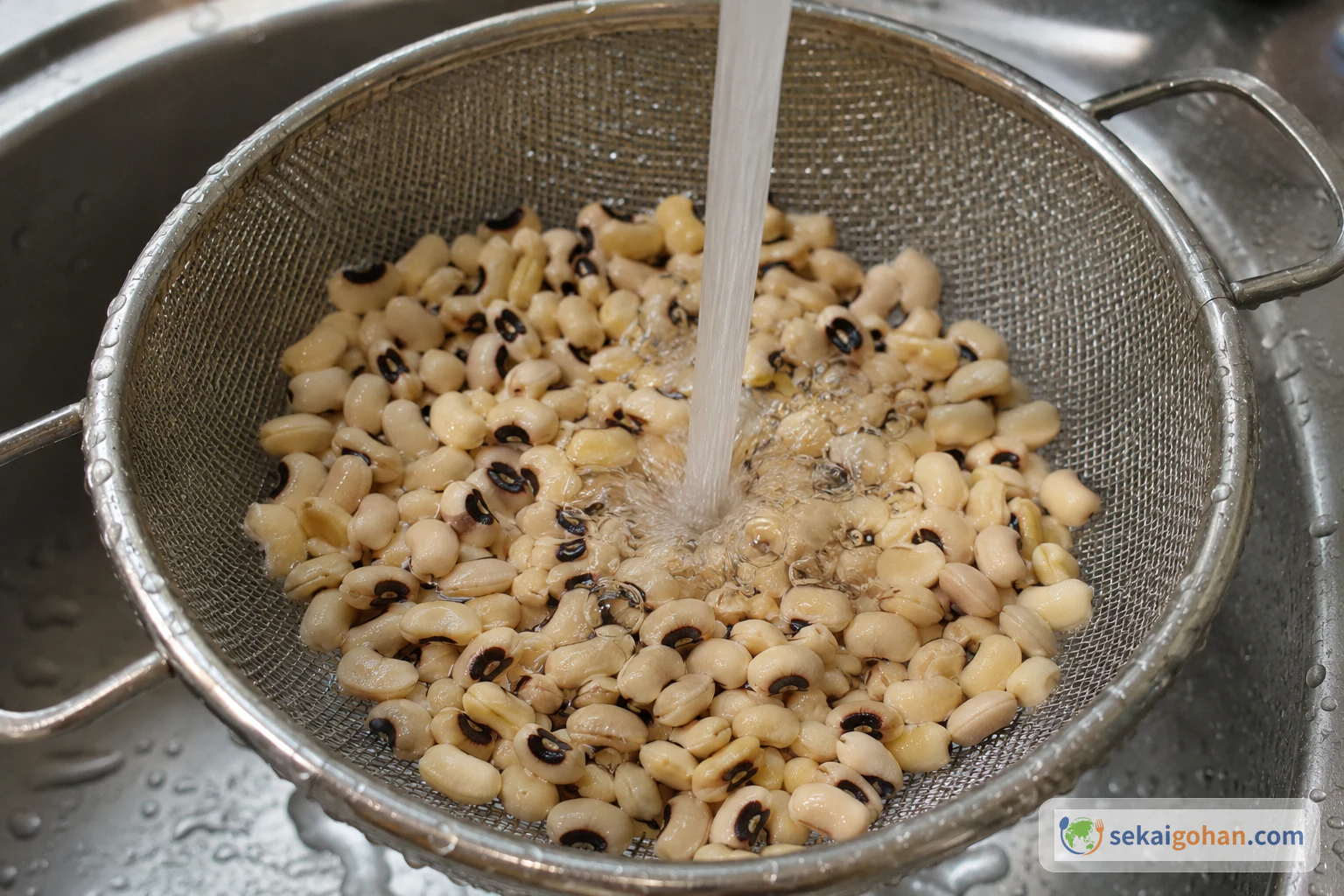
Dried black-eyed beans being rinsed under running water in a colander
Rinse the dried beans with clean water

Put 1 cup dried black-eyed beans in a colander and rinse them with clean water.

STEP 22 / 30

Soak the beans

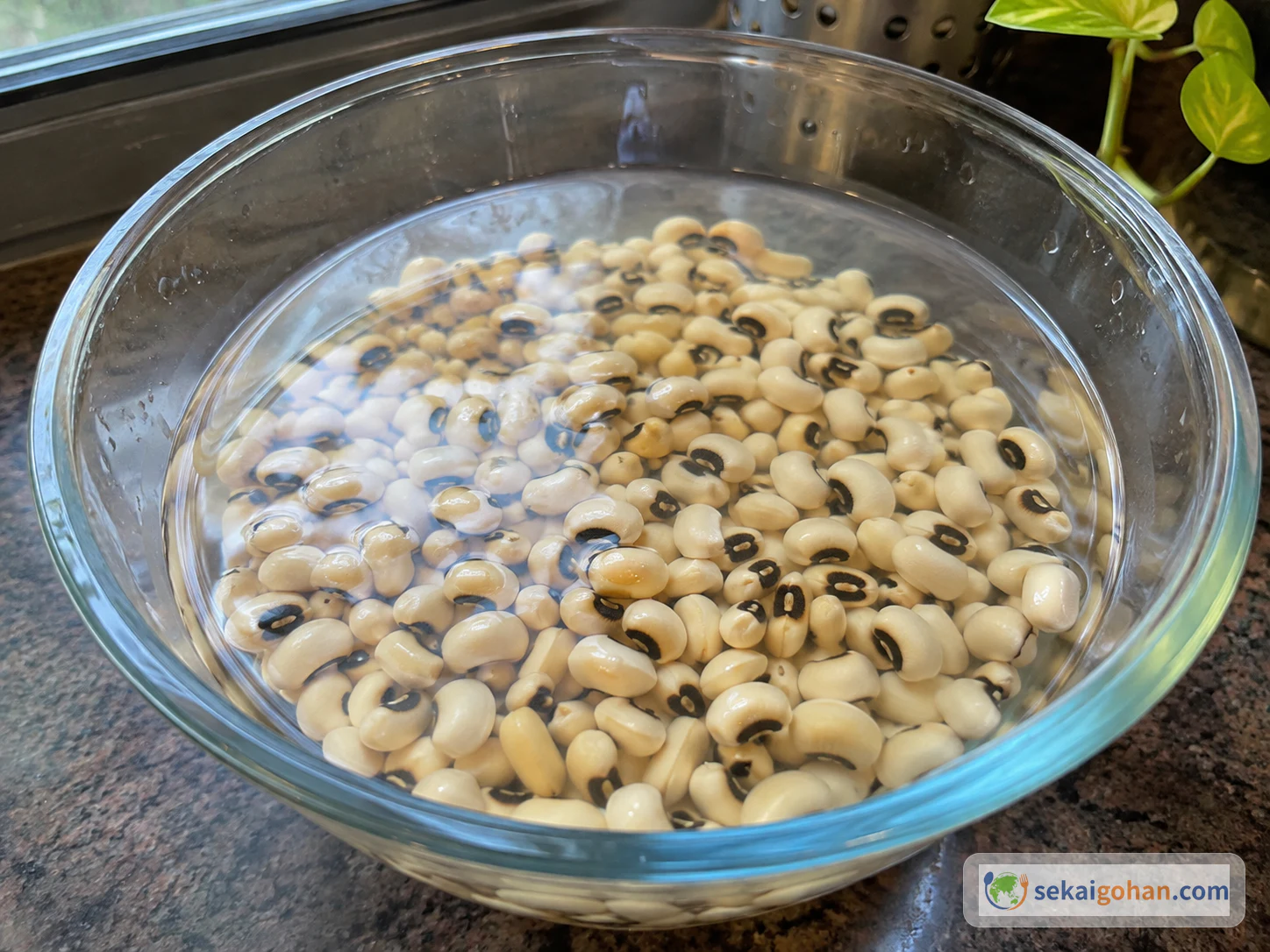
Black-eyed beans fully submerged in a bowl of clear water
Keep the beans fully under water while they soak

Move the beans to a large bowl, cover them with plenty of water and soak for 30 minutes.

STEP 33 / 30

Drain the beans

Soaked beans draining in a colander over a sink
Let the soaking water run off

Pour the beans into the colander and let the soaking water run off.

STEP 44 / 30

Rinse again

Soaked beans being rinsed again under a stream of water in a colander
Give the soaked beans a second rinse

Rinse the soaked beans once more with clean water.

STEP 55 / 30

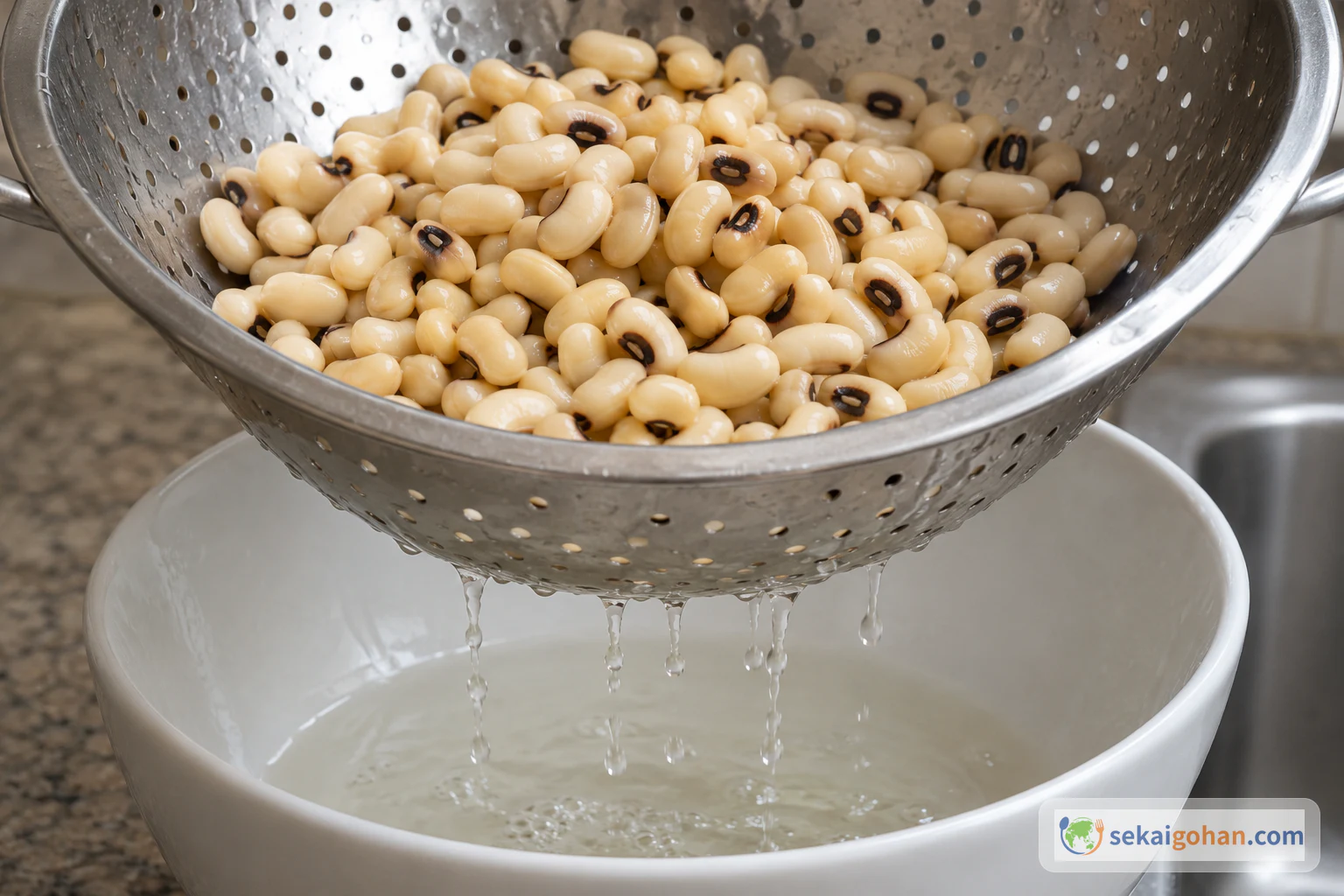
Drain well

Pale soaked black-eyed beans dripping in a metal colander over a bowl
Drain the beans well before they go near the masala

Leave the beans in the colander until the water has finished dripping off.

STEP 66 / 30

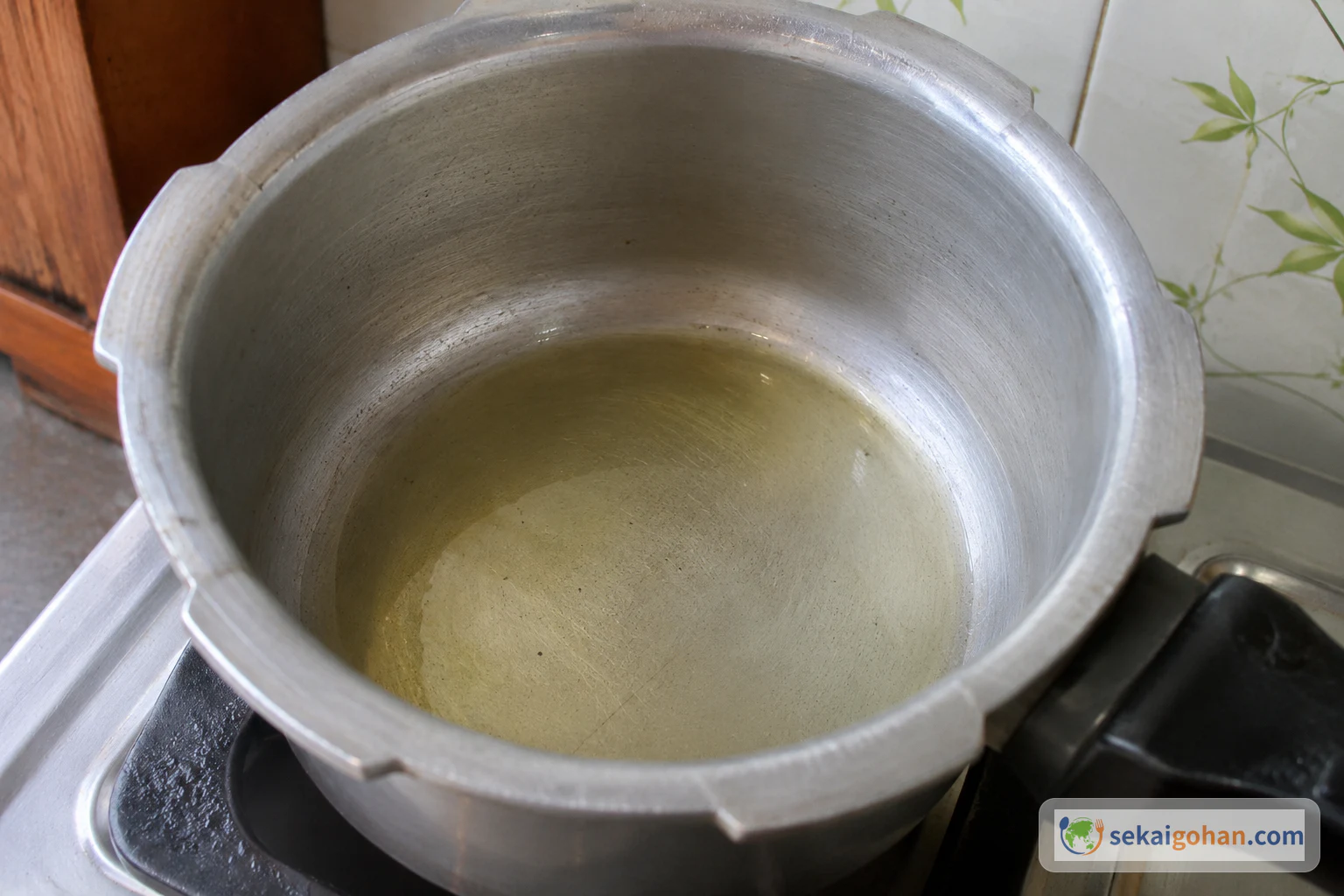
Heat the oil

Oil in the open base of a pressure cooker, with nothing else added yet
Start with only oil in the open cooker

Check that the cooker's steam vent and gasket are in good order, as its manual directs. Heat 2 Tbsp oil in the open base of the cooker.

STEP 77 / 30

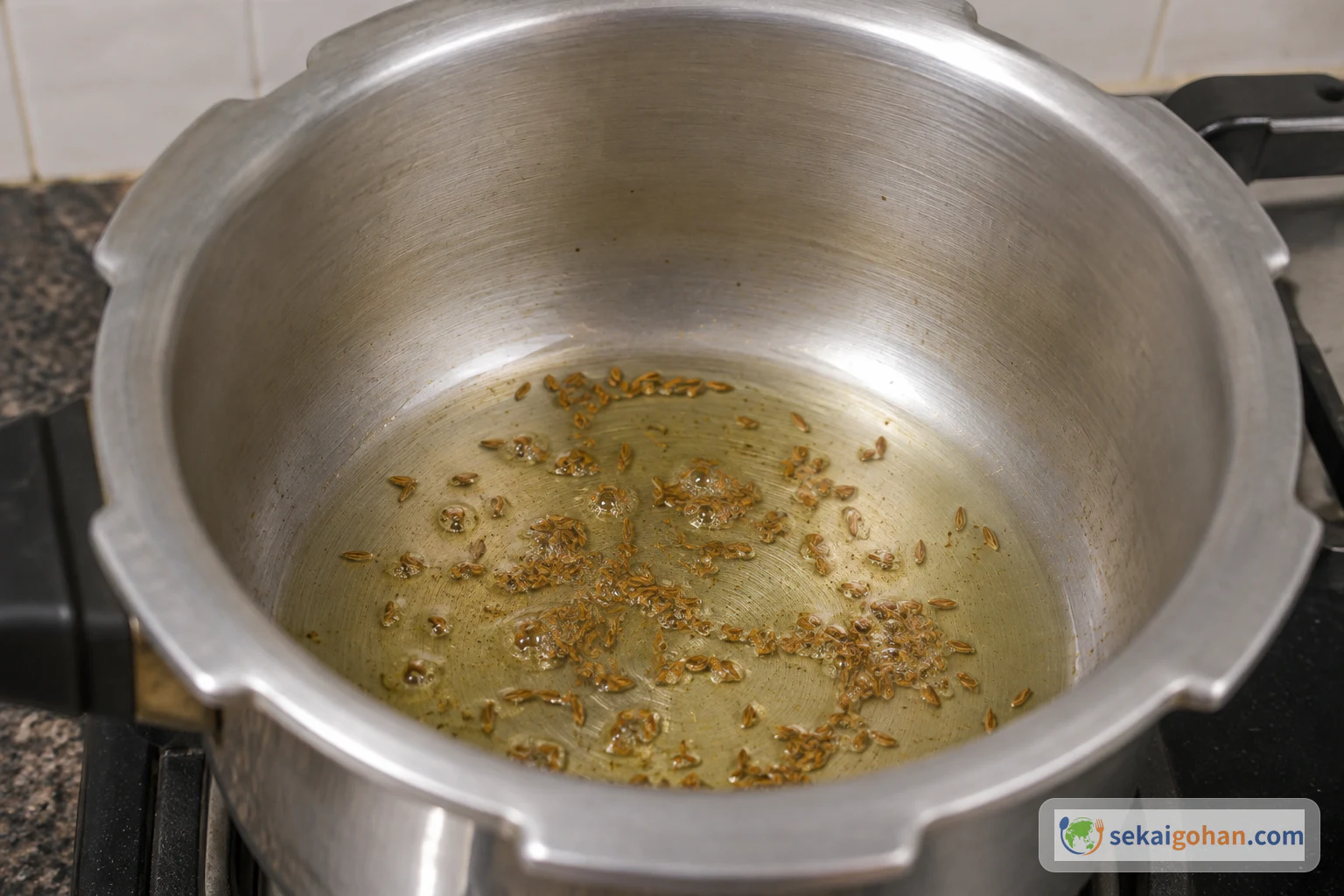
Add the cumin

Brown cumin seeds sizzling in oil in a pressure-cooker pan
Let the cumin crackle before the onion goes in

Add 1/2 tsp cumin seeds to the hot oil and let them crackle.

STEP 88 / 30

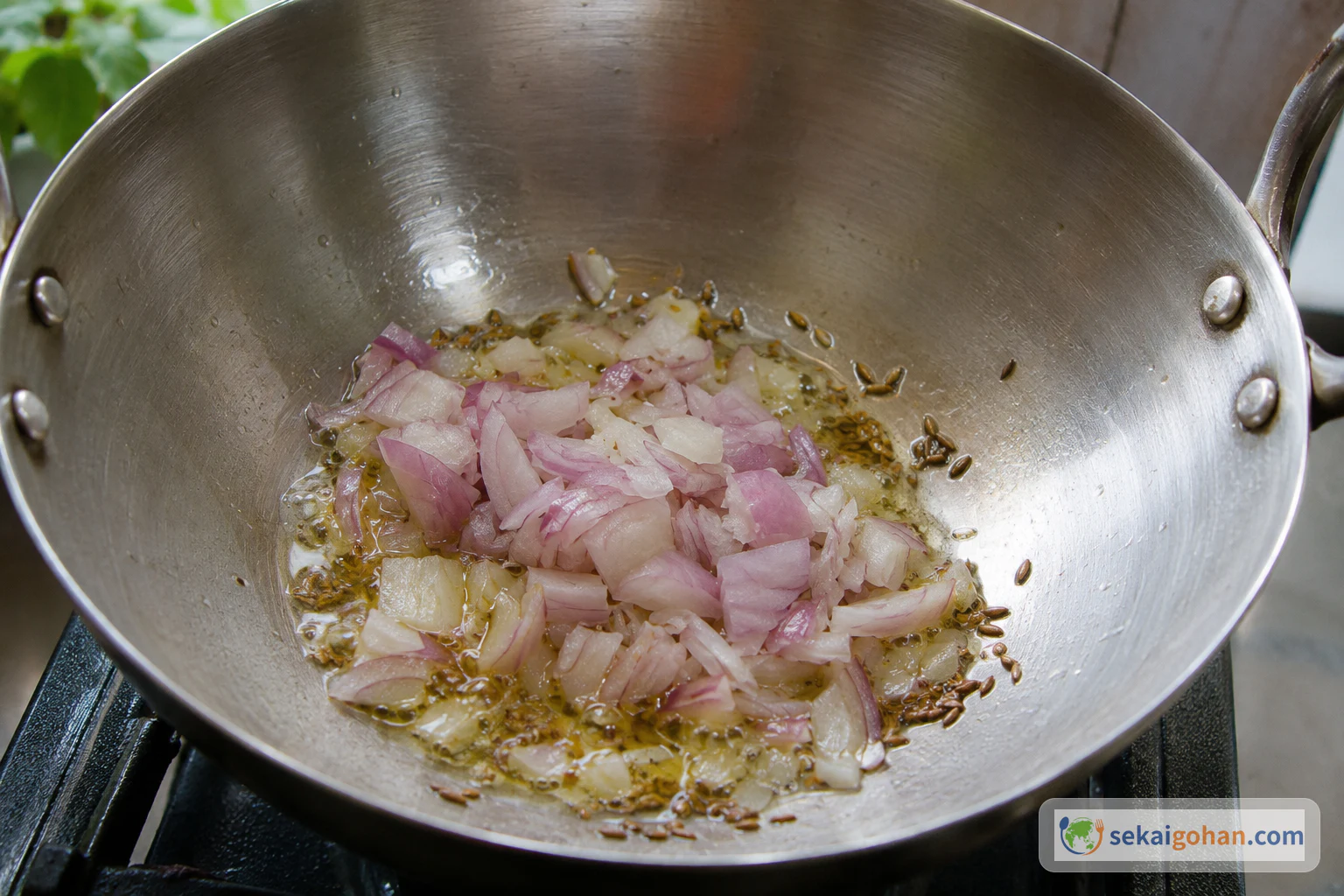
Add the onion

Freshly chopped onion added to oil and cumin seeds in the pan
The onion goes straight into the cumin oil

Add 1/3 cup chopped onion to the cumin oil.

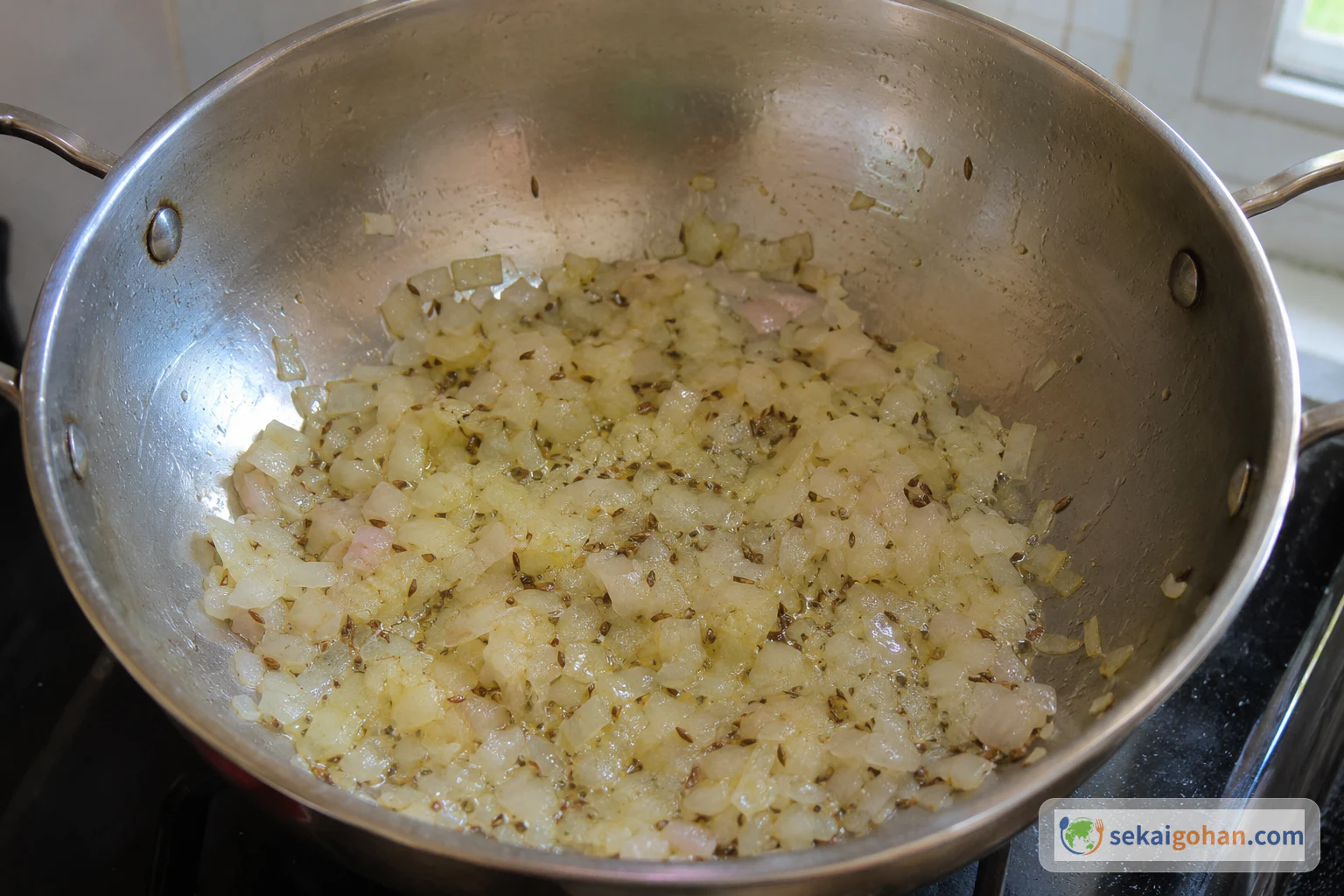
STEP 99 / 30

Cook the onion until translucent

Soft, translucent onion being stirred with cumin seeds
Stop at translucent, before the onion turns dark brown

Stir until the onion is soft and translucent. It does not need to turn dark brown.

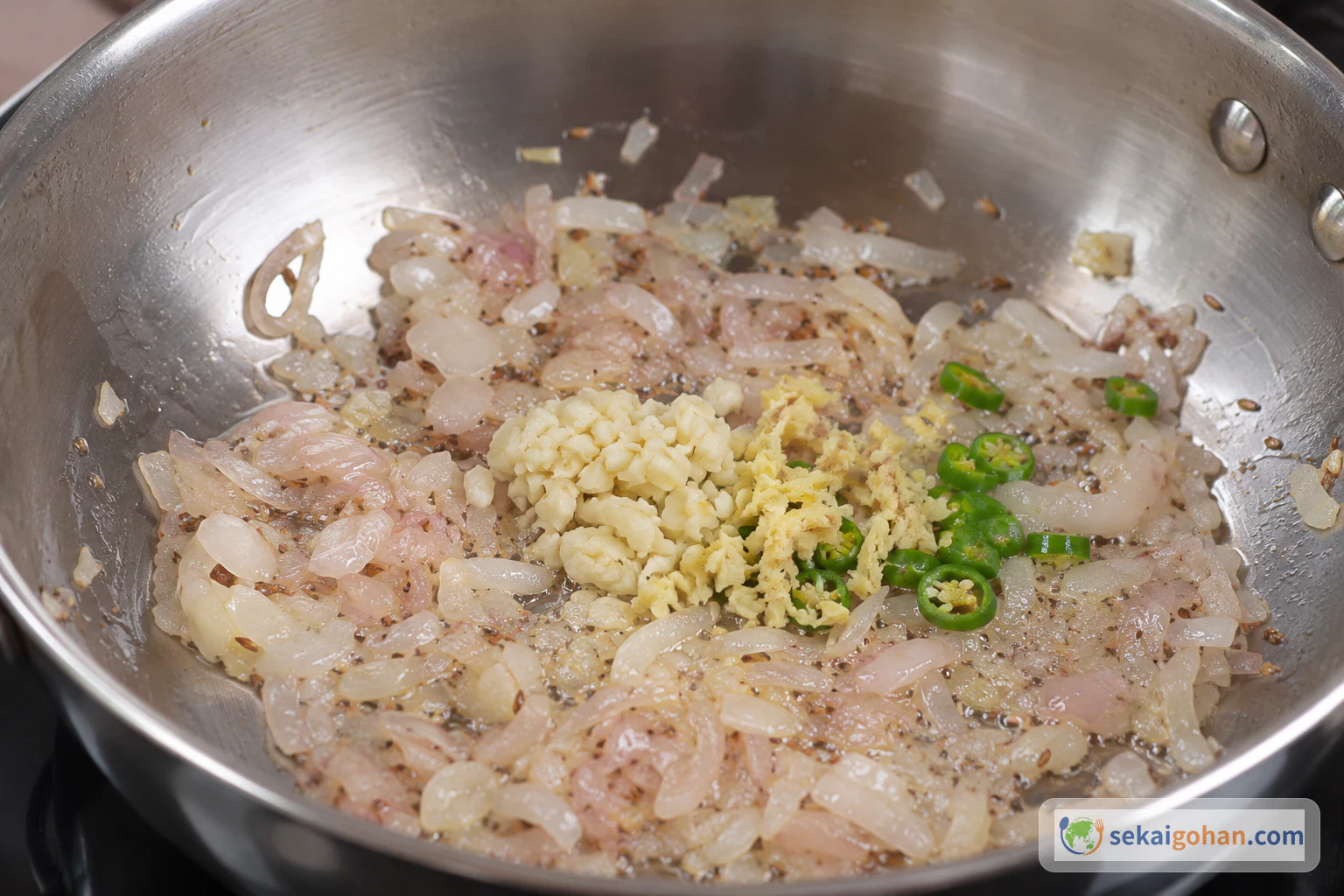
STEP 1010 / 30

Add the aromatics

Chopped ginger, garlic and green chili added to softened onion in the pan
Ginger, garlic and green chili join the onion

Add 1/2 tsp chopped ginger, 1/2 tsp chopped garlic and 1/2 tsp chopped green chili.

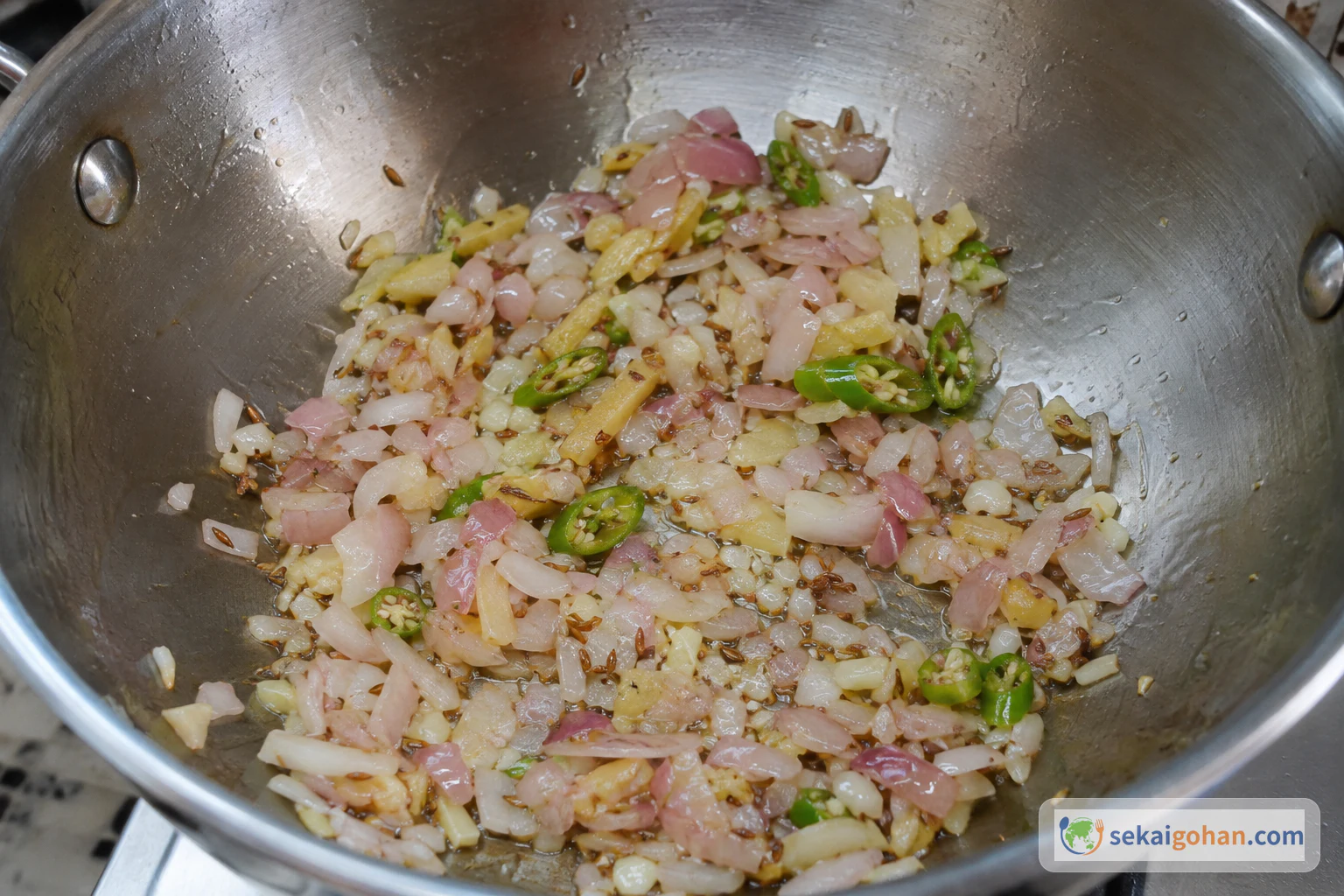
STEP 1111 / 30

Sauté the aromatics

Onion, cumin, ginger, garlic and green chili sautéed together in one pan
Sauté the aromatics with the onion

Stir everything together and sauté briefly before adding the tomato.

STEP 1212 / 30

Add the tomato

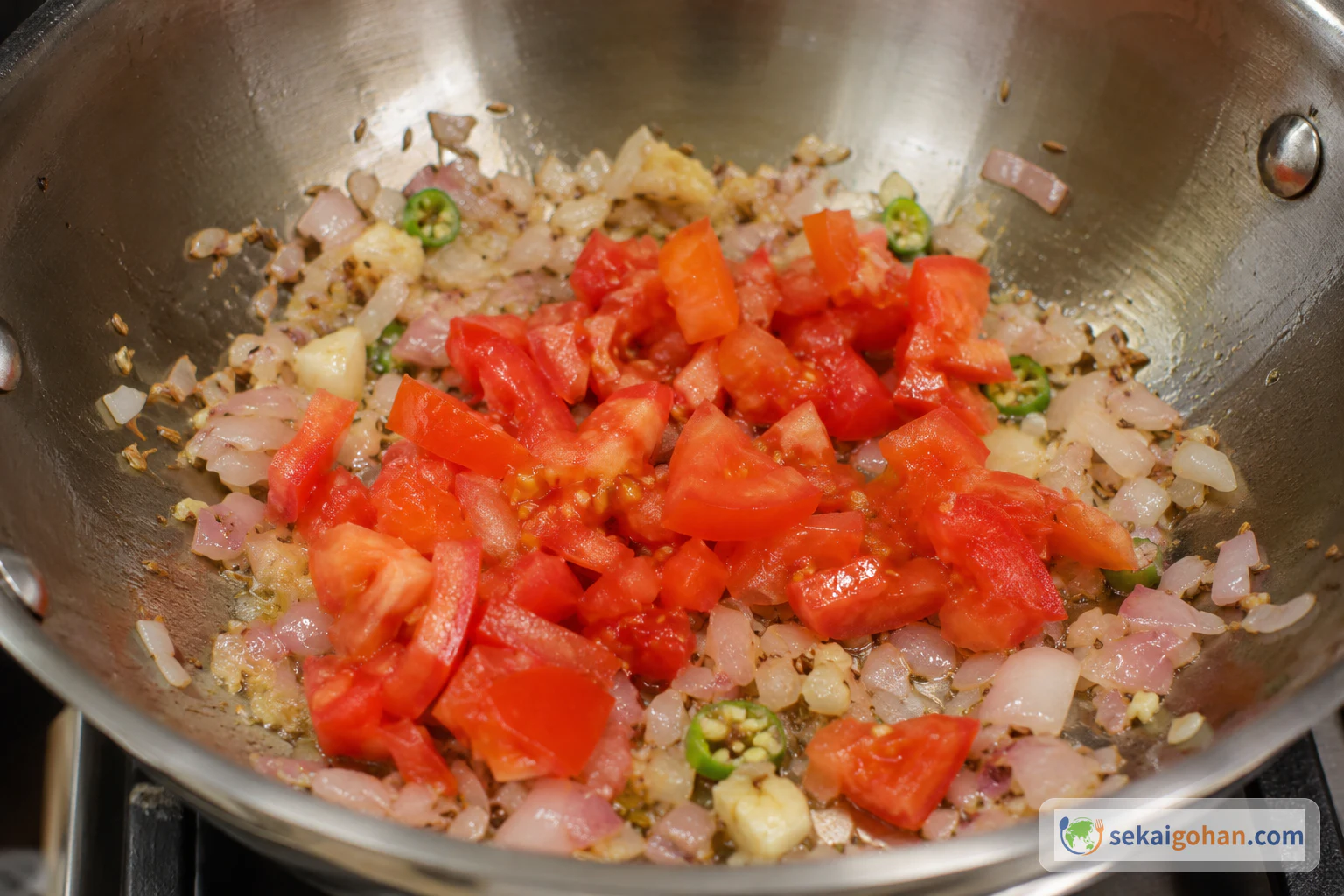
Chopped red tomato going into a pan of onion and aromatics
The tomato follows the sautéed aromatics

Add 1/2 cup chopped tomato and stir it into the onion mixture.

STEP 1313 / 30

Add the ground spices

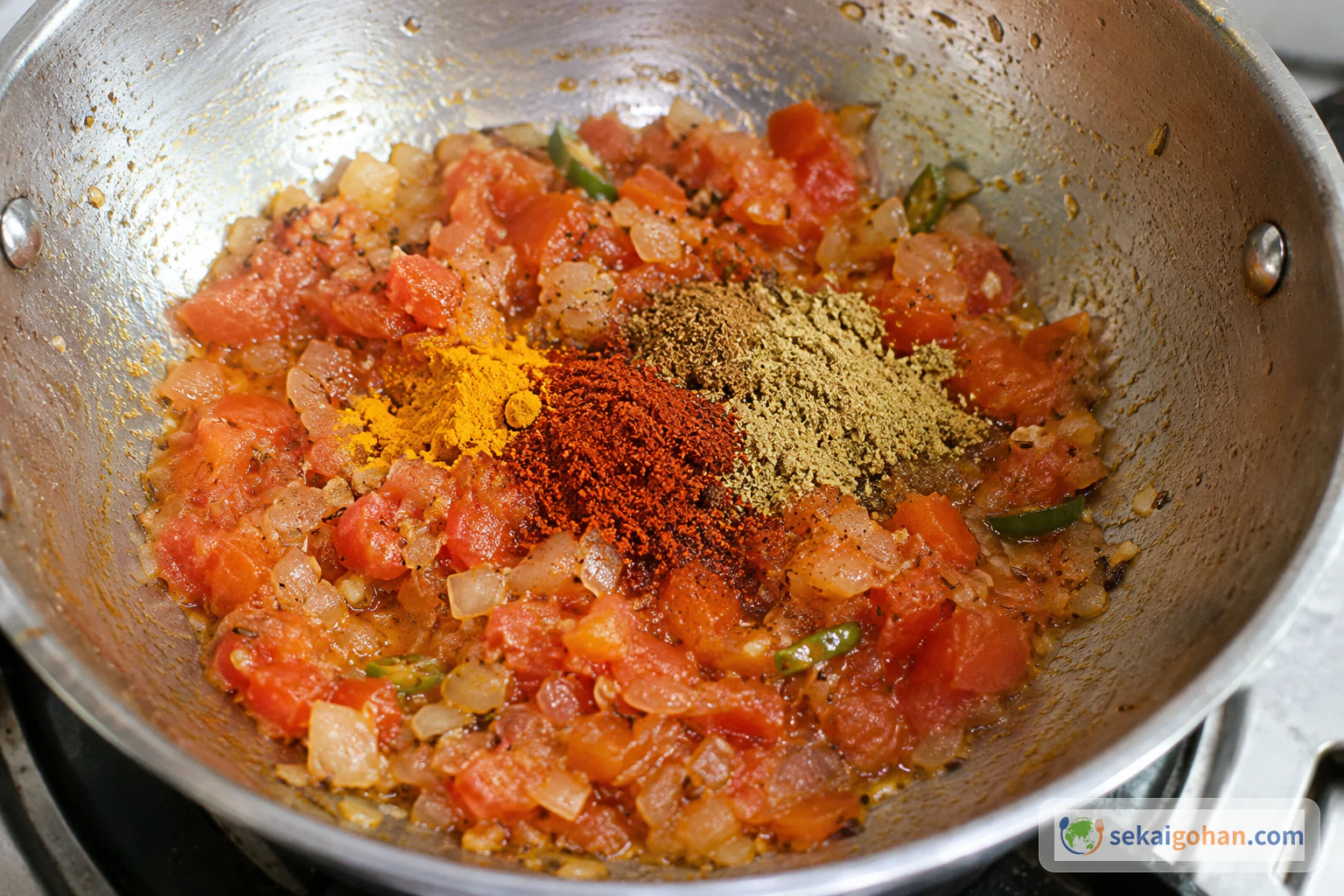
Yellow, red and tan-brown ground spices added on top of the tomato and onion base
Add the ground spices to the tomato and onion base

Add 1/4 tsp ground turmeric, 1/2 tsp red chili powder, 1/2 tsp garam masala and 1 tsp ground coriander.

STEP 1414 / 30

Cook down the masala

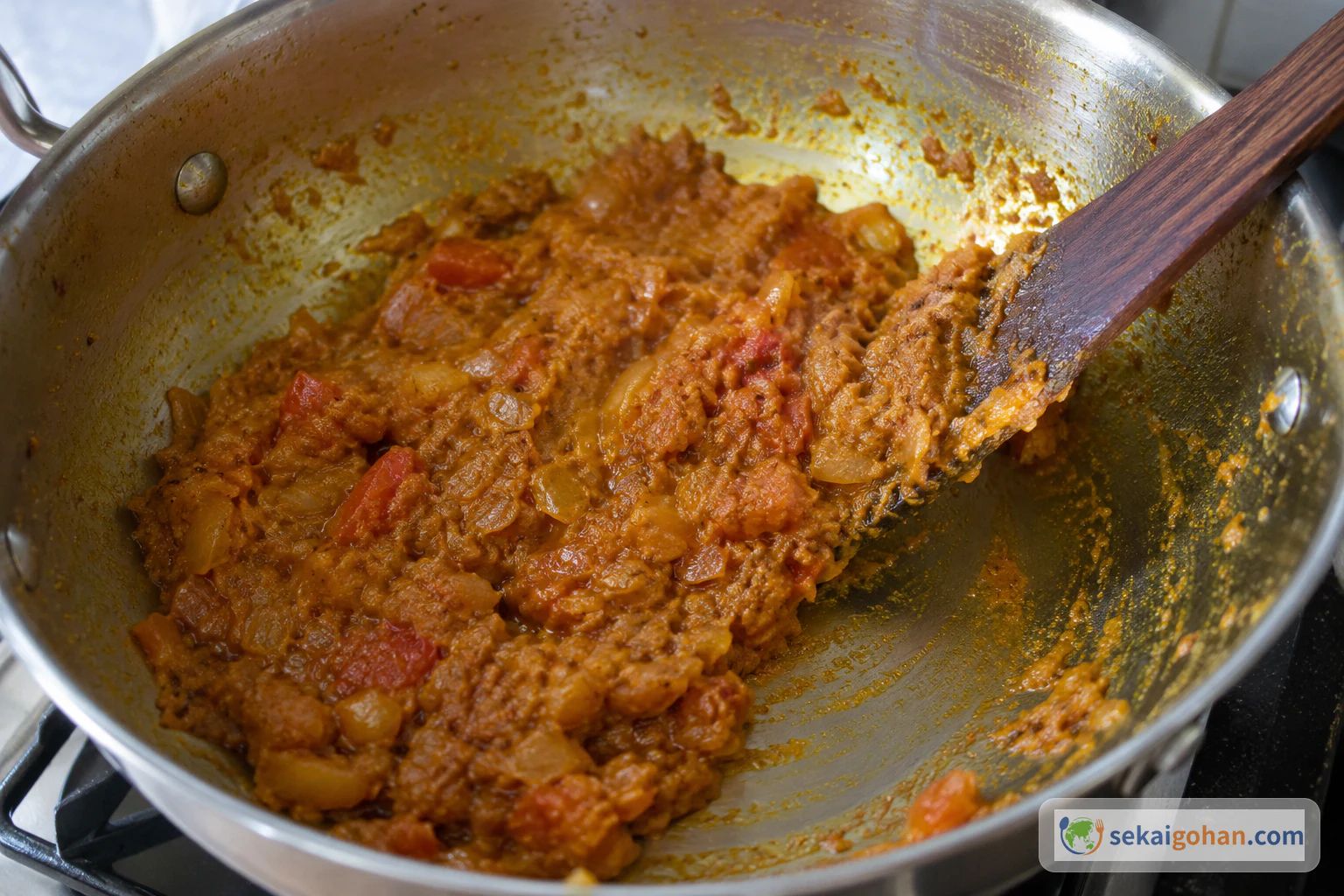
A soft, thick masala moved aside with a wooden spatula, with oil glinting at the pan's edge
Look for a masala that pulls away from the sides with a little oil showing

Over low heat, stir and fry the mixture (bhunao) until it pulls away from the sides of the pan and a little oil separates. Keep stirring so it does not scorch.

STEP 1515 / 30

Add the beans

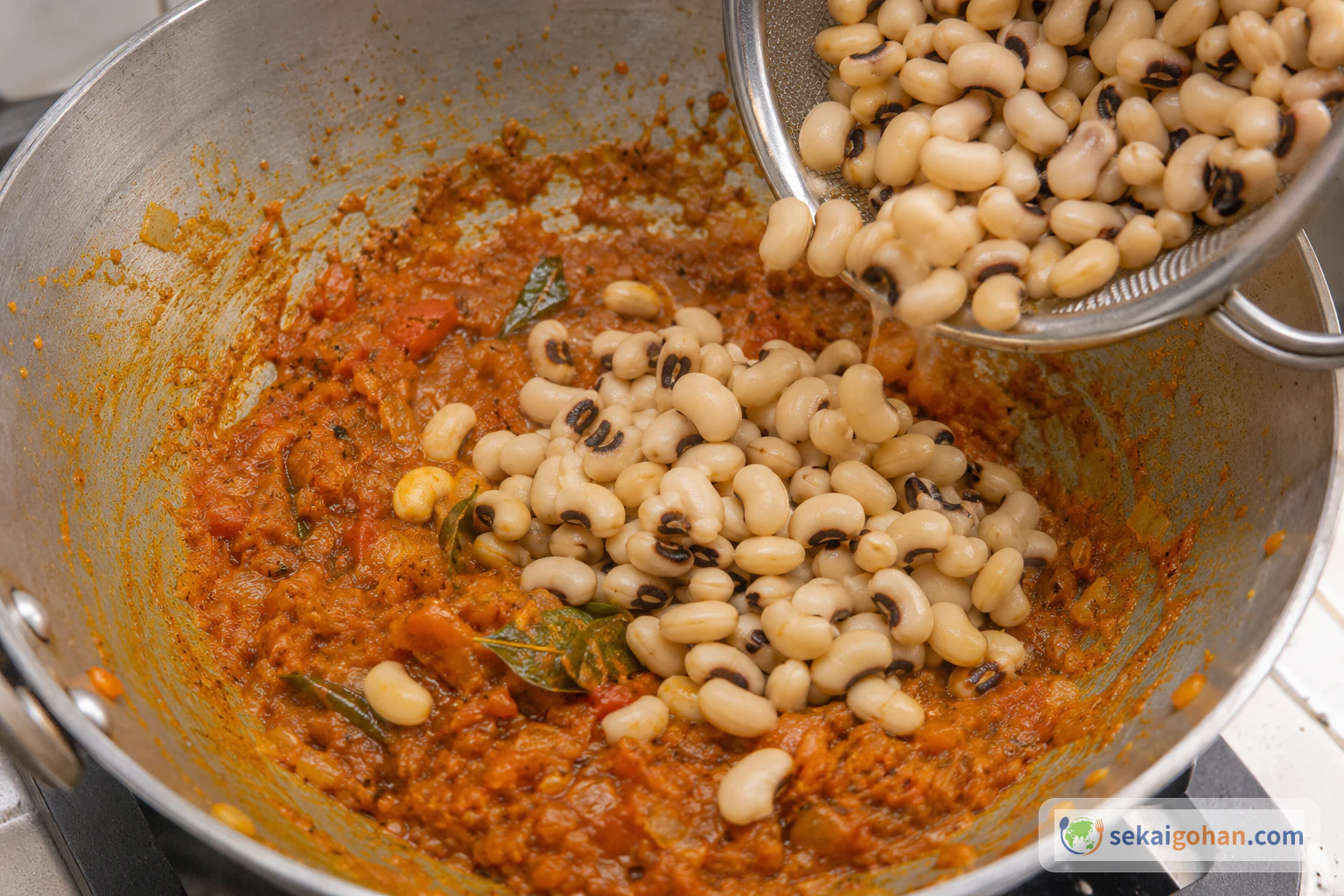
Pale black-eyed beans pouring into cooked masala
The drained beans go into the finished masala

Add the well-drained beans to the cooked masala.

STEP 1616 / 30

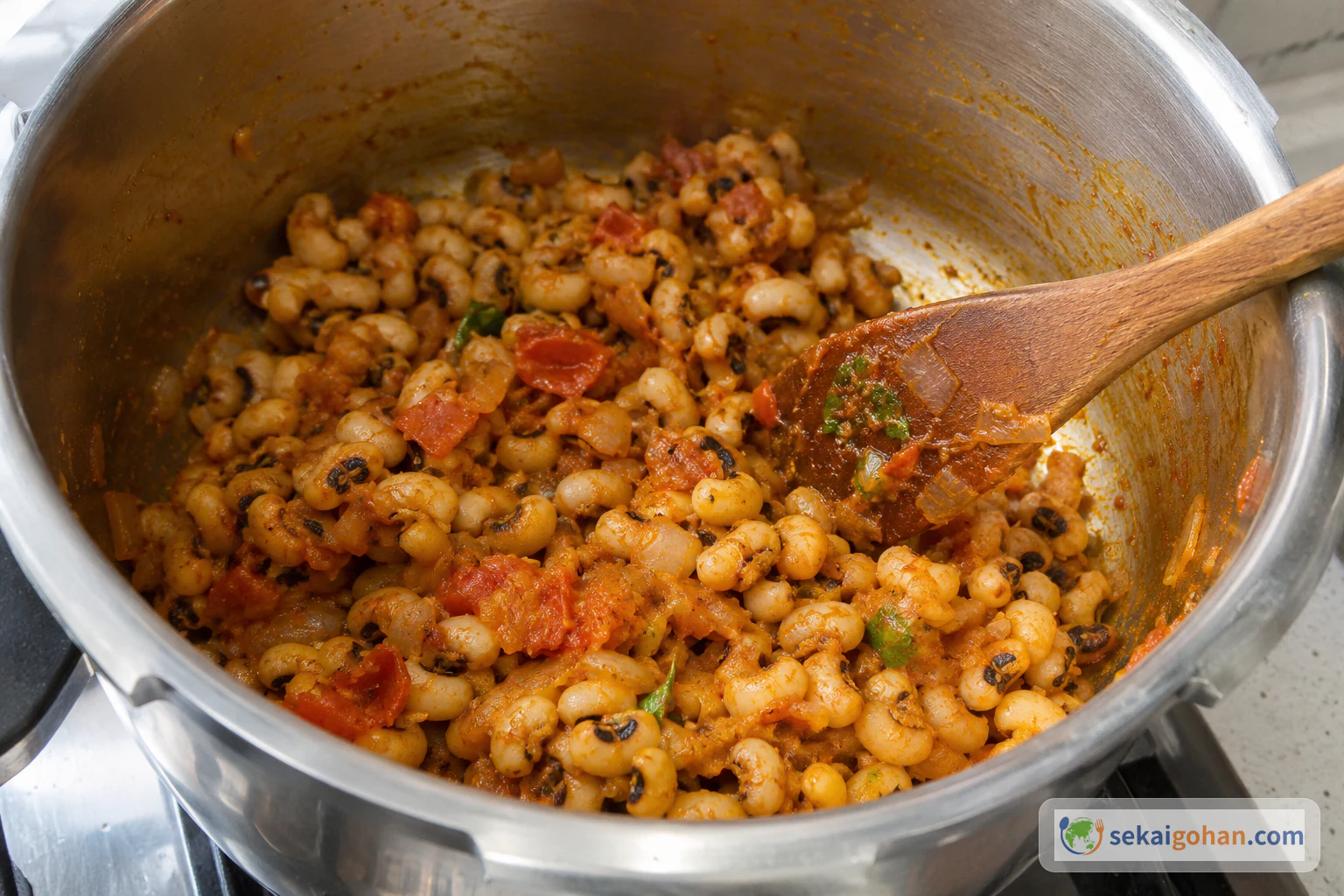
Coat the beans

Black-eyed beans stirred through onion and tomato masala with a wooden spoon
Coat the beans before adding water

Stir until the beans are coated with the masala.

STEP 1717 / 30

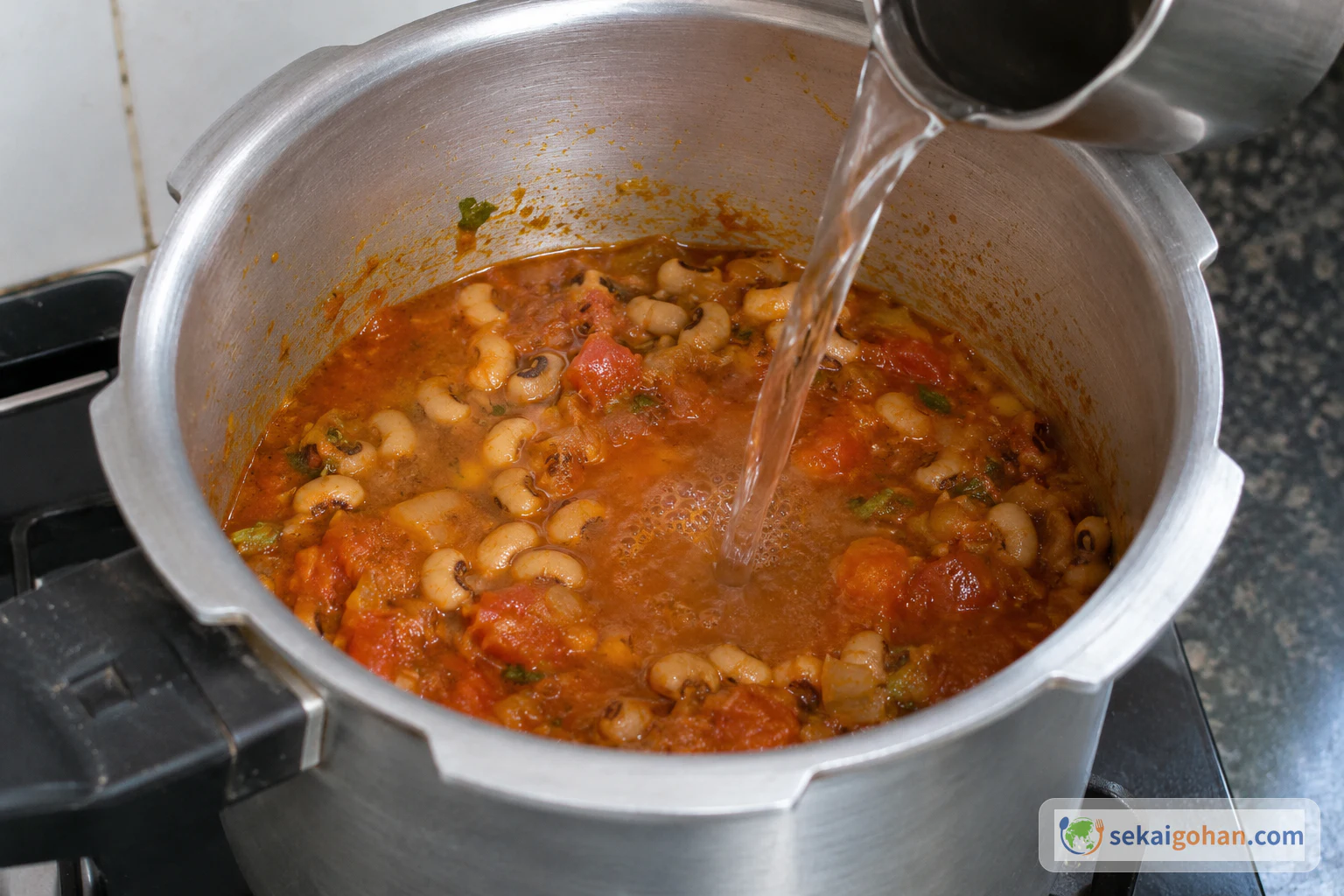
Add the water

Water being poured over beans and masala in an open pressure-cooker base
Add all the water, and use a larger cooker if the batch does not fit

Pour in 3 cups water. Beans and water together must stay within the cooker's limit for beans and no more than one-third of its total capacity. If they do not fit, move everything to a larger compatible cooker. Do not reduce the water.

STEP 1818 / 30

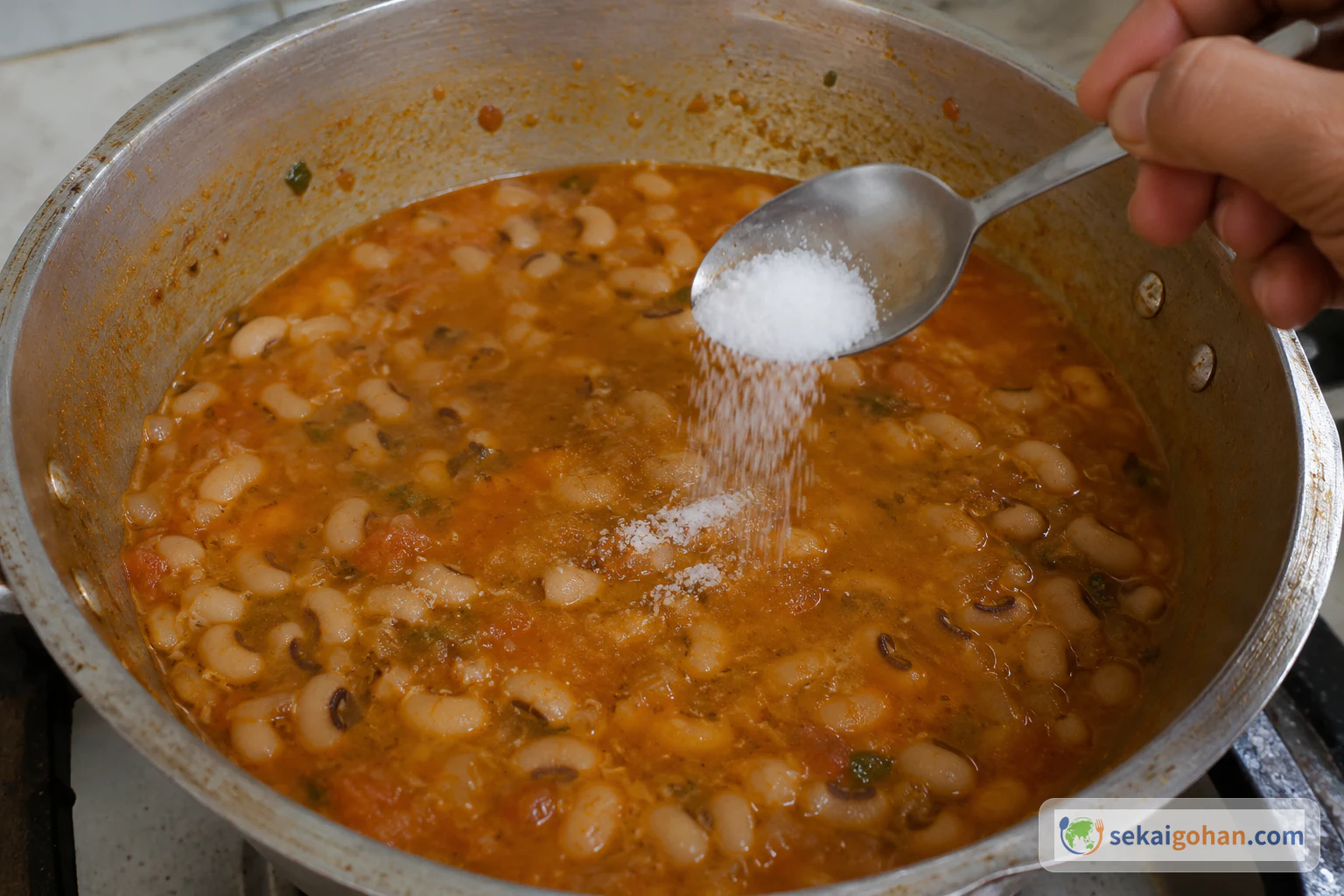
Add the salt

A spoon adding white granules to the beans, water and masala
Salt goes in with the water, before the lid

Add salt to taste.

STEP 1919 / 30

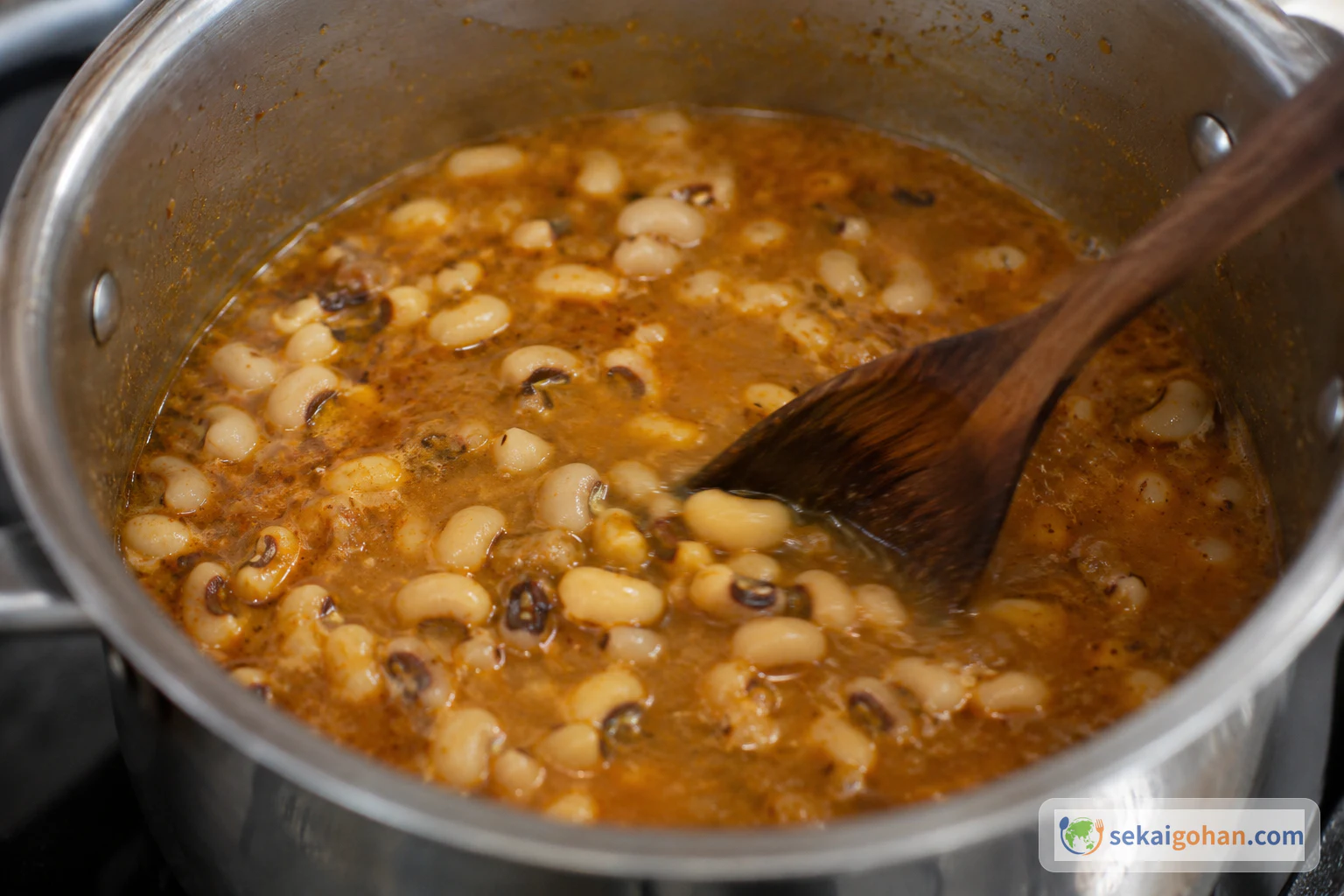
Stir everything together

A wooden spoon stirring beans, water and masala together
Mix well before closing the cooker

Stir the beans, water, salt and masala until evenly mixed.

STEP 2020 / 30

Lock the lid

A closed pressure cooker with its lid and handles engaged
Confirm the lid is locked before heating

Close the lid securely and confirm that it is locked, following the cooker's manual.

STEP 2121 / 30

Cook under pressure

A closed, locked pressure cooker on a hob
Follow the manual for your cooker's pressure and heat

Bring the cooker up to pressure as its manual directs. As a guide, cook for 9–10 minutes, or for 8–9 whistles on a whistling cooker. These two measures are not equal on every cooker, and neither one guarantees the beans are done or that the cooker is safe to open. Softness is checked in step 24.

STEP 2222 / 30

Let the pressure drop naturally

A closed pressure cooker resting off the hob
Leave the lid closed while the pressure falls naturally

Take the cooker off the heat and leave it closed so the pressure falls on its own. Do not force the release.

STEP 2323 / 30

Open only after the pressure has dropped

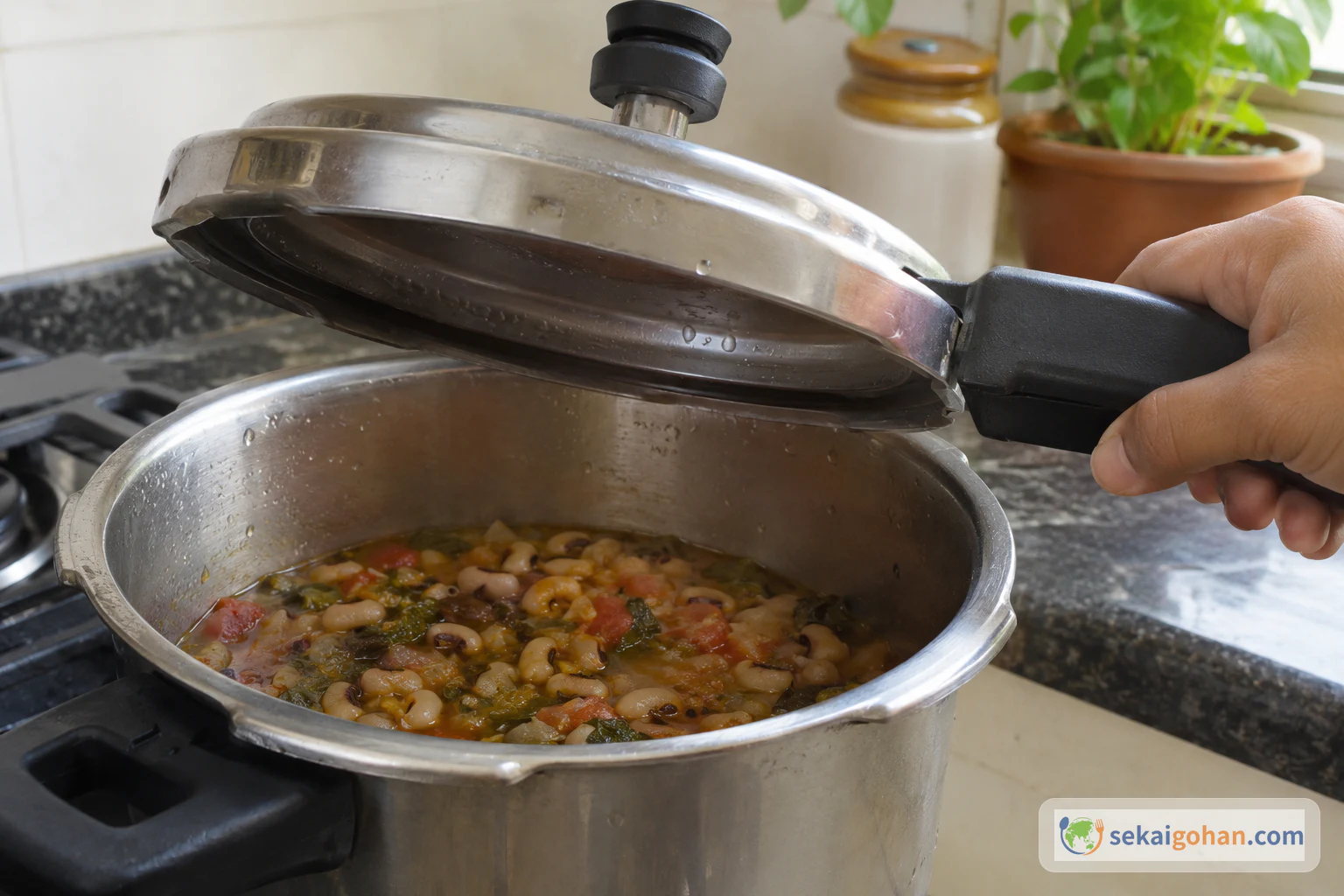
A hand lifting a pressure-cooker lid by its handle, angled away from the open pot
Open only after confirming the pressure has dropped

Confirm that the pressure has fully dropped in the way the manual describes. Then open the lid by its handle, angling it away from you. If the lid resists, do not force it.

STEP 2424 / 30

Check that the beans are soft

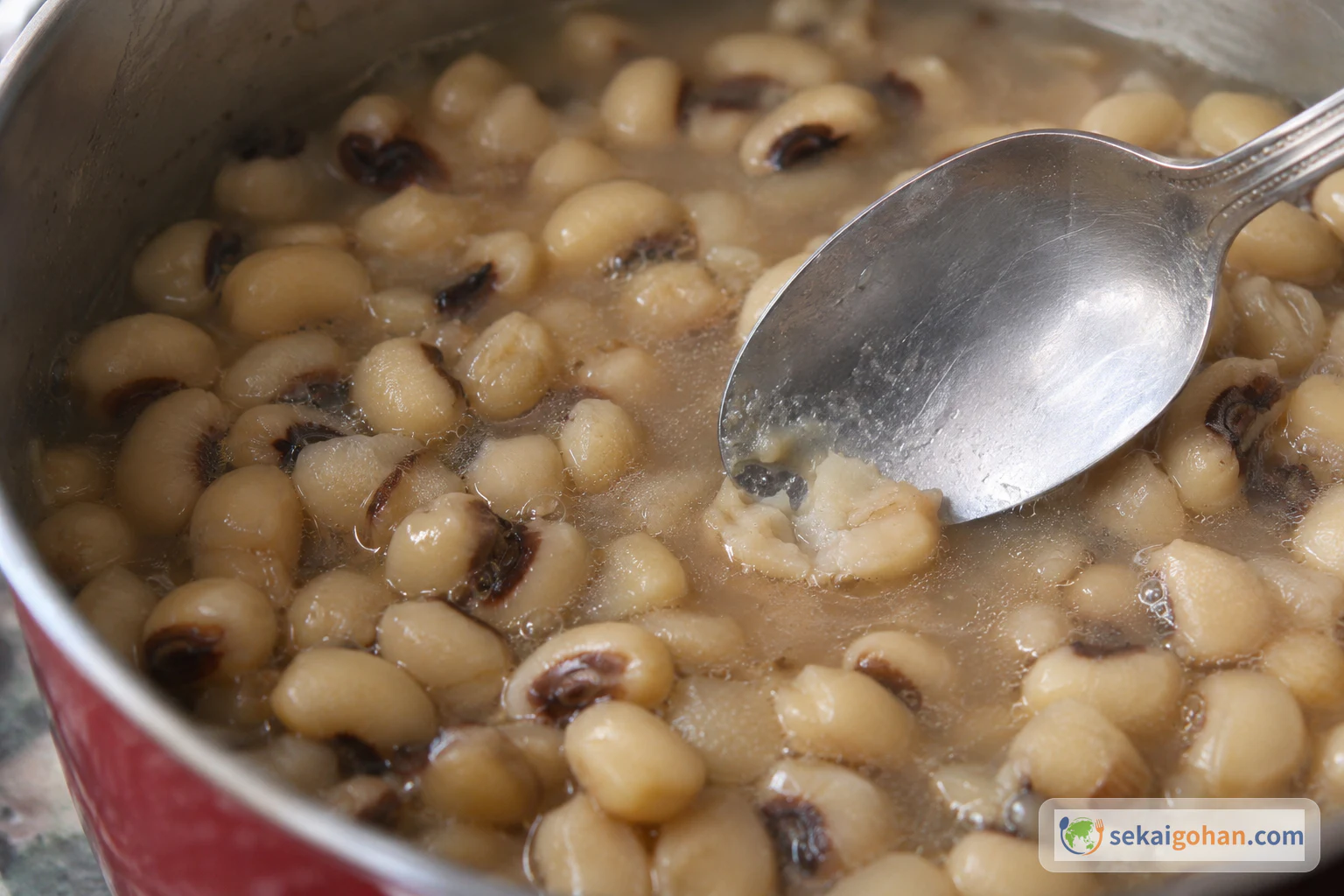
A spoon pressing and flattening a cooked black-eyed bean in the pot
Use a spoon to check the center of a bean

Press a bean with a spoon and check that it is soft all the way to the center. Do not touch the hot beans with your bare hands. If the center is still hard, close the cooker and cook longer as the manual directs, then let the pressure drop and check again before moving on.

STEP 2525 / 30

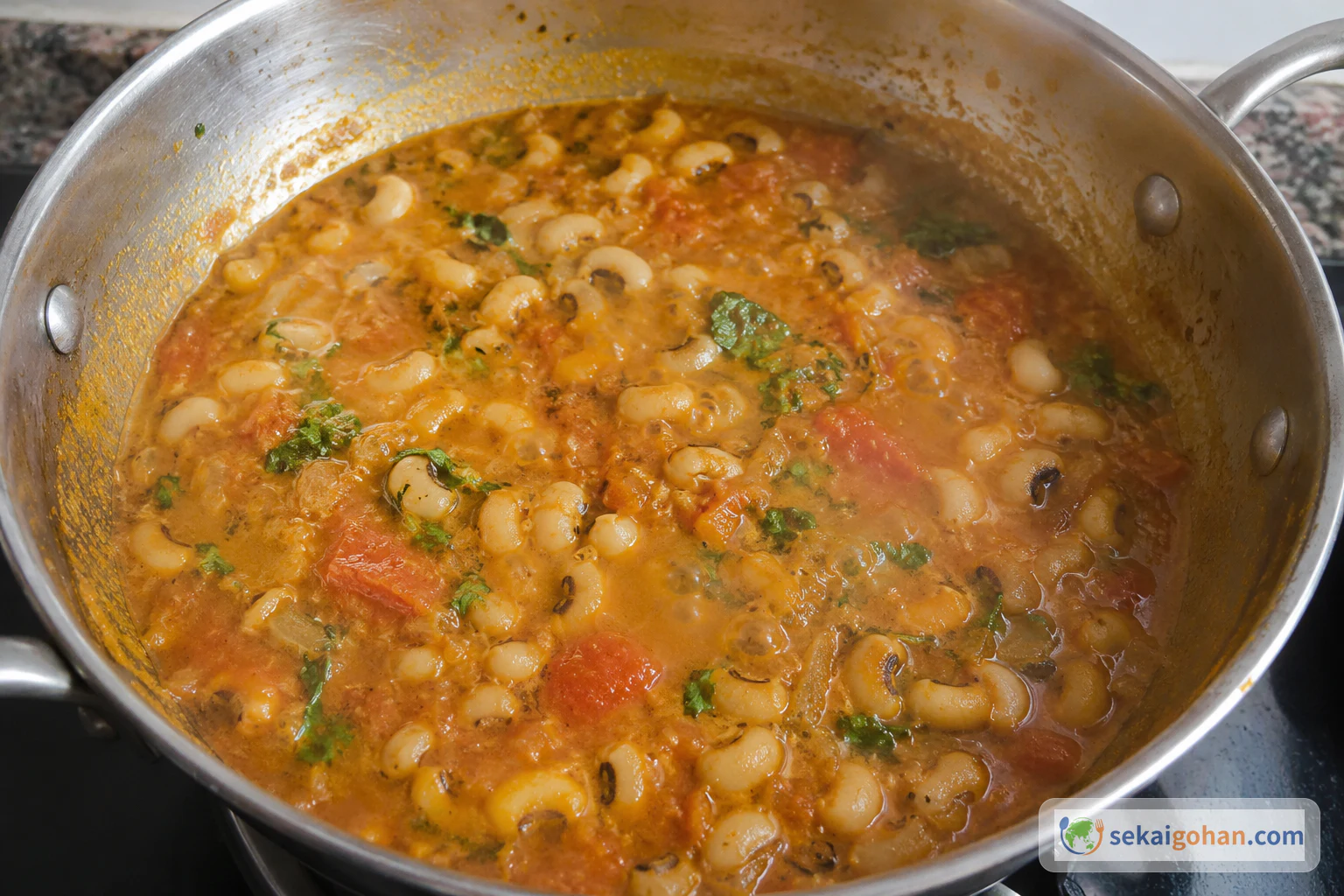
Simmer uncovered

Bean curry bubbling gently in an uncovered pan
Leave the lid off so the gravy can reduce

Simmer without the lid until the liquid has reduced and the gravy starts to thicken.

STEP 2626 / 30

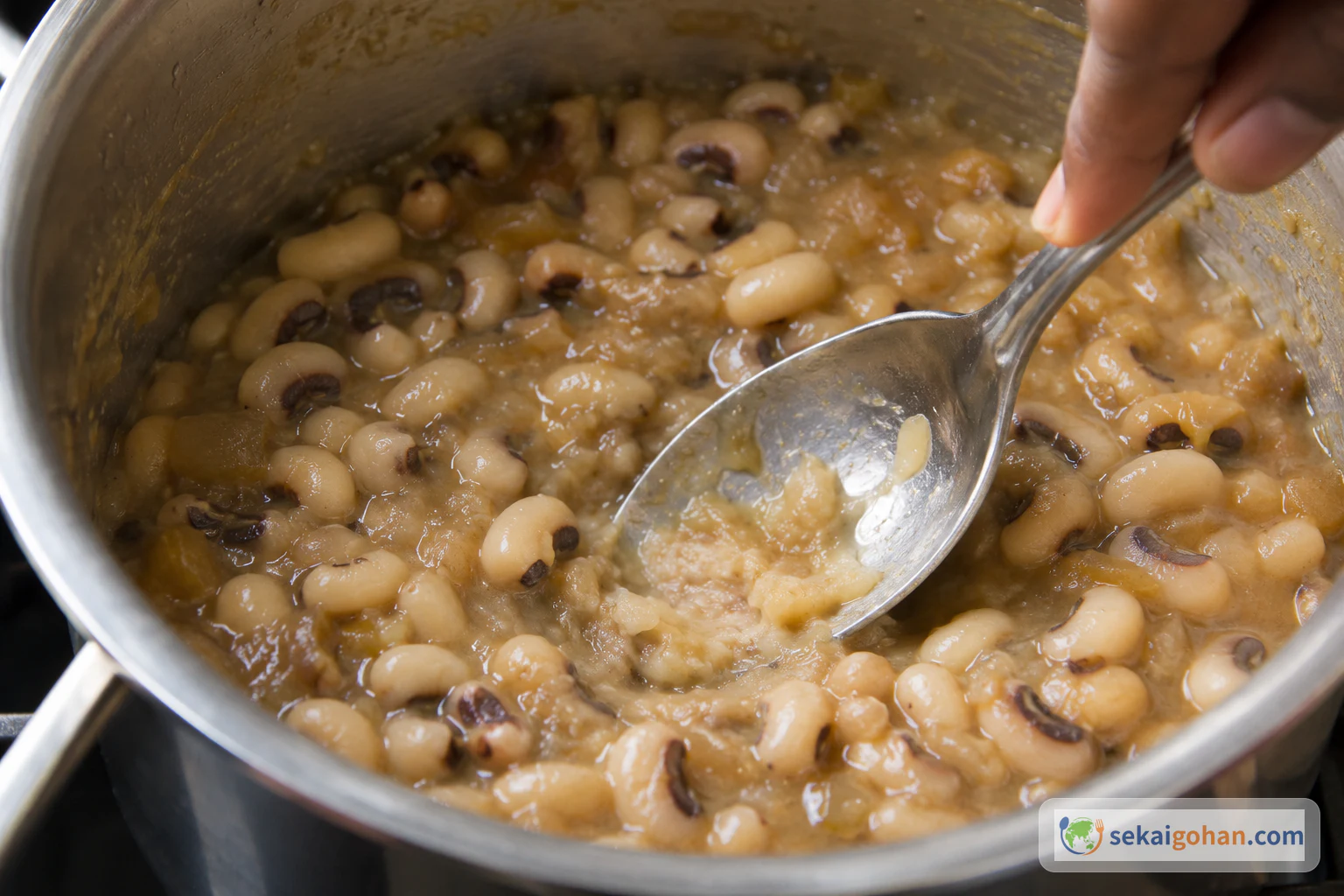
Mash a few beans, if you like

A spoon pressing a few cooked beans into the gravy
This step is optional, and a few beans are enough

To thicken the gravy further, press a few beans against the side of the pot with the spoon. Keep most of the beans whole.

STEP 2727 / 30

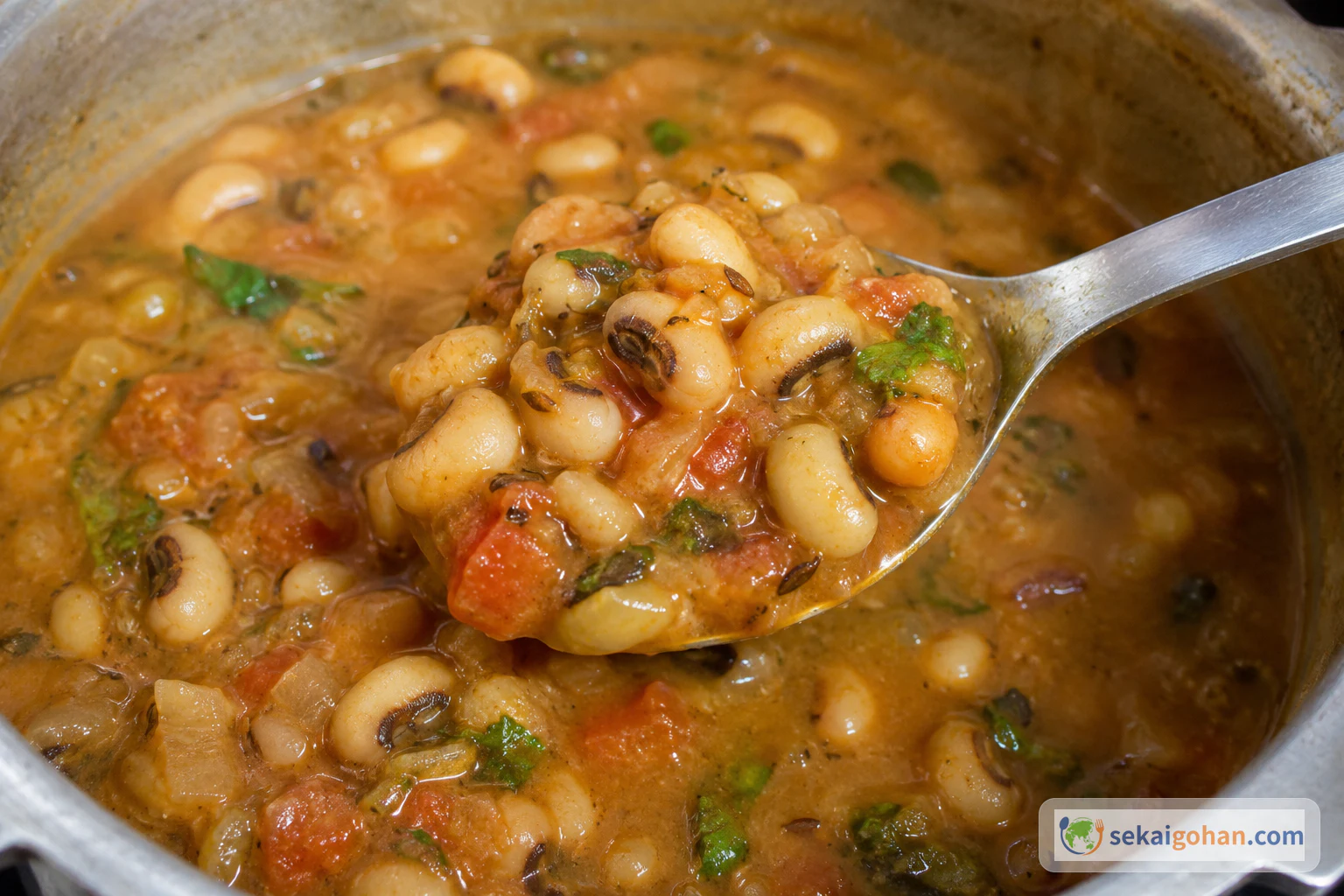
Check the consistency

A spoon holding soft whole beans in a medium-thick tomato gravy
Aim for between a watery soup and a dry paste

Lift some gravy with the spoon. Aim for a medium-thick gravy with soft, intact beans, neither a watery soup nor a dry paste.

STEP 2828 / 30

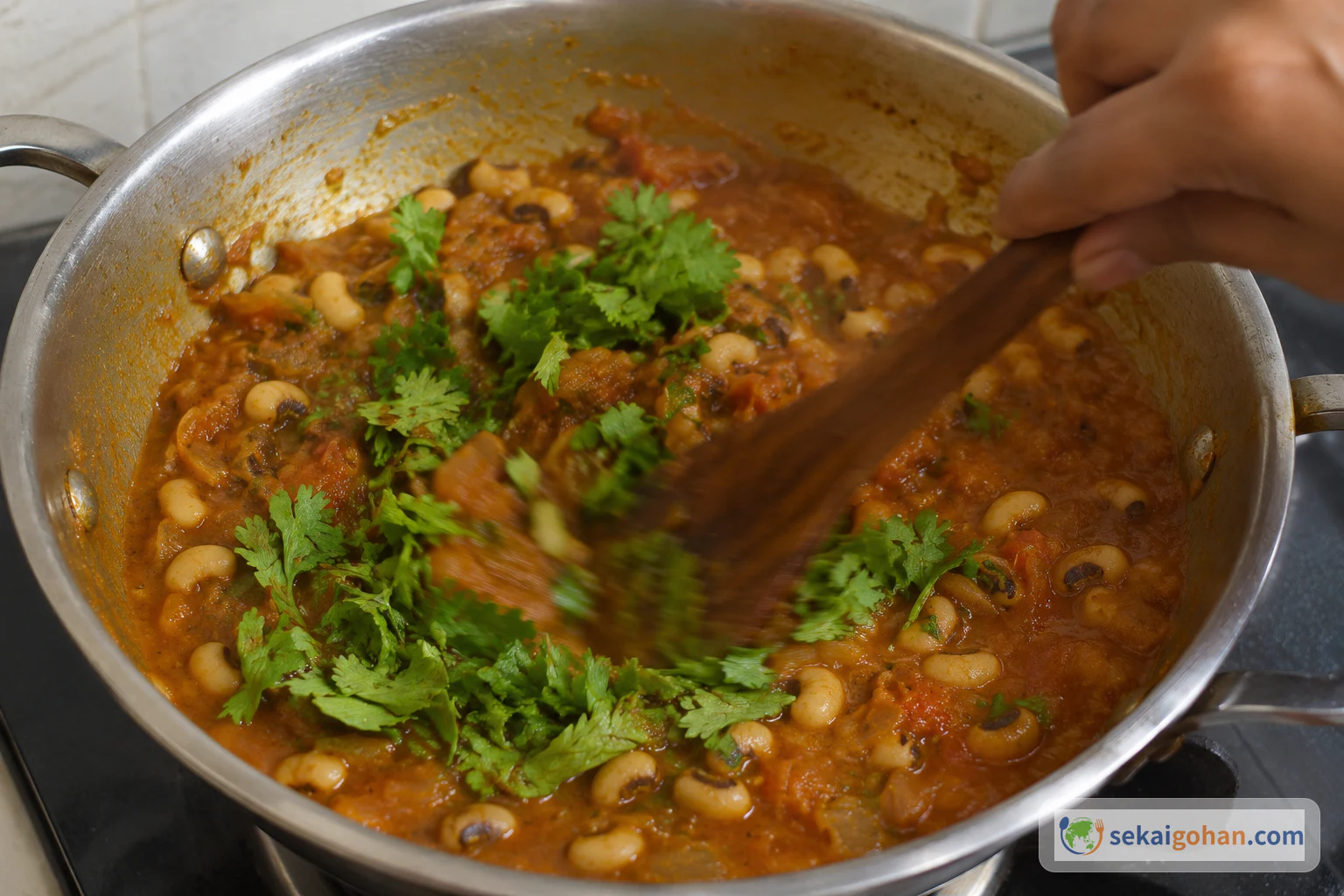
Add the coriander leaves

Chopped fresh green leaves being added to the finished bean curry
Wash, drain and chop the leaves before adding them

Wash the fresh coriander leaves well under running water, drain them, then chop them. Add 2 Tbsp to the finished curry.

STEP 2929 / 30

Give it a final stir

A wooden spoon gently stirring chopped leaves through the bean curry
One gentle stir folds the leaves through

Stir gently to fold the leaves through. This only mixes them in and is not a cooking step for the leaves.

STEP 3030 / 30

Serve hot

Finished bean curry in a bowl, with plain rice served separately
Serve hot, with plain rice on the side if you like

Serve the lobiya hot, with plain rice on the side if you like.

0 / 0
Ingredients

Ingredients

1 / 1

Ingredients

Ingredient Amount Role
Dried black-eyed beans (lobiya) 1 cup The body of the dish
Water for rinsing and soaking as needed Separate from the cooking water
Oil 2 Tbsp Blooms the cumin and cooks the masala
Cumin seeds 1/2 tsp First aroma in the oil
Onion, chopped 1/3 cup Base of the masala
Ginger, chopped 1/2 tsp Aromatic
Garlic, chopped 1/2 tsp Aromatic
Green chili, chopped 1/2 tsp Fresh heat
Tomato, chopped 1/2 cup Body and acidity for the masala
Ground turmeric 1/4 tsp Ground spice
Red chili powder 1/2 tsp Ground spice and heat
Garam masala 1/2 tsp Ground spice blend
Ground coriander 1 tsp Ground spice
Water for cooking 3 cups Cooks the beans and forms the gravy
Salt to taste Seasoning
Fresh coriander leaves (cilantro), chopped 2 Tbsp Fresh finishing herb. Wash well under running water, drain, then chop
0 / 0

Lobiya: Soft Black-Eyed Beans in a Medium-Thick Onion and Tomato Gravy

What this pot should keep

Cook the beans until they are soft at the center, keep most of them whole, and stop when the gravy is neither watery nor a dry paste.

Cream-colored beans with a small dark eye go into a pressure cooker on top of a masala of onion, ginger, garlic, green chili, tomato and ground spices. Once the cooker has been opened and the beans have simmered uncovered, the liquid becomes a medium-thick gravy, and chopped coriander leaves go in last.

This article follows one specific version: the Punjabi-style black-eyed bean curry published on Dassana's Veg Recipes of India, a home recipe site run by an individual cook, which calls the beans lobia or rongi. Spellings vary, and this article uses lobiya. It is one home recipe, not a definitive form of the dish, and it is not the Georgian dish lobio.

We have not kitchen-tested this version as presented here. The pressure-cooker conditions below are a safety adaptation we added, based on Japan's Consumer Affairs Agency guidance. You can find more dishes from the same country on our India page.

Ingredients (4 Servings)
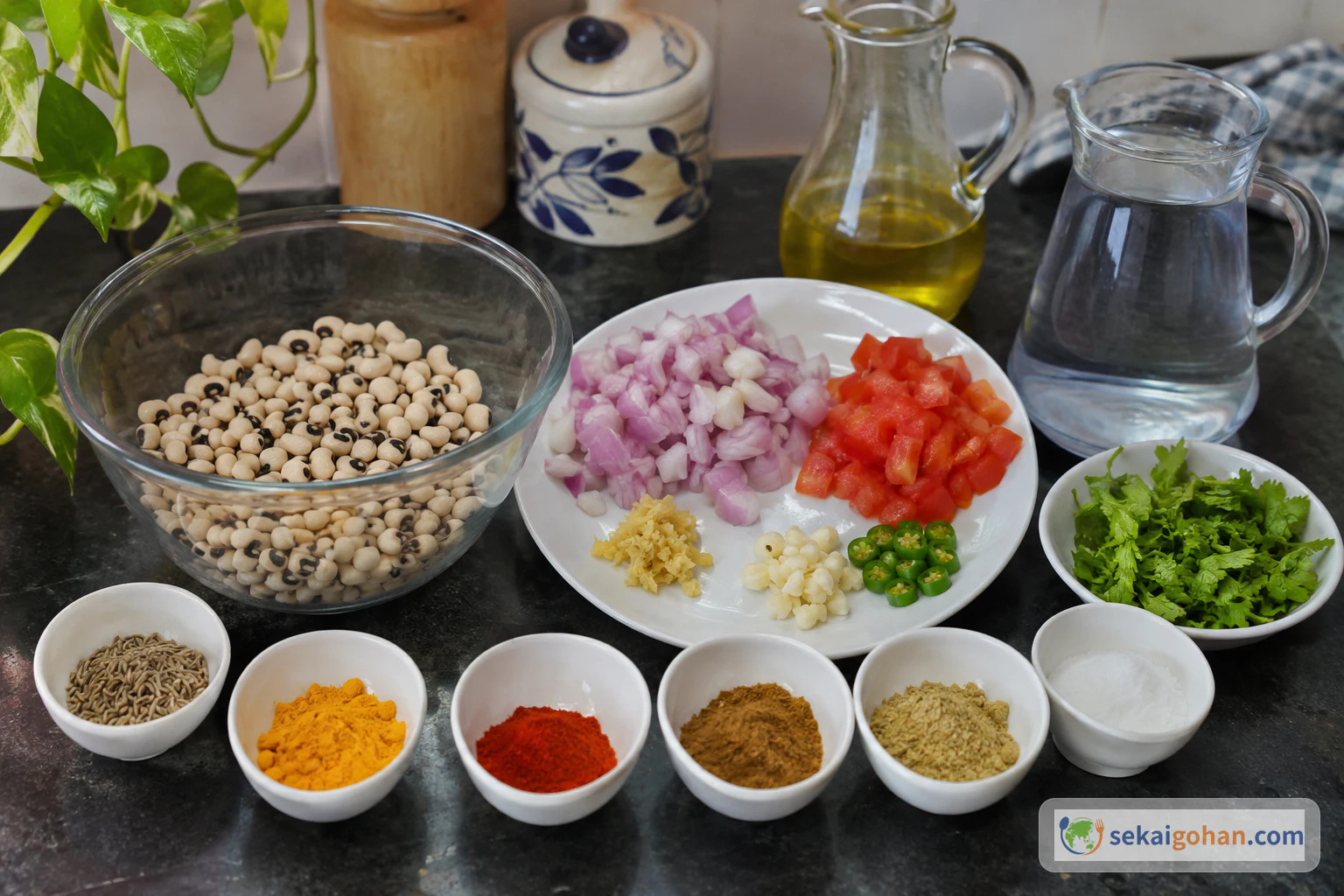
Black-eyed beans, onion, tomato, ginger, garlic, green chili, coriander leaves, oil, water, salt, cumin seeds and ground spices set out separately
Everything for lobiya, measured and chopped before the oil goes on

Choosing What to Buy

Look for dried black-eyed beans, which are pale with a dark eye. The small chopped amounts of ginger, garlic and green chili are meant to go in together, so prepare them before you start heating the oil.

This method is written for dried beans, whole cumin seeds and freshly chopped ginger and garlic. It does not cover canned beans, ginger-garlic paste, ground cumin or a longer soak, so we offer no tested swaps for them.

Equipment

  • Pressure cooker suited to the full amount of beans and water, with its manual
  • Colander
  • Large bowl
  • Measuring cups and spoons
  • Sturdy spoon for stirring and checking the beans
  • Knife and cutting board

Background: Choosing and Using the Pressure Cooker

Do not assume a 3-liter cooker is a safe fit for every cooker with this amount of beans and water. Black-eyed beans need the same care as other beans under pressure.

Japan's Consumer Affairs Agency issued a pressure-cooker notice on April 28, 2021. It tells users to follow the manufacturer's manual, check the steam vent and gasket, make sure the lid is locked, and confirm that the pressure has dropped before opening. For beans, the notice says that beans and water together should fill no more than one-third of the cooker's capacity.

Fill limit and lid safety

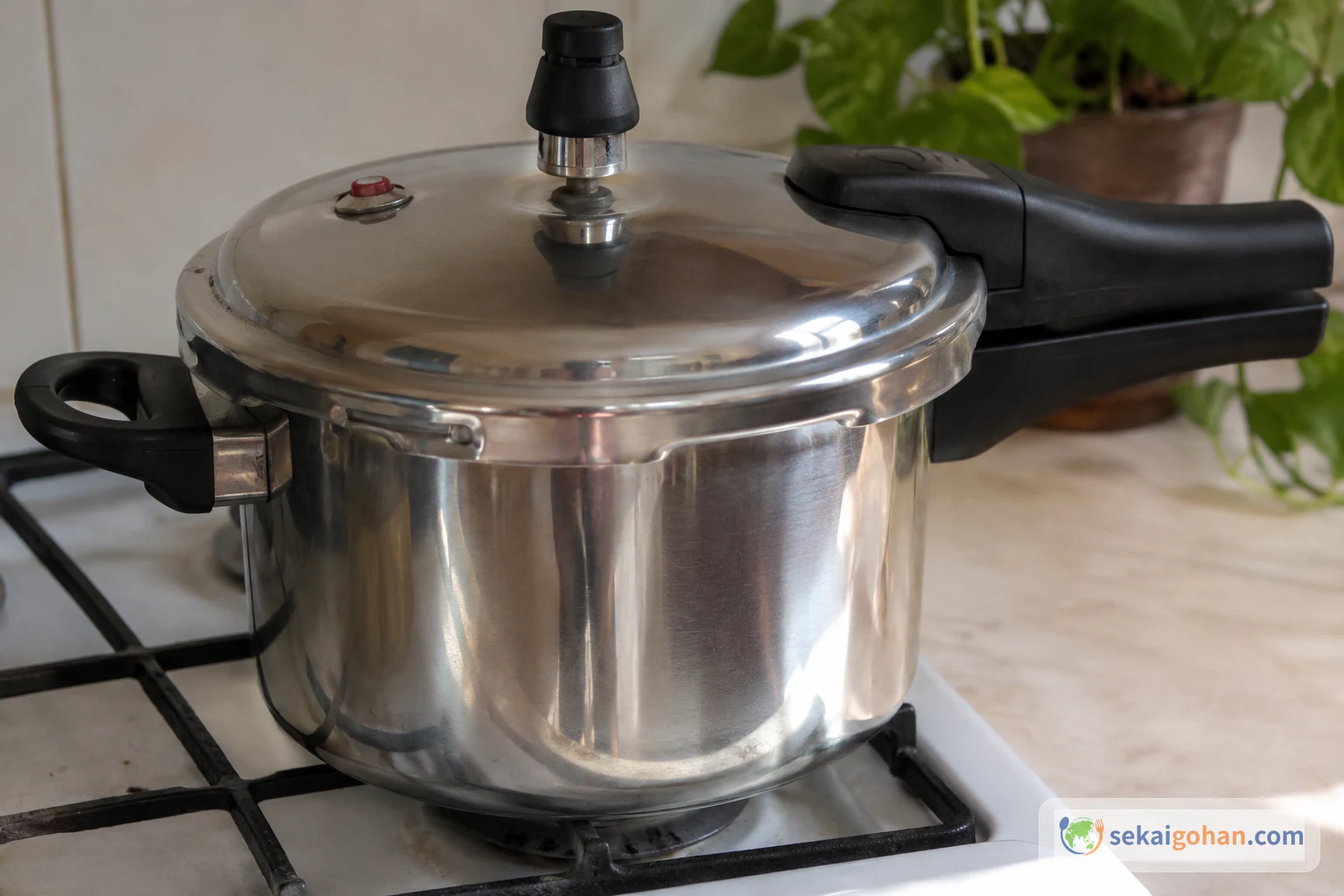
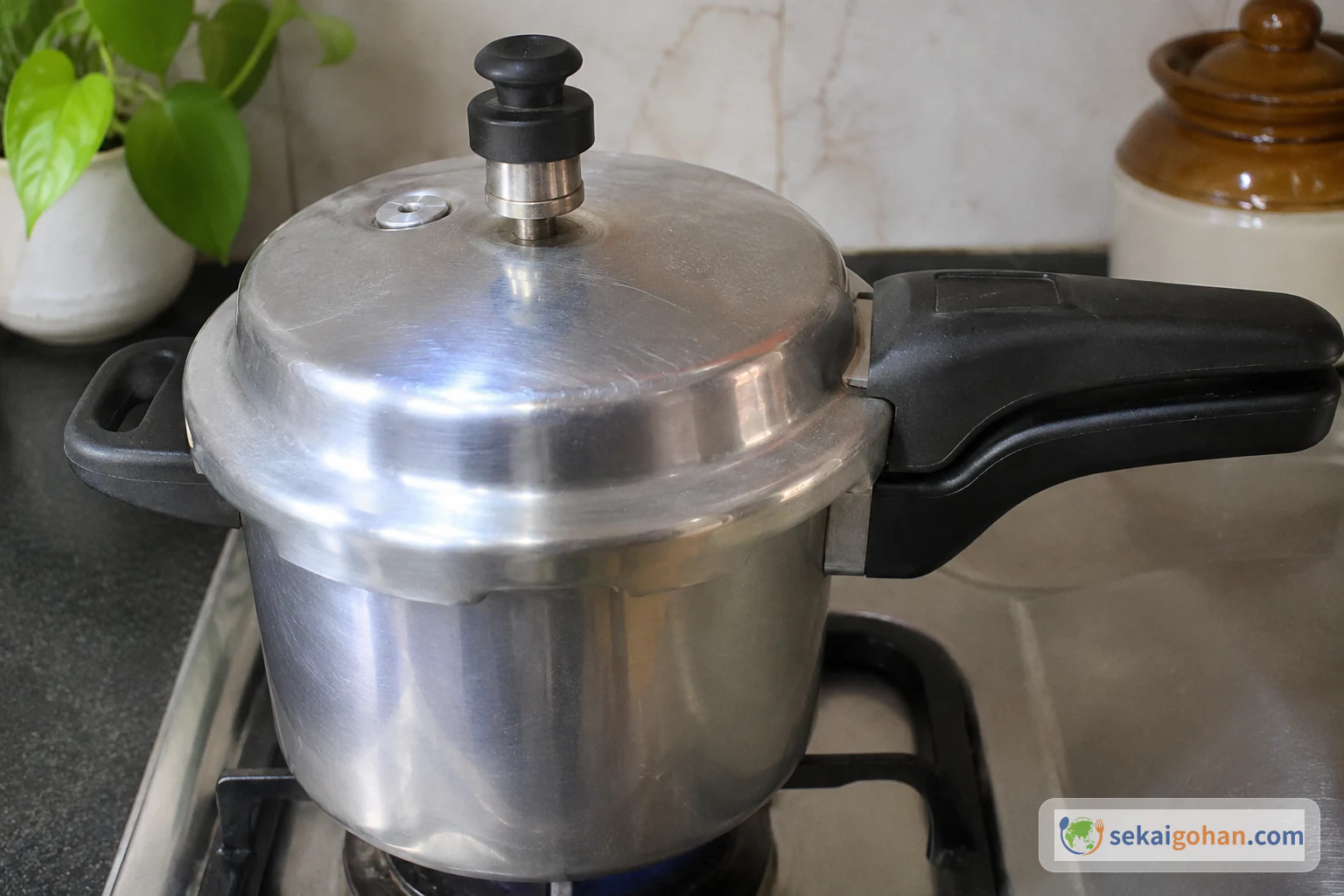
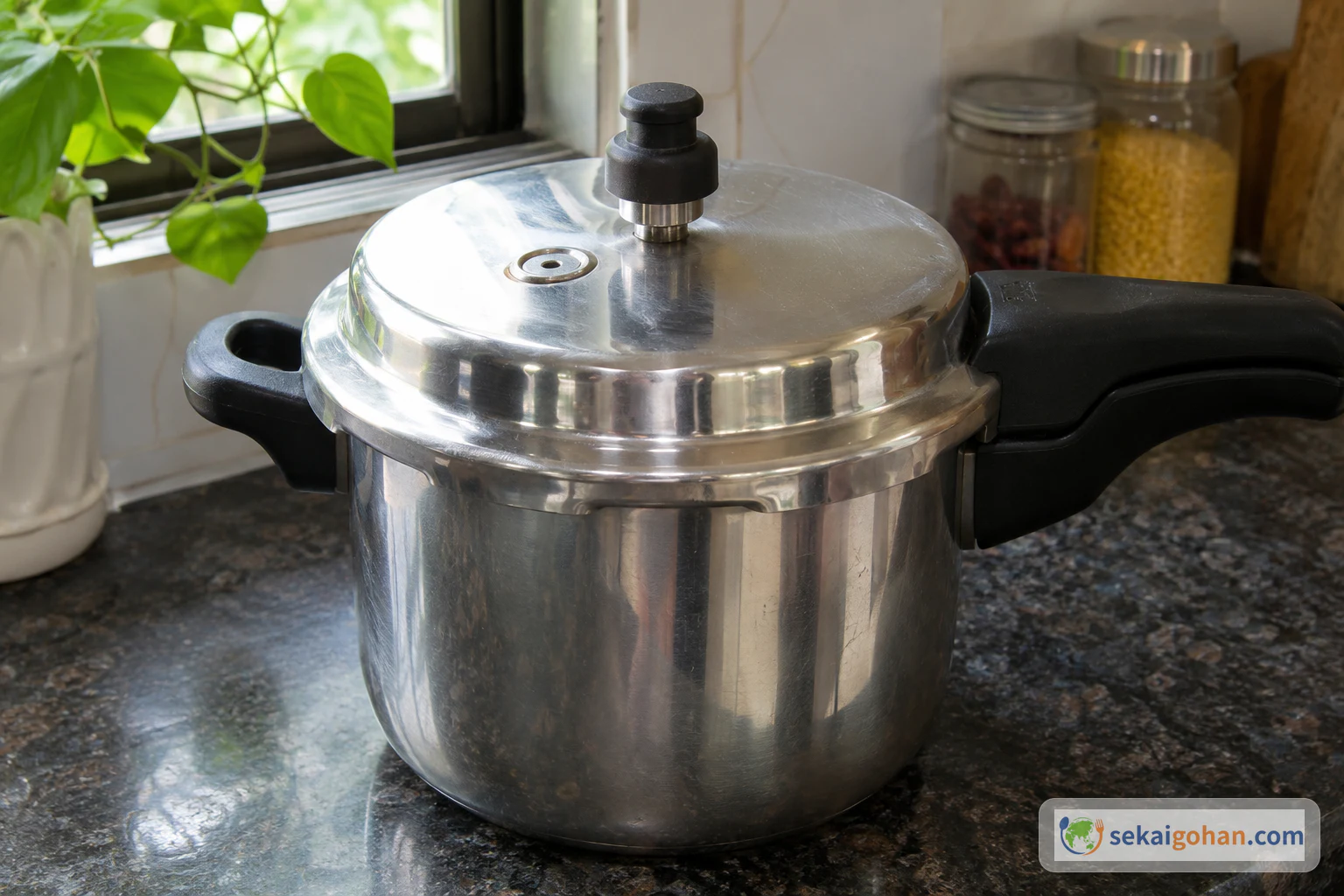
Use a compatible cooker large enough that the beans and water stay within both its manual's limit for beans and one-third of its total capacity. If the batch does not fit, use a larger cooker rather than reducing the water. We cannot give an exact cooker size for your model, and the photos below do not show a measured safe fill. Never force the lid open.

Fixing Problems in the Pot

What you see What to check What to do
Beans and water exceed the fill limit Your manual's limit for beans and one-third of total capacity Use a larger compatible cooker. Do not reduce the water
The lid will not open Whether the pressure has fully dropped Wait and follow the manual. Never force the lid
The center of a bean is still hard Press another bean with a spoon Cook longer as the manual directs, then check again after the pressure drops
The gravy is watery Whether it has simmered long enough uncovered Keep simmering without the lid, and mash a few beans if you like
The gravy is turning into a dry paste Whether the uncovered simmer has gone too far Take it off the heat, and stop the simmer sooner next time
The masala is starting to scorch The heat level during the bhunao Lower the heat and keep stirring

Lobiya recipes differ, so treat each one as a complete method rather than mixing parts of several.

Point of comparison Version used here (Dassana's Veg Recipes of India) Awesome Cuisine version (comparison only)
Beans 1 cup 250g
Soak 30 minutes Overnight, 8–12 hours
Pressure cooking 9–10 minutes or 8–9 whistles, then natural release 2 whistles
Turmeric Added with the ground spices Listed as an ingredient, with no explicit step for adding it

Both are built from dried beans, onion, tomato and pressure cooking, followed by cooking in a masala. Their amounts and cooker conditions differ, so we do not carry any of the Awesome Cuisine figures into this method. Georgian lobio is a separate dish and is not covered here.

Background: What We Can Say About the Dish

The sources used here support the names lobia and rongi, and the description of a Punjabi-style curry of beans with onion, tomato and spices. They do not establish where the dish began, how often it is eaten or how it varies across regions, so we make no claims about those. The family-recipe framing belongs to Dassana's Veg Recipes of India, and it describes that one household version rather than the whole dish.

Frequently Asked Questions

How long does lobiya take?

Dassana's recipe card lists 10 minutes of preparation, 20 minutes of cooking and 30 minutes in total. Those are the site's own figures, not a measured timing of this version, so do not assume they include the 30-minute soak.

Are 9–10 minutes and 8–9 whistles the same?

Not necessarily. Dassana's recipe gives both, but results vary between home kitchens and cookers. Use them only as a guide, follow your manual, and judge doneness by the center of a bean.

What size is the cup, and how much do the beans weigh?

Dassana's recipe does not define the cup volume, the dried weight of the beans or the amount of salt. We have not guessed at them, so this article gives no gram conversions.

Can I use canned beans or soak overnight?

This article does not cover either option. Its method is built around dried beans and a 30-minute soak. An overnight soak belongs to a different recipe with different amounts and cooker conditions, such as the Awesome Cuisine version compared above.

Does the final stir cook the fresh coriander?

We do not claim that it does. The beans and masala are cooked under pressure and then simmered uncovered, while the coriander is a raw herb added at the end. Wash it well under running water and drain it before chopping. Neither the wash nor the stir is presented as a way to sterilize the leaves, and no extra heating step is part of this method.

Can I change the amount of coriander or leave it out?

Dassana's recipe gives a range of 1–2 Tbsp, and this article uses 2 Tbsp. The leaves are an optional finishing herb, so you can leave them off if you prefer.

How long does it keep?

We do not give a storage period. Dassana's advice against storing it is a judgment about flavor and is not a food-safety limit.

Is it allergen-free or especially healthy?

We make no allergen-free, nutrition or health claims for this dish. Check the labels of your own ingredients, including spice blends, if you have an allergy.

Sources