Papadum from Scratch: Grinding the Dal, Pressing the Dough, Frying the Same Day
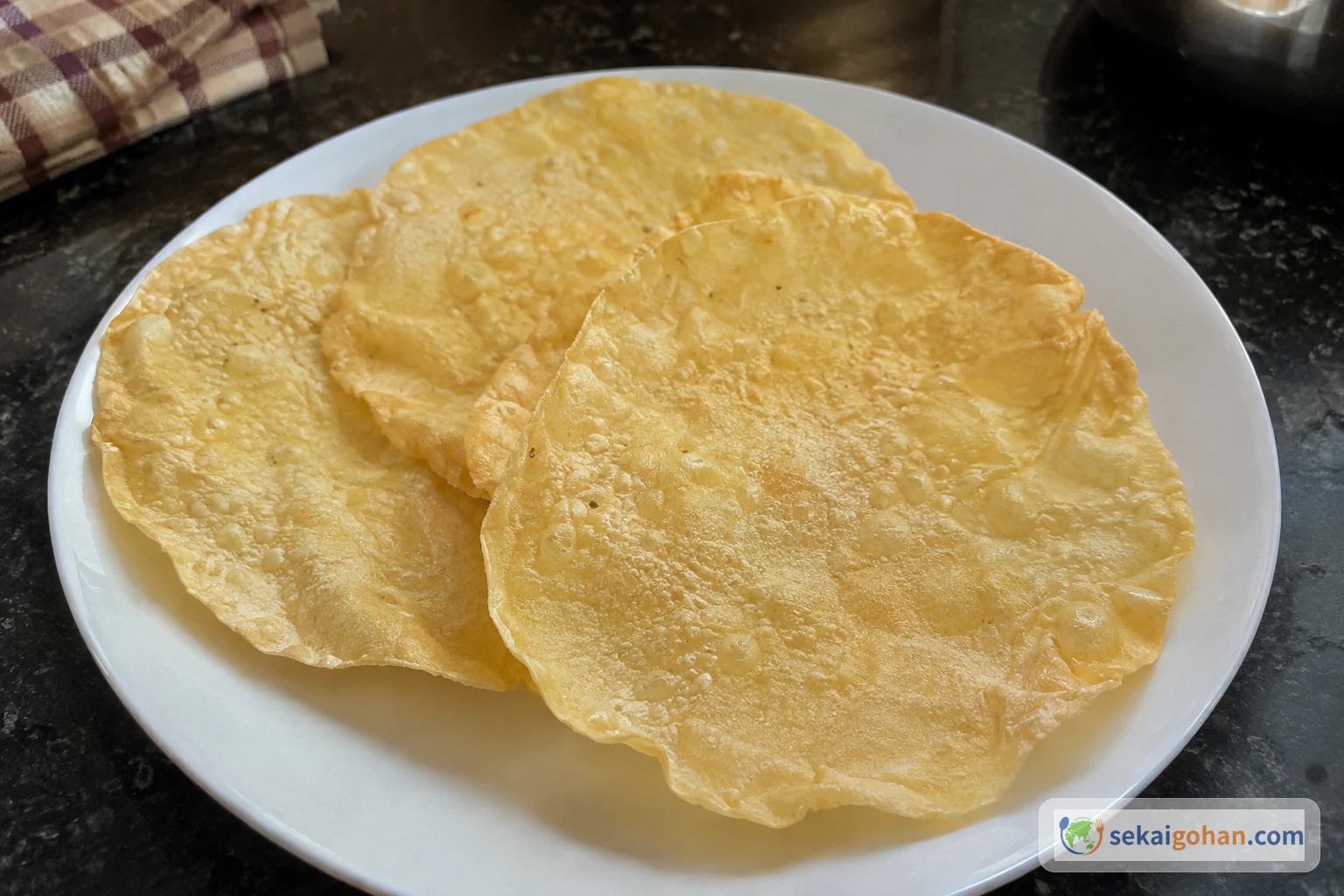
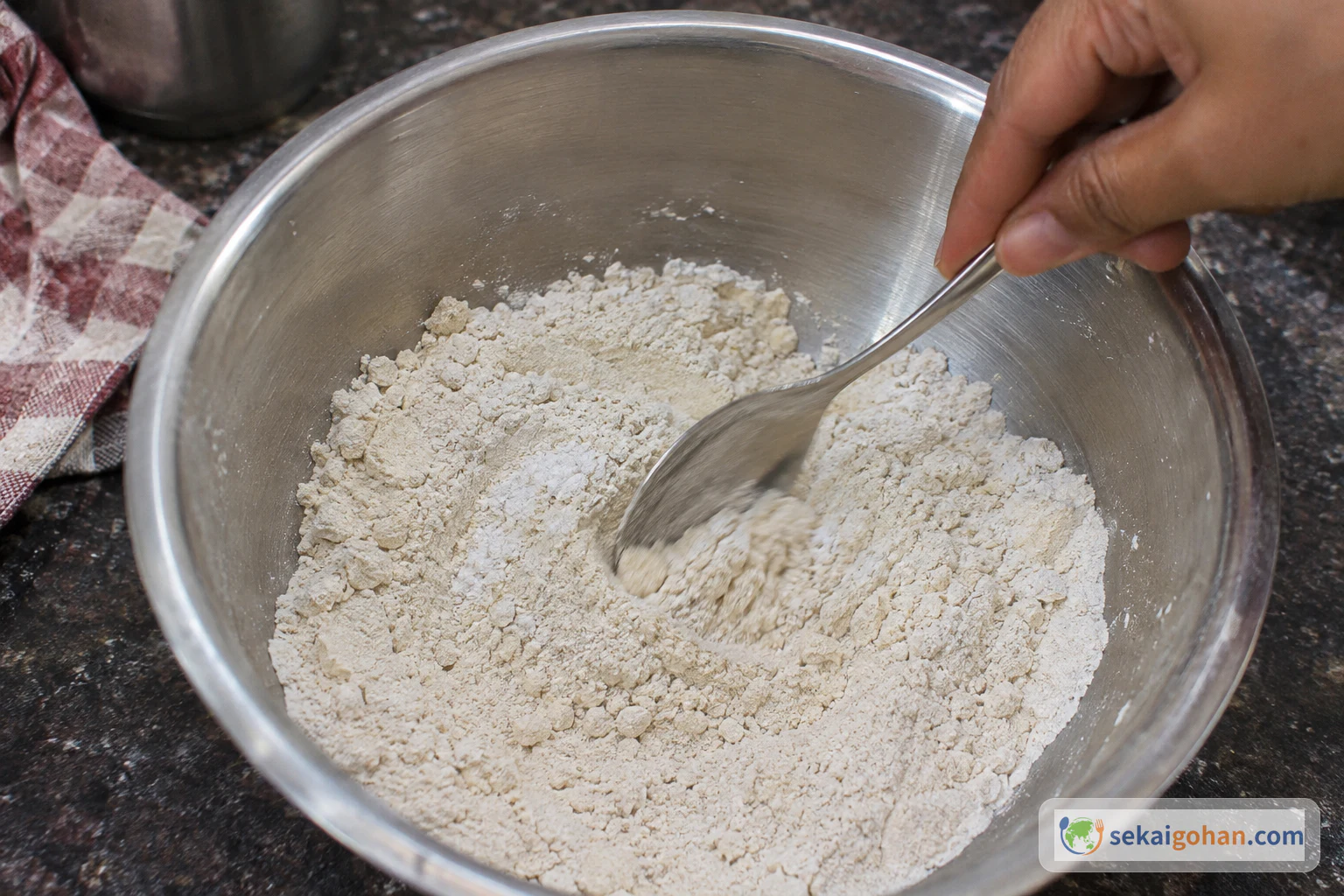
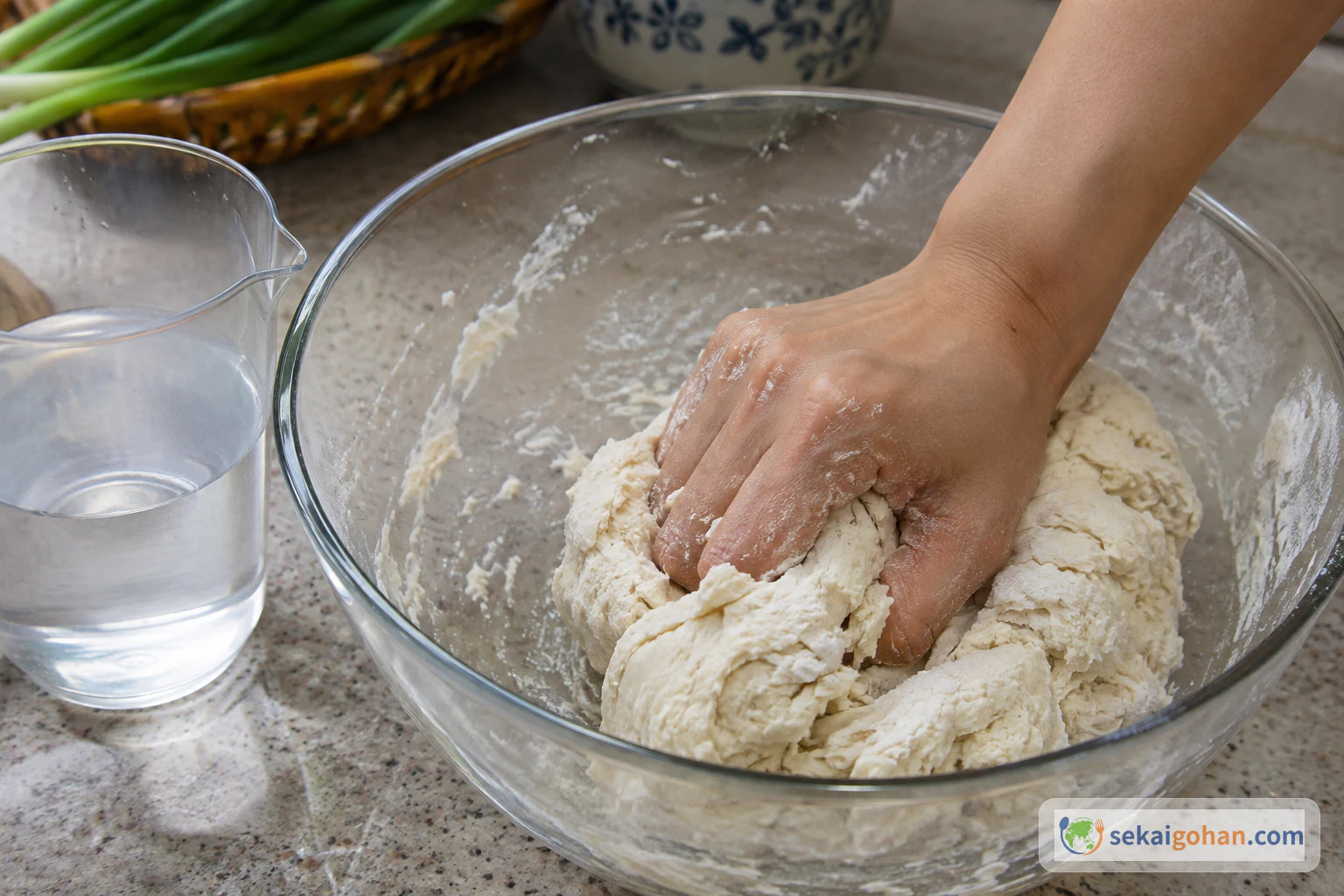
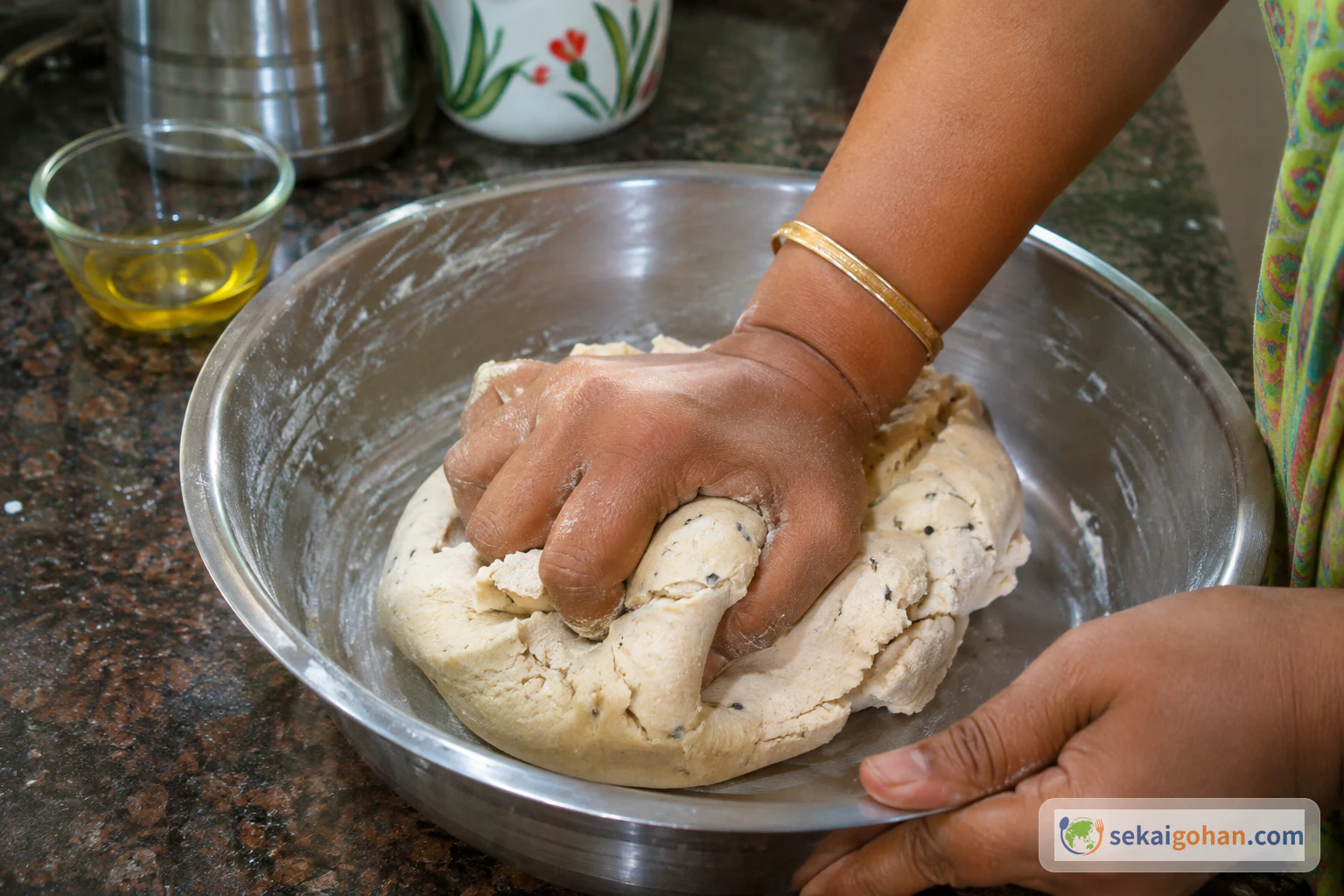
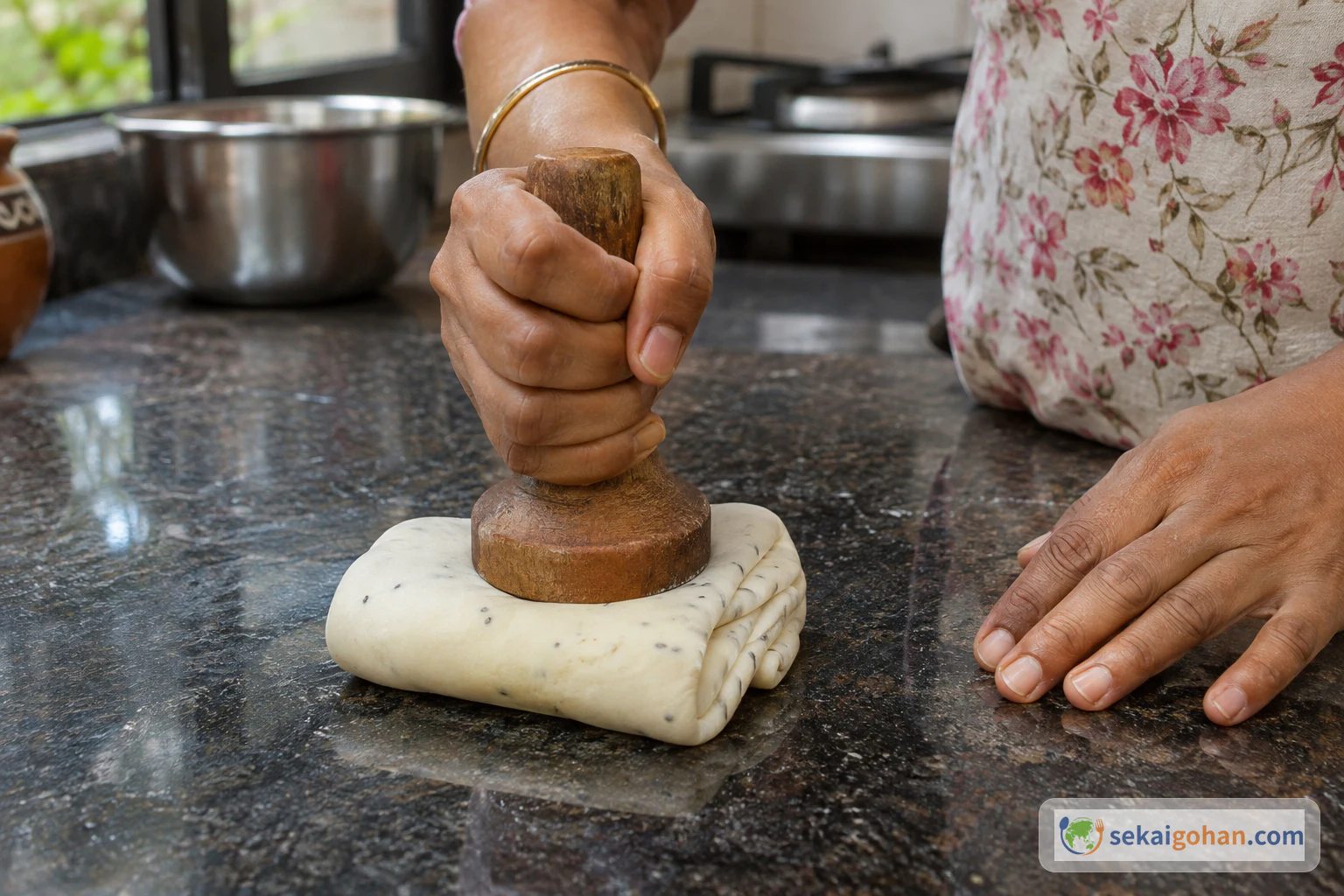
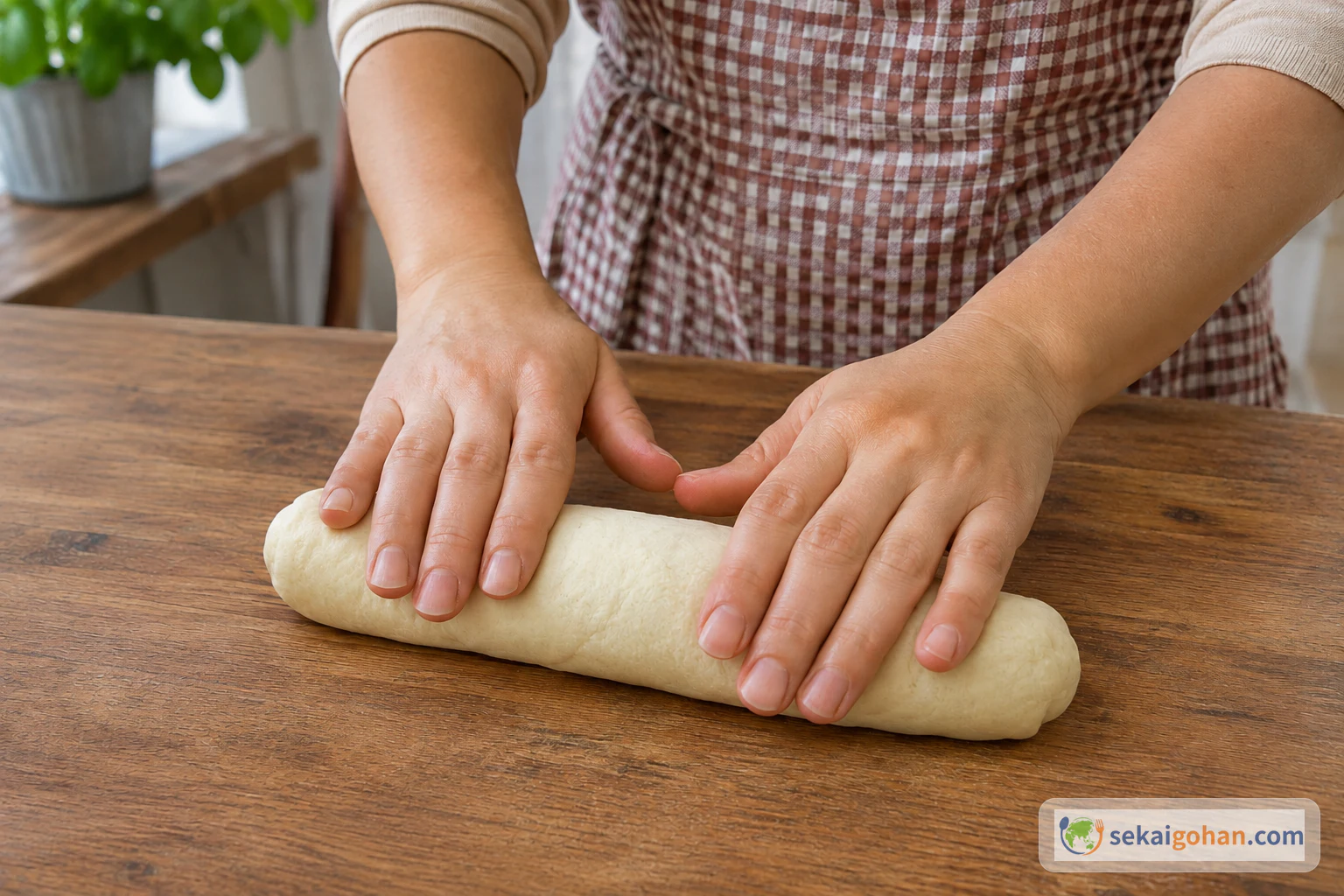
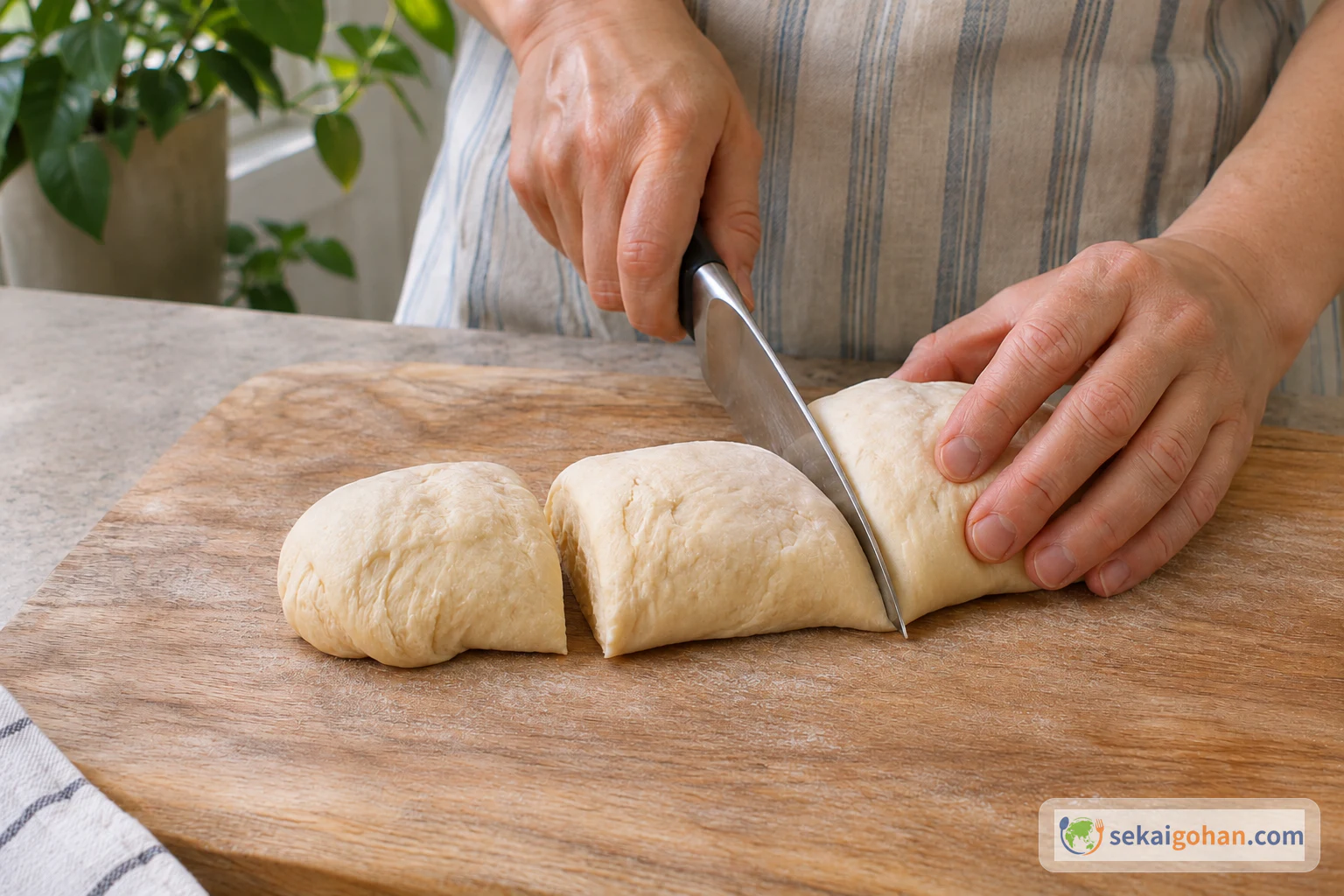
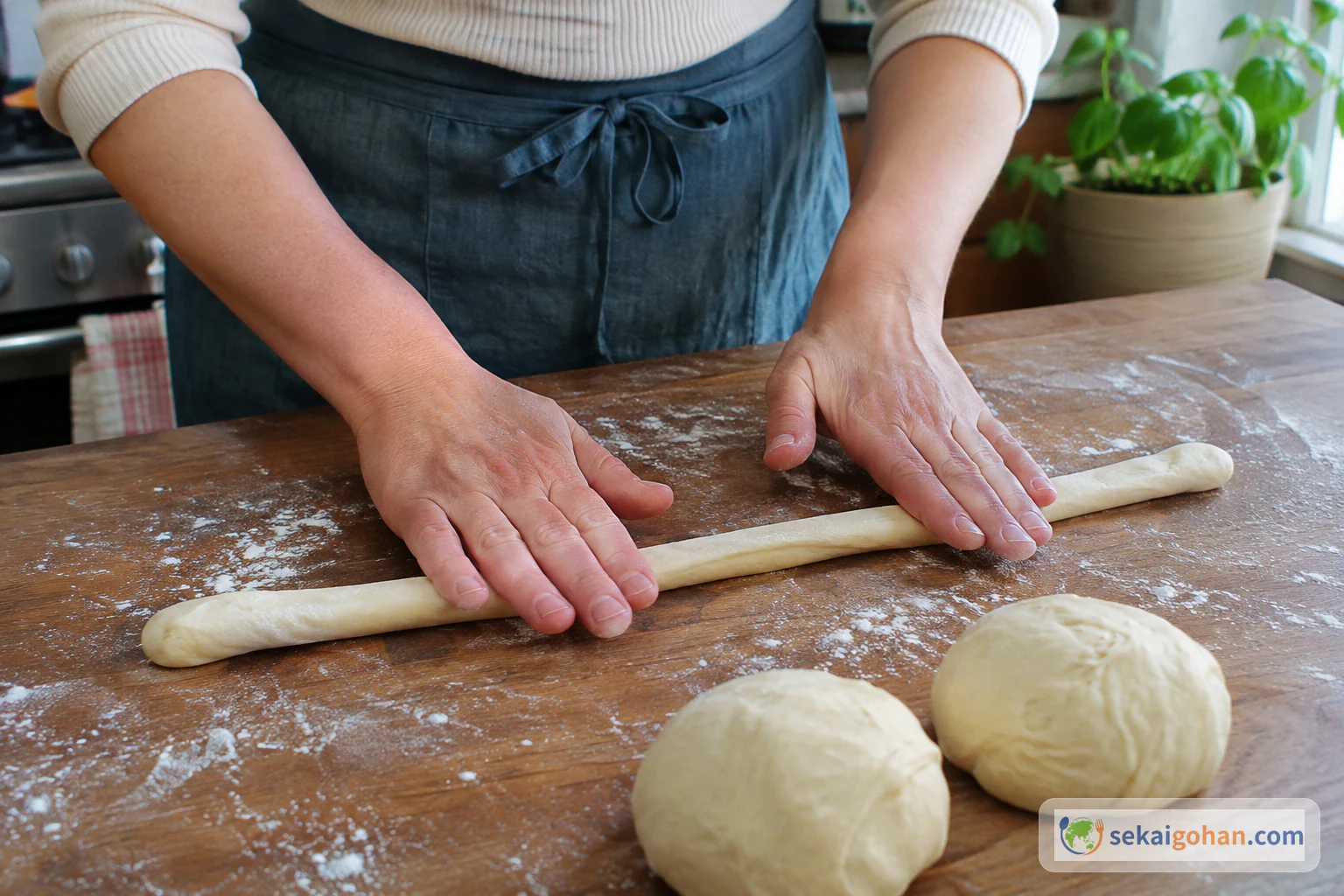
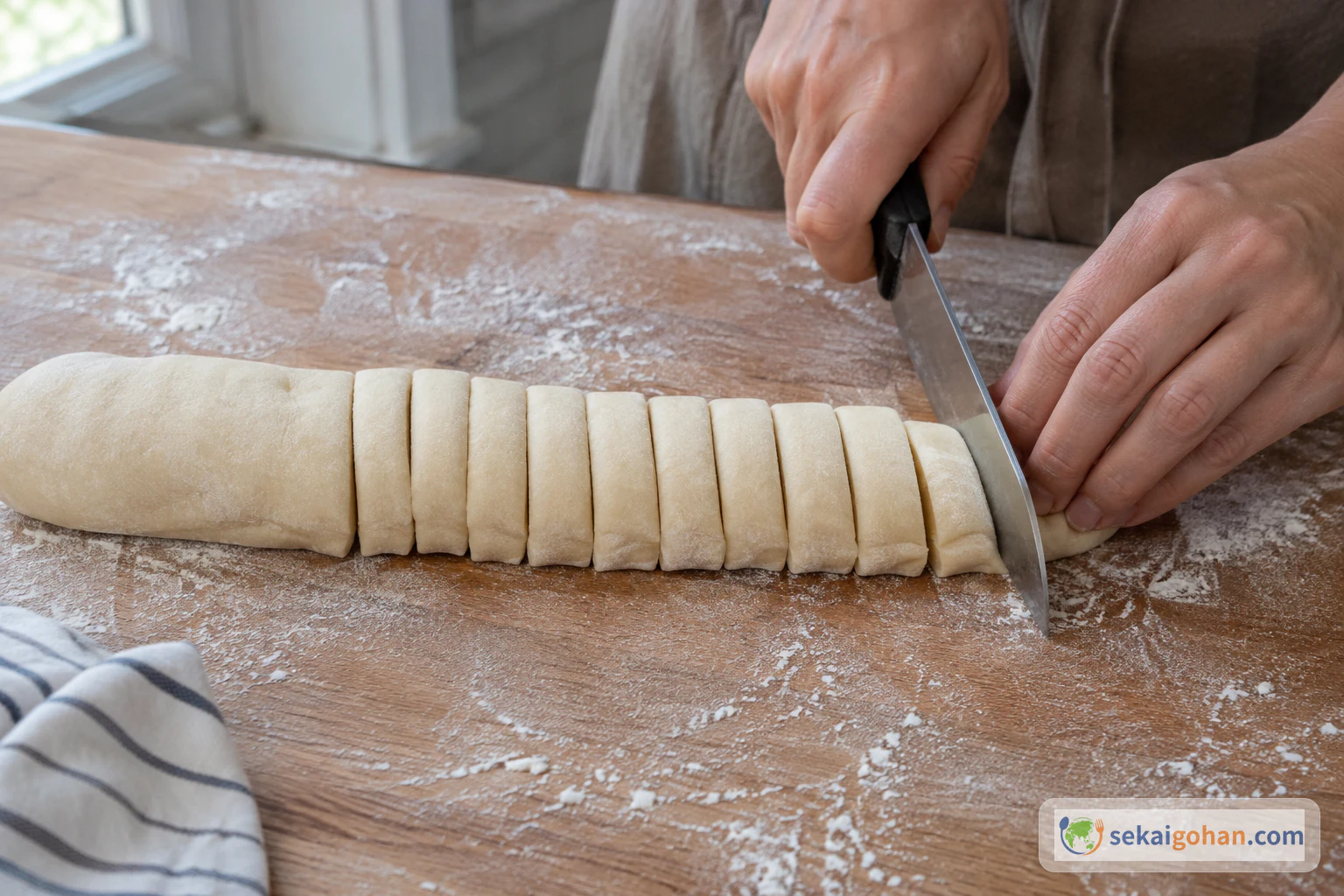
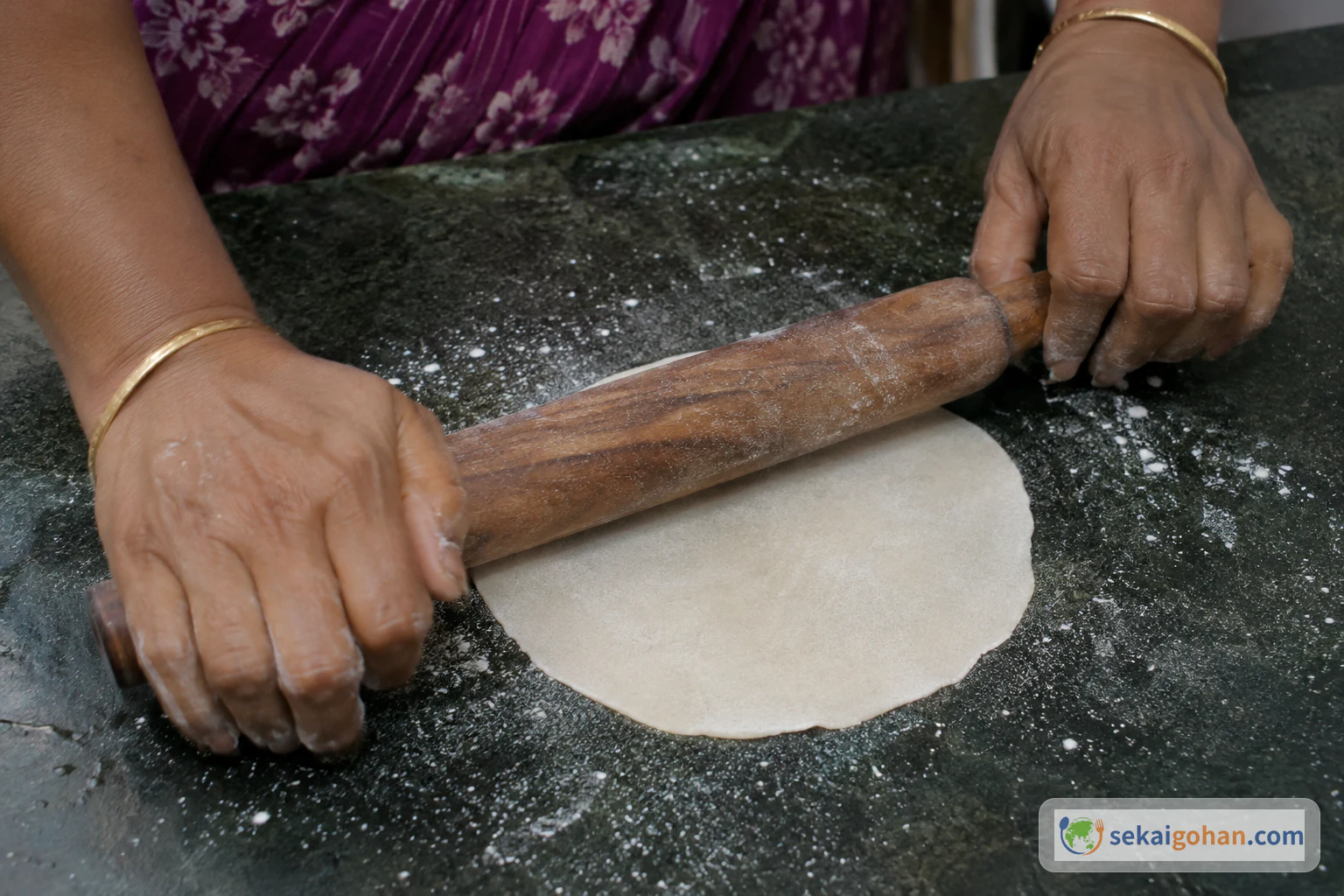
Five ingredients, measured the way the recipe measures them: one cup of whole urad dal before grinding, plus salt, baking soda, sesame oil and water. The dough is pressed and folded with a pestle, shaped into logs, cut, rolled thin, fan-dried briefly and fried in the same cooking session.
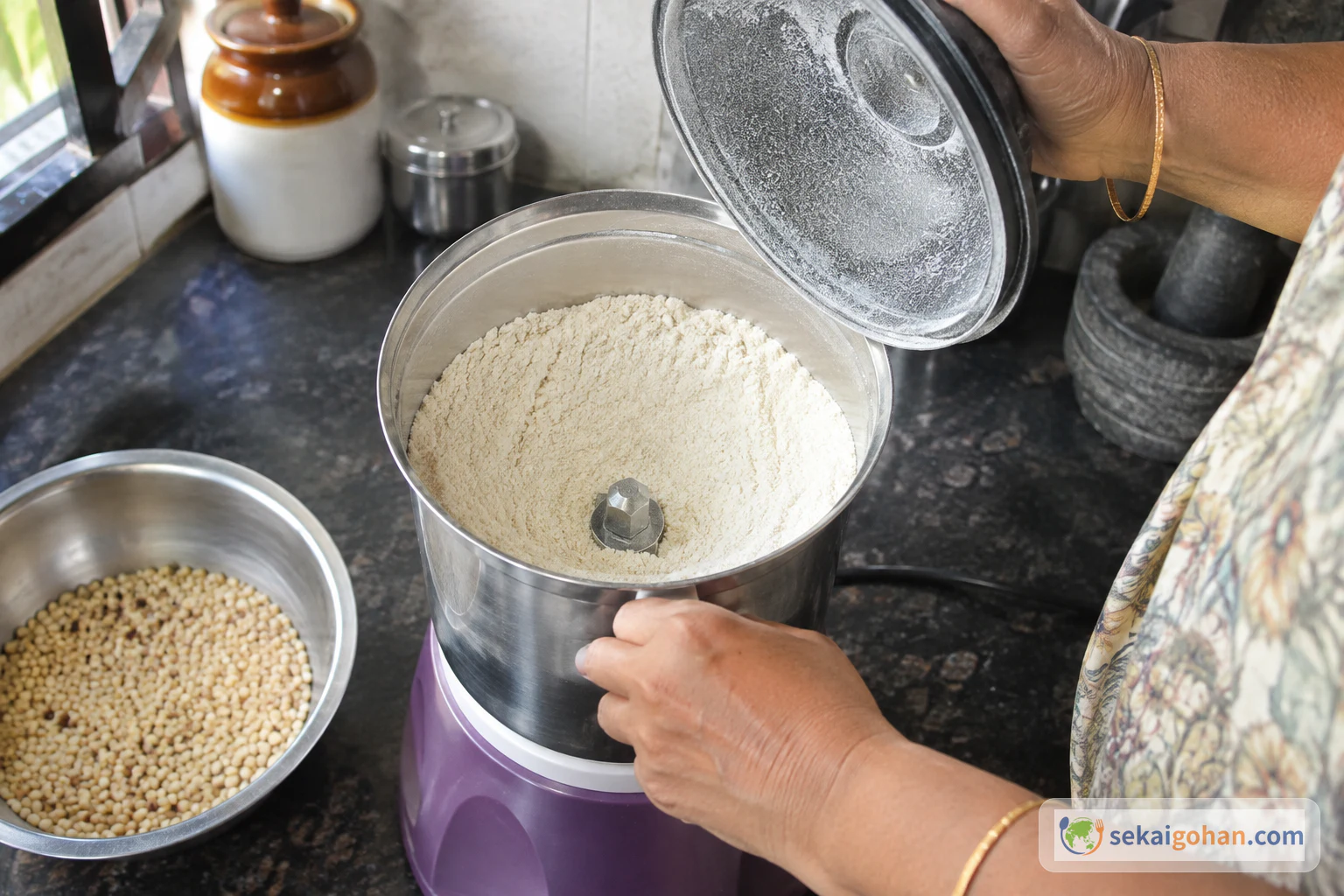
In Onmanorama's recipe by Aiswarya Nambron, published on January 6, 2021, pappadam is framed as part of a Kerala meal. Rather than starting from a pack of ready-made wafers, that version starts with whole urad dal (uzhunnu), ground into flour at home, then worked into a firm dough with salt, baking soda and sesame oil.
This recipe has not been kitchen-tested by Sekai Gohan.
This page follows that one Kerala version. It is one author's home recipe from one region, not a single standard for all of India; papadum is made with different flours and formulations in different places. For more dishes from the country, see the India page.
Onmanorama lists the five dough ingredients and the sequence of steps. A few practical details are choices made on this page and are not part of that recipe:
- Peeled (skinless) whole urad dal. The recipe says whole urad dal; this page chooses the peeled, white form of the whole bean.
- A little extra urad flour for rolling. The recipe mentions a floured surface but does not name the flour or the amount. This page uses a small, unmeasured amount of extra urad flour, separate from the one cup in the dough.
- Ordinary food-grade frying oil. The recipe says to fry in hot oil but does not name the oil type or quantity.
- A fan, not the sun. The recipe allows sun or fan drying; this page uses a fan.
- Fry and serve in the same session. The dried discs go straight into the oil; this page does not include storing uncooked discs.
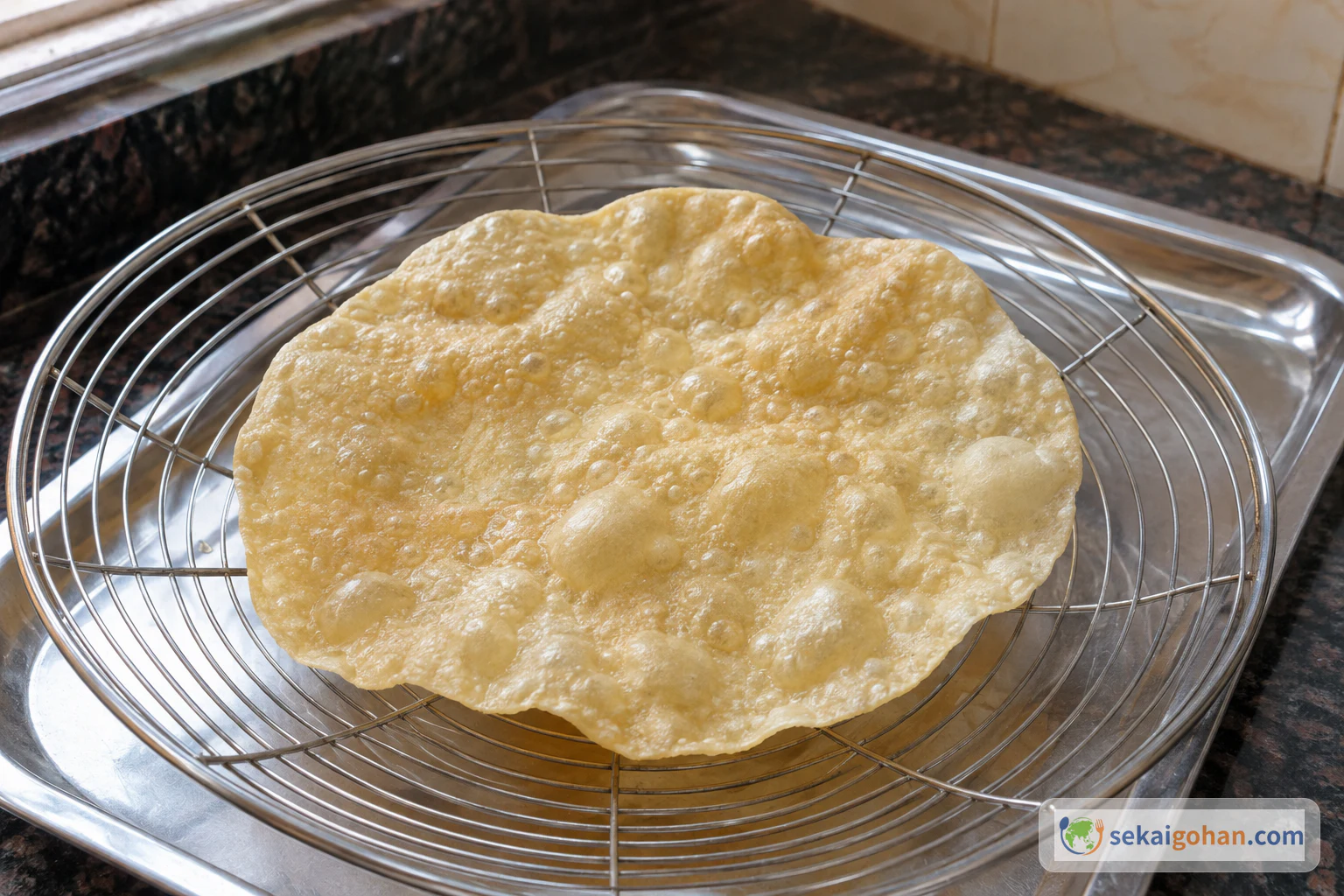
- A wire rack for draining. This is an ordinary finishing aid chosen here.
Onmanorama does not give a frying temperature, a frying time, a finished disc size or thickness, or the number of pappadams the batch makes. Those are left unstated here too, rather than filled in with guessed numbers.
Ingredients: Five Items, Measured in Cups and Teaspoons
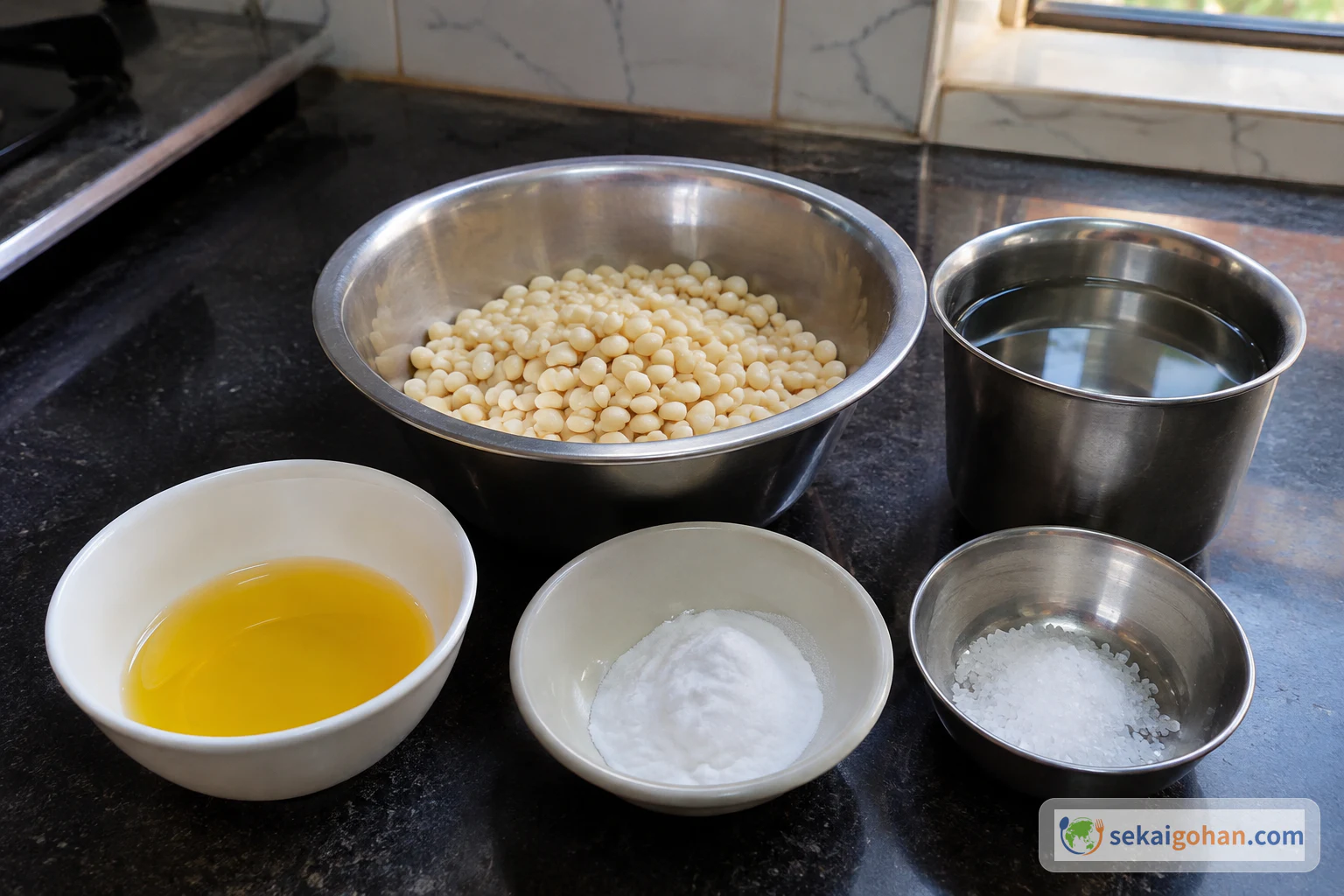
Choosing and Substituting
- Measure the dal whole. The one cup is whole beans before grinding, not one cup of flour. Don't swap in a cup of ready-ground flour and assume it is the same amount.
- Stay with urad. This recipe is built on urad dal; chickpea flour and other flours make a different papadum and are not covered here.
- Use food-grade baking soda. Don't replace it with sodium carbonate or papadkhar; this page covers baking soda only.
- No roasting. Grind the dal as it is.
- Check labels. For allergens and production statements, look at the labels of the actual products you buy.
Equipment
- Grinder that can mill dry dal to a fine powder
- Mixing bowl and spoon
- Measuring cup and measuring spoons
- Wooden pestle and a clean, sturdy work surface
- Knife
- Rolling pin
- Parchment paper
- Household fan with a guard
- Stable deep pan suited to deep-frying (or a fryer)
- Long slotted utensil
- Wire draining rack set over a tray
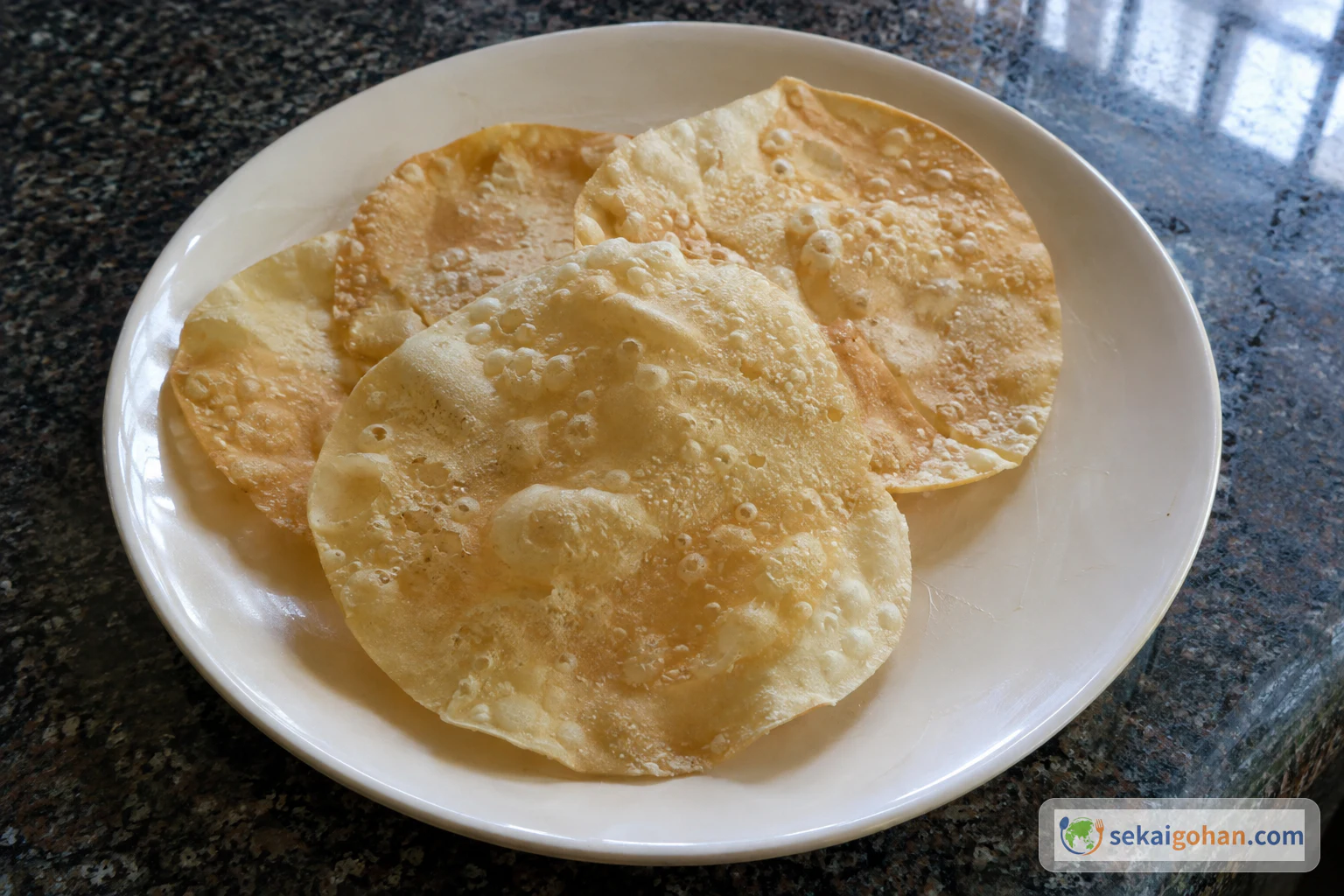
- Serving plate
Method: From Whole Dal to Fried Pappadam
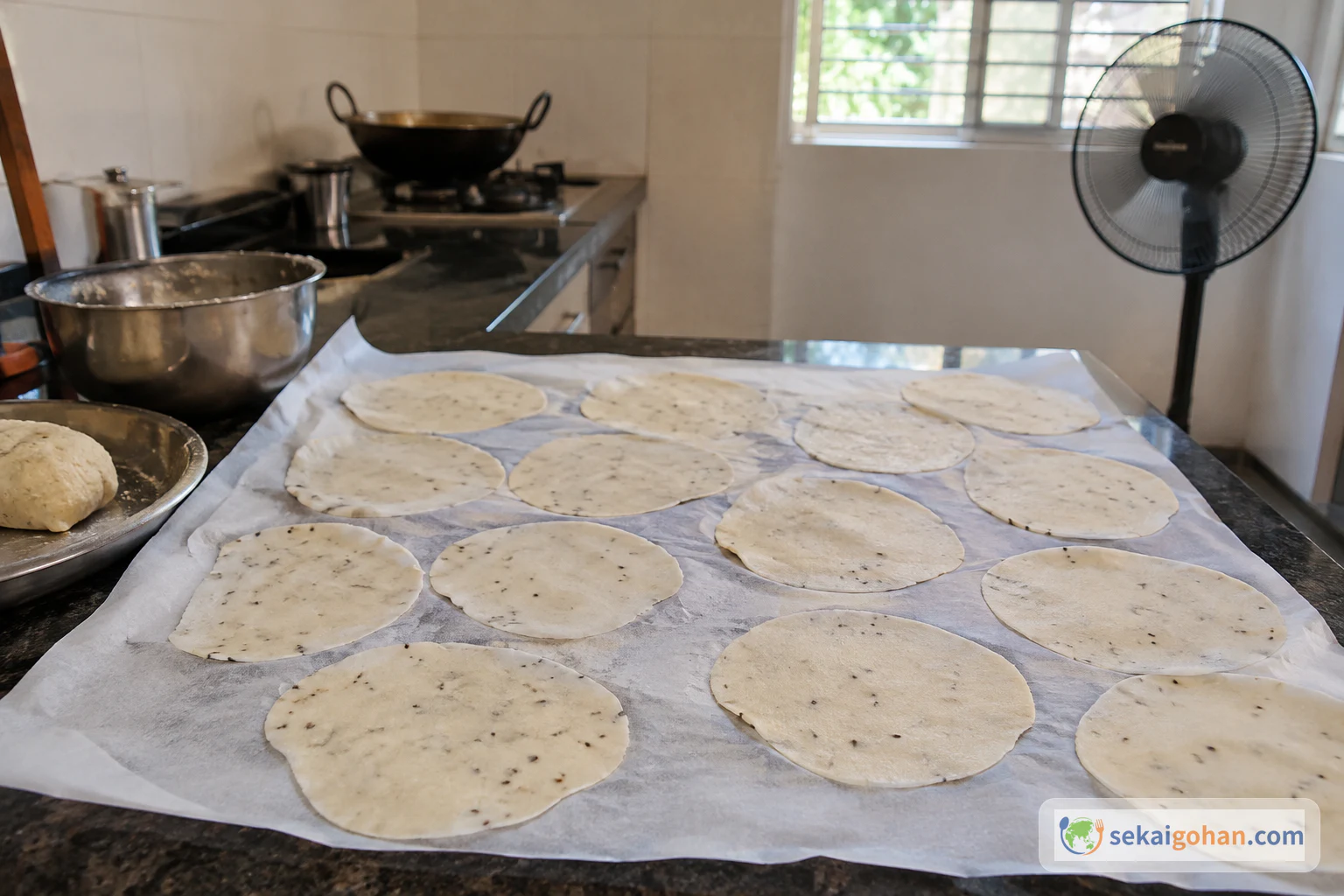
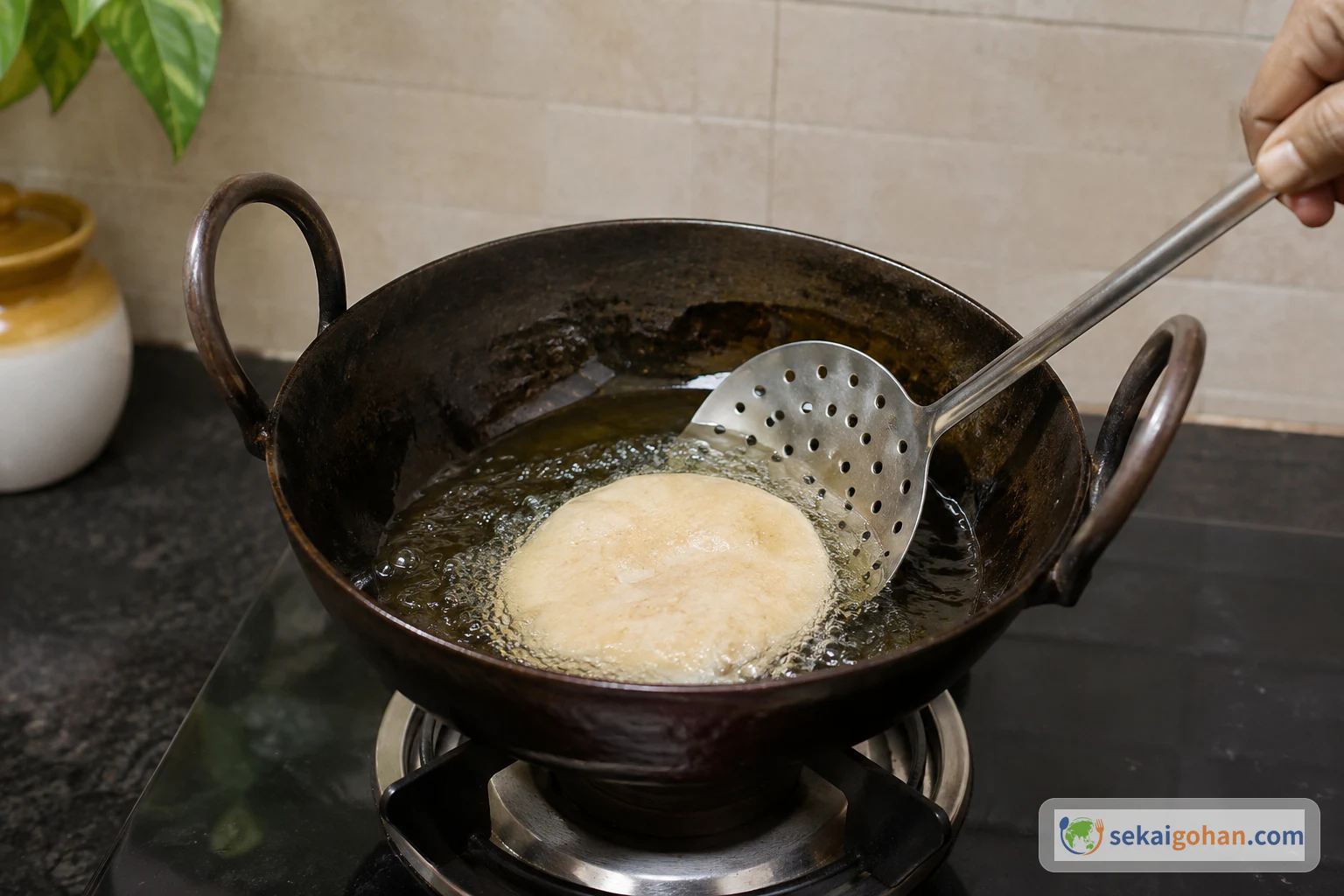
Make the dough, shape it, fan-dry the discs for 10–15 minutes, then fry them straight away. Plan to finish the whole batch in one cooking session.
Reproducing It: What Is Fixed, and What Is Left Open
The recipe is short, so it helps to know which points are firm and which are not stated at all.
| Question | What to do |
|---|---|
| How much dal? | One cup of whole dal, measured before grinding. Don't convert it to a cup of flour. |
| How firm should the dough be? | Slightly stiffer than chapati dough, after adding the water gradually. Onmanorama describes this, and the softness after pounding, in words only, with no measurement. |
| How many times to pound? | Press and fold 10–12 times with the pestle. |
| What does "1/2 inch" refer to? | The width of the pieces cut from each long log, not the diameter of the finished disc. |
| How big and how thin should the discs be? | Roll them thin and round. No diameter or thickness is given. |
| How long to dry? | 10–15 minutes under a fan, then fry in the same session. This short drying is not a way to make the discs keep. |
| What oil temperature and frying time? | Neither is given. Fry in hot oil, follow your pan's or appliance's instructions for oil amount and setting, and stay with it. |
| How many will it make? | The yield is not stated. |
Variations: Other Ways Papadum Is Made
The recipe on this page is one Kerala home version. Other sources show how widely papadum varies; they are listed here for comparison and are not mixed into the amounts or steps above.
- Starting from ready urad flour. Sailaja Kitchen's Kerala pappadam recipe starts from urad flour, uses all-purpose flour for rolling, adds water as needed and sun-dries the discs briefly before deep-frying. Its proportions and yield are its own.
- A smaller batch, worked in batches. Your Everyday Cook's Kerala pappadam can start from whole urad dal or fine urad flour, treats the water amount as approximate, and uses a stretch, fold and pound kneading. That author advises working in batches because dough with baking soda shouldn't sit long.
- Other flours and regional formulations. A NIFTEM project report on urad dal papad production describes papadum as a seasoned dough often made from peeled black gram (urad) flour, and notes that other flours and regional formulations exist.
- Fried or toasted. The Tamil Nadu Agricultural University describes papad, appalam and papadam as a thin wafer eaten toasted or fried, and NIFTEM's report notes it may be fried or roasted. This page covers frying only.
Pappadam at the Kerala Table
Onmanorama presents pappadam as part of a Kerala meal: a thin, plain wafer made from urad dal that sits alongside the rest of the food. NIFTEM's report describes papad more broadly as something eaten as a side or appetizer.
The names vary too. Papad, appalam, papadam and pappadam all appear in the sources above for this kind of thin wafer. This page uses "papadum" as the general name and "pappadam" for the Kerala version it follows. The origins of the dish and its history across regions are beyond what these sources establish, so they are not covered here.
Frequently Asked Questions
Can I use one cup of ready-made urad flour instead?
Not as a direct swap. Onmanorama's one cup is whole urad dal measured before grinding, and this page keeps that basis. Recipes that start from ready flour, such as Sailaja Kitchen's, use their own proportions, so follow one recipe at a time rather than mixing them.
Can I dry the discs and store them to fry later?
This recipe covers frying the discs in the same cooking session, right after the 10–15 minute fan-dry. The short drying time is not a preservation step, and this recipe provides no instructions for storing uncooked discs.
What oil temperature and frying time should I use?
Onmanorama says only to fry in hot oil, with no temperature or time, and this page does not add numbers. For safety, NITE, Japan's product safety agency, gives general advice for frying with cooking equipment: use a pan suited to the appliance, the amount of oil its instructions require and the correct frying setting where there is one, and don't leave heated cooking equipment unattended; stop heating before you walk away. That is general equipment advice, not a tested method for this recipe.
Can I taste the dough, or eat a disc that isn't fully fried?
No. The dough and the dried discs are raw. Eat pappadam only after frying.
Why peeled whole urad dal?
Onmanorama calls for whole urad dal. This page chooses the peeled, white form of the whole bean as its product choice; the recipe itself does not say "peeled."
What flour should I use for rolling?
Onmanorama mentions a floured surface without saying which flour or how much. This page uses a small amount of extra urad flour, so the dusting matches the dough. Sailaja Kitchen's separate recipe uses all-purpose flour for rolling.
How many pappadams does this make?
The yield is not stated, and the finished size depends on how thin you roll each piece, so this page gives no count.
Sources
- Aiswarya Nambron, "Kerala pappadam," Onmanorama, published January 6, 2021. The recipe followed on this page: whole urad dal measured before grinding, baking soda, salt, sesame oil and water; mixing, kneading, pressing and folding with a pestle 10–12 times, shaping, cutting into 1/2-inch pieces, rolling thin, drying 10–15 minutes and frying in hot oil; pappadam as part of a Kerala meal. Its storage suggestion for uncooked discs is not adopted. https://www.onmanorama.com/food/recipe/2021/01/05/kerala-pappadam.html
- Sailaja Damodaran, "Pappadam Recipe / How To Make Kerala Pappadam at Home," Sailaja Kitchen. An independent Kerala home recipe used for comparison only. https://www.sailajakitchen.org/2020/10/pappadam-recipe-how-to-make-kerala.html
- Radha Natarajan, "Kerala Pappadam," Your Everyday Cook. An independent Kerala home recipe used for comparison only, including its advice to work in batches. https://www.youreverydaycook.com/blog/kerala-pappadam
- Tamil Nadu Agricultural University, "Preparation of Papad," Post Harvest Technology portal. Papad, appalam and papadam described as a thin wafer eaten toasted or fried; its process is not used in this recipe. https://agritech.tnau.ac.in/postharvest/pht_pulses_valueaddition_valueaddedproduct_preparation%20of%20papad.html
- National Institute of Food Technology Entrepreneurship and Management (NIFTEM), "PM FME Detailed Project Report of Urad Dal Papad Making Unit." Papadum as a seasoned dough often made from peeled black gram flour, other flours and regional formulations, and its role as a side or appetizer, fried or roasted. https://niftem.ac.in/newsite/pmfme/wp-content/uploads/2022/07/uraddpr.pdf
- NITE (National Institute of Technology and Evaluation), "Product Safety Information Magazine Vol. 462: Accidents with Cooking Appliances" (in Japanese). General frying-equipment safety: compatible pans, the oil amount required by the instructions, the correct frying setting, and not leaving heated equipment unattended. https://www.nite.go.jp/jiko/chuikanki/mailmagazin/2024fy/vol462_241008.html