Panjeeri: Flour Roasted in Ghee Until Light Brown
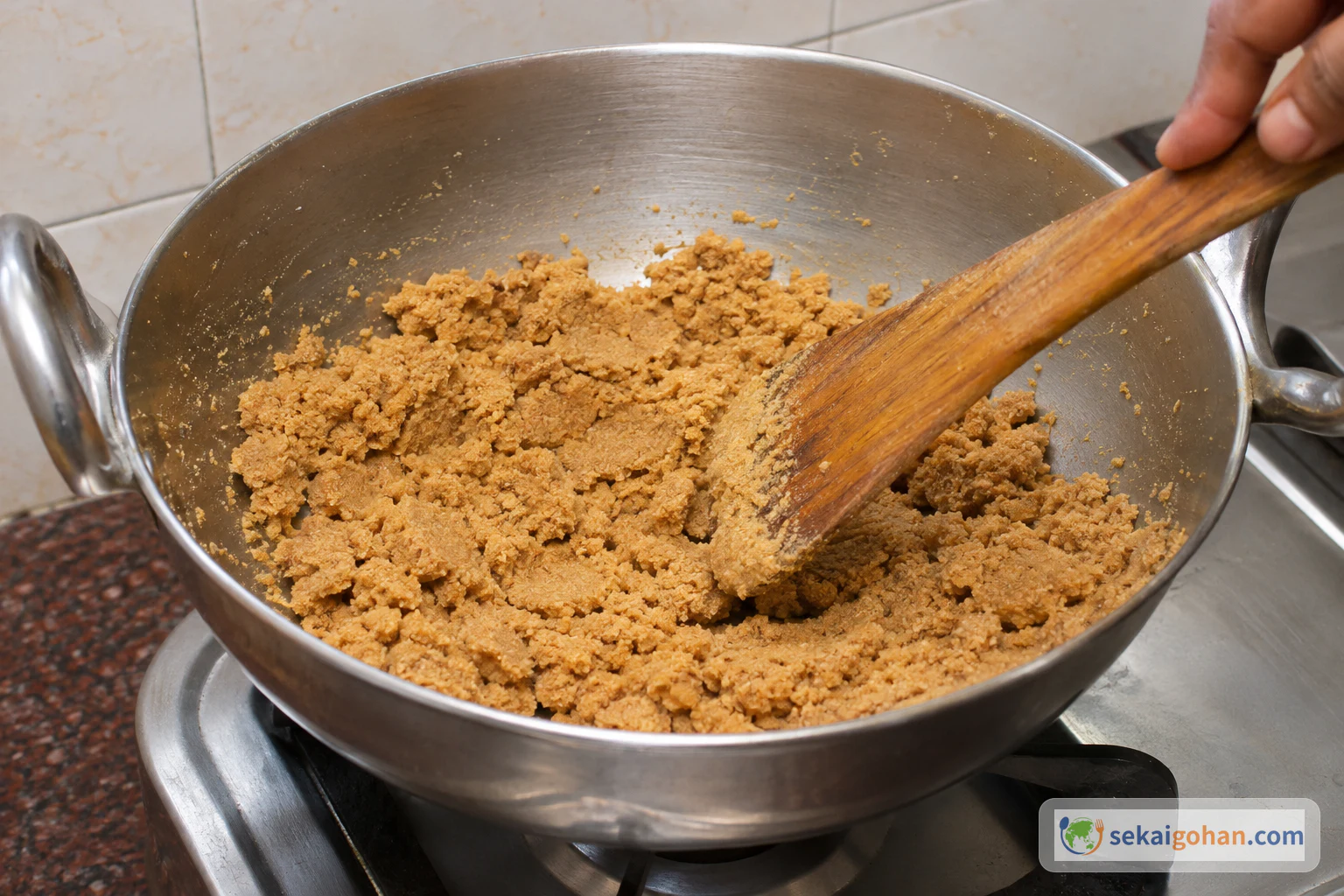
Roast the flour in ghee over medium heat until light brown; stop before it turns bitter. Let the sugar keep its crystals, and keep the mix loose and crumbly rather than pressing it into shapes.
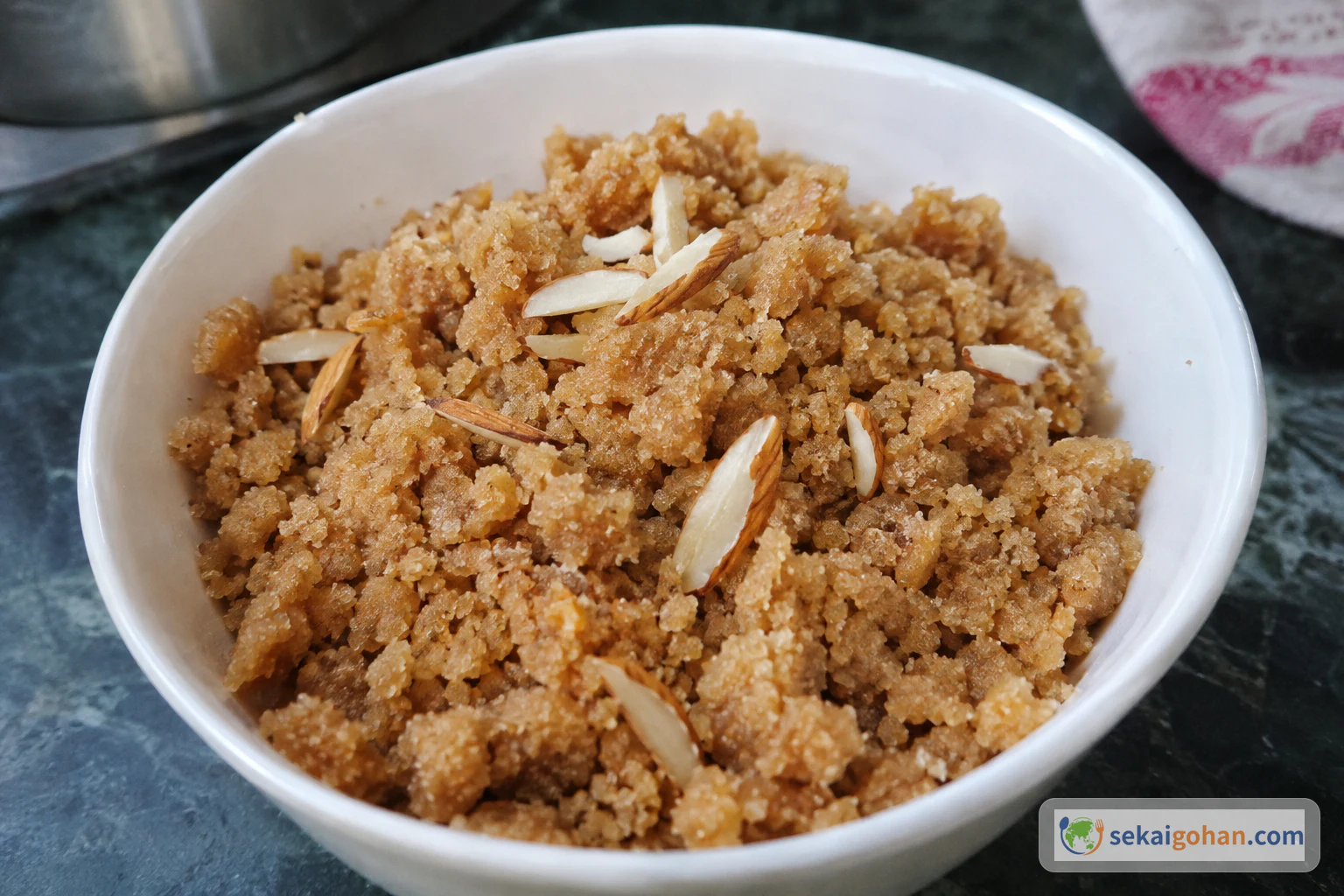
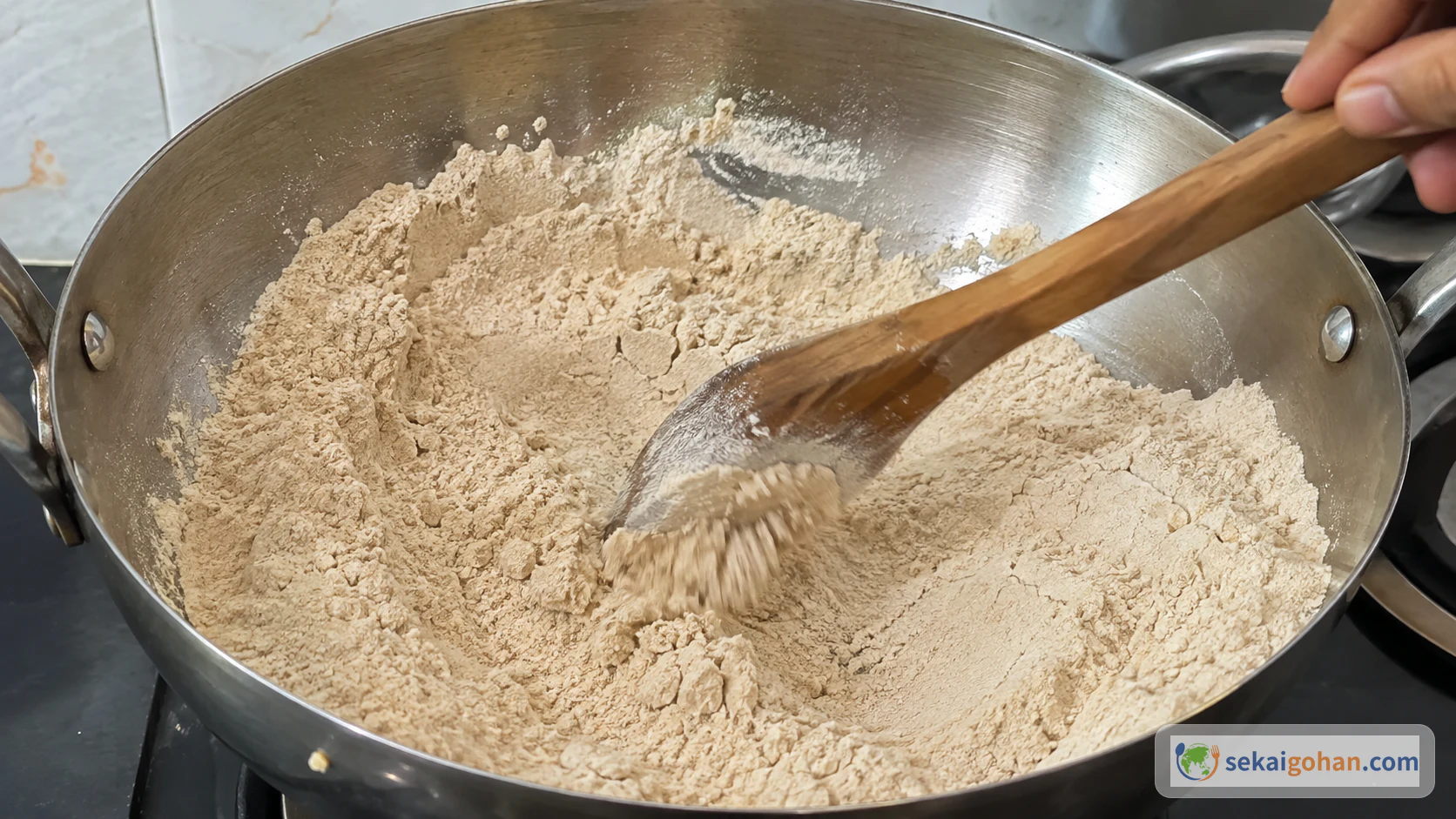
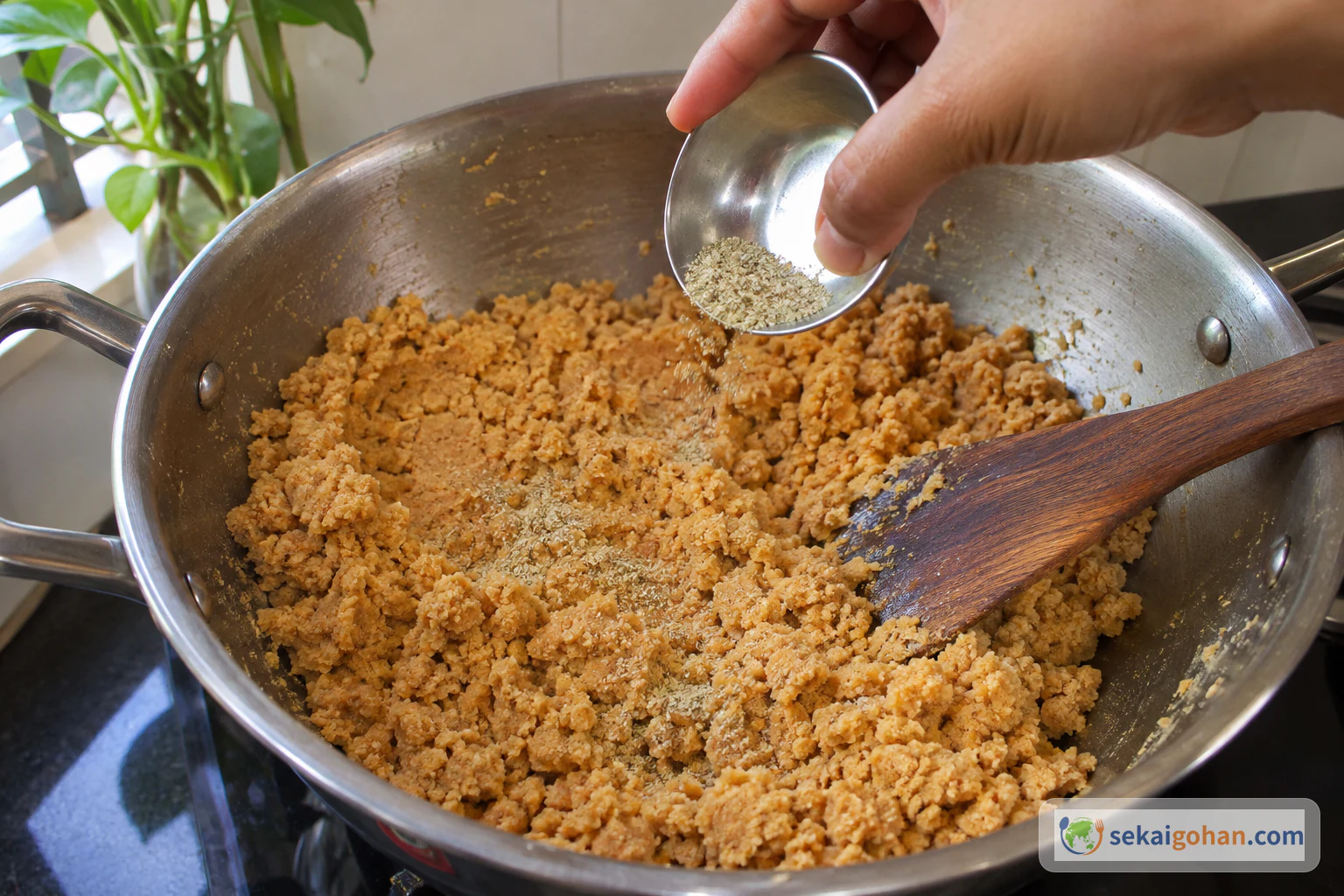
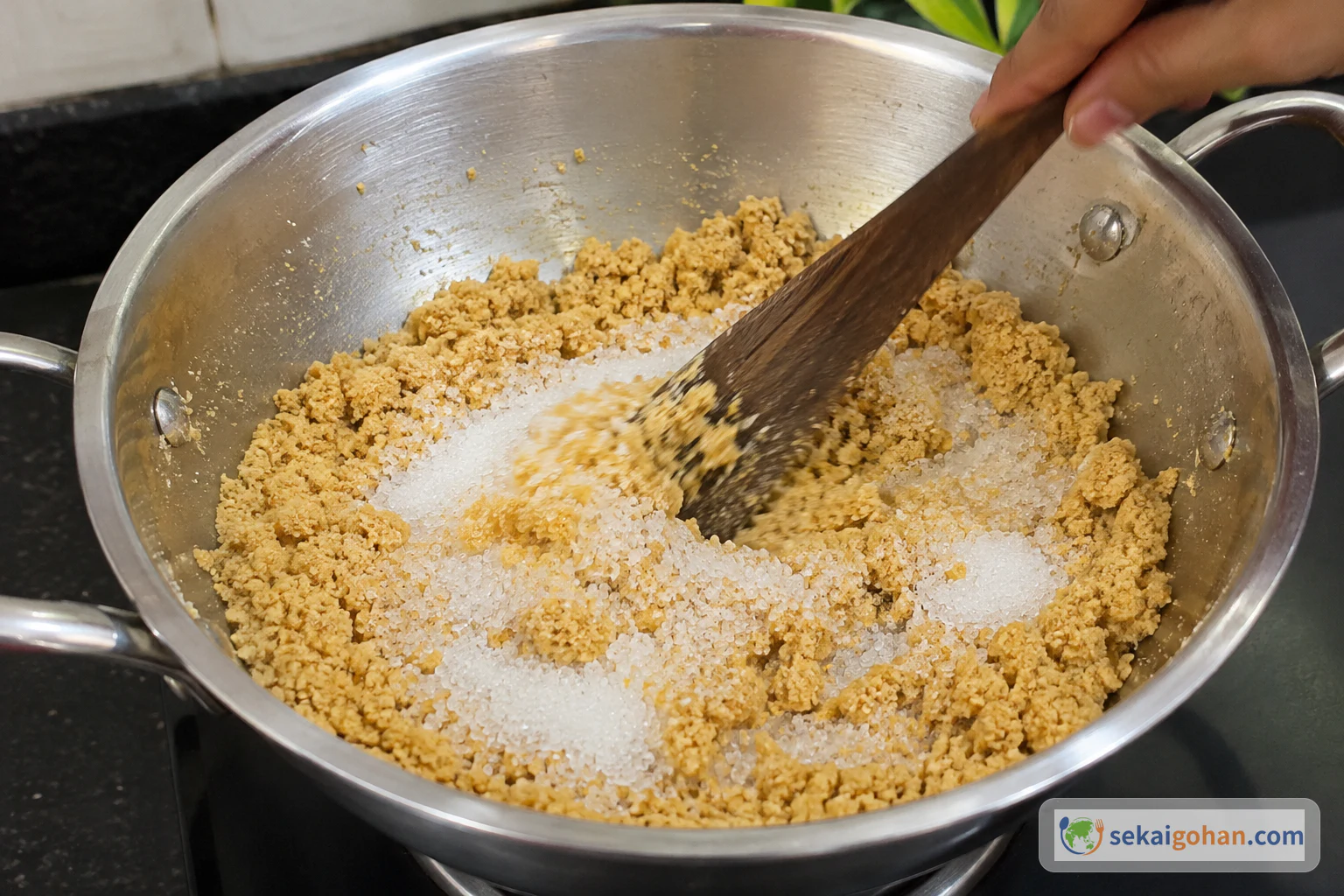
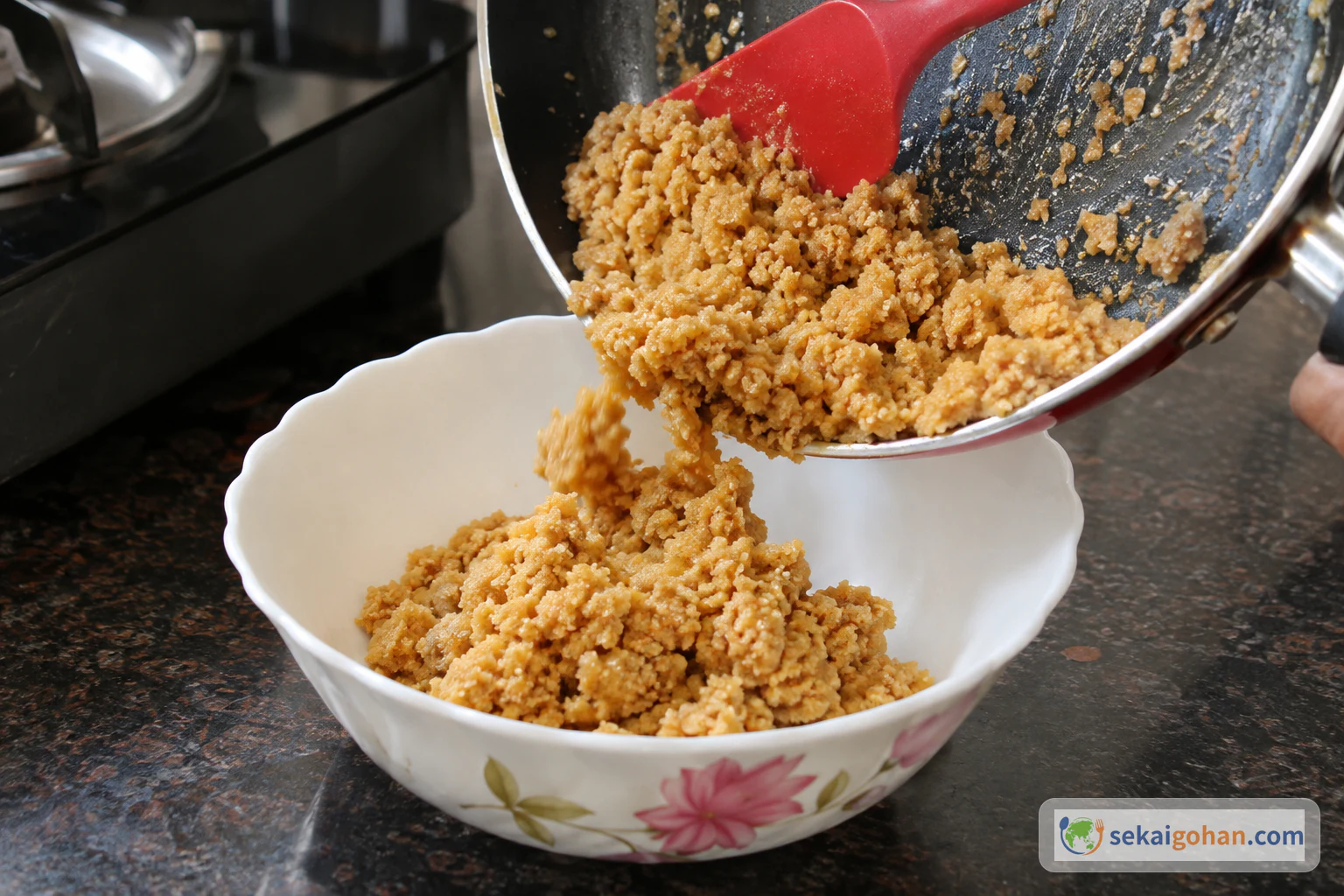
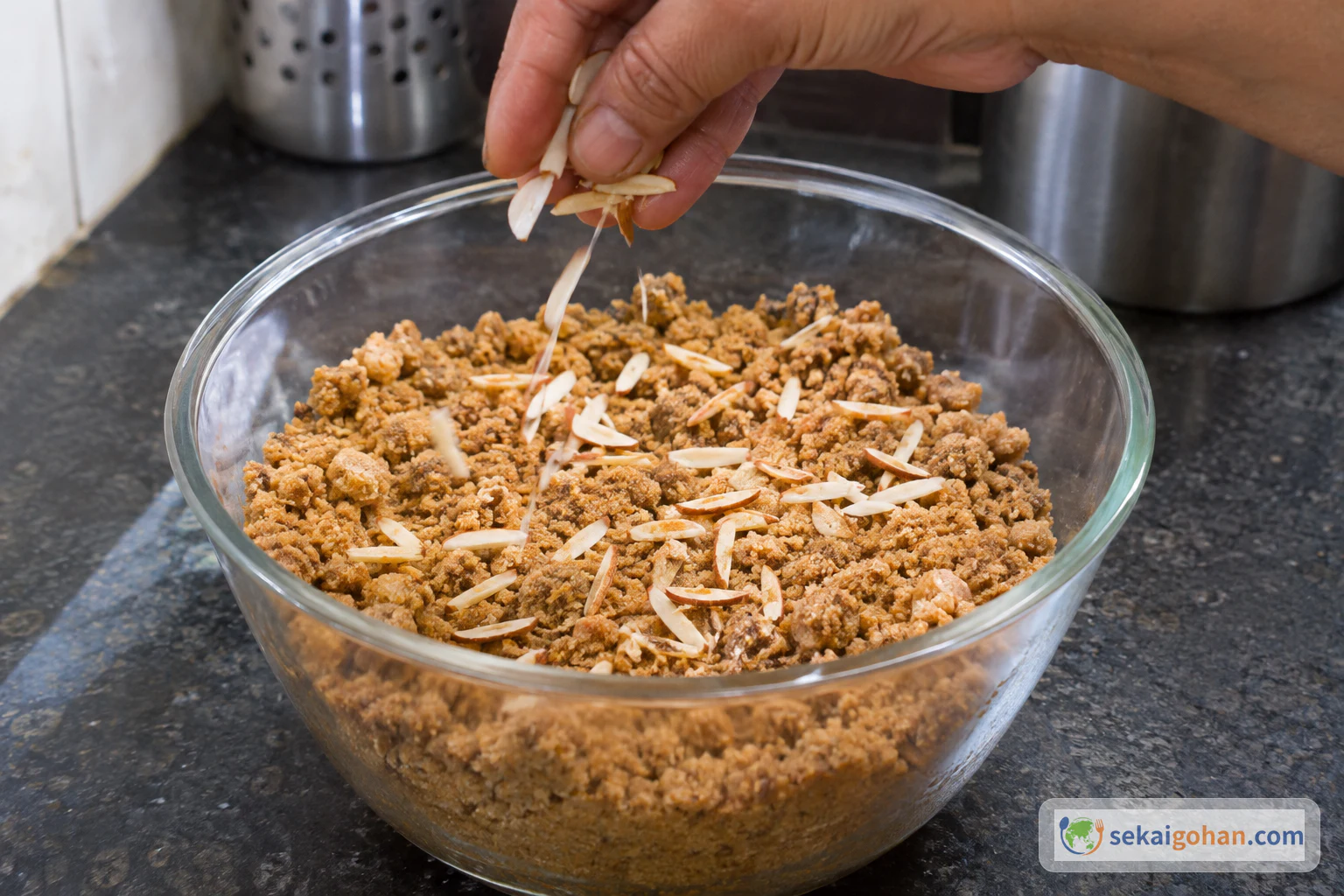
Whole wheat flour is dry-roasted, then cooked with ghee over medium heat until light brown. Ground cardamom is stirred in, then the heat is turned off and sugar is mixed through. The mixture is moved to a bowl and topped with slivered almonds. The result is panjeeri, a loose sweet served with a spoon.
This article follows one specific version. Sekai Gohan has not kitchen-tested this recipe as a whole. Harjeet Kaur of Wordsmith Kaur presents it as her family's Punjabi panjeeri, the way her mother makes it, with only five ingredients: whole wheat flour (atta), ghee, sugar, cardamom and almonds. She also notes that the mix differs from family to family and cook to cook. So this is one household's panjeeri, not a single national standard.
Other panjeeri recipes use different ingredients and methods. Niru Gupta's Panjiri recipe on NDTV Food, for example, adds edible gum (gond), fox nuts (makhana), chaar magaz, ajwain and dried ginger. It roasts several components separately and mixes in sugar after the mixture cools. This version stays loose rather than being rolled into rounds.
For more dishes from the same country, see Indian recipes.
Recipe Background and Editorial Decisions
The family version gives the flour, ghee and sugar in cups (2 cups, 1 cup and 1 cup), but does not specify a cup size. This article keeps those amounts in cups rather than converting them. The 2 : 1 : 1 relationship is preserved by measuring all three with the same cup. No yield, number of servings or total time is given, so none is listed here.
Two choices in this article are editorial ones, not specified by the family recipe:
- Cardamom: the recipe asks for 6 cardamoms, ground, but does not say what kind. This article uses green cardamom, ground from those same 6 pods. Use only that powder; don't add whole pods on top as well.
- Almonds: the recipe asks for 4 tbsp of almonds. This article uses slivered almonds sold as ready-to-eat roasted. Because the almonds go in at the very end, after the pan is off the heat, choosing a product labeled ready-to-eat matters.
Ghee is the roasting fat here; butter is not a direct substitute. Use whole wheat flour (atta) as listed.
Ingredients: Five Items
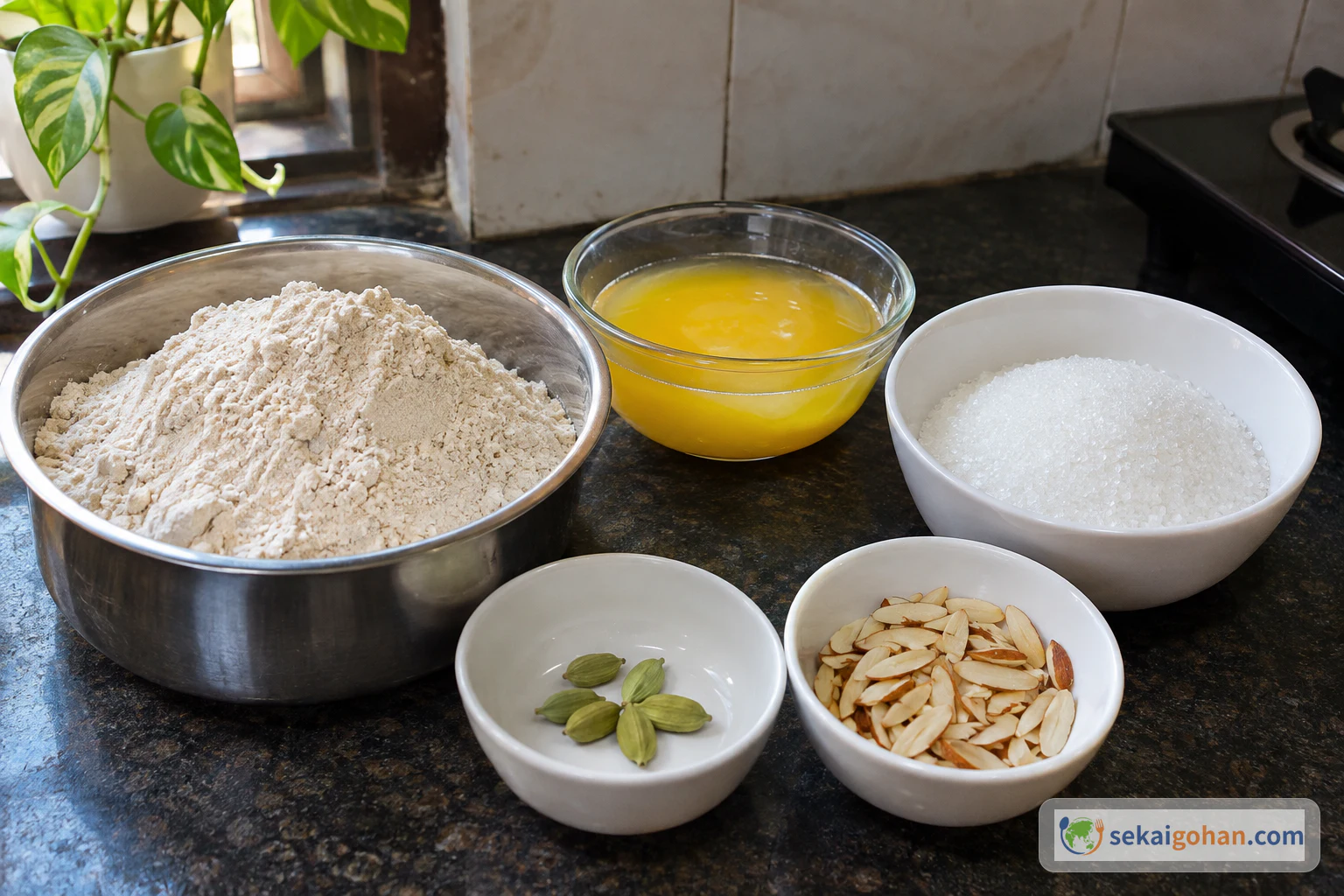
Equipment
- Heavy-bottomed pan
- Clean spatula or wooden spoon
- Mortar and pestle, for grinding the cardamom
- Clean bowl for the finished panjeeri
Choosing and Swapping: What Changes the Result
| Point | In this version | If you change it |
|---|---|---|
| Sugar | Granulated | Keep it granulated for noticeable crystals |
| Cardamom | Green pods, ground | Use only the powder from the 6 pods |
| Almonds | Ready-to-eat roasted slivers | Add them at the end, after moving the panjeeri to the bowl |
| Ghee | Ghee | Butter is not a direct substitute |
| Extra ingredients | None | Leave out gond, semolina, makhana, seeds, coconut, milk and salt |
This sweet contains wheat, milk (ghee) and almonds. Check product labels for allergens and for cross-contact statements.
Never taste raw flour. Keep it away from ready-to-eat foods, and wash hands, work surfaces and utensils after handling it. For this recipe, keep the almonds and serving bowl away from raw flour, and wash up as you go. Roasting the flour in ghee does not establish that it is sterile or safe to eat raw. These are general food-safety steps, not verification of this recipe's color or timing.
Method: Roast, Season, Sweeten, Finish
Use color and smell to judge the ghee roast.
Light Brown or Rich Brown? How Far to Roast
In the same family recipe, the method says to roast the flour to a light brown, while the tips section says rich brown. The recipe gives no exact shade or time and warns that over-roasting makes the flour bitter. This article follows the method's light-brown cue. Color and aroma are cooking cues, not food-safety measurements.
Serving
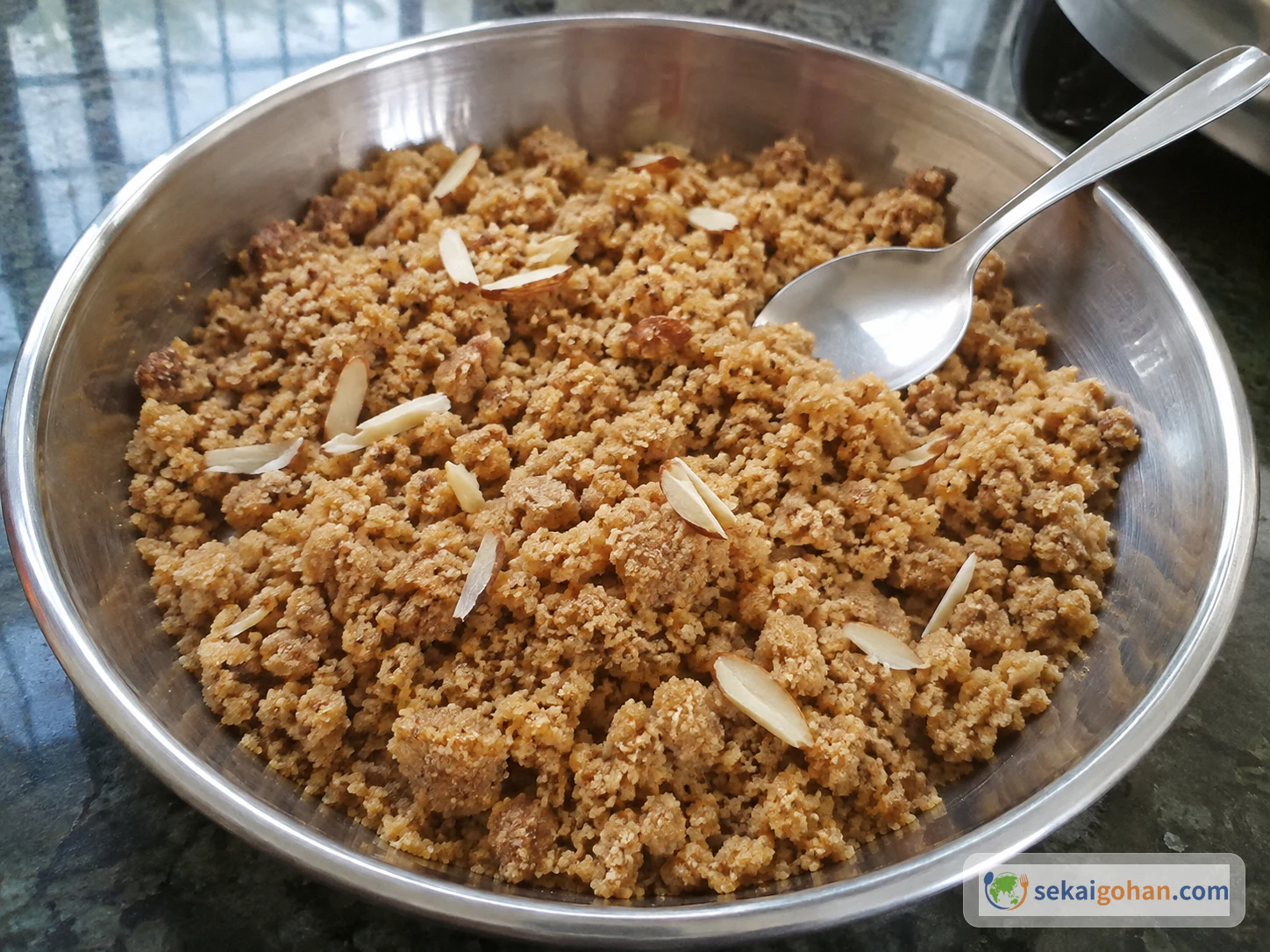
Serve panjeeri loose in a bowl with a spoon. It can be eaten warm; let it cool enough to avoid burns.
When It Goes Wrong
| Condition | Likely cause | What to do |
|---|---|---|
| Bitter taste | Flour roasted too dark | Next time stop at light brown and keep stirring |
| Still pale | Flour has not reached light brown | Keep stirring over medium heat until light brown. Never taste raw flour to check | | Whole pods and powder both added | Pods added whole as well as ground | Use only the powder from the 6 pods |
Frequently Asked Questions
Can I convert the cups to grams?
Not reliably. The family recipe doesn't say what size of cup it uses, so any gram or milliliter figure would be a guess. Measure the flour, ghee and sugar with the same cup, and the 2 : 1 : 1 balance holds whatever cup you use.
How long does panjeeri keep?
The family recipe says it keeps for a few weeks, but it gives no storage conditions or basis for that. This article does not treat it as a verified shelf life, and no storage period or safety is guaranteed.
Is panjeeri a health food?
No health, recovery or medicinal claims are made here. Panjeeri is a sweet made with flour, ghee and sugar.
Why does the sugar go in off the heat?
It follows the order of this family version: roast the flour, add the cardamom, turn off the heat, then mix in the sugar. Granulated sugar stirred in this way keeps its crystals, the texture the author prefers. Other recipes, such as the NDTV Food version, wait until the mixture has cooled before adding sugar; that is a different method.
Why aren't there gond, seeds or makhana?
This five-ingredient version contains no gond, seeds or makhana.
Does it have to be green cardamom?
The family recipe doesn't name a type. Green cardamom is the choice made in this article. Whichever you use, grind the 6 pods and use only that powder.
Sources
- Harjeet Kaur, "Punjabi Panjeeri Recipe," Wordsmith Kaur. The family version of the five ingredients and their amounts, the order of the method (dry roast, ghee over medium heat to light brown, ground cardamom, sugar off the heat, transfer, almonds), the "rich brown" wording in the tips, the warning that over-roasting makes it bitter, and the note that the mix varies by family. The page's structured recipe card leaves out the flour; the article follows the ingredient list and method in the main text. https://wordsmithkaur.com/punjabi-panjeeri-recipe/
- Niru Gupta, "Panjiri Recipe," NDTV Food. Used only as a comparison: a different Panjiri with atta, ghee, chaar magaz, almonds, ajwain, sonth, makhana and gond, components roasted separately and sugar mixed in after cooling. None of its ingredients, amounts or steps are used in this recipe. https://food.ndtv.com/recipe-panjiri-219656
- U.S. Food and Drug Administration, "Handling Flour Safely." General guidance: never taste raw flour, keep raw flour away from ready-to-eat foods, and clean hands, utensils and work surfaces. It is not a check of this recipe's color or timing. https://www.fda.gov/food/buy-store-serve-safe-food/handling-flour-safely-what-you-need-know