Wipe up the vegetable curry with butter-soaked bread
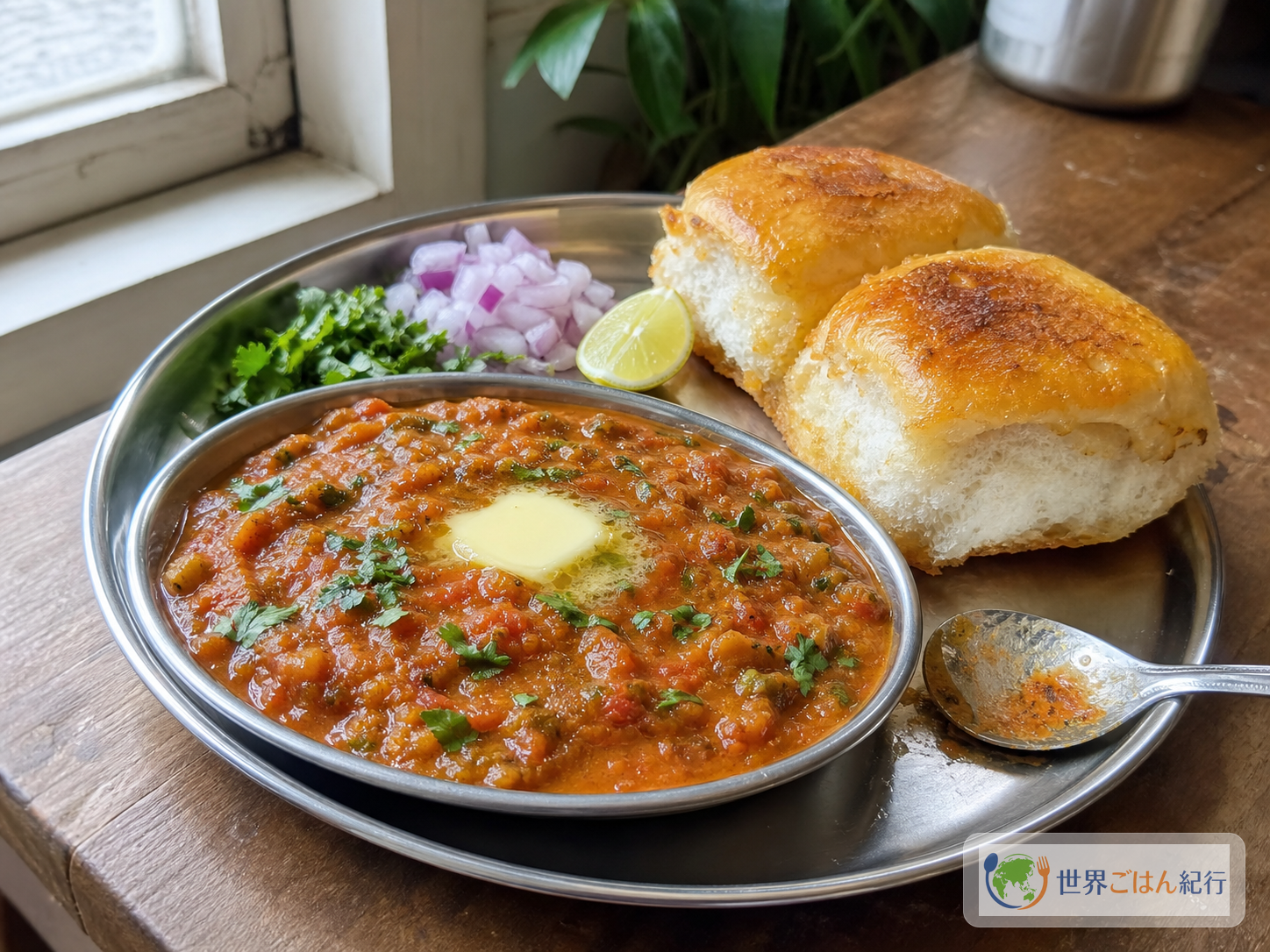
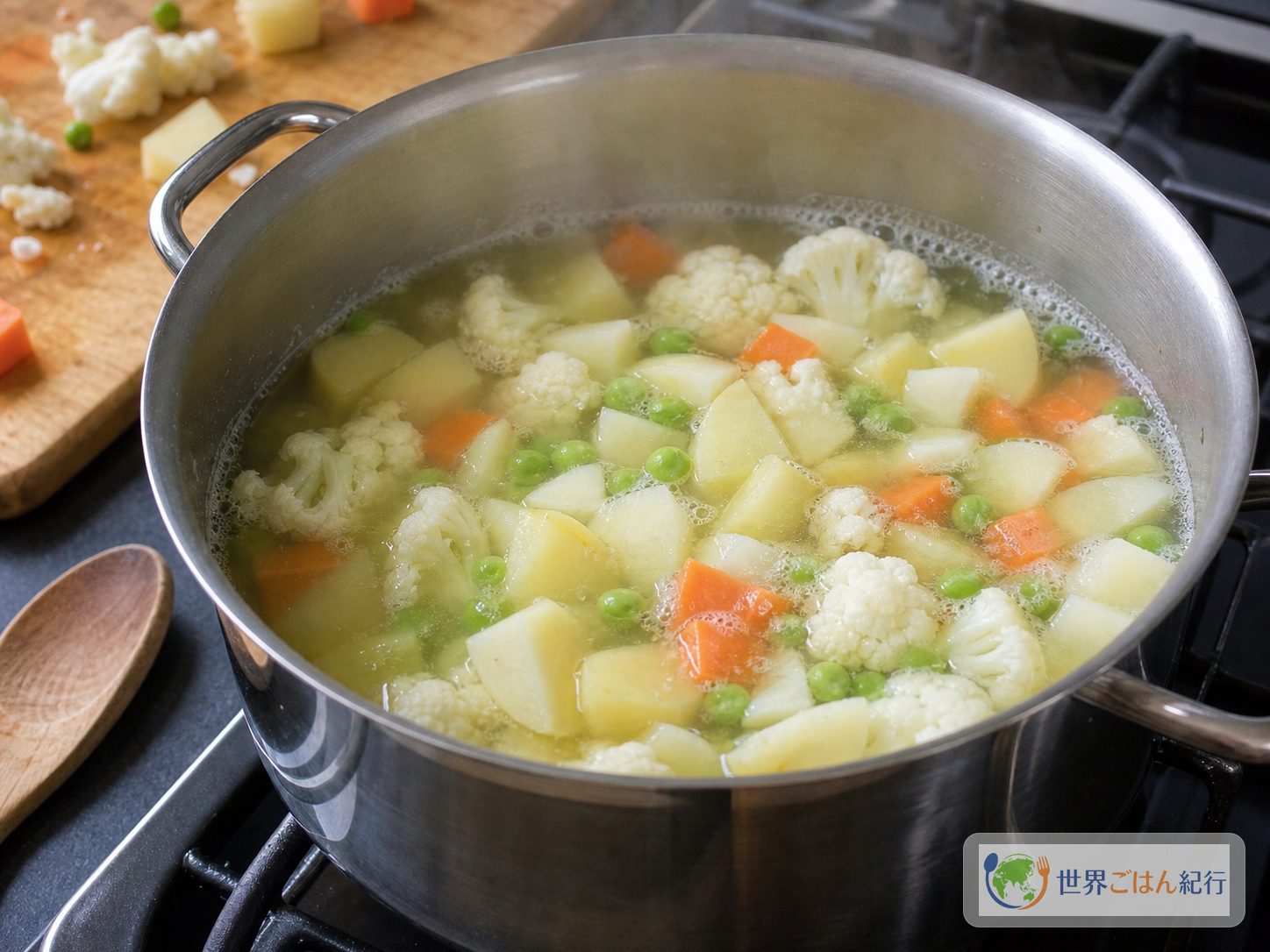
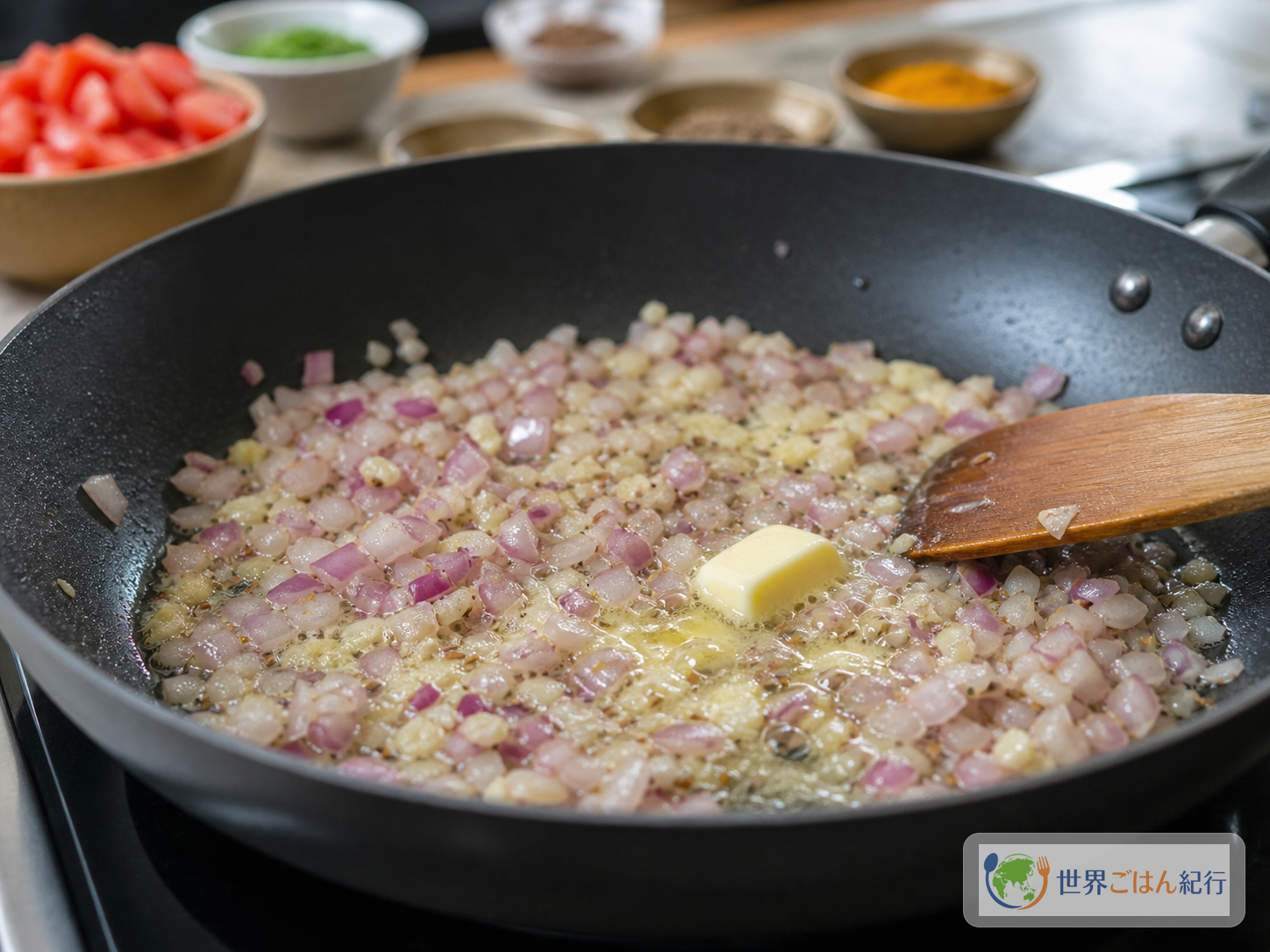
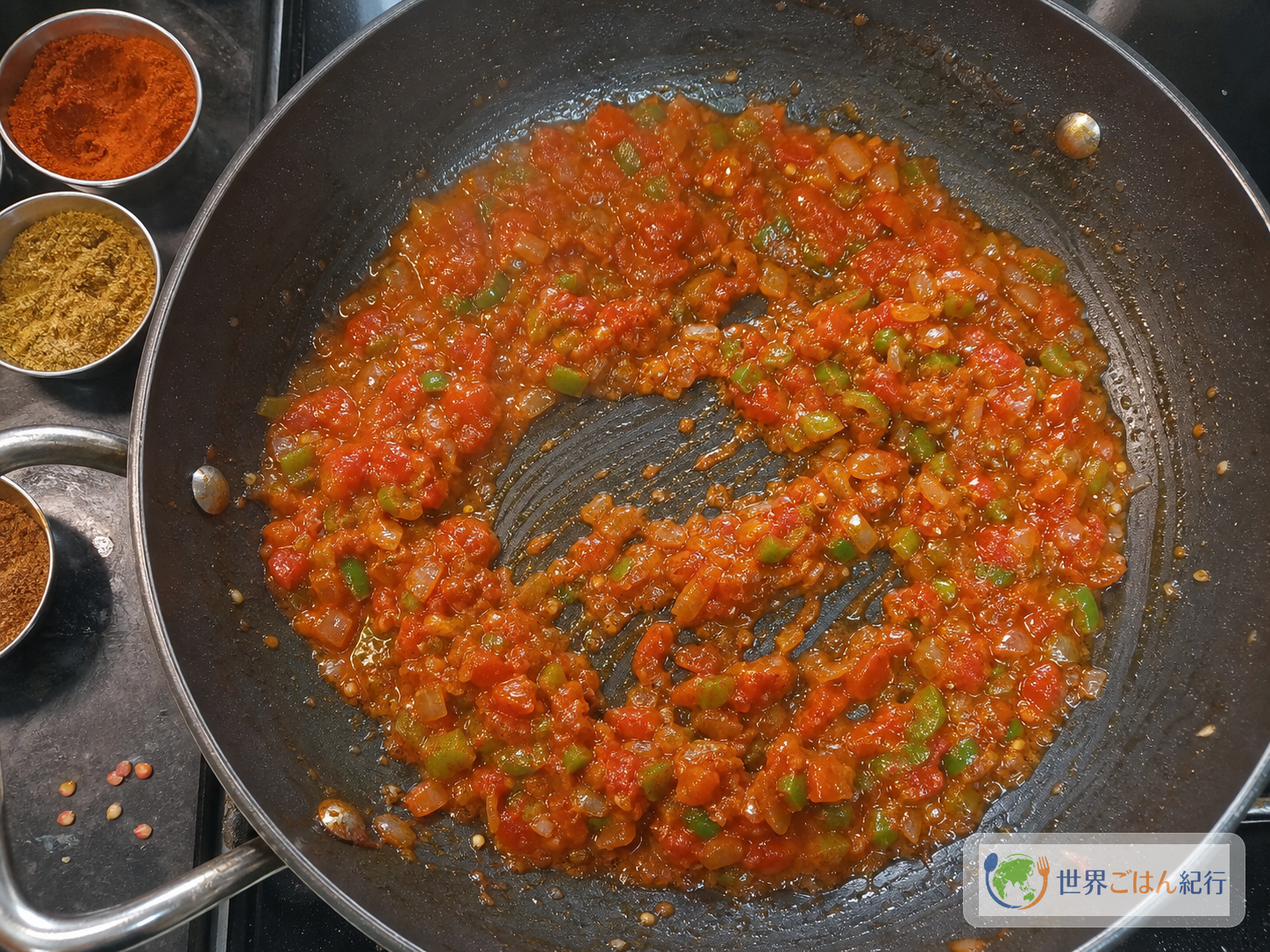
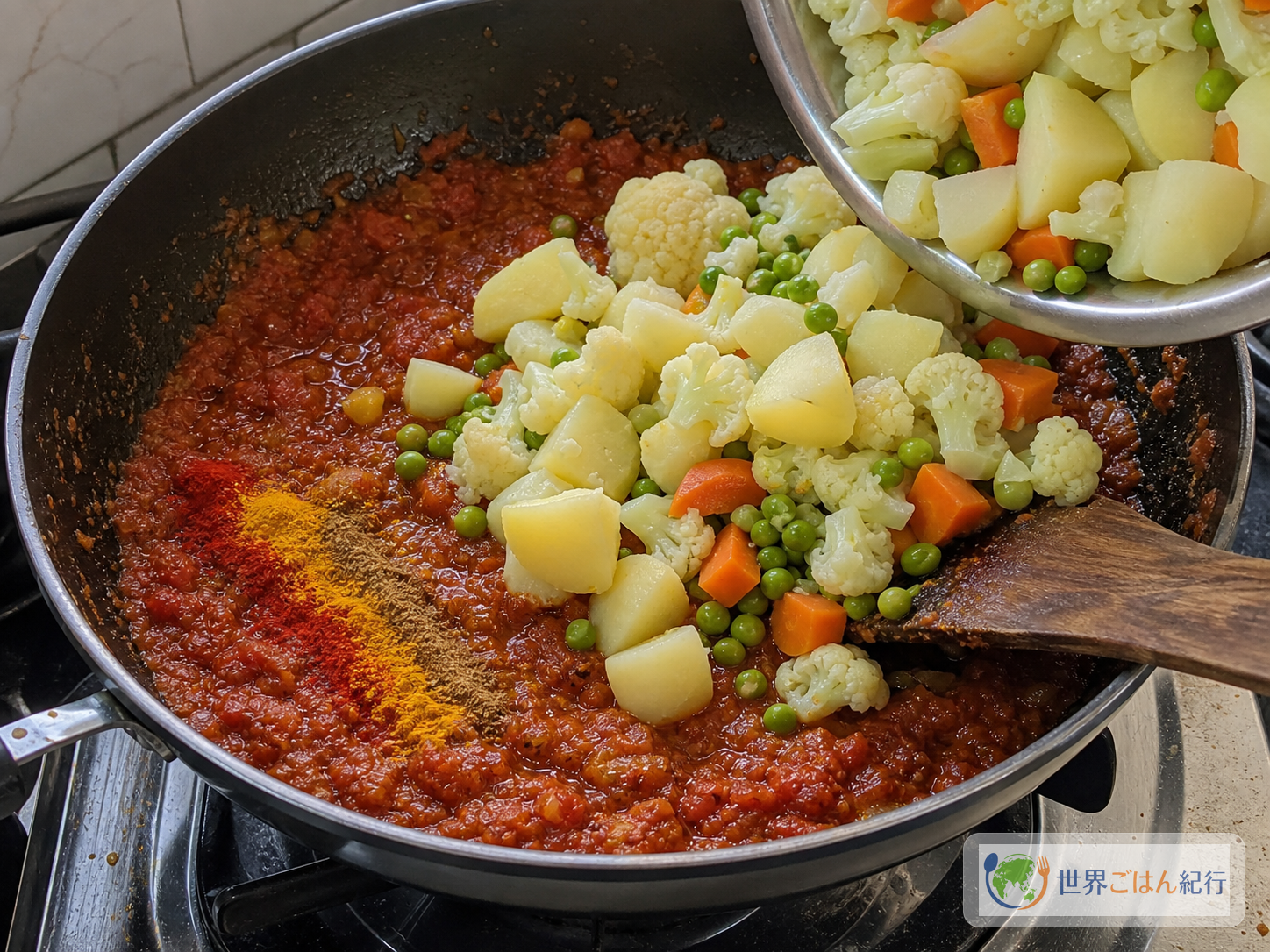
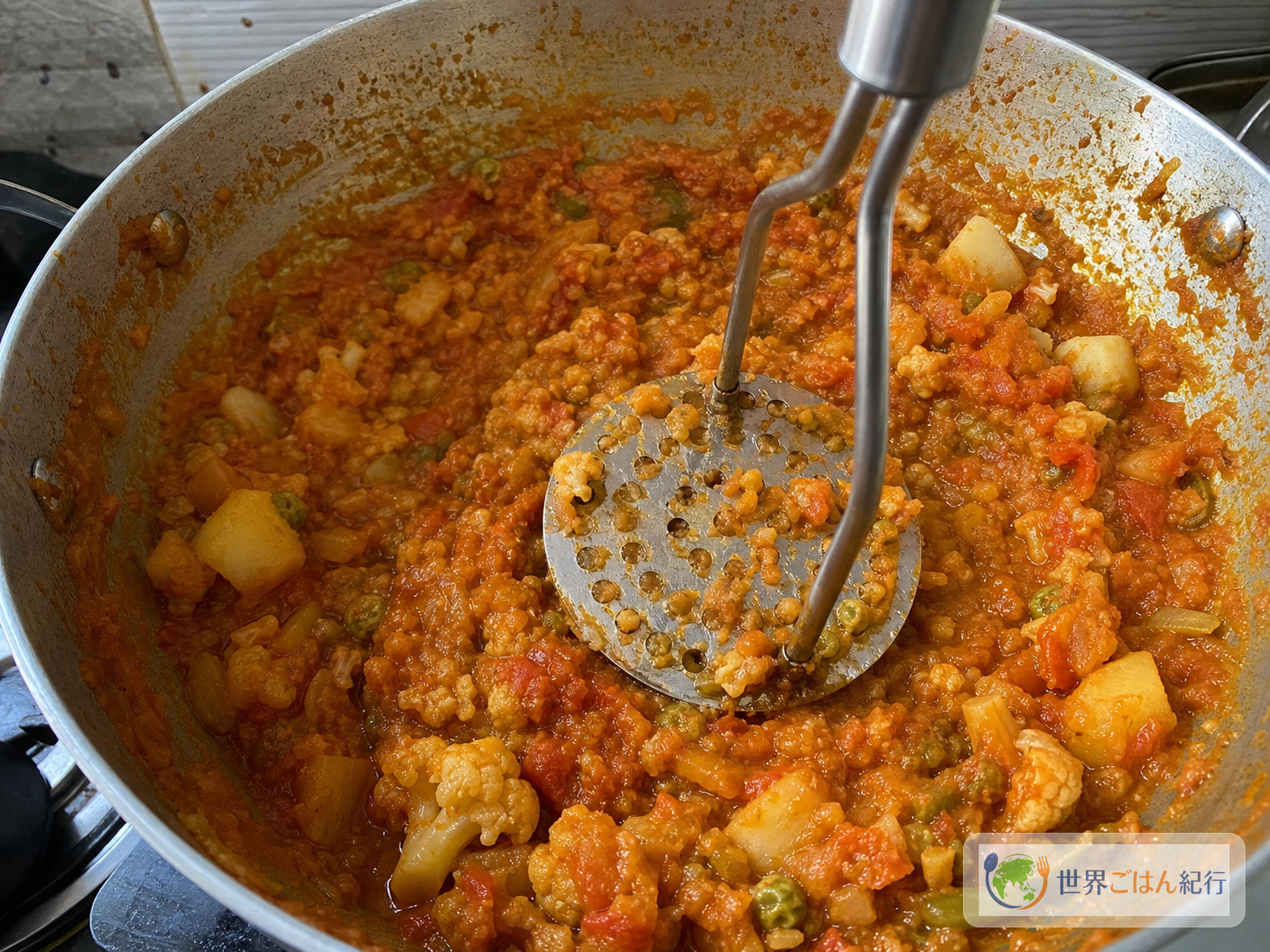
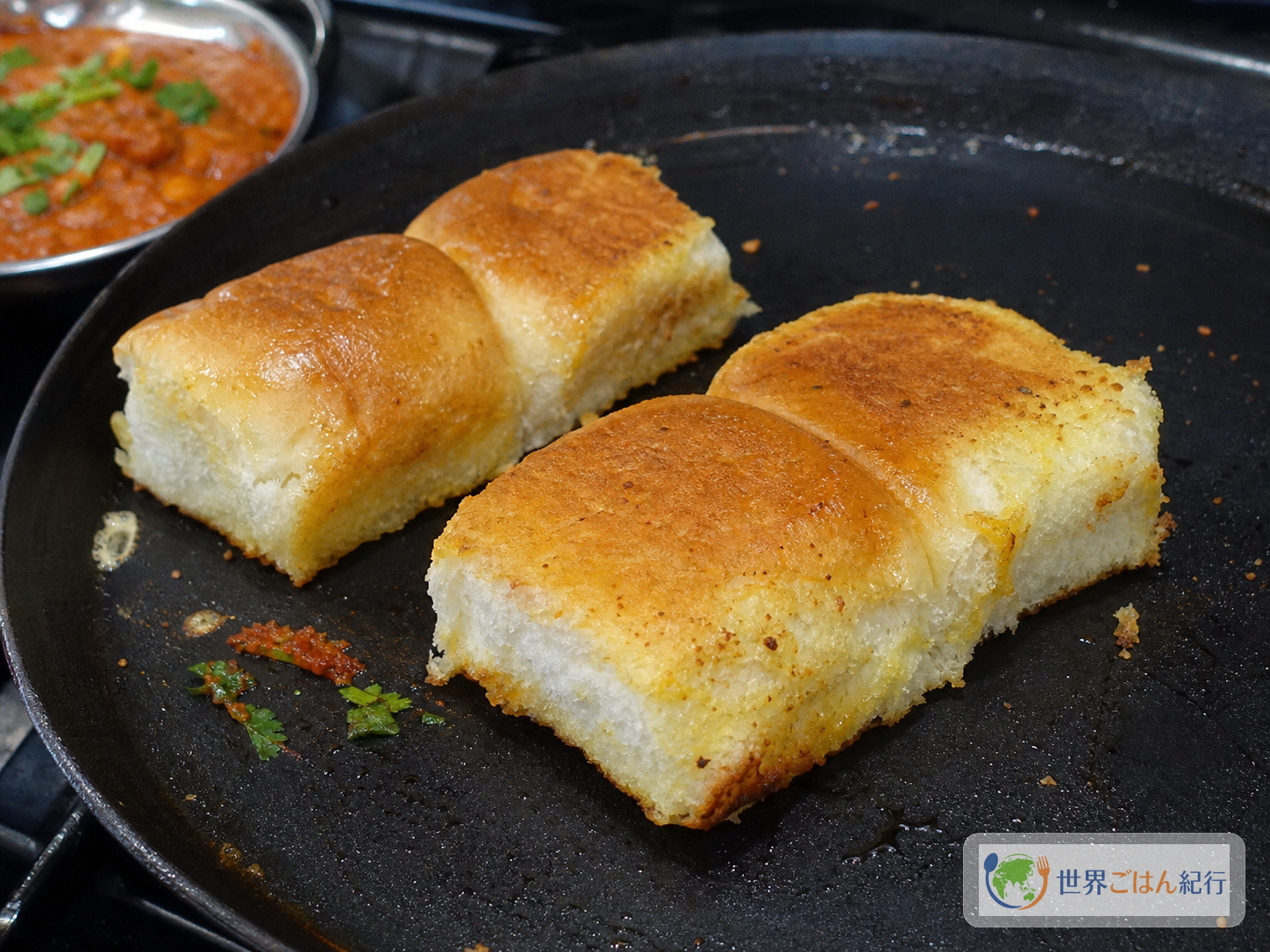
Frying tomatoes and onions in the kitchen at night, the bottom of the pot turns a little red. Return the boiled potato, cauliflower, carrot, and green peas, and press them roughly with a masher. It looks less like a tidy curry than a thick mash where the vegetables have melted together. At the end, toast small buns in butter in a separate pan, and that is the aroma of pav bhaji.
Pav bhaji (पाव भाजी / Pav bhaji) is a signature street food of Mumbai, in Maharashtra in western India. Pav is a small white bread roll, and bhaji means a vegetable dish or vegetable curry. You scoop up a thick, spiced vegetable mash with buttered, toasted buns, and it works as either a snack or a meal.
What trips people up at home is whether to buy pav bhaji masala, what bread to use in place of the pav, and how far to mash the vegetables. This article is built on a recipe that works without store-bought pav bhaji masala. The spices are cumin, coriander, garam masala, chili, and amchur or lemon. For the bread, a not-too-sweet dinner roll or a small sandwich bun is enough.
That said, this is not just a vegetable curry. What makes pav bhaji itself is that the vegetables are fused in the pot yet a few pieces of potato and cauliflower remain, that the tomato's acidity has been reduced down, and that the butter and lemon added just before eating give it definition. In contrast to a dish like aloo gobi (in Japanese), where the vegetables are eaten intact, mashing is the main act of cooking here.
In English you will see "pav bhaji" and "pao bhaji," and in Hindi and Marathi it is written पाव भाजी. This article uses "pav bhaji" as the name of the dish.
Background: from a Mumbai lunch to a street-food staple
Pav bhaji is known as a dish that began in Mumbai. English-language accounts say it spread as an easy thing for textile mill workers to eat in a short lunch break, and today it is served from street stalls to canteens to restaurants. The scene of vegetables mashed on a big iron griddle, red masala spread out, and pav toasting alongside is one of the emblems of Mumbai street food.
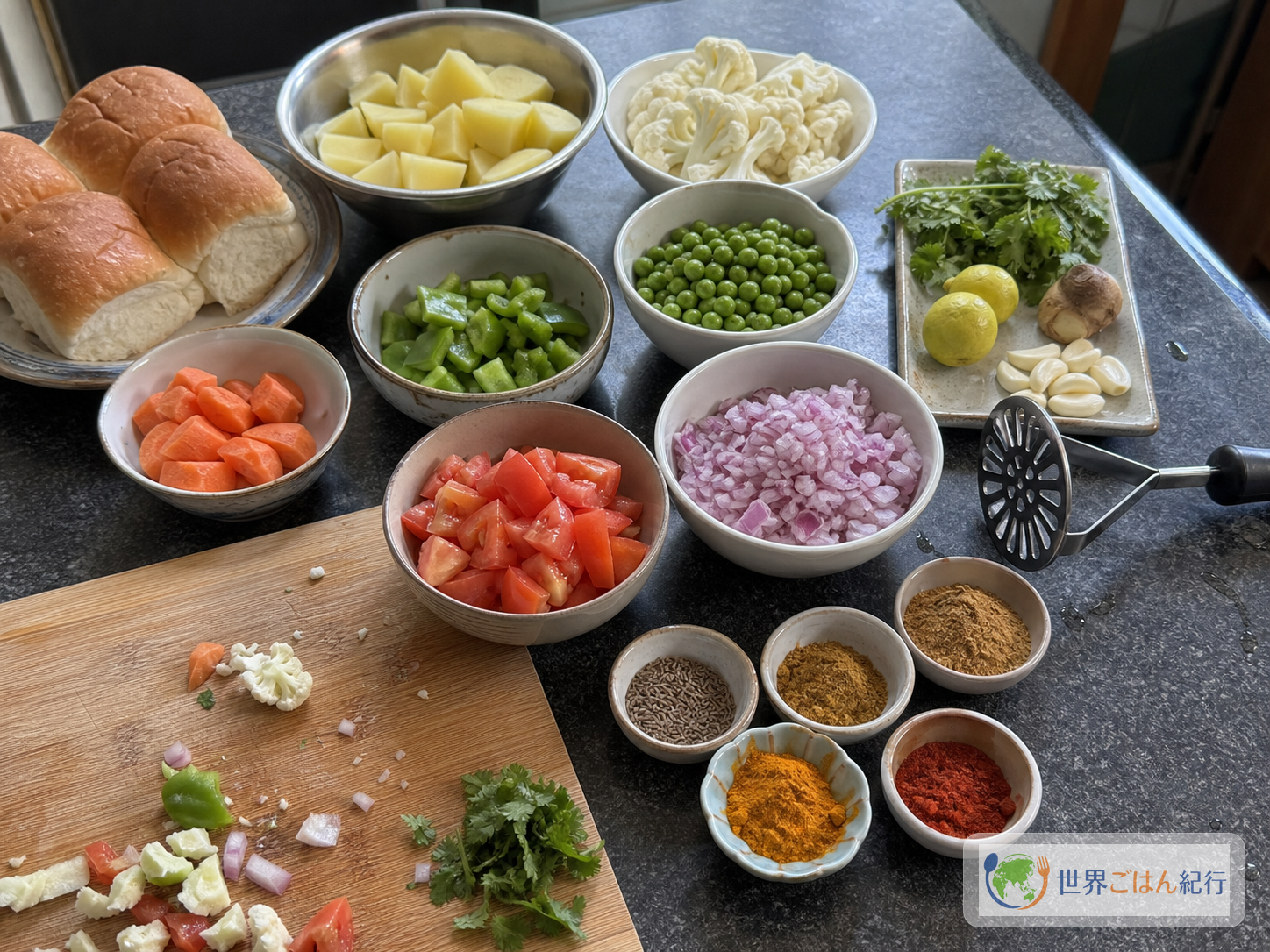
What is interesting is that pav bhaji has two faces: a dish for using up leftover vegetables, and a rich street-food feast. The vegetables are quite flexible: potato, cauliflower, carrot, peas, cabbage, eggplant. On the other hand, once tomato, bell pepper, butter, lemon, onion, cilantro, and toasted bread are all there, it suddenly becomes pav bhaji.
In a home kitchen, rather than breaking every vegetable down in a pressure cooker, it is safer to parboil the potato and firm vegetables first, make the onion-and-tomato masala separately, and then combine them. Mix thin tomato into the vegetables and everything turns watery, and the flavor blurs when scooped with bread. Reduce the tomatoes first and then return the vegetables. That order alone brings a home skillet close to the richness of the street.
| What to look at | Mumbai street character | Where to land in a home kitchen |
|---|---|---|
| Vegetables | Mashed hard on an iron griddle | Parboil in a pot, mash coarsely in a pan |
| Bread | Small pav toasted in butter | An unsweet dinner roll or small sandwich bun |
| Spices | Pav bhaji masala is often used | Build it from cumin, coriander, garam masala, and chili |
| Acidity | Lemon, amchur, tomato | Lemon is enough for a first batch. Amchur is handy for making ahead |
| Finish | Onion, cilantro, lemon, butter | Serve the onion on the side. Add aroma just before eating |
Ingredients (serves 4): think of the vegetables, the masala, and the finish separately
This makes a main for four. It is not a side dish but a plate eaten with toasted bread. The heat is kept mild, so you can add green chili or chili powder at the table.
The bread contains wheat and the butter contains milk. If you avoid dairy you can cook with vegetable oil, though the aroma will be a little lighter than pav bhaji. If you avoid wheat, serving it with toasted rice-flour bread or steamed potatoes makes it easier to eat.
What to look for when shopping
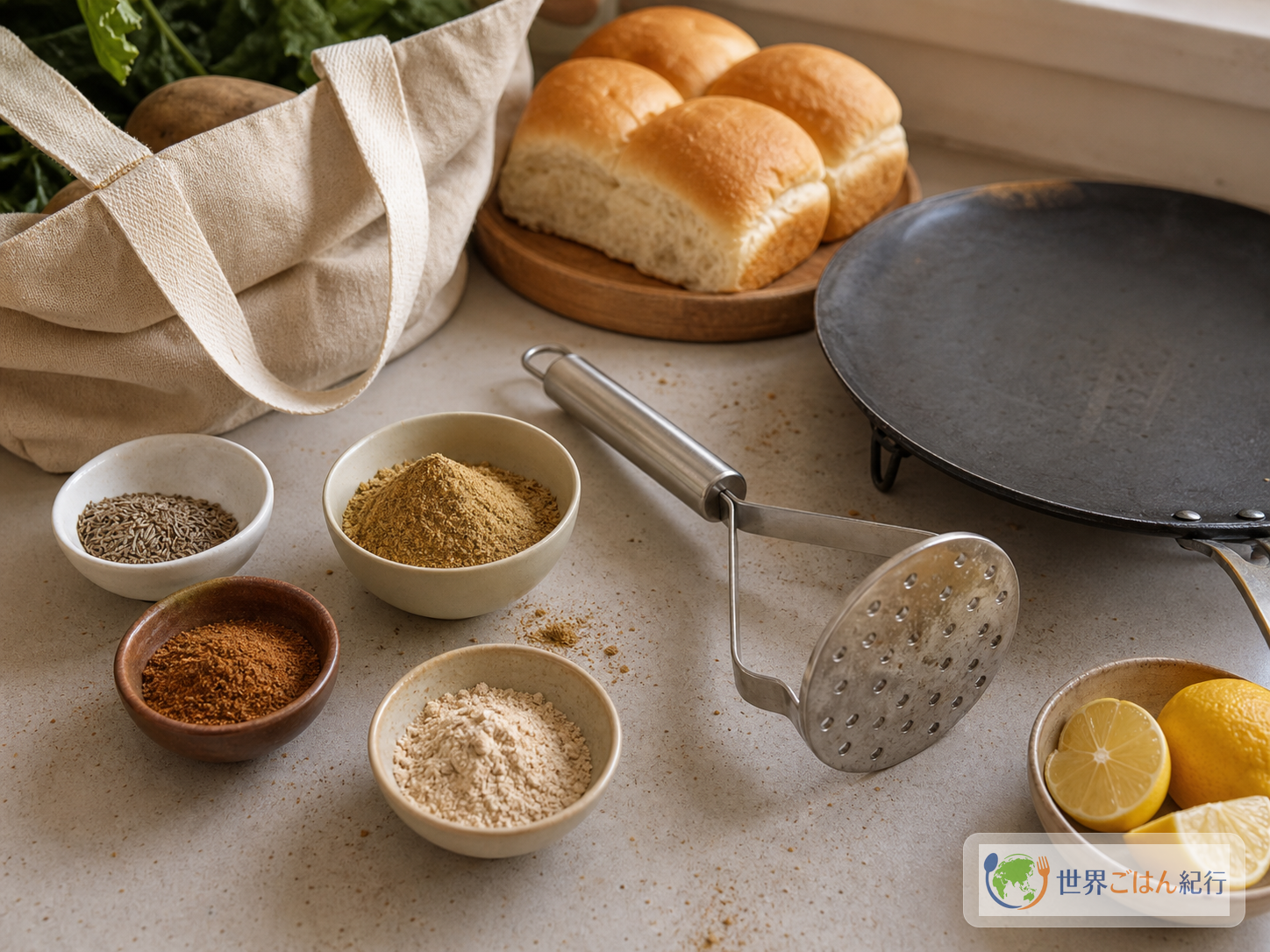
Buying pav bhaji masala is quicker, but for a first batch you can make it well enough from spices you already have. If you have to set priorities: whole cumin, amchur to add acidity as a powder, a masher to crush the vegetables coarsely, and a flat griddle that toasts the bread in one go. Bread, onion, potato, and tomato are all easy to find nearby.
Cumin seeds create the street aroma the moment they pop in butter and oil. You can cook with powder alone, but a bag of whole seeds also serves for dal tadka (in Japanese) and aloo gobi (in Japanese).
Amchur is dried mango powder. Lemon can substitute, but amchur adds acidity to the reduced bhaji without adding liquid, which is handy for making ahead. It also goes into the filling of chana masala and samosas.
If you puree it completely in a blender, it becomes closer to a vegetable soup than pav bhaji. Pressing with a masher leaves small pieces of potato and cauliflower, giving a better texture on the bread.
With a flat griddle you can toast the pav all at once. A frying pan works, but on a day with many eaters the bhaji tends to cool while you wait for the bread, so a large surface is useful.
Substitution table
| Authentic ingredient | Substitute | What to preserve |
|---|---|---|
| Pav | Unsweet dinner roll, small sandwich bun | A soft bread whose surface cracks lightly when toasted |
| Pav bhaji masala | Cumin, coriander, garam masala, chili, amchur | Do not rely on curry powder alone. Add acidity at the end |
| Amchur | Lemon juice, lime juice | Without acidity the sweetness of the vegetables feels heavy |
| Large tava, iron griddle | Frying pan, hot plate | Toast the bread hot and serve right away |
| Plenty of butter | Less butter plus oil | Keeping a bit of milky aroma makes it more like pav bhaji |
The substitute to avoid is a sweet pastry roll. Against the acidity and spice of the bhaji, the sweetness of the bread comes forward too much. If a sweet roll is all you have, toast the cut sides well and serve extra lemon and onion to restore the balance.
Another important point is not to push the substitutions entirely toward a curry-roux flavor. Made with curry powder alone, it comes close to a potato curry in the style of Japanese home cooking. Keep at least two of these three: cumin seeds, the green aroma of bell pepper, and the final acidity, and the outline of pav bhaji stays. Conversely, even with pav bhaji masala in hand, serving the bread untoasted weakens the fun of the street-food experience.
Serving and how it is eaten locally
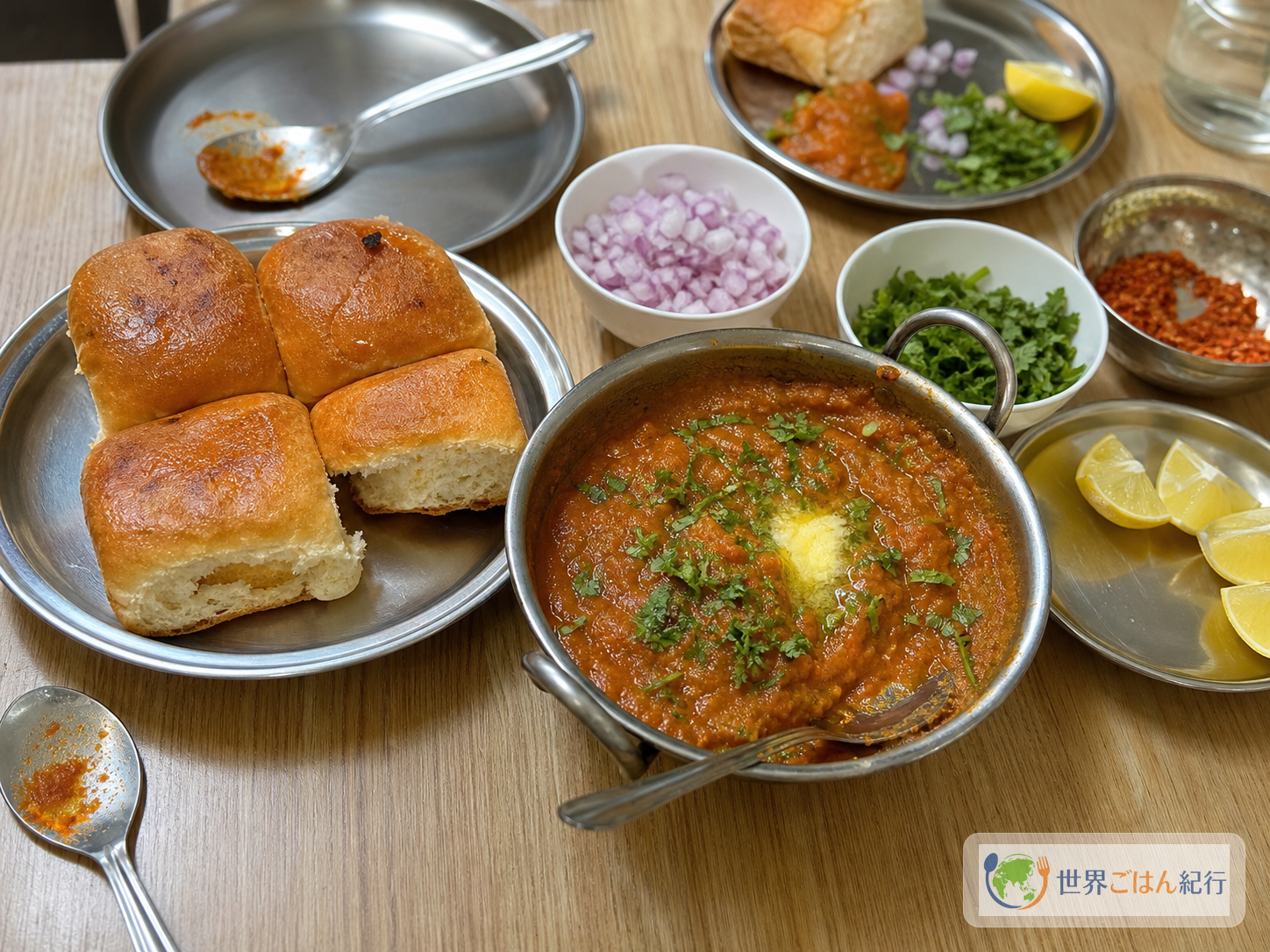
Put the bhaji on a plate with chopped onion, cilantro, and lemon beside it. If you like, top it with a small piece of butter, and wipe up the part where it melts from the heat with bread. Keeping the onion out of the pot and serving it on the side preserves its aroma and crunch.
At Mumbai street stalls, the bhaji is often reheated on a griddle while the pav is toasted beside it. At home you do not need to do both at once. Keeping the bhaji hot in the pot and toasting only the bread just before eating is enough. Break the bread by hand, scoop up the bhaji, and squeeze a little lemon. Wiping it up with bread brings out the character of the dish more than eating it with a spoon.
For a full meal, a refreshing raita or a cucumber-and-onion salad beside it makes it easier to eat. On a day when you want something fried, samosa also goes well, but since pav bhaji already has bread and vegetables in it, this one plate is enough for dinner.
Where it tends to go wrong
| Problem | Cause | Fix |
|---|---|---|
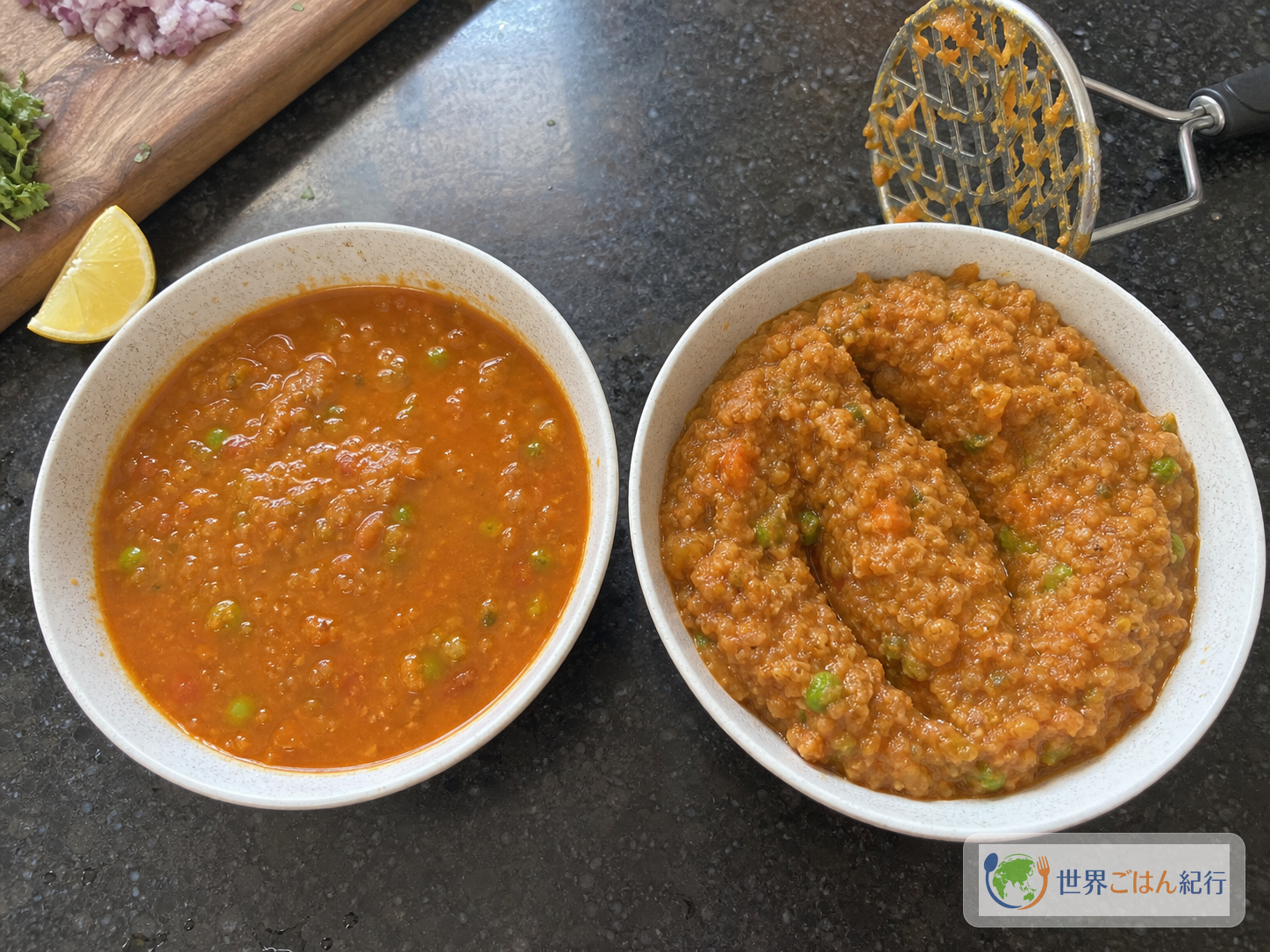
| Watery | Vegetables were added before reducing the tomatoes | Simmer uncovered over medium-low for 5 to 8 more minutes |
| Tastes like curry powder | Not enough cumin and acidity | Add a little cumin powder and lemon at the end |
| Vegetable pieces are hard | Underparboiled | Add 50 ml of water, cover, and steam-simmer on low for 5 minutes |
| The bread goes soggy | The bhaji is thin, or the cut face was not toasted | Reduce the bhaji and toast the cut faces firmly |
| Greasy | Too much butter at the start | Keep it moderate while cooking and add a little on the plate |
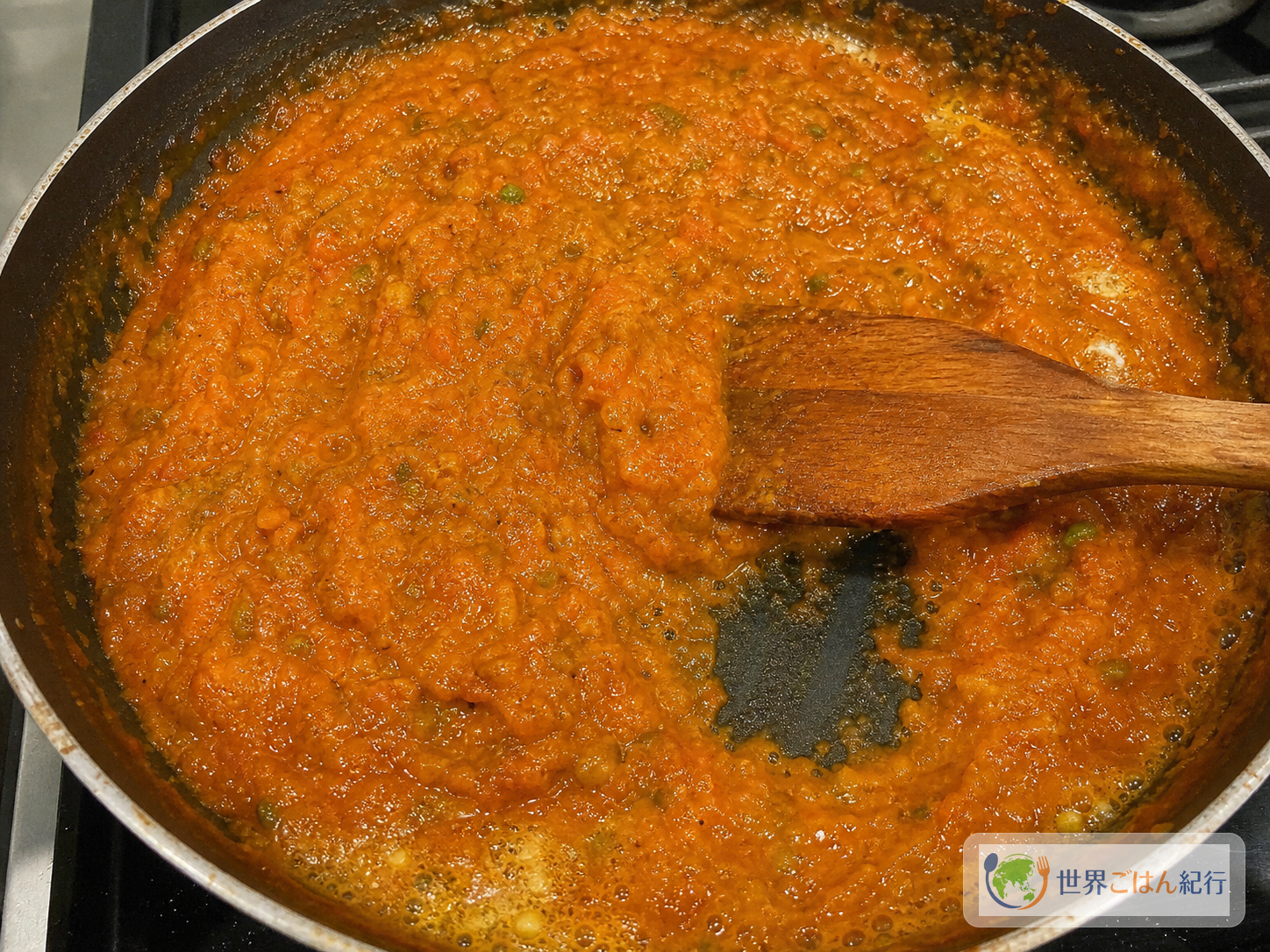
The most common problem is leftover liquid. Pav bhaji is not a soup curry. It is a dish you scoop with bread, so check the bottom of the pot at the end. Draw a line with a wooden spoon; if it fills right back with liquid, it is still thin. Reduce it until the line stays short and the surface slowly closes back, and it unites with the bread.
Making ahead and reheating
As a guide, the bhaji keeps 2 days in the refrigerator and 2 weeks in the freezer. Store the bread separately and untoasted. Prepare the onion, lemon, and cilantro separately too, and add them just before eating.
To reheat refrigerated bhaji, put it in a pot, add 2 to 3 tbsp of water, and warm over low heat for 5 to 7 minutes. In a microwave, heat at 600 W for 2 minutes, stir, then 1 more minute. Frozen bhaji is less likely to turn grainy if thawed in the refrigerator for half a day and then heated in a pot over low heat. Adding a little lemon at the end brings back the definition of a fresh batch.
Leftover bhaji from the next day is also good as a filling for grilled cheese toast. But as the basic recipe of this article, please first try the way of wiping it up with toasted pav rather than putting it on top of bread. A bite with butter, onion, and lemon together is the best part of pav bhaji.
Frequently asked questions
Is pav bhaji masala required?
It is not. Store-bought pav bhaji masala makes it easier to approach the street flavor, but you can make it well enough with cumin, coriander, garam masala, chili, and amchur or lemon. Some store-bought blends contain salt, so reduce the salt in the recipe a little if you use one.
Which vegetables can I include?
Potato, tomato, and bell pepper are best kept as the backbone. Cauliflower, carrot, green peas, cabbage, and eggplant can be swapped. Adding a lot of watery zucchini or mushrooms tends to thin it out, so if you use them, use a small amount and reduce it at the end.
Can I make it with sandwich bread?
You can. But sandwich bread has a large surface and tends to collapse when the bhaji is put on it. Cut thick slices into small pieces and toast the cut faces firmly in butter, and it is easier to eat. To get closer to the atmosphere, a small unsweet roll suits better.
Can I make a mild version for children?
You can. Leave out the green chili and replace the Kashmiri chili with paprika powder. Adults can add chili, green chili, and lemon on the plate to adjust. Even if you remove the heat, keep the cumin and the reduced tomato.
Can I reduce the butter?
You can. Cut the 30 g of butter in the cooking to 15 g and add 1 tbsp more vegetable oil. But keeping the butter for toasting the bread, even a small amount, gives the aroma of pav bhaji. If you go to oil entirely, add more lemon and onion at the end to make up for the weight.
What goes well with other Indian dishes?
To lighten it, raita; to add beans, dal tadka (in Japanese); to add a vegetable dish, aloo gobi (in Japanese). Pav bhaji is already a main with bread, so it is easier to eat without piling on rice or naan.
Sources consulted
- Wikipedia, "Pav bhaji": confirmation of its origin in Mumbai, the makeup of the dish, and its main variations.
- The Guardian, "Meera Sodha's recipe for pav bhaji": confirmation of the home version using leftover vegetables, bread toasted in butter, and eating with lemon and onion.
- Bon Appetit, "Pav Bhaji With So Much Butter": confirmation of the street-food background and the image of mashing vegetables and toasting bread on a griddle.