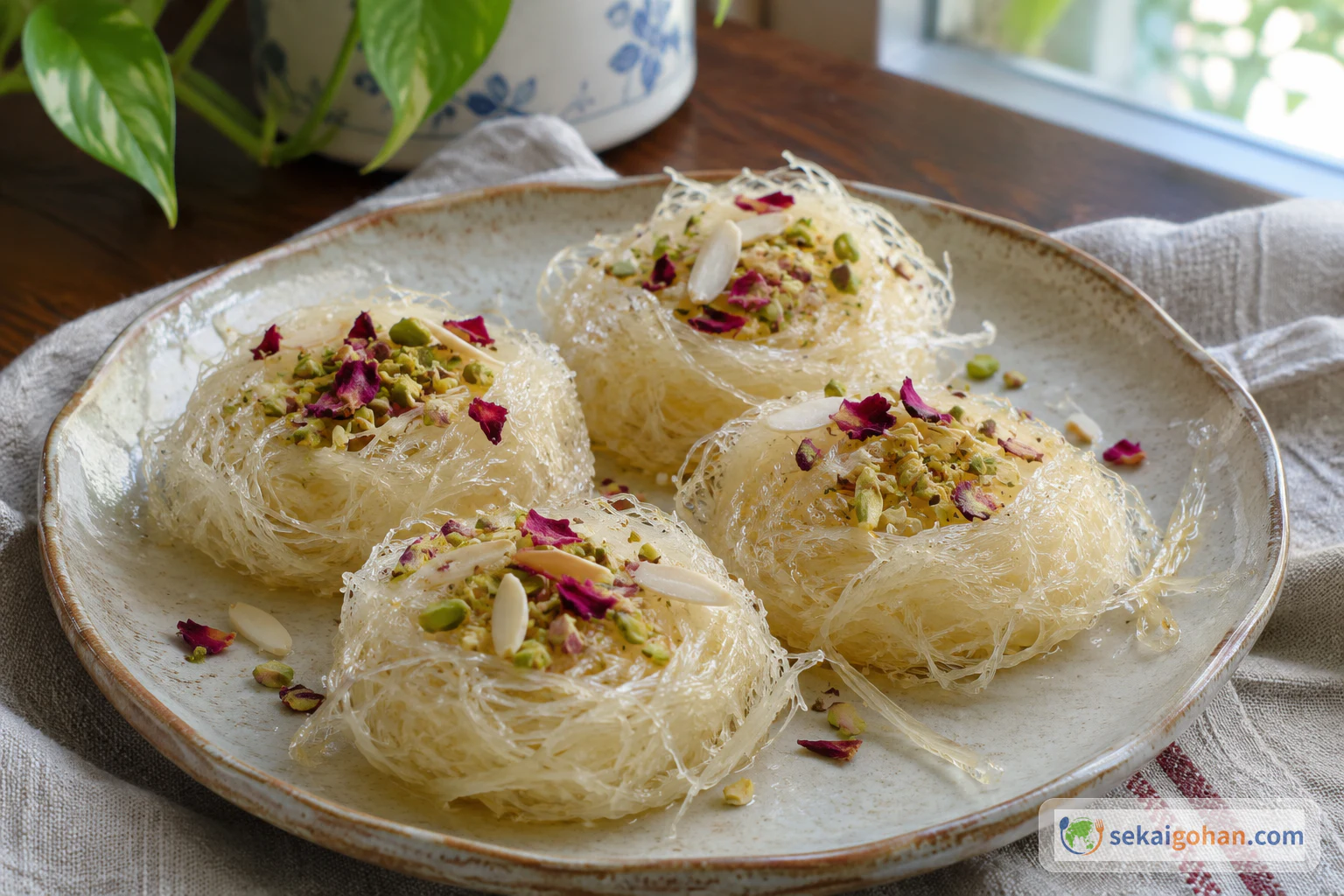
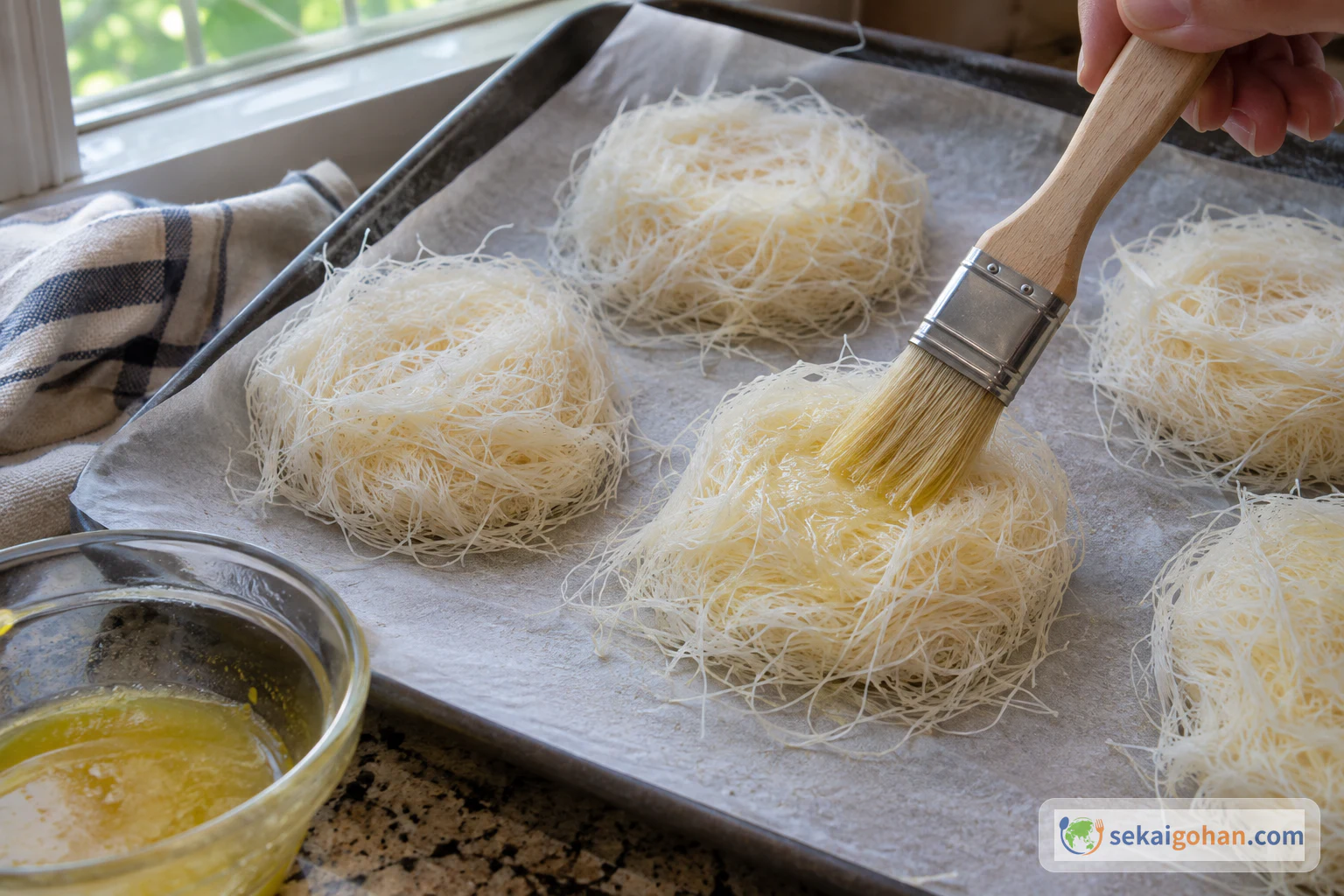
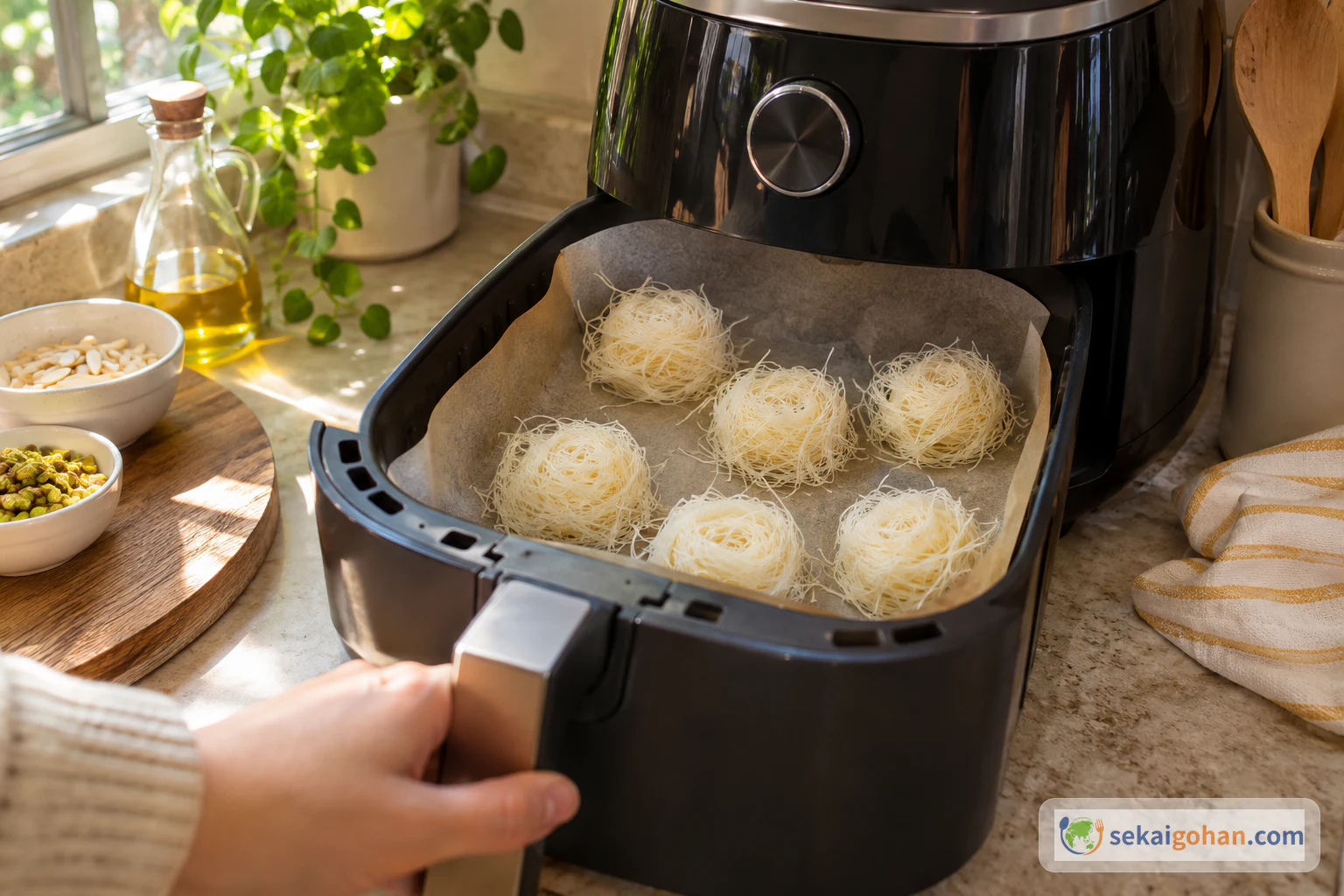
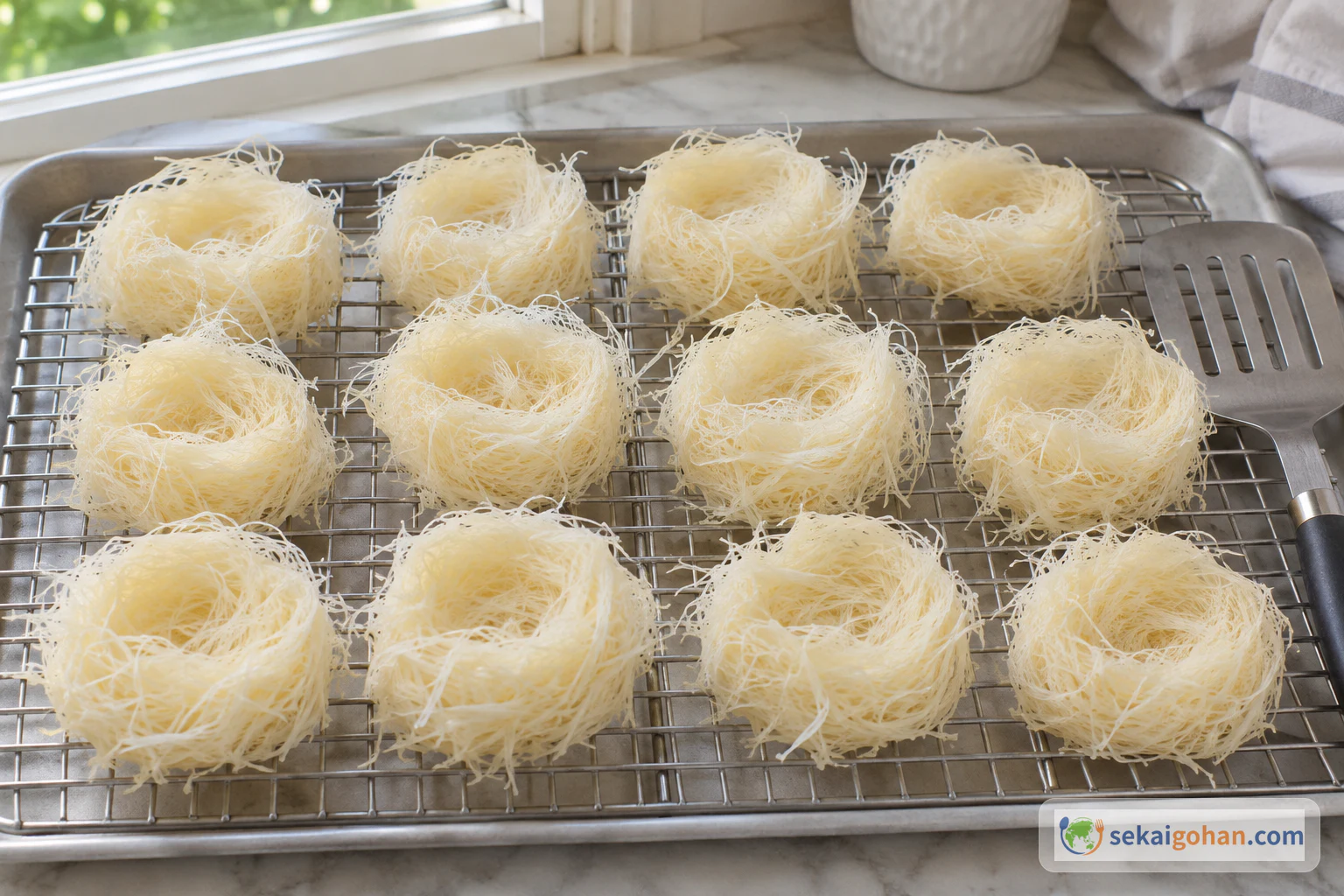
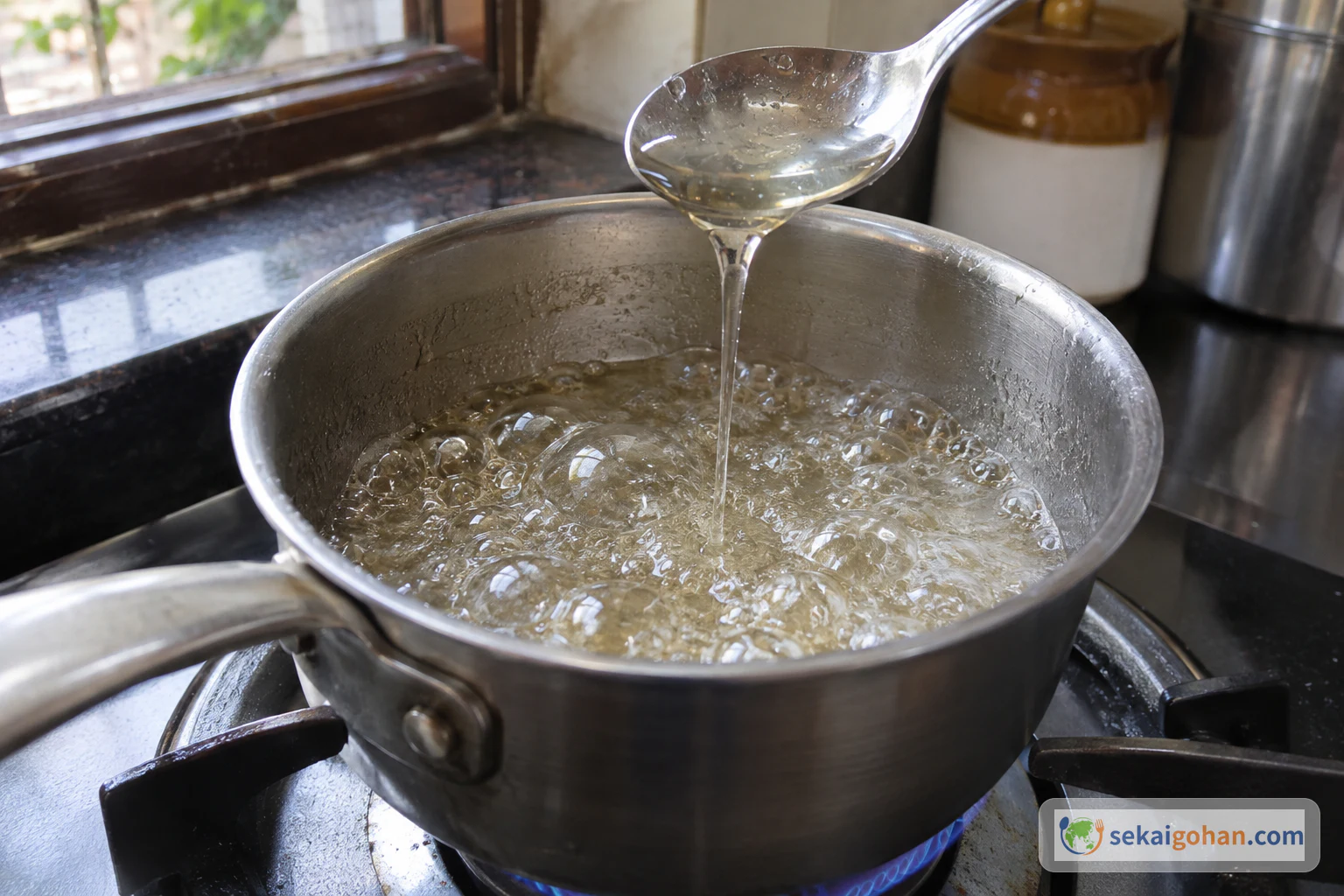
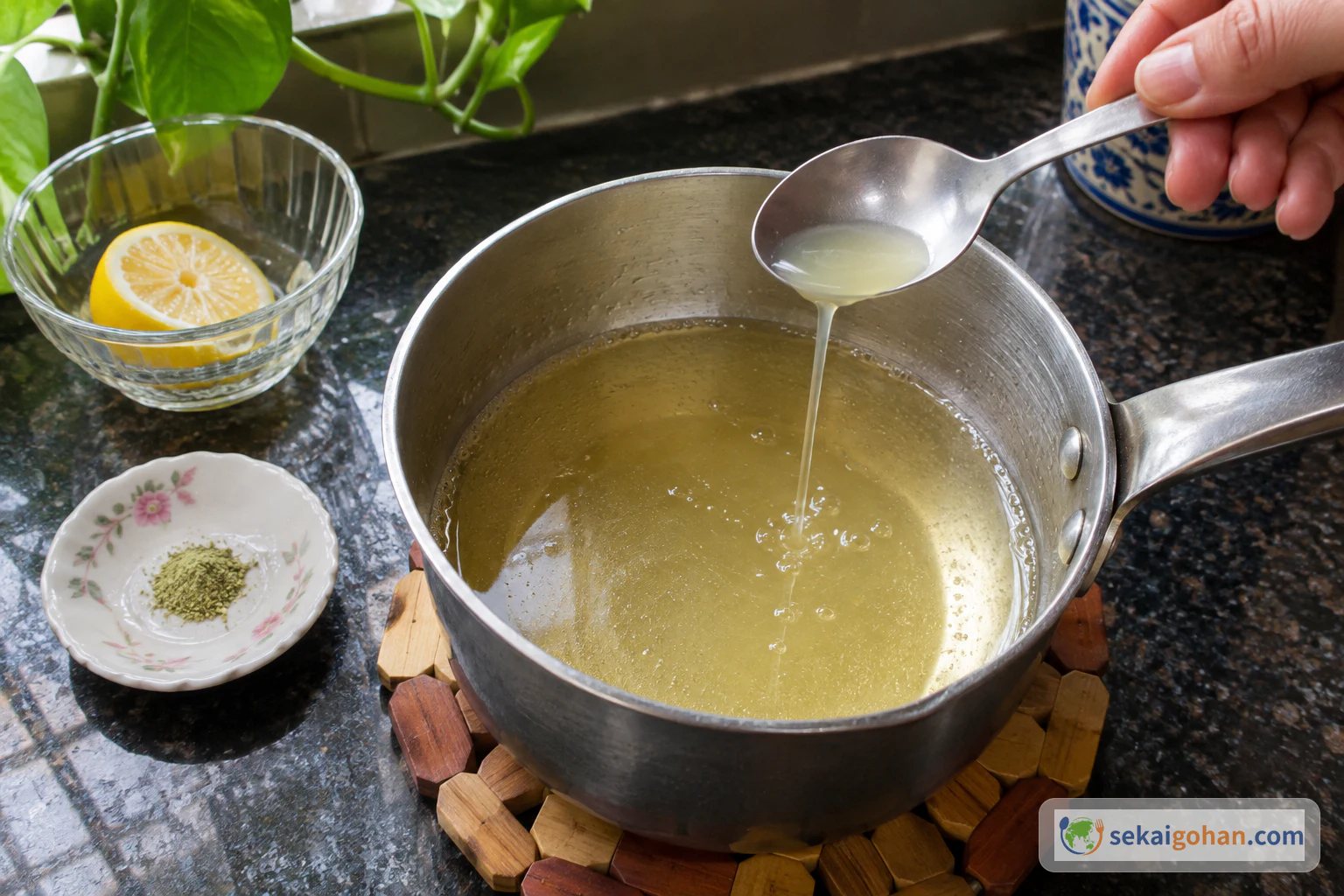
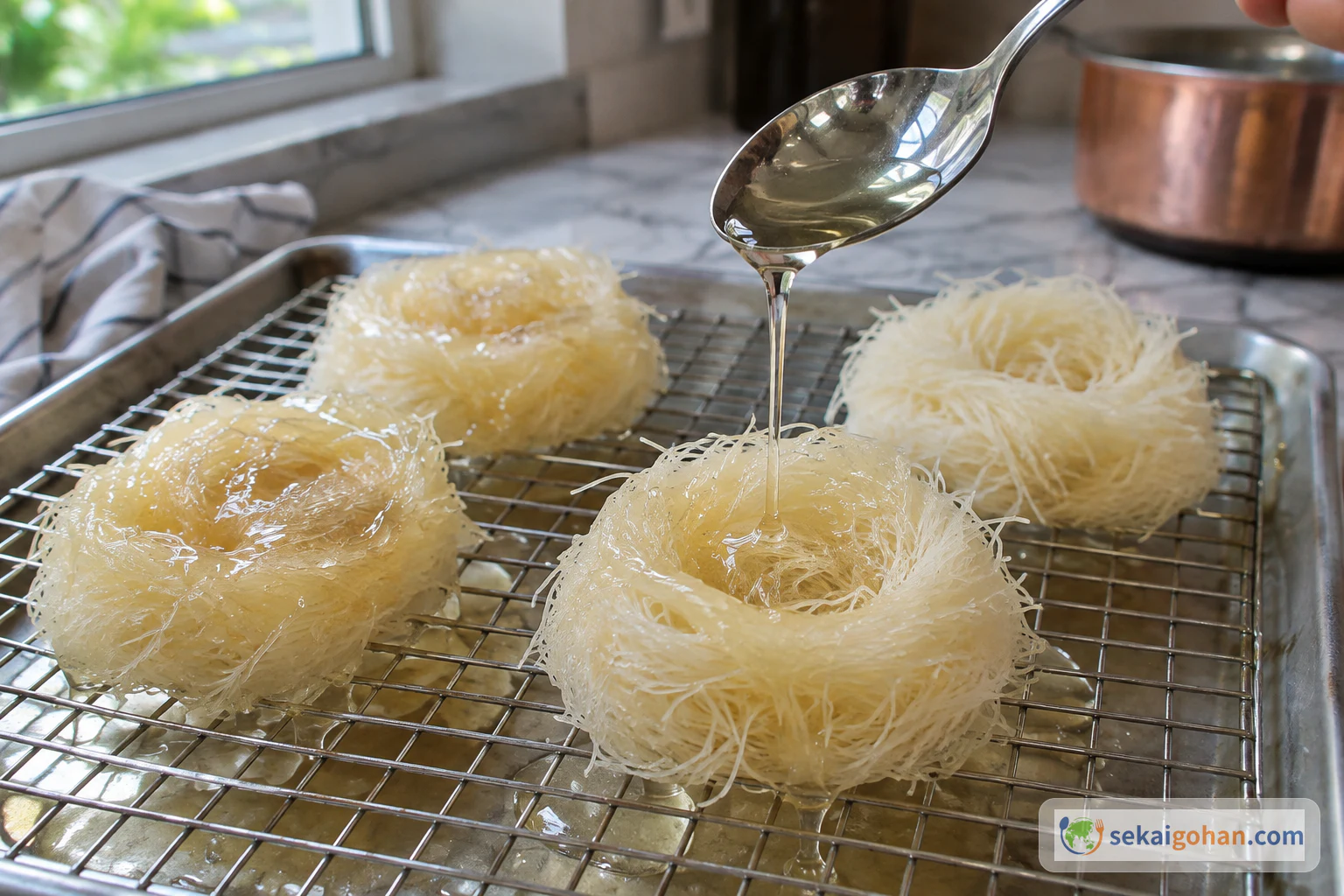
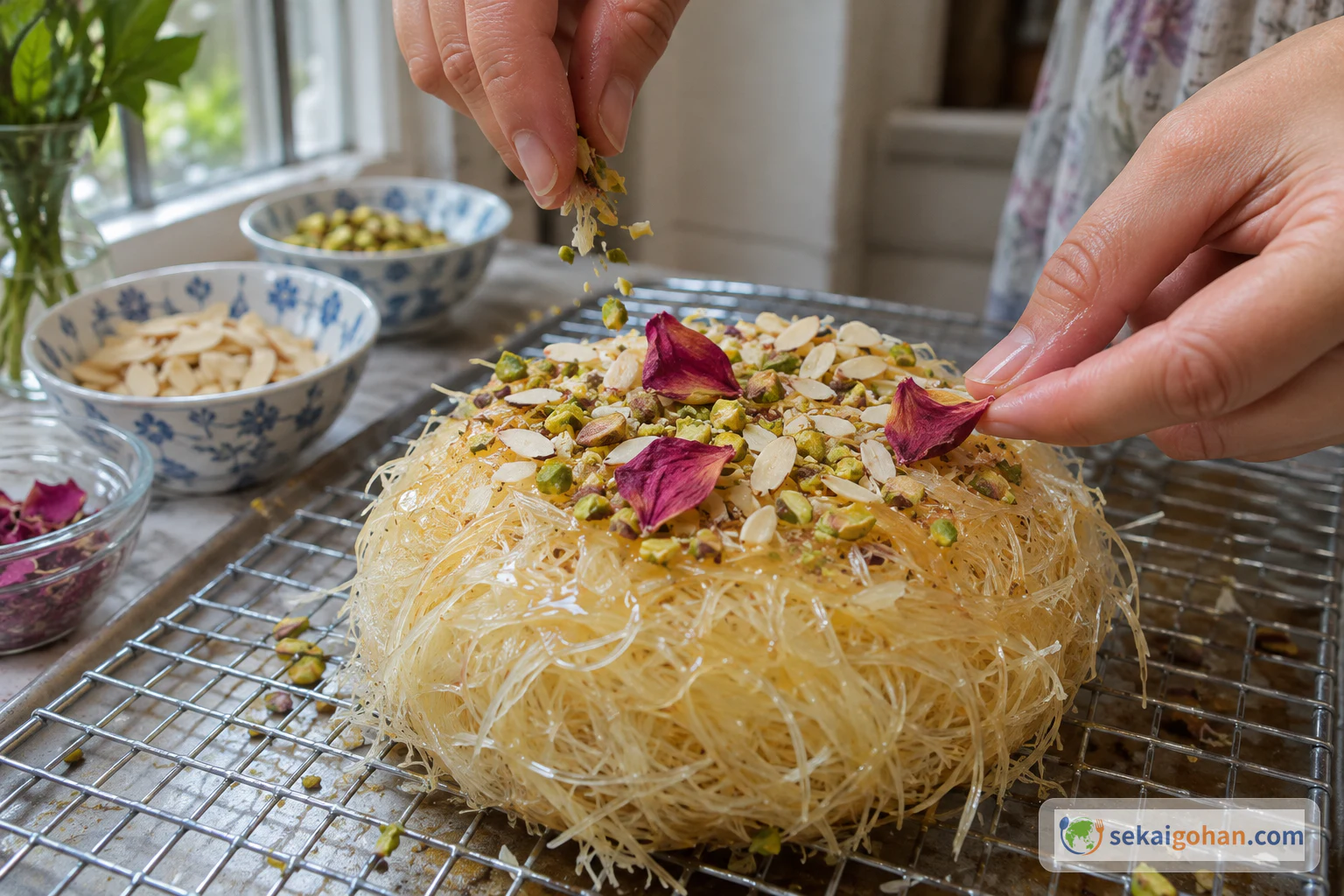
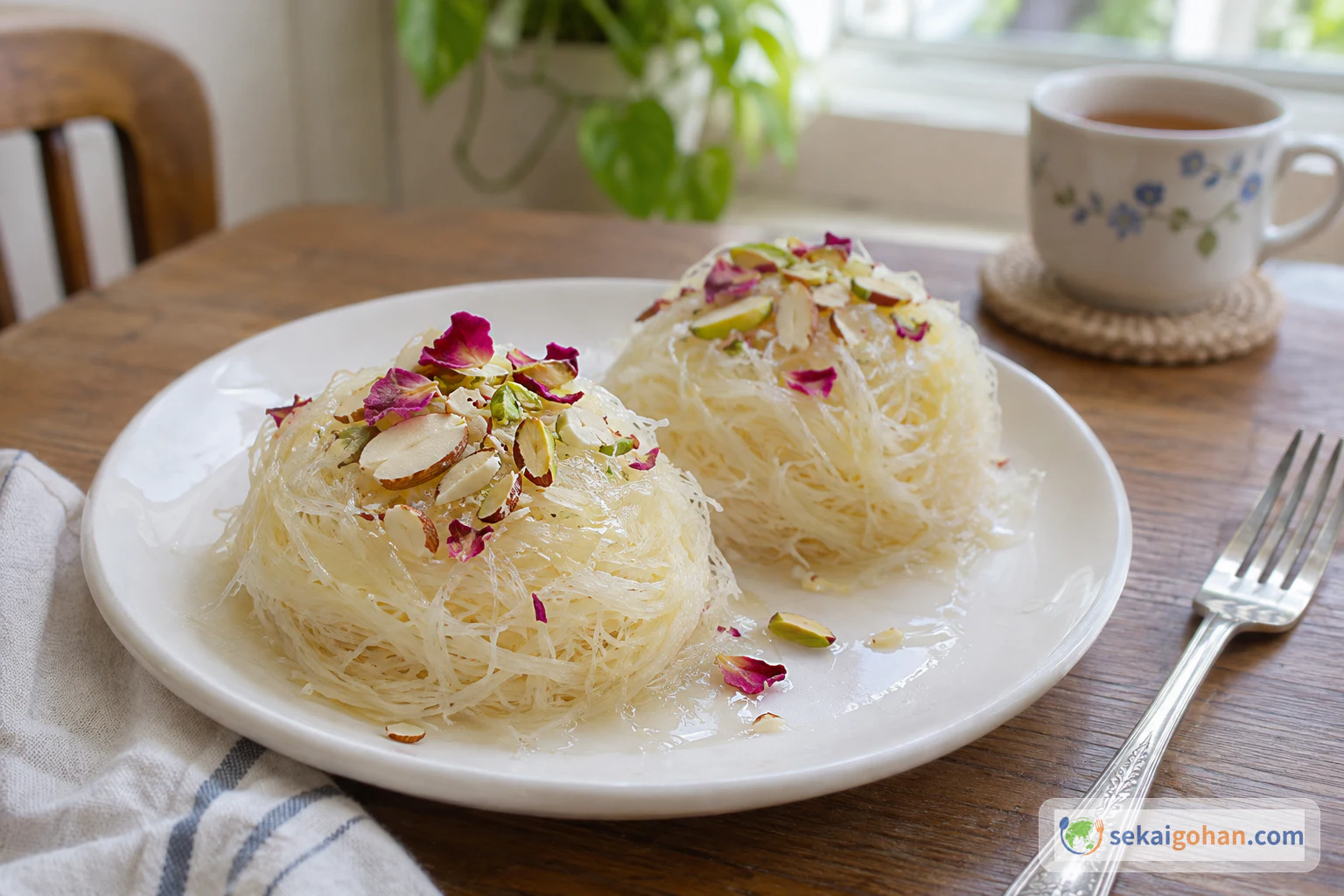
The nests come out of the heat still white. The strands are as fine as hair and dry enough to crackle under your fingertip. Then the syrup goes over them, spoon by spoon, and wherever it sinks in the white strands turn faintly translucent. Sutarfeni is a sweet from western India, mostly Rajasthan and Gujarat. It is a round nest of fine wheat threads, bound with a thick sugar syrup scented with cardamom and scattered with nuts. You bite into it, it shatters, and then it melts on your tongue in sweet, cardamom-scented threads.
A Sweet Named for Its Threads
The name and the shape
The name tells you what you are eating. Sutar means thread and feni means fine, so the sweet is called after its strands. In Gujarati it is written સુતરફેણી. Sweet shops make it from wheat flour and desi ghee and give it a signature round shape. It is linked most closely with Rajasthan and Gujarat, and also with Maharashtra. A sweet shop in Surat, in Gujarat, calls its city a centre for it. There it is a winter sweet, and it is served cold so the ghee inside stays set.
At a glance it can look like baklava's pale cousin, since both are built on fine pastry and syrup. Sutarfeni stays white, though, and its only spice is cardamom. People also mix it up with sohan papdi, another flaky, thread-like sweet. Sohan papdi is made from gram (chickpea) flour, which gives it a different flavour and a different crumble.
The shop version and the home version
In a halwai's (sweet maker's) kitchen, sutarfeni is a craft that takes up to three to four days. Maida (fine white wheat flour) dough is layered with a paste of ghee and rice flour. The dough is stretched by hand into a loop and twisted again and again until it becomes threads. The threads are shaped into nests and deep-fried in ghee over a very low flame so they do not brown. The method is very hard to copy at home, so most families buy their sutarfeni from a sweet shop, especially at festival time. Some shops dust the nests with powdered sugar and nuts instead of soaking them in syrup.
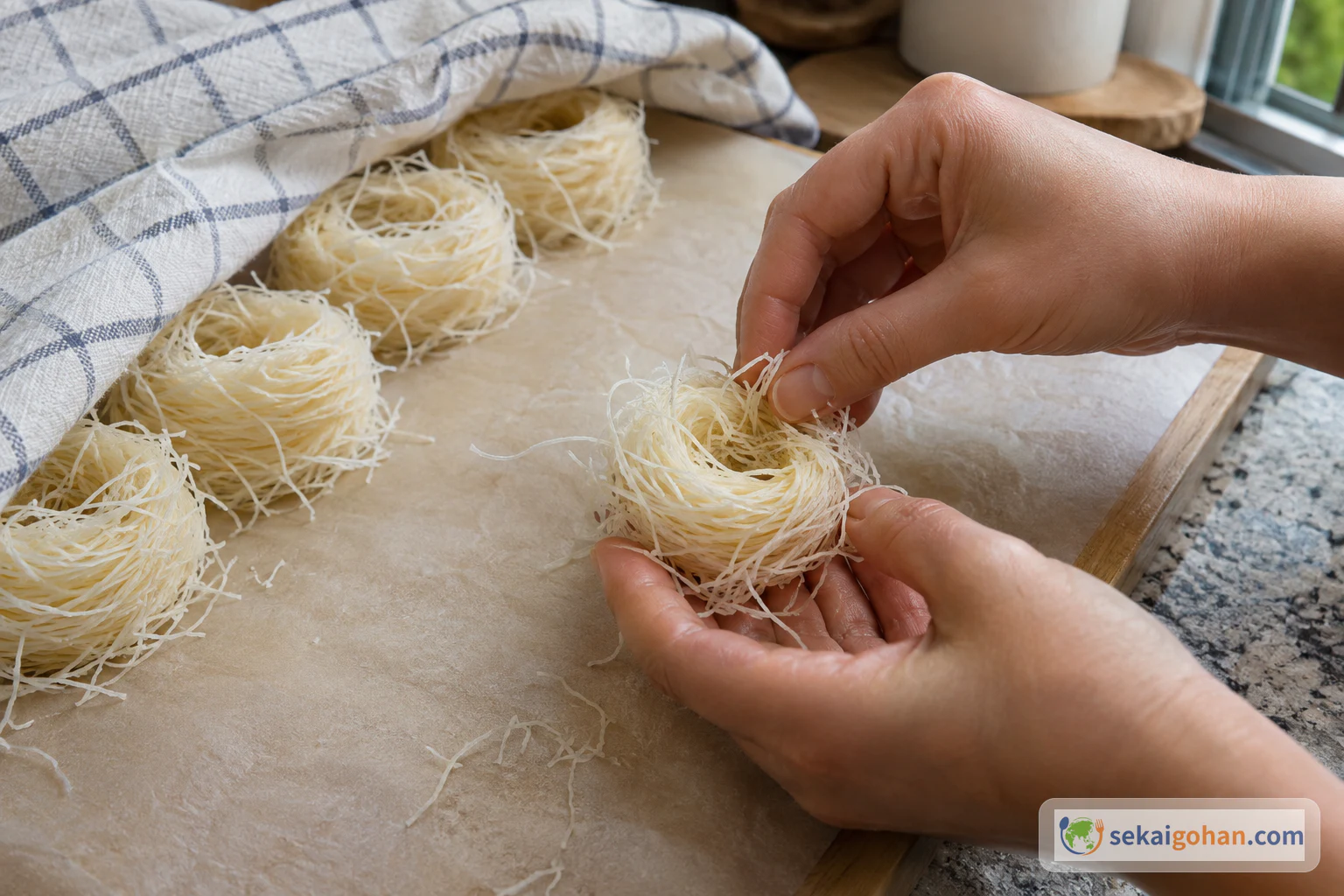
Home cooks use another route. Kataifi (shredded phyllo) already comes as fine, raw threads of wheat dough. You twirl it into nests, crisp them without colour, and soak them in syrup. That is the method below. It is a home route to a similar sweet without days of pulling dough, not a copy of the shop version.
The sweet is said to have come from the royal Rajput kitchens. That story is a legend. No one has settled when or where sutarfeni was first made, or by whom.
Whose festival it belongs to
Sutarfeni turns up at many celebrations, and they belong to different communities. In Rajasthani and Gujarati homes it appears at Holi, Diwali, Teej and Karwa Chauth. It is also a festive sweet for Parsi New Year and Ramzan. Its relative fenni is a disc of fried vermicelli. Fenni is sold in Banaras and old Delhi during Ramadan and is valued at Hartalika Teej. On the eve of Teej, hot milk with fenni is given to a daughter-in-law as sargi. Each of these tables has its own reasons for a plate of fine white threads. Calling it simply "India's festival sweet" would erase them. For more dishes from the country, see our India page.
Ingredients (makes 18 pieces)
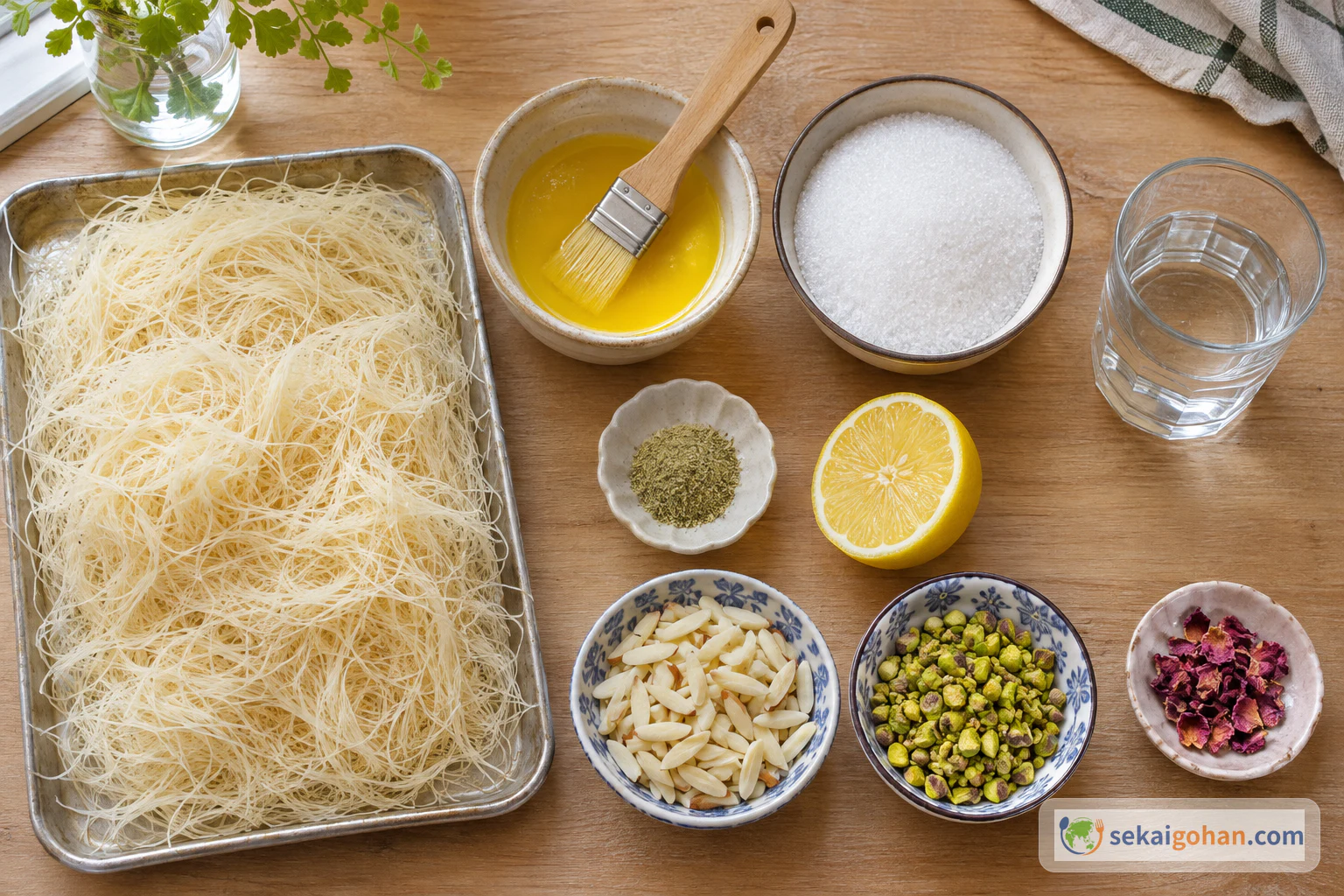
Use regular white sugar. A darker sugar tints the syrup, and the syrup soaks into every strand. The white colour is what makes the sweet look right.
This recipe contains wheat (kataifi), milk (ghee or butter) and tree nuts (almonds and pistachios). Making it with coconut oil removes the milk. The wheat and nuts stay. Use only rose petals sold as edible. Ornamental roses may carry pesticides.
Equipment
- Air fryer (or a conventional oven with a low setting)
- Baking parchment
- Pastry brush
- Wire cooling rack and a tray that fits under it
- Small saucepan
- Spoon
- Clean damp cotton cloth
- Small spray bottle of water
Buying Kataifi and the Few Swaps That Work
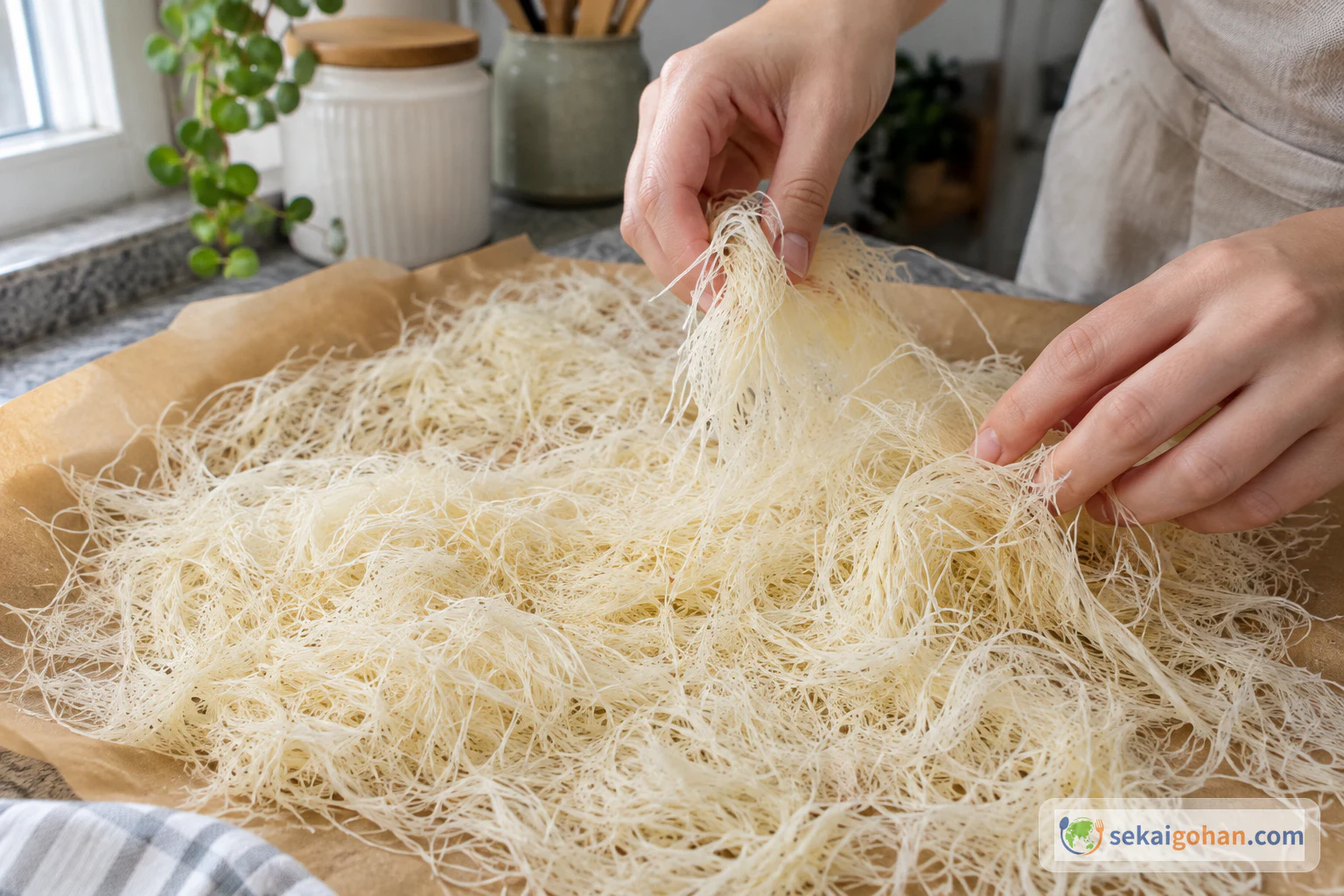
Kataifi, also sold as kadaifi or shredded phyllo, is raw wheat dough cut into thousands of fine threads. Look for it in the freezer at Middle Eastern, Turkish and Greek grocers, or at shops that sell frozen imports online. It spoils easily. Check the pack for mould and frost, and pass over any pack that looks as if it has been thawed and frozen again.
Without kataifi, this recipe cannot be made. Somen, rice vermicelli and harusame are different products. They do not crisp into white threads that hold syrup. Indian grocers sell ready-fried fenni discs, but those are already cooked and make a different sweet.
| Ingredient | Swap | What it changes |
|---|---|---|
| Ghee | Unsalted butter, melted | Works well; you lose some of ghee's nutty, toasted aroma |
| Ghee | Coconut oil | Makes the sweet vegan; a faint coconut note joins the cardamom |
| Cardamom powder | Green cardamom pods, ground | Grind them fine, or the specks show against the white strands |
| Edible rose petals | Leave them out | The petals are decoration, so the taste hardly changes |
The things that make it taste like sutarfeni are the threads, the white colour and the cardamom. Keep all three. The rose petals and the exact mix of nuts can change with what you find.
Method
Move the kataifi to the refrigerator the night before. The next day, the shaping is the slow part, because each nest is twirled by hand. The cooking is quick: the nests spend only a few minutes in the heat. Make the syrup while the nests cool. The syrup needs time to cool too, so the nests are only soaked and garnished once both are ready.
When It Goes Wrong
| What you see | Why | What to do |
|---|---|---|
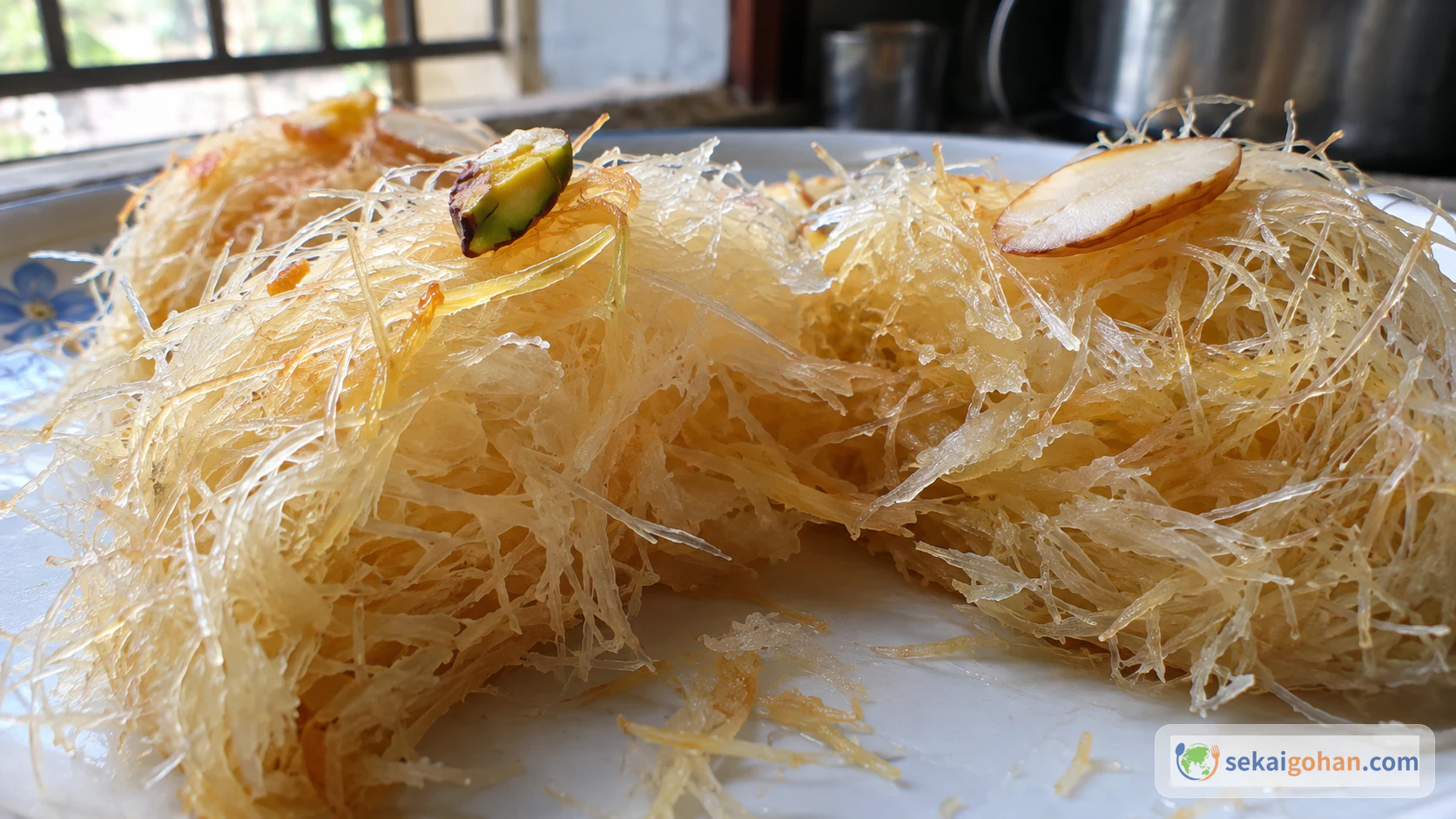
| Nests turn golden or brown | Too much heat or too long in the air fryer | Take them out sooner and watch the colour in the last minute. Give the next batch less time |
| Centre is doughy or tastes of raw flour | The strands are not cooked through | Return the nests to the heat a little at a time, without letting them colour, until a broken nest is dry throughout |
| Nests go soggy after soaking | Syrup was too thin, too hot or too much | Boil the syrup to one thread and let it cool fully. Start with less syrup per nest |
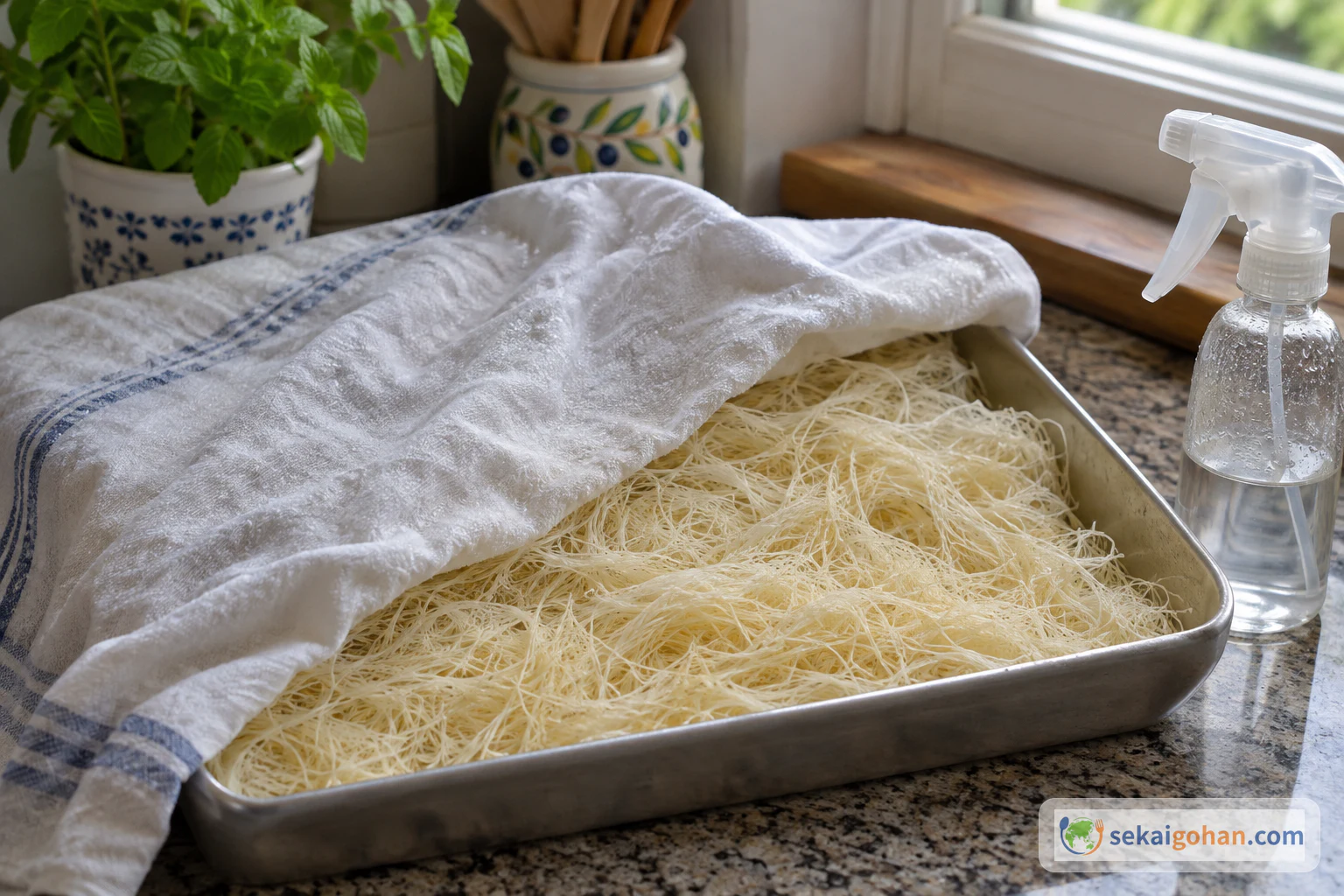
| Strands snap and crumble while shaping | The kataifi dried out | Keep it under a damp cloth and mist the exposed strands lightly |
| Kataifi is wet and clumps together | It was thawed at room temperature | Thaw it overnight in the refrigerator next time. Loosen the strands gently before shaping |
| Syrup turns grainy as it cools | Sugar crystals formed | Make sure the lemon juice goes in. If the syrup is grainy, make a fresh batch |
Serving, Variations and Storage
At the table
Sutarfeni can be served hot, at room temperature or chilled. A cup of hot saffron milk tea goes well beside it. In Surat it is a winter sweet and is eaten cold, so the ghee holds the strands firm. In many parts of Rajasthan, sweets for guests come out before the meal, not after it.
Variations
- Saffron or rose syrup. Saffron, kewra water or rose water can flavour the syrup. Saffron turns the sweet golden, so it no longer looks like the classic white version, though the aroma is lovely. Rose water and kewra keep the colour and bring a floral smell.
- Oven instead of air fryer. Bake the brushed nests at 225°F (110°C, gas mark 1) for 10 to 12 minutes. Check them from 7 to 8 minutes on, and do not let the colour change. The oven is slower than the air fryer.
- Deep-fried. Hold each nest in a metal strainer and fry it in oil or ghee for 15 seconds only, without letting it brown. It needs your full attention.
- Other nuts. Cashews can join the almonds and pistachios. This comes from another author's version, not the main recipe. For celebrations, edible silver leaf goes on top.
For the deep-fried version, keep the strainer handle dry and lower each nest in slowly. Never leave hot oil or ghee unattended.
Storage and making ahead
Store finished sutarfeni at room temperature in an airtight container with parchment between the layers, and eat it within a week. To make it ahead, store the crisp nests plain in the same way. Spoon the syrup over them and add the garnish just before serving.
Frequently asked questions
Is sutarfeni the same as seviyan?
No. Seviyan is dried straight vermicelli, usually simmered into a sweet dish. Sutarfeni is crisp threads shaped into a round nest and glazed with syrup. Fenni sits between the two: it is fried white-flour vermicelli pressed into a disc.
Can I use the ready-made fenni discs sold at Indian grocers?
They make a different sweet. Fenni is already fried and cooked. One way to use it is to break it up, fry it briefly in ghee with nuts and bind it with one-thread syrup. Another is to soak it in hot sweetened milk, often finished with saffron, in the style of doodh pheni. Neither goes through the shaping and crisping steps above.
Can I use honey instead of sugar syrup?
Modern honey versions exist, with honey, a little water and cardamom poured over fried vermicelli nests. That is its own recipe, with its own proportions. With kataifi nests, keep the sugar syrup this recipe is built on.
How much syrup goes on each nest?
One published kataifi recipe spoons 2 to 3 tablespoons of syrup over each nest. The syrup from 1 cup of sugar and 1 cup of water is not enough for 18 nests at that rate. The method above starts with about 1 tablespoon per nest and spends what is left on nests that still look dry.
Why does the syrup need lemon juice?
Lemon juice stops the sugar from crystallising as the syrup cools. Without it, a thick syrup can turn grainy and cloudy. One teaspoon is enough to keep the syrup clear, and you can barely taste it.