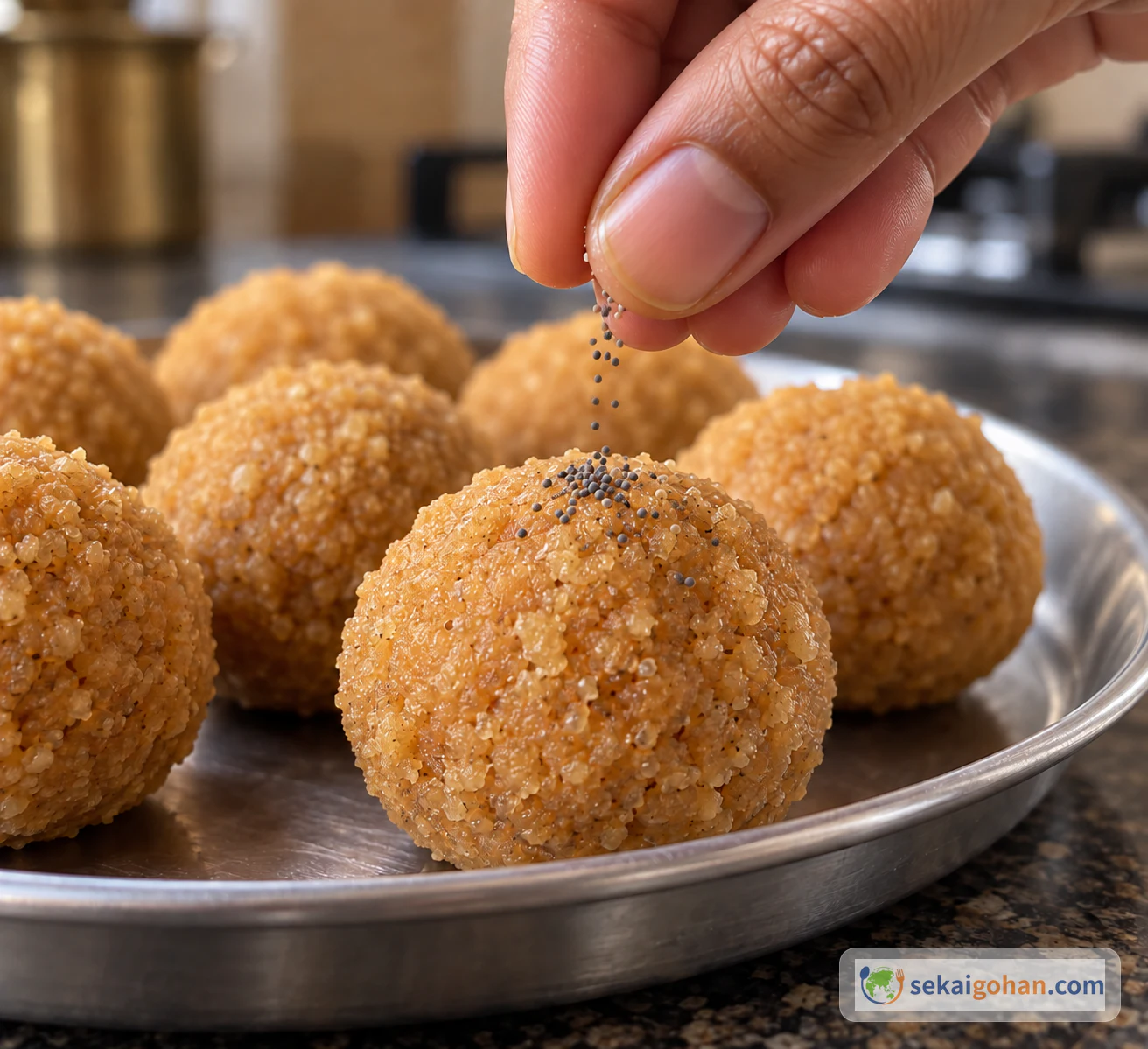
Churma Ladoo: Fried Dough Ground Back to Powder and Rolled Again
Three flours become a dough, the dough becomes fried muthia, and the muthia become a fine powder again. Ghee and jaggery, warmed together, bind that powder into rounds. Each fat has its own job: a little oil in the dough, separate oil for frying, and ghee only at the end with the jaggery.
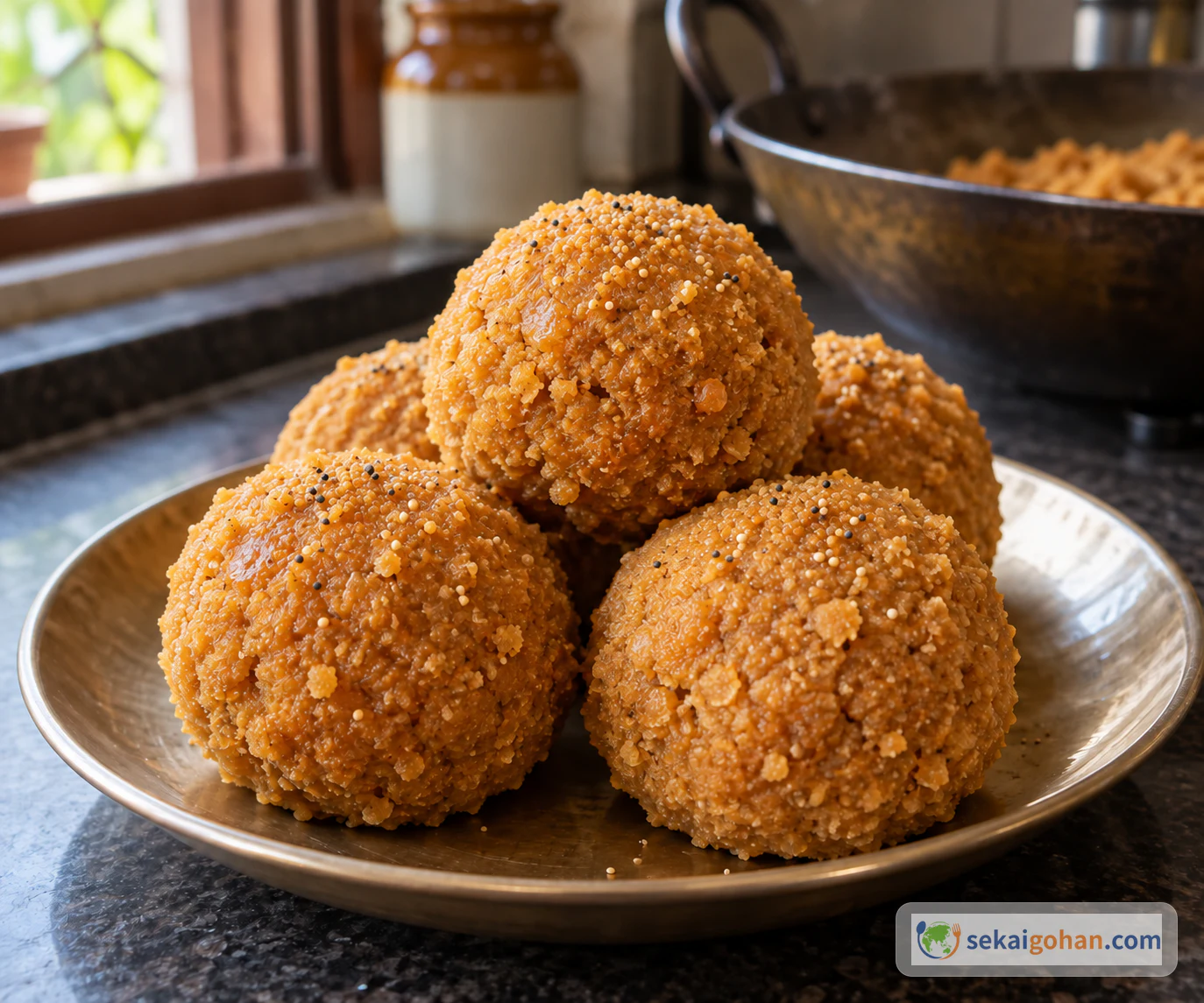
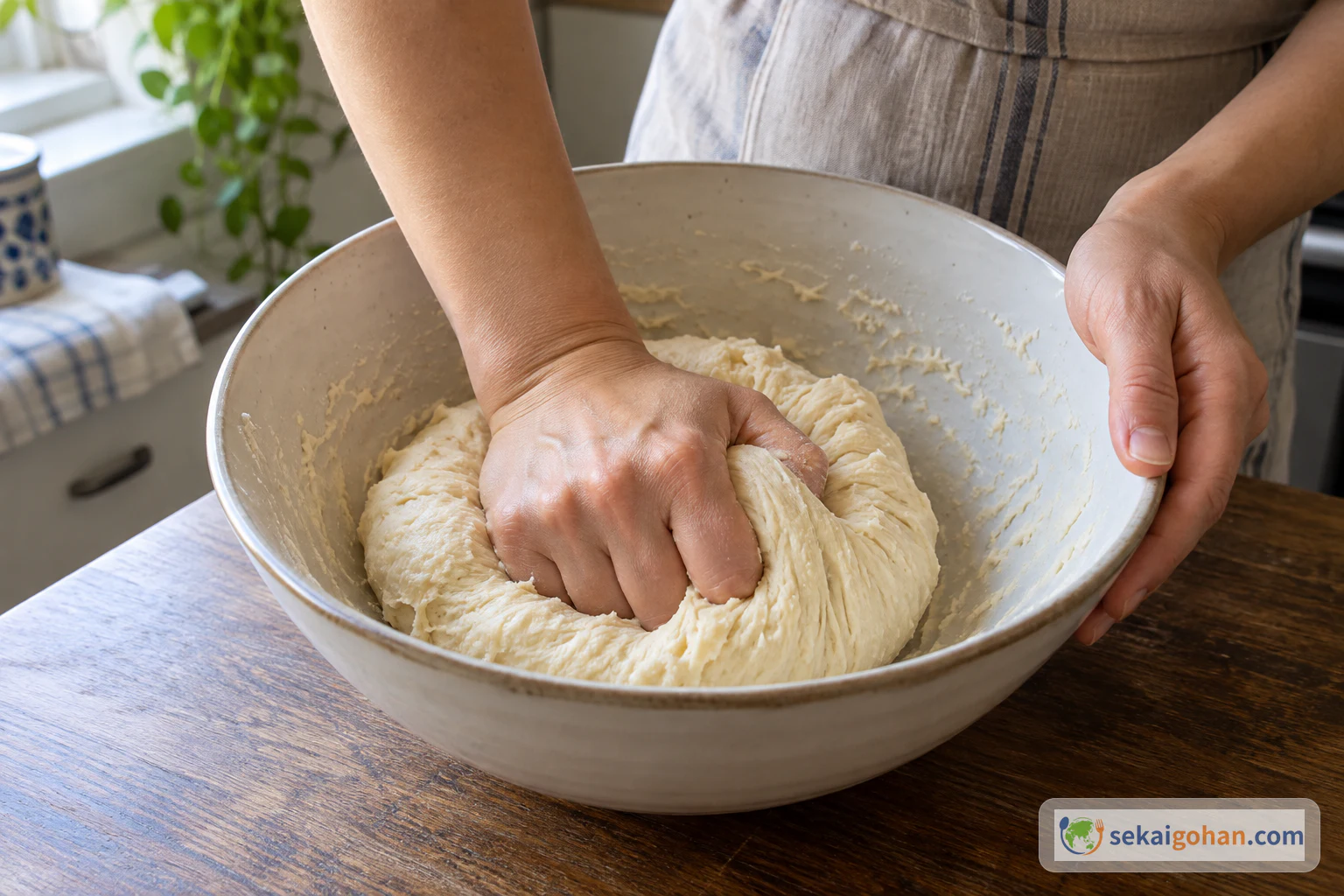
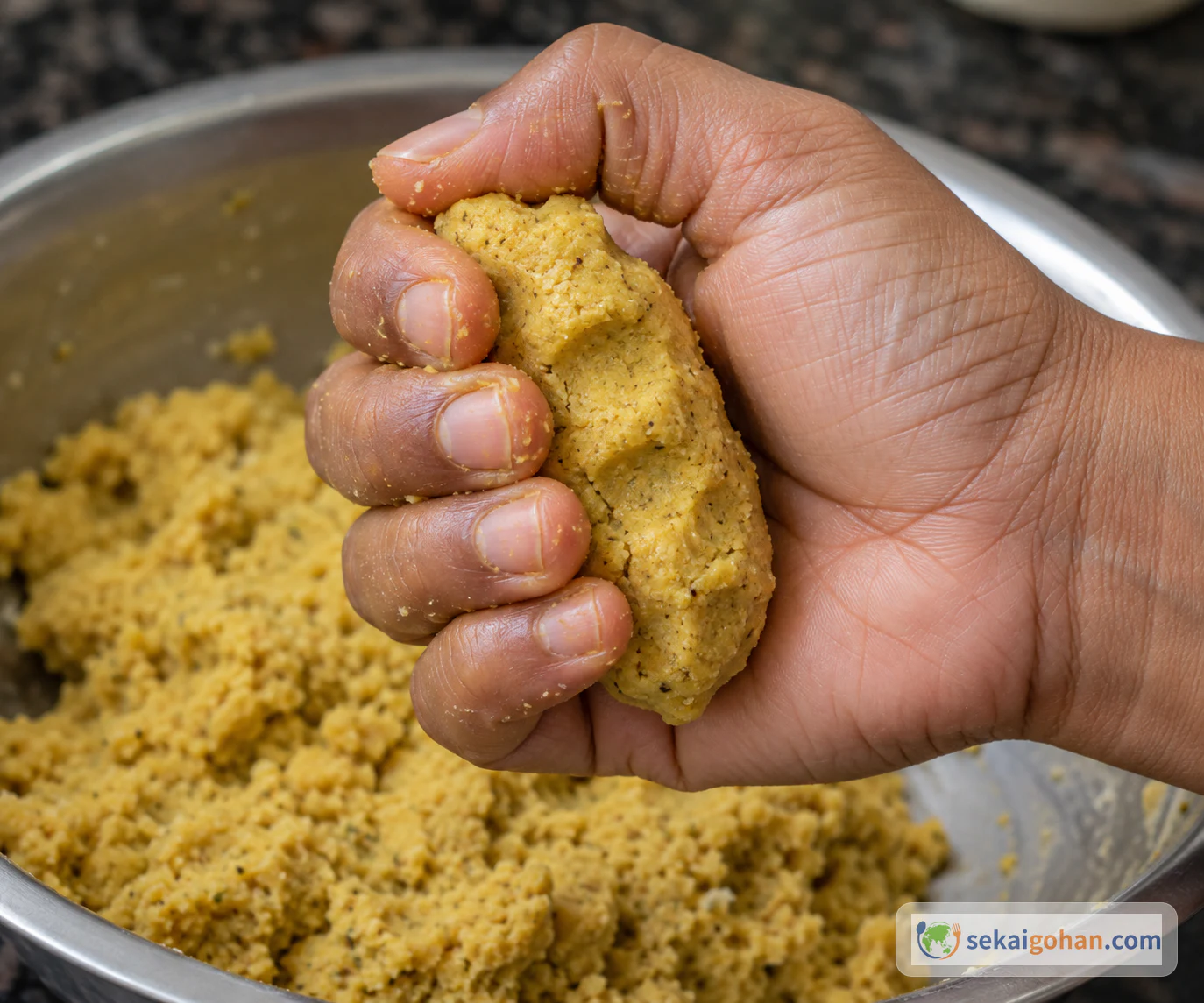
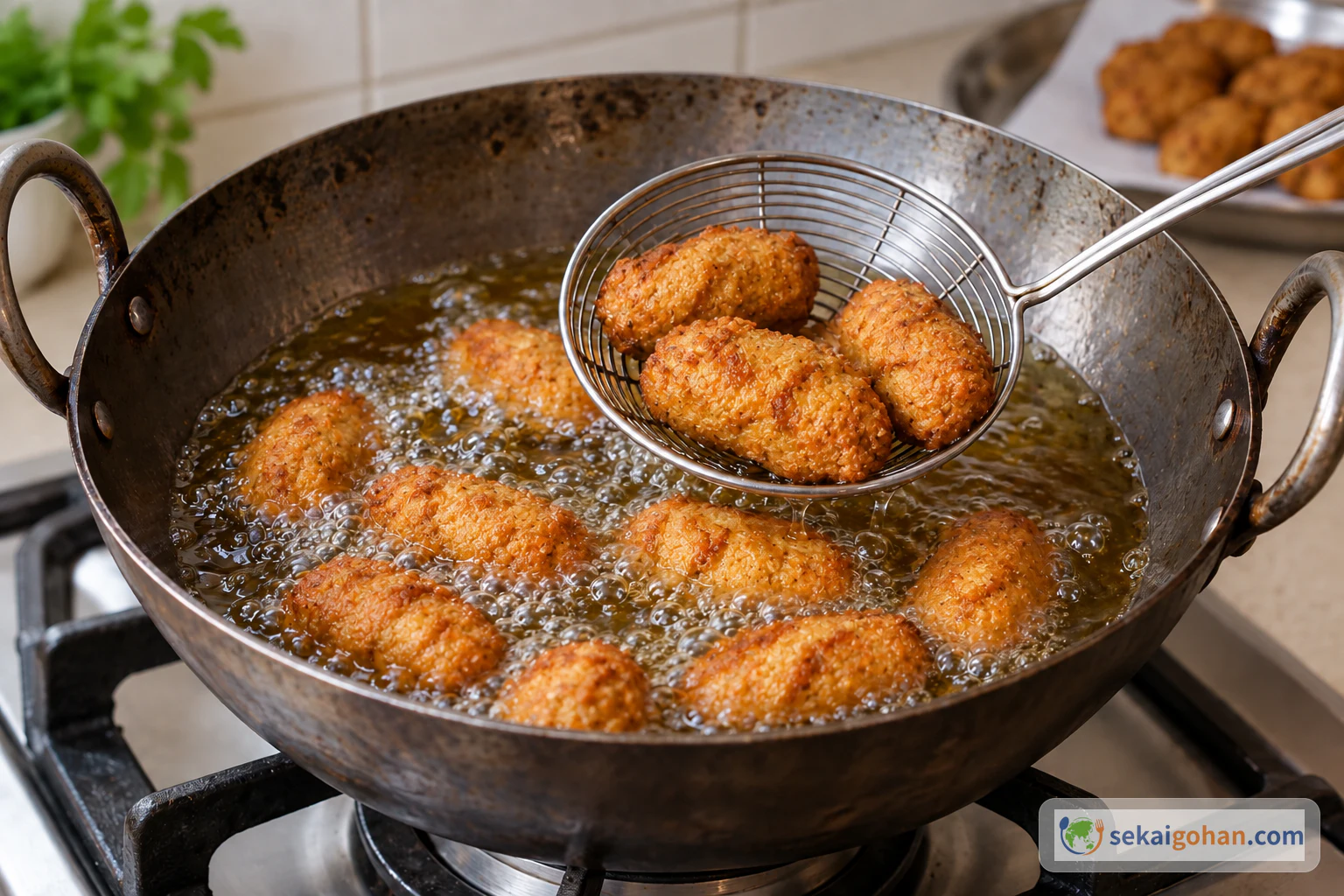
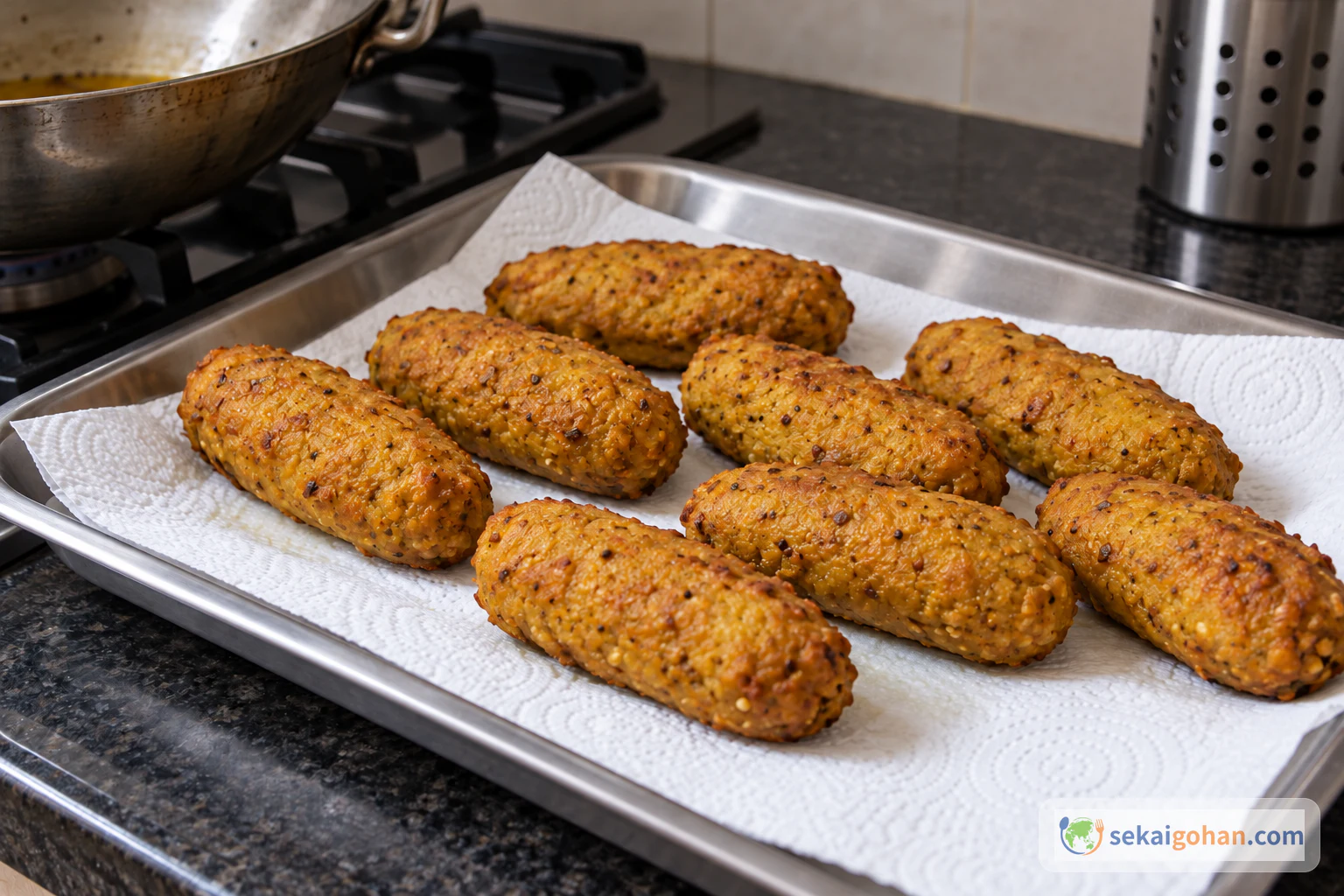
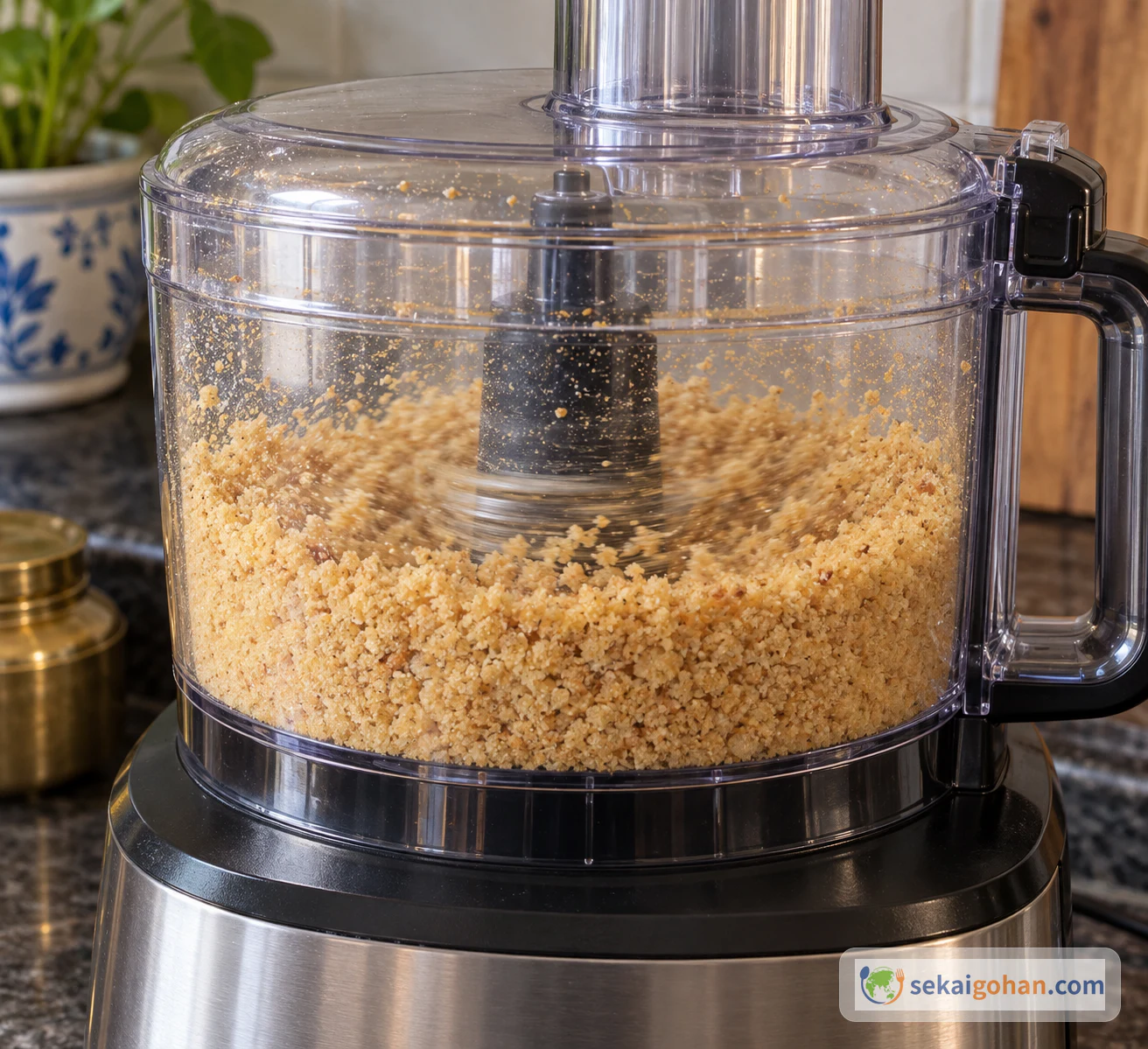
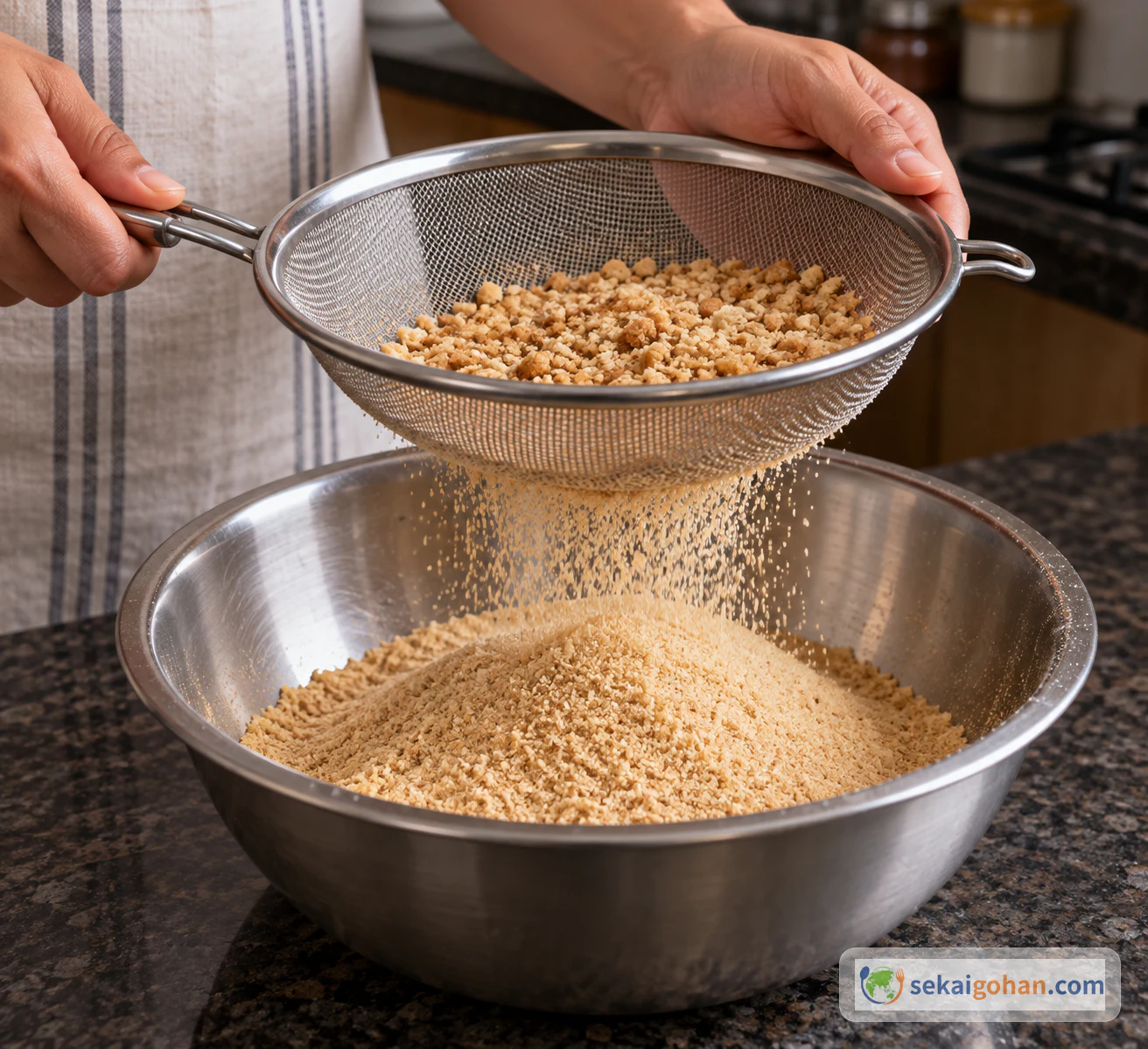
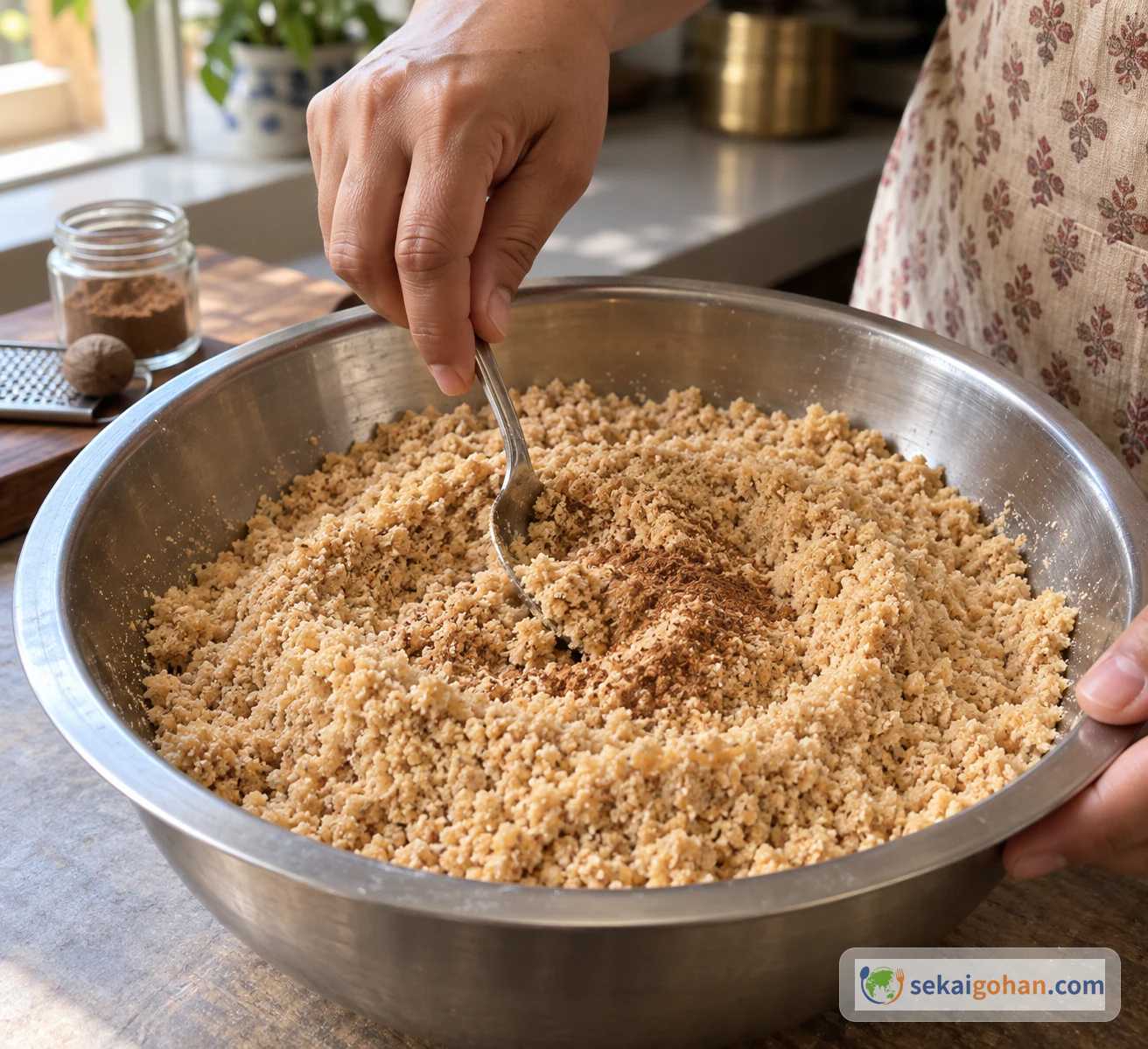
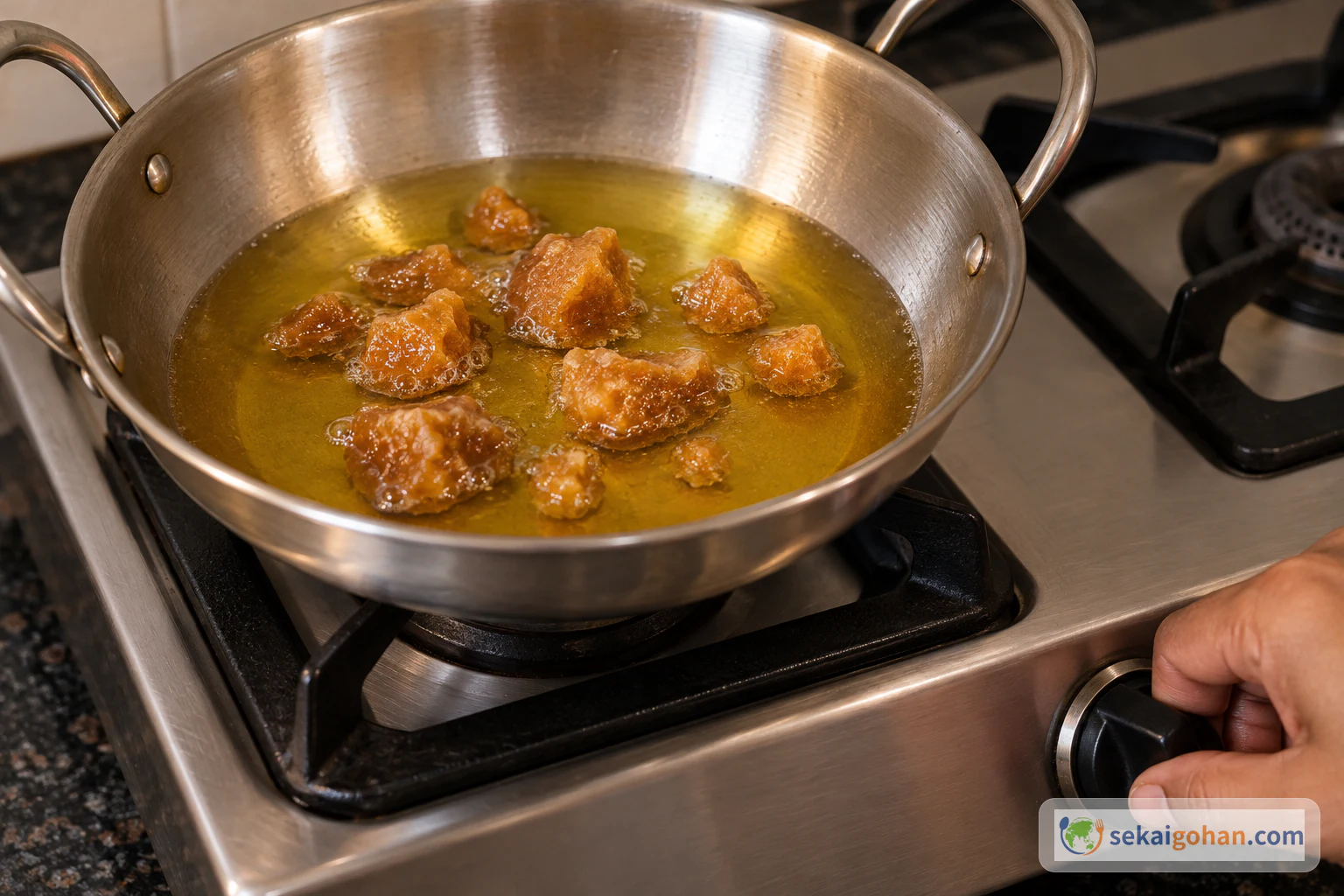
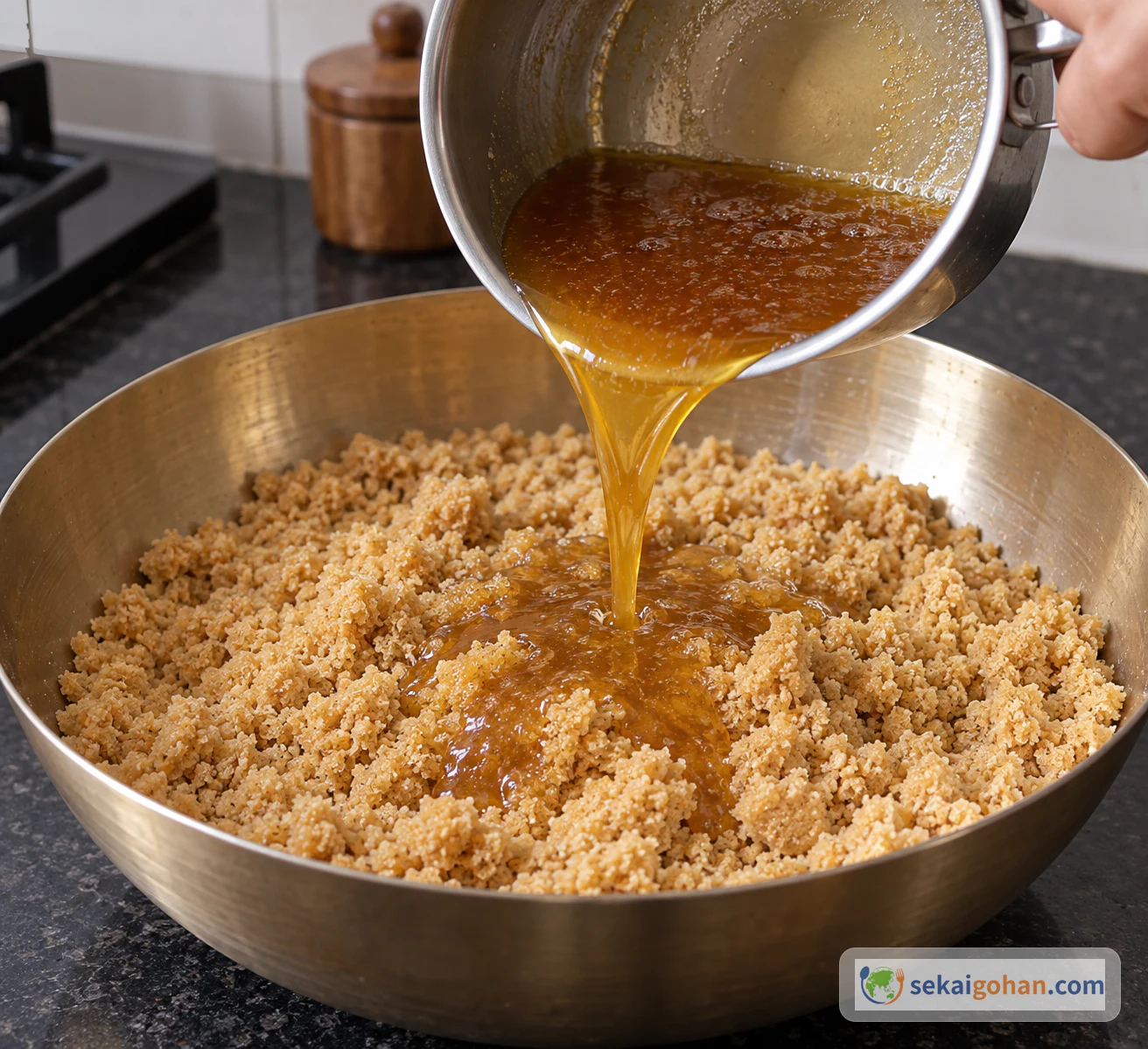
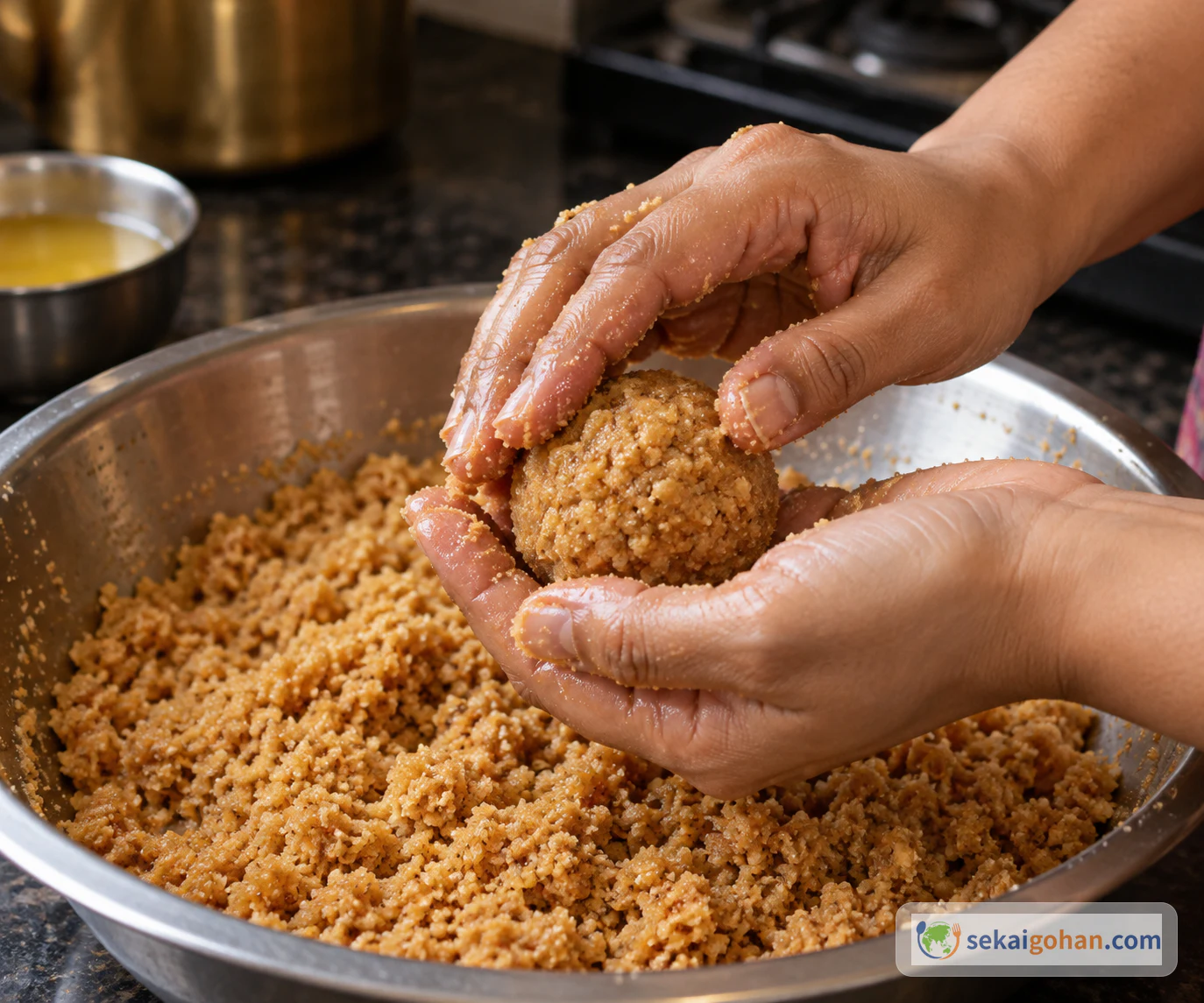
Churma ladoo takes an unusual route to a sweet. Dough made from coarse whole wheat flour, chickpea flour and semolina is squeezed in a closed fist into rough, finger-marked pieces called muthia. They fry until golden brown and cooked through, cool on paper, and are then cut, ground and sieved back into a fine powder. Only then does the sweetness arrive: jaggery melted into ghee is poured over the powder, and the mixture is pressed into rounds by hand or in a mold.
This version follows one written formula, "Choorma Ladoo," from the Rajasthani cuisine chapter of Uttarakhand Open University's course material Regional Cuisines of India-I. The Rajasthan Foundation, a state government body, also lists Churma Ladoo among examples of traditional Rajasthani cuisine. Many other formulas exist, so treat this as one Rajasthani version rather than the only correct form.
The source spells the dish Choorma Ladoo. You will also see Churma Ladoo and Churma Laddu, and in Hindi चूरमा लड्डू. Searching under several spellings helps when you look for ingredients or other versions.
The amounts, order and cues below come from the source recipe as written. The recipe has not been kitchen-tested for this article. The source gives no yield, piece count or size, total time, oil temperature, or storage guidance, so none of those appear here.
Churma as powder, churma as ladoo
Rajasthan Tourism describes Dal Baati Churma as a Rajasthani meal of dal, baati (wheat bread balls dipped in ghee and served hot), and churma, which it calls a sweet powdered cereal. In that meal, churma is served loose. In the recipe here, the churma is made from fried muthia and then shaped into ladoo. The two share a name and a crumbly character, but the tourism description does not say that every churma is rolled into balls, and this recipe does not involve baking baati.
Ingredients: Three Flours, Three Separate Fats and Jaggery
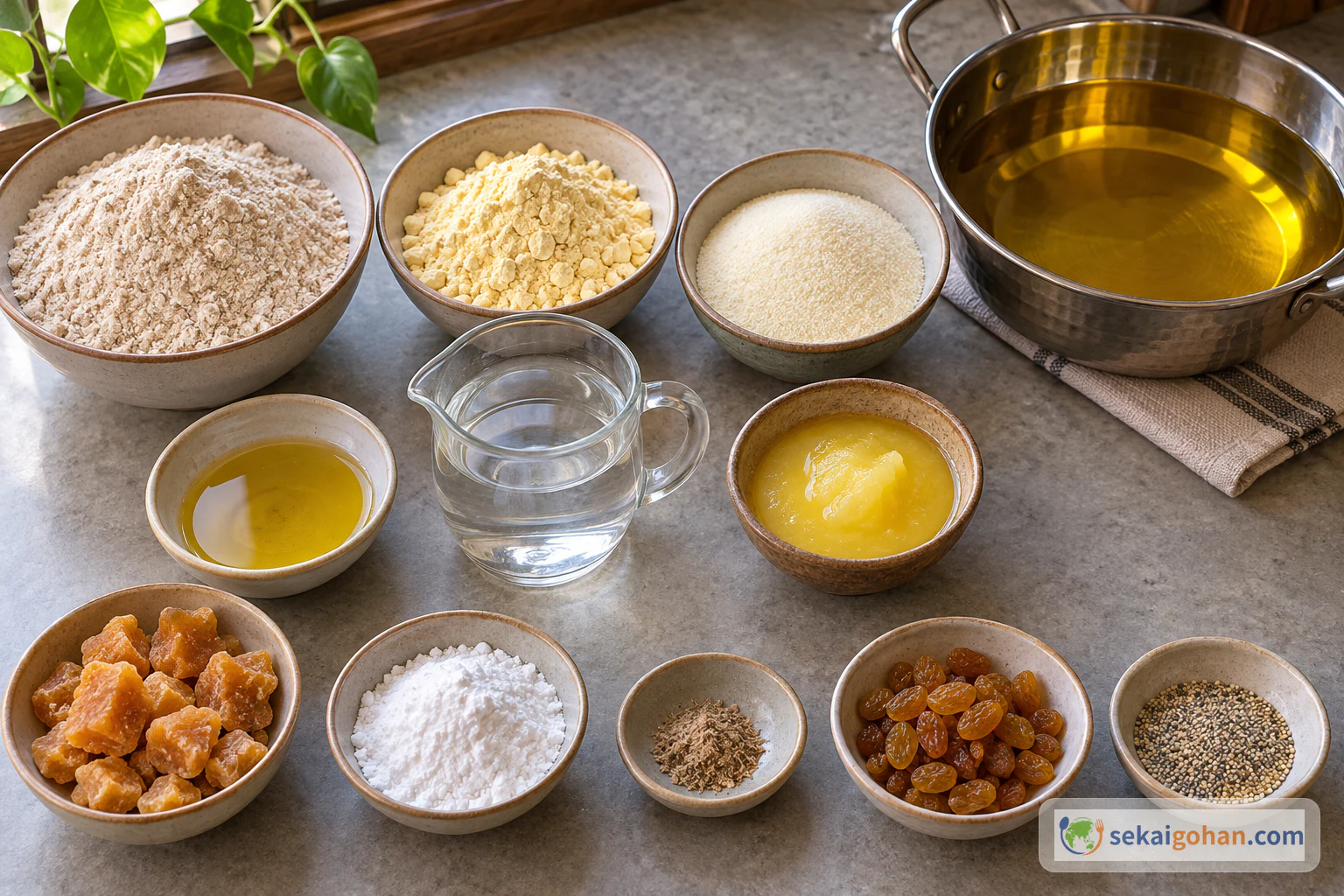
Powdered sugar and raisins are optional and are left out here; the steps below are written without them.
Equipment
- A bowl for mixing and kneading the dough
- A deep pan or kadai for frying the muthia in 2 cups of oil
- Paper and a tray for draining and cooling the fried muthia
- A knife for cutting the cooled muthia
- A food processor with a lid that closes securely
- A fine sieve and a bowl beneath it
- A separate pan for warming the ghee and jaggery
- A laddu mold (optional; you can shape by hand instead)
Choosing and Keeping Apart: Flours, Fats and Sweetener
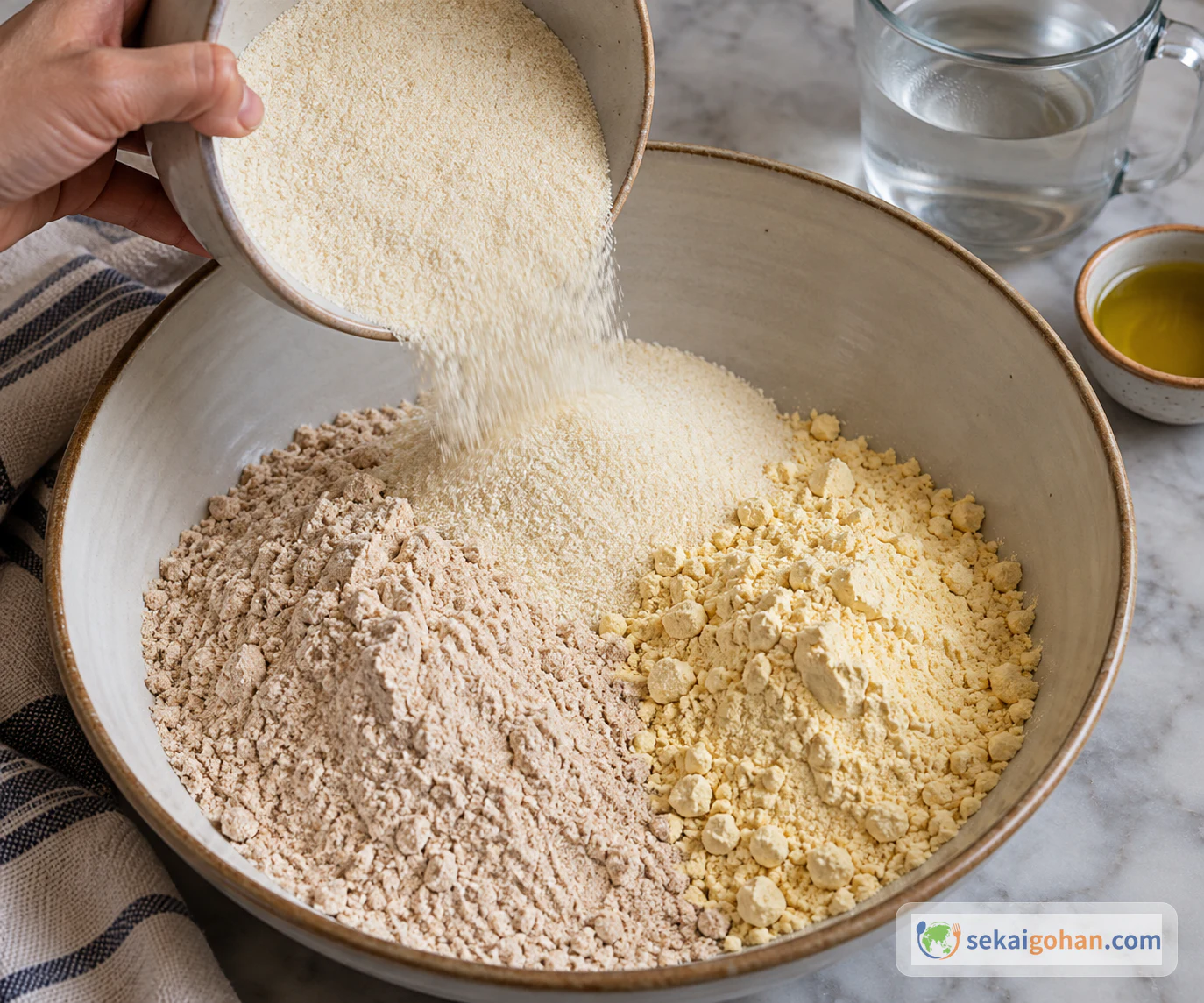
Look for the three flours as three different products. Coarse whole wheat flour, besan (chickpea flour) and rava or sooji (semolina) each play a part, and they are not interchangeable. A finely milled whole wheat flour, or a semolina with a different grind, may not give the same texture; this recipe makes no promise of an equivalent result with substitutes.
Keep the three fats in their own roles. The 1½ tbsp of oil goes into the dough. The 2 cups of oil are for the frying pan. The ¼ cup of ghee is only for melting the jaggery at the end. Keep frying oil and ghee separate, so do not fry the muthia in ghee or fold the frying oil into the dough amount.
Jaggery's form is up to you. It may be grated, broken or in another form.
What this formula does not include. There is no salt, cardamom, nuts, sesame or coconut in the ingredient list. If you have seen churma with almonds or edible gum (gond), that is a different formula; see the variations section below.
This recipe contains wheat (whole wheat flour and semolina), chickpea (besan) and dairy (ghee). Check the oil you choose if anyone eating has allergies. Frying uses a deep pan of hot oil: keep the heat at medium and do not let the oil overheat. Grind only with the food processor lid closed and locked, and keep hands out of the bowl while it runs.
Method: From Dough to Muthia to Powder to Ladoo
Steps 1–4 make and fry the muthia. Step 5 turns them into churma powder. Steps 6–8 season, sweeten and shape. Powdered sugar and raisins, which are optional, are left out throughout.
Checkpoints: Going Back to the Source's Cues
The source gives few numbers, so its cues matter. When something looks uncertain, the table below points back to what the recipe actually says rather than offering fixes it does not support.
| Situation | What the source says |
|---|---|
| You are unsure about the dough's texture | The source gives no firmness or hydration endpoint and no order for the oil and water. This recipe keeps the listed 1½ tbsp oil and ½ cup warm water |
| The oil seems to be getting very hot | Fry over medium heat and do not overheat the oil. No temperature is given, so keep the heat at medium |
| You are deciding when to take the muthia out | After 4–5 minutes, when they are both cooked through and golden brown. Color alone is only half of the cue |
| Large chunks remain after sieving | Grind the larger chunks again so the churma is a fine powder |
| You are tempted to cook the jaggery longer | Turn off the heat when the jaggery starts to float in the ghee. No syrup or string stage is part of this recipe |
| You want to fry in ghee, or add cardamom or nuts | Not part of this formula. Frying oil and finishing ghee are listed separately, and the source lists no cardamom, nuts, salt, sesame or coconut |
Variations Within the Source, and a Different Formula
Only choices the source itself offers are treated as variations of this recipe. Other published churma formulas are noted for comparison, not mixed in.
- Hand-rolled or molded. The source allows shaping by hand or with a laddu mold.
- With raisins. The source lists 1 tbsp raisins (kismis) as optional, mixed in with the nutmeg. This version omits them.
- With powdered sugar. The source lists 1½ tbsp powdered sugar as optional, added with the ghee and jaggery. It is a separate ingredient from the jaggery. This version omits it.
- Powder or ladoo. As Rajasthan Tourism's description of Dal Baati Churma shows, churma is also served as a sweet powder beside dal and baati. That is a different way of serving, not a change to this formula.
A different churma formula for comparison. A churma recipe by Niru Gupta published on NDTV Food uses atta with gond (edible gum), powdered sugar, almonds, cardamom and ghee. It fries flat rounds rather than fist-pressed muthia, powders them, and then adds fried gond and the other ingredients; it offers either rolling laddoos or serving the powder. Its ingredient list gives ¼ cup ghee while its method rubs ½ cup ghee into the atta, so its ghee amount is inconsistent within the page. None of its ingredients or amounts are used in this recipe.
Rajasthan's Churma, on the Plate and in the Hand
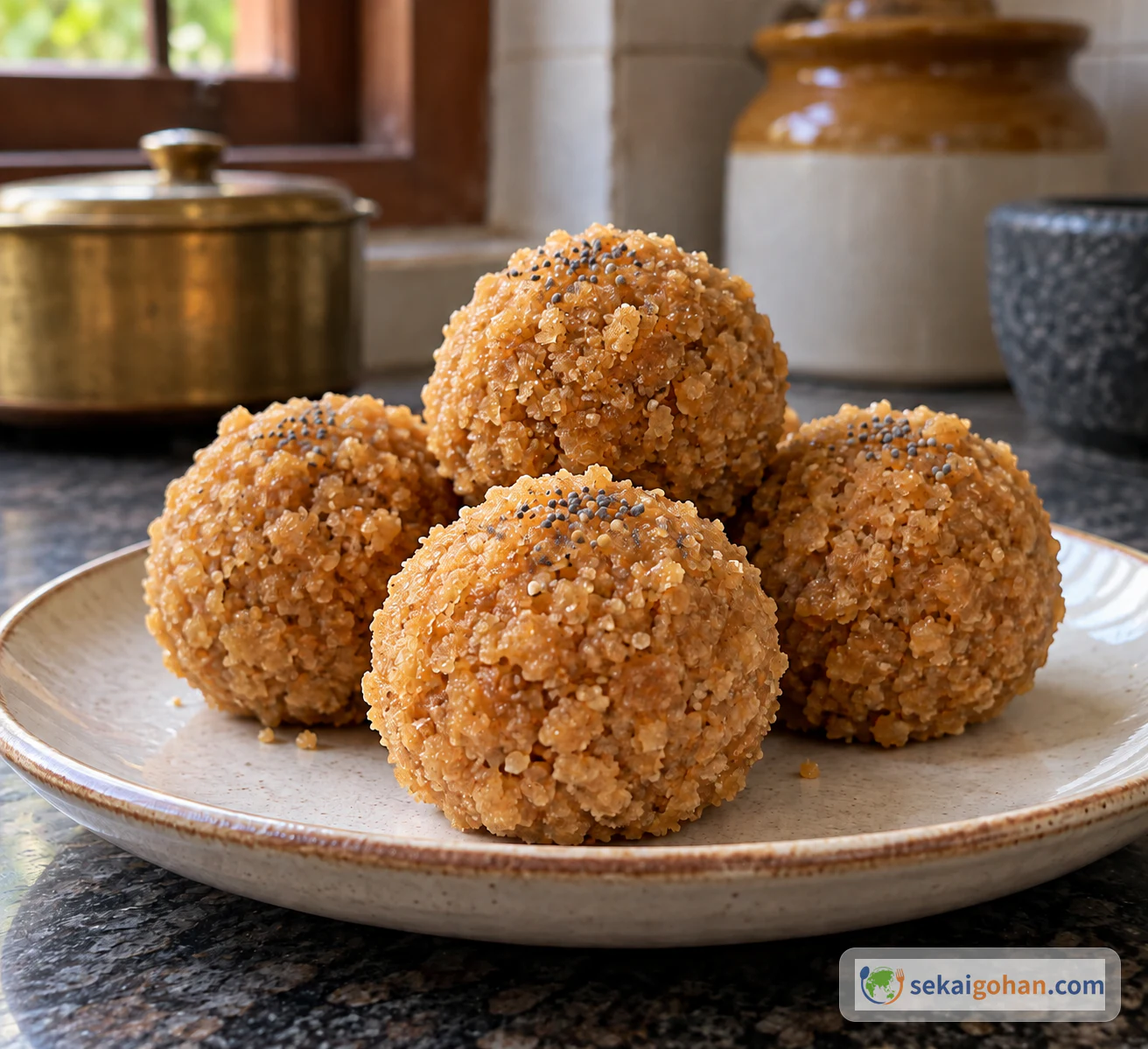
The Rajasthan Foundation lists both Churma Ladoo and Dal Bati Churma among examples of traditional Rajasthani cuisine, and notes gram flour and dairy among the ingredients common in the region's cooking. Rajasthan Tourism presents Dal Bati Churma as a meal of dal, baati and churma, the last described as a sweet powdered cereal. Churma ladoo gathers that sweet, crumbly cereal into a form you can hold.
The origin of the dish, who first made it, and any required link to particular festivals or religious occasions are not established in the sources used here, so this article does not claim them. Nor does one course-book formula define every household's or every district's churma. For more dishes from across the country, browse India.
Frequently Asked Questions
Are churma and churma ladoo the same thing?
They are related but not always served the same way. Rajasthan Tourism describes churma in Dal Baati Churma as a sweet powdered cereal served with dal and baati. The recipe here shapes the churma into ladoo. Do not assume every churma is rolled into balls.
Is the churma made by baking and crushing baati?
Not in this recipe. Here the dough is squeezed by hand into muthia and fried in oil, then ground. Baking baati is a separate preparation and is not part of this method.
Do I need powdered sugar and raisins?
No. The source marks both as optional, and this version leaves both out. Jaggery is the sweetener used throughout.
How many ladoo does this make?
The source gives no yield, piece count or size, so this article does not state one.
Can I fry the muthia in ghee?
The source lists 2 cups of oil for frying and ¼ cup of ghee separately, with the ghee used only for melting the jaggery. This recipe keeps them separate and does not replace the frying oil with ghee.
How should I store leftovers?
The sources used for this recipe give no storage guidance, so none is offered here.
Sources
- Uttarakhand Open University, Regional Cuisines of India-I (BHM-502AT), "12. Choorma Ladoo," printed pages 154–155, in the Rajasthani cuisine chapter. The sole source for all ingredients, amounts and method steps in this recipe, including the optional status of powdered sugar and raisins and the use of poppy seeds as garnish. https://uou.ac.in/sites/default/files/slm/BHM-502AT.pdf
- Rajasthan Tourism, Government of Rajasthan, "Rajasthani Cuisine: Traditional Flavors." Supports the description of Dal Bati Churma as a meal of dal, baati and churma (a sweet powdered cereal), and of baati as wheat bread balls dipped in ghee. Regional context only; no recipe amounts. https://www.tourism.rajasthan.gov.in/rajasthani-cuisine.html
- Rajasthan Foundation, Government of Rajasthan, "Cuisine of Rajasthan." Supports listing Churma Ladoo and Dal Bati Churma among examples of traditional Rajasthani cuisine, and gram flour and dairy among common ingredient categories. Regional identification only. https://foundation.rajasthan.gov.in/CuisineofRajasthan.aspx
- Niru Gupta, "Churma Recipe," NDTV Food. A separate churma formula with gond, almonds, powdered sugar, cardamom and ghee, used here for comparison only; its ghee amount differs between the ingredient list and the method. https://food.ndtv.com/recipe-churma-219631