In the Steam, Black Pepper Wakes First
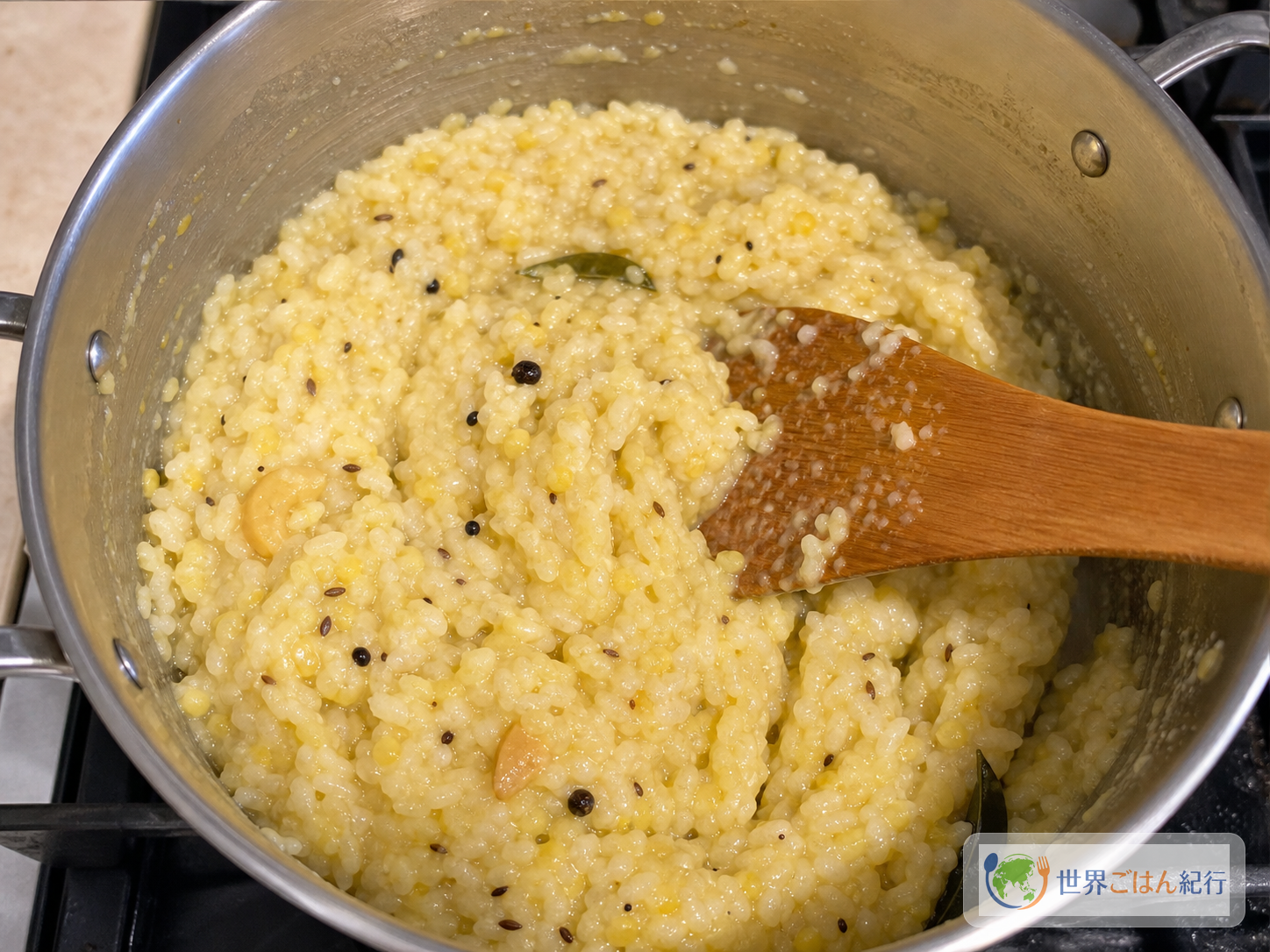
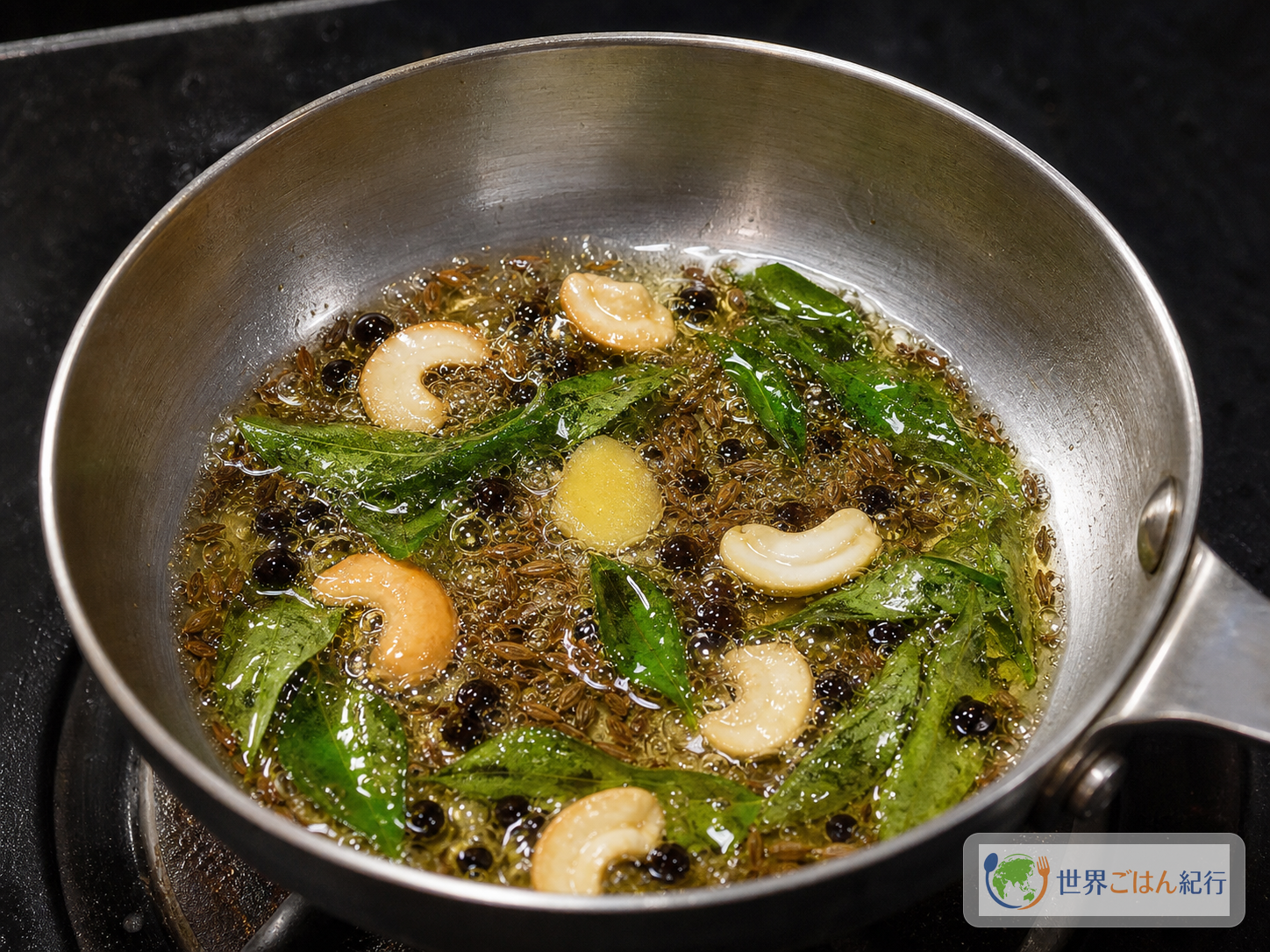
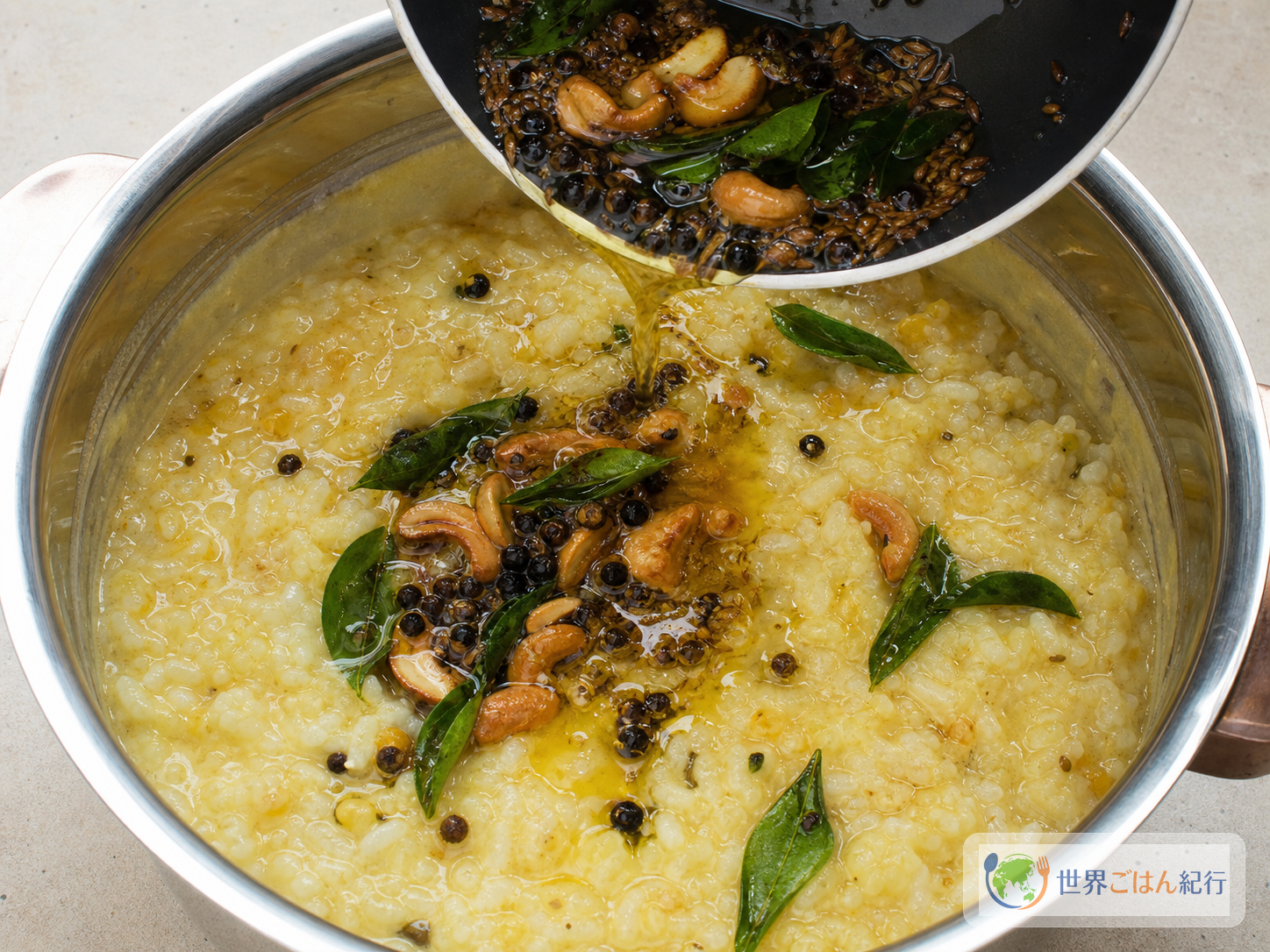
As rice and lentils loosen in the morning pot, the sound grows gradually quieter. At the end you heat ghee in a separate small pan and drop in black pepper, cumin and cashews. When the sputtering bubbles get fine and the curry leaves crackle loudly once, that is the signal to return the aroma to the pot.
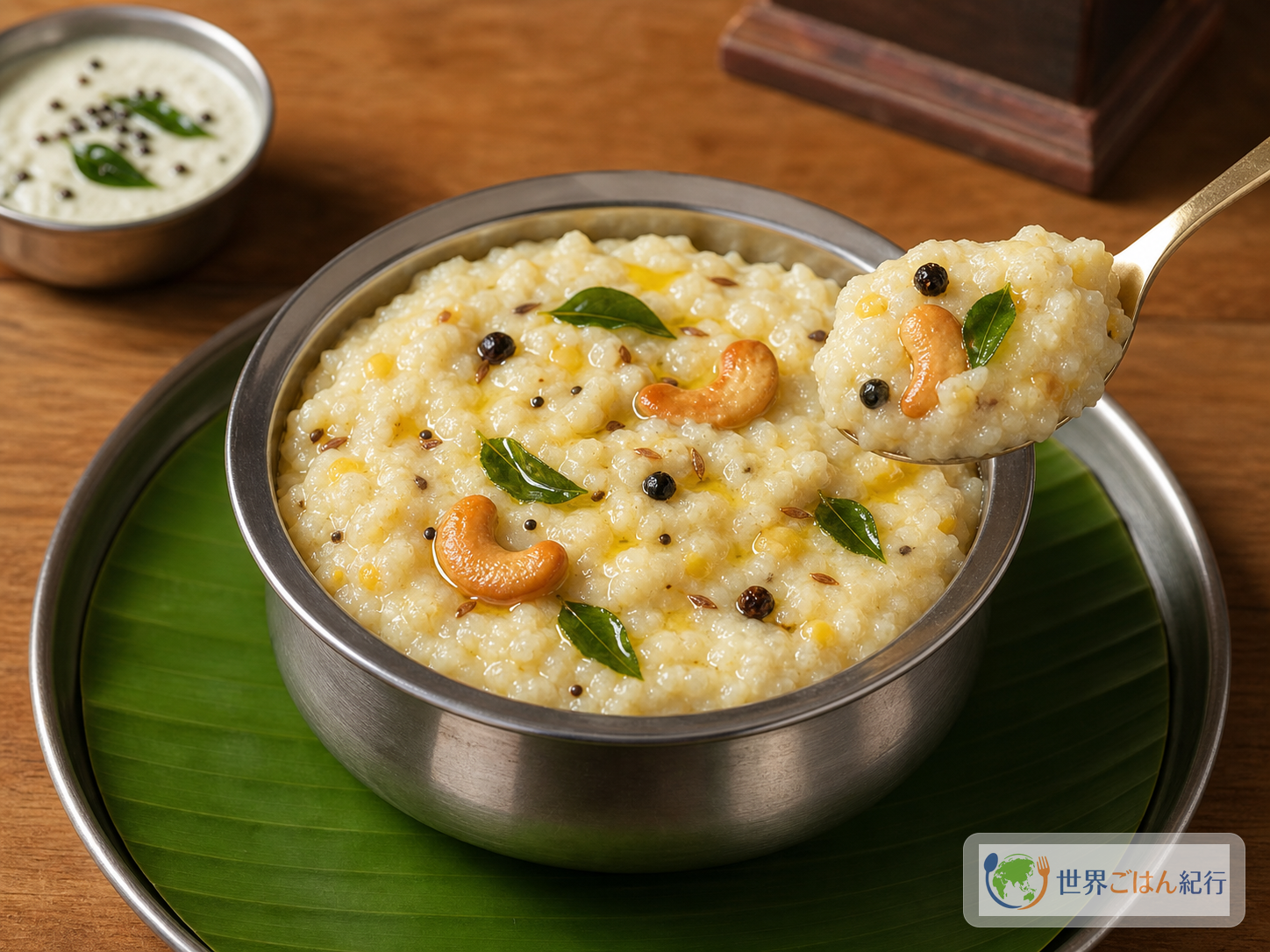
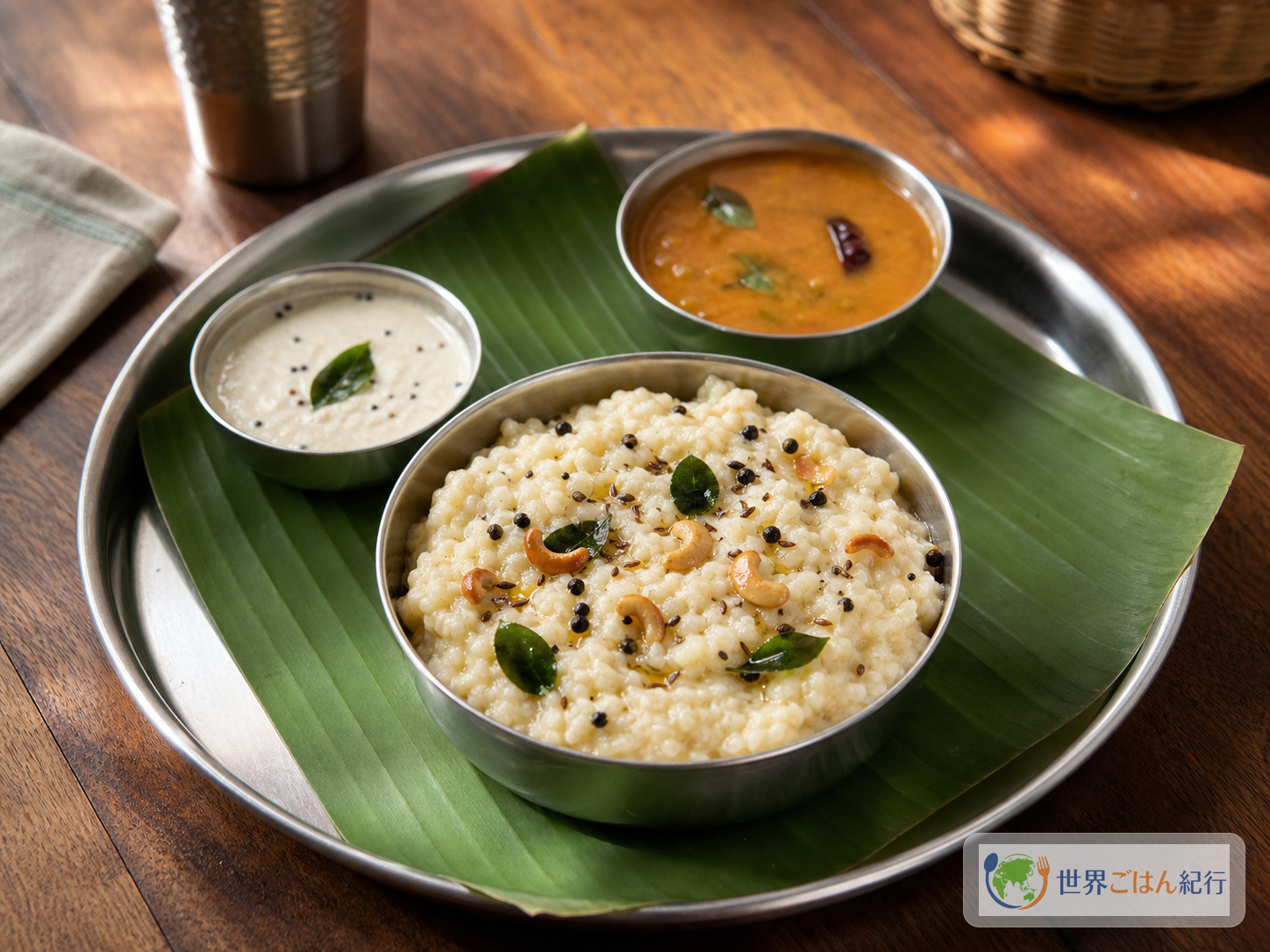
Ven pongal (Ven Pongal, Tamil: வெண் பொங்கல்) is a savory South Indian breakfast of rice and skinless mung dal cooked until soft. It looks close to a rice porridge or khichdi, but when you eat it, the pop of black pepper and the toastiness of ghee come forward. If you make it thinking it is a sweet rice dish, you may be surprised. This is a peppery dish with no sugar.
The hard part is not gathering every unusual ingredient. It is cooking the rice and lentils until the outline of each grain remains a little yet they fall apart smoothly under a spoon. And it is mixing in the aromatic oil hot, without scorching it. It comes out fine with short-grain rice, but not skimping on water is the shortcut.
The Tamil word pongal means "to boil over, to overflow." At the Pongal festival in Tamil Nadu, new rice and milk are made to overflow from the pot to express gratitude for the harvest. In contrast to the sweet sakkarai pongal often offered at the festival, the "ven" of ven pongal means "white," and it is the savory version seasoned with pepper and cumin. It is also eaten often as an everyday breakfast.
Method: Not a Porridge, but Cooked Until It Loosens Under a Spoon
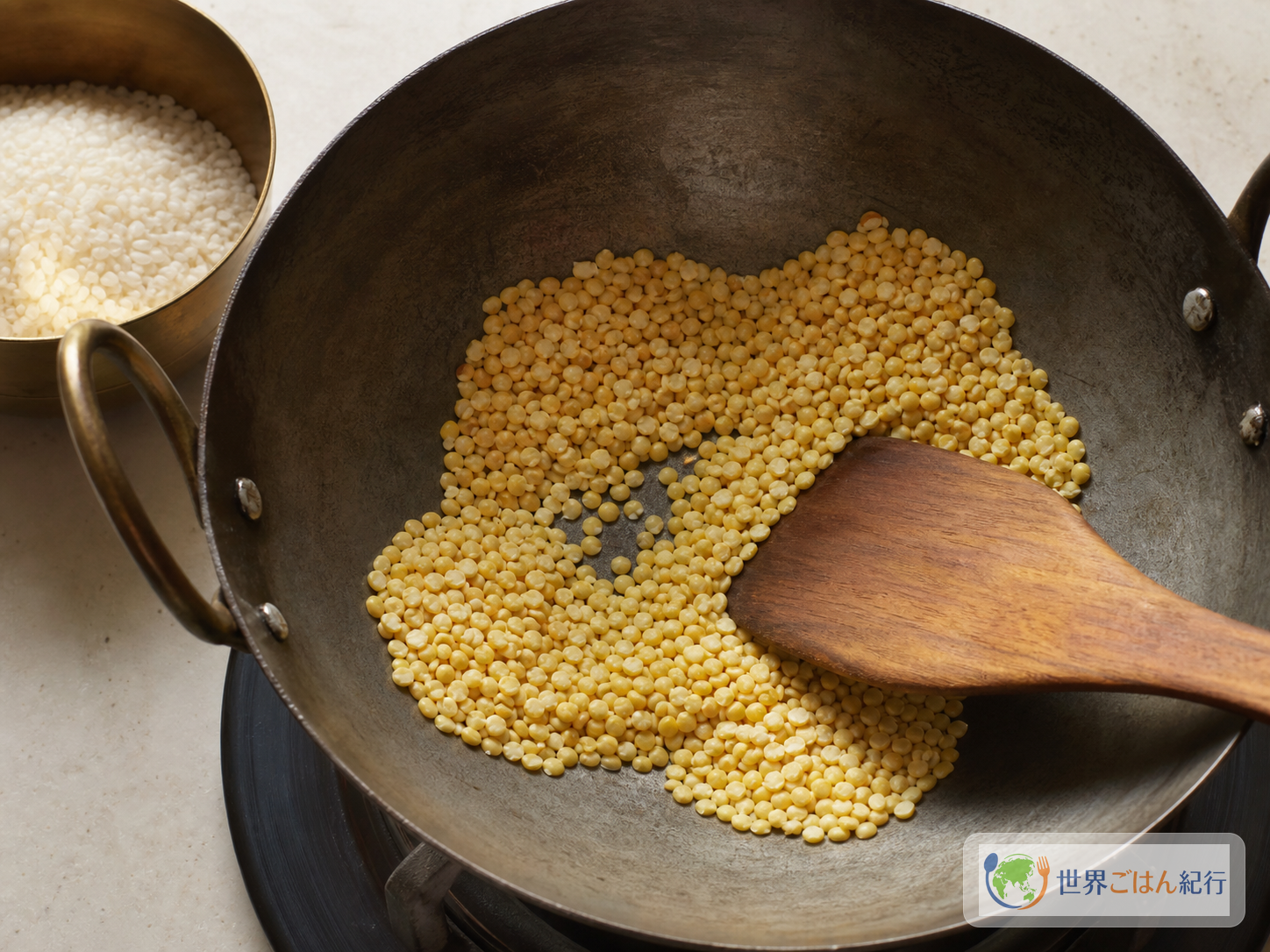
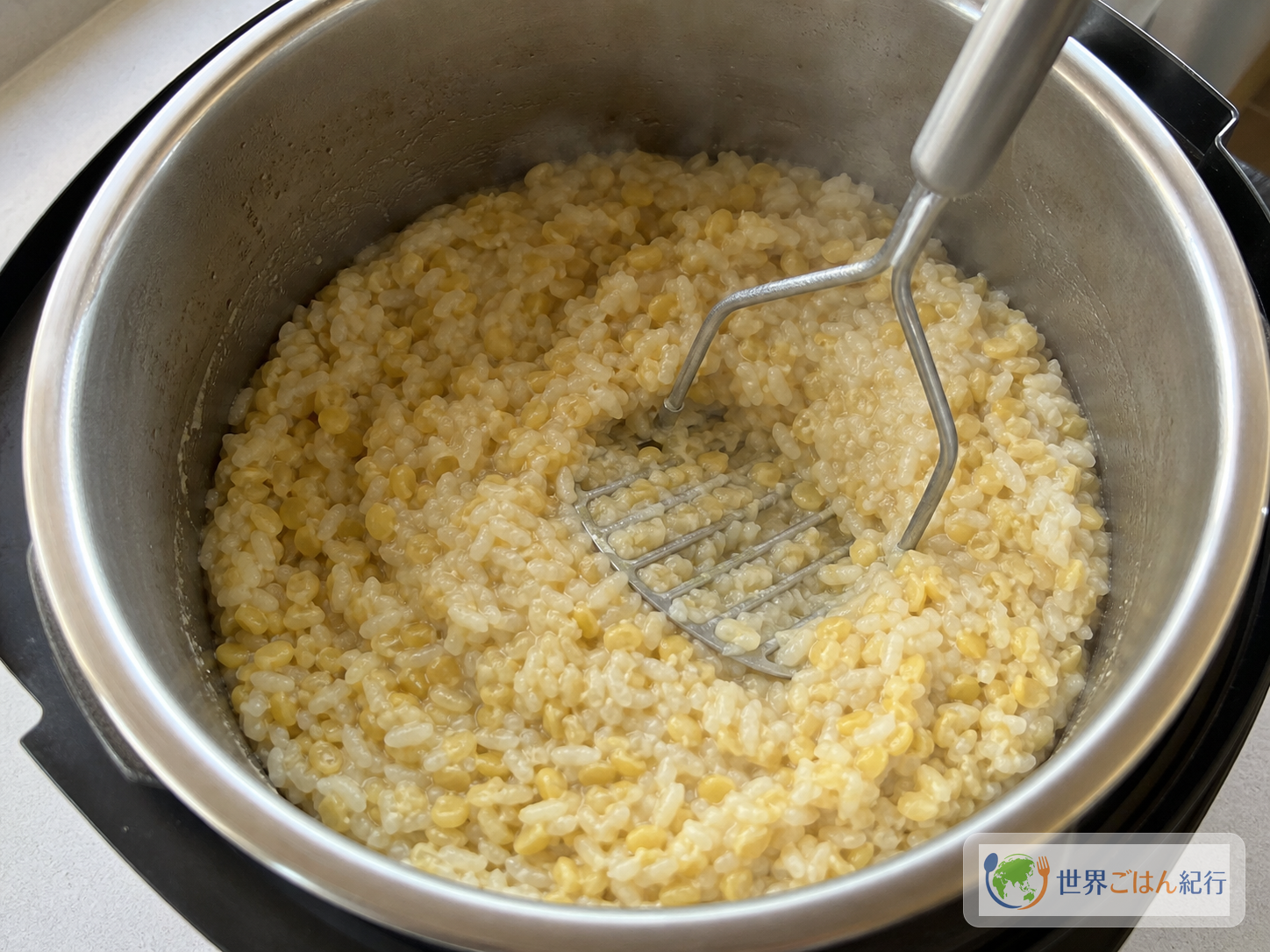
This is a method with a heavy pot, no pressure cooker needed. If the finished dish looks firm, you can add water and return it to the heat. The most important thing in this dish is not to cut the water too far from the start.
Ingredients (serves 4): Keep the Order of the Aroma Even with Ordinary Rice
Cashews and ghee contain tree nuts and dairy respectively. Some asafoetida products are mixed with wheat flour, so people avoiding gluten should check the ingredient label. Do not leave cooked rice and dal at room temperature for long; spread leftovers in a shallow container to cool quickly and move them to the refrigerator within 2 hours.
What Remains and What Disappears with Substitutes
Short-grain rice gets sticky, so it is actually an easy choice for ven pongal. With a South Indian rice such as sona masuri, it releases more lightly and the sweetness of the dal comes first. On days you swap in red lentils, allow 5 to 8 minutes less cooking time. The color moves a little toward orange and the straightforward aroma of mung dal weakens.
Curry leaves and hing are not ingredients to force yourself to hunt down the first time. Even without them, as long as the ghee, cumin, black pepper and ginger are there, the direction of the dish is not missed. But the green South Indian aroma, and the feeling of building body without onion or garlic, becomes fainter. Only when you want to check that is there a reason to look for them online.
Three Shopping Items That Cause Hesitation: Days to Buy and Days to Skip
What is worth buying for pongal is not the rice or pot already in your kitchen but what changes how the aroma is built. None of the three is essential. For the first time, it is easy to gather black pepper and cumin nearby and decide by whether you will keep cooking South Indian food.
Ghee is for people who want the toastiness that differs from butter to remain in the aromatic oil. Buying in bulk may be too much if you want to try pongal just once. Consider it if you plan to go on to dosa and dal tadka as well and can keep the jars at room temperature, and check the content and quantity of any pack before you buy.
Cumin makes a difference in dishes where whole seeds are warmed in oil, more than in dishes where you sprinkle ground cumin. If you only make pongal, a small amount of cumin from nearby is enough. If you will next make dosa or dal and continue tempering, check that a set of spices such as cumin, fenugreek, fennel and brown mustard comes entirely as whole seeds.
You can make it by crushing black pepper with the flat of a knife. But if you will increase cooking that lightly cracks seeds to release aroma, a small mortar is quick and means less washing up. If you are making pongal only once, or already have a mortar, skip it. When choosing, check that the inner diameter is enough for crushing spices and that a pestle is included.
From the Pongal Festival to Everyday Breakfast: The Name of the Overflowing Pot
Pongal is both a dish name and the name of a four-day harvest festival held in Tamil Nadu. In the introduction from the Government of India's tourism site, the festival is an event of gratitude for nature's bounty, and the custom of letting the rice in the pot overflow ties to the name. It is the opposite of the instinct in other kitchens to think it a failure if it spills from the pot. Letting it overflow is a sign of wishing for an abundant harvest.
The ven pongal in this article, on the other hand, is not a sweet festival offering. In South India it is a breakfast staple alongside sambar and chutney, and cooks' recipes also show the combination of rice, mung dal, black pepper, cumin, ghee and cashews as the basis. In shops the soft white body with pepper standing out on the surface is common. At home, the ratio of dal, the amount of ghee and whether the pepper is whole or crushed change to suit the eater.
There are regional differences. In styles closer to the rice culture of Tamil Nadu, short-grain rice and mung dal are cooked soft, with a strong sambar to add outline. At tables nearer Karnataka there is also rava pongal, made lightly with rava, that is, semolina. When making it elsewhere, rather than worrying about not having local rice, it is easier not to hesitate if you decide first whether it is a savory or sweet version and whether to break up the dal or keep the grains distinct.
It is a little unexpected, but for this dish "soft and heavy" is right rather than "loose." If the grains are separate like cooked white rice from a rice cooker, there is still not enough water. Conversely, if it is uniform like baby-food paste, it has been over-mixed. The track of the spatula closes slowly, and only the cashews sometimes break in with a crunch. That contrast keeps a morning bowl from being monotonous.
Fixing Failures, and Five Detours
When it has firmed up, add 2 tbsp boiling water and warm over low heat for 1 minute at a time, mixing. Adding cold water drops the temperature and tends to make only the surface of the rice sticky. If you scorched the aromatic oil and it turned bitter, do not mix it in; throw out the blackened grains and rewarm only the cumin and cashews for 30 seconds in fresh ghee. You do not need to throw out the whole pot.
Once you know the usual form, you can move it a little. Halve the black pepper and add 1 green chili, and the heat becomes a line, not a point. Omit the cashews and replace them with 30 g roasted peanuts for a plainer texture. Replace half the rice with 80 g rolled barley for more chew, but add 100 ml more water. For rava pongal made with 160 g semolina, instead of cooking rice and dal, you add dry-roasted semolina to boiling water a little at a time. To set a cold side dish next to it, a loosely made raita with cumin cuts the weight of the ghee while coating the rice. To avoid dairy, replace the ghee with 3 tbsp rice bran oil. The aroma becomes lighter, but the outline of pepper and cumin remains.
Storage and Frequently Asked Questions
Can pongal be made ahead?
Plan on refrigerating until the next day. Cool it quickly in a shallow container, and when eating, add 2–3 tbsp water and heat to the center in a pot or microwave. The aroma of the aromatic oil weakens, so warming 1 tsp of reserved ghee and pouring it on top helps restore it.
How many minutes in a pressure cooker?
Follow the cooker's manual first. In a typical electric pressure cooker, rice and dal with 850 ml water on high pressure for 10 minutes, then natural release, opening the lid and adding boiling water to the desired thickness is easy to manage. Pressure cooking varies a lot by model, so for the first time it is safer not to cut the water too far.
Can I substitute bay leaves for curry leaves?
I do not recommend it. The aroma points in a different direction: bay leaf is a leaf aroma for simmering, and curry leaf is a green aroma that rises in oil. On days you cannot get them, omit them and add 2 g more ginger, which does not break the dish's axis.
Is hing essential?
It is not. A small amount adds a body that resembles onion or garlic, but too much lets a sulfur-like smell win. Less than a pinch is enough the first time. People with a wheat allergy should check the binding ingredients of the product.
What do I serve on days I have no sambar?
Coconut chutney, unsweetened yogurt, and diced tomato with lemon squeezed over go well. Rather than a sweet pickle, something cold or sour keeps the aftertaste of the ghee from lingering too long.
Sources
- Pongal Festival, Tamil Nadu | Incredible India (accessed: July 2026)
- Ven Pongal Recipe | Veg Recipes of India (accessed: July 2026)
- Ven Pongal Recipe | Tarla Dalal (accessed: July 2026)
- Leftovers and Food Safety | USDA (accessed: July 2026)