Dhido: Two Flours, One Pot, and a Spoon That Never Stops
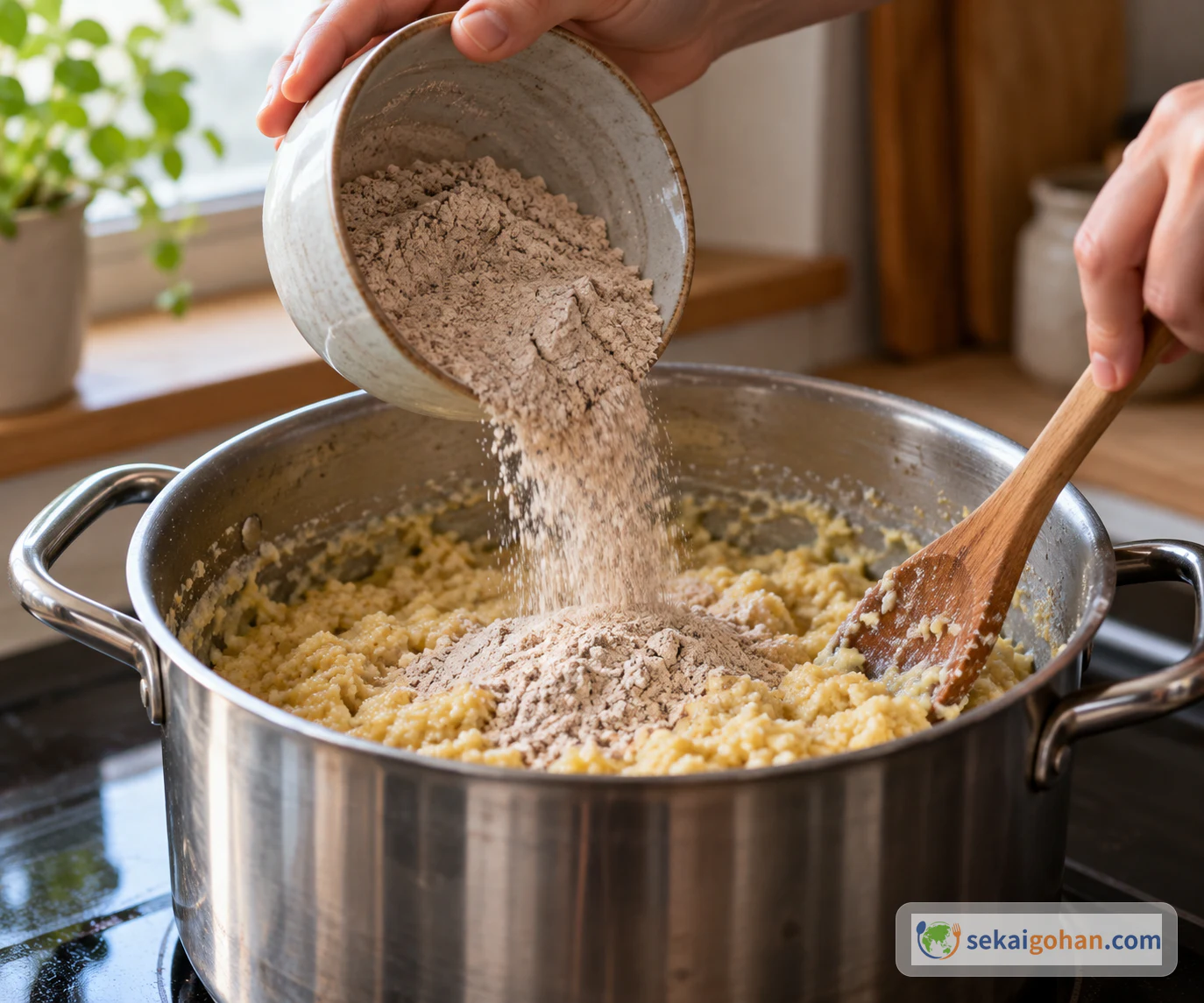
Add the flours in stages, millet first in two parts and buckwheat last, and keep stirring the whole time. The order and the constant stirring are the heart of this version.
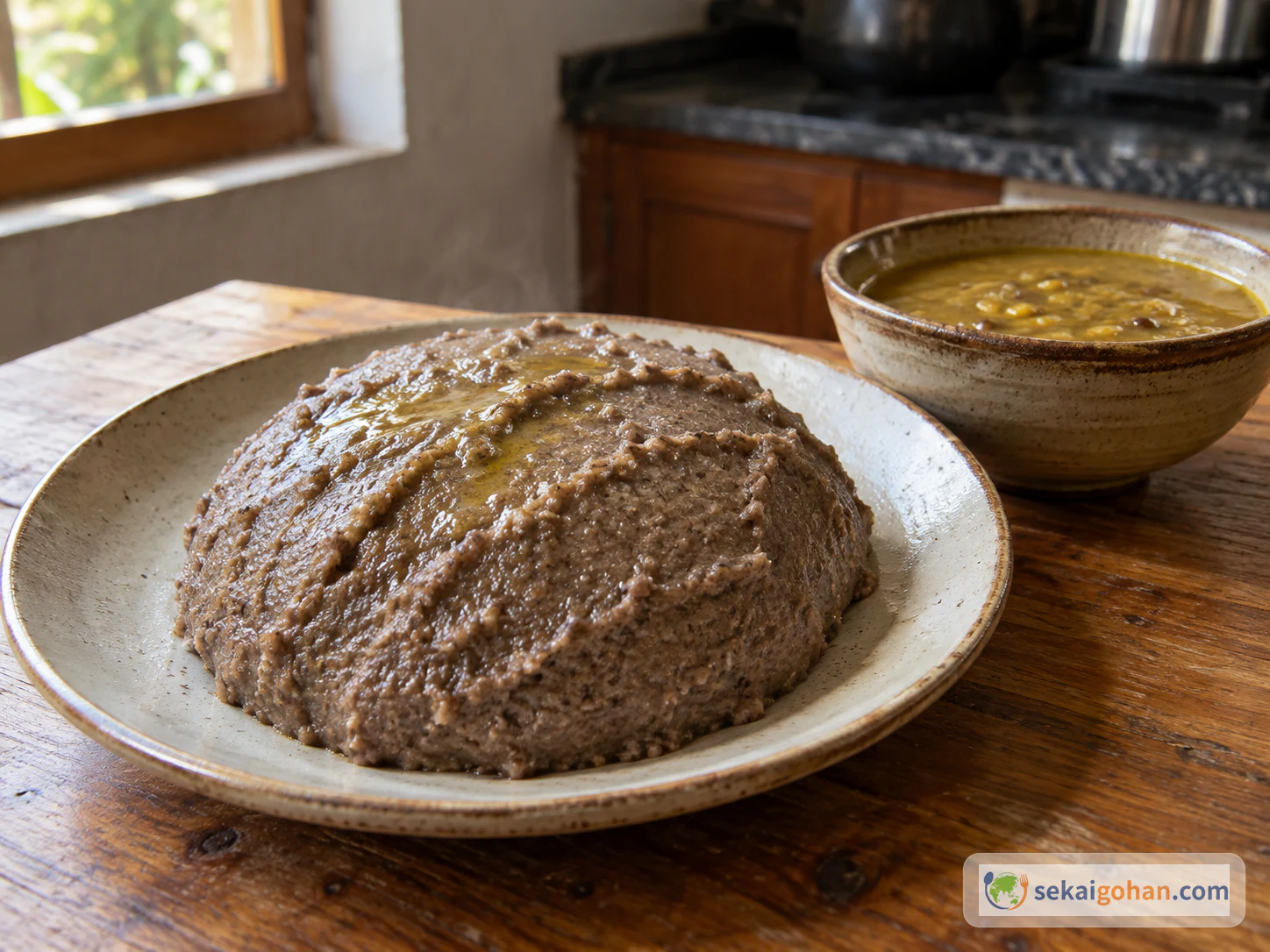
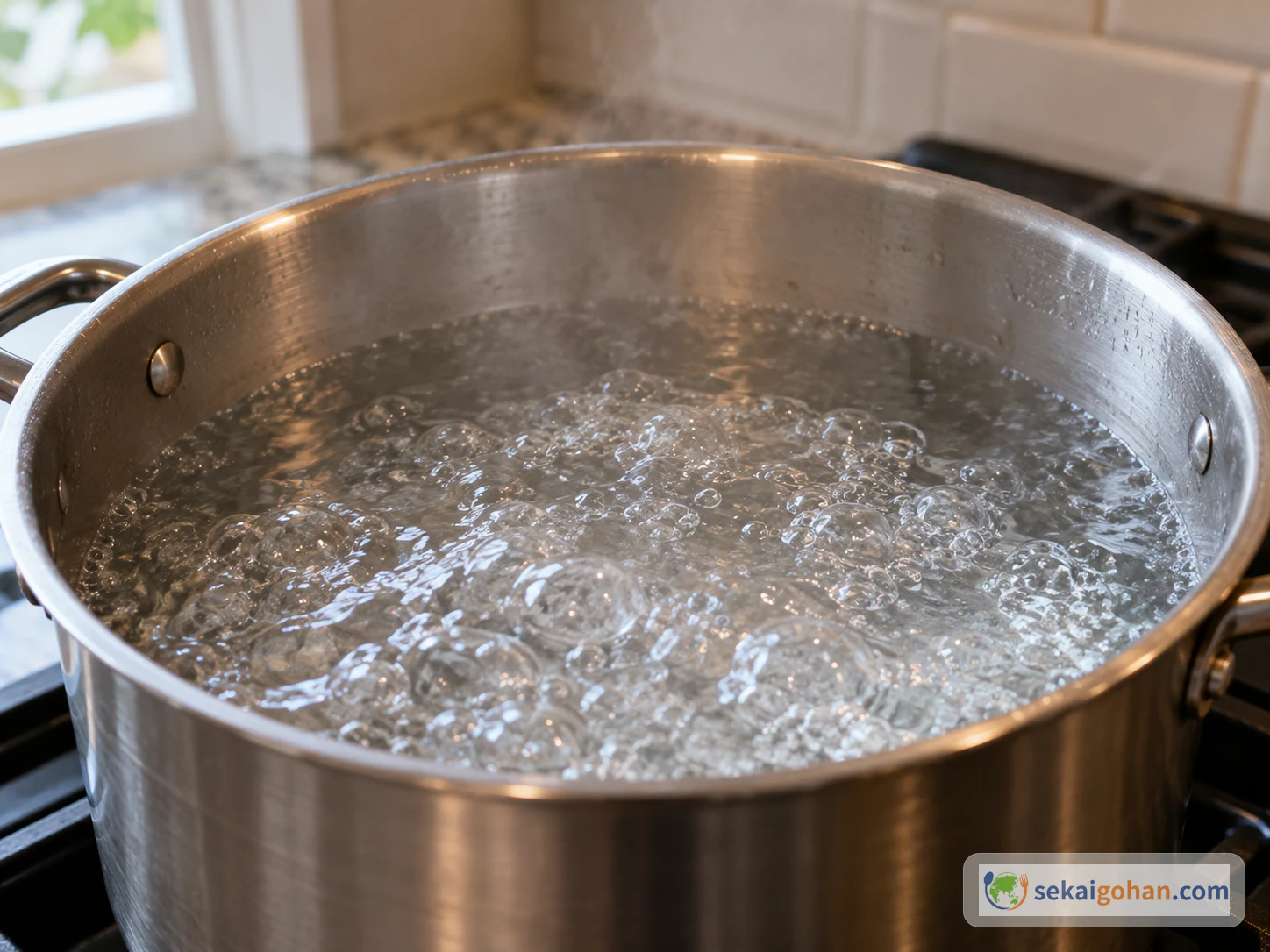
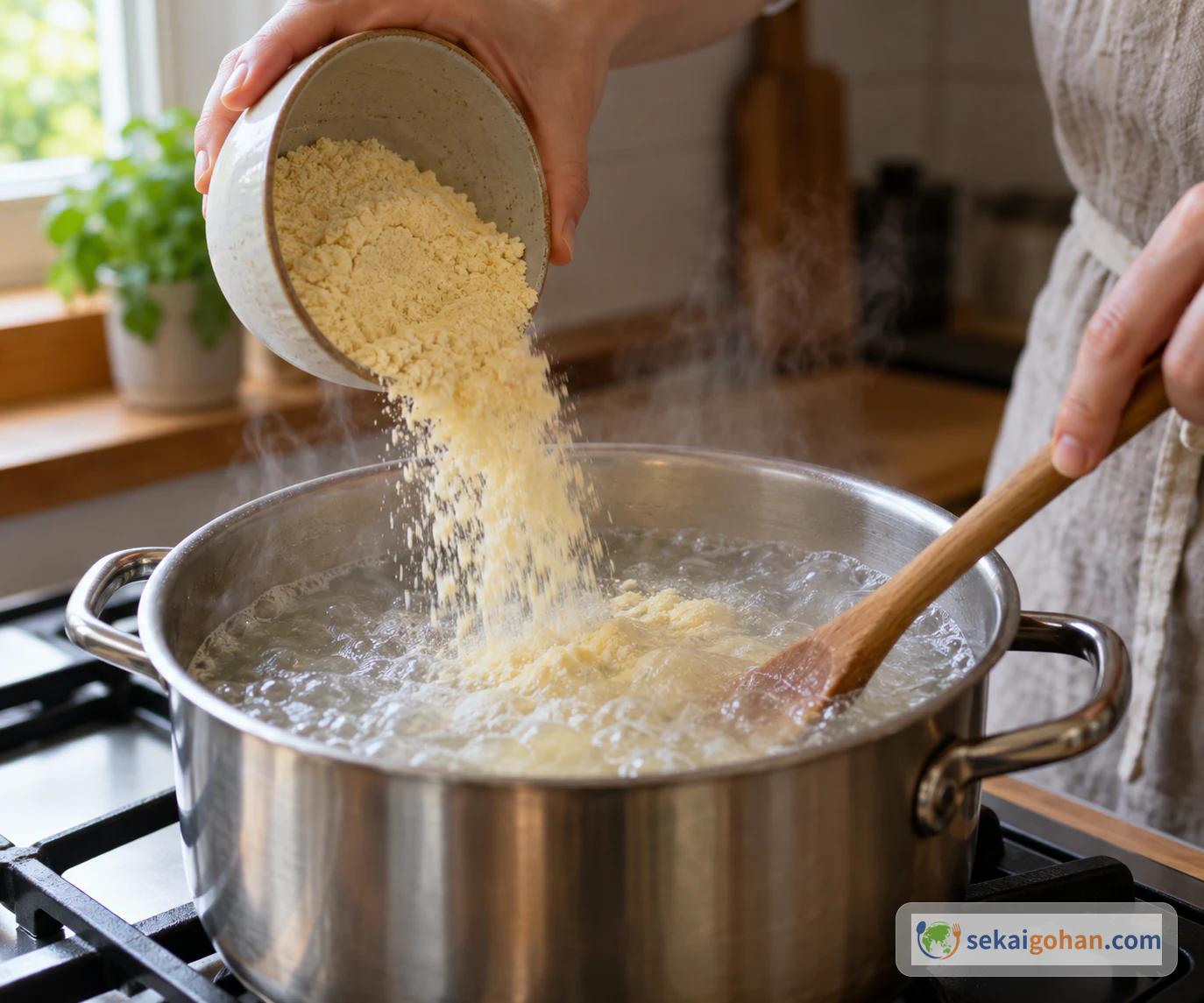
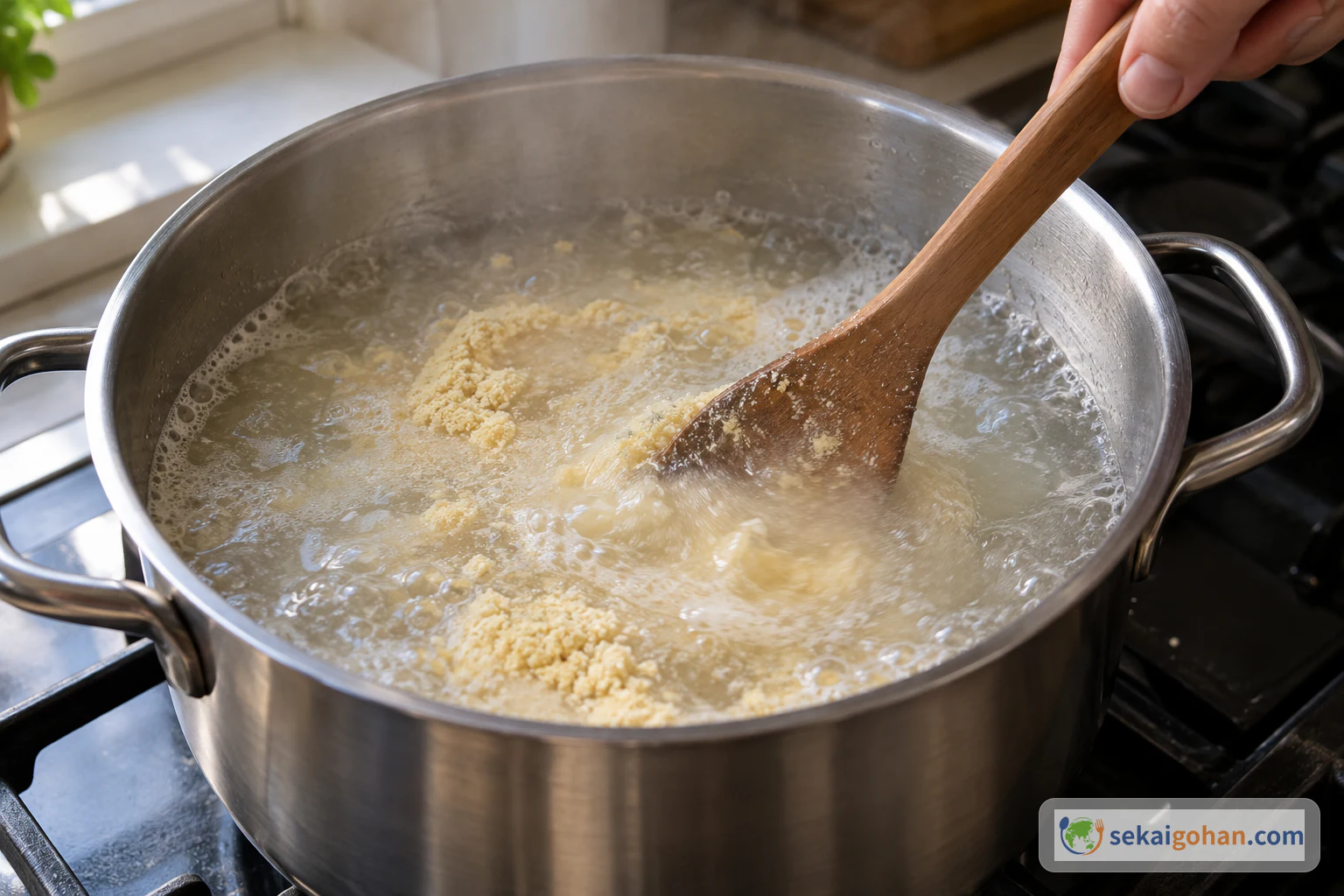
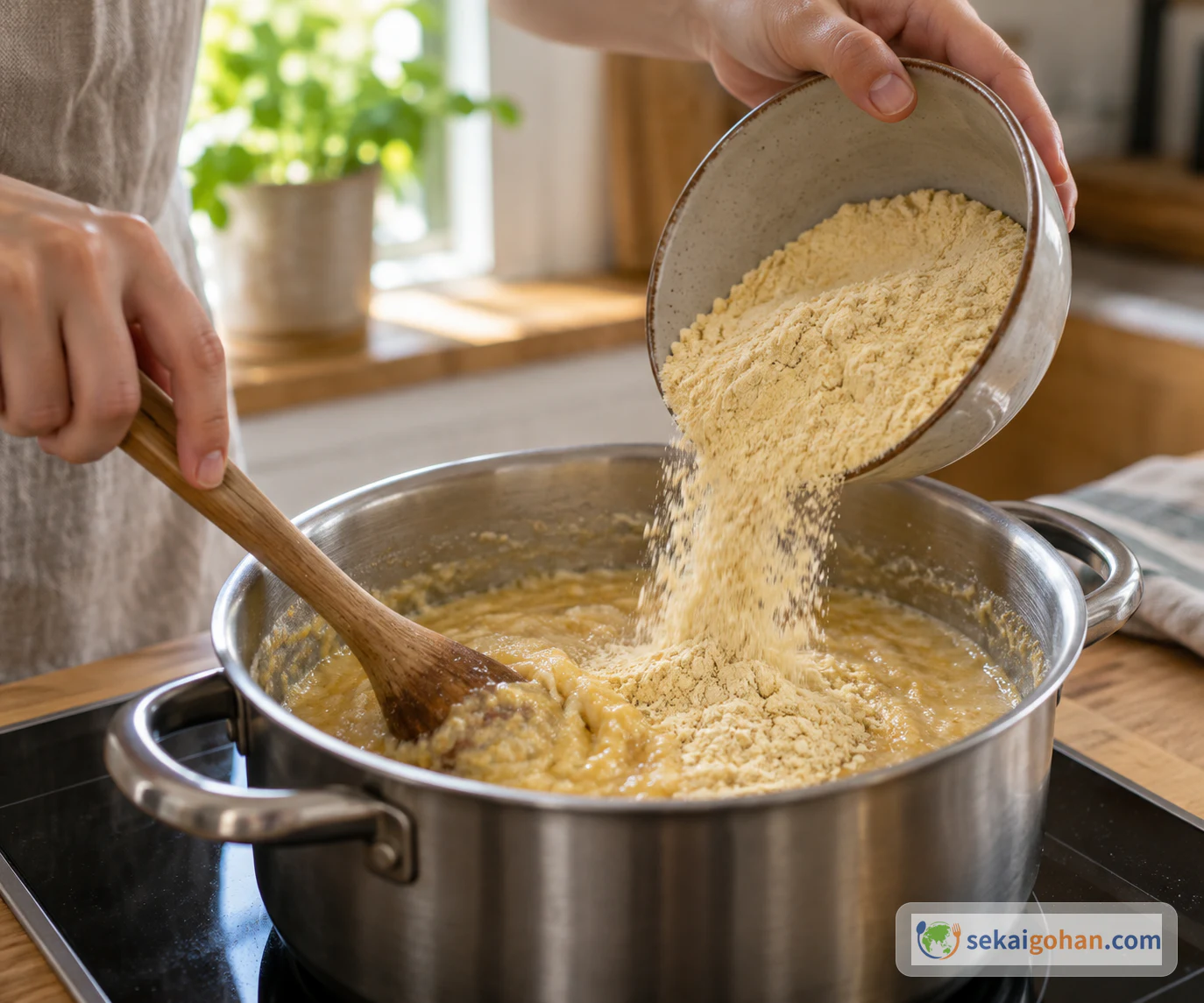
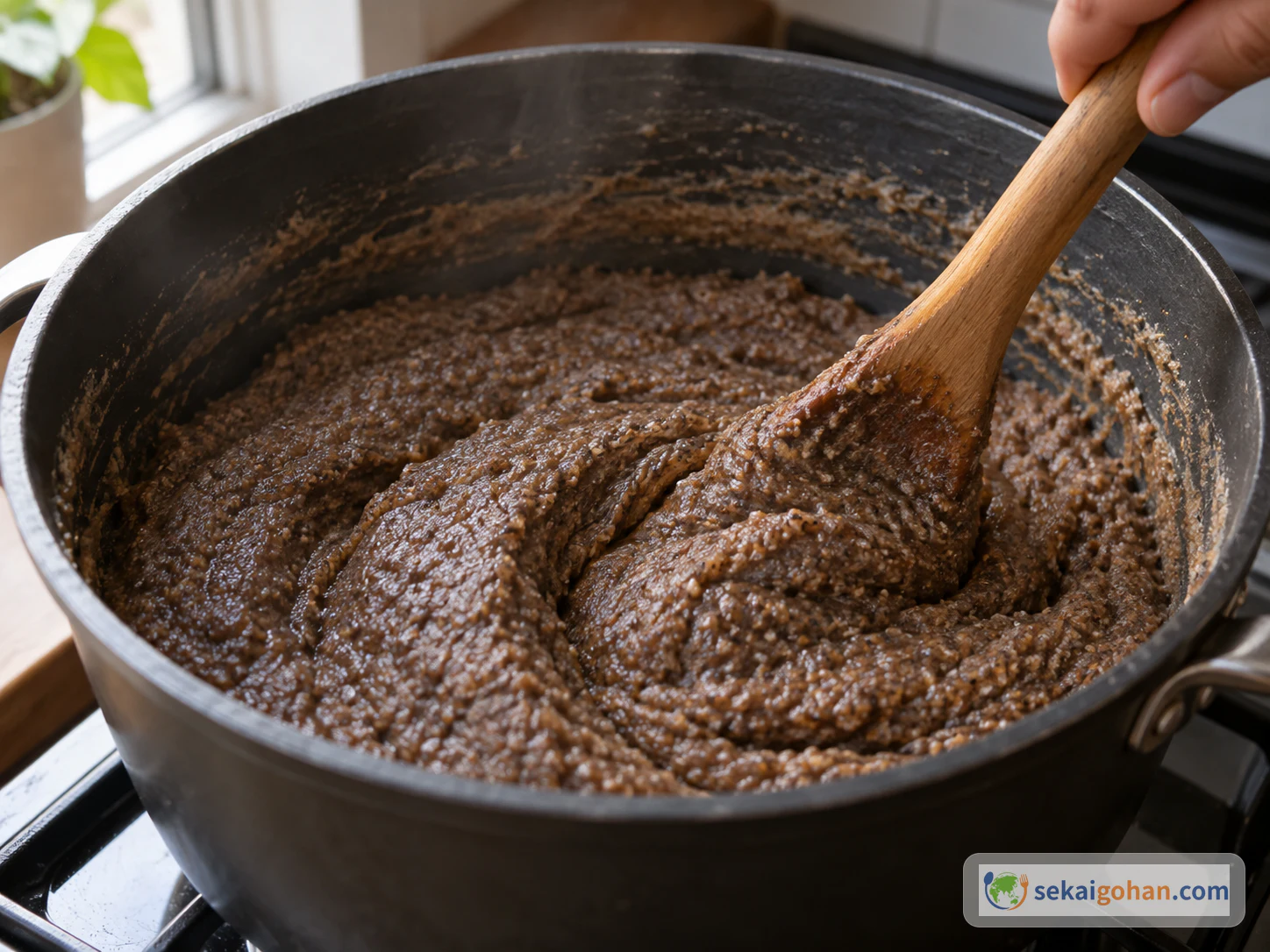
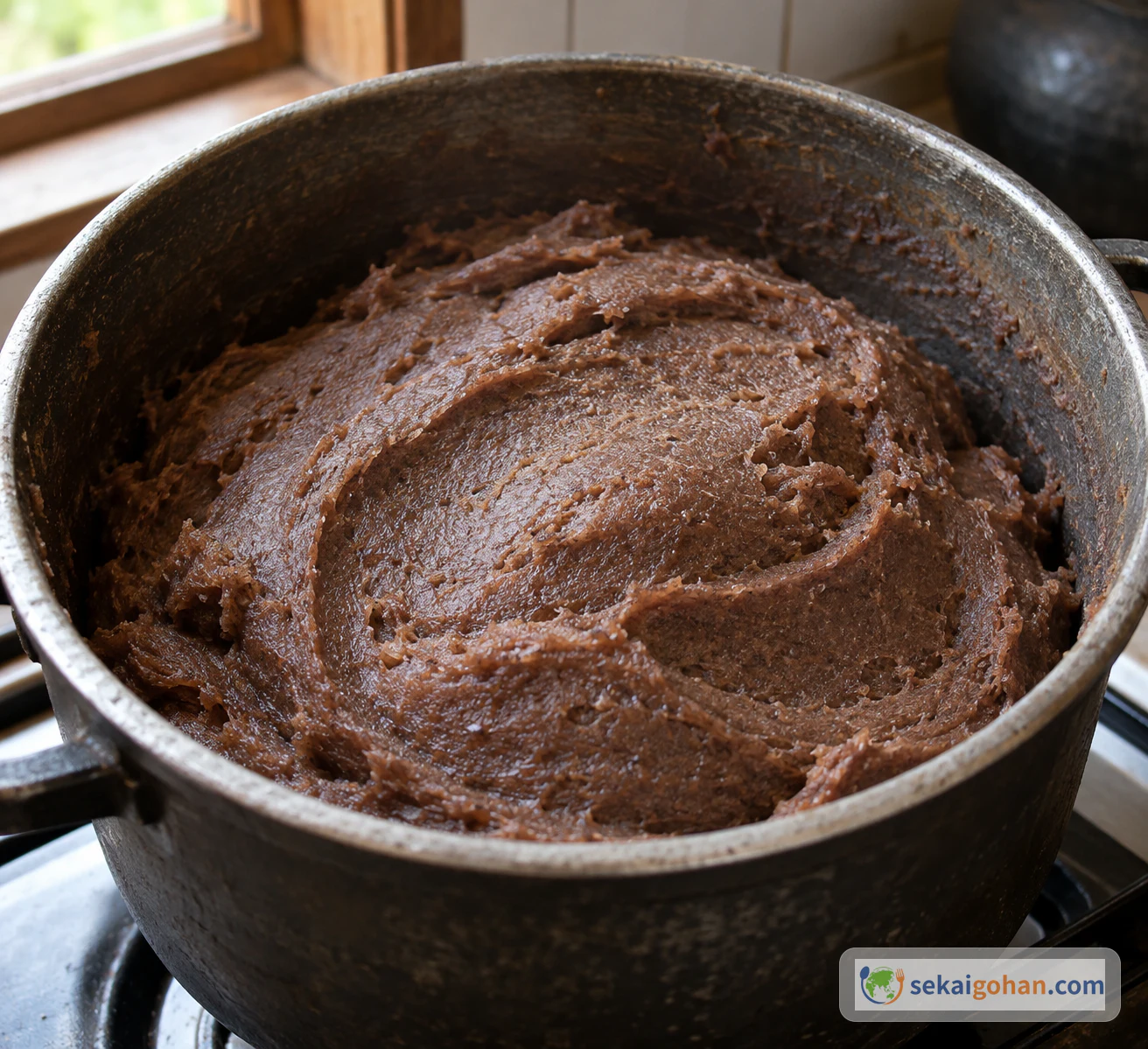
A large pot of water comes to a boil. A first handful of millet flour goes in while the spoon is already moving, then the rest of the millet, then the buckwheat flour. The stirring never pauses, and the mixture thickens in the pot until it is smooth, free of lumps, and dark brown.
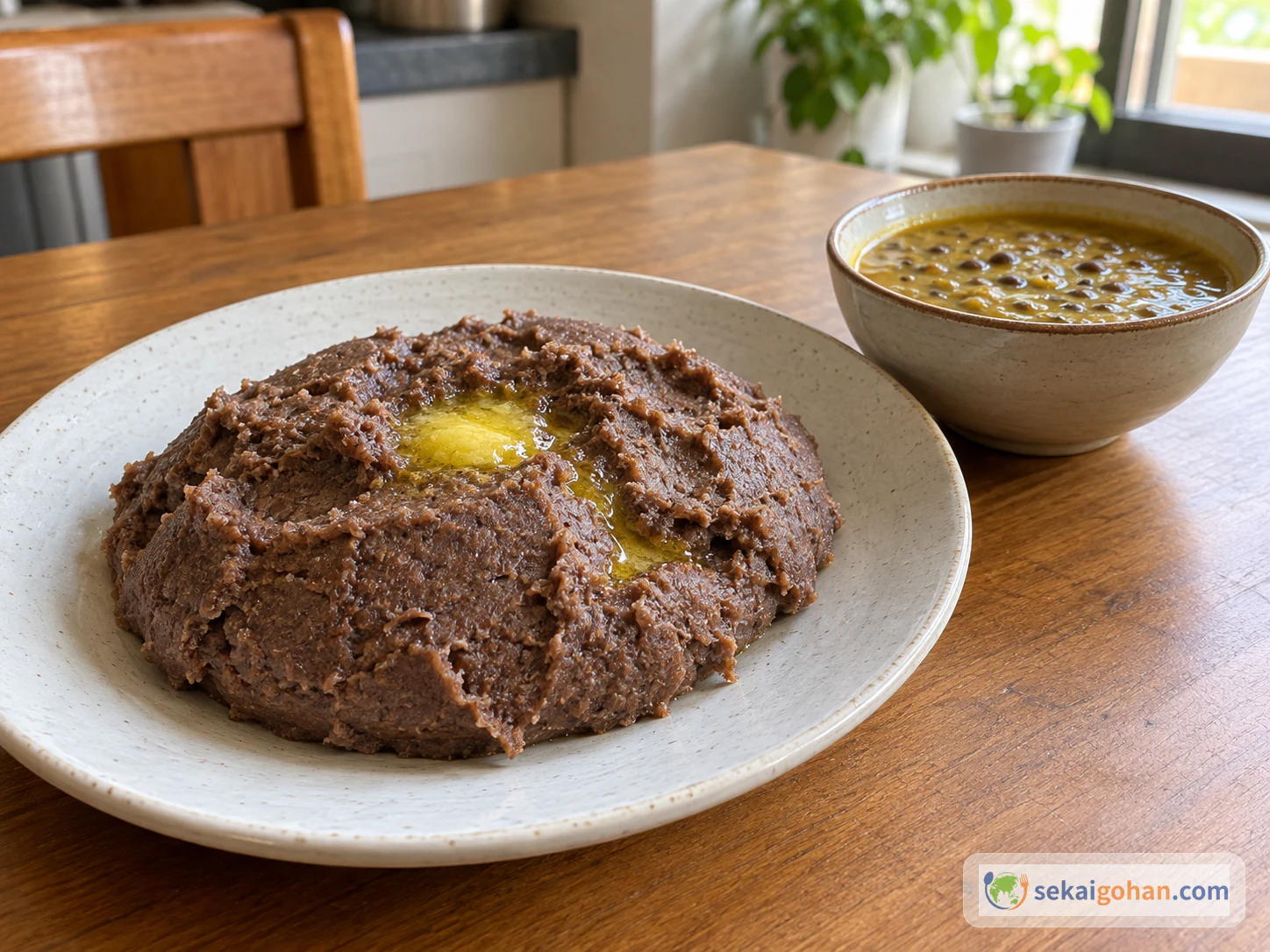
This is the version of dhido that M, the writer behind the personal food blog nepaliaustralian, posted on 21 April 2017, describing it as a recipe they learned from a friend. It uses 1 liter of water, 150 g millet flour and 100 g buckwheat flour, with 20 ml ghee that M marks as optional. This article keeps the ghee and serves the dhido with prepared dal, one of the two accompaniments M suggests.
It is one home cook's version, not a national standard or the single historical form of the dish. For more Nepali dishes, see our Nepal country page.
Sekai Gohan has not kitchen-tested this recipe. The amounts, order, stirring time and finished cue below come from M's published recipe, and anything M did not specify is left unspecified here.
Why "Dhido" Doesn't Mean One Fixed Formula
The name alone doesn't tell you which flour to use or how much water to add. The three published dhido recipes this article draws on each look different:
| Recipe | Flour and water | Served with | Other details |
|---|---|---|---|
| M, nepaliaustralian (the version used here) | 150 g millet flour + 100 g buckwheat flour, 1 liter water | A favorite curry or dal, and ghee | Millet added in two parts, buckwheat last; 7–10 minutes of constant stirring |
| Chef Ram Bahadur Budhathoki, via Outlook Traveller | One flour, framed as 1 cup flour to 3 cups water | — | Salt, ghee listed as 1 tsp, and an optional covered low simmer of 2–3 minutes |
| Hasina Waiba Tamang, Asian Farmers Association contest recipe | 500 g corn flour, 1 liter water | Nettle (sisno) soup and akabare chili | Continuous stirring until a solid consistency |
These are three separate recipe records. Together they show that dishes under the same name can use different flours, ratios and accompaniments, but they don't show how common any version is or where in Nepal each is made. This article follows M's two-flour version only. The salt, the covered simmer, the corn flour, the nettle soup and the chili belong to their own recipes and are not mixed in here.
The spelling Dhido is used throughout. The materials behind this article don't establish the word's origin, its Nepali-script spelling, or the dish's history, so those are left out.
Ingredients: Water, Two Flours, Ghee and Dal
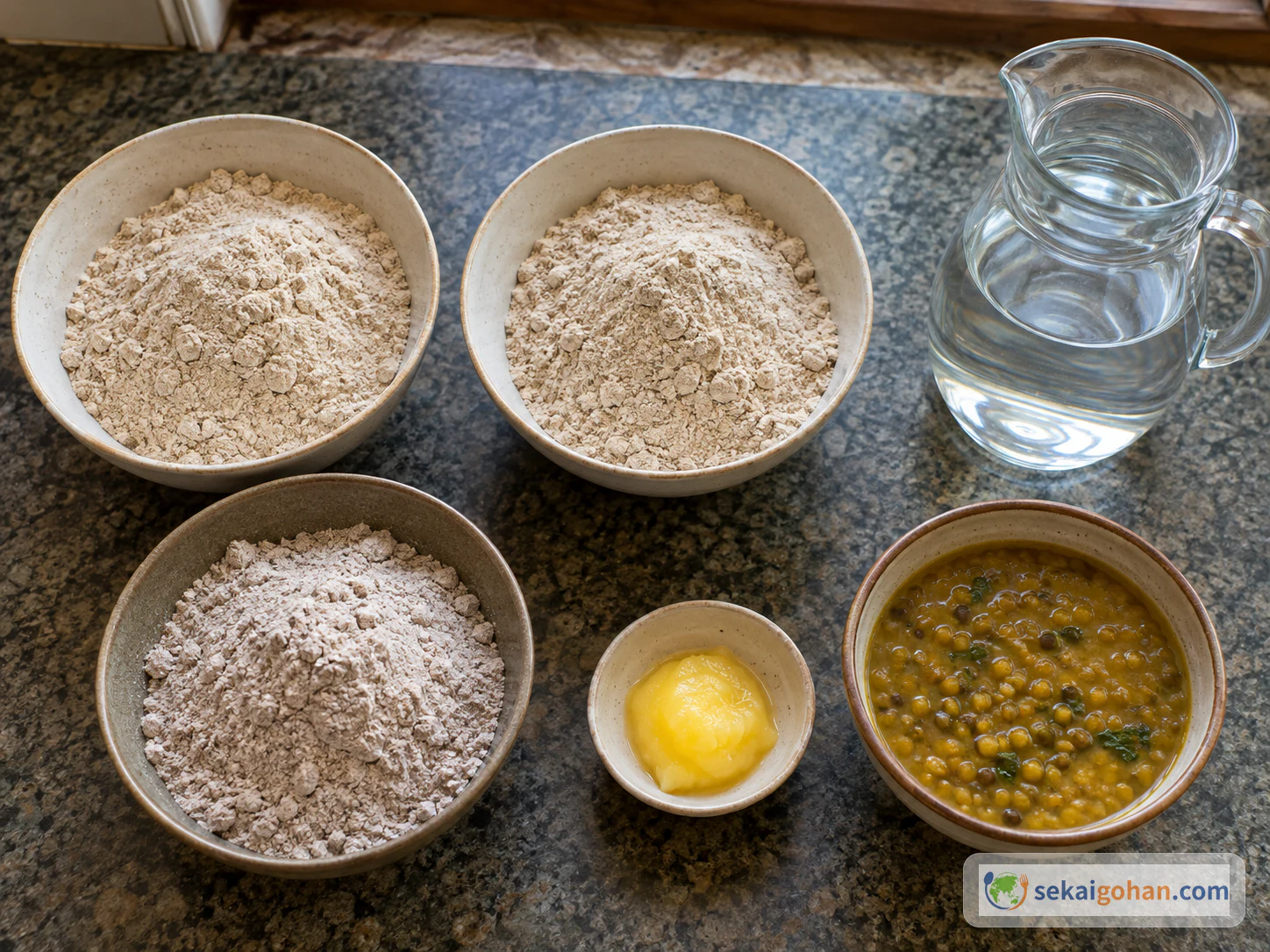
Weigh the millet flour into two portions before you start: 50 g and 100 g. Keep the buckwheat flour separate. Don't mix the flours together ahead of time.
Equipment
- A large pot
- A sturdy spoon for constant stirring
- A scale for weighing the flours
- A small separate bowl for the dal
Choosing the Flours and Accompaniments
Millet flour: "millet" covers several different grains. Buy a flour sold simply as millet flour, and don't assume it means ragi or finger millet, or any particular millet sold in your area.
Buckwheat flour: the 100 g of buckwheat flour is part of this formula. Don't leave it out or swap in another flour. There's no tested substitute blend for either flour.
Allergies and labeling: this recipe contains buckwheat. Nothing here establishes that the finished dish is gluten-free or free from cross-contact; check the labels on the flours you buy.
Ghee: the 20 ml ghee is optional; this version includes it and serves it with the dhido. Divide it among the plates as needed.
Dal: use dal you've already made. This article doesn't include a dal recipe or a set amount.
Method: Boil, Add in Stages, Stir Until Dark Brown
Have both millet portions and the buckwheat flour weighed and within reach. Once the first flour goes in, the stirring doesn't stop.
Where This Recipe Can Go Wrong
M's recipe gives two things to watch: the flours going in stages with constant stirring, and the lump-free, dark brown finish after 7–10 minutes of stirring. It doesn't give a rescue method once lumps form, so prevention is the whole strategy.
| What to watch | What to do |
|---|---|
| Adding all the flour at once | Keep the three additions separate: 50 g millet, then 100 g millet, then 100 g buckwheat |
| Mixing the flours together beforehand | Keep them in separate bowls; the millet goes in fully before the buckwheat |
| Pausing the spoon | Stir continuously from the first addition onward |
| Lumps appearing | The recipe doesn't offer a fix for lumps once formed; the staged additions and constant stirring are what prevent them |
| Judging by color alone | Dark brown is the author's description of the finished dhido. A photo or color doesn't prove temperature, safety, elapsed time or which flour was used |
The exact moment the 7–10 minutes starts isn't stated, and heat level, pot material and pot size aren't given either. This article doesn't add numbers for them.
Variations Within This Recipe
M's own recipe leaves room for two choices without changing the formula:
- Curry instead of dal. M suggests serving dhido with a favorite curry or dal. This article chose dal; serving it with a curry stays within M's suggestion. No specific curry recipe or amount is given.
- Without ghee. M lists the 20 ml ghee as optional. This article includes it, but leaving it out is also part of M's recipe.
Other changes, such as naming a specific millet species, adding the millet all at once, using a single flour with salt, or switching to corn flour with nettle soup, are different recipes. If you want to try those, follow their own published versions rather than altering this one.
Frequently Asked Questions
Which kind of millet flour is it?
M's recipe says only "millet flour" and doesn't name the species. This article doesn't identify it as ragi, finger millet or any other specific millet.
Do I add all the flour at once?
No. Add the first 50 g millet flour, then the remaining 100 g millet flour, then the 100 g buckwheat flour, stirring throughout.
How long do I stir?
Stir constantly while adding the flours and afterward. M gives 7–10 minutes of constant stirring to avoid lumps, without stating exactly when the timing starts. Heat level and pot specifications aren't given.
How many people does it serve?
M's recipe doesn't state servings or a finished weight, so this article gives no serving count or per-person amount.
Is there salt?
Salt isn't listed in M's recipe. The chef-contributed version on Outlook Traveller includes salt, but it is a separate one-flour formula, so its salt isn't added here.
How do the ghee and dal fit in?
The 20 ml ghee is optional in M's recipe; this article includes it and serves it with the dhido rather than using it in the pot. The dal is served already prepared, on the side. M doesn't specify how much dal to serve, how to make it, or how to divide the ghee.
Is dhido gluten-free or particularly healthy?
The sources behind this article don't establish gluten-free status, nutrition or health claims, so none are made here. Check the labels on the flours you use.
Can I store and reheat leftovers?
None of the three recipes gives storage or reheating guidance, so this article doesn't give any.
Sources
- M, nepaliaustralian (personal food blog), "Dhido," 21 April 2017. The recipe used in this article: M's description of it as a recipe learned from a friend; 1 liter water, 150 g millet flour, 100 g buckwheat flour and optional 20 ml ghee; boiling the water in a large pot, adding the first 50 g millet flour while stirring, then the remaining millet and then the buckwheat flour; 7–10 minutes of constant stirring until lump-free; the dark brown finish; and serving with a favorite curry or dal and ghee. https://nepaliaustralian.com/2017/04/21/dhido/
- Nishtha Kawrani, "Try This Traditional Dhido Recipe From Nepal By Chef Ram Bahadur Budhathoki," Outlook Traveller. Comparison only: a separate chef-contributed one-flour dhido with a 1 cup flour to 3 cups water framing, salt, ghee listed as 1 tsp, and an optional covered low simmer of 2–3 minutes. https://oteats.outlooktraveller.com/recipe/try-this-traditional-dhido-recipe-from-nepal-by-chef-ram-bahadur-budhathoki
- Asian Farmers Association, "Nepal forgotten foods: Dhido and Sisno soup with Akabare Chili," contest recipe prepared by Hasina Waiba Tamang, Serchu Baralo Small Farmers Agriculture Cooperative Limited. Comparison only: a separate corn-flour dhido meal using 500 g corn flour and 1 liter water, stirred continuously to a solid consistency and served with nettle soup and akabare chili. https://asianfarmers.org/nepal-forgotten-foods-dhido-and-sisno-soup-with-akabare-chili/