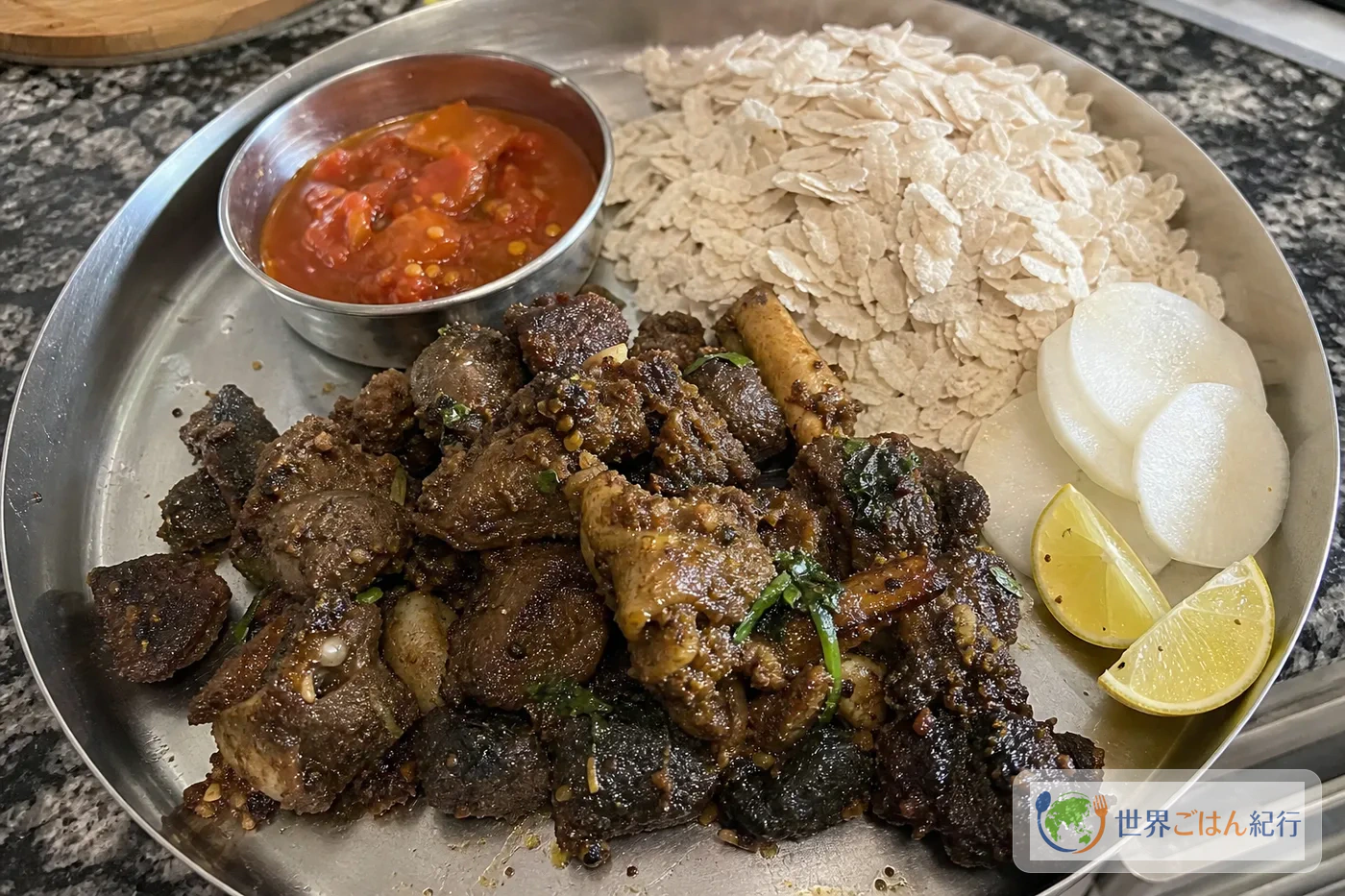
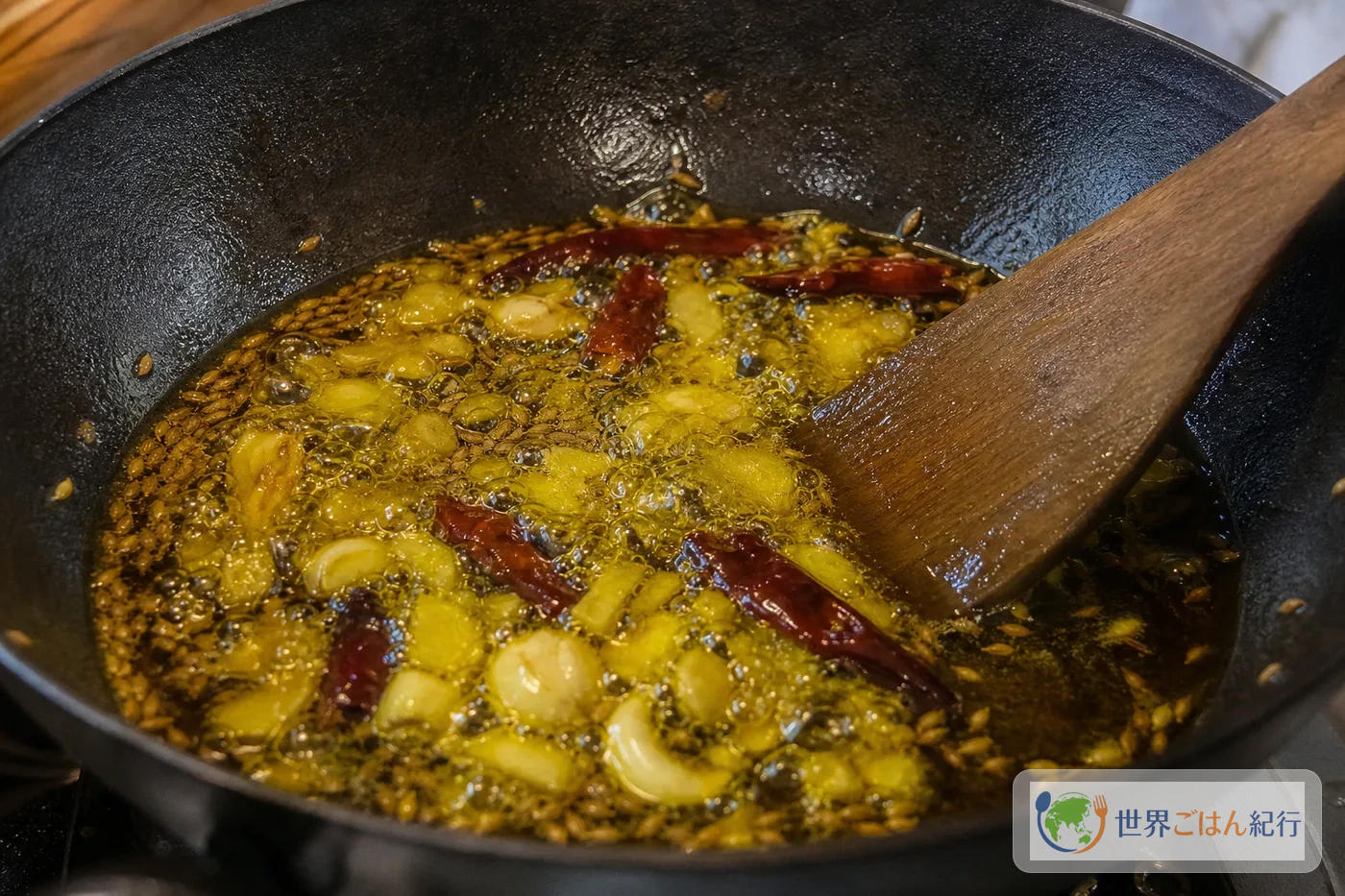
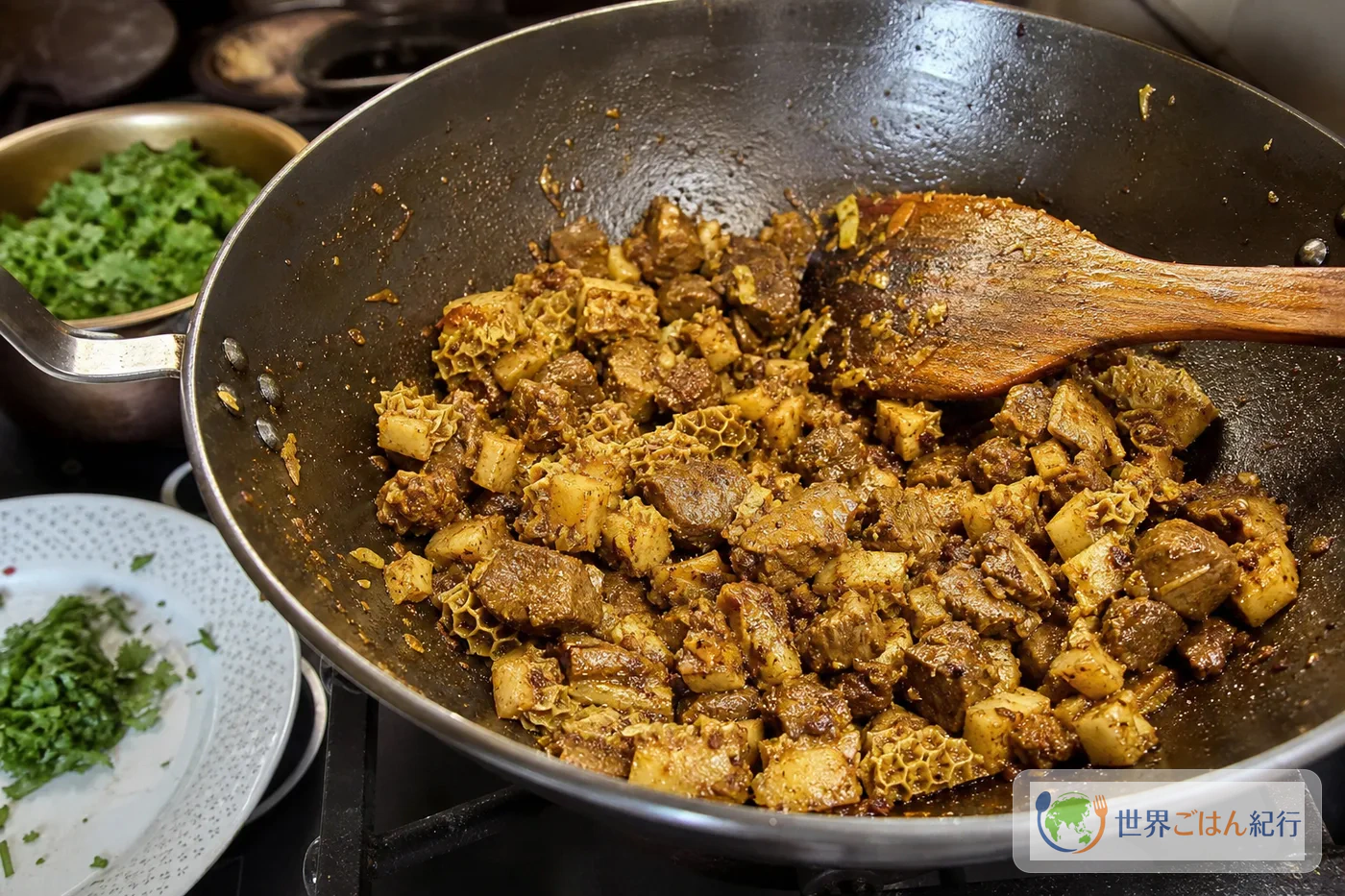
Warm mustard oil in the kitchen and a sharp aroma first hits the back of your nose. Drop in the cumin and the oil's bubbles skip small and quick, the garlic and ginger turn brown, and before the meat has gone in the air at the table has already changed. Pukala is a Newar dish from Nepal: meat wrapped in that aroma, picked at together with beaten rice (chiura).
Locally it is known as a dish of water buffalo offal that is boiled, cut, and then pan-fried. Gathering water buffalo small intestine, spleen, and pancreas is not realistic for most home cooks. This article uses easier-to-find beef heart, beef shoulder, and pre-cleaned tripe, and keeps the pukala flow of "boil first, then sear in aromatic oil."
Unlike dal bhat, which carries everyday meals, pukala is closer to a drinking snack, a feast dish, a festival plate. On a day you wrap momo, the steam of the dough is the star; on a pukala day, the browned crust on the pan and the spiced oil are. In a home kitchen, putting beaten rice, cucumber, radish, and sour achar beside it, rather than white rice, suddenly lightens the heaviness of the meat.
In English it is Pukala; in Nepali script it is पुकाला. Some sources write it with a long vowel as Pukālā. The name is close in meaning to "fried meat," and in the context of Newar cooking it is treated as a dish in which water buffalo offal is boiled and then fried.
What Is Pukala? A Newar Dish of the Kathmandu Valley
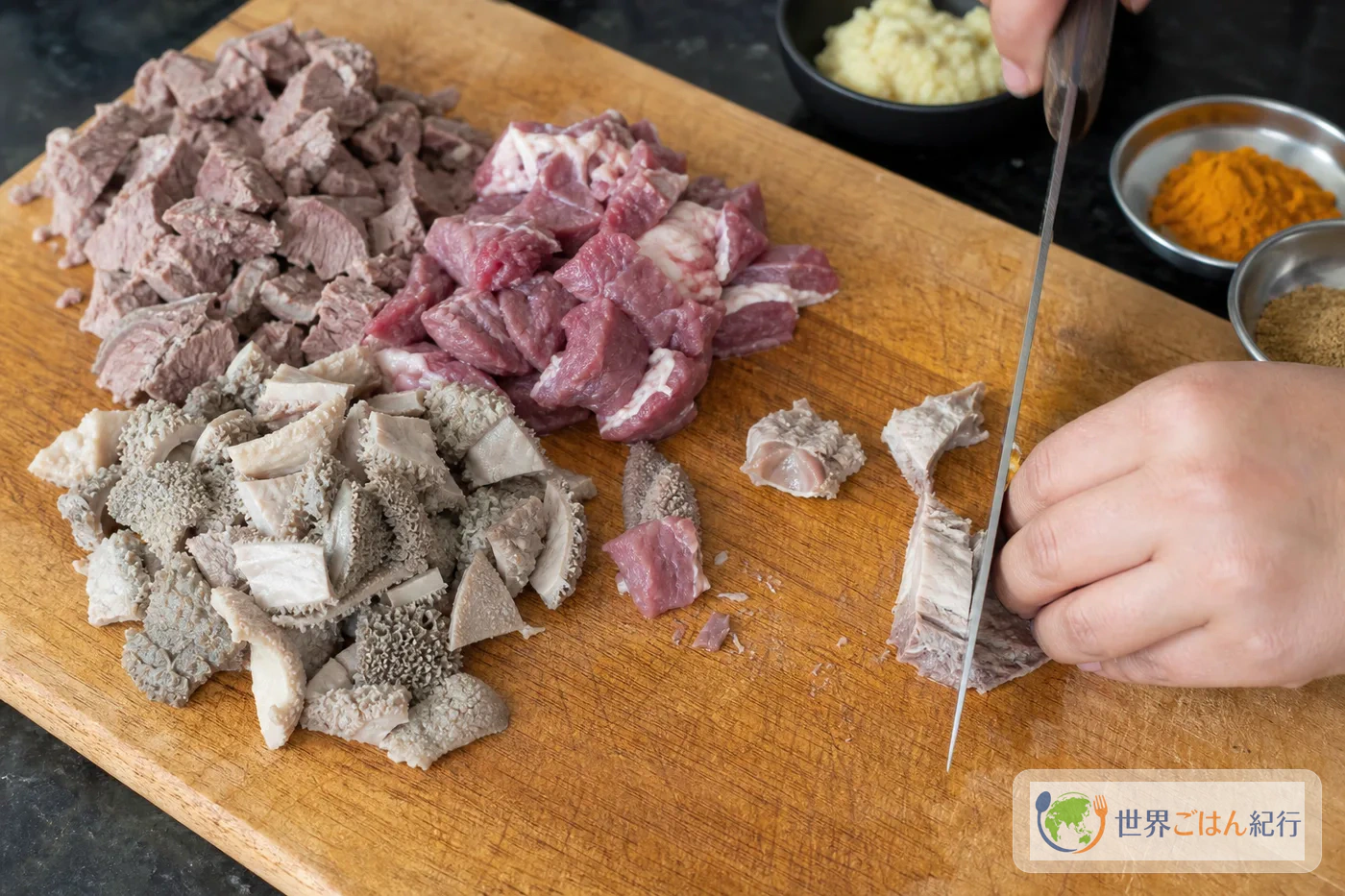
Pukala is a meat dish from the Newar cuisine of the Kathmandu Valley. Sources explain that offal such as water buffalo small intestine, liver, kidney, tripe, and spleen is boiled, cut into pieces of about 1 inch, and then fried. It is not just stir-fried meat: parboiling removes odor and excess fat, and the point is to finish by crisping the surface with oil and spices.
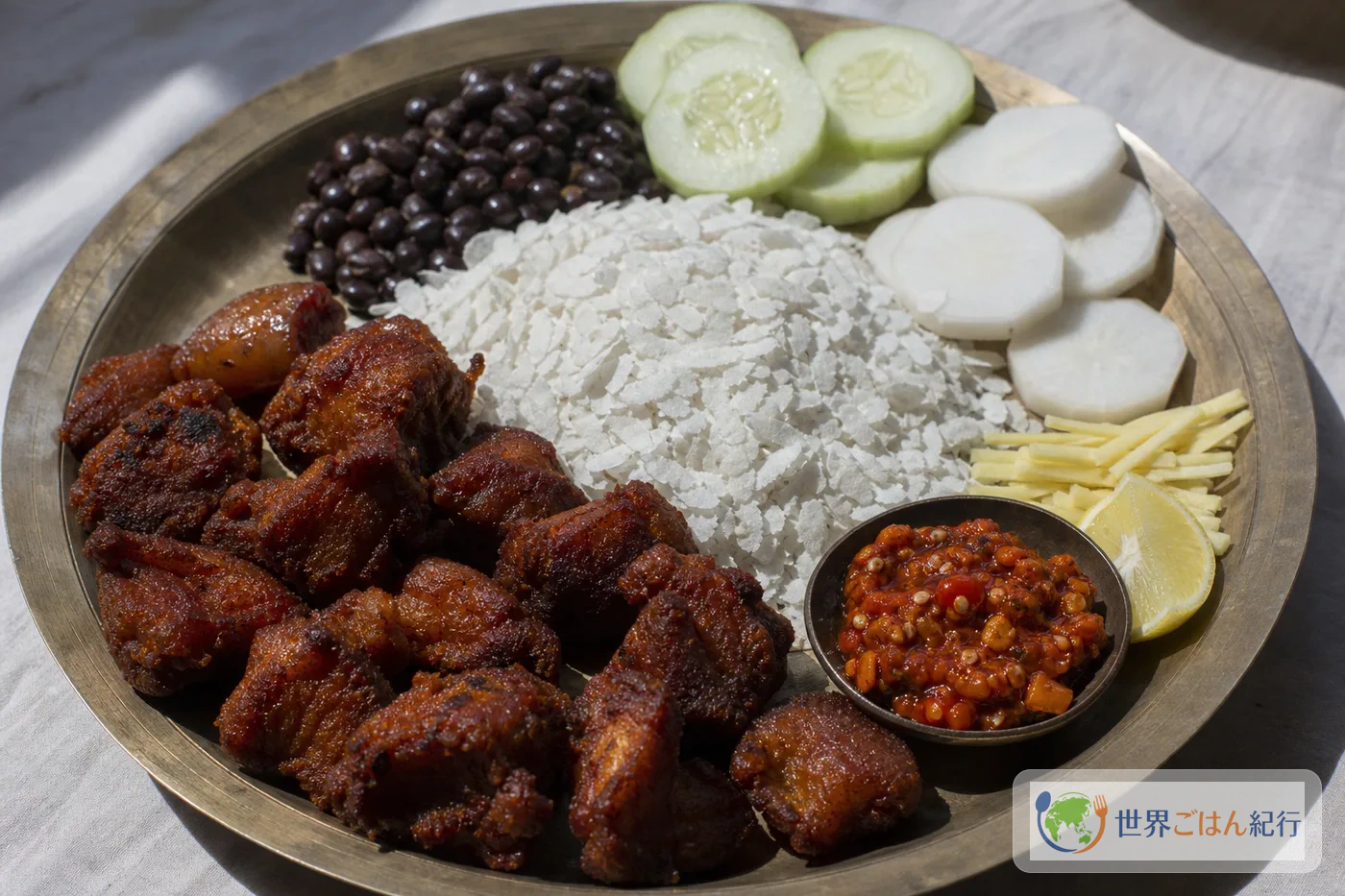
In Newar cooking, plates that combine meat, beans, fermented or sour side dishes, and beaten rice are common. Pukala is also closer to the local way of eating when you set beaten rice, radish, cucumber, tomato achar, and lemon beside it and eat a little at a time, rather than serving it over white rice as a rice bowl.
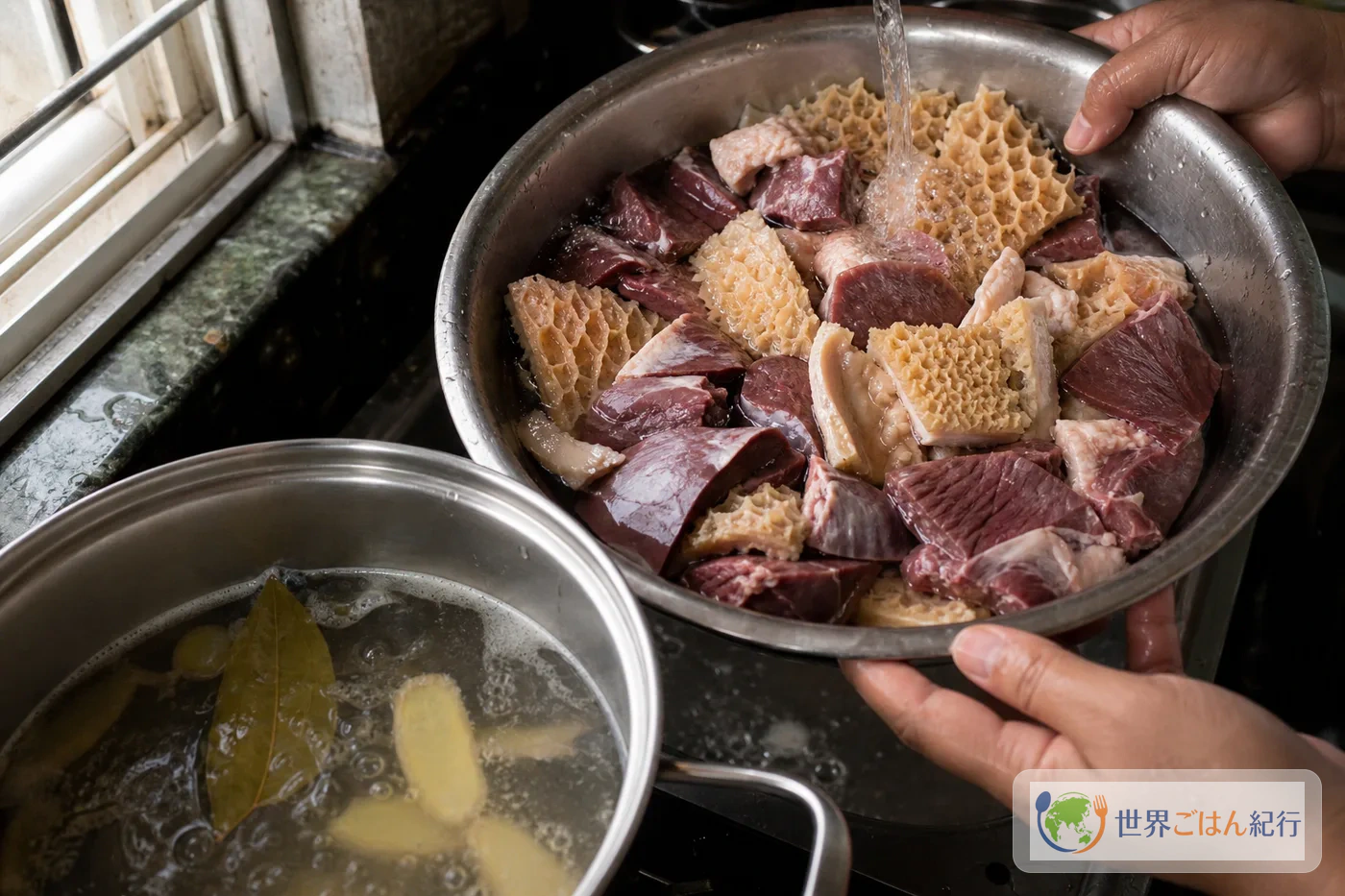
What worries you when making it elsewhere is the choice of meat. Water buffalo meat is rarely found at an ordinary supermarket. So here we combine beef heart for springiness and rich flavor, beef shoulder as a familiar lean cut, and pre-cleaned tripe for texture. Adding liver brings it closer to the local offal dishes, but the aroma gets strong, so use only a little the first time.
| Local element | Substitution | Why it matters |
|---|---|---|
| Water buffalo offal | Beef heart, beef shoulder, pre-cleaned tripe | Reproduces springiness, deep meat flavor, and chew separately |
| Boil first, then fry | Parboil with aromatics, drain well, and sear | Controls odor and builds a browned crust on the pan |
| Chiura | Poha, pressed rice, or a little firm cooked rice if you have none | Absorbs the meat's oil and lightens the texture |
| Sour side dishes | Lemon, radish, tomato achar | Cuts the heaviness of offal |
Ingredients and Shopping: How to Replace Water Buffalo Meat
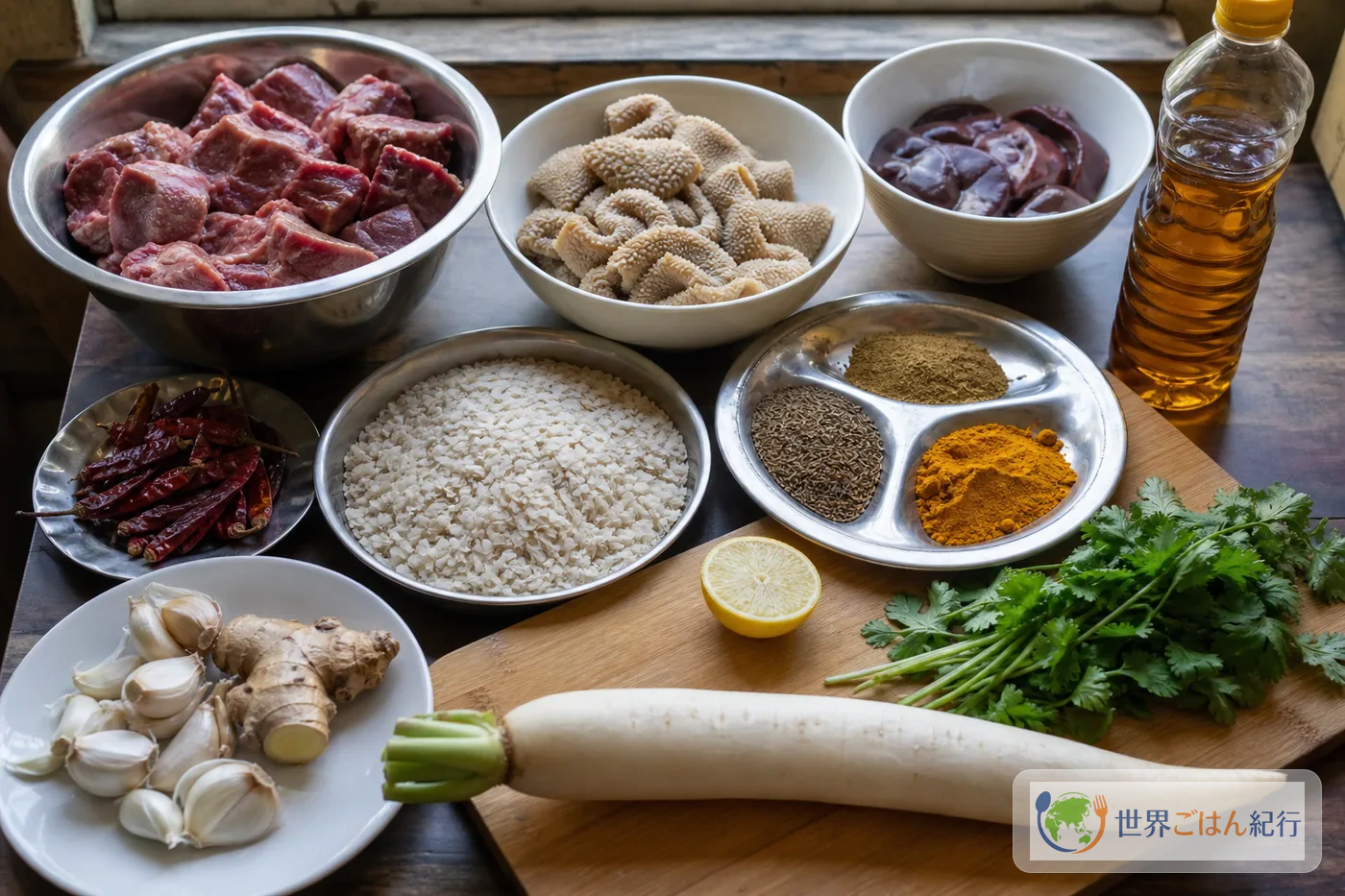
Serves 4. The amount is meant as a plate to pick at together with beaten rice and side dishes, more than a main dish. If someone at the table is not used to offal, use 200 g beef heart, 400 g beef shoulder, and 100 g tripe to raise the proportion of lean meat and make it easier to eat.
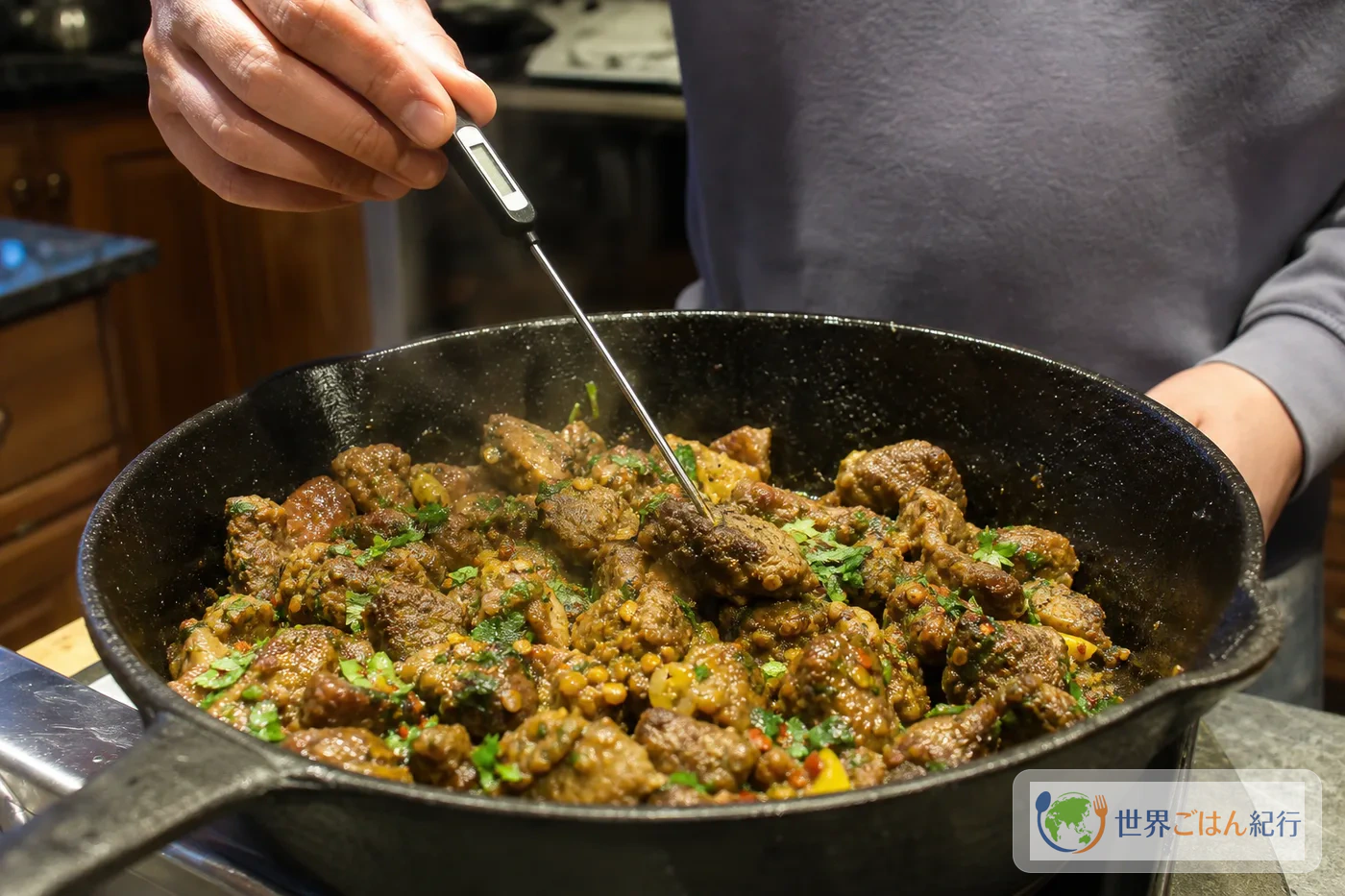
This recipe uses beef. Freshness is crucial with offal, so avoid meat close to its use-by date, keep it refrigerated at 10°C (50°F) or below after buying, and prepare it the same day. Keep the knife and board used for raw meat separate from those for vegetables, wash them with detergent, and then pour boiling water over them. Cook the center to 75°C (165°F) for at least 1 minute.
Ingredients and tools for this dish
Mustard oil is the ingredient that pushes the aroma of pukala firmly toward South Asia. It is not easy to find at an ordinary supermarket, so if you buy it, choose a size you can also use in Bengali and Indian cooking so that you finish it.
You can make this with only ground cumin, but putting whole seeds in the oil and letting them bubble builds a layer of aroma before the meat goes in. Scorched cumin turns bitter, so move on once the color has deepened one shade.
Ground coriander softens the metallic smell of offal. It also works in Bihari kebab and begun bhorta, so it is a spice worth having if you want to widen your South Asian kitchen.
Dishes mixing beef heart and tripe are hard to judge for doneness by appearance alone. A probe thermometer lets you confirm the safe cooking line while still building color.
Method: Parboil, Then Fry in Aromatic Oil
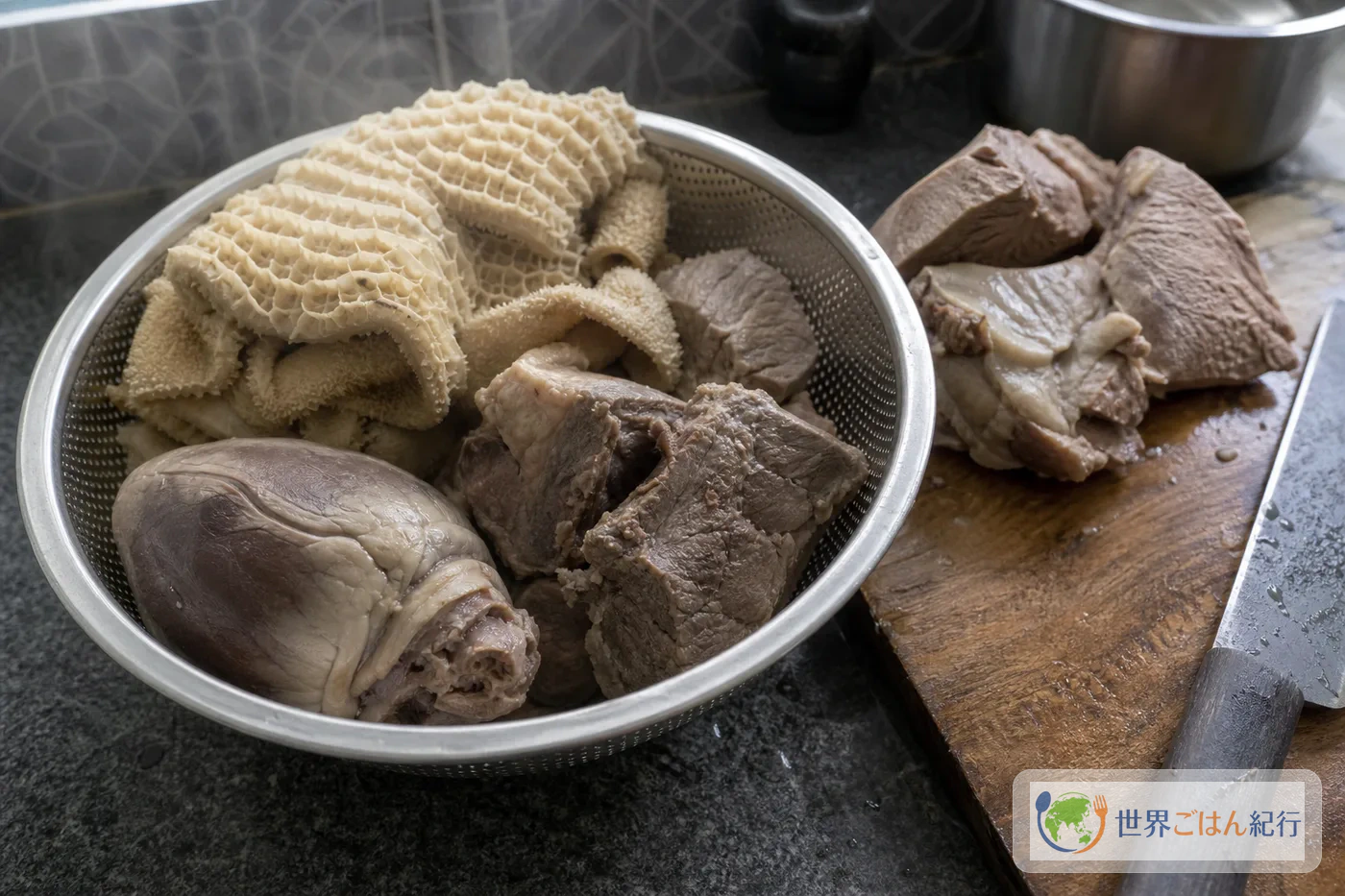
Pukala is easy to follow if you divide it into five stages: parboil, cut, aromatic oil, pan-fry, and finish. Frying the meat over high heat from the start toughens only the surface and leaves the odor of the offal. Pass it through hot water first, drain it very well, and then sear.
Serving: Beaten Rice, Sourness, and Spicy Achar on the Side
To plate, push the meat to one side of a large dish and put the chiura, radish, cucumber, lemon, and tomato achar on the same plate. Chiura can be eaten dry, but if it is too hard, sprinkle about 2 tsp water over it, rest 5 minutes, and loosen it by hand. Too much moisture weighs down the grains, so stop when the surface is just slightly softened.
Pukala is better eaten not as meat alone in a row but as a pinch of chiura, a piece of meat, a little achar, a little lemon. Sourness and heat cut the oil, and the texture of the tripe does not get monotonous. To bring it closer to an everyday menu, add firmly cooked rice, a simple dal in the style of dal bhat, and salted cucumber, and it becomes easy to serve as dinner.
For a samay baji style, put chiura in the center of the plate and arrange small amounts of pukala, a black bean salad, boiled egg, greens, and spicy achar around it. Rather than mixing everything at once, taking the oil of the meat, the dry texture of the rice, the plainness of the beans, and the sourness of the achar into your mouth in turn gives the rhythm of Newar cooking. Steamed soybeans in place of black beans, and komatsuna stir-fried with cumin for the greens, are enough.
If Kerala beef fry is a dish that makes meat fragrant with coconut and black pepper, pukala is a dish that feeds you with mustard oil and the springiness of offal. Both share the point of "driving off the liquid and coating the meat in oil and spices," so comparing the moisture left at the end of cooking makes failure less likely.
Storage and Reheating: Bring Back the Aroma Without Letting the Oil Set
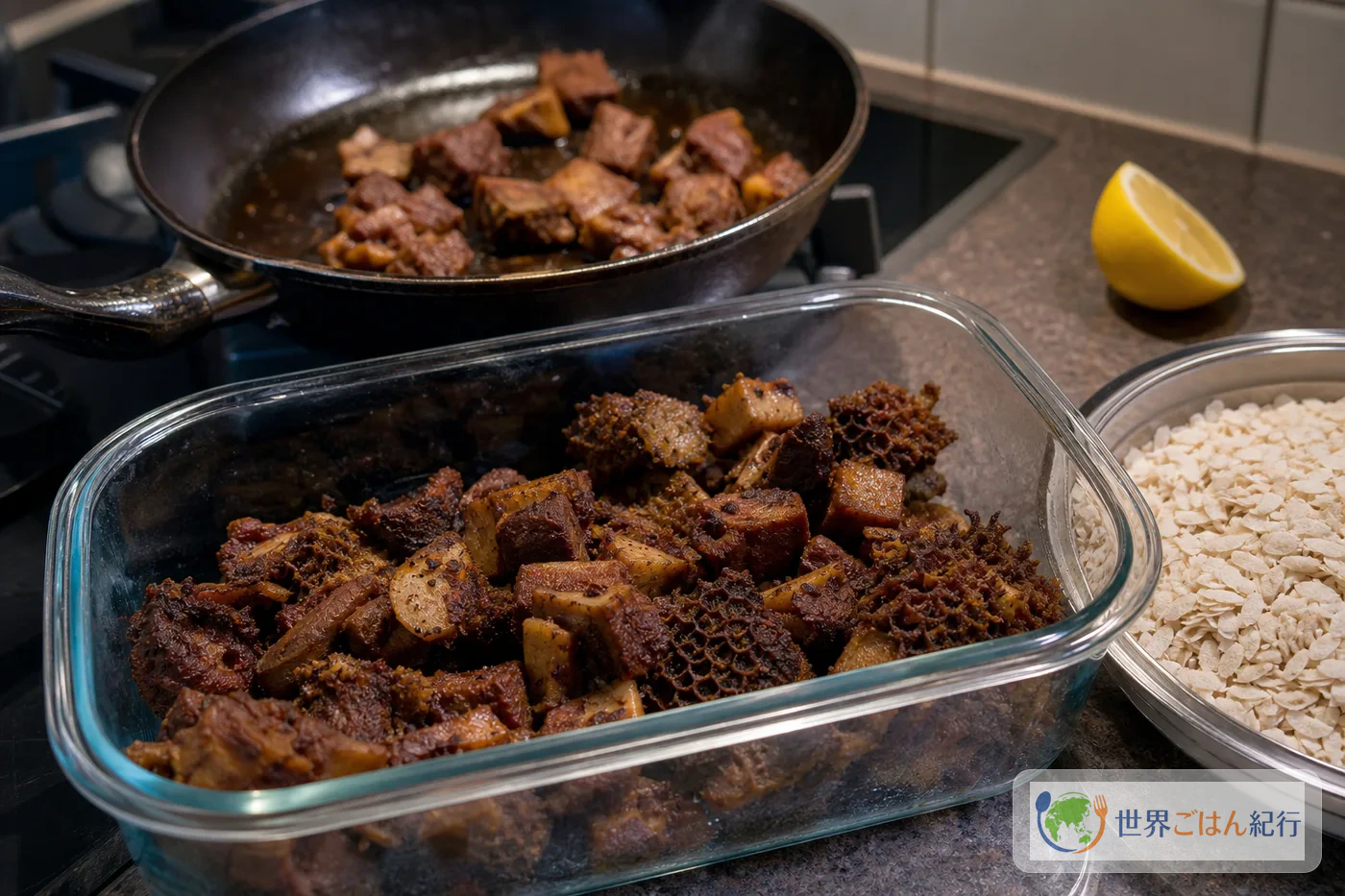
Spread leftover pukala in a shallow container, and when it has cooled slightly, put it in the refrigerator. Finish it within 2 days. Offal's smell comes back easily, so packing it warm into a deep container traps steam and makes the odor stronger the next day.
To reheat, put the pukala and 1 tbsp water in a frying pan, cover, and warm 3 minutes over low heat. When the meat is warm, remove the lid and cook 1–2 minutes over medium heat to drive off the water. In a microwave, heat 1 minute 30 seconds at 600 W, stir once, then another 30 seconds. Reheat to at least 75°C at the center. Freezing is not recommended, because the texture suffers and the tripe turns hard.
If you make it ahead, the steadiest approach is to do everything up to cutting the parboiled meat the day before and refrigerate it. On the day, you only make the aromatic oil and fry, so it is also easier to serve at a feast. Keep parboiled meat in a clean container and finish frying it by the next day.
FAQ
Can I call it pukala without water buffalo meat?
Local pukala is built on water buffalo offal. In a home version, it is more realistic to keep the process of parboiling before frying, the springiness of offal, and the way of serving with chiura and sourness than to reproduce the same thing exactly. In this article it is presented as a home-kitchen version with beef heart, beef shoulder, and tripe.
Can I make it without tripe?
Yes. Use 300 g beef heart and 400 g beef shoulder and leave out the tripe. The chew characteristic of pukala will be weaker, though. Adding 120 g gizzards brings back springiness, but it moves toward an izakaya-style dish more than Nepali cooking, so shape the aroma with mustard oil and cumin.
Can I leave out mustard oil?
You can, but the outline of the aroma changes a lot. Mixing 1/2 tsp prepared mustard into 3 tbsp neutral oil brings it a little closer. Prepared mustard loses aroma with heat, though, so adding half of it before finishing helps it survive.
What do I serve if I have no chiura?
You can use a little firmly cooked white rice, thinly griddled roti, or a small amount of unsweetened cornflakes. The role of chiura is to absorb the oil of the meat and lighten the rhythm of chewing. Heaping on rice moves it toward a stir-fried meat set meal, so if pukala is the star, keep the amount served alongside modest.
Can I make it less spicy?
Use 1 dried red chili and 1/4 tsp chili powder. Even with less heat, keeping cumin, coriander, and black pepper preserves the aroma. If eating with children or anyone who dislikes heat, serve the tomato achar on a separate plate so heat can be added afterward.