Fish Patties: A Small Half-Moon With a Spiced Tuna Center
A pastry that is soft and pliable before frying, a filling with chunks of tuna and potato rather than a paste, and a fork-pressed seam that stays closed in the oil.
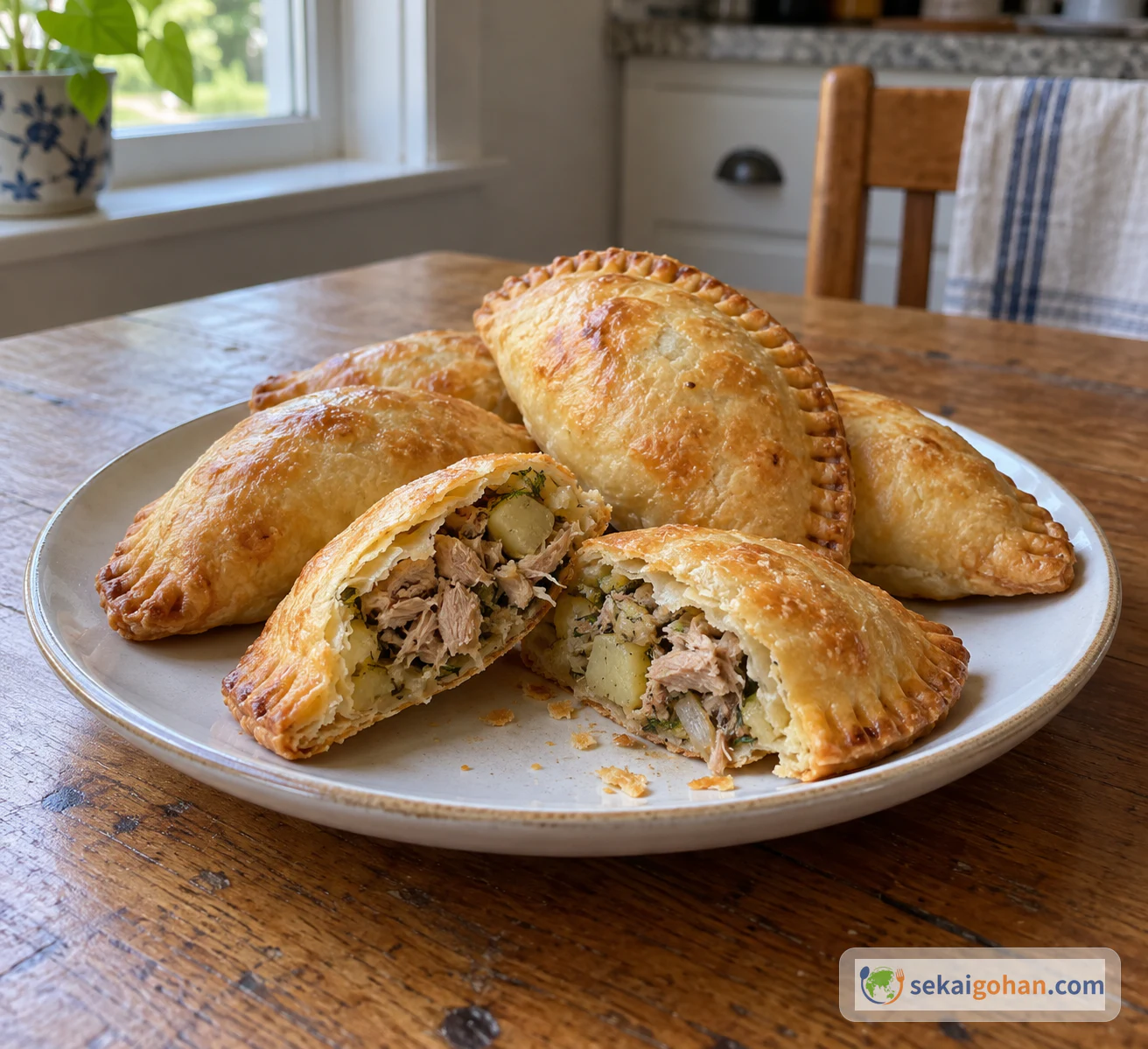
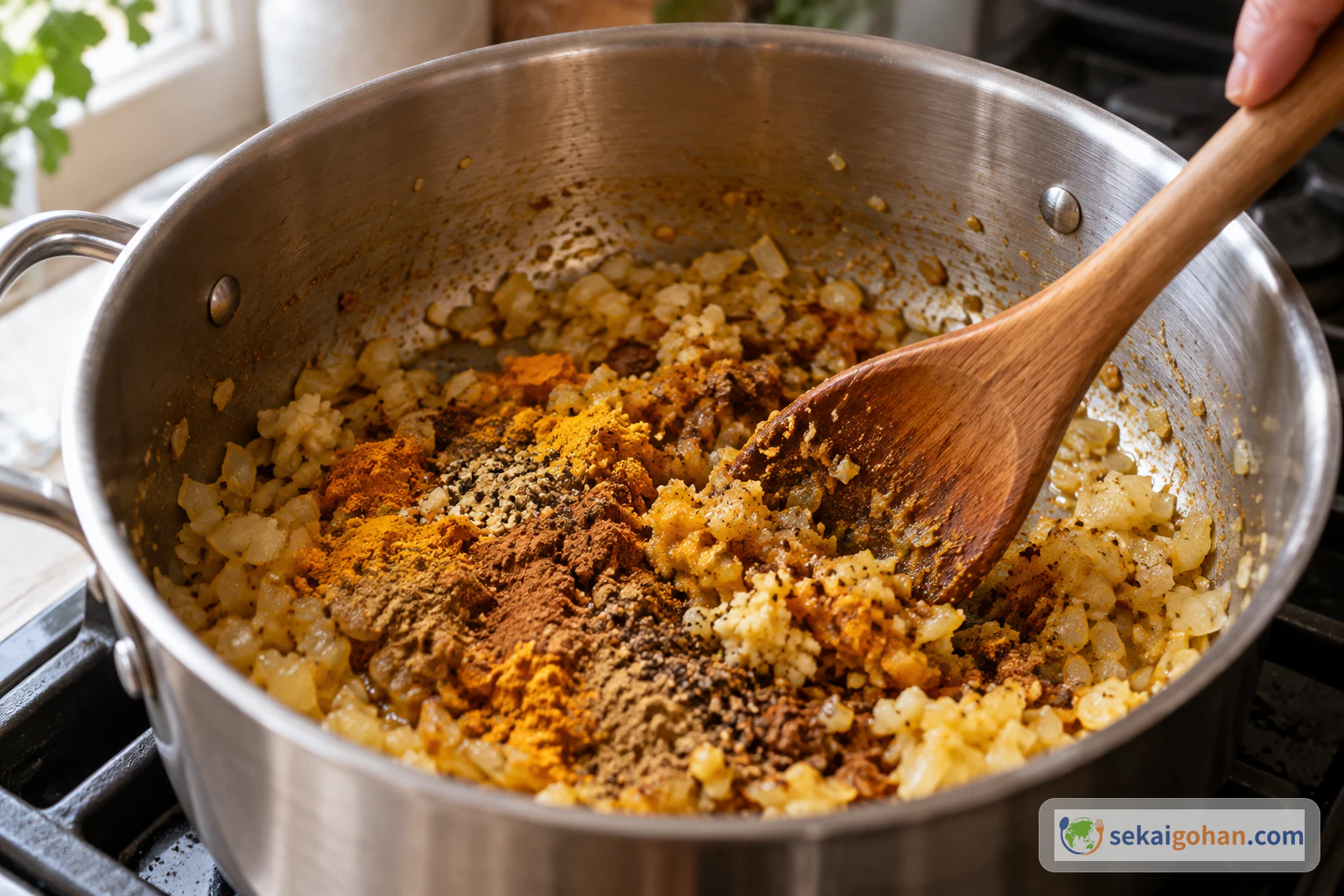
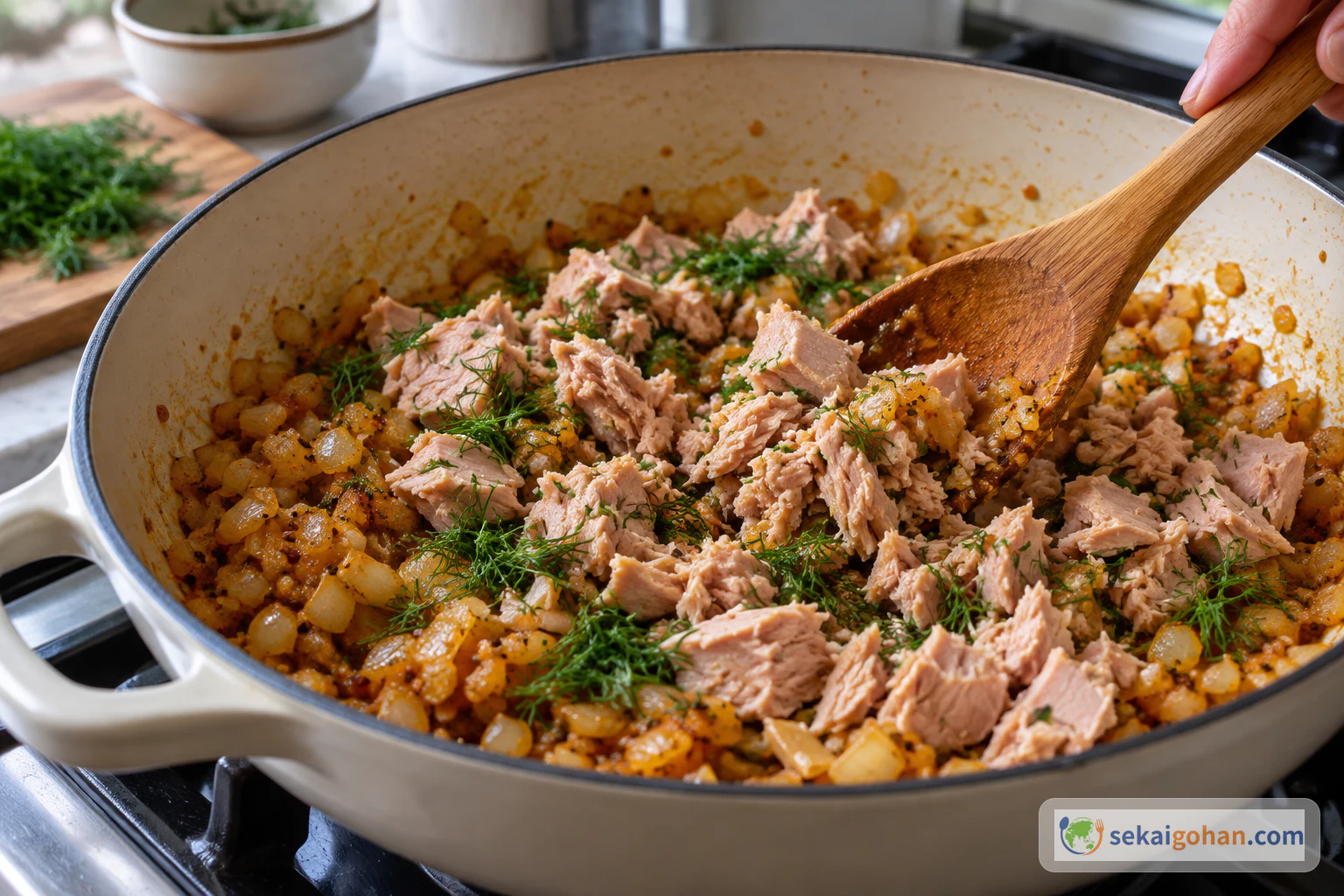
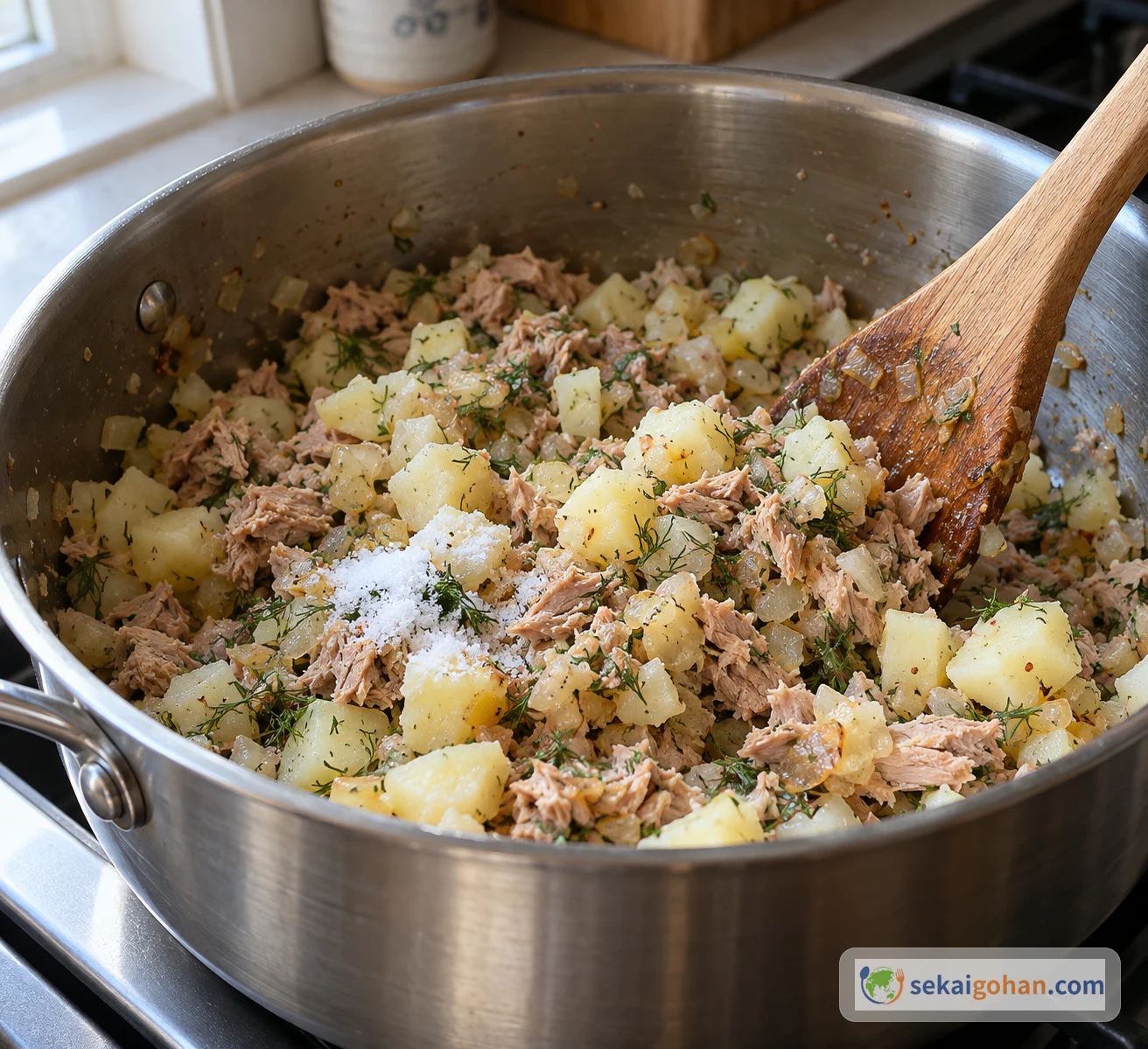
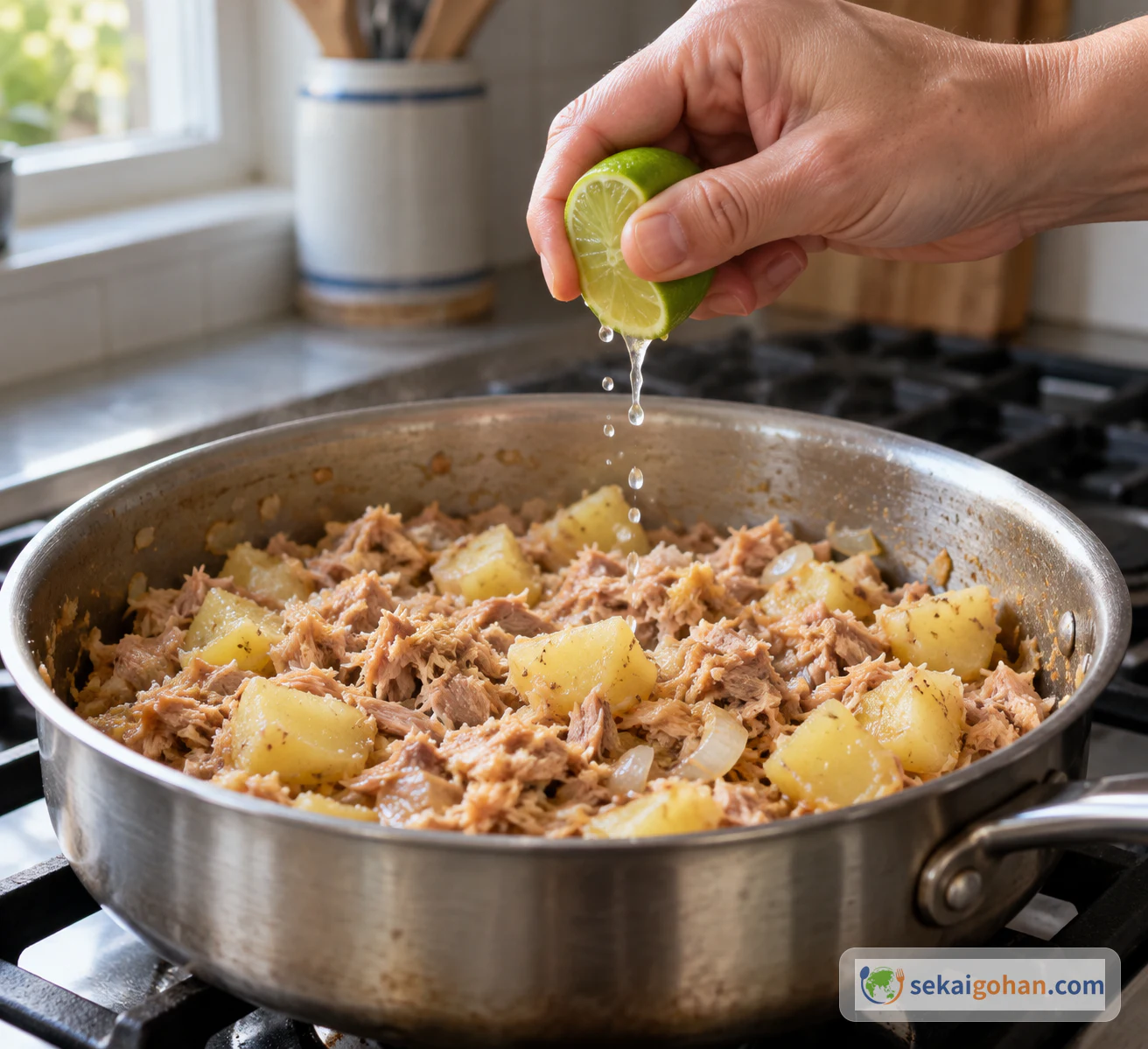
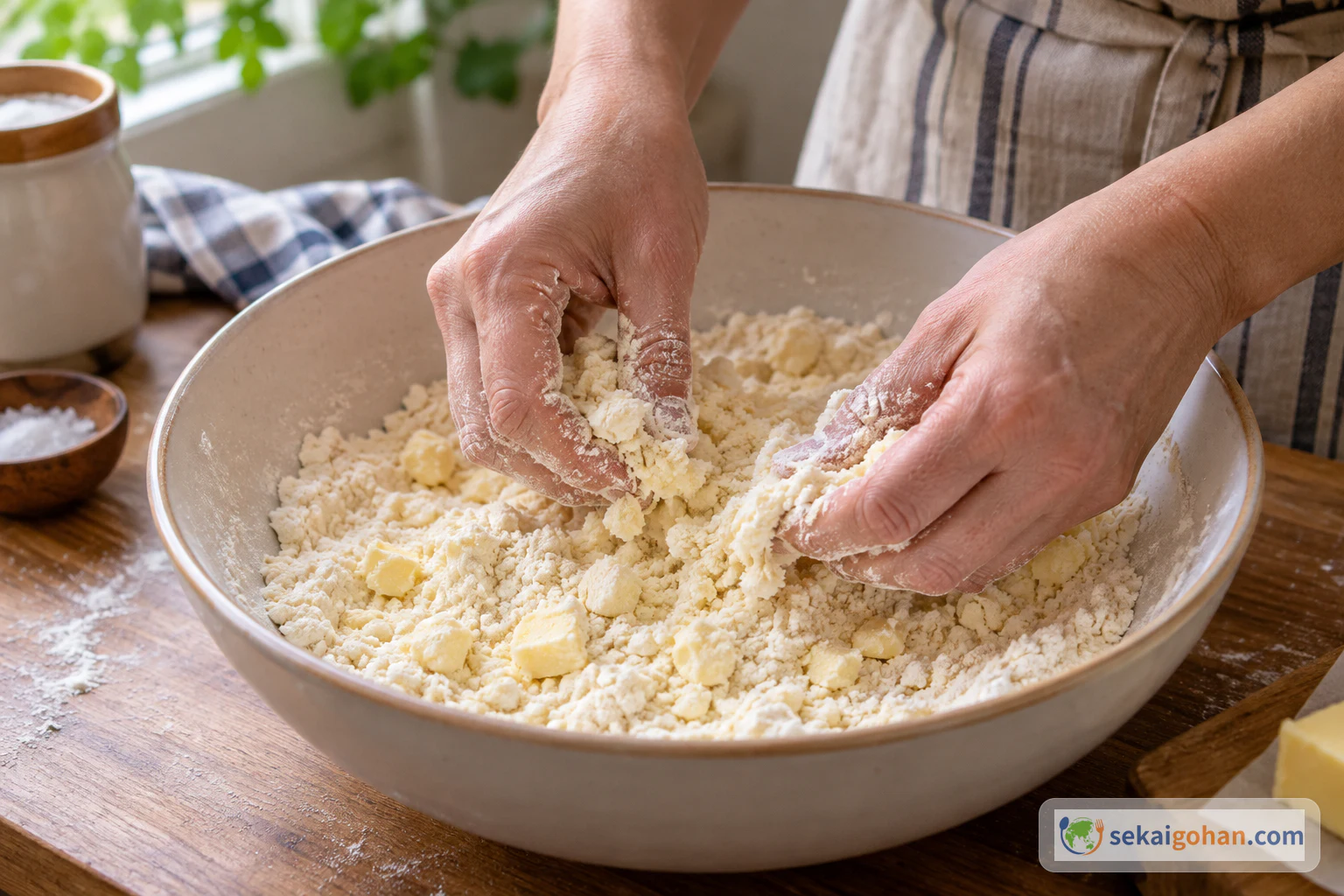
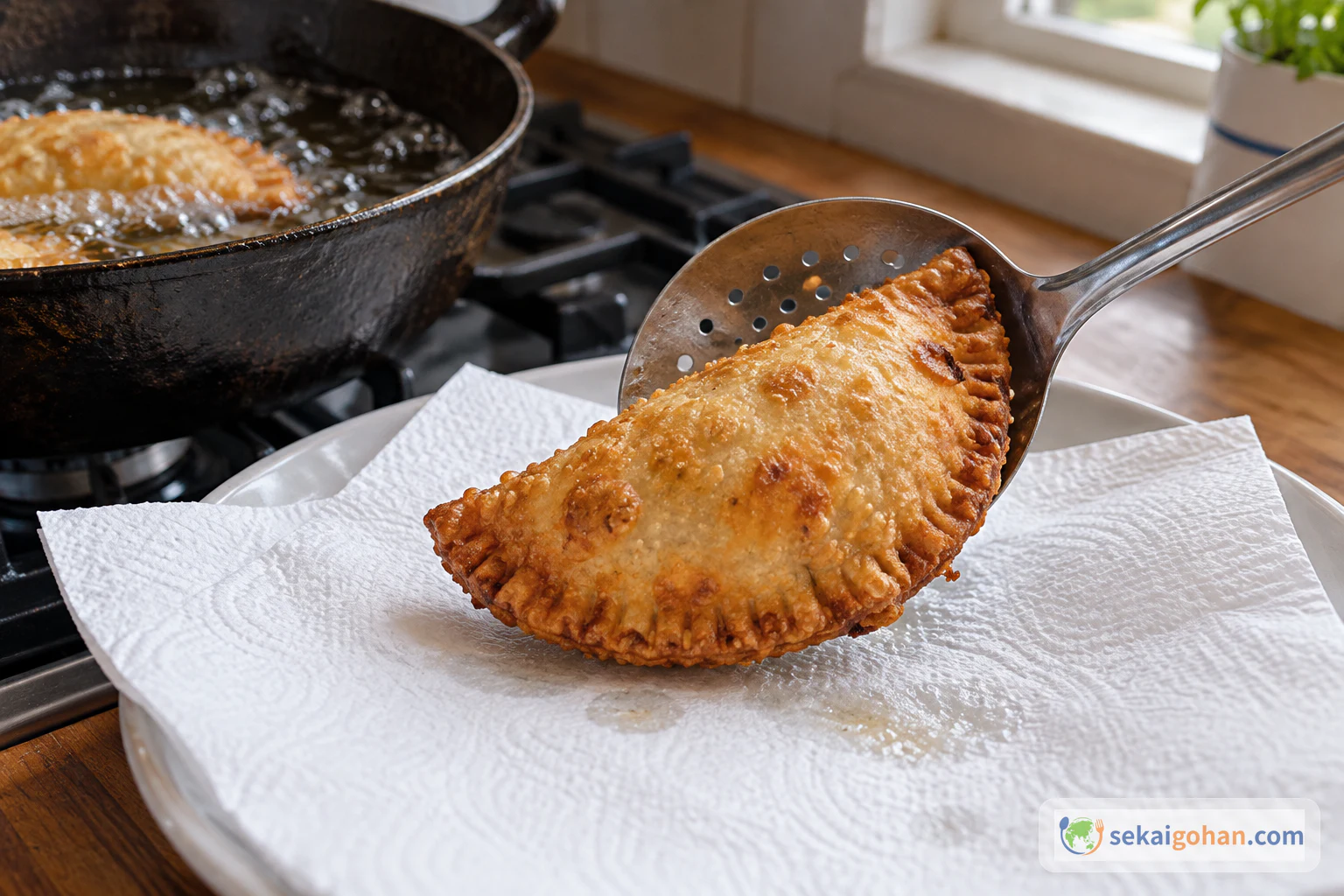
A golden half-moon, its curved edge marked with the tines of a fork. Break one open and the center is chopped potato and flakes of tuna, mixed with turmeric, cumin, cinnamon, cloves, black pepper, fresh dill and a squeeze of lime. The pastry around it is made with flour, butter, egg yolk and coconut milk.
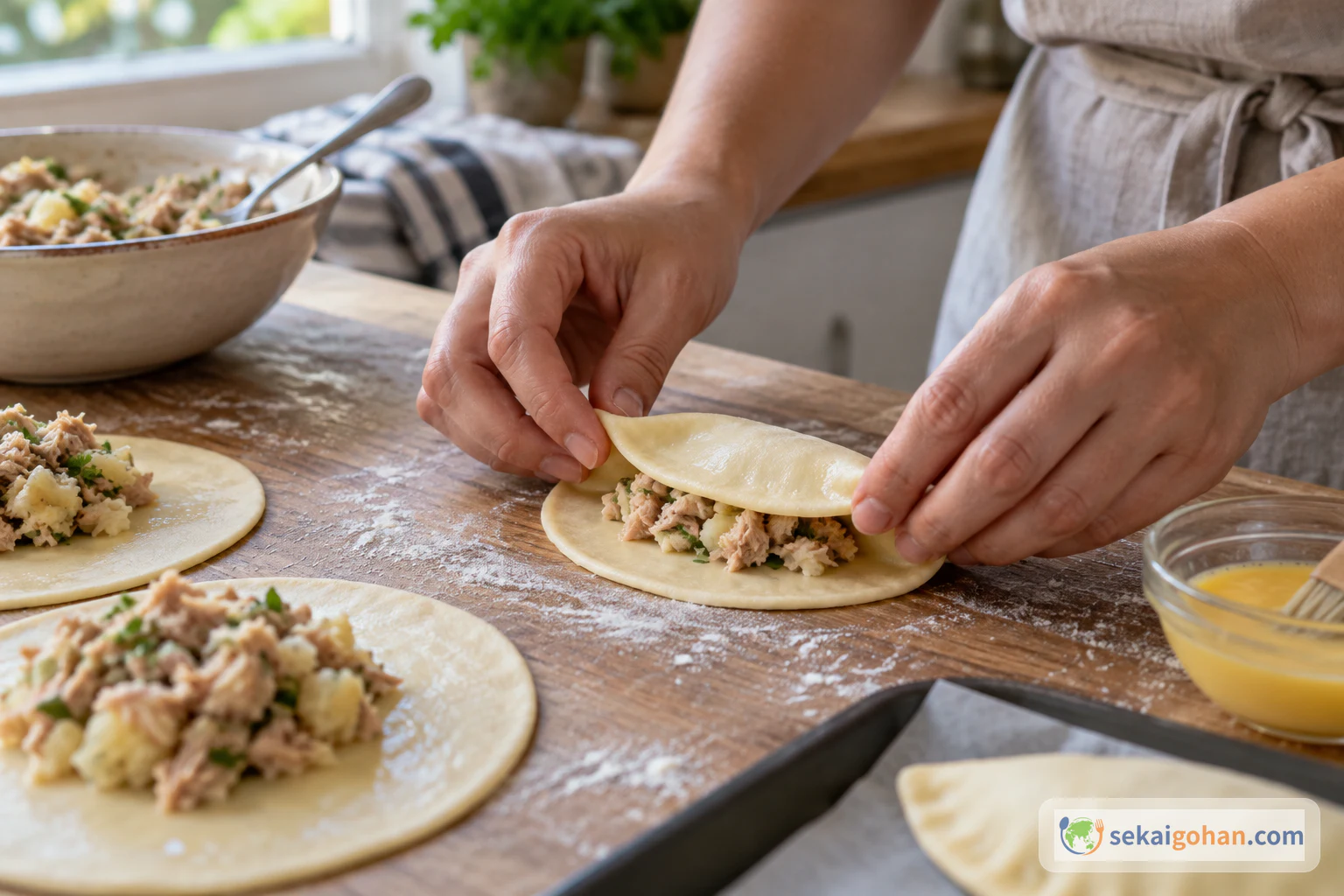
This is the fish patty, or patis (පැටිස්), a snack presented as one of Sri Lanka's short eats. It is not a fishcake or a fish ball shaped from fish paste: the filling is cooked first, enclosed in a circle of pastry, folded, sealed and deep-fried. The practical questions are the ones that decide whether it works at home: keeping the dough pliable, keeping the filling to a measured spoonful, and keeping the seam closed.
The recipe below follows a single published version from a named Sri Lankan cookbook. Sekai Gohan has not kitchen-tested this recipe; the amounts, times and cues are those of the published version, and where it leaves something open, this article says so rather than filling the gap. For more dishes from the same country, see our Sri Lanka page.
What Is a Fish Patty (Patis)?
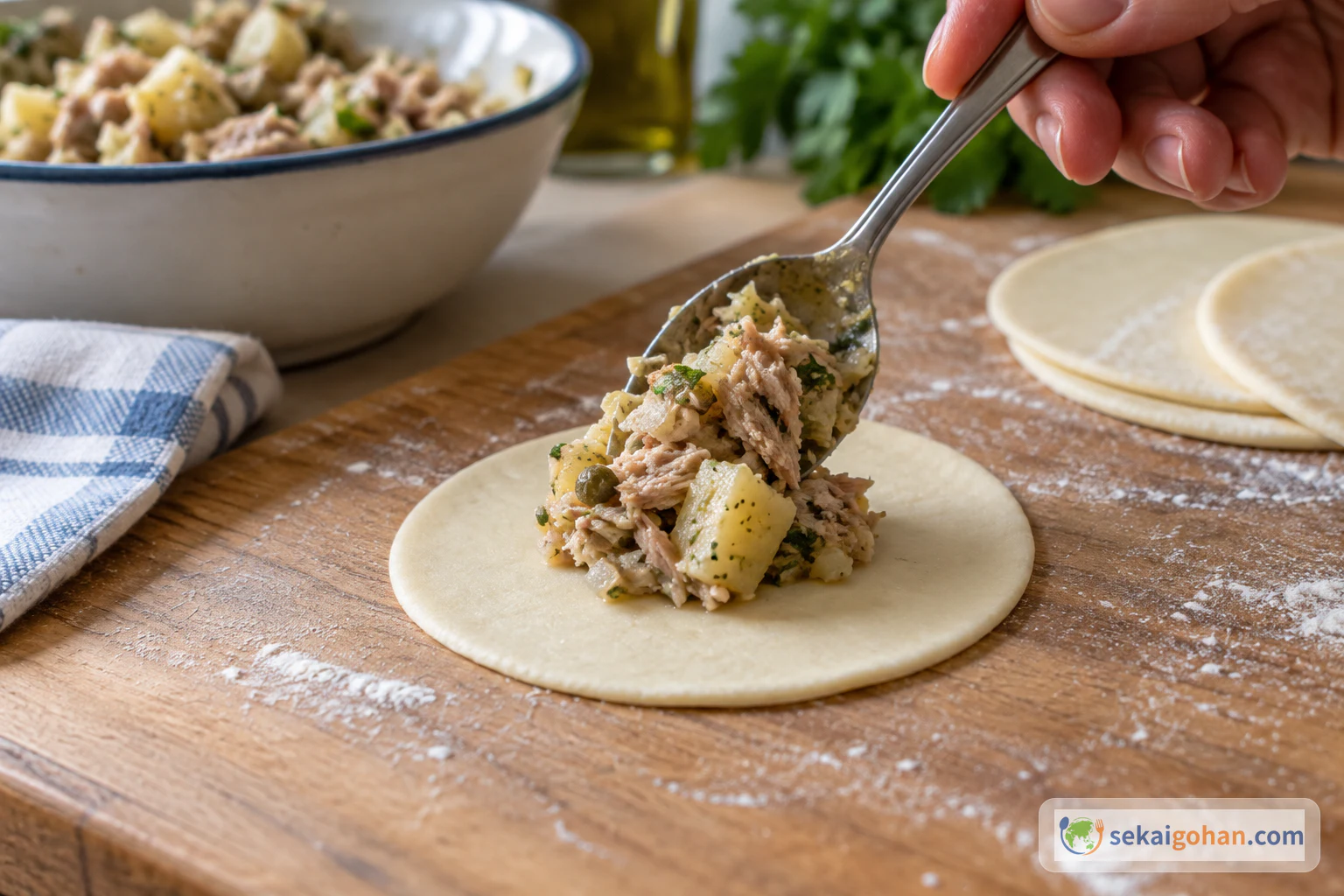
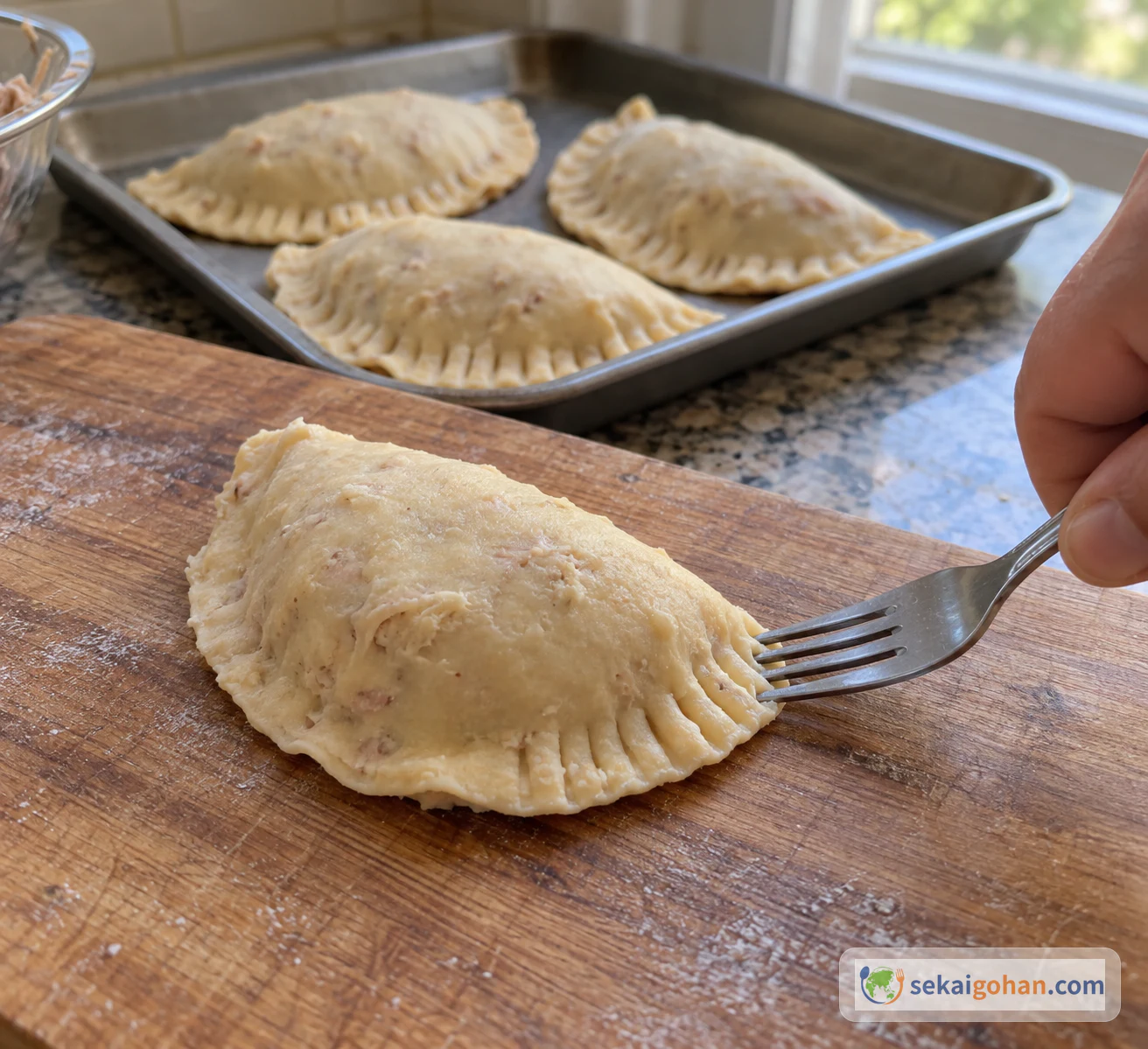
A fish patty is a filled pastry, not a formed fishcake. In the version used here, circles of pastry are topped with a spoonful of cooked tuna-and-potato filling, folded into half-moons, pressed closed with a fork and deep-fried in batches. The shape is a crescent with a crimped edge, not a ball, a square or a flat round cake.
SBS Food publishes this recipe as a popular Sri Lankan snack, crediting it to Prakash K Sivanathan and Niranjala M Ellawala and their book Sri Lanka the Cookbook. Hungry Lankan author Roshani Wickramasinghe uses the name patis (පැටිස්) for this kind of pastry. Those sources support the association with Sri Lanka; they do not establish that the dish comes only from Sri Lanka, and this article does not present its version as the one authentic recipe. Hungry Lankan's own fish-patty recipe uses a different dough and filling, which shows that the name covers more than one formula.
Short Eats, Tea Time and One Author's School-Lunch Memory
In Roshani Wickramasinghe's description, short eats are snacks, and she writes about short-eat shops with their display cases and about taking short eats to school for lunch. Those are her own memories, offered as one person's experience rather than as a rule for everyone.
The Sri Lanka Tourism Promotion Bureau lists patties among Sri Lankan short eats, alongside cutlets, Chinese rolls, fish buns and pastries, and places short eats with evening tea or a quick breakfast. Its overview describes Sri Lankan cuisine broadly as multicultural; it does not trace the history of fish patties or tie them to a particular community, and this article does not offer an origin story. Roshani Wickramasinghe also says she enjoys her patties with Ceylon tea, which is a pleasant way to serve them but not part of the recipe.
About This Version: What the Recipe Says and Leaves Open
This article uses the SBS Food recipe from Sri Lanka the Cookbook. That recipe allows either 300 g of fresh tuna, steamed and flaked, or 300 g of canned tuna by drained weight. This article uses the canned tuna option only; the two are alternatives, not a mixture.
A few points in the published recipe need to be read carefully:
- Spoon measures are Australian. The page states 1 tsp = 5 ml, 1 tbsp = 20 ml and 1 cup = 250 ml. The amounts below keep those spoons.
- The oil appears as one line. The ingredient list gives 3 tbsp and 500 ml of oil together. The method uses a small amount to cook the filling and a larger amount to deep-fry, so this article reads the 3 tbsp as the filling oil and the 500 ml as the frying oil. The type of oil is not named.
- Egg yolk and egg whites. The ingredient list gives one egg yolk for the pastry, while the shaping instructions call for lightly beaten egg whites on the pastry edge. The recipe gives no amount of egg white and does not say whether the whites come from the same egg as the yolk. This article leaves both points open rather than guessing an egg count.
- The filling is not cooled in the recipe. After the lime goes in, the recipe only says to take the pan off the heat. Letting the filling cool before you fill the pastry is this article's own practical suggestion, and no time is given for it.
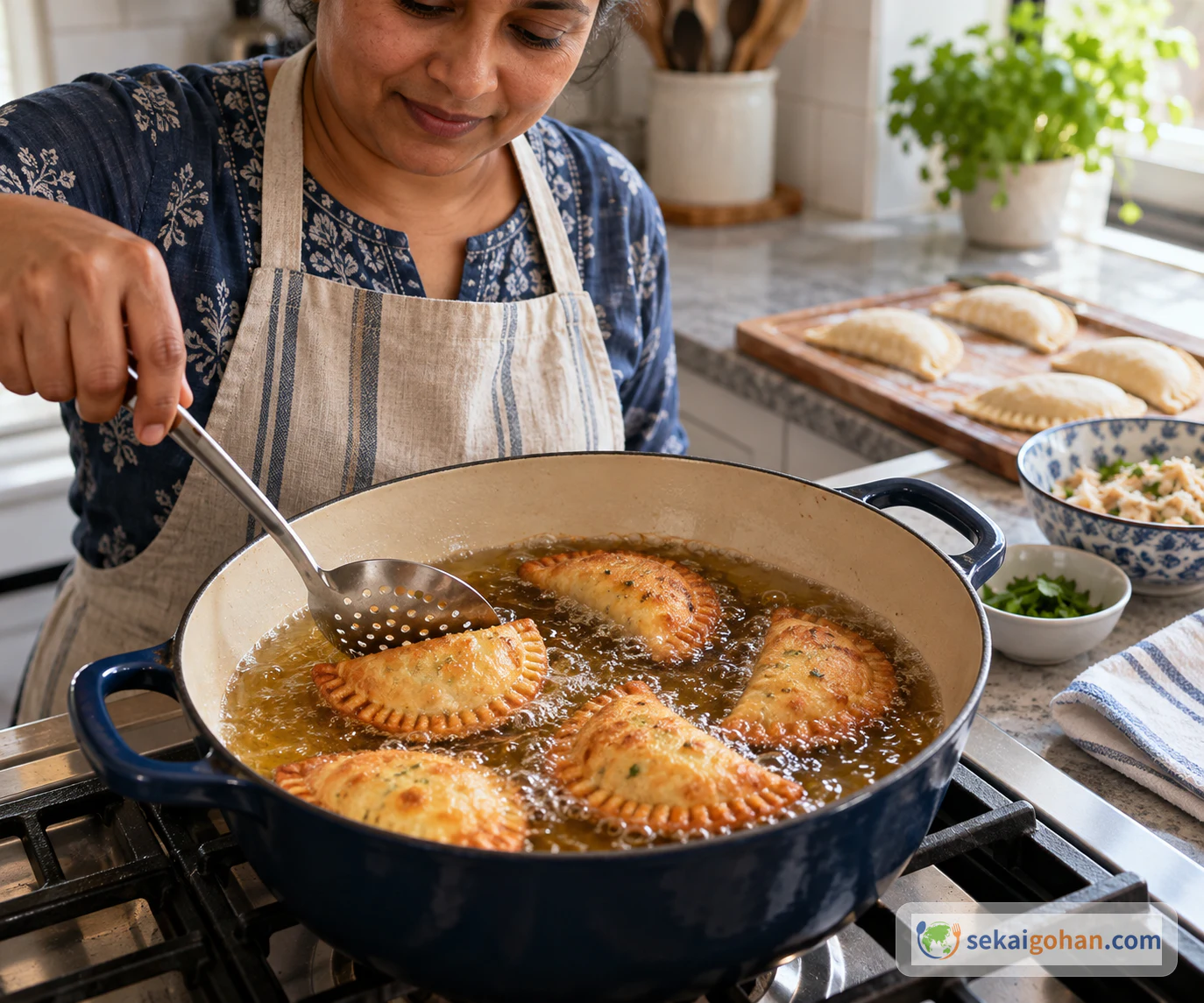
- "Boiling point" is not a temperature. The recipe tells you to bring the frying oil to "boiling point" and fry at medium heat, but gives no number. This article does not turn that phrase into a temperature. As separate, general cooking guidance (not a figure from this recipe and not a food-safety endpoint), Japan's Ministry of Agriculture, Forestry and Fisheries gives about 175–180°C as a basic range for frying fish and meat at home. Japan's Fire and Disaster Management Agency advises turning off the heat before leaving frying oil, because oil left heating unattended can catch fire.
- Yield and time. The recipe says it makes 12 serves. Its method cuts six circles from each of two halves of dough, which gives twelve circles; that piece count follows from the method rather than from a stated yield. The recipe lists 20 minutes of preparation and 25 minutes of cooking, plus 30 minutes for chilling the dough. It gives no total time.
Ingredients for Fish Patties
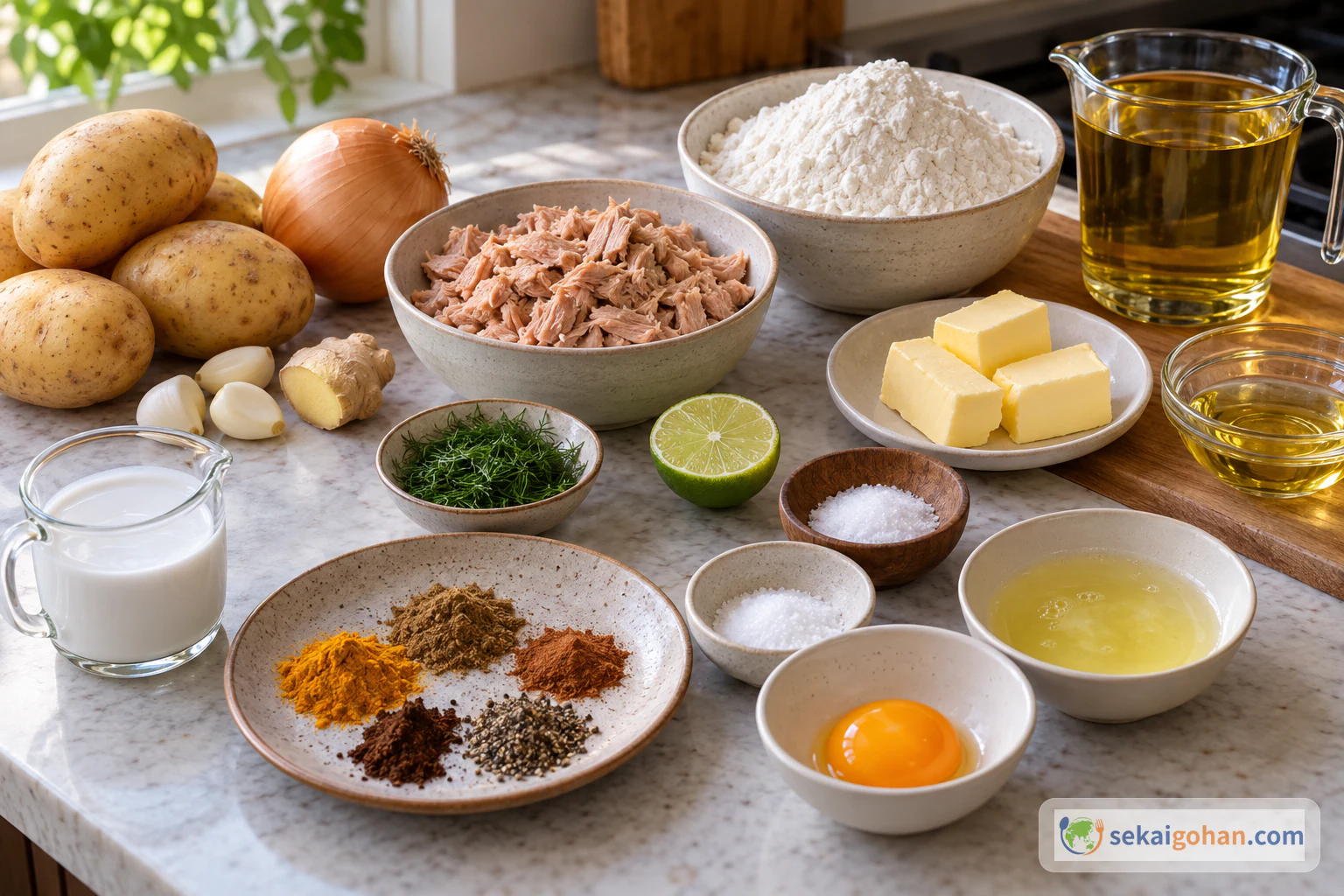
This recipe contains fish, wheat, butter (dairy) and egg, and the pastry contains coconut milk.
Equipment
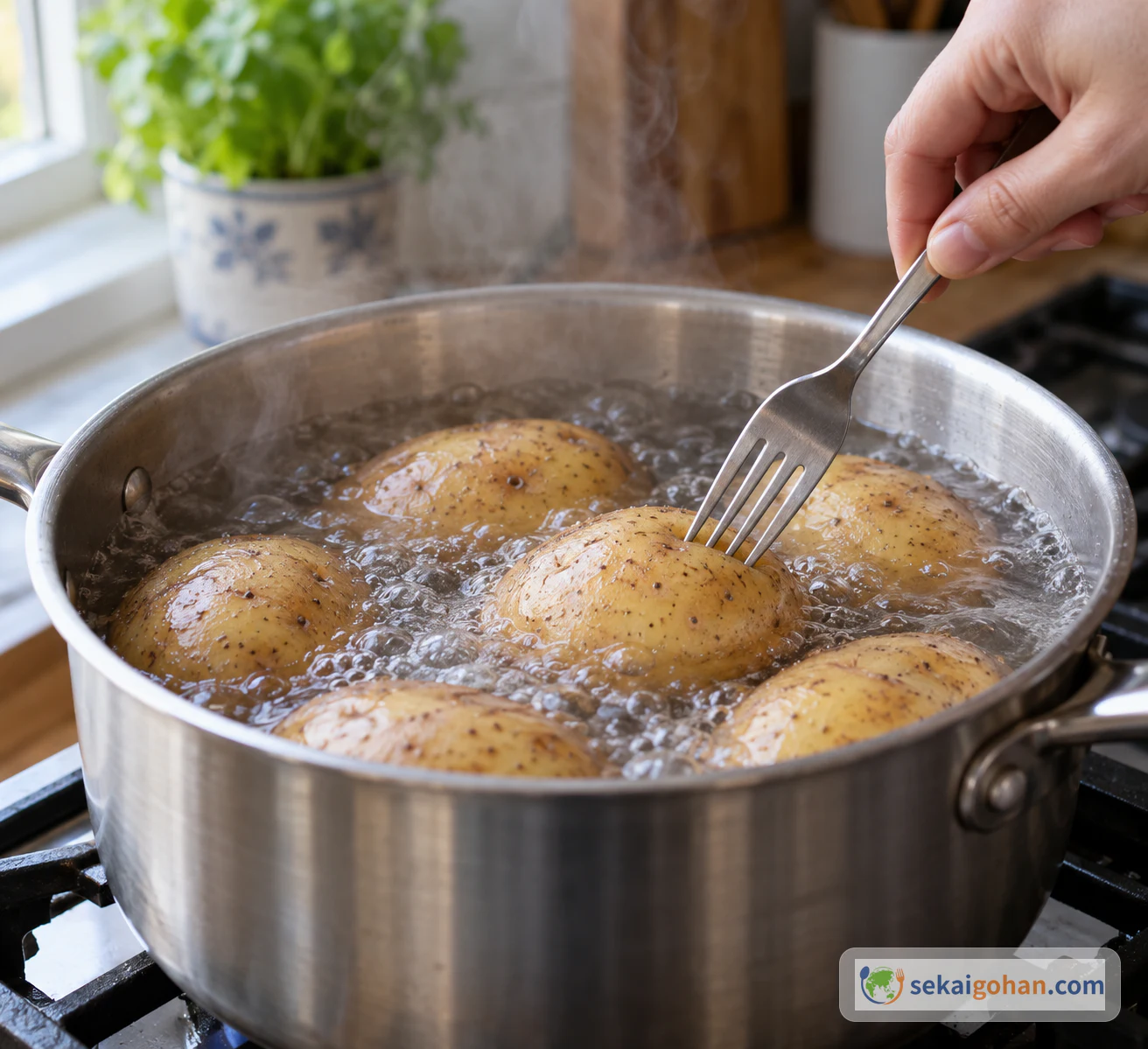
- Saucepan for boiling the potatoes
- Pan for cooking the filling, and a wooden spoon
- Wide mixing bowl
- Plastic wrap
- Rolling pin
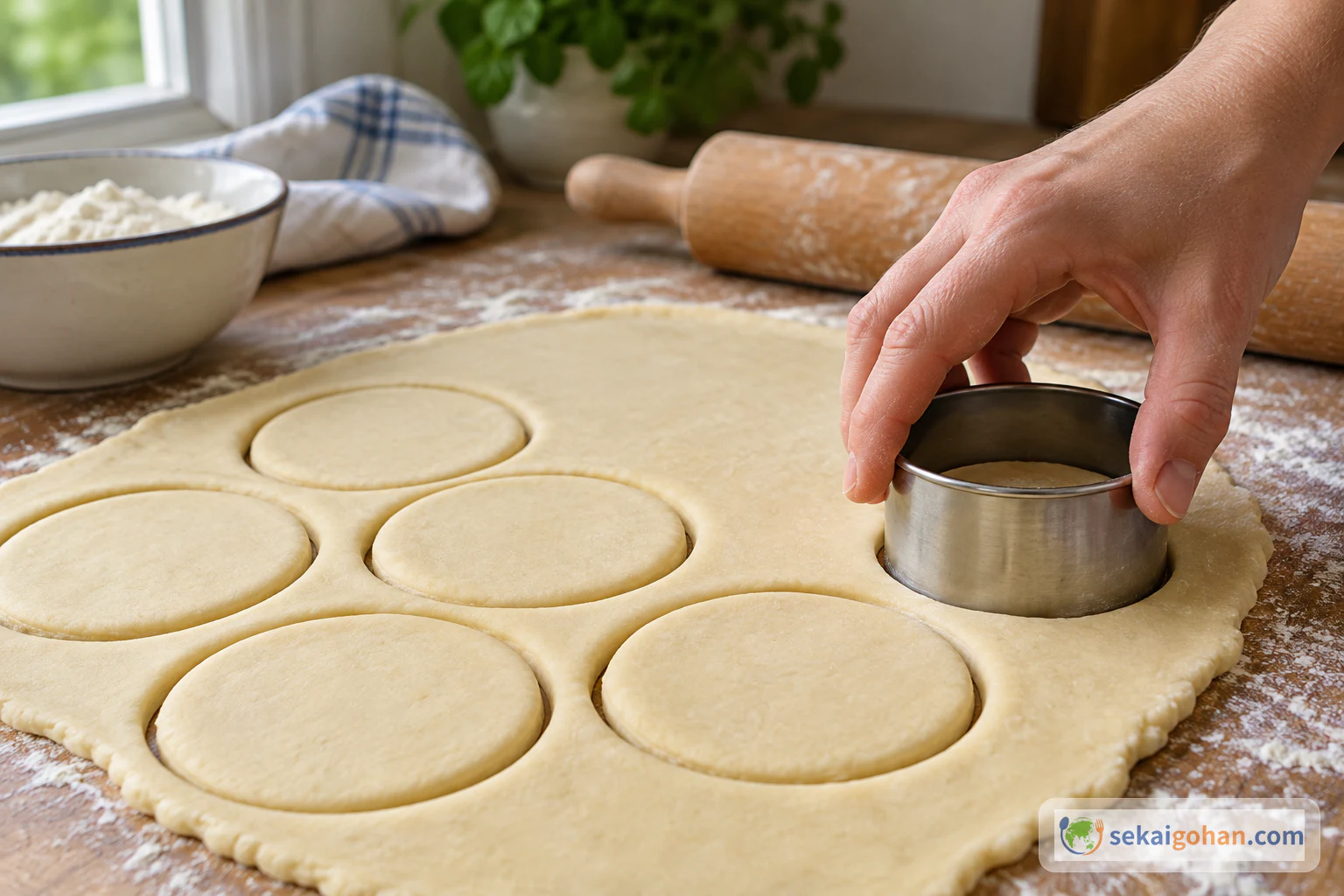
- Round pastry cutter, 5–6 cm (2–2.5 inches)
- Fork
- Deep saucepan for frying
- Slotted spoon
- Kitchen paper
Choosing Tuna, Dill and Coconut Milk
Tuna. Weigh the canned tuna after draining; use 300 g drained weight. Use canned tuna throughout this version.
Dill. Use 1 tbsp finely chopped fresh dill. Look in the fresh herb section.
Coconut milk. Use 60 ml in the pastry, not the filling.
Everything else. Potatoes, onion, garlic, ginger, ground spices, flour, butter, eggs and lime are ordinary supermarket ingredients. A 5–6 cm round cutter matches the circle size, but it is a convenience rather than a special purchase.
Method: Filling, Pastry, Shaping and Frying
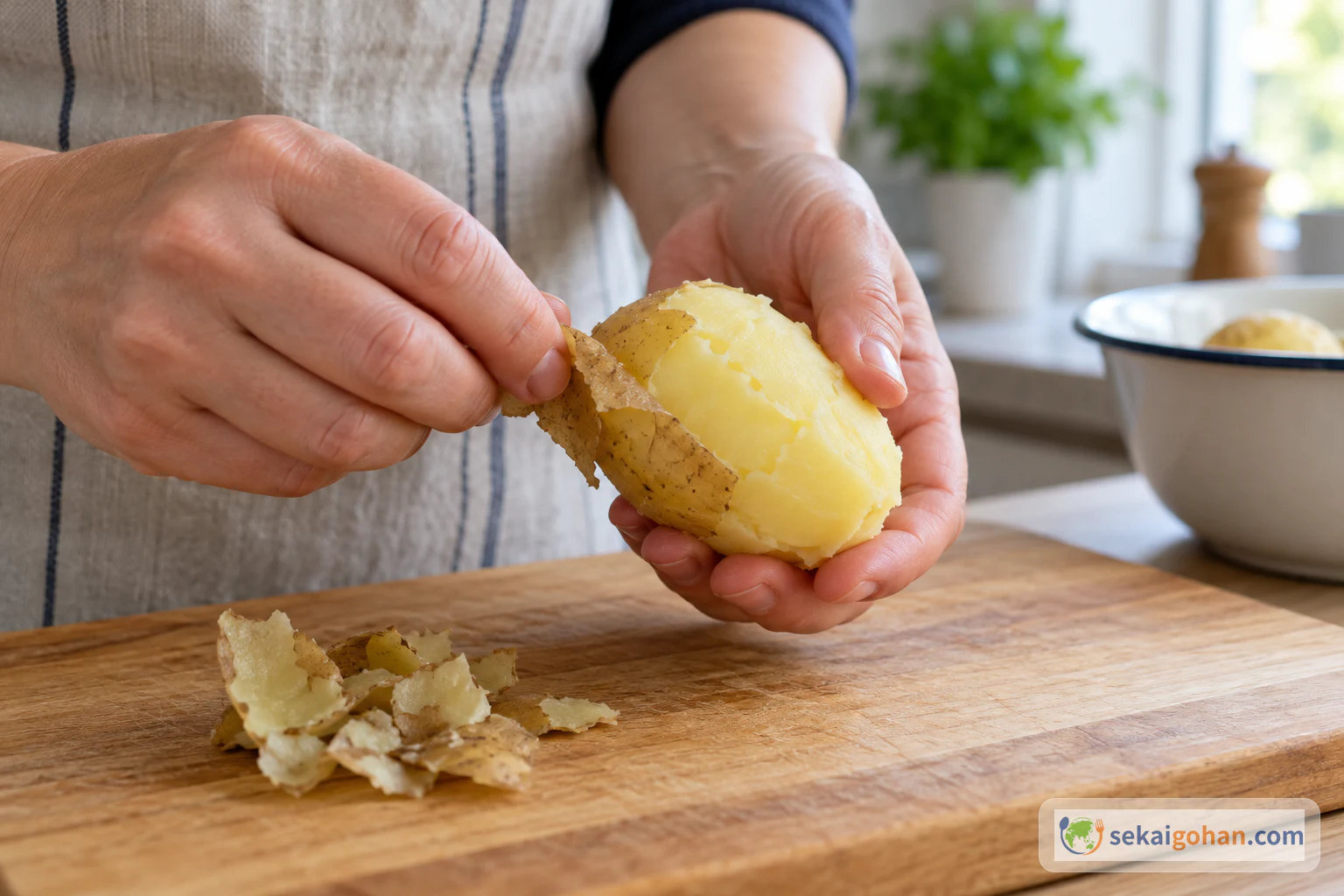
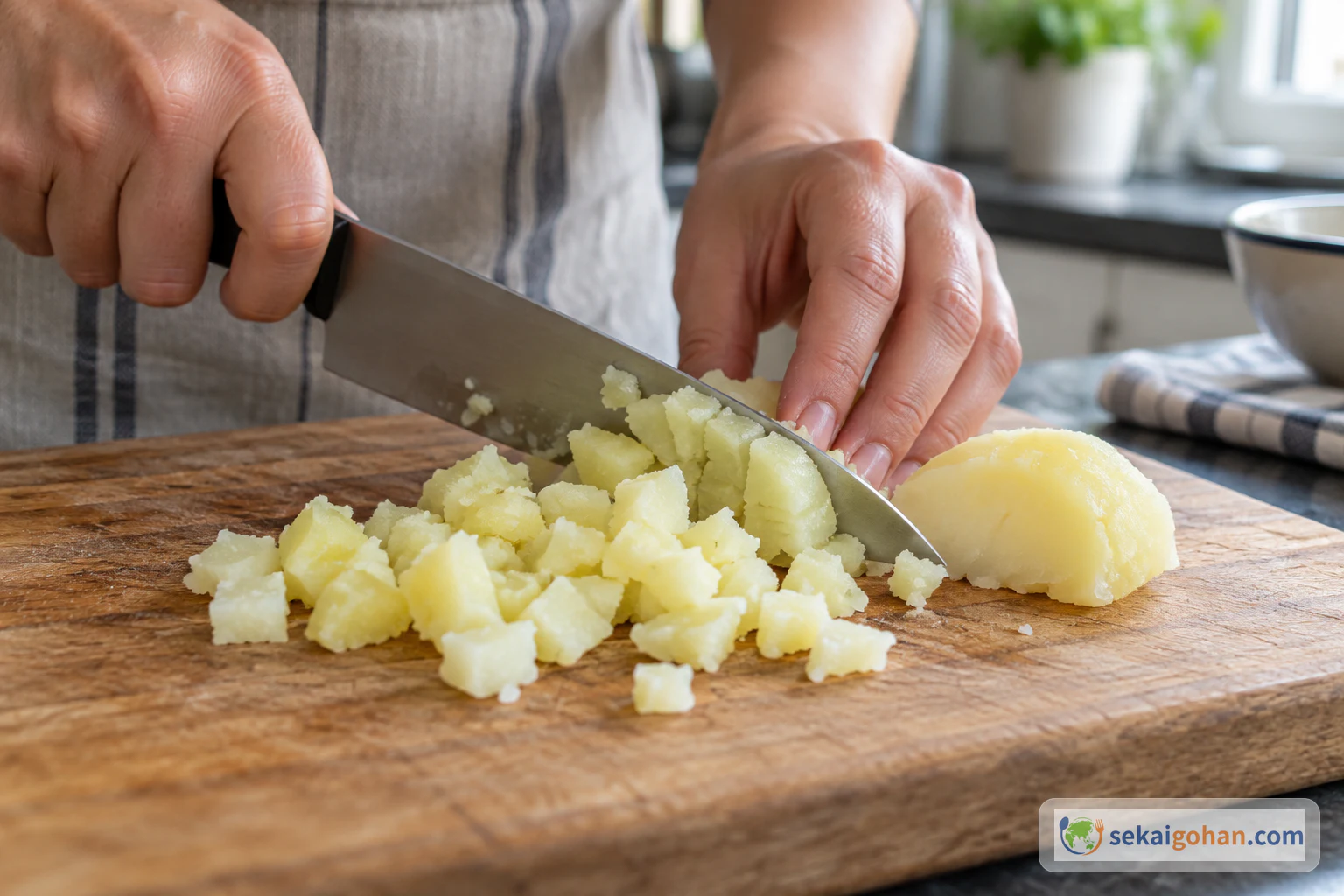
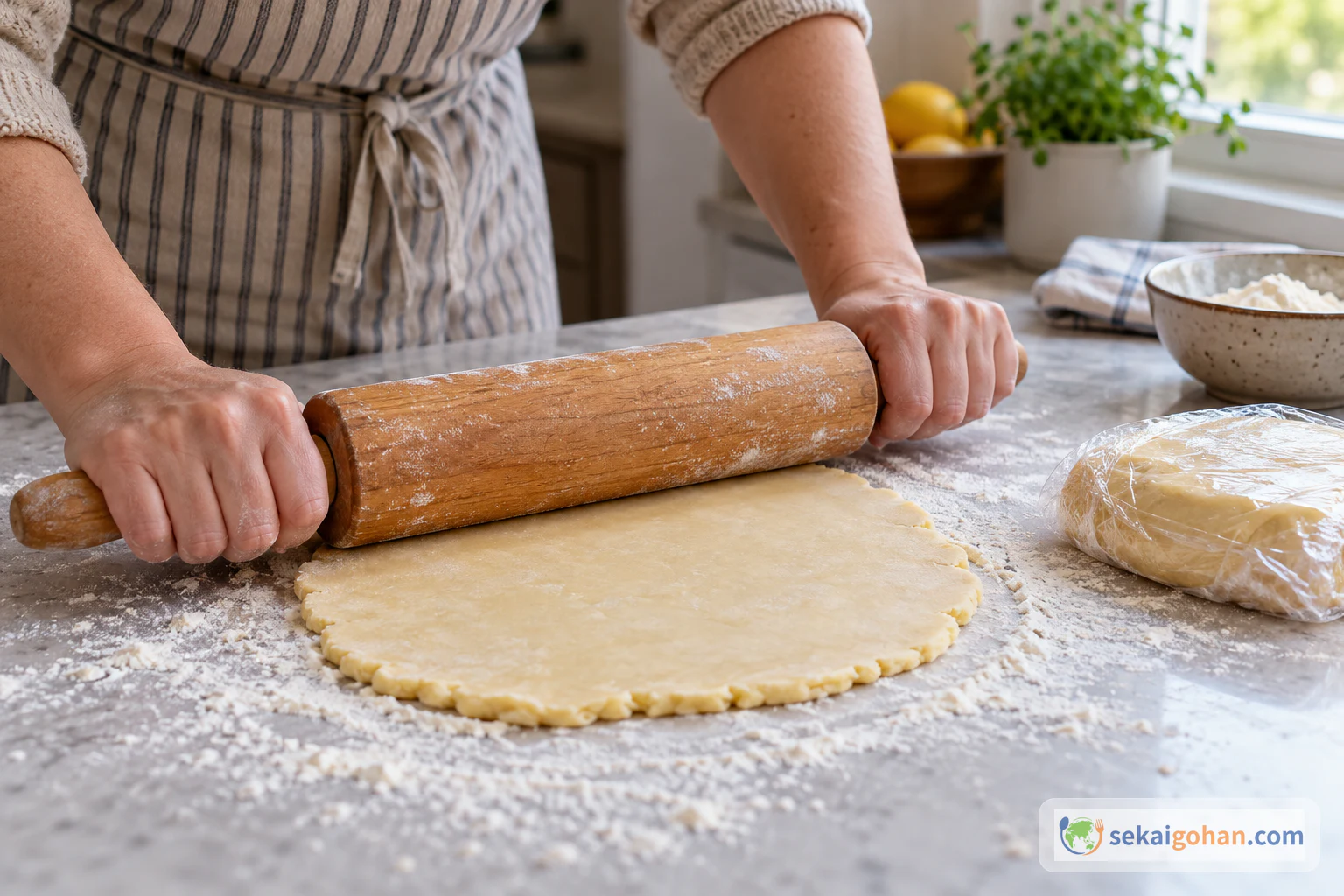
The filling (steps 1–7) and the pastry (steps 8–10) are independent until step 13. While the dough chills, the filling can rest off the heat.
When Something Goes Wrong: What to Look At
These checks stay within the recipe's own cues. They are not tested fixes, and they don't add new amounts.
| What you see | What to check | What to do |
|---|---|---|
| The aromatics are darkening before the spices go in | The heat under the filling oil | Keep the heat low; the onion should be soft and only turning golden |
| The filling looks like a paste | How hard the tuna and potato were worked | Break the tuna into chunks and mix the potato through rather than mashing it |
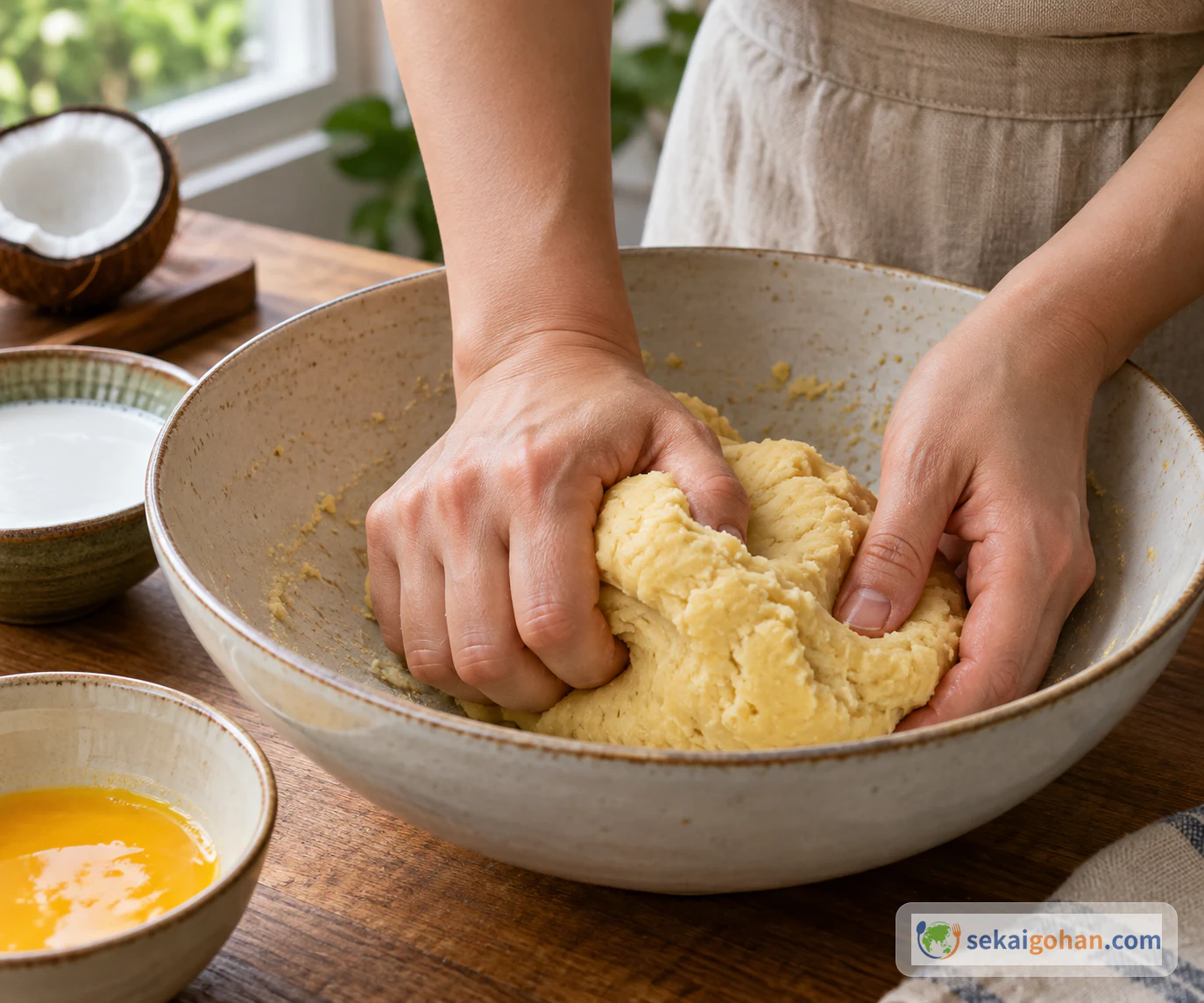
| The dough stays crumbly | How much coconut milk has gone in | Keep adding the coconut milk gradually while kneading; add a little water only if the dough still needs it |
| The dough feels wet or sticky | Whether liquid went in too fast | Work in a little extra flour, then chill for the full 30 minutes |
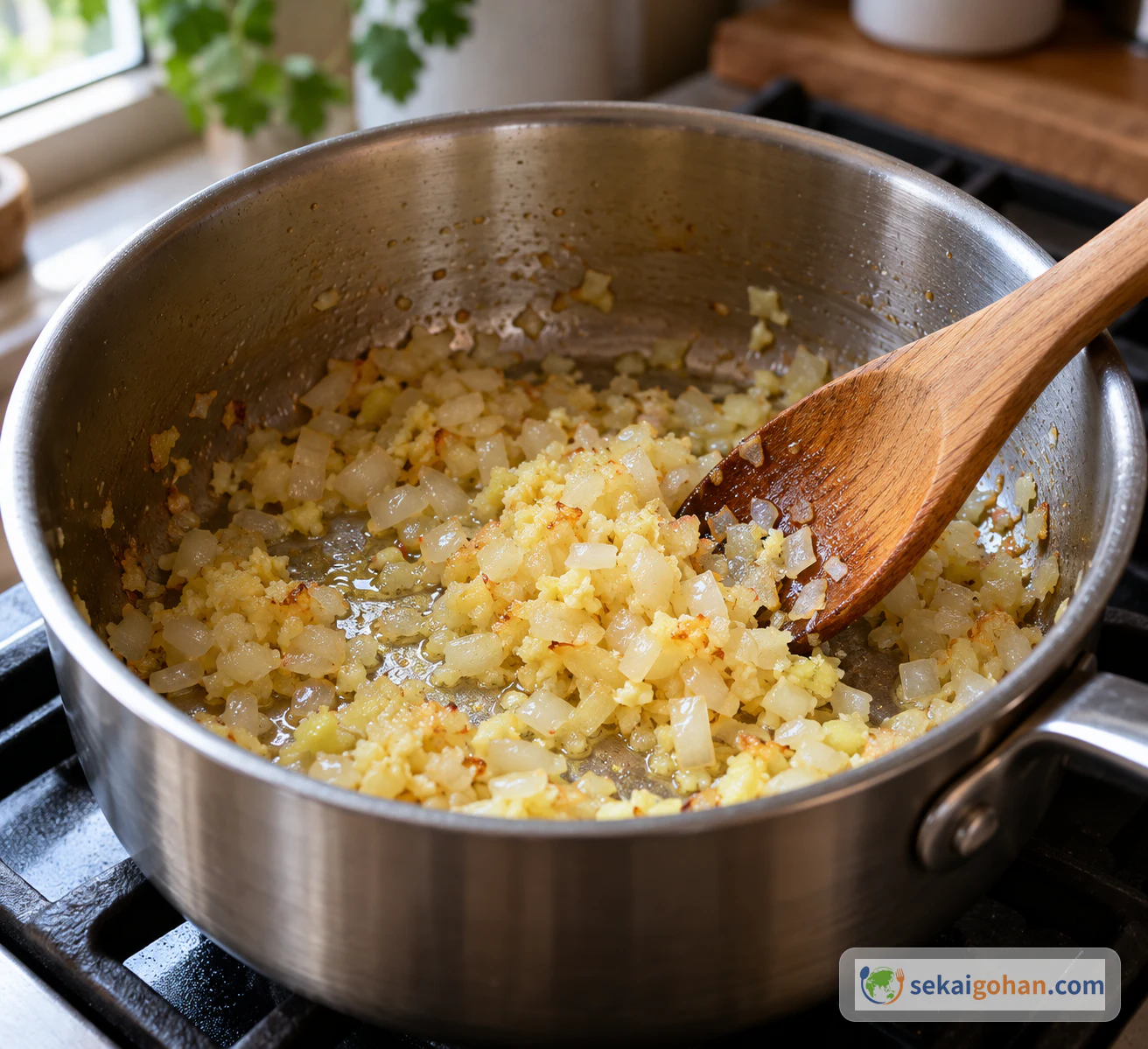
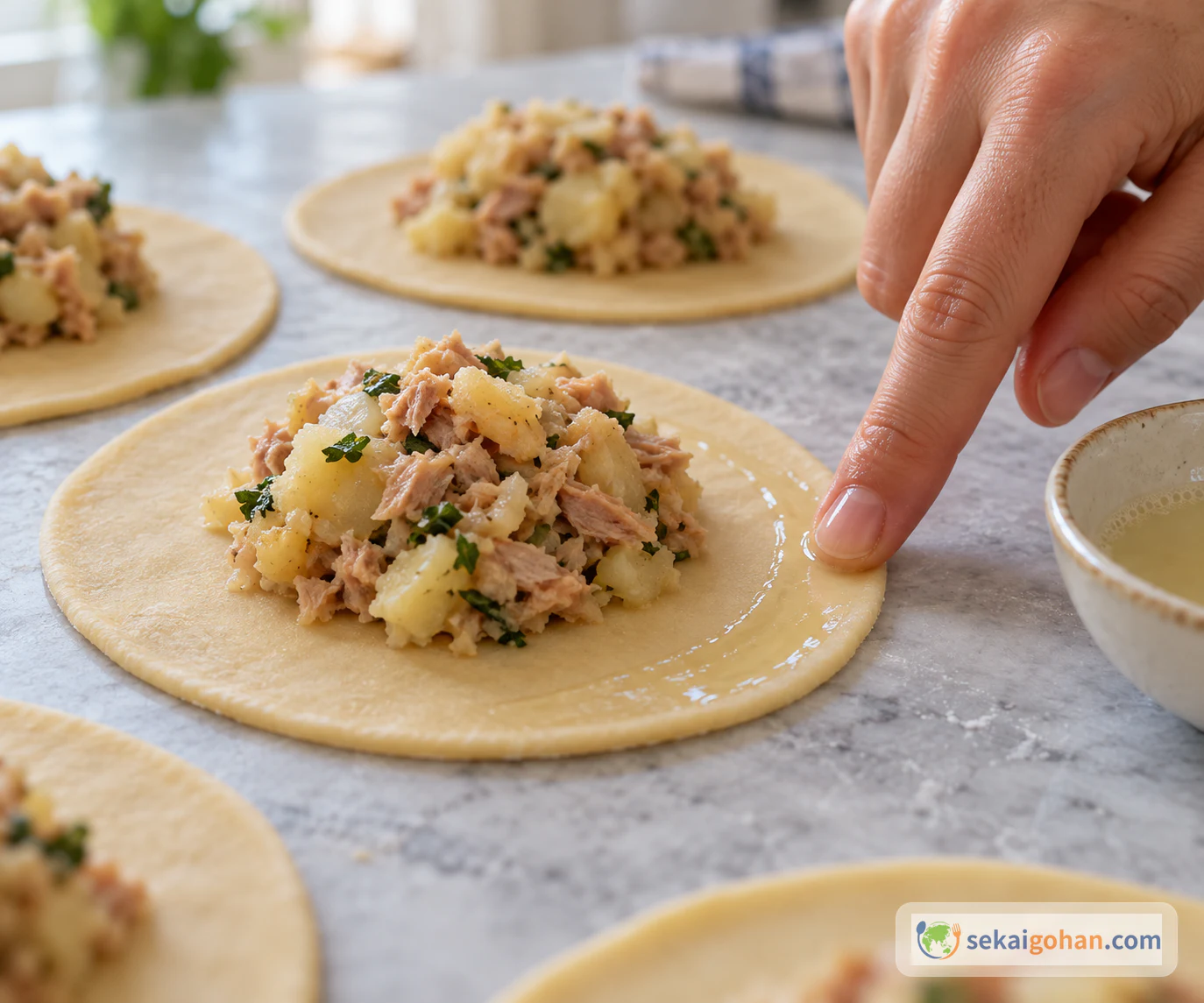
| The seam opens or filling escapes | Filling amount, egg white on the edge, fork pressing | Keep to 1 tbsp filling, keep the edge clean, brush with egg white and press the whole curve with the fork |
| The pastry tears while shaping | The tear itself | Close it up again before the patty goes into the oil |
| The patties color unevenly | Batch size and turning | Fry only 5–6 at a time, turn them as they cook, and take them out when golden brown |
Serving and Storing Fish Patties
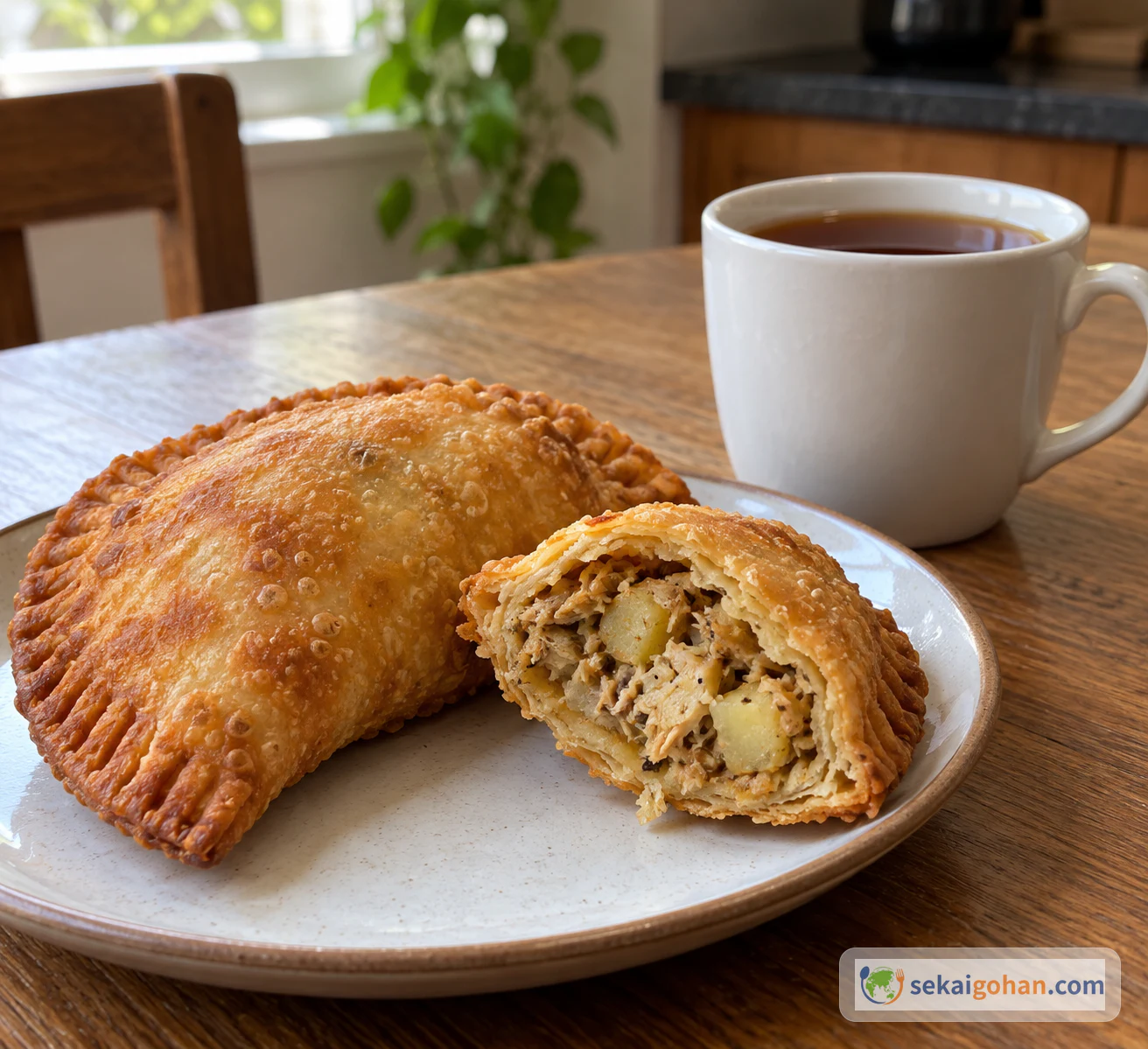
Serve the patties after draining as a small snack, one or more per person depending on appetite. Short eats are associated with evening tea and quick breakfasts, and a cup of Ceylon tea alongside is an optional idea, not part of the recipe.
For leftovers, cool them promptly in a clean, shallow container and refrigerate them; don't leave them out at room temperature. Reheat leftovers thoroughly, to at least 75°C. No storage period is given for this dish, so this article does not suggest a number of days.
Ways to Adjust Within This Recipe
- Canned or fresh tuna (canned selected here). The same recipe offers 300 g fresh tuna, steamed and flaked, as an alternative to 300 g drained canned tuna. Use one or the other, never both together.
- Circle size. Use a 5 cm or 6 cm cutter, and keep the filling at 1 tbsp per circle either way.
- Portions. Serve one patty as a small snack or more as appetite suggests; this does not change the recipe's amounts.
- Tea on the side. Ceylon tea is a serving idea, kept outside the ingredient list.
- Splitting the work. You can cook the filling and let it cool while the dough chills, so the two stages meet at step 13. This is a scheduling idea for the same session, not a make-ahead storage method.
- Frying only. The recipe is deep-fried. Baking or other cooking methods are not covered here and are not suggested.
Frequently Asked Questions
Most problems come back to three things: a filling kept in chunks, a dough kneaded only until soft and pliable, and a seam sealed with egg white and a fork.
Is a fish patty the same as a fishcake?
No. In this version, a cooked fish-and-potato filling is enclosed in pastry, folded into a half-moon, sealed with a fork and deep-fried. A fishcake or fish ball is shaped from the fish mixture itself, with no pastry around it.
Can I use canned tuna?
Yes. Canned tuna is the option chosen here, at 300 g drained weight. The SBS recipe also allows fresh tuna, steamed and flaked first; if you go that way, Japan's Ministry of Health, Labour and Welfare advises cooking food thoroughly at home. Don't combine fresh and canned tuna in one batch.
Can I replace the dill or the coconut milk?
The recipe gives no replacement for either, so this article doesn't present one as working. Fresh dill and coconut milk are both part of this version.
How many eggs do I need?
The ingredient list gives one egg yolk for the pastry, and the shaping instructions call for lightly beaten egg whites on the edge. The recipe gives no amount of egg white and doesn't say whether the whites come from the same egg as the yolk, so this article doesn't state an egg count.
Why does my dough crack, or the patties open in the oil?
Go back to the recipe's cues: add the coconut milk gradually until the dough is soft and pliable, chill it for 30 minutes, use 1 tbsp filling per circle, brush the edge with egg white and press the whole curve with a fork. If the dough needs adjusting, the recipe allows a little extra flour or water but gives no amount. Letting the filling cool before assembly is this article's own suggestion, not a step in the recipe.
What temperature should the frying oil be?
The SBS recipe says to bring the oil to "boiling point" and fry at medium heat, but gives no temperature, and that phrase shouldn't be read as a literal number. As separate general guidance, Japan's Ministry of Agriculture, Forestry and Fisheries gives about 175–180°C as a basic range for frying fish and meat at home; that is a cooking-quality guide, not a figure tested with this recipe and not a food-safety endpoint. Japan's Fire and Disaster Management Agency advises turning off the heat before leaving frying oil, even on low heat.
How long can I keep leftovers?
The recipe gives no storage period. Japan's Ministry of Health, Labour and Welfare advises cooling leftovers promptly in clean, shallow containers, refrigerating them rather than leaving them at room temperature, and reheating them thoroughly to at least 75°C. It does not set a number of days for this dish, and neither does this article.
Do I have to serve them with tea?
No. Tea is a serving context: the Sri Lanka Tourism Promotion Bureau links short eats with evening tea and quick breakfasts, and Hungry Lankan's Roshani Wickramasinghe says she enjoys her patties with Ceylon tea. The patties are complete on their own.
Sources
- SBS Food, "Fish patties recipe," recipe by Prakash K Sivanathan and Niranjala M Ellawala from Sri Lanka the Cookbook (Murdoch Books). The recipe followed in this article: ingredients and amounts, Australian measures, the fresh or canned tuna option, the 12-serve label, preparation, cooking and chilling times, and the method. https://www.sbs.com.au/food/recipe/fish-patties/4ovgoekd4
- Roshani Wickramasinghe, "Sri Lankan Fish Patties," Hungry Lankan. The name patis (පැටිස්), short eats, and the author's own memories of short-eat shops, school lunches and Ceylon tea. Its separate recipe is not used here. https://www.hungrylankan.com/recipes/sri-lankan-fish-patties/
- Sri Lanka Tourism Promotion Bureau, "So Rich In Flavours." Patties listed among Sri Lankan short eats, and short eats with evening tea or a quick breakfast. https://srilanka.travel/culinary-tourism/index.php
- Ministry of Health, Labour and Welfare, Japan, "家庭での食中毒予防" (Preventing food poisoning at home). General guidance on cooling leftovers promptly in clean, shallow containers, not leaving cooked food at room temperature, and reheating to at least 75°C. https://www.mhlw.go.jp/stf/seisakunitsuite/bunya/kenkou_iryou/shokuhin/syokuchu/01_00008.html
- Fire and Disaster Management Agency, Japan, "2.ガス安全(LPガス編)" (Gas safety: LP gas). General advice that frying oil left heating unattended can catch fire, and to turn off the heat before leaving it. https://www.fdma.go.jp/relocation/e-college/cat67/cat50/cat48/1-39.html
- Ministry of Agriculture, Forestry and Fisheries, Japan, "家庭で揚げ物をする際に、どうすれば上手に揚げることができますか。" (How to deep-fry well at home). General cooking guidance giving about 175–180°C as a basic frying range for meat and fish, and advice to limit how much is fried at once and turn food while frying. https://www.maff.go.jp/j/heya/sodan/1503/01.html