
Besan Cheela: A Thin Pancake Poured, Spread and Flipped in Minutes
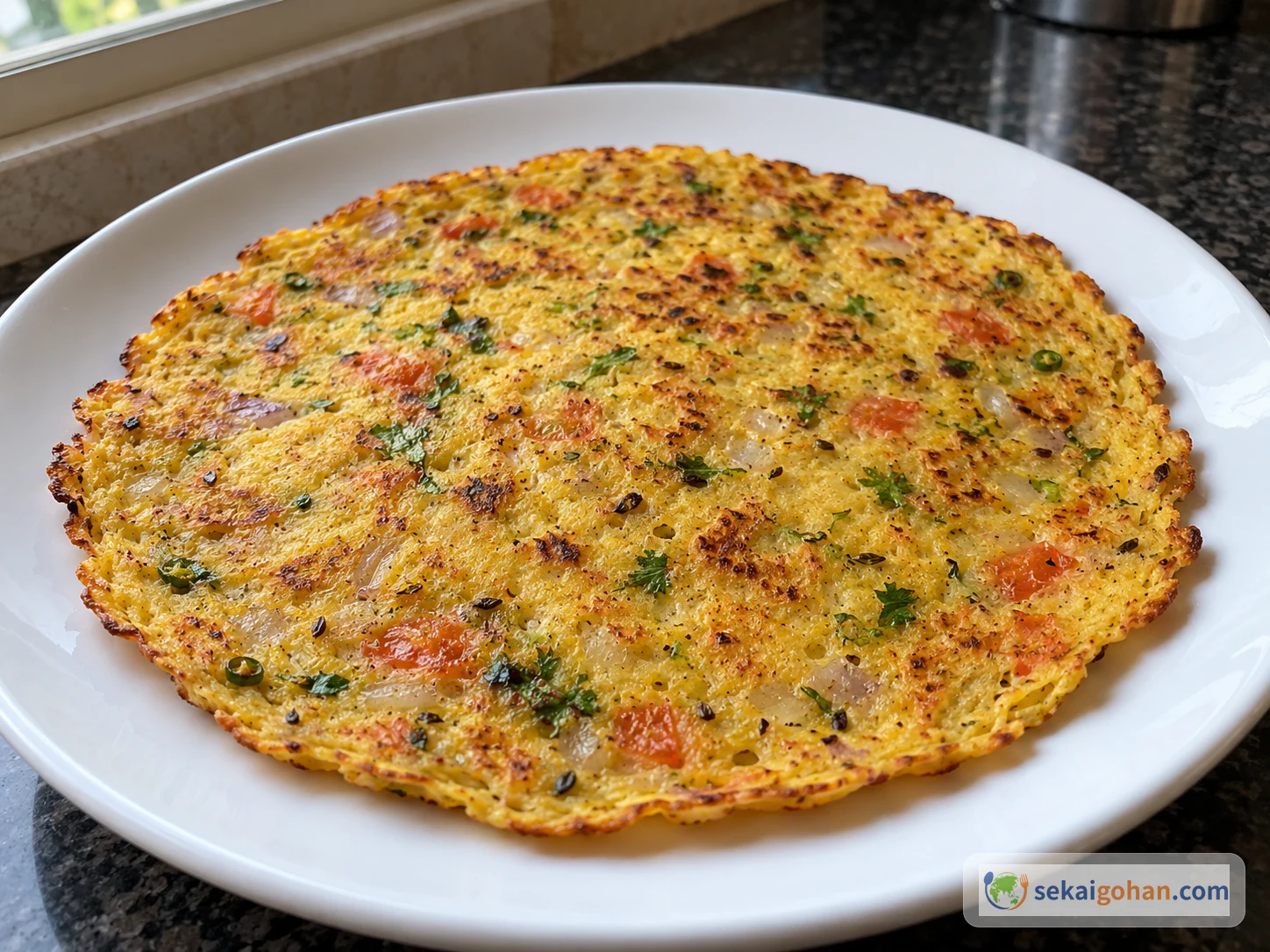
Make a batter that is thick but still pours, spread it as thinly as you can, and wait for the edges to let go before you flip. Brown spots on the surface tell you it is ready.
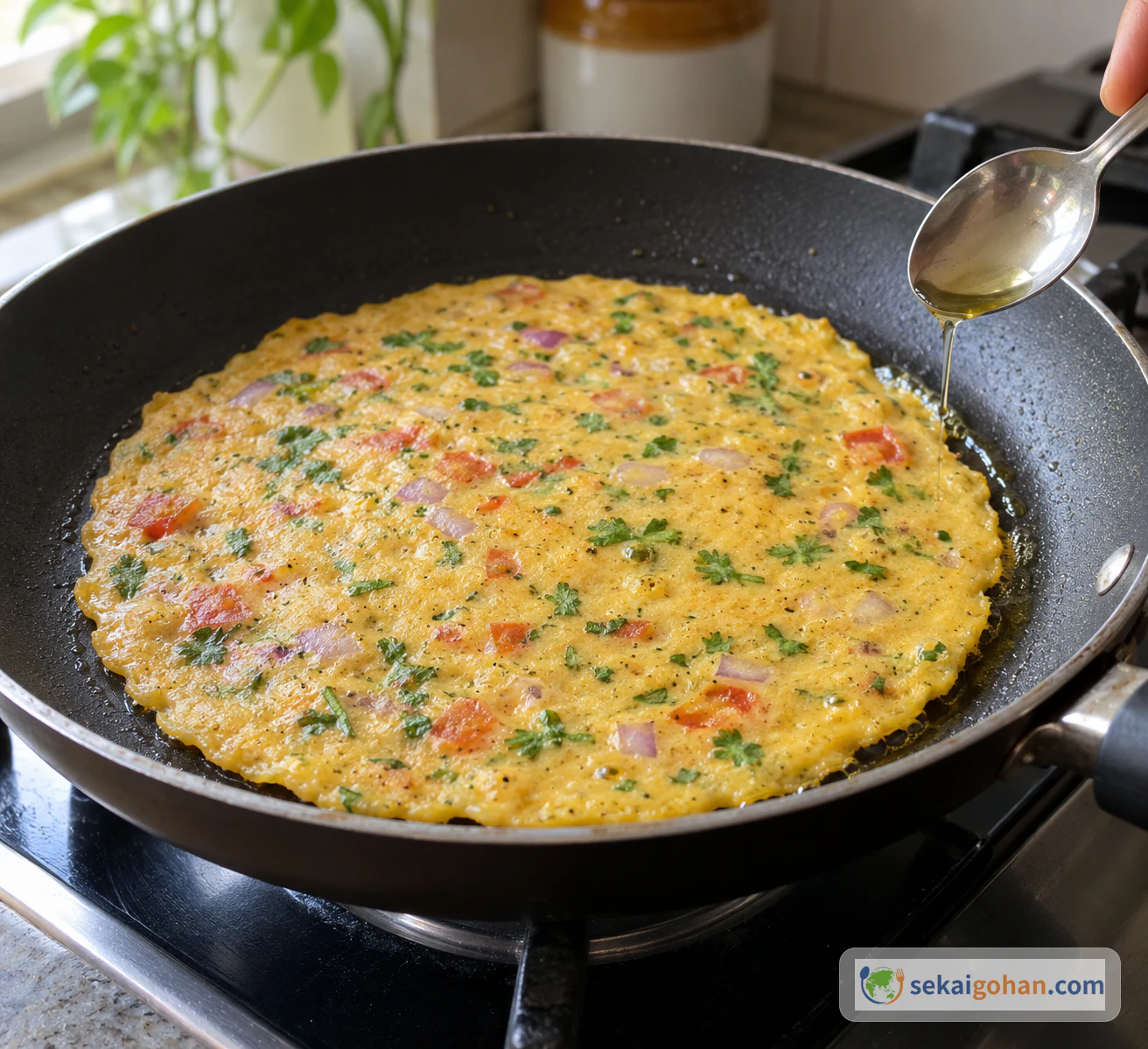
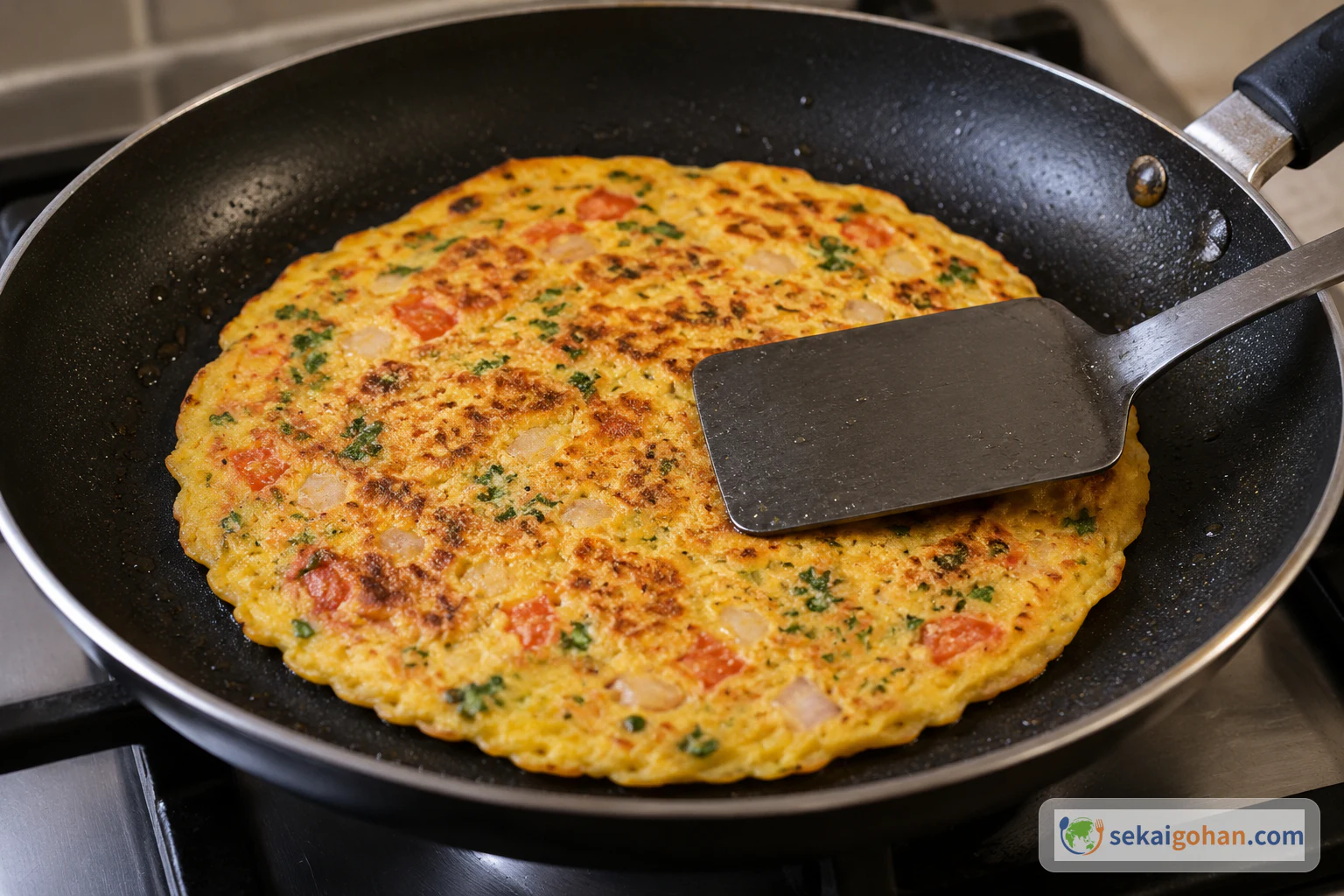
A ladle of yellow batter lands in the middle of a hot griddle and is pushed outward into a thin circle. A little oil goes around the edge, the rim starts to lift, and the pancake is turned and pressed until brown spots appear. Swasthi Shreekanth, whose recipe this article follows, describes besan chilla as a quick breakfast or snack and notes that it is also cooked at street stalls.
Cheela (also spelled chilla) is not a single fixed recipe. The name can cover a family of savory and sweet Indian pancakes made from flours and from lentil or grain batters. This article makes one version of it: the North Indian besan cheela, made from gram flour mixed with water, finely chopped onion and tomato, green chili, ginger, coriander leaves and ajwain. There is no soaking, grinding or fermenting, and the batter goes straight into the pan.
The ingredient amounts and method follow Swasthi Shreekanth's besan chilla recipe, which lists a yield of 4–5 cheela and a time of 6 minutes to prepare and 14 minutes to cook. Those are the figures printed on that recipe page. This recipe has not been kitchen-tested by Sekai Gohan, and how many you get and how long it takes will depend on your pan, your heat and the size of each pancake.
For more dishes from the same country, see our collection of Indian recipes.
In English the dish appears as cheela or chilla, and as besan chilla or besan ka cheela when the gram-flour version is meant. Swasthi Shreekanth's page names pudla and puda as related names, and Dassana Amit's page lists puda, pudla and poli as regional names. A Goan Observer column, however, describes Gujarati pudla as closely related to besan cheela while still noting differences. The names overlap, but they do not always point to the same recipe in every region.
What Cheela Is: The Besan Version and the Ground-Lentil Version
The cheela family is wide. One branch is made from flour, as here; another starts from whole lentils. Moong dal chilla, for example, is made by soaking and grinding moong dal into a batter, and both Swasthi Shreekanth and Dassana Amit treat it as a separate recipe from besan chilla. Dassana Amit also mentions Andhra pesarattu as a dish that uses a dal batter. Those versions have their own proportions and steps, and none of them is mixed into the method below.
Dosa can look similar on the plate, but it is a different dish: its batter is made from soaked and ground rice and urad dal and is fermented before cooking. Besan cheela is an unfermented batter of gram flour, water, vegetables and spice, mixed and cooked straight away.
The version here is kept deliberately simple. It is fried in oil, served hot and eaten on its own, without fillings, toppings or sauces built into the recipe.
Ingredients for 4–5 Cheela
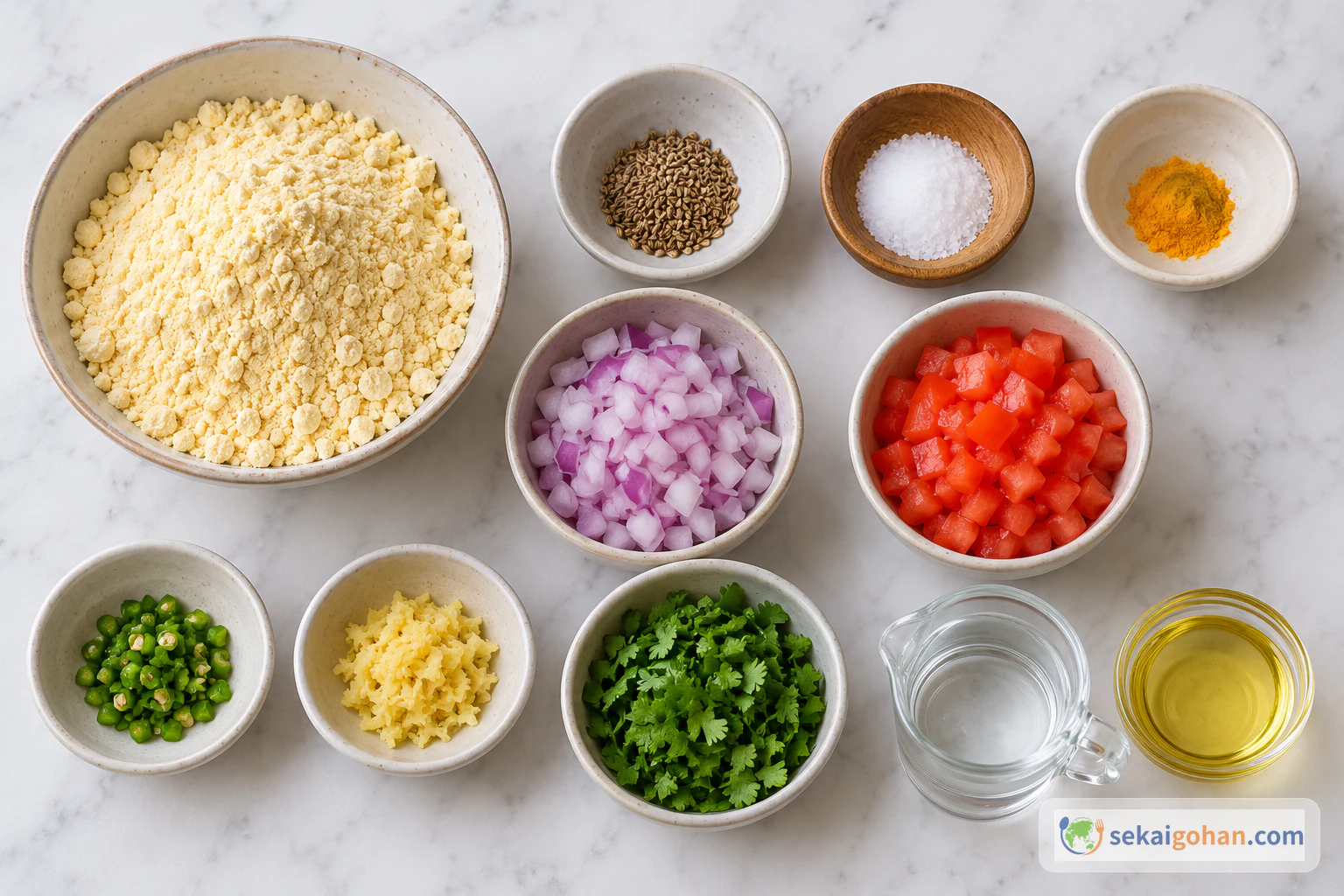
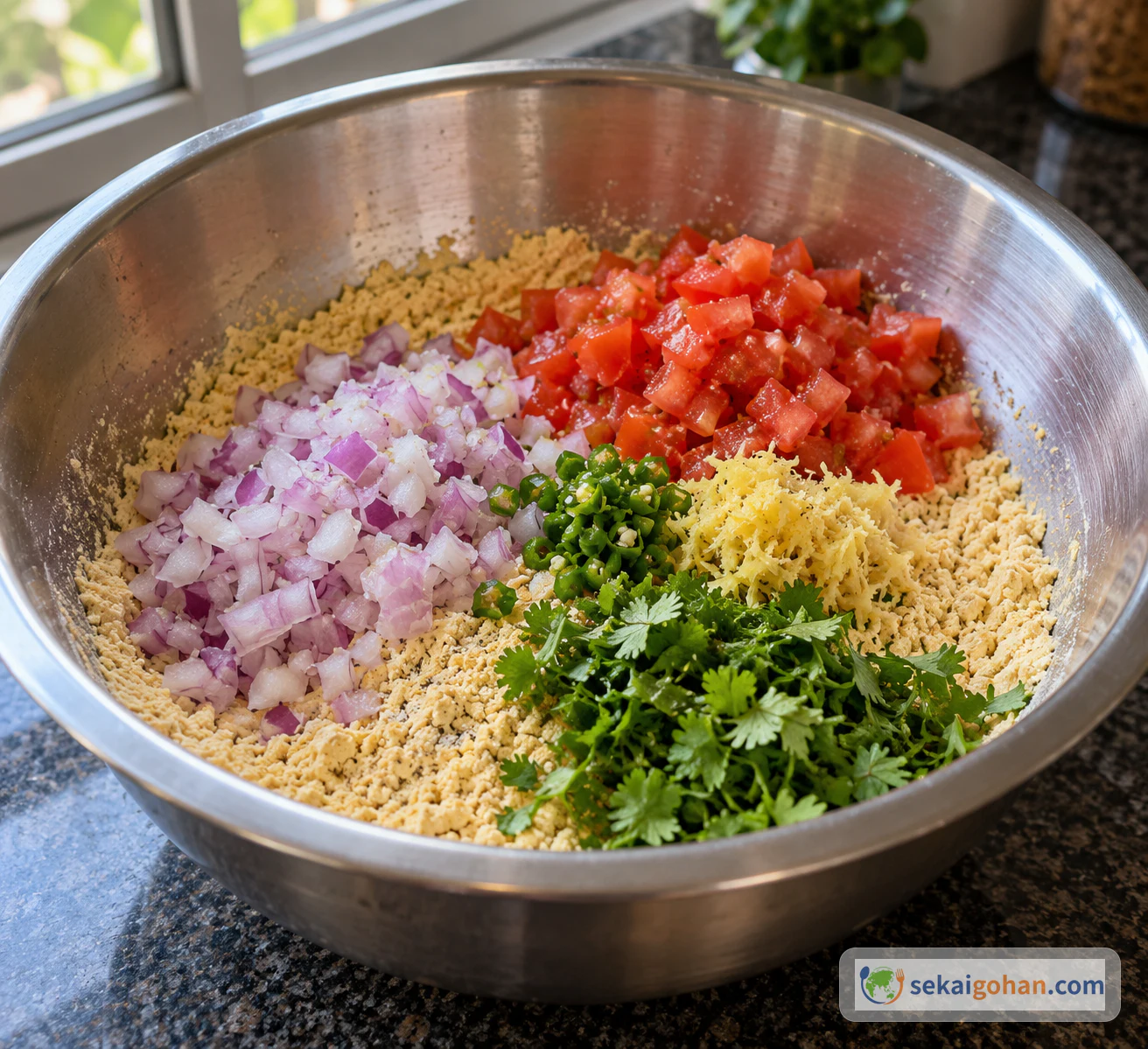
Cut the onion, tomato, chili and coriander finely.
Equipment
- Mixing bowl
- Spoon or whisk
- Measuring cups and spoons
- Tawa, griddle or nonstick skillet
- Ladle
- Flat spatula
- Small spoon for drizzling oil
Choosing Besan and Oil
Look for besan or gram flour on the label. Some flour sold as "chickpea flour" is made from white kabuli chana, while besan or gram flour is made from kala chana. If you can, choose a bag labeled besan or gram flour. Grinding dried chickpeas at home is not treated here as an equivalent.
Oil, not ghee. This version uses oil throughout, not ghee. Use an ordinary cooking oil.
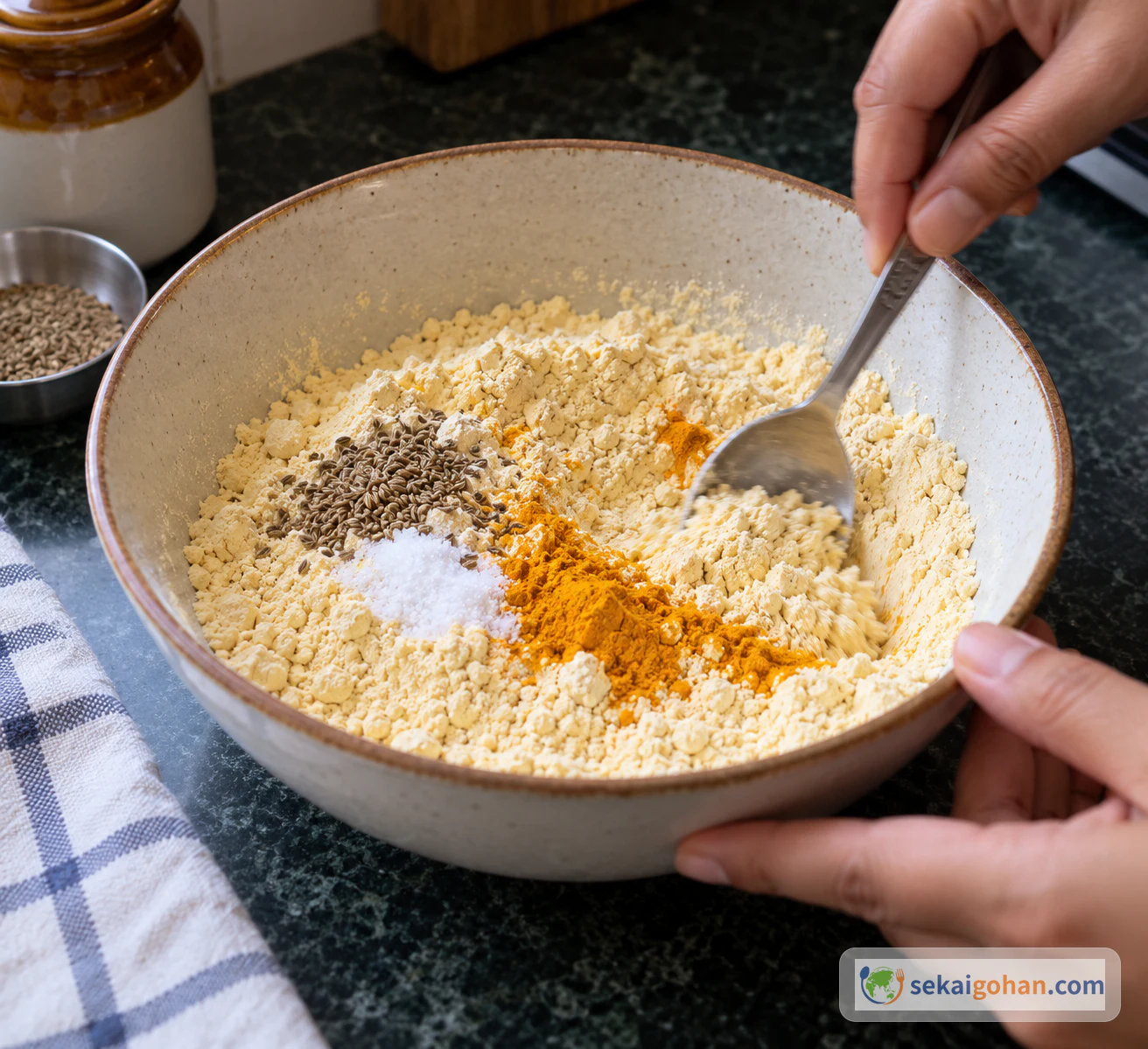
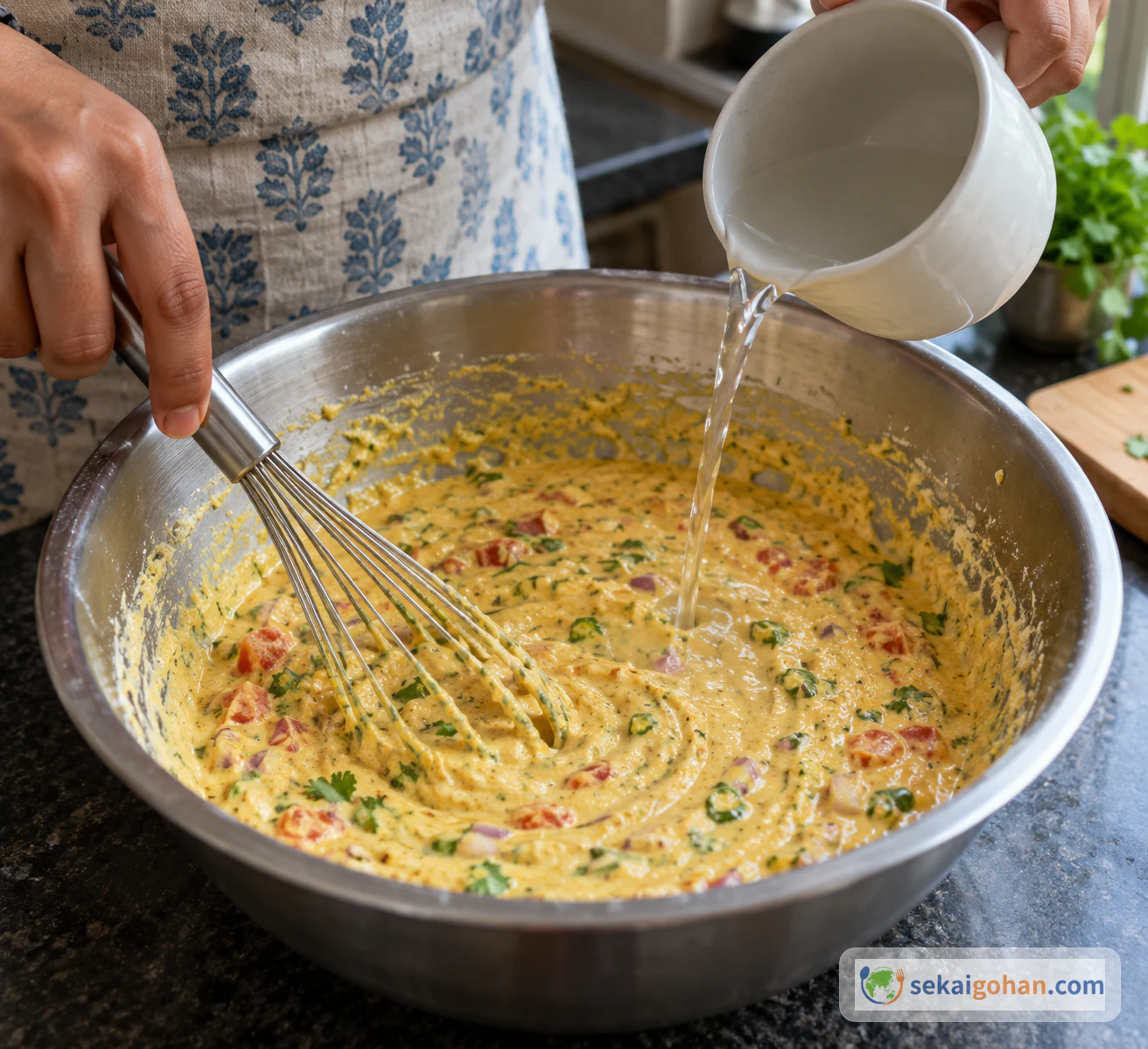
Method: Mix, Spread Thin, Flip When the Edges Let Go
There is no resting or fermenting time. Once the batter is mixed, go straight to the pan.
Thick, Torn, Pale: Fixing Problems in the Pan
| What you see | Likely cause | What to do |
|---|---|---|
| The batter will not spread thin | The batter is too thick | Mix in a little more water, staying within the 2/3–1 cup range, until it pours from the ladle |
| The center stays soft or raw-tasting | The batter or the spread is too thick | Spread the next ladleful thinner, and thin the batter slightly if needed |
| The cheela tears when you turn it | Flipped before the edges released | Wait until the edges lift from the pan on their own before flipping |
| The surface is pale | Taken out too early | Keep cooking after the flip, pressing with the spatula, until brown spots appear |
| The cheela sticks badly | The pan was not greased or not hot enough | Grease the pan lightly, heat it fully, then lower to medium before pouring |
How Cheela Is Eaten
Swasthi Shreekanth places besan chilla as a quick breakfast or snack, the kind of thing that can also be cooked to order at street stalls. A Goan Observer column describes besan cheela as part of ordinary home meals, made from a simple batter with onion, ginger and tomato, and mentions chutney as an accompaniment. This recipe keeps to the plain form: one thin, round pancake with lifted edges and brown spots on both sides, eaten hot.
Related Versions Within the Cheela Family
These are separate recipes, not changes to the method above.
| Version | What sets it apart |
|---|---|
| Besan cheela (this recipe) | Gram flour, water, chopped vegetables and spice; mixed and cooked with no rest |
| Moong dal chilla | Moong dal soaked and ground into a batter; a different recipe with its own proportions |
| Pesarattu (Andhra) | Named by Dassana Amit as a dish made from a dal batter |
| Pudla / puda | Named as related or regional names; the Goan Observer column notes Gujarati pudla is close to besan cheela but not identical |
| Dosa | Fermented rice and urad dal batter; a different dish |
Recipe pages also differ among themselves. Dassana Amit's besan chilla, for example, uses 100 g for 1 cup of besan and a different spice mix, water amount and pan heat. Its amounts are not mixed into this version.
Frequently Asked Questions
Does the batter need to rest?
No resting step is given in Swasthi Shreekanth's recipe, and none is added here. Mix the batter and start cooking.
Why is the water given as a range?
The recipe card on Swasthi Shreekanth's page lists 2/3–1 cup (160–240 ml) of water. The method on the same page starts with 3/4 cup and adds more as needed, and the author reports ending up with a little under 1 cup. Start with 3/4 cup and stop when the batter is thick but pourable.
Can I use any chickpea flour?
Choose flour labeled besan or gram flour where you can. A reader comment on Swasthi Shreekanth's page notes that some products sold as "chickpea flour" are made from white kabuli chana, which may behave differently from besan made from kala chana.
Can I cook it in ghee?
Swasthi Shreekanth's recipe allows oil or ghee. This version is written with oil only.
Is cheela the same as dosa?
No. Dosa is made from a fermented batter of rice and urad dal. Besan cheela is an unfermented gram-flour batter that is mixed and cooked straight away.
Is cheela the same as pudla?
The names overlap. Some recipe pages list pudla and puda as related or regional names, but a Goan Observer column notes differences between Gujarati pudla and besan cheela. It is safest not to treat them as the same recipe everywhere.
How many does this make?
Swasthi Shreekanth's page lists 4–5 cheela. This recipe has not been kitchen-tested, so the number depends on your pan and how large you make each one.
Sources
- Swasthi Shreekanth, "Besan Chilla Recipe (Cheela)," Swasthi's Recipes. The ingredient amounts and method used in this article: batter consistency, pan heat, thin spreading, oil per cheela, the flip cue, the brown-spot endpoint, the listed yield and times; cheela as a broad family including moong dal versions; pudla and puda as related names; besan chilla as a quick breakfast or snack also made at street stalls; and the reader comment on besan versus some chickpea flour products. https://www.indianhealthyrecipes.com/cheela-recipe/
- Dassana Amit, "Besan Chilla Recipe (Besan ka Cheela)," Dassana's Veg Recipes. Used to compare naming and versions: besan chilla within the wider chilla family, moong dal chilla and Andhra pesarattu as dal-batter dishes, and puda, pudla and poli as regional names. Its amounts are not used in this recipe. https://www.vegrecipesofindia.com/besan-cheela-recipe-besan-chilla/
- Goan Observer, "Time to Discover the Humble 'Cheela'…," 2026. A regional food column describing besan cheela in everyday home meals, a simple onion, ginger and tomato batter with chutney alongside, and Gujarati pudla as closely related but distinct. https://www.goanobserver.in/2026/01/02/time-to-discover-the-humble-cheela/