
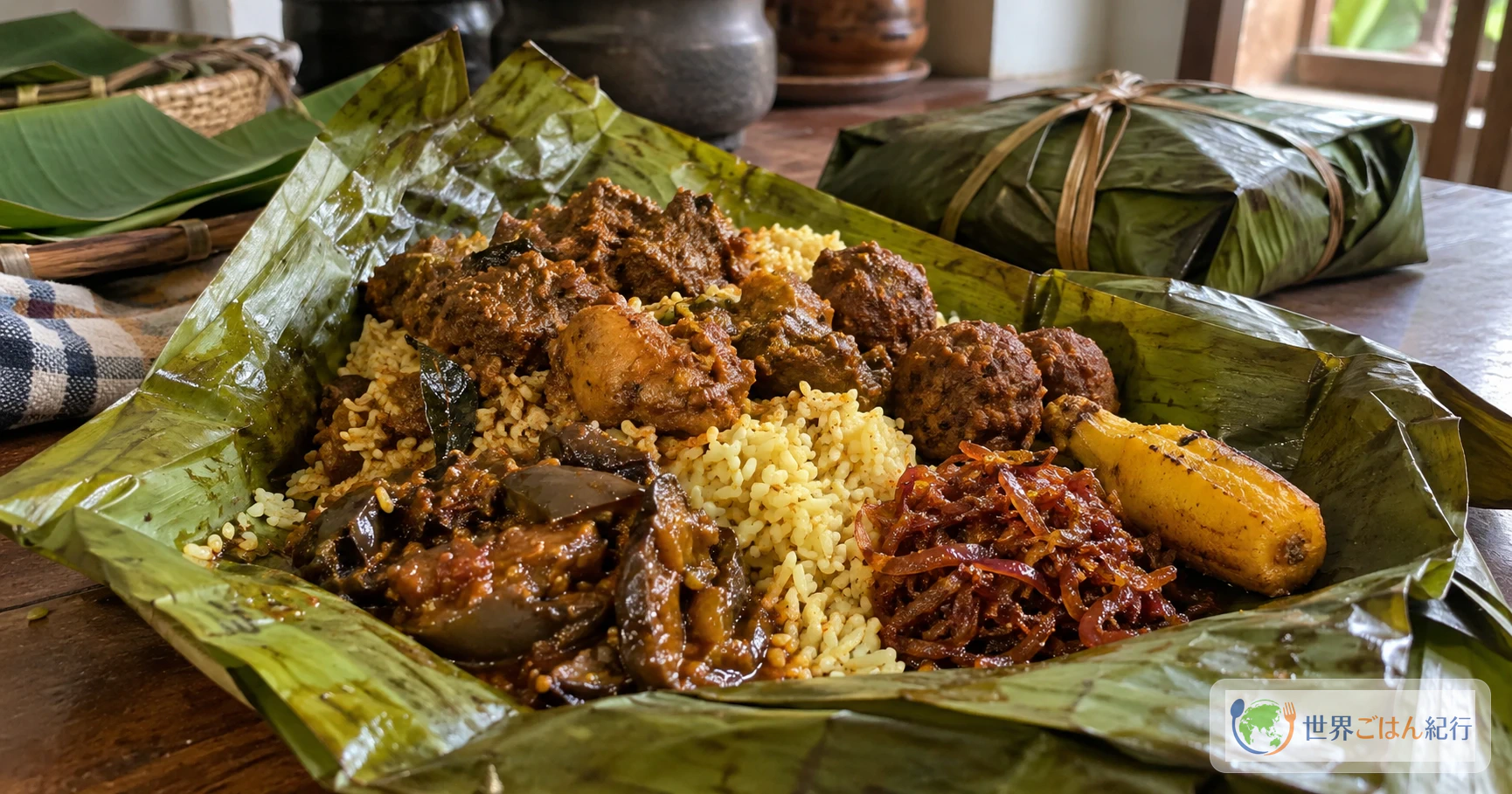
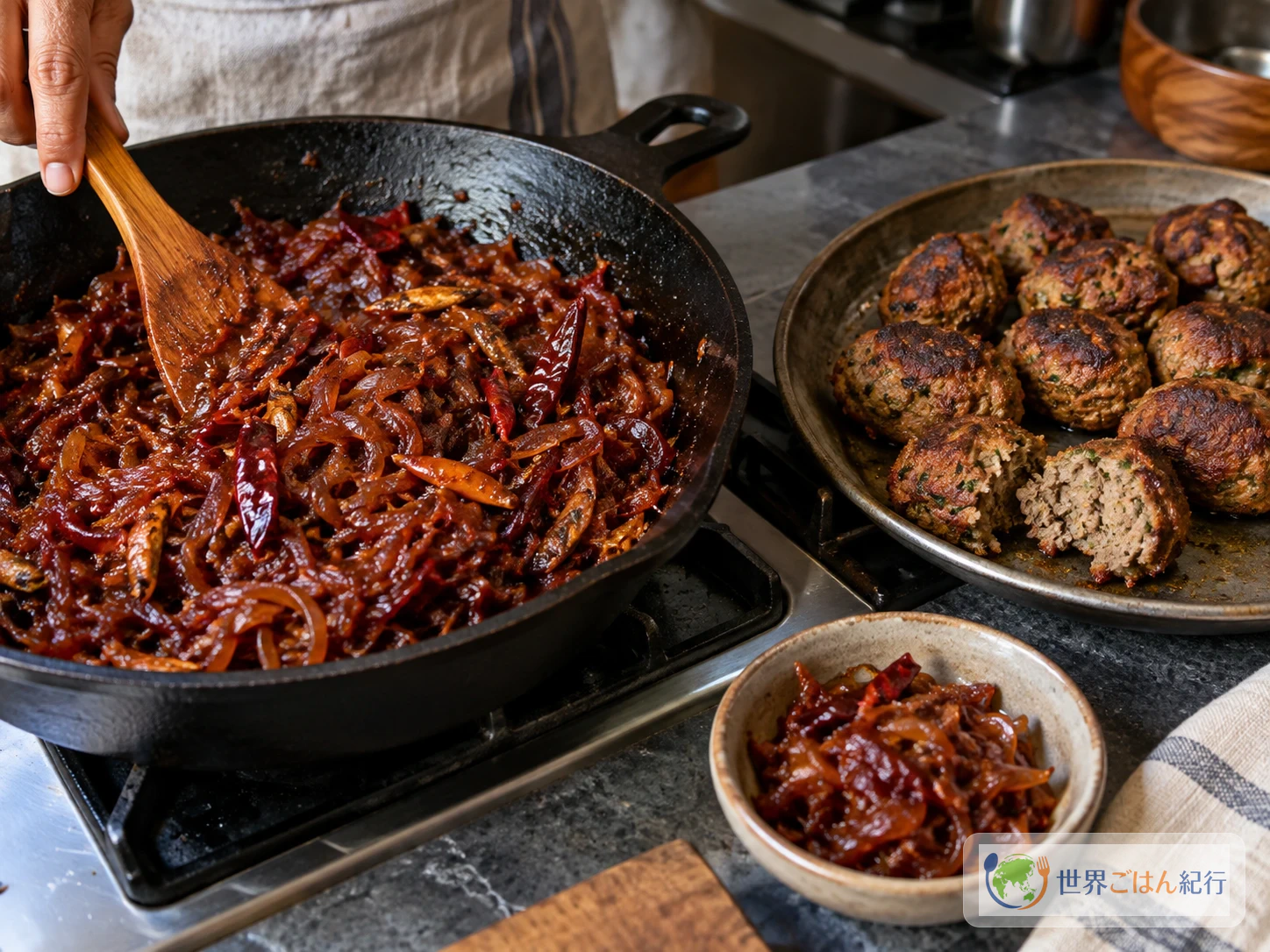
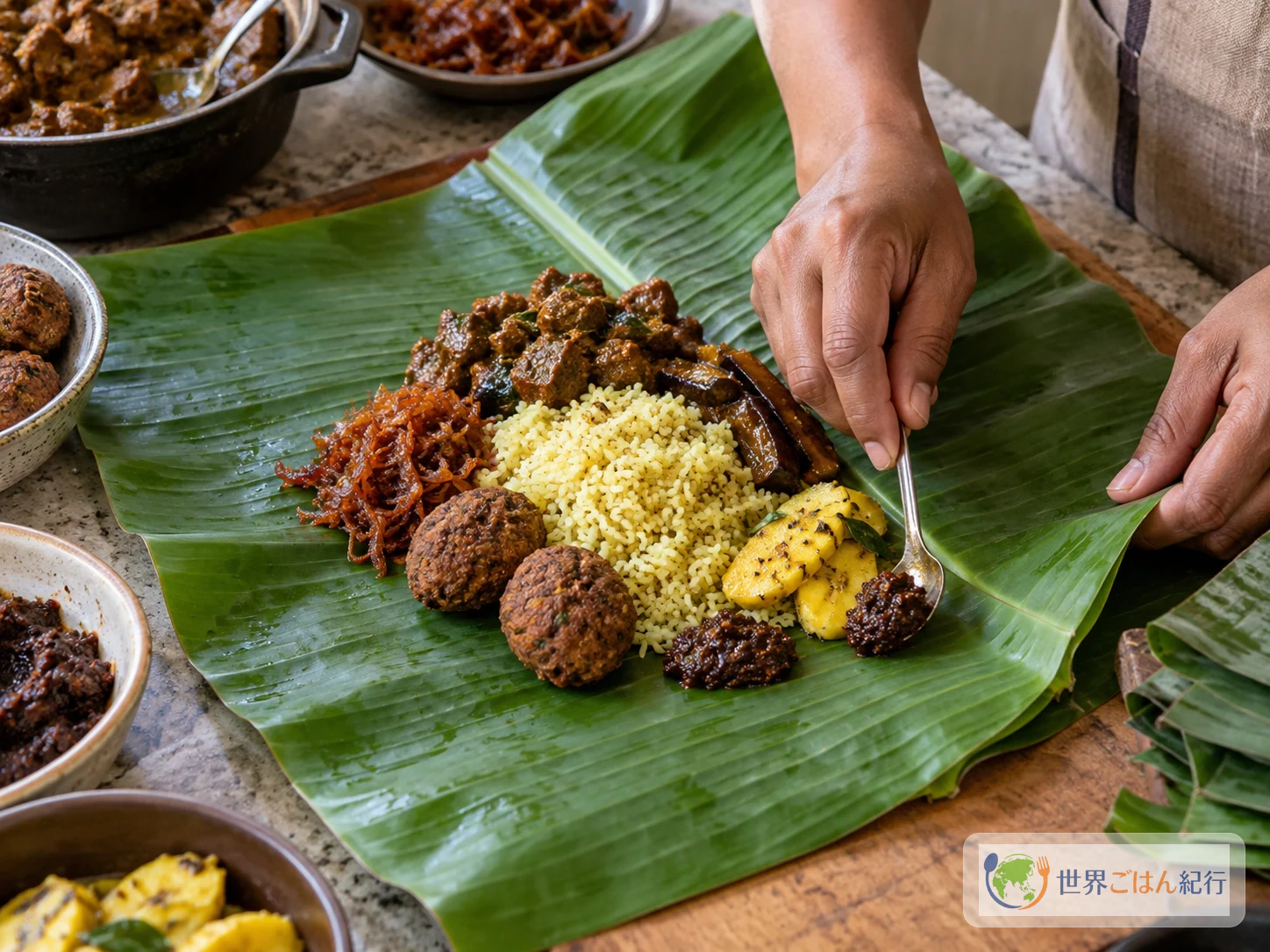
On Sunday mornings around Colombo, banana-leaf parcels pile up at shop counters. According to a Daily FT feature on where to buy them, some shops take orders on Sunday morning and sell out before noon. Read that not as the story of any single shop but as a scene from the food culture of the place. You warm the closed parcel and open the leaf on your plate. Under the rising steam you find rice cooked in meat stock and an array of side dishes. What makes lamprais interesting is that the rice and the sides are cooked separately. Expect a lot of pots; the reward is the satisfaction of bringing everything together in one parcel at the end.
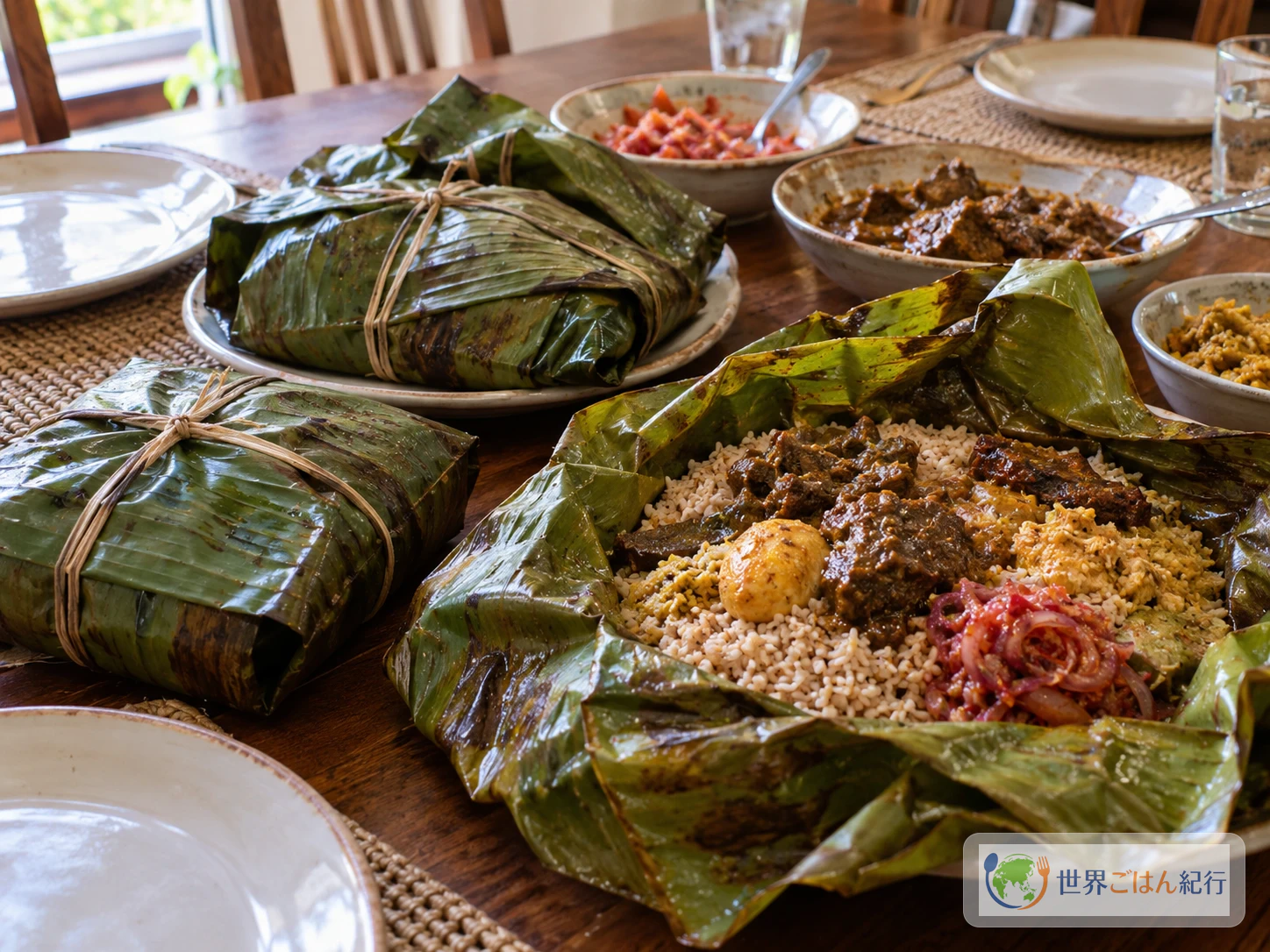
Open the leaf, and separate dishes become one plate
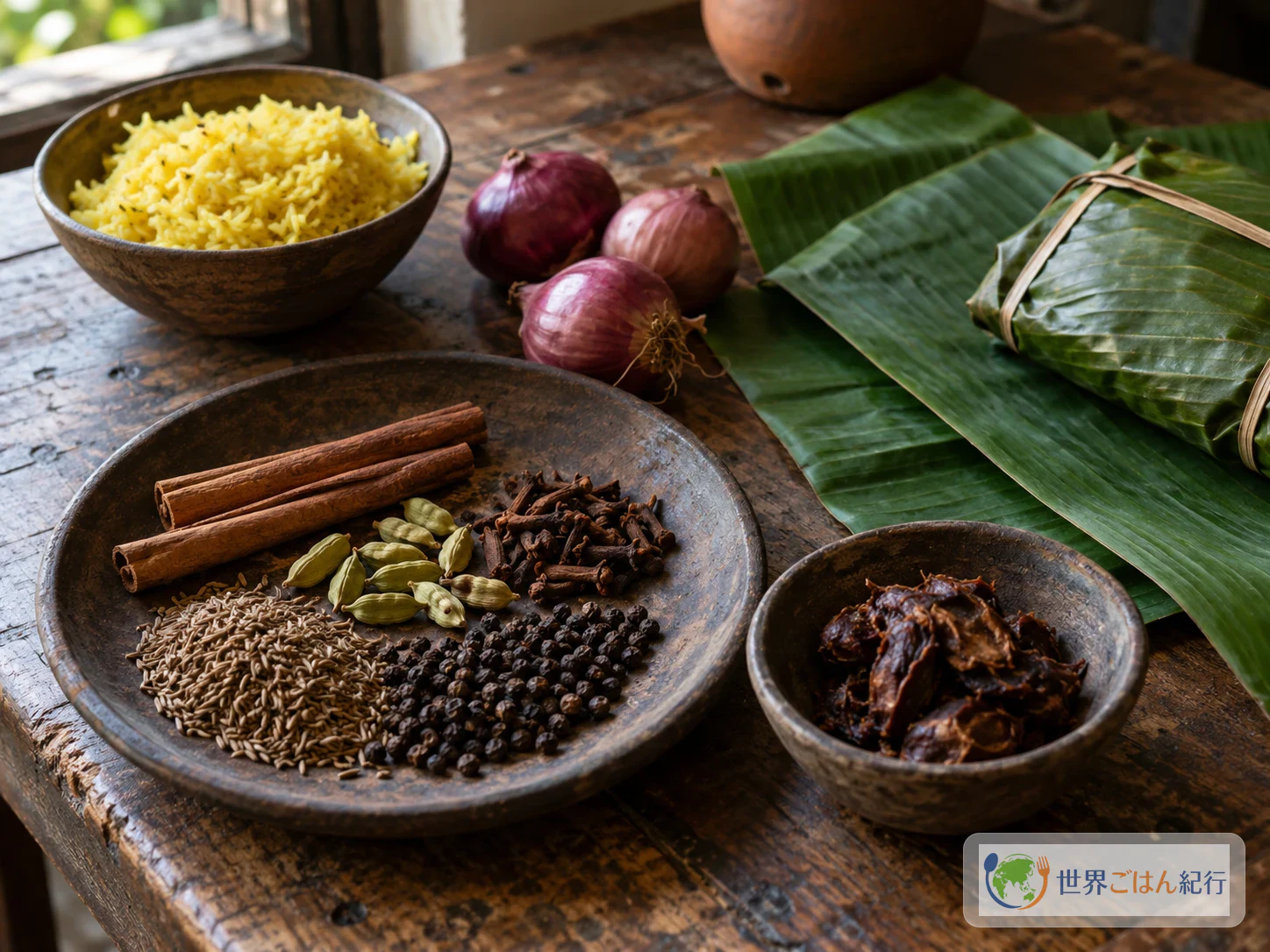
Lamprais is not just a mixed rice dish. The Sri Lanka Tourism Promotion Bureau describes it as rice and accompaniments baked in a plantain leaf and calls it part of the Dutch heritage. The composition recorded by Explore Sri Lanka is more specific: rice cooked in meat stock combined with several accompaniments, such as meat curry, meatballs, ash plantain, seeni sambol and blachan.
If you stir everything into the rice, every bite tastes the same. Because the curry, the eggplant and the rice are each finished on their own before wrapping, the differences in texture and aroma survive into each mouthful. Then the final heating inside the leaf gently ties the components together.
Even in English sources alone, the name is spelled lamprais, lumprice or lump rice. Its origin can't be pinned to a single Dutch word either. Explore Sri Lanka also gives an explanation in which two other wrapped rice dishes, Indonesian lempur and Sinhala buth-mula, overlapped. Looking at the varied spellings and the overlapping wrapped dishes, it seems truer to the dish not to declare a single origin.
The name differs from source to source: lamprais, lumprice, lump rice. The lempur and buth-mula story is just one explanation given by Explore Sri Lanka, and not every family tells it the same way. What all the accounts share is that this is a rice dish wrapped in leaves so it can be carried. This recipe, too, is built around that wrapped structure.
A parcel preserved in Colombo's Burgher culture
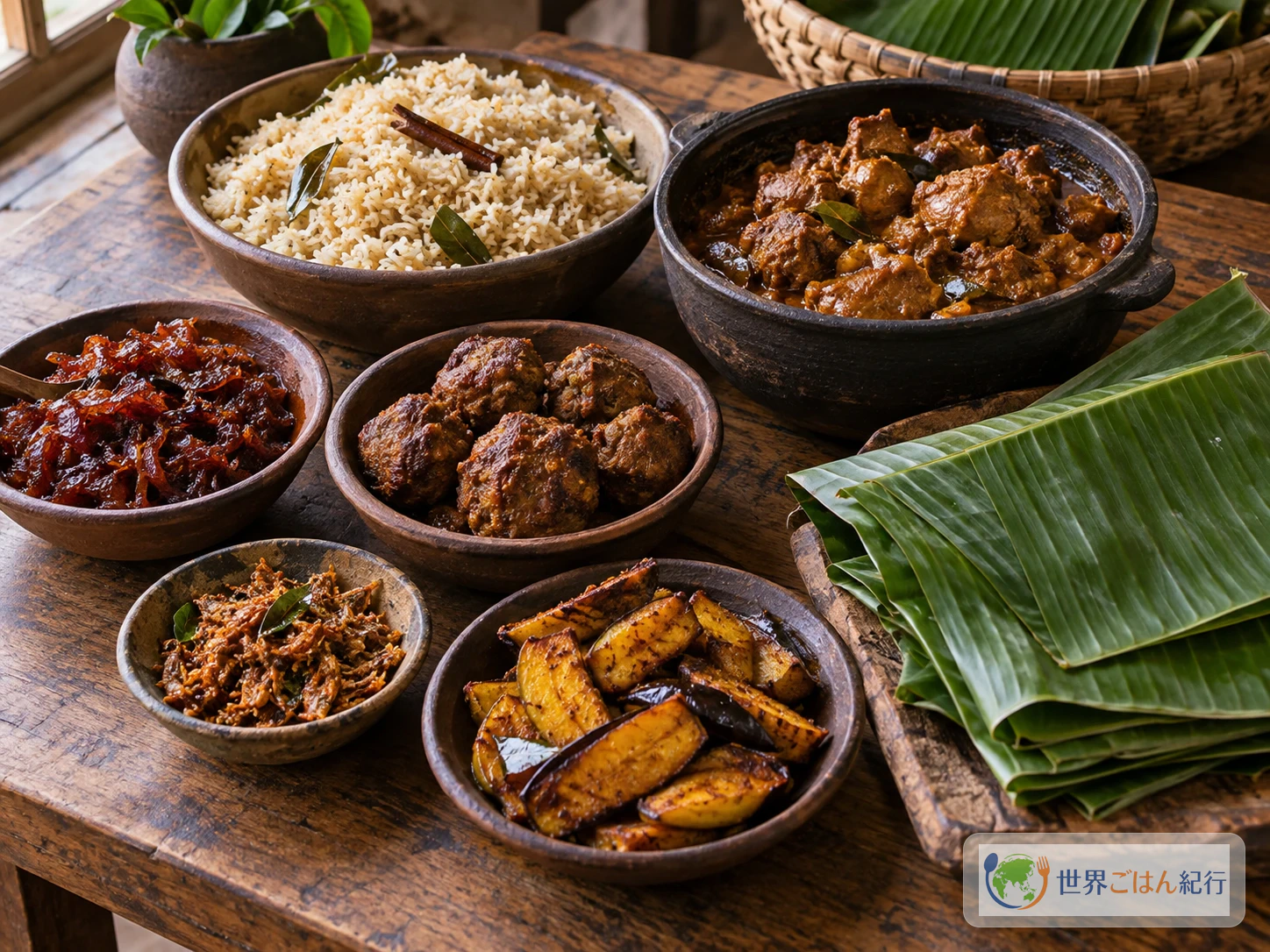
Explore Sri Lanka links the dish to Burgher women cooks around Colombo. The Spicery explains that the Burghers are descendants of Dutch traders and local Sinhalese women. So calling lamprais "Dutch food" outright is not accurate. It is closer to the truth to see it as knowledge from different food cultures, about rice, meat, spices and handling leaves, overlapping within Burgher food culture around Colombo, so that different dishes became one parcel.
It's only natural that the contents change from shop to shop and home to home. Daily FT records shops that use chicken instead of mixed meats, shops that leave out the egg or the blachan, and shops whose parcels differ in size. The classic-leaning components listed by Explore Sri Lanka are rice in meat stock, a beef, pork and chicken curry, meatballs, ash plantain, seeni sambol and blachan. This recipe follows that line, with the three meats as one example. The egg is optional, and the seafood-based blachan can be swapped. With the egg and blachan as optional branches and parcels that vary from shop to shop, think of this as one home-kitchen design.
Daily FT's account of Sunday-morning orders and a limited number of parcels doesn't apply to every household. Still, reading The Spicery's description of Burgher cooking, you can see what it meant to gather labor-intensive rice and sides into a single parcel. It sits somewhere between everyday meals and food for celebrations and gatherings.
Ingredients (serves 4, makes 4 packets)
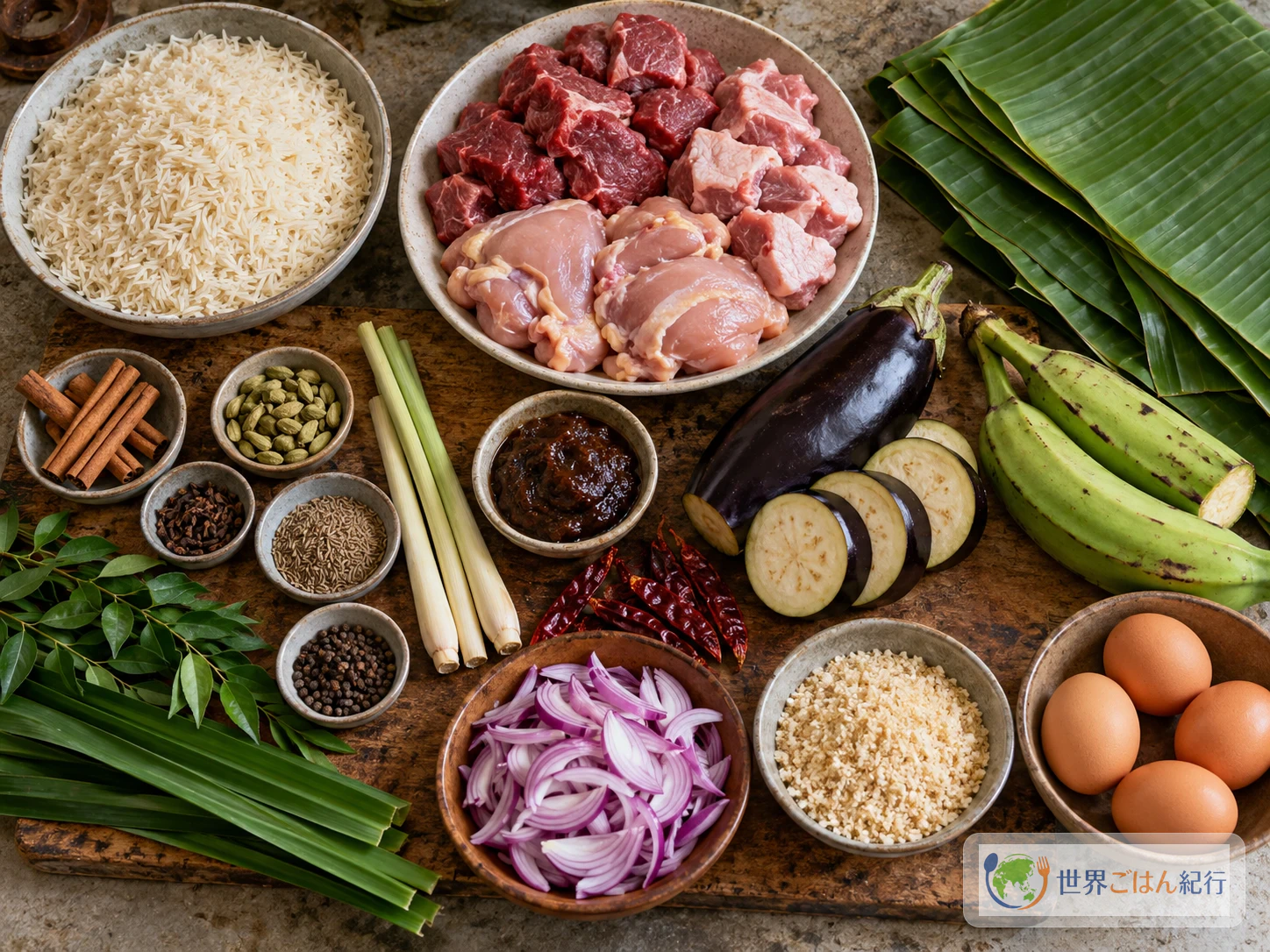
These amounts make 4 servings, or 4 packets. You need 320 g of rice and, for the meat curry, three meats: 200 g each of beef, pork and chicken. The meat is simmered in 900 ml of water; about 520 ml of that stock goes to the rice and the rest is used to adjust the curry's consistency. This meat stock is the backbone shared by the rice and the curry. Buy extra banana leaves for wrapping, and see the tables below, split by role, for the original ingredients and their substitutes.
You don't need to gather every original ingredient. Tamarind gives the sweet-sour eggplant a rounded, fruity sourness and is the main substitute here if you don't have goraka. Banana leaves carry aroma and hold the parcel, but parchment paper and foil keep in the steam if you can't find them. Maldive fish and blachan are seafood-based, and substitutes won't reproduce their flavor exactly; here it's fine to prioritize what you can get. If you're making this just once, you could buy only tamarind and use the substitutes in the table for the rest.
Using tamarind paste in the eggplant adds a fruity note to the sourness that vinegar or lemon alone don't give, and changes how it balances against the sweetness. If you plan to use it in other South Asian dishes, it's worth buying. If you're making this only once, are happy shifting the sourness with lemon juice and vinegar, or already have it at home, you can skip it.
Blachan and Maldive fish contain shrimp and fish. If you have an allergy, leave them out and check the ingredient labels of any substitutes too. The frikkadels use egg and breadcrumbs, so switch to rice-flour breadcrumbs to avoid wheat. Without the seafood, the dish keeps its structure but loses the savory depth and aroma of the sea. If you use the same knife and cutting board, wash them before cutting other ingredients. This recipe doesn't guarantee suitability for any specific elimination diet.
Method: finish the stock, rice and sides separately
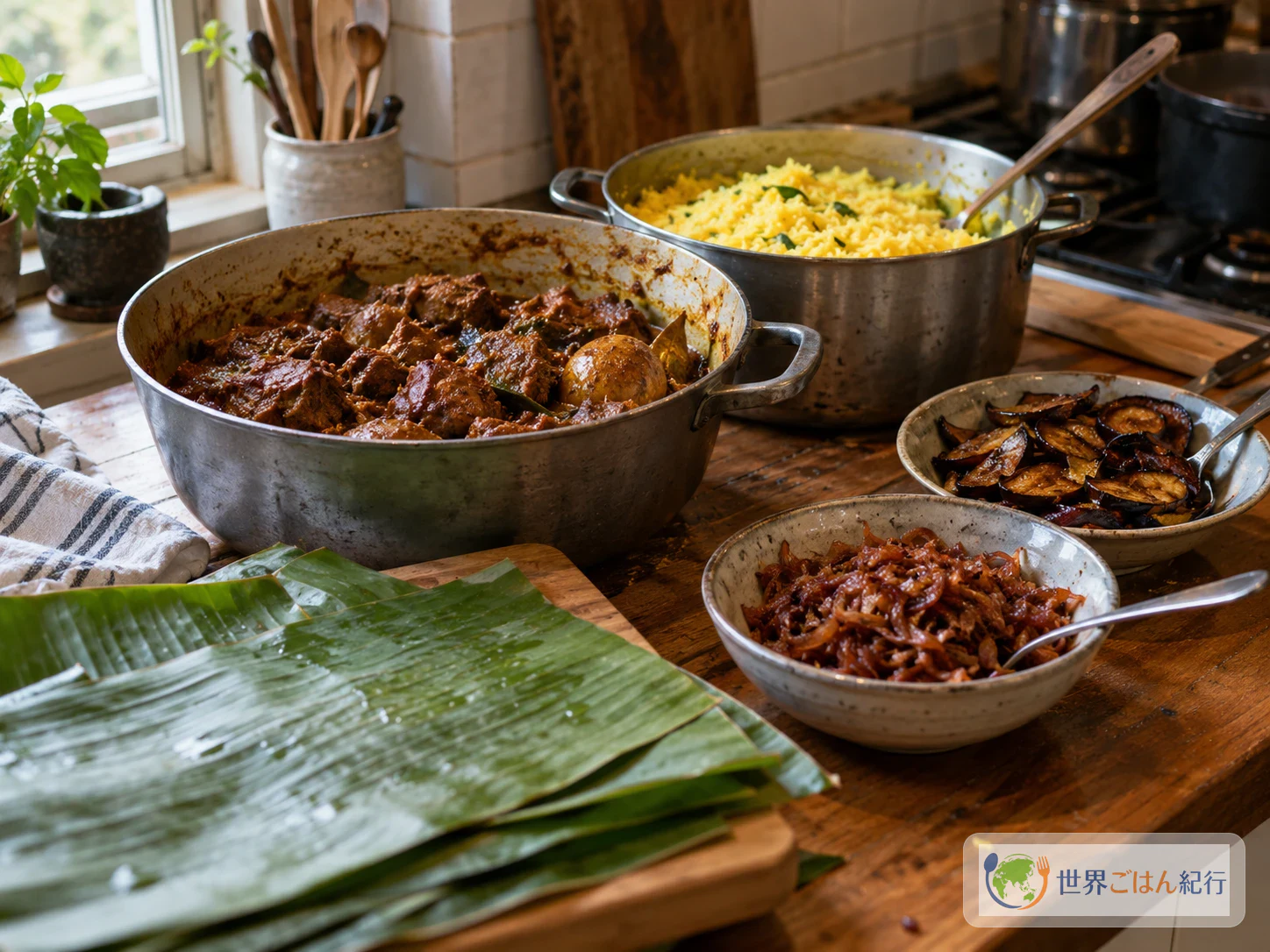
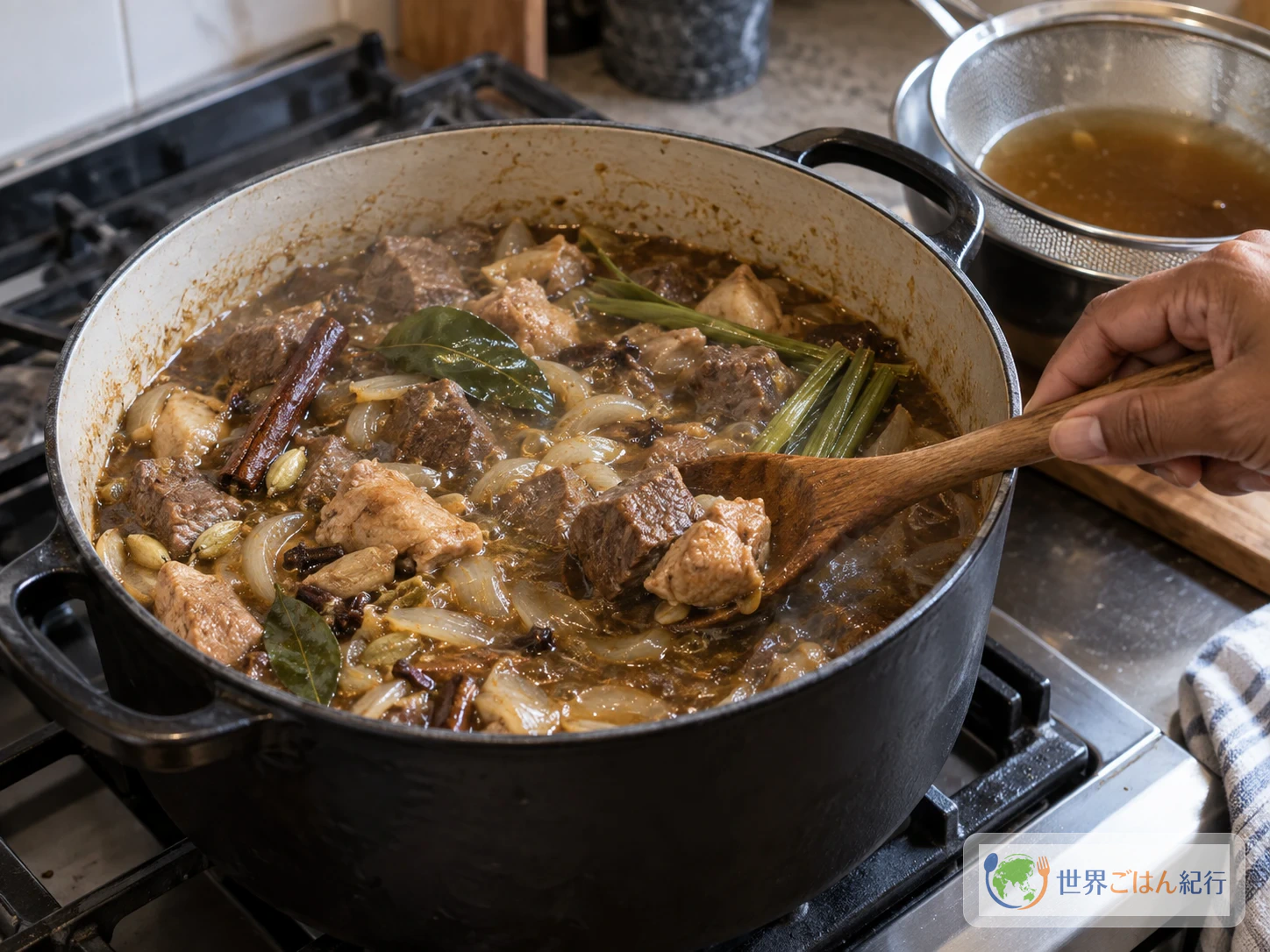
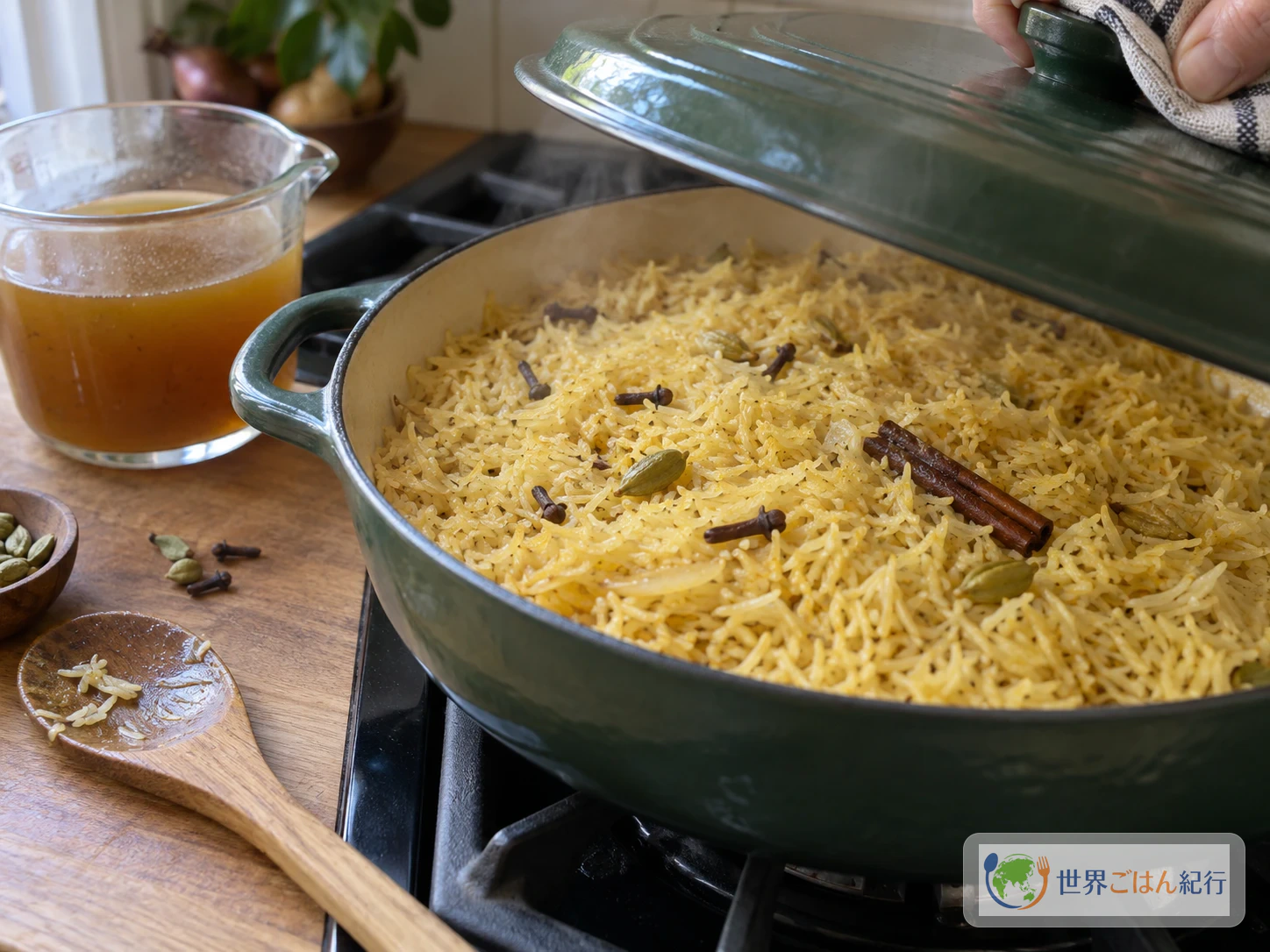
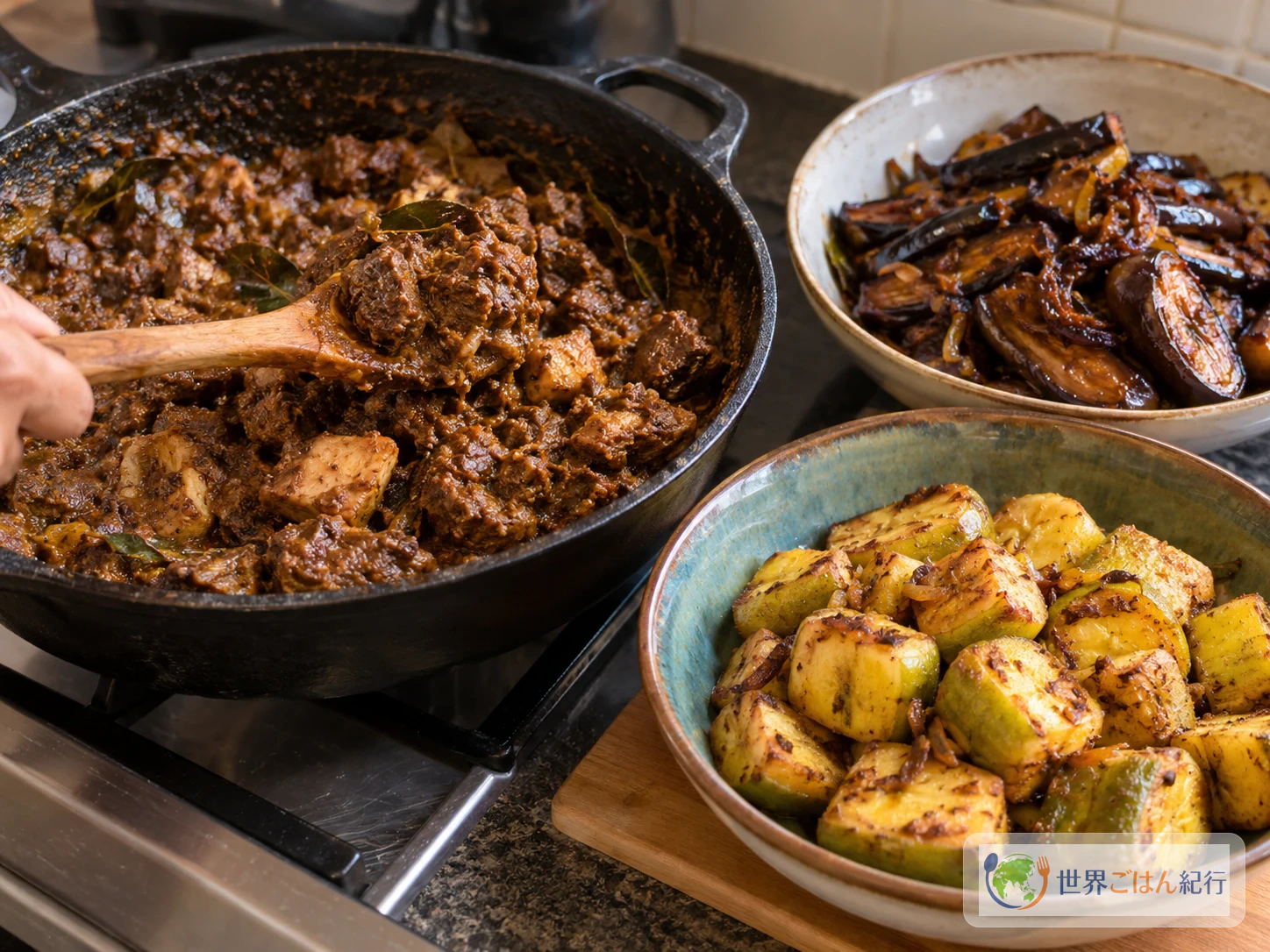
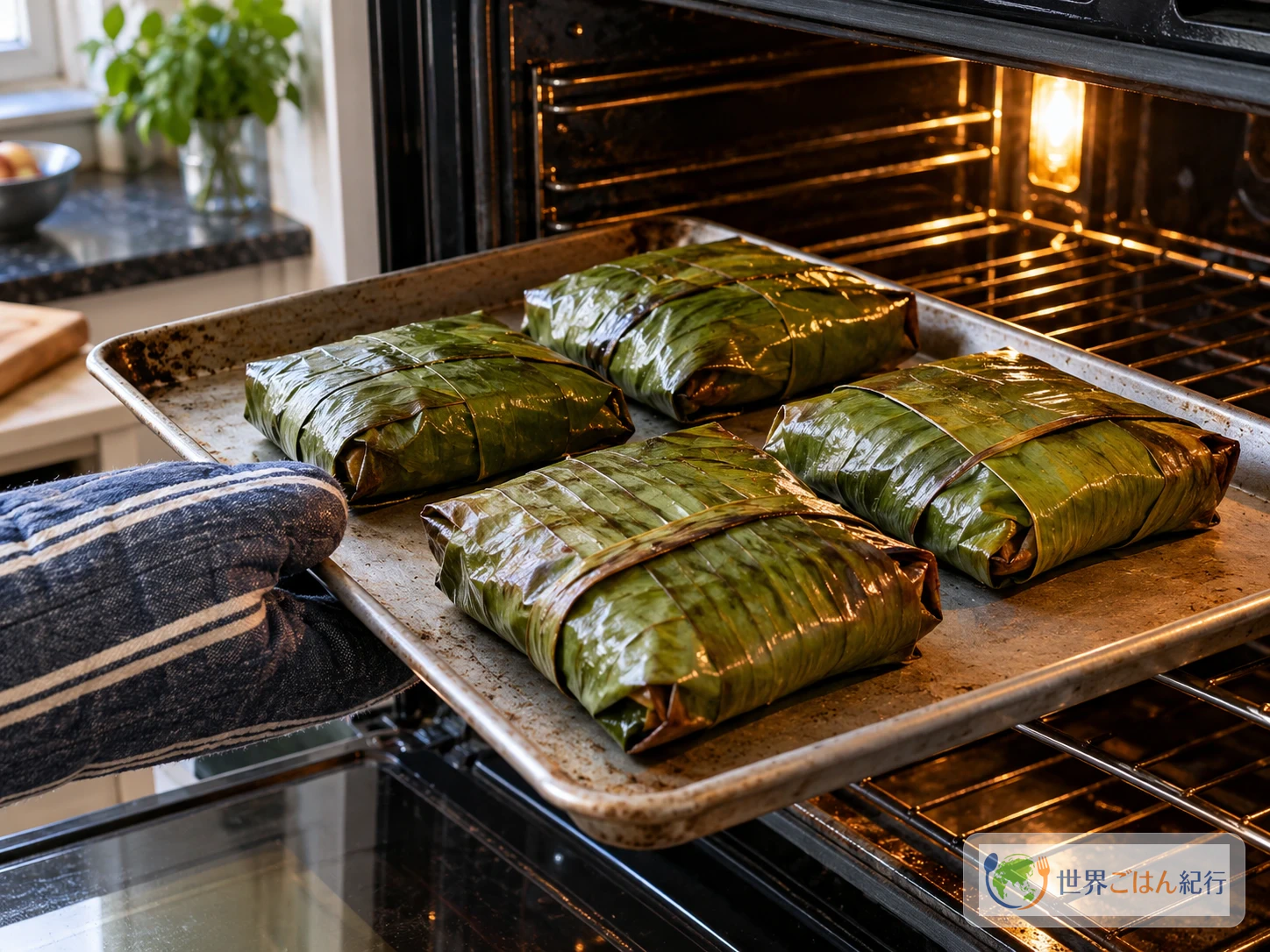
The process is long, so it helps to keep the order in mind: meat and stock, rice, curry and sides, frikkadels, warming the leaves and wrapping, and finally baking at 180°C (350°F). There are three key points: strain the stock, keep the rice grains separate, and reduce the cooking liquid before wrapping. Don't mix the rice and sides together in the liquid, and adjust the consistency of the wetter components before wrapping.
If, just before wrapping, liquid keeps running off a spoonful of curry, lift out the meat and reduce the sauce. If a packet's seam won't stay closed, double the leaf or switch to parchment paper and foil. Baking at 180°C for 20–25 minutes isn't just reheating; it's the time for the aromas of each component to merge inside the leaf. But if you packed the components cold, always check that the packet is hot all the way to the center.
Tools for crushing spices
Whole spices for the stock and rice release more aroma when coarsely crushed. A small spice grinder makes it easy to crush small amounts to an even size, which helps if you'll do this often. A mortar and pestle or a chef's knife work too, so there's no need to buy one for a single attempt.
If something goes wrong, go back to the components before wrapping
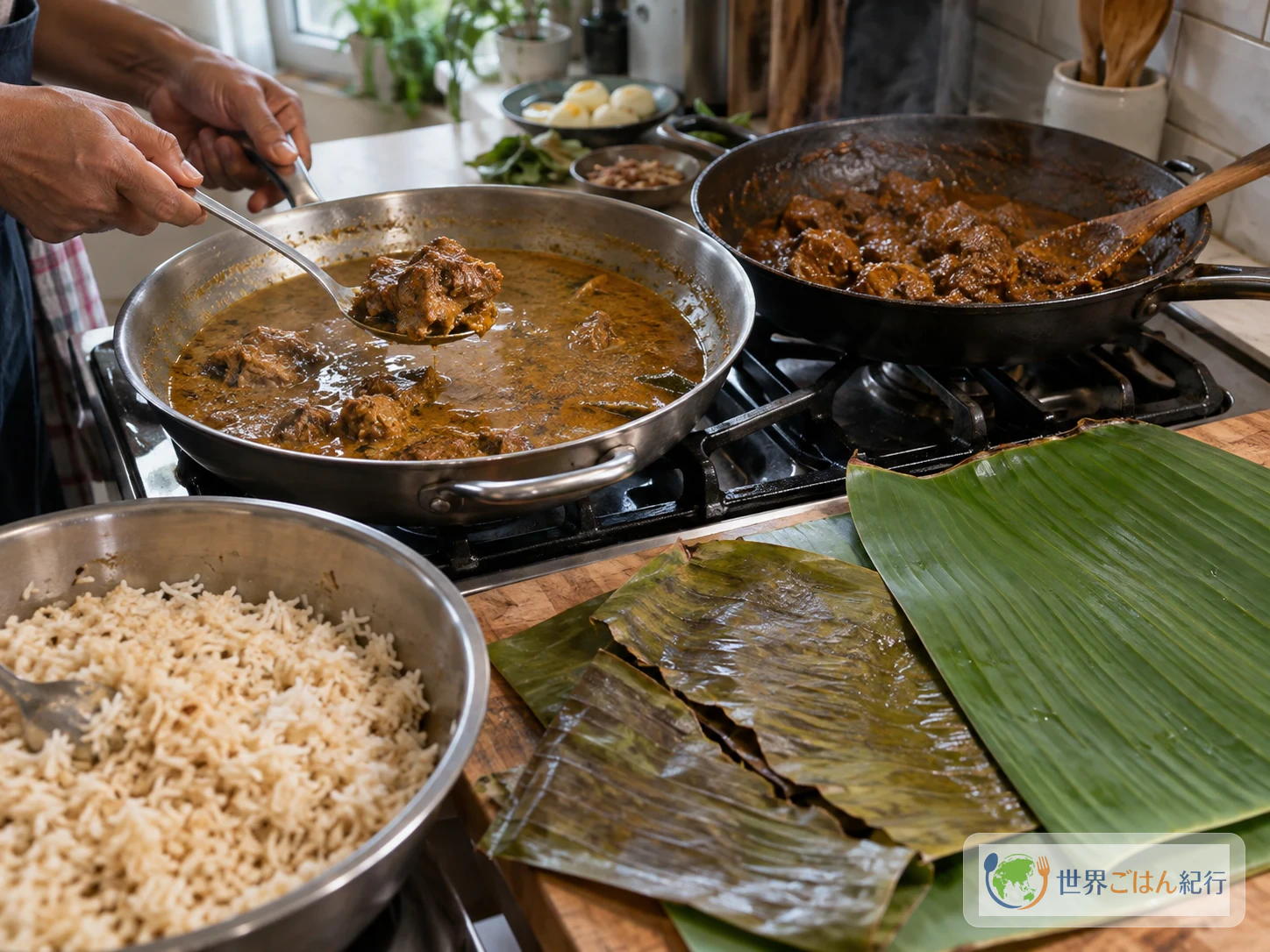
Trying to fix things after wrapping rarely works. The shortcut is to go back to the component that caused the problem. The rule is fix moisture before wrapping: if the curry is watery, lift out the meat, reduce the sauce over medium heat for 3–5 minutes, and return the meat. If you reduce it after it's in the leaf, the rice turns mushy.
If the rice is hard, revive it with hot stock. Before wrapping, add 2–3 tbsp hot stock, cover and steam for 5 minutes. Avoid adding water all at once. If the meat is tough, add unsalted boiling water or stock and extend the low simmer by 10–15 minutes until it's tender.
If the seeni sambol burns, don't stir in the burnt part. Leave the scorched bottom alone and move only the top portion to another dish. Trying to cover bitterness with sugar usually doesn't work.
If the leaf tears
Warm stiff leaves for a few more seconds, but don't hold them over the flame until they blacken. Rewrap small tears with another leaf and put the seam underneath. For large tears, wrap the inside with parchment paper and the outside with foil before baking. You lose the leaf aroma, but the rice and sides stay intact.
If it's too salty
Blachan, Maldive fish and the meat stock: when the salt from all three stacks up, a packet becomes too salty, so be careful not to pile them on together. If the curry gets salty, add unsalted stock a little at a time and increase the eggplant or rice to spread the saltiness across the packet. Covering salt with lemon or vinegar only adds sourness that clashes with the roles of the seeni sambol and eggplant.
What to change, and what to keep, in a home kitchen
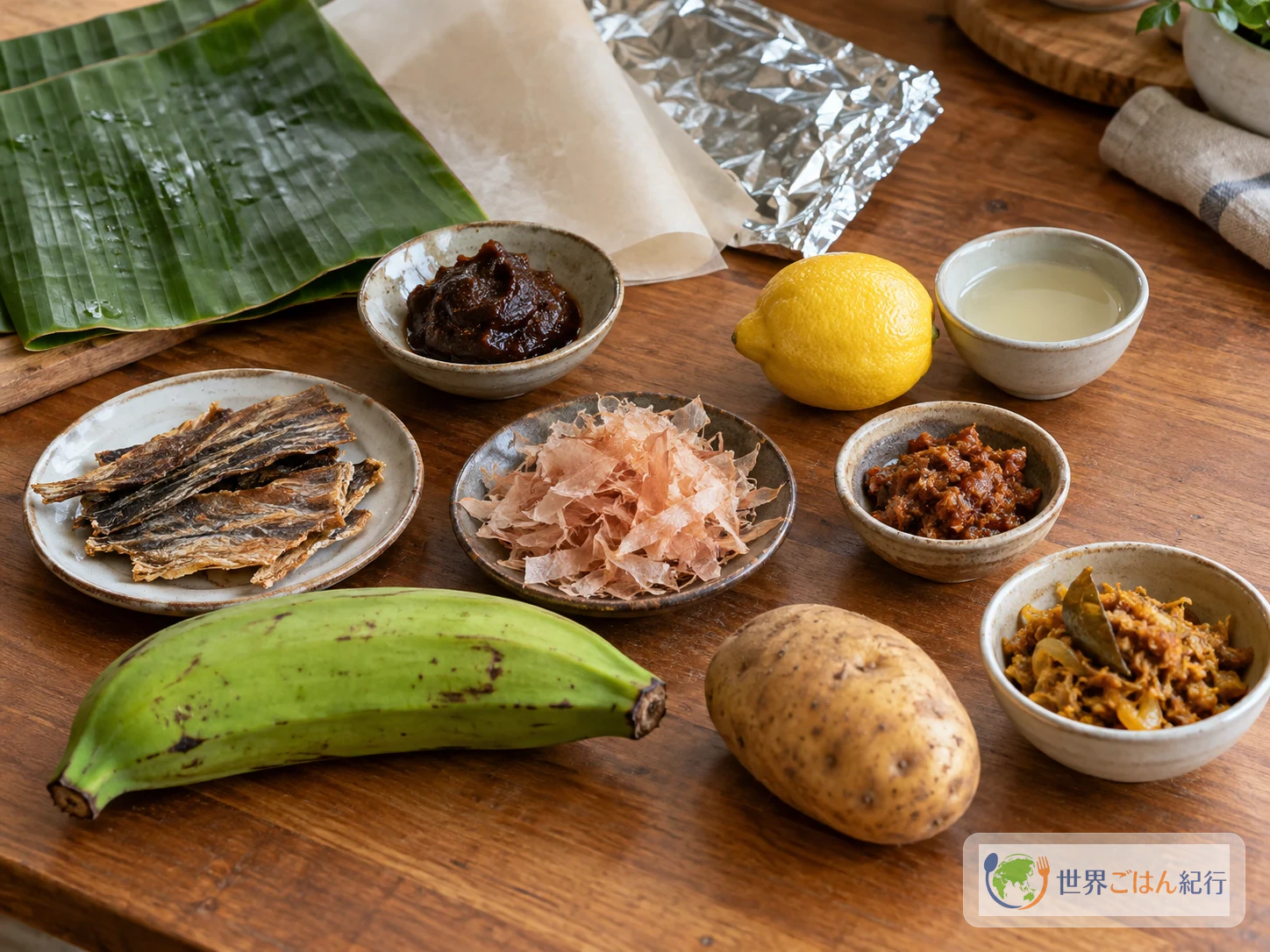
Even without every original ingredient, you can keep the skeleton of lamprais, but it's worth knowing what changes. Banana leaves preserve the aroma: they both hold the parcel and scent it. Parchment paper and foil keep the steam and shape but can't reproduce the leaf aroma. Swapping Maldive fish for katsuobushi brings similar savoriness, but the aroma goes in a different direction. Blachan can be approximated with dried shrimp paste as a seafood substitute close in fermented aroma. If allergies or ingredient labels are a concern, leave it out. Green cooking bananas can be replaced with waxy potatoes, but potatoes change the texture, and the sweetness and fibrous bite are different.
Using only chicken instead of three meats
You can replace the 200 g each of beef, pork and chicken with 600 g chicken thighs. The body of the stock and the texture of the three meats will change, though, so you'll be making a different home version rather than this classic-leaning one. Chicken falls apart easily if overcooked, so when making the stock you can add the chicken in the second half.
Leaving out blachan and seafood
Without blachan and Maldive fish, you still have the rice, meat curry, eggplant, seeni sambol, meatballs and leaf parcel. Swapping in katsuobushi or dried shrimp isn't an exact reproduction but a way to fill in savory depth. If you need to avoid seafood entirely, also check the ingredient and production-line labels on any substitute.
Open the leaf and mix the sides into the rice a little at a time
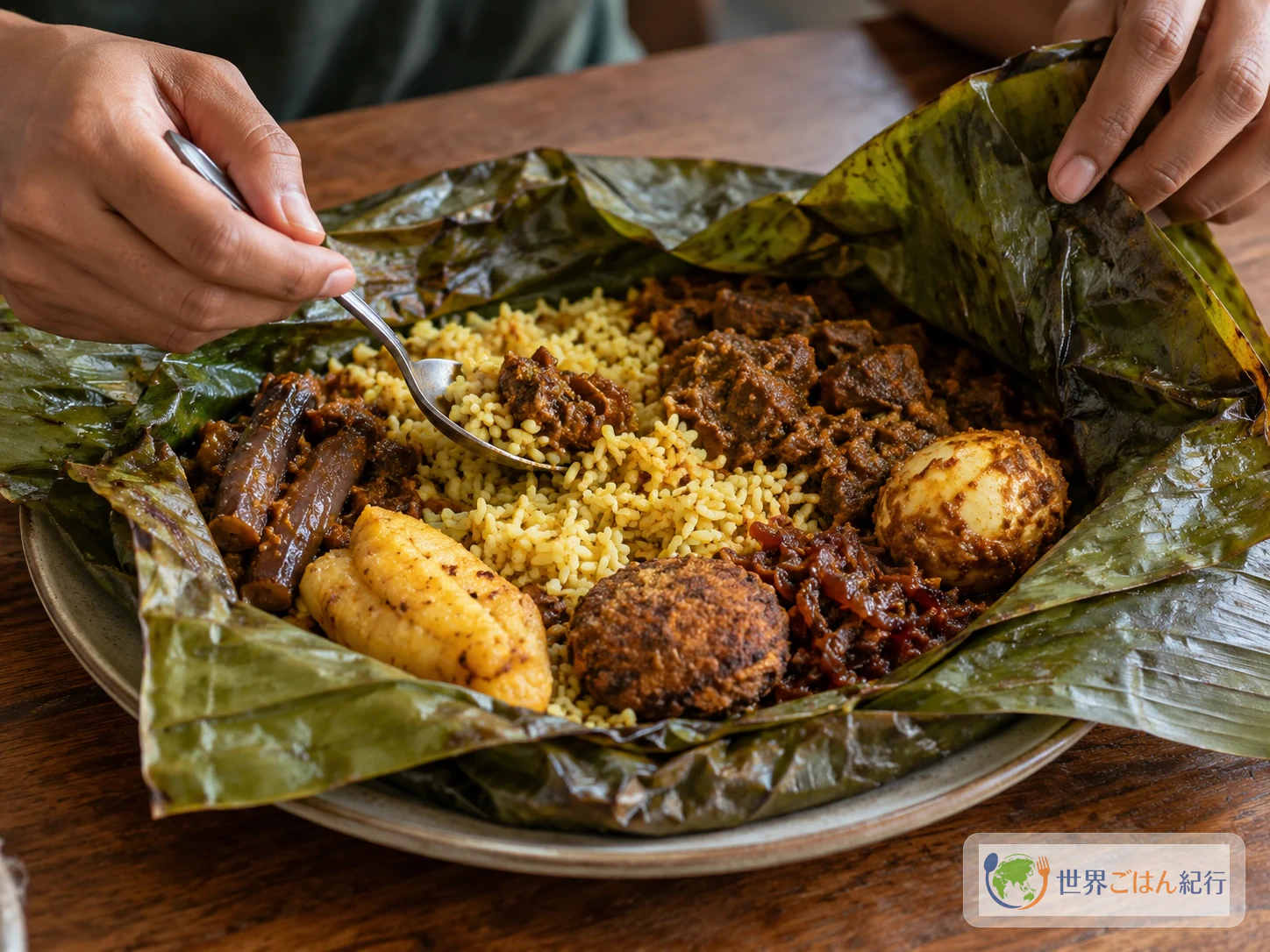
After baking, don't forget to rest for 8 minutes. Then open the leaf on your plate, and you'll see the rice, meat curry, eggplant, banana, seeni sambol and meatballs each in their place. It would be a shame to eat it one component at a time. Put a little curry on the rice and add a spoonful of the sweet-sour eggplant or the spicy onions, and you get the pleasure of recombining the flavors with each bite. Don't let the leaf aroma take over; try to pick out the richness of the meat stock, the sourness, the sweet heat and the savory seafood notes within each mouthful.
Frequently asked questions
Can I make it without banana leaves?
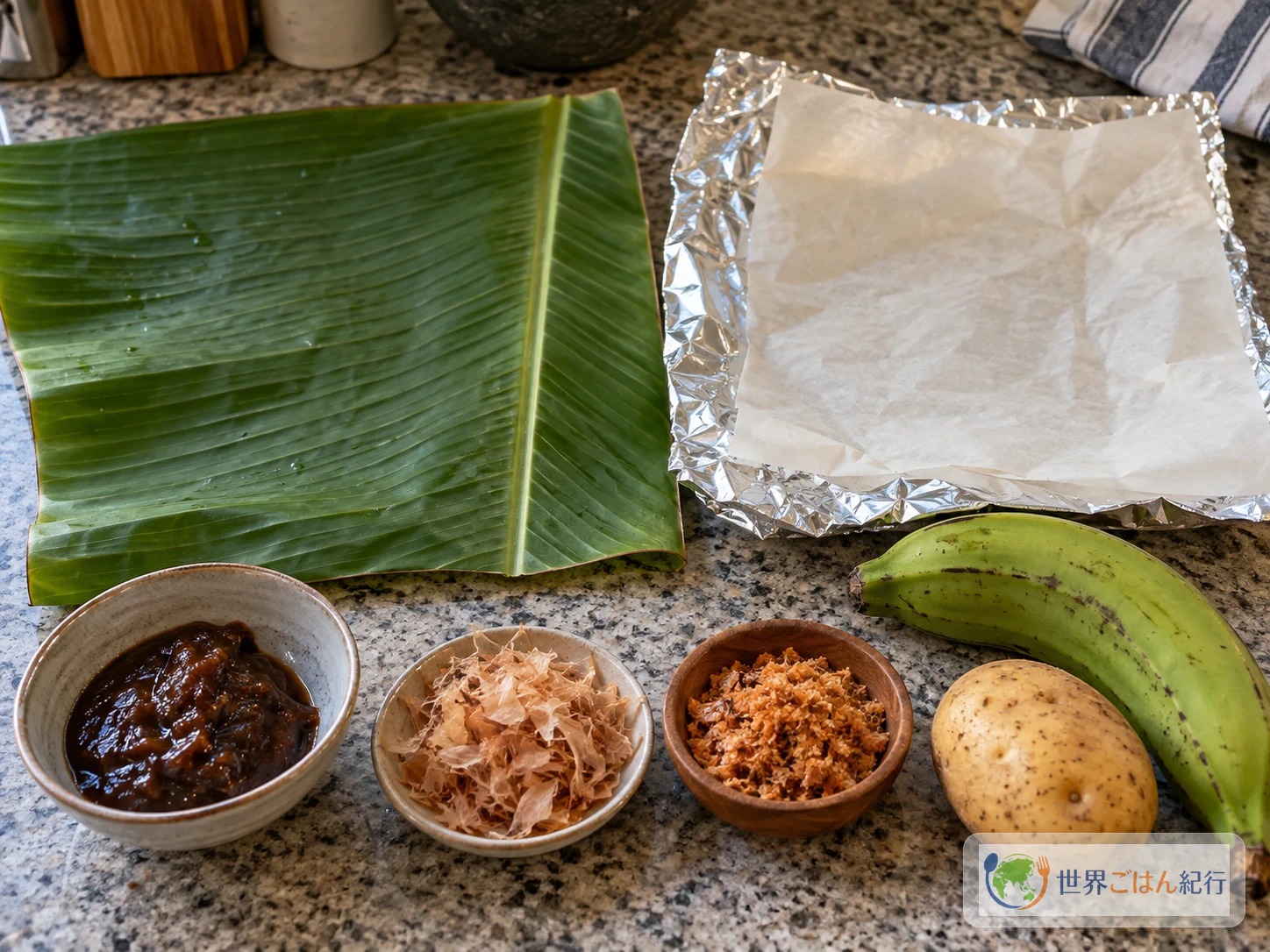
Yes. Wrap the packets in parchment paper and secure the outside with foil to keep the steam and shape. The banana-leaf aroma can't be reproduced, so think of it as a stand-in that lets you make the same structure at home. Avoid wrapping directly in foil alone, so the food doesn't touch the metal.
Can I use just one kind of meat?
Daily FT mentions a shop that uses only chicken, so swapping in 600 g chicken is a legitimate variation. Compared with the three-meat version, though, the body of the stock and the texture will change. Making do with fewer ingredients doesn't make it "the same as the original."
Can katsuobushi replace Maldive fish?
8 g of katsuobushi can fill in the seafood savoriness. Its aroma, saltiness and cut are different, though, so it's not the same as blachan or Maldive fish themselves. If you have a fish allergy, avoid katsuobushi too. There's no need to force extra savoriness.
Can I eat it the next day?
After cooking, transfer both the components and the finished packets to shallow containers and cool them quickly. Store in the refrigerator, and to eat, place the packets on a baking sheet so the leaves don't tear and reheat until hot to the center. Don't eat anything left at room temperature for a long time or anything that smells or looks off. Storage time depends on how your kitchen cools and refrigerates food, so this article can't promise a set number of days.
Where should I cut back to make it less spicy?
First halve the dried red chilies and the chili powder. Keep the cinnamon, cardamom, cumin and black pepper. Reduce the chilies in the seeni sambol too, leaning on the sweet heat of the onions and sugar, so no one needs to add spice at the table. Even with less heat, the sourness, the savory seafood notes and the leaf aroma remain as separate elements.
Related Sri Lankan dishes
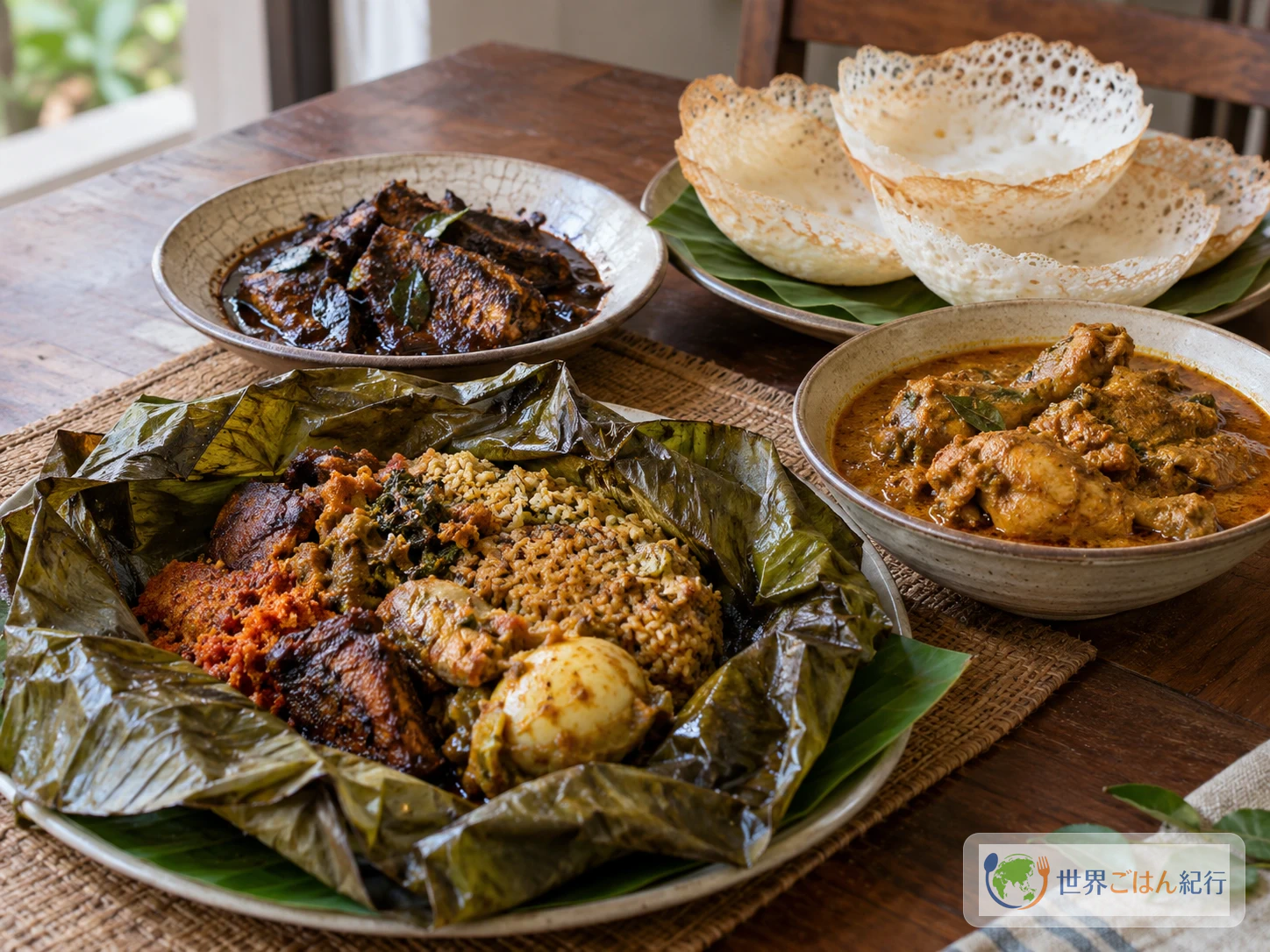
Three dishes to read about after lamprais:
- Ambul thiyal (in Japanese): taste the sourness of goraka or tamarind in a dish of fish simmered down.
- Kukul mas curry: make a Sri Lankan chicken curry on its own and dig deeper into meat-curry spices.
- Hoppers (in Japanese): move on to a breakfast of rice and coconut, a different shape of meal from a wrapped dish.
Sources
- Sri Lanka Tourism Promotion Bureau — Food (accessed and checked September 29, 2026)
- Explore Sri Lanka — Dutch Cooking: A Survival (accessed and checked September 29, 2026)
- The Spicery — Sri Lankan Lamprais with Yellow Rice, Tamarind Aubergine (accessed and checked September 29, 2026)
- Daily FT — 5 must-try lamprais spots in the country (published September 6, 2014; accessed and checked September 29, 2026)


