
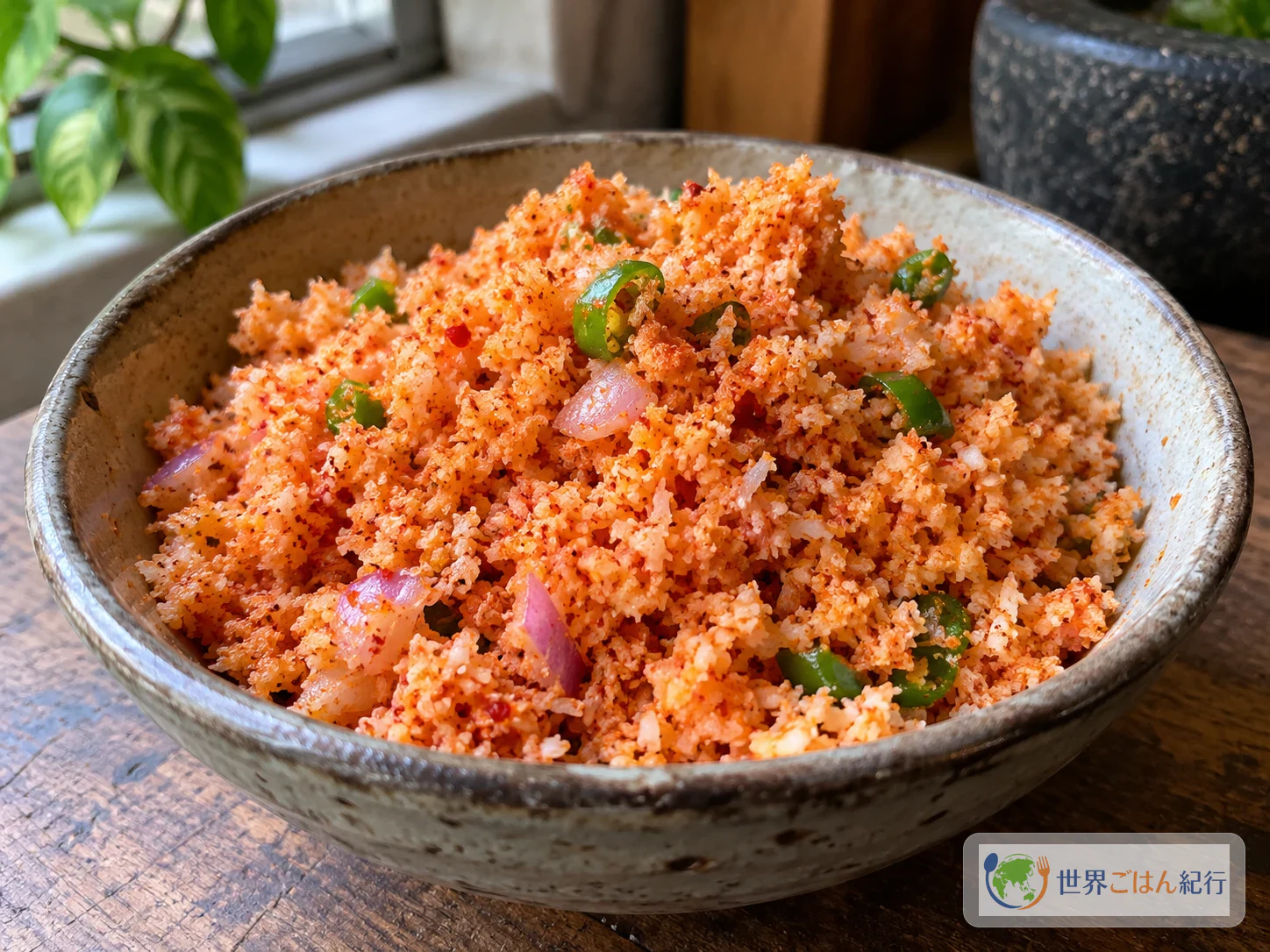
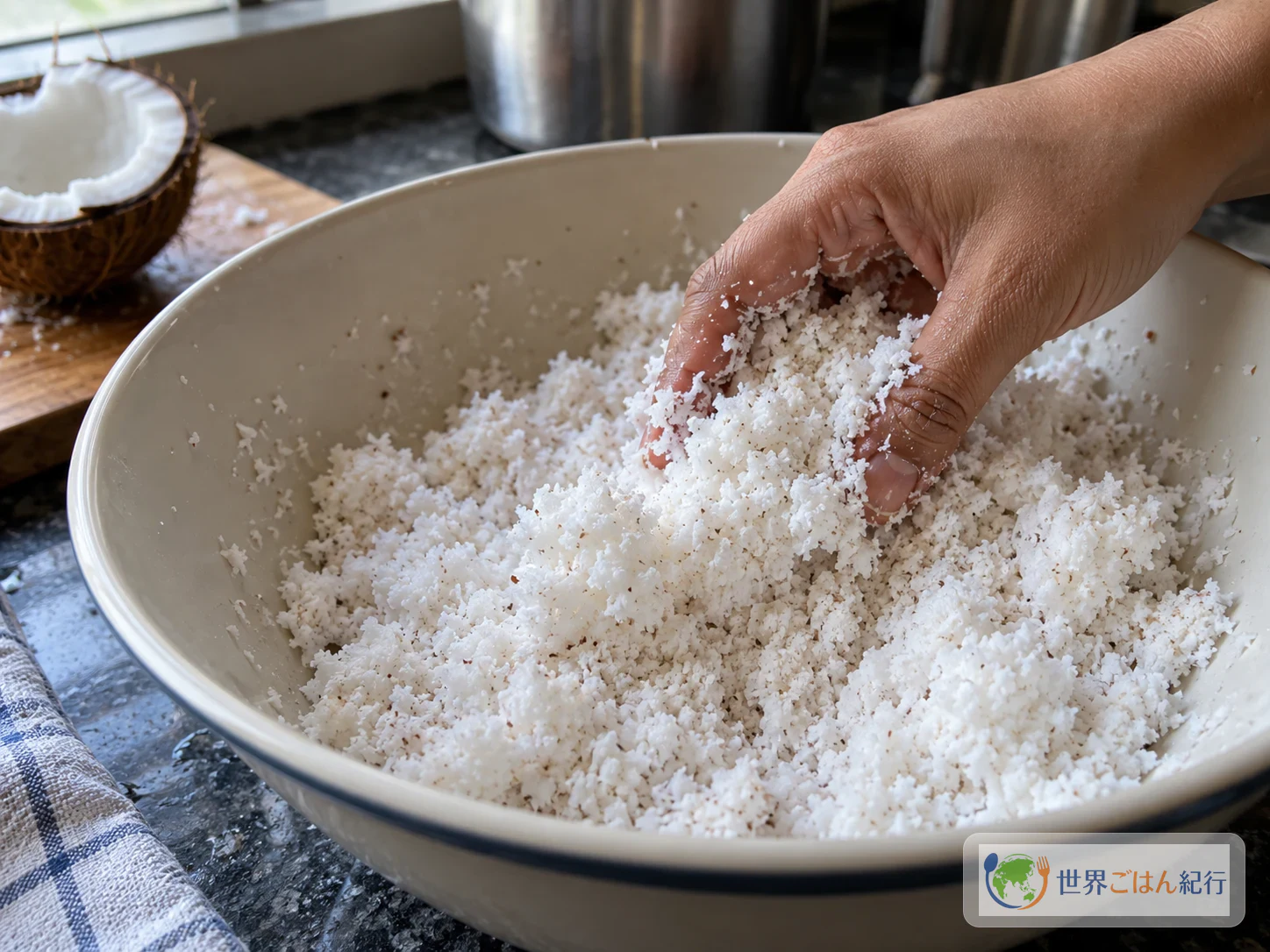
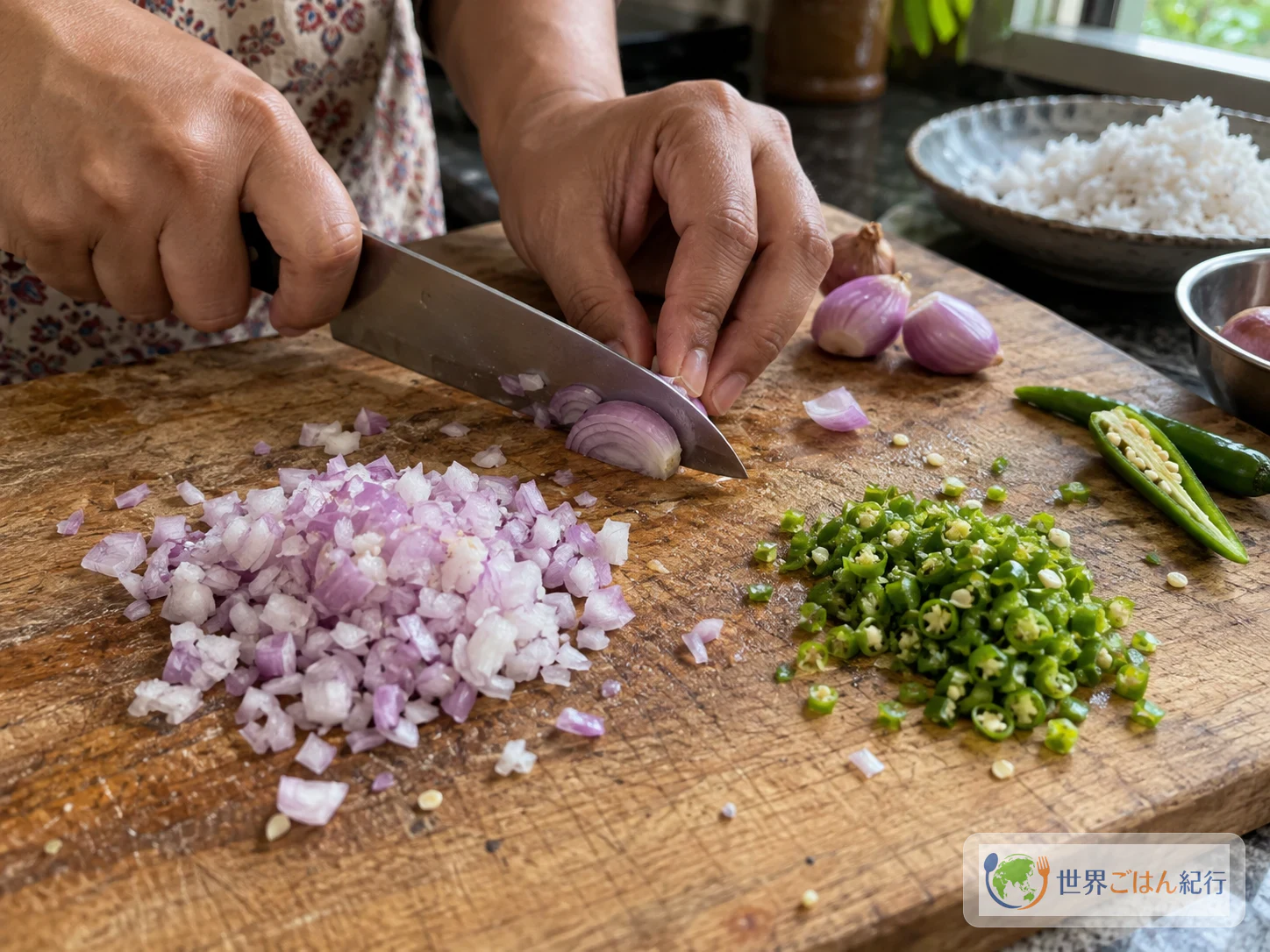
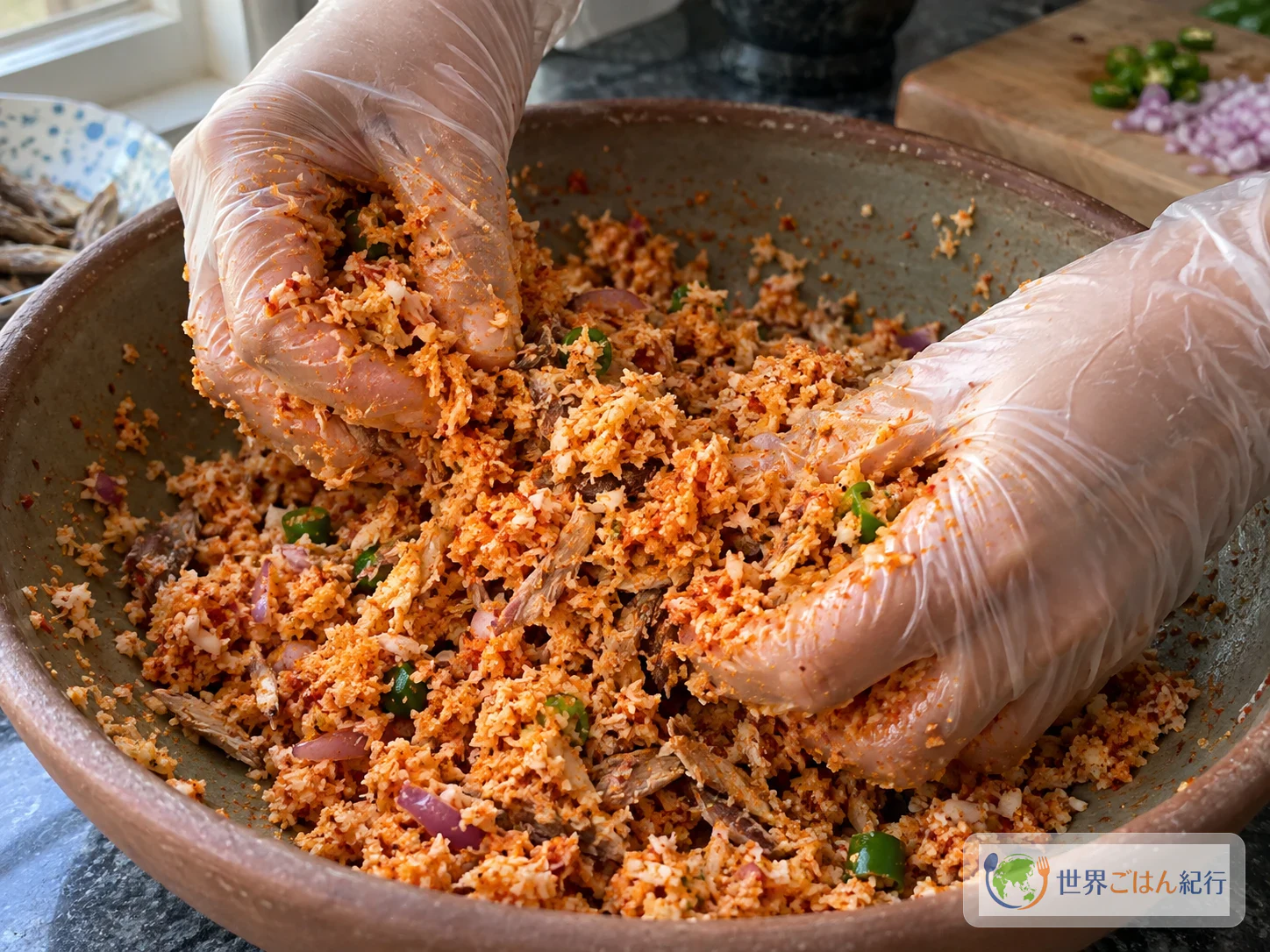
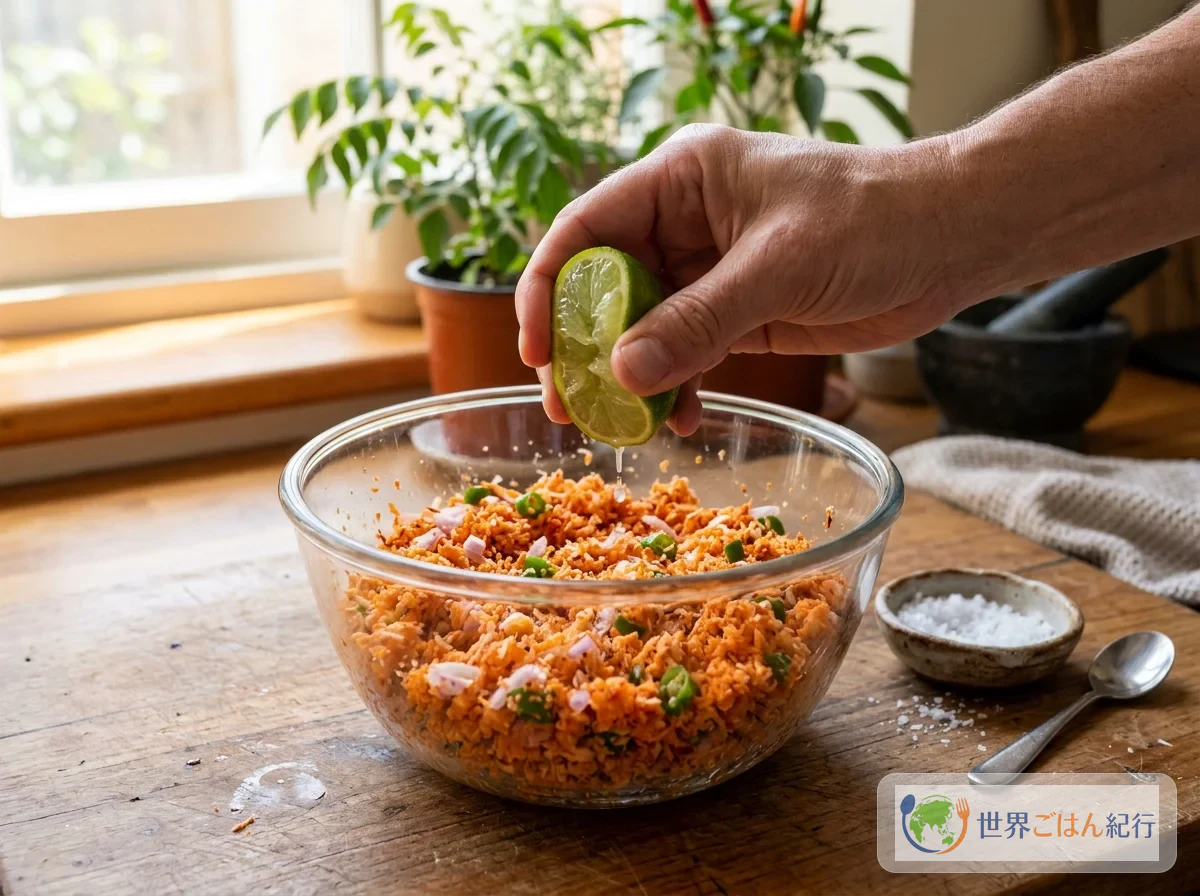
In the morning kitchen, sprinkle red chili powder over a white mound of coconut and rub it in, cupping it in your palms. Each time you press it between your fingers, oil seeps from the coconut and the white mound turns orange before your eyes. Add chopped shallots and green chilies, crushed dried fish, and finally a good squeeze of lime, and it is done. Good with rice, with curry, with freshly baked bread, this is the great supporting player on the Sri Lankan table: pol sambol.
Red Coconut at the Edge of the Plate, Morning, Noon and Night in Sri Lanka
"Pol" in Sinhala means coconut. In Tamil it is called thengai sambal, and in English it is also written coconut sambol. It is a no-heat condiment combining grated coconut with shallots, dried chilies or chili powder, lime juice and salt. In a recipe she contributed to SBS Food, the cook O Tama Carey writes that this sambol is found everywhere on the island and eaten at breakfast, lunch and dinner.
In Sri Lankan homes, ingredients have long been crushed on a rectangular granite slab called a miris gala (Sinhala for "chili stone") with a stone rod. On the slab you coarsely crush the chilies and dried fish, add the coconut and rub it in, and the oil of the coconut and the color of the chilies blend. Many households now mix in a bowl by hand, but rubbing by hand to move color and aroma has not changed.
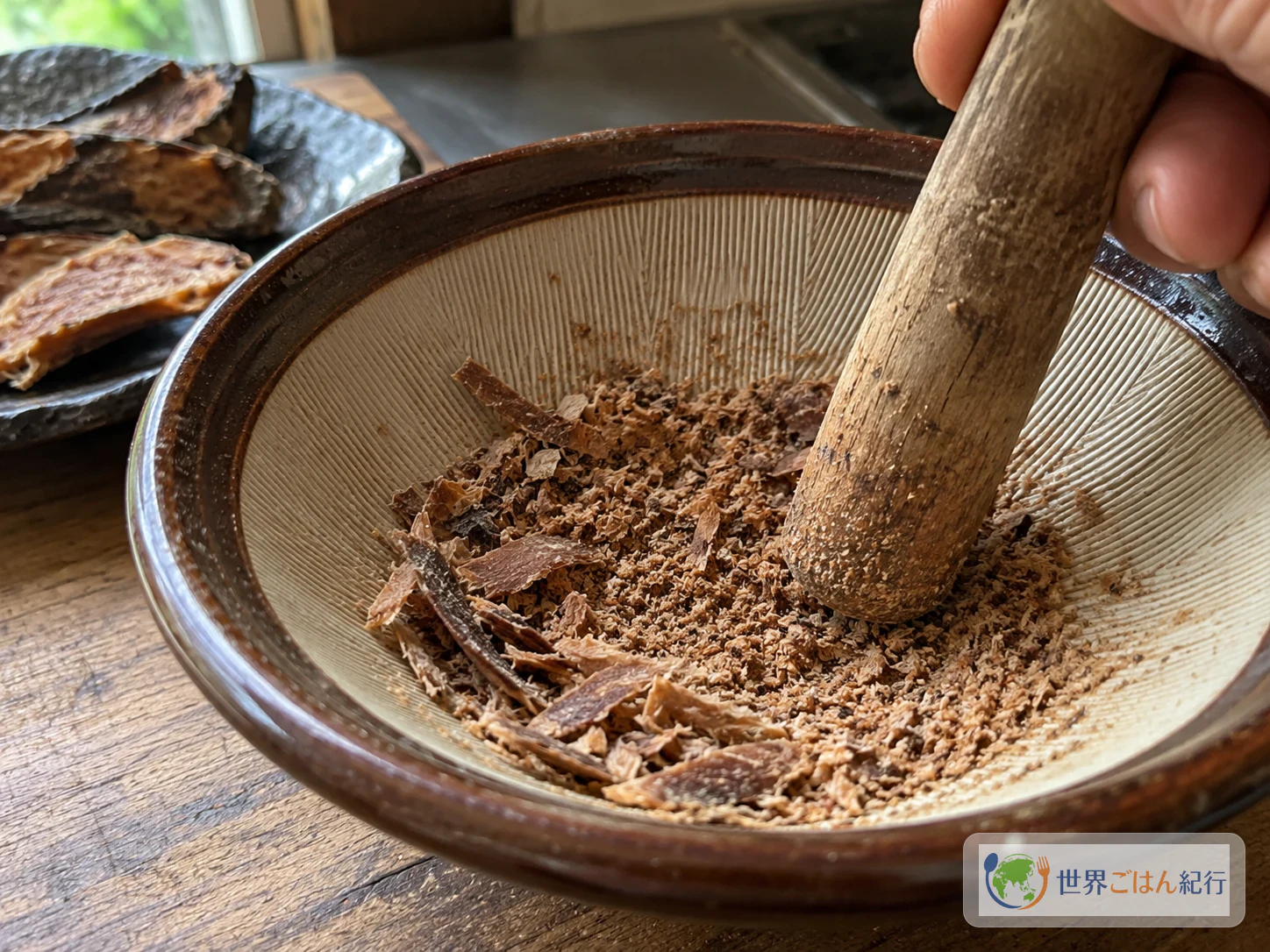
The "Maldive fish" often added to pol sambol is called umbalakada in Sinhala, a preserved food made by smoking and drying tuna-family fish such as skipjack. It is sold as chips or thin flakes, and when crushed its umami and saltiness melt into the coconut. In smoking and drying skipjack it is very similar to Japanese katsuobushi.
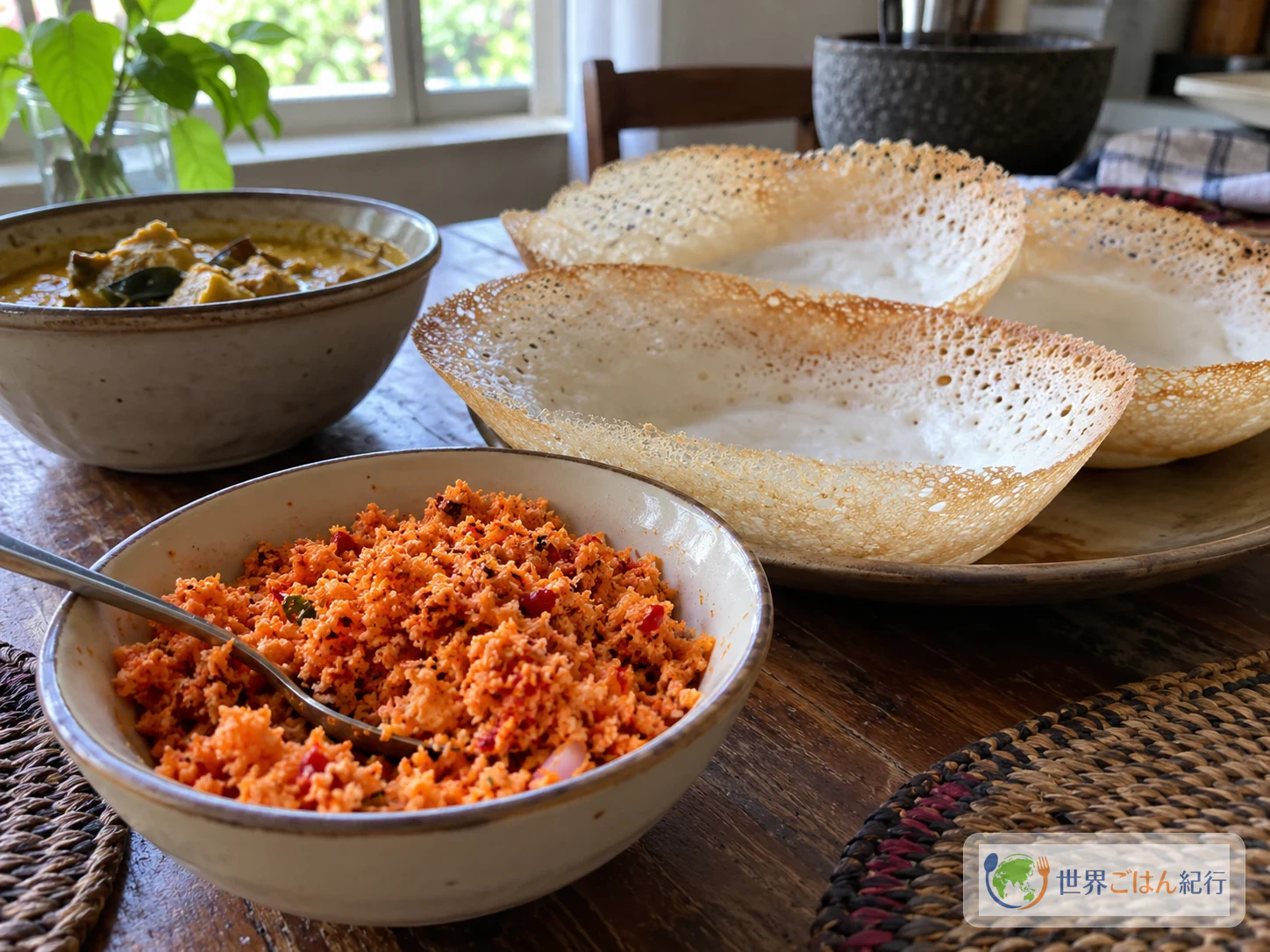
Pol sambol isn't a dish that is the star by itself. It sits beside any dish, adding heat, acidity and the sweetness of coconut: a plate of white rice and curry, string hoppers (rice-flour dough pressed into fine strands and steamed), bowl-shaped thin hoppers, or the coconut flatbread pol roti (in Japanese). Paul van Reyk's recipe in SBS Food describes sambol as "a raw or cooked condiment served with Sri Lankan rice and curry meals."
What to Know Before Making It in Your Own Kitchen
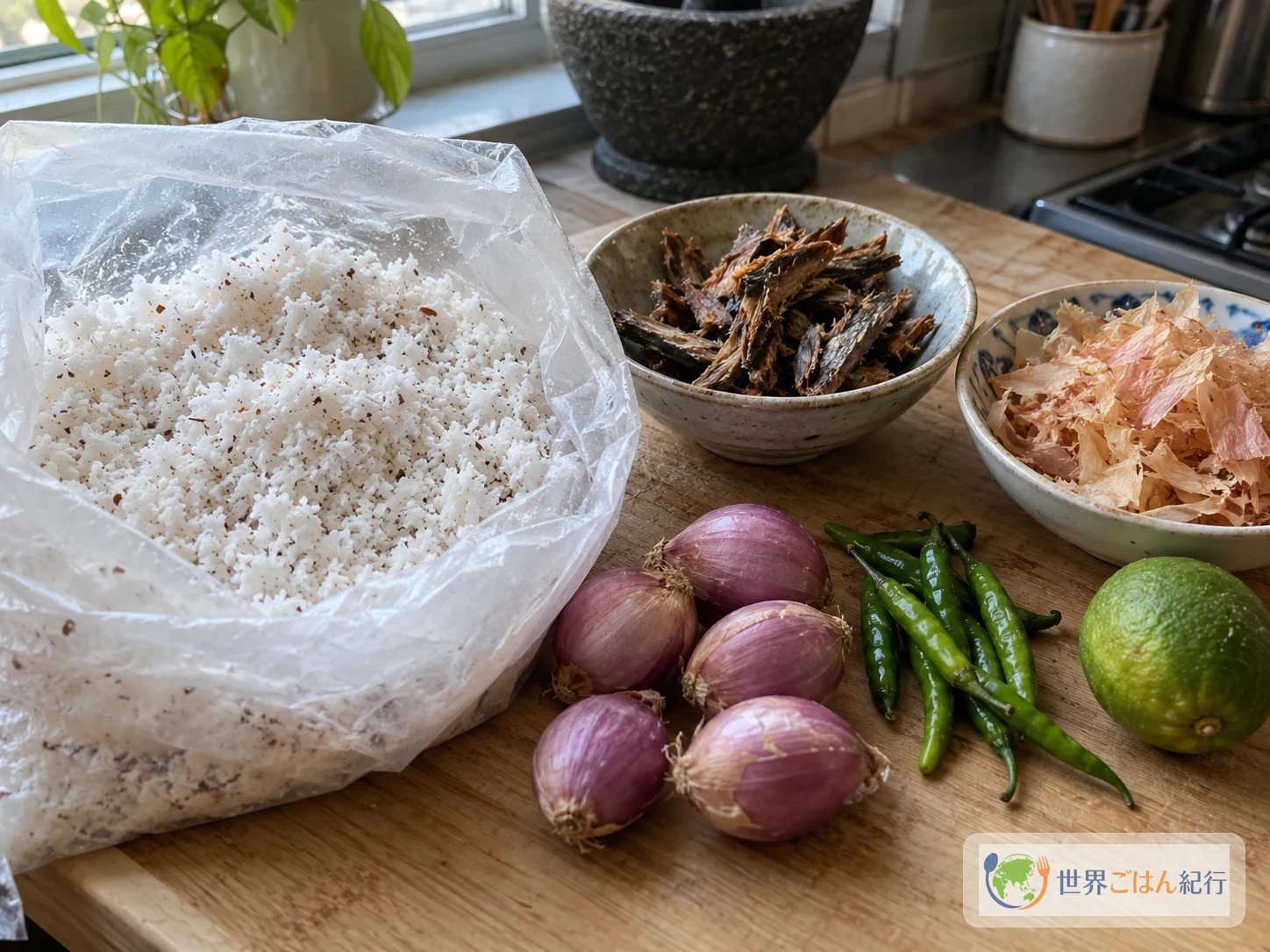
The main challenge is freshly grated fresh coconut. In Sri Lanka they scrape a cracked coconut on the spot, but fresh coconut is not easy to get in many places. Indian and Sri Lankan grocery stores often sell frozen grated coconut, which can be used as is once thawed.
If you can't find frozen, you can substitute the dried coconut sold as baking material. As it is, it is dry and crumbly, so sprinkle 4–5 tbsp boiling water over 100 g desiccated coconut, mix through, and leave about 10 minutes to moisten before using. It won't release the sweet juice of fresh coconut, but the color and aroma are fully pol sambol.
If you can't get Maldive fish, you can substitute katsuobushi (dried bonito flakes). Both are smoked and dried skipjack, so the umami and aroma are very similar. Rub the shaved flakes finer between your fingers before adding. A guide amount is about the same as for Maldive fish.
Use shallots as the closest to the small red onions of Sri Lanka. If you can't get them, red onion works. For chili powder, plain red chili flakes or powder is fine, but it is hot, so start with half and adjust. To deepen the color, add mild paprika.
Ingredients (serves 4)
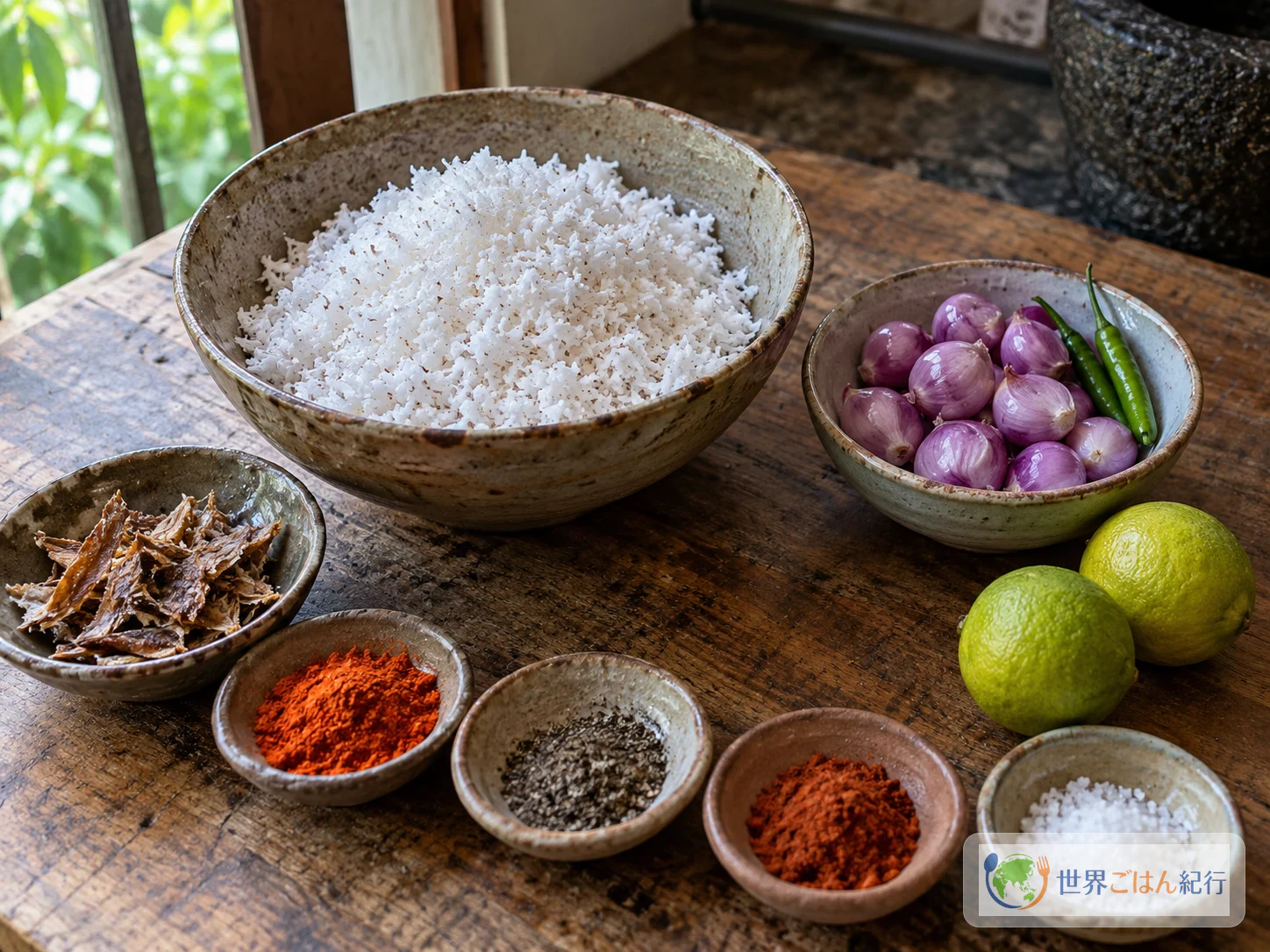
The amounts follow O Tama Carey's recipe published in SBS Food (serves 4).
This dish includes fish (Maldive fish or katsuobushi). Coconut can cause allergic reactions. After handling green chilies and chili powder, wash your hands well so you don't rub your eyes. If rubbing with bare hands is hard on you, disposable gloves help.
How to Make Pol Sambol
No heat; about 20 minutes in all. If using frozen coconut, move it to the refrigerator the night before to thaw.
If you add the lime too early, the coconut gets watery, and over time the acidity fades and the flavor blurs. Set the flavor with salt and add the lime just before eating, and you can bring it to the table with the aroma still up.
Pol sambol is not cooked. It uses raw coconut and shallots, so eat it soon after making and don't leave it long at room temperature. Put any leftovers in the refrigerator right away.
On a Plate of Rice and Curry, It Sets the Palate
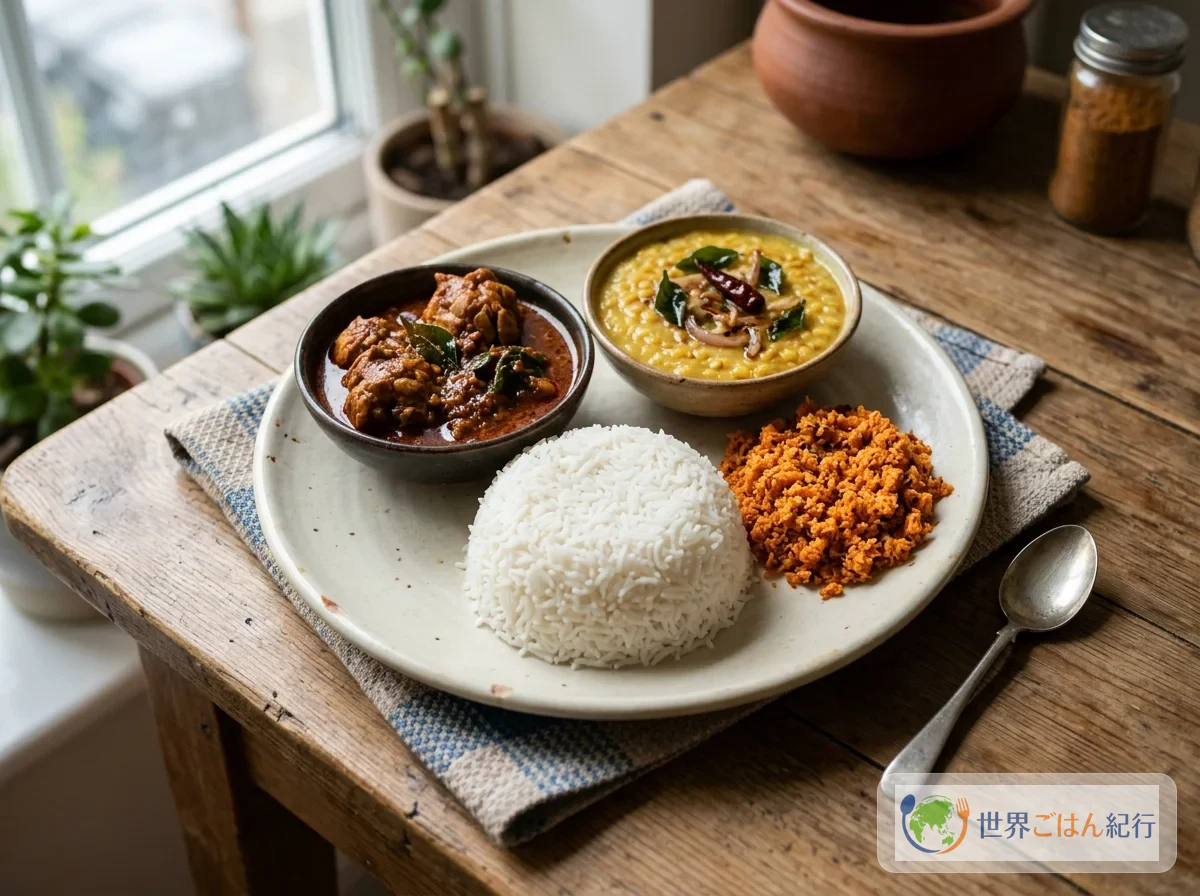
In Sri Lankan rice and curry, several curries and side dishes surround white rice, and pol sambol sits in one corner. As you mix rice and curry with your fingers and add a pinch of sambol now and then, the sweetness of coconut, the heat of chili and the sourness of lime join, and the fun is that the taste changes with each bite.
It goes especially well with rich curries like the chicken curry kukul mas curry and ambul thiyal (in Japanese), fish simmered with tamarind. For breakfast, have it with bowl-shaped thin hoppers or kiribath (in Japanese), rice cooked in coconut milk. At your own table, it also goes surprisingly well on toast or beside grilled fish or cold tofu.
Sri Lanka has many sambols besides pol sambol. "Badapu pol sambol," pol sambol quickly stir-fried with onion and mustard seeds, is one, with a toasty note that raw sambol lacks.
Ways to Vary It
To make it without fish, leave out the Maldive fish and increase the salt a little. The umami is lighter, but the combination of coconut, chili and lime alone makes a fully delicious condiment. For a vegetarian version, use this method.
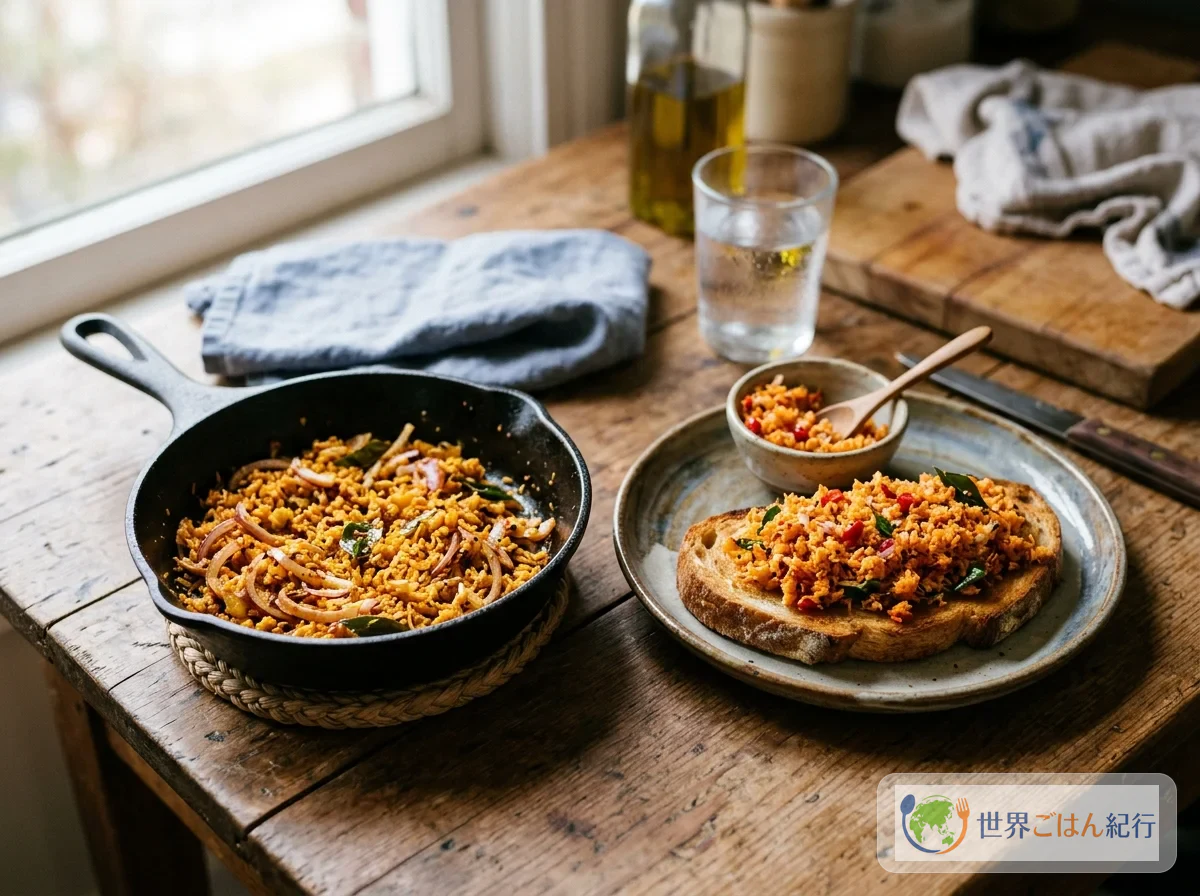
To reduce the heat, halve the chili powder and double the paprika, and the color stays vivid while only the heat drops. To make it hotter, add more green chilies or chop them with the seeds. Leftover sambol becomes a different dish when stir-fried. Heat a little oil in a skillet, stir-fry thin-sliced onion, add the sambol and stir-fry 2–3 minutes over medium heat, and it becomes a fragrant, furikake-like topping.
FAQ
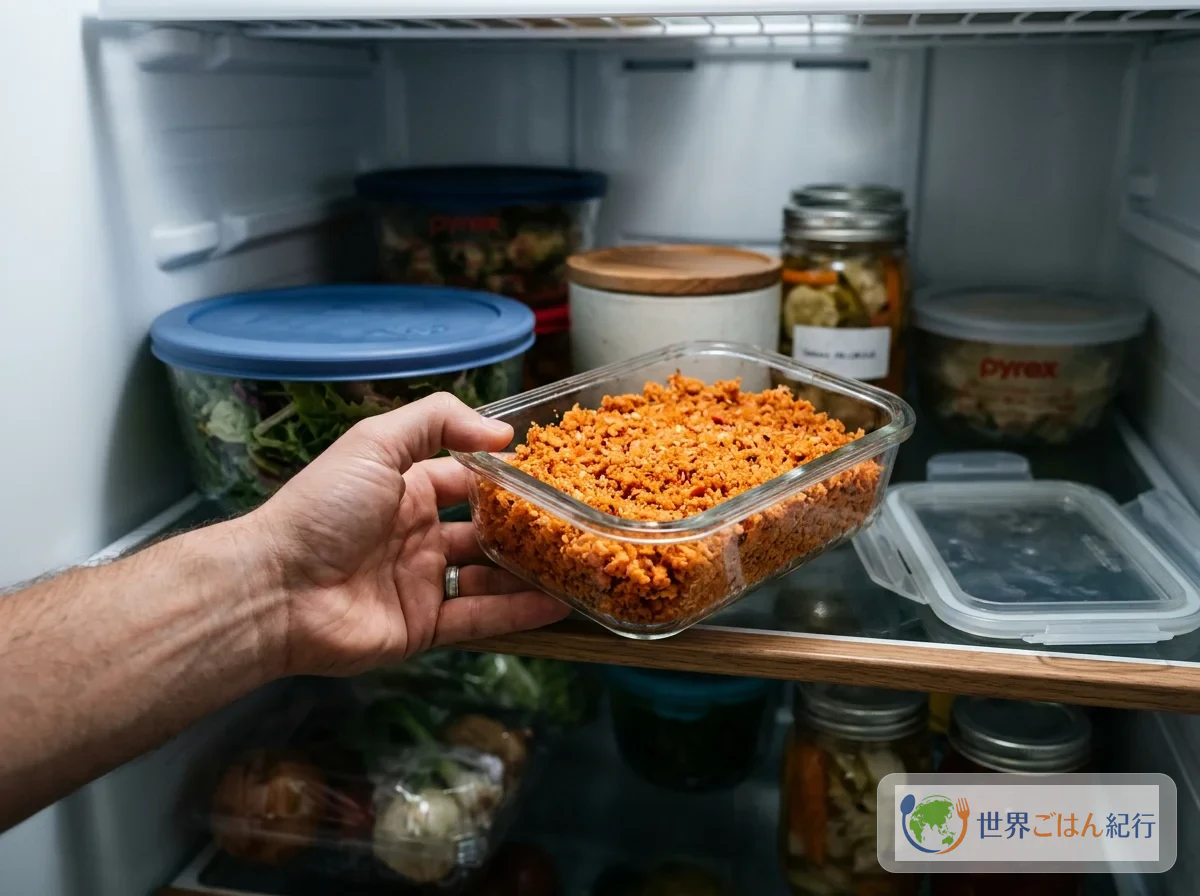
How long does it keep?
Because it uses raw coconut and shallots, it is best finished the day you make it. If any is left, put it in an airtight container, refrigerate and eat it by the next day. With lime added, the acidity fades and it turns watery over time.
Is it OK to make it with desiccated coconut only?
Yes. Rehydrate the desiccated coconut with boiling water until moist before using. Without rehydrating, it is dry and the chili doesn't blend. The recipe site Cooking The Globe also recommends adding a little coconut milk if using dried coconut to supplement moistness and richness. Rehydrating with coconut milk rather than boiling water adds sweetness and gets a little closer to fresh coconut.
What if I have no mortar?
Maldive fish and katsuobushi can also be crushed by putting them in a plastic bag and hitting with a rolling pin. Katsuobushi gets fine enough just by rubbing it with your fingers.
Can I make it with chili powder that isn't hot?
With paprika alone the color is vivid but the heat nearly disappears. That is fine for children. Adding just a little kick from black pepper tightens the flavor.
Sources
- SBS Food, O Tama Carey, "Pol roti and pol sambol," published May 4, 2023. Accessed and checked: October 22, 2026. https://www.sbs.com.au/food/recipes/pol-roti-pol-sambol
- SBS Food, Paul van Reyk, "Coconut sambol (pol sambol)," published June 25, 2015. Accessed and checked: October 22, 2026. https://www.sbs.com.au/food/recipes/food-safaris-coconut-sambol-pol-sambol
- Cooking The Globe, Enozia Zehra, "Pol Sambol (Sri Lankan Coconut Relish)," published December 31, 2023. Accessed and checked: October 22, 2026. https://cookingtheglobe.com/pol-sambol-sri-lankan-coconut-relish/
- Wikipedia, "Pol sambola." Accessed and checked: October 22, 2026. https://en.wikipedia.org/wiki/Pol_sambola


