
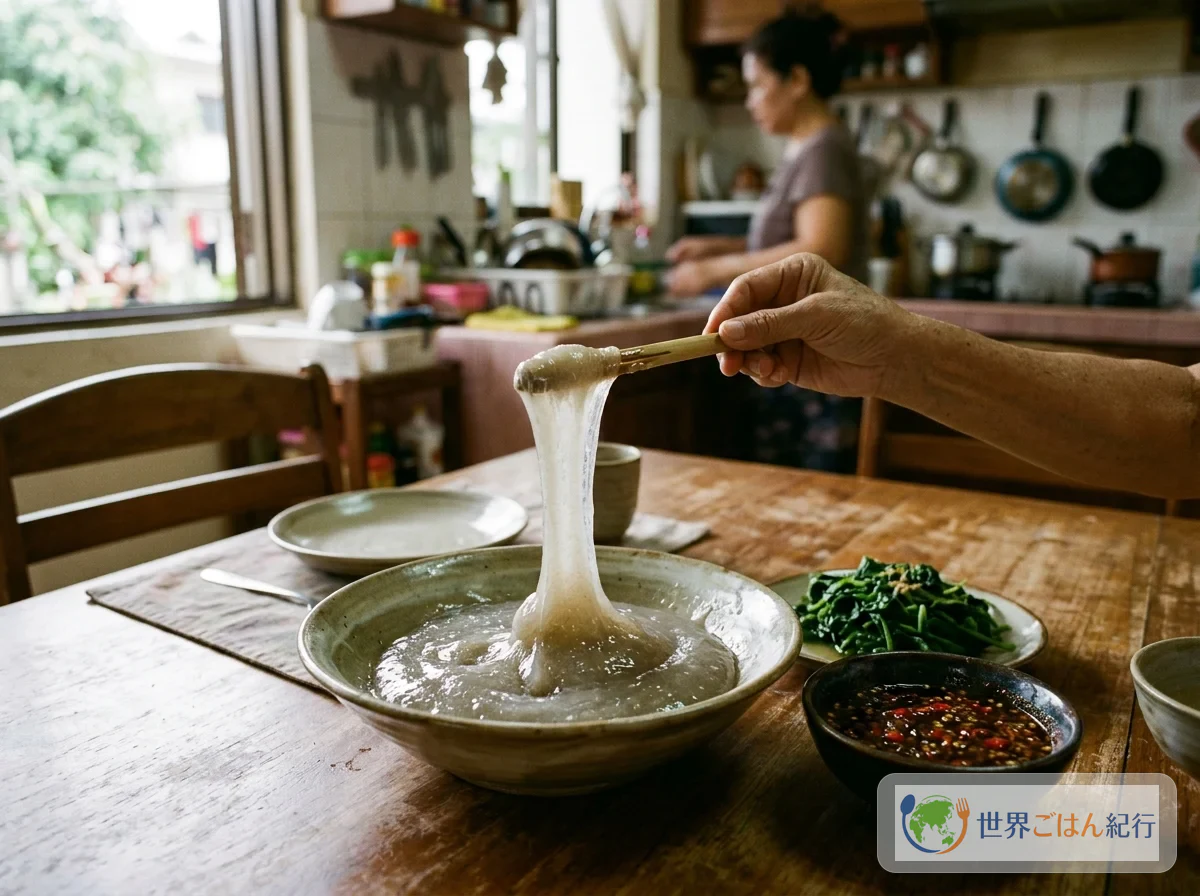
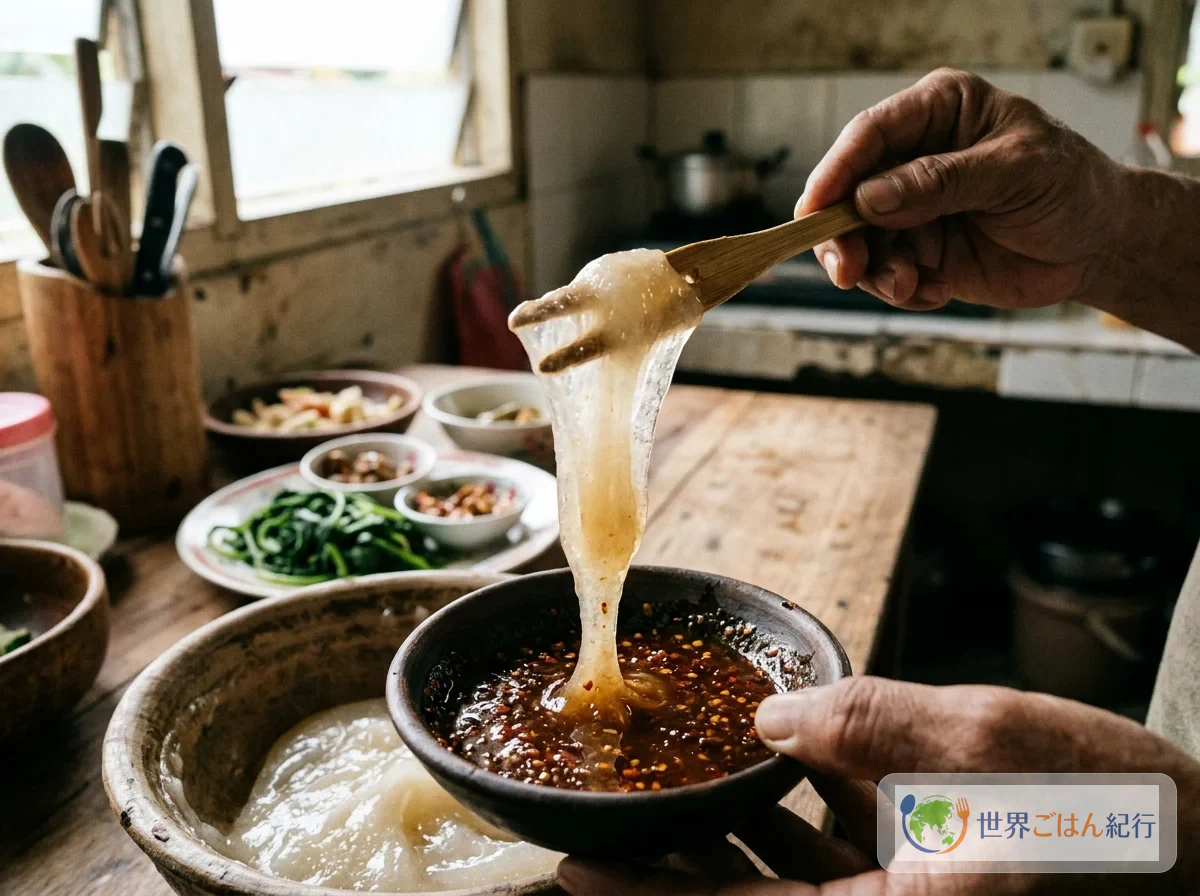
In the middle of a big bowl sits a translucent gray mass, quivering. The person across the table pushes in a forked bamboo stick and turns it, and the sticky, paste-like mass winds around the tip and lifts in a long string. They dip it into a small bowl of sour-hot sauce beside them and, without chewing, send it smoothly down the throat. This is ambuyat, called the national dish of Brunei, a small country on the northern coast of Borneo.
A Staple Made from the Trunk of the Sago Palm, Eaten Without Chewing
What ambuyat is, is starch taken from inside the trunk of the sago palm. In the Bruneian language the sago starch is called "ambulung." Pour boiling water on the white powder and work it, and the powder turns translucent before your eyes into a mass with strong stickiness. It has almost no taste of its own; it is a staple eaten for the flavor of the dip and accompaniments. Brunei Tourism presents it as a dish you may swallow without chewing.
It was once the daily staple of the indigenous peoples of this region, and traditionally it has been eaten by Brunei Malays and by the Bisaya, Bajau, Kadazan-Dusun and Lun Bawang (Lundayeh) peoples. Across the sea in Malaysia's Sabah, Sarawak and Labuan it is also called "linut" and eaten in the same way.
The utensil for eating ambuyat, "candas," is like chopsticks made by splitting a bamboo piece in two. The base is joined, so you open the tips, push them into the mass and turn to wind it up. Brunei Tourism describes it as chopsticks joined at one end.
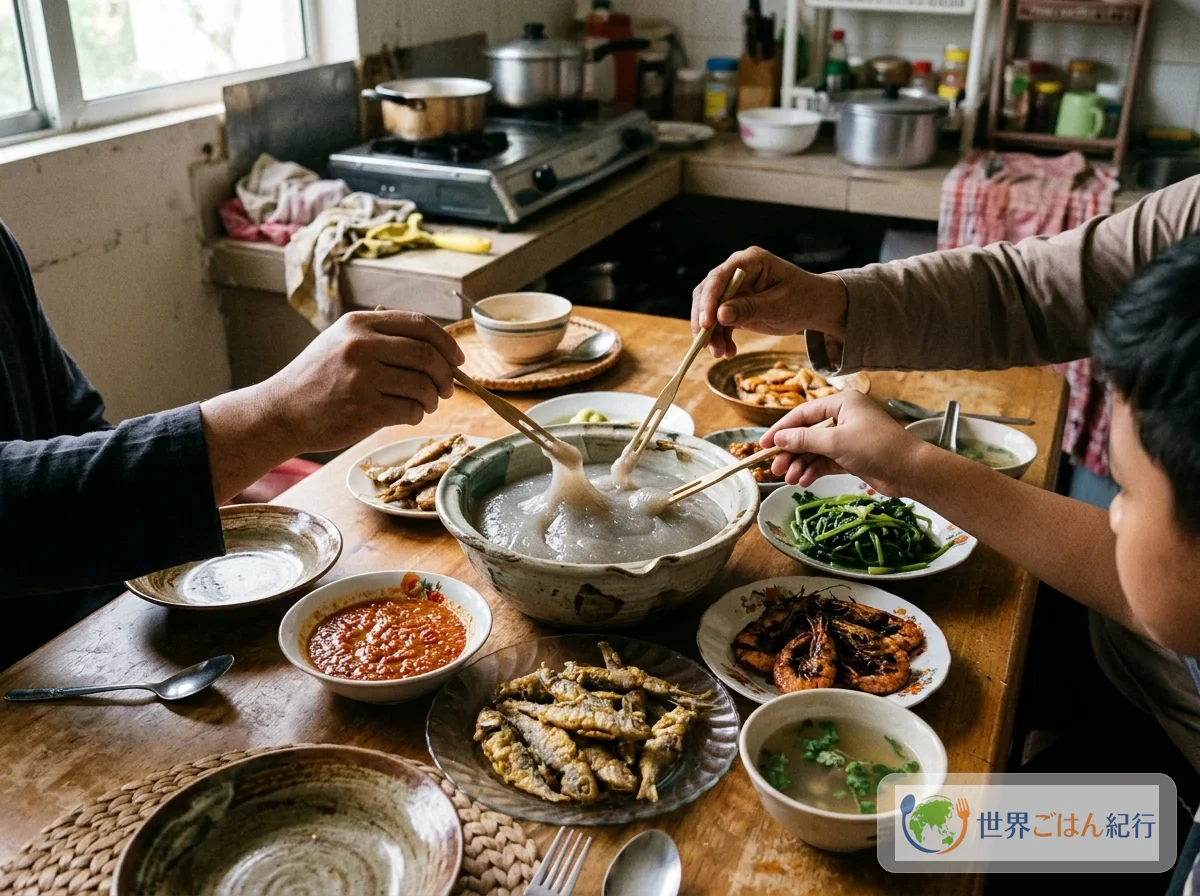
Ambuyat is not eaten alone in silence. It is made in a big bowl, everyone sits around it, and each person takes portions into their own small bowl. Accompaniments are boiled greens, fish soup, fried fish, grilled shrimp and so on. The dip that anchors the flavor is collectively called "cacah," and sour and hot is the basic idea. In Brunei, besides dips using the sour fruit of the binjai, a wild mango relative, there are shrimp-paste sambal belacan, fermented durian tempoyak, fermented small shrimp cincalok and others, combined as you like.
What to Know Before Making It in Your Own Kitchen
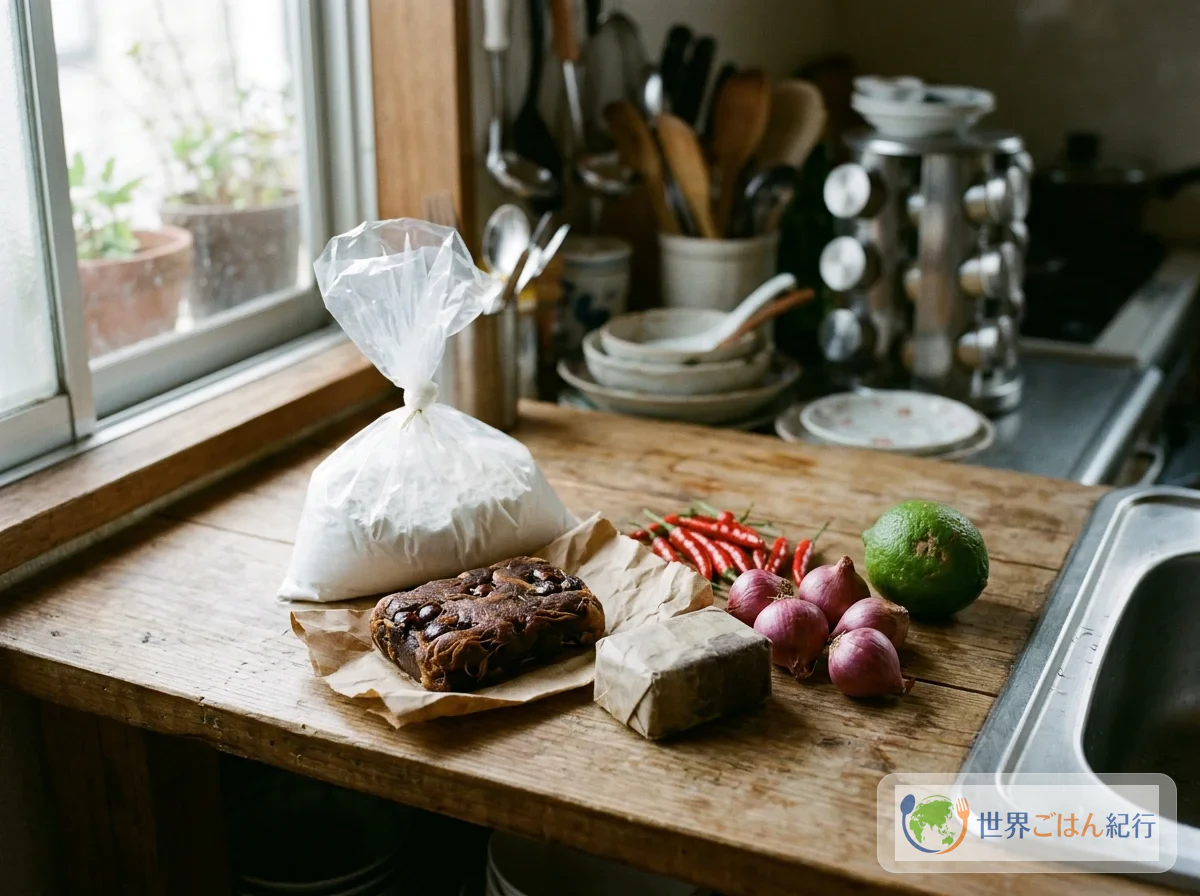
The most important ingredient is, of course, sago flour. It is sold at Asian grocery stores or online under names like "sago flour" and "sago starch." If sago palm starch isn't available, you can make it with tapioca starch (cassava starch). Ambuyat recipes introduced in English also say tapioca starch or potato starch can substitute. However, the one made with sago flour has the strongest stickiness and the finish is easiest to wind up.
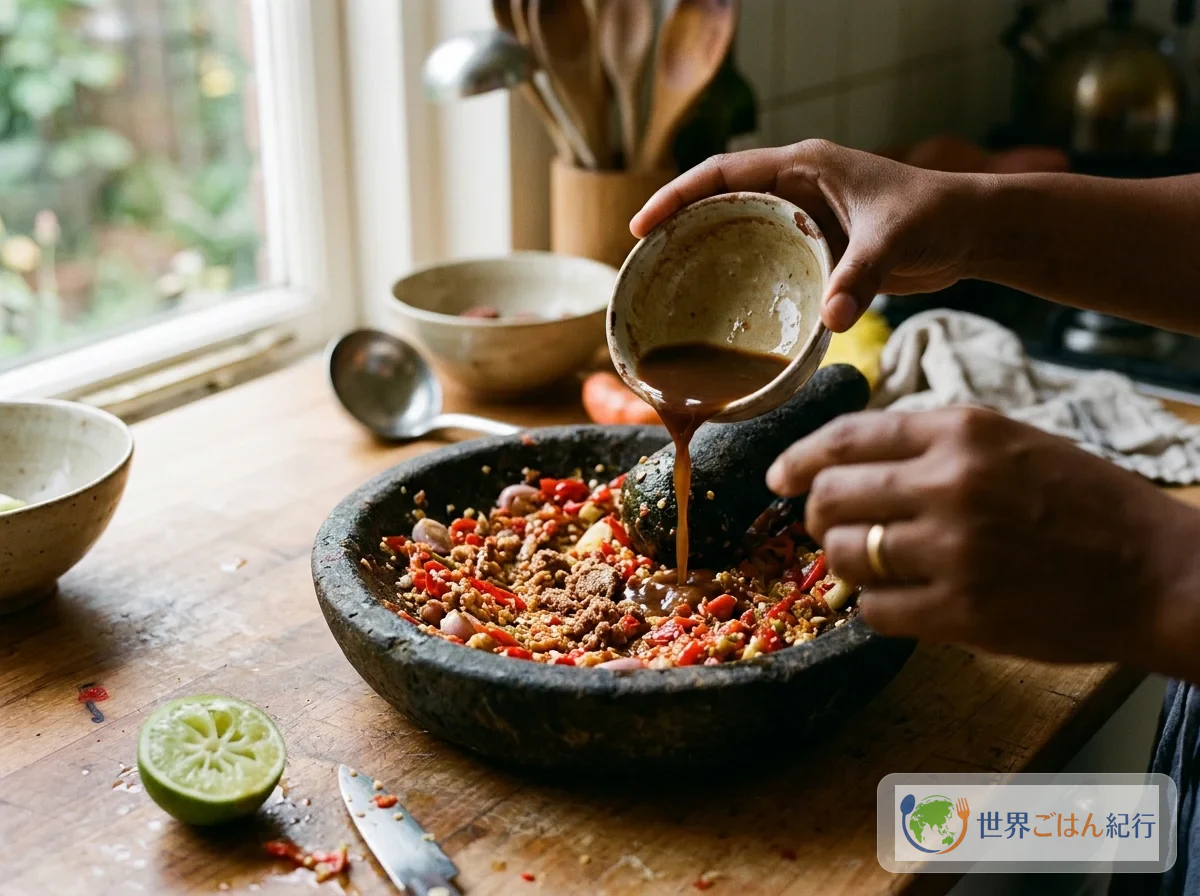
For the dip cacah, the binjai fruit often used in Brunei is practically unobtainable elsewhere. This article uses a blend adjusted for home: tamarind acidity and lime juice build the sourness, and shrimp paste (belacan) and chili add umami and heat. Tamarind sold as a seeded block is easiest to use, and for shrimp paste, Thai kapi or Indonesian terasi can stand in.
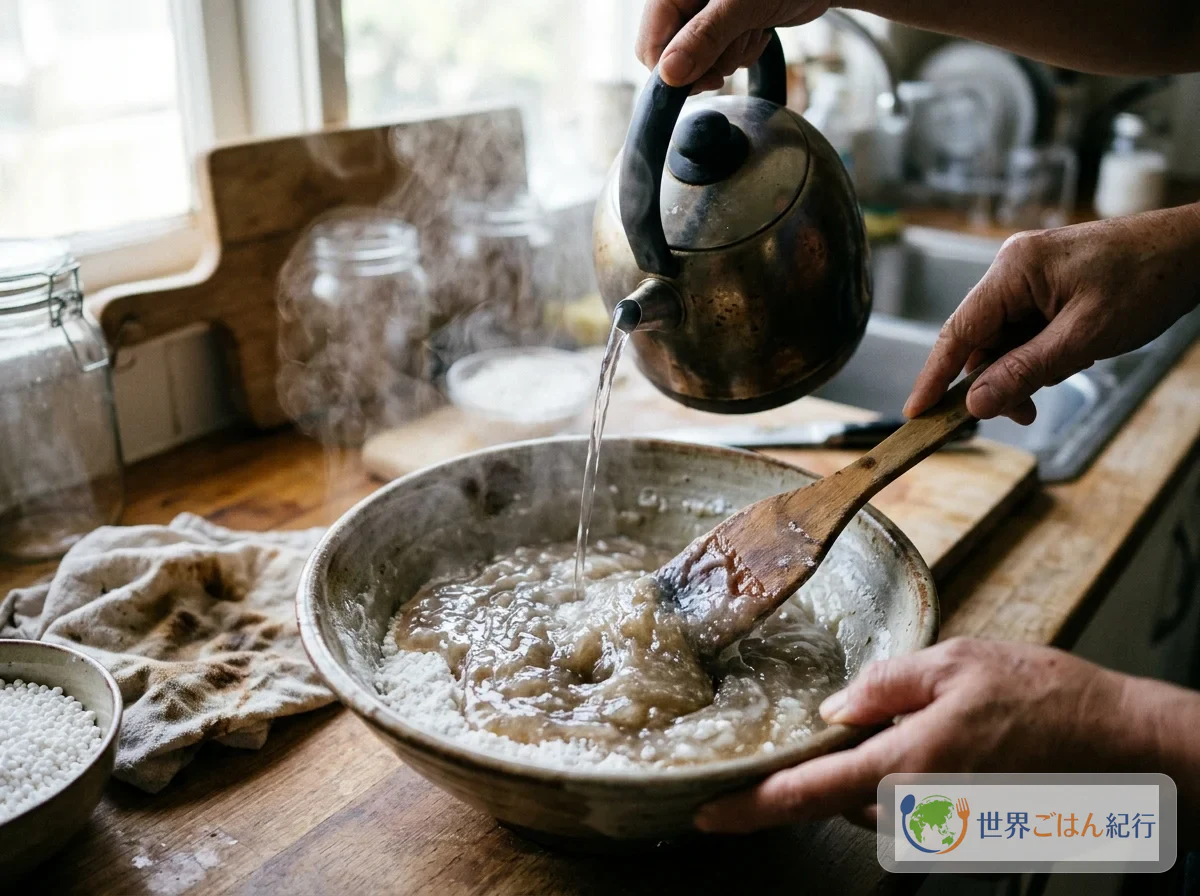
For ambuyat, the water temperature is everything. Use water boiled in an electric kettle right after it stops boiling. With lukewarm water the powder does not turn translucent and stops as a cloudy white sludge.
If you don't have a candas, take a pair of disposable chopsticks, leave them joined and open only the tips slightly, and you can wind it up the same way. Two ordinary chopsticks are fine too.
Ingredients (serves 4)
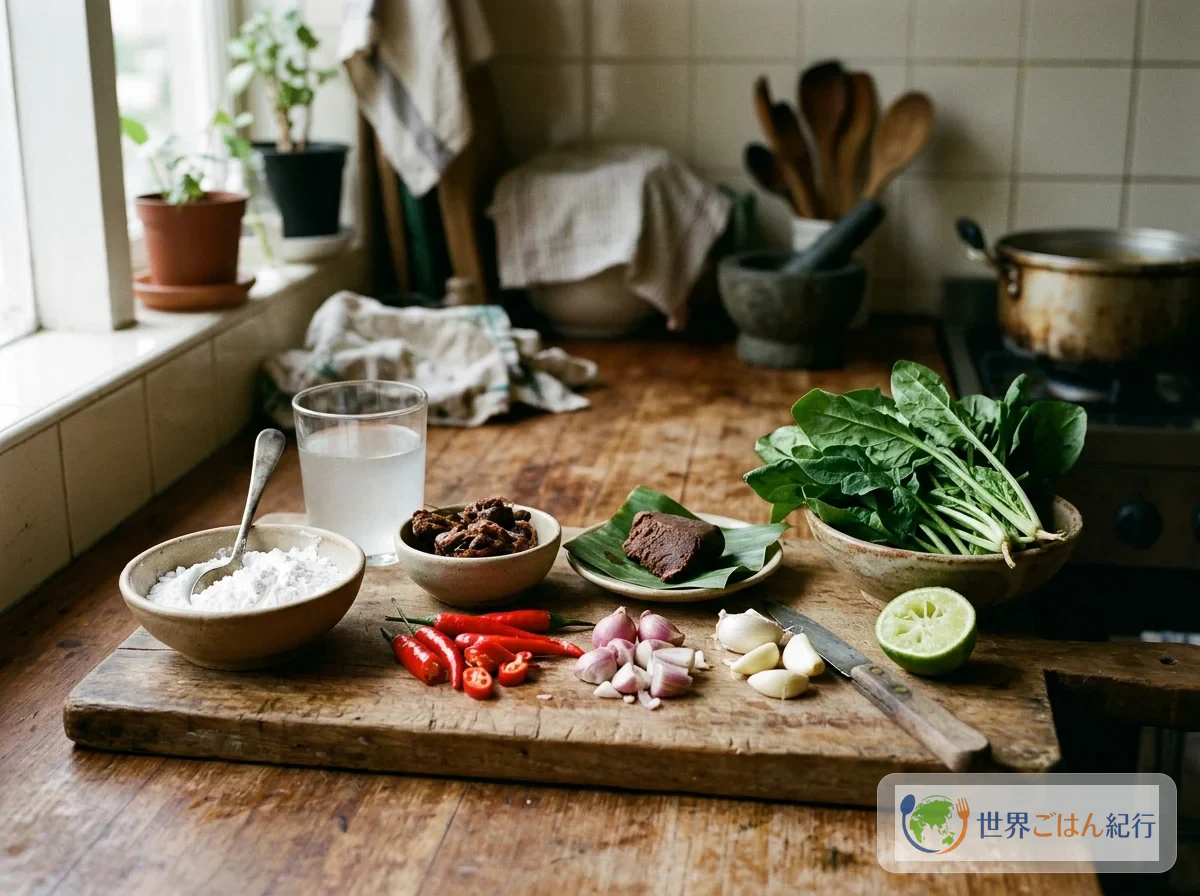
This uses shrimp paste and shrimp, so it is not suitable for people with a shellfish allergy. Ambuyat is basically swallowed without chewing, but it is very sticky, so when children or older people eat it, wind up only tiny amounts at a time and take care that it doesn't lodge in the throat.
How to Make Ambuyat
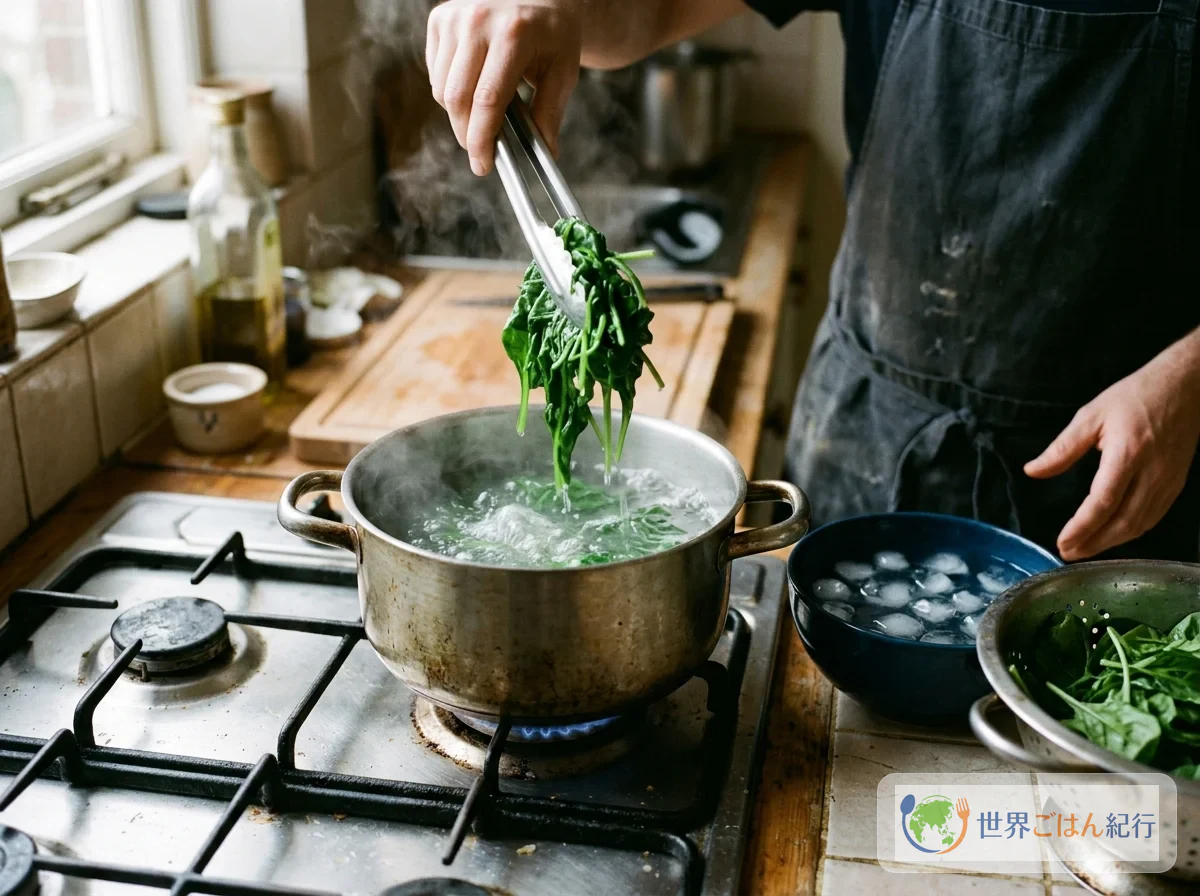
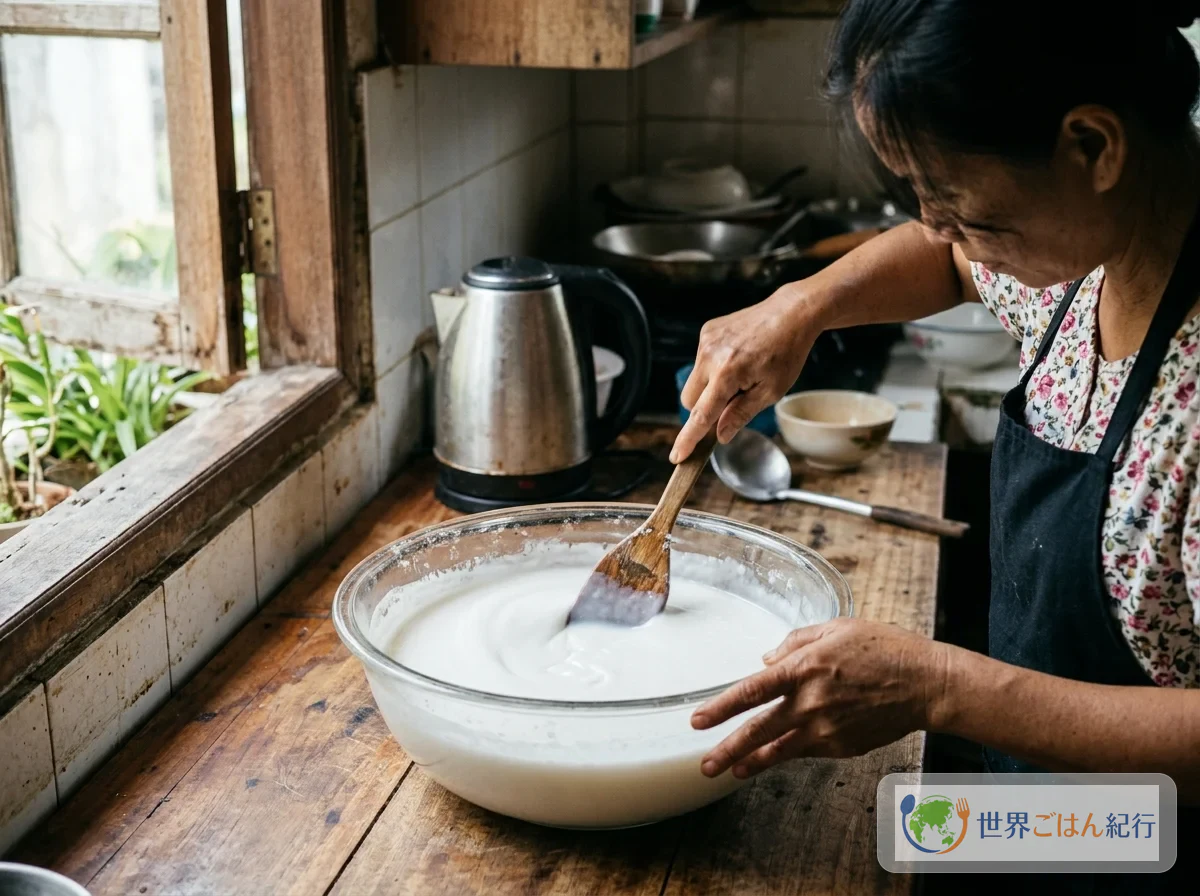
Prepare the dip and greens first and work the ambuyat just before eating. Once it has cooled after working, it stiffens and can't be wound up. The whole takes about 30 minutes.
When you pour in boiling water, the contents of the bowl get hot and heavy at once. Put the bowl on a damp cloth so it doesn't slip, and having one person pour and another mix keeps hot water off the hands. Freshly worked ambuyat is hot through, so let it cool a little before the first mouthful.
If it gets too stiff while you work and the spatula won't move, add boiling water 1 tbsp at a time. Conversely, if it is too loose to wind up, stop adding water and keep working it for a while, and the stickiness comes.
While Hot, Alternate the Dip and the Greens
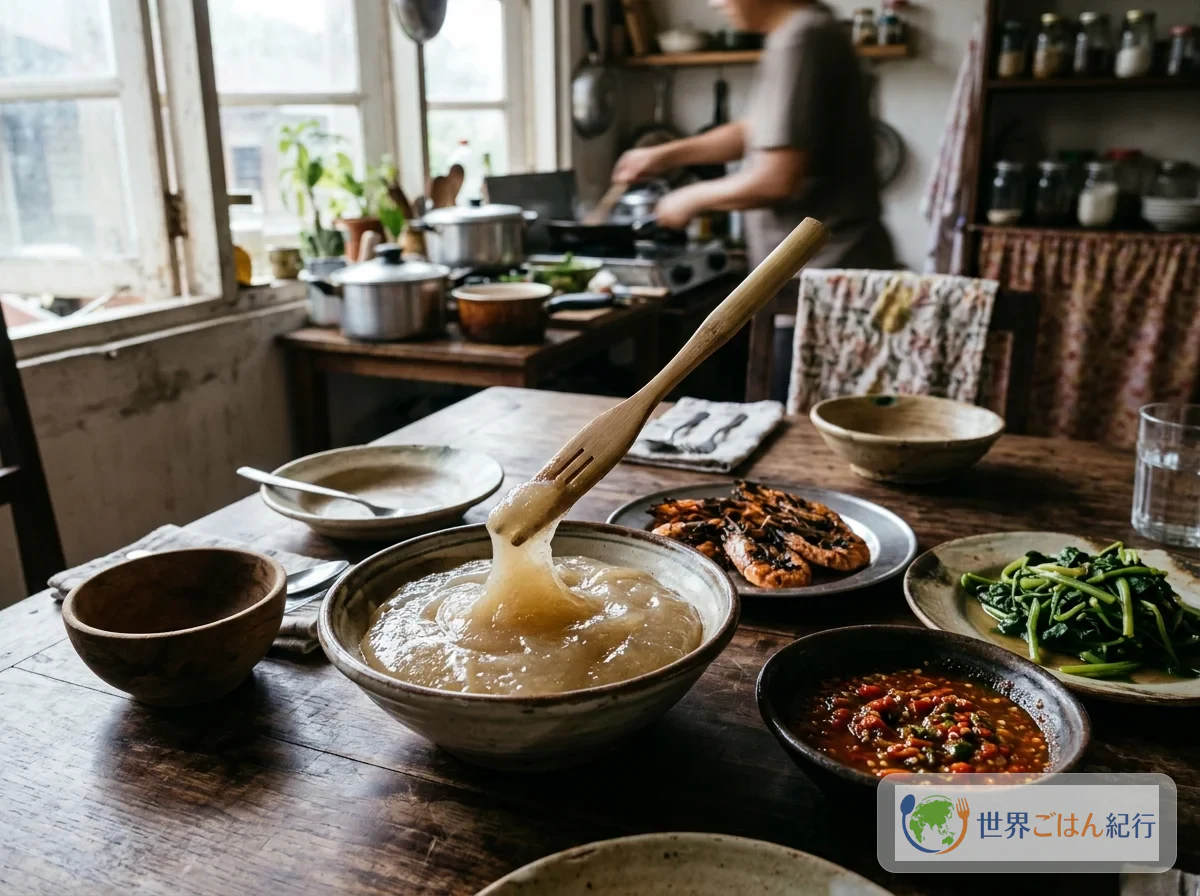
The pleasure of ambuyat lies in the contrast between the smoothness going down the throat and the sour heat of the dip. Its own flavor is very faint, so if you go easy on the dip with the first bite you won't know what you are eating. Dip well each time. As you get used to it, the feeling of the sticky dough vanishing on the tongue becomes a habit.
To add accompaniments, grilled shrimp, fried white fish and a light fish soup go well. Across Borneo in eastern Indonesia there is also papeda (in Japanese), where sago starch is worked with boiling water, and it is eaten with a fish soup simmered yellow with turmeric. It is interesting how the same sago staple shows a completely different face depending on whether it is eaten with a dip or with a soup.
Ambuyat is a staple shared by peoples who have lived on Borneo, such as the Bisaya and Kadazan-Dusun. The names vary too: besides linut in Sabah and Sarawak, it is also known as pinantung.
Enjoy It with Different Dips
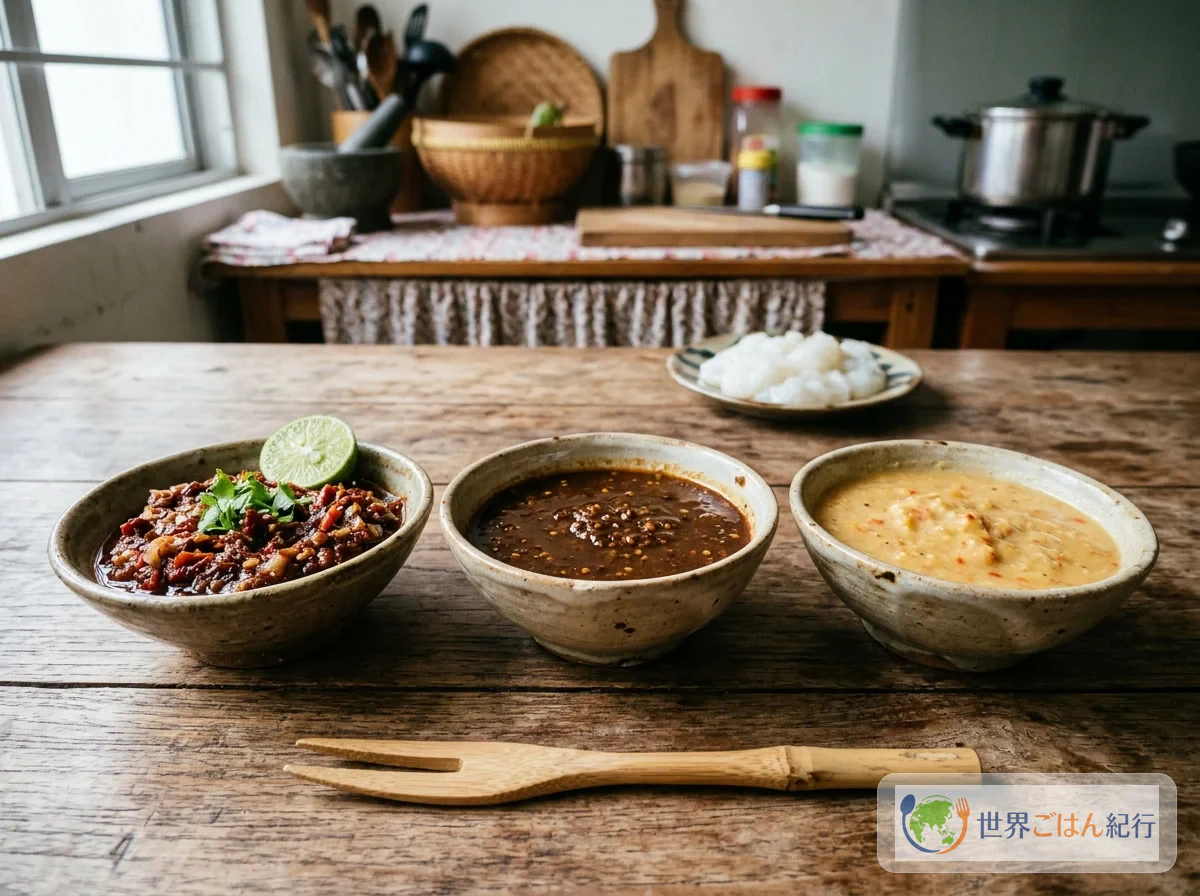
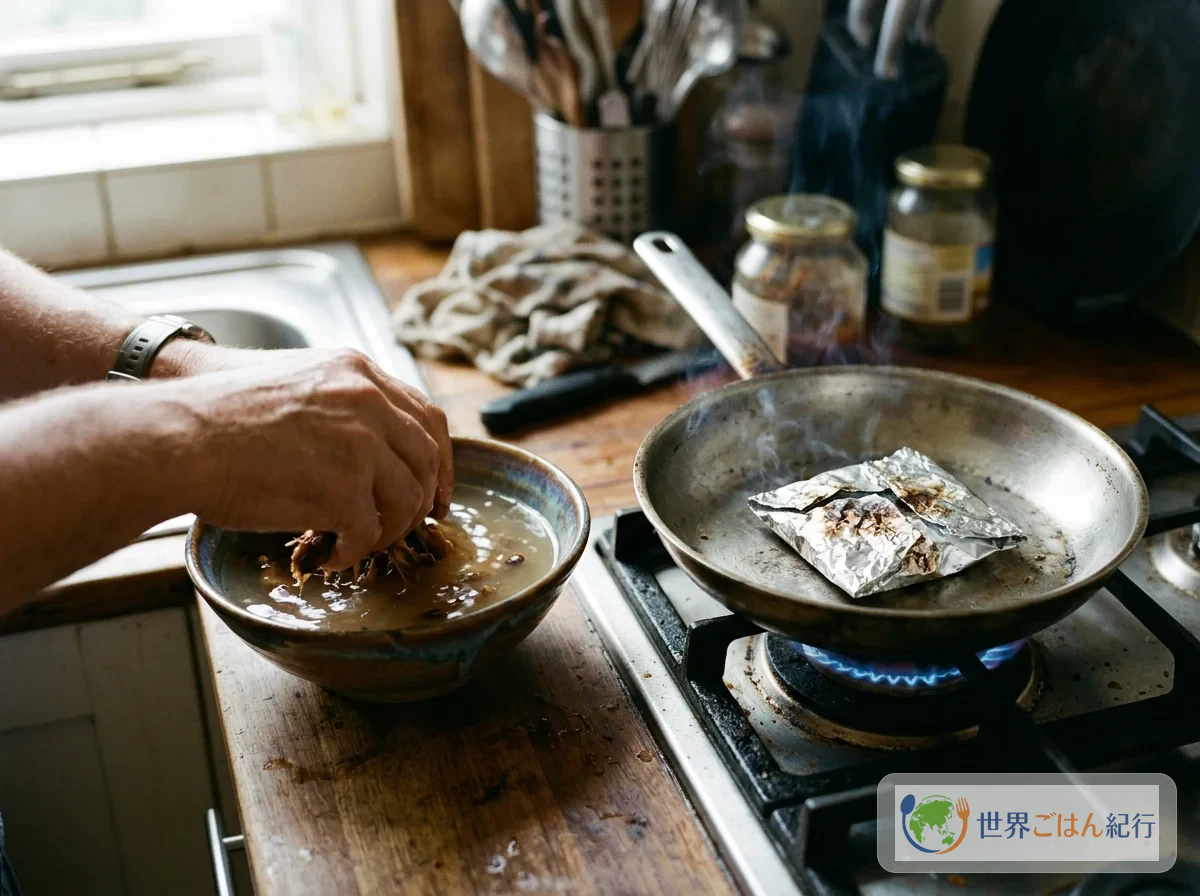
Cacah differs from house to house, so from the second time, try lining up several kinds of dip. The easiest is sambal belacan, made by crushing toasted shrimp paste and chilies and squeezing lime over it. Without the tamarind, it becomes a dip with a stronger aroma and prominent saltiness.
If durian is in season, a dip using fermented durian, tempoyak, is also a Bruneian staple. Outside, it is sometimes made with frozen durian, but that is a different thing from true tempoyak, which has the fermented aroma. When you want more acidity, finely chopped green mango gets you a little closer to the sourness of the binjai fruit.
FAQ
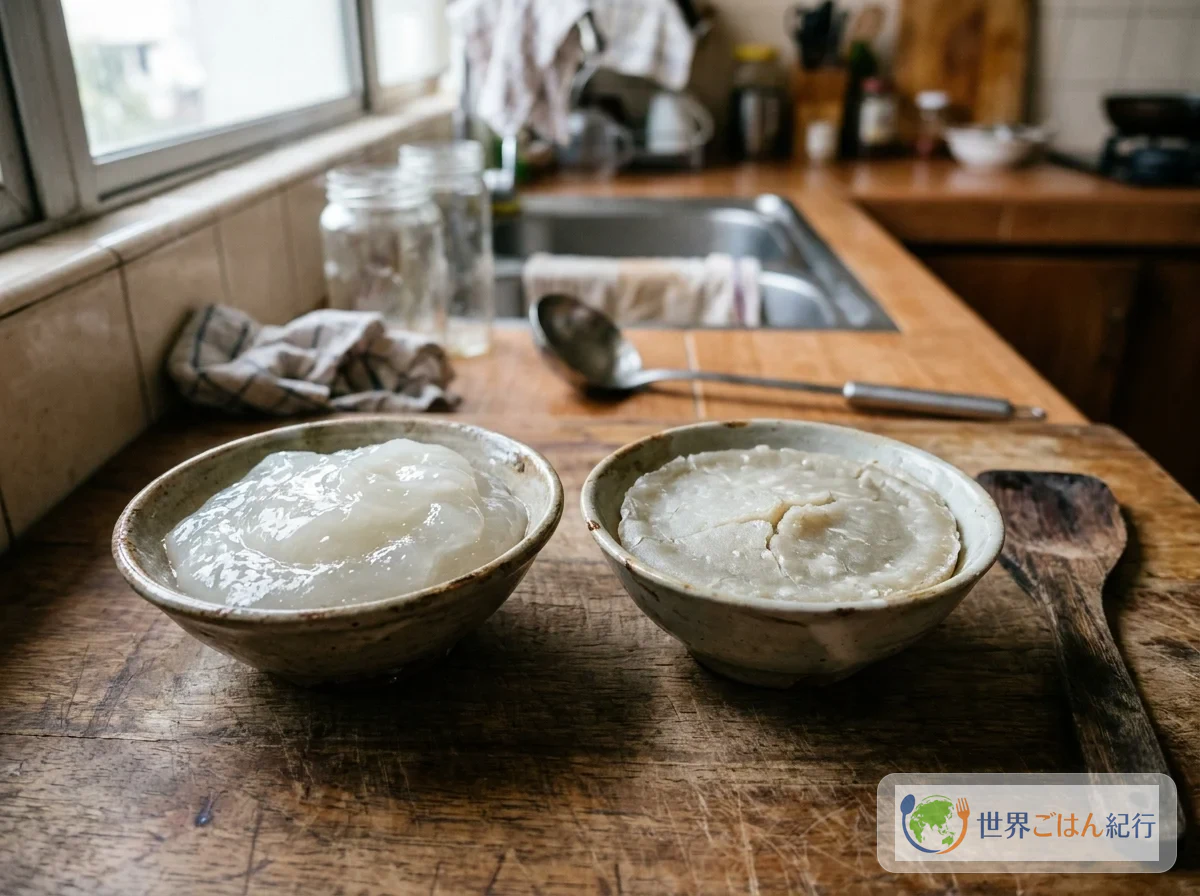
It stayed cloudy white even after pouring boiling water. What should I do?
If the water temperature is too low, the starch isn't cooked and stops cloudy white. Move the contents to a pot and keep working with a wooden spatula over low heat so it doesn't scorch, and in 1–2 minutes it turns translucent. Next time, use freshly boiled water.
Can I make it ahead?
It isn't suited. Ambuyat stiffens as it cools and loses the stickiness to wind up. The dip can be made the day before and refrigerated, but work the ambuyat just before eating.
Can I make it the same way with tapioca starch?
Yes. The steps are the same as with sago flour. The finish is a little softer than with sago and the stickiness a bit weaker. You can make it with potato starch too, but it sets even faster as it cools.
It has no flavor, so is it fine to use lots of dip?
That is rather the right way to eat it. Ambuyat is a staple to carry the flavor of the dip and accompaniments. If you find the dip salty, serving more of the greens alongside makes it easier to eat.
Sources
- Brunei Tourism, "Local Delicacies." Accessed and checked: October 22, 2026. https://www.bruneitourism.com/?p=869
- DBE, "Ambuyat & Tempoyak," published October 21, 2021. Accessed and checked: October 22, 2026. https://www.dbenational.org/recipes/ambuyat-amp-tempoyak
- Will Fly for Food, "What You Need to Know About the Ambuyat Dish of Brunei (Recipe)." Accessed and checked: October 22, 2026. https://www.willflyforfood.net/brunei-what-you-need-to-know-about-the-ambuyat-dish-of-brunei-recipe/
- Wikipedia, "Ambuyat." Accessed and checked: October 22, 2026. https://en.wikipedia.org/wiki/Ambuyat
- Migrationology, Mark Wiens, "Ambuyat: Sago Palm Starch in Brunei." Accessed and checked: October 22, 2026. https://migrationology.com/ambuyat-sago-palm-brunei



