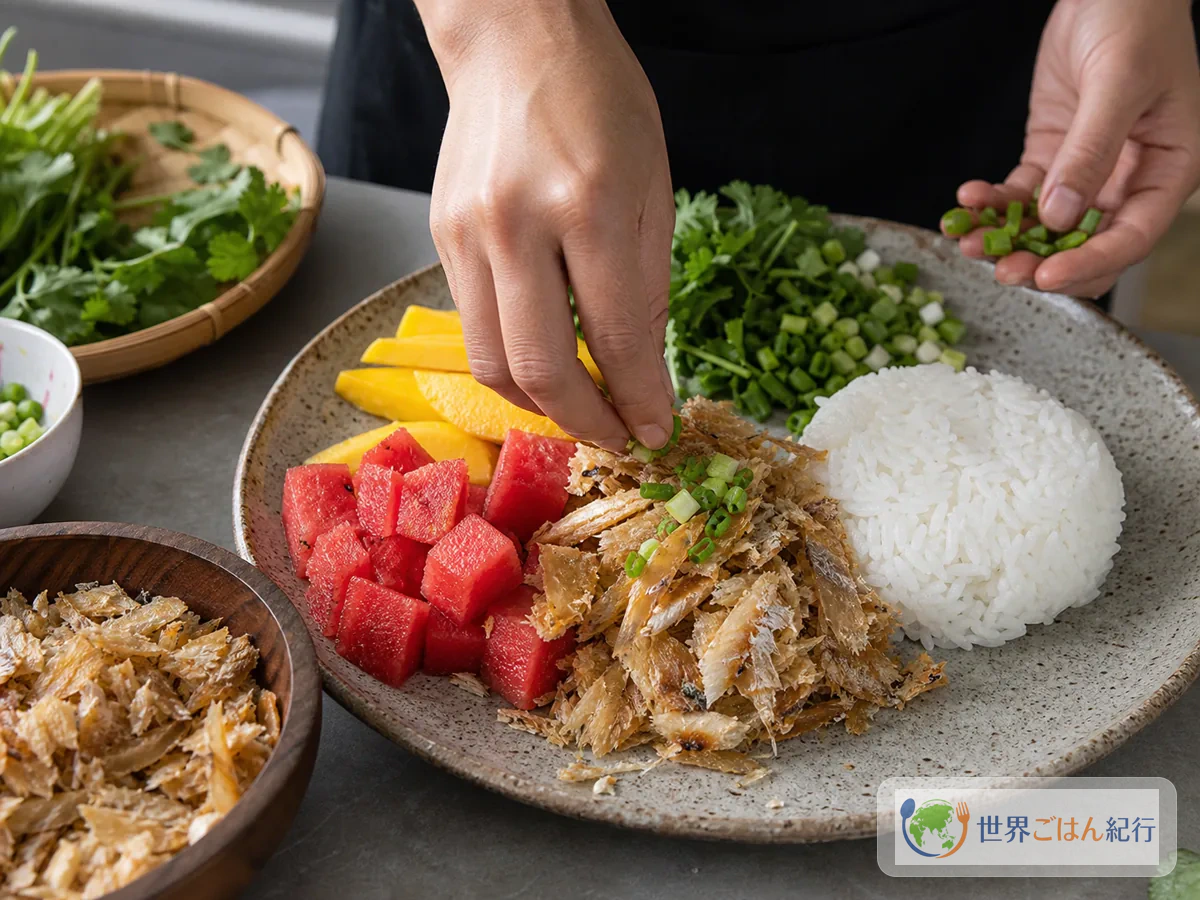
The Story of Aluek Trei Ngeat: Watermelon Sweetness Softens the Salt of Dried Fish
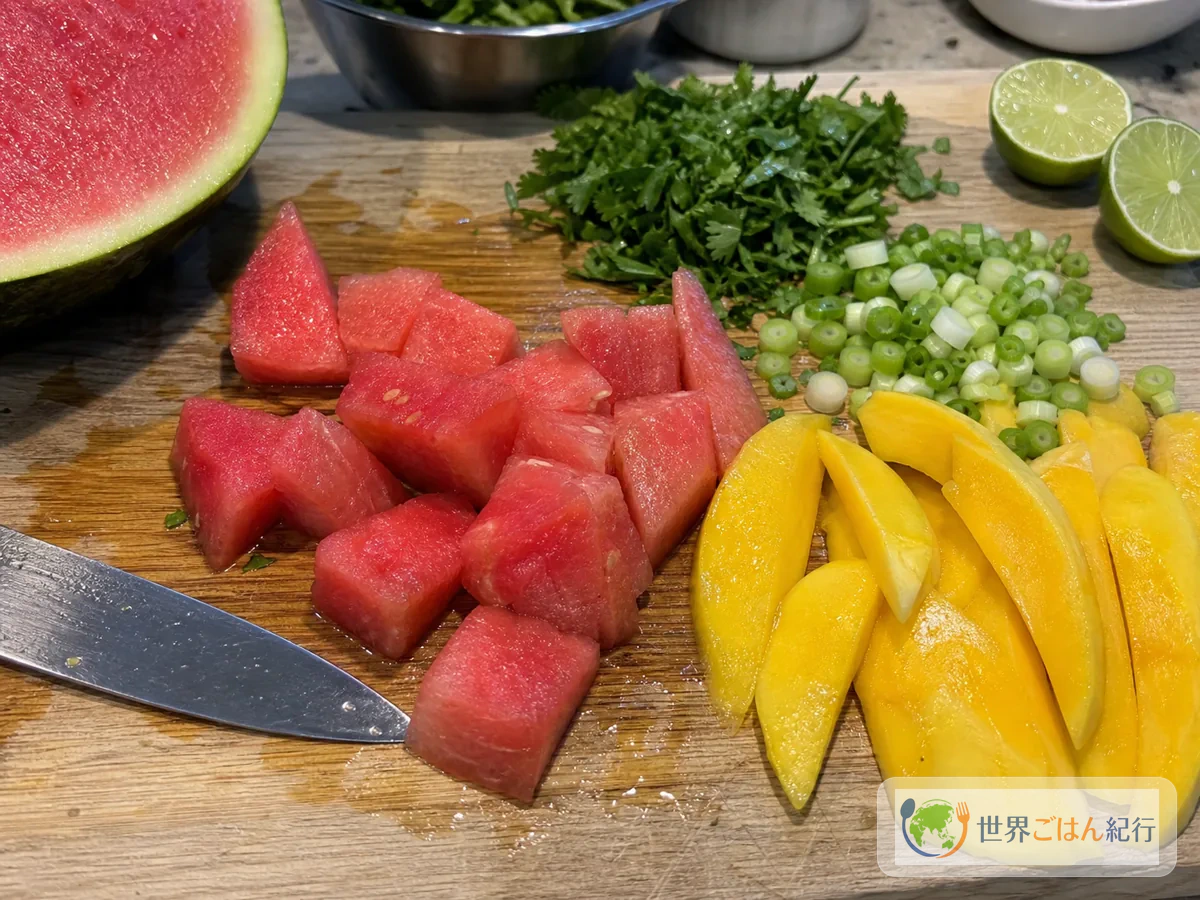
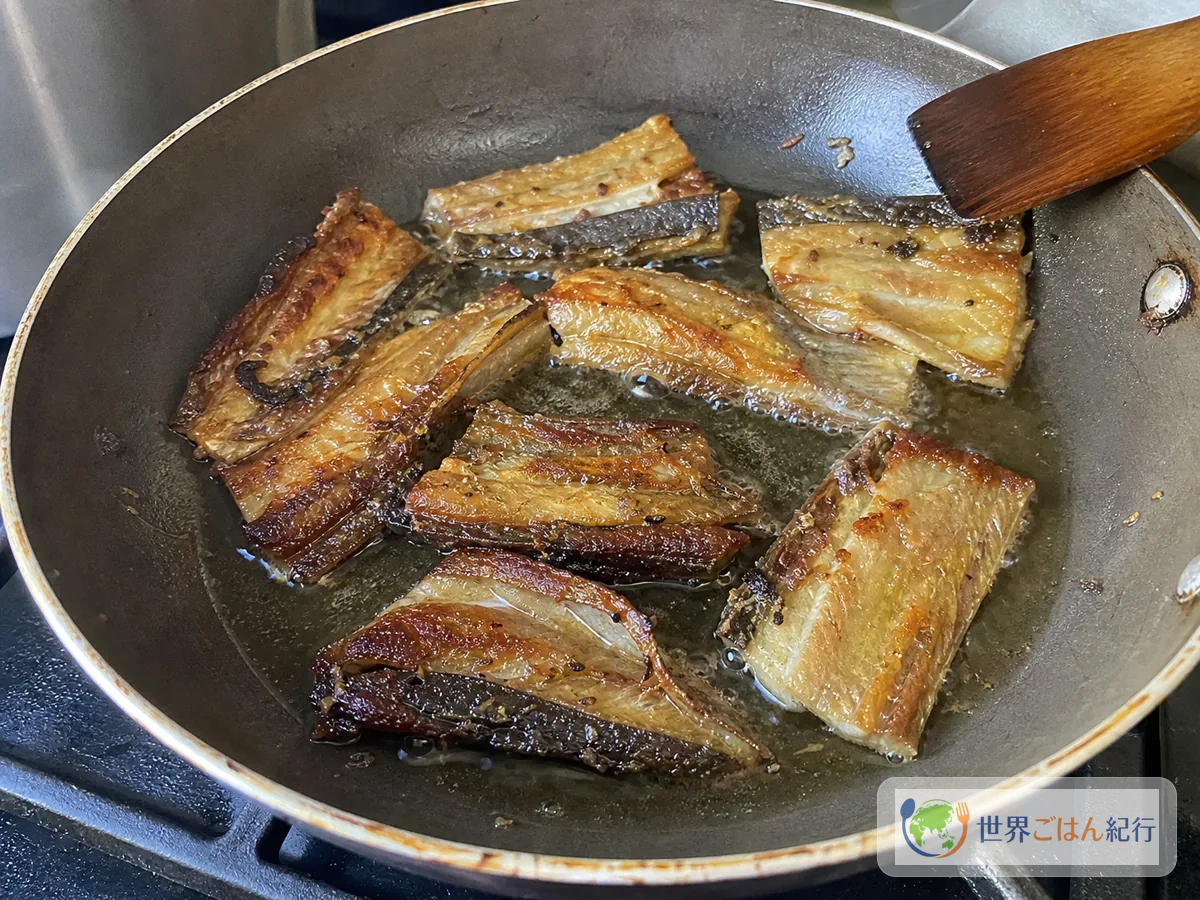
In a summer kitchen, juice seeps across the cutting board where the watermelon was sliced. Beside it, a pan gives off the toasty smell of dried fish. It may seem odd at first, but putting this sweetness and this saltiness on the same plate is the whole idea of Cambodian aluek trei ngeat (also written trei ngeat ovlek; ឪឡឹកត្រីងៀត).
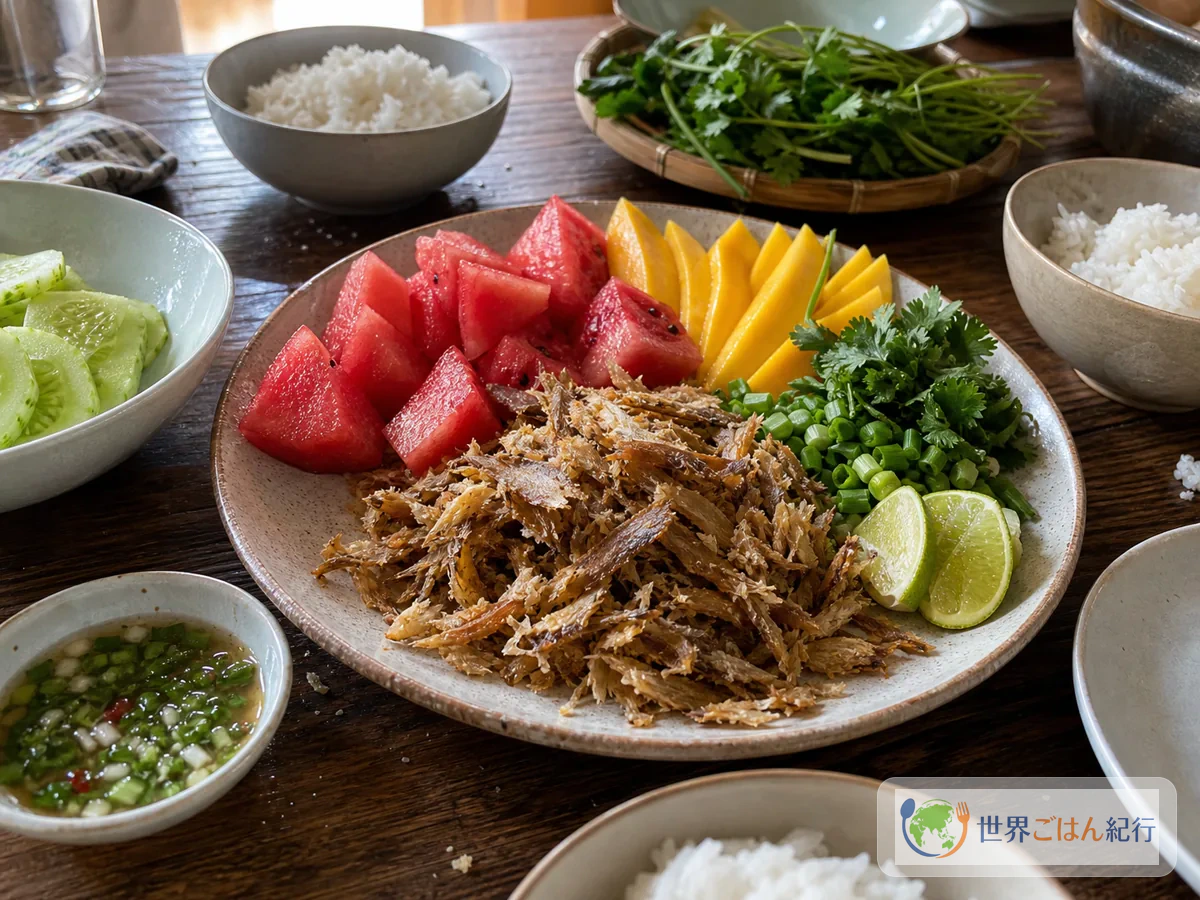
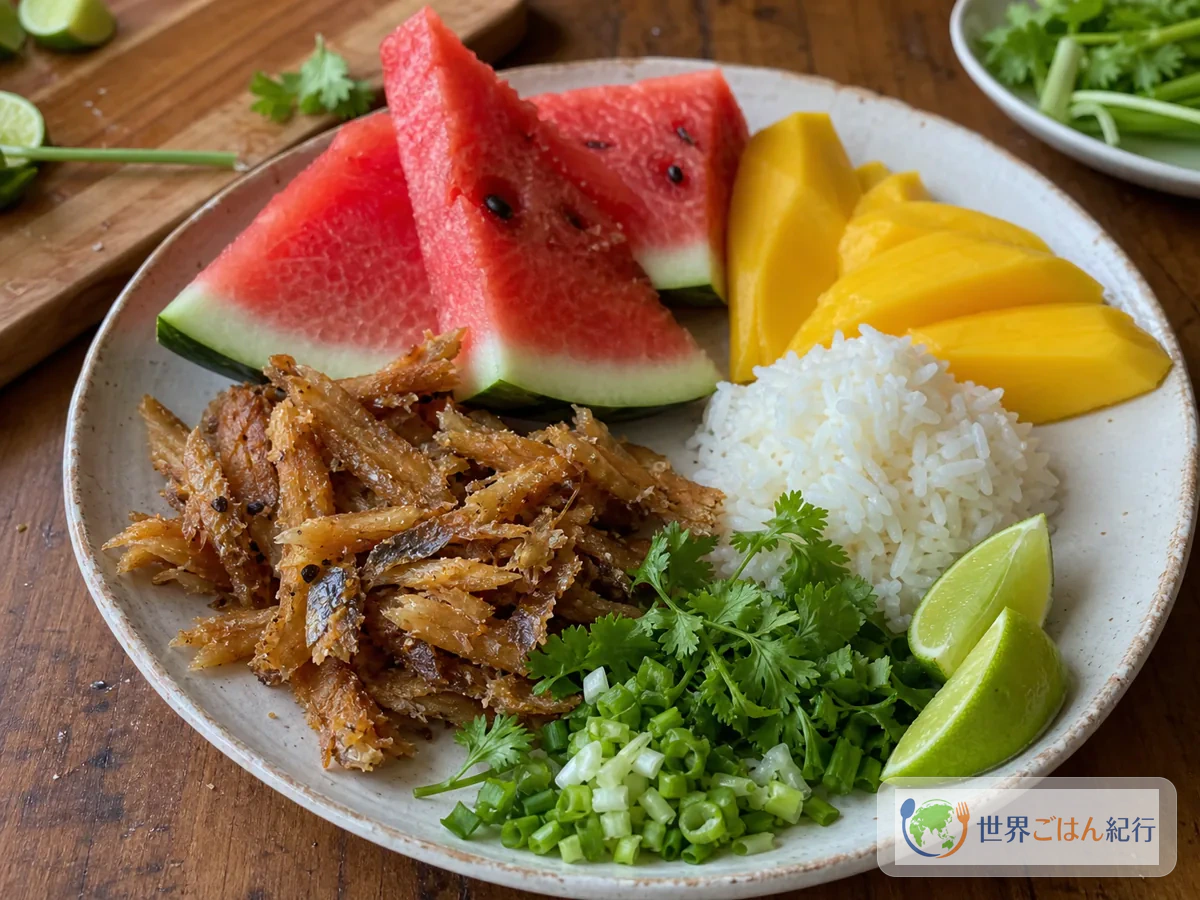
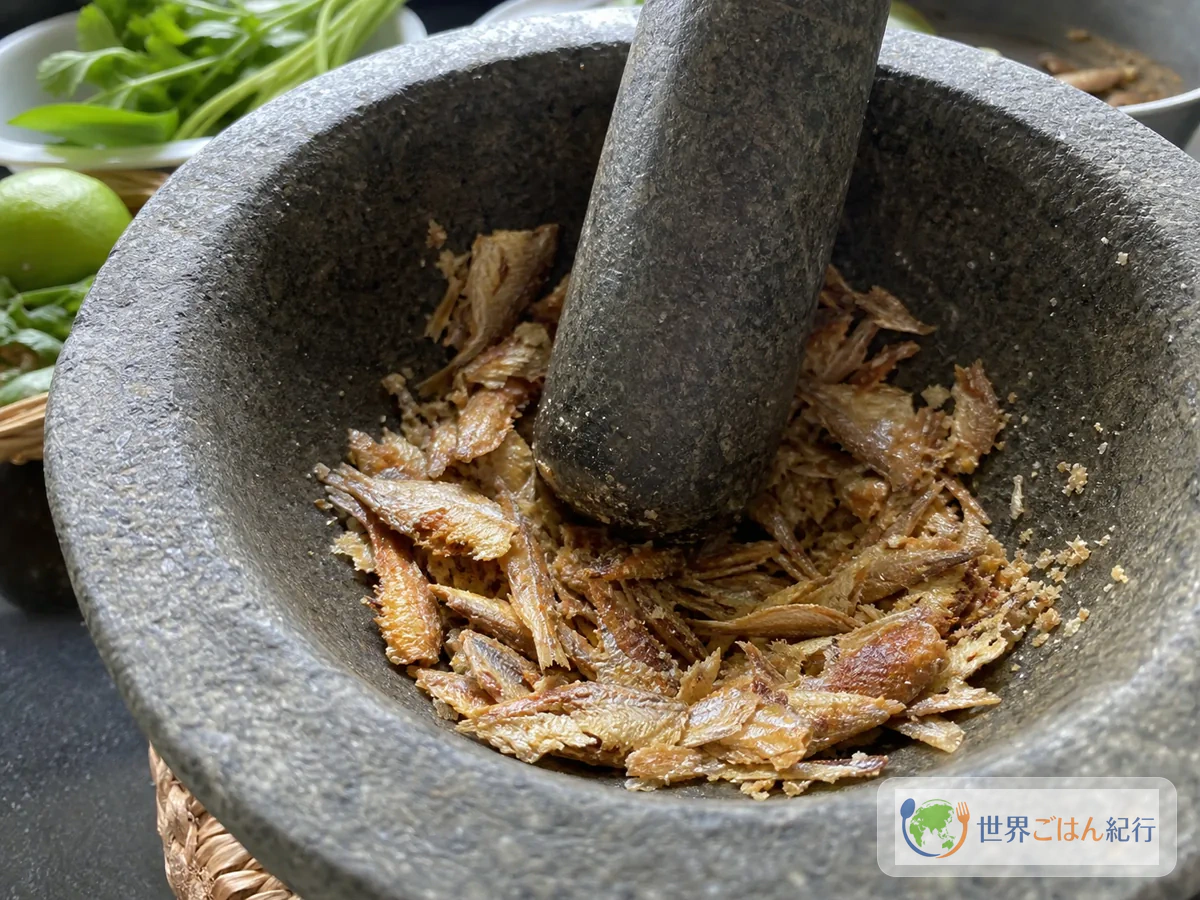
The heart of the dish is salted, sun-dried fish. In Cambodia it is often a freshwater fish such as snakehead, grilled over charcoal or shallow-fried over medium heat, then lightly pounded and flaked. It is paired with watermelon, ripe mango, fresh herbs and lime. Sweet, salty, toasty, juicy: the contrast is what makes the plate.
Salted dried fish, known as trei ngeat, is a preserved food rooted in river life. In Kampong Cham, a provincial town about 120 km north of Phnom Penh, part of the catch from the Mekong is heavily salted and dried in the sun; fishing families eat it with rice or sell it at roadside markets. Around Tonlé Sap lake, the dry season, when the water recedes and fish concentrate, is also the season for processing fish. Preserving fish with salt and sunshine has long been common in a country with so many river fish. It helps to read aluek trei ngeat as a home dish that makes salty dried fish easier to eat by pairing it with fruit.
Outside Cambodia, the cuisine is often known through amok and lok lak. Aluek trei ngeat is more homely: closer to a lunch on a hot day, or a small plate for adding a little salt to rice. This article keeps to the outline given in official-style cookbooks, and adapts it to what is easy to find outside Cambodia: dried cod, salted dried mackerel or horse mackerel, and similar fish.
This article uses "aluek trei ngeat" throughout. It also appears as "Trei Ngeat Ovlek" and "Dried Fish with Watermelon and Mango." In Khmer, "ឪឡឹក" means watermelon and "ត្រីងៀត" means salted dried fish.
The Structure of the Dish: The Fruit Is the Star, Not a Garnish
Aluek trei ngeat uses fruit to cut the saltiness of dried fish. The role is similar to grated daikon served with a dried fish in Japan, but the move is bolder. Watermelon brings water and sweetness, mango brings fragrance and a thick sweet-sour body, and the rice receives the salt.
| Part of the plate | Role | What to protect in a home kitchen |
|---|---|---|
| Salted dried fish | Saltiness, umami, toasty flavor | Brown it well and remove the bones carefully |
| Watermelon | Water and sweetness | Don't chill it too hard; cut into 3 cm cubes that are easy to eat |
| Ripe mango | Fragrance and rounded sweetness | Use ripe mango, not sour green mango |
| Lime and herbs | Cut the heaviness of the fish | Lime goes on last; chop the herbs coarsely |
| Rice | Receives the salt | Jasmine rice, or a slightly firm short-grain rice |
Descriptions from Cambodia list the ingredients very simply: dried fish, watermelon, mango and rice. That is exactly why fish that is too salty ruins the dish. Take a little salt out first, then flake the fish coarsely after cooking. Do those two things carefully and the fruit stops being a side.
Ingredients (serves 4)
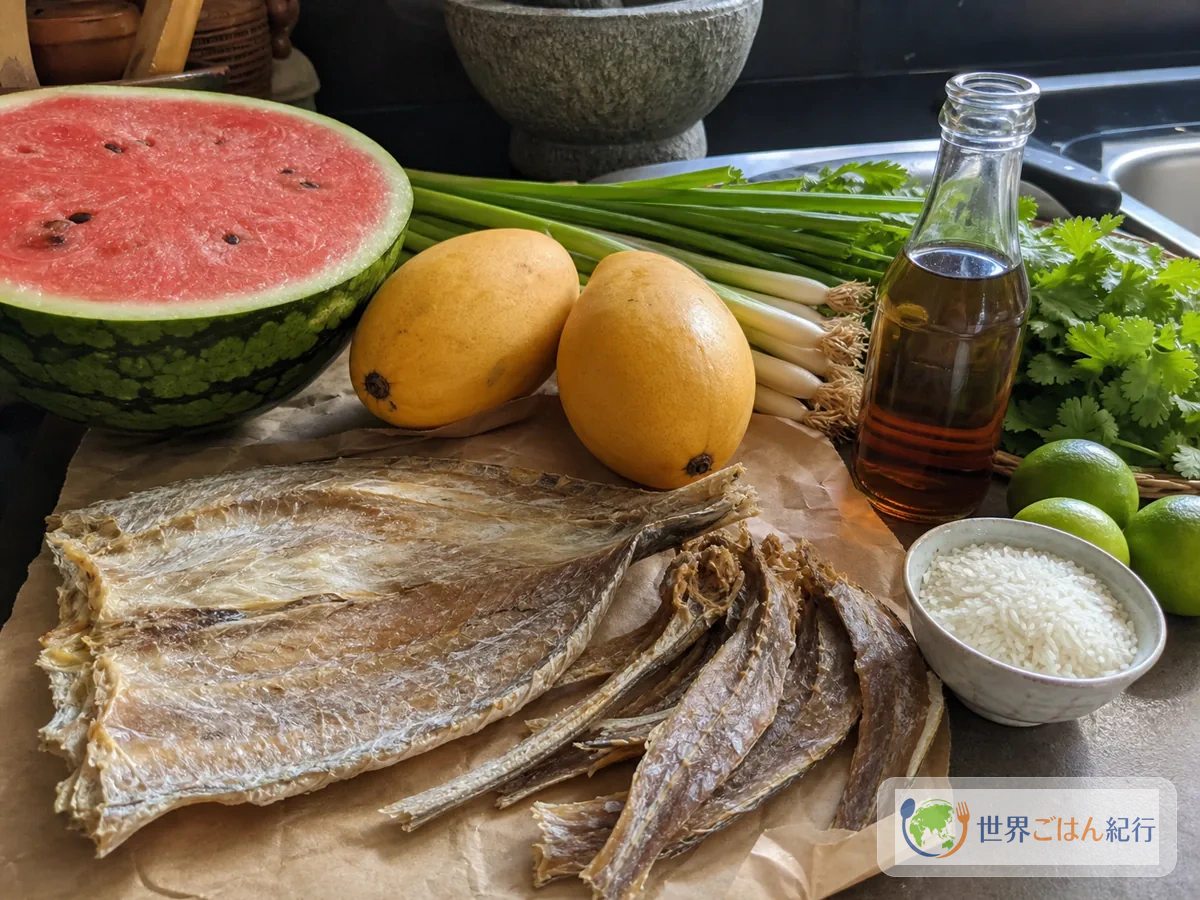
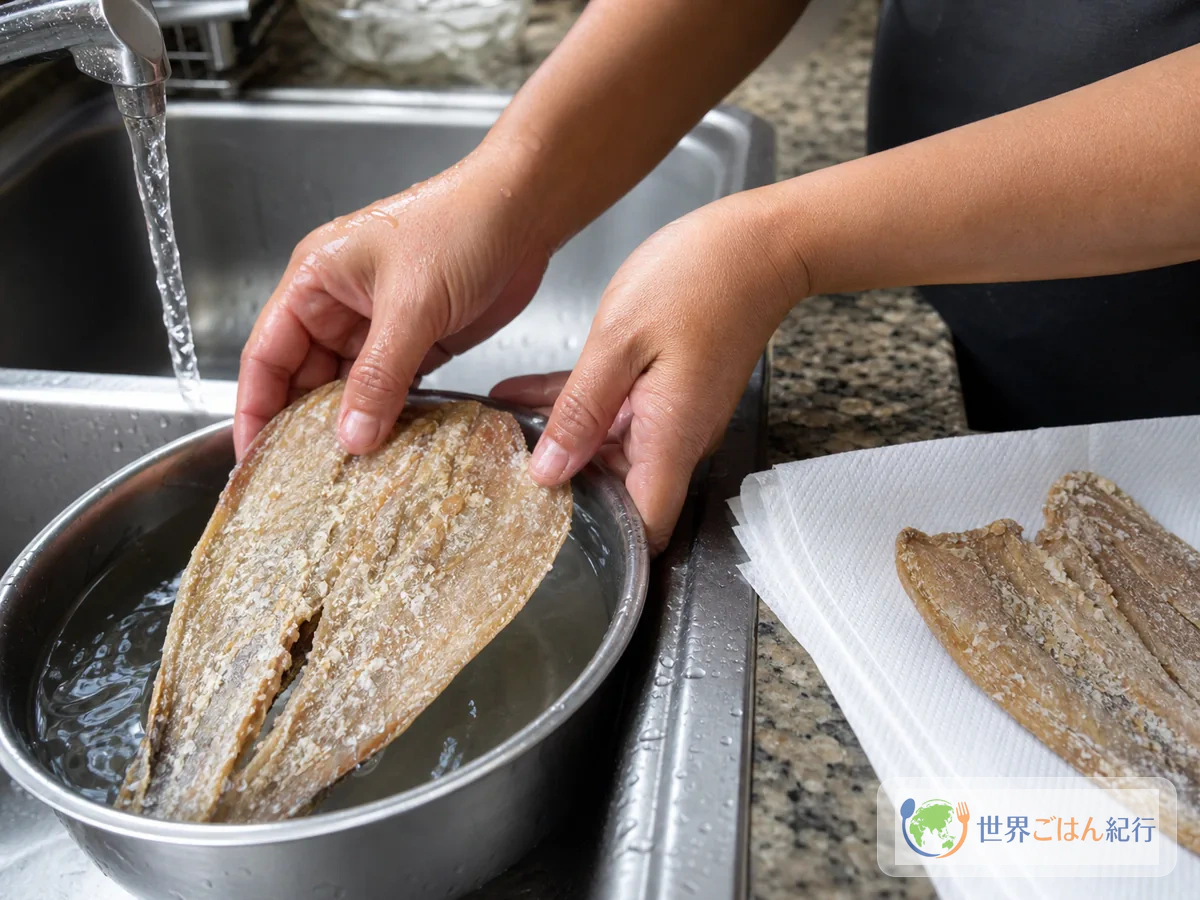
This dish uses fish. If you add fish sauce, check the label for fish allergens as well. The saltiness of dried fish varies a great deal from product to product, so always taste a small piece of the edge before cooking, and soak briefly in water if it is too strong.
Choosing the Ingredients: Pick the Fish in Person
Choose the dried fish itself in person if you can, at a fishmonger, an Asian grocery or the dried-fish section of a well-stocked supermarket, rather than blindly online. Avoid fish with a heavy white bloom of salt, a strong rancid smell, or small fish with too many bones. For a first attempt, dried cod and salt-dried mackerel or horse mackerel are easiest to bone.
Where ordering online is worth considering is not the fish itself but the things that carry over to other Southeast Asian cooking: fish sauce, a mortar for lightly flaking the fish, and fragrant rice. A mortar is also useful for som tam and for Khmer-style dips.
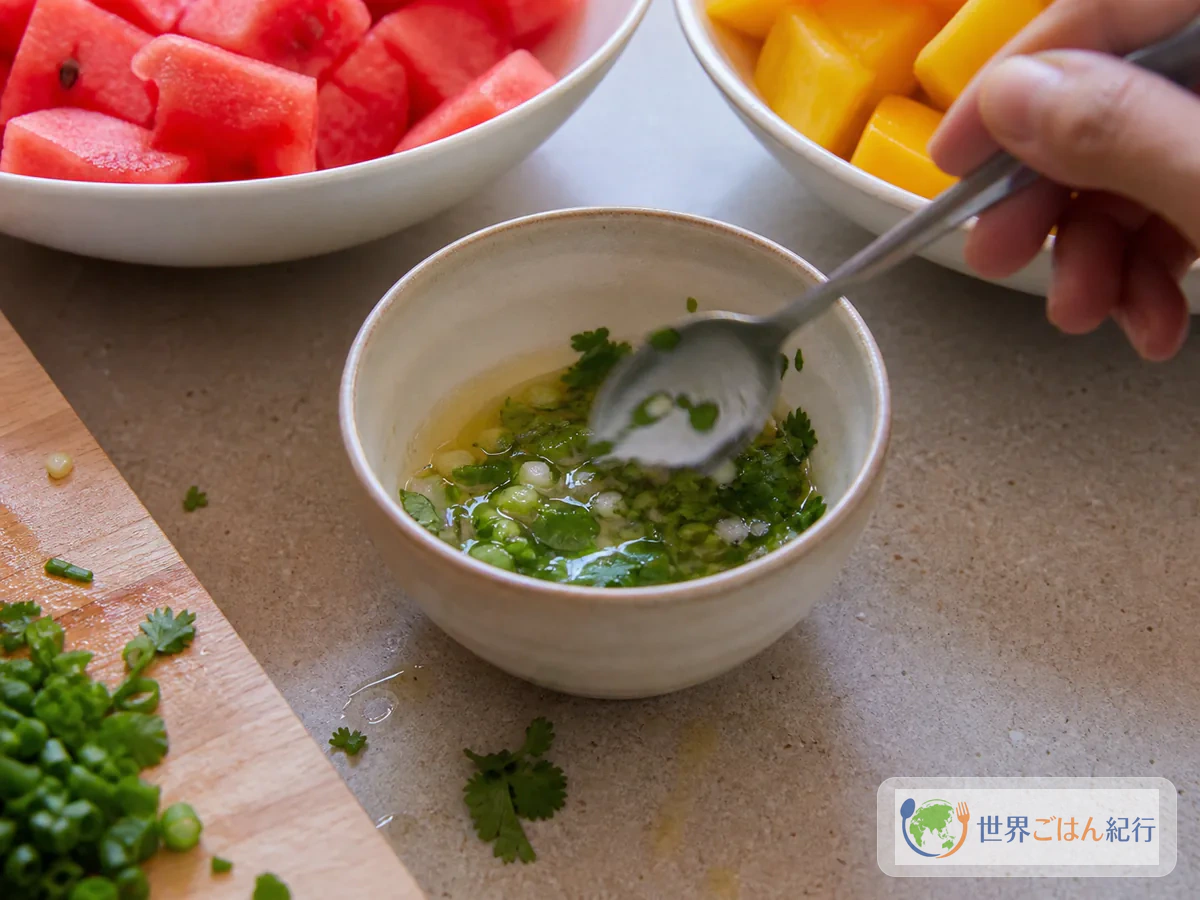
Only when the fish is not salty enough, add a little fish sauce to the lime dressing, which restores the outline of Southeast Asian cooking. If the fish is already salty enough, do not force fish sauce in.
The mortar is not used to make powder; it is used to break the cooked fish into rough pieces that are easy to eat. Pound too hard and the fish turns powdery and feels gritty against the fruit.
Jasmine rice is not essential. Still, when you eat dried fish and fruit together, a lightly fragrant rice keeps the plate from feeling heavy. It also works for Hainanese chicken rice and lok lak.
Instructions
If you are serving rice, cook it before you start on the fish. For jasmine rice, don't over-wash it, and use about 360 ml water for 2 rice-cooker cups (360 ml) of rice for a light result.
Cambodian descriptions also mention grilling over low charcoal heat for 7 to 10 minutes. On a stovetop grill or broiler, aim for medium-low heat, about 3 minutes on one side and 2 to 3 minutes on the other. The fat drips off and the fish turns toasty, but it burns easily, so don't take your eyes off it.
Substitutions in a Home Kitchen
The hardest thing to substitute is not the species of fish but the state: salt-cured, dry, and toasty once cooked. Fresh, watery fish has little presence once combined with fruit.
| Closer to the original | Easy-to-find substitute | Role to protect |
|---|---|---|
| Salt-dried snakehead | Dried cod, salt-dried horse mackerel or mackerel | Saltiness and umami. Use dried fish, not fresh |
| Ripe watermelon | Small round watermelon, cut watermelon | Water and sweetness. Don't slice thin |
| Ripe mango | Frozen mango, a little yellow peach | Fragrance and thick texture. Green mango leads to a different dish |
| Herbs | Cilantro, scallions | Cut the fishiness. Don't chop too fine |
| Fragrant rice | Jasmine rice, slightly firm short-grain rice | Receives the salt. Don't cook the rice too soft |
Dried salmon strips can work, but they bring a strong smoky smell. For a first try, dried cod or a dried white fish is less likely to compete with the sweetness of the watermelon and mango. Salted mackerel is oily, so use a little more lime.
Common Mistakes
| Problem | Main cause | Fix |
|---|---|---|
| Too salty | Cooked without desalting | Soak in water for 5 minutes next time. Today, add more rice and watermelon |
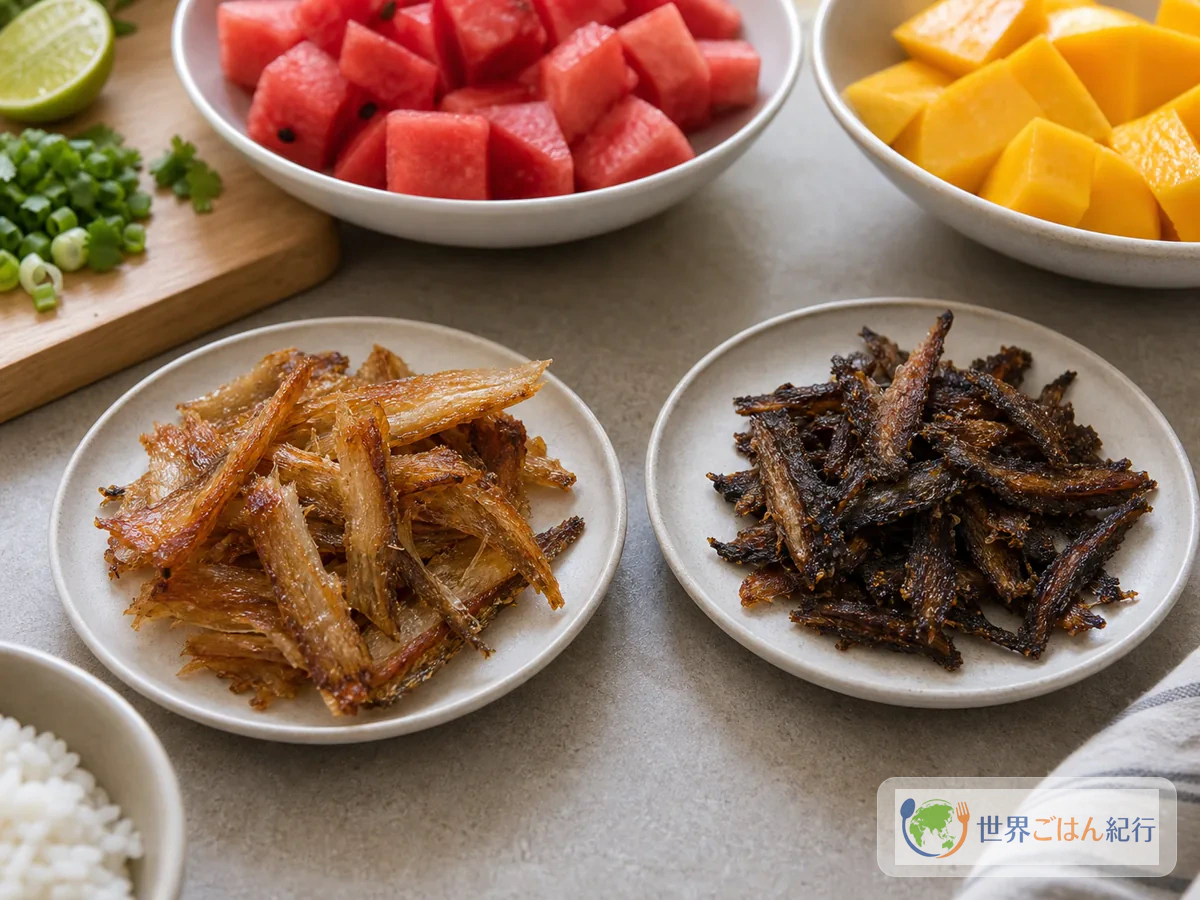
| Fish is hard | Cooked too long, or fish is thick | Lower to medium-low and let it rest 2 minutes after cooking before flaking |
| Bitter | Browned too dark | Stop at golden. Cut off black edges |
| Watery | Fruit sliced thin, or everything tossed together first | Cut fruit into 3 cm cubes, serve dressing on the side |
| Fishy | Fish with rancid fat, or fridge smell | Change the fish. Don't try to cover it with lime and herbs |
The fewer the ingredients, the fewer the ways out of a mistake. Look at saltiness, browning and fruit water separately, and even the same ingredients become much easier to rescue.
Storage and Make-Ahead

If you prepare ahead, always keep the fish, fruit, rice and lime dressing apart. Cooked fish keeps about 2 days in the refrigerator, the watermelon and mango from the day to the next day, and the dressing for the day it is made. Stored together, the watermelon's water softens the fish.
To reheat, warm only the fish for 1 minute in a skillet over medium-low heat, or 2 minutes in a toaster oven. A microwave tends to bring out a stronger fish smell and softens the texture. Serve the fruit cold against the warm rice and re-crisped fish, which keeps a pleasant temperature contrast.
If packing it in a lunch box, don't put fruit and fish in the same container. Water seeps out, and because it is seafood it should not sit at room temperature. Use an ice pack and combine just before eating.
How to Eat It, and Building a Meal
Rather than eating just the fish with chopsticks, put a little rice, dried fish and watermelon on a spoon and the dish comes into focus. The first bite is fish and rice, the second adds watermelon, the third brings mango and lime. Salt first, then fruit loosening it: that order is what makes the dish itself.
For other Cambodian dishes alongside, light stir-fried greens or a soup suit it better than amok. If you serve a meat dish too, lok lak, tightened by sourness and pepper, goes well. To widen into a Southeast Asian table, after enjoying the fish-and-watermelon pairing you can move on to som tam, where the sweet-sour link carries over and fish sauce and herbs get reused.
Don't add heat across the whole plate; adjust it with the small bowl of lime dressing. At a table with children or people who dislike spice, leave out the chile and let the lime alone cut the heaviness of the fish.
More Dishes to Cook Alongside
- Bopis - uses ingredients and aromas from the same region.
Frequently Asked Questions
Can I make it with fresh fish?
I don't recommend it. The interest of aluek trei ngeat lies in the contrast between the umami of salt-cured dried fish and the water of the fruit. Just cooking fresh fish gives you ordinary grilled fish next to fruit, with no salty core.
What do I do if the dried fish is too salty?
Before cooking, soak it in water for 5 minutes, then blot it dry and cook. If you notice only after cooking, leave the fish sauce out of the lime dressing and eat it with more watermelon and rice. Rinsing again takes away the toasty flavor, so after cooking, adjust by how you combine the bites rather than by diluting.
Can I make it without mango?
Yes. Even the short official-style descriptions center on dried fish and watermelon. Without mango, use a little more watermelon and add 1 more tsp of lime juice to keep it from being monotonous. A small amount of yellow peach is another option, but the aroma is quite different.
I don't like cilantro. Can I substitute?
Scallions alone work. A little mitsuba (Japanese parsley) or flat-leaf parsley makes it more familiar to some tables, but the Khmer aroma weakens. A little mint freshens it, but too much moves it toward a Thai-style salad.
Which is closer to the original, a grill or a skillet?
For a toasty flavor closer to charcoal, use a grill; for fewer failures, use a skillet. A grill smells better but burns more easily. For a first try, learn the medium-heat browning color in a skillet and move to the grill next time.
Sources
- Cambodianess, "Trei Ngeat Ovlek / Dried Fish with Watermelon and Mango"
- Globe Aware, "30 Cambodian foods every visitor needs to try"
- FoodBuzz Cambodia, "Must Try Khmer Cuisine During the 2023 SEA Games"
- Wikipedia, "Aluek trei ngeat"
- Encircle Photos, "Circle of Dried, Salted Fish called Trei Ngeat at Outdoor Market in Kampong Cham, Cambodia" (accessed 22 October 2026)
- Royal Embassy of Cambodia in London, "The Taste of Angkor Has Been Distinguished as the Best Asian Cookbook 2021"