Cha Yen: Strong Tea, Melting Ice and a Ribbon of Milk
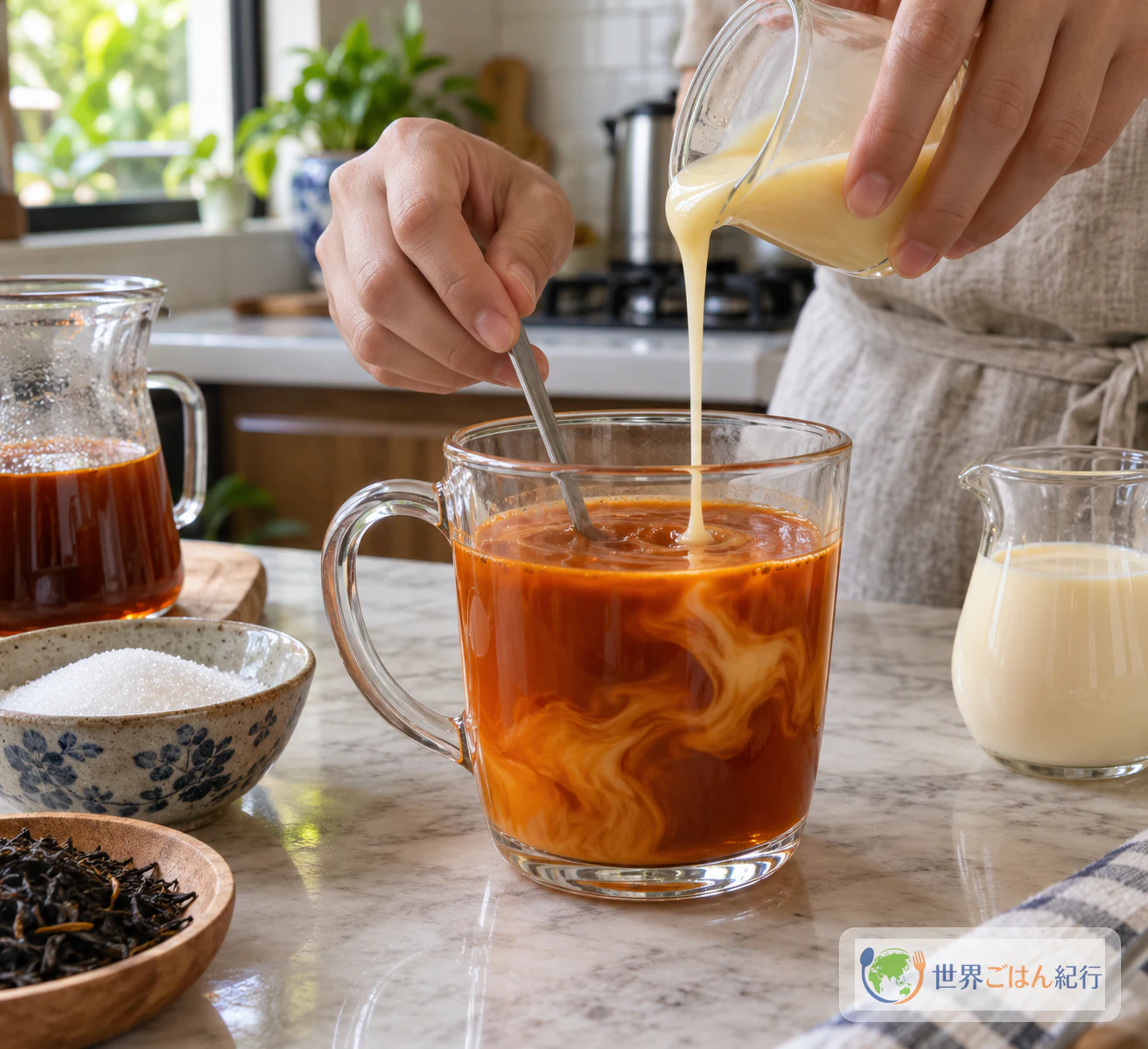
Brew the tea strong but brief, sweeten it while it is still hot, and expect the ice and milk to soften it. Keep the two milks separate: one sweetens, the other finishes.
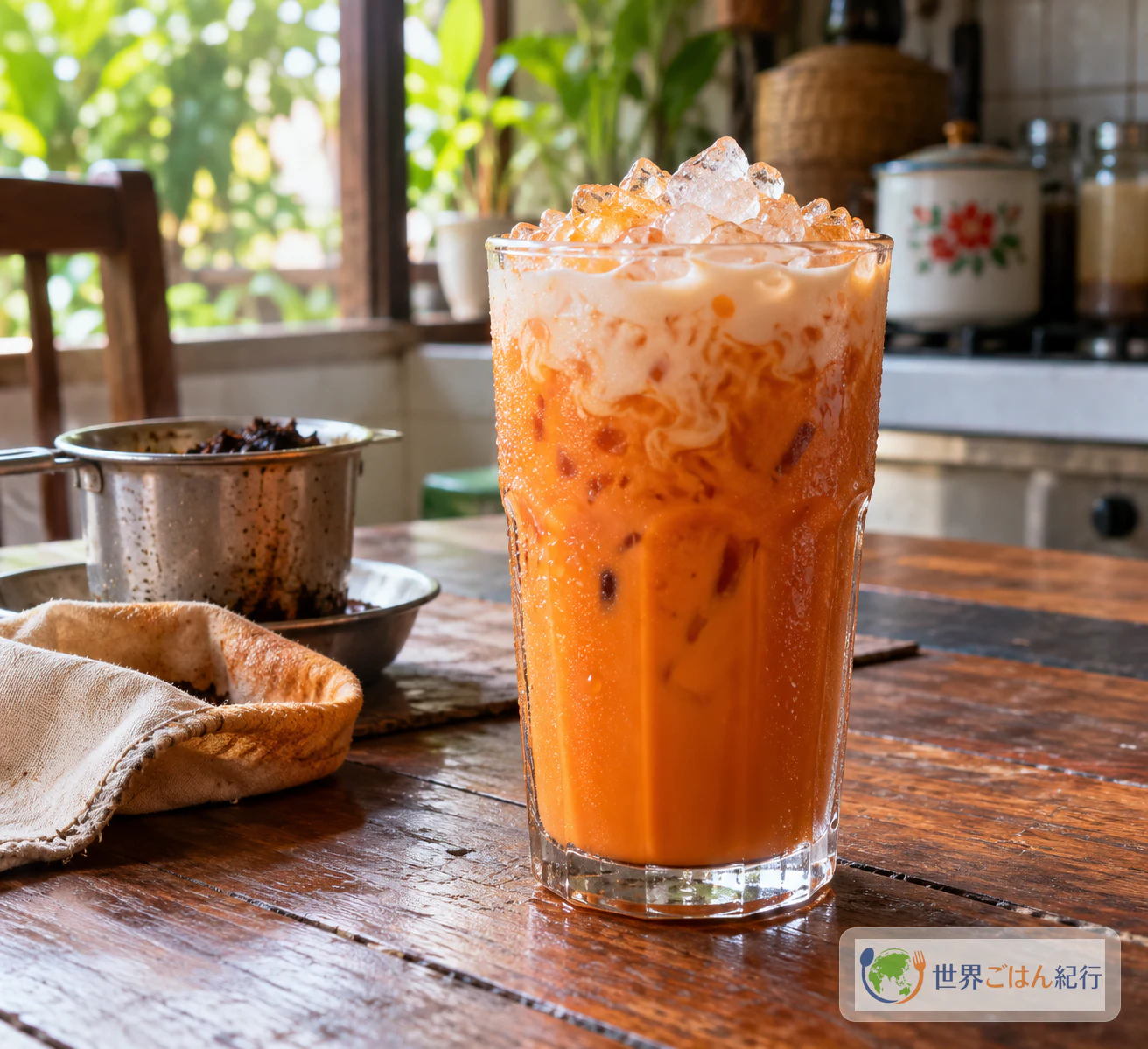
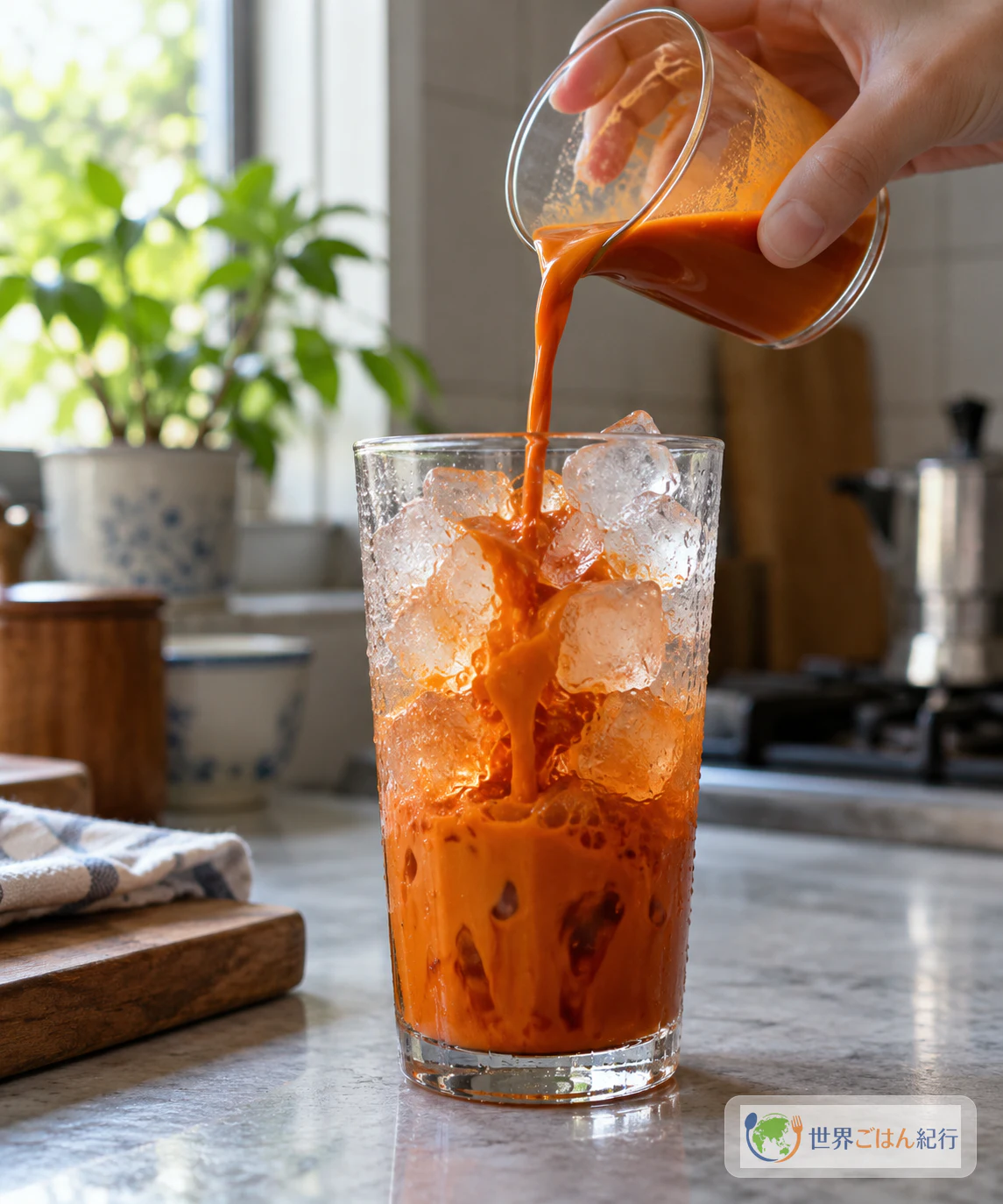
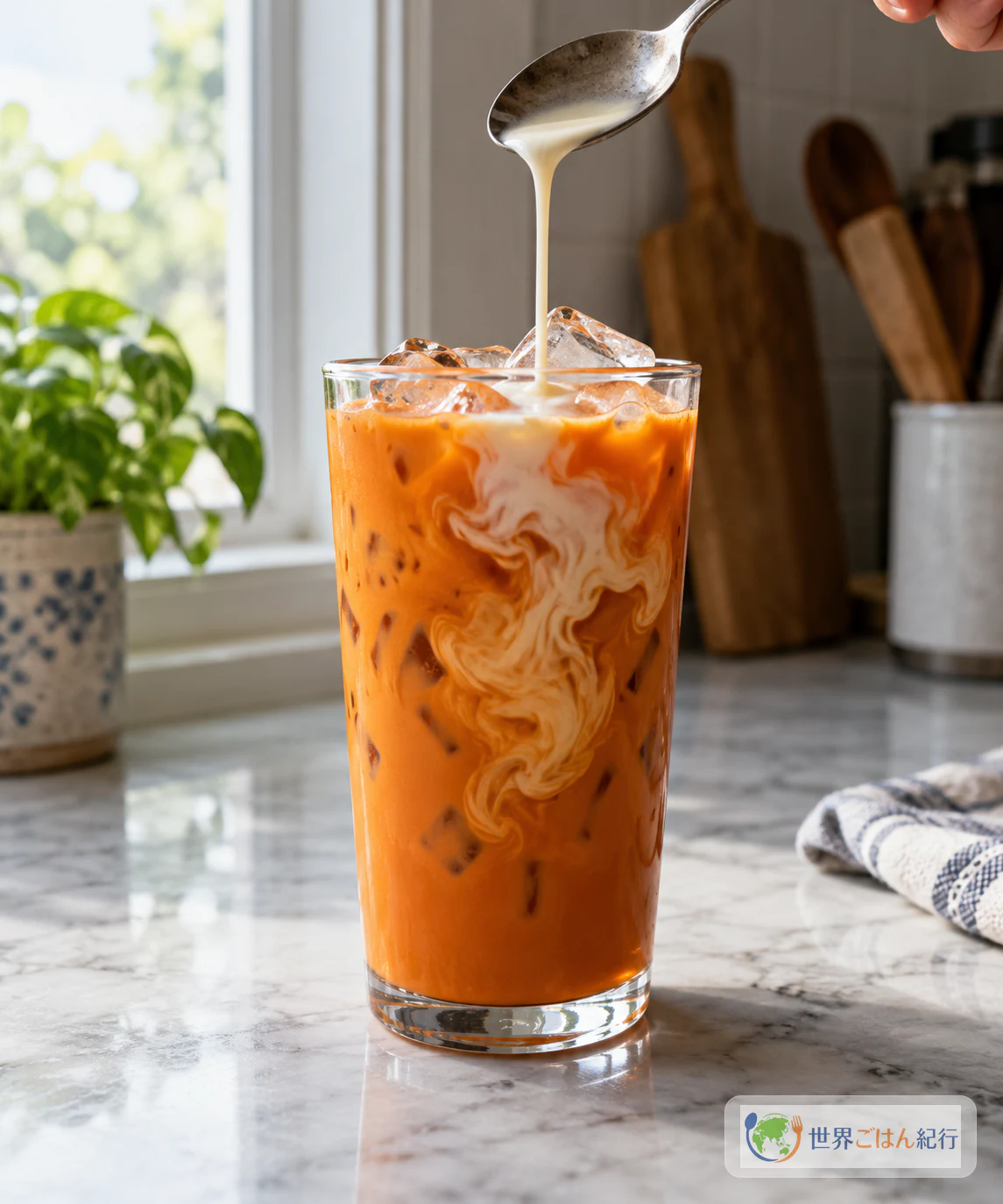
Dark tea, freshly strained, is poured over a glass of ice. It runs down between the cubes and spreads into a deep orange. Last, a thin stream of white evaporated milk falls onto the surface and curls slowly into the tea before anyone stirs it.
In Thailand this drink is called ชาเย็น (cha yen), which means "cold tea." It is strongly brewed tea, sweetened and served over ice with milk. In English you will usually see it as Thai iced tea or Thai milk tea. Shops, households and tea mixes all make it a little differently, so there is no single national recipe. What follows is one reproducible glass: the single-serving recipe published by Cooking with Nart, with notes on how to judge the tea, the sweetness and the milk at home.
ชาเย็น is romanized as cha yen ("cha" is tea, "yen" is cold). You may also see the spelling chaa yen. Iced black tea with no milk, cha dam yen, is a different drink, so don't confuse the two when you order or search.
What Cha Yen Is: Cold Milk Tea in Thailand
Cha yen is built from four parts: strong tea, sweetener, milk and ice. Cooking with Nart introduces it as a drink sold on the streets of Thailand and mentions it being handed over in a bag with a straw. That is the author's description, and it shouldn't be read as how every vendor serves it. The Temple of Thai recipe by Kasma Loha-unchit likewise describes it as a drink you find at small eateries and street stalls.
Both recipes share the same logic. The tea is brewed strong because ice and milk will dilute it. Part of the sweetness comes from sugar, sweetened condensed milk adds more sweetness and body, and evaporated milk goes on at the end. The method in this article follows that order.
The Orange Color and Why Tea Mixes Differ
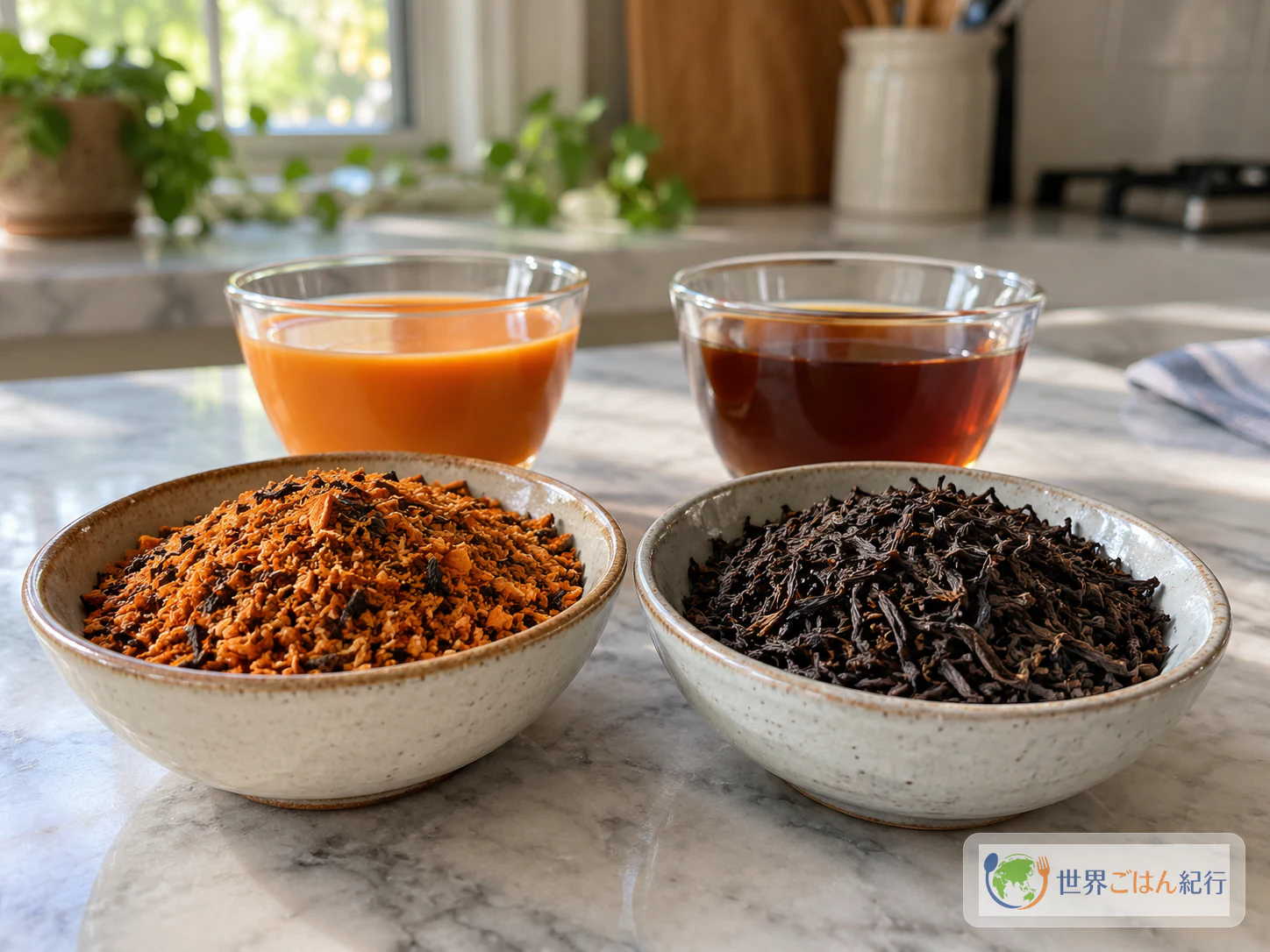
The vivid orange of cha yen isn't always the natural color of tea leaves. Temple of Thai explains that Thai tea mixes are based on black tea, sometimes with an anise- or licorice-like aroma, and that the bright orange may come from food coloring. Cooking with Nart also notes that some Thai tea mixes contain coloring and flavoring.
The tea itself varies too. An article in The Nation Thailand notes that Assam, Ceylon and blends are all used today. Products differ in leaf, flavoring and color, so read the ingredients on the package you buy and follow its brewing guidance where it gives some.
| What you use | What to expect | How to decide |
|---|---|---|
| Thai tea mix | The familiar aroma and, depending on the product, the orange color | Best for a first try. Check the label for flavorings and colorings |
| Plain, unflavored black tea | A brown milk tea with a different aroma | A workable substitute, but not the same drink in color or aroma |
| Black tea with a little vanilla | Closer in aroma for some cooks | ThaiCookbook.tv suggests this as a substitute. Treat it as its own variation, not an equivalent |
Ingredients: One Glass with Thai Tea Mix
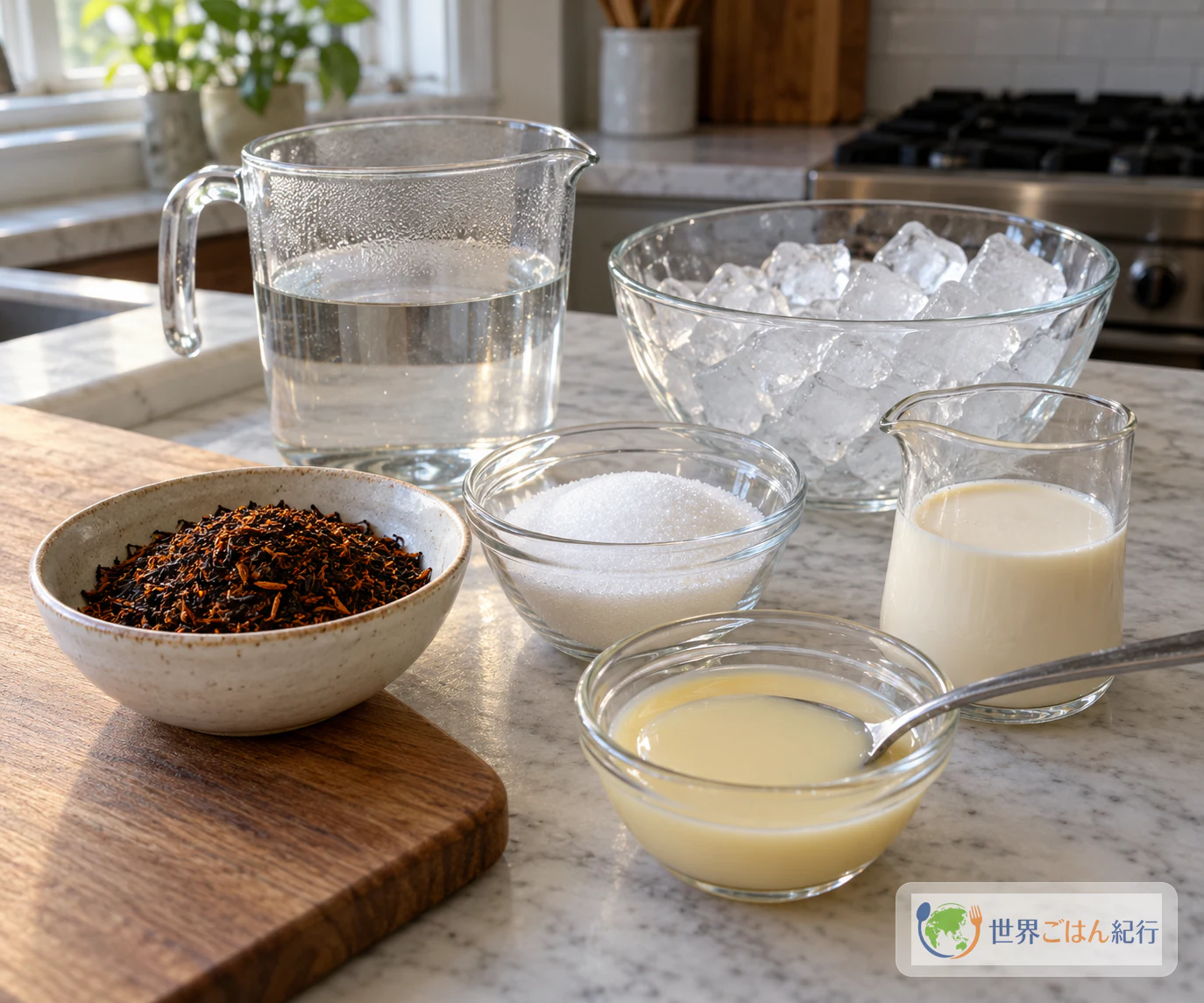
These amounts are for one glass, in US units. A US cup of water is about 240 ml. Tea strength and sweetness will shift with your tea mix and with how much ice melts.
Equipment
| Item | Notes |
|---|---|
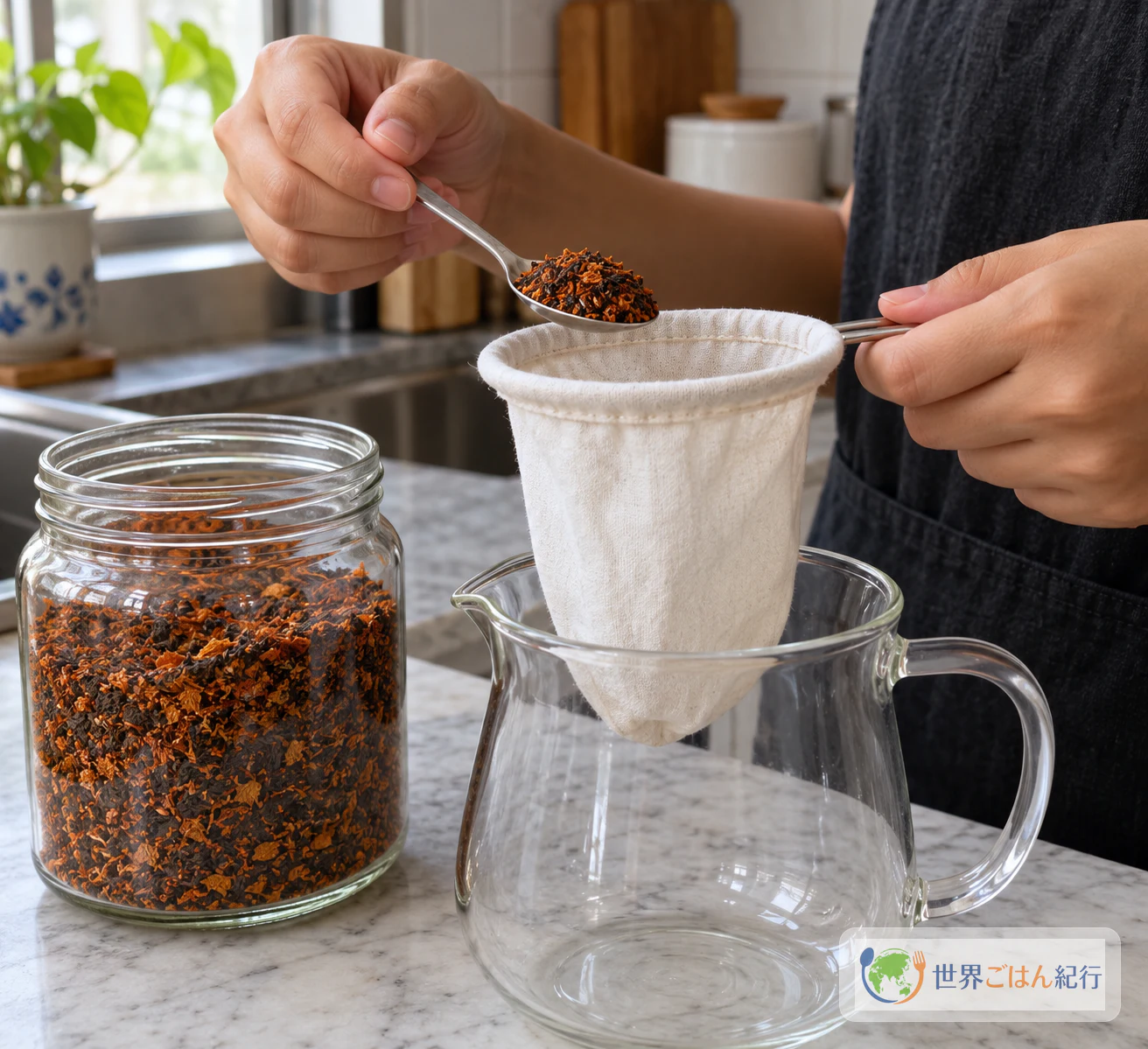
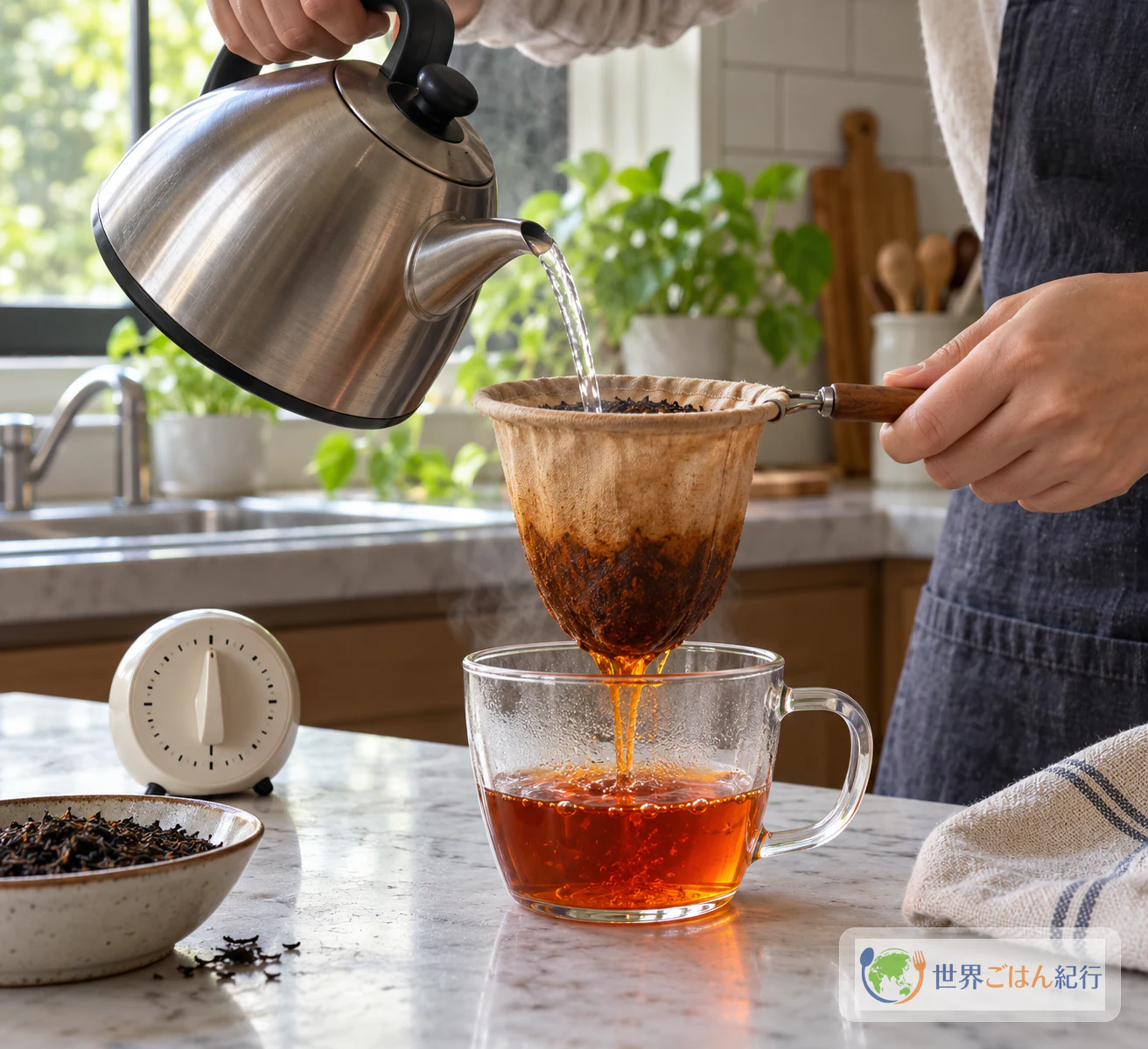
| Cloth tea filter or fine-mesh strainer | The traditional cloth sock-style filter is not essential. A fine strainer works, and Temple of Thai also mentions a coffee filter |
| Heat-safe cup or jug | For steeping and stirring in the sweeteners |
| Tall glass | For the ice and the finished drink |
This drink contains milk products and tea. Check the labels on the tea mix and both milks for allergens and shared-facility statements. Tea contains caffeine, and the amount depends on the product, how much you use and how you brew it, so no figure is given here.
Method: Brew Briefly, Then Sweeten and Pour
The steep is short on purpose. If the tea comes out bitter, don't steep longer next time. Use a little less tea instead.
Too Weak, Too Bitter, Too Sweet: Fixing the Glass
| Condition | Likely cause | What to do |
|---|---|---|
| Weak or watery | Too little tea for your product, or too much ice | Don't steep past the limit. Next time, add a little more tea. For a glass already poured, use less ice or a smaller glass |
| Bitter or astringent | Steeped too long, or a finely ground mix that brews fast | End the steep sooner. Next time, use a little less tea and follow the product's timing if given |
| Too sweet | Sugar plus condensed milk is more than you like | Cut the sugar first. That lowers sweetness only. Cutting the condensed milk also thins the milky body |
| Not sweet enough after the ice melts | The tea was sweetened to drinking strength, not concentrate strength | Next time, make the hot tea a little sweeter in step 4 |
| Sweetener at the bottom | Added after the tea cooled | Dissolve sugar and condensed milk while the tea is still hot |
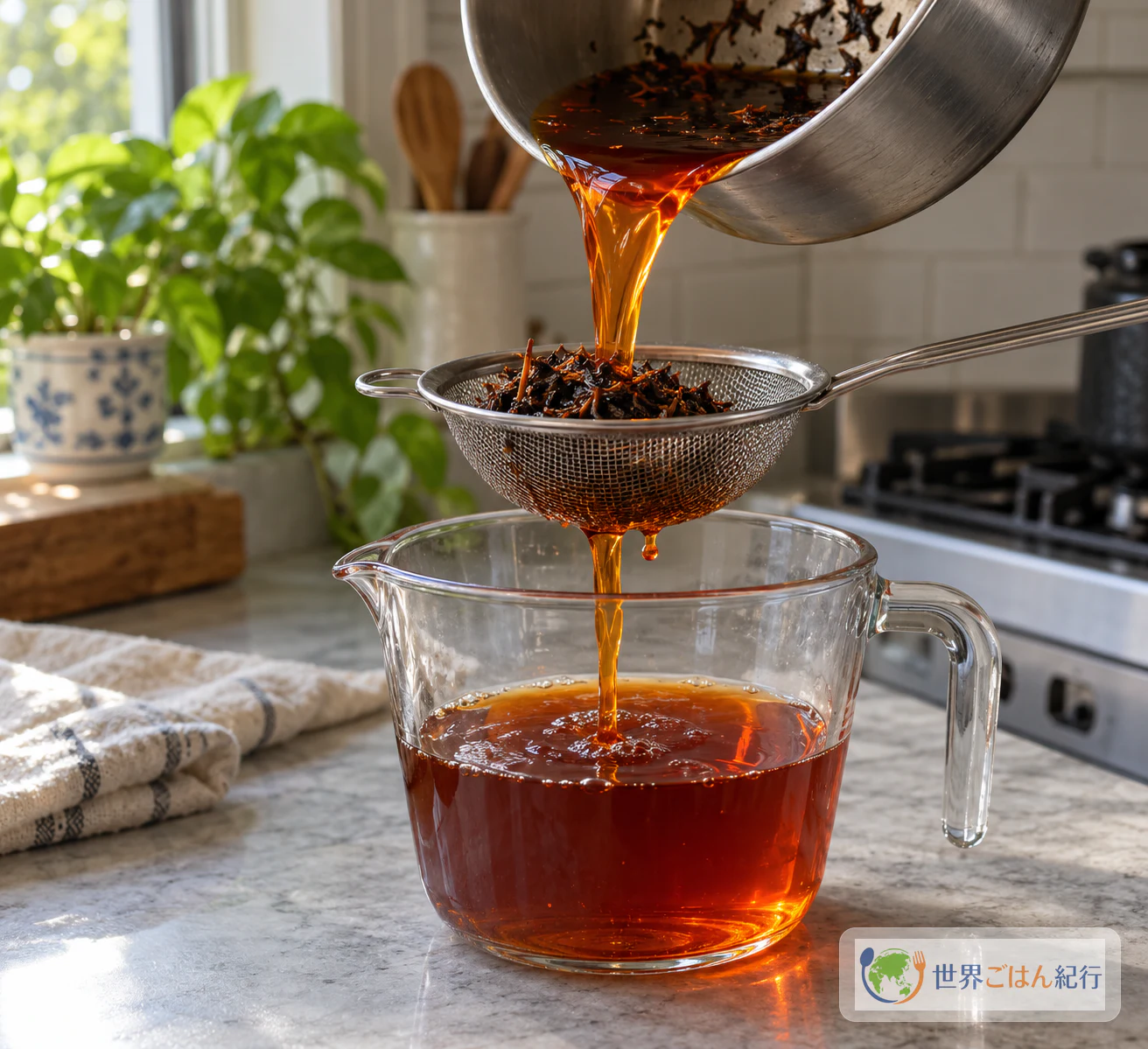
| Gritty or cloudy | Fine tea passed through the strainer | Use a cloth filter or a finer strainer, and don't squeeze the leaves |
Variations Worth Trying
Every part of the glass depends on the others. Change one element at a time so you can tell what made the difference.
- Thai tea mix versus plain black tea. Thai tea mix gives the familiar aroma and, depending on the product, the orange color. Plain black tea is easier to find but makes a brown drink with a different aroma. ThaiCookbook.tv suggests black tea with a little vanilla when no mix is available. Treat that as its own variation rather than an equivalent.
- Less ice, smaller glass. Keep the sweetener the same and use less ice for a stronger, more concentrated glass.
- Two ways to cut sweetness. Reducing only the sugar lowers sweetness and leaves the milky richness. Reducing the condensed milk lowers both.
- Stirred versus layered. Stir all the evaporated milk in for an even drink, or keep part for the top to show white swirls over the orange.
- Plant-based milk. If you avoid dairy, a plant milk can make a separate variation. It won't match the thickness or sweetness of sweetened condensed milk, so expect a different drink. Check each product's allergen and shared-facility labeling.
How Sweetness and Steeping Vary from Recipe to Recipe
Steeping time and sweetness change a great deal between recipes. That is why this article follows one recipe from start to finish rather than mixing several.
| Recipe | Scale | Steep | Note |
|---|---|---|---|
| Cooking with Nart (used here) | One glass | 2–3 minutes, no more than 5 | Short, hot steep with spoon-measured sweeteners |
| ThaiCookbook.tv | Pitcher batch | About 5 minutes | Strained through a cloth bag, cooled and refrigerated, then poured over crushed ice with evaporated milk on top. ThaiCookbook.tv notes that shops may make it one glass at a time or in pitchers |
| Rin's Cookbook, republished on Kapook Cooking | About two glasses | About 15 minutes in a cloth bag | A Thai-language recipe with much more sugar. The tea is cooled before it goes over ice and is topped with evaporated milk |
These differences come from different teas, amounts and batch sizes. A long steep from one recipe applied to another recipe's short-steep amounts will not give you a better glass, so keep to the 2–3 minutes here.
Cha Yen as a Thai Drink: Where It Fits and an Account of Its History
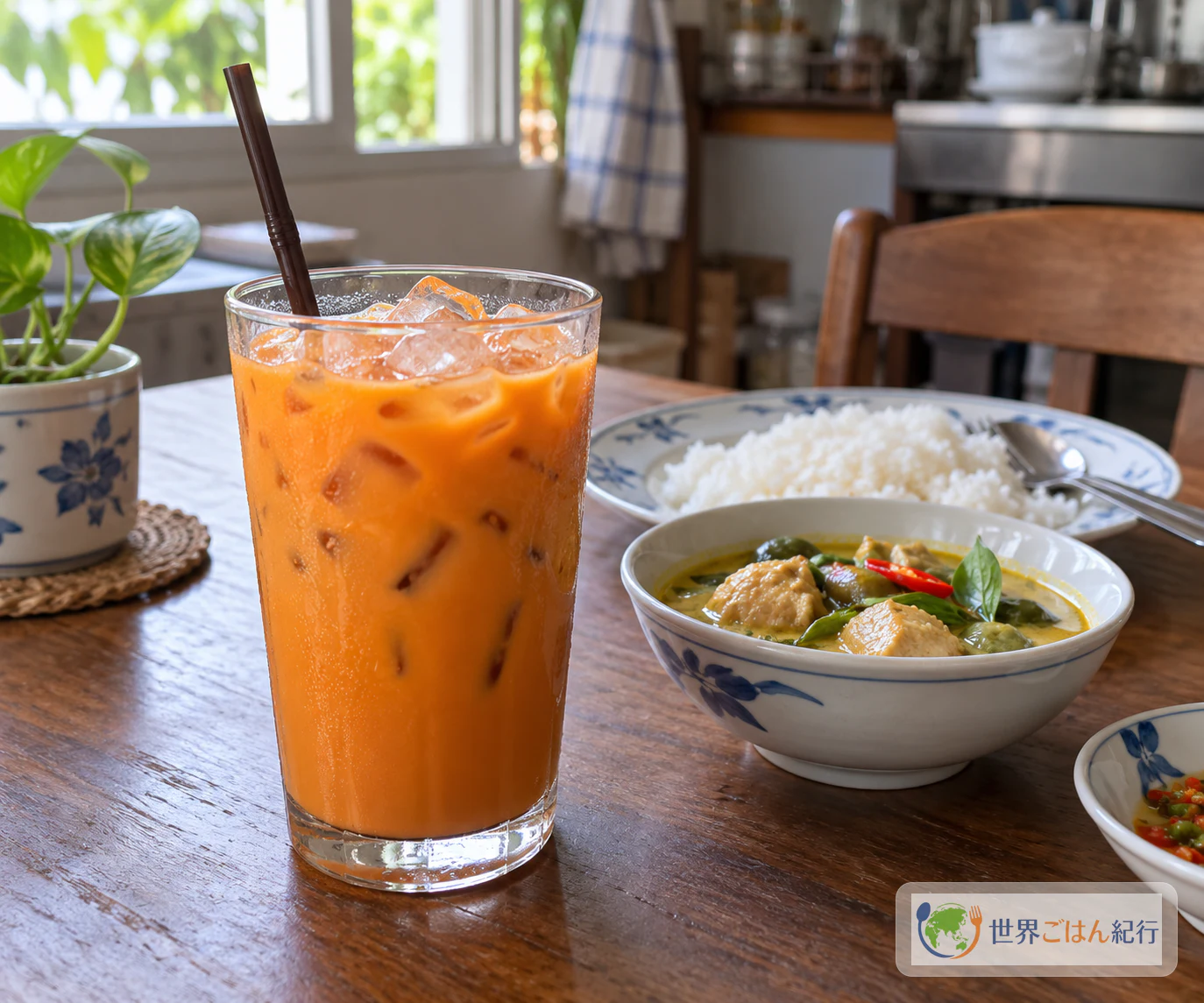
Cooking with Nart describes cha yen as a street drink in Thailand, and Temple of Thai describes it at small eateries and stalls. Today, the tea in the glass ranges from Assam to Ceylon to blends, as The Nation Thailand notes, and households and vendors set their own sweetness.
The Nation Thailand has also published an account of how tea drinking developed in Thailand and how milk, sugar and ice came into it. That article treats ChaTraMue's founding in 1945 and its sale of milk tea as a milestone for modern Thai tea. This is the newspaper's account. It is a useful introduction, but not a settled, sole origin for the drink or the brand.
At home, cha yen works well as a sweet, cold glass next to a meal, as in the photo above. Pairing it with particular dishes is a matter of taste rather than fixed tradition.
Storage
Make cha yen to drink right away if you can. If you brew extra tea, keep it in a clean, sealed container in the refrigerator and use it soon. Once milk has been added, don't leave the drink out at room temperature.
The Cooking with Nart author gives 2–3 days as a personal guide for storing it in portions. That is the author's own guide, not a food-safety shelf life. The recipes consulted don't agree on storage, and home conditions vary, so no single number of days is given here.
Frequently Asked Questions
Is the orange color from the tea leaves?
Not necessarily. It depends on the tea blend, and Temple of Thai notes the bright orange may come from food coloring. Check the ingredients on your tea mix.
What can I use if I can't find Thai tea mix?
Plain, unflavored black tea brewed strong works as a substitute, but the aroma and color won't be the same. ThaiCookbook.tv suggests adding a little vanilla to black tea. Think of either as its own variation.
Will a longer steep make it stronger?
It may just make it more bitter. The recipe here steeps 2–3 minutes and says not to go past 5. To make it stronger, adjust the amount of tea first, and follow your product's instructions if it gives a time.
What's the difference between sweetened condensed milk and evaporated milk?
Sweetened condensed milk contains sugar and is stirred into the hot tea for sweetness and body. Evaporated milk is unsweetened. Part is stirred in and the rest is drizzled on top to finish. They aren't interchangeable, so check the label before you pour.
How is cha yen different from cha dam yen?
Cha yen is cold tea with milk. Cha dam yen is cold black tea without milk, a separate drink.
How long does it keep?
The sources don't agree, and home conditions vary, so there is no one number to give. Refrigerate any brewed tea and use it soon, and drink the glass soon once milk is in.
For more dishes from the same country, see recipes from Thailand.
Sources
- Cooking with Nart, "Thai Iced Tea (Cha Yen)." Source of the single-glass recipe used here (boiling water, Thai tea mix, sugar, sweetened condensed milk, evaporated milk, ice), the 2–3 minute steep with a 5-minute limit, sweetening for dilution by ice, cloth-filter and fine-strainer options, notes on colorings and flavorings in tea mixes, the street-sale description, and the author's personal storage guide. https://www.cookingwithnart.com/thai-iced-tea/
- Temple of Thai (Kasma Loha-unchit recipe), "Thai Iced Tea Recipes (Chaa Yen)." Describes the drink at small eateries and stalls, brewing strong to allow for ice and milk, tea bags or coffee filters for straining, black-tea-based mixes with anise or licorice notes, and orange color that may come from food coloring. https://www.templeofthai.com/recipes/iced_tea_coffee.php
- ThaiCookbook.tv, "Authentic Thai Iced Tea Recipe." A pitcher-scale recipe with about a 5-minute steep and a cloth bag, chilling and serving over crushed ice with evaporated milk, and black tea (with vanilla) as a substitute for Thai tea mix. https://www.thaicookbook.tv/thai-recipes/drinks/thai-iced-tea/
- Kapook Cooking (Rin's Cookbook recipe), "สูตรชงชาไทย ชาเย็น สูตรชงชาแบบเข้มข้น หวาน หอม ละมุน." A Thai-language recipe using a roughly 15-minute steep in a cloth bag and more sugar, cited only to show how recipes vary. https://cooking.kapook.com/view180529.html
- The Nation Thailand, "Thai iced tea: a global success story brewed over 4 centuries." The newspaper's account of tea drinking in Thailand, ChaTraMue's 1945 founding and milk tea sales as a milestone for modern Thai tea, and the range of teas used today. Treated as an attributed account, not a definitive origin. https://www.nationthailand.com/lifestyle/food/40025165