
The art of steamed curry from the land of Angkor
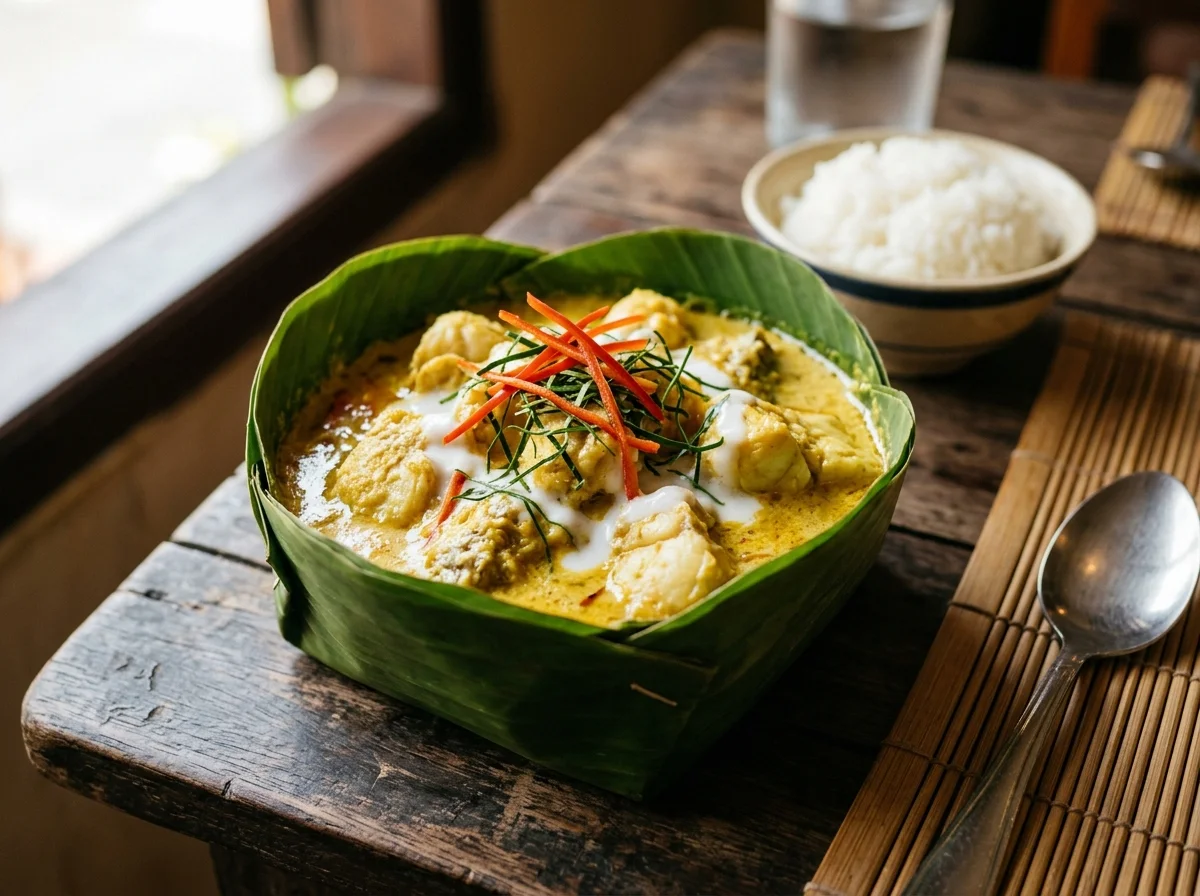
Cambodia is home to the World Heritage site of Angkor Wat. The glory of the Khmer Empire is carved not only into stone architecture but also into a delicate food culture. One of its finest dishes is amok (Amok Trey / អាម៉ុក).
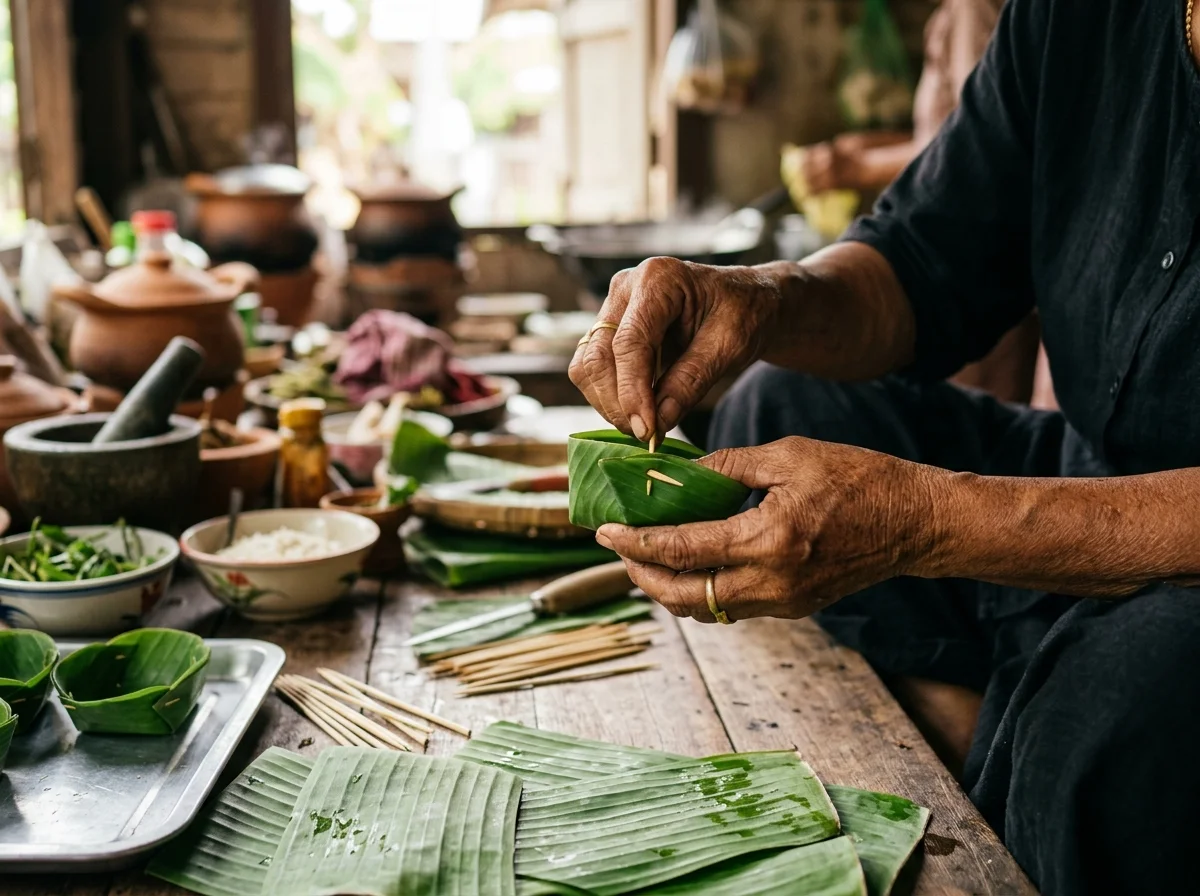
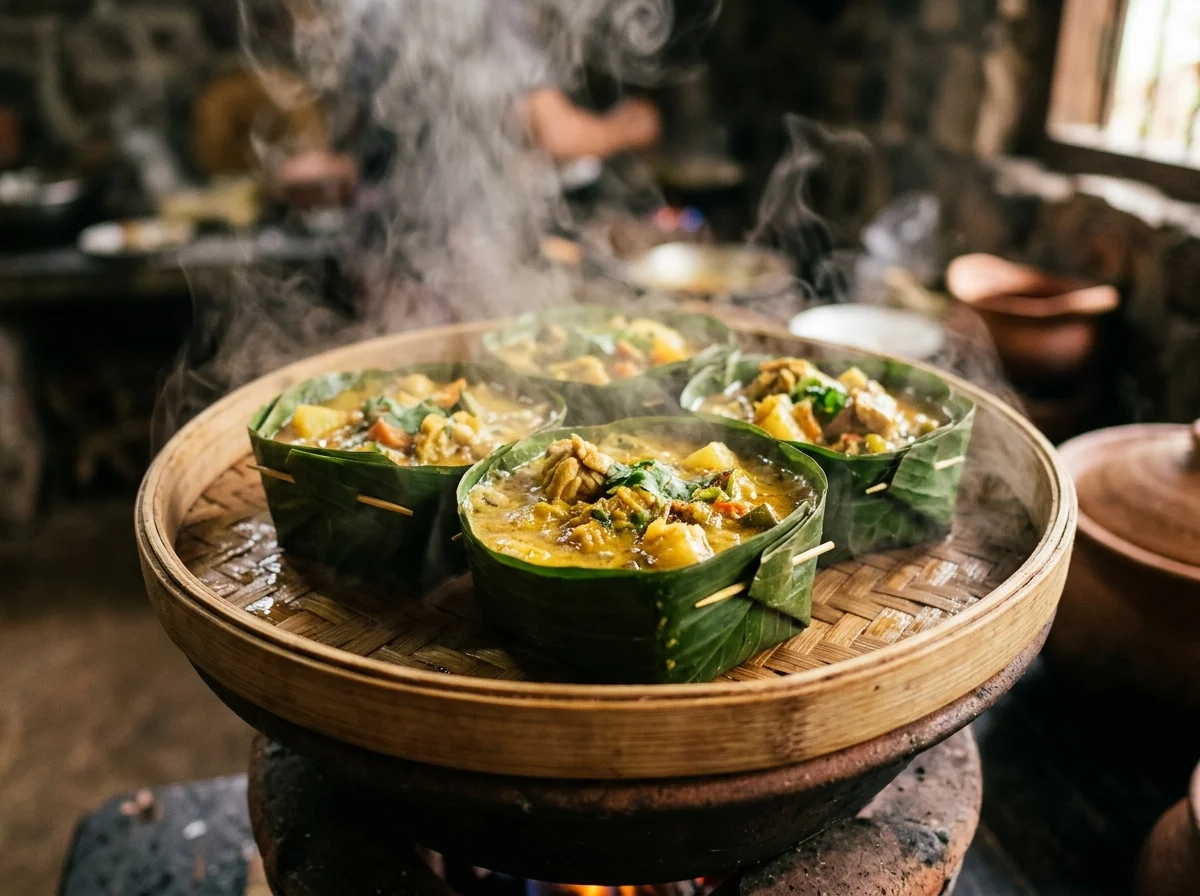
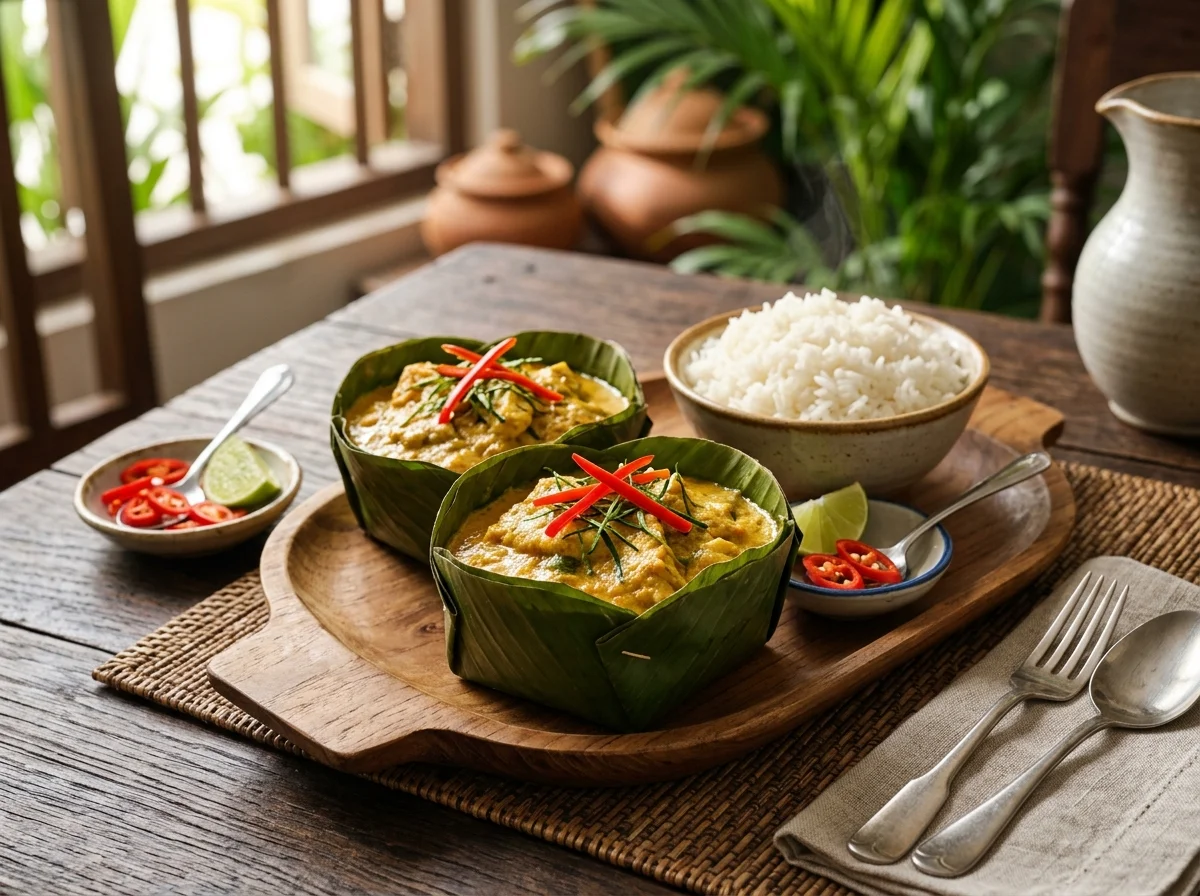
Amok is a dish in which white fish is mixed with kroeung (Khmer curry paste) and coconut milk and steamed in a banana leaf cup. It is not as hot as a Thai curry, nor as heavy as an Indian curry. In the mouth, the cool aroma of lemongrass and makrut lime leaf spreads first. Then the sweet richness of coconut milk follows, and finally the deep savoriness of prahok (fermented fish paste) lingers in the aftertaste.
It is named after a cooking method that means "to steam" in Khmer. "Amok trey" is amok made with fish (trey). The chicken version is called "amok moan" and the beef version "amok sach ko." Steaming in banana leaf cups is traditional, but coconut shells or aluminum foil are sometimes used instead.
Alongside Thai pad thai and Vietnamese banh mi, it is a famous Southeast Asian dish. This article explains how to recreate the local method with ingredients you can find.
Ingredients (serves 4)
Main ingredients
Traditionally Cambodia uses freshwater fish (catfish-type fish, snakehead and so on), but they are hard to find elsewhere, so sea bream, sea bass and cod are the best substitutes. A fatty fish suits the coconut milk sauce better. You can also make it with salmon, but the color changes and the look differs. Frozen white fish fillets (such as basa) also turn out delicious.
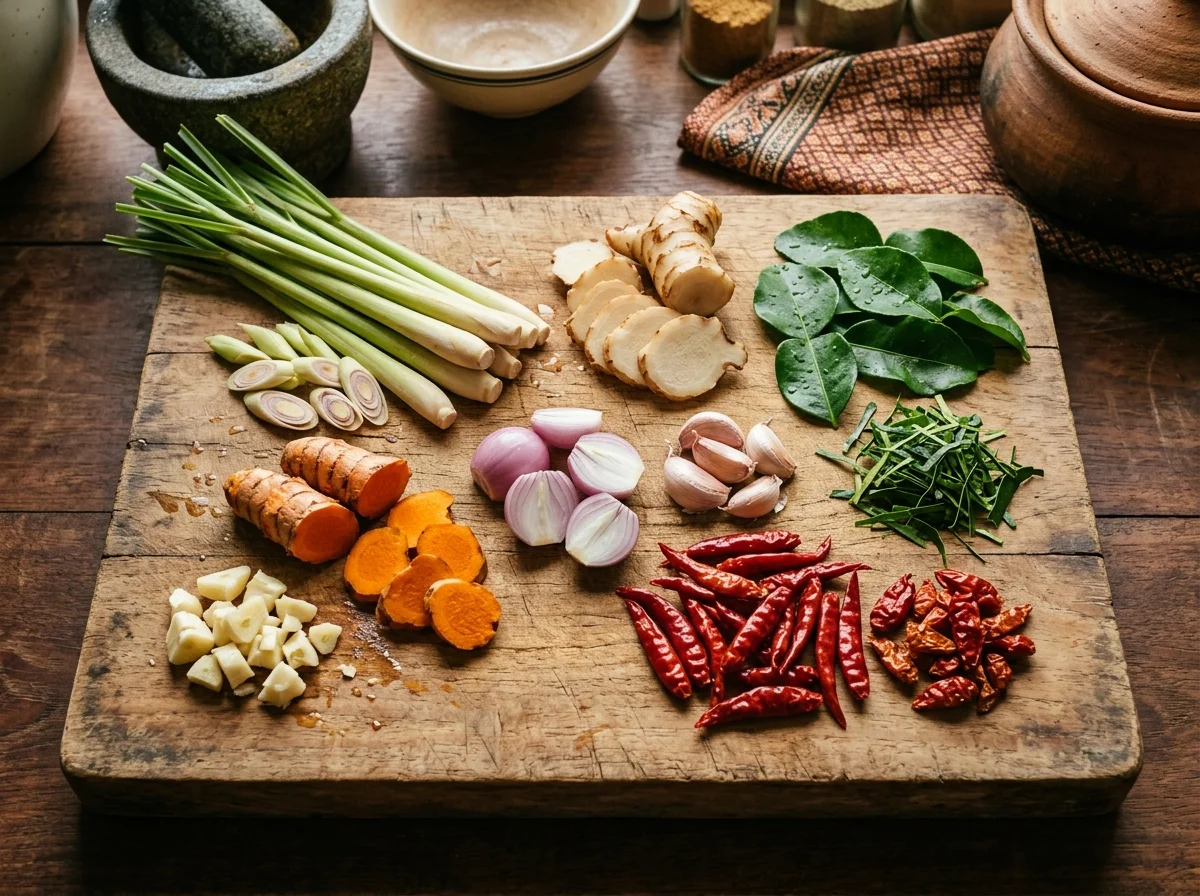
Lemongrass, galangal and makrut lime leaves can be found at Asian groceries, often in the frozen section. Prahok is sold at Cambodian or Southeast Asian specialty shops and online. If you can't get prahok, 2 tbsp of fish sauce makes up the savoriness, but the distinctive fermented aroma is hard to reproduce.
Prahok has a very strong fermented smell. If it is your first time, it is recommended to start with half the amount. After opening, keep it in an airtight container in the refrigerator and use it within 1 month. The smell transfers to containers, so a glass jar is best. When substituting fish sauce, the saltiness differs, so adjust the amount of salt in the final seasoning.
Cooking tips
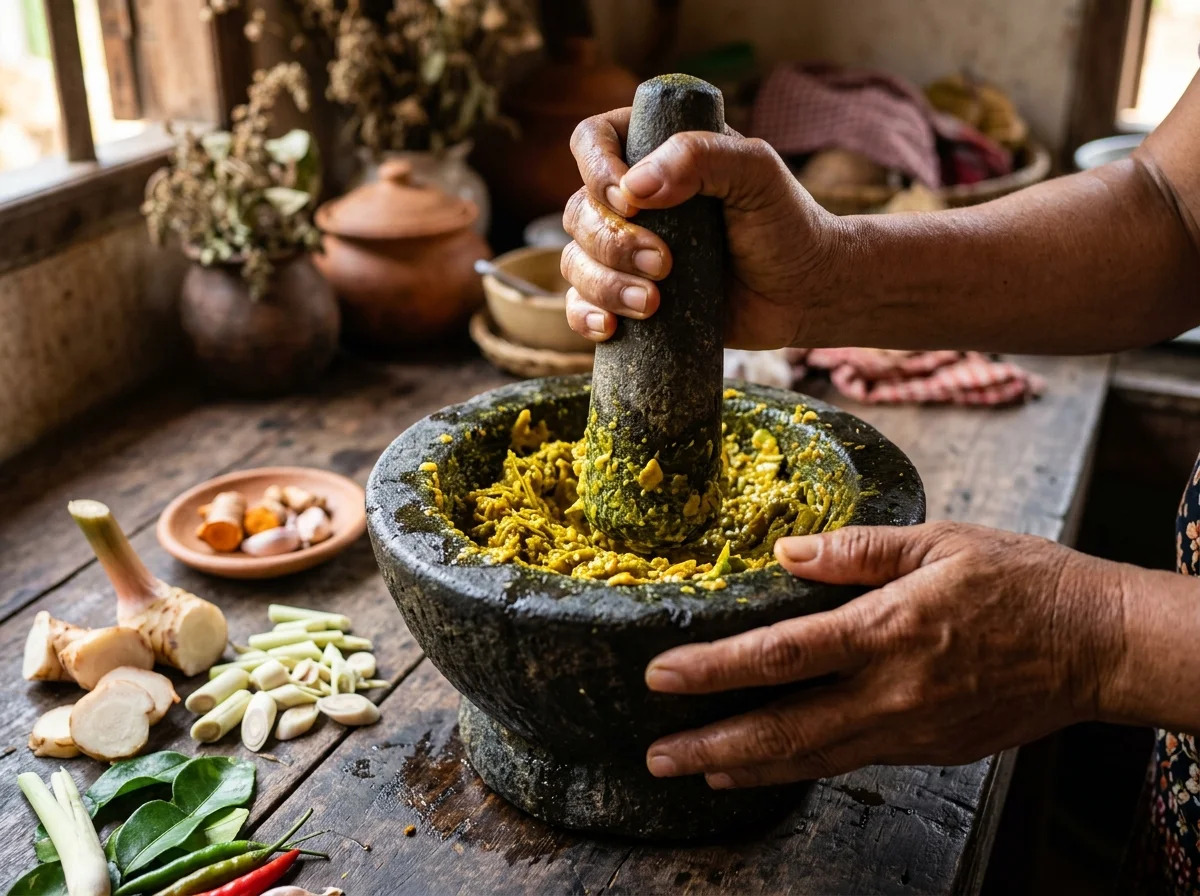
In Cambodian homes, it is pounded for 30 minutes or more in a large stone mortar. Even with a food processor, pulse at least 3 times, scraping down the sides in between. If fibers of lemongrass remain, the mouthfeel after steaming will be poor.
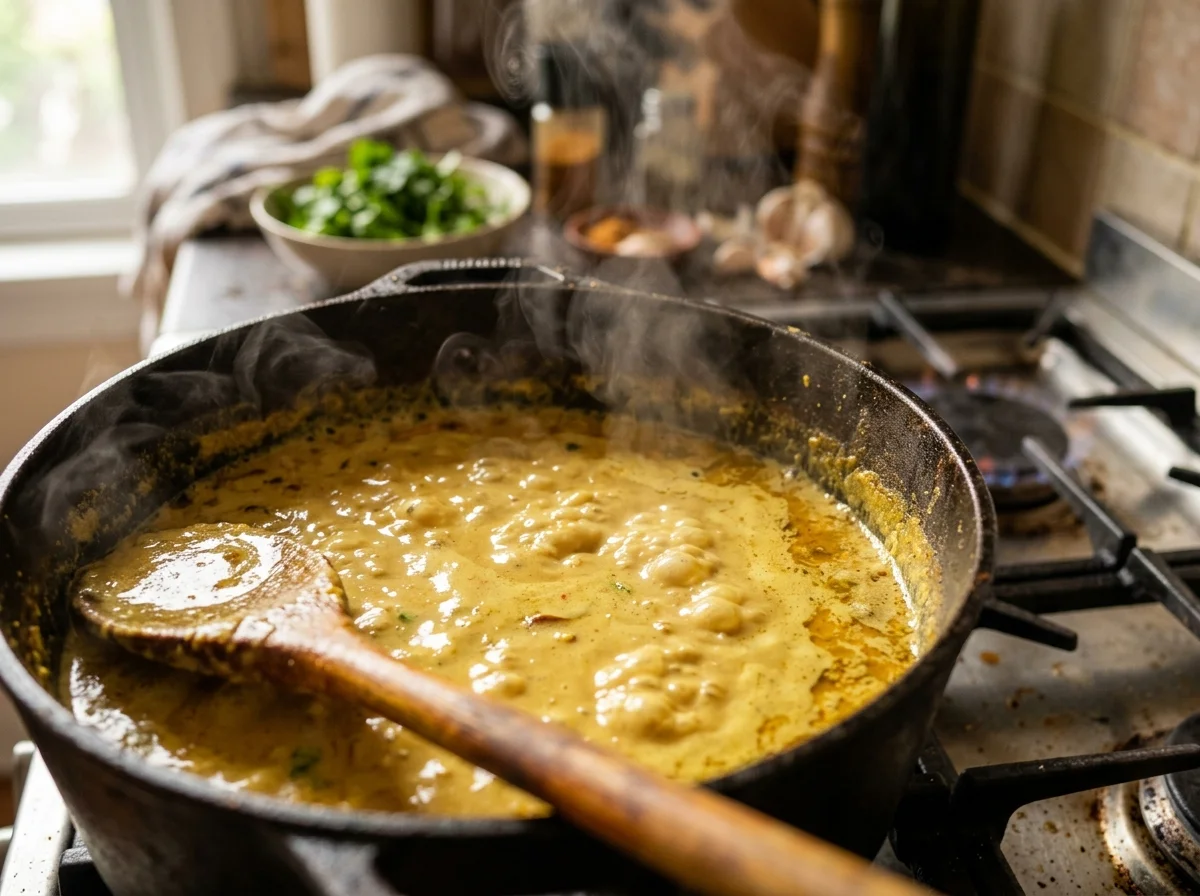
When you open a can of coconut milk, choose a product with a layer of cream set on top. A fat content of 17% or more is ideal. With a low-fat one, the creamy richness unique to amok doesn't come through. As with Indonesian rendang (in Japanese), the quality of the coconut milk largely determines the result.
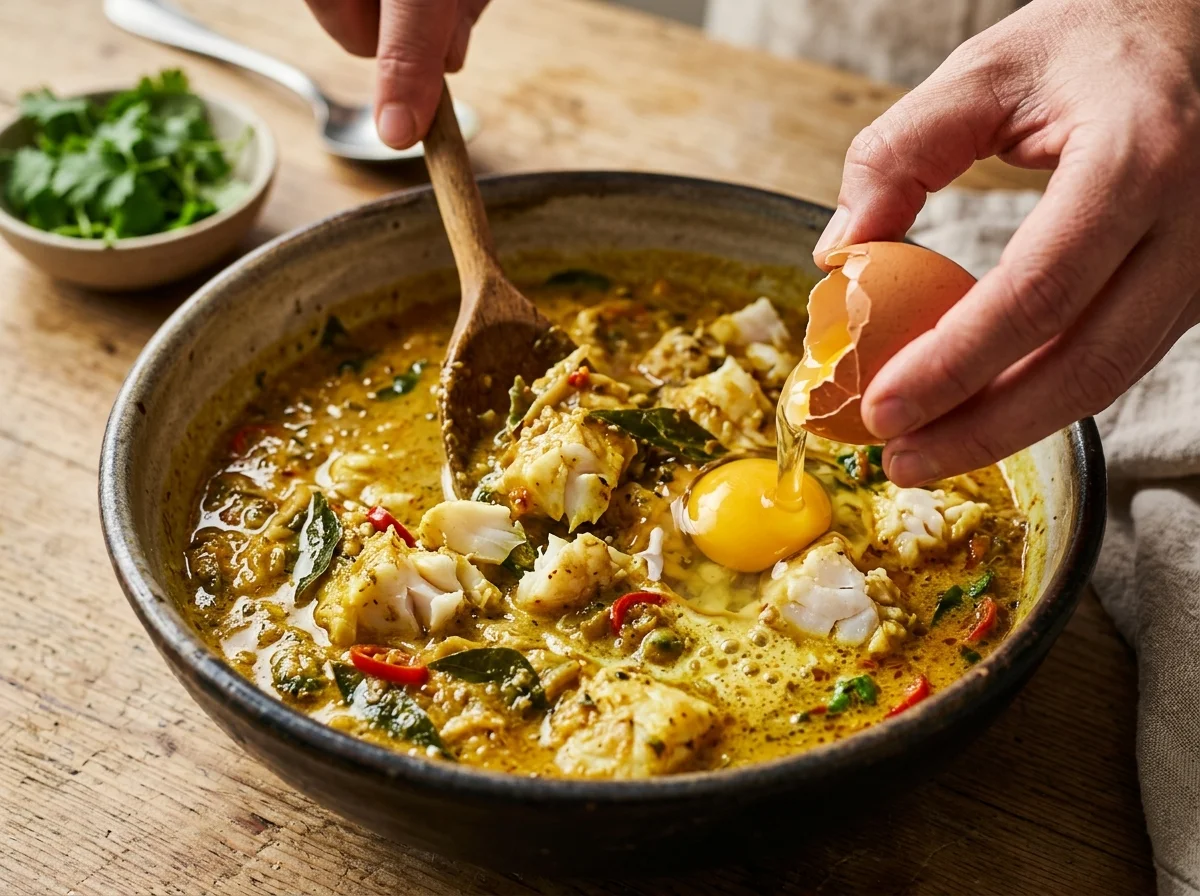
Add the egg only after the sauce has cooled enough. Put into hot sauce, the egg sets at once and goes lumpy. The egg is an important ingredient that gives amok its "mousse-like texture" and decides its softness once steamed. You can make it without egg, but it becomes a runny curry.
Banana leaves can be found in the frozen section of Asian groceries. Aluminum foil or ramekins also work as substitutes, and bamboo leaves can also stand in. A banana leaf is not just a container; its role in passing the aroma of the leaf to the amok when steamed is important.
Variations
Chicken amok (amok moan)
Instead of white fish, use 300 g of chicken breast sliced on the bias 1 cm thick. Extend the steaming time to 25 minutes. The chicken soaks up the sauce and turns juicy, like Philippine adobo (in Japanese).
Shrimp amok
Instead of white fish, use 12 large shrimp. Peel, devein and toss them in the sauce as they are. Shorten the steaming time to 15 minutes. The savoriness of the shrimp melts into the coconut sauce for a showier flavor than the fish version.
Vegetable amok
Instead of fish, use 200 g of pumpkin (2 cm cubes) + 100 g of shimeji mushrooms + 6 baby corn. The sweetness of the pumpkin goes very well with the coconut sauce, and it is recommended for people who don't like fish.
Simple version (simmered in a pot)
If you have no banana leaf cups or steamer, you can also make it by simmering in a pot. Just put the fish in the sauce and simmer over low heat for 15 minutes. The mousse-like texture of the steamed version won't come through, but the taste is well reproduced. Like Laotian khao piak sen (in Japanese), it can be used as a weeknight version that puts convenience first.
Spicy version
Increase the dried red chiles from 3 to 8, and add 2 fresh green chiles to the kroeung.
About prahok and the freshwater fish of the Tonle Sap
Prahok, the secret flavor of amok, is a seasoning you can't avoid in talking about Cambodian cooking. It is a rich fish paste made by salting freshwater fish and fermenting it for months, and it is sometimes called "the cheese of Cambodia." Like vinegar in Egyptian koshari or tahini in Lebanese hummus, prahok is closely tied to the character of Khmer cooking.
Tonle Sap, in the middle of Cambodia, is the largest freshwater lake in Southeast Asia, and freshwater fish from the lake are traditionally used in amok. A moderately fatty freshwater fish blends well with a coconut milk sauce, and like Senegalese thieboudienne, made from the bounty of the Atlantic, amok is a dish born of the bounty of the lake.
Nutrition (per serving of 4)
| Nutrient | Amount |
|---|---|
| Calories | 380kcal |
| Protein | 32g |
| Fat | 22g |
| Carbohydrates | 14g |
| Fiber | 3g |
| Sodium | 620mg |
Dishes to make alongside
- How to make chicken satay - Reuses ingredients and aromas from the same region.
- How to make lok lak (in Japanese) - Another Cambodian dish, moving from steamed fish to stir-fried beef.
- How to make chicken inasal - Reuses ingredients and aromas from the same region.
- How to make Hainanese chicken rice (in Japanese) - Reuses ingredients and aromas from the same region.
- How to make ayam penyet - Reuses ingredients and aromas from the same region.
Frequently asked questions
Q1. What if I can't get all the kroeung ingredients?
With a minimum of lemongrass, garlic and fish sauce you can build the skeleton of amok. Adding 1 stalk of lemongrass to 2 tbsp of store-bought Thai red curry paste gets you quite close. Galangal can be replaced with ginger, but the piney coolness peculiar to galangal doesn't come from ginger, so getting it if possible is recommended. Makrut lime leaves can be replaced with 1 tsp of grated lime zest.
Q2. Where can I buy banana leaves?
They are sold at Asian groceries, often in the frozen section. Thaw at room temperature before use and rinse briefly. Aluminum foil or ramekins work well as substitutes and still make a delicious dish.
Q3. Is amok spicy?
Traditional amok is mild in heat. It has little of the kick of a Thai curry, and the mellowness of the coconut milk is the star. You can freely adjust the heat by the amount of red chile. The 3 dried red chiles in this recipe give a mild finish that children can also eat. If you like it hot, increase the chiles to 6 to 8 or add fresh green chile.
Q4. Can amok be made ahead?
Steamed amok keeps 2 days in the refrigerator. Reheating for 1 to 2 minutes in a microwave is the easy way. However, the mousse-like texture of freshly steamed amok loosens a little by the next day, so it is best eaten freshly made. Kroeung (curry paste) keeps for 3 months frozen in small portions and is handy to make extra of as a base for stir-fries and soups. Eating next-day amok poured over rice like a curry is also a Cambodian way.
Q5. What drinks go with amok?
In Cambodia, Angkor beer is the standard. Cold beer and the creamy sauce of amok are an excellent combination. For a non-alcoholic option, jasmine tea is the traditional pairing. Lemongrass tea, brewed from lemongrass, also resonates with the herbs of amok. A dry white wine with a spicy aroma also pairs well with the kroeung in amok.
Related Southeast Asian dishes
If amok has caught your interest, try other Southeast Asian dishes too. A world of varied flavors woven from coconut, herbs and fermented seasonings awaits.
- Rendang (in Japanese) — Indonesia's rich coconut stew. In contrast to amok, it is slowly reduced
- Laksa — Malaysia's spicy coconut noodles. A totally different approach in the same region
- Mohinga — Myanmar's fish broth noodles. The technique of drawing out fish savoriness is related to amok
- Sinigang — The Philippines' sour soup. It brings out fish with the sourness of tamarind



