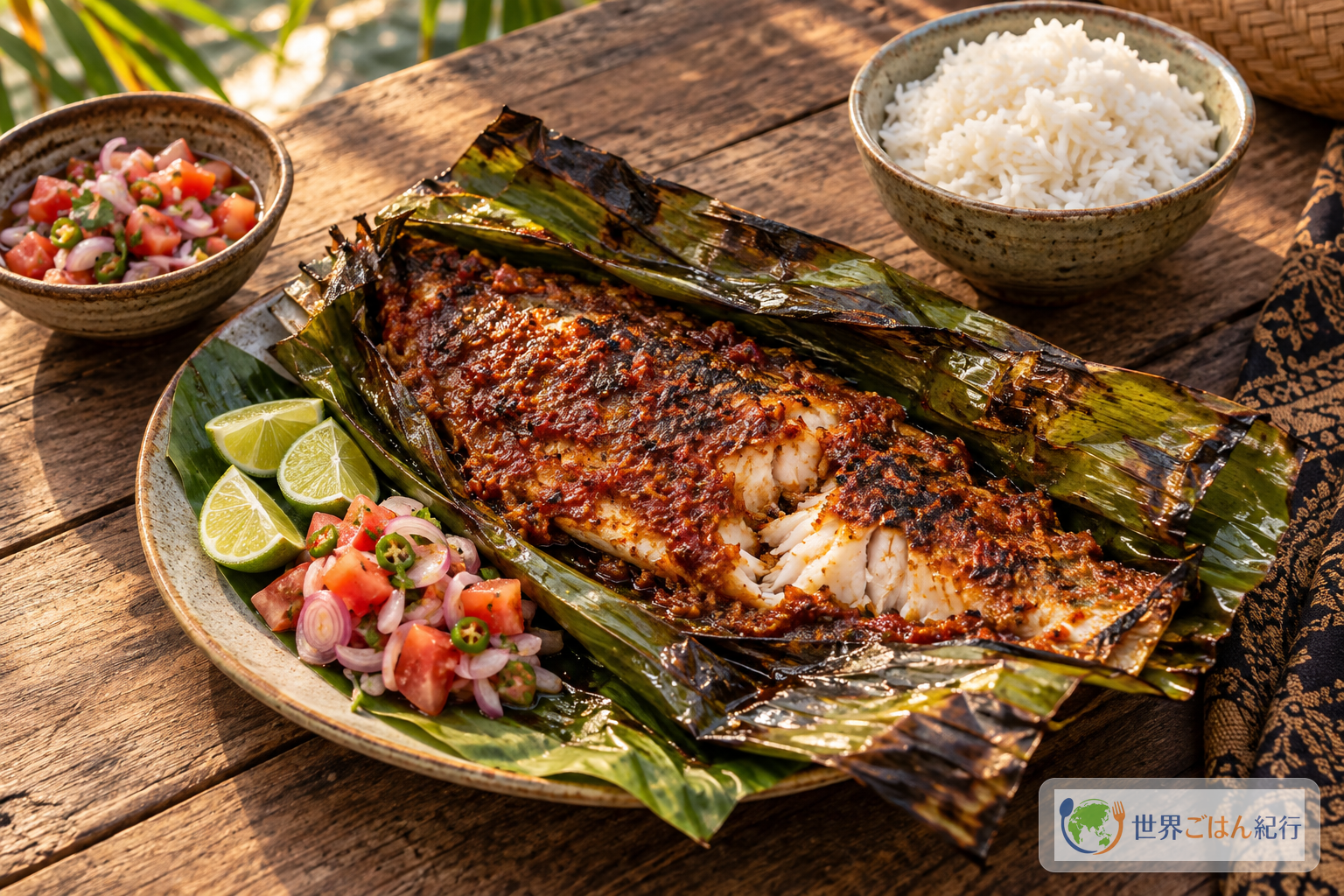
Open the leaf, and the sambal returns to the fat of the fish
The edges of the banana leaf blacken, and the smell of lemongrass and chile leaks out from inside the packet. The moment you open the leaf, the red sambal has reduced onto the surface of the fish, and the juices, mixed with the fat of the white flesh, run onto the plate. Ikan bakar is not simply grilled fish made hot. It is a dish where the aromatic paste is fried first and the leaf holds in heat and fragrance.
Ikan bakar is a beloved Malaysian dish in which fish is coated with a spice paste and grilled. The fish, the paste and the sides vary by region and by restaurant, so at home it is safer to match the thickness of the fish to the strength of the sambal than to insist on one particular fish. Here we wrap white fish fillets of about 150 g each in banana leaf and bake them at 180°C for 20–25 minutes. To tell whether the center is cooked, check that the thickest part has reached 63°C, or that the flesh is opaque and flakes with a fork.
You can make the sambal for the fish from fresh chiles, but for a first try, sambal oelek makes it easier to adjust the heat and salt. Check the ingredient list on the label before buying if you want to avoid shrimp or other seafood.
If you skip the bottled sambal and use fresh red chiles, adjust only the amount of chile. If you also leave out the onion, garlic, lemongrass and turmeric, the result tends to taste like fish with heat smeared on it.
The background of ikan bakar, and a dish where the wrapping says more than the fish
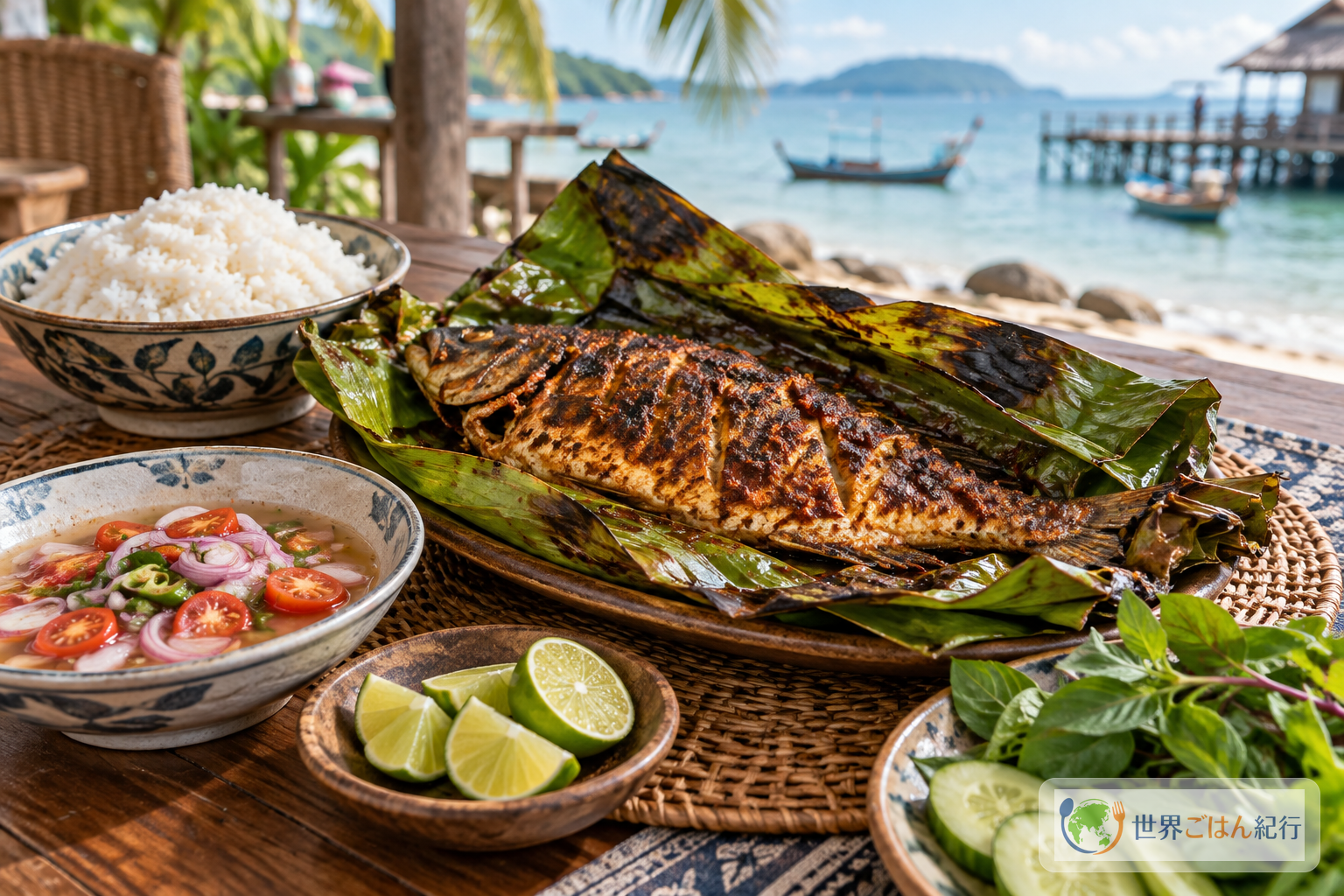
English-language introductions explain ikan bakar literally as "grilled fish" and describe it as a dish eaten in both Malaysia and Indonesia. Covering the fish in a sweet-sour aromatic paste and wrapping it in banana leaf not only transfers fragrance but also protects the flesh from the heat of an open flame or grill. At restaurants it is sometimes described as a dish grilled to order, where the aroma of the finished fish and its freshness are part of the pleasure. At the table it comes with steamed rice, sambal belacan, and air asam, a mix of chile and lime acidity. When you re-create it at home too, rather than soaking the fish in a heavy sauce, steam-bake it inside the leaf and open it at the end, and the structure of the dish is easier to see.
Malaysian flavors cannot be gathered into a single lineage either. Melaka was a trading port where merchants from China, India, Europe and the Arab world came and went, and tourism-board material on food culture explains that these comings and goings remain in what people eat today. Lemongrass is used in marinades for fish and meat, turmeric adds color and fragrance to fish, and chiles are crushed and fried in oil or combined with belacan and lime. The paste for ikan bakar layers several aromas not only to make it hotter but to build layers of fragrance that can stand up to the fat of the fish.
To think about regional differences, it helps to start with how the fish is chosen. Malaysian introductions give stingray, pomfret and mackerel as examples, and explain that the dish extends beyond fish to prawns and squid. Recipes from other regions vary in whether the fish is whole or filleted, whether the sambal is served on the side, and which dish adds the acidity. Rather than fixing on one "authentic fish," think of it as a dish where you choose the paste to match the texture of the flesh and how it cooks.
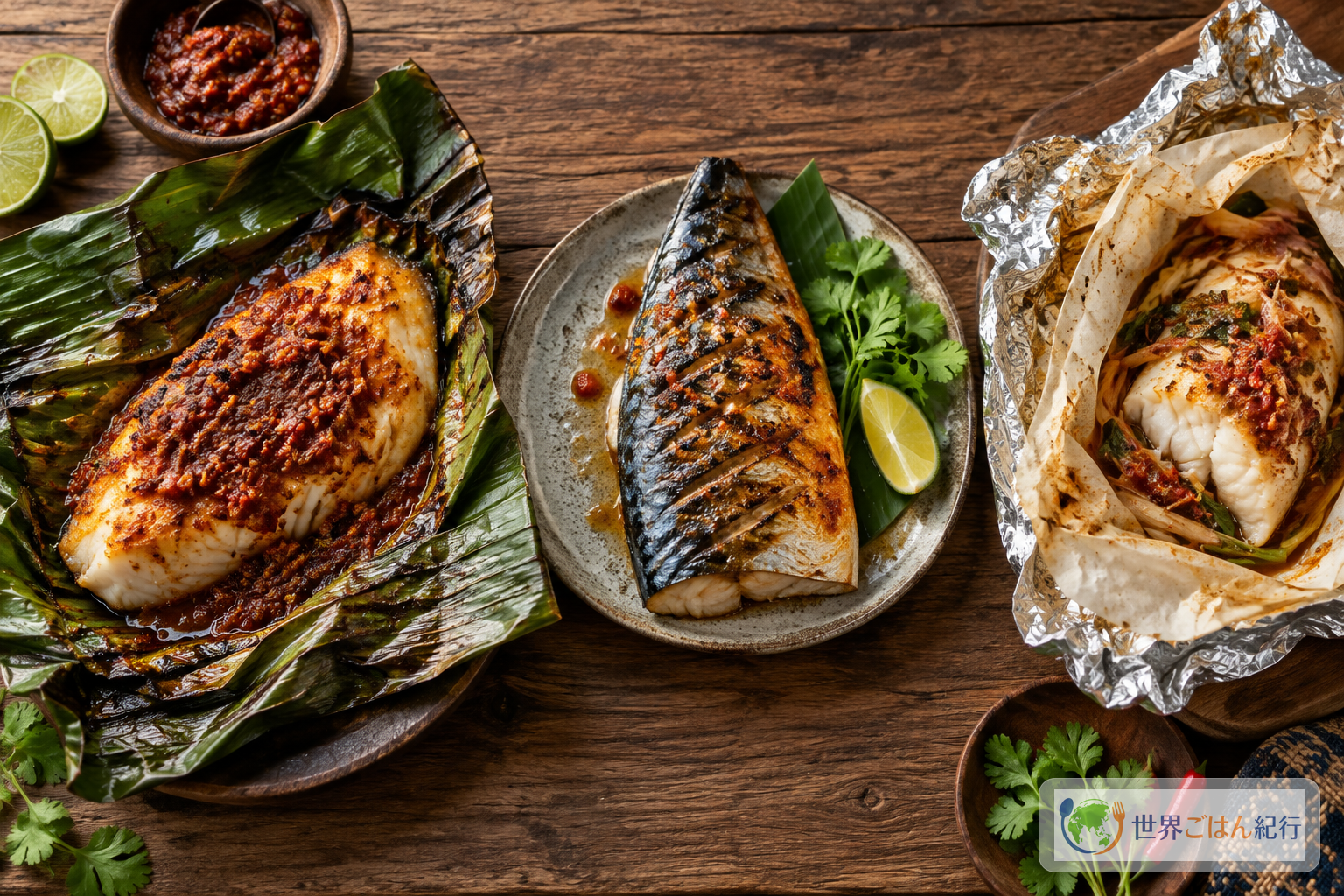
In a home kitchen, fillets of cod or sea bass, whose bones are easy to remove, are easy to handle. If you use mackerel, the fat is stronger, so reducing the sweetness of the sambal a little keeps it from feeling heavy. If you have no banana leaf, wrap the fish in parchment and cover it with foil. You lose the green aroma of the leaf, but you keep its function of not drying out the fish and holding the sambal against the surface.
Ingredients (serves 4) | Decide the thickness of the fish and the strength of the aroma first
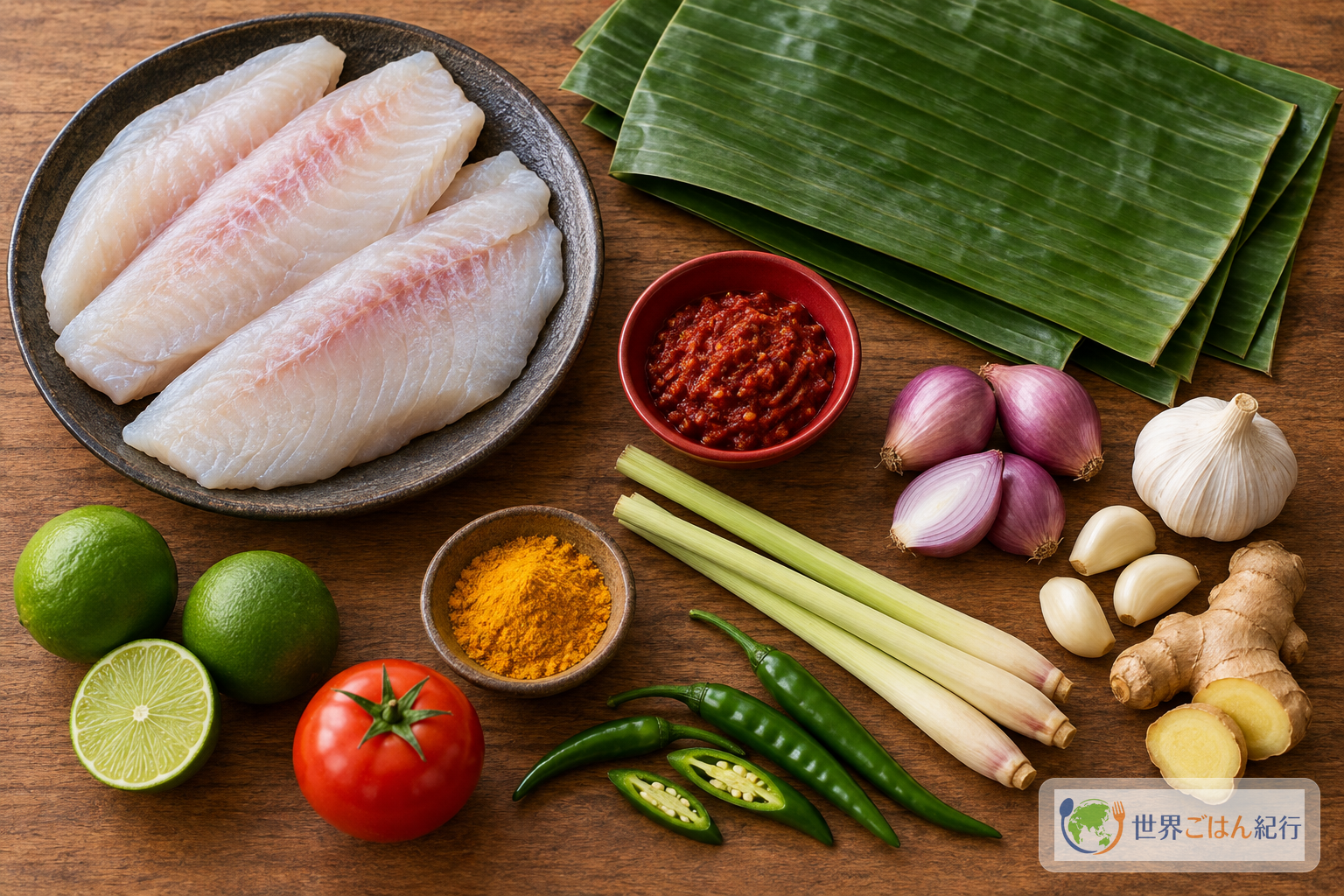
Use fillets of about 150 g each and 2–3 cm thick as the baseline. Thin fillets need a shorter cooking time, while thick fillets or whole fish should be cooked by center temperature. The sambal quantity covers both what goes on the fish and what is served at the table; if you want less heat, set some aside before baking.
Belacan adds the fermented aroma of seafood, but it is not essential. If someone has a shrimp allergy, omit it, and wash the utensils and cutting board used before they touch the fish. Sambal oelek also differs by product in whether it contains seafood or garlic, so check the ingredient label.
Cooking in a home kitchen: let the leaf be the star and do not add equipment
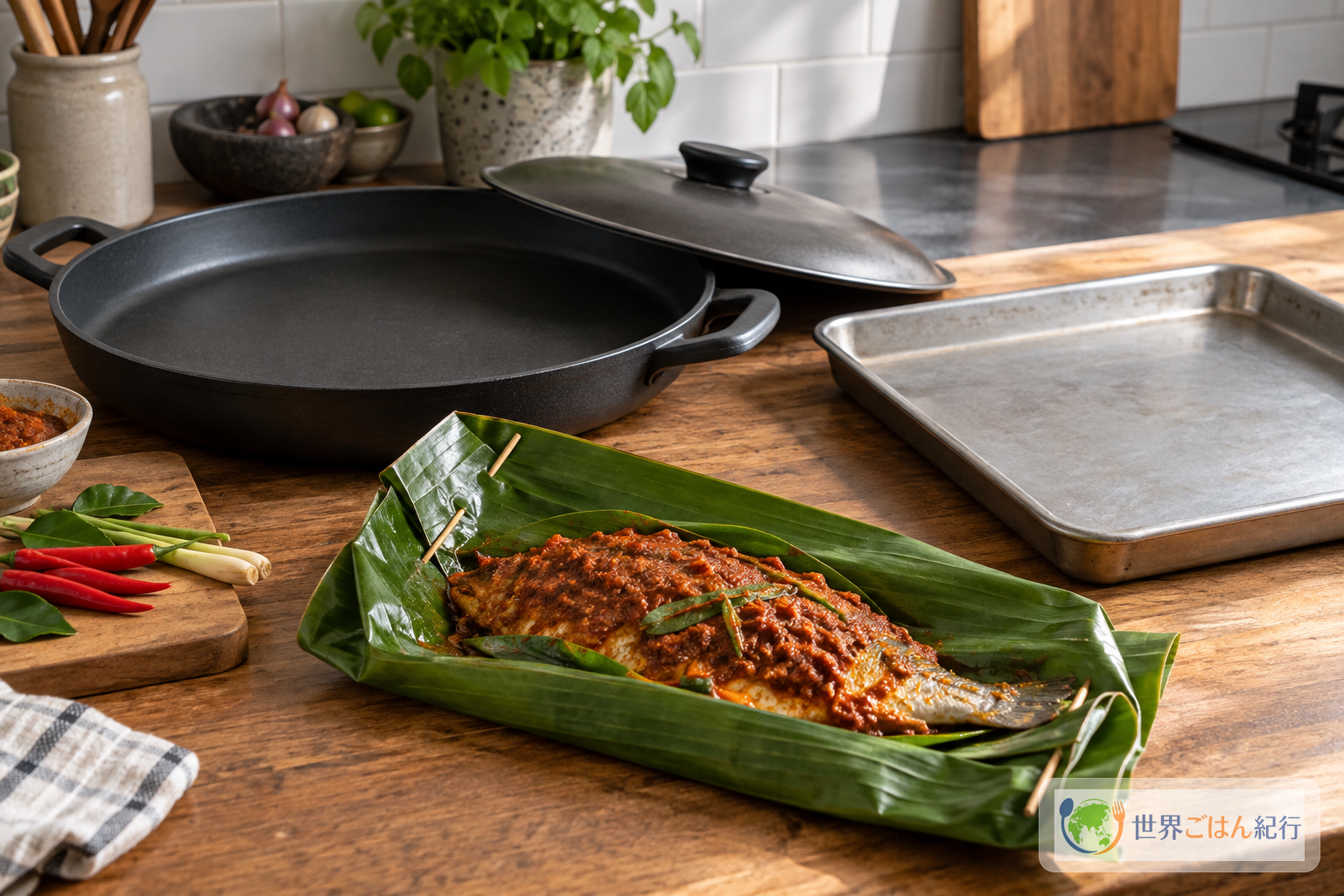
If you use an oven, arrange the packets on a baking sheet and bake at 180°C. Leaves that hang over the sheet scorch easily, so cut them to a size that wraps one piece of fish. If you use a fish grill, double the foil, use medium-low heat, and check the center temperature before the surface scorches. You can cook it in a frying pan too, but you need one whose lid closes and large enough that the packets sit side by side without overlapping.
If you often bake 4 fillets at once, a wide flat surface is worth having, as long as you check which heat sources it works with and where you will store it. If you will only try it once, or already have a deep frying pan with a lid, you do not need to buy anything more. The success of this dish does not depend on a product name; it depends on whether you can avoid sealing the packet too tightly and deliver even heat to the fish. A heavy frying pan with a lid works as a substitute.
Method: reduce the paste and make the leaf a grill wall
1. Make the aromatics into a paste
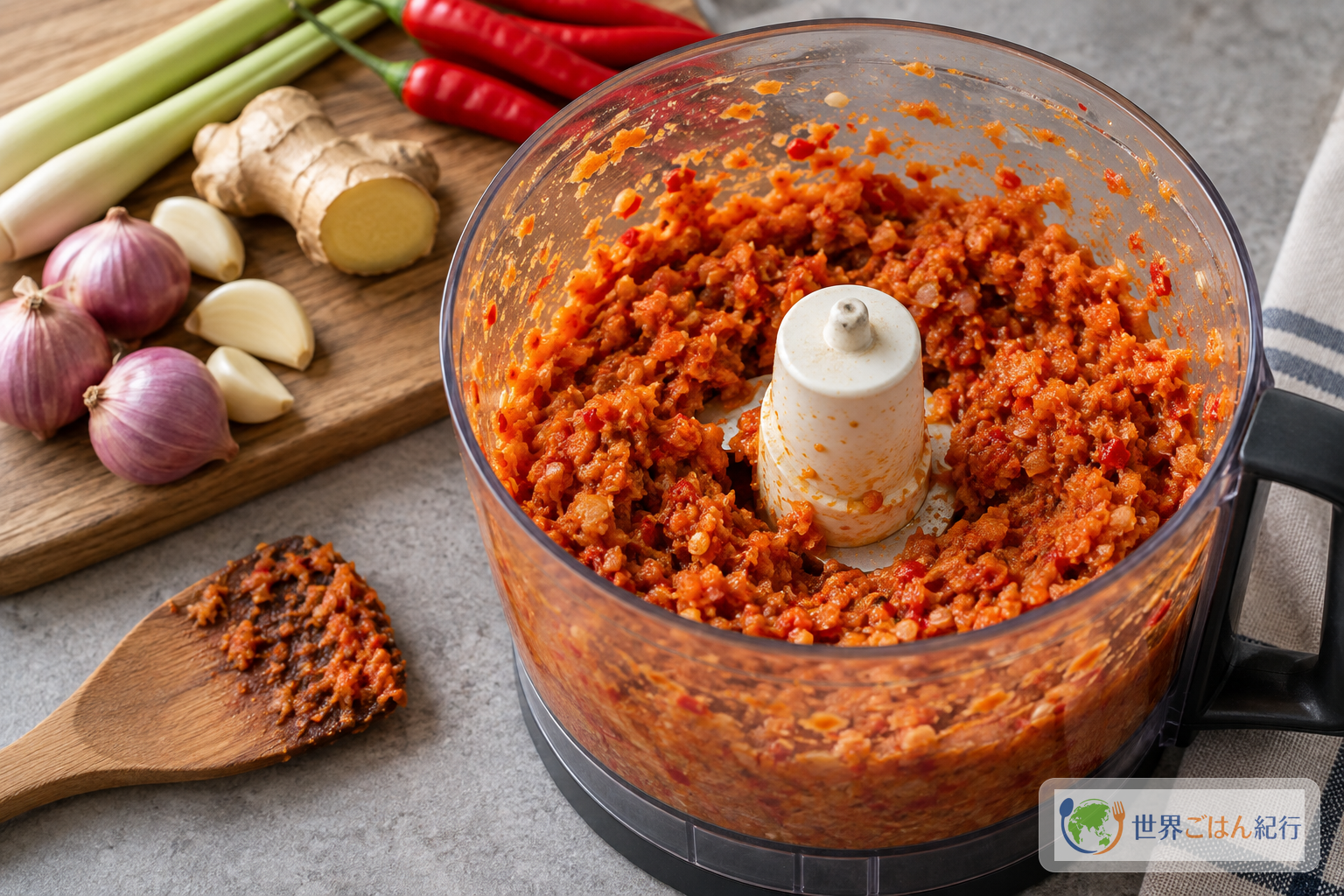
Put the red onion, garlic, ginger, lemongrass, sambal oelek, turmeric, belacan and water into a food processor. Run it in 30-second bursts, scraping down the sides, and stop when the fibers are fine. Do not make it fully liquid; it should flow slowly when pressed with a spatula. If you make it by knife, chop the lemongrass especially finely so no tough fibers remain when you eat.
2. Fry the sambal to round off the aroma
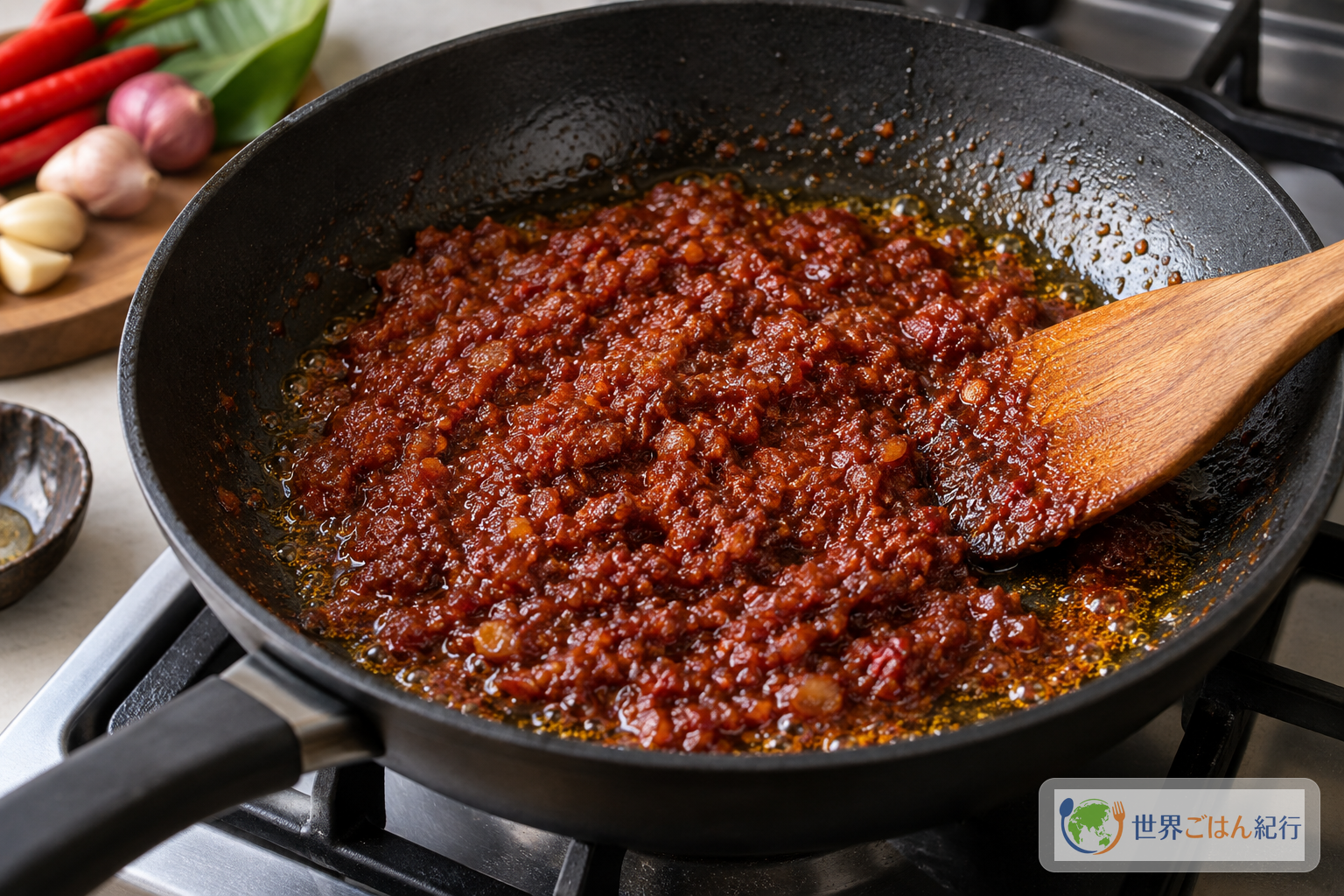
Put 2 tbsp oil in a frying pan and heat over medium-low. Add the paste, spread it with a wooden spatula and fry for 10–12 minutes. While there is a lot of water it spatters finely, but gradually the sound deepens, oil floats to the edge and the color turns reddish brown. At this point add the brown sugar, salt and lime juice, mix for just 1 minute and turn off the heat.
Lower the heat before any burnt smell appears. If the paste becomes too stiff, add water 1 tsp at a time to bring it back to a consistency that will not run off the fish when spread. Let it cool slightly, and if you want less heat, set aside 1–2 tbsp in a small dish at this point.
3. Prepare the fish and the leaf
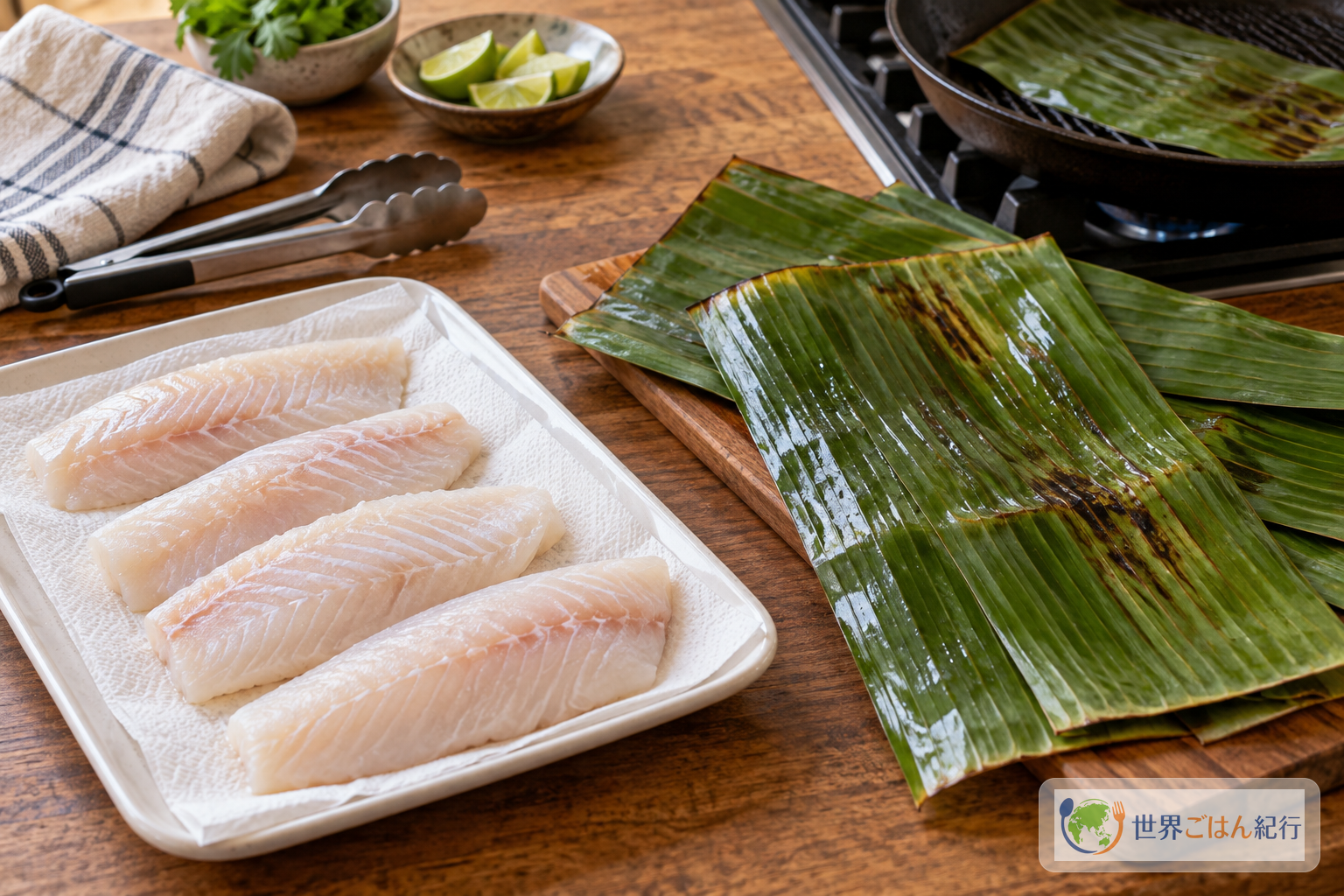
Preheat the oven to 180°C. Take the fish out of the refrigerator, pat dry with paper towels, sprinkle 1 tsp salt over all of it and rest for 10 minutes. If water beads up on the surface, wipe it again.
Rinse the banana leaf under running water and wipe with paper towels. If frozen, thaw completely before using. If you have a gas flame, hold the leaf with tongs and pass it once over low heat to soften the folds. Do not set it directly on the burner; stop as soon as the surface turns pliable. Cut the leaf to a size that extends at least 5 cm past the long side of the fish in every direction. This preparation takes about 10 minutes.
4. Spread the sambal and wrap in the leaf
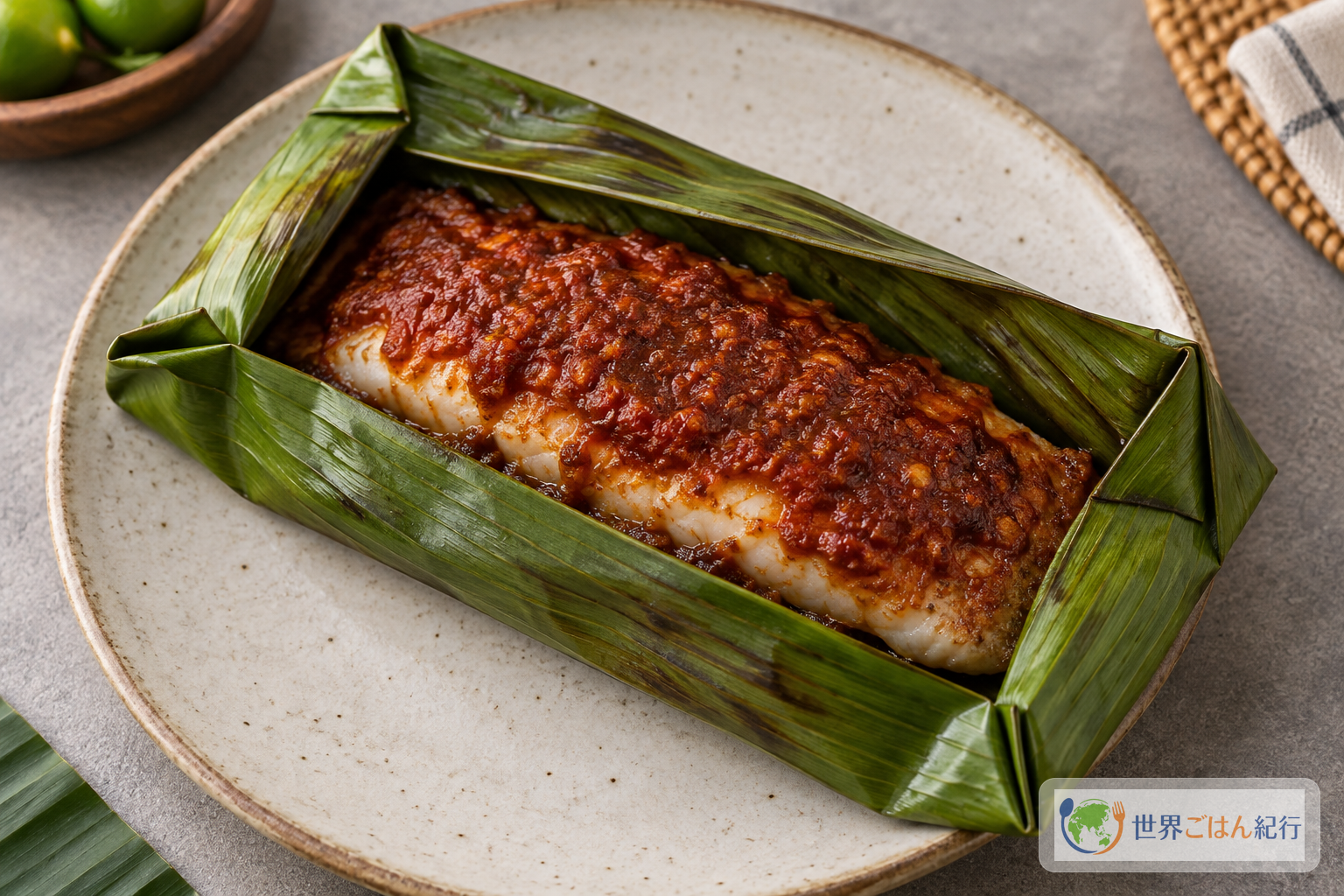
Brush a little oil in the center of a leaf and place the fish on it. Spread about 2 tbsp sambal per fillet evenly over the top and sides. A thick layer scorches on the surface before the center warms up, so use leftover paste as a side.
Fold the left and right sides of the leaf over the fish, then fold the top and bottom to enclose it. Place the seam side down and, if needed, fix it with a single bamboo skewer. A little air left inside the packet is fine, but large gaps let steam and sambal escape. If your banana leaf is small, cross two leaves. Allow about 5 minutes for spreading the sambal and wrapping all 4 fillets.
5. Bake at 180°C and check the center
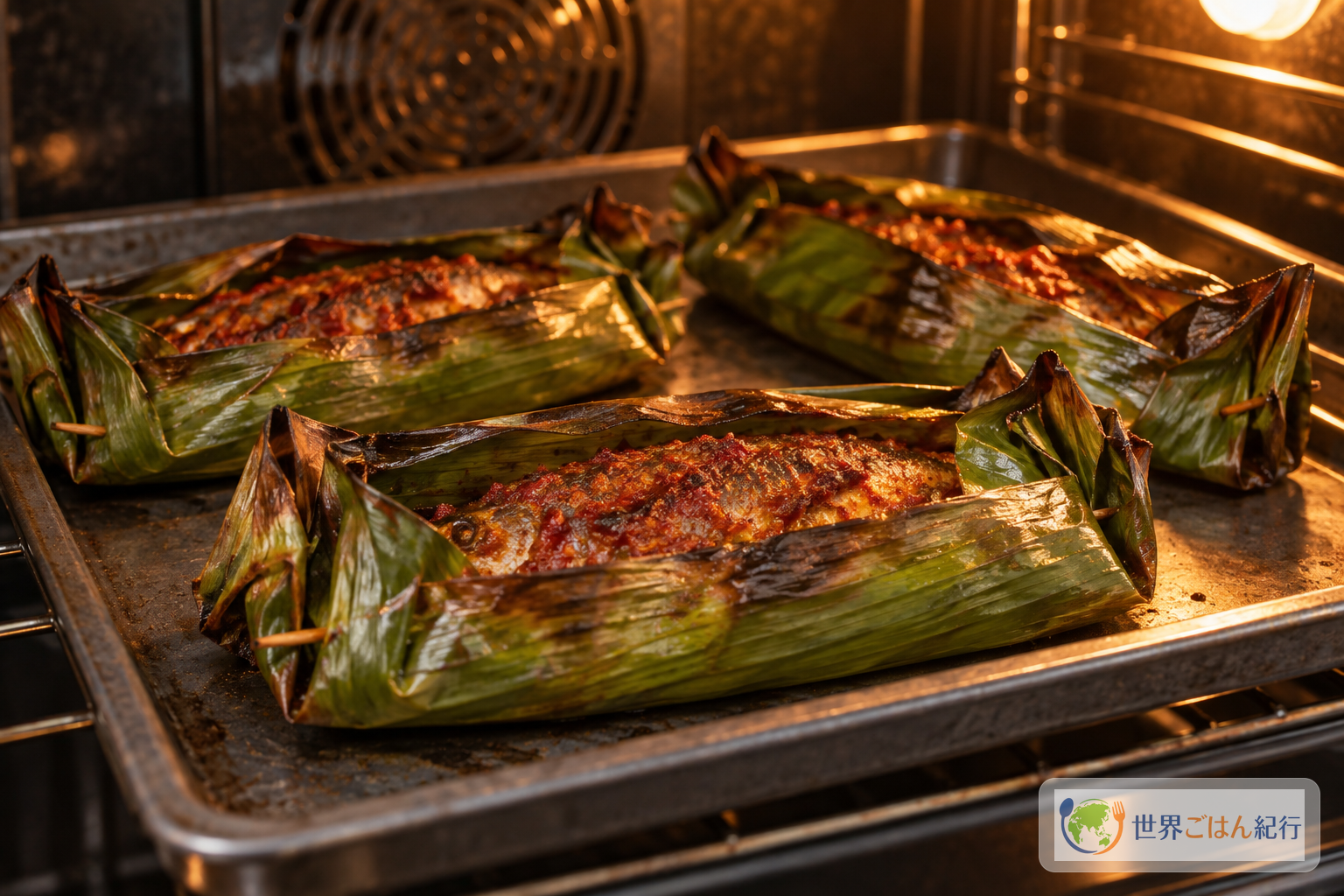
Arrange the packets on the baking sheet and bake at 180°C for 20–25 minutes. Start checking a 2 cm fillet at 20 minutes, and plan on 25 minutes for fillets nearly 3 cm thick or a center that started cold. The time changes with the oven, the starting temperature of the fish and the thickness of the fillet, so do not take it out by time alone.
Insert a thermometer into the thickest part and stop the heat when the center reaches 63°C. If you have no thermometer, open one packet and check that the flesh is opaque and the fibers separate with a fork. If it is underdone, close the leaf again and add 5 minutes at a time.
With a lidded flat cooking pan, you can also cook the packets over medium heat for 8–10 minutes per side. Moisture escaping makes it scorch easily, so do not open the lid more often during cooking; check only the center at the end.
6. Rest for 5 minutes and add acidity
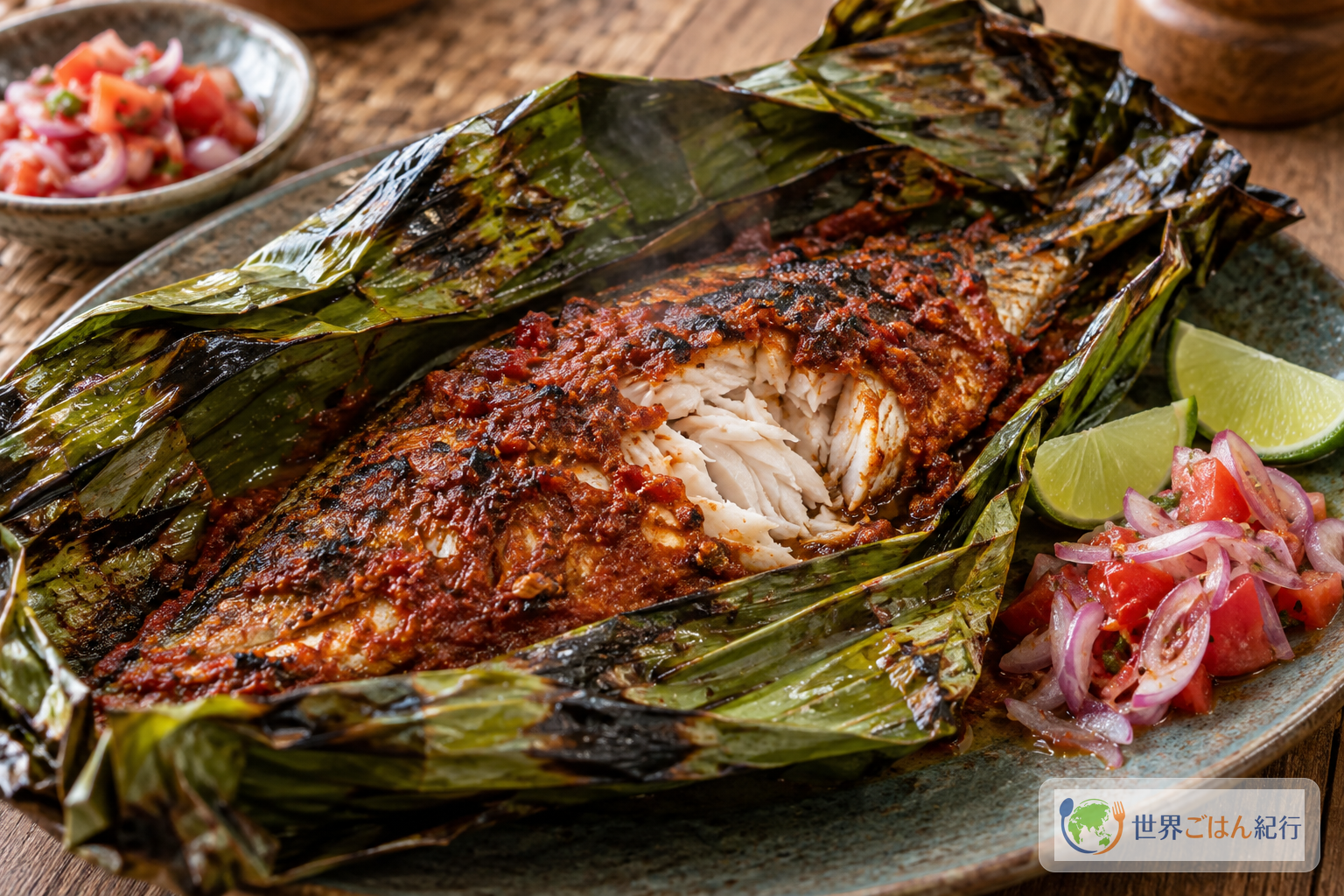
Take the baked packets off the baking sheet and leave for 5 minutes. If you open them right away, the steam inside can burn you and the juices of the fish run out easily. Remove the skewer, open the leaf and move the fish to a plate.
For the air asam-style side, just mix the tomato, red onion, green chile, lime juice, sugar and salt. It adds acidity even to fish made with less of the hot sambal, and makes the rich paste easier to finish. With white rice, cucumber and herbs on the side, you can alternate between the fat of the fish and the sambal.
Three checks that separate done from not done
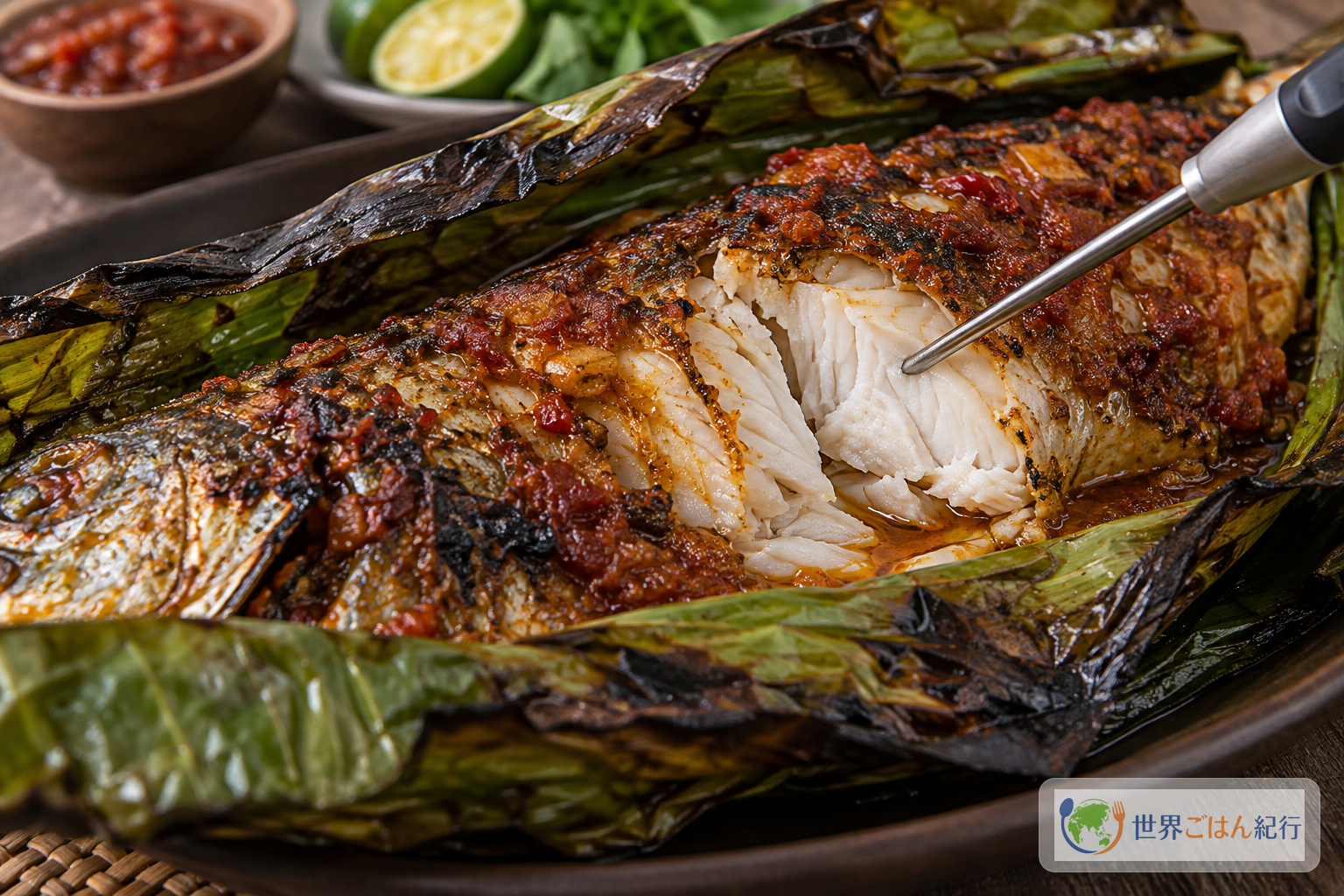
If you are unsure partway through, do not mix up the following three. Whether the sambal has reduced is judged by aroma and oil. Whether the leaf has cooked is judged by the color of its edge. Whether the fish is safe to eat is judged by center temperature and the opacity of the flesh. A blackened leaf does not mean the fish is raw, and fish that is white on the surface can still be underdone in a thick center.
| What happened | Cause | How to fix it |
|---|---|---|
| The sambal is watery and runs | Fried too briefly, or too much water added | Return it to the pan before spreading and cook off the water over low heat for 2–3 minutes |
| Only the surface is black and bitter | Heat too high, or paste got outside the leaf | Do not mix the black parts into the fish; thinly re-spread a little of the unbaked side paste. If the whole thing is bitter, start again |
| The leaf tears and juices leak | The leaf was cold, or the packet was overstuffed | Layer two leaves, reduce the sambal to 1 tbsp each and put the seam side down |
| The fish is dry | Thin fillet, or baked too long | Next time choose thicker fillets and check the center from 20 minutes. Serve with air asam |
| Too hot | Used all the sambal | Counter it with lime juice, the tomato-and-onion side and white rice. Do not hide it with sugar alone |
Hiding burnt paste with sugar or oil spreads the bitterness through the whole fish. If the scorching is only on part of the surface, remove that part and add a little of the sambal you set aside. If it is completely burnt, it is quicker to separate only the edible parts of the fish and make the paste again.
Bringing the Malaysian way of serving to a weeknight dinner
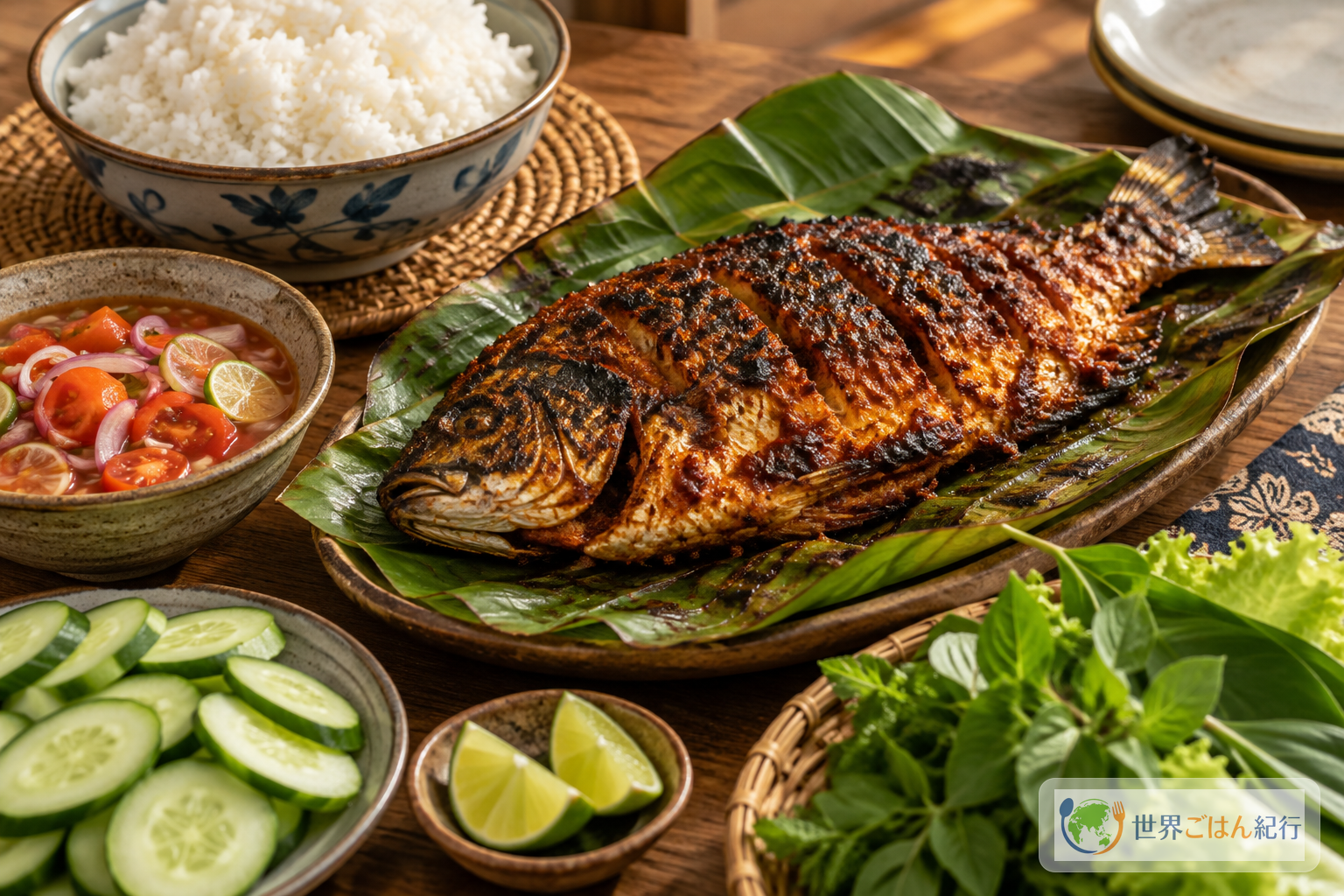
Malaysian introductions describe ikan bakar served with sambal belacan or air asam and eaten with steamed rice. The acidity here is not decoration; it switches between the fat of the fish and the sambal with each bite. There is no need to pile a hotter sauce on hot fish; keeping any one of lime, tomato or onion stops the table from feeling heavy.
If you want to pair it with Malaysian herb rice or vegetable dishes, you can serve a small amount of an aromatic rice dish such as nasi kerabu. On a day when the fish paste is intense, keep the rice plain and white; on a day when the whole menu is strongly aromatic, spread the sambal on only one side of the fish. To connect it to other dishes using shrimp or coconut, sambal udang lets you compare how a stew has the same heat but different moisture and cooking. For something with broth, set it beside laksa and enjoy the difference between sambal that clings directly to the fish and a soup that holds fragrance in the bowl.
You do not need to fully recreate the fun of a restaurant that grills to order. Carry the fish to the table still wrapped and let each person open the leaf, and the fragrance and steam stay within the plate. If you open a packet too early, add lime and air asam afterward and eat without breaking up the flesh too much.
Substitutes and variations | Buy only what you want to keep using for the aroma
Changing the fish
White fish takes up the aroma of the sambal and makes it easy to read how the center is cooking. Switching to mackerel adds fat, so start with 2 tsp brown sugar and make the lime a little stronger. If you use stingray, cut it to an easy-to-eat size before wrapping in leaf, and if the thickness is uneven, check doneness at the thickest part. Even if you change the fish, the standard for doneness, center temperature and the state of the flesh, does not change.
Changing the heat
To reduce the heat, cut the sambal oelek to 1 tbsp and add 2 tbsp finely chopped red bell pepper. The depth of aroma remains, but the fermented quality and heat of the chile are weaker. Layer sambal on the adults' portions before baking and spread the reduced paste thinly on the children's; separating the packets is all it takes.
Changing the leaf
On days when you cannot get banana leaf, wrap the fish in parchment and cover the outside with foil. If foil touches the fish directly, the packet is hard to open when sambal juices run, so put the parchment on the inside. You cannot make up the green aroma of the leaf, so rather than adding more lemongrass, keep the finishing lime and brighten the direction of the aroma.
When to buy and when to pass
| Candidate | Buy if | Pass if |
|---|---|---|
| Sambal oelek | You cannot use up fresh chiles, and you will also use it for nasi goreng and stir-fries | You want to control the heat completely and can buy fresh chiles in small amounts |
| Banana leaf | You want the leaf's aroma to transfer to the fish, and can use up a frozen pack | It is a one-time trial and the function of parchment is enough |
The priority for what to buy is sambal before equipment, and fish thickness before sambal. Even with a tool for baking packets, thin fish baked long enough will dry out. Conversely, even on a regular baking sheet, if you match the thickness and reduce the sambal before wrapping, you can create the aroma that greets you when you open the leaf.
FAQ
Can I make it with fillets instead of whole fish?
Yes. With fillets it is easier to check the bones and thickness, and it fits more easily into a weeknight dinner. If you use whole fish, spread a thin layer of sambal inside the belly as well and check the center temperature at the thickest part.
Can I use banana leaf just by washing it?
You can use it once washed and wiped dry, but thaw frozen leaf before handling it. If you wrap with stiff folds it tears easily, so pass it briefly over low heat or pour hot water over it to make it pliable. Do not set it directly on a gas flame, and keep burnt parts from touching the fish.
Can I make the sambal the day before?
Yes. Move the fried paste to a clean container, let it cool and refrigerate it, and on the day you only need to spread it on the fish. Cold paste is stiff, so do not leave it out at room temperature for long before baking; warm only the amount you need in a small pot to make it easy to spread. Do not leave fish sitting for a long time after coating it; bake promptly once it is wrapped.
Is it lacking without belacan?
The fermented seafood aroma will be weaker, but it works. As long as the sambal oelek, lemongrass, turmeric and lime remain, the backbone of heat and aroma is kept. If someone has a shrimp allergy, omit it, and do not use a side dish that contains belacan instead.
Can I store the baked fish?
Take the leftover fish out of the leaf, move it to a clean shallow container and refrigerate it promptly. When you eat it, heat it thoroughly to the center, and do not judge safety by smell or appearance alone. When reheating, use 74°C (165°F) as the center temperature guide, and if reheating would scorch the sambal, rewrap it and warm it over low heat.
Sources
- Ajinomoto Malaysia, Set Ikan Bakar Sambal (ingredients, banana-leaf wrapping, baking at 180°C; accessed and checked 22 September 2026)
- Tourism Malaysia, The Essence of Malaysian Cuisine (Melaka's trading history and the food culture of lemongrass, turmeric, chile and tamarind; accessed and checked 22 September 2026)
- Le Creuset Malaysia, Ikan Bakar Sambal Berempah (aromatic paste, handling the leaf, baking 25–30 minutes at 180°C; accessed and checked 22 September 2026)
- Puteri Malaysia, Ikan Bakar Sambal (reducing the sambal, cooking in a grill pan, side dishes; accessed and checked 22 September 2026)
- foodpanda Malaysia, Recipe: Ikan Bakar (name, fish varieties and regional differences, banana leaf, side dishes; accessed and checked 22 September 2026)
- U.S. Food and Drug Administration, Meat, Poultry & Seafood (checking by center temperature and the state of the flesh; accessed and checked 22 September 2026)