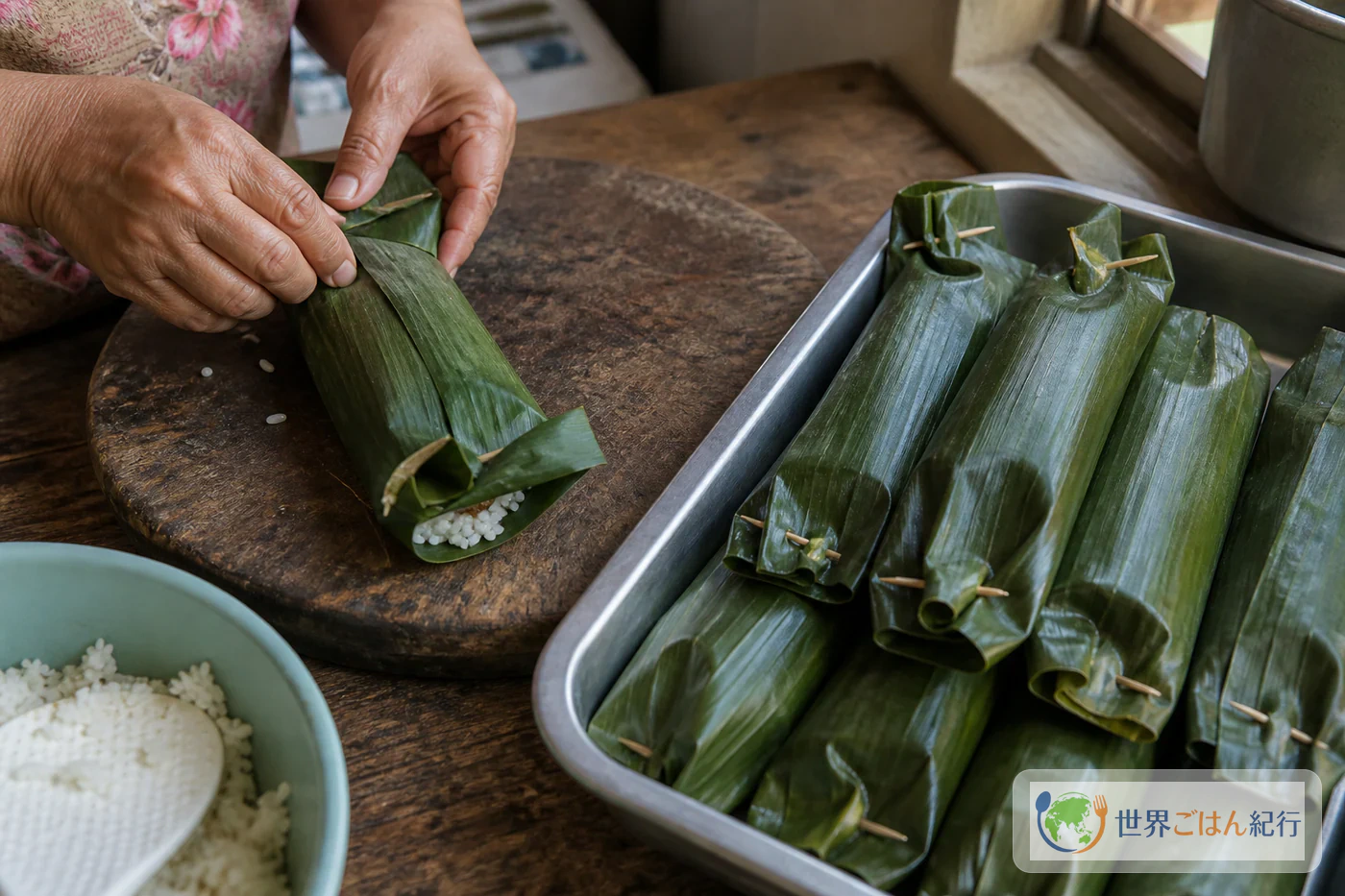
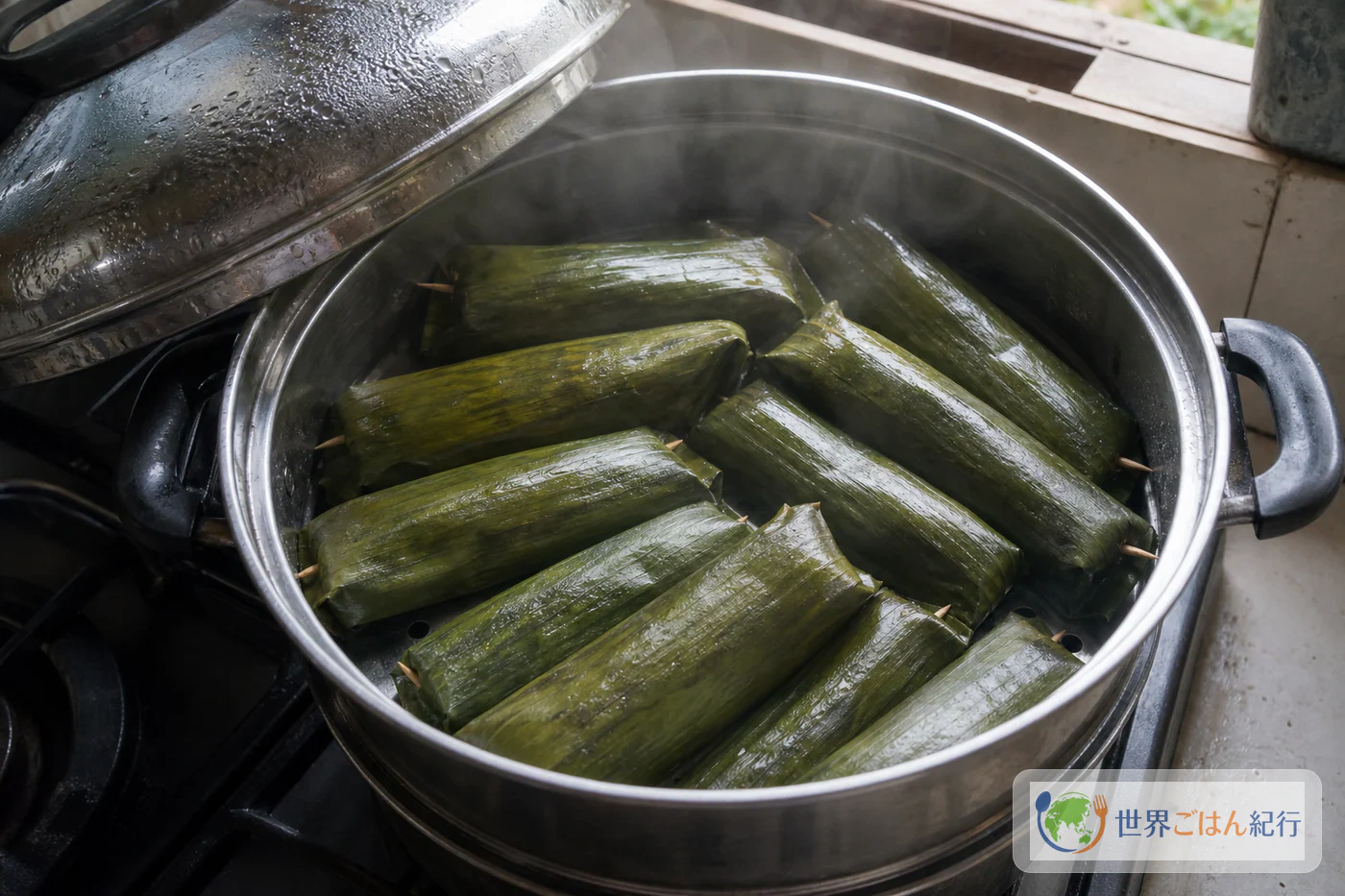
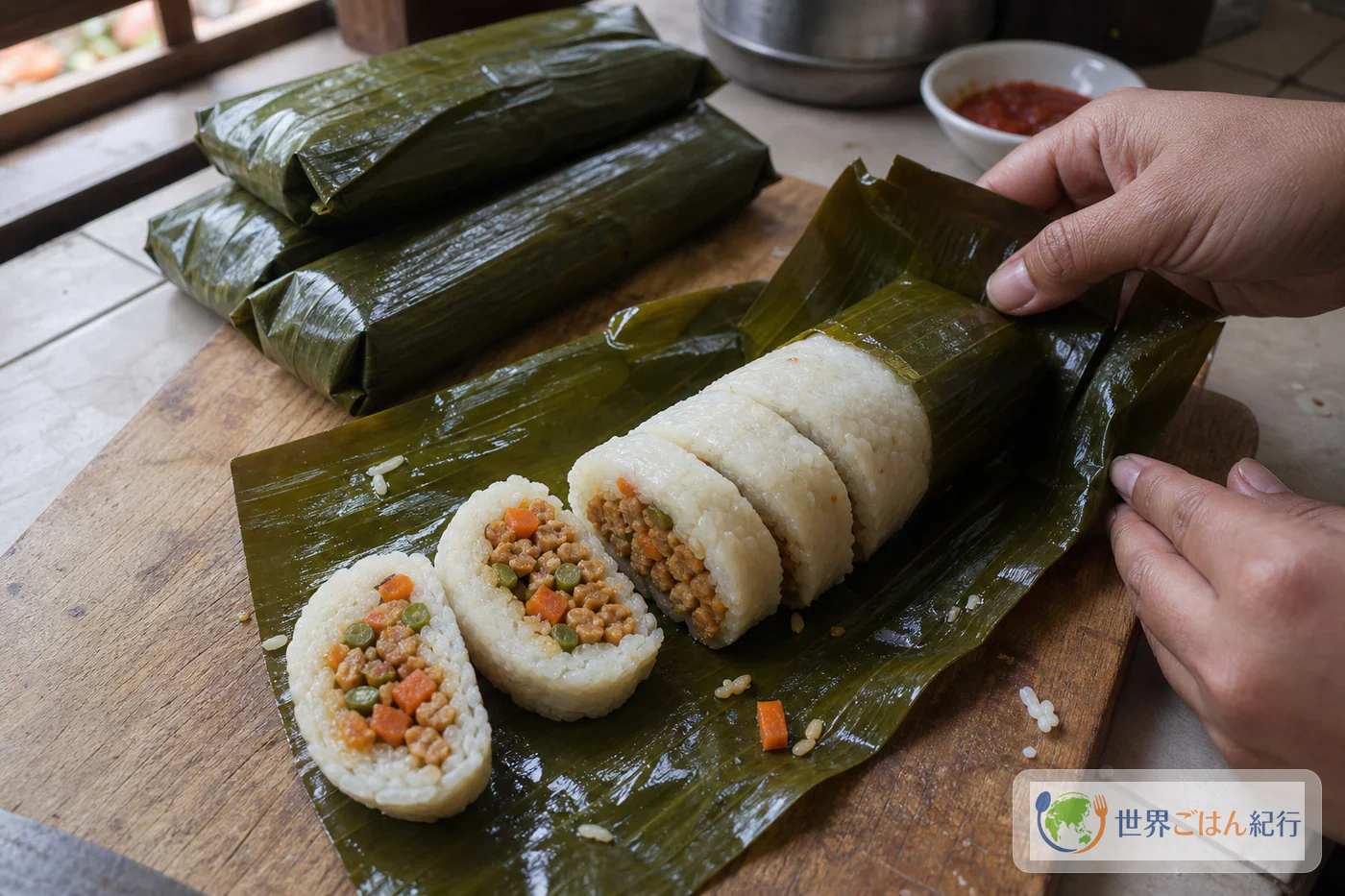
Unwrap the leaf and out come coconut rice and a sweet-savory filling
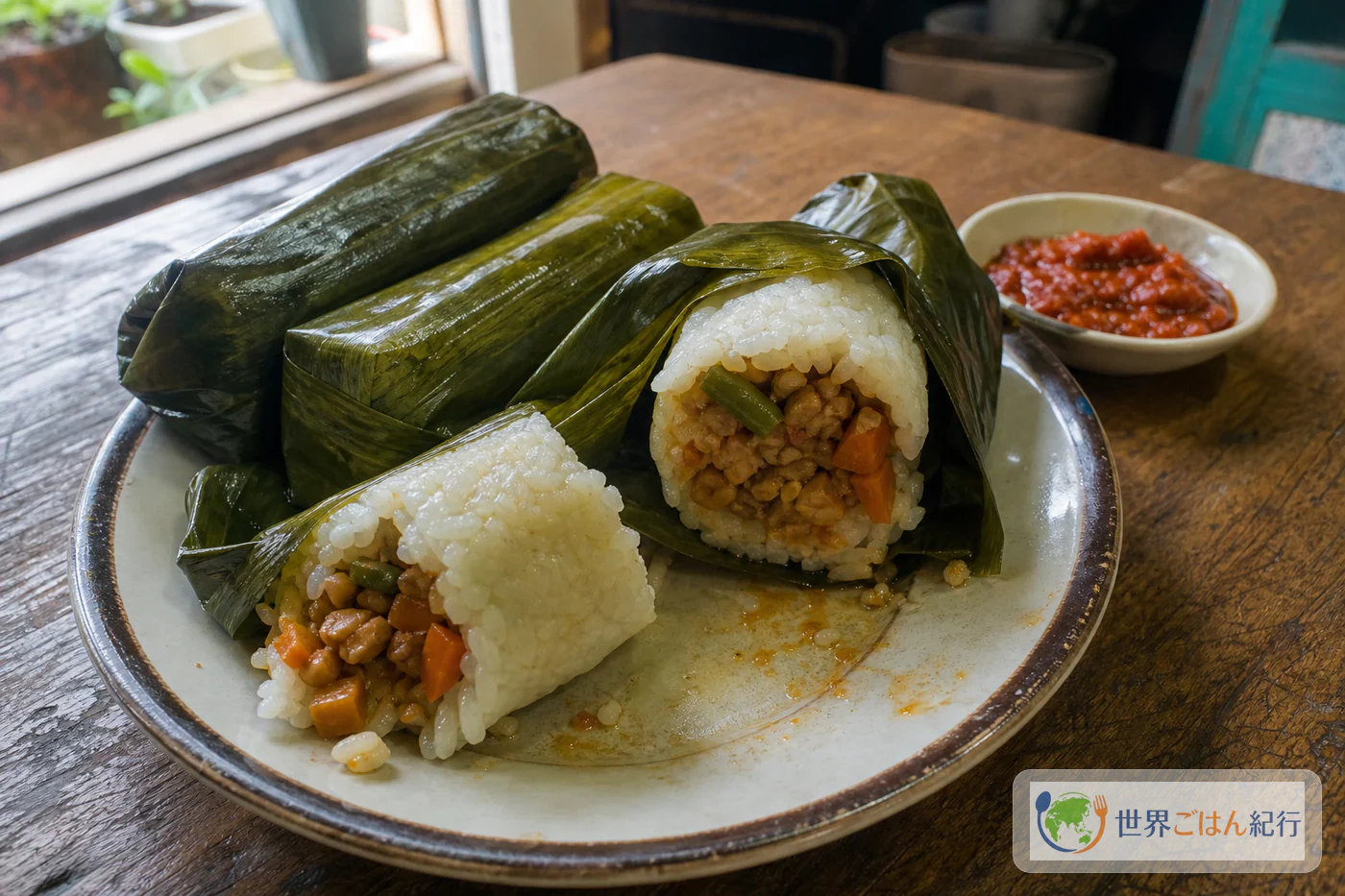
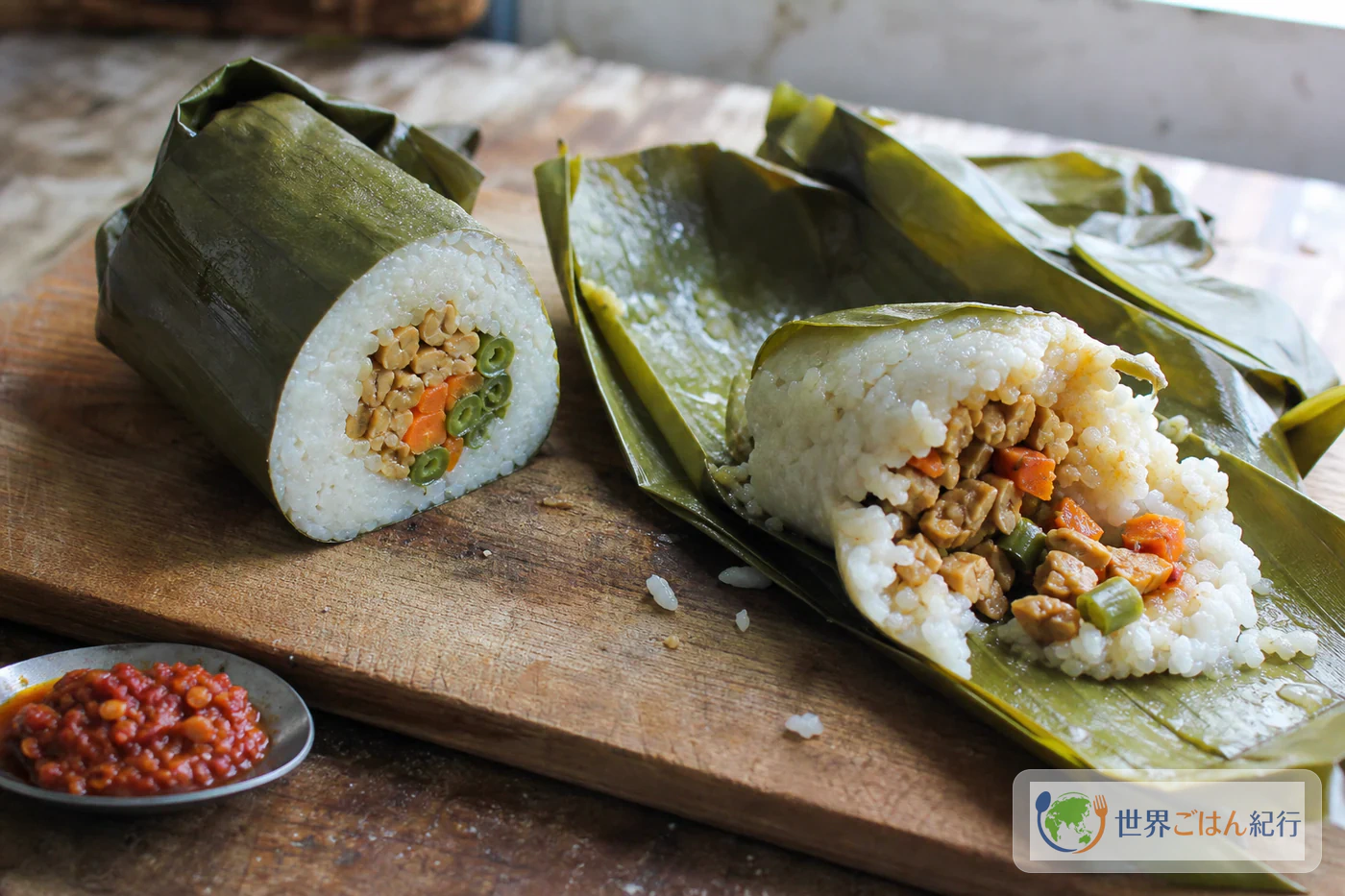
The moment the banana leaf is unwrapped, the steam of the rice carries the round aroma of coconut milk mixed with the sweet-savory smell of stir-fried tempeh. It looks like a small wrapped rice roll. Eaten, it is softer than an onigiri, more everyday than a zongzi, and partway through you want to add a little sambal. Arem-arem is rice you can hold in your hand, found in Indonesian markets and snack boxes.
Arem-arem is a cylindrical leaf-wrapped rice popular in Java. In the English-speaking world it is described as rice wrapped in banana leaf and filled with vegetables, tempeh, oncom, ground meat or abon (shredded meat floss), and it is sometimes spoken of as close to lontong isi, that is, filled lontong. It resembles lemper, which uses glutinous rice, but this one is made with ordinary rice, so the texture is lighter and leans toward breakfast and snacks.
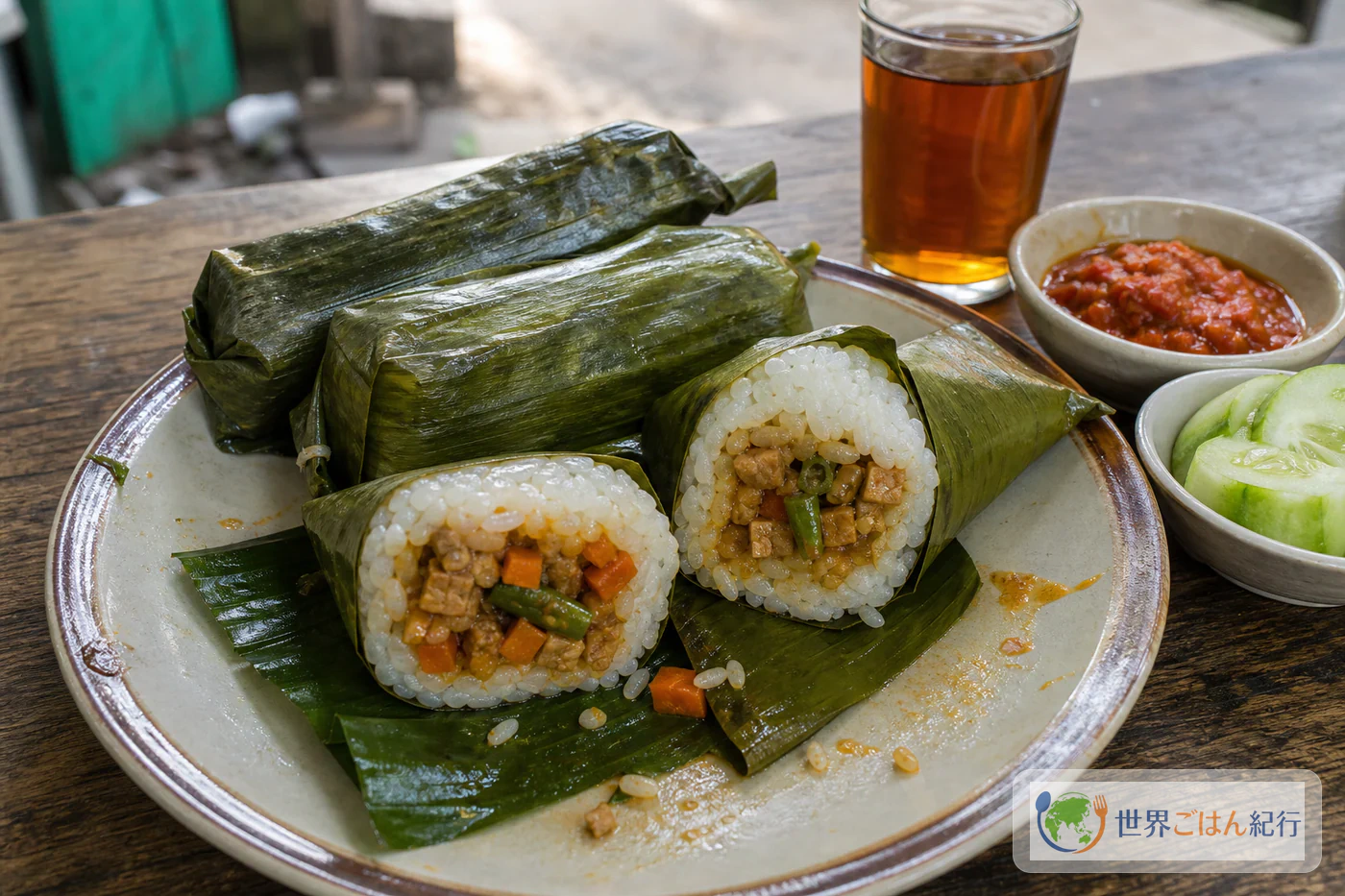
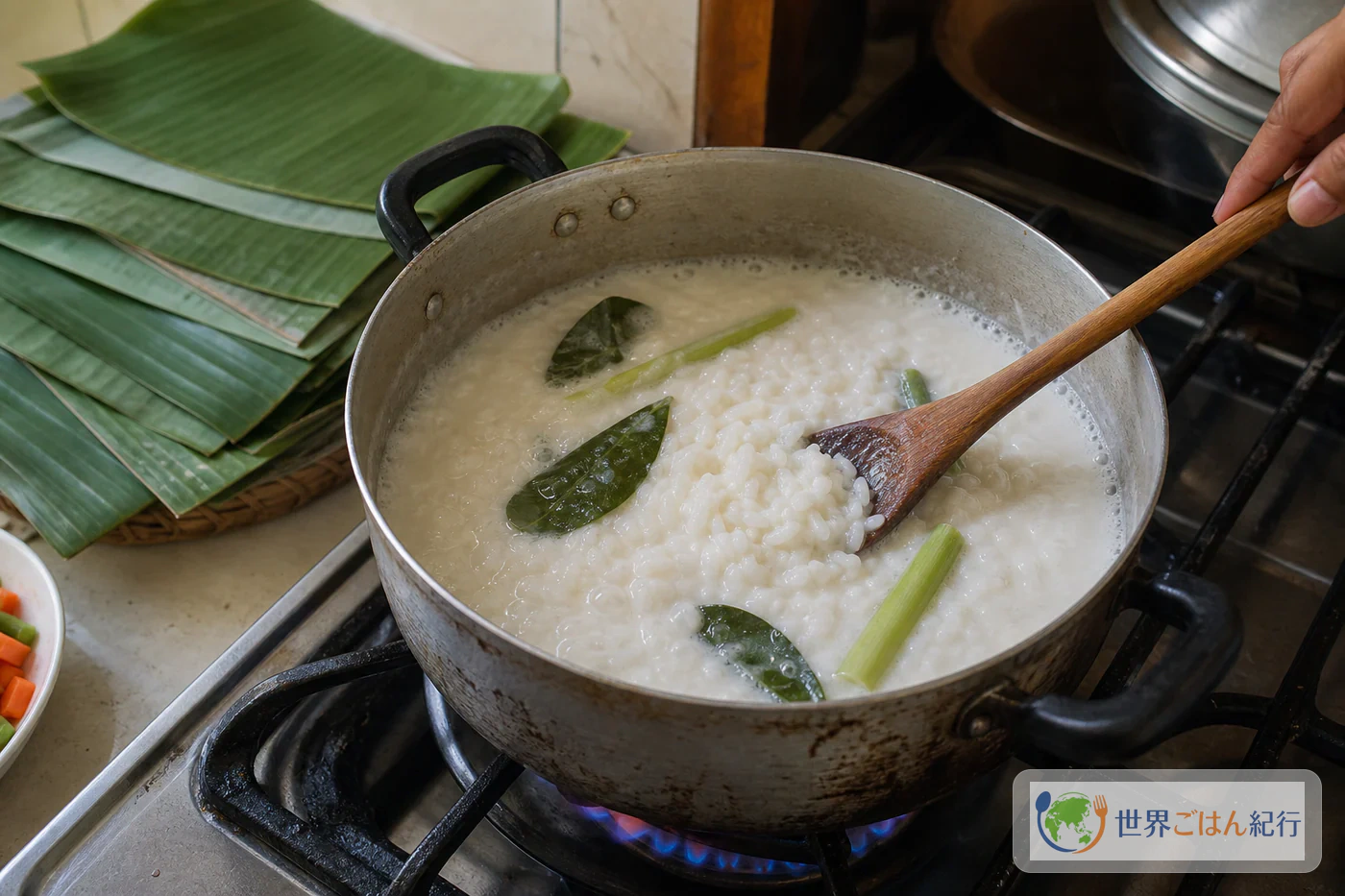
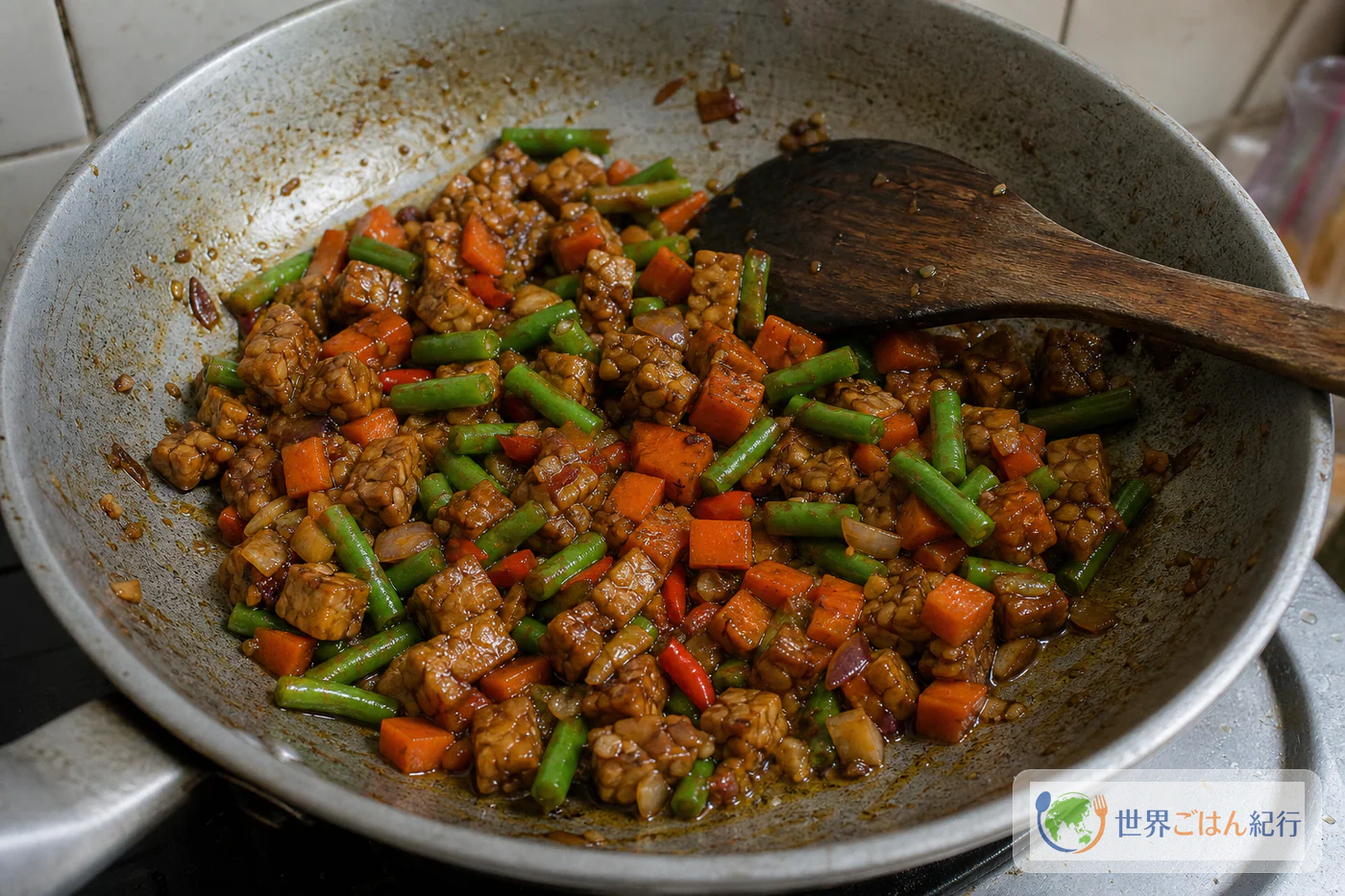
What a cook outside Indonesia worries about is not the banana leaf but the moisture of the rice. If you cook the rice fully before wrapping it is too soft, and if you wrap it hard the core stays firm even after steaming. This article cooks the rice halfway in coconut milk, wraps a tempeh and vegetable filling with the liquid cooked off, and finishes in a steamer. It is a method that shuts into one package the feeling of scenting rice as in nasi uduk and the sweet-savory flavor of kecap manis used in mie goreng.
In Indonesian it is written arem-arem. The spelling wavers between Arem-arem and arem arem, but here we use "arem-arem" throughout. The filling varies by household and shop; this article uses a tempeh and vegetable filling that is easy to make outside Indonesia and keeps a local aroma.
Javanese market snack, and how it differs from lemper
Arem-arem is a dish between a meal and a snack. People buy it at the market in the morning and eat it on the way, it goes into snack boxes for meetings and family gatherings, and it sits beside spicy dishes as a staple. It is not a showy feast, but it has the convenience of being edible just by opening the leaf.
English Wikipedia describes arem-arem as a Javanese dish, a snack in which compressed rice and a filling are put in a cylinder inside banana leaf. The filling is vegetables, tempeh, oncom, ground meat, abon and so on. It also touches on the fact that coconut milk and longer steaming are involved in why it tends to be softer than ordinary lontong. In an Indonesian cooking course text, it is treated as a dish in which the rice is made into aron (cooked halfway) with santan, that is, coconut milk, and salt, and then wrapped in leaf.
| Point of comparison | Arem-arem | Lemper | Lontong |
|---|---|---|---|
| Rice | Ordinary rice | Glutinous rice | Ordinary rice |
| Filling | Vegetables, tempeh, meat and so on | Often shredded chicken or fish floss | Basically none |
| Wrap | Rolled into a tube in banana leaf | Wrapped small in banana leaf | Tied tightly in banana leaf |
| Texture | Soft wrapped rice | Very sticky from glutinous rice | Firm compressed rice |
| How it is eaten | Snack, breakfast, a gift to bring | Snack, celebration sweet | Instead of a staple |
The lines to keep when making it are: ordinary rice, softened with coconut milk, with the moisture of the filling driven off first, and the aroma added by the leaf. Switch to glutinous rice and it moves toward lemper; tie it tightly with no filling and it moves toward lontong. The character of arem-arem lies in the softness in between.
Ingredients (serves 4 as a snack, makes 8 pieces)
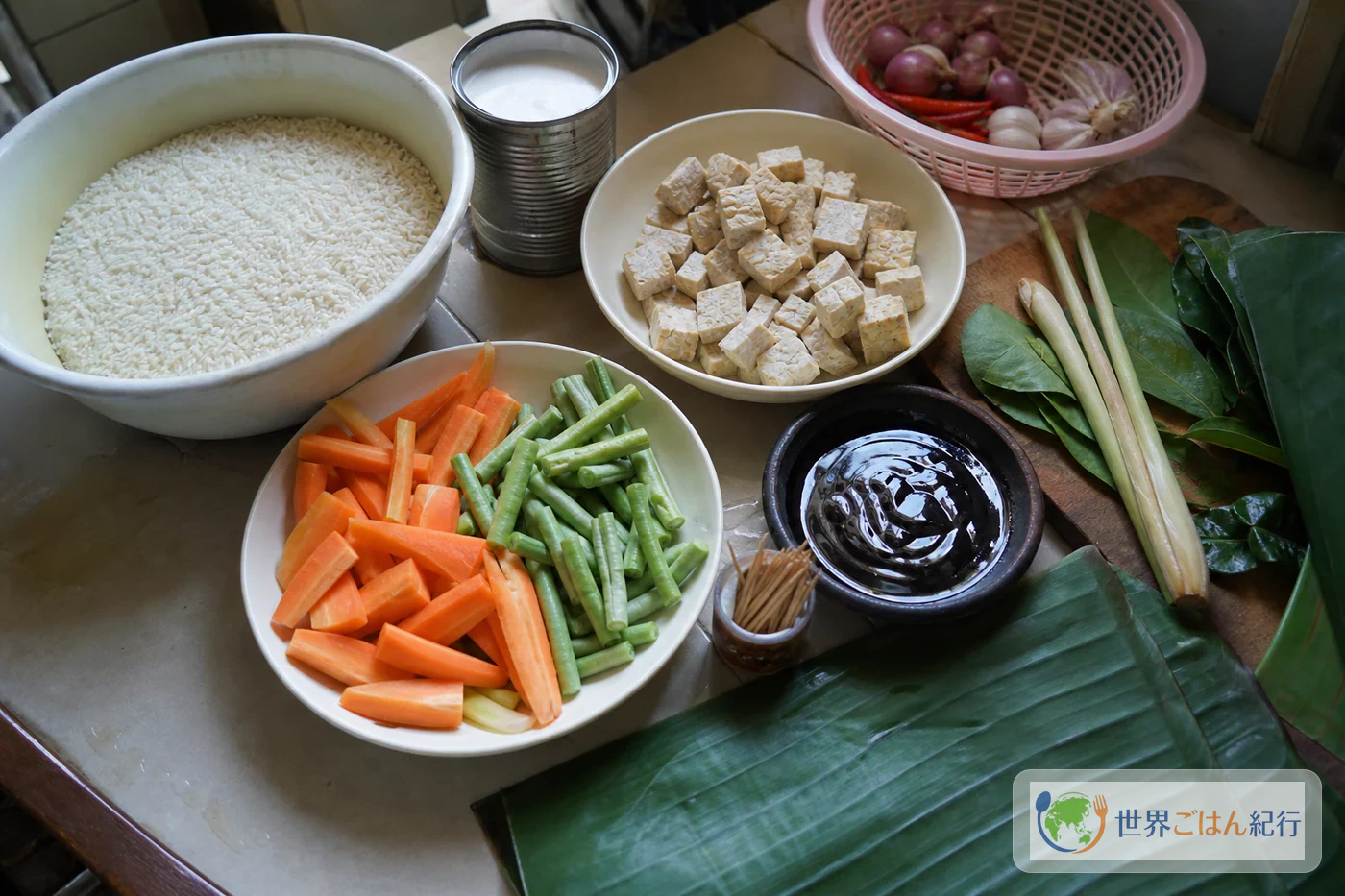
This dish involves soy, coconut and seasonings that may contain wheat. Check the ingredient labels of tempeh, soy sauce and kecap manis. Do not eat the banana leaf or the toothpicks. Before serving, turn the toothpicks so they are visible.
Shopping: keep to the local seasonings
Ordinary rice, carrot, green beans and onion are fine from a nearby supermarket. What is worth buying are the coconut milk that makes the flavor a different thing, the kecap manis that decides the sweet-savory taste of the filling, and the sambal so each person can adjust the heat at the table. Banana leaf can be found frozen at online shops and Asian grocery stores; here we limit ourselves to how to choose it. On a day with no leaf, shape it with parchment paper and aluminum foil and accept that only the aroma is lost.
Coconut milk decides the moisture and aroma of the rice. Any left over can go into nasi uduk or nasi lemak.
Kecap manis is not just sweet soy sauce; its thickness and the roundness of palm sugar stay in the filling. It also works for sate ayam and mie goreng, so if you keep cooking Indonesian food it is handy to have a bottle.
Do not cook the heat into the rice. Serving the sambal on a separate dish and letting rice, filling and heat meet in the mouth is easier for a family table to adjust.
Nutrition guide
| Guide per piece | Value |
|---|---|
| Energy | about 260 kcal |
| Protein | about 6 g |
| Fat | about 7 g |
| Carbohydrate | about 43 g |
| Fiber | about 3 g |
| Salt equivalent | about 1.3 g |
Though it looks like a snack, it uses rice and coconut milk so it keeps you full. For lunch, 2 pieces with a soup; for a snack, 1 piece is enough. Extra sambal and kecap manis raise the salt and sugar, so put them on a separate dish at first and add a little at a time.
Method: cook the rice halfway, cool the filling and wrap
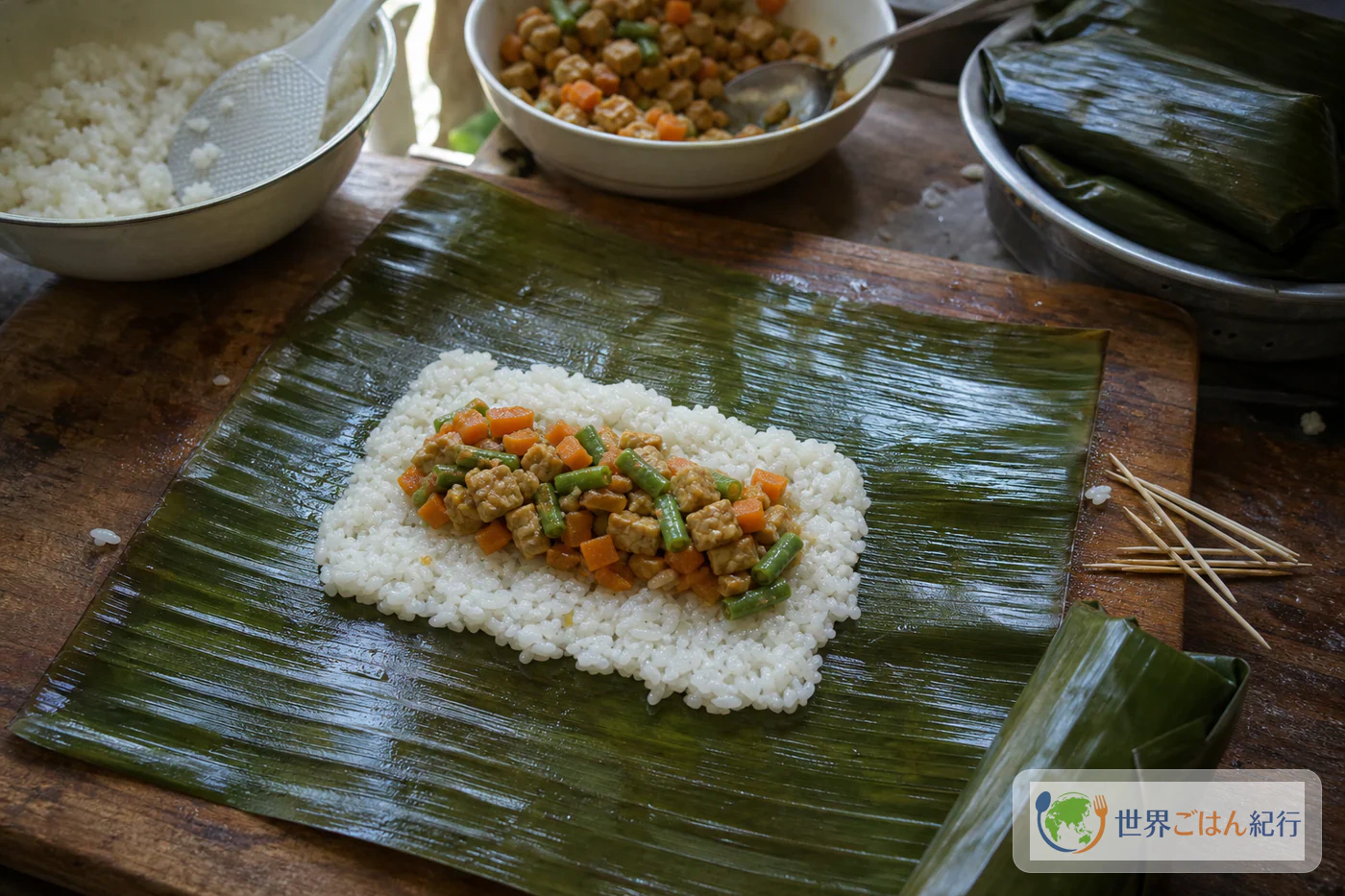
The trick is to bring the rice and filling to the same temperature before wrapping. Rice that is too hot is hard to spread on the leaf, and rice that has cooled completely cracks. Cook the filling until the moisture is driven off and it holds together when pressed but releases no liquid.
Substitutes: what to protect is the rice, the aroma and the dryness
Arem-arem is not a dish that requires gathering every ingredient from abroad. Rather, deciding where to hold the line so that it can still be eaten as arem-arem makes it easier to cook.
Ordinary long-grain rice is closest to the local style. Half jasmine and half short-grain rice is easy to handle, and glutinous rice alone moves toward lemper.
Use 200 ml of the thick canned coconut milk and adjust with water. A thin version made with a coconut drink weakens the aroma of the rice.
Use frozen banana leaf after making it pliable. On a day you cannot get it, protect the shape with parchment paper and aluminum foil, and accept the loss of aroma.
Tempeh diced to 7 mm stays visible in the cross-section. Fried tofu or ground chicken can substitute, but putting in watery tofu as it is makes it bleed into the rice.
For kecap manis, the quickest route is a sweet soy sauce. If you have none, approximate with 2 tsp soy sauce and 2 tsp dark brown sugar, and do not sweeten with sugar alone.
On a day with no leaf, wrap the inside with parchment paper and lightly support the outside with aluminum foil. The aroma is weaker, but the moisture of the rice and the shape are protected. Conversely, even with banana leaf, if the rice is watery it falls apart the moment you open it. On a first try, put the firmness of the rice ahead of the leaf.
Where it goes wrong: collapsing, leaking, watery
| Problem | Main cause | How to fix |
|---|---|---|
| Rice is sticky | Left too much moisture in the half-cooked rice | Add 2 more minutes over low heat and drive off surface moisture before wrapping |
| Cross-section collapses | Cut right after steaming | Rest 8 minutes with the leaf closed and cut with a wet knife |
| Filling leaks | Filling placed to the ends, too much liquid | Leave 1.5 cm clear on each side of the rice and cook the filling until no liquid remains at the bottom |
| Leaf tears | Folded a cold leaf as it was | Make it pliable with 30 seconds of steam or 5 seconds over low flame |
| Center is hard | Rice made too firm, weak steam | Get strong steam rising on high heat first, then steam on medium |
At a glance arem-arem is "just wrap and steam," but the causes of collapse split among the rice, the filling, the leaf and the timing of the cut. When it is watery, extending only the steaming time does not fix it if the liquid of the filling has gone into the rice. A failed package still tastes fine, so take the crumbled part out of the leaf and eat it as a small mixed rice with sambal and cucumber.
Eating and storing: good even a little cooled
Arem-arem gives off the strongest leaf aroma when eaten while it still steams from the steamer. At the same time, being easy to eat even when not piping hot is typical of a market snack. For lunch, add a soup such as soto ayam, cucumber and a boiled egg and it makes a meal. As a snack, 1 piece as it is, with a little sambal added, is enough.
Store up to 2 days in the refrigerator. Wrap each in plastic wrap with the leaf on and put it in an airtight container. For reheating, 8 minutes over medium heat in a steamer is the most natural. In a microwave, put it on a heatproof dish with the leaf still on, sprinkle 1 tsp water, cover loosely with plastic wrap and heat at 600 W for 50 seconds to 1 minute 20 seconds. Freezing tends to harden the rice, so only if you must keep it, wrap each in plastic wrap and re-steam within 2 weeks.
Frequently asked questions
Can I make it without banana leaf?
Yes. Wrap the inside in parchment paper and support the outside with aluminum foil, and the shape holds. But the green aroma of the leaf will not come through. On a first try, a substitute is enough to learn the firmness of the rice and the liquid of the filling, and looking for frozen banana leaf can come after you like it.
What do I use if I have no tempeh?
Fried tofu, ground chicken and finely diced chicken breast work. For fried tofu, wipe off the moisture, dice to 7 mm and brown the surface first so it does not turn watery. If using chicken, cook until white through the center and stir-fry until no liquid remains.
Can I cook the rice halfway in a rice cooker?
You can, but on a first try a pot makes it easier to see the state. In a rice cooker, put in the rice, coconut milk, water, salt, sugar and herbs, stop after about 10 minutes of heating on the quick setting, and check that the rice has absorbed the liquid but a little core remains. Models vary widely, so on the premise that it will be steamed, it is important not to make it too soft.
Can I make the filling not spicy for children?
Yes. Leave out the red chili and serve the sambal on a separate dish. The flavor of the filling comes from kecap manis and soy sauce, so the sweet-savory taste remains even without heat. Letting adults add sambal as they eat keeps the taste of the whole package steady.
What do I keep separate if I make it the same day as lemper?
Separate the rice. Lemper uses glutinous rice and arem-arem uses ordinary rice. The work of filling and leaf is similar, but the moisture of the rice differs, so making them in the same pot makes one of them more likely to collapse. The leaves, toothpicks and steamer can be shared.