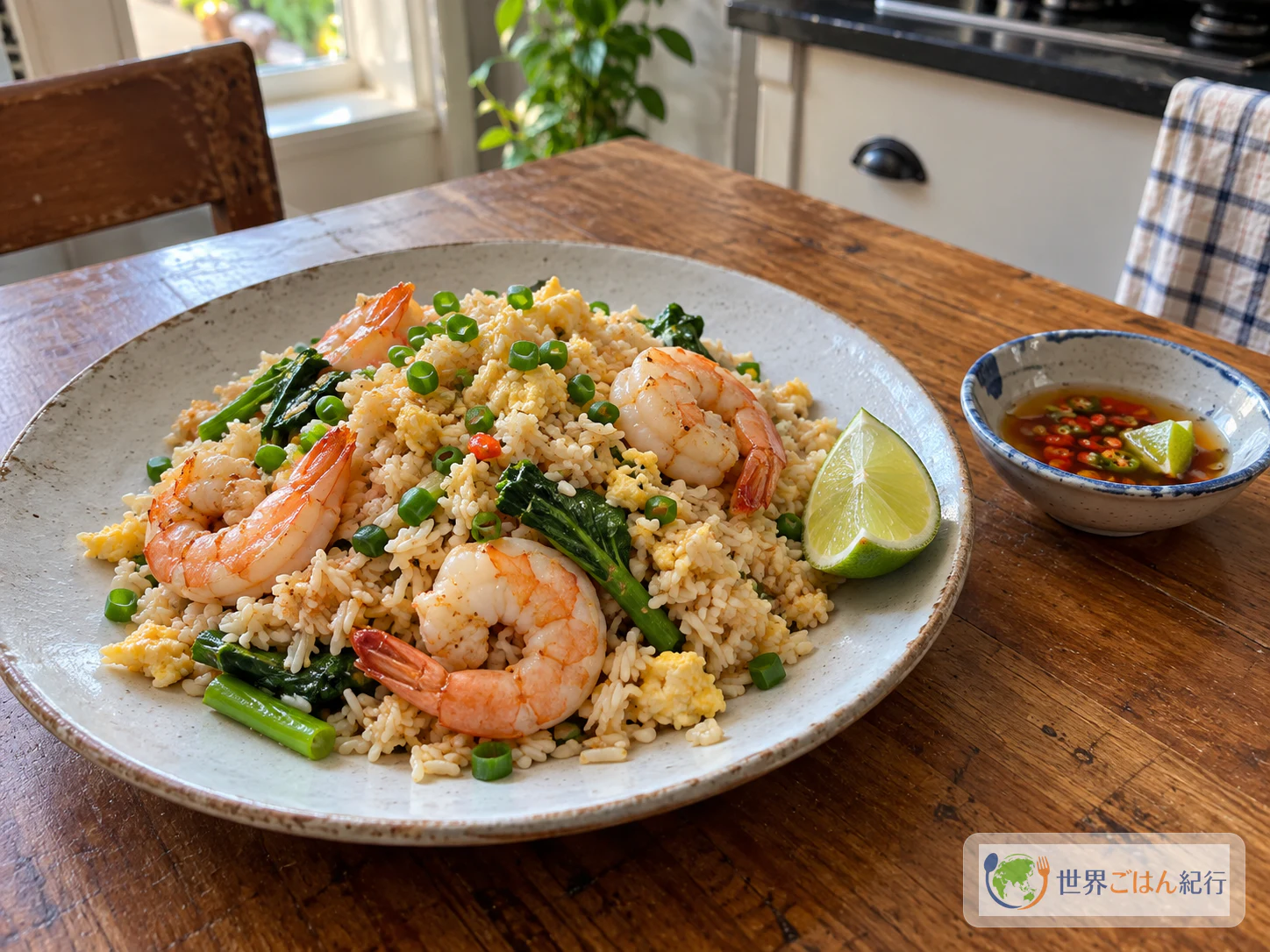
Khao Pad Goong: A Fast Plate from a Hot Wok, Finished at the Table
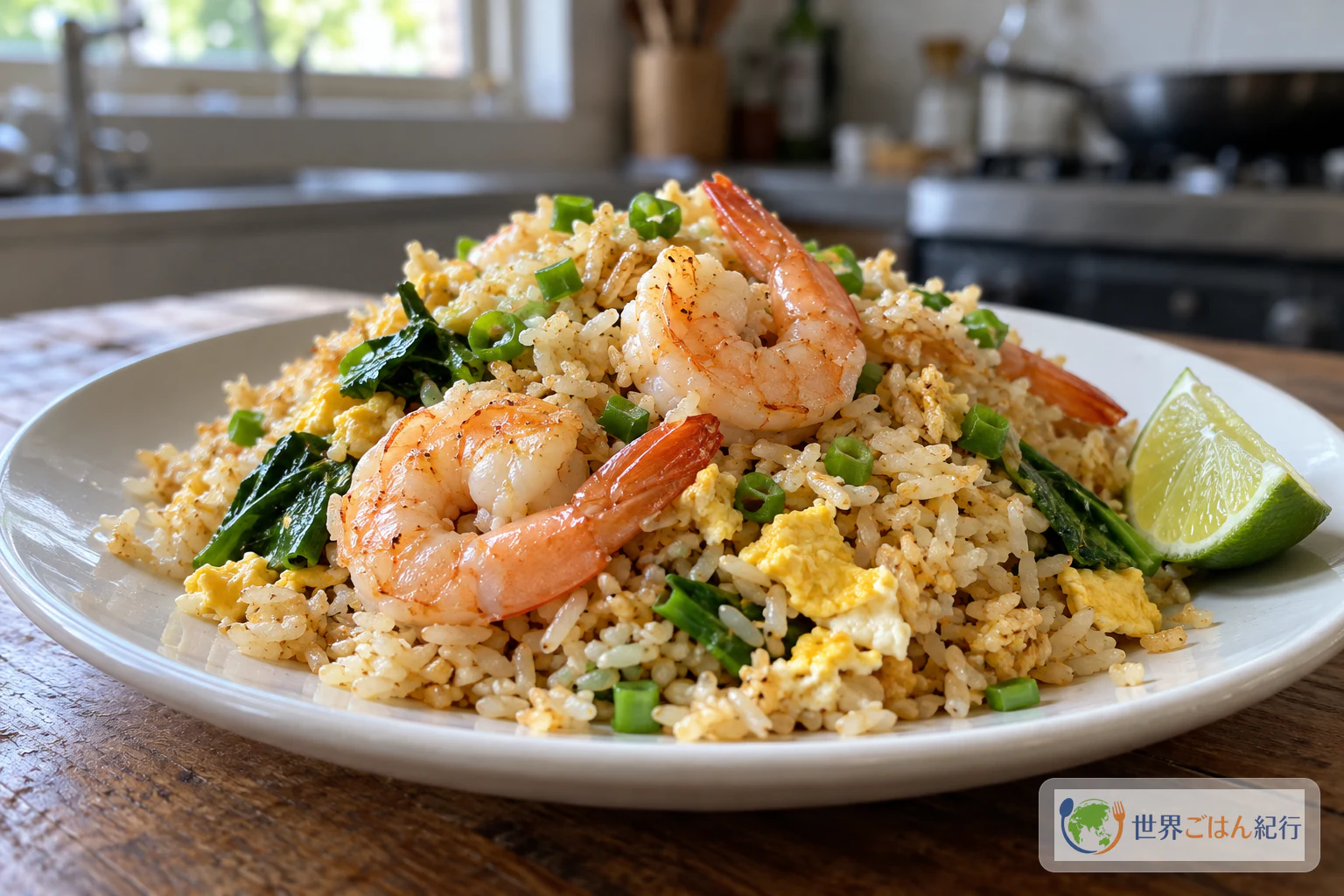
Cook one serving at a time in a hot wok, keep the rice grains separate, and leave the final sour, salty and spicy notes to each eater, using the lime and the small bowl of chili fish sauce on the side.
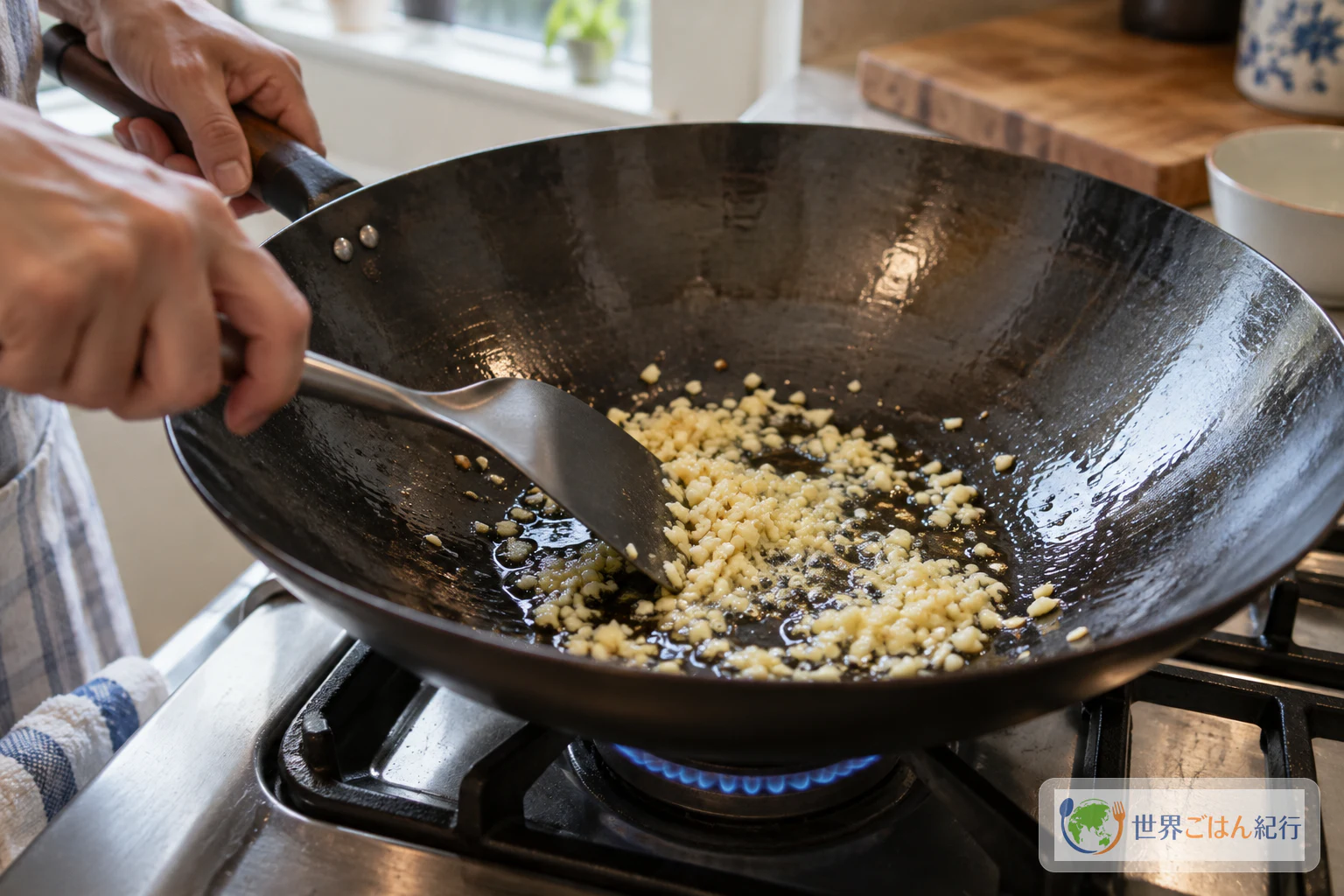
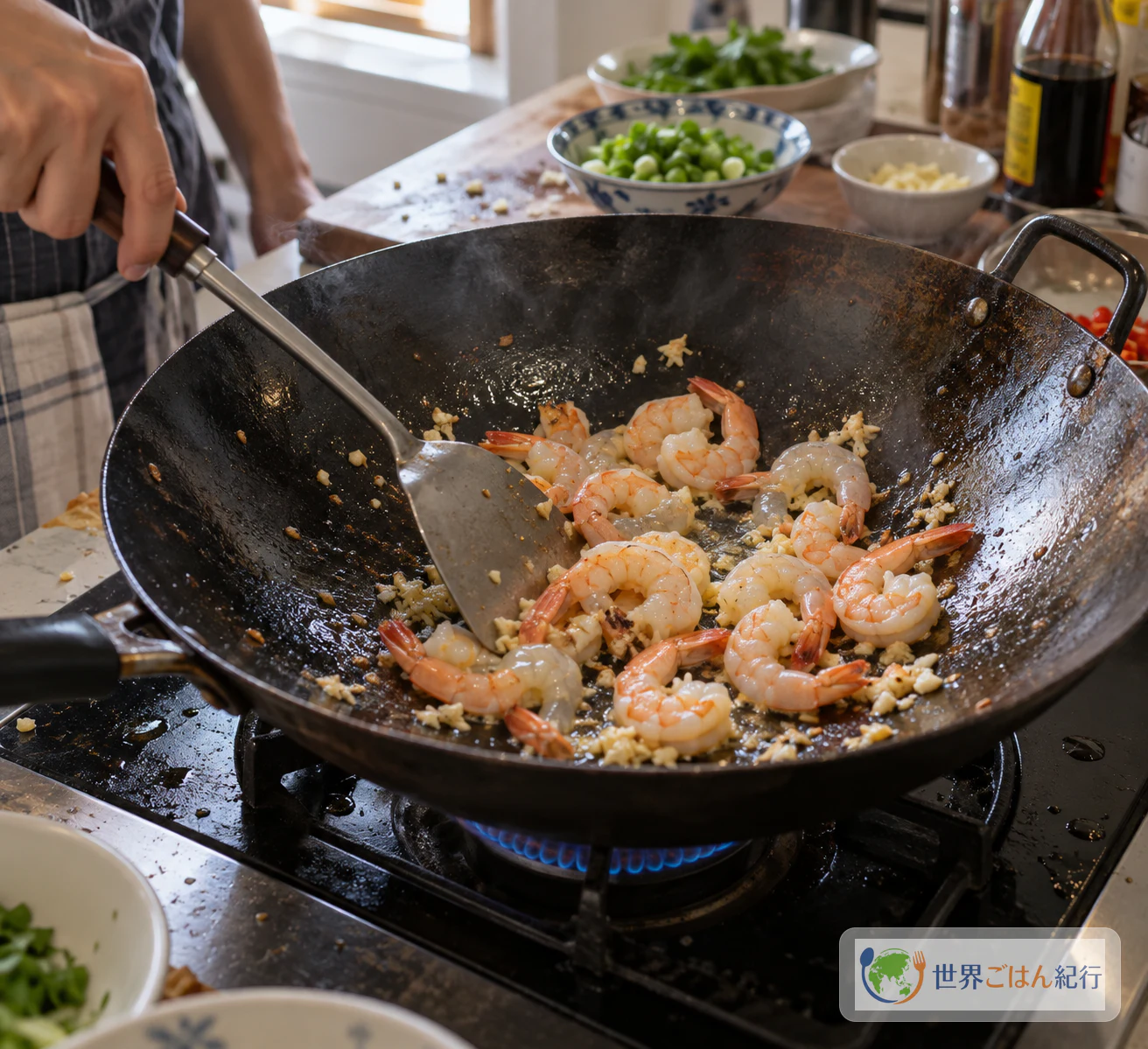
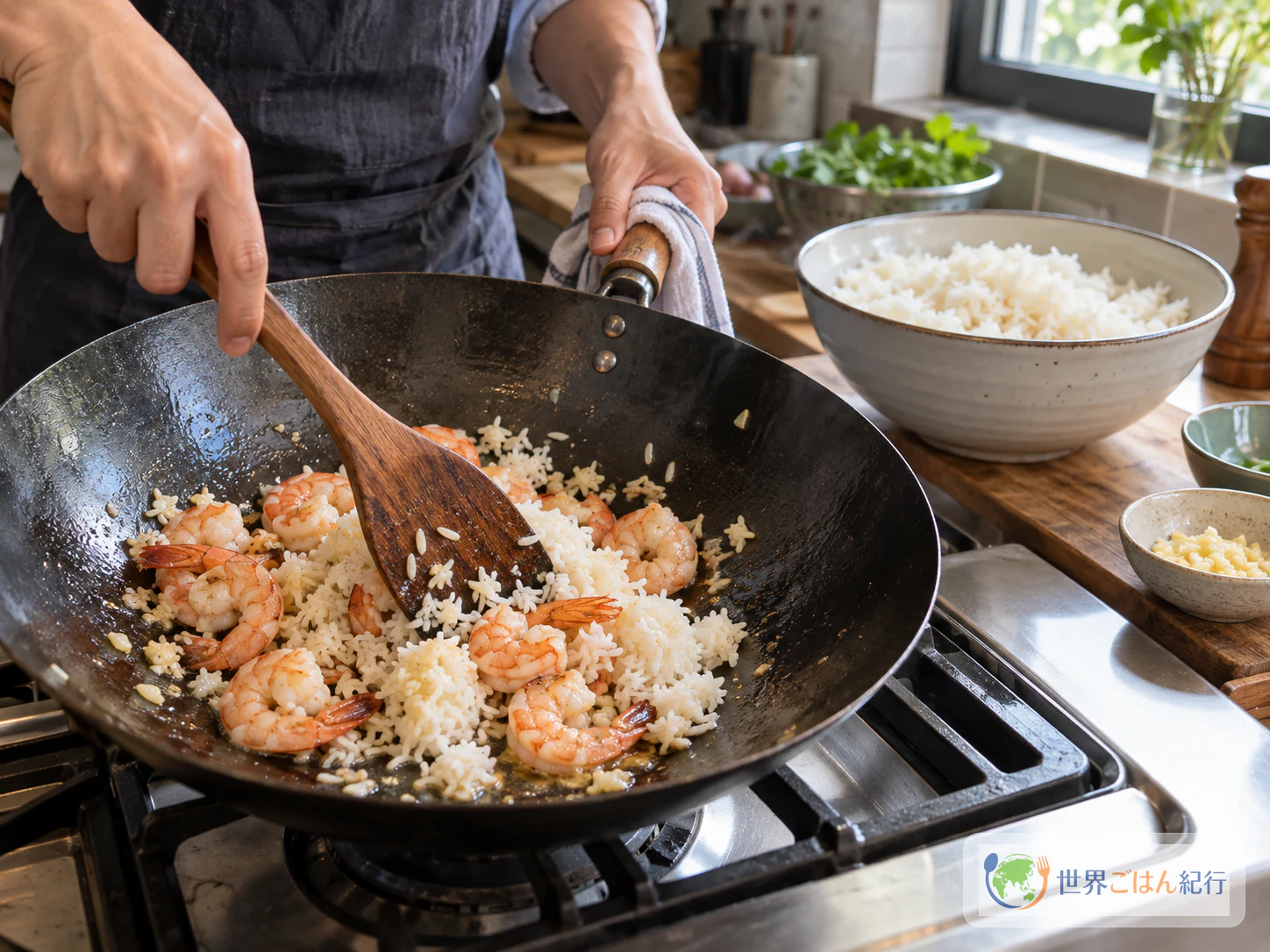
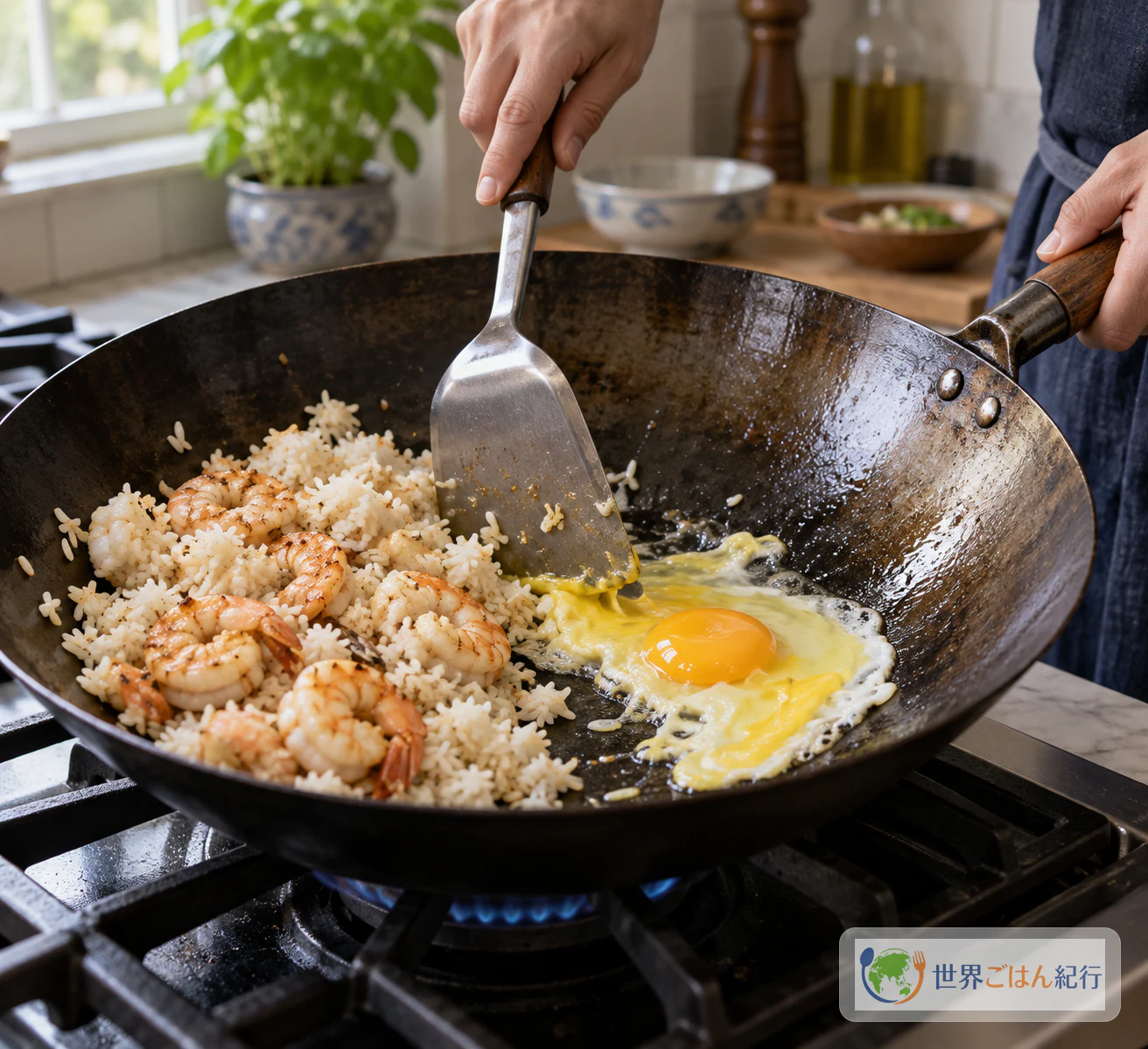
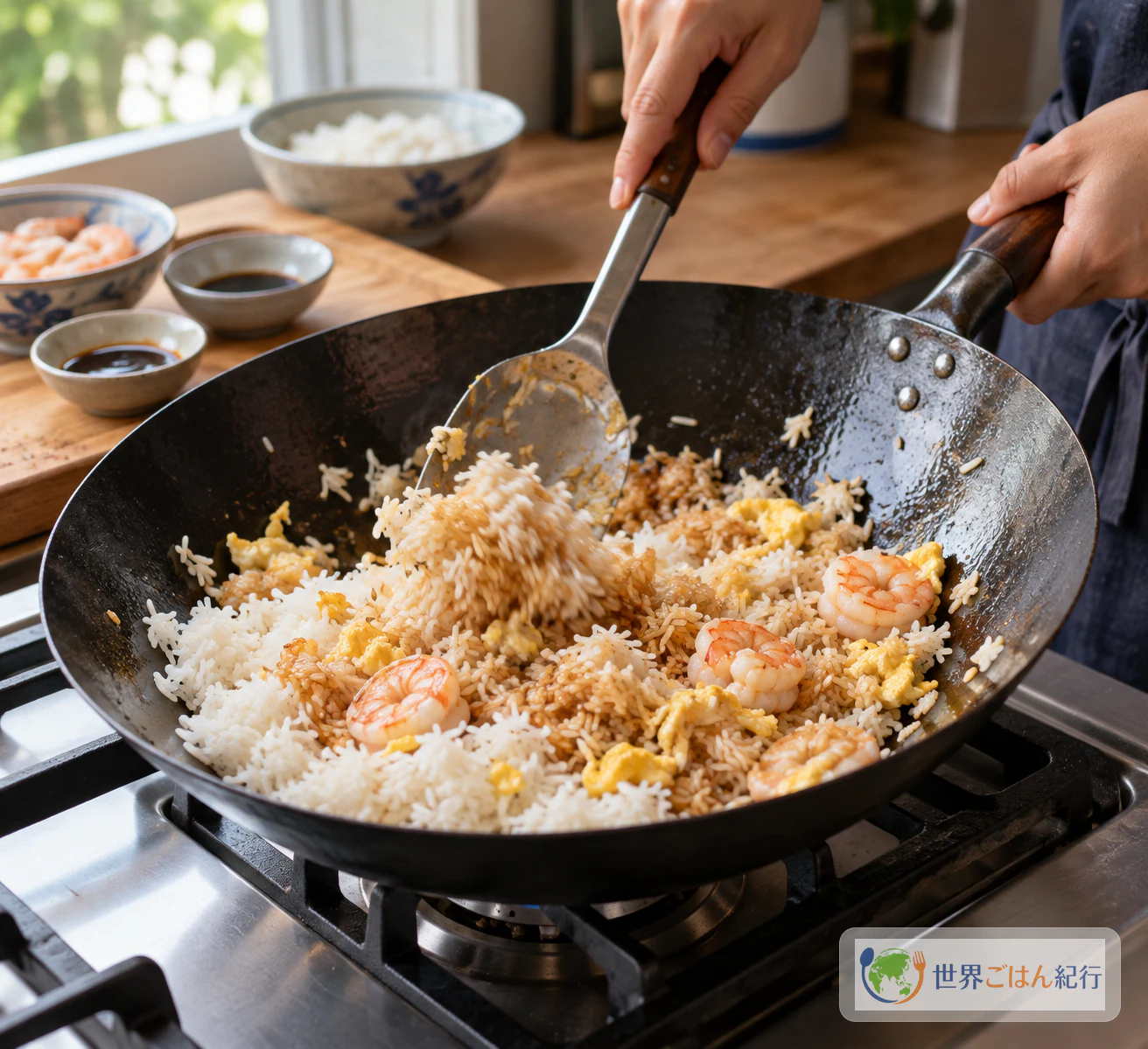
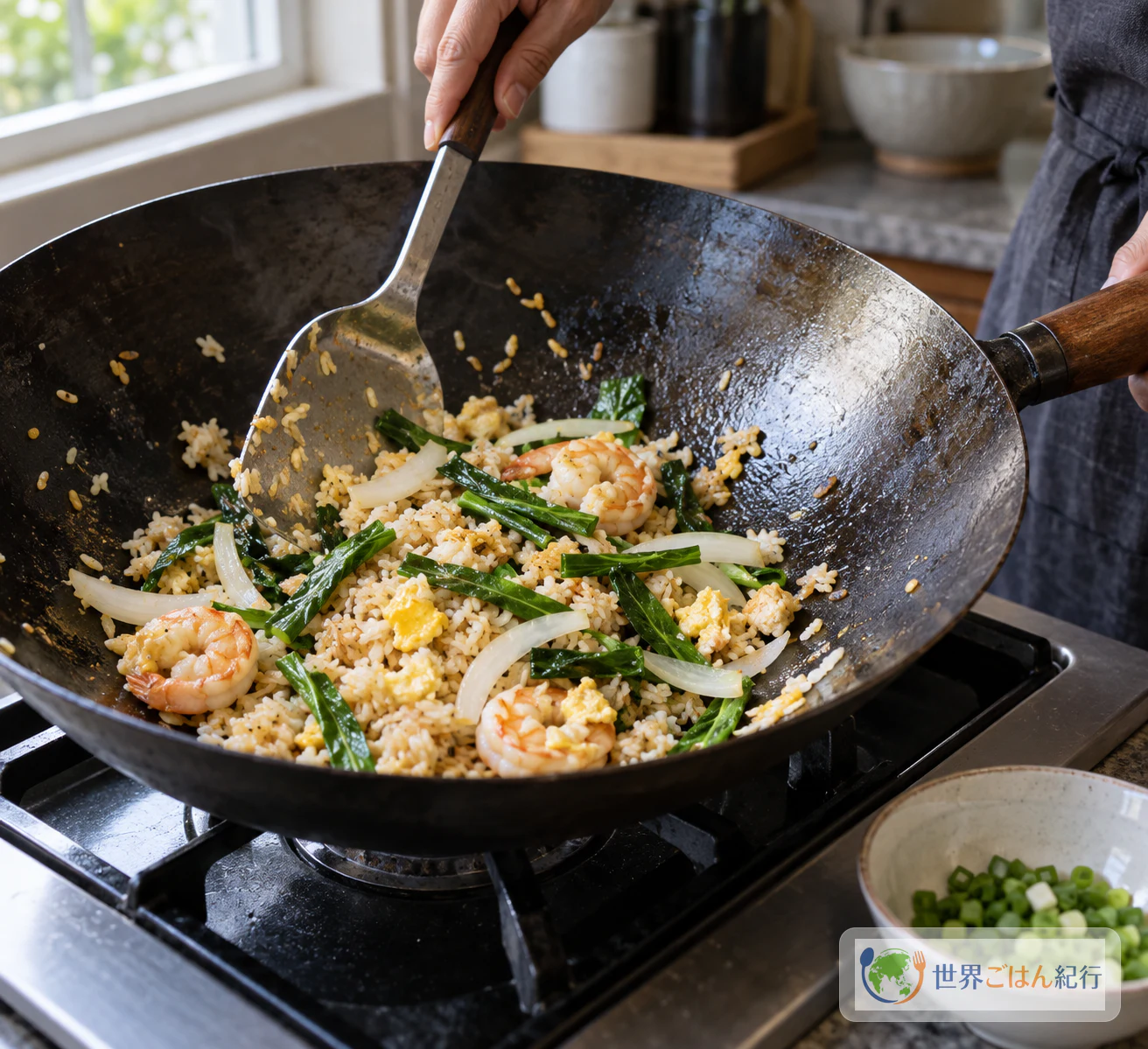
Garlic hits hot oil, peeled shrimp follow, and within moments the cooled jasmine rice goes in. An egg sets in a clear corner of the wok, a little soy sauce and oyster sauce coat the grains, and a few strips of Chinese broccoli and onion are tossed through just long enough to wilt. The plate arrives with a lime wedge and a small bowl of fish sauce with chopped Thai chilies, so that whoever is eating can season it spoon by spoon.
In Thai, fried rice is ข้าวผัด, khao pad (also written khao phat), and the shrimp version is ข้าวผัดกุ้ง, khao pad goong. Eating Thai Food describes khao pad as a common dish at street-food stalls and stir-fry shops, and this recipe follows that site's single-serving shrimp version. If you would like to see where this dish sits among other Thai dishes, start from the Thailand country page.
This is one specific recipe, not a definition of all Thai fried rice. Households and cooks change the protein, the vegetables and the sauces, and the amounts below belong to this one shrimp version only.
Where Khao Pad Sits in Thai Cooking
Khao pad is introduced by the Thailand Foundation, working with Thailand's Ministry of Foreign Affairs, as Thai-style fried rice and a recognized dish of Thai cuisine. The same overview notes that Thai cooking varies by region. It does not, however, give an origin story for khao pad, and neither do the other sources used here, so this article does not attempt one.
What the recipe author does describe is the everyday setting: khao pad is a dish you commonly find at street-food stalls and stir-fry shops, and goong names the shrimp version. In this recipe, jasmine rice, a wedge of lime and prik nam pla, the table condiment of fish sauce and fresh chilies, are part of how the dish is expressed.
A Thai cooking-class teacher writing at Thai-Foodie presents khao pad as adaptable across proteins and vegetables, and her chicken version uses different amounts and a different sauce. The Woks of Life, a Chinese-American family cooking site, cautions against treating "Thai fried rice" and "Chinese fried rice" as single national formulas, and notes that Thai recipes may combine fish sauce, Thai soy sauce, chili and lime. For that reason, if you want to compare, it is more useful to compare individual recipes, such as this one against a Chinese home-style fried rice, than whole countries.
Ingredients for One Serving: Fried Rice and a Separate Table Sauce
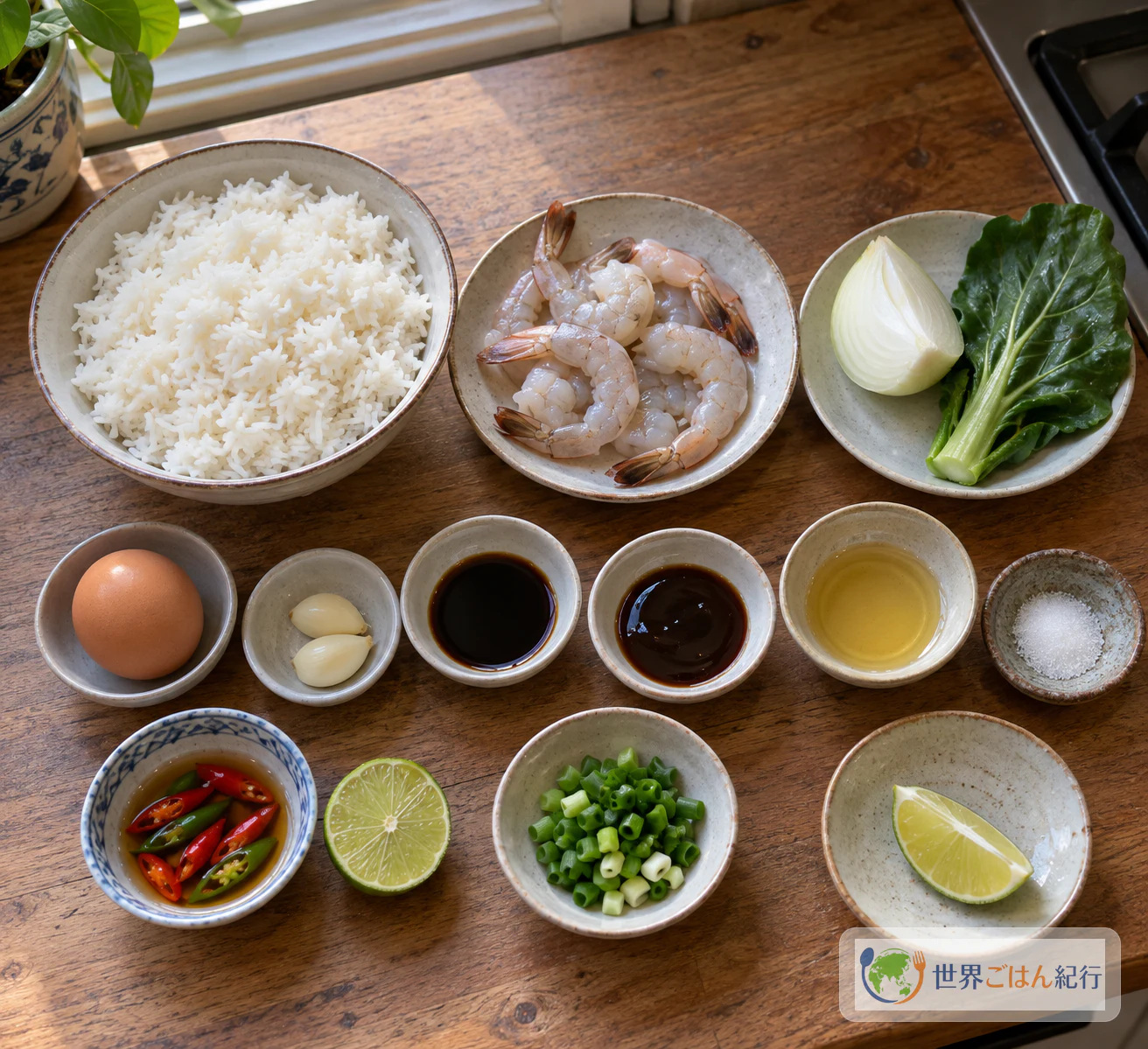
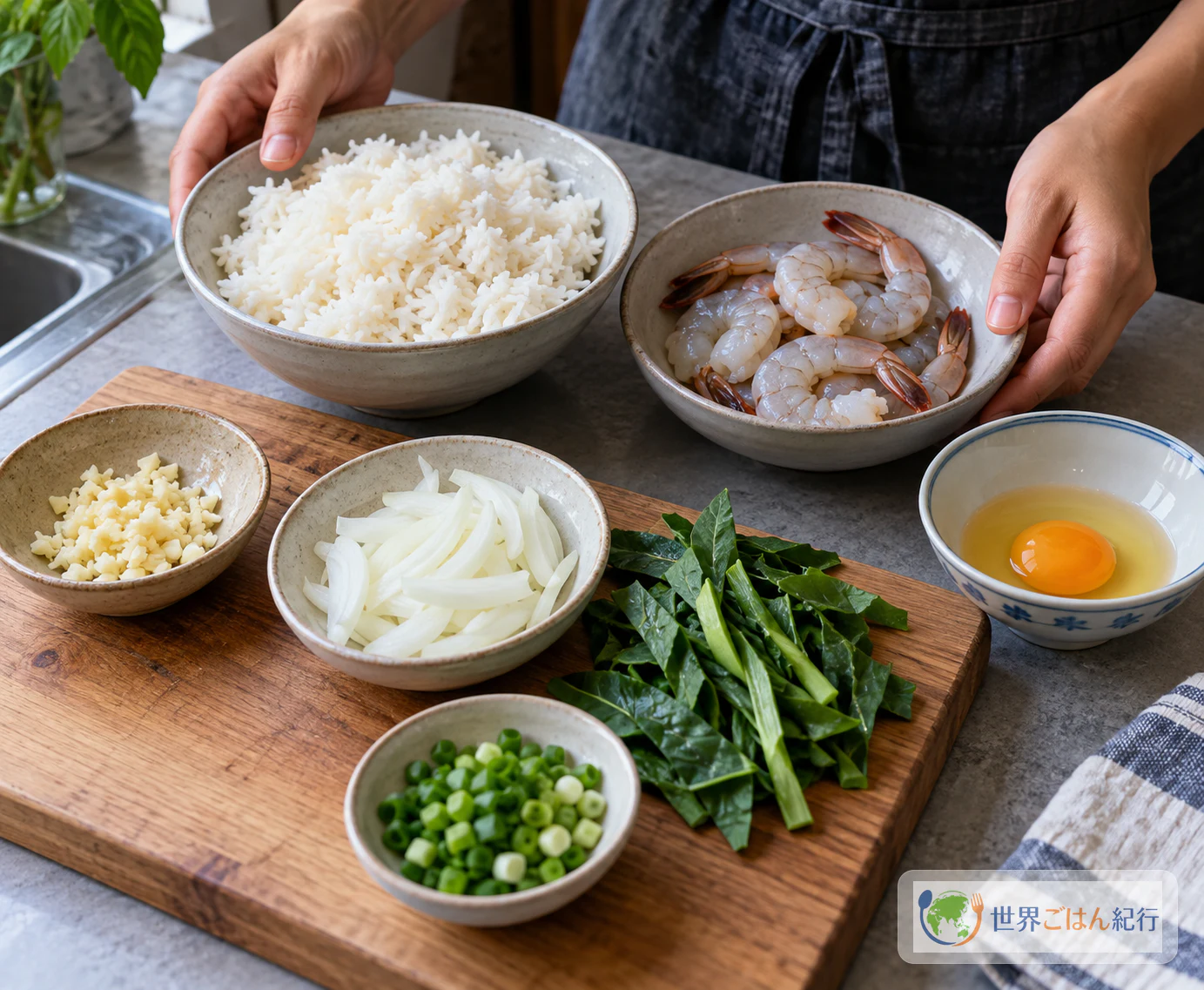
The amounts are for one serving, as given in the original recipe. The rice is measured after cooking: here, 1.5 cups of cooked rice is measured with a 240ml cup. That is a volume of cooked rice, not 1.5 cups of raw rice and not a weight in grams. The recipe allows 5–10 shrimp with no size given; this version uses 5 shrimp, a quarter of a large white onion, and no sugar.
The chili fish sauce is made as one small bowl and served on the side. It is not poured over the plate all at once; each person adds a little at a time.
This recipe contains shrimp (crustacean), egg, oyster (in oyster sauce), fish (in fish sauce) and soy (in soy sauce). Check the labels of soy sauce, oyster sauce and fish sauce for other allergens and shared-facility statements. If you make substitutions, take care to avoid cross-contact with the original ingredients.
Equipment
- Wok, or a wide frying pan
- Spatula
- Cutting board and knife
- Measuring cup (240ml) and measuring spoons
- Small bowl for the table sauce
- Serving plate
The recipe author prefers a wok, but notes that a frying pan also works, so there is no need to buy one for this dish.
Choosing and Substituting: What Changes and What Doesn't
Jasmine rice is a fragrant long-grain rice, and it brings the dish closest to the original. Japanese-style short-grain rice can be used, but the aroma and the way the grains separate will be different. Keep the same measured amount of cooked rice rather than adjusting it by guesswork.
Chinese broccoli (kai-lan) is the leaf the recipe calls for. The original also allows another leafy green with some crunch; if you use one, expect the bitterness, aroma and moisture to change. A green made only of thick stems is not the same thing as a kai-lan leaf.
Soy sauce: the recipe simply says "soy sauce" without naming a specific Thai product. Using the soy sauce you have at home is a reasonable choice, but products vary in saltiness and flavor.
Oyster sauce is part of this recipe's seasoning. Replacing it with a different sauce takes the dish outside this version.
Fish sauce is the heart of prik nam pla, and its salty, fermented-seafood aroma is hard to replace.
Thai chilies: if you cannot find them, other small fresh chilies can stand in, but heat varies from chili to chili. Since they go only into the table sauce, you can adjust the number there without changing the fried rice itself.
This guidance follows the UK Food Standards Agency's advice on rice. Cool freshly cooked rice as quickly as possible, ideally within 1 hour, by dividing it into portions, then refrigerate it and use it within 24 hours. Do not leave cooked rice to cool in the rice cooker or pot, and do not use rice that has sat at room temperature for a long time; stir-frying it will not make it safe. Rice should be reheated only once, until it is steaming hot throughout. Stir-frying refrigerated rice in this recipe is that one reheat, so eat the fried rice when it is made rather than saving it to reheat again the next day.
Method: One Serving, Medium-High Heat, Quick Moves
Everything moves in seconds once the wok is hot. Cut everything, measure the sauces and set the rice beside the stove first. The times below come from the original recipe and are guides only; your stove, pan and shrimp size will change them, so watch the state of the food.
Troubleshooting: Sticky, Soggy, Too Salty
| Problem | Likely cause | What to do |
|---|---|---|
| The rice sticks to the wok and clumps | Freshly cooked rice that is still moist and steaming | The recipe author notes that freshly cooked, moist rice tends to stick. Next time, cool cooked rice promptly in portions and refrigerate it, following the rice safety guidance above. Don't leave it out at room temperature to dry |
| The rice steams instead of frying | Too much in the pan, or not enough heat | Cook one serving at a time and keep the heat at medium-high. Don't double the batch in a home pan |
| Too salty or too spicy | Too much table sauce added at once | The chili fish sauce is served separately for this reason. Add it a little at a time, and keep the soy sauce and oyster sauce in the fried rice at the stated amounts |
| Shrimp or egg not cooked through | The recipe's times are short guides | Keep stir-frying until the shrimp are opaque and firm and no runny egg remains, even if that takes longer than the times given |
Variations Worth Knowing
- Head-on shrimp: some recipes use shrimp with heads on, but that is a different version. This one removes the heads and keeps the tails.
- More or less heat: change the number of chilies in the table sauce only. The fried rice itself stays as written.
- Another crunchy green: the original allows a leafy green with crunch in place of kai-lan. Expect a different bitterness, aroma and moisture.
- Short-grain rice: it works, but the aroma and grain separation will differ from jasmine rice.
- Chicken or pork: Thai cooks also make khao pad with other proteins, but that is a different recipe with its own amounts, cooking checks and allergens, so it isn't mixed into this one. For another Thai rice plate built around chicken, see khao man gai; for a Thai stir-fried noodle dish, see pad thai.
Frequently Asked Questions
What is the difference between khao pad and khao pad goong?
Khao pad (ข้าวผัด) means fried rice, introduced by the Thailand Foundation as Thai-style fried rice. Khao pad goong (ข้าวผัดกุ้ง) is the shrimp version, which is the recipe on this page.
Can I use Japanese-style rice instead of jasmine rice?
Yes. The aroma and texture will not be the same, and the grains won't separate in quite the same way.
Can I use freshly cooked rice?
The recipe author advises against it, because moist rice sticks to the pan. If you cook rice ahead, cool it promptly in portions, ideally within 1 hour, refrigerate it and use it within 24 hours, following the UK Food Standards Agency's guidance. Don't leave it at room temperature.
How much prik nam pla should I add?
Start with a little and add more to taste. The bowl is made for the table, not for pouring over the whole plate.
Can I save leftover fried rice?
If the rice was cooked earlier and refrigerated, frying it here is already its one reheat under the FSA guidance. For that reason this recipe is made one serving at a time to eat right away, not to reheat again later.
What if I can't find kai-lan?
A leafy green with some crunch can stand in, as the original recipe allows, but it won't taste the same as kai-lan.
Sources
- Thailand Foundation (in collaboration with Thailand's Ministry of Foreign Affairs), "Secrets to Thai Cooking." Used for khao pad as Thai-style fried rice and a recognized Thai dish, and for the regional variety of Thai cuisine. https://thailandfoundation.or.th/secrets-to-thai-cooking/
- Eating Thai Food / Mark Wiens, "Authentic Thai Fried Rice Recipe (ข้าวผัด) – Street Food Style!" Used for the single-serving khao pad goong ingredients, amounts, cooking order and timings, the prik nam pla, and the dish's place at street-food stalls and stir-fry shops. https://www.eatingthaifood.com/thai-fried-rice-recipe-shrimp/
- Thai-Foodie / Sherri Pengjad, "Easy Thai Khao Pad (Better Than Takeout Fried Rice!)." Used only to show that khao pad is adapted across proteins and vegetables; its chicken recipe is not mixed into this one. https://thai-foodie.com/thaifood/thai-stir-fried-rice-recipe-khaw-pad-gai/
- UK Food Standards Agency, "Home food fact checker." Used for cooling cooked rice promptly, refrigerating it, using it within 24 hours and reheating it only once until steaming hot throughout. https://www.gov.uk/government/publications/home-food-fact-checker/home-food-fact-checker
- The Woks of Life, "Thai Fried Rice." Used for the caution against treating Thai and Chinese fried rice as single national formulas, and for Thai recipes combining fish sauce, Thai soy sauce, chili and lime. https://thewoksoflife.com/thai-fried-rice/