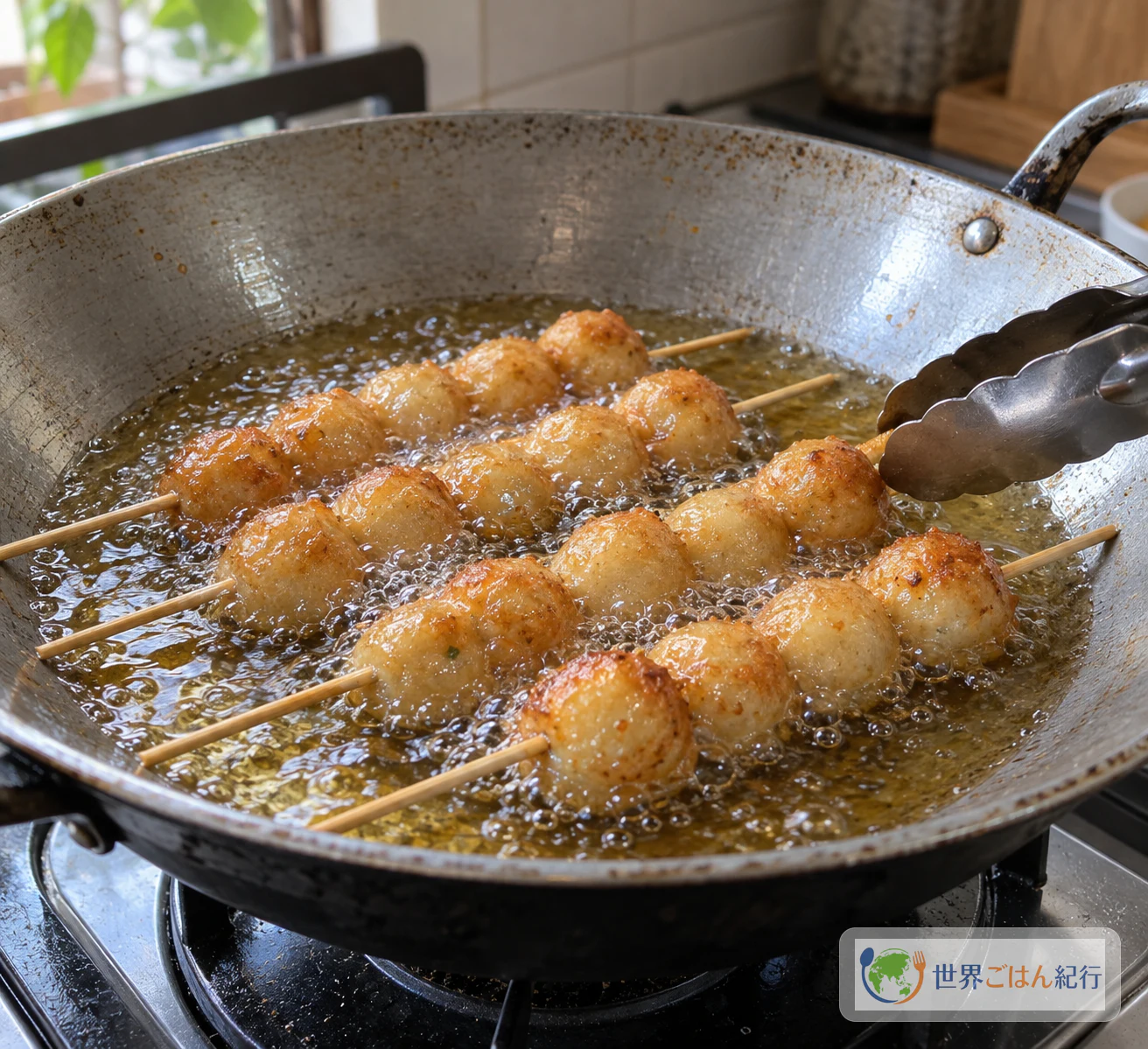
Cilok Goreng: One Home Cook's Boil-Then-Fry Version
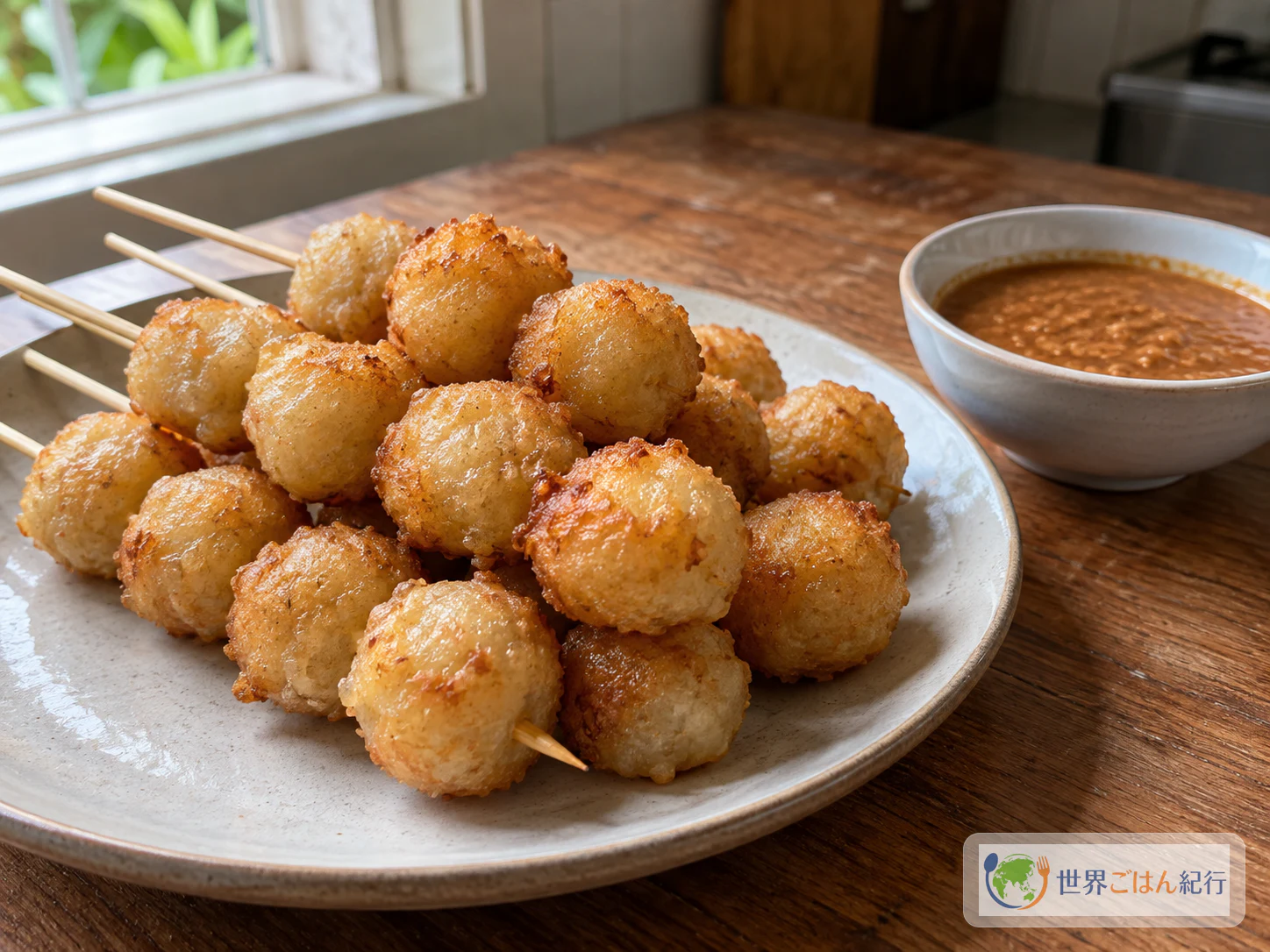
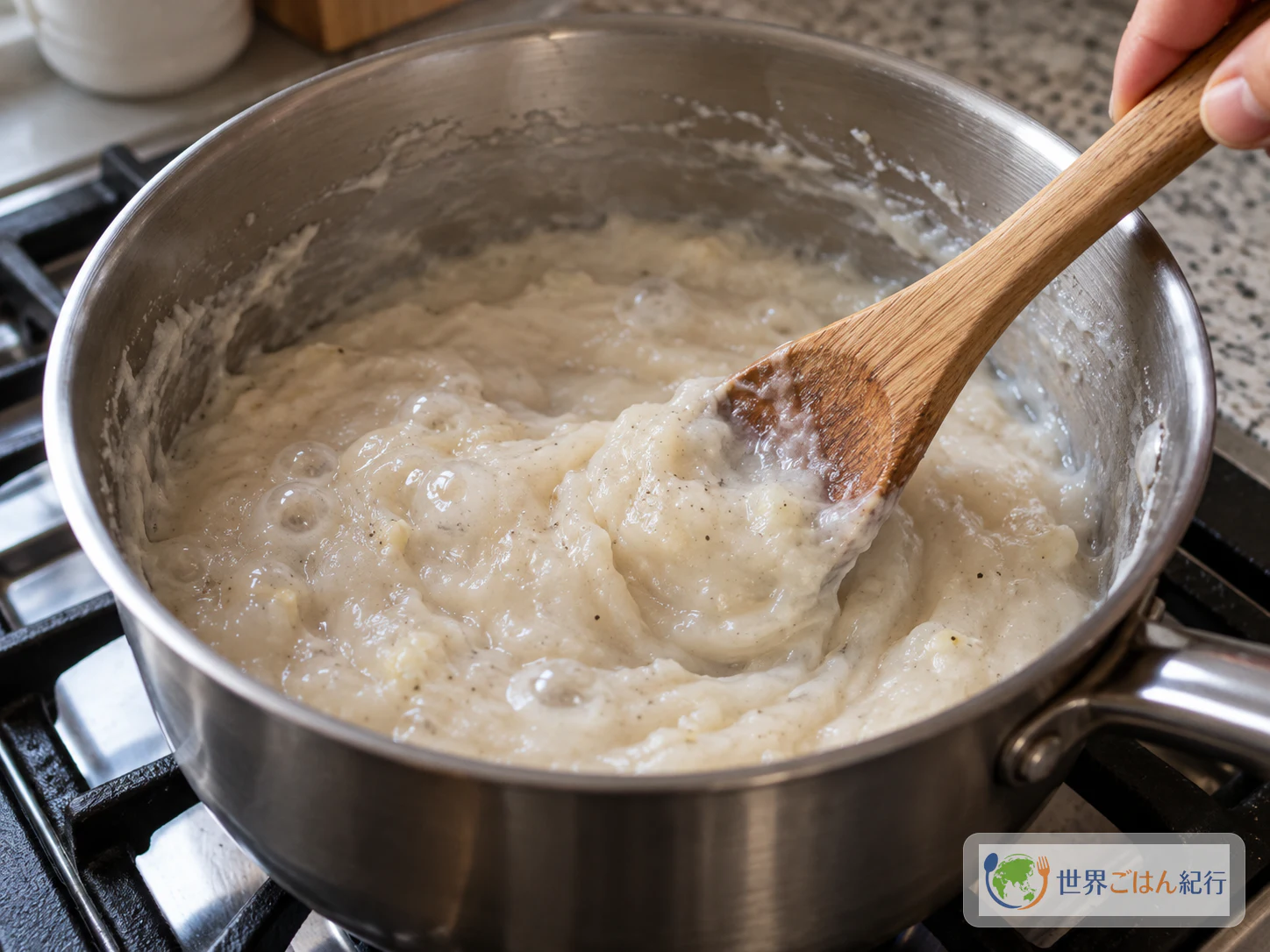
A garlicky biang cooked until thick and bubbling, tapioca balls that rise in the pot, a cold rinse and a spoonful of oil before cooling, then skewers lowered into hot oil until golden-brown.
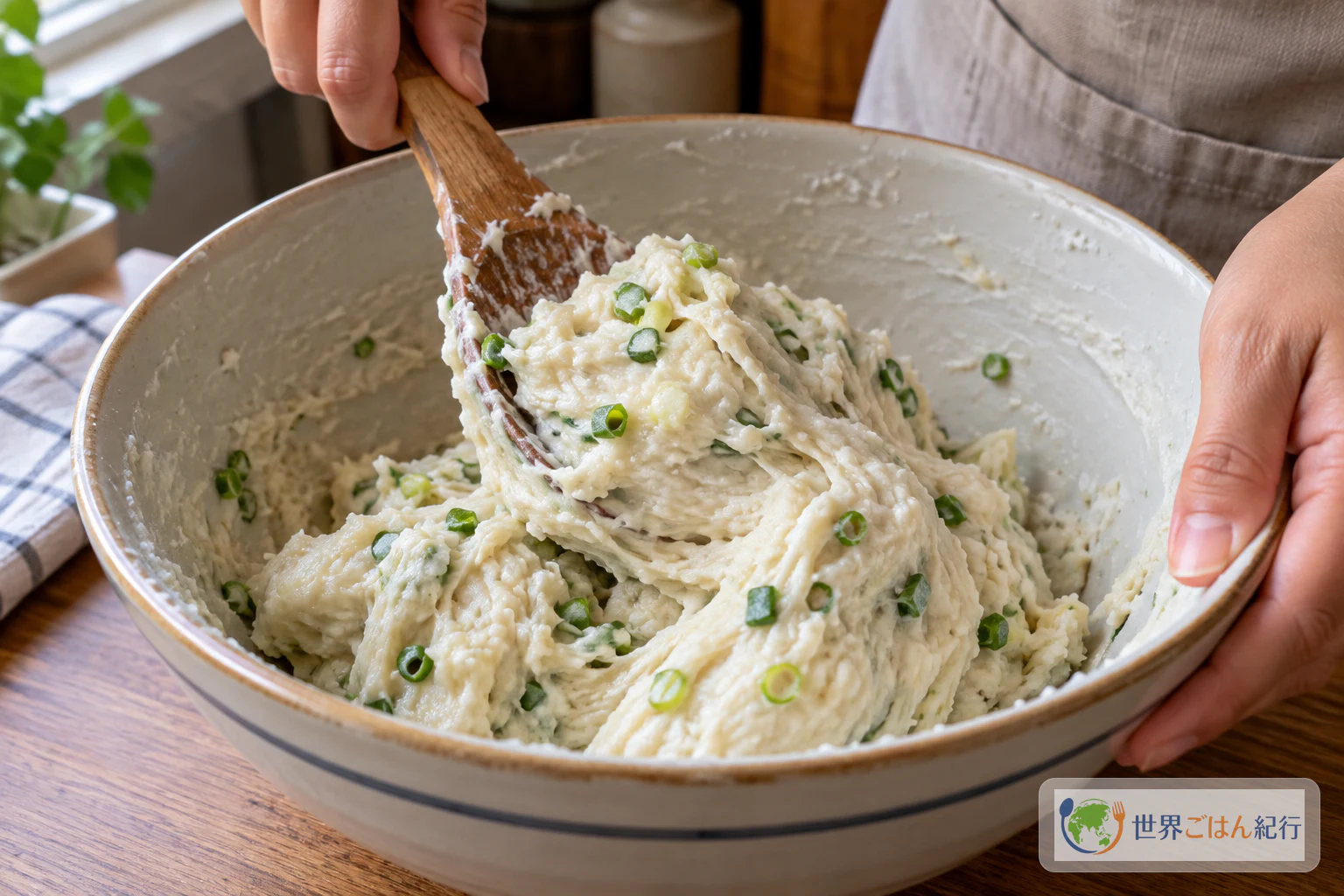
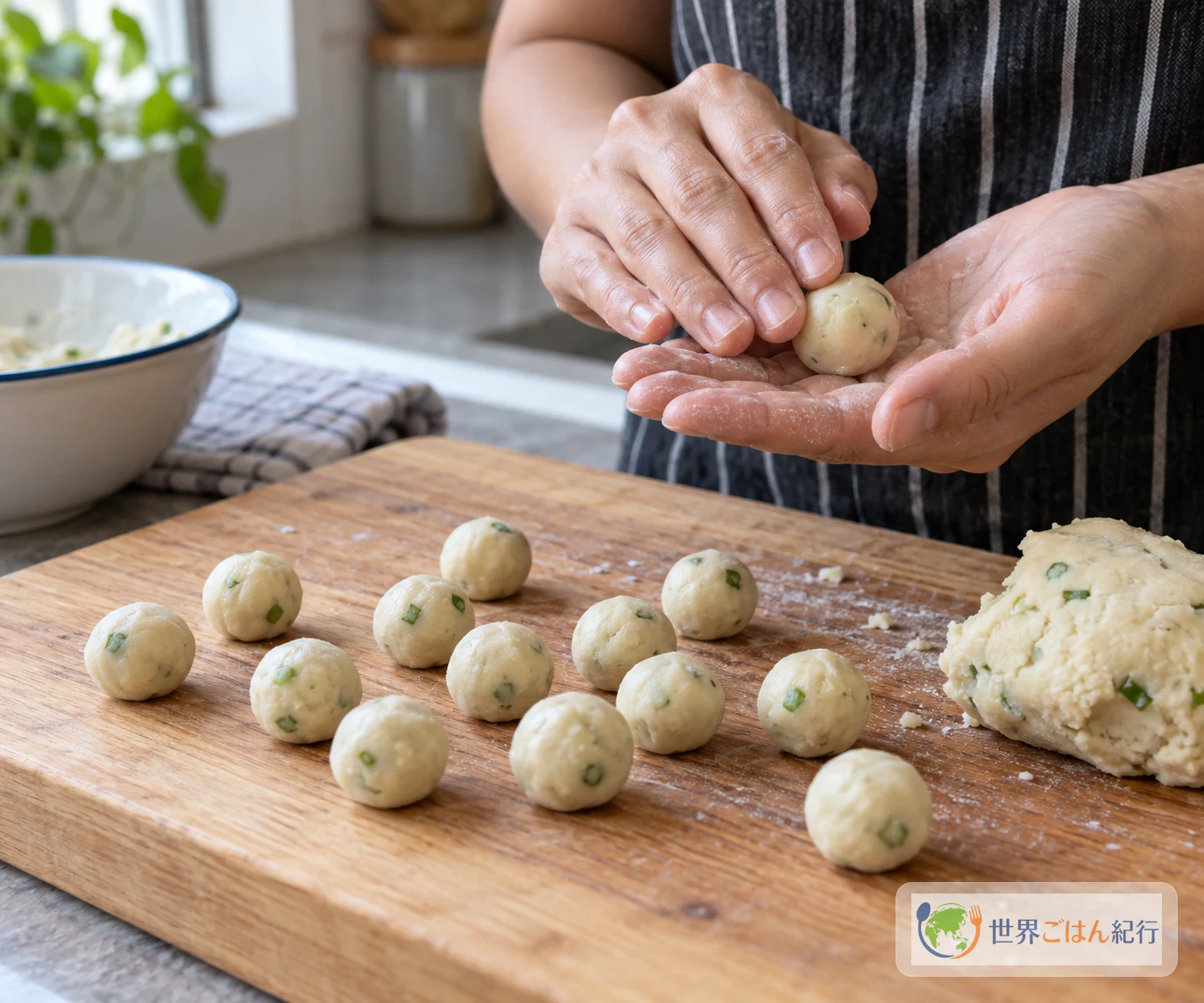
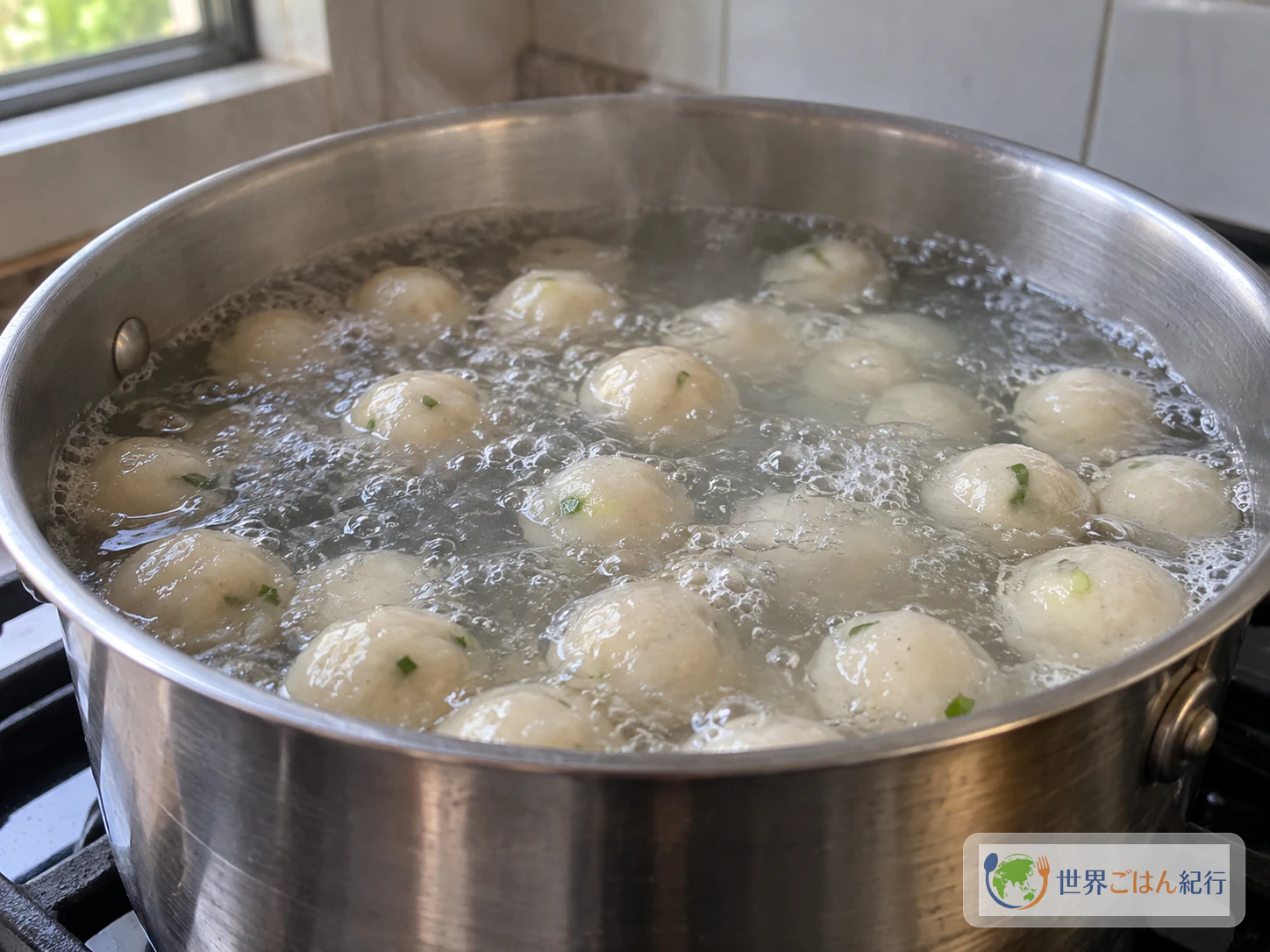
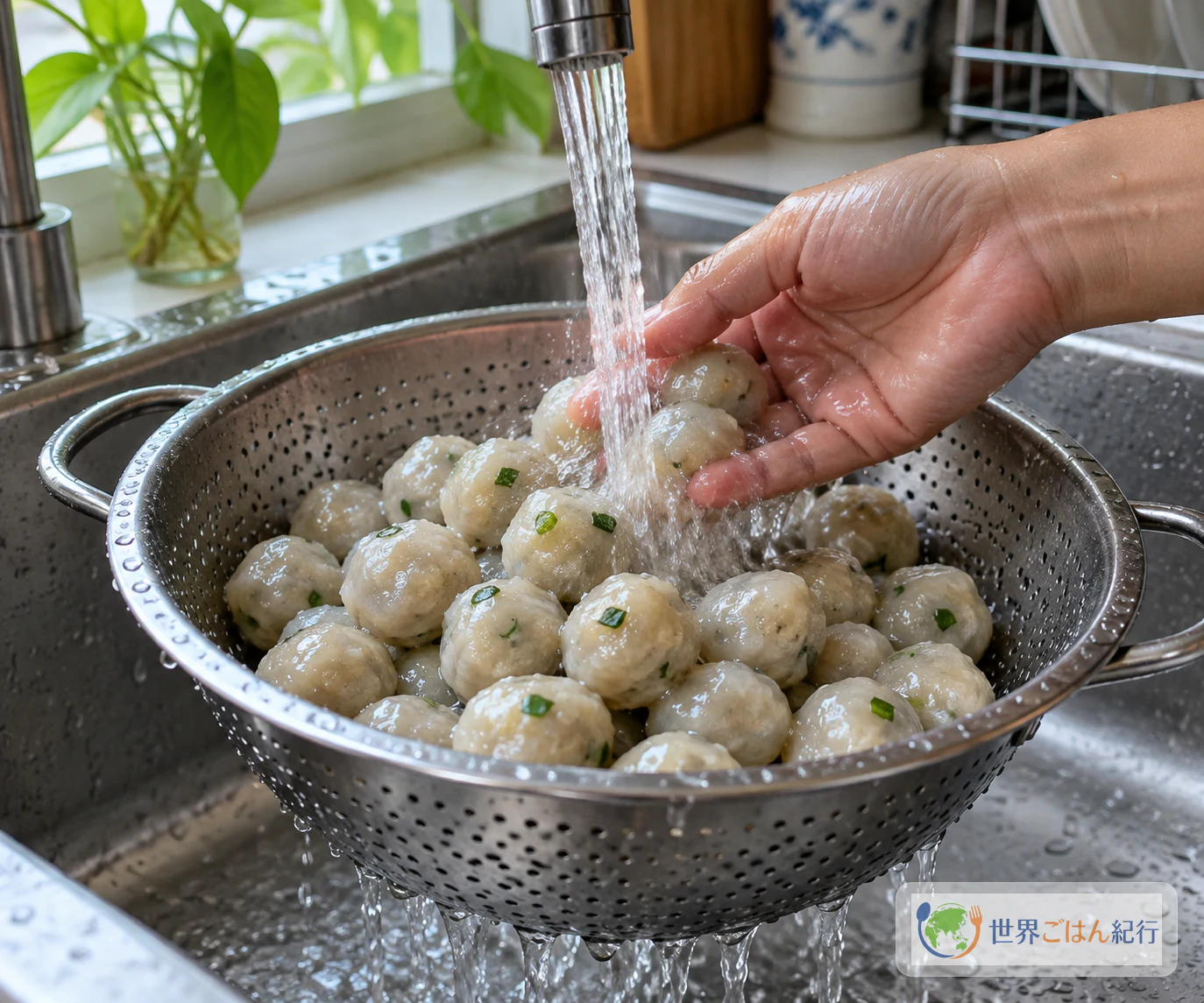
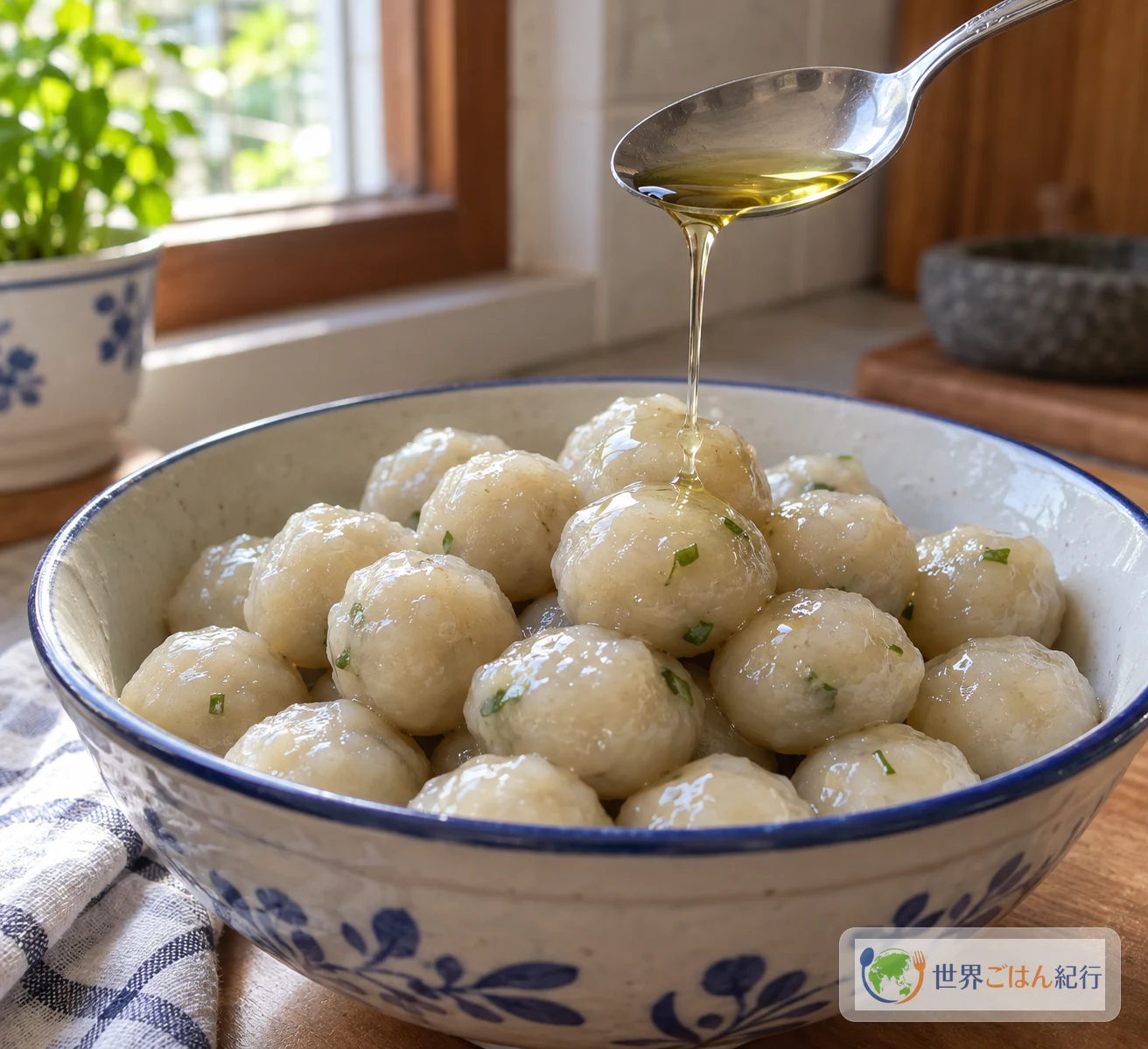
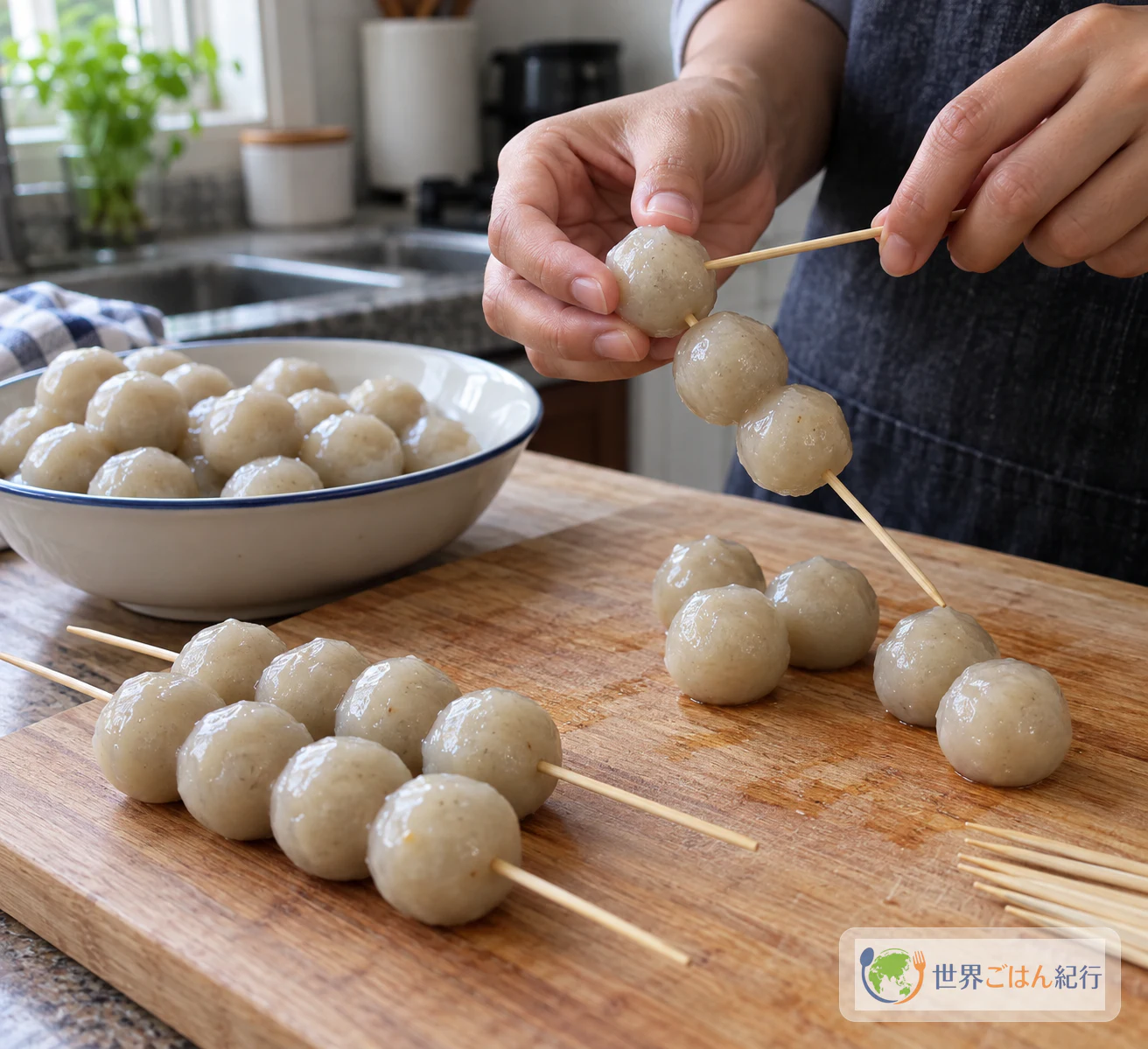
The recipe starts at the stove: water, wheat flour, crushed garlic, salt, sugar and ground pepper stirred together in a pan until the mixture turns thick and starts to bubble. Off the heat, sliced scallion and tapioca flour go in, and the dough is rolled into marble-sized balls. They are boiled until they float, rinsed in cold water, coated with a tablespoon of oil and left to cool. Only then are they threaded onto satay skewers and fried in plenty of hot oil until golden-brown, ready to dip in peanut sauce.
This sequence comes from a single recipe titled "Cilok Goreng," posted on Cookpad Indonesia by Pritha Pitaloka, a home cook in Bandung. Her profile mentions that she lectures in biochemistry; the recipe is her own home version, not a chef's or institution's formula. She describes it herself as not yet perfect but fairly good. This article presents it as one measured home-cook version, not the definitive or original Indonesian method. It has not been kitchen-tested for this site.
Other cooks make Cilok Goreng differently. A Saumlaki seller featured by RRI dips her boiled balls in beaten egg before frying, and another Cookpad cook in Majalengka adds oil to the boiling water and doesn't mention skewers. More on those below. For more dishes from the same country, see our Indonesia page.
Ingredients for Pritha Pitaloka's Cilok Goreng
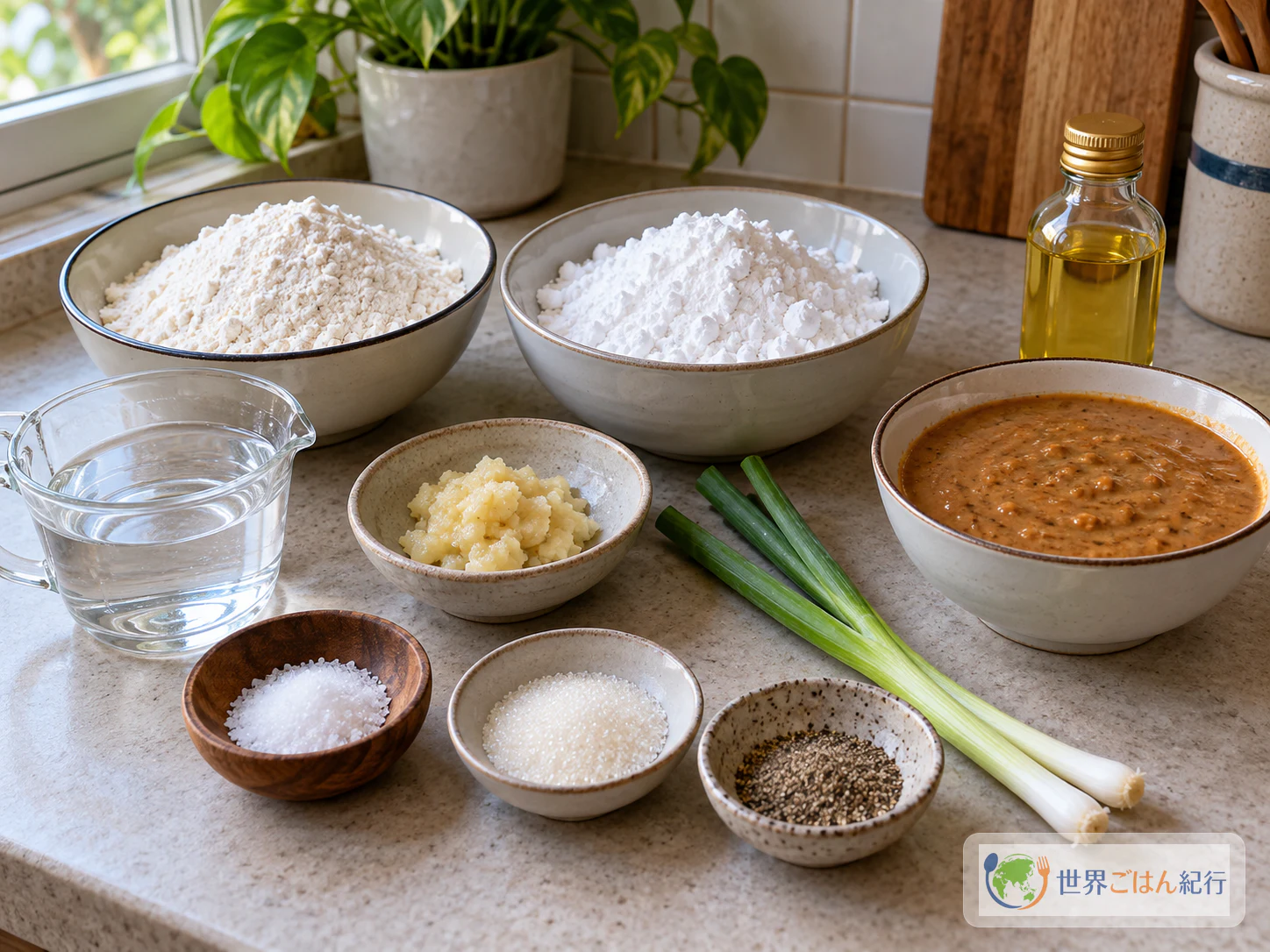
The source gives no number of servings or balls, so no yield is listed here. The spoon measures keep the recipe's own Indonesian labels: sdt (sendok teh, teaspoon) and sdm (sendok makan, tablespoon).
Equipment
- A pan for cooking the biang
- A bowl for mixing the dough
- A separate pot of water for boiling the balls
- A way to lift and rinse the balls under cold water
- Satay skewers
- A pan or wok deep enough to fry in plentiful oil
Choosing and Substituting Ingredients
Tapioca, not sago palm flour. The author's ingredient line reads tepung sagu/tapioka. This version uses tapioca flour from that line. Don't switch to sago palm flour.
Choosing within the tapioca range. The source gives 275–300 g. Use either end of that range; the recipe doesn't say how many balls either amount makes.
The garlic is a paste. Haluskan means crushed or ground smooth, so pound or grate the four cloves into a paste rather than chopping them.
Pepper is just "ground pepper." The source doesn't specify white or black, so use the ground pepper you have.
Optional stock powder is left out. The original lists stock powder "if desired" (kaldu bubuk secukupnya jika suka) without naming a flavor. This version omits it, so it isn't in the table.
Peanut sauce is ready-made. The recipe calls for prepared peanut sauce; the author mentions using instant gado-gado seasoning. It gives no from-scratch sauce or amount.
Method: Biang, Dough, Boil, Cool, Skewer, Fry
The recipe gives visual cues: thick and bubbling for the biang, floating for the boiled balls, golden-brown for the fried skewers. It gives no minutes, oil temperature, or boiling-water and frying-oil amounts. Those gaps are left as unspecified rather than filled in.
Easy-to-Confuse Points: Which Water, Which Oil
This recipe uses water and oil at several different stages, and each one does a different job.
| What | Amount in the source | Where it goes |
|---|---|---|
| Water in the biang | 250 ml | Cooked with flour, garlic and seasonings into the thick paste (step 1) |
| Boiling water | Not measured | A separate pot for boiling the balls until they float (step 4) |
| Rinse water | Not measured | Cold water for rinsing the boiled balls (step 5) |
| 1 sdm cooking oil | 1 sdm | Added to the rinsed balls before they cool (step 6) |
| Deep-frying oil | Hot and plentiful; nothing else specified | For frying the skewered balls until golden-brown (step 8) |
A few other things that belong to different recipes, not this one:
- Oil in the boiling water comes from Endah Triana's version. Here, the boiling water has no oil; the tablespoon goes on after rinsing.
- An egg coating comes from the Saumlaki seller's version. This recipe uses no egg.
- Oil in the biang: the biang is water, flour and seasonings only. It is not a roux.
The source gives no frying-oil temperature, frying time, boiling time, yield, or storage and reheating instructions. Floating marks when this author removes the balls from the pot; it is not a tested safety endpoint.
Other Cooks' Versions
The cooks' versions found for this article differ in their details. These are individual recipes, not regional standards, and none of their steps are blended into the method above.
| Version | Where | How it differs from the recipe above |
|---|---|---|
| Marta/Martha's home-business version, reported by RRI | Saumlaki | Uses 100 g each of tapioca and wheat flour mixed with boiling water, crushed garlic, scallion and seasonings to taste. The balls are boiled until floating, dipped in beaten egg with a little salt, then fried in hot oil until golden |
| Endah Triana's Cookpad recipe | Majalengka, West Java | Mixes tapioca and wheat flour with water and seasonings, adds 1 tbsp oil to the boiling water to limit sticking, boils the balls until floating, then fries them until brown or slightly crisp. No skewering is described |
The recipe followed here is the only one of the three with a cooked biang, a cold rinse, oil before cooling, and skewering before frying.
About the Dish and the Sources
All three recipes are called "Cilok Goreng." The opened sources don't establish where the name comes from or the dish's history, so this article doesn't tell an origin story. What they do show is three cooks in three places: Pritha Pitaloka in Bandung, a home-business owner in Saumlaki, and Endah Triana in Majalengka, each making a boiled-then-fried tapioca ball in their own way. These are home and small-business recipes. The method here shouldn't be read as the only way Cilok Goreng is made.
Frequently Asked Questions
Is the 1 sdm oil the frying oil?
No. The 1 sdm is added to the boiled, cold-rinsed balls before they cool. Frying uses additional hot, plentiful oil, and the source doesn't give its amount or type.
When does this method take the balls out of the boiling water?
After they float. That is the author's stated process cue, not a separately validated food-safety endpoint, and the source gives no boiling time.
Does this version use egg?
No. The beaten-egg coating belongs to the Saumlaki seller's version reported by RRI.
What peanut sauce should I use?
The recipe calls for ready-made peanut sauce, and the author says she used instant gado-gado seasoning. It gives no from-scratch sauce recipe or amount.
Can I use sago flour instead of tapioca?
The author's label lists tepung sagu/tapioka together. This version uses the tapioca option, in the 275–300 g range, and doesn't switch to sago palm flour.
How many balls does this make?
The source doesn't say. It gives no yield, ball count or weight per ball.
Sources
- Pritha Pitaloka (@pritha_pitaloka), Bandung, "Cilok Goreng," Cookpad Indonesia, posted 2018-04-17. The adopted home-cook recipe: ingredient amounts and wording for the biang, tapioca, scallions, oil and ready-made peanut sauce, and the full cook, mix, shape, boil, rinse, oil, cool, skewer, fry and serve sequence, including the note on instant gado-gado seasoning. https://cookpad.com/id/resep/4770352
- Maria Defota Laiyan (edited by Clemens Sarbunan), "Kisah Inspiratif ibu Martha Ubah Camilan Cilok Goreng Jadi Sumber Rejeki," RRI.co.id, Saumlaki, published 2026-05-13. Comparison variant: a Saumlaki home-business owner's version with boiled balls dipped in beaten egg before frying. https://rri.co.id/saumlaki/berita-lain/2410243/kisah-inspiratif-ibu-martha-ubah-camilan-cilok-goreng-jadi-sumber-rejeki
- Endah Triana (@eriana), Majalengka, West Java, "Cilok Goreng," Cookpad Indonesia, posted 2019-12-17. Comparison variant: tapioca and wheat-flour balls boiled with 1 tbsp oil in the water until floating, then fried until brown or slightly crisp. https://cookpad.com/id/resep/11220174