Bánh Gối: A Crisp Half-Moon Snack from Hanoi's Afternoon Streets
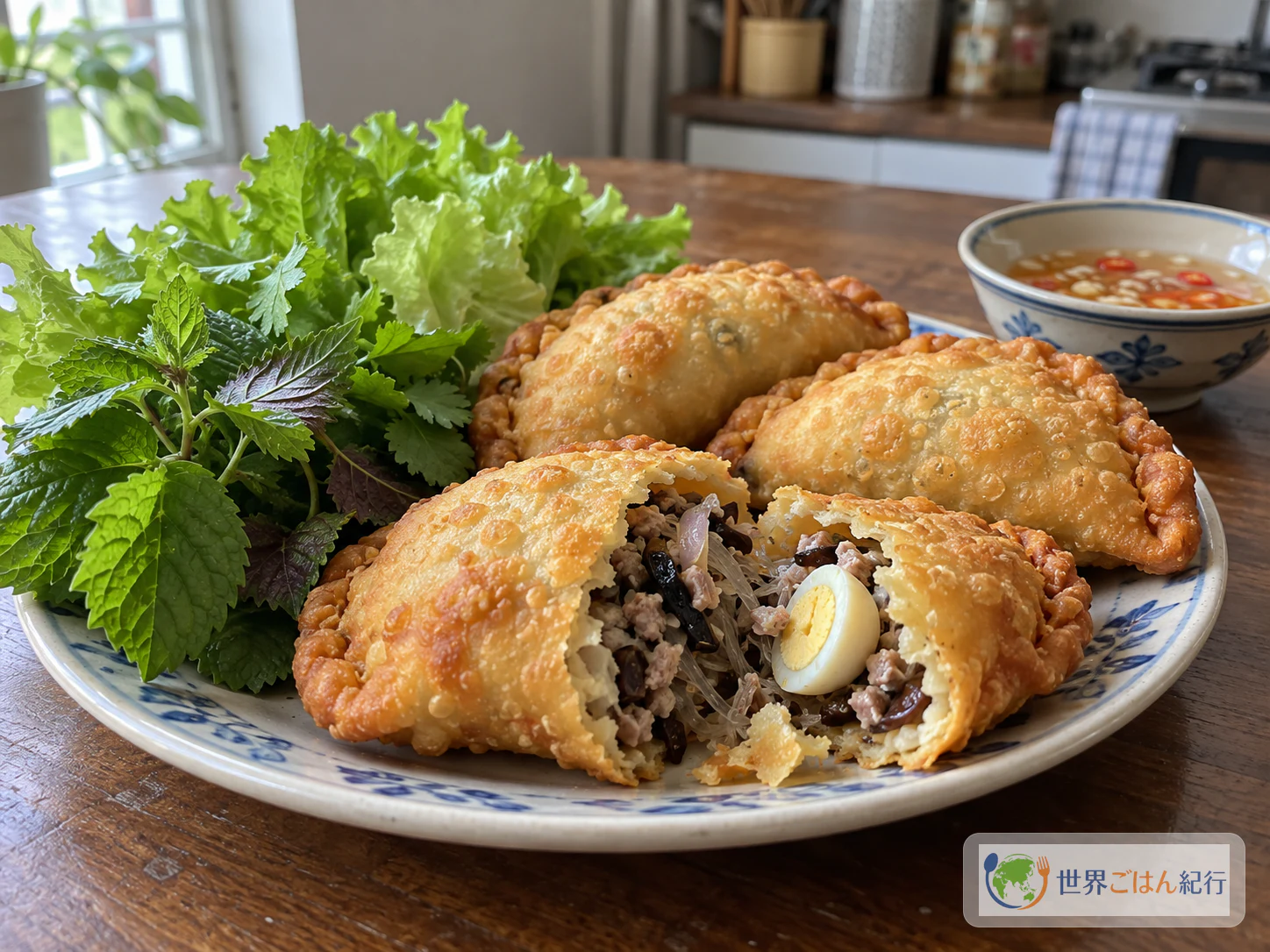
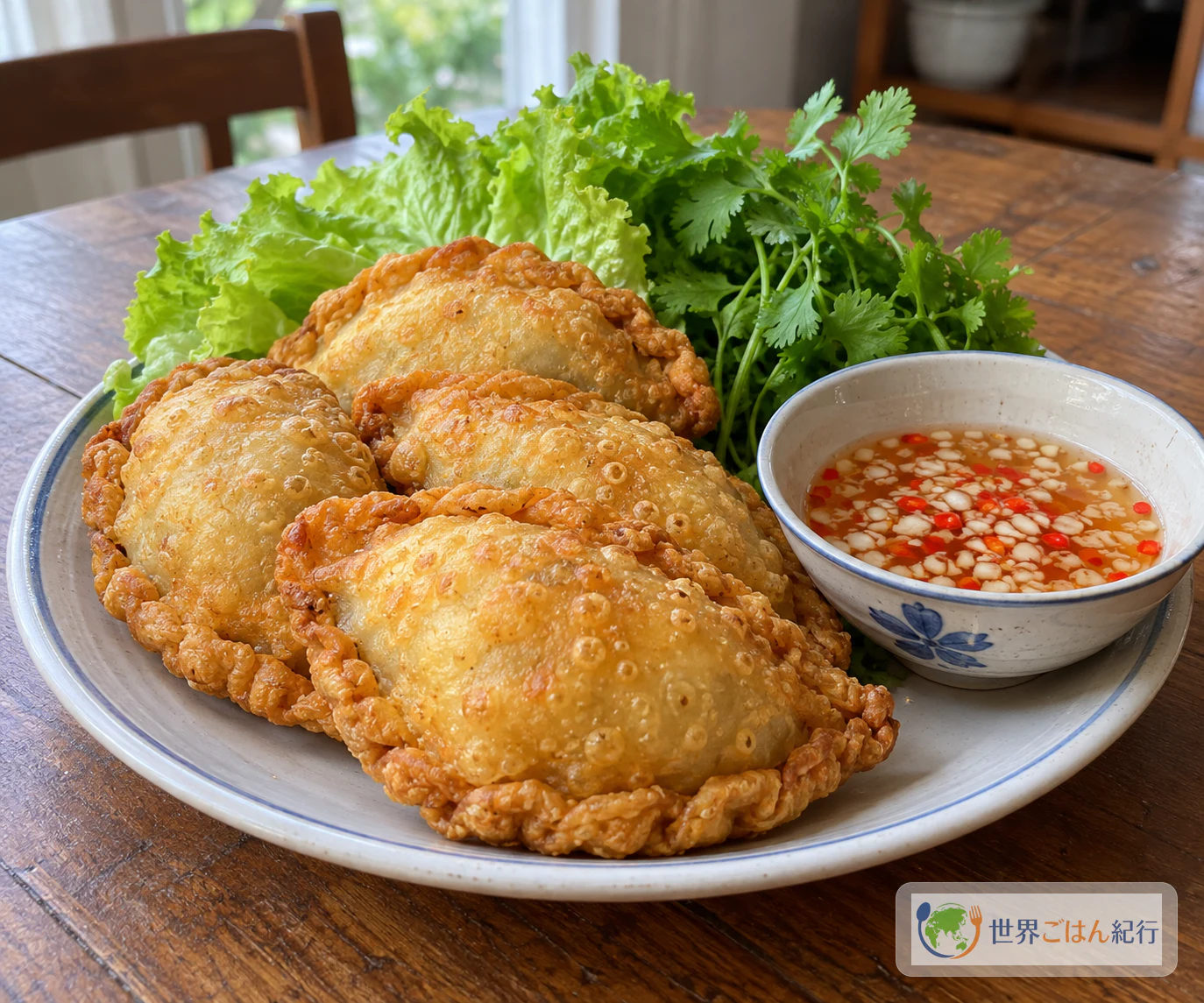
A thin wheat-and-glutinous-rice wrapper fried until golden, a filling of pork, wood ear mushroom and glass noodles held together without excess moisture, and a sweet-sour fish sauce dip with fresh herbs to cut through the richness.
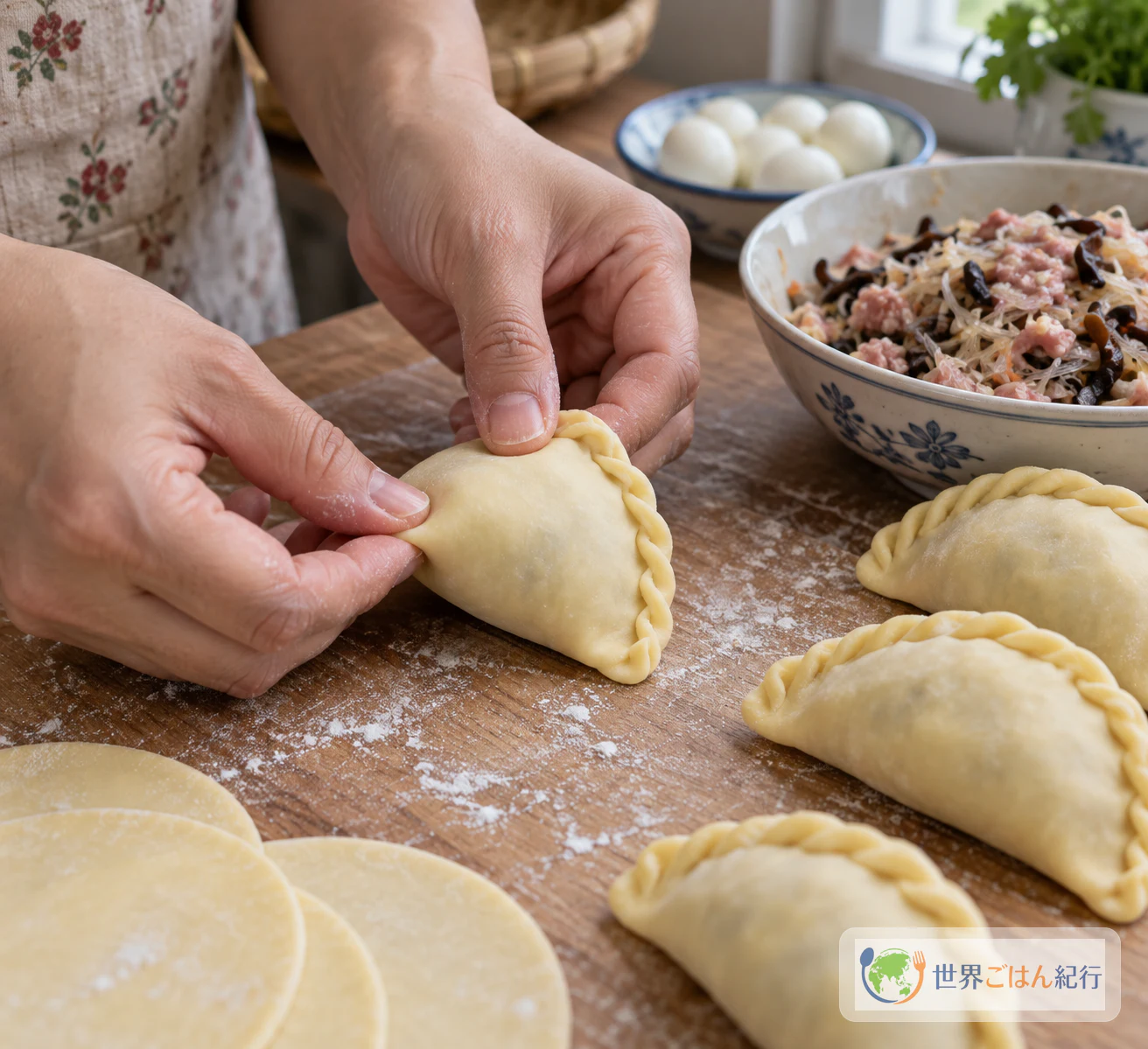
In Hanoi, bánh gối belongs to the afternoon. Vietnam's national tourism authority introduces it as a snack to try while walking the city's streets in the afternoon: a pillow-shaped fried pastry wrapped around minced pork, black wood ear mushroom, glass noodles and quail egg. The name fits the shape, since gối is the Vietnamese word for pillow.
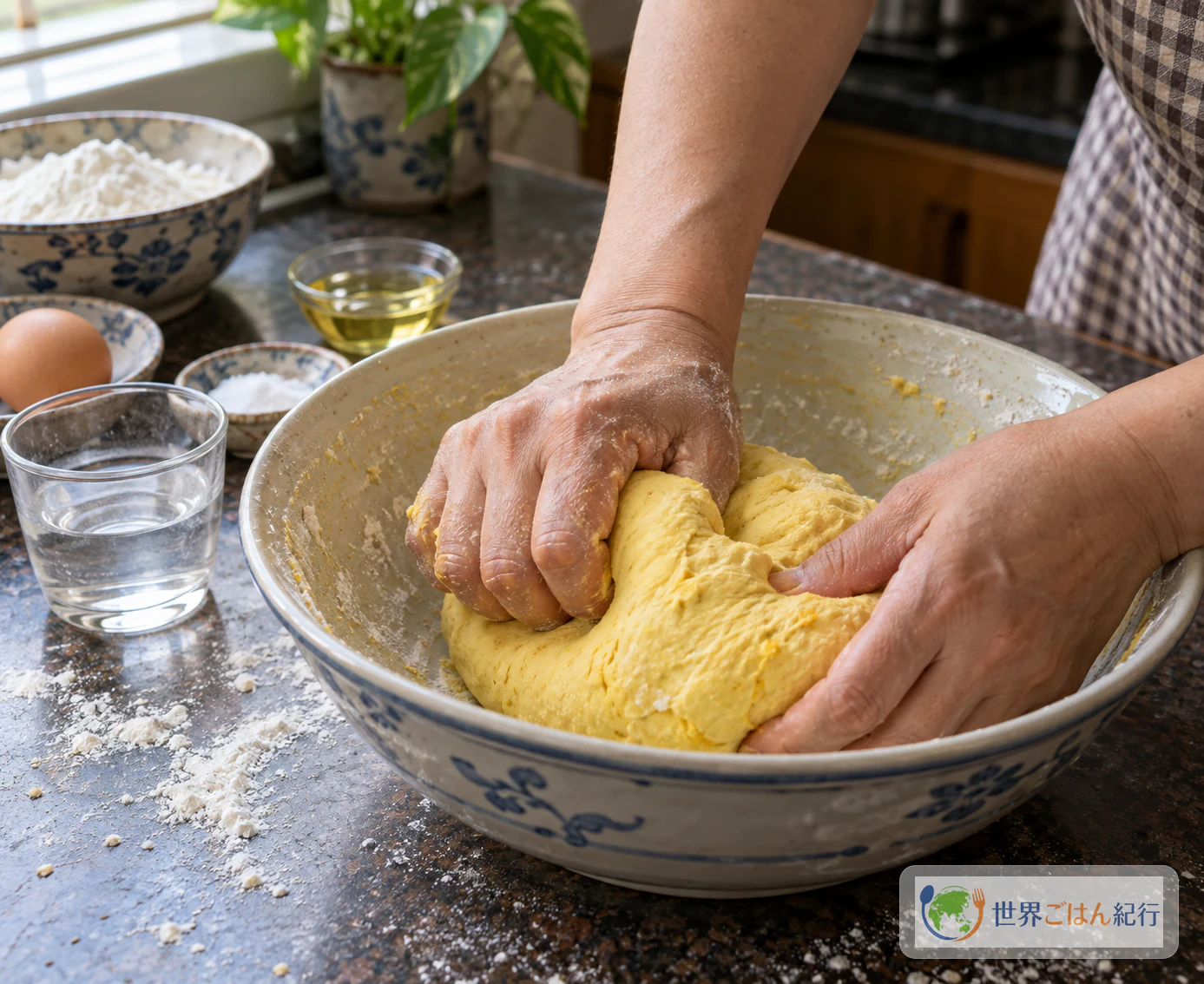
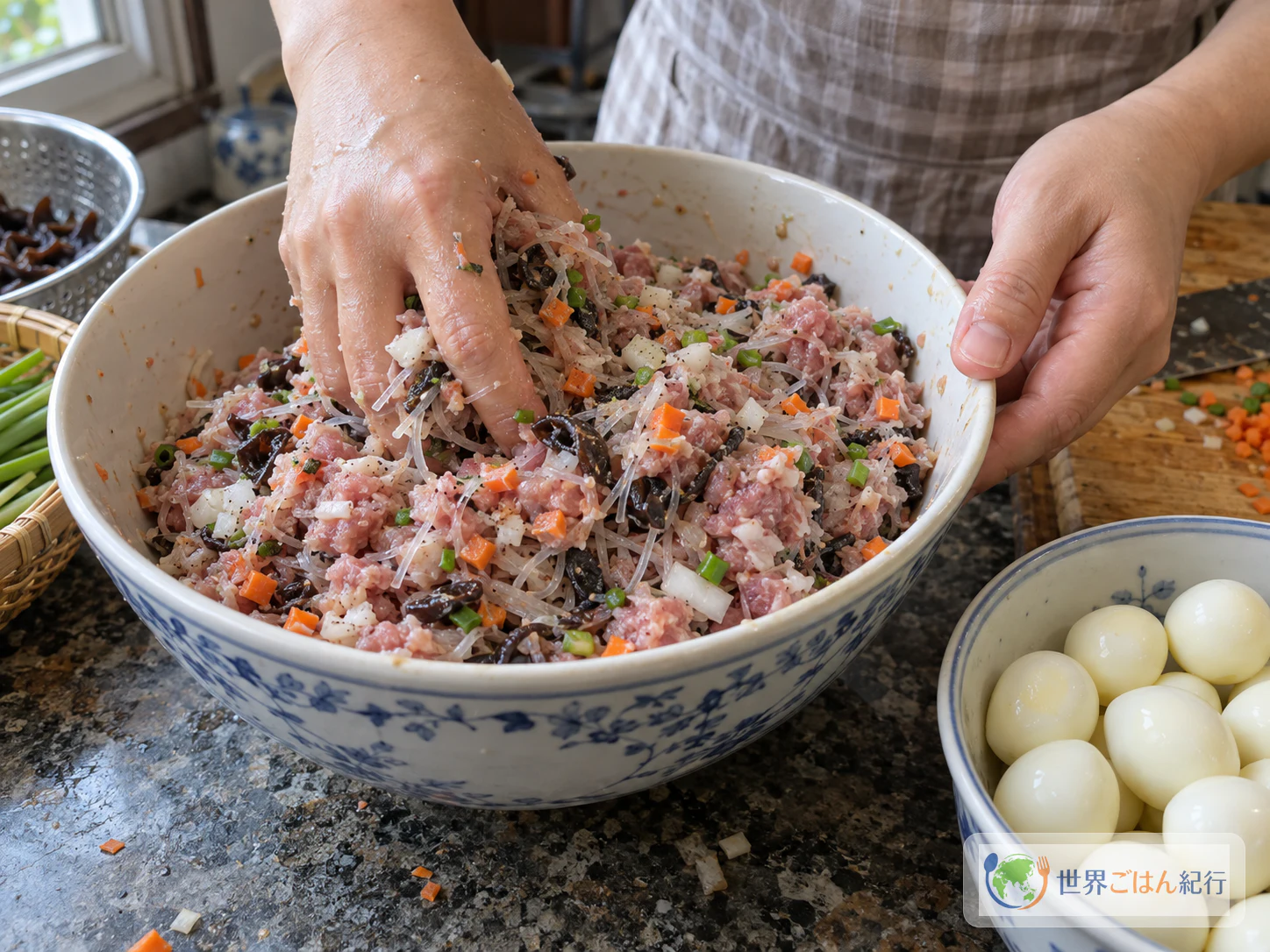
This article follows a single home recipe published by VnExpress Cooking (Bùi Thủy). The dough is wheat flour with a little glutinous rice flour, tinted with turmeric and enriched with an egg. The filling is raw pork mixed with rehydrated glass noodles and wood ear, onion, carrot and scallion, with a boiled quail egg tucked into the center of each pastry. The published recipe is written for 4–5 people and lists 90 minutes. It does not state how many pastries it makes, the exact water for the dough, the wrapper size, or a frying temperature and time, so those are described here by how the dough and pastries look and feel rather than by numbers.
This recipe follows the published VnExpress recipe as written and has not been kitchen-tested by Sekai Gohan. Where the source gives no number, this article doesn't invent one.
Not Bánh Giò, Not a Spring Roll: Telling Bánh Gối Apart
Vietnamese cooking has many wrapped foods, and several have similar-sounding names. Bánh gối is a wheat-based dough closed into a half-moon and deep-fried.
- Bánh giò is a rice-flour dough wrapped in leaves and steamed: different dough, different cooking method.
- Nem rán / chả giò are spring rolls, where the filling is rolled up in a thin wrapper rather than sealed into a folded half-moon of soft dough.
- Bánh xèo is a thin rice-flour pancake, not a wrapped and fried pastry.
You may also see the name bánh xếp used for the same dish in some sources (xếp refers to folding), though what a dish is called can vary between places and vendors.
Ingredients (for 4–5 people)
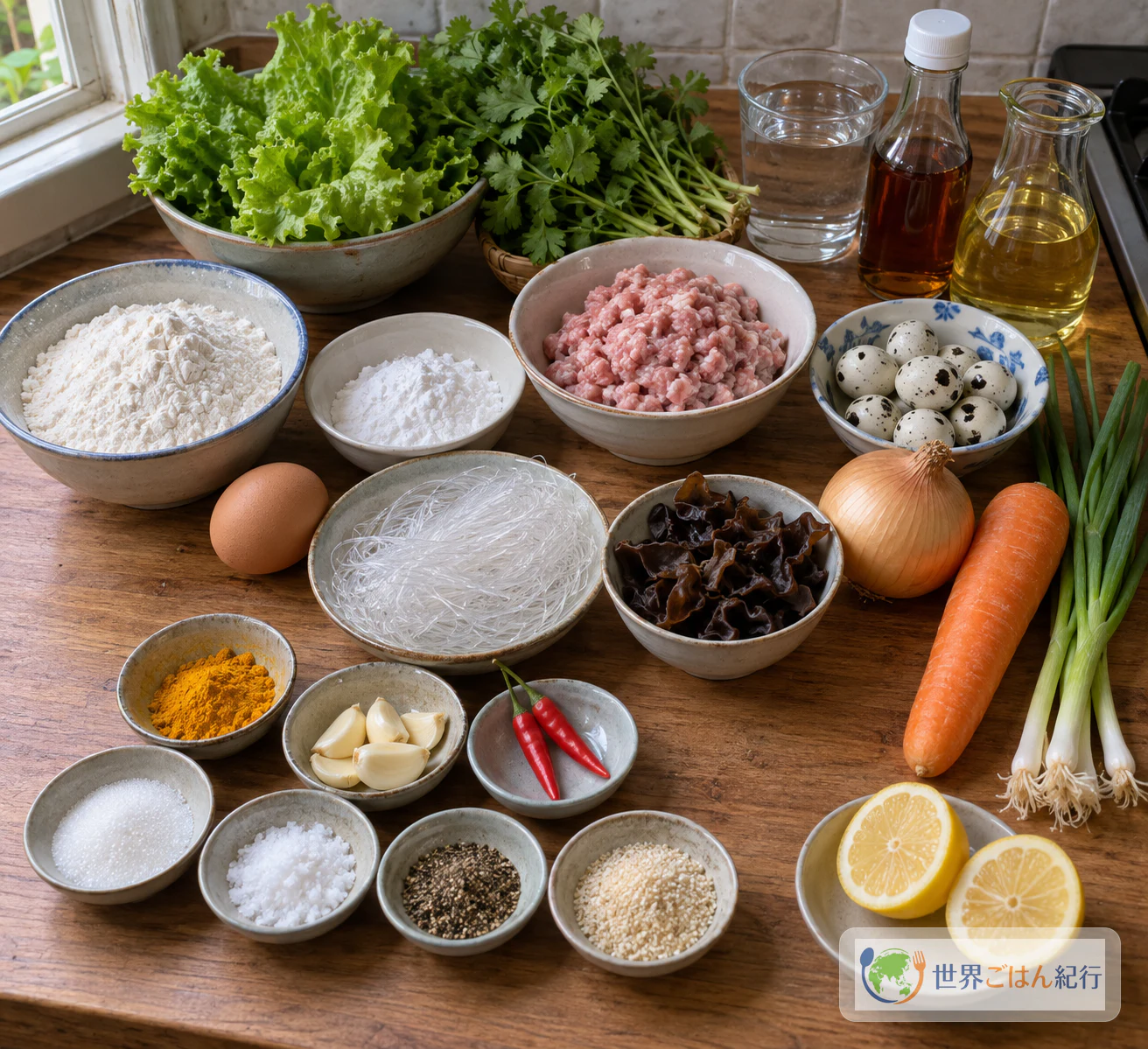
Choose one of two egg options. One chicken egg always goes into the dough. The rest are boiled for the filling: either 4 more chicken eggs (5 in all), or 16 quail eggs. This article uses the quail-egg option, which matches the classic description of the dish. Don't add both egg options together.
The dip is a 1:1:1:5 ratio of fish sauce, sugar, lemon juice and water. Note that the fish sauce and the water are not equal amounts.
This dish contains wheat, egg and fish (in the fish sauce). Check the label of your seasoning granules, too. The pork is wrapped raw and cooked only by frying, so check that the center of the filling reaches at least 71°C (160°F) with a food thermometer rather than judging by the color of the wrapper.
Equipment
- Mixing bowls for the dough and the filling
- Cutting board and knife
- Rolling pin
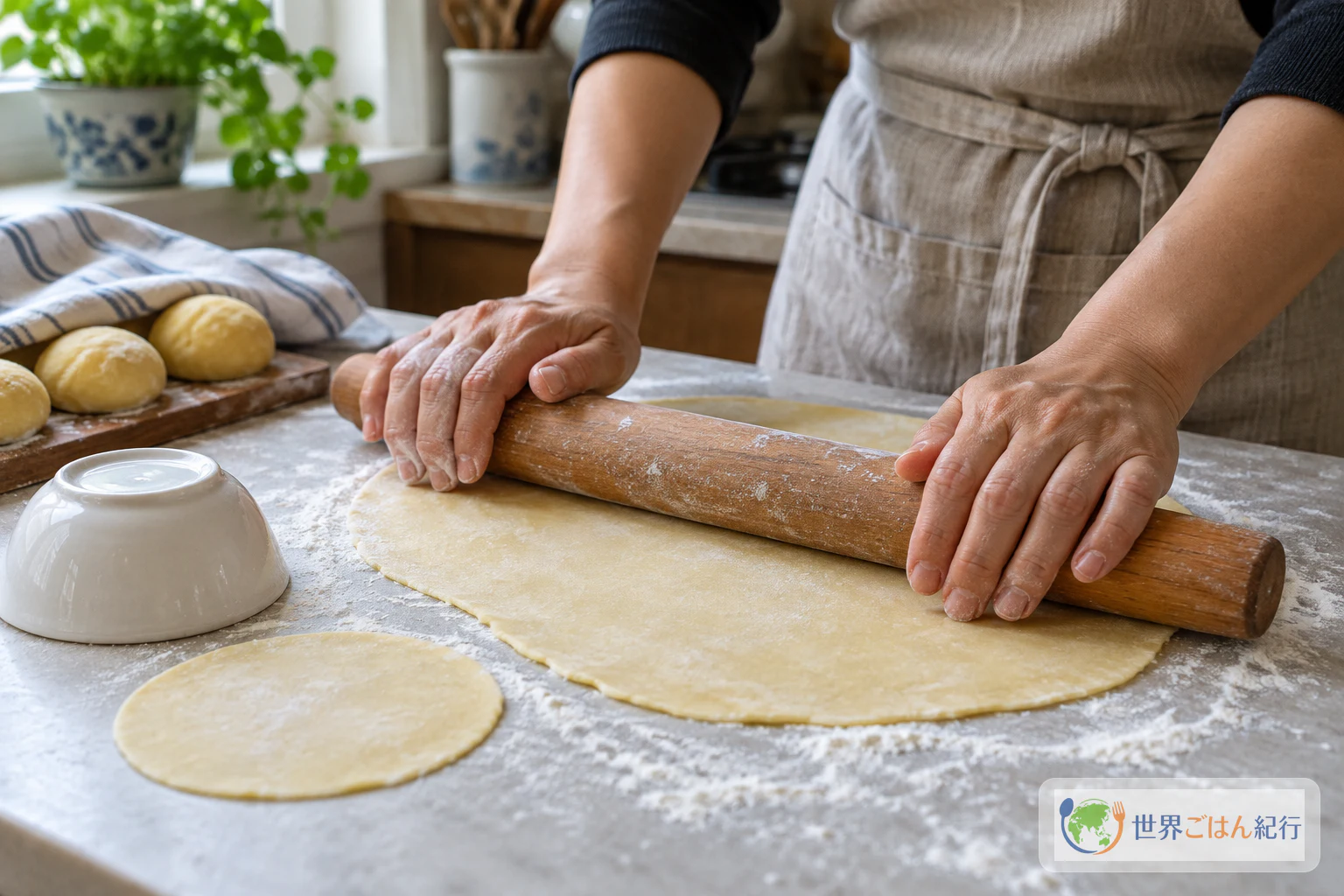
- A round cutter, or a small bowl to cut around
- A deep pot for frying
- Long cooking chopsticks
- A food thermometer, to check the center of the filling
Choosing and Substituting Ingredients
Glass noodles (miến). Use Vietnamese miến. If you use another glass noodle you have on hand, the texture may differ. The 50g is dry weight, before soaking.
Wood ear mushrooms. Buy them dried and rehydrate them. They give the filling its crunchy texture, so don't swap in other mushrooms if you want to keep to this recipe.
Fish sauce. It seasons both the filling and the dip. Soy sauce is not the same ingredient and won't give the same flavor.
The flours. Use wheat flour and glutinous rice flour as listed. Plain rice flour, cornstarch or potato starch are different ingredients and shouldn't be treated as equivalents.
Onion or jicama. Either one works. Jicama will change the texture and moisture of the filling. Use one or the other, not both.
Method: Wrapping and Frying Bánh Gối
Prepare the dry filling ingredients first, then make the dough so it can rest while you mix the filling. Judge the dough by how it feels and the pastries by their color and center temperature.
Troubleshooting: Tears, Leaks and Greasy Pastries
| Problem | Likely cause | What to do |
|---|---|---|
| The dough is sticky or crumbly | Water added too fast, or not enough | Add water only a little at a time. If sticky, dust lightly with flour; if crumbly, add a few drops more water |
| The dough springs back when rolled | It hasn't rested long enough | Let it rest the full 30 minutes before rolling |
| The edges won't seal | Too much water on the edge, or filling on the edge | Moisten the edge only lightly, keep the filling in the center, and press firmly |
| The wrapper tears while folding | Too much filling, or dough rolled too thin | Use less filling, or roll the next wrappers slightly thicker |
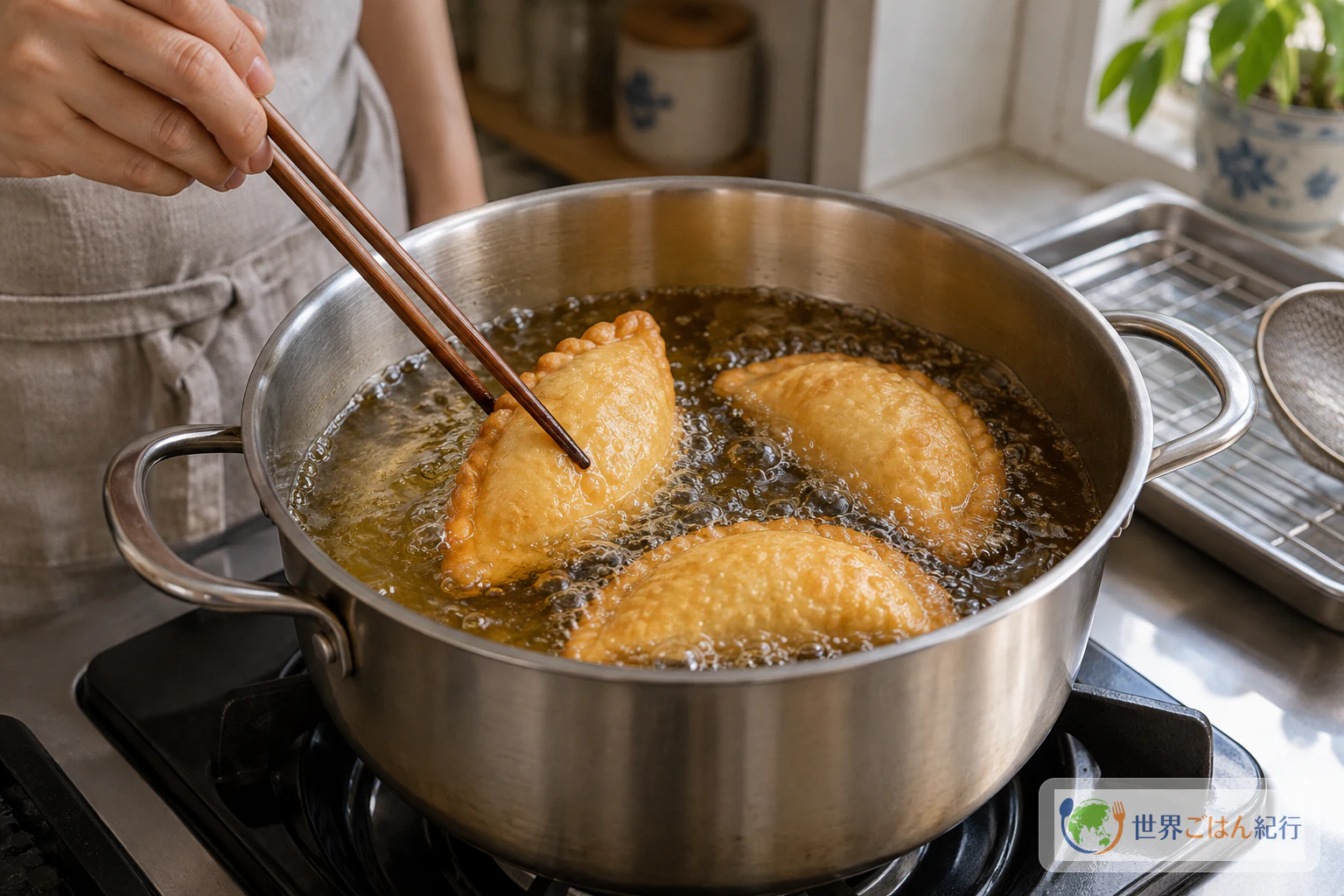
| Pastries burst or the oil spatters | Gaps in the seal, or wet filling | Seal the seam completely and drain the noodles and wood ear well before mixing |
| Greasy or unevenly browned pastries | Too many in the pot at once | Fry in small batches so the oil stays hot |
| Golden outside but unsure about the inside | Color doesn't show doneness | Check the center with a thermometer: at least 71°C (160°F) |
Fried pastries are at their crispest straight from the oil, so serve them soon after frying.
Variations
- Jicama instead of onion. The source allows jicama (củ sắn / củ đậu) in place of onion. It changes the texture and moisture of the filling. Use one or the other.
- Chicken eggs instead of quail eggs. Boil 4 chicken eggs and cut each into 4 or 6 pieces, placing a piece in each pastry instead of a whole quail egg.
- Chinese sausage in the filling. A recipe printed by Báo Khánh Hòa adds lạp xưởng (Chinese sausage) as an option, alongside its own different dough and filling amounts. It's a separate recipe, so this article doesn't mix its ingredients into the version above.
- Store-bought gyoza wrappers. SBS Food (Luke Nguyen) publishes a shortcut version using store-bought gyoza wrappers, with its own frying temperature and time. That is a different method from the handmade dough here, so its numbers aren't carried over to this recipe.
- More or less heat. Adjust the chili in the dip at the table rather than changing the filling.
Bánh Gối in Hanoi's Food Culture
Vietnam's national tourism authority places bánh gối among Hanoi's street foods, describing it as an afternoon snack for walking the city: a pillow-shaped fried pastry filled with minced pork, black wood ear mushroom, glass noodles and quail egg. This article keeps to that picture of the dish as a Hanoi snack rather than presenting it as a single form shared across the whole country.
What goes inside varies by recipe and vendor. Some recipes add carrot or jicama, some add Chinese sausage, and some are made with store-bought wrappers. The version here keeps to the VnExpress recipe's own ingredients. Claims about the dish's origin circulate, but without firm primary sources they aren't stated as fact here.
For more of the country's dishes, explore Vietnamese recipes on Sekai Gohan.
Frequently Asked Questions
Where is bánh gối from?
It is known as a Hanoi street snack. Vietnam's national tourism authority introduces it as something to eat while walking around the city in the afternoon.
Is bánh xếp a different dish?
Some sources use bánh xếp as another name for the same dish (xếp refers to folding). Names can differ by region and vendor, so look at the shape and filling: a folded, fried half-moon of wheat dough around pork, wood ear and glass noodles.
Do I need quail eggs?
The source gives you a choice: 16 quail eggs, or 4 boiled chicken eggs cut into 4 or 6 pieces. Quail eggs are part of the classic description of the dish, but either works within this recipe. One chicken egg goes into the dough in both cases.
Can I use store-bought gyoza wrappers?
There is a published shortcut recipe that does (SBS Food / Luke Nguyen), but it's a different recipe from the handmade wheat and glutinous rice dough here. If you use gyoza wrappers, treat it as that separate method rather than a straight swap in this recipe.
How should I store or reheat leftovers?
The sources used for this article don't give storage times or reheating methods, so none are given here. The pastries are at their best freshly fried.
Sources
- VnExpress Cooking / Bùi Thủy, "Cách làm bánh gối từ A tới Z tại nhà." The main recipe: ingredients and amounts for the dough, filling and dip, the 30-minute dough rest, wrapping and frying until golden on both sides, the 1:1:1:5 dip ratio, and the published 4–5 people and 90 minutes. https://vnexpress.net/cach-lam-banh-goi-tu-a-toi-z-tai-nha-4336725.html
- Viet Nam National Authority of Tourism, "Ha Noi Food Guide: The best street food dishes to sample." Bánh gối as an afternoon snack while walking Hanoi's streets, and its description as a pillow-shaped fried pastry with minced pork, black wood ear mushroom, glass noodles and quail egg. https://vietnam.travel/node/1560
- Báo Khánh Hòa, "Bánh gối." A different collected recipe with its own dough and filling amounts, including optional Chinese sausage; used only to compare variations. https://baokhanhhoa.vn/doi-song/am-thuc/202004/banh-goi-8158071/
- SBS Food / Luke Nguyen, "Crispy pork and quail egg dumplings (Banh goi)." A separate shortcut recipe using store-bought gyoza wrappers; used only to compare methods. https://www.sbs.com.au/food/recipe/crispy-pork-and-quail-egg-dumplings-banh-goi/lin7ef7um
- FoodSafety.gov, "Cook to a Safe Minimum Internal Temperature." The safe minimum internal temperature for ground meat, 71°C (160°F). https://www.foodsafety.gov/food-safety-charts/safe-minimum-internal-temperatures
- USDA Food Safety and Inspection Service, "Deep Fat Frying and Food Safety." Not overcrowding the fryer, and checking meat with a food thermometer. https://www.fsis.usda.gov/food-safety/safe-food-handling-and-preparation/food-safety-basics/deep-fat-frying