Botok Tempe: Small Leaf Parcels of Tempe, Coconut and Spice
Keep the tempe cubes whole, keep the young coconut moist and loose, and let the spice paste coat everything evenly. The banana leaf is what holds it together while it steams.
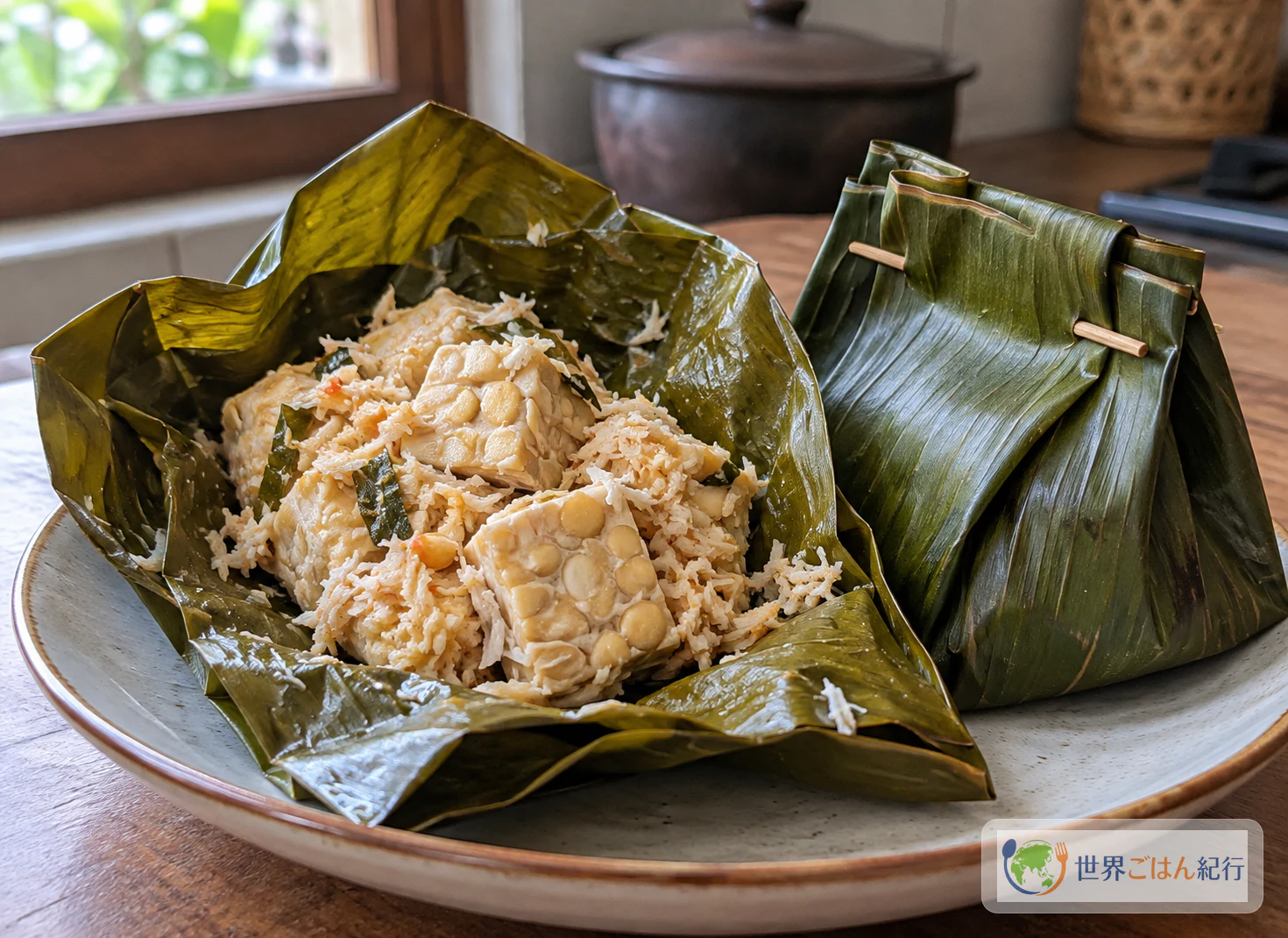
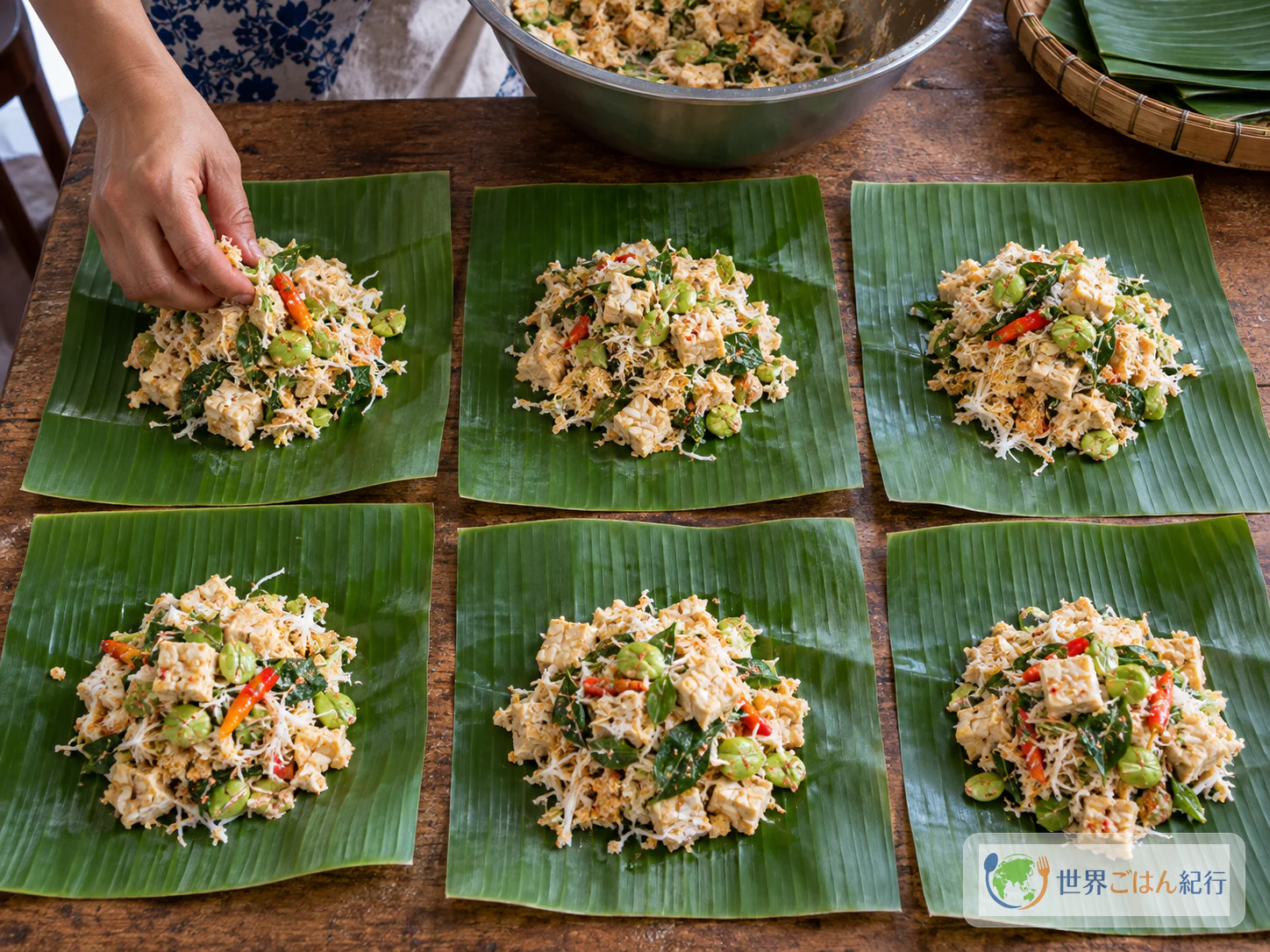
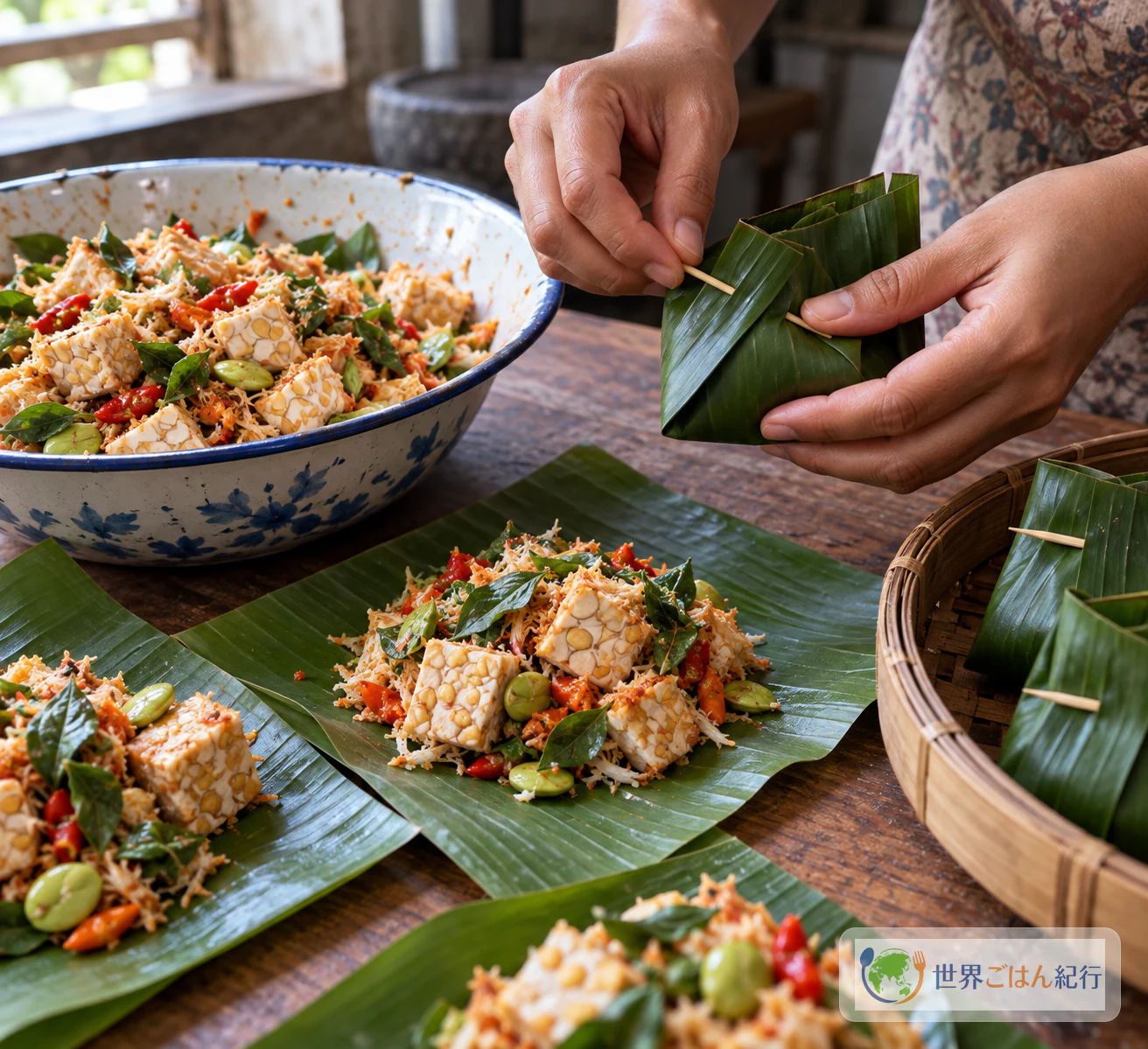
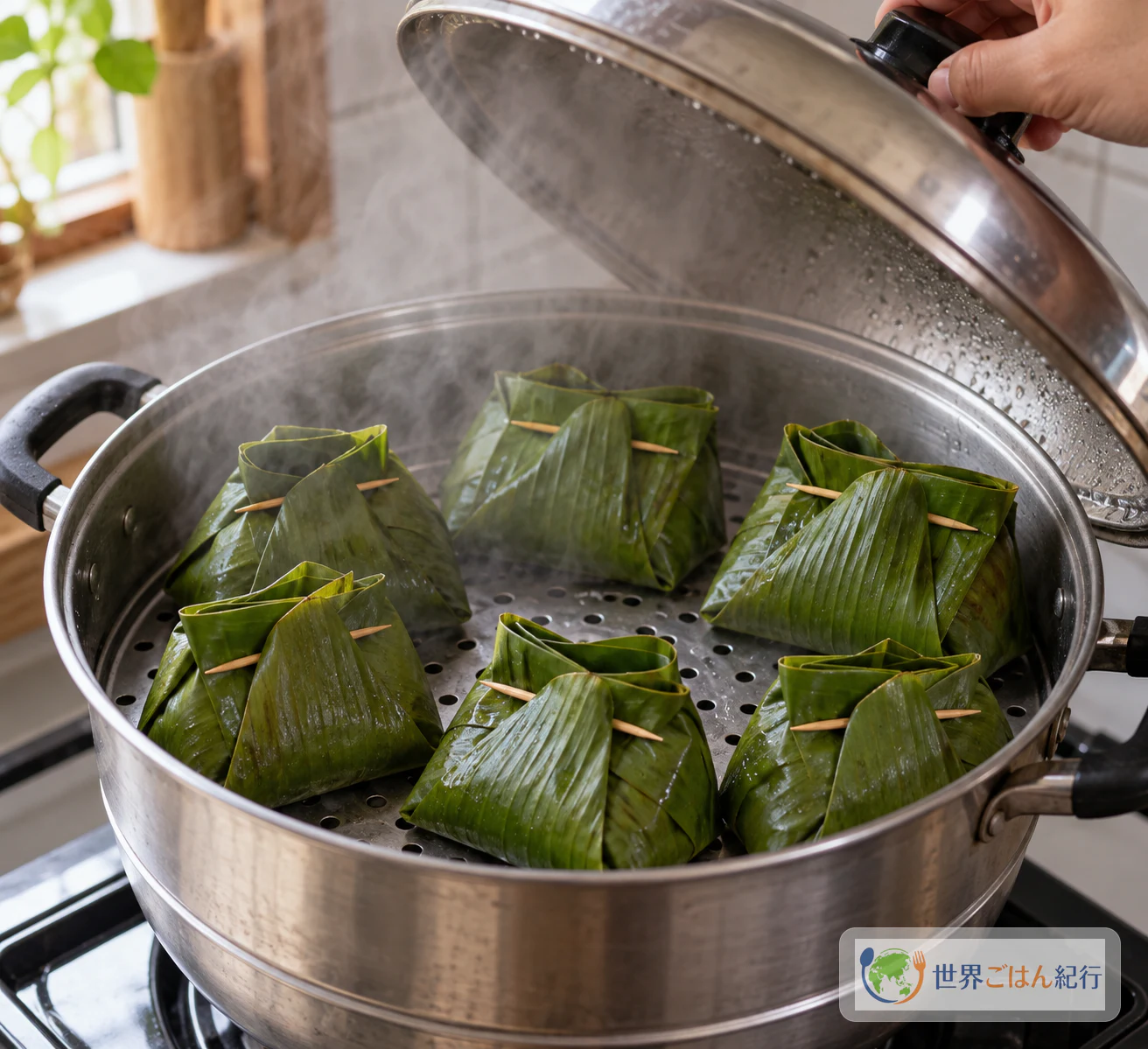
When the steamer lid comes up, six small green parcels sit in the steam, each pinned shut with a thin stick. Open one and you find cubes of tempe, the pale fermented soybean cake with whole beans set into every cut face, tangled with long shreds of young coconut, small flat lamtoro seeds, chilies and lemon basil, all bound by a paste of shallot, garlic, kencur, candlenut, red chili and makrut lime leaf.
This is botok tempe, one form of botok (also written bothok), a dish known across Java in which a seasoned filling is wrapped in banana leaf and steamed. The fillings vary widely. This article follows one specific version, Botok Tempe from an Indonesian culinary education textbook, so that you have a single, consistent recipe to cook from: 300 g tempe, 100 g young coconut, 50 g lamtoro seeds, a ground spice paste, six banana-leaf squares and 35 minutes in the steamer.
This recipe has not yet been kitchen-tested by our team. The amounts and the 35-minute steaming time come from the textbook recipe; sugar and salt are given there only as "secukupnya" (as much as needed), so no fixed spoon measures are offered here.
For more dishes from the same country, see our Indonesia page.
What Is Botok? A Steamed Leaf Parcel With Many Fillings
According to the Central Java Provincial Tourism Office, bothok is known across Java. A university department article from Universitas Negeri Surabaya describes botok as a dish that can combine grated coconut, tempe or tofu, vegetables and spices, wrapped in banana leaf and steamed. The same article describes the leaf wrapping as contributing aroma and holding in moisture during steaming.
That range is the key to understanding the name. Botok is less a single fixed recipe than a way of cooking: a coconut-based, spiced filling closed in a leaf and steamed. What goes inside changes. The tourism office, for example, introduces a version from Demak Regency made with grated coconut, salted egg and tofu, which is a different dish from the tempe version cooked here.
The sources used for this article do not establish where the name comes from, how old the dish is, or how it began, so this article does not make claims about its history or origins.
What Makes This Botok Tempe Distinctive
The textbook version is built on four layers:
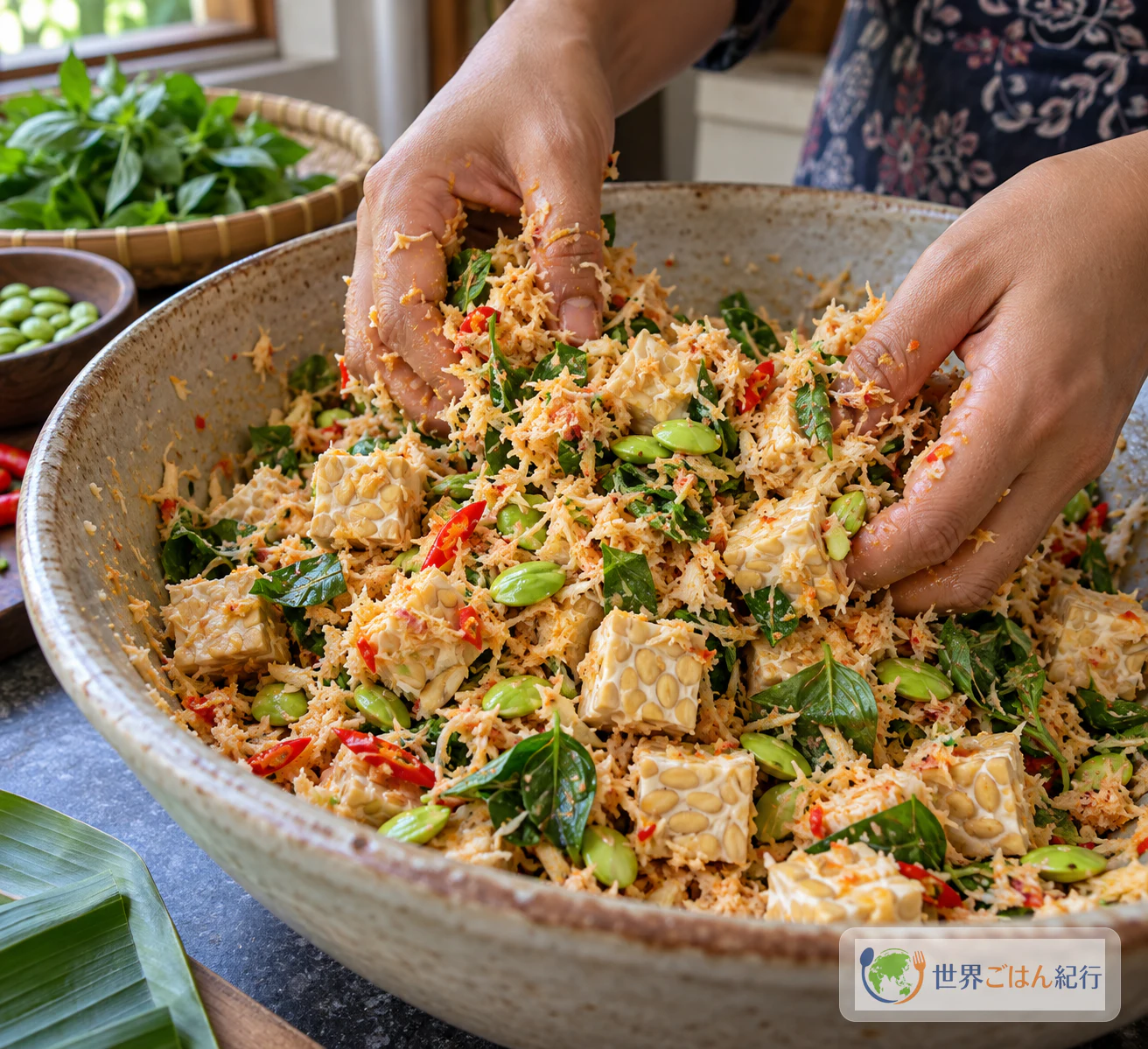
- Tempe as the main body of the parcel, cut into cubes so that each piece stays recognizable after steaming.
- Young coconut grated into long shreds, which gives the filling a moist, loose texture rather than a dry crumble.
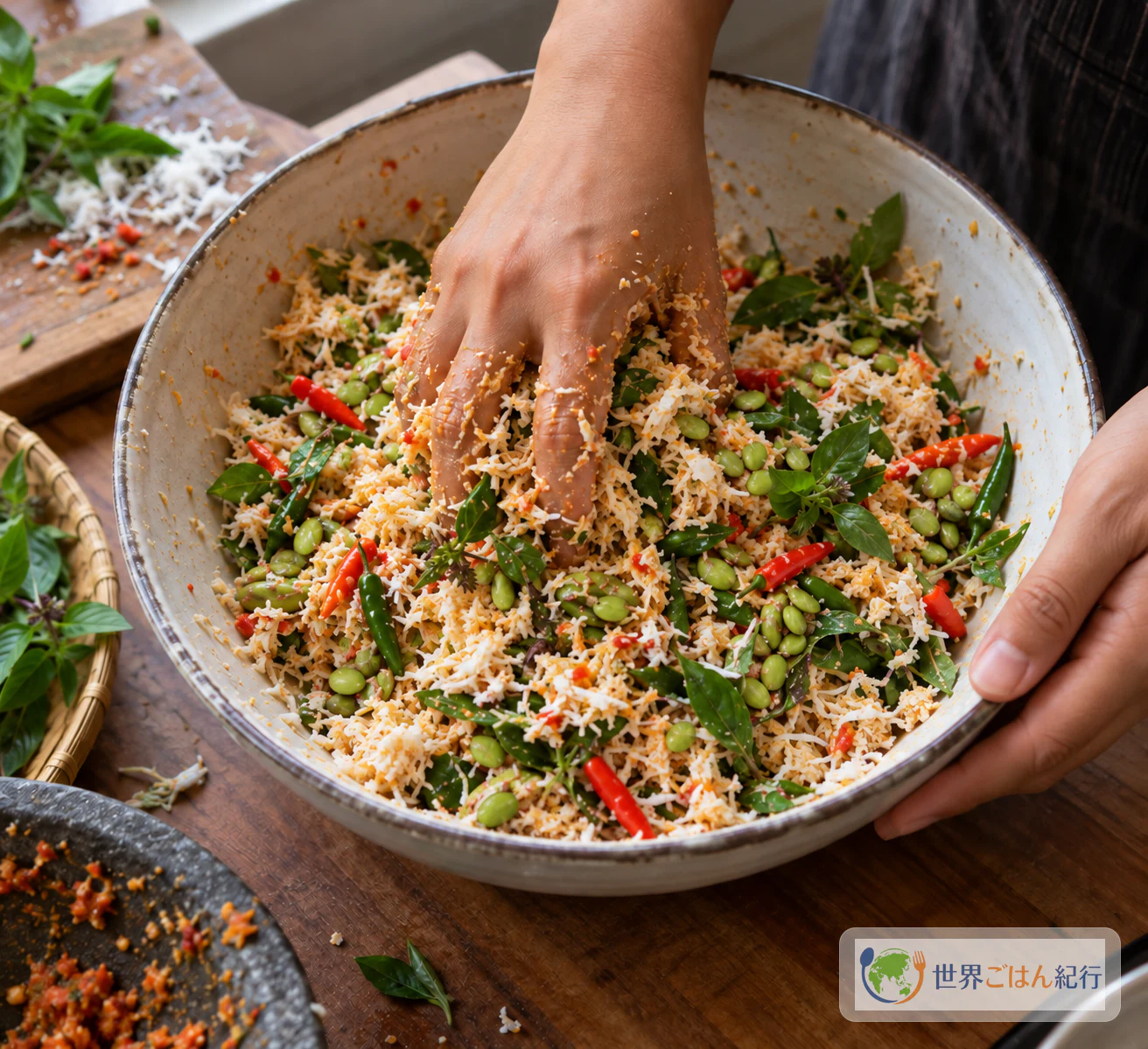
- Lamtoro seeds, bird's eye chilies and lemon basil, mixed through the coconut for texture, heat and a fresh herbal aroma.
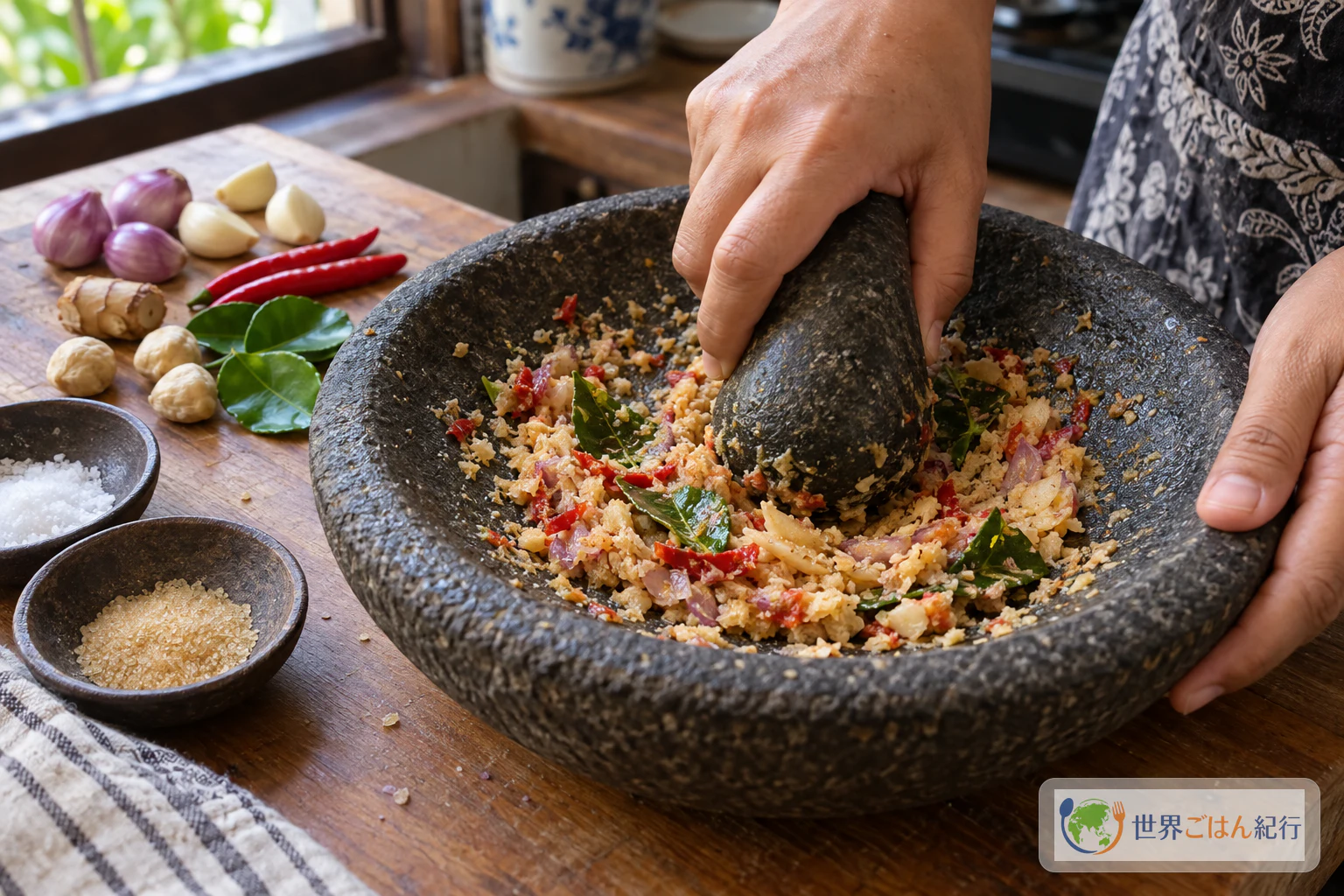
- A ground spice paste of shallot, garlic, kencur, candlenut, red chili and makrut lime leaf, seasoned with sugar and salt.
There is no coconut milk, oil, water, egg, fish or tofu in this version. The flavor comes from the paste, the coconut and the leaf.
Ingredients: Six Banana-Leaf Parcels
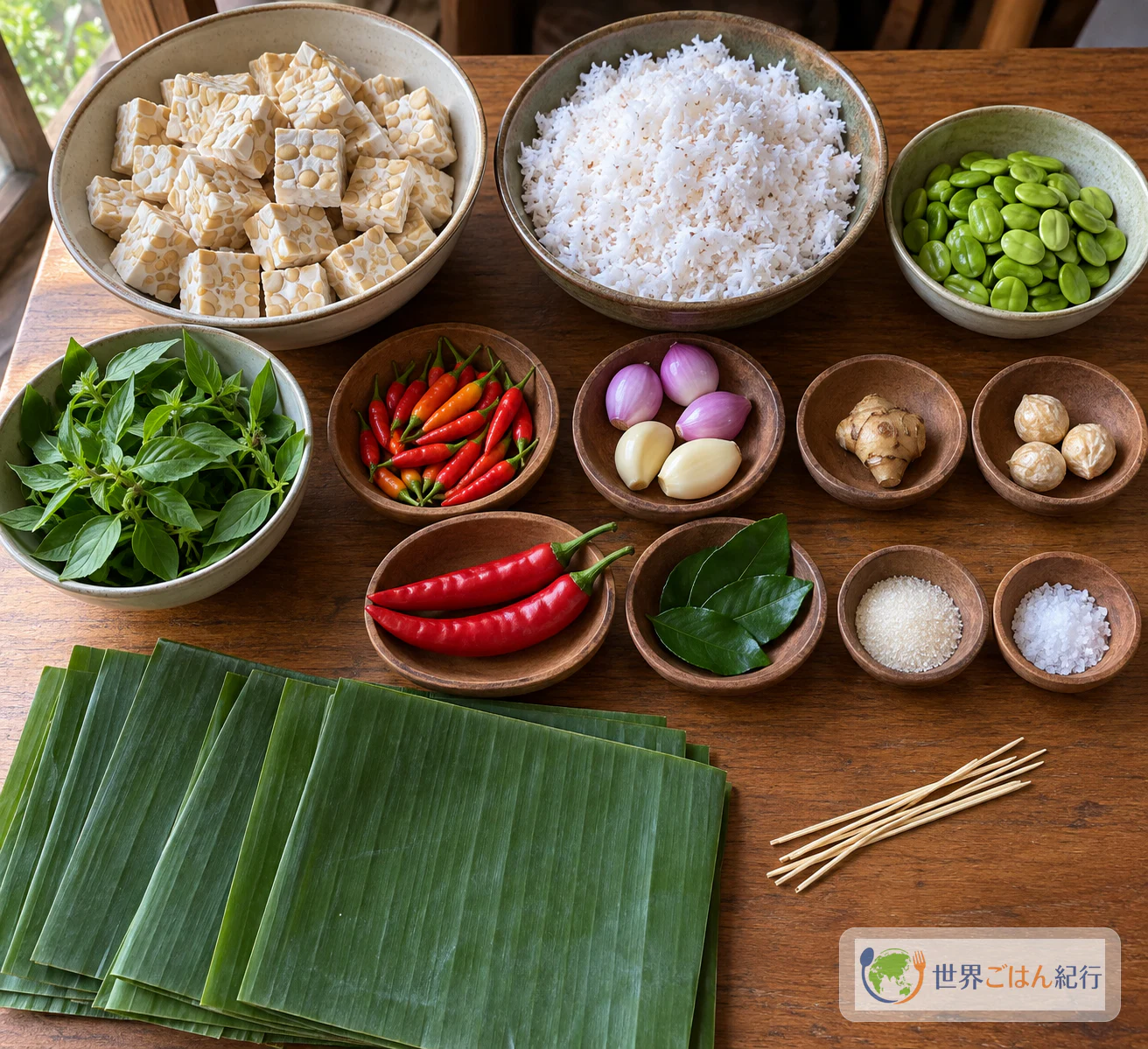
This makes six parcels.
Tempe is made from soybeans. If you cook for anyone with a soy allergy, this dish is not suitable. Check the labels of the tempe and any other packaged ingredients you use for other allergens.
Equipment
- Mortar and pestle (cobek and ulekan)
- Steamer
- Knife and cutting board
- Banana leaves (daun pisang): 6 squares, 20 x 20 cm each
- Lidi (thin sticks) for pinning the parcels, as needed
Shopping and Substitutions: What to Look For
A few ingredients are worth tracking down at an Indonesian or Southeast Asian grocer or online. The substitutions below are adjustments, and each one changes the dish.
| Ingredient | What to look for | If you can't find it |
|---|---|---|
| Tempe | A firm, pale fermented soybean cake with whole soybeans visible through the cut surface. It is not tofu and not meat | There is no real replacement in this recipe; tempe is the dish's center |
| Lamtoro seeds (pete cina) | Small, flat, green seeds. They are not the long, large beans sold as petai | Leave them out; the dish is then no longer the recipe as written. Do not treat edamame or other beans as an equivalent |
| Lemon basil (kemangi) | Fresh lemon basil leaves | Other basils give a different aroma; Thai basil is not the same herb |
| Young coconut | Fresh young coconut flesh grated into long shreds | Ordinary dried desiccated coconut has a different texture and moisture and is not an equivalent |
| Kencur | A small, pale rhizome with an earthy, fresh aroma | It is not the same as galangal or ginger; using those changes the flavor |
| Candlenuts (kemiri) | Round, cream-colored nuts | Macadamias and other nuts are not a confirmed substitute in this recipe |
| Banana leaves | Frozen or fresh leaves, cut into 20 cm squares | Baking paper can hold the parcel together, but the leaf aroma is lost |
| Lidi | Thin sticks for pinning leaves | Toothpicks can be used instead |
The recipe uses 15 bird's eye chilies. If you use fewer, you are changing the recipe.
Method: Paste, Mix, Wrap, Steam
Have the six banana-leaf squares and the lidi ready before you mix the filling, and get water heating in the steamer so it is producing steam by the time the parcels are wrapped.
Wrapping and Steaming: Getting the Parcels Right
The textbook names the shape as bentuk tum, a tum-style parcel, but does not illustrate the fold, so this article does not prescribe a particular geometry. What matters is practical: the filling should be fully enclosed, the overlaps should face where the lidi can hold them, and each parcel should sit flat in the steamer.
The Universitas Negeri Surabaya article describes the banana leaf as adding aroma and holding moisture in during steaming. That is the reason to wrap tightly enough that the filling does not dry out, and the reason a paper wrap gives a different result.
Steam escaping from the lid and the hot leaves of freshly steamed parcels can burn. Lift the steamer lid away from you, use tongs to remove the parcels, and let them cool before opening or handling them with bare hands.
When Things Go Wrong
| Problem | Likely cause | What to do |
|---|---|---|
| The filling looks dry and won't hold together | The coconut is dried rather than fresh young coconut | Check the coconut first. The recipe adds no water, so if you choose to add any, treat it as your own adjustment |
| A parcel opens in the steamer | Too much filling, or the edges were not overlapped | Use less filling per leaf, overlap the folds and pin through the overlap. Keep the 20 cm square size |
| The steamer boils dry | Too little water at the start | Keep an eye on the water level through the 35 minutes |
| The tempe has broken into crumbs | The filling was stirred hard after the tempe went in | Fold the tempe in gently at the end and stop once it is coated |
Serving: Open at the Table
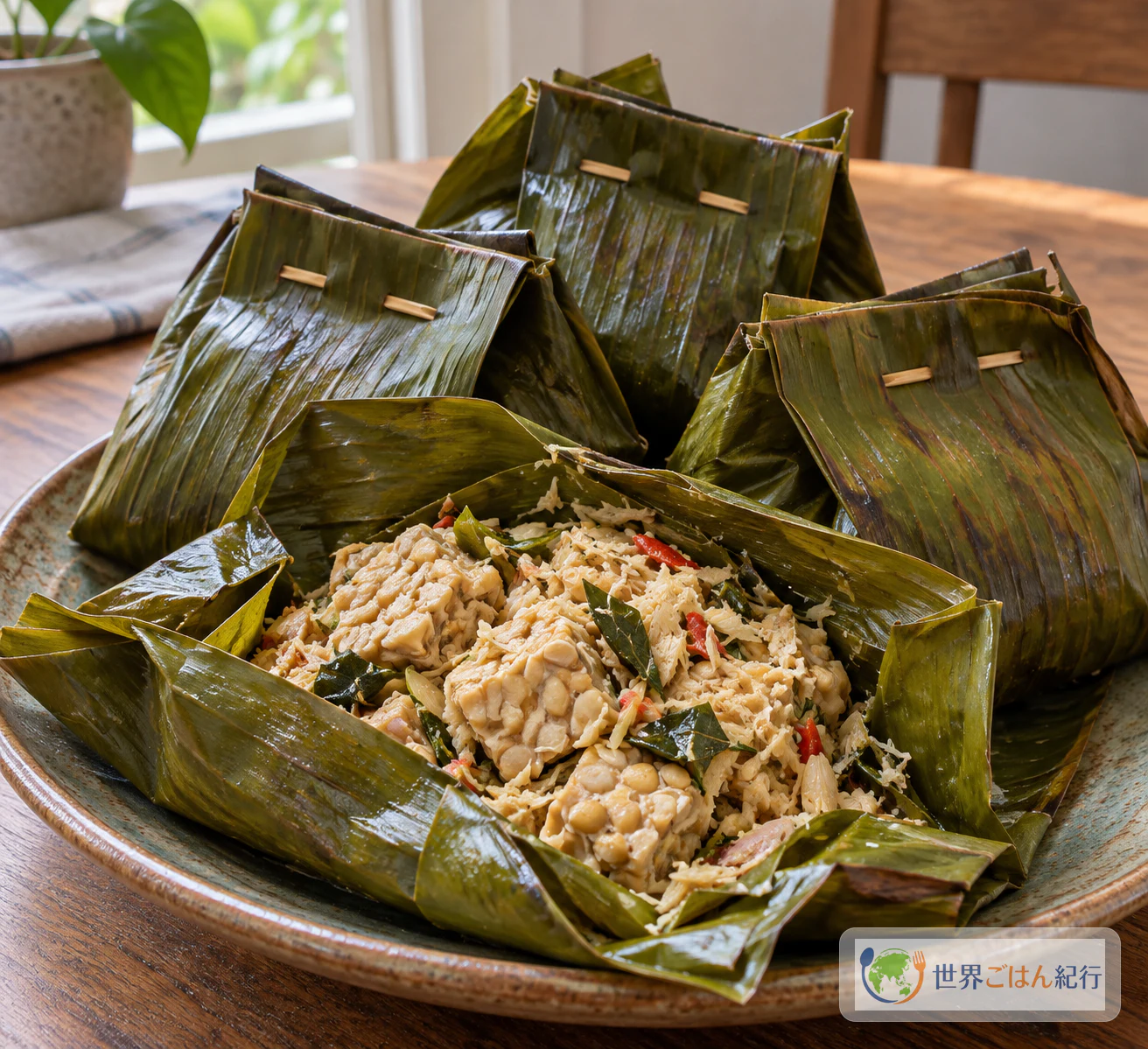
Bring the parcels to the table still closed and let each person open their own, so the tempe, coconut and spice are revealed at the last moment. For the Demak salted-egg version, the Central Java tourism office suggests warm rice as an accompaniment; plain warm rice is a natural, optional partner for the tempe version too.
Variations and Regional Differences
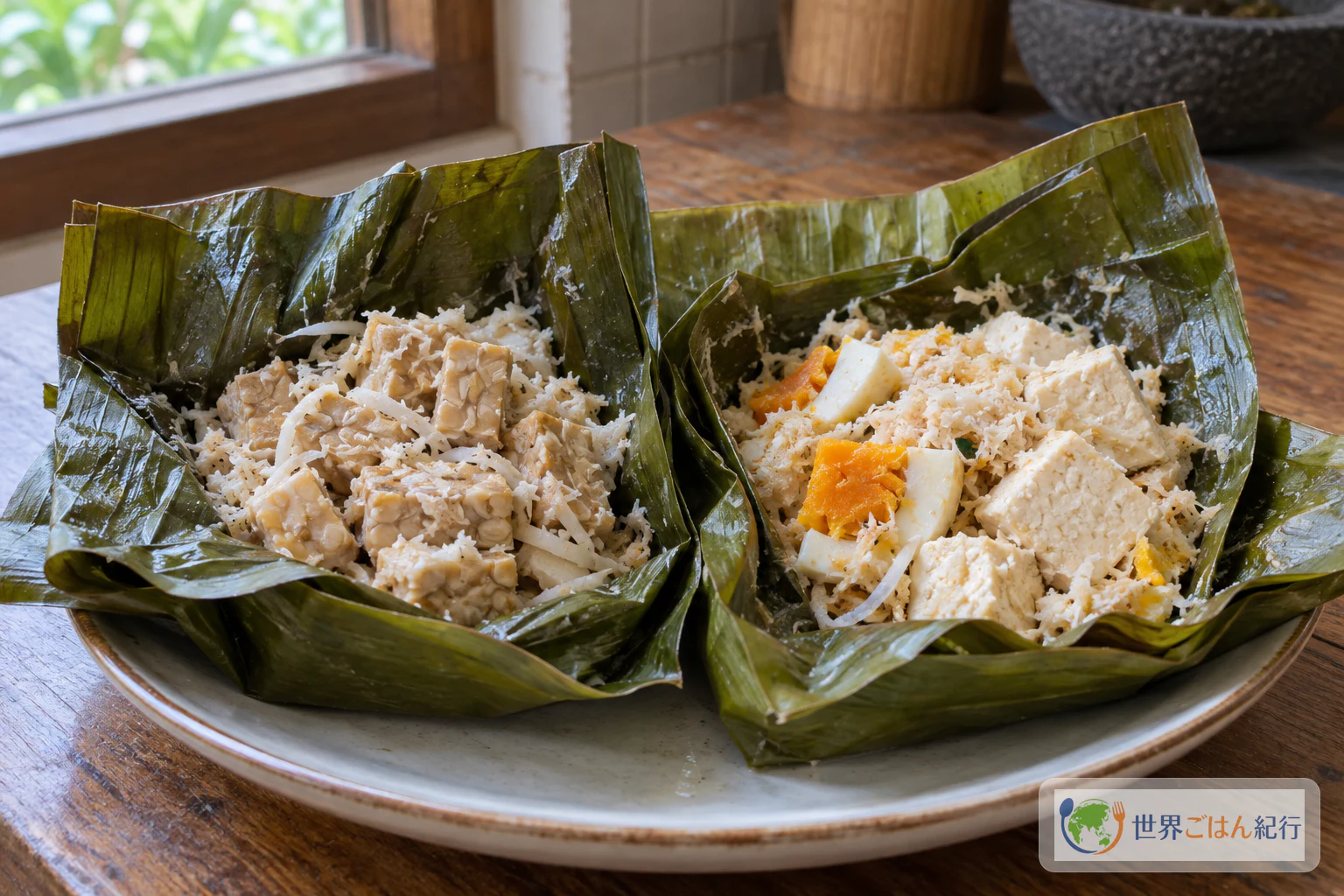
The Central Java Provincial Tourism Office describes a bothok from Demak Regency made with grated coconut, salted egg and tofu, seasoned, wrapped in banana leaves and steamed. It is a separate recipe from the botok tempe here. This article has not researched its amounts or seasonings, so it does not give a method for it; it is shown only to illustrate how the filling changes from place to place.
If you want to adjust the tempe version, these are changes to the recipe rather than part of it:
- Milder heat: use fewer bird's eye chilies. The chili aroma lightens as well.
- Without lamtoro: leave out the seeds. This is a change to the recipe.
- Part tofu: replace some of the tempe with tofu. This is your own variation, not the Demak recipe.
- Without banana leaves: wrap in baking paper. The parcels hold together, but the leaf aroma is gone.
Frequently Asked Questions
How many people does this serve?
The recipe makes six parcels. It does not give a number of servings, so plan by parcels.
How long do I steam botok tempe?
Steam for 35 minutes, as given in the textbook recipe, counted from when the parcels go into a steamer that is already producing steam.
What if I can't find lamtoro seeds?
The textbook does not offer a substitute. You can leave them out, which changes the recipe. Don't use the large beans sold as petai in their place; they are a different ingredient.
How much sugar and salt should I use?
The textbook gives sugar and salt only as "secukupnya," as much as needed, so this article does not invent a measurement. Add a little of each to the paste, and adjust the amount for your next batch based on how the steamed parcels taste.
Is botok the same as pepes?
Both are Indonesian dishes steamed in banana leaf, but the sources used for this article do not compare them, so we don't treat them as the same dish.
Can I store leftovers?
The sources for this recipe give no storage guidance, so this article does not give a storage period, freezing method or reheating instructions.
Sources
- STIKes Harapan Bangsa repository, "Pengembangan Kuliner" (culinary education textbook), PDF. The Botok Tempe recipe used here: ingredients and amounts, division into six parcels, 20 x 20 cm banana-leaf squares, steaming for 35 minutes, the method, and the suggested tools. Sugar and salt are given only as secukupnya; no total time, serving count, storage guidance or doneness temperature is stated, and the tum-style wrap is named without a diagram. https://repository.stikeshb.ac.id/29/1/PENGEMBANGAN-KULINER-FINAL-SC_.pdf
- Central Java Provincial Tourism Office, "Bothok Salted Egg." That bothok is known across Java; the Demak Regency version with grated coconut, salted egg and tofu, wrapped in banana leaves and steamed; and warm rice as an accompaniment. This describes a different variant from the tempe recipe above. https://visitjawatengah.jatengprov.go.id/en/culinary/bothok-salted-egg
- Universitas Negeri Surabaya, Faculty of Education (PLS department site), "Keunikan Botok: Kemasannya dari Daun Pisang, Isinya Melimpah." The general range of botok fillings (grated coconut, tempe or tofu, vegetables and spices) wrapped in banana leaf and steamed, and the author's description of the leaf as adding aroma and retaining moisture. Used as cultural context, not as a recipe authority. https://pls.fip.unesa.ac.id/post/keunikan-botok-kemasannya-dari-daun-pisang-isinya-melimpah