A Balinese Rujak Made with Seaweed and Fish Broth
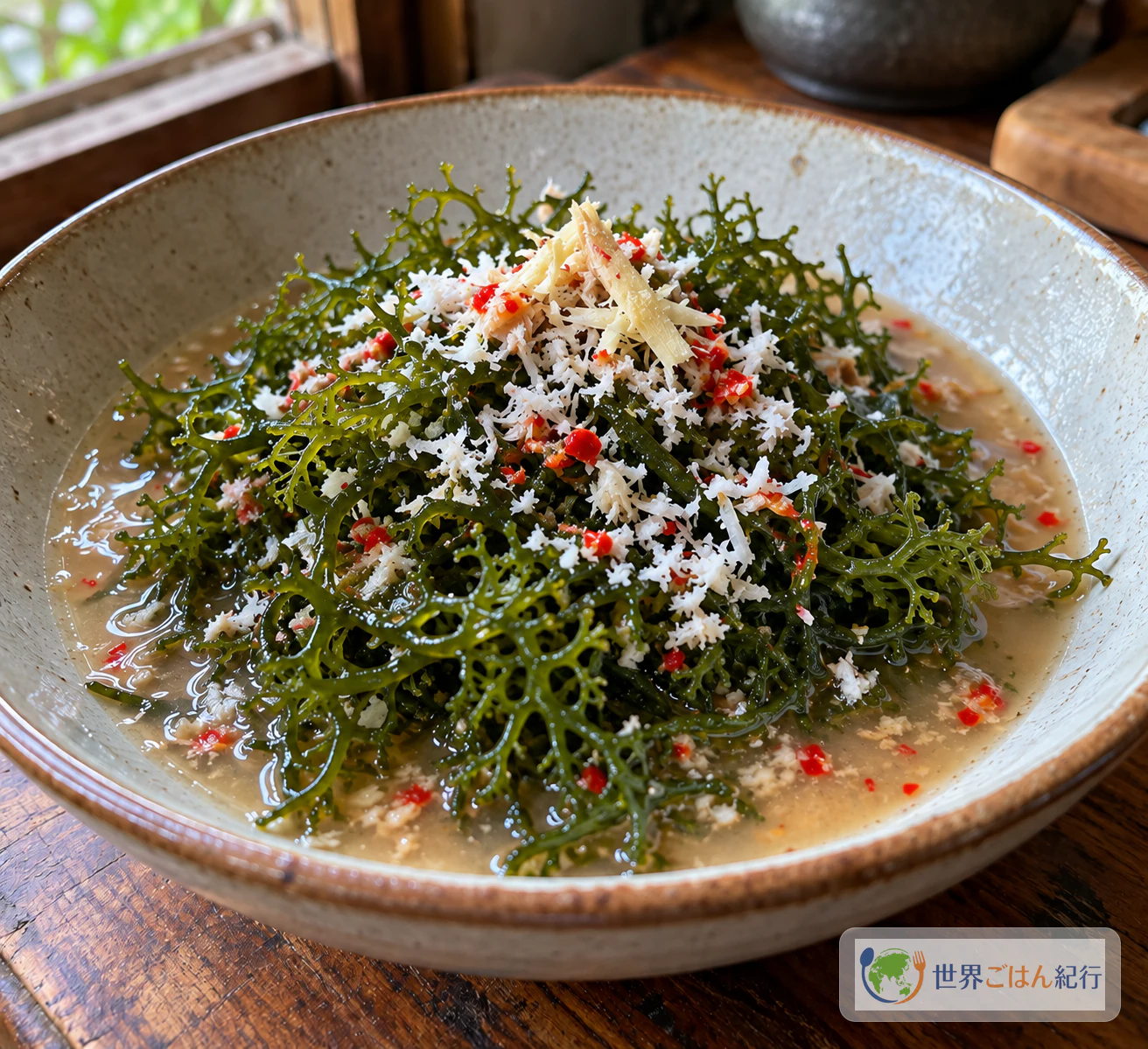
The salty, springy bite of the seaweed, the savory depth of a light tuna broth, the funk of roasted shrimp paste, and the toasty notes of roasted coconut and galangal. This is not the sweet-and-sour fruit rujak many people picture.
For many people, the word rujak brings to mind chunks of fruit tossed in a sweet, sticky, chili-spiked sauce. On the coast of Bali, around Denpasar and Serangan Island, there is a rujak built on something else entirely: seaweed. In Balinese, bulung means seaweed, and Rujak Bulung is a dish tied to Denpasar and Serangan, where the sea is a local source of food.
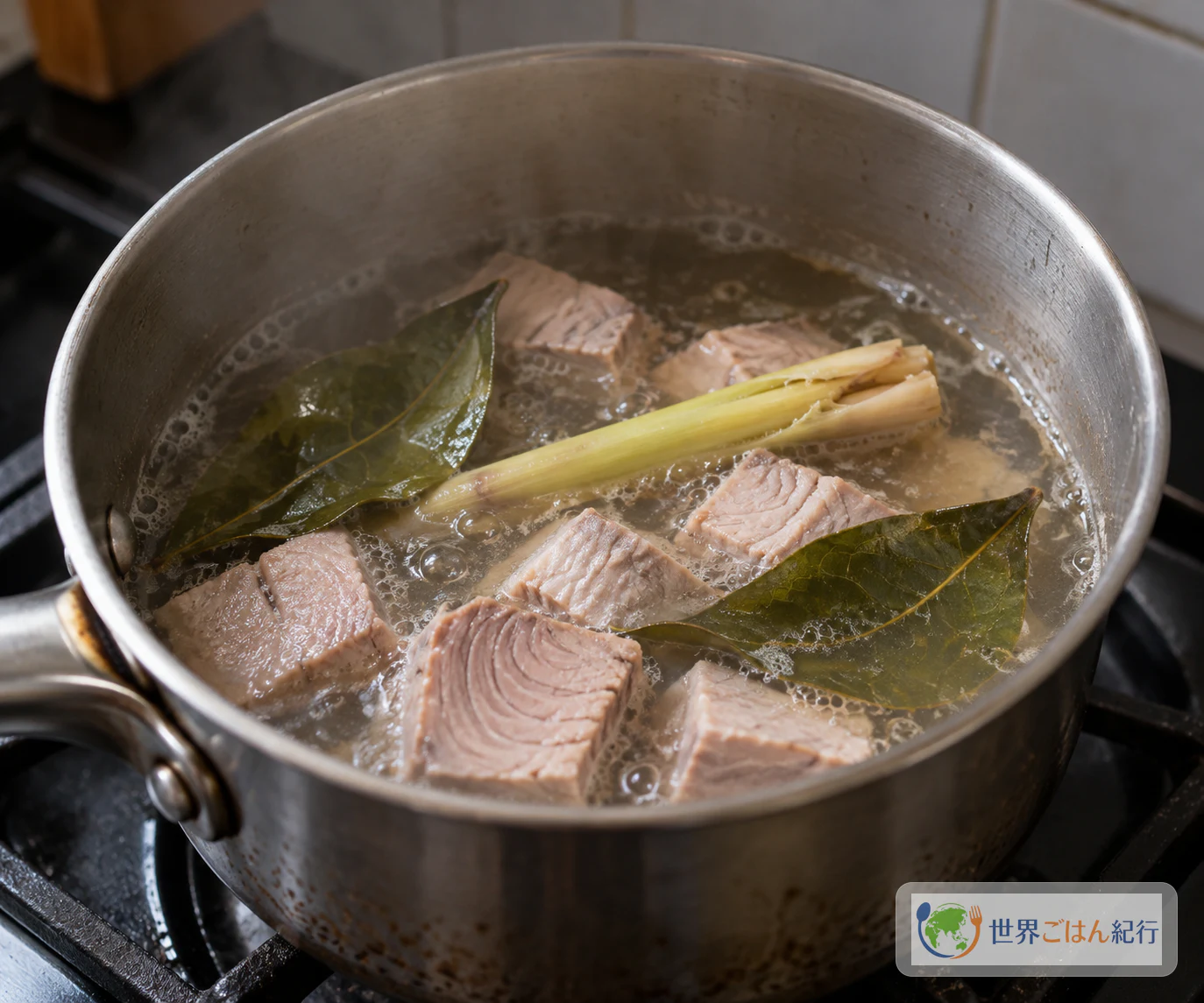
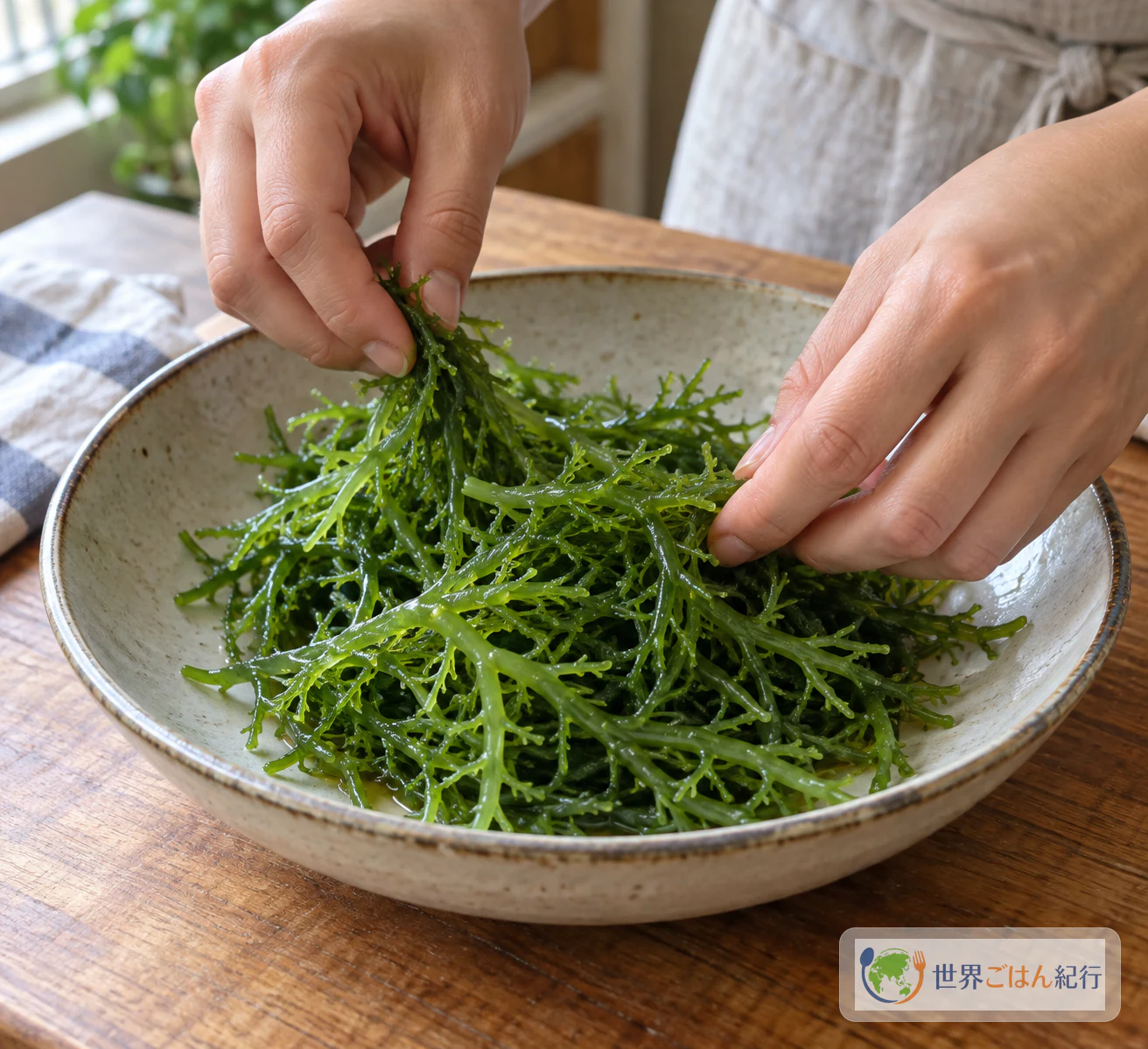
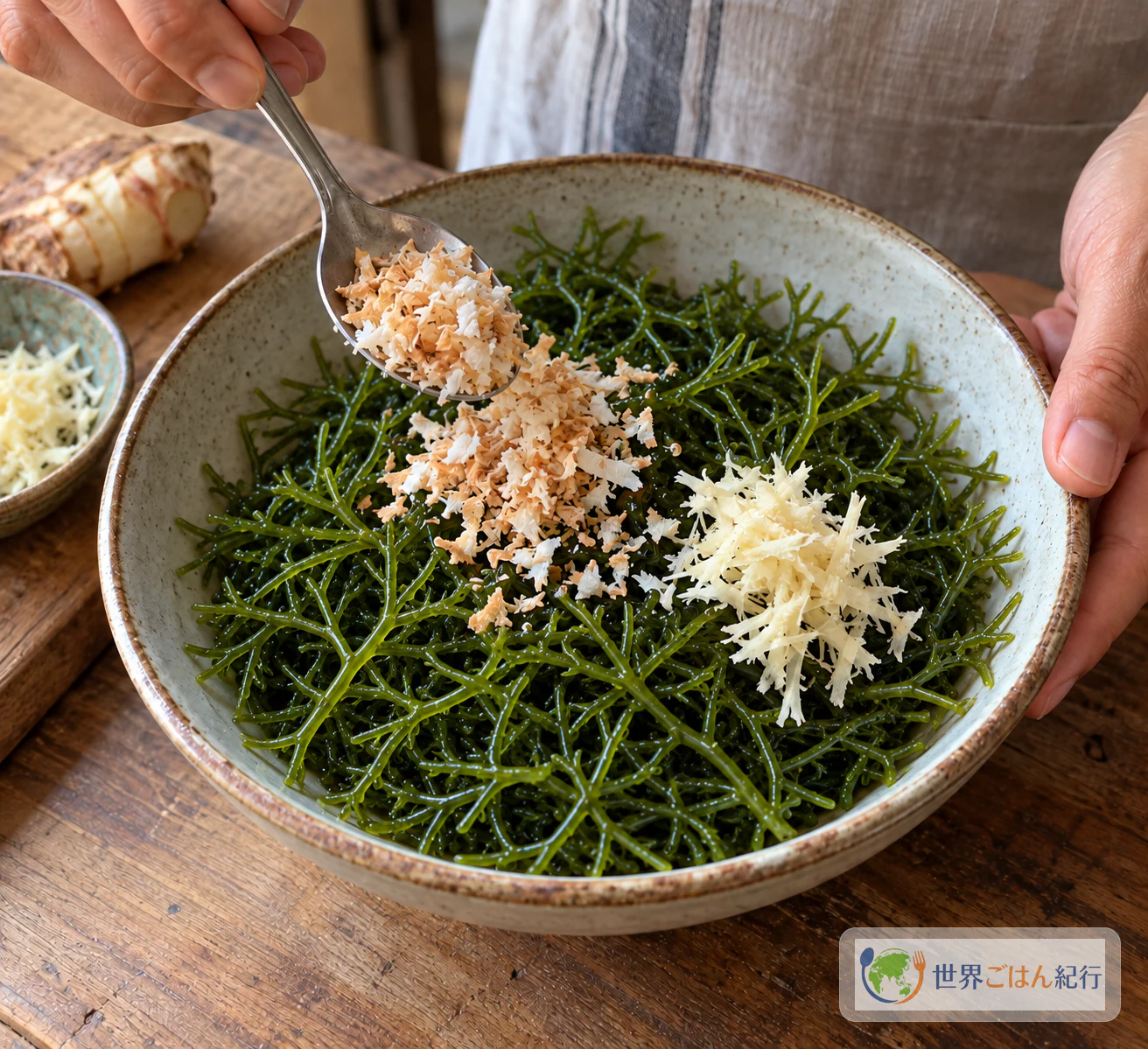
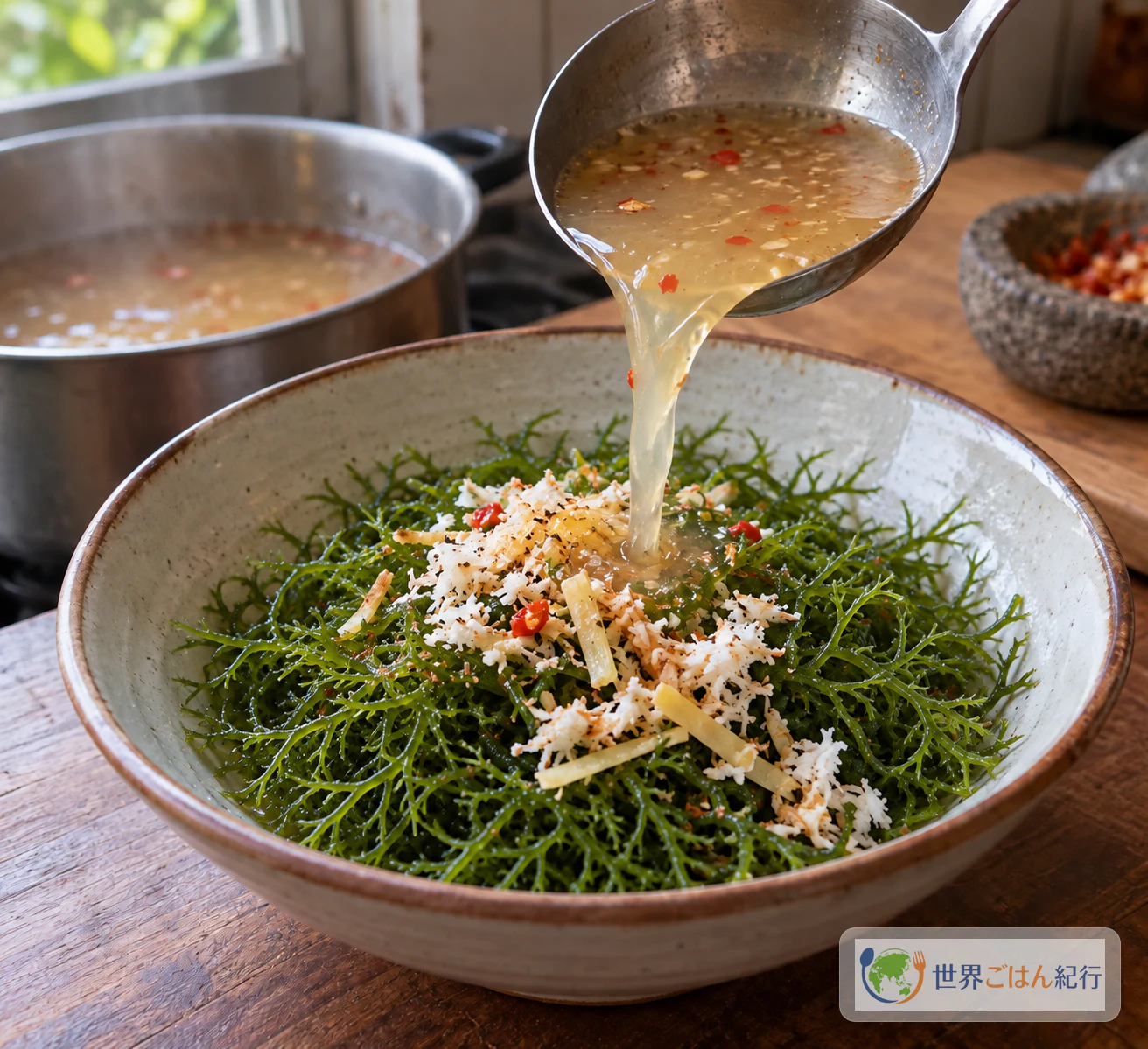
This article follows one particular version, Rujak Bulung Kuah Pindang, shared on Cookpad by Wawia Ni Made, a home cook based in Denpasar. It makes a single serving: ready-to-use green seaweed in a bowl, topped with grated roasted coconut and grated galangal, then dressed with a small amount of broth made by simmering tuna with Indonesian bay leaves and lemongrass, seasoned with pounded bird chili, roasted shrimp paste and salt. The author notes that she buys her bulung already prepared (bulung matang) from a seller near her home, and she distinguishes this green type from white bulung and from the sea-grape-like boni.
The author lists the dish as taking about 30 minutes. That is her own estimate; we have not timed or kitchen-tested it independently. If you would like to explore more of the country's cooking, see our Indonesia page.
Because bulung simply means seaweed, the word appears in more than one dish name. Jaja Bulung from Gianyar is a sweet made with seaweed and palm sugar, and it is a completely different dish from this savory salad. More on that below.
Ingredients for 1 Serving
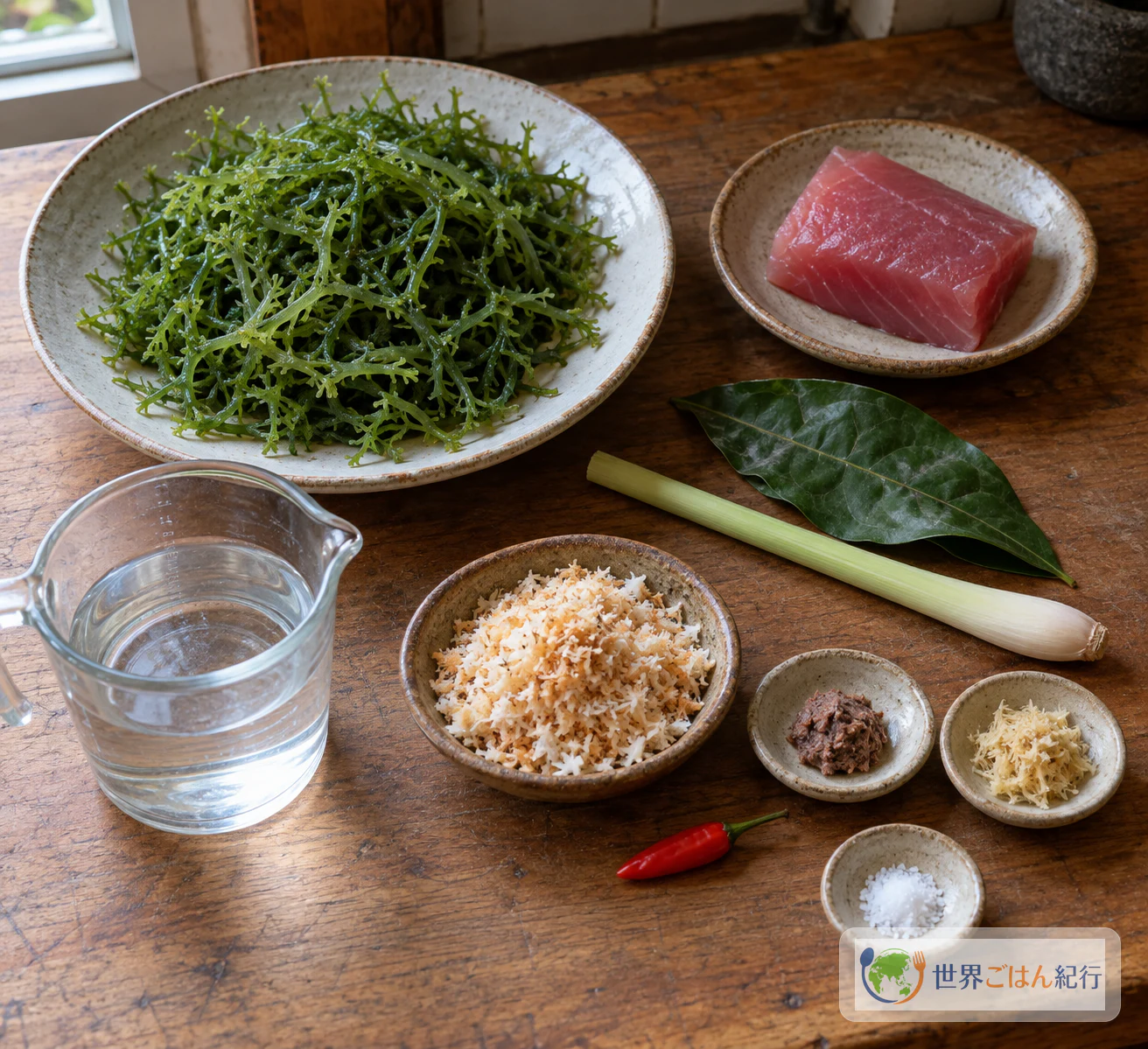
This dish contains fish (tuna) and shrimp (terasi). Use only seaweed that is sold as food and labeled as edible, with a clear source. Do not use wild-gathered seaweed or seaweed of unknown origin, and do not eat unprocessed raw seaweed. If a packaged seaweed has washing or rehydrating instructions on its label, follow the label.
Choosing and Substituting Ingredients
Seaweed. Use green bulung that is already prepared and ready to eat. No particular species is required, so there is no single "correct" seaweed to hunt for. Outside Bali, look for a green, branching edible seaweed sold for eating. Edible sea grapes (Caulerpa) sold as food are one option, but they have a different, bead-like texture from the fine branching strands shown here. Some sea grapes are sold salted; if you use those, rehydrate them as the label directs and taste for saltiness before seasoning. This is an adaptation, and the saltiness and texture will differ.
Coconut. Use coconut that has been roasted and then grated. Swapping in plain fresh coconut loses the toasty note that defines the topping. It does not need to be roasted down to a dark, dry powder.
Galangal and daun salam. Galangal is a different rhizome from ginger, and Indonesian bay leaf (daun salam) is a different leaf from European bay laurel. Swapping either changes the aroma of the dish, so look for the real ingredients at an Asian grocer if you can.
Terasi. Indonesian shrimp paste is the source of the dressing's fermented depth. Check the label for crustacean allergen information.
Equipment
- Small saucepan
- Fine-mesh sieve or strainer
- Small bowl to catch the strained broth
- Stone mortar and pestle (or another mortar for pounding)
- Shallow serving bowl
- Small ladle or spoon
Method: Broth, Seasoning, Seaweed, Toppings, Pour
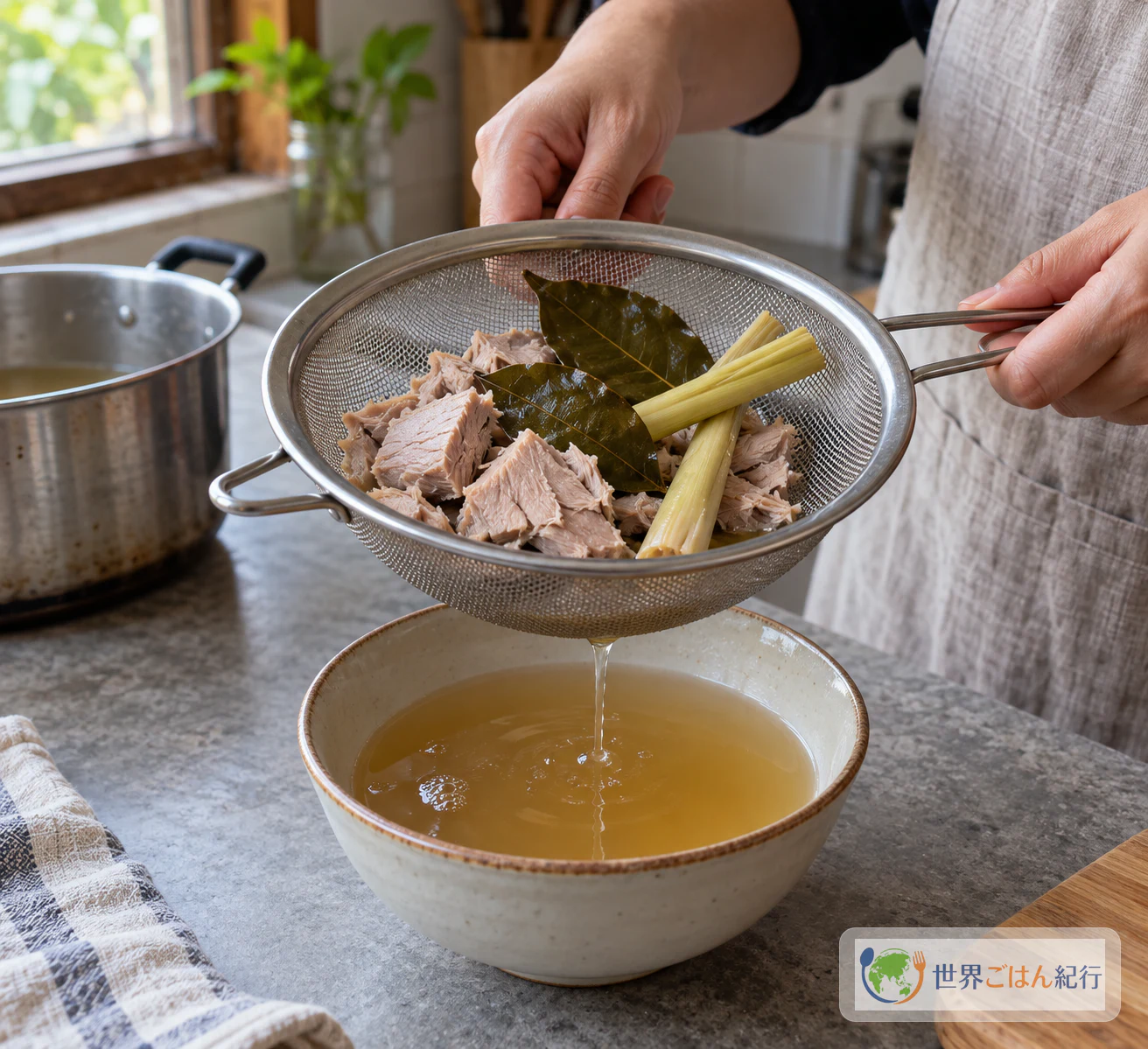
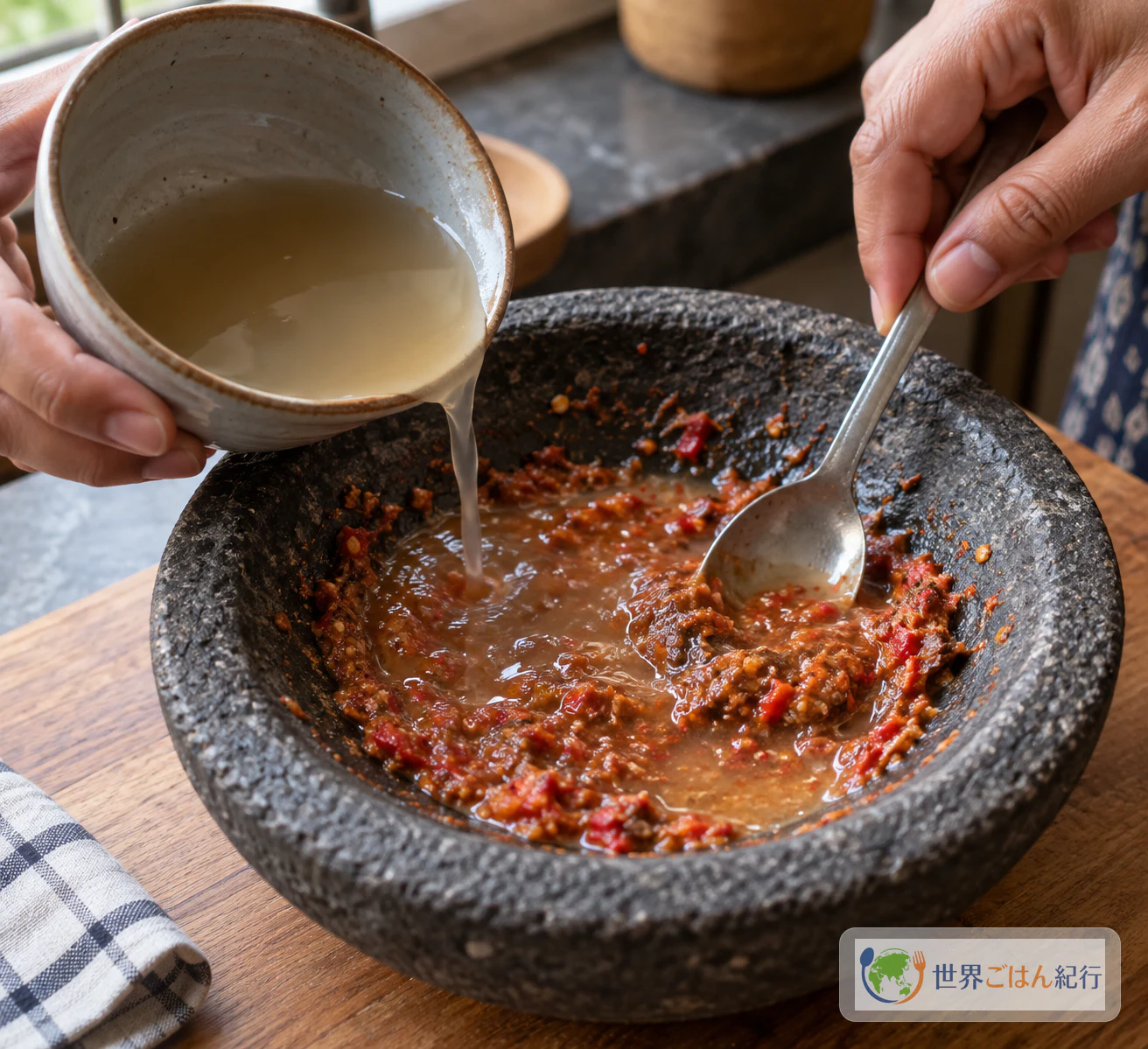
Make the broth first and let it cool before straining. Pound the chili, terasi and salt before the broth goes in. Build the bowl seaweed first, toppings second, broth last.
Tips and Fixes
| What you notice | Likely cause | What to do |
|---|---|---|
| The finished bowl tastes too salty | The broth reduced well below about 100 ml, or a salted seaweed was not rehydrated enough | Next time, stop the simmer when the broth reaches about 100 ml. With salted seaweed, rehydrate per the label and taste before seasoning |
| Gritty lumps of shrimp paste in the dressing | The terasi was not pounded thoroughly | Pound the terasi together with the chili and salt before adding the broth |
| The broth looks cloudy | Chili and terasi in the dressing | Normal. The broth does not need to be perfectly clear |
| Flat, missing toastiness | Fresh coconut used instead of roasted | Use coconut that has been roasted, then grated |
| Tastes more like ginger | Ginger used in place of galangal | Use galangal; they are different ingredients |
Variations and Adjustments
These are adjustments outside the recipe as the author wrote it. The base recipe above stays the same.
- Milder heat. Using less chili lowers only the heat; the rest of the dish stays as it is.
- Sea grapes or other edible Caulerpa. Check the label for the variety and whether it is salted. Salted products should be rehydrated as directed, and the saltiness and texture will differ from the green branching bulung used here.
- Store-bought fish stock. It will taste different from tuna simmered with daun salam and lemongrass, so it is not part of the base recipe.
- Vegetarian. Removing the tuna and terasi takes away the dish's savory backbone. There is no simple like-for-like swap, so we don't suggest one.
Other versions of Rujak Bulung you may come across add lime or fried soybeans. Those belong to other recipes and are not used here.
Storage
The recipe gives no storage guidance, and we cannot confirm a safe holding time for ready-to-eat seaweed combined with fish broth. Make it to eat, rather than planning to make it ahead or keep leftovers.
Bulung, Rujak Bulung and Jaja Bulung
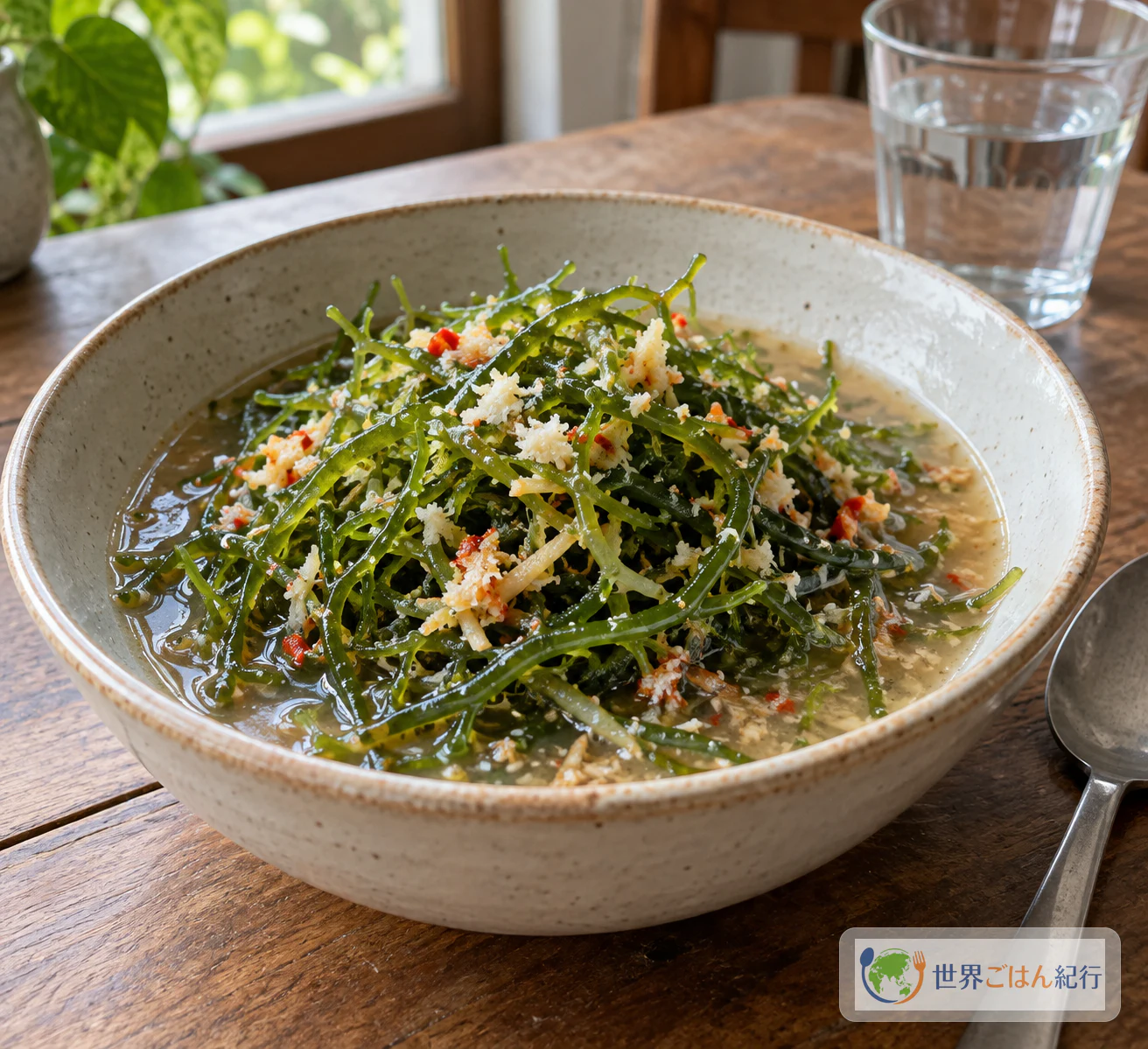
Because bulung is the Balinese word for seaweed, it is not the name of a single dish. Visit Bali describes Rujak Bulung as a dish associated with Denpasar and Serangan Island, and notes that different seaweeds, such as bulung buni and bulung rambut, are handled differently. It also describes coconut, lime, fried soybeans and an optional pindang sauce as ways the dish is served. That is a regional overview, and it should not be read as a rule for every stall or household.
The biodiversity organization Yayasan KEHATI describes Rujak Bulung as a Balinese seaweed rujak and identifies bulung boni, the seaweed commonly used for it, as Caulerpa spp., linking the dish to Serangan and to local marine food resources. That identification is for bulung boni; it is not a species-level identification of every seaweed sold as bulung. The Denpasar cook whose recipe appears here, for her part, uses a green bulung she distinguishes from boni.
Jaja Bulung, by contrast, is a sweet from Gianyar. According to the Gianyar Regency Government, dried seaweed is boiled with palm sugar, strained, cooled and cut, then served with grated coconut, and it is sold at the Senggol market in the afternoon. It shares the word bulung and the grated coconut, but it is a different dish from the savory salad in this article.
Frequently Asked Questions
Do I need bulung boni or Caulerpa specifically?
No. This recipe uses ready-to-use green bulung, and the author does not identify a species. She distinguishes her green type from both white bulung and the sea-grape-like boni. Any green, branching seaweed sold as food and ready to eat fits the spirit of the dish.
Can I use sea grapes?
Edible sea grapes sold as food are a possible option, but they have a bead-like texture rather than fine strands. Some are sold salted; rehydrate those as the label directs and taste for saltiness. This is a departure from the author's recipe, and the result will be different.
What is kuah pindang here?
In this recipe, it is a simple fish broth: tuna simmered with Indonesian bay leaves, lemongrass and water until about 100 ml remains, then cooled, strained and seasoned with pounded chili, terasi and salt. It is not the sweet, thick dressing used for fruit rujak.
Can I make it ahead?
The recipe does not give storage conditions, and we cannot confirm a safe holding time. We don't recommend making it ahead or storing it.
What allergens does it contain?
Fish (tuna) and shrimp (terasi, a crustacean). Also check labels on packaged seaweed and terasi for any other allergen information.
Can I use ginger instead of galangal, or bay laurel instead of daun salam?
They are different ingredients, and swapping them changes the aroma of the dish. Galangal and daun salam are worth seeking out at an Asian grocer.
Sources
- Wawia Ni Made (Denpasar), "Rujak Bulung Kuah Pindang (Rumput Laut Khas Bali)," Cookpad. The one-serving recipe used in this article: ingredients, amounts and method; the author's Denpasar background, her distinction between this green bulung, white bulung and sea-grape boni, and her note that she buys prepared bulung. A community-submitted recipe, not an official standardized formula; the 30-minute time is the author's estimate. https://cookpad.com/id/resep/15635724
- Visit Bali, "Rujak Bulung: The Unique Balinese Dish." Bulung as the Balinese word for seaweed; the dish's association with Denpasar and Serangan Island; bulung buni and bulung rambut handled differently; serving variants including coconut, lime, fried soybeans and optional pindang sauce. A regional tourism overview with no quantities. https://visitbali.id/property/rujak-bulung-the-unique-balinese-dish
- Biodiversity Warriors / Yayasan KEHATI, "Caulerpa, Bahan Rujak Rumput Laut Khas Bali." Rujak Bulung as a Balinese seaweed rujak; bulung boni identified as Caulerpa spp.; the link to Serangan and local marine food resources. Not a species-level identification of every seaweed sold as bulung. https://biodiversitywarriors.kehati.or.id/artikel/caulerpa-bahan-rujak-rumput-laut-khas-bali/
- Gianyar Regency Government, "Jaja Bulung Senggol Gianyar Pameran di Simposium Internasional." Jaja Bulung as a distinct Gianyar seaweed sweet made with palm sugar and served with grated coconut, sold at the Senggol market in the afternoon. Used only to separate it from the savory salad. https://gianyarkab.go.id/informasi-publik/berita/jaja-bulung-senggol-gianyar-pameran-di-simposium-internasional