Cimol: Small Flour Balls That Go into the Oil Before the Heat
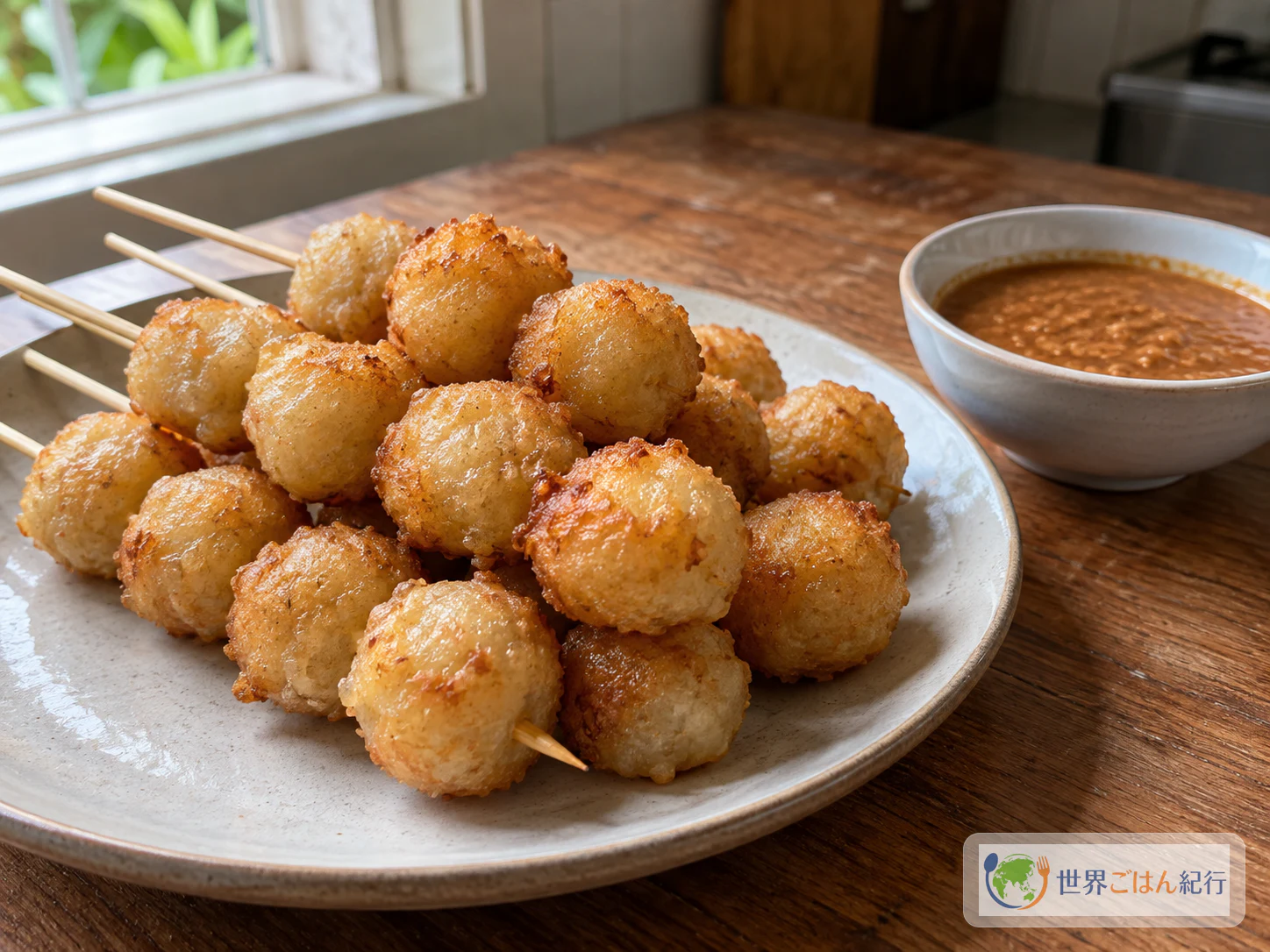
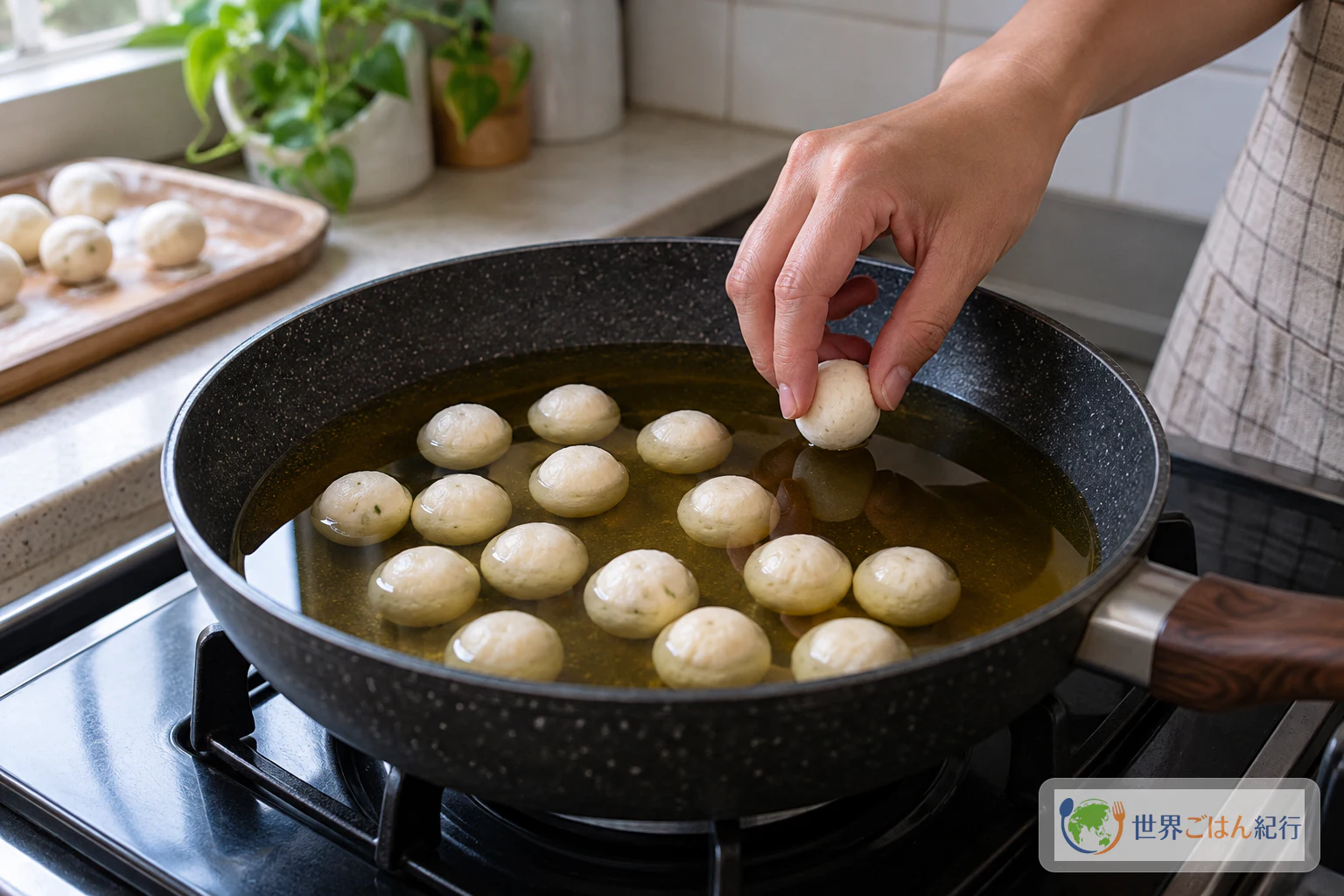
Bind two flours with boiling water and roll the dough into small balls. Put every ball into cold oil before you turn on the heat, then fry gently over low heat until browned and finish them in a closed container with chili and balado powder.
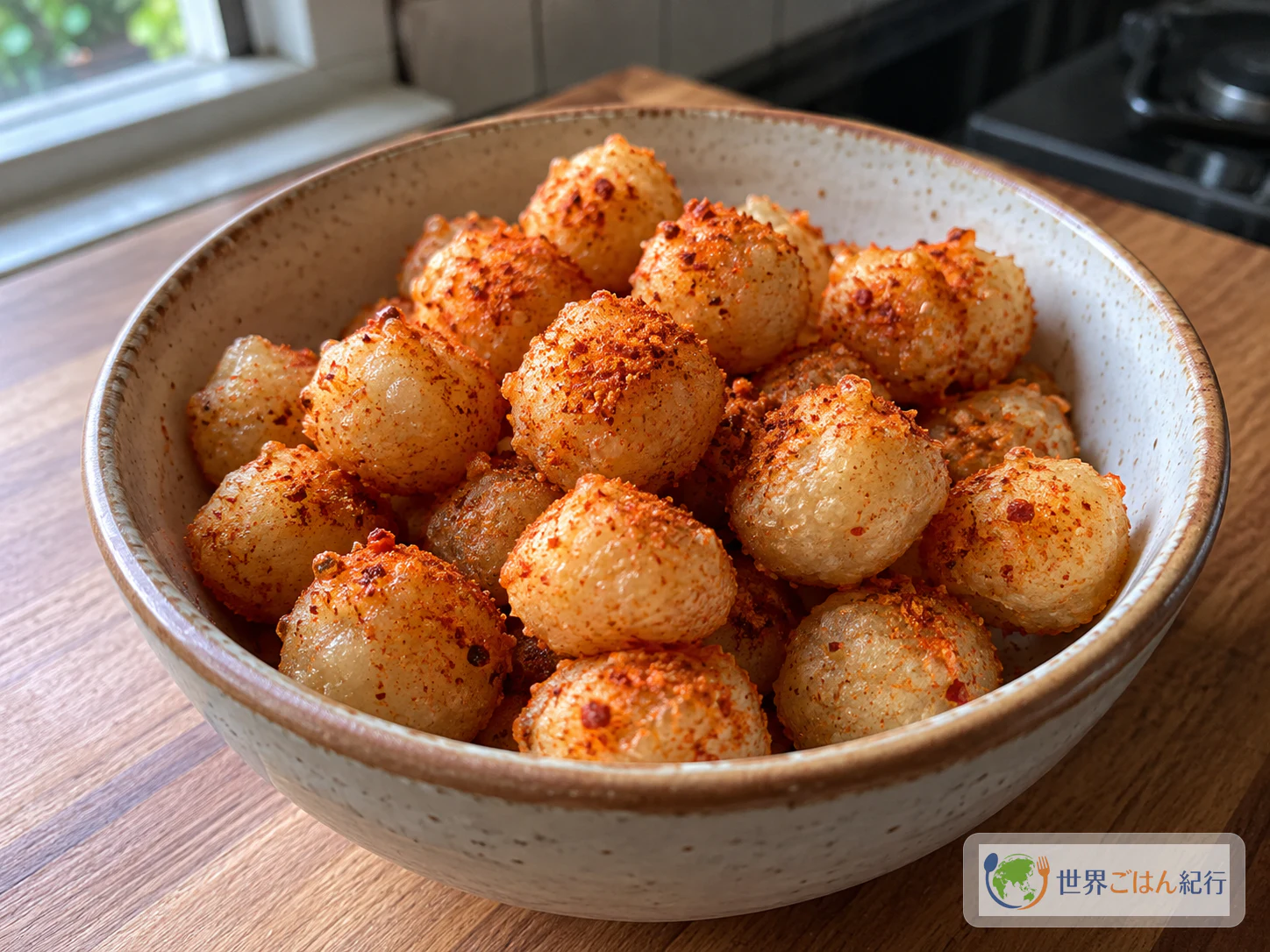
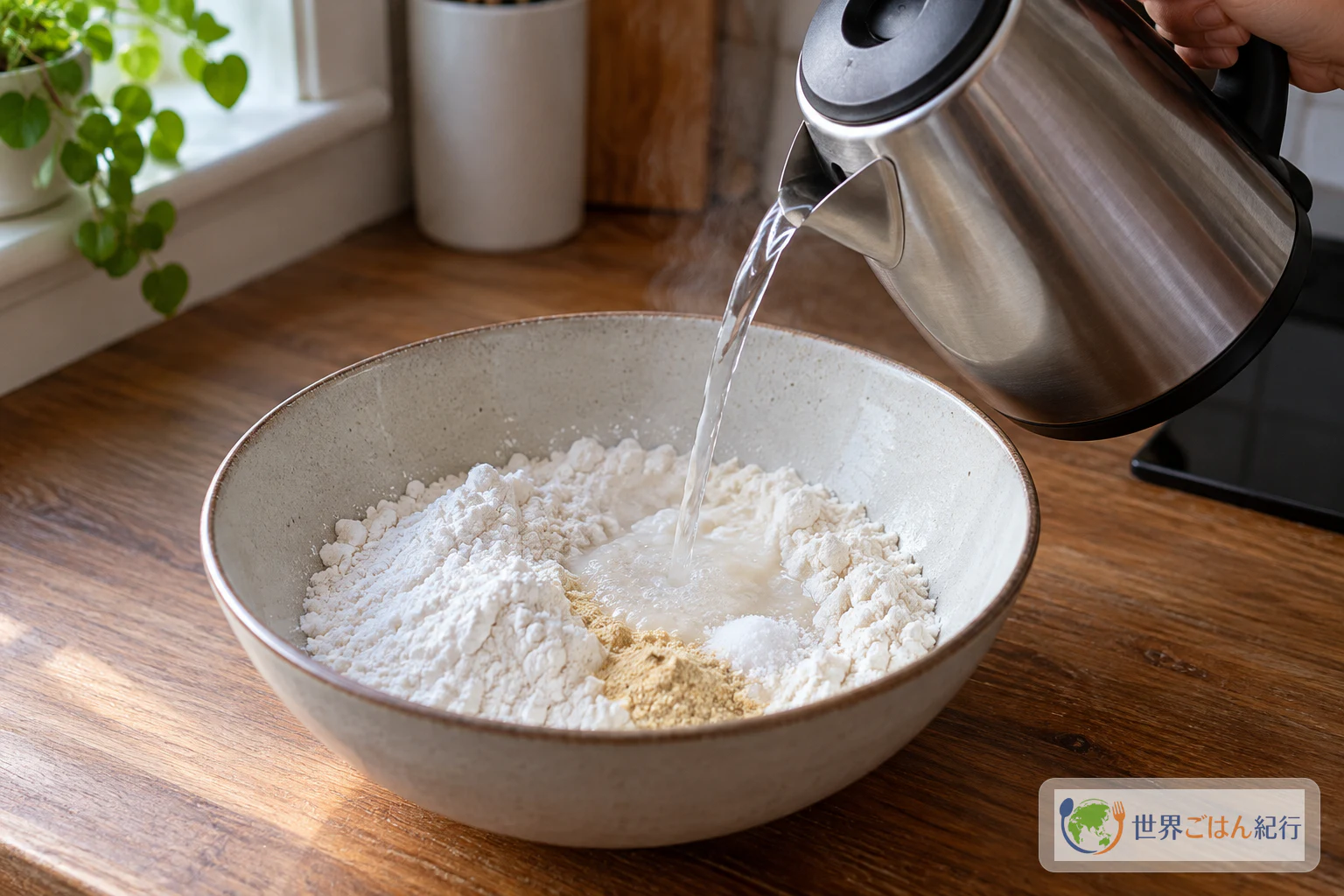
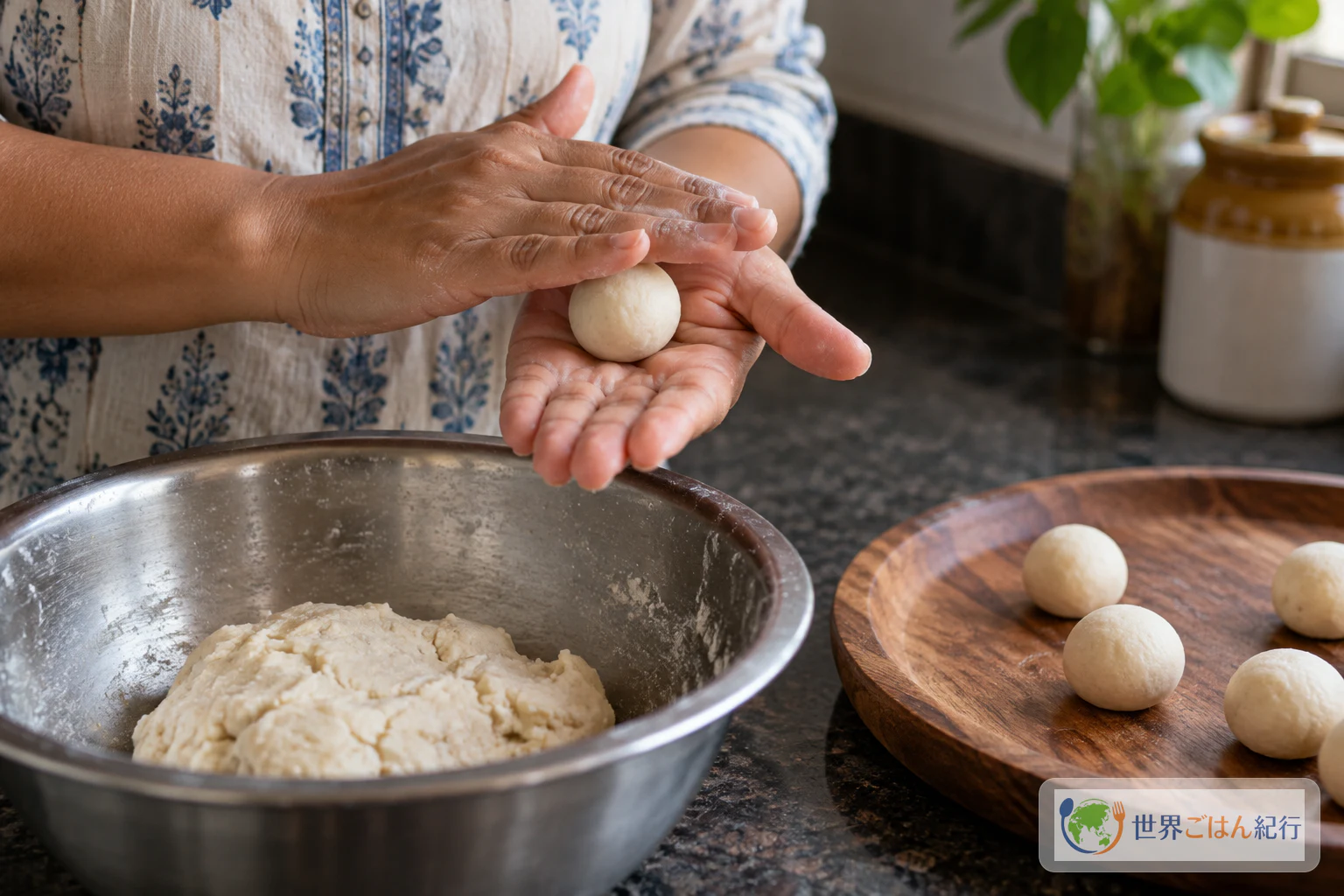
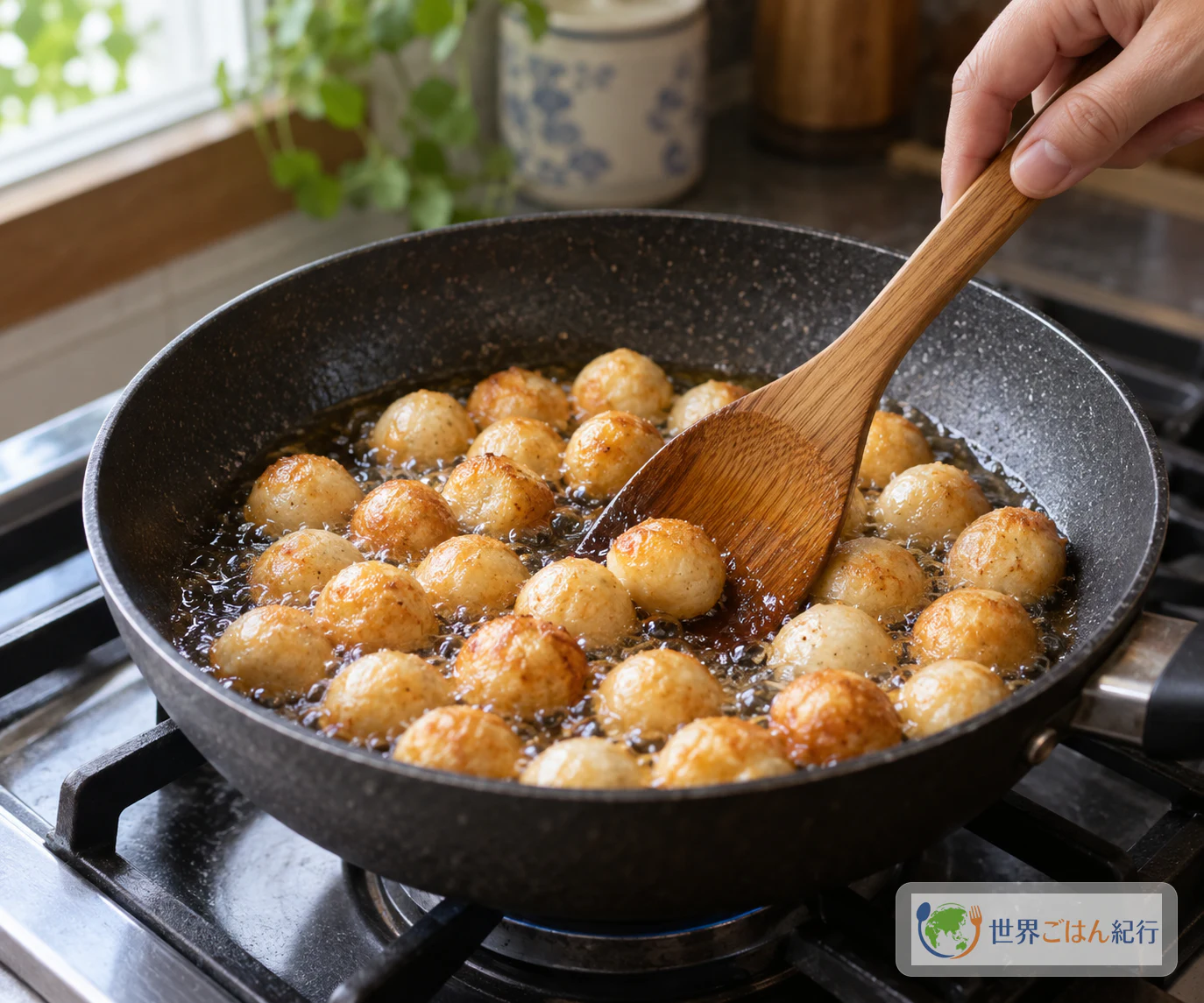
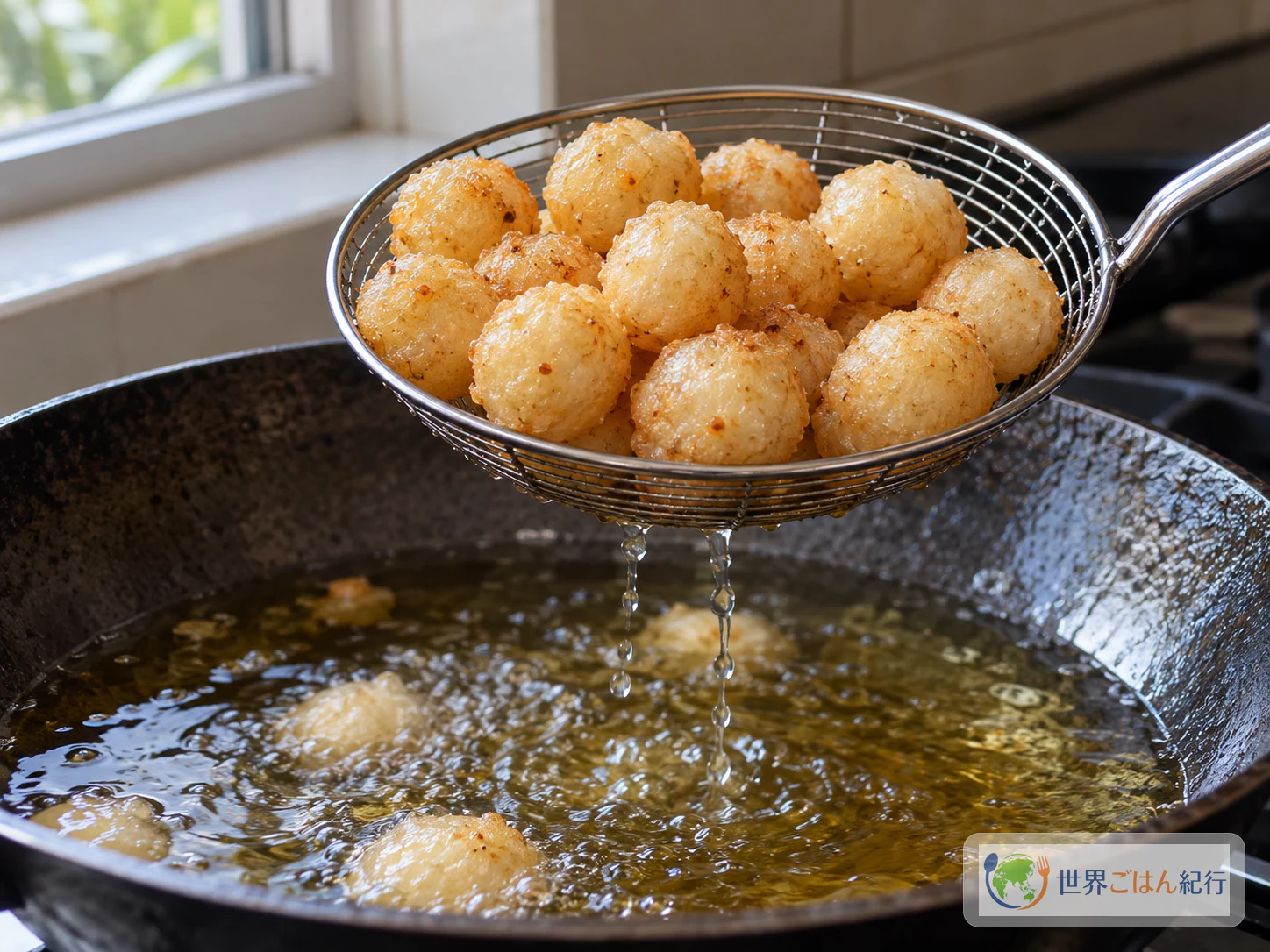
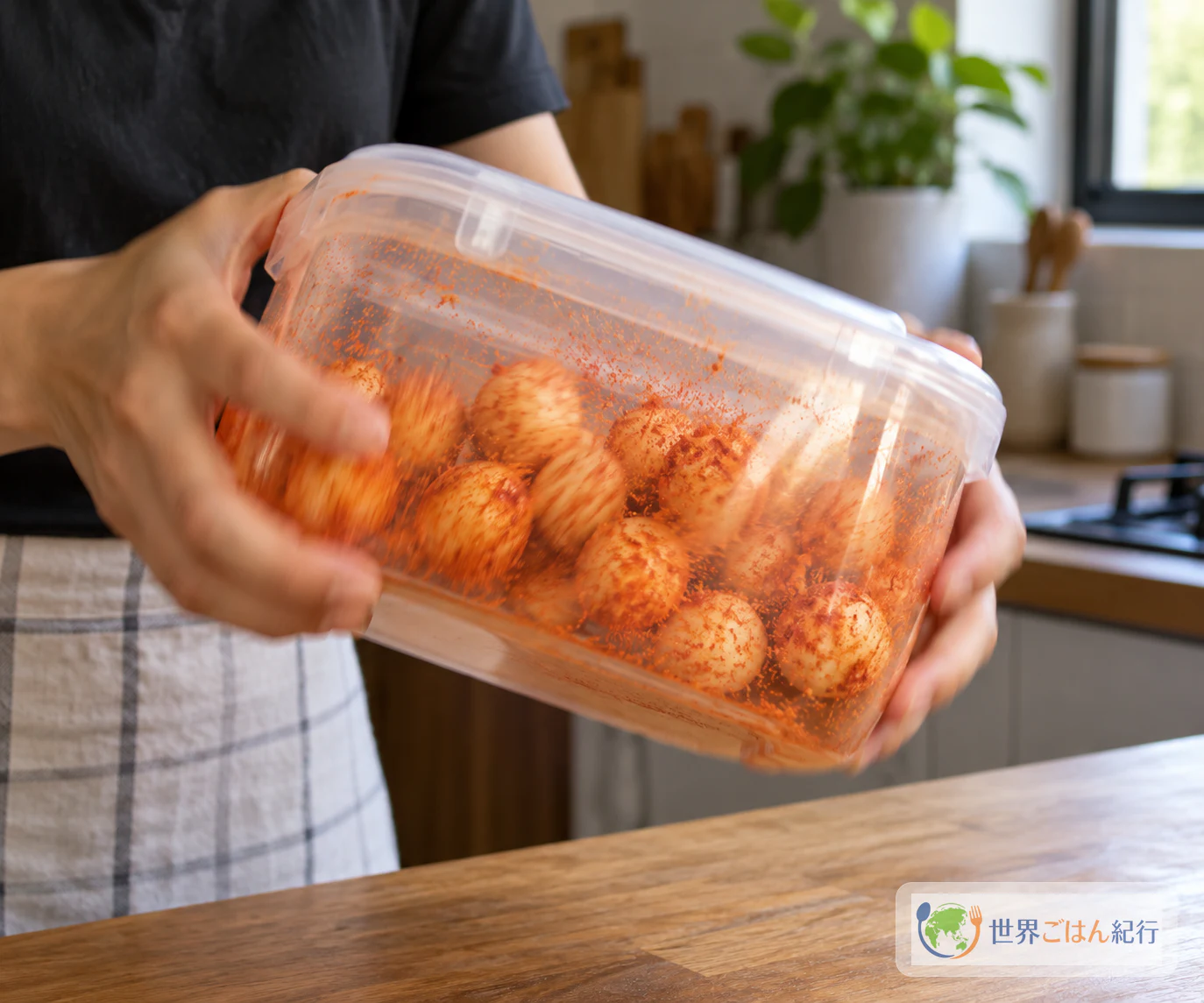
A bowl of tapioca flour and wheat flour, a spoonful of stock powder and a little salt meet freshly boiled water. The mixture is kneaded into a dough, pinched into small balls, and then comes the step that defines this version: all of the balls go into oil that has not been heated yet, and only then is the burner turned on low. They are stirred as they slowly brown, drained, and shaken with chili powder and balado flavor powder in a lidded container.
This article follows one version of Cimol, posted on Cookpad Indonesia by the home cook Dinni Kirana. It is one household's recipe, not a national or regional standard, and other Cimol recipes start the frying differently or build the dough another way. The amounts that post gives are kept exactly as they are, and the things it leaves unmeasured — the oil, the finishing powders, the size and number of balls — stay unmeasured here too.
Sekai Gohan has not kitchen-tested this recipe. The frying time is the home cook's own rough estimate, not a measured or guaranteed value, so watch the color of the balls rather than the clock.
Whose Version This Is: A Home Cook's Post on Cookpad Indonesia
The recipe here comes from a post titled simply "Cimol" by Dinni Kirana (@dinnikirana) on Cookpad Indonesia, dated 2019-03-13. Their Cookpad profile lists Malang. That is profile information only: it does not make this the Malang way, the East Javan way, or the original Cimol, and nothing in the post presents the cook as a professional or as the dish's inventor.
What the post does give is a complete, compact sequence: weighed flours, a range for the boiling water, a target texture for the dough, the cold-oil start, an approximate frying time over low heat, and a powdered finish. That sequence is what the method below keeps intact.
Ingredients for One Batch
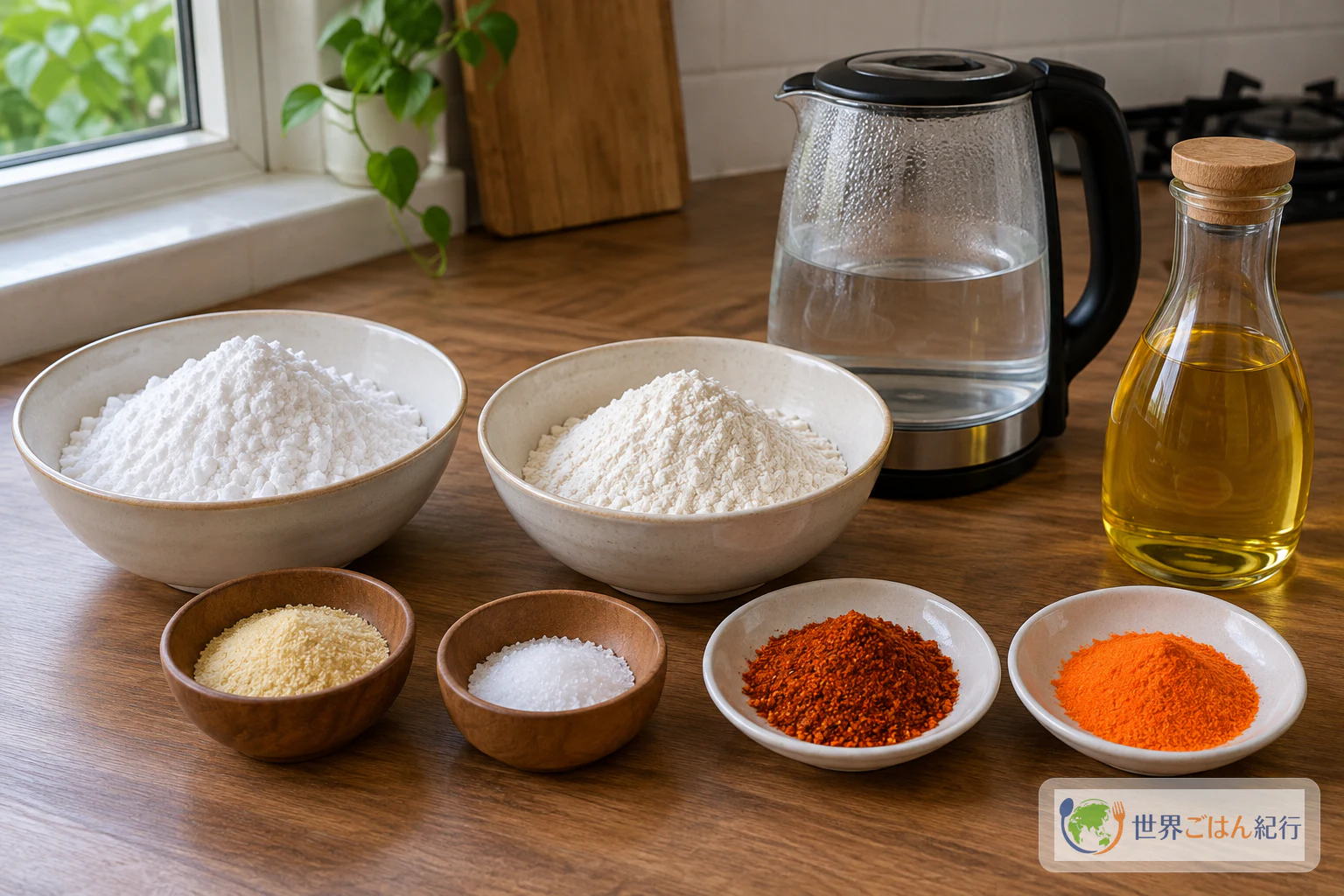
Measure the flours and seasonings for the dough. The frying oil and the two finishing powders are used without fixed amounts.
Equipment
- A bowl for mixing and kneading
- A kettle or pot for boiling water
- A pan for frying
- A spoon or spatula for stirring
- Something to lift out and drain the fried balls
- A container with a lid
Choosing the Seasonings and Powders
Kaldu bubuk is a powdered stock seasoning. No particular flavor or brand is fixed here, so it should not be read as chicken stock specifically.
The finishing coat is two powders: chili powder and balado flavor powder. Neither has a fixed amount or brand. Start with a little of each and add more as you like.
Keep the tapioca flour and wheat flour at the weights listed. No substitute flours are suggested, because how other starches would change the amounts or texture is not established.
Method: Hot-Water Dough, Cold Oil, Low Heat
Every ball goes into the oil before the heat is turned on. Then fry over low heat, stirring, and judge doneness by the browned color.
Checking the Dough and the Frying
The only texture target this version sets is for the dough, so these checks stay close to it.
| What you see | What it means | What to do |
|---|---|---|
| The dough is smooth and doesn't stick to your hands | This is the target | Move on to shaping |
| The dough still clings to your hands | Still acceptable if it has gathered into one mass | Once it no longer sticks to the bowl, you can shape it |
| The clock says 7–8 minutes but the balls are still pale | The time is only an estimate | Keep stirring over low heat and go by the browned color |
| The coating looks thin | The powders have no fixed amount | Add a little more powder, close the lid and shake again |
Other Ways Cimol Is Made
Cimol recipes do not all follow the same order. Two other recipes show how much the method can change, and both are described here only for comparison — none of their ingredients or steps belong in the version above.
| Recipe | Dough | How frying starts | Finish |
|---|---|---|---|
| Dinni Kirana (Cookpad Indonesia) — this article | Tapioca and wheat flour, stock powder, salt, boiling water | All balls into cold oil, then low heat | Chili powder and balado flavor powder |
| Devi Arieni (Cookpad Indonesia) | Tapioca/sago and wheat flour measured by spoons, hot water, optional baking powder | Into hot oil, fried over low heat | Barbecue powder |
| Kreasi Sasa (brand recipe) | A cooked tapioca paste (biang) with garlic, scallions and branded seasonings, mixed into dry tapioca | Into cold oil, then low heat | — |
Devi Arieni's spoon measures are not given a size, so they are not converted to grams. The Sasa recipe uses no wheat flour and builds its dough around a separately cooked biang; its branded chicken seasoning and MSG are not the same thing as the unspecified kaldu bubuk in Dinni Kirana's version. These differences show that several methods exist, but they are not evidence of regional styles, of one being better, or of how the dish developed.
Where Cimol Sits
The three recipes behind this article are all cooking instructions; none of them covers Cimol's origin, history, the meaning of its name, how popular it is, or where and when it is eaten. Rather than fill those gaps, this article leaves them out. For more dishes from the same country, see Indonesian food.
Frequently Asked Questions
Why does the oil start cold?
That is the order in Dinni Kirana's post: every ball goes into unheated oil, and the heat goes on low afterward. Devi Arieni's version puts the balls into hot oil instead. This article does not claim that the cold start prevents bursting or is safer in general; it is simply the sequence this version uses.
How much water should I use — 100 or 120 ml?
The post gives a range of 100–120 ml of boiling water, and this article keeps it as a range rather than choosing one number. Judge by the dough: smooth and not sticky on your hands if possible, or at least gathered together and clear of the bowl.
What kind of stock powder is kaldu bubuk?
The post lists only kaldu bubuk, a powdered stock seasoning, without naming a flavor or brand. It should not be read as chicken stock specifically.
How many balls does this make, and how big should they be?
The post says only to make small balls. It gives no diameter, no count, no yield and no number of servings, so none is stated here.
How much oil and how much powder do I need?
The post does not give an oil type, amount or temperature, and it does not measure the chili or balado powder. Use enough oil to fry the balls, and add the powders to taste.
Can I add garlic, scallions, egg or cheese?
Not in this version. Garlic and scallions appear in the Sasa recipe's separately cooked biang, which is a different method. Egg, cheese, sausage, sauces and a pre-boiling step are not part of Dinni Kirana's recipe and are not added here.
Sources
- Dinni Kirana (@dinnikirana), "Cimol," Cookpad Indonesia, posted 2019-03-13. The version followed in this article: the ingredients and amounts, the dough target, shaping small balls, loading all the balls into cold oil before frying over low heat for about 7–8 minutes until browned, draining, and shaking with chili and balado flavor powder in a lidded container; also the Malang listing on the cook's profile. https://cookpad.com/id/resep/7584454
- Devi Arieni (@deviarieni), "Cimol," Cookpad Indonesia, posted 2016-12-11. Used only for comparison: a spoon-measured dough with hot water and optional baking powder, fried starting in hot oil over low heat and finished with barbecue powder. https://cookpad.com/id/resep/1656571
- Kreasi Sasa, "Cimol," Sasa official recipe section. Used only for comparison: a tapioca biang cooked with garlic, scallions and branded seasonings, mixed into dry tapioca, with the balls loaded into cold oil before low heat. https://www.sasa.co.id/kreasisasa/recipe/cimol