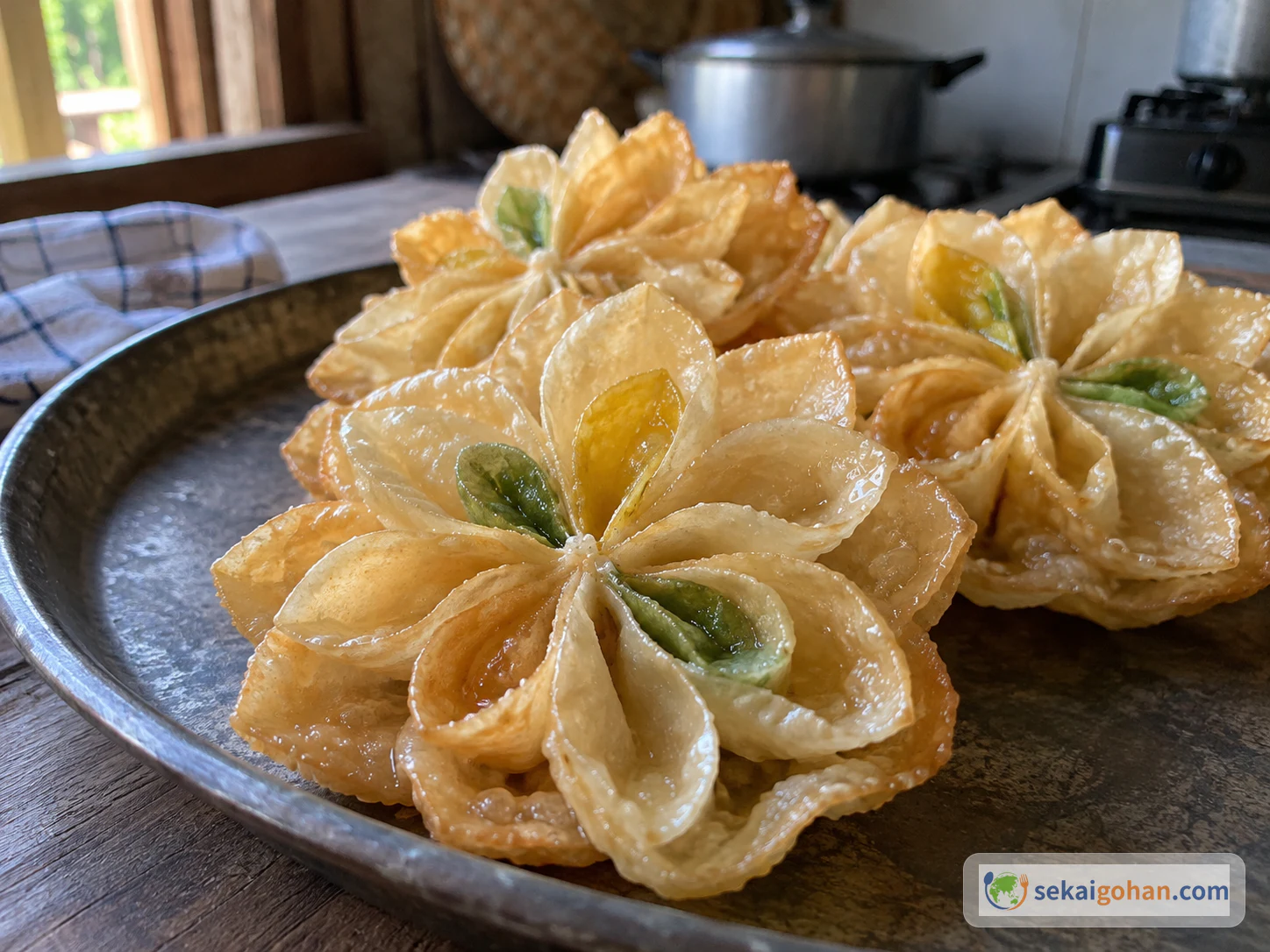
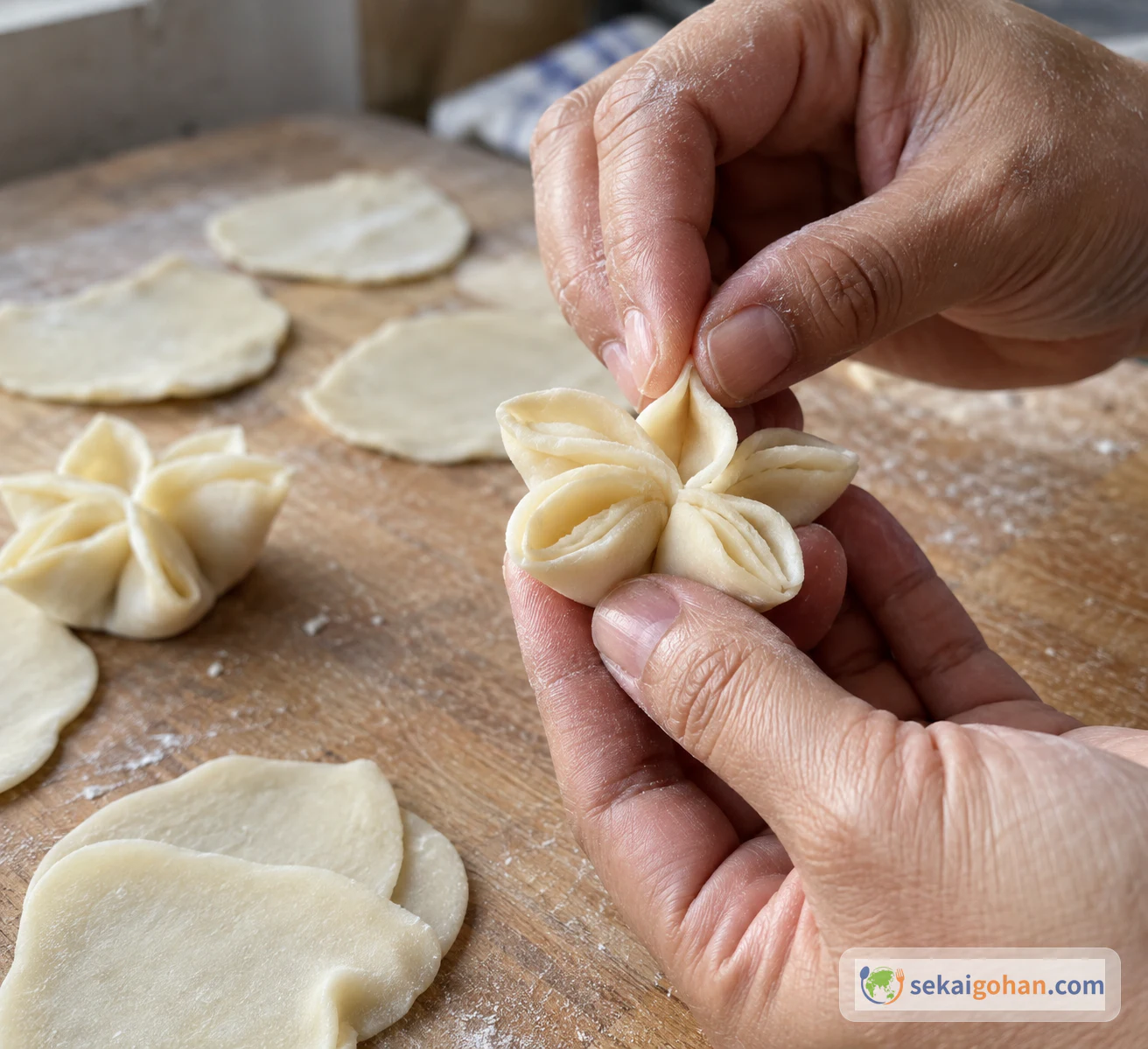
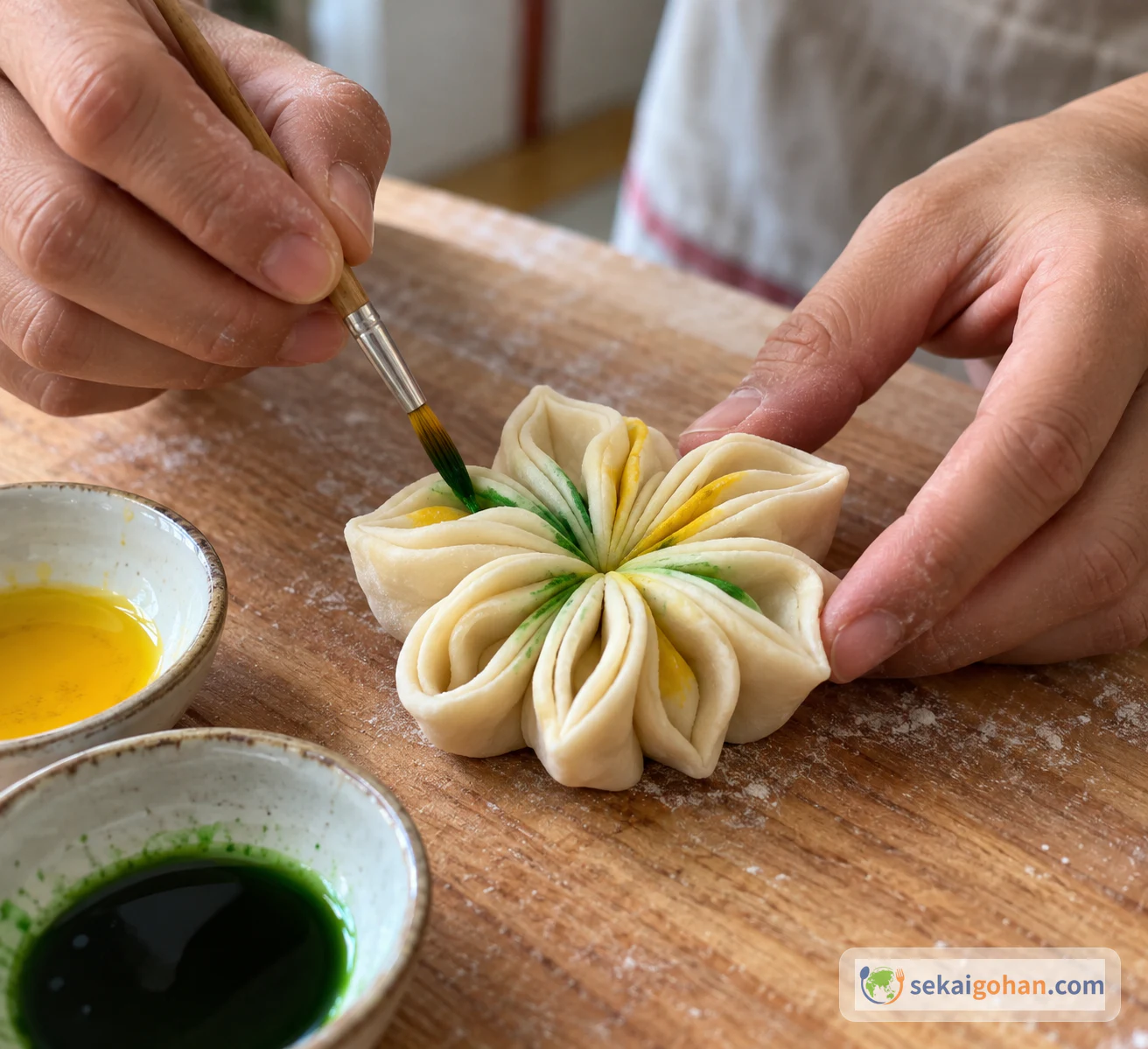
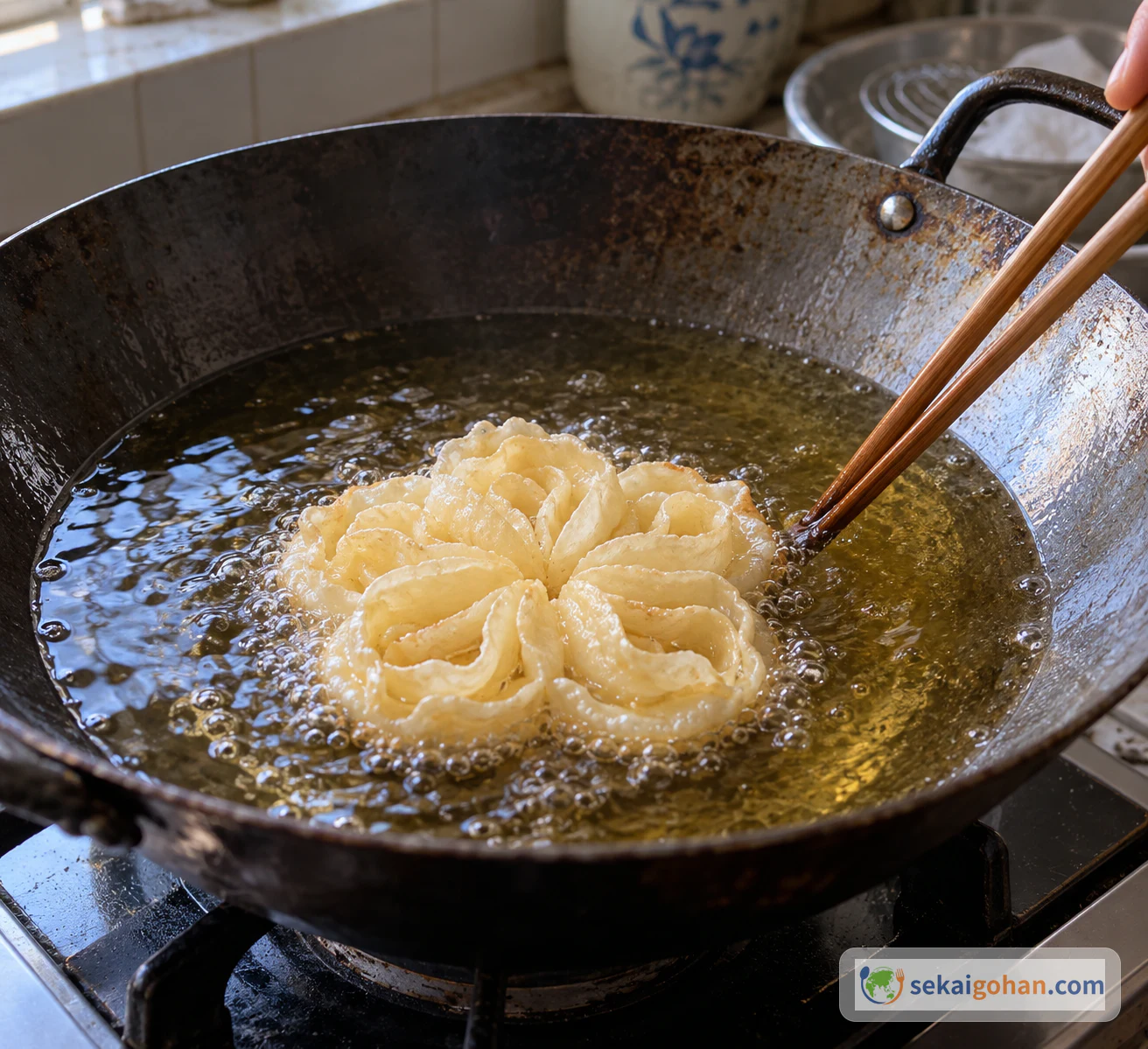
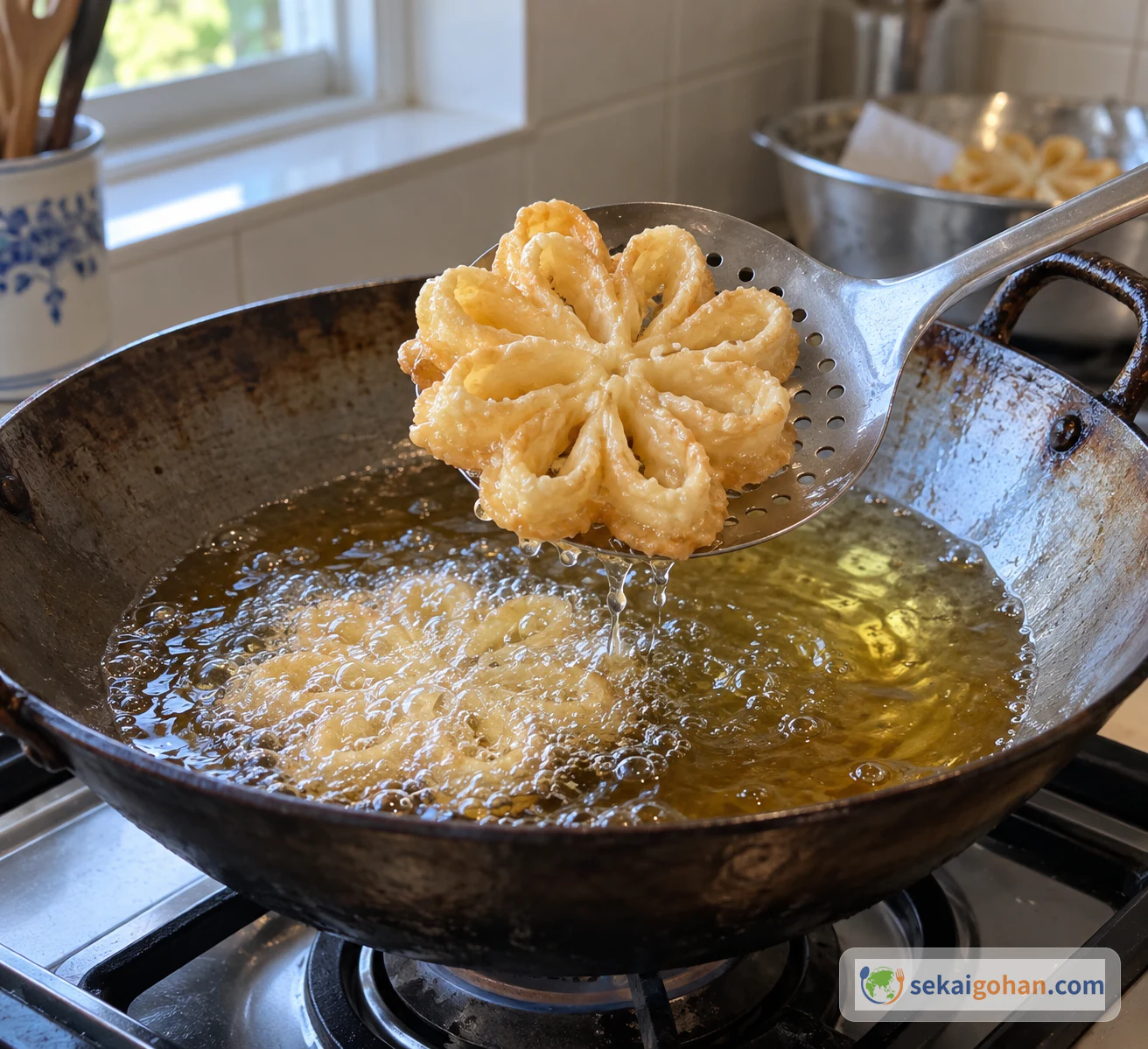
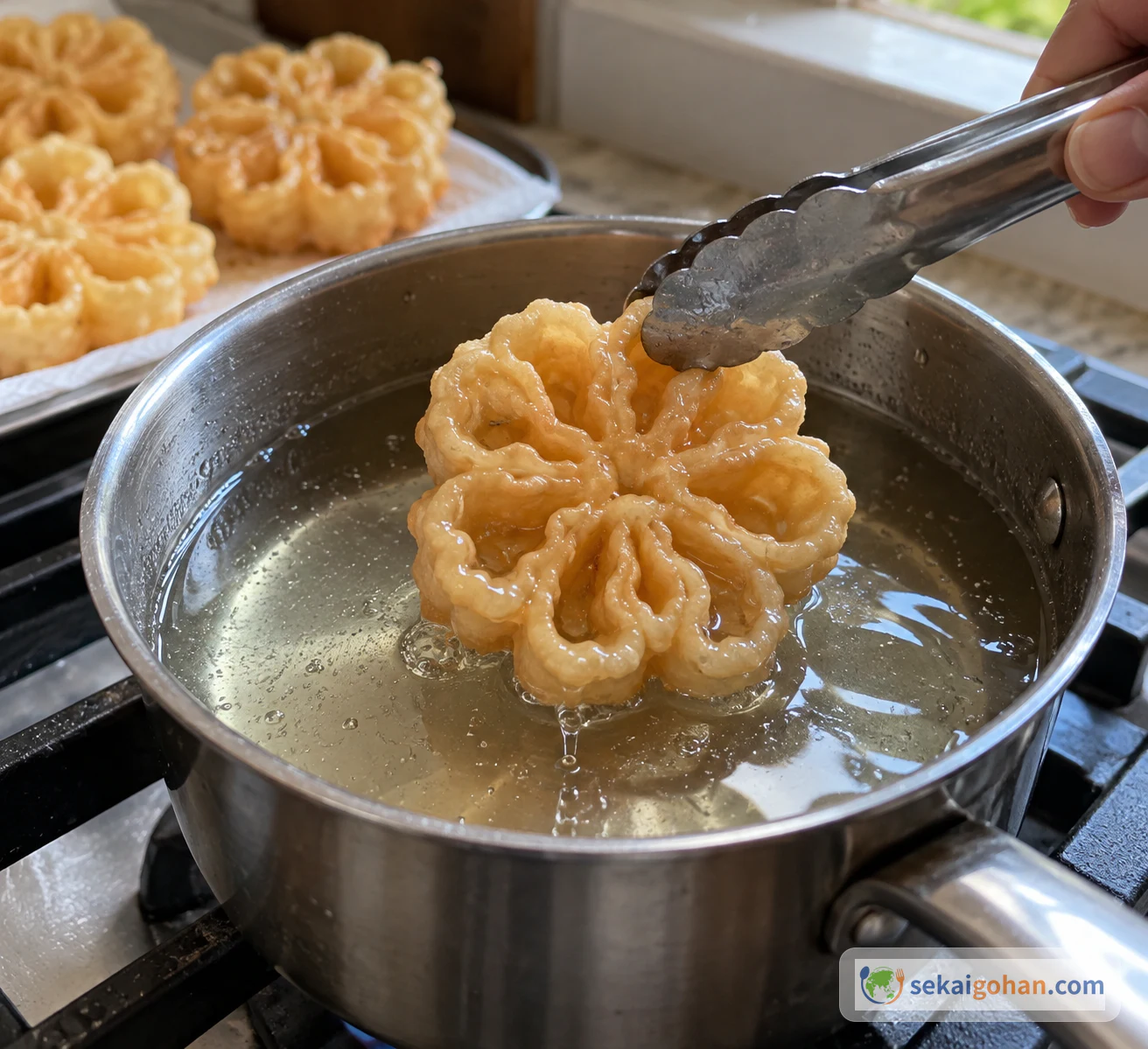
The tray fills slowly, one flower at a time. Each one is five thin petals pinched together at the base, with a touch of green or yellow on a few tips. It is fried twice until pale gold and dry, then dipped once in sugar syrup. In western Aceh, bungong kayee is the sweet you carry to someone's house, a gift whose worth shows in the folding. It is crisp and light, and the dough holds no sugar at all. The sweetness sits in a thin, clear layer of syrup on the outside, so the first thing your teeth meet is sugar and the second is a dry, delicate snap.
Flowers for a Visit: Where Bungong Kayee Belongs
The name is usually explained as "flower of the tree": bungong means flower and kayee means wood or tree. In Indonesian the pastry goes by the descriptive name kue bunga kayu, and in Aceh it is also spelled bungong kaye. It belongs to peunajoh tho, the family of dry sweets.
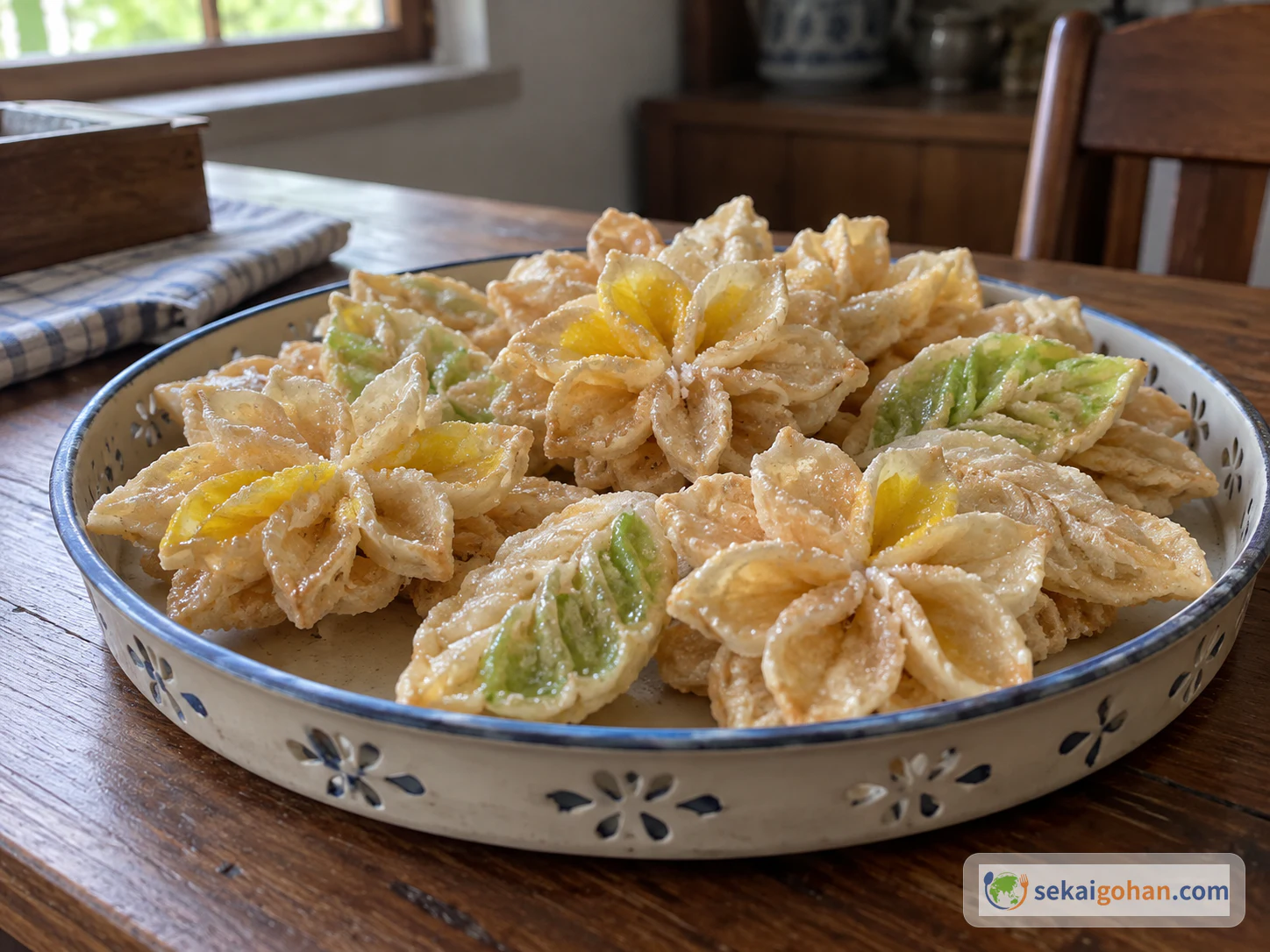
In Nagan Raya it is made in flower and leaf shapes and given on Islamic holidays, at weddings and family gatherings, and when people pay condolence visits. There it is described as a symbol of togetherness. Local makers sell it as one of Nagan Raya's take-home specialties, and people describe it by its tree-flower shape, its crunch and its syrupy, caramel-like sweetness. The look is white to pale yellow petals that open as they puff in the oil, carrying a little color.
One name, several doughs
Each maker works the dough a different way. A traditional sweet shop in Meureubo makes its flowers from glutinous rice flour, grated coconut and palm-sugar syrup, and the work takes hours from start to finish. Some cooks bind the glutinous flour with egg yolk alone. Others add baking soda, and some build the dough on plain rice flour and finish the pastries with a dusting of sugar instead of a syrup dip. The color varies as well, green and yellow in some kitchens and green and red in others.
The flowers here use whole egg with glutinous rice flour and tapioca starch, fried twice and dipped in a syrup of white sugar and water. That combination gives the pale, puffed, dry petal with a thin coat, and it should stay intact. Coconut, palm sugar and soda belong to other makers' flowers. Mixing them into this dough produces something that matches none of them.
For a savory dish from the same province, try mie Aceh. Kue satu is another Indonesian sweet built on flour, and the rest of the country's cooking is gathered under Indonesia.
In Ie Lhob, a village in Aceh Barat Daya, kenduri Bungong Kayee is the name of a yearly gathering. Villagers meet to give thanks and pray for the trees to bear fruit, and farmers get together. It shares the name with the pastry and is a separate thing. It does not explain where the sweet came from.
Ingredients (makes about 20 flowers)
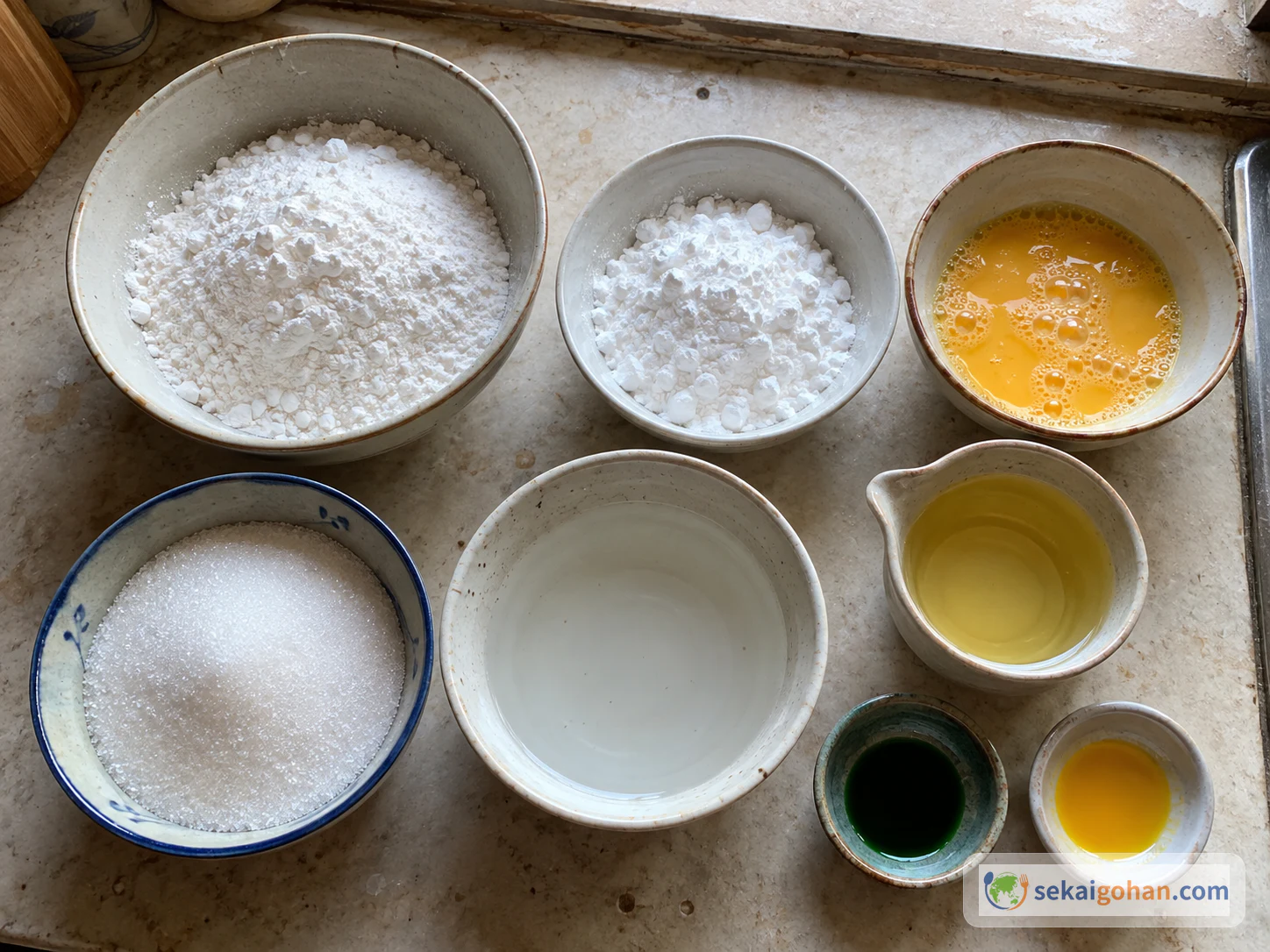
These amounts make about twenty flowers, enough for a snack for six to eight people. Cooks adjust the flour, the egg and the petal size by hand and eye, and you can too once you have the feel of the dough.
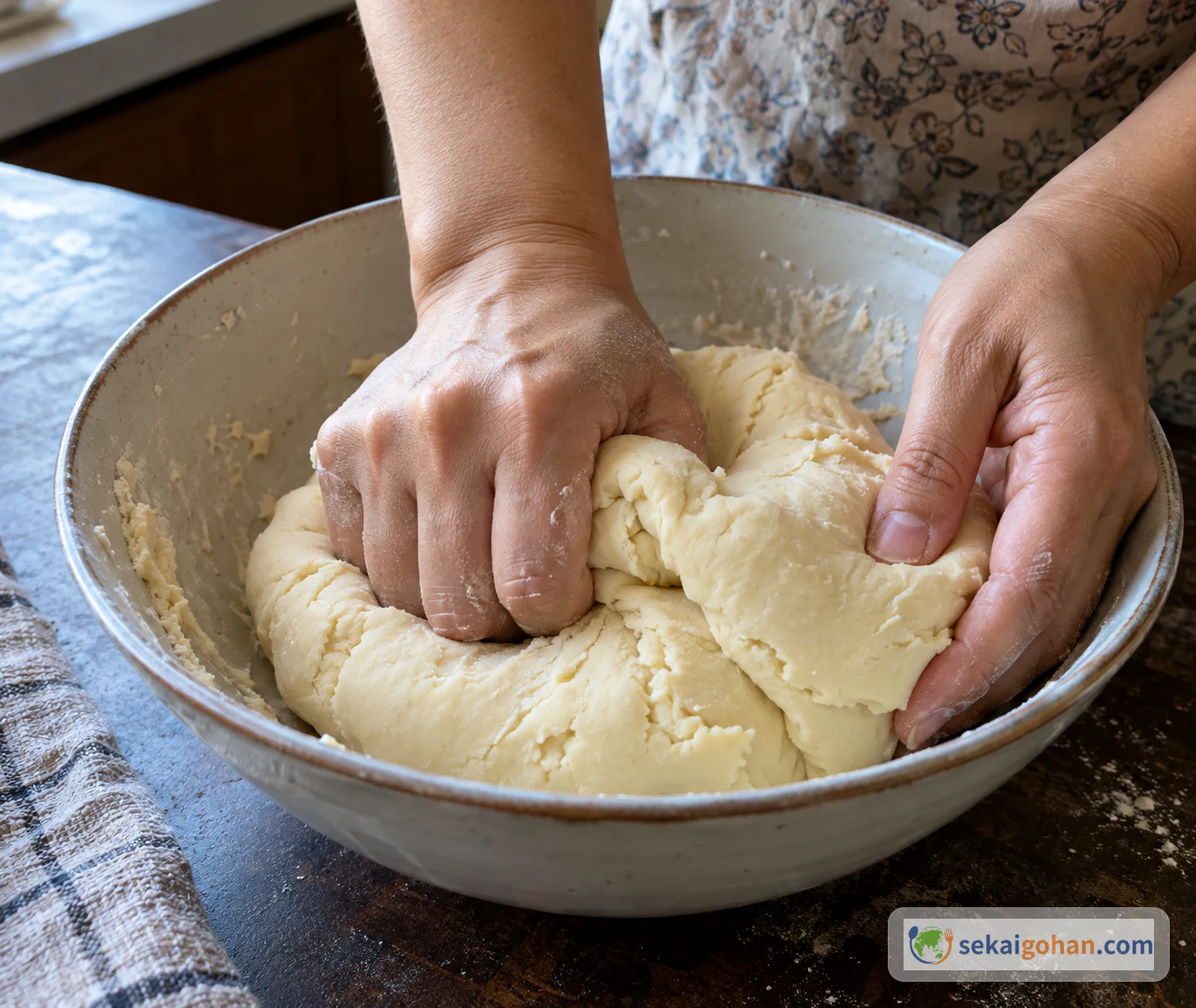
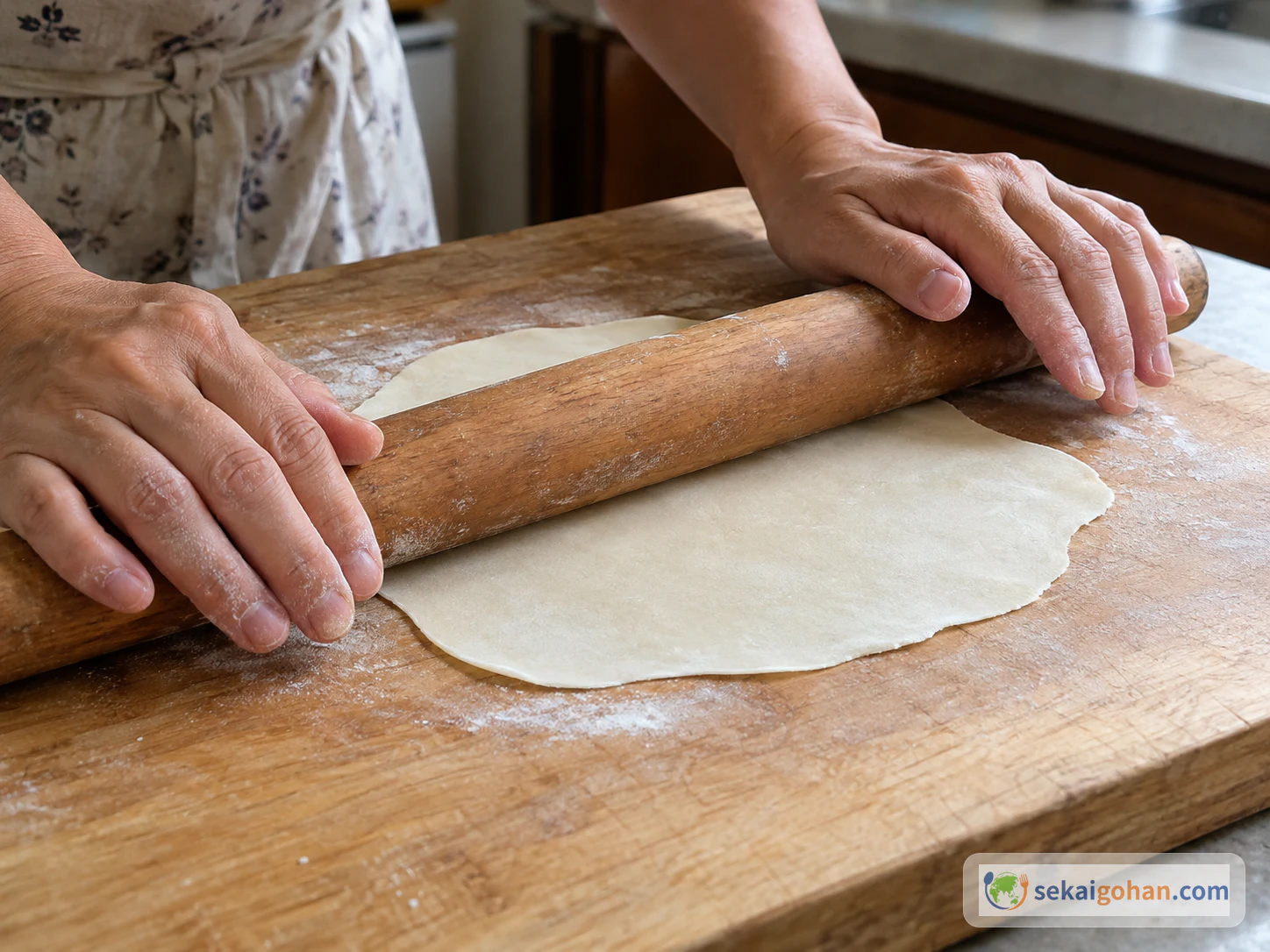
Two whole eggs are enough to bring the flours together into a firm dough. Add water only when the dough still crumbles after kneading, a teaspoon at a time. A wet dough is hard to roll thin, and thin petals are what puff.
Bungong kayee contains egg. Check the labels on the glutinous rice flour and tapioca starch for cross-contact statements, which differ by product and factory.
Equipment
- Mixing bowl
- Plastic wrap or a clean cloth to keep the dough covered
- Board and rolling pin
- Small sharp knife
- Small brush, for the optional color
- Heavy pot about 9½ inches (24 cm) across
- Deep-fry thermometer
- Long chopsticks and a slotted spoon
- Wire rack set over a tray
- Small saucepan for the syrup
- Fork
Buying the Flours and Choosing Swaps
Most of this list comes from an ordinary supermarket. The two flours matter most, so look for those at an Asian grocer or online and buy only products sold as food.
Glutinous rice flour is sold as glutinous rice flour, sweet rice flour, mochiko or shiratamako, and as tepung ketan in Indonesian shops. Use it ready-made. Plain, non-glutinous rice flour belongs to other makers' flowers and gives a different petal, so keep the glutinous kind for this dough.
Tapioca starch is sometimes labeled tapioca flour. Buy tapioca specifically. Potato starch (katakuri-ko) is a different product, even though it looks the same in the bag.
Use whole eggs. Yolk-only versions exist, and they make a richer, more yellow petal. For frying, pick a neutral oil so the faint taste of rice and egg comes through, and avoid strongly flavored oils. The coloring is optional. If you use it, choose coloring sold for food.
For the syrup, use white granulated sugar and water and nothing else. Palm sugar, powdered sugar or honey would give a different coat and a different sweet. The parts to keep are the two flours, the two fries at different heats, cooling before the dip and a thin coat. Petal count, leaf shapes and color you can change freely.
Method: Thin Petals, Two Fries, One Dip
Make the dough first and let it rest while you clear the counter for rolling. Shaping is the long, hands-on part of the work. Heat the oil once a tray of flowers is ready. After the second fry the work turns hands-off, because the flowers cool on the rack while the syrup cooks, and once they are dipped they dry on the same rack.
Never leave hot oil unattended. Fill the pot no more than half full, and keep water, wet tools and wet hands away from the oil. Lower the flowers in gently, a few at a time.
The first fry swells the petals slowly, which keeps them open and pale. If the flowers brown within seconds, the oil is too hot and they will scorch before they puff. Keep the first bath low and save the heat for the second fry, which only dries and crisps them.
Dip each flower only after it is cool all the way through, and let the syrup stand off the heat for a moment first. A cool, dry petal picks up a thin, even coat that dries crisp. Do not dip hot flowers into the syrup.
When It Goes Wrong
| What you see | Why | What to do |
|---|---|---|
| The dough crumbles and will not form a ball | Small eggs or very dry flour | Knead in water 1 tsp at a time, up to 1 tbsp, and rest it again |
| The sheet cracks when you fold a petal | Rolled too thick, or the dough dried out | Keep the dough covered, roll it thinner, and cut the petals right after rolling |
| Petals come apart in the oil | The base was not wet or not pressed firmly | Dab every pointed end with water and press the five together hard at the base |
| Flowers brown quickly in the first fry and do not puff | The oil is too hot | Lower the heat to 285–300°F (140–150°C) and fry fewer flowers at a time |
| Flowers turn brown in the second fry | Too hot or too long | Lift them as soon as they are pale gold and crisp |
| The syrup turns amber, or the coat is thick and sticky | The syrup cooked too long, or the flowers were dipped warm | Pull the syrup off the heat while it is still clear, cool the flowers fully, and dip only once |
Serving and Variations
On the tray
Set the flowers out in a single layer on a shallow tray, flowers and leaves mixed together. Bungong kayee is the sweet for holidays, weddings, family gatherings and visits, the plate you set in front of a guest or carry to someone else's door. Once the coat is dry, keep the flowers in an airtight container in a dry place so they stay crisp until you serve or give them.
Variations
- Plain pale flowers. Skip the coloring. The flowers come out ivory to pale gold all over, which puts the folds of the petals in sharper relief.
- Leaves alongside flowers. Cut some dough into single leaf shapes and fry and coat them the same way. Leaves make a mixed tray that looks like a branch in bloom.
- Green and red accents. Some cooks use green and red instead of green and yellow. Only the look changes, and the taste stays the same.
Frequently Asked Questions
Is there any sugar in the dough?
No. The dough is flour and egg only, and all the sweetness comes from the syrup coat. That is why the petals taste of rice and egg under a thin sugary shell, and why the coat needs to stay thin.
Can I bind the dough with egg yolks only?
Some cooks do, and their petals come out richer and more yellow. Whole egg gives the paler flower with a light puff. Keep the total egg about the same, and add water a teaspoon at a time if the dough feels dry.
What if I don't have a thermometer?
Watch the first flower. In the first fry it should puff slowly and stay pale, with calm bubbles around it. If it browns before it puffs, the oil is too hot. In the second fry, look for a quicker, livelier sizzle, and lift the flowers as soon as they turn pale gold and crisp.
Can I roll them in dry sugar instead of dipping them?
Some makers finish their flowers with a dusting of sugar. The syrup dip gives the thin, clear coat this pastry is known for, and it dries crisp on a dry petal. If you dust instead, expect a different finish.