
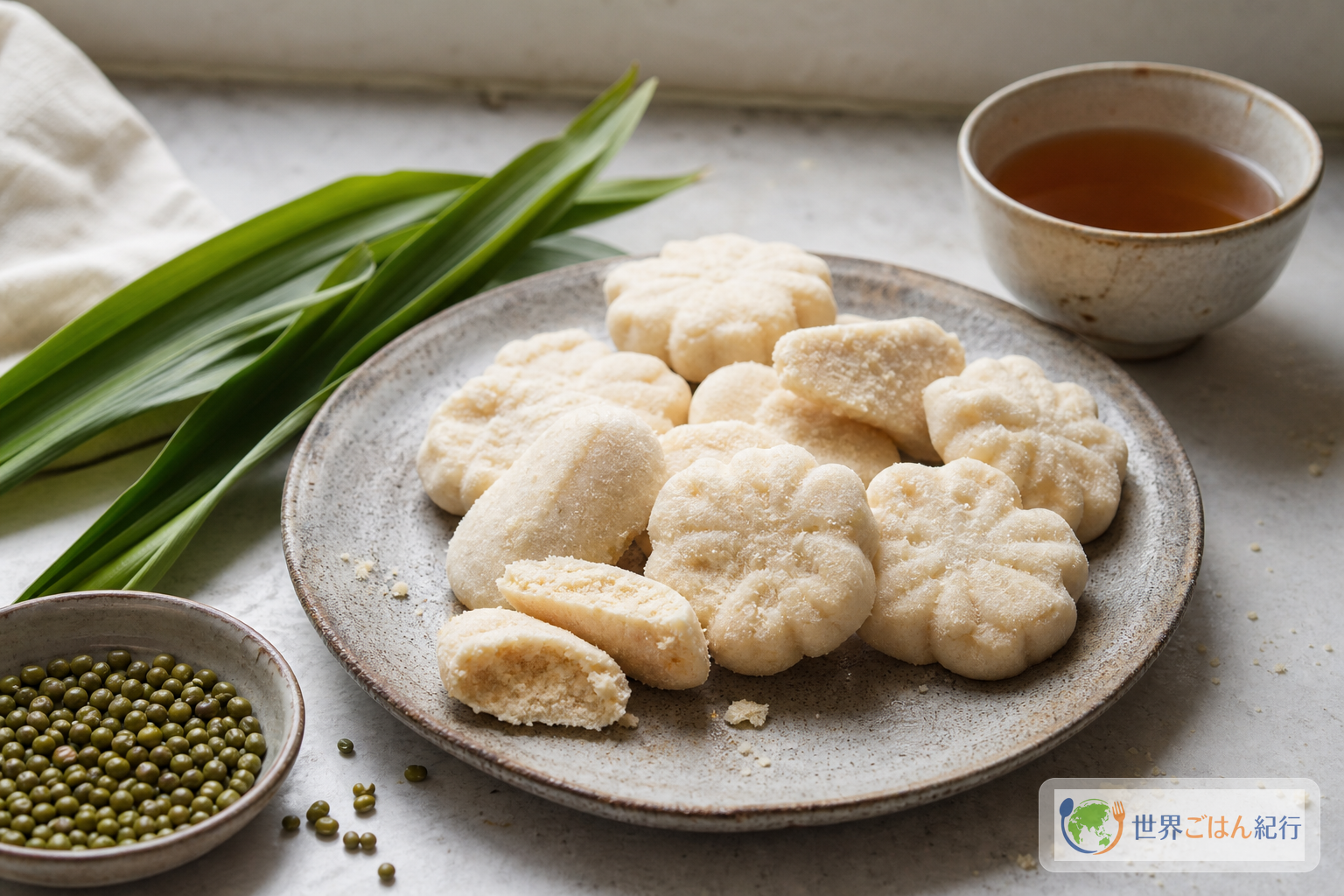
Dry mung bean fragrance that dissolves in your mouth
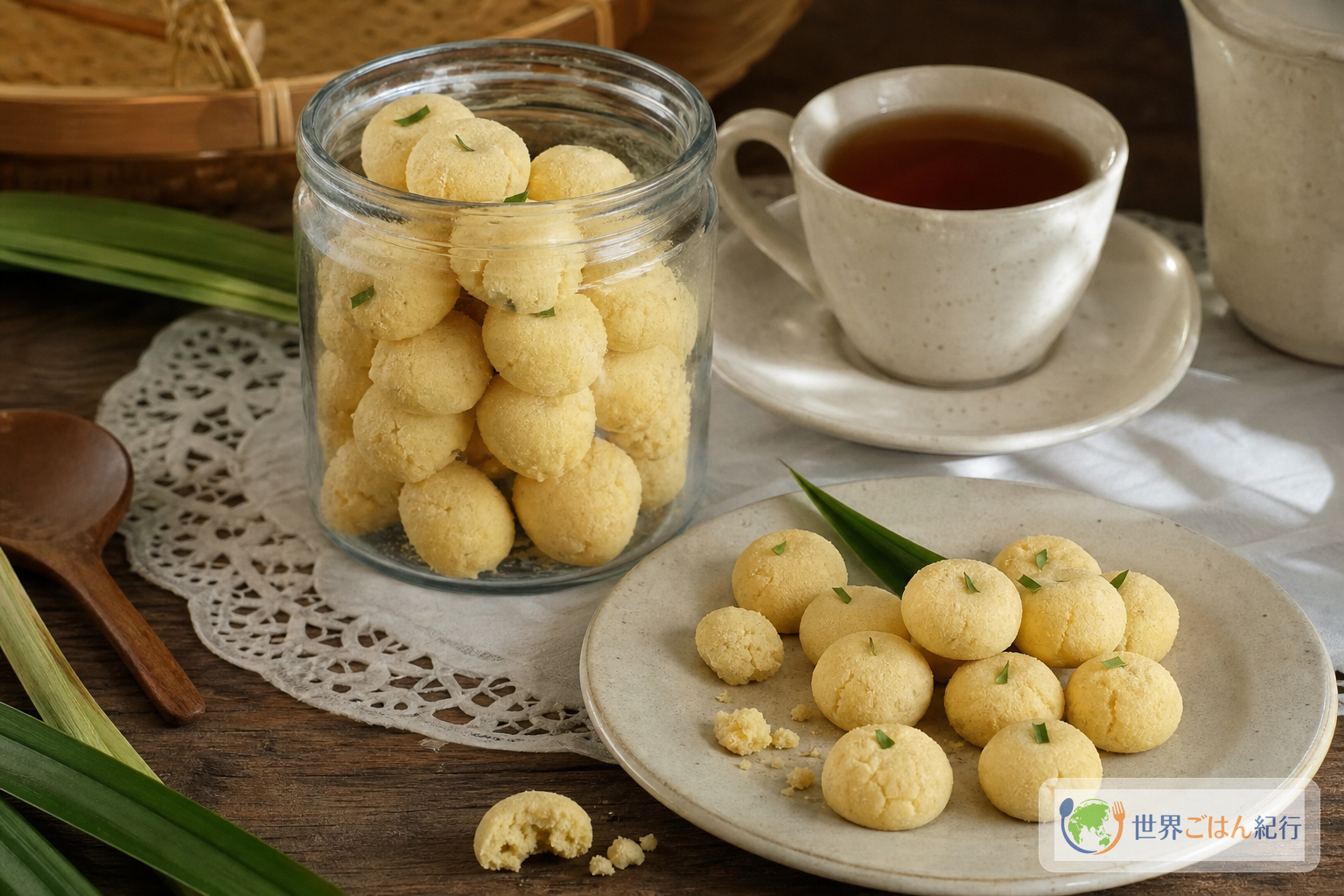
It does not smell of butter like a freshly baked cookie. Pick up a kue satu and a little powder clings to your fingertips; bite in, and it crumbles softly. The sweetness is not strong, and then the scent of dry-roasted mung beans comes back afterward. It is a dry sweet from the Indonesian pastry shelf that is not showy yet is oddly memorable.
Kue satu is a dry mung bean flour confection loved around Java. In central and eastern Java it is sometimes called kue koya, and in Malay-speaking regions it goes by similar names such as kuih koya and putu kacang. English-language descriptions summarize it as a sweet made by grinding dry-roasted mung beans to flour, adding powdered sugar, vanilla and a little water, and packing it into molds.
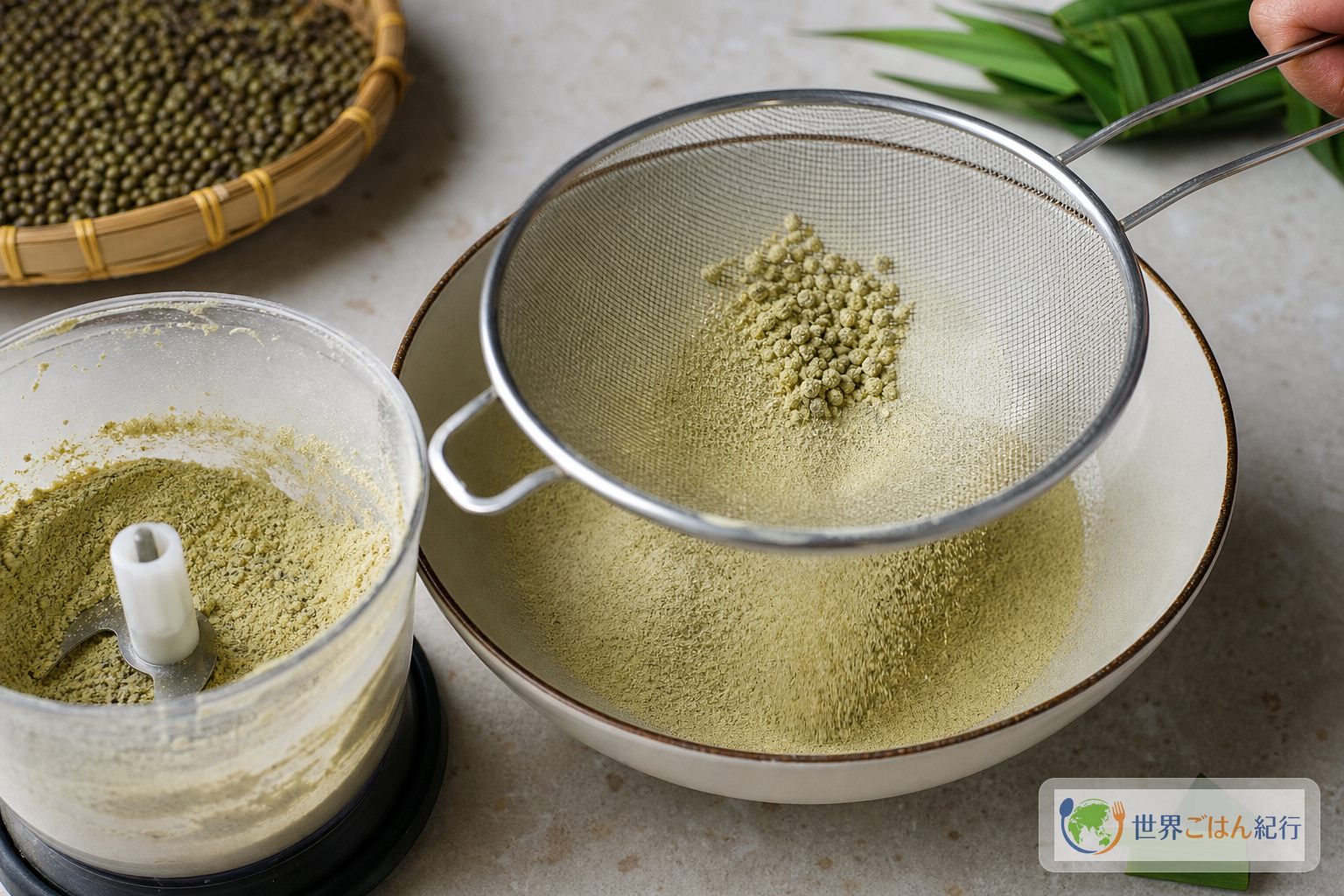
The hard part when you make it at home is not the ingredients themselves but the fineness of the flour. If you only crush the mung beans, a grittiness remains on the tongue. Too much water makes it easy to unmold but leaves a heavy melt after baking. Too little water, and it cracks the moment you take it out of the mold. In this recipe you use hulled mung beans or mung bean flour and aim for a state that is "dry yet doesn't crumble too much" in a home kitchen.
If lemper (in Japanese) is a snack eaten for its glutinous rice and leaf fragrance, kue satu is a sweet made by drying bean flour. If you are curious about the pandan aroma of nasi uduk or how starch is handled in papeda (in Japanese), you begin to see how Indonesian cooking eats starches and beans other than rice.
Kue is the Indonesian word for sweets and snacks broadly. Satu means "one," but as a dish name Kue satu is treated as a single unit. Depending on the region it may be called kue koya, kue koyah or putu kacang hijau.
How it is eaten locally, and what to keep in the ingredients
The World's Food and the English Wikipedia present kue satu as a kue kering, a dry traditional sweet commonly seen in Java. It is also a sweet served at celebrations such as Lebaran, Christmas and Imlek, the kind you keep in an airtight jar and eat a little at a time.
What matters is not to push it too far toward a butter cookie. In the kuih koya article on Guai Shu Shu, the author writes that drying and grinding the mung beans yourself gives a good aroma but does not get as fine as factory-milled flour. In a home kitchen this difference shows up directly. Do you take the handmade aroma, or the fineness of texture? For a first batch, dry-roasting hulled mung beans and grinding them as finely as possible balances aroma and ease of handling.
| What to decide | Closer to the original | Practical option at home | Direction to avoid |
|---|---|---|---|
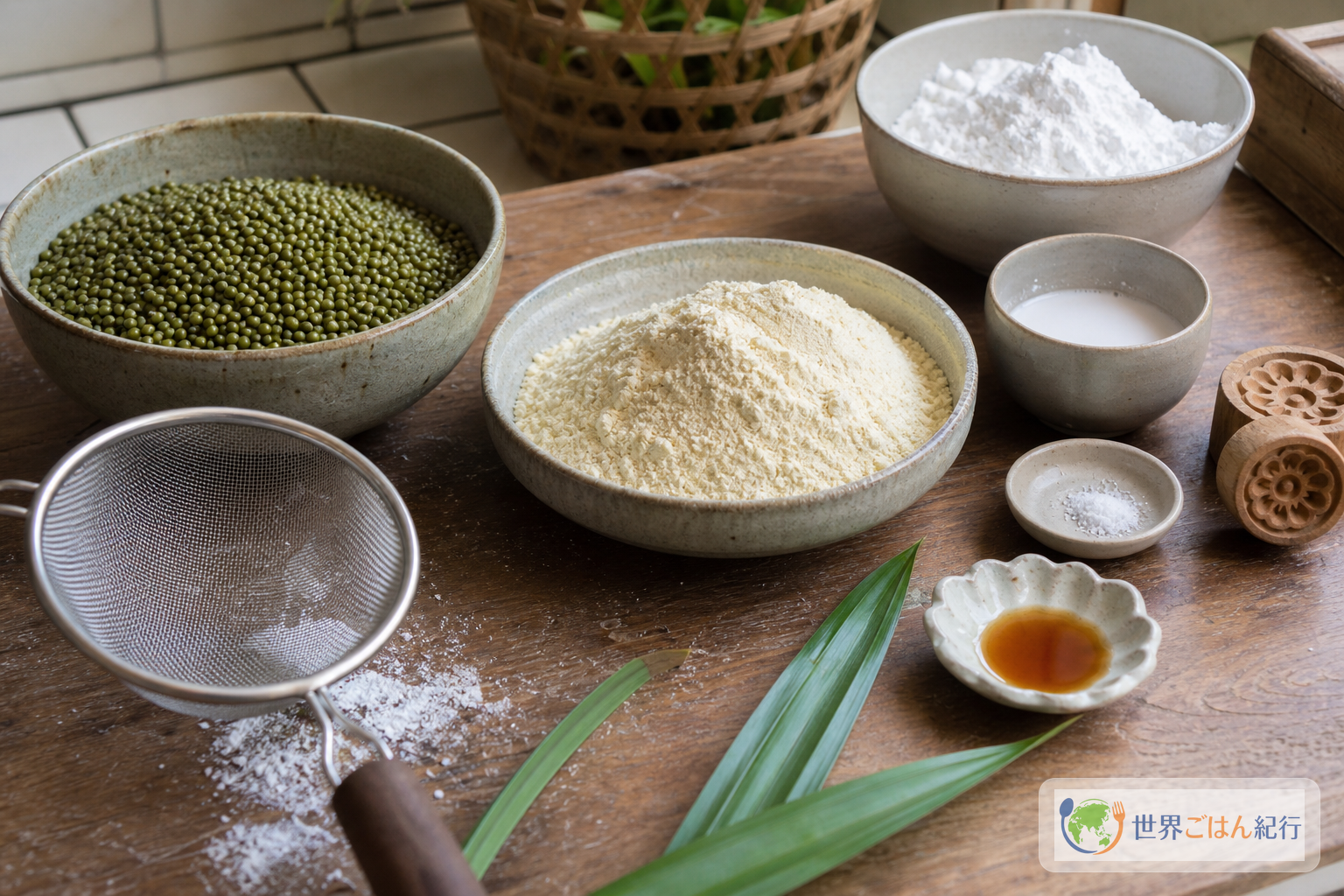
| Beans | Dry-roasted mung beans, ground | Hulled mung beans, or mung bean flour | Replacing them with roasted soybean flour (kinako) alone |
| Aroma | Pandan and the scent of the beans | Without pandan, keep it light with vanilla only | Making a different sweet with matcha or strong flavorings |
| Sweetness | Blended in with powdered sugar | Use powdered sugar and avoid granulated sugar | Mixing in coarse-grained sugar directly |
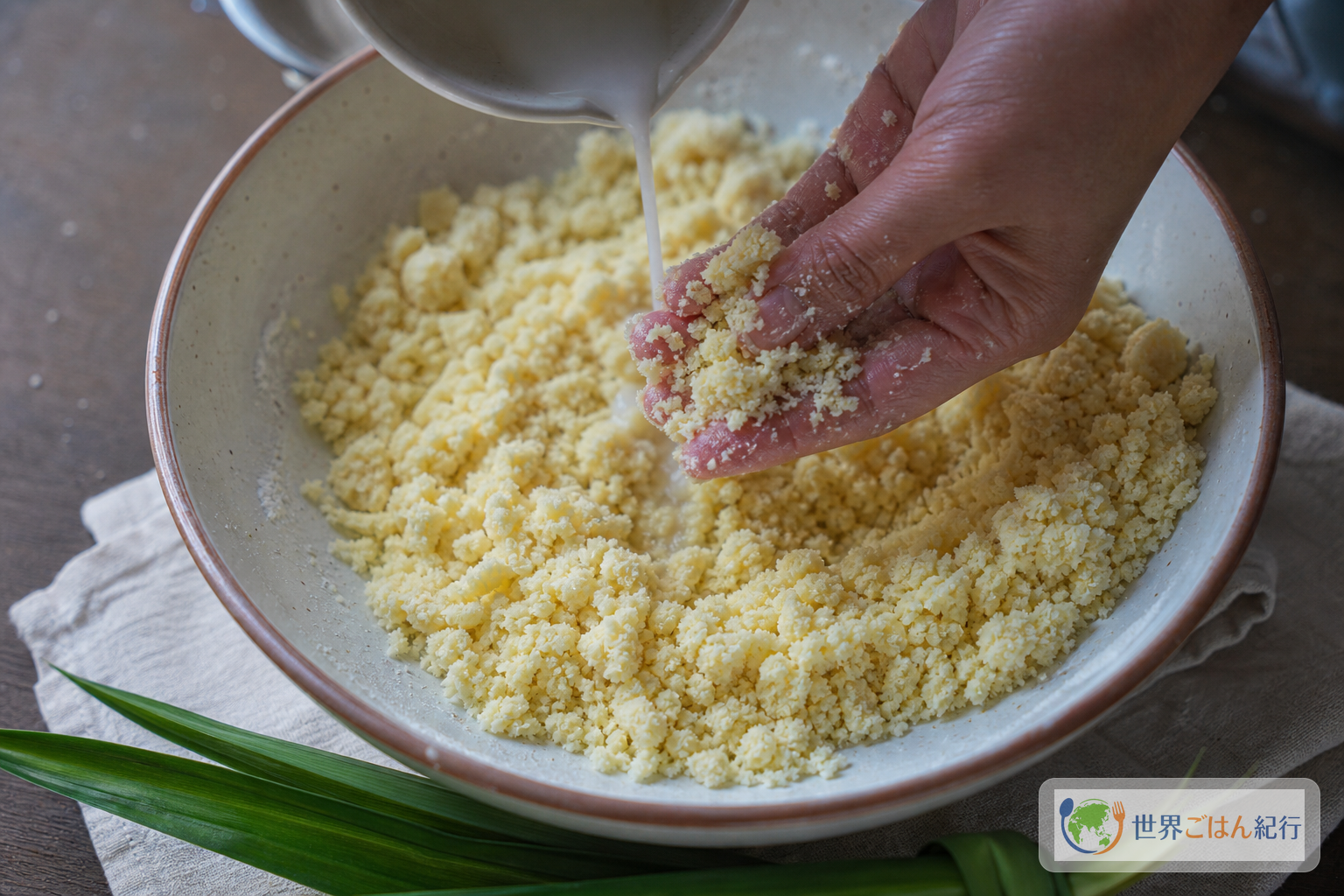
| Moisture | Packed into molds with a little water | Add water or thinned coconut milk bit by bit | Pouring in water all at once and making dumplings |
| Finish | Dried at low heat | Dry-bake in a 130°C oven | Baking at high heat until it browns |
The scent of mung beans is the core of this sweet. If you really cannot find mung beans, chickpea flour or roasted soybean flour will make a "bean flour sweet," but it drifts away from the white, light aroma of kue satu. If you substitute even for the first batch, looking for hulled mung beans at an import grocery gets closer than using roasted soybean flour.
Ingredients: about 30 small pieces
Tools
| Tool | How it is used | Substitute |
|---|---|---|
| Frying pan | To dry-roast the mung beans | A heavy pot |
| Food processor | To crush the roasted beans coarsely | A mortar |
| Spice mill | To grind the flour finer still | A coffee grinder, but beware of flavor transfer |
| Fine-mesh sieve | To separate out coarse flour | A tea strainer used in several batches |
| Small sweet molds | For shaping | Silicone chocolate molds, small wagashi-style molds |
This dish contains mung beans. Commercial powdered sugar and vanilla extract may contain milk, wheat or soy depending on the product. If you have allergies, check the ingredient labels.
Shopping: tools for turning beans into flour make the difference
Look for mung beans and powdered sugar at import grocery stores, bean specialists and baking supply shops. Sugar and water are easy to buy anywhere, so the only things worth planning around are the tools that affect the fineness of the flour. Mung beans and pandan are better chosen by looking at their aroma and the condition of the grains, so here we stop at how to choose them.
A food processor is handy for the first crushing of the beans. On its own, though, the flour tends to stay coarse, so finish with a spice mill or a fine-mesh sieve.
With kue satu, the coarseness of the flour shows up directly in the mouth. If you already own a food processor you don't need anything more, but if you plan to grind beans finely many times, a small mill reduces failures.
Dry sweets lose their texture all at once with humidity. An airtight jar you already have is enough for storage, but put the sweets in only after they have cooled completely, and adding a desiccant helps preserve the crumbly texture.
Nutrition at a glance
| Per piece (approx.) | Value |
|---|---|
| Energy | about 58 kcal |
| Protein | about 2 g |
| Fat | about 0.5 g |
| Carbohydrate | about 12 g |
| Fiber | about 1 g |
| Salt equivalent | about 0.03 g |
Kue satu is small, but because it packs together bean and sugar powder, it is more filling than its mouthfeel suggests. For tea-time, 2 to 3 pieces are enough. Because it has little moisture, it tends to dry out your mouth, so eating it with hot tea or coffee brings out the aroma.
Method: dry-roast, grind fine, dry at low heat
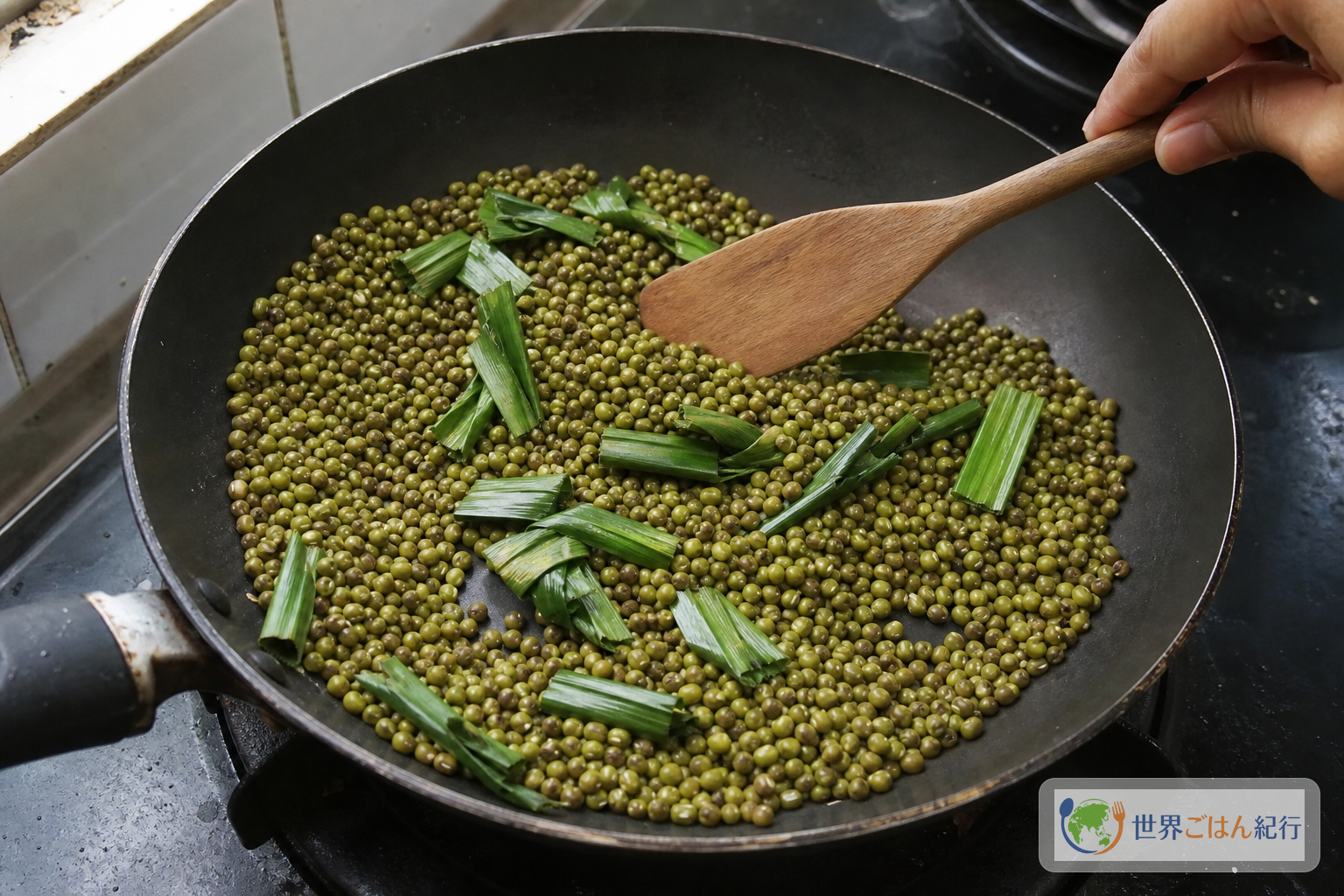
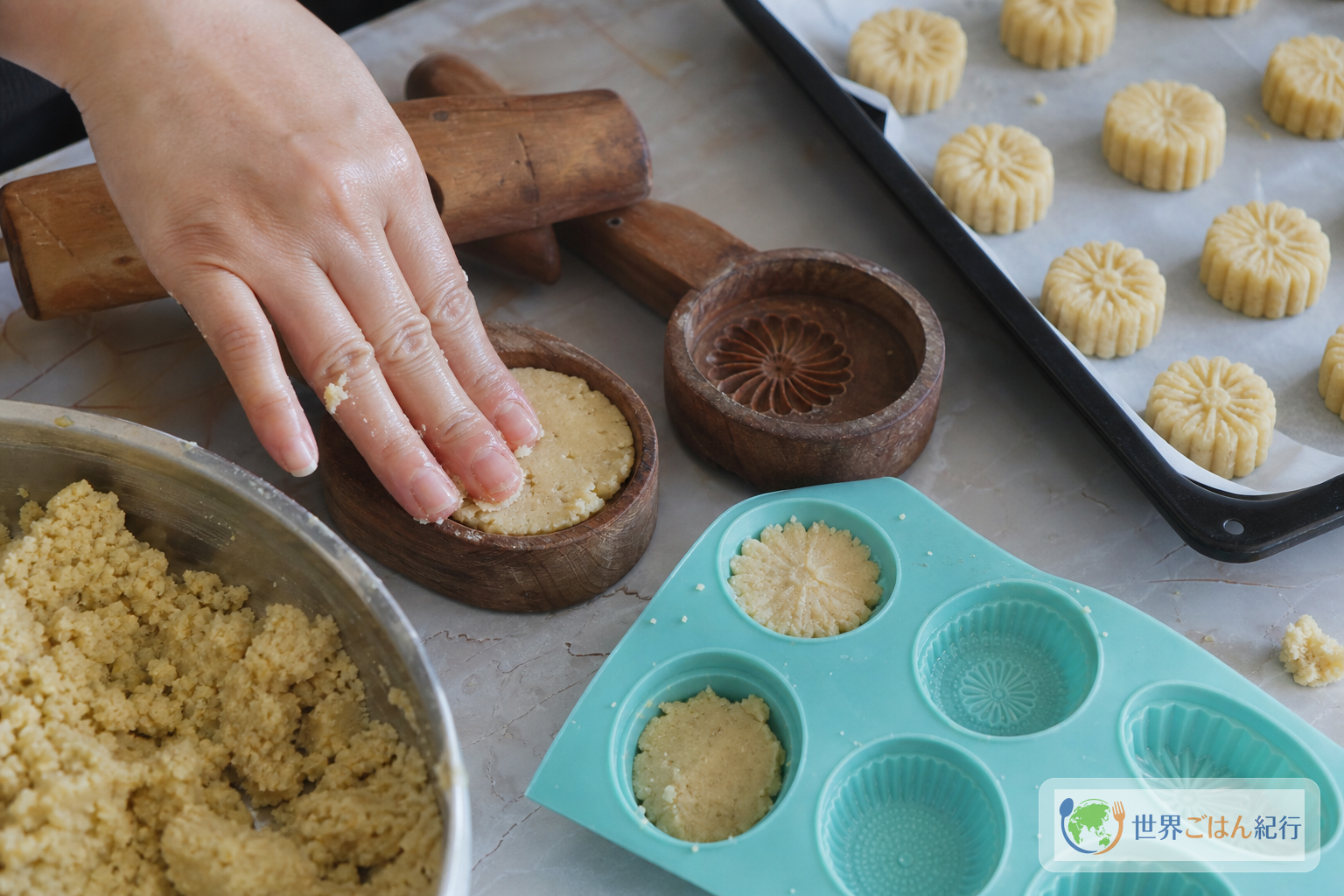
Kue satu does not get better by hurrying once you start mixing. Dry-roast the mung beans to bring out the aroma, cool them completely before milling, and add the moisture little by little. Packing the molds tightly makes the pieces look easier to unmold, but they turn hard when eaten. Not pressing too hard is where the melt-in-the-mouth quality is decided.
Kue satu is not a sweet to bake until golden. The toasty flavor is made in the first dry-roast, and the oven only dries the pieces until they hold their shape. The darker the color, the more scorched bitterness comes forward over the delicate mung bean aroma.
What goes wrong: cracking, hardness, grittiness
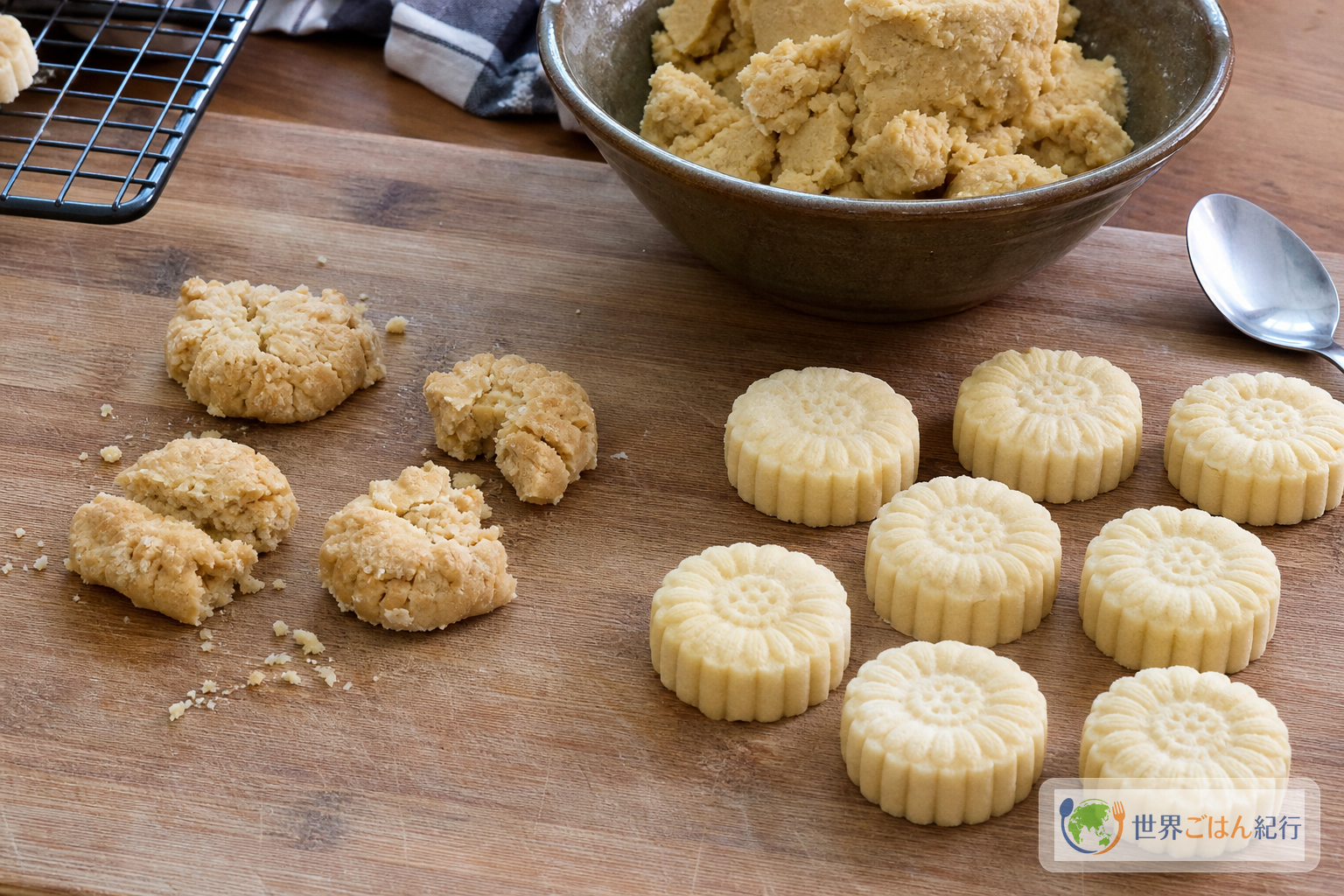
| Problem | Cause | Fix |
|---|---|---|
| Cracks when unmolded | Lack of moisture, coarse flour | Add water 1 tsp at a time and re-sieve the coarse bits |
| Hard when eaten | Pressed too hard into the mold, too much water | Press more lightly next time and don't add excess water |
| Gritty | Flour ground too coarsely | Repeat the mill and sieve once more |
| Beany smell remains | Under-roasted | Roast further over medium-low heat until the aroma rises |
| Burnt smell | Dry-roasting or oven temperature too high | Don't stir in scorched beans; bake at 120–130°C |
| Turns damp after storage | Sealed before cooling | Open the lid, dry in a 120°C oven for 5 minutes, then cool |
The most common failure is adding too much water in order to get clean unmolding. It makes the dough easier to handle while you work, but after baking it becomes hard and a little sticky in the mouth. The ideal is a state that holds when squeezed in the hand but crumbles finely when pressed. Thinking of damp sand in a sandbox makes it easier to judge.
You can eat it with the flour left coarse, but the "disappears in your mouth" quality typical of kue satu is weaker. Don't stop at the food processor; pass the flour through a sieve at the end. Return the coarse bits left in the sieve to the mill rather than throwing them away. Doing this carefully gives satisfaction without adding more sugar.
Eating and storing: serve as a tea sweet, a little at a time
Kue satu is a tea sweet more than an after-dinner dessert. It draws moisture out of the mouth, so it goes well with hot black tea, green tea or bitter coffee. If you serve it as an Indonesian sweet, putting it alone on a small plate as a dry sweet picks up the aroma better than placing it on the same plate as a sweet with more moisture.
For storage, seal it only after it has cooled completely, and eat it up within about 5 days at room temperature. In humid seasons or summer you can move it to the refrigerator, but it easily absorbs refrigerator smells, so use an airtight container and a desiccant. Freezing is not recommended. The moisture on thawing makes the surface sticky and the crumbly texture of the flour hard to recover.
If you build a menu around Indonesian sweets, serve a little after nasi uduk, whose aroma runs in a similar direction, or as a tea sweet on a day you ate the rich meat dish rendang (in Japanese). After a spicy meal, it can also serve to reset the mouth from a strong heat like sambal-based substitutes.
FAQ
Can I use mung beans with the skins on?
You can, but leftover skins make the flour coarser and the color a little greenish. If you use skin-on beans, after dry-roasting rub them in a cloth to remove as much of the loosened skin as possible, and pick out the skins that remain in the sieve. For a first batch, hulled mung beans fail less often.
Can I make it with only store-bought mung bean flour?
Yes. Start with 260 g mung bean flour and dry-roast it with the pandan leaves over low heat for 8–10 minutes to bring out the aroma. The flour scorches easily, so keep mixing while shaking the pan. The aroma is milder than when you grind from beans, but the fineness of the flour is stable.
Is it okay without pandan leaves?
Yes. Pandan adds a sweet green fragrance, but the center of kue satu is the mung bean. If you have no pandan, increase the vanilla to 2/3 tsp and dry-roast carefully to bring out the bean aroma. Matcha or strong flavorings turn it into a different sweet, so it is better not to add them the first time.
What if I don't have molds?
Small silicone chocolate molds, wagashi-style molds or even measuring spoons will work. If a mold is too deep it is hard to release, so keep the thickness around 1.2–1.5 cm. You can also just roll it by hand and eat it, but the density varies from spot to spot and it cracks more easily.
Can I make it without an oven?
On a clear, dry day, you can also set the pieces on a rack in a well-ventilated place and dry them for several hours. In humid climates, however, hygiene and texture are less stable, so at home it is safer to dry briefly in a 120–130°C oven. If you use a toaster oven, it scorches easily, so cover with aluminum foil and watch it at a low temperature.
How long can I make it ahead?
Seal it after it has cooled completely, and plan on 5 days at room temperature. If it has absorbed moisture, dry it in a 120°C oven for 5 minutes, cool it completely and seal it again. The aroma settles best the day after making, but the longer it sits, the weaker the bean aroma becomes.
Sources
- The World's Food, "Kue satu", https://theworldsfood.com/regions/asia/indonesia/30124/kue-satu.html
- Wikipedia, "Kue satu", https://en.wikipedia.org/wiki/Kue_satu
- Guai Shu Shu, "Mung Bean Cookies or Kuih Koya aka Putu Kacang", https://www.guaishushu1.com/an-old-school-of-snow-white-cookiesmung-bean-cookies-or-kuih-koya-%E7%BB%BF%E8%B1%86%E7%B3%95/
- Cookpad Indonesia, "Kue Satu Kacang Hijau", https://cookpad.com/id/resep/24116865-kue-satu-kacang-hijau



