Pearls You Can See: What Bánh Phu Thê Bột Bán Is
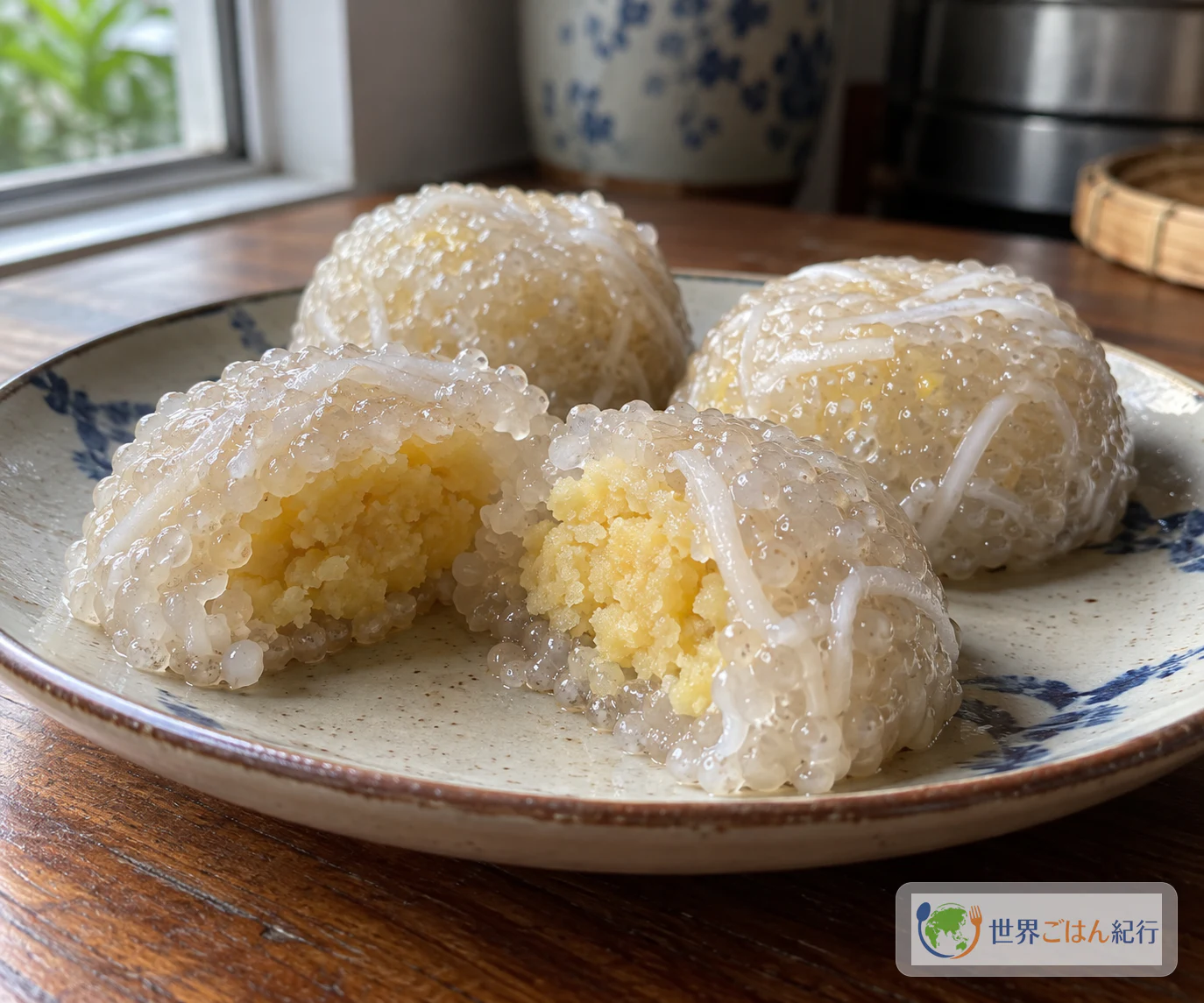
A shell of tapioca pearls and grated coconut that steams from white and opaque to softly translucent, closed around a small, slightly flattened portion of sweet mung bean filling.
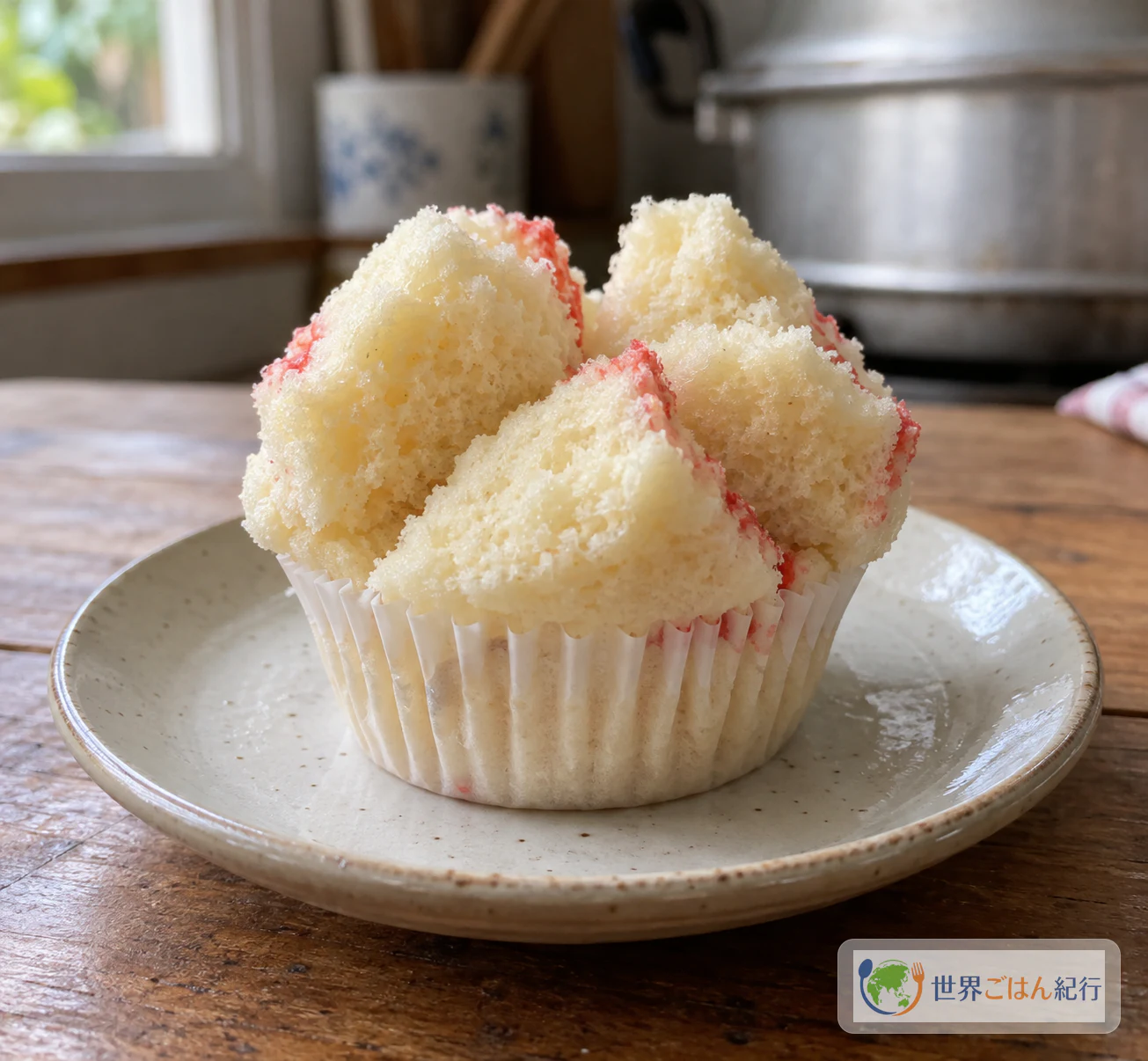
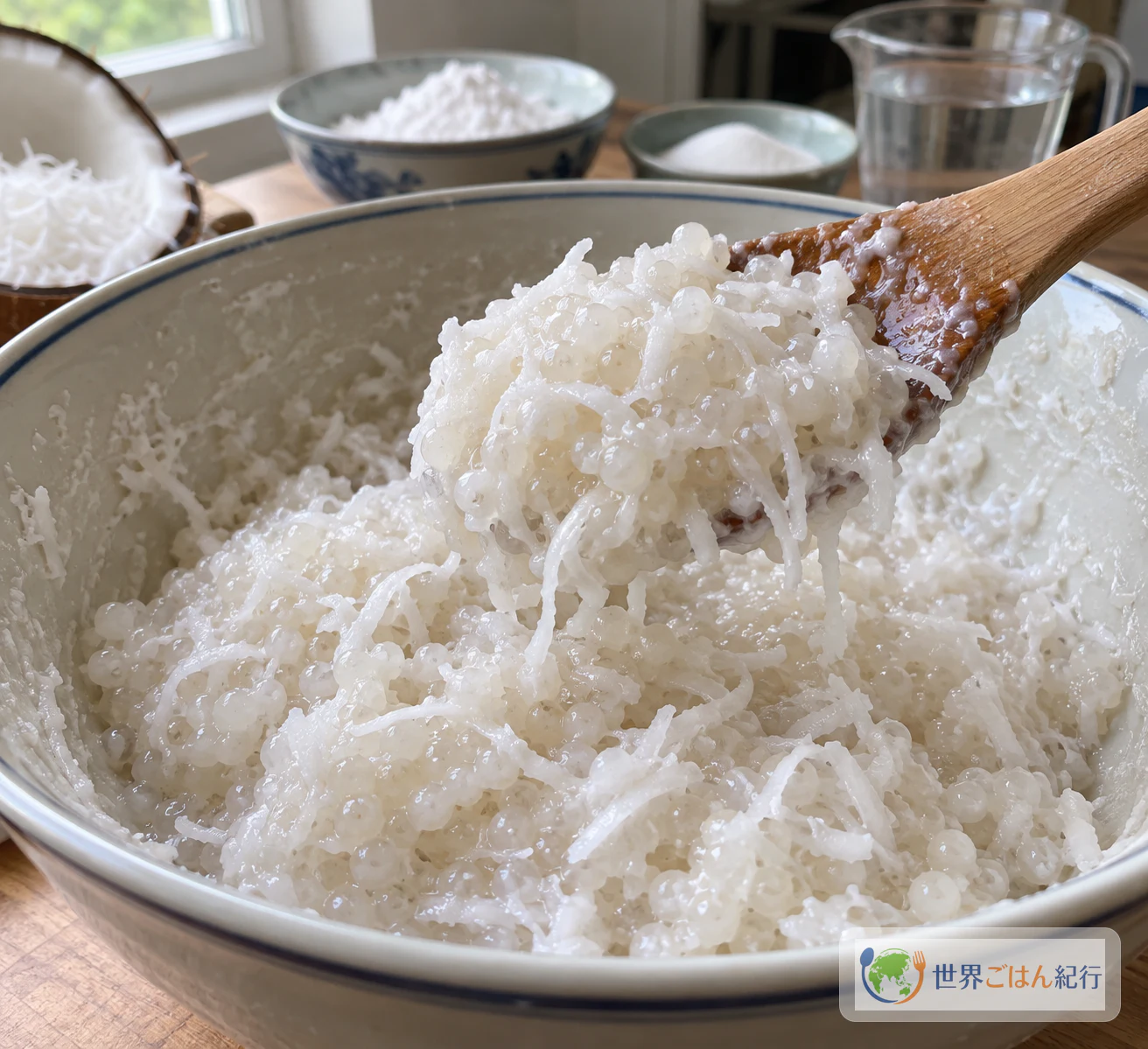
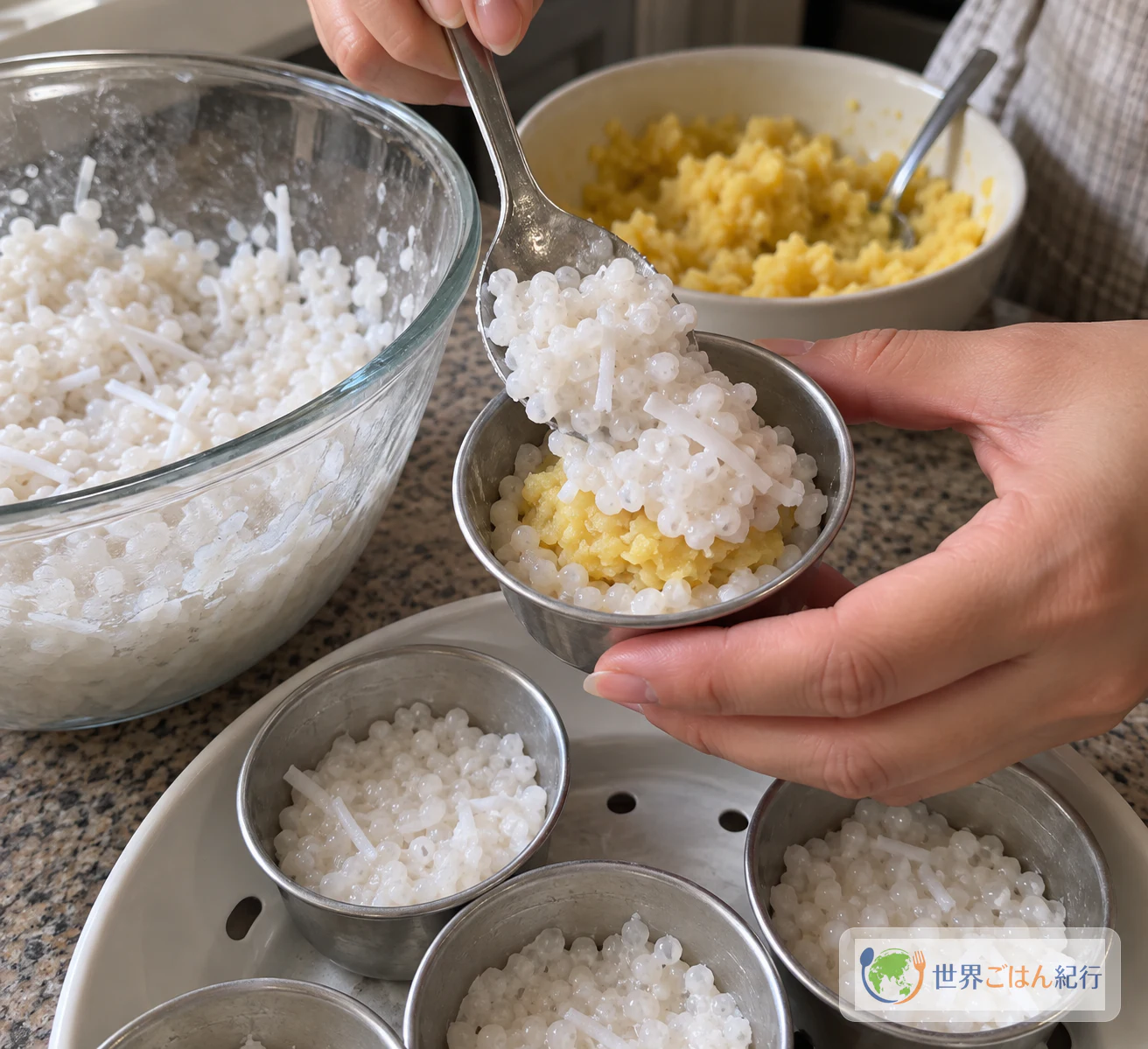
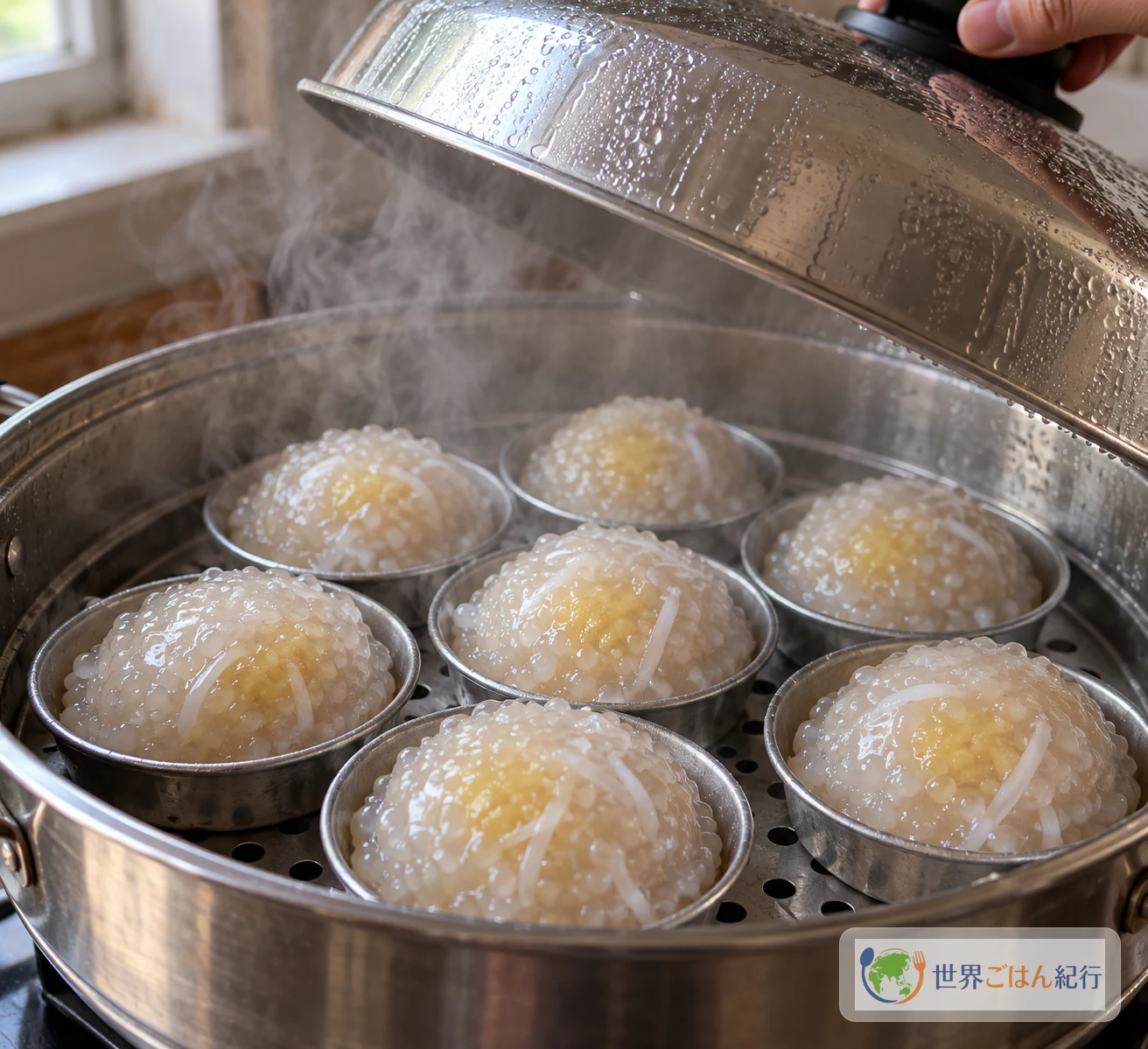
Before steaming, the shell mixture is white and grainy, with small tapioca pearls and threads of grated coconut. In the steamer the pearls turn translucent and pearly, and the yellow mung bean filling begins to show through the skin. That contrast between the clear, chewy shell and the soft yellow center is what this recipe is built around.
Bánh phu thê is usually translated as "husband and wife cake." Bột bán refers to tapioca pearls. In this version, whole pearls are mixed into the shell, which is what separates it from the well-known bánh phu thê of Đình Bảng in Bắc Ninh. The amounts and method here follow a single home recipe published on the food blog Playing with My Food. This is not the traditional Đình Bảng formula, and Sekai Gohan has not kitchen-tested the recipe as a whole. Wherever the original leaves a detail open, this article says so rather than filling in the gap.
For more of the country's dishes, see the Vietnam page.
Why "Husband and Wife": The Đình Bảng Cake and How This Version Differs
In Đình Bảng, bánh phu thê is tied to weddings, engagements and gift-giving, and the cakes are wrapped and presented in pairs. A Vietnamese rural-tourism article describes this custom. A VnExpress report on local makers notes that the artisans it features sell their cakes only in pairs, and one maker explains that the cake is different from xu xê.
The traditional Đình Bảng cake uses starch made from glutinous rice, mung beans, coconut and green papaya, colored yellow with dành dành (gardenia). The stories behind the name and its origin come in several different versions. They are told as folk accounts and are not settled history, so this article treats them that way.
The cake in this recipe works differently. Its shell is built from tapioca pearls, tapioca starch, sugar and grated coconut. There is no rice starch, no papaya and no leaf box. It is a home variation that borrows the name, not a reconstruction of the Đình Bảng original. Other published versions differ again: a Vietnam Tourism Information page describes a recipe that uses kudzu powder and leaf boxes and steams the cakes for about 20 minutes until transparent. That method is a separate recipe and is not mixed into this one.
Ingredients: Pearl Shell and Mung Bean Filling
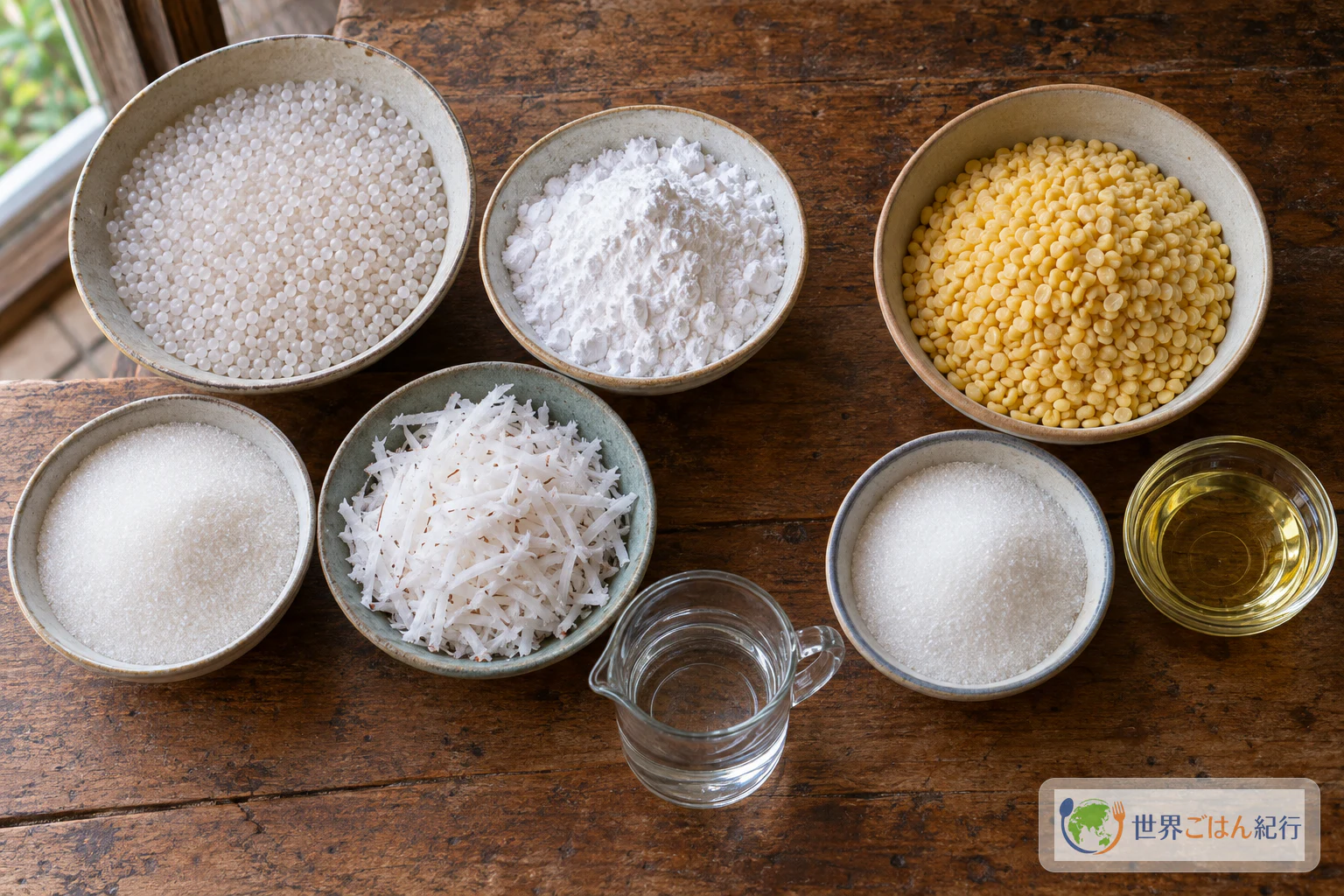
The amounts below are the original recipe's figures in its own units. The original does not give a finished number of cakes or a mold size, so no yield is stated here.
This recipe contains coconut. Check the labels on the tapioca pearls, starch, coconut and other packaged products for allergen and shared-facility statements.
Equipment
- A bowl for soaking the pearls
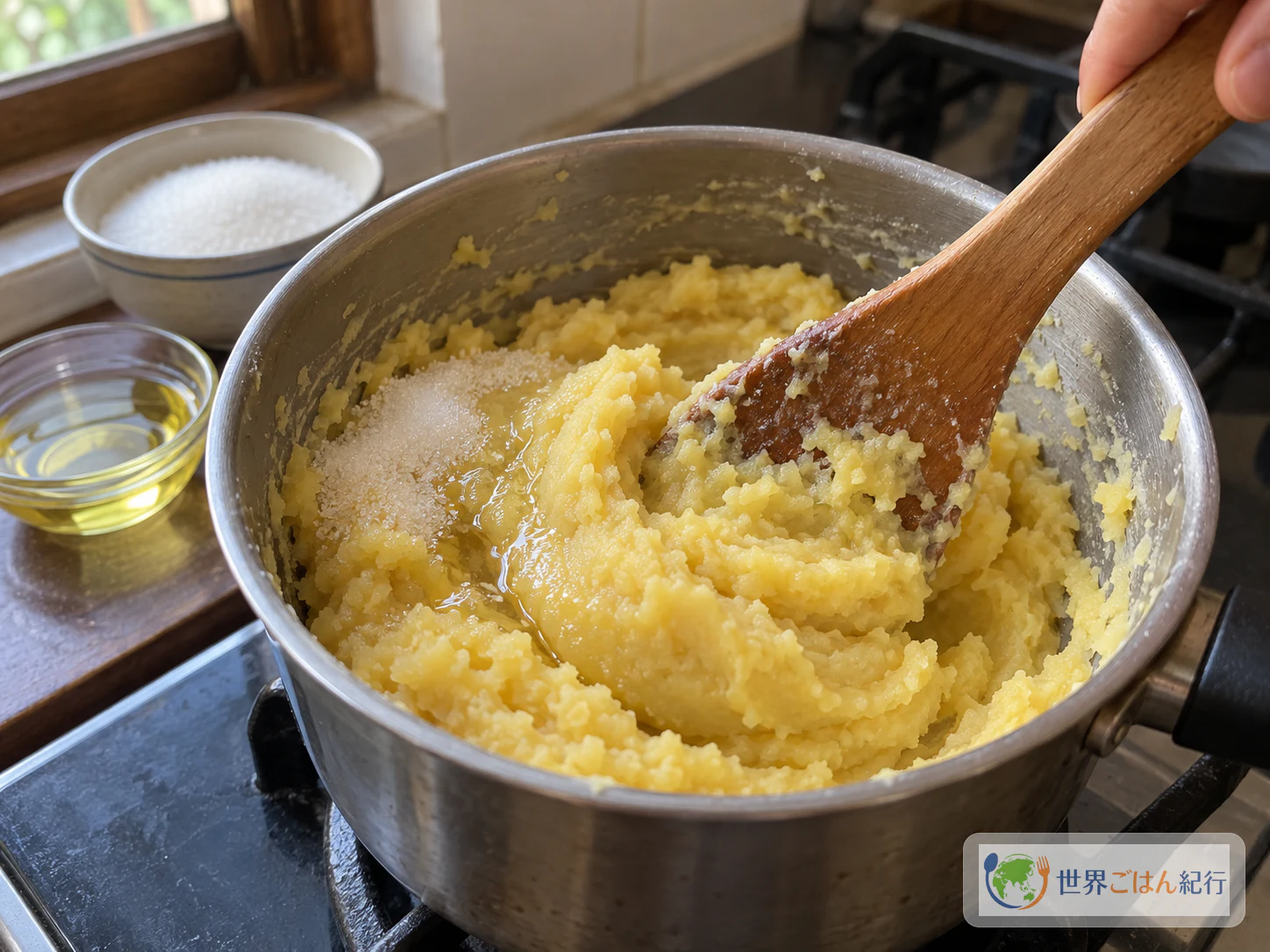
- A small saucepan for cooking and thickening the mung bean filling
- A mixing bowl and spoon for the shell mixture
- A teaspoon for portioning the shell into the molds
- Small heatproof molds
- A steamer that holds the molds
Choosing Pearls, Starch and Coconut
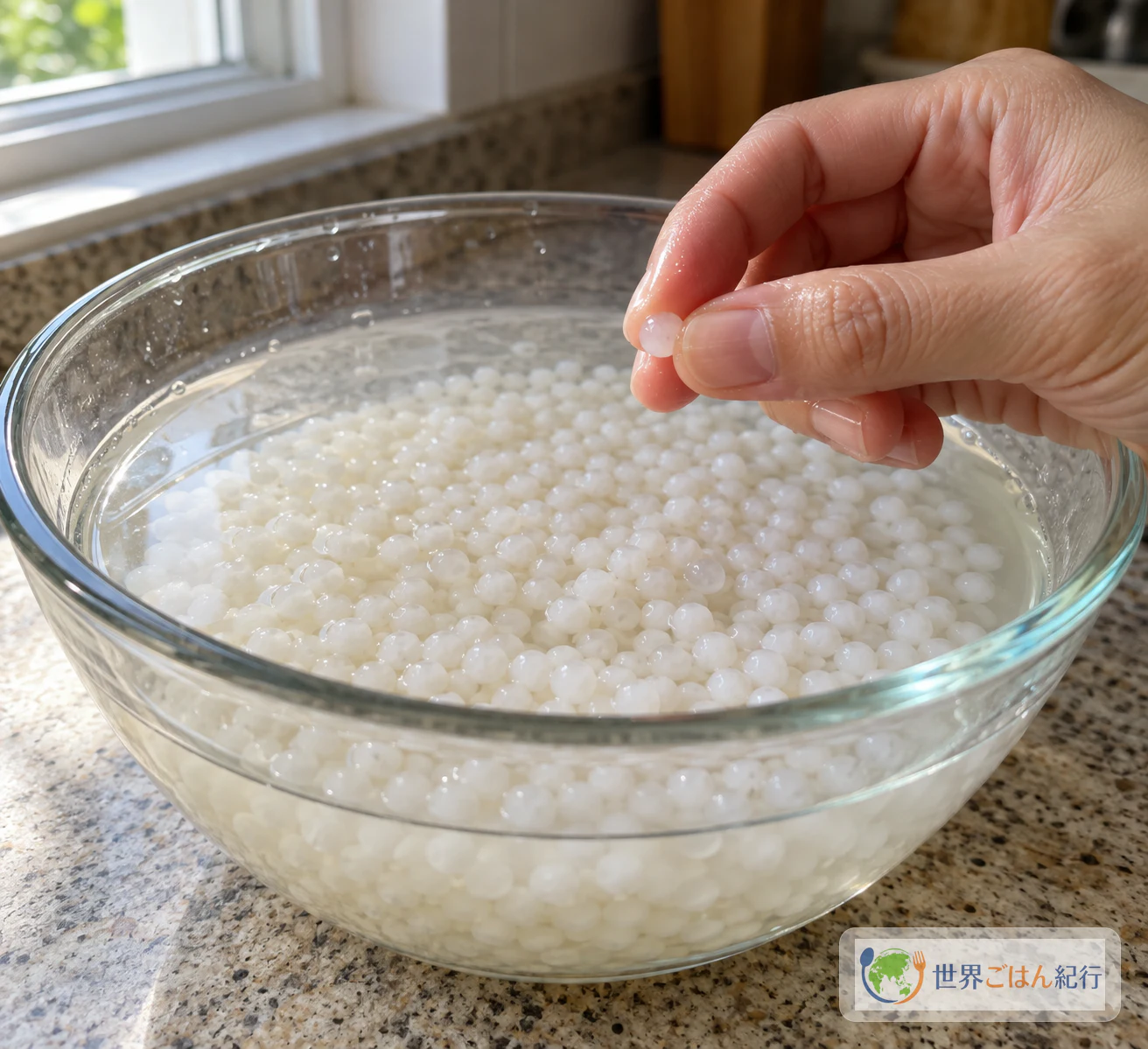
Tapioca pearls and tapioca starch are two different ingredients. Bột bán means the pearls, the small round beads that stay visible after steaming. Tapioca starch is the fine powder that holds them together. Starch cannot stand in for the pearls. The original does not give a pearl size or an exact soaking time, so choose small pearls and judge them by softness. Tapioca starch is also not the same as potato starch, and this recipe has not been checked with other starches.
Coconut: The original says only "grated coconut" and does not say whether it is fresh or dried. Unsweetened grated coconut is the closest match. If fresh coconut is hard to find, unsweetened frozen grated coconut is one possible option. Its moisture may differ, though, so it is not the same recipe, and that swap has not been tested.
Mung beans: Use whole peeled mung beans. Do not replace them with mung bean flour.
Left out on purpose: The original lists jasmine flower (mali) essence, pandan juice and coloring as optional. This version leaves them out, and the cake still works without them. The original also lists borax as optional. There is no food-safety basis for using it in a home recipe, so it is not used here, and no other additive is suggested in its place.
Method: Soak, Fill, Steam Until Translucent
The pearls need a couple of hours of soaking, so start them first and make the filling while they soak. Throughout the recipe, look for softness, thickness and translucency rather than relying on the clock.
When Things Go Wrong
| Condition | Possible cause | What to consider |
|---|---|---|
| Pearls still have a hard, white center | The pearls may not have soaked long enough, or the cakes may need more steaming | Soak the pearls until they are clearly soft. Keep steaming until the shell is translucent. Exact re-steaming conditions have not been tested |
| The shell mixture is loose and runny | Leftover soaking water may have gone into the bowl | Don't add the soaking water to the mixture. No extra starch amount has been confirmed for fixing it |
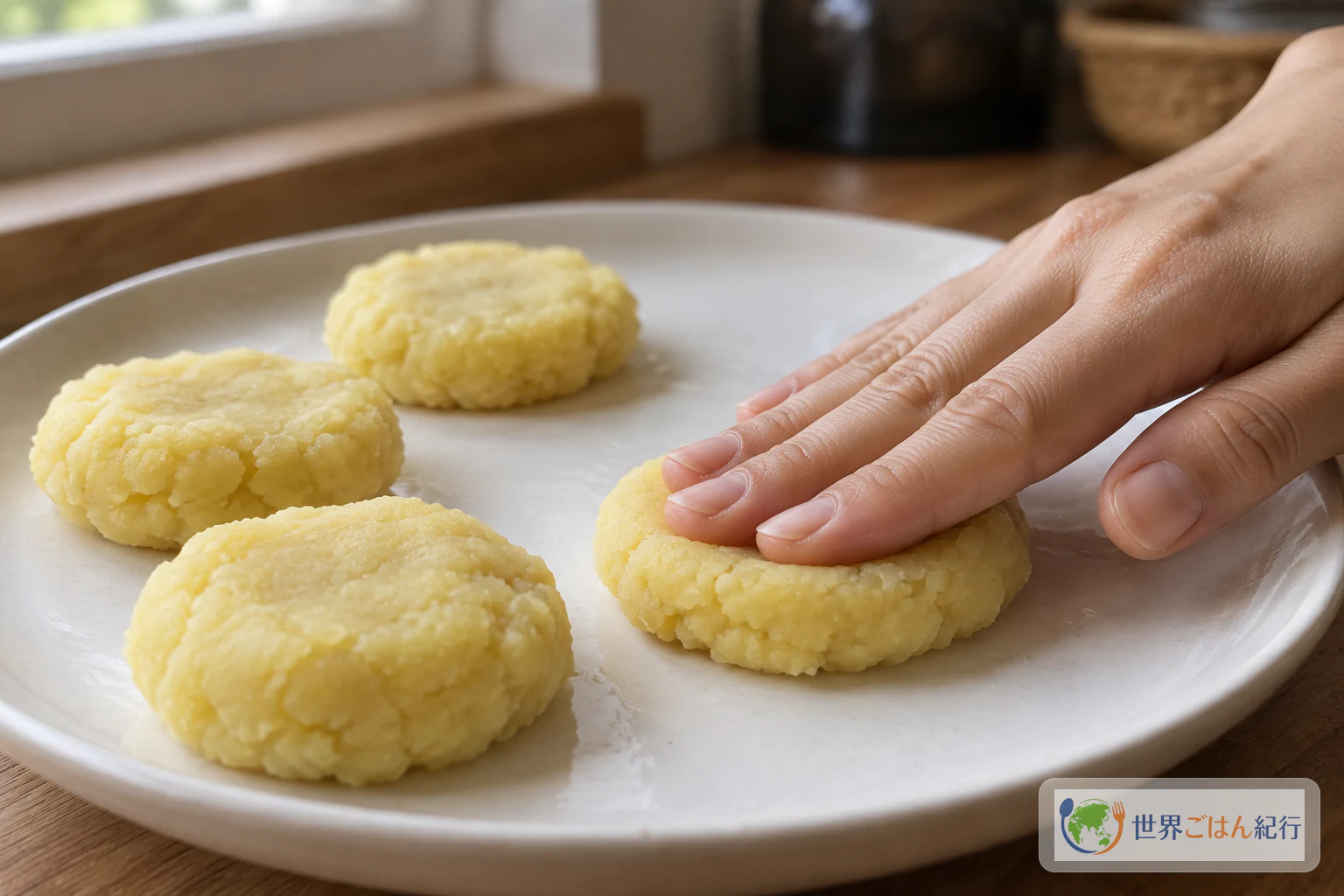
| The filling crumbles or won't hold | It still holds too much moisture, or it was divided while warm | Cook it longer in the pan to drive off moisture, and cool it before dividing |
| Filling shows through a gap in the shell | Not enough shell on top for the mold | Add a little more shell mixture over the filling before steaming |
Serving and Storage
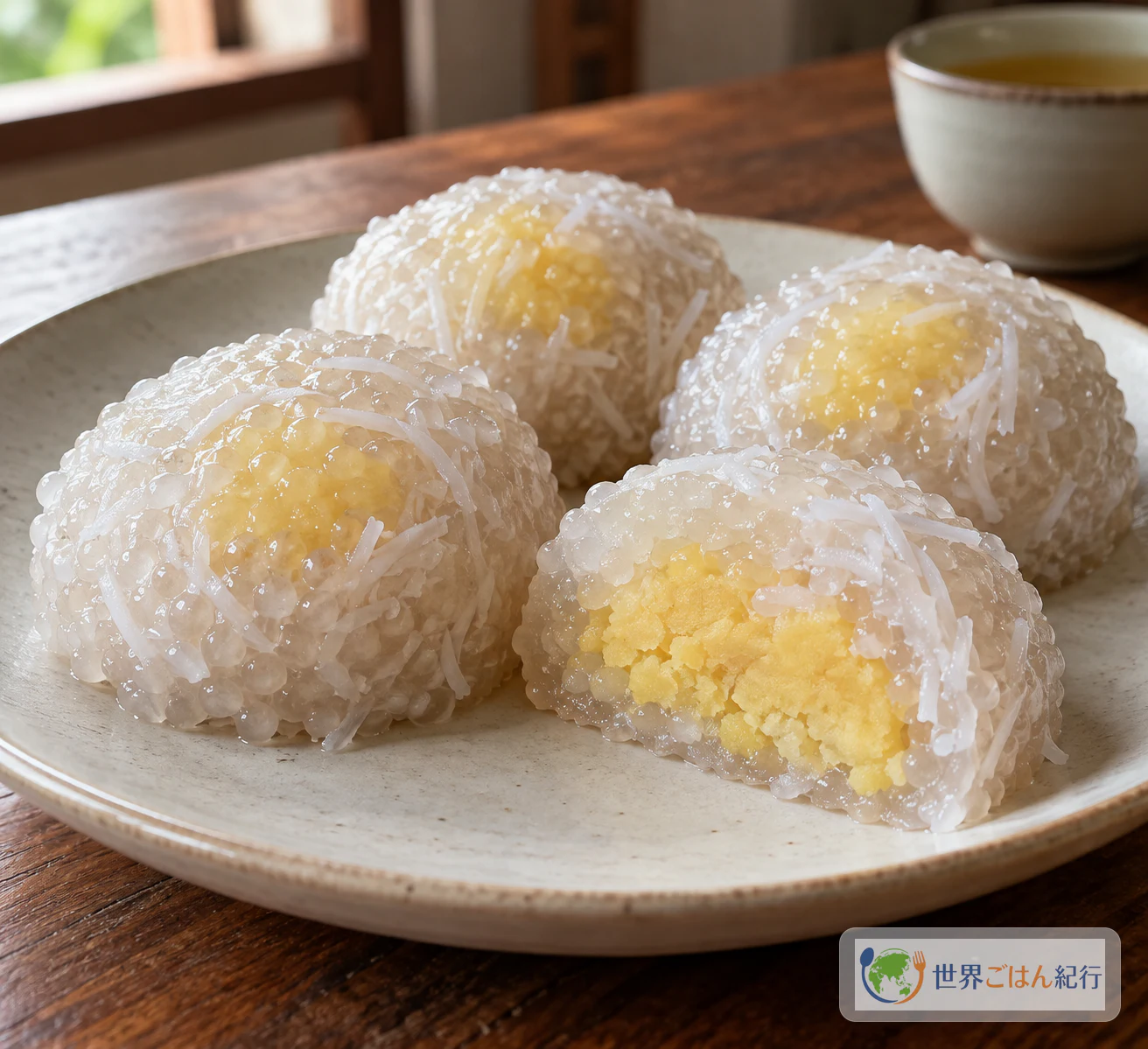
The original does not explain how to cool or unmold the cakes. One option is to let them settle in their molds before turning them out, then serve them once they have cooled. Through the translucent shell you can see the pearl grain, the coconut threads and the yellow center.
The original gives no storage or reheating guidance, and this recipe has not been tested for keeping, so no storage time or reheating method is given here. Storage periods quoted by commercial bakers for the Đình Bảng cake describe their own products and do not apply to these homemade cakes.
Variations
These are suggestions beyond the original recipe, and none has been tested.
- Plain base (this recipe): No flavoring or coloring. The original treats those as optional.
- Pandan version: The original says pandan juice can replace the water. It does not say how much, so if you swap some or all of the 130g water, you will need to adjust.
- Jasmine-scented version: The original suggests a few drops of mali (jasmine flower) essence. Use only food-grade flavorings. Strength varies by product.
- Frozen coconut version: Unsweetened frozen grated coconut in place of the 250g grated coconut. Moisture may differ, so the shell's consistency may change.
- Without molds: Small heatproof cups can stand in. Steaming time will need checking, so judge by translucency.
Frequently Asked Questions
Is this the same as the traditional Đình Bảng bánh phu thê?
No. This is a separate home recipe that puts tapioca pearls in the shell. The Đình Bảng cake uses glutinous rice starch, green papaya and dành dành, and is wrapped in pairs.
Is bột bán tapioca flour?
In this recipe, bột bán means the round tapioca pearls. The tapioca starch that binds the shell is a separate ingredient, and one cannot replace the other.
Do I need pandan or flower essence?
No. The original lists them as optional, and this version leaves them out.
How many cakes does it make?
The original does not give a finished count or a mold size. It divides the filling into 20–25 portions, but that is not a confirmed number of cakes.
Should I use borax, as some recipes do?
No. The original lists it as optional. There is no food-safety basis for using it in a home recipe, so it is left out, and no other additive replaces it.
Sources
- Playing with My Food, "Bánh Phu Thê Bột Bán (Husband and Wife Cakes made with Tapioca Pearls)," 2005. The home recipe this article follows: amounts for the tapioca pearl shell and mung bean filling, soaking the pearls, dividing the filling into 20–25 slightly flattened portions, filling the molds, and steaming for about 10 minutes or until transparent. https://pwmf.blogspot.com/2005/10/bnh-phu-th-bt-bn-husband-and-wife.html
- Vietnam National Authority of Tourism (rural tourism site), "Bánh phu thê Đình Bảng – đặc sản của vùng quê quan họ Bắc Ninh." The Đình Bảng cake's place in weddings, engagements and gifts, the custom of pairs, its traditional ingredients, and the several differing stories of its origin. https://nongthon.vietnamtourism.gov.vn/banh-phu-the-dinh-bang-dac-san-cua-vung-que-quan-ho-bac-ninh/
- VnExpress, "Phu thê - bánh đặc sản chỉ bán theo cặp ở Bắc Ninh." A report on Đình Bảng makers: traditional ingredients such as glutinous rice starch, mung beans and green papaya, sale in pairs, and a maker's explanation that the cake differs from xu xê. https://vnexpress.net/phu-the-banh-dac-san-chi-ban-theo-cap-o-bac-ninh-4649528.html
- Vietnam Tourism Information, "Banh Phu The – a specialty of Bac Ninh." A different traditional-style recipe using kudzu powder and leaf boxes, steamed about 20 minutes until transparent. Cited for comparison only. https://www.vietnamtourism.org.vn/vietnam-cuisine/banh-phu-the-a-specialty-of-bac-ninh.html