Chicken Chop: A Golden Crust Under a Tomato Gravy Full of Vegetables
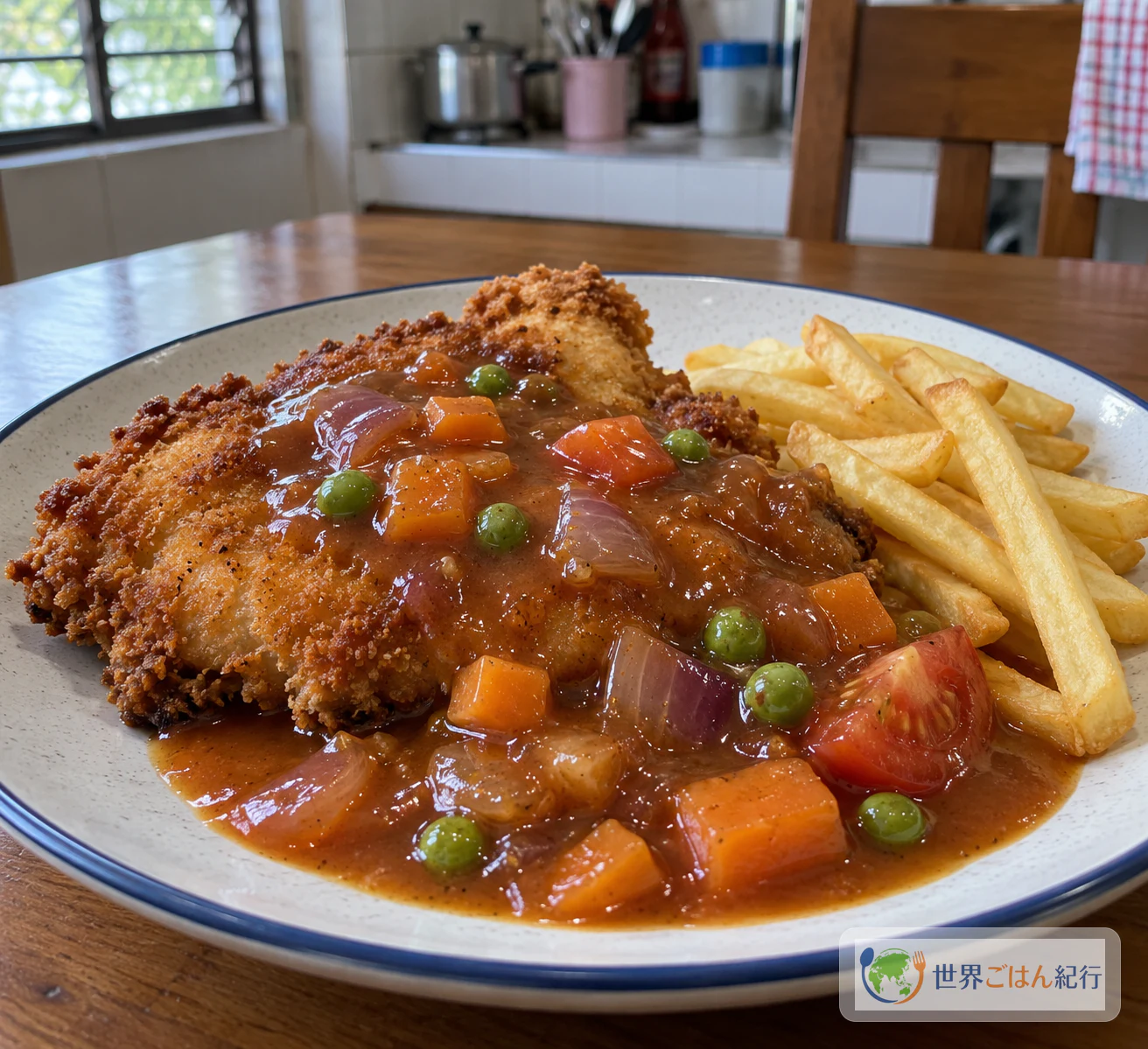
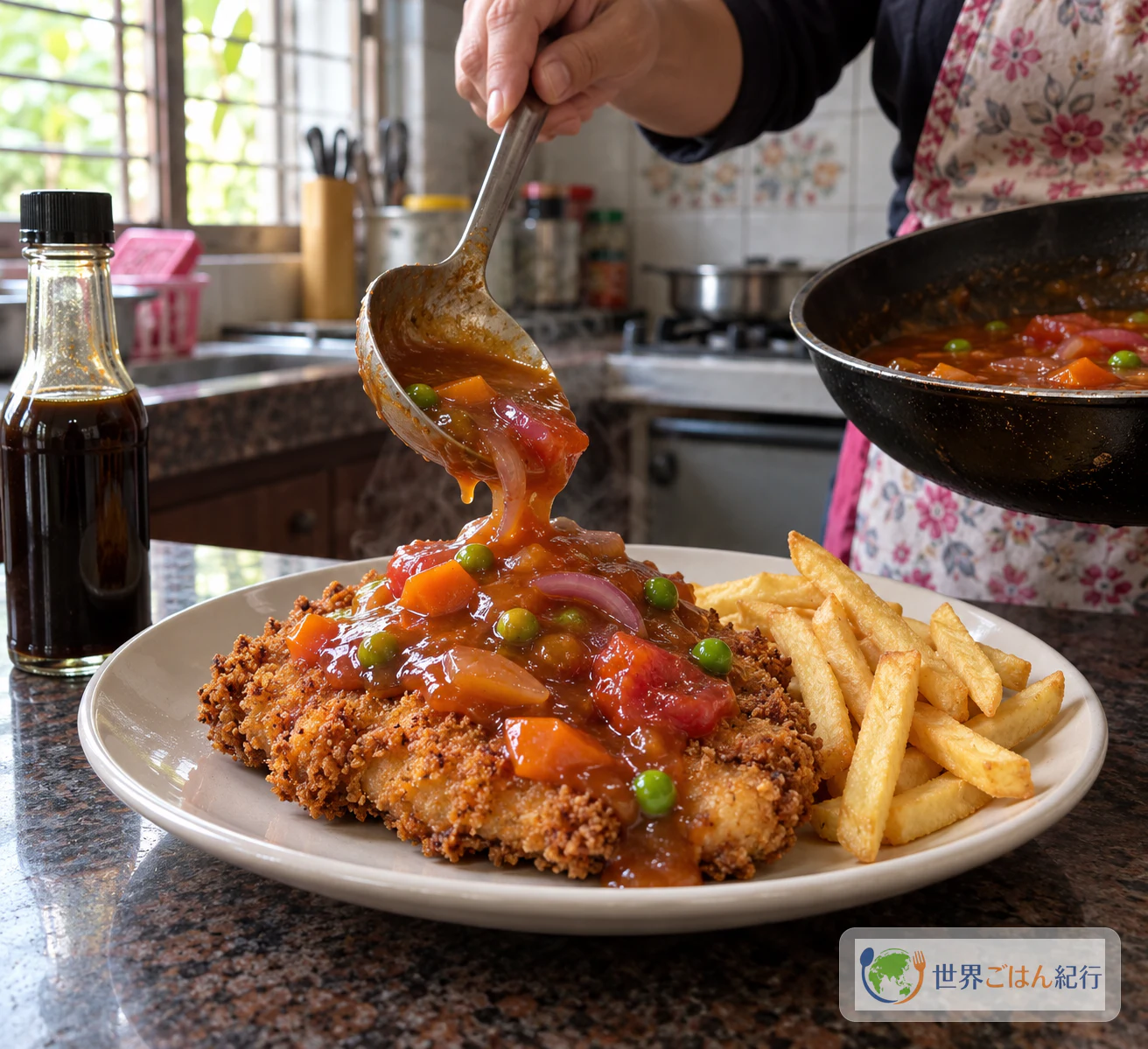
A boneless chicken chop in a crisp breadcrumb crust, a tomato gravy with carrot, red onion, peas and tomato wedges spooned over it, and French fries on the side. Keep all three together on one plate.
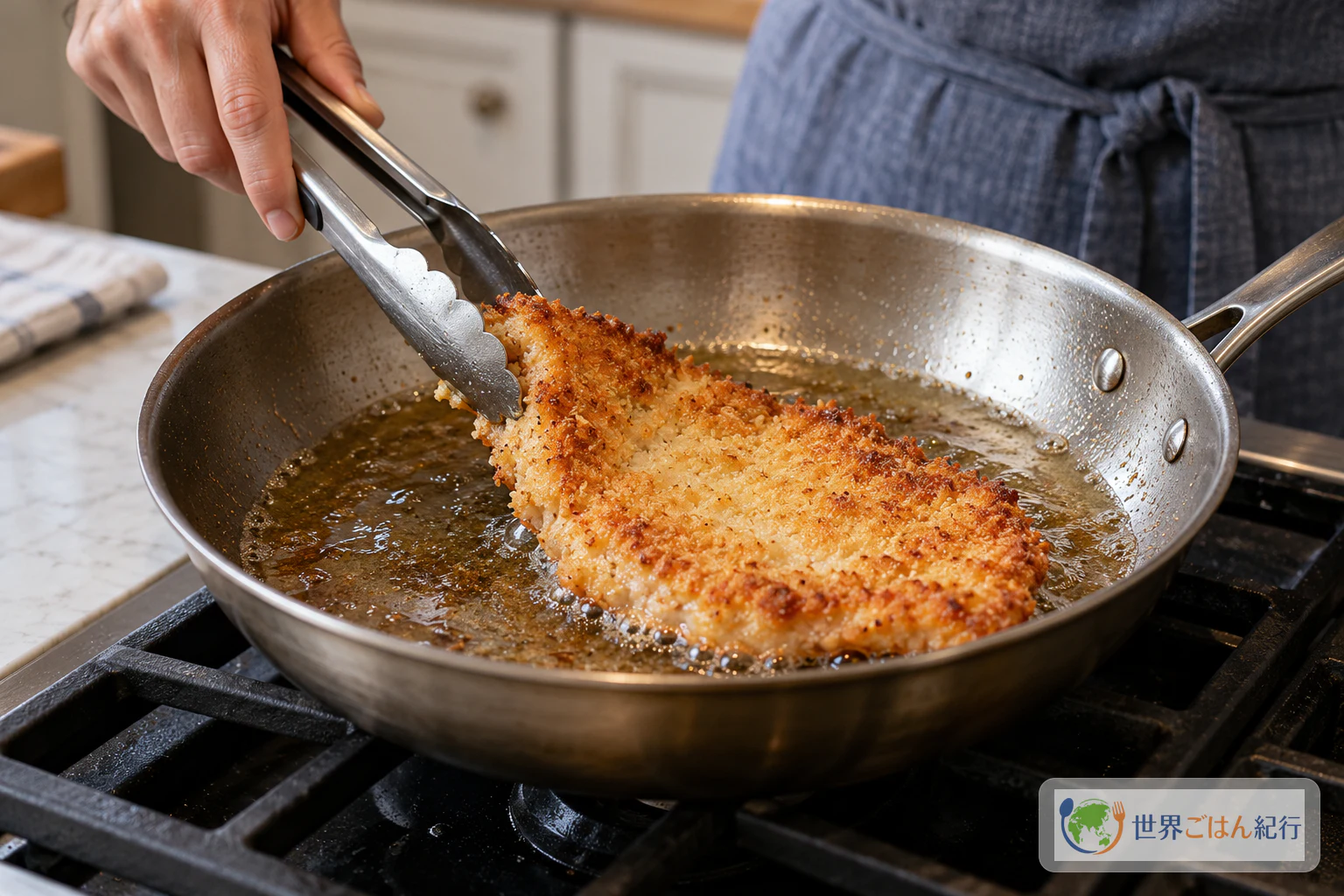
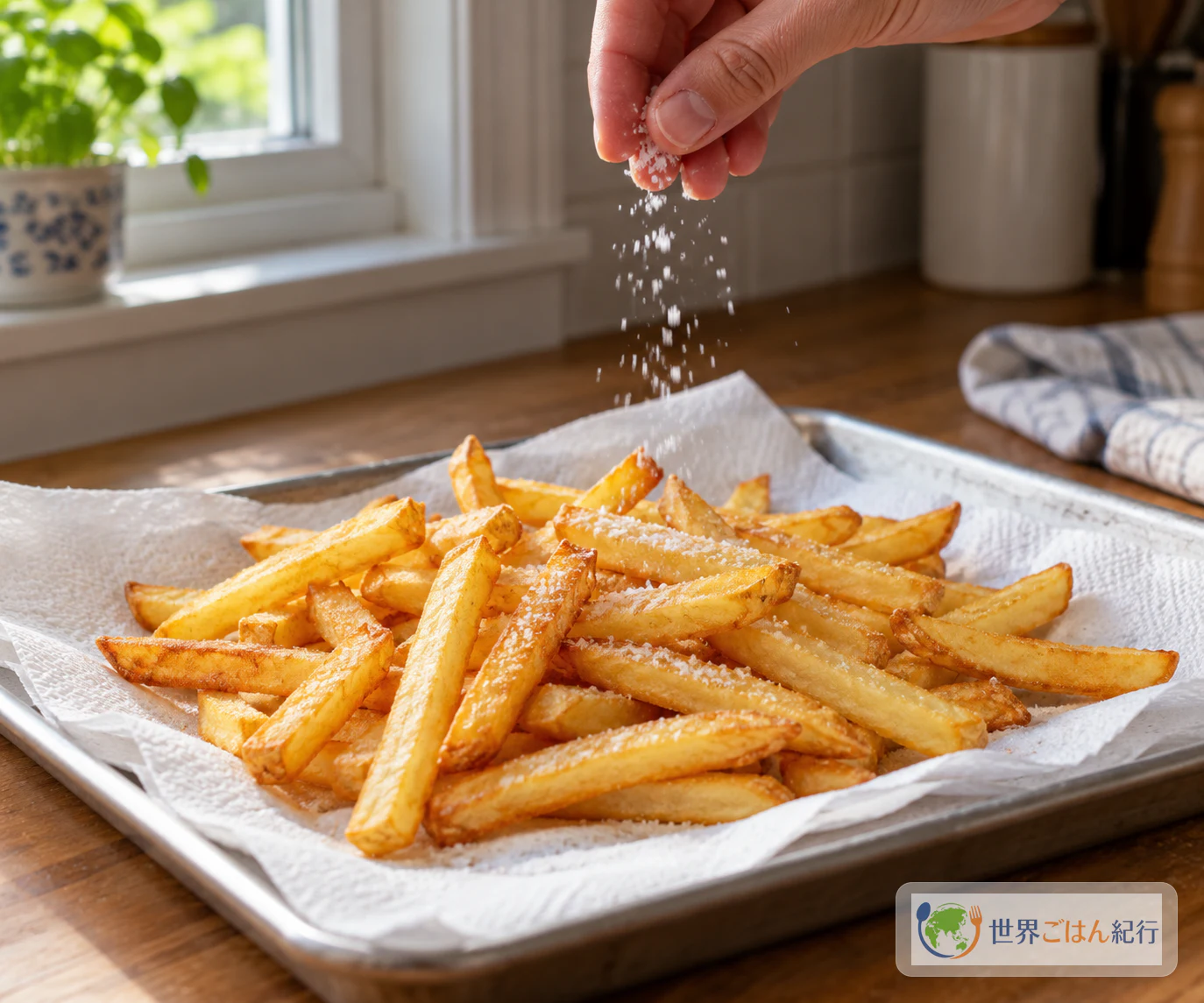
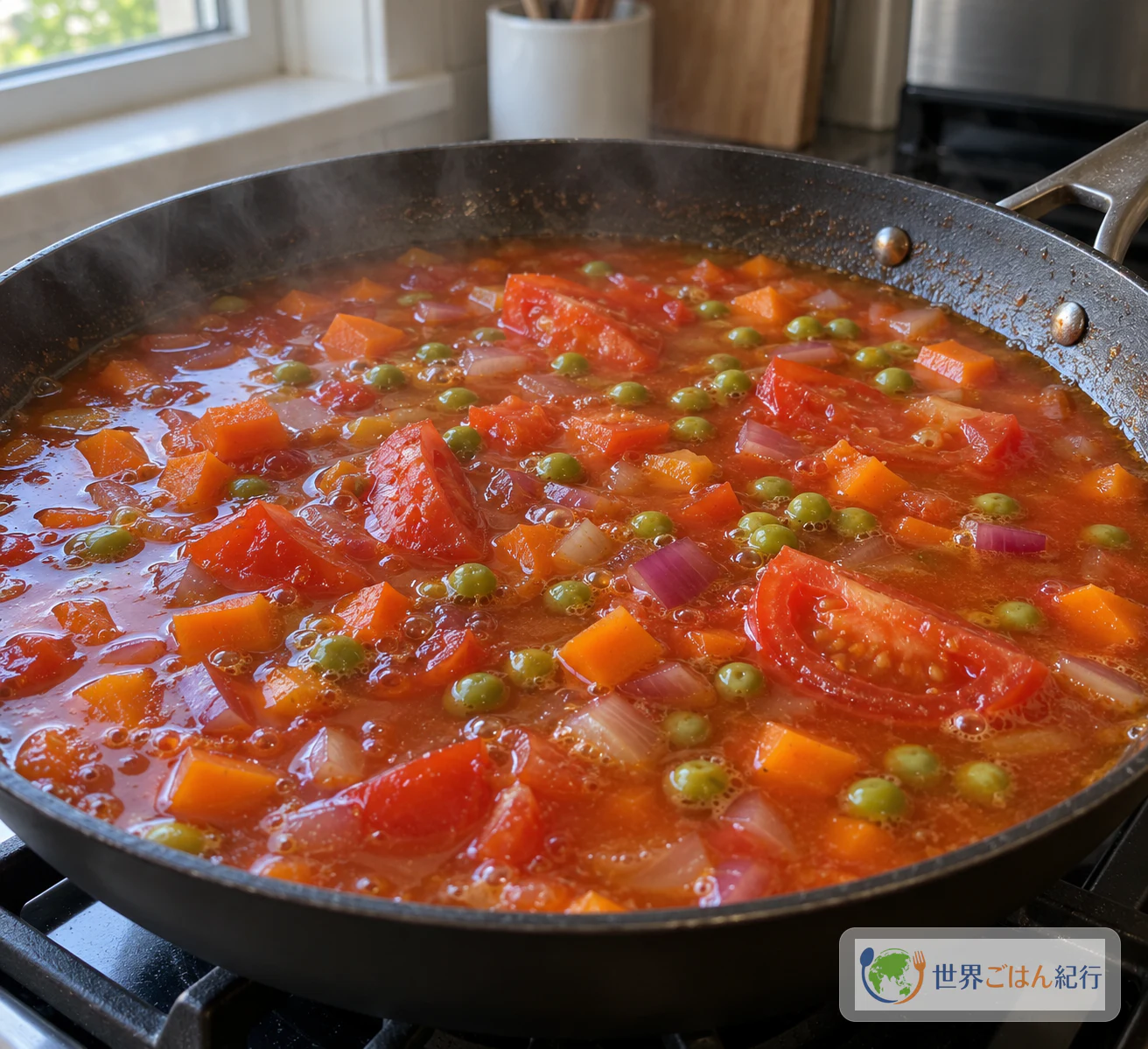
A breadcrumbed piece of chicken comes out of the pan golden and crisp. Over it goes a spoonful of red gravy with diced carrot, slices of red onion, green peas and tomato wedges, and a modest pile of lightly salted fries sits alongside. At first glance it looks like a European-style cutlet plate, yet this is chicken chop, a dish that grew up in the coffee shops (kopitiam) of Malaysia.
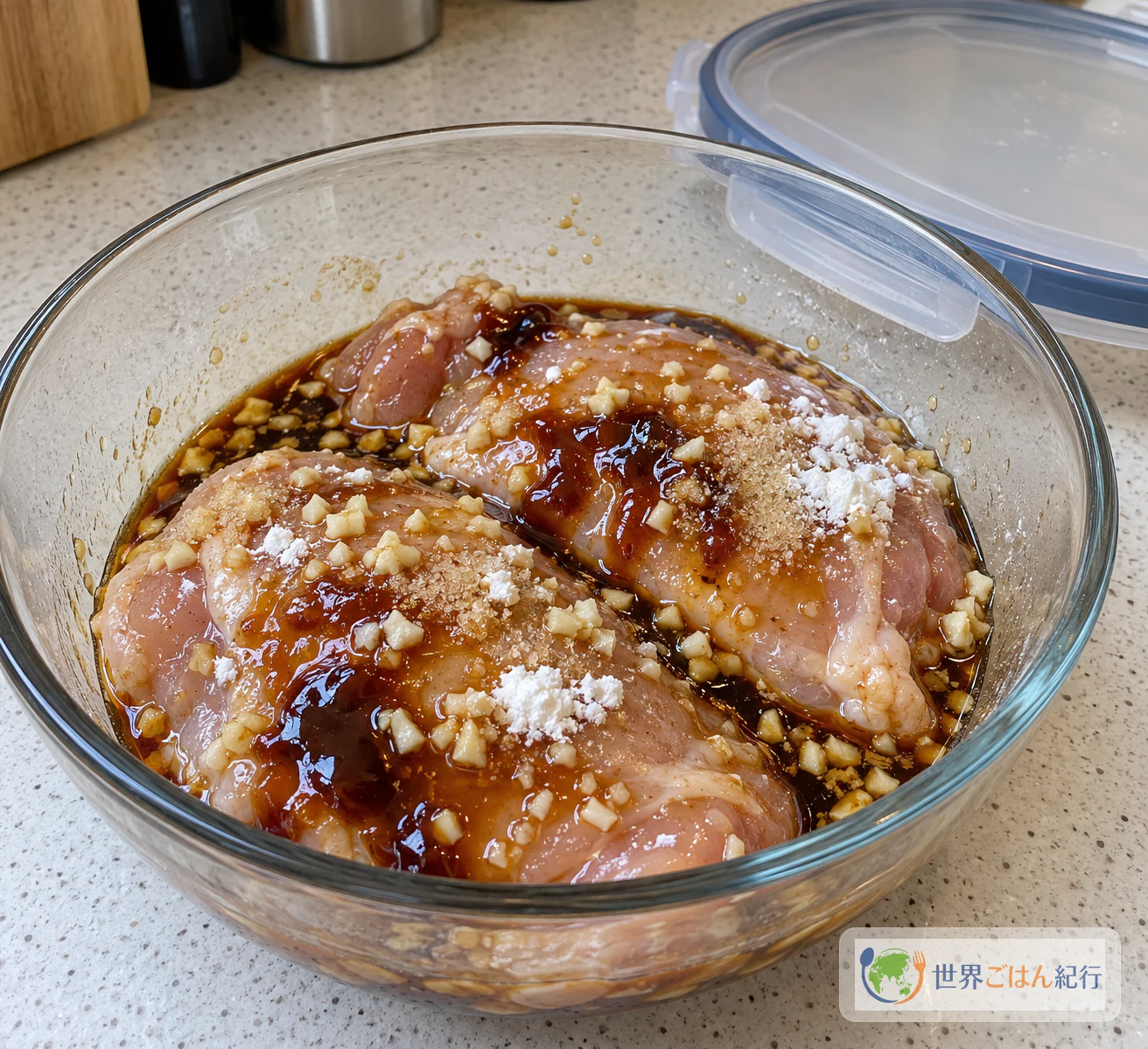
In Malaysia it appears on menus as chicken chop or Hainanese chicken chop, typically at the Western-food stalls found in kopitiam. The recipe here follows the two-serving version published by Ian Lau in The Star, a Malaysian newspaper: a soy-and-oyster-sauce marinade, a flour, egg and breadcrumb coating, a tomato-based vegetable gravy, and French fries finished with extra Worcestershire sauce at the table.
Chicken chop is only one strand of Malaysian food, and even within Malaysia the sauce, the coating and the sides change from stall to stall. This article keeps to one complete formula and describes the other versions separately, so the base recipe stays intact.
Sekai Gohan has not kitchen-tested this recipe. The amounts and order follow Ian Lau's published recipe in The Star. That recipe gives a time only for the 15-minute marinade; it gives no oil temperature, frying time or chicken weight, so none are added here. Judge the frying by color and crispness, and judge safety with a food thermometer.
Why "Hainanese": Cooks Who Adapted Western Dishes in Malaya
The "Hainanese" in the name points to the cooks who shaped the dish, not to a recipe brought over from Hainan. The Star describes Hainanese chicken chop as a Malaysian kopitiam and Western-food-stall dish shaped by Hainanese settlers in Malaya, rather than a dish from Hainan province or Western cooking in the strict sense. According to the article, Hainanese cooks who worked for British colonial officers and expatriates adapted Western-style breaded chops and sauces using the ingredients available to them and the techniques they knew.
A Malay Mail report from Penang adds a local voice. Representatives of the Penang Hainan Association describe Hainanese migrants who worked as cooks for British and Australian employers in Penang. The association's chairman says some of these cooks learned recipes from their British employers and changed them with local flavors, and he names Hainanese chicken chop among the dishes that came out of this. The report places chicken chop among the Malaysian Hainanese community's contributions to kopitiam and food culture.
Neither account names a single inventor or an exact year, and this article does not either. What both describe is a broad process: migrants cooking in other people's kitchens, learning foreign dishes and gradually bending them toward the tastes of the place they lived.
Not the same dish as Hainanese chicken rice
Hainanese chicken rice carries the same word in its name and is also part of the Hainanese legacy in Malaysian food, but it is a different dish: poached chicken served with rice. Chicken chop, as made here, is a breaded and fried piece of chicken with a vegetable gravy and fries. If you searched for one and found the other, the shared name is the reason.
How the plate is built
| Part | What it does on the plate |
|---|---|
| Marinated chicken chop | Garlic, soy sauce, sesame oil, oyster sauce and sugar season the meat itself before it is coated |
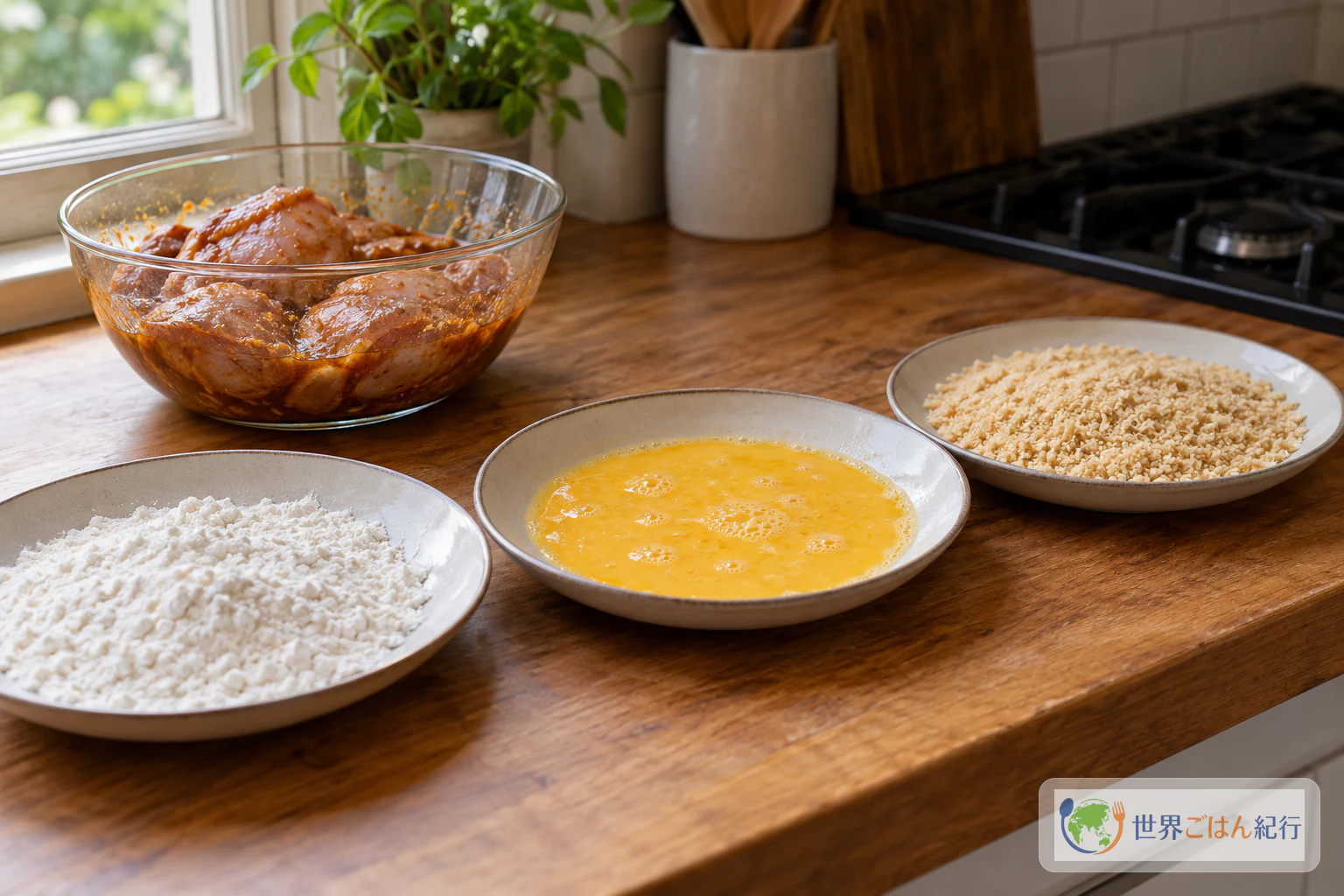
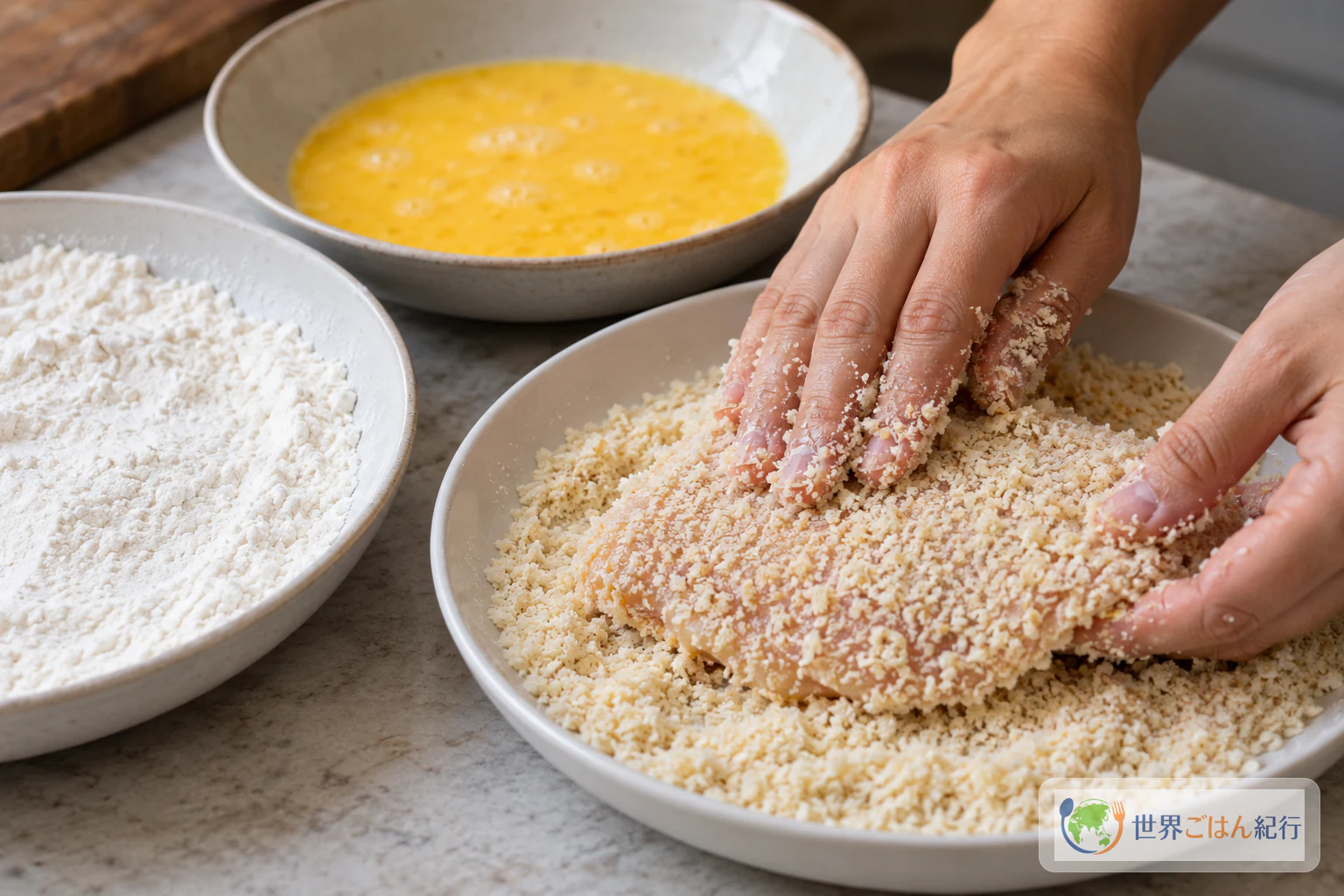
| Flour, egg and breadcrumb crust | Gives the golden, crisp surface that the gravy is spooned over |
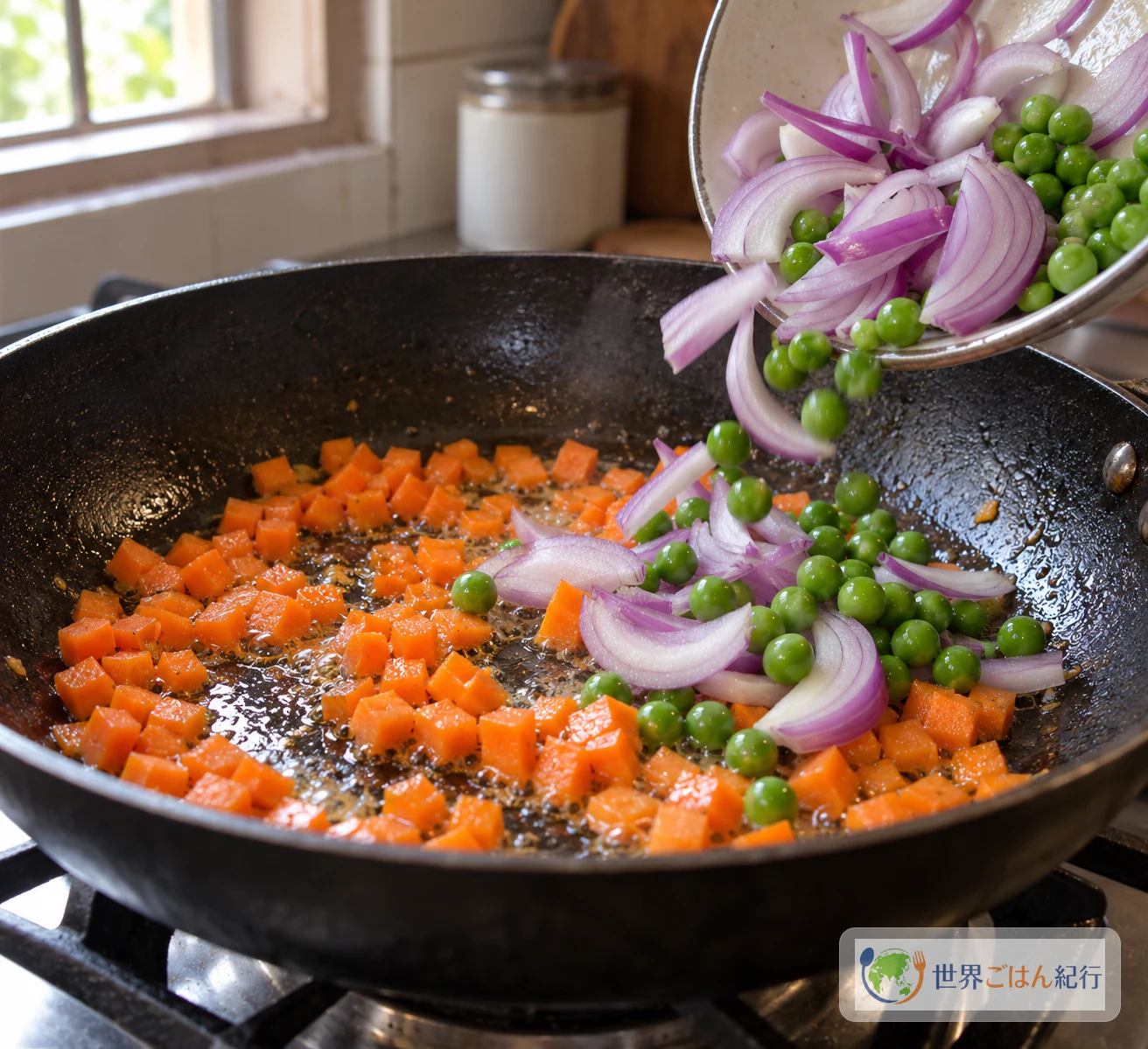
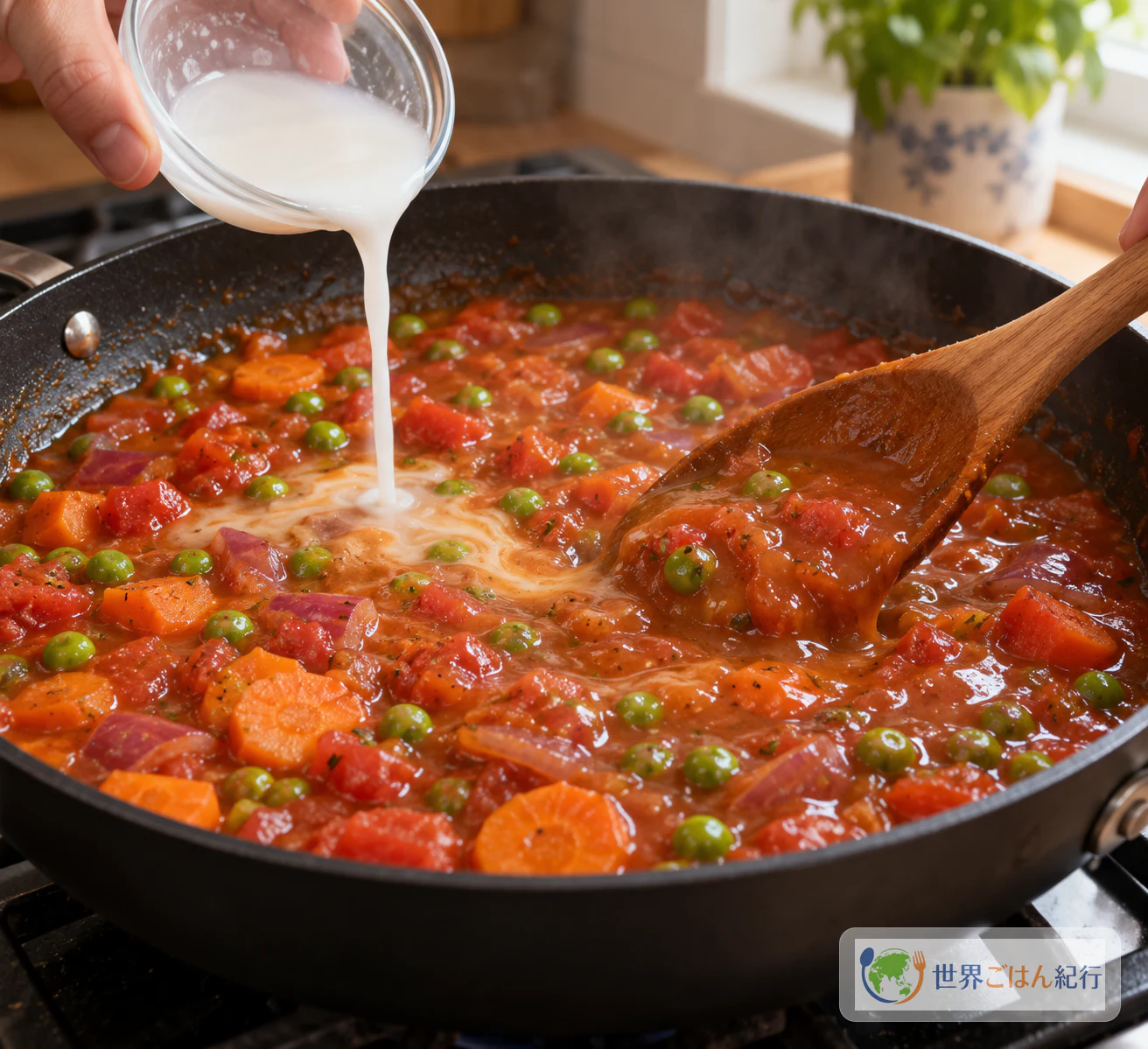
| Tomato vegetable gravy | Tomato sauce, chilli sauce, soy sauce and Worcestershire sauce simmered with carrot, red onion, peas and tomato, then thickened |
| French fries and extra Worcestershire | The Western-stall side, lightly salted, with more Worcestershire to add at the table |
Ingredients for 2 Servings
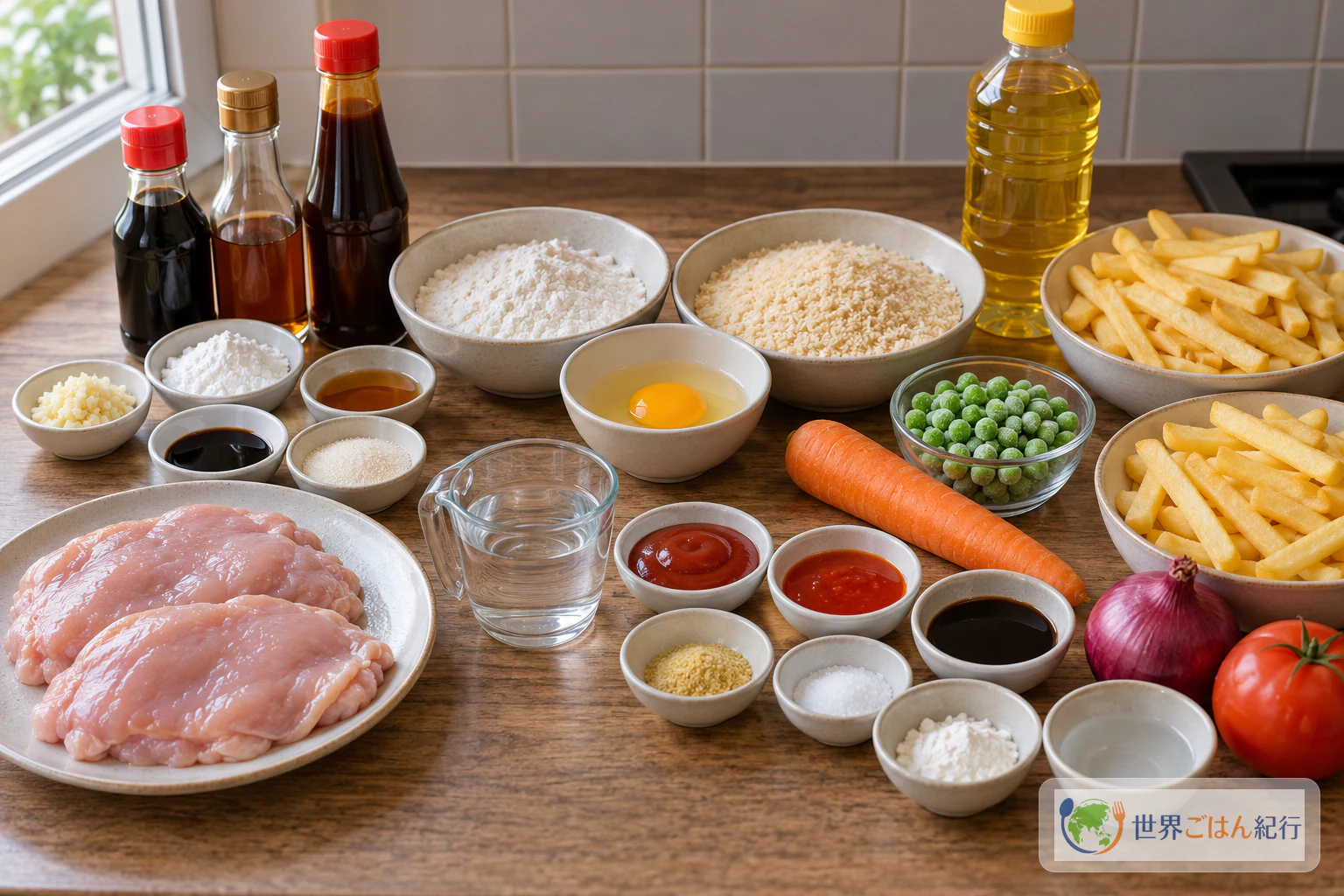
Soy sauce, cornflour and Worcestershire sauce each appear twice, for different stages. Measure each portion separately.
Equipment
- A bowl with a lid or cover, for marinating
- Three shallow plates, for flour, egg and breadcrumbs
- A wide skillet for frying the chicken
- A skillet for the gravy
- Tongs
- A food thermometer
- A paper-lined tray or plate, for draining the fries
- A small cup, for mixing the cornflour slurry
- Separate plates and utensils for raw chicken and cooked food
Choosing and Substituting: The Chicken Cut and the Red Condiments
The chicken. A chicken chop here is a whole boneless chicken leg quarter, a large single piece. Not every supermarket sells leg quarters boned out, so ask a butcher to debone two for you.
Tomato sauce. In this plate, tomato sauce means the bottled red tomato ketchup-style condiment. Chilli sauce varies widely in heat and sweetness from brand to brand, so taste yours before cooking and keep the amount as listed for a first try.
Cornflour and chicken bouillon. The cornflour used in both the marinade and the slurry is the fine white thickening starch sold as cornstarch in the US. Chicken bouillon products differ in saltiness, so taste the gravy before deciding on the final salt.
Fries. Choose fresh-cut or frozen fries as you prefer; for frozen fries, follow the cooking directions on the package.
This dish contains wheat (flour, breadcrumbs), egg, soy (soy sauce), sesame (sesame oil) and shellfish (oyster sauce). Some Worcestershire sauces contain anchovies, so check the label if anyone avoids fish. Check the labels of chicken bouillon, chilli sauce and other processed products as well. Keep raw chicken, its bowl and its utensils apart from cooked food and serving plates, and never add leftover marinade to the gravy.
Method: Marinate, Coat, Fry, Then Build the Gravy
The chicken is marinated, coated and fried first, then the fries, then the gravy. The only fixed time is the 15-minute marinade; everything else is judged by what you see in the pan and by a food thermometer.
Fixing Problems: Crust, Doneness and Gravy
| Problem | What to check | What to do |
|---|---|---|
| The coating comes away from the chicken | Bare spots after flour or egg; loose breadcrumbs | Make sure each layer covers the whole surface, and press the breadcrumbs firmly onto both sides before frying |
| The crust is browning before the chicken is done | Heat too high for the thickness of the chop | Lower the heat a little and keep frying, turning, until the thermometer reads 165°F (73.9°C) in the thickest part |
| The crust turns soft at the table | Gravy poured on long before eating | Spoon the gravy over just before serving. If you prefer, serve the gravy in a separate bowl so each person adds it |
| The gravy is thin | Slurry not cooked enough | Keep stirring it over the heat until it thickens |
| The gravy is too salty or too hot | Saltiness of the bouillon and soy sauce; heat of the chilli sauce | Taste before adding the salt; with a hot chilli sauce, start with less next time |
Serving and Leftovers
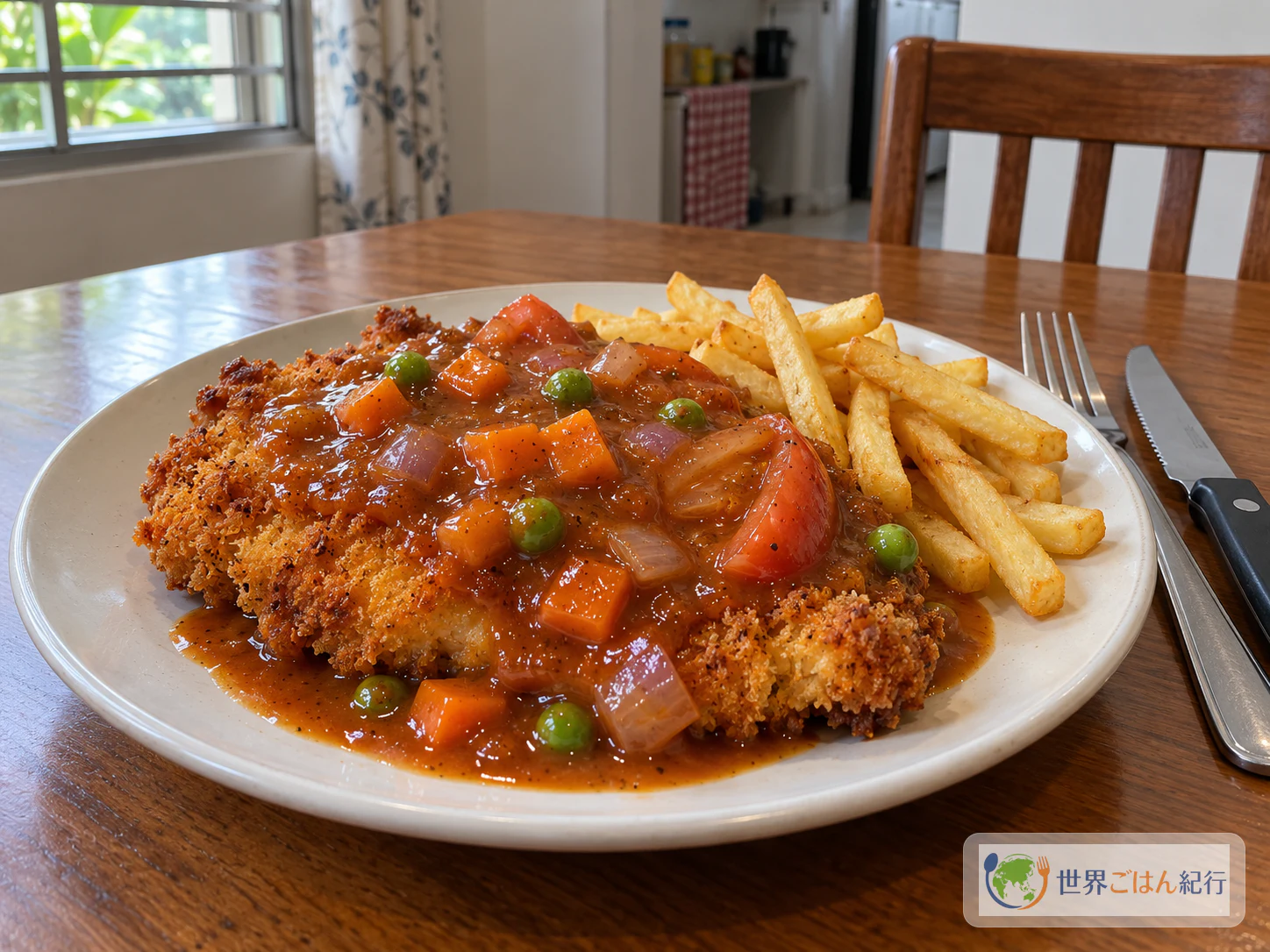
Chicken chop is served as one complete plate per person: the chicken under its gravy, fries alongside and Worcestershire sauce on the table for anyone who wants more tang.
Refrigerate leftovers within two hours in shallow covered containers. Use refrigerated leftovers within 3–4 days, or freeze them for 3–4 months. Reheat the chicken until it reaches 165°F (73.9°C), and reheat the gravy to a rolling boil. If you can, store the chicken and gravy in separate containers; the crust will not be as crisp as when freshly fried.
Other Malaysian Chicken Chops
Chicken chop in Malaysia is a family of dishes rather than one fixed formula. The versions below are separate recipes; none of their ingredients or timings are part of the recipe above.
- Brown gravy with potato and peas. Ethan Wong, who grew up in Kuala Lumpur eating Hainanese chicken chop at Yut Kee, created his own home version from that memory. It uses a brown gravy with tomato, potato, peas and onion, and deep-fried chicken. It is his personal recipe, not Yut Kee's.
- Five-spice marinade with fried potatoes and mixed vegetables. A Hainanese chicken chop recipe shared by Dennis on Nanyang Kitchen marinates deboned chicken legs with five-spice powder, and serves them with a ketchup and Worcestershire sauce, fried potatoes and mixed vegetables. The site presents it as a localized East-West dish.
- Grilled and unbreaded. ThoKoh Makan notes that Malaysian chicken chops can be grilled or deep-fried, breaded or unbreaded. Their garlic chicken chop follows a Petaling Jaya kopitiam style: grilled without a coating, with garlic sauce, coleslaw and mashed potatoes.
- Black pepper or mushroom sauce. Farah J. Eats gives a two-serving recipe for breaded chicken with either a mushroom sauce or a black-pepper sauce, and names coleslaw and crinkle fries as common sides.
- A different cut. The same author prefers a whole boneless leg quarter but offers boneless thigh or a flattened breast as smaller alternatives. If you switch cuts, treat it as a different version rather than a direct swap in the recipe above.
Frequently Asked Questions
Is chicken chop a dish from Hainan Island?
The name alone does not make it one. The Star and the Penang Hainan Association both describe Hainanese cooks in Malaya adapting Western-style dishes learned in British households with local flavors. Neither identifies an inventor or an exact date.
Is it the same as Hainanese chicken rice?
No. Chicken rice is poached chicken with rice. Chicken chop, as made here, is breaded fried chicken with a vegetable gravy and fries. Both are linked to the Hainanese community in Malaysia, which is why the names overlap.
Can I grill the chicken instead?
Grilled chicken chops exist in Malaysia, often without a coating, but this recipe is built around breading and frying. A grilled chop uses its own marinade and sauce, so cook it as a separate recipe rather than changing only the cooking method here.
What does the gravy taste like?
It is a sweet-savory tomato gravy made from tomato sauce, chilli sauce, soy sauce and Worcestershire sauce, simmered with carrot, red onion, peas and tomato. Its heat depends on the chilli sauce you use. Other versions use a brown gravy, black pepper sauce or mushroom sauce instead.
Why are there no frying times or oil temperatures?
Ian Lau's recipe in The Star gives a time only for the 15-minute marinade. It says to fry the chicken over medium heat until golden and crisp, and gives no oil temperature, frying time or chicken weight. The 165°F (73.9°C) internal temperature in this article is general poultry-safety guidance from the USDA, added so you can confirm doneness; it is not part of the recipe.
Can I bread the chicken ahead of time?
The recipe does not include a make-ahead step, so this article does not give a holding time for coated raw chicken. Coat the chicken just before frying.
Should I use fresh-cut or frozen fries?
The recipe calls for two portions of French fries, about 100 g per serving, fried and lightly salted, without saying whether they are fresh-cut or frozen. Use either; follow the package directions for frozen fries.
Sources
- Ian Lau, "How colonial history shaped a kopitiam classic," The Star (Star Media Group), 2026-01-10. The base two-serving recipe (marinade, breading, tomato vegetable gravy, French fries and Worcestershire at serving), the history of Hainanese cooks in Malaya adapting Western-style breaded chops, sourcing boneless leg quarters from a butcher, and the note that Worcestershire sauce can contain anchovies. https://www.thestar.com.my/food/food-news/2026/01/10/how-colonial-history-shaped-a-kopitiam-classic
- Opalyn Mok, "The story behind the Hainanese legacy of chicken rice, chicken chop and 'kopi-o' in Malaysia," Malay Mail, 2026-06-28. Comments from the Penang Hainan Association on Hainanese migrant cooks working for British and Australian employers in Penang and adapting recipes with local flavors, including chicken chop. https://www.malaymail.com/news/life/2026/06/28/the-story-behind-the-hainanese-legacy-of-chicken-rice-chicken-chop-and-kopi-o-in-malaysia/225333
- Dennis 何詠赞, "海南鸡扒 Hainanese Chicken Chop," Nanyang Kitchen. A separate version with a five-spice marinade, tomato and Worcestershire sauce, fried potatoes and mixed vegetables. https://www.nanyangkitchen.co/recipe/hainanese-chicken-chop/
- Ethan Wong, "Hainanese Chicken Chop Recipe 海南鸡扒秘方," 3thanWong. A personal home version inspired by Yut Kee, with brown gravy, tomato, potato, peas and onion. https://www.3thanwong.com/hainanese-chicken-chop-recipe/
- Max and Ming, "Garlic chicken chop [Recipe]," ThoKoh Makan. The range of Malaysian chicken chops (grilled or fried, breaded or unbreaded) and a grilled, unbreaded Petaling Jaya kopitiam-style version with garlic sauce. https://thokohmakan.com/garlic-chicken-chop-recipe/
- Farah J., "Malaysian Chicken Chop," Farah J. Eats. A separate breaded version with mushroom and black-pepper sauces, coleslaw and fries as sides, and alternative chicken cuts. https://farahjeats.com/recipe/malaysian-chicken-chop/
- United States Department of Agriculture, Food Safety and Inspection Service, "Leftovers and Food Safety." Poultry cooked to 165°F (73.9°C) measured with a food thermometer; refrigerating leftovers within two hours; using them within 3–4 days or freezing for 3–4 months; reheating to 165°F and bringing gravies to a rolling boil. https://www.fsis.usda.gov/food-safety/safe-food-handling-and-preparation/food-safety-basics/leftovers-and-food-safety