Cimpa Unung-Unung: A Rice-Flour Shell Around Palm Sugar and Coconut
Two flours in equal amounts, a dark filling of palm sugar cooked down with grated coconut, and a dough that covers the filling completely before it goes into a Singkut leaf. The dough water and the filling water are separate. Keep them apart.
Elisabeth Ginting posted this cimpa on Cookpad Indonesia under the title "Cimpa Unung-Unung (Khas Karo)." In the introduction to the post, they say they made it using recipe knowledge learned from their mother. They also write that they would like to eat it in the rainy season with sweet tea or coffee. That is one cook's note about how they enjoy it, not a description of a regional custom. It is still a helpful picture of what this is: a sweet, steamed parcel to have alongside tea or coffee.
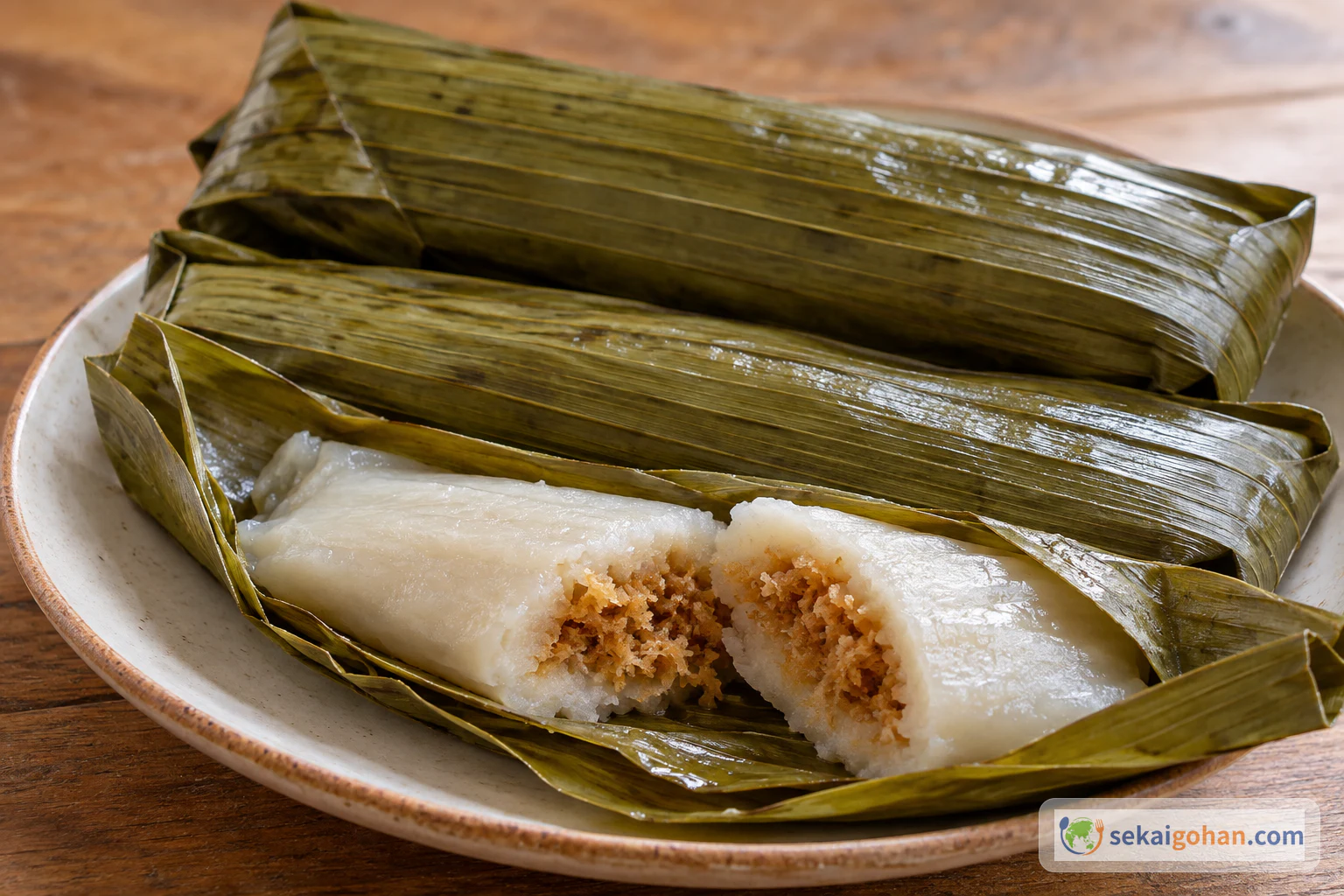
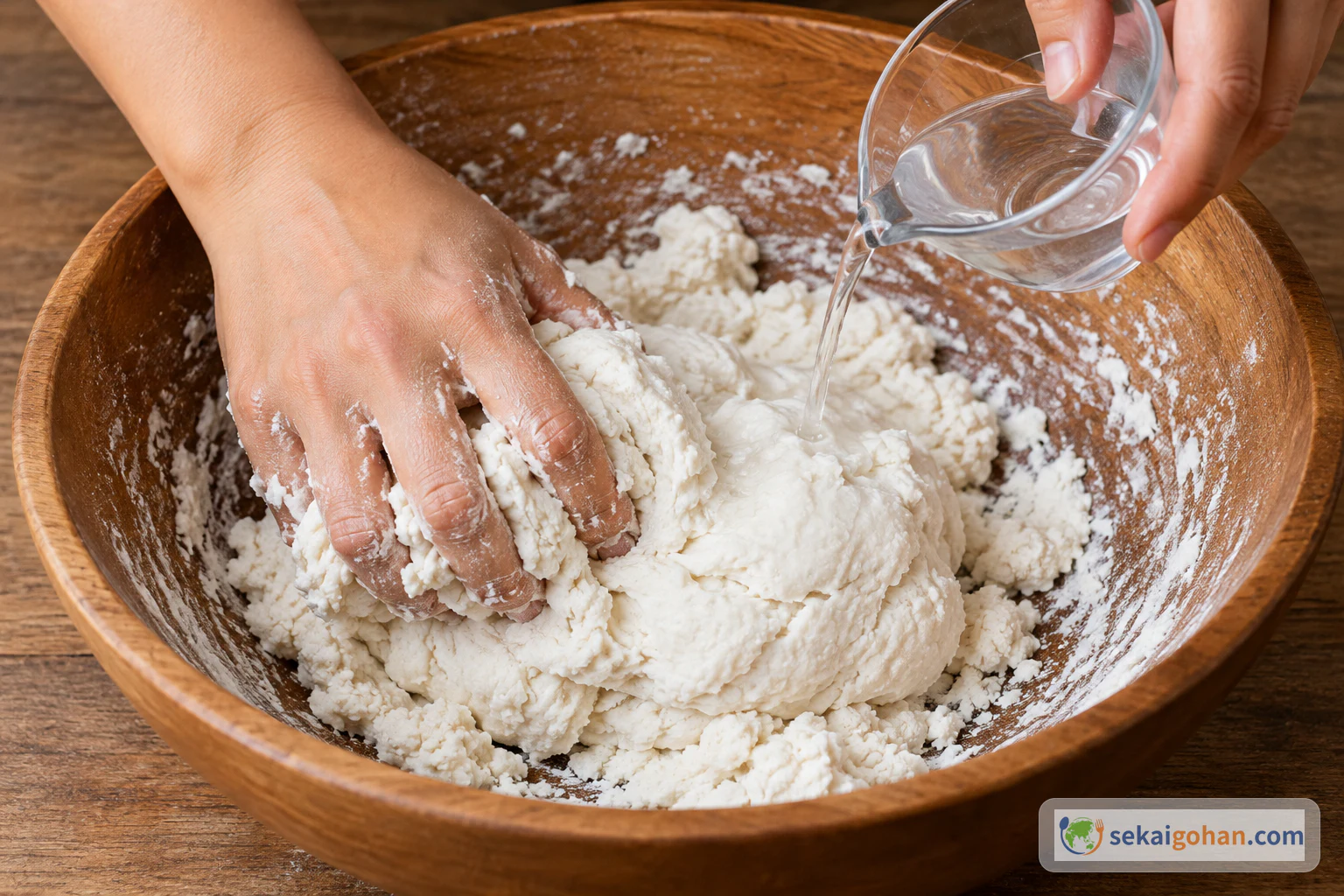
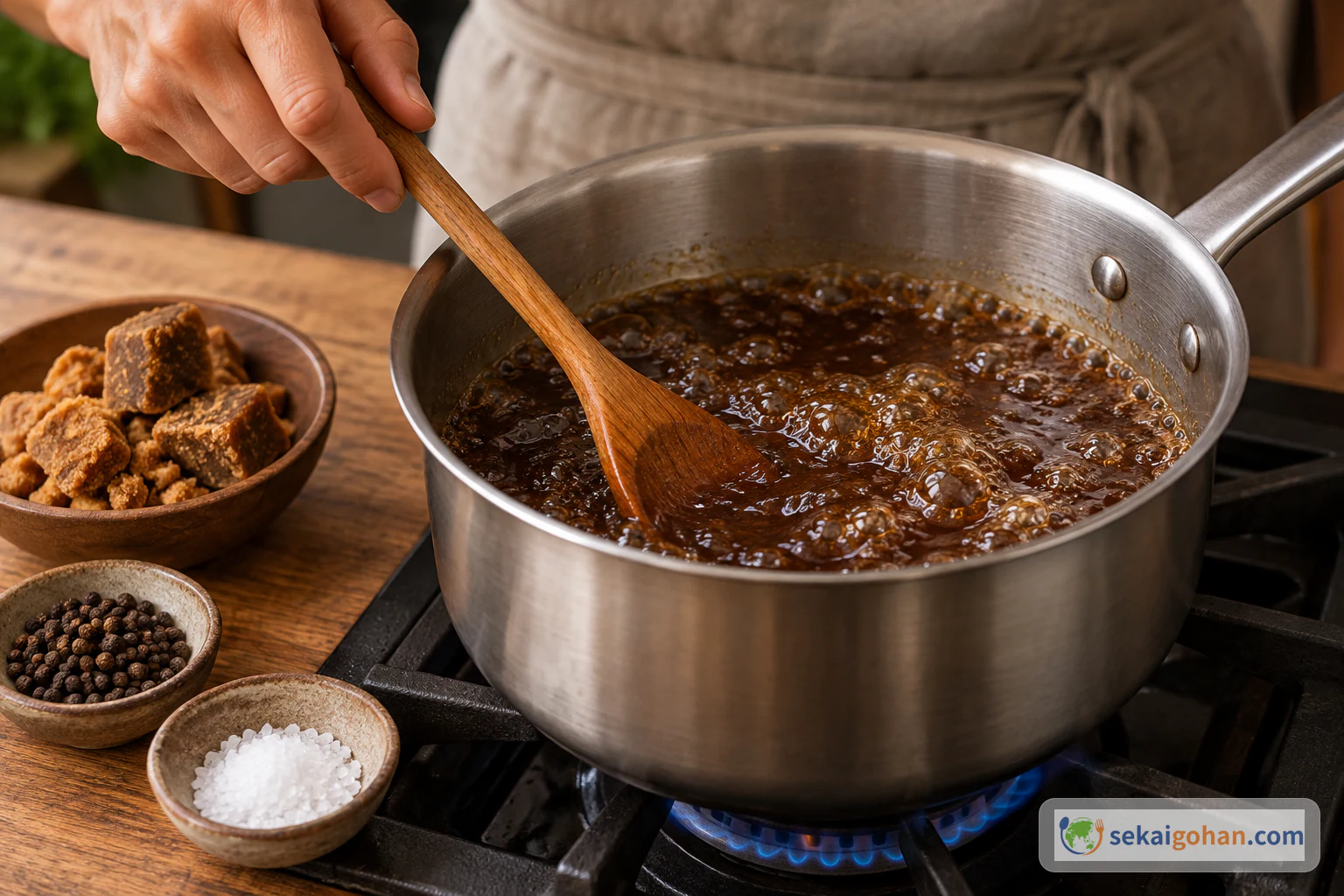
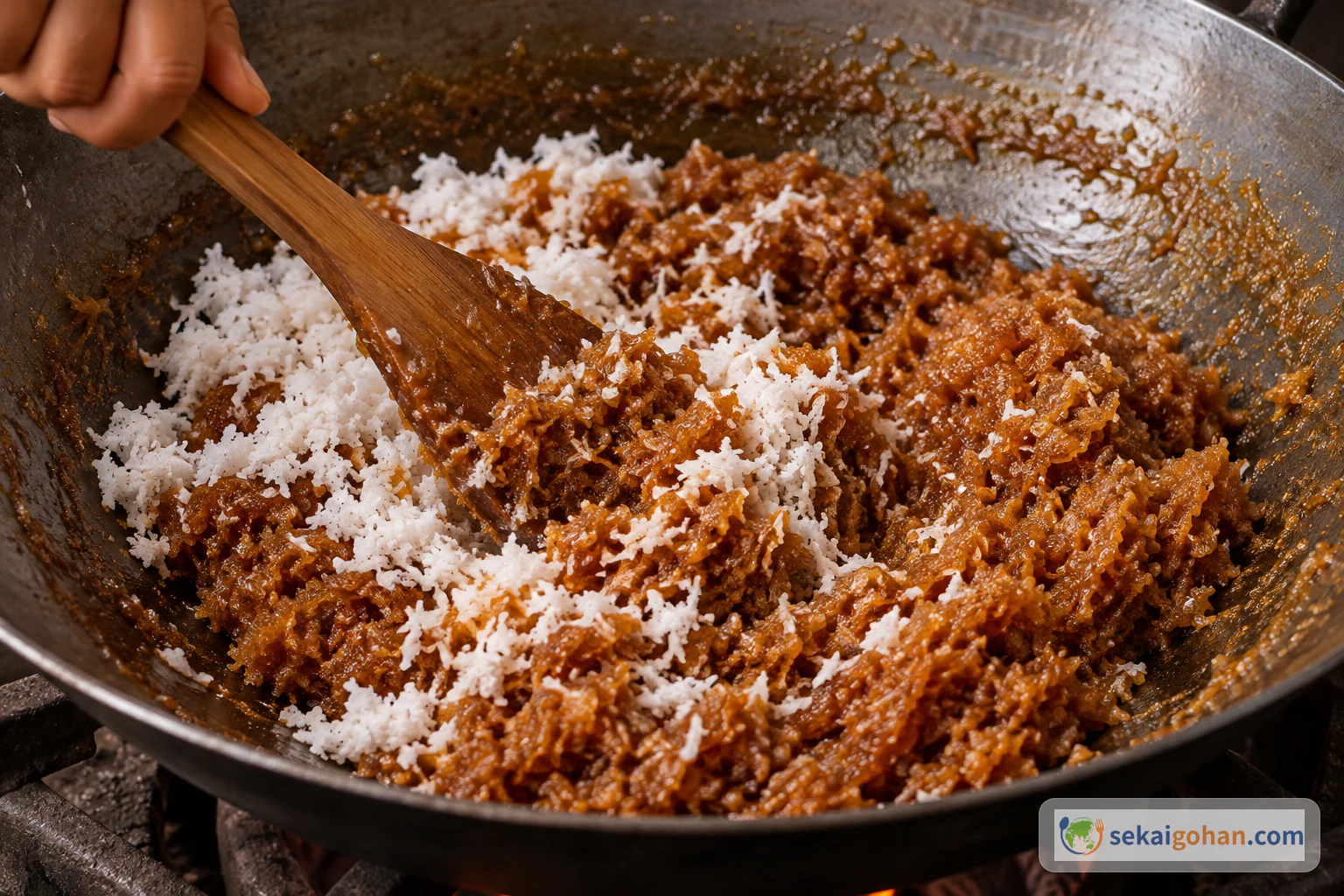
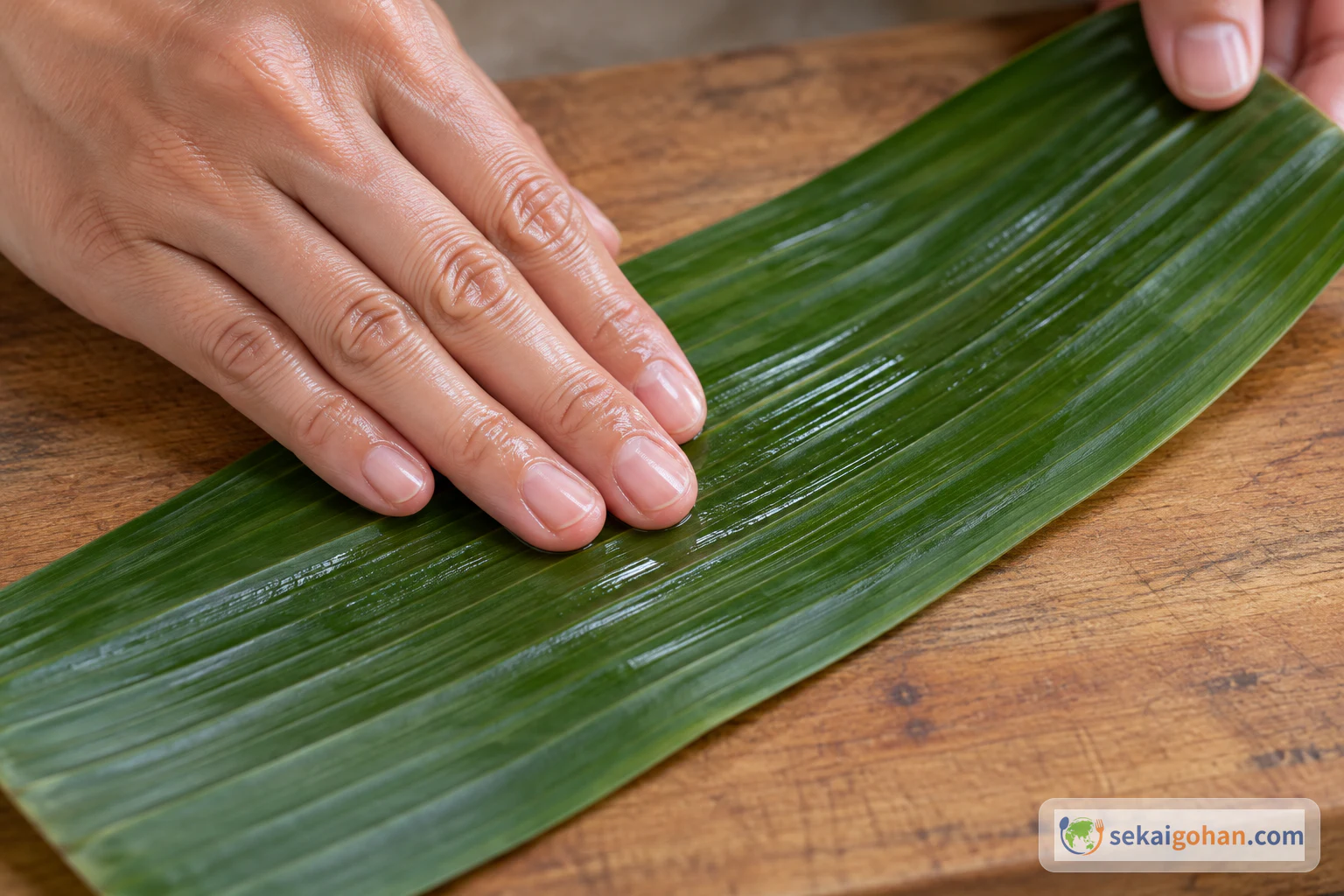
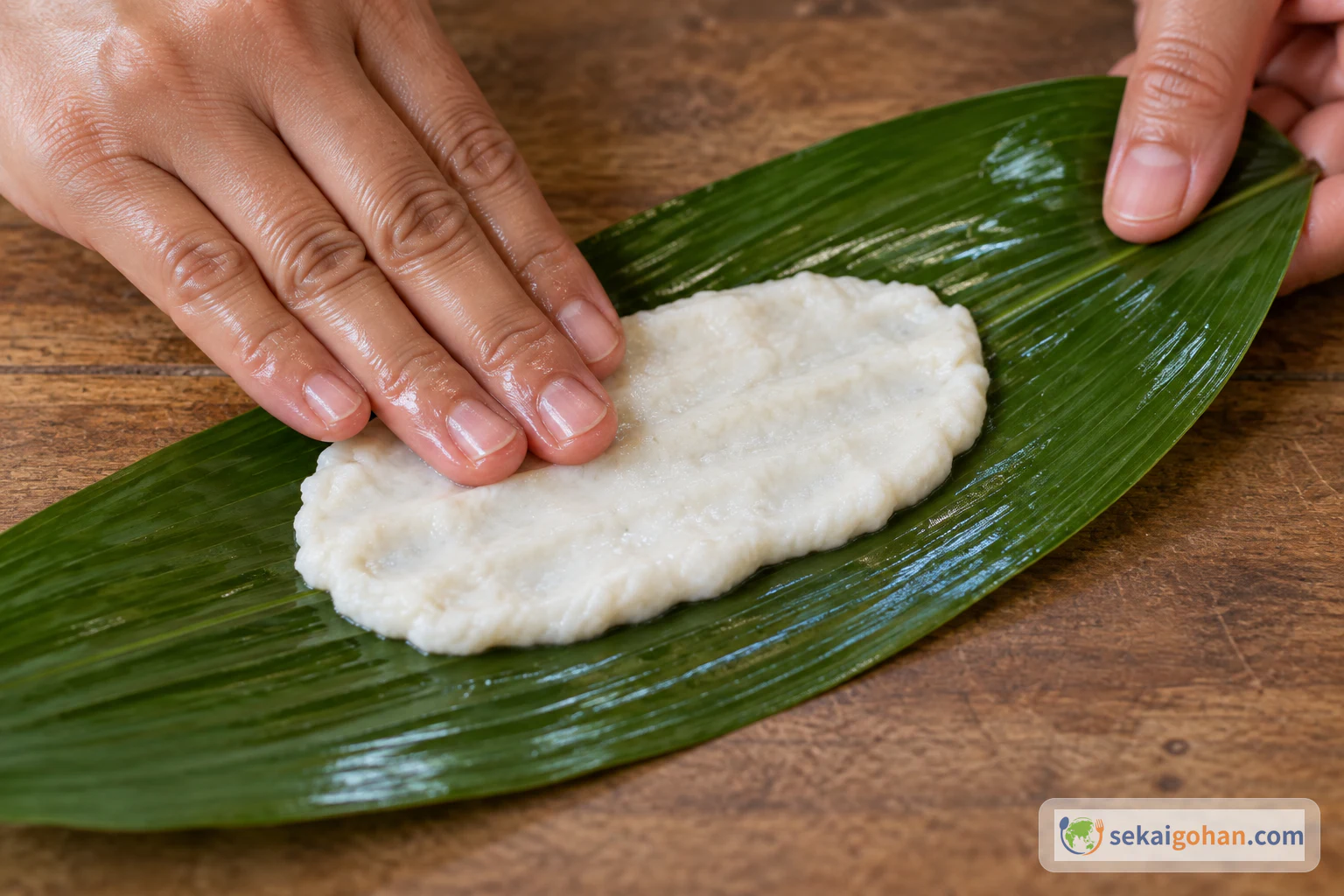
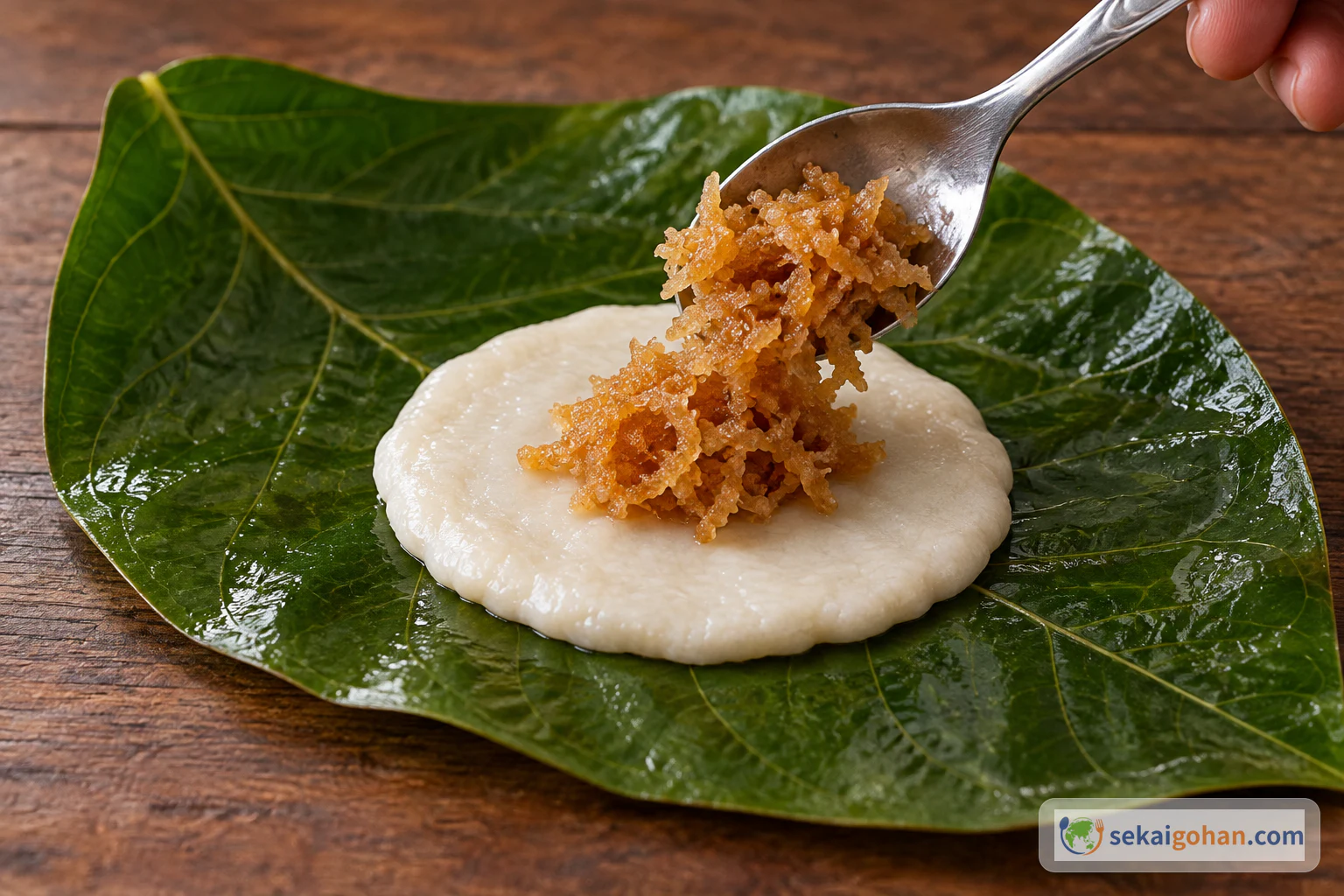
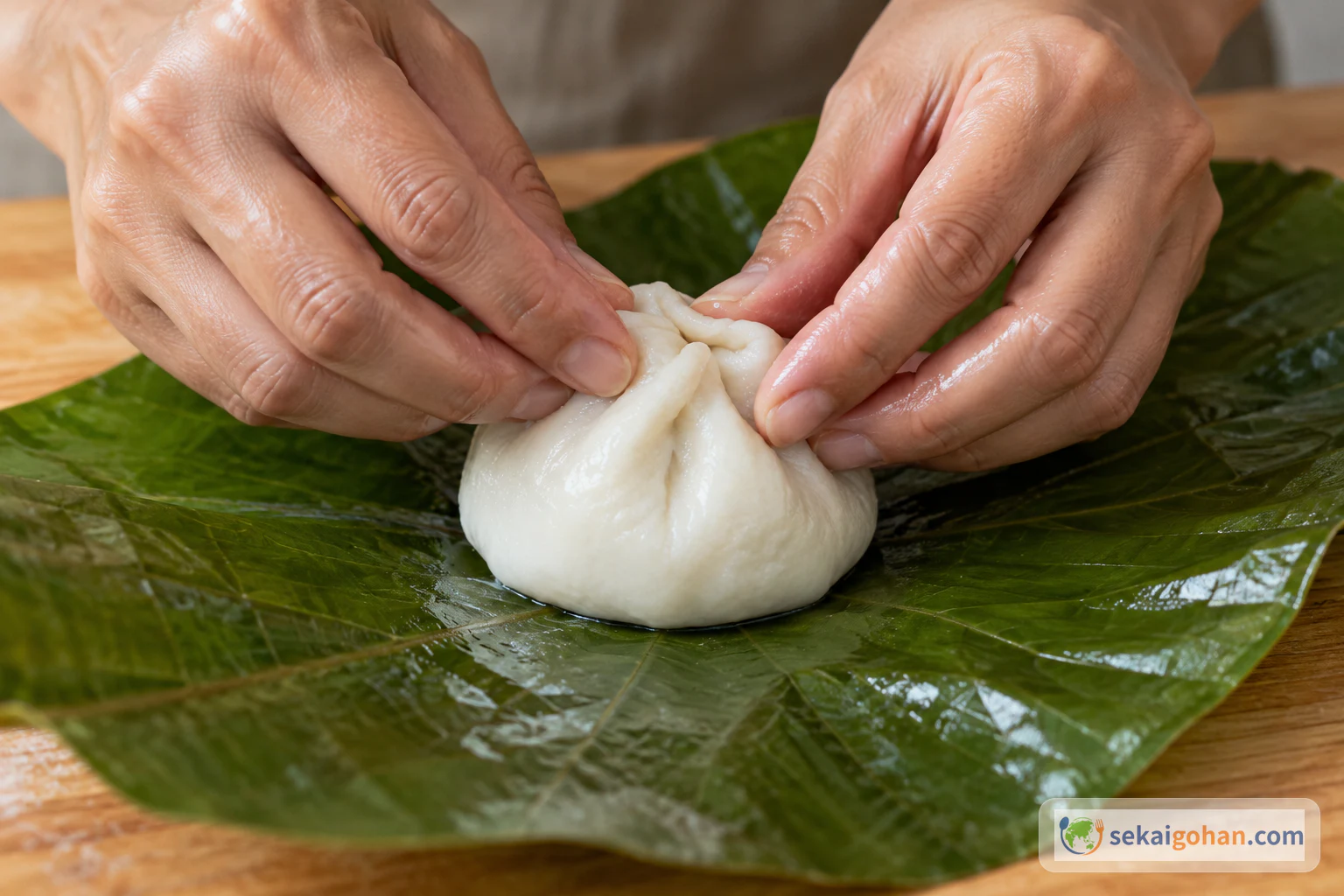
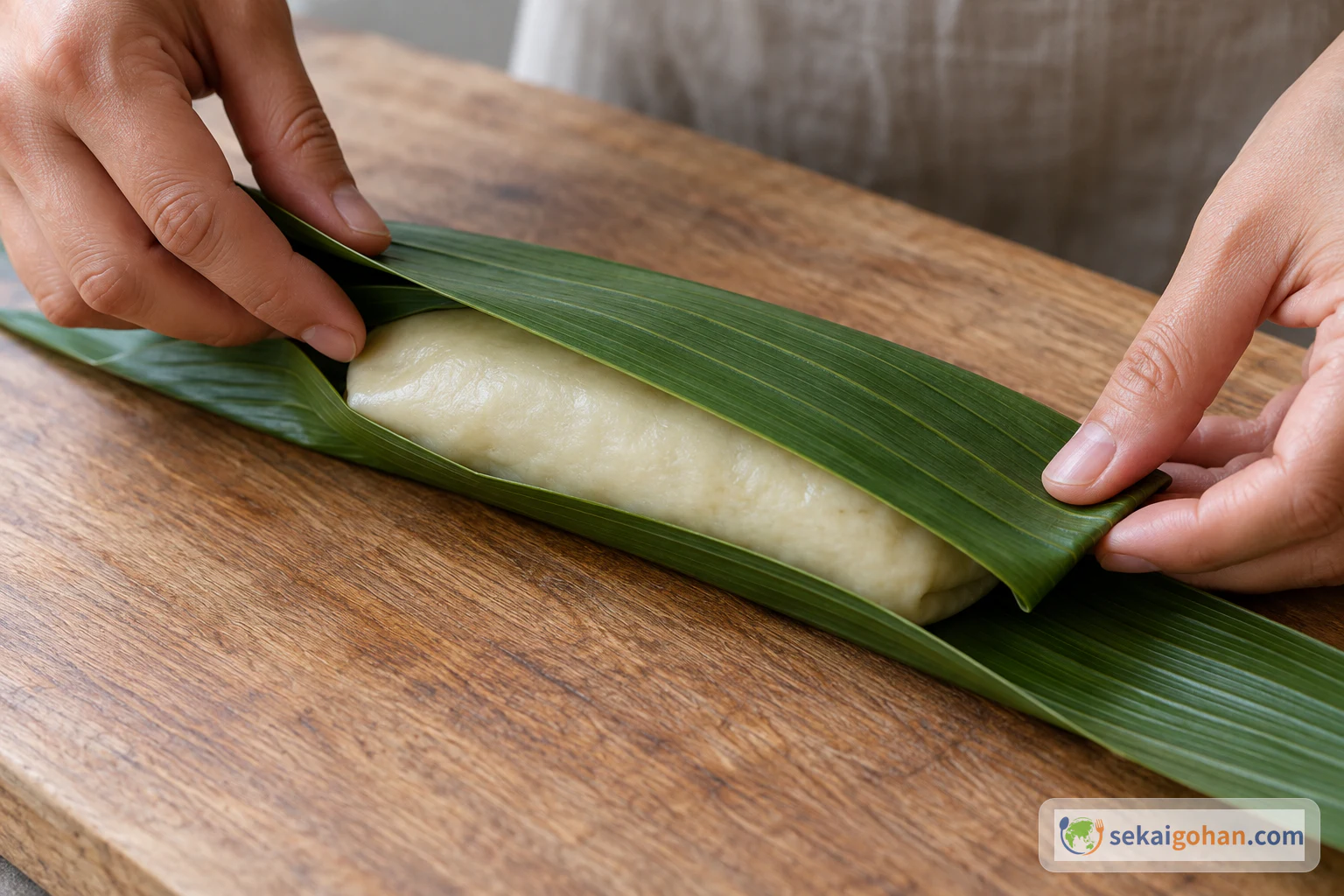
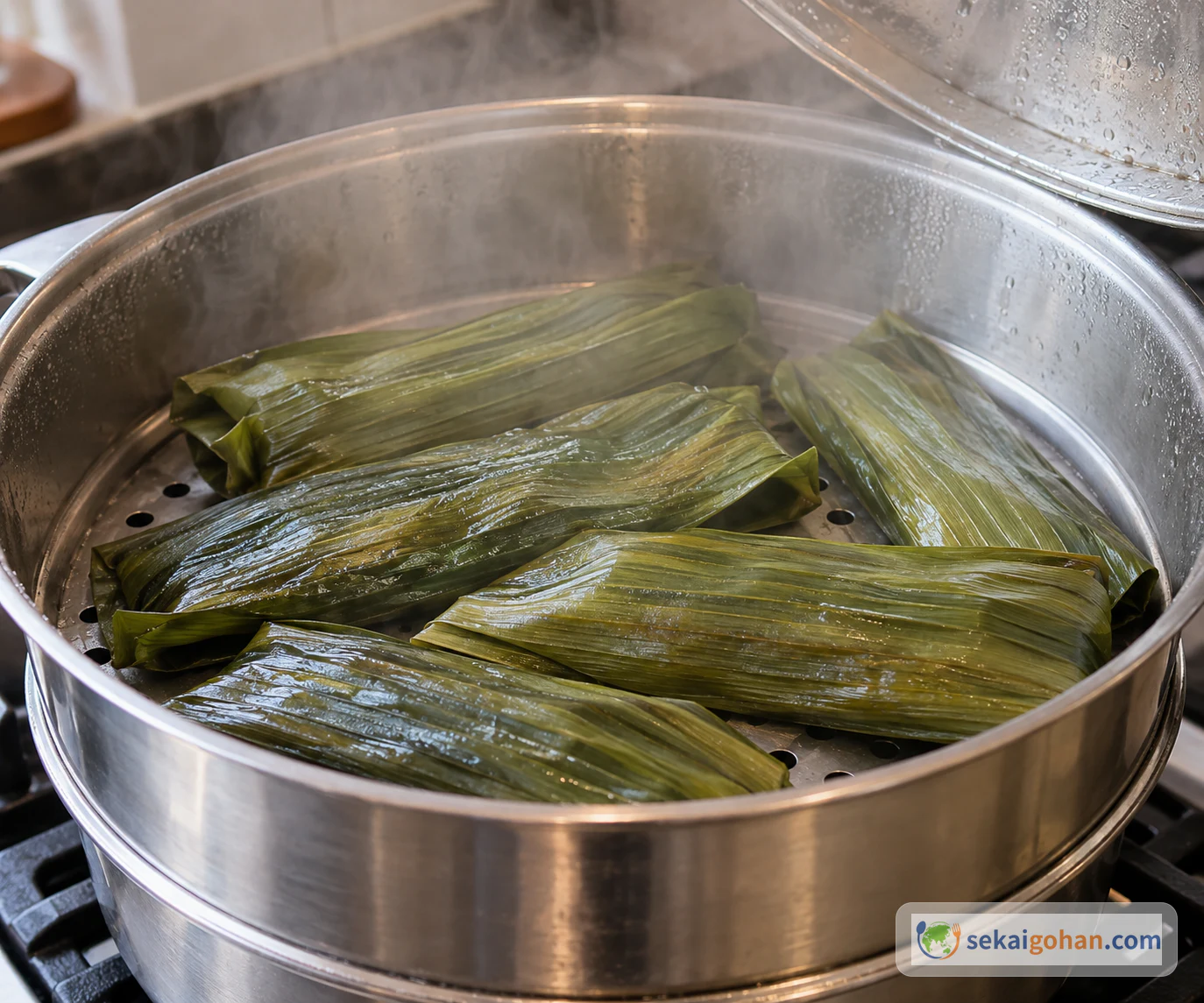
The structure is simple. Glutinous rice flour and regular rice flour, 350 g each, are brought together with a pinch of salt and water added a little at a time. Palm sugar (gula merah) is boiled in 500 ml of water with pepper and salt, and then grated coconut is stirred in until the mixture turns dry. A small portion of dough is flattened on an oiled Singkut leaf, filled, closed over completely, wrapped in the leaf and steamed for about 20 minutes.
This article covers only this one posted version of Cimpa Unung-Unung. Sekai Gohan has not kitchen-tested this recipe as a whole. It is not a standard recipe for cimpa as a whole, and it does not stand in for other kinds of cimpa or other households' versions. For more dishes from the same country, see Indonesian recipes.
The 500 ml of water belongs to the filling. The dough water has no fixed amount: add it little by little until the dough comes together and does not run. Do not pour the 500 ml into the flour.
One Home Version, Shared by Elisabeth Ginting
The recipe here comes from a single home-cooking post. On Cookpad, Elisabeth Ginting's profile shows Sumatera Utara (North Sumatra), and the post's introduction describes the recipe as knowledge passed down from their mother. That is the poster's own account. It does not make them a professional cook, an inventor of the dish, or the keeper of a single correct recipe, and it is not presented here as a family history checked by anyone else.
The post lists 350 g glutinous rice flour, 350 g rice flour, 750 g gula merah, half a coconut, grated, 25 Singkut leaves, salt and lada (pepper) to taste, 500 ml water, oil for greasing the leaves, and 1 ruas of ginger as an optional ingredient. This article leaves the optional ginger out. Everything else follows the post's amounts and order.
The method in the post ends with a visual note: steam for about 20 minutes, and the leaves will look as though they have gone from green to brown. That is the cook's own visual cue at the stove. It is not a measured doneness test or a food-safety check.
The Singkut leaf as a wrapper
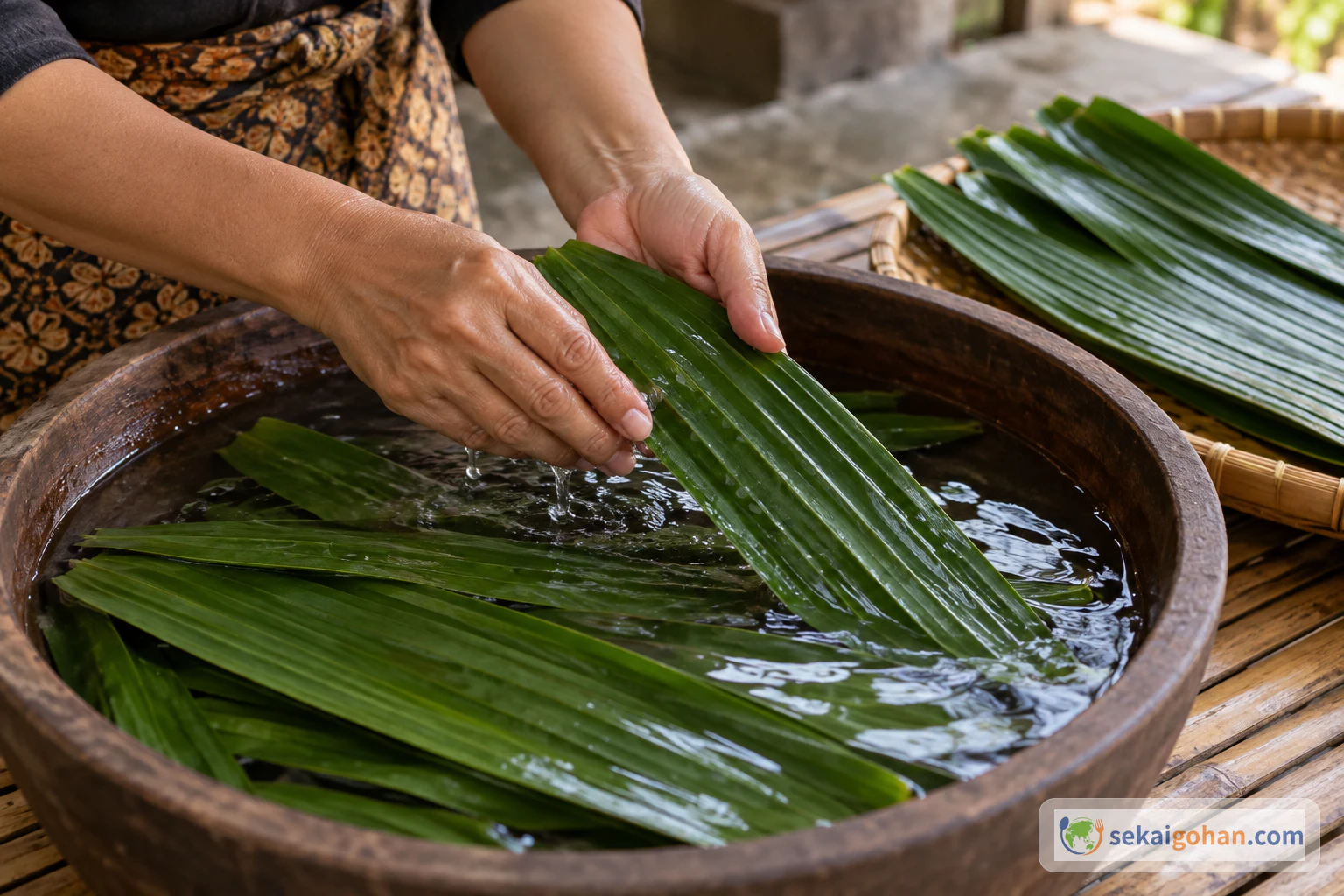
Singkut is the leaf this version calls for (daun singkut, also written Bulung Singkut). A 2018 ethnobotanical study by Marina Silalahi and Nisyawati, on plants in the home gardens of the Batak Karo sub-ethnic group in North Sumatra, records Singkut as a wrapper plant. The paper names it Molineria latifolia and lists Curculigo latifolia as a synonym. It describes the Batak Karo using Singkut leaves to wrap cimpa, which the paper calls a glutinous-rice cuisine. This article uses the paper only for that wrapping use. The plant names are given as the paper gives them, not as a current classification.
In the finished photo on the Cookpad post, the parcels look elongated, relatively flat and dark green, with visible lengthwise ribs. The post does not explain the exact fold, whether the parcels are tied, or their size, so this article does not describe any of those.
Other Cimpa Recipes, Kept Separate
Other written recipes for cimpa differ noticeably from this one. A 2023 detikSumut article by Amanda Amelia uses a dough of glutinous rice flour with coconut milk and salt. Its filling uses a young coconut, sliced palm sugar, pandan leaves, salt and a smaller amount of water. The parcels are wrapped lengthwise, tied at both ends and steamed for about 30 minutes. That article also suggests banana leaves for its own recipe when Singkut is not available, and its method adds granulated sugar that does not appear in its ingredient list.
None of those elements are carried over here. Coconut milk, pandan, extra sugar, banana leaves, tied ends and the 30-minute steaming time all belong to that separate recipe. The comparison shows that recipes differ. It does not show how cimpa varies across regions or households in general.
Ingredients: Two Rice Flours, Palm Sugar and Coconut
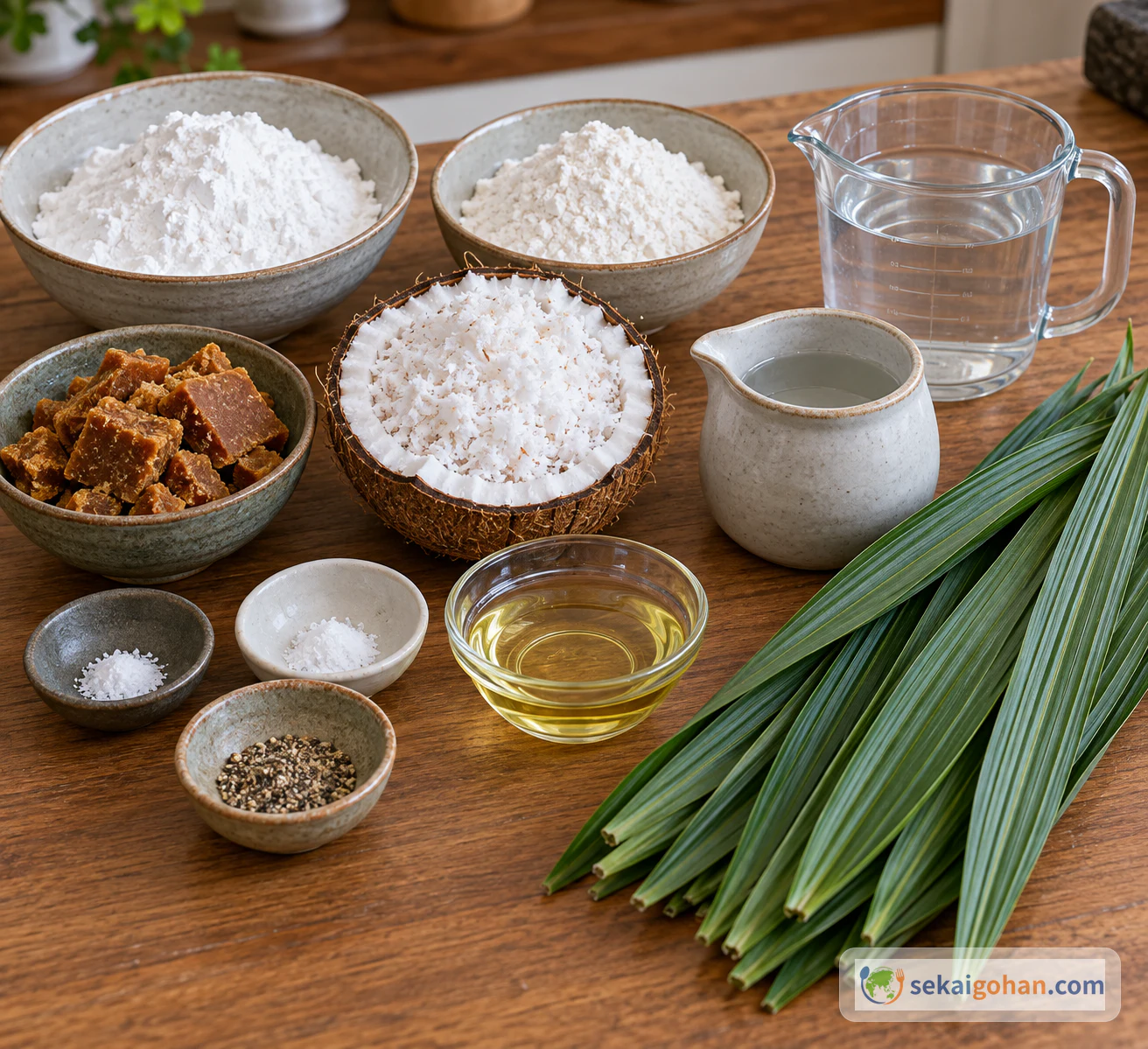
The salt is used twice, as a separate pinch in the dough and in the filling. The 500 ml of water goes only into the filling.
Equipment
- A bowl for mixing the dough
- A pot for cooking the filling
- A spoon for stirring and placing the filling
- A steamer
Choosing and Substituting
- Palm sugar: Use gula merah.
- Coconut: Grate half a coconut. Stir it into the filling until the liquid has reduced and the mixture looks dry.
- Pepper: Use lada (pepper) to taste.
- Oil: Use a little oil to coat each leaf lightly.
- Ginger: Left out of this version.
- Leaves: Use 25 Singkut leaves for wrapping. This is a leaf count, not the number of finished cimpa.
When Something Looks Off
| What you see | Where to look | What to do |
|---|---|---|
| The dough runs or spreads | Too much water went in at once | Next time, add the water in smaller amounts and stop as soon as the dough holds together |
| The dough will not come together | Not enough water yet | Add a little more water and keep mixing |
| The filling is still wet | The liquid has not reduced enough | Keep stirring over the heat until the mixture looks dry |
| Filling shows through the dough | The dough was not closed all the way | Bring the dough over the filling until none is exposed, then wrap in the leaf |
| Someone poured the 500 ml into the flour | Filling water and dough water got mixed up | The 500 ml is for the palm sugar. The dough takes only gradual, unmeasured water |
What This Version Leaves Open
The Cookpad post is clear about its main amounts, but some things are not stated. This article leaves them open instead of guessing:
- Dough water: No amount. Only the method (a little at a time) and the result (holds together, does not run).
- Coconut: Half a coconut, grated. No weight, size or maturity.
- Pepper and oil: No type or amount.
- Shape and size: About 1.5 sdm of dough per piece. No finished dimensions, thickness or amount of filling per piece.
- Wrapping: No fold, tie or fastener is described.
- Yield: Not given. The 25 leaves are not a count of finished pieces.
- Times: Only the steaming time of about 20 minutes. No prep, shaping or total time.
- Storage and reheating: Not covered, so no guidance is given here.
The post also does not discuss the name's origin, the history of the dish, festivals or how widely it is made, so this article does not either.
Frequently Asked Questions
How much water goes into the dough?
No amount is given. Elisabeth Ginting's method says to add water little by little until the dough comes together and is no longer runny. The 500 ml in the ingredient list is for boiling the palm sugar in the filling. It is not the dough water, and the two should not be added together.
What does "1.5 sdm" mean?
Sdm is the Indonesian abbreviation for sendok makan, or tablespoon. The post gives roughly 1.5 sdm of dough per piece. It is kept in that form here and not converted into milliliters.
Can I use banana leaves instead of Singkut?
This version uses Singkut leaves and does not offer a substitute. The detikSumut article mentions banana leaves, but only for its own, different recipe, so that suggestion is not carried over to this one.
Do 25 leaves make 25 cimpa?
Not necessarily. The 25 leaves are the number listed for buying. The post does not say how many pieces the recipe makes.
Why is there no ginger?
The post lists 1 ruas of ginger as optional. This article leaves it out and follows the rest of the post as written.
How do I know when the cimpa are done?
The post gives about 20 minutes of steaming, along with the cook's note that the leaves will look as though they have turned from green to brown. That color change is a visual cue from the cook. It is not a measured test of doneness or a food-safety check.
Is this the standard cimpa recipe?
No. It is one home version of Cimpa Unung-Unung, shared by one cook who says they learned it from their mother. Other recipes, such as the detikSumut one, use different ingredients, wrapping and steaming times.
Sources
- Elisabeth Ginting (@elisabeth31), "Cimpa Unung-Unung (Khas Karo)," Cookpad Indonesia, 2020-04-28. The only recipe followed here: ingredients and amounts, the gradual dough water, the filling, shaping and wrapping, the steaming time of about 20 minutes and the leaf-color cue. Also the poster's own description of learning the recipe from their mother, the Sumatera Utara profile display, and the note about eating it in the rainy season with sweet tea or coffee. https://cookpad.com/id/resep/12313362
- Amanda Amelia, "Mengenal Cimpa Kue Khas Karo, Resep dan Cara Membuatnya," detikSumut, 2023-09-19. Used only to compare a different cimpa recipe: coconut-milk dough, pandan, wrapping lengthwise with tied ends, about 30 minutes of steaming, and a banana-leaf suggestion for that recipe. Nothing from it is used in the recipe above. https://www.detik.com/sumut/kuliner/d-6936750/mengenal-cimpa-kue-khas-karo-resep-dan-cara-membuatnya
- Marina Silalahi and Nisyawati, "The ethnobotanical study of edible and medicinal plants in the home garden of Batak Karo sub-ethnic in North Sumatra, Indonesia," Biodiversitas 19(1): 229–238, 2018. Used only for its record of Singkut (Molineria latifolia in the paper) as a wrapper and for the Batak Karo use of Singkut leaves to wrap cimpa. https://www.smujo.id/biodiv/article/download/2355/2145/3038 (DOI: https://doi.org/10.13057/biodiv/d190131)