
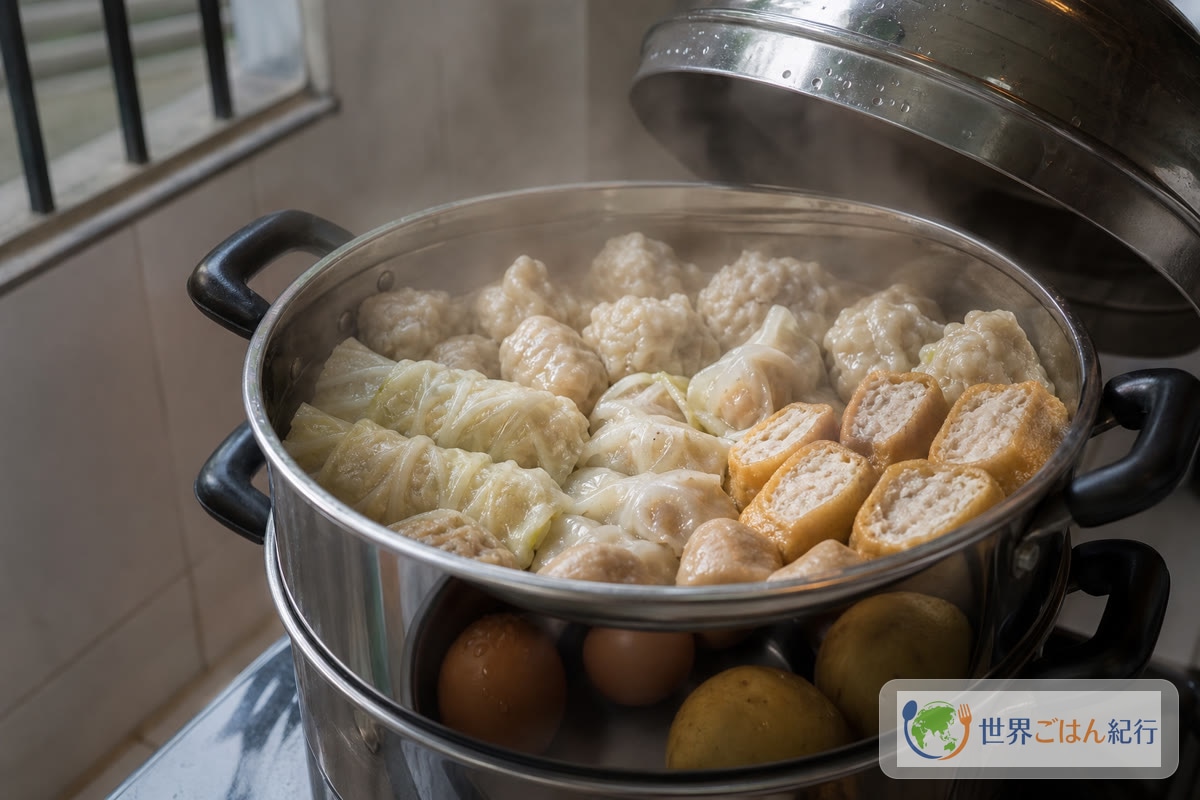
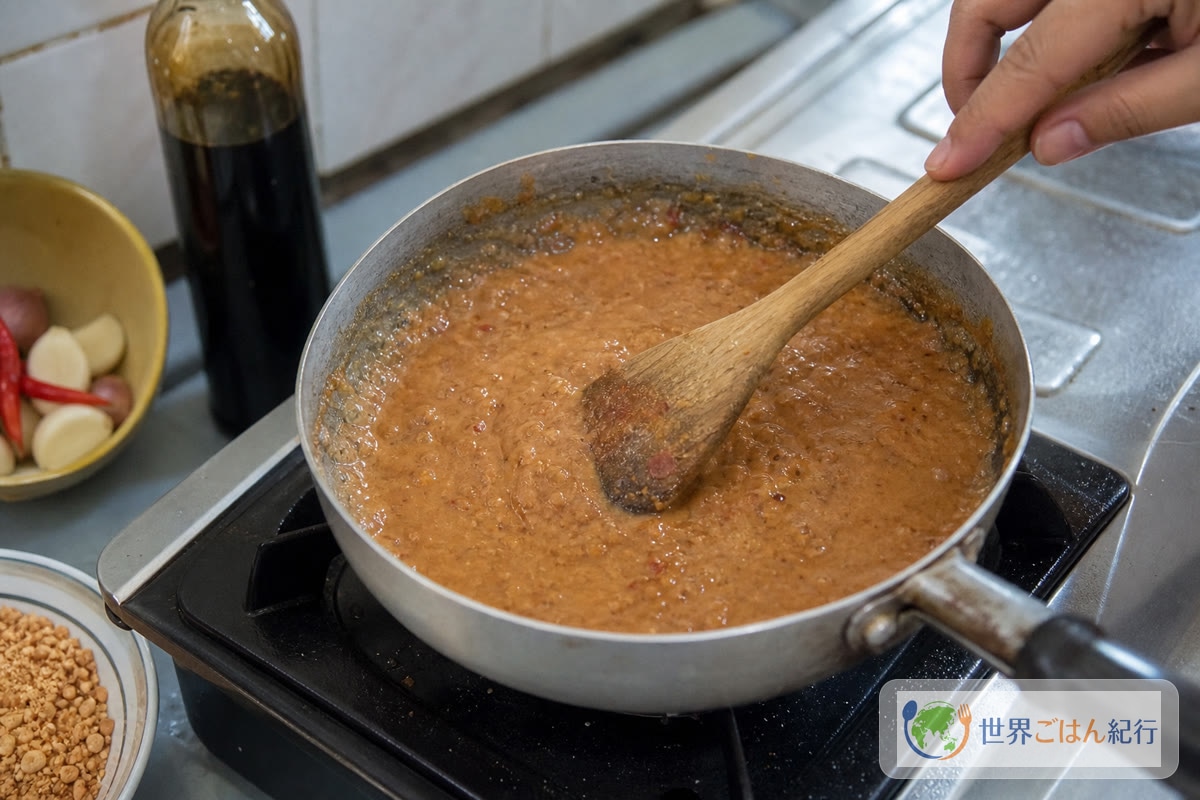
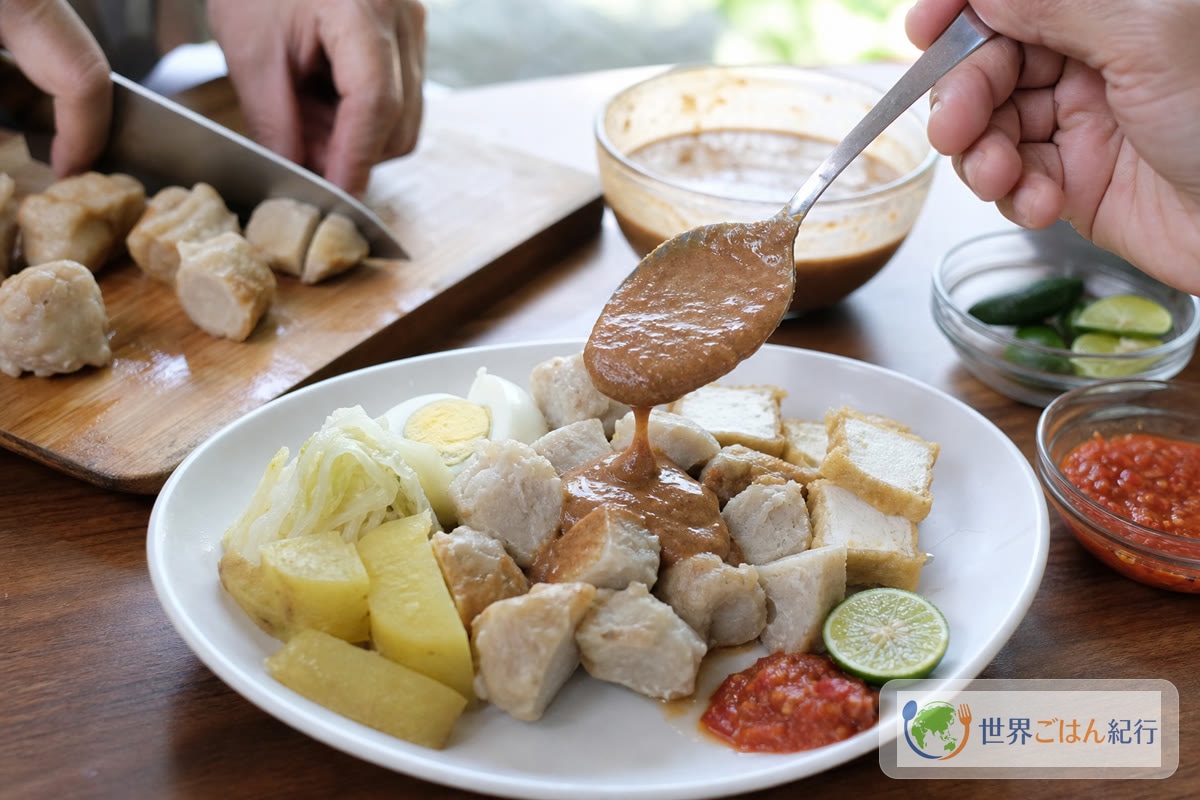
Lift the steamer lid and a street-stall plate rises out of the steam
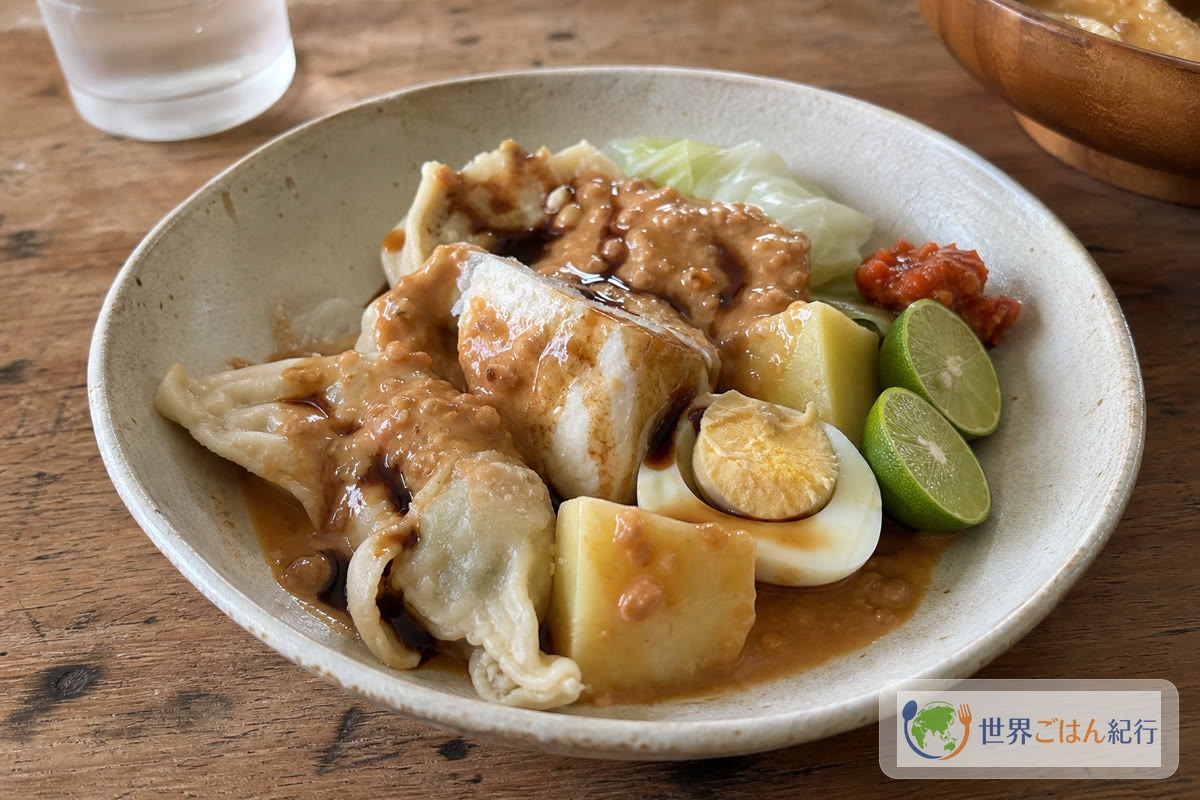
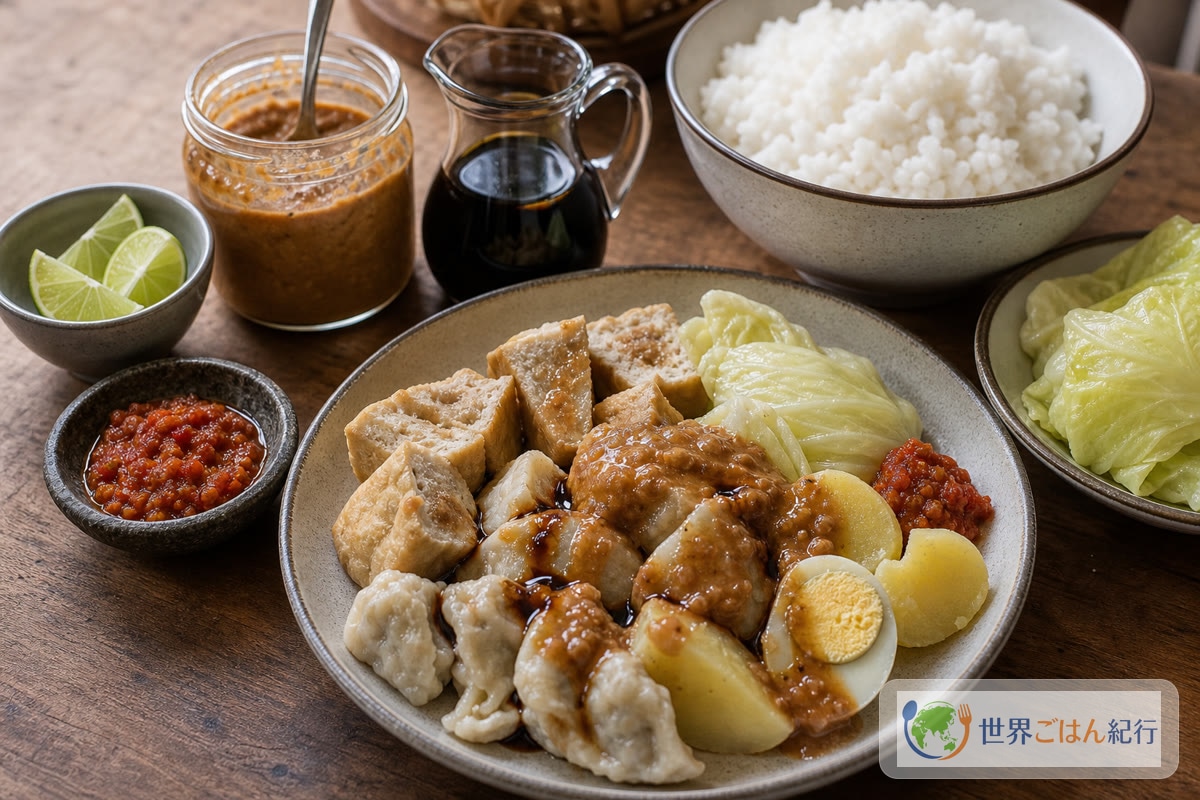
Slide the steamer lid aside and the steam smells of fish paste and tofu. If you are picturing Chinese-style shumai, the plate will look a little unexpected. It is not only small dumplings in wrappers. Steamed tofu, cabbage, potato and egg share the same plate, and then come a thick peanut sauce, kecap manis, sambal and lime.
Siomay (also spelled siomai) is a Chinese-style shumai that Indonesia has bent toward its own way of eating. The English-language entry for siomay describes it as Indonesian steamed fish dumplings, served with tofu and vegetables under peanut sauce. The Indonesian-language entry for siomai describes it as a specialty of West Java, especially Bandung, where a fish, chicken or shrimp mixture is blended with sago or tapioca and served with boiled egg, potato, bitter melon, cabbage, tofu and more.
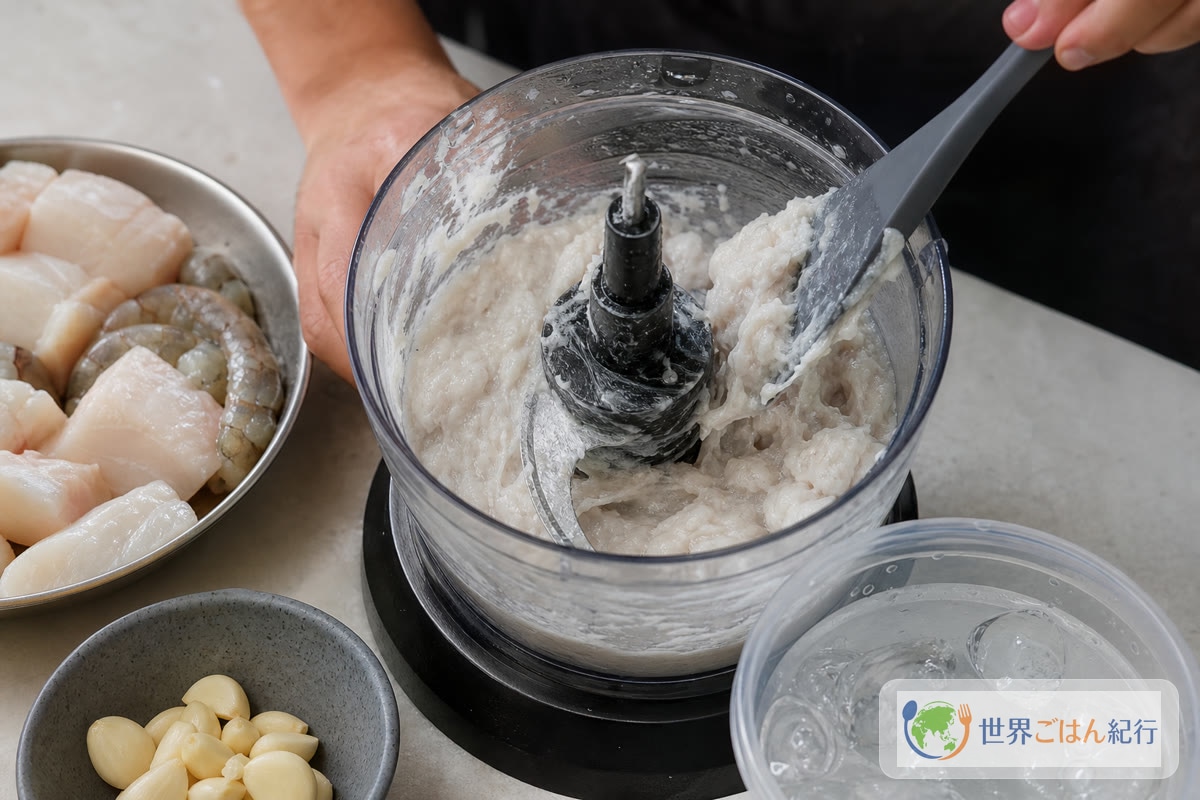
The hard part at home is less the choice of fish than the water in the paste and the thickness of the sauce. The tenggiri often named in Indonesia is a firm-fleshed fish close to Spanish mackerel, but at home it is more practical to combine cod or pollock, swordfish and peeled shrimp. Fish alone tastes too mild and shrimp alone gets too aromatic, so this recipe mixes white fish and shrimp and uses tapioca starch to give a springy texture that survives steaming.
If pempek is the Palembang dish of fish and tapioca boiled and fried, then siomay is the Bandung snack, steamed and eaten with peanut sauce. The peanut-sauce side of it is close to gado-gado, and adjusting the heat at the table links it to sate ayam. Once you have the ingredients on hand, it is easy to branch out across the Indonesian table.
In Indonesian it is sometimes written siomai, while stalls and English-language write-ups often use siomay. This article uses "siomay" and notes the local spelling Siomai alongside it.
Ingredients: keep the fish dumplings, the steamed items and the peanut sauce separate
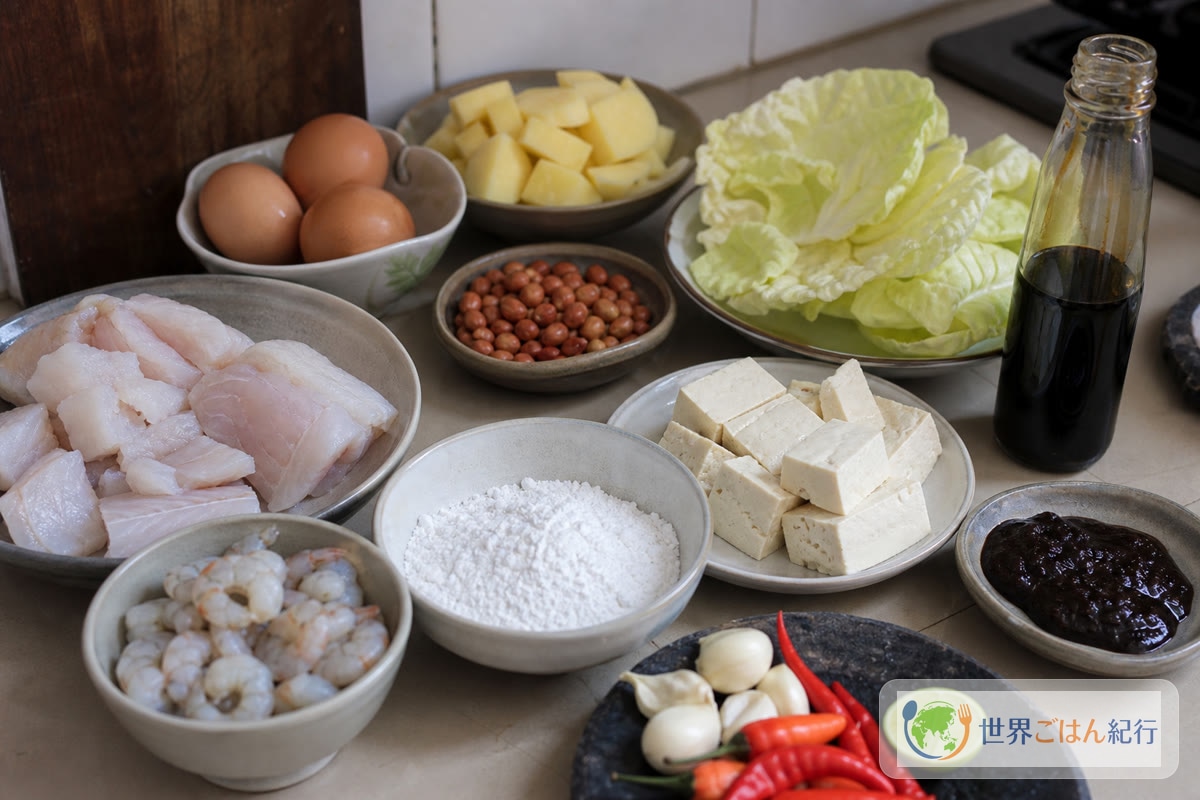
Serves 4. As a snack it feeds four; with white rice alongside as a main it is enough for three. Remove the skin and bones from the fish and pat it dry before weighing. Firm or silken tofu both work, but firm tofu holds together better if you are stuffing it.
This dish may contain fish, shrimp, eggs, peanuts, and seasonings that contain soy and wheat. If you are allergic to crustaceans or peanuts, swapping out the shrimp or the peanut sauce still leaves a cross-contact risk. Even if you cook separate portions at home, keep utensils, oil and cutting boards separate.
Siomay in Indonesia is sometimes served with pare, which is bitter melon. In a home kitchen, adding it the first time tends to make the bitterness stand out, so start with cabbage, potato, tofu and egg. Once you are used to the dish, a small amount of pre-boiled bitter melon brings it closer to the street-stall original.
Shopping: fish and vegetables locally, the Indonesian flavor from the pantry items
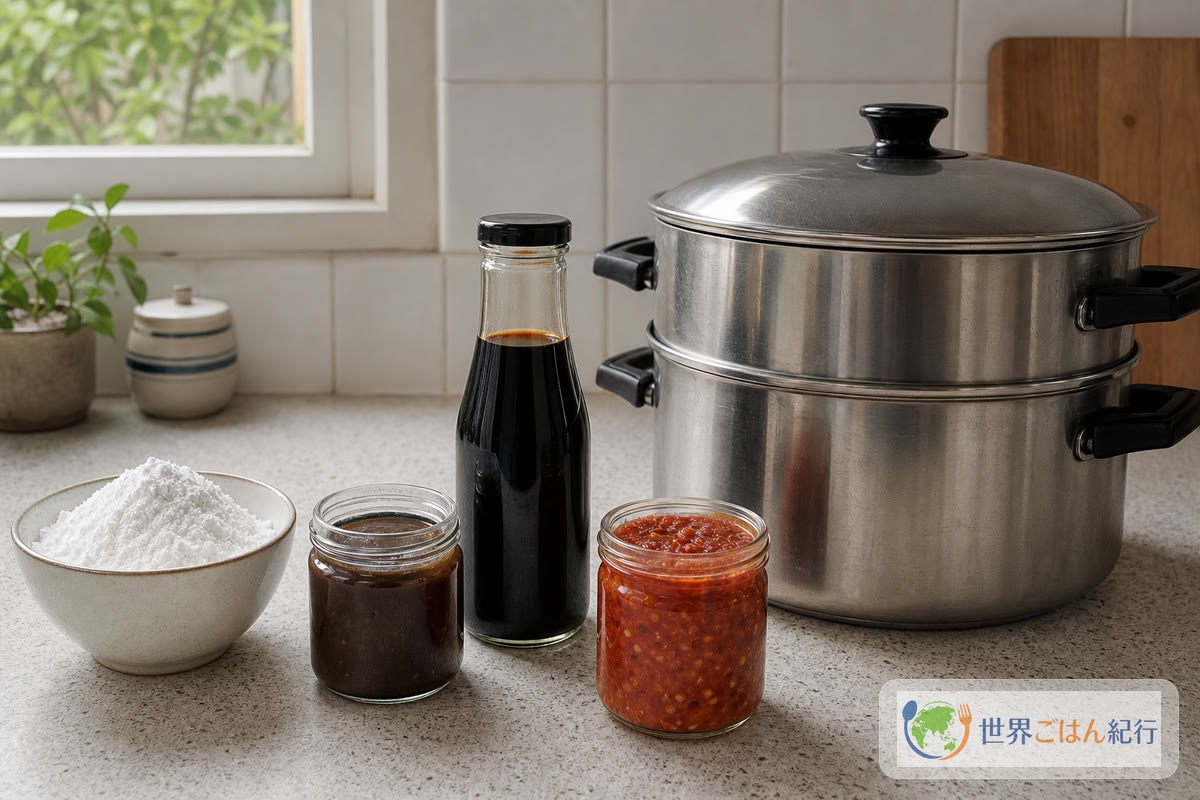
White fish, shrimp, tofu, cabbage and potatoes are all easy to find at an ordinary grocery store. The three items worth tracking down at an Asian grocery or online are tapioca starch, tamarind and kecap manis. A pot with a colander can stand in for a steamer, but a two-tier steamer makes it easier to warm the tofu and cabbage and the potatoes and eggs at the same time.
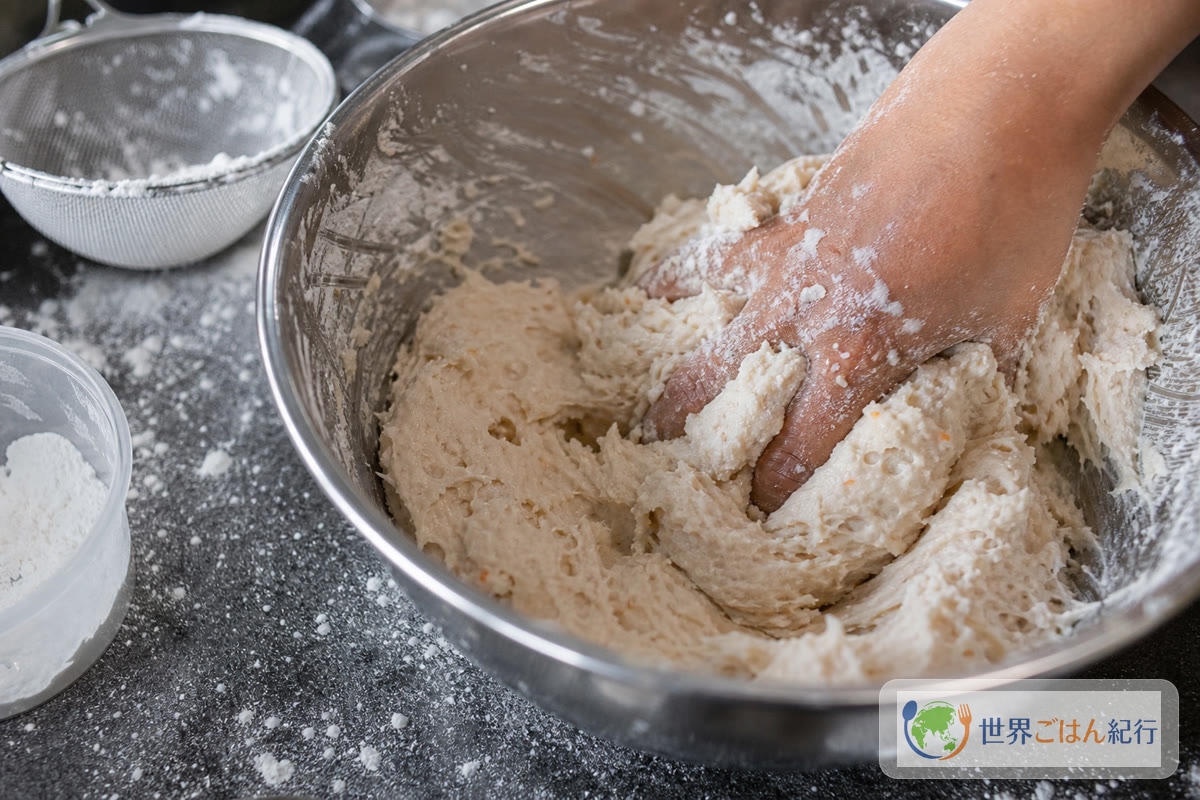
Tapioca starch carries the springiness of siomay. Potato starch alone will set, but it turns hard when cold and has a floury bite. It also works for pempek and papeda (in Japanese), so one bag is handy if you plan to keep cooking Indonesian food.
Tamarind is the sourness that keeps the peanut sauce from being merely sweet. Lime or vinegar alone will do, but with the dark sourness of tamarind the sauce gains a depth close to that of gado-gado or satay sauce.
Kecap manis is Indonesia's sweet soy sauce, with a thickness and aroma that plain soy sauce plus sugar cannot fully reproduce. For siomay, do not use a lot of it; just a little at the end. A thin drizzle over the sauce tightens up the sweetness and color.
If you have no kecap manis, put 3 tbsp regular soy sauce, 2 tbsp dark brown or raw cane sugar and 1 tbsp water in a small pot and simmer over low heat for about 3 minutes. Stop when small bubbles are rising steadily and the syrup falls a little heavily from the spoon. If you reduce it too far it hardens when cool, so it is easier to handle if you take it off the heat while it still looks a bit thin.
Method: set up the steamer first and make the sauce while the dumplings steam
Siomay is not difficult if you split it into stages: make the fish dumplings, stuff the tofu and cabbage, steam, make the sauce, then cut and pour. A warm fish mixture sags, so have the food processor, bowl and ice water ready before you begin.
Fish dumplings turn hard when too much tapioca starch is added or when they are steamed too long over strong steam. If the mixture is a little soft, chill it for 10 minutes before touching it rather than adding starch right away. Steaming time varies with size, but small dumplings cook through in about 15 minutes.
Decision table for getting close to the original in a home kitchen
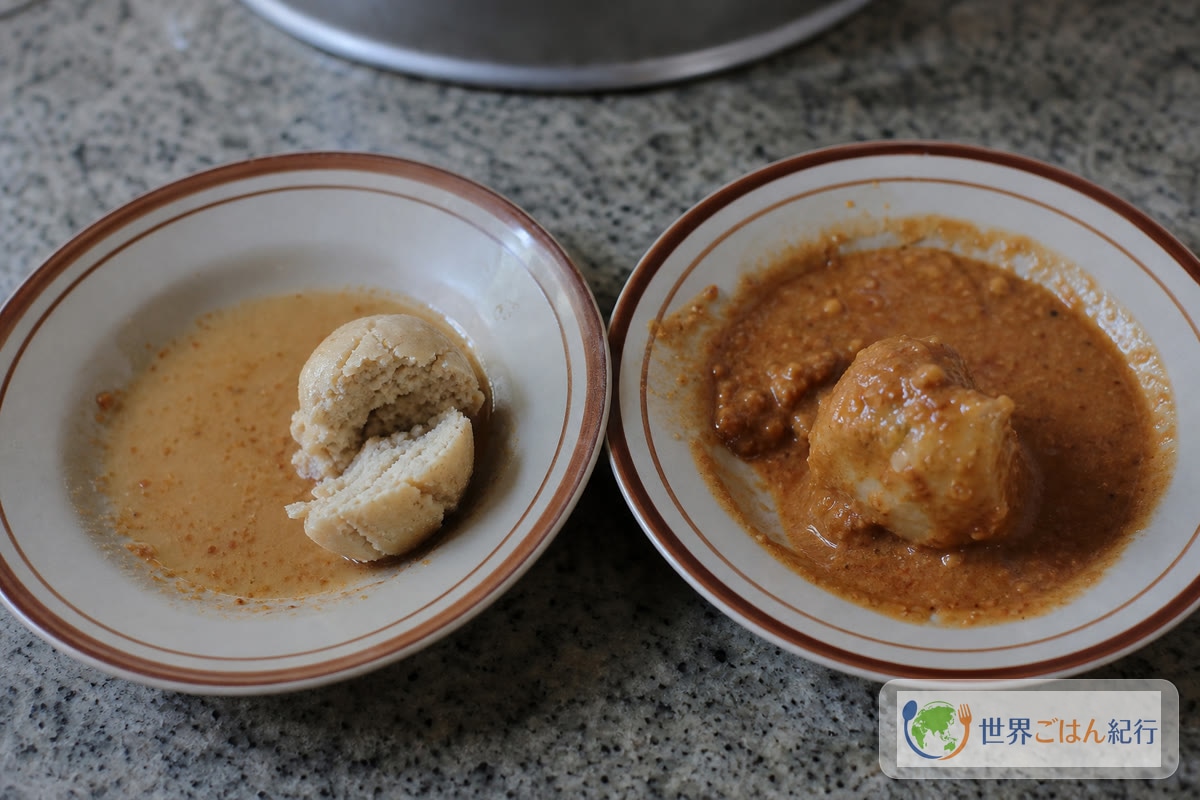
At home, siomay succeeds more by protecting the moisture of the white fish, the amount of tapioca starch and the sourness of the peanut sauce than by chasing the local fish name. The Bandung character lies in the whole plate. It does not end with steamed fish dumplings: tofu, vegetables and egg go on the same plate, and after the sauce goes on you adjust heat and sourness at the table.
| Where you hesitate | What to protect | Practical choice in a home kitchen | What to avoid |
|---|---|---|---|
| Fish | Mild white flesh and springiness | Cod, pollock, swordfish, white-fish surimi | Using only a strongly oily fish |
| Shrimp | Adds aroma | Mix in a small amount of peeled shrimp | Using shrimp alone, making it too aromatic |
| Starch | Springiness that survives steaming | Mix in tapioca starch a little at a time | Adding starch only to make shaping easier |
| Sauce | Sweet, sour, hot, nutty | Peanuts, tamarind, kecap manis, lime | Sweetening with just peanut butter and sugar |
| Accompaniments | More textures on the plate | Tofu, cabbage, potato, egg | Weighing the plate down with fish dumplings alone |
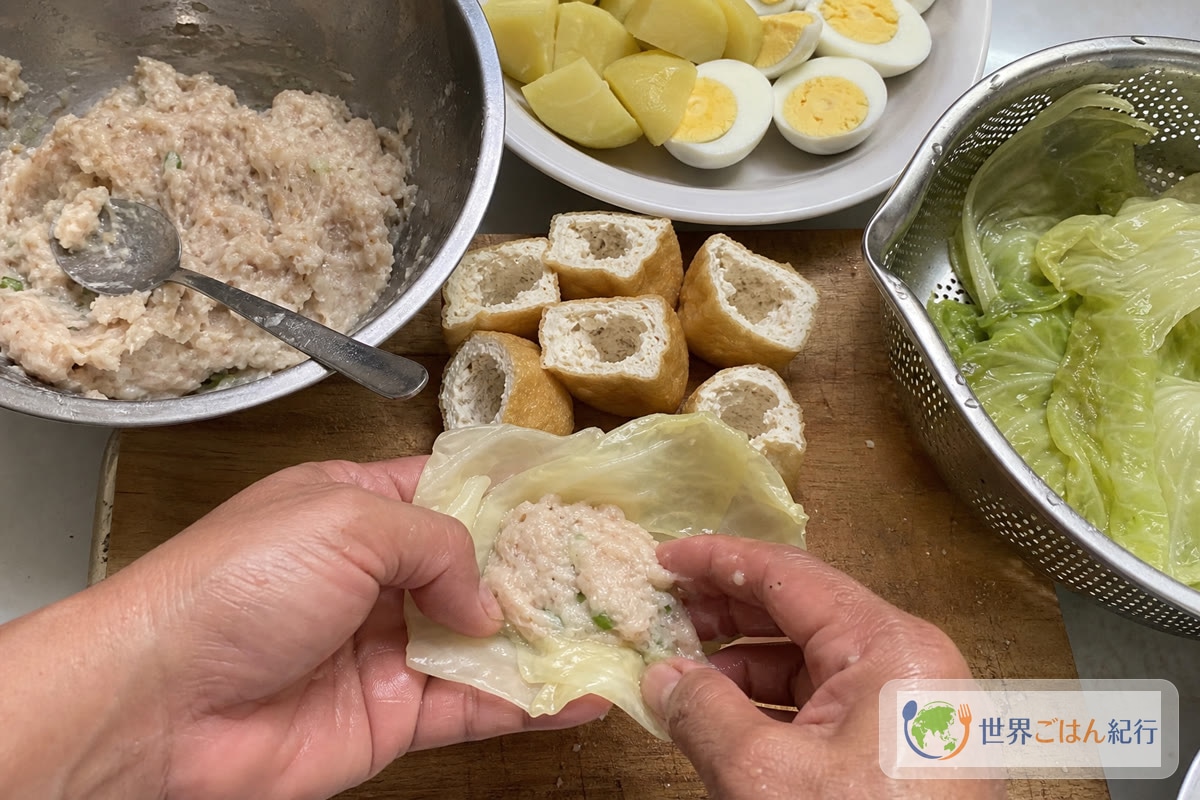
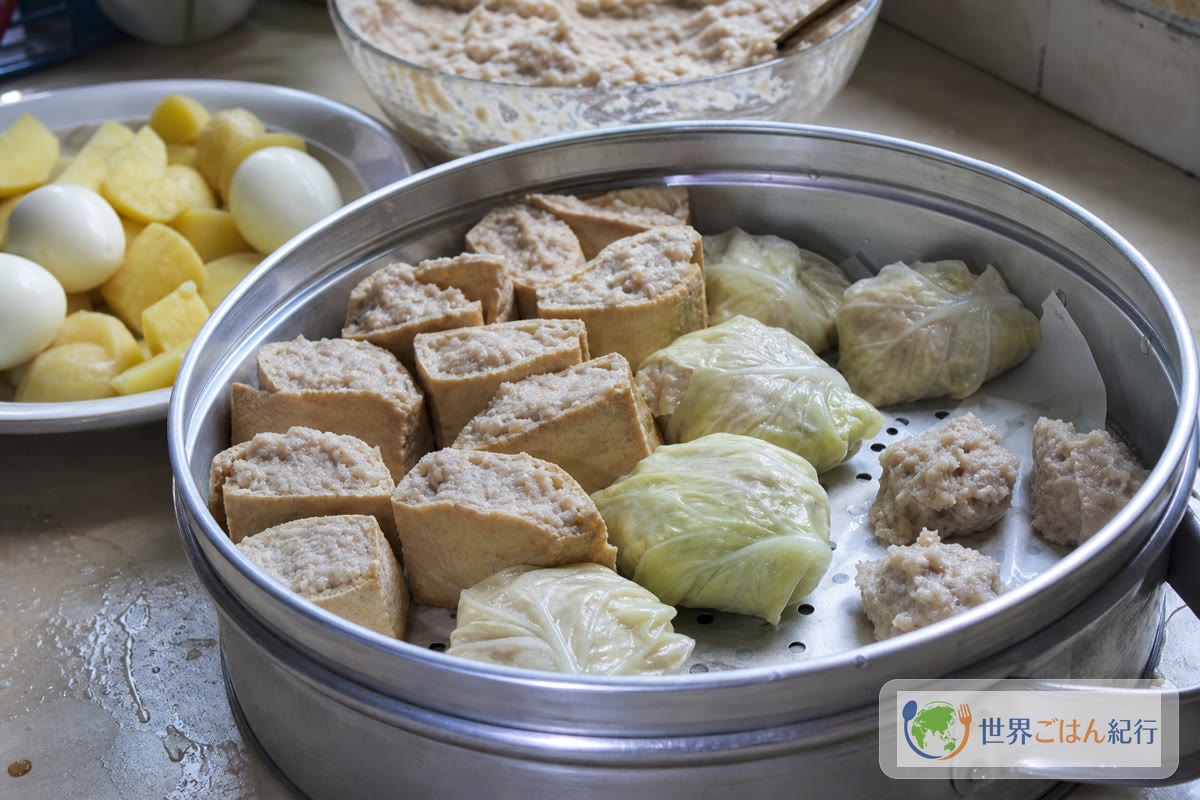
When stuffing tofu, it is easier not to scoop too deep. A deep hole looks nice but collapses easily while steaming. Just placing the mixture in a shallow hollow still lets the tofu and fish dumpling become one when eaten.
Soften the cabbage briefly in the microwave before wrapping. Rolled raw, it cracks; heated too long, it turns watery. Shave only the thick part of the rib and use the soft green part for wrapping, which is easier to handle in a home steamer.
The thickness of the peanut sauce should be such that it spreads slowly when dropped on the plate. If it is heavy and thick, it sets on top of the fish dumplings and the flavor does not reach the potatoes. If it is too thin, it runs to the bottom of the plate and mixes with the water from the vegetables. Make it on the thick side while steaming and thin it with hot water or water just before plating.
Storage and reheating: keep the sauce and the steamed items apart
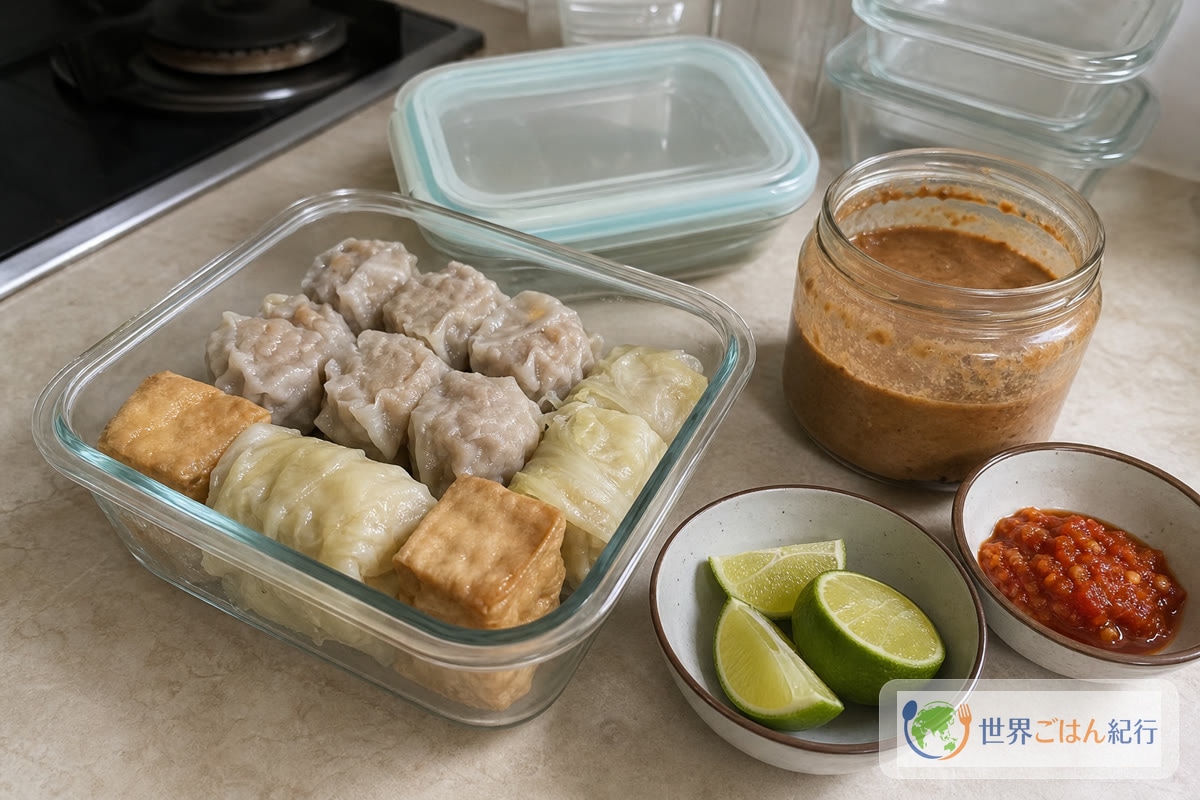
If making ahead, keep the steamed items and the peanut sauce separate. Let the fish dumplings, tofu, cabbage and potatoes cool slightly, then keep them in an airtight container and plan to eat them within the next day in the refrigerator. Because it is fish and shrimp paste, do not leave it long at room temperature; take out only what you will eat.
Reheating in a steamer is the most reliable way. Bring medium steam up, arrange the items and warm for 5 to 6 minutes. In a microwave, arrange the items on a plate, sprinkle with 2 tsp water, cover loosely with plastic wrap and heat at 600 W for 1 minute 30 seconds to 2 minutes. Overheating tightens the fish dumplings, so stop once the center is warm.
The peanut sauce keeps in the refrigerator for about 3 days. It firms up when cold, so warm it in a small pot over low heat before eating and thin it with water 1 tablespoon at a time. In a microwave, put it in a heatproof container, heat at 600 W for 20 seconds at a time and stir. Rather than mixing kecap manis, sambal and lime into the storage container, add them on the plate just before eating, which preserves their aroma.
For a menu, rather than putting gado-gado alongside, which has the same peanut-sauce direction, leaning toward nasi uduk, whose aroma goes another way, or a brothy soto ayam, keeps the table from feeling heavy. On days you want more heat, serving a sambal substitute in a small dish makes it easy to share with children or people who dislike heat.
FAQ
Can I make it with a fish other than cod?
Yes. Pollock, swordfish and frozen white-fish surimi are easy to use. If you use only a strongly oily, strongly scented fish such as mackerel or yellowtail, the fish aroma will come forward more than the peanut sauce. If using an oily fish, mix it with at least half white fish.
Can I leave out the shrimp?
Yes. If you leave the shrimp out, raise the white fish to 470 g and use a little less garlic. Without the shrimp aroma the taste is milder, but the peanut sauce and kecap manis hold it together well. If you have a crustacean allergy, check not only the shrimp but also the ingredients of the sambal and any processed products.
Is it odd not to wrap them in wrappers?
Indonesian siomay is not always wrapped in a thin wrapper like Chinese shumai. Some are simply steamed fish mixture, and others are stuffed into tofu or cabbage. A wrapper gives a dim sum look, but at home going without is easier for managing moisture.
Can I substitute peanut butter?
Unsweetened peanut butter works. Use about 130 g and thin it with water, tamarind, kecap manis and salt. Sweetened types are hard to judge for sweetness and tend to make the sauce heavy, so avoid them the first time. Chunky peanut butter gives a texture closer to the coarse local peanut sauce.
What if I do not have a steamer?
Put a heatproof plate in a deep pot, set a colander or steaming rack on top, keep the water below the level of the plate, cover and let the steam circulate. Bring to a boil over high heat, lower to medium, and check partway so the water does not run out. A microwave alone will cook it through, but the fish dumplings tighten easily, so the first time, pot steam is more reliable.
Indonesian dishes to cook alongside
Because siomay is steamed, it is easier to eat if you do not pair it with too many oily Indonesian dishes. Branch out from dishes that reuse the sauce and seasonings, and the ingredients you bought will not go unused.
- Gado-gado - A way to reuse the peanut sauce, tamarind and kecap manis.
- Pempek - Compare a fish and tapioca dish steamed versus boiled and fried.
- Sate ayam - Enjoy the sweet-hot direction of kecap manis and peanuts on grilled skewers.
- Nasi uduk - A small side of coconut rice turns the snack-style siomay into a meal.
Sources
I checked how the dish is positioned, its relation to Bandung, and its makeup of fish dumplings, tofu, vegetables, egg, peanut sauce, kecap manis, sambal and lime in the English and Indonesian entries for Siomay / Siomai. The Indonesian entry for Bumbu kacang was used to check the ingredients of the peanut sauce and how sweet, sour and hot are built up, and the entry for Sweet soy sauce to check the sweet thickness of kecap manis and how it is used in Indonesian cooking.



