

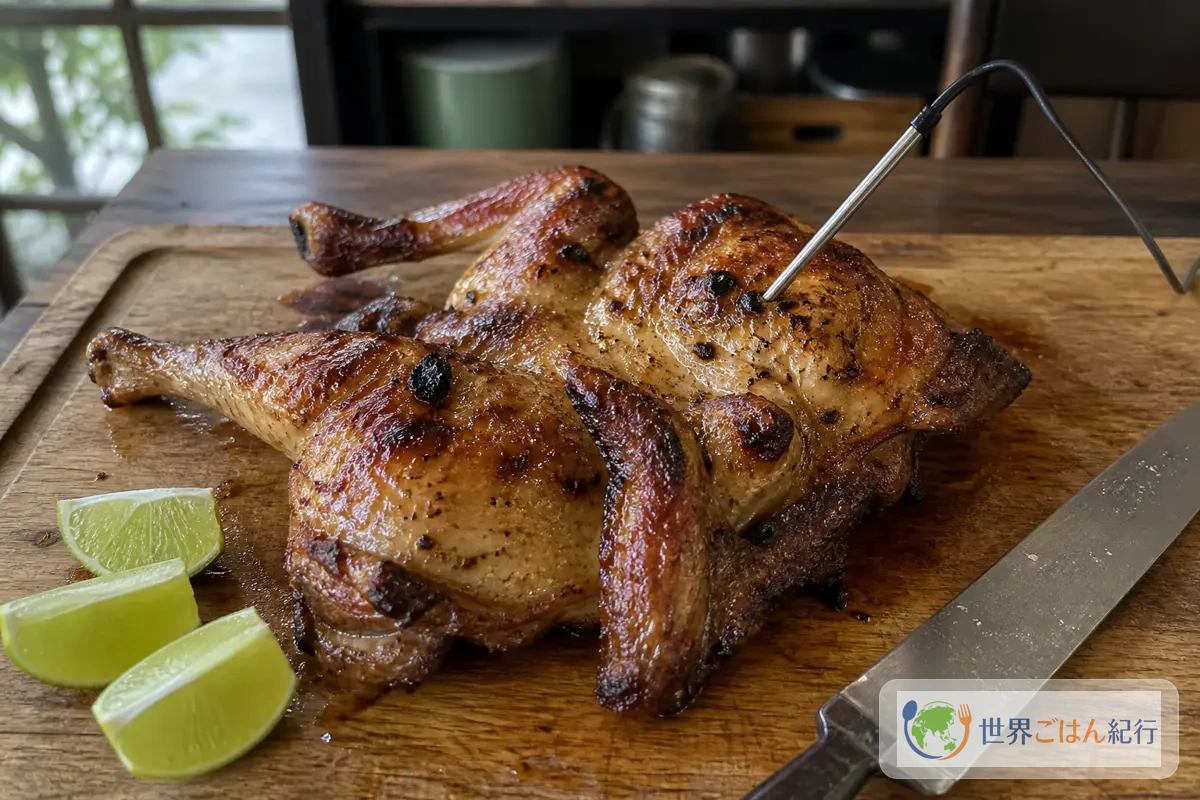
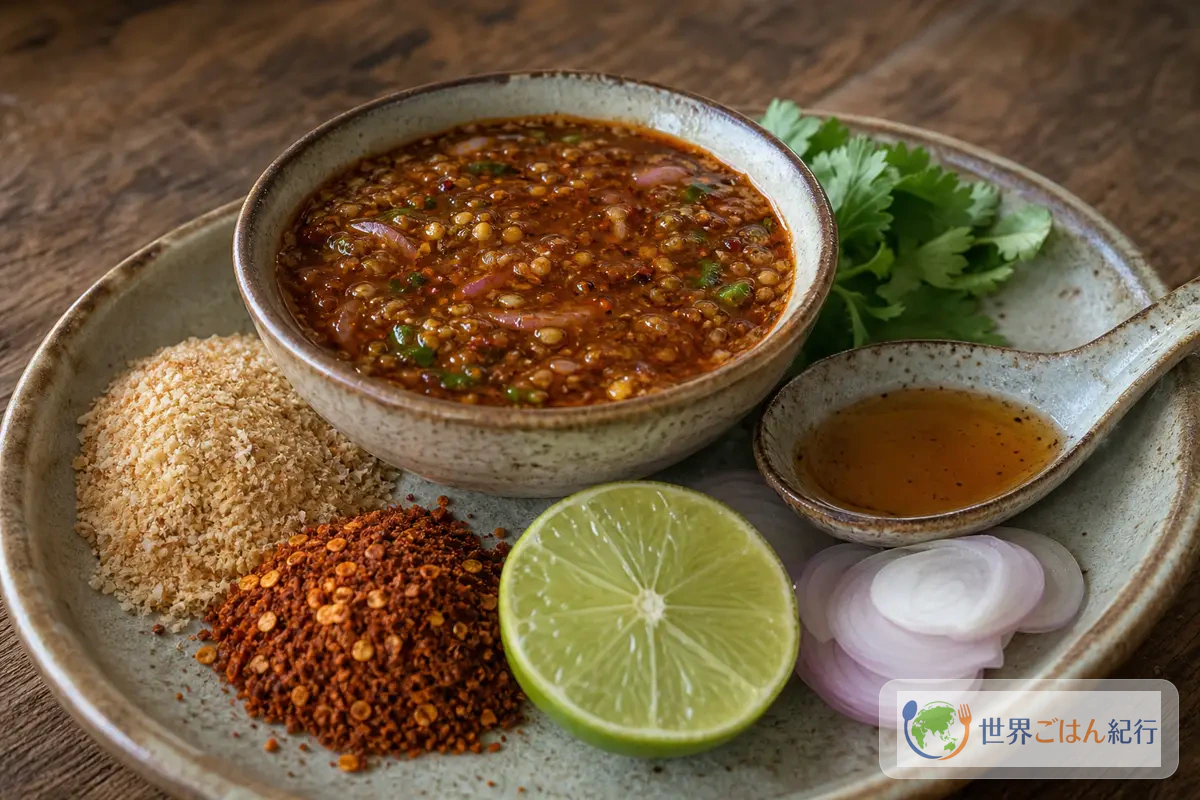
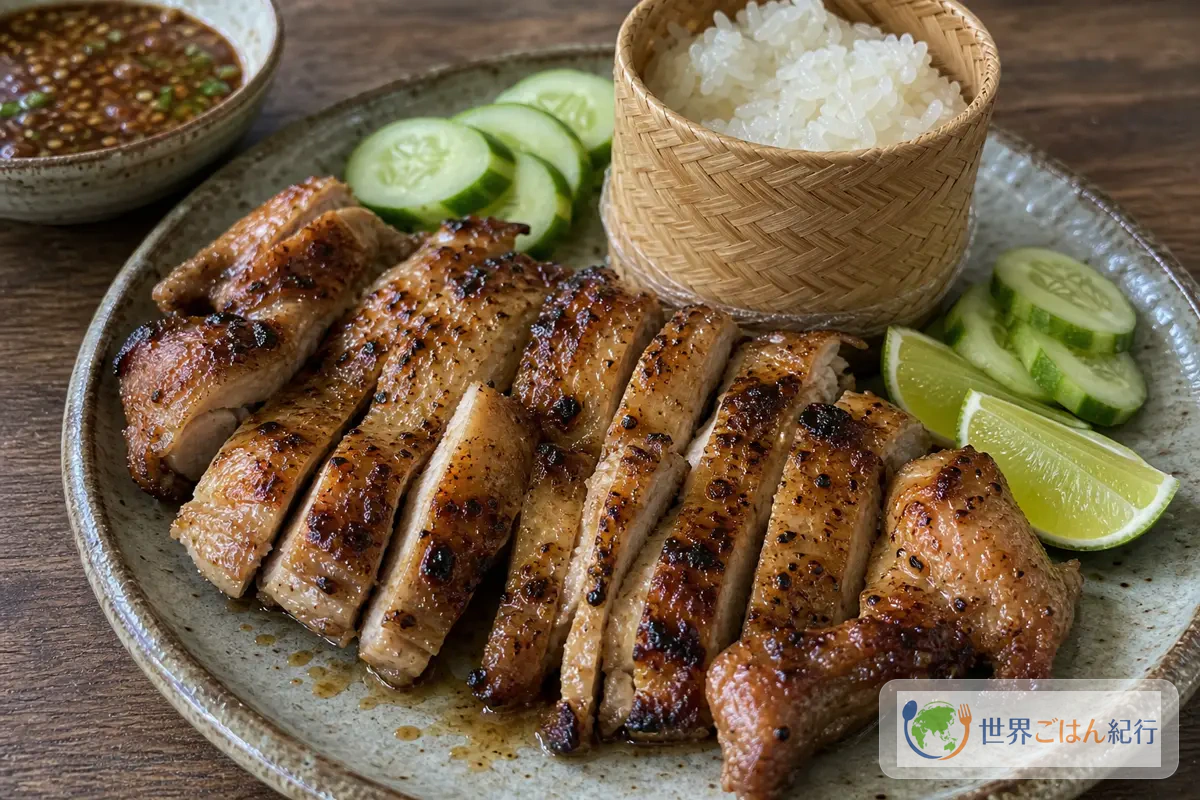
The story of kai yang (Isan's chicken with the scent of charcoal)
Cooking Thai food at home tends to start with pots and pans. Gapao comes together once you stir-fry it, and tom kha gai (in Japanese) fills the kitchen with the smell of Thailand as soon as the herbs simmer. But the smell that stops you in your tracks in front of a street stall is, in the end, something grilled.
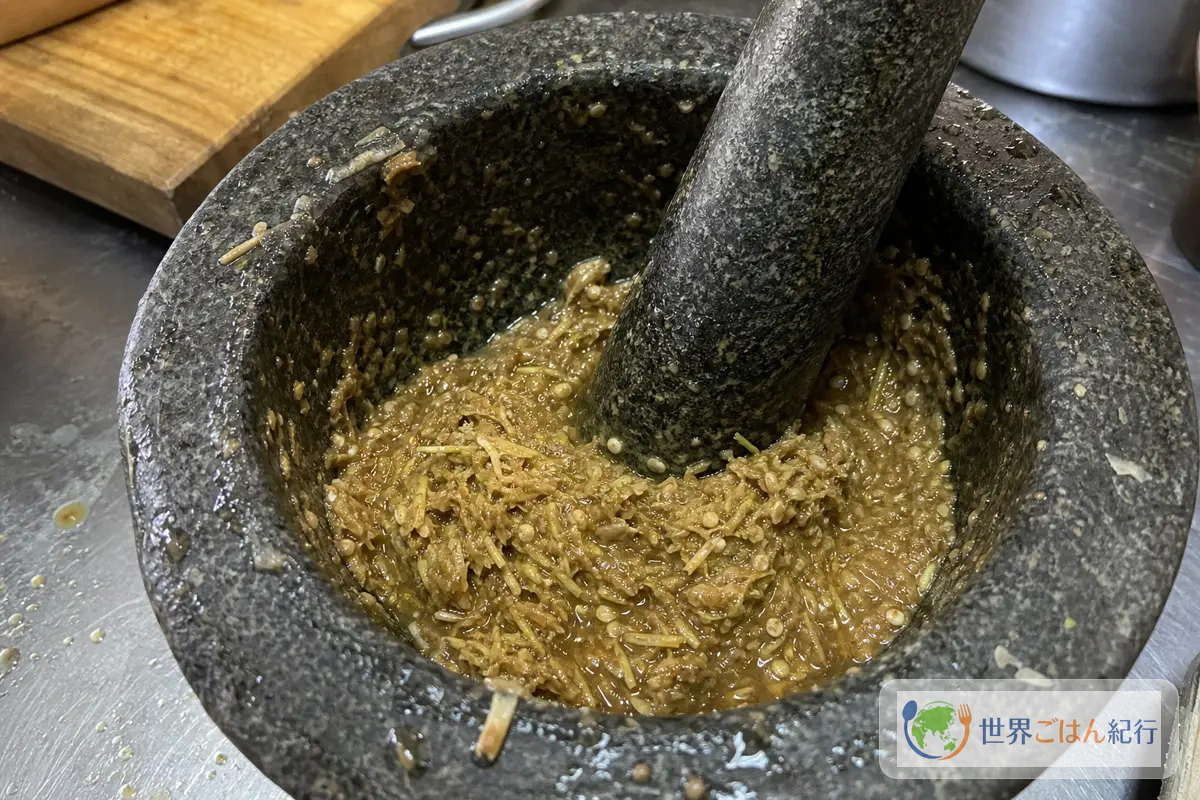
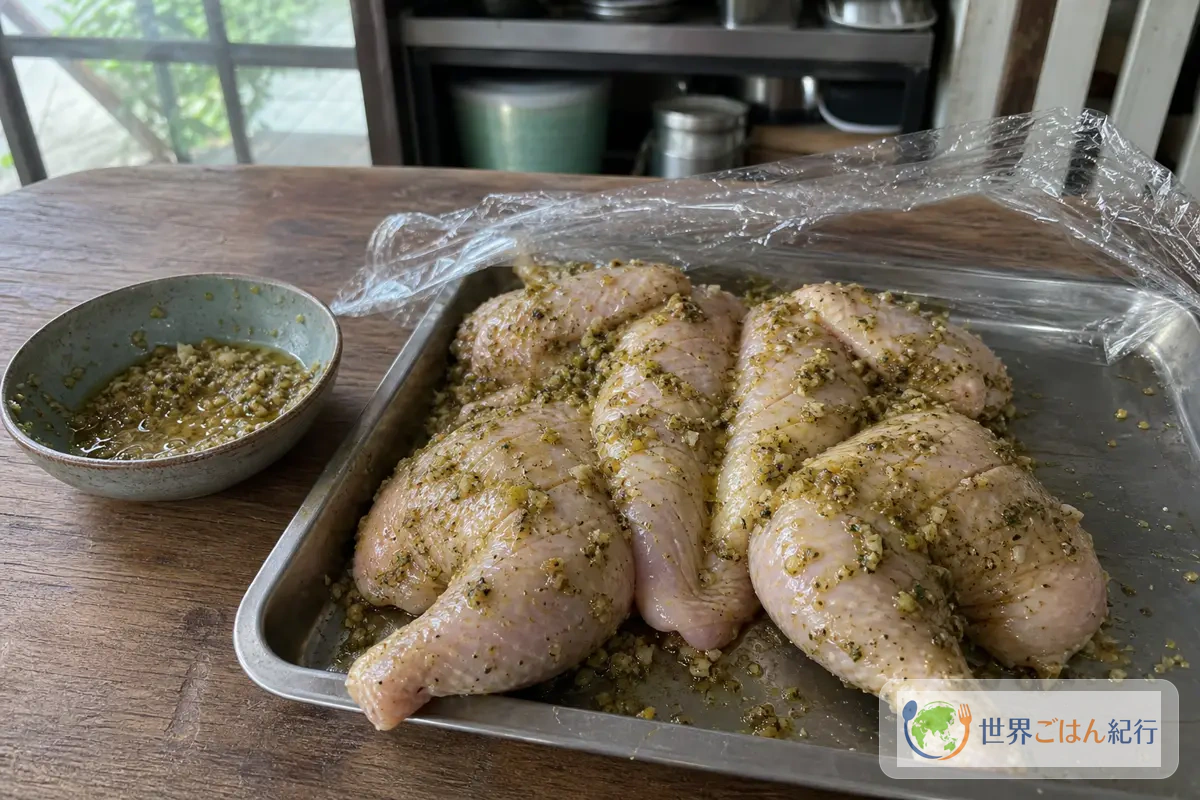
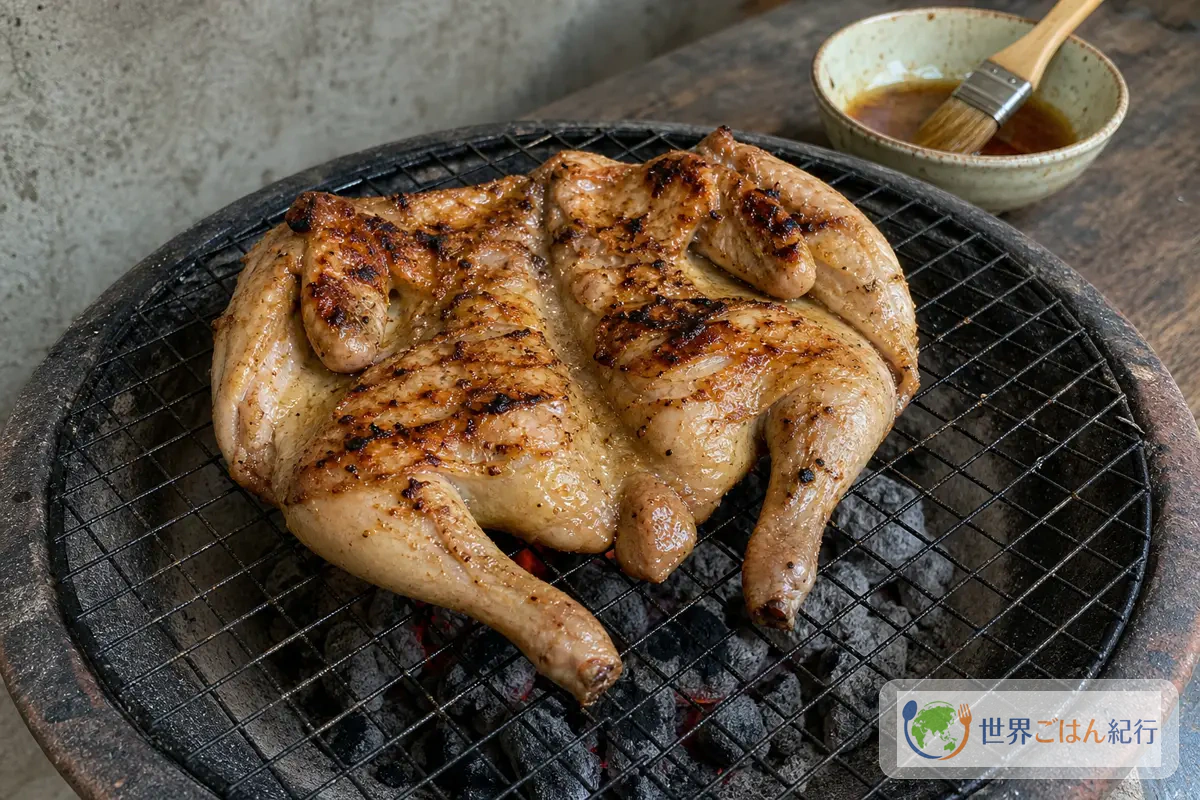
Kai yang, also written gai yang (ไก่ย่าง), is Thailand's charcoal-grilled chicken. Kai or gai means chicken and yang means grilled. The name is plain enough, but the dish is a marinade of crushed lemongrass, garlic, cilantro root, white pepper and fish sauce worked into the chicken, which is then grilled slowly over a medium heat that is not too gentle.
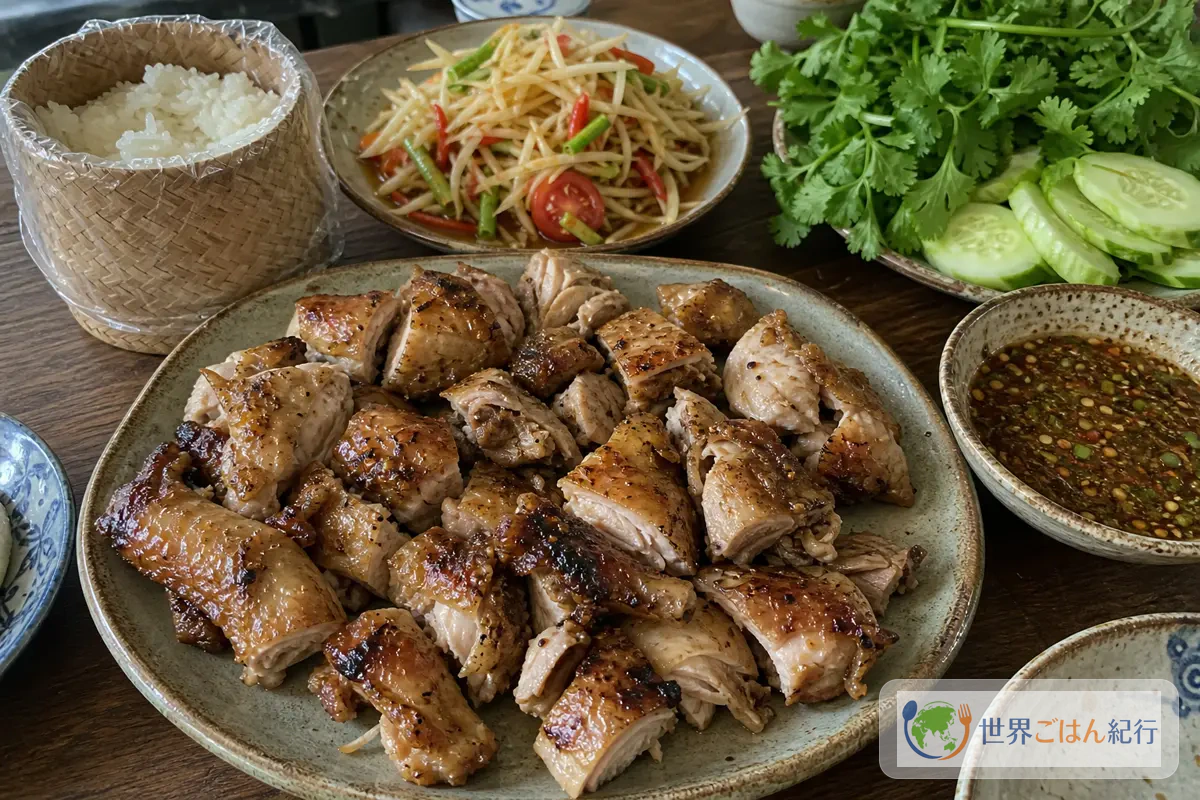
In Isan, the northeast of Thailand, kai yang is a standard companion to som tam and sticky rice. You eat the hot, sour green papaya salad, pinch off a little sticky rice with your fingers, and dip the grilled chicken in nam jim jaew. Rather than being complete on one skewer like Japanese yakitori, it is the center of a table where you move between sourness, heat, smoky char and the sweetness of the rice.
English-language Thai recipes often describe kai yang as "street food", and many of them grill a whole chicken or half chicken opened out flat. Thai Cookbook TV advises that a chicken with the backbone cut out and opened flat has an even thickness and grills more easily. The Temple of Thai recipe also builds on a sweet-savory marinade of garlic, pepper and fish sauce.
The hard part in a home kitchen is less the charcoal than the heat control. Grill hot and fast and only the skin burns while the inside stays underdone. Grill too gently and the skin dries out without the stall-style fragrance. This recipe covers both a charcoal grill and an oven-only method. Check the internal temperature of the chicken, and use the marinade that touched raw meat only at the point where it is cooked during grilling, never at the table. Settle those points and you can get quite close at home.
The Thai ไก่ is often written "gai" in English, and sometimes "kai" to reflect a sound closer to an unaspirated k. This article uses "kai yang" as the main spelling and treats "gai yang" as the same dish.
How it differs from Japanese grilled chicken
Kai yang can look like the same sweet-savory grilled chicken as Japanese yakitori or teriyaki chicken, but the aroma is built differently. Rather than the toasty note of soy sauce, lemongrass, cilantro root, white pepper and fish sauce come first, and sugar is used sparingly, only to help the browning.
| What to look at | Kai yang | What to keep in a home kitchen |
|---|---|---|
| Aroma | Lemongrass and cilantro root lead | Even when substituting, do not lean on ginger alone |
| Saltiness | The fish-sauce aroma of nam pla | Do not replace it with salt or soy sauce alone |
| Grilling | Medium heat, drying the surface as it cooks | Do not paint on a thick sugar glaze; apply it thinly in layers |
| Serving | With sticky rice, som tam and nam jim jaew | Do not let the chicken stand alone; add sourness and sticky rice |
Ingredients (the marinade and sides to gather)
The aroma of kai yang is set by the combination of lemongrass, cilantro root, white pepper and fish sauce, not by curry powder or sweet chili sauce. If you cannot find cilantro root, the stems will do, but keep the lemongrass and fish sauce if you can, so that it does not turn into plain teriyaki chicken.
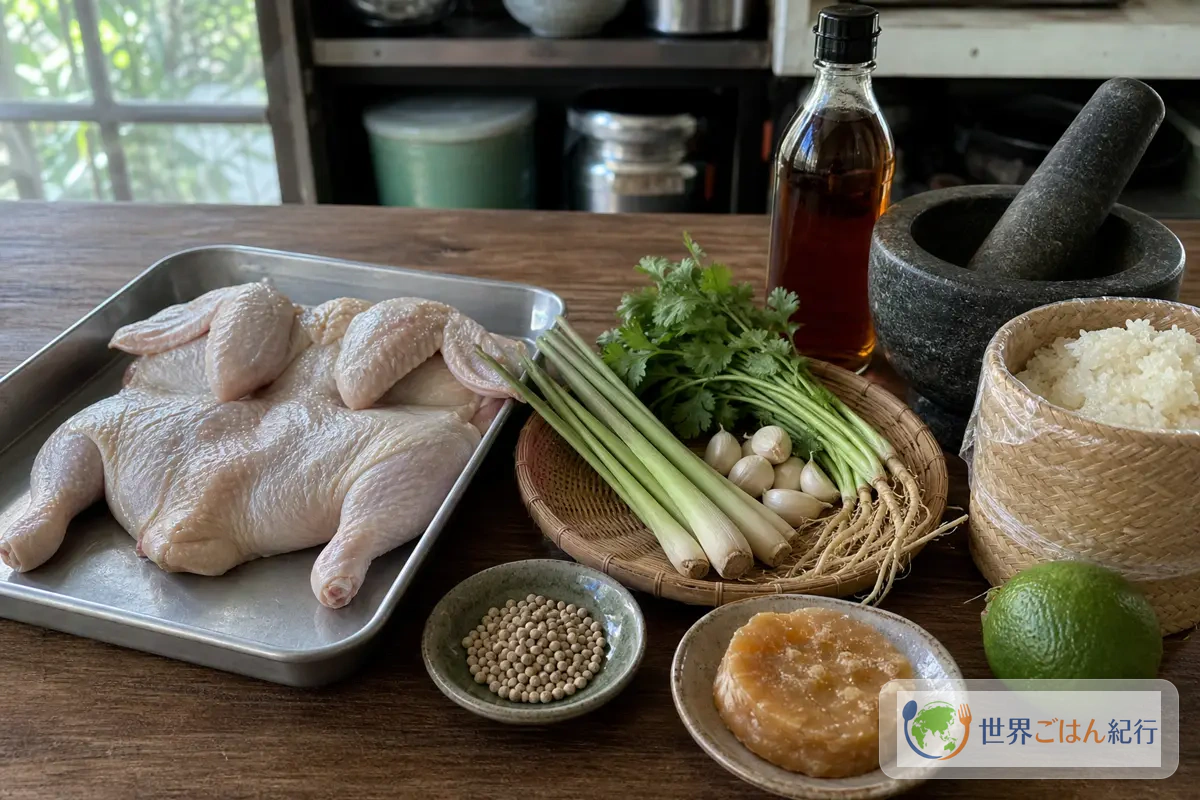
This recipe contains chicken, fish sauce and oyster sauce. If you have a fish or shellfish allergy, check the labels of the fish sauce and oyster sauce. Cook the chicken through to the center of the thickest part, and keep the plates and cutting boards used after grilling separate from those used for raw meat.
Ingredients that are hard to source
What is hard to find is not the meat but the aromatics. Chicken is easy to buy anywhere, but lemongrass, fish sauce, Thai glutinous rice and a mortar are worth gathering once, because they carry over to laab and tom yum goong (in Japanese) too.
| Priority | What to buy | How to decide |
|---|---|---|
| Top | Lemongrass | Fresh or frozen bottoms you can actually use. Tops with only the leafy tip have little aroma |
| High | Fish sauce | A small bottle is fine. Choose one whose ingredients are little more than fish, salt and sugar |
| Medium | Thai glutinous rice | Only if you want a table where you eat sticky rice with your fingers |
| Medium | Mortar | A small one that can crush lemongrass and white pepper coarsely is enough |
| Low | Sweet chili sauce | Not needed if you make nam jim jaew. Do not buy it just to fill out the list |
Look for lemongrass first in the freezer case of an Asian or import grocery. Frozen, it is easy to slice, and you can seal the rest to use next time for tom yum goong or tom kha gai. Dried lemongrass works for simmering, but its fibers and aroma are weak in the kai yang marinade, and even if you make up for it with ginger and lime zest, you end up with a different kind of grilled chicken.
Thai glutinous rice is there for the staple-food role. Japanese glutinous rice can substitute, but the Isan feeling of pinching rice by hand to catch the sauce comes closer with Thai glutinous rice. A small bottle of fish sauce is enough. Only buy a large bottle if you will go on to make som tam, pad thai and tom yum goong.
Method (a gentle direct flame for a fragrant, safely cooked result)
Kai yang is not a dish where you season strongly and then grill in one burst over high heat. Crush the marinade, even out the thickness of the chicken, and grill over medium heat while the skin dries. Finally, check the internal temperature and rest the chicken, and the skin turns fragrant while the meat stays moist.
Grilling tips (build the flavor before it burns)
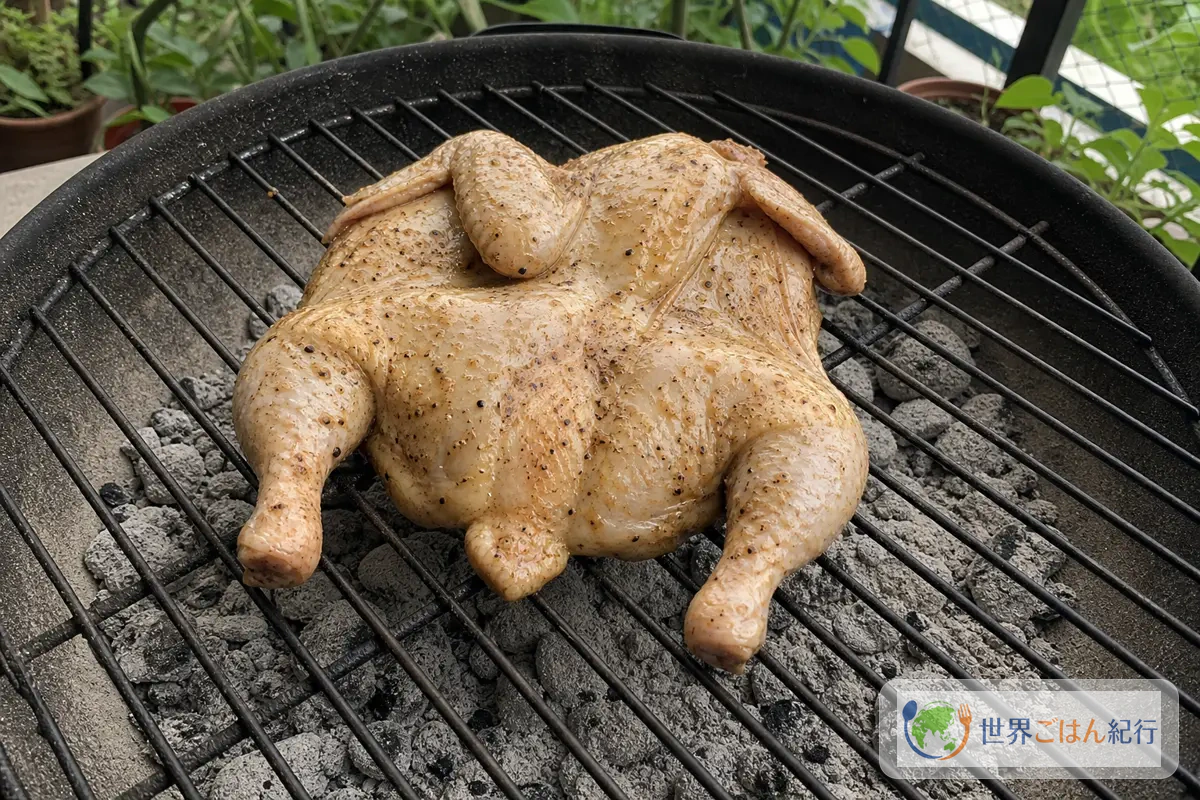
The most common failure with kai yang is that the sugar in the marinade scorches first while the center of the chicken is still underdone. If you judge only by surface color, you get a bitter char rather than a fragrant one. Start with the skin up to dry the marinade, then finish with the skin down in the second half, and failure becomes less likely.
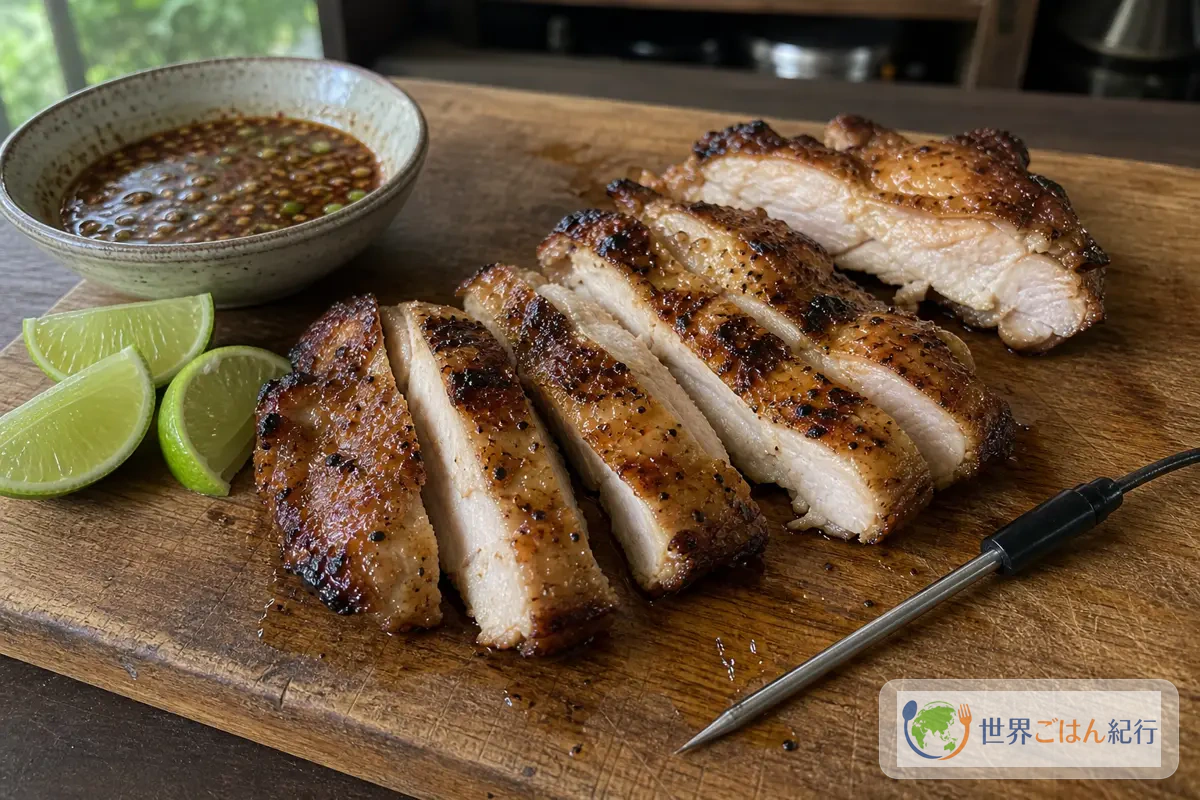
On charcoal, push the coals to one side to make a hot zone and a cooler zone. When flames flare up, do not scrape off the burnt parts; move the chicken to the cooler side and wait 30 seconds. Bringing it back after the fat settles keeps more of the skin's aroma. With a gas-stove fish grill, lightly oil the rack, grill 10 minutes over a medium-low heat, turn it over for 8 minutes, and use high heat for only the last 2 minutes.
For oven-only cooking, use a baking sheet fitted with a rack so the fat drains. Set directly on the sheet, the underside steams and loses fragrance. Bake 25 minutes at 190°C, then 10 minutes at 200°C, and finally 3 minutes on the upper rack with only the skin side exposed. If the color is lacking, do not keep roasting for a long time before checking the internal temperature. It is easier to recover by cutting the chicken up and searing just the skin side in a frying pan for 30 seconds than by scorching the skin.
| Problem | Cause | How to fix |
|---|---|---|
| Only the skin is black | Too close to the heat, or a thick sugary glaze | Move to the cooler side for 30 seconds and brush on the marinade thinned with water, in a thin layer |
| Raw-looking inside | The whole chicken is uneven in thickness | Spatchcock it, press the breast, and cut slits in the thick parts |
| Dry meat | Grilled long over high heat, or cut without resting | Rest 10 minutes after reaching 75°C and let the juices settle before cutting |
| Weak aroma | Lemongrass and roots not crushed finely enough | Slice 1 mm thin before crushing, to shorten the fibers and release the aroma |
| Marinade too salty | Too much fish sauce added | Add 2 tsp lime juice and 1 tsp sugar, and eat it with sticky rice |
Checking the safety of chicken takes priority over the atmosphere of the dish. Japan's Ministry of Health, Labour and Welfare guidance on preventing food poisoning at home gives 75°C at the center for at least 1 minute as the guideline for cooked foods. Even on a day when you are aiming for a street-stall char, check the internal temperature first and then finish the skin.
Four boneless chicken thighs are more realistic than a whole chicken. Cut slits 5 mm deep in the thick parts, grill skin side up over a medium-low heat for 10 minutes, turn for 8 minutes, and finally put it skin side up again over high heat for 2 minutes. If it scorches easily, loosely cover it with aluminum foil.
Nam jim jaew and the table (catching the sauce with sticky rice)
When you serve kai yang at a weeknight dinner, it is fine with plain white rice. But to eat it the Isan way, sticky rice is the strongest choice. Roll the sticky rice into a small ball, let it soak up a little nam jim jaew, and eat it together with the grilled skin. The sticky rice catches the flavor better than spooning the sauce over.
The key to nam jim jaew is khao khua. Dry-toast the glutinous rice in a dry frying pan over low to medium heat, shaking it for about 8 minutes, and when it turns a pale fox color, crush it coarsely in a mortar. If you grind it to a powder, the sauce turns muddy, so stop when about half the grains remain whole, and you get a toasty flavor when you bite into them.
Adjust the heat on the sauce side, not on the chicken itself. On a day when there are children or people who do not like spice, use only 1/3 tsp of chili and put extra chili in a small bowl for the adults. Not making the chicken itself too hot makes it easier to balance when you serve it with som tam or laab.
| Table combination | When it suits | In a word |
|---|---|---|
| Kai yang, sticky rice, cucumber | Weeknight dinner | Less heat, with the grilled chicken as the main dish |
| Kai yang, som tam, sticky rice | A weekend Thai menu | The classic combination with clear sourness and heat |
| Kai yang, tom kha gai, white rice | Family meals | The white soup absorbs the heat and is easy to eat |
| Kai yang, pad thai, stir-fried greens | Guests | Noodles, grilled food and vegetables each play a separate role |
On the day you buy lemongrass and fish sauce, it is natural to go on to tom yum goong (in Japanese) with the same ingredients. For something closer to northern Thailand, try khao soi (in Japanese), and for something leaning toward stir-fries, pad thai. Rather than trying to use up the herbs at once, freeze them and use them over two or three meals to make shopping easier.
Storage and reheating (use a frying pan to bring back the skin)
Freshly grilled is best, but kai yang is also easy to make ahead. Once the heat has gone from it, put it in a shallow storage container with the bones in, and keep it refrigerated for about 2 days. Keep the nam jim jaew in a separate container, and if the khao khua has absorbed too much moisture, add 1 tsp lime juice just before eating.
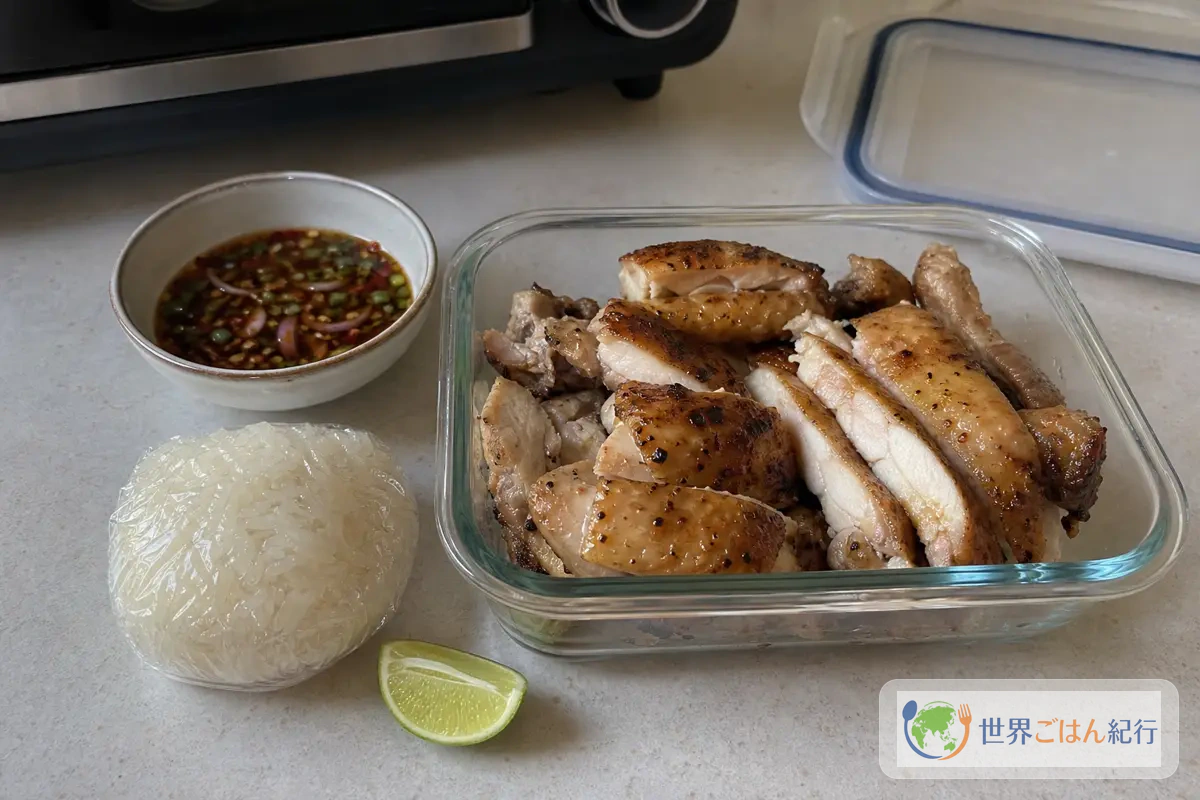
Reheating in the microwave alone leaves the skin soft. First warm it at 600 W for 1 minute 30 seconds, and add 30 seconds if the center is still lukewarm. Then heat a frying pan over medium heat for 1 minute and sear it skin side down for 30 seconds to 1 minute, and some of the skin's fragrance returns. If it looks about to scorch, do not add oil; lower the heat.
To freeze, remove the meat from the bones and wrap it in single portions. About 2 weeks in the freezer is the guideline. Thaw in the refrigerator for half a day and start reheating in a 600 W microwave for 2 minutes. The texture of the skin drops after freezing, so the next day it is more natural to chop it and use it in fried rice, noodle soup or salads.
Sticky rice tends to harden in the refrigerator, so if you have leftovers, wrap them in single portions in plastic wrap and freeze. To eat, sprinkle with a spray bottle of water or 1 tsp water and warm in the wrap at 600 W for 1 minute 30 seconds. When the sticky rice softens again, it can once more catch the nam jim jaew.
Frequently asked questions
Q1. Can I make it with chicken thighs instead of a whole chicken?
Yes. Use 4 chicken thighs, about 900 g in total, and cut slits 5 mm deep in the thick parts. Over charcoal, the guideline is 12 minutes skin side up, 8 minutes turned, and 3 minutes with the skin back on top. Confirm 75°C at the center before resting.
Q2. I don't have lemongrass. What can I substitute?
A complete substitute is difficult. If you really have none, 2 thin slices of ginger, 1/4 tsp lime zest and garlic move the aroma in the right direction. But it will be less like kai yang, so if you order just one thing online on your first shopping trip, make it frozen lemongrass.
Q3. I can't find cilantro root.
You can substitute 30 g of cilantro stems. The roots have a thick aroma and give an earthy, street-stall grilled smell, but cilantro is often sold with only the leaves. Chop the stems 1 cm wide and then crush them, and you still get plenty of fragrance, though not as much as from the roots.
Q4. Can I use sweet chili sauce instead of nam jim jaew?
You can eat it that way, but the impression of the dish changes quite a lot. Sweet chili sauce is round and easy for children to eat, but it lacks the toasty sourness of khao khua and lime. For the first time, make a small amount of nam jim jaew and just cut back the heat, and it will taste more like kai yang.
Q5. Without charcoal, will oven-only be satisfying?
Yes. The charcoal aroma is weaker, but using a baking sheet fitted with a rack and a two-stage bake from 190°C up to 200°C keeps the skin from steaming. Searing the skin side in a frying pan for 30 seconds at the end adds back some of the fragrance.
Q6. Is it all right to marinate from the day before?
Up to overnight in the refrigerator is fine. If you marinate for 12 hours or more, reduce the fish sauce to 2 tbsp and taste for saltiness just before grilling. Marinating too long tightens the surface, and the meat tends to feel firm when grilled.
Sources
- Thai Cookbook TV: How to Make Gai Yang — Consulted for the home method of grilling a spatchcocked chicken, its place as a street food, and the basic makeup of the marinade.
- Temple of Thai: Thai Barbecue Chicken Recipe — Consulted for the Thai barbecue chicken marinade using fish sauce, pepper and garlic.
- Simply Suwanee: Gai Yang Thai Grilled Chicken — Consulted for the explanation as an Isan dish, the meanings of gai and yang, and the context of eating it with sticky rice.
- BrassWok Thai Cooking Class: Gai Yang — Consulted for a Phuket cooking school's grilling steps, aromatics and approach to the marinade.
- Ministry of Health, Labour and Welfare (Japan), "Preventing food poisoning at home" — Consulted for the internal temperature of cooked foods including chicken, safety checks and separating utensils.



