Danguang-Danguang Satay: One Spice Paste, Two Kinds of Coconut
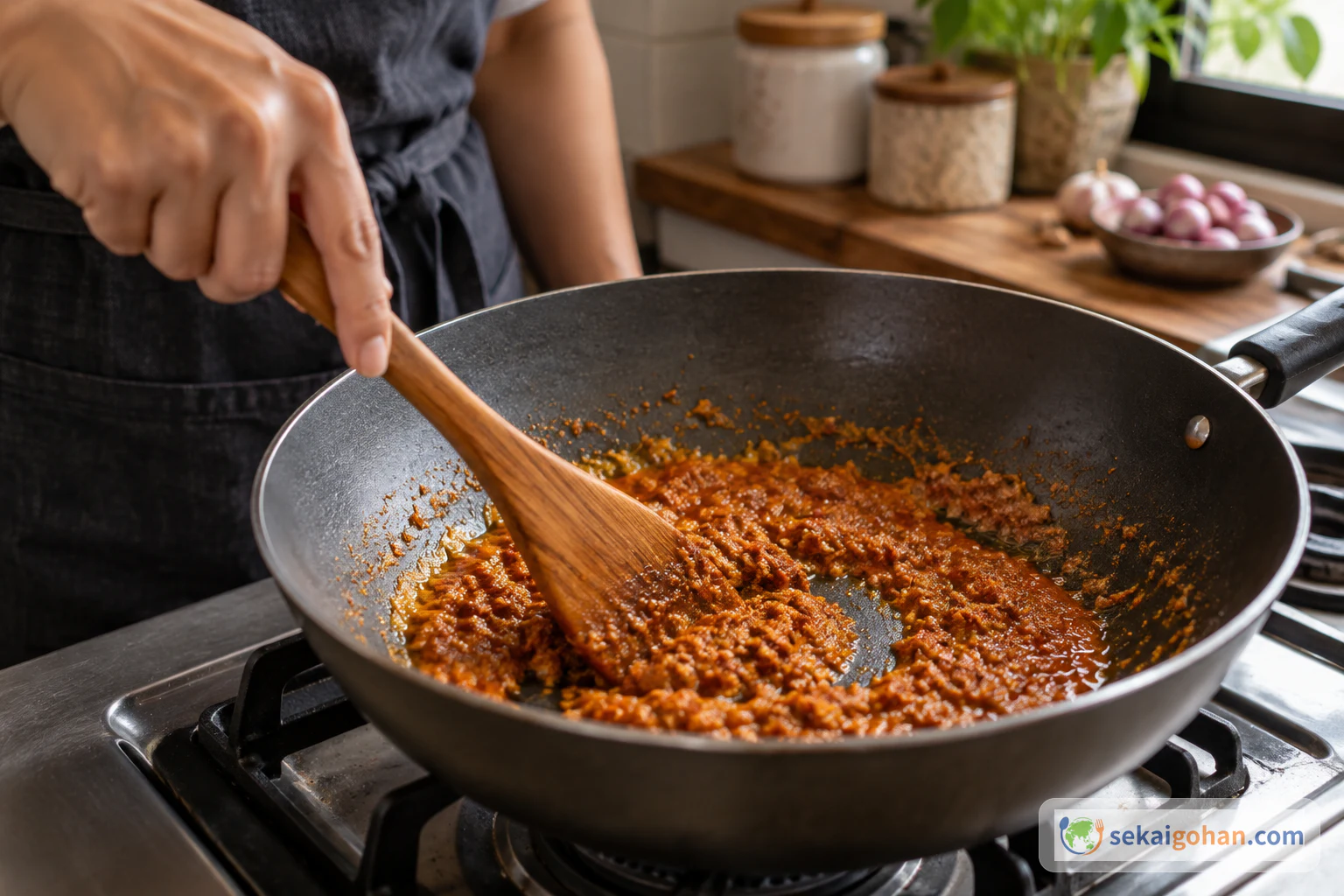
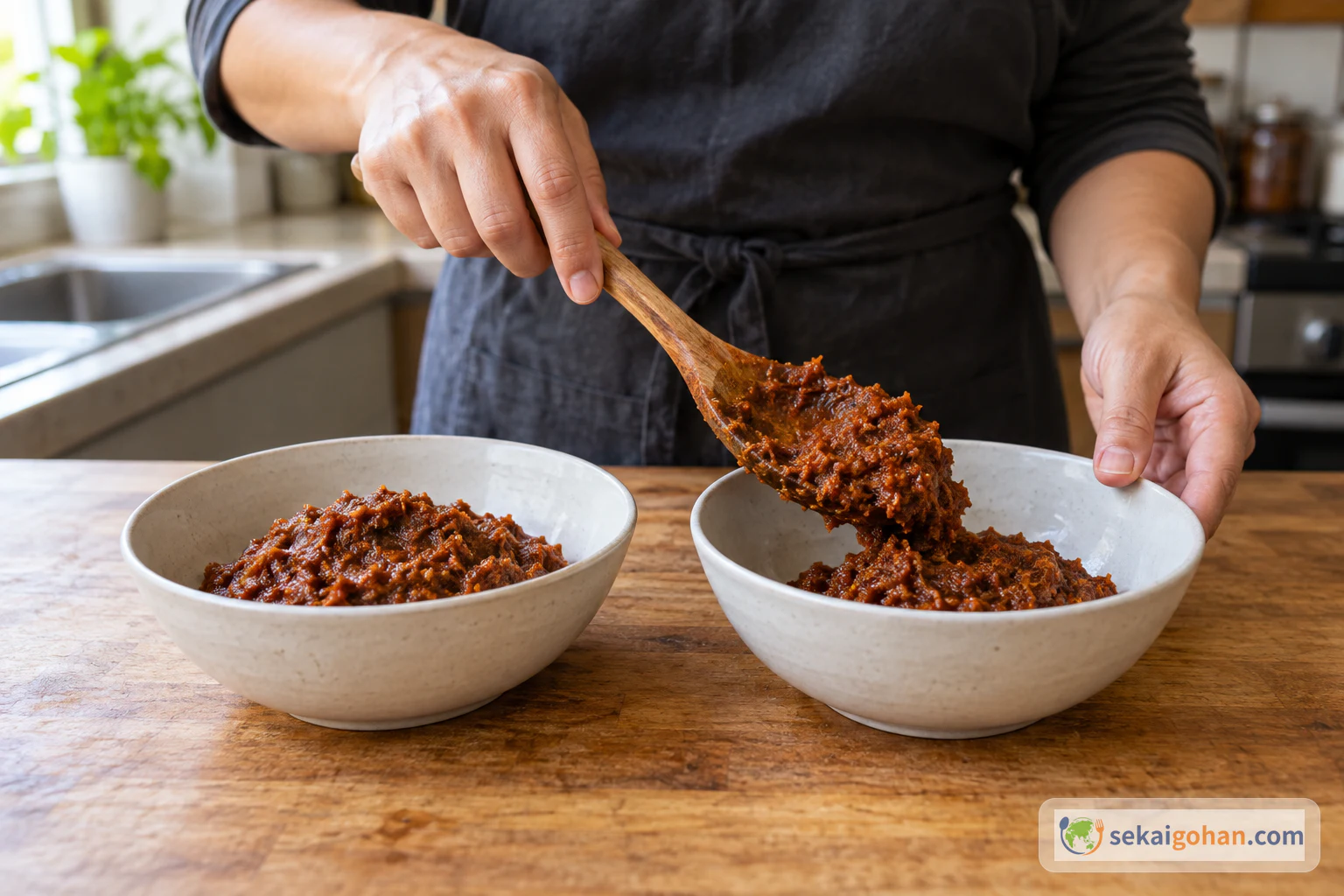
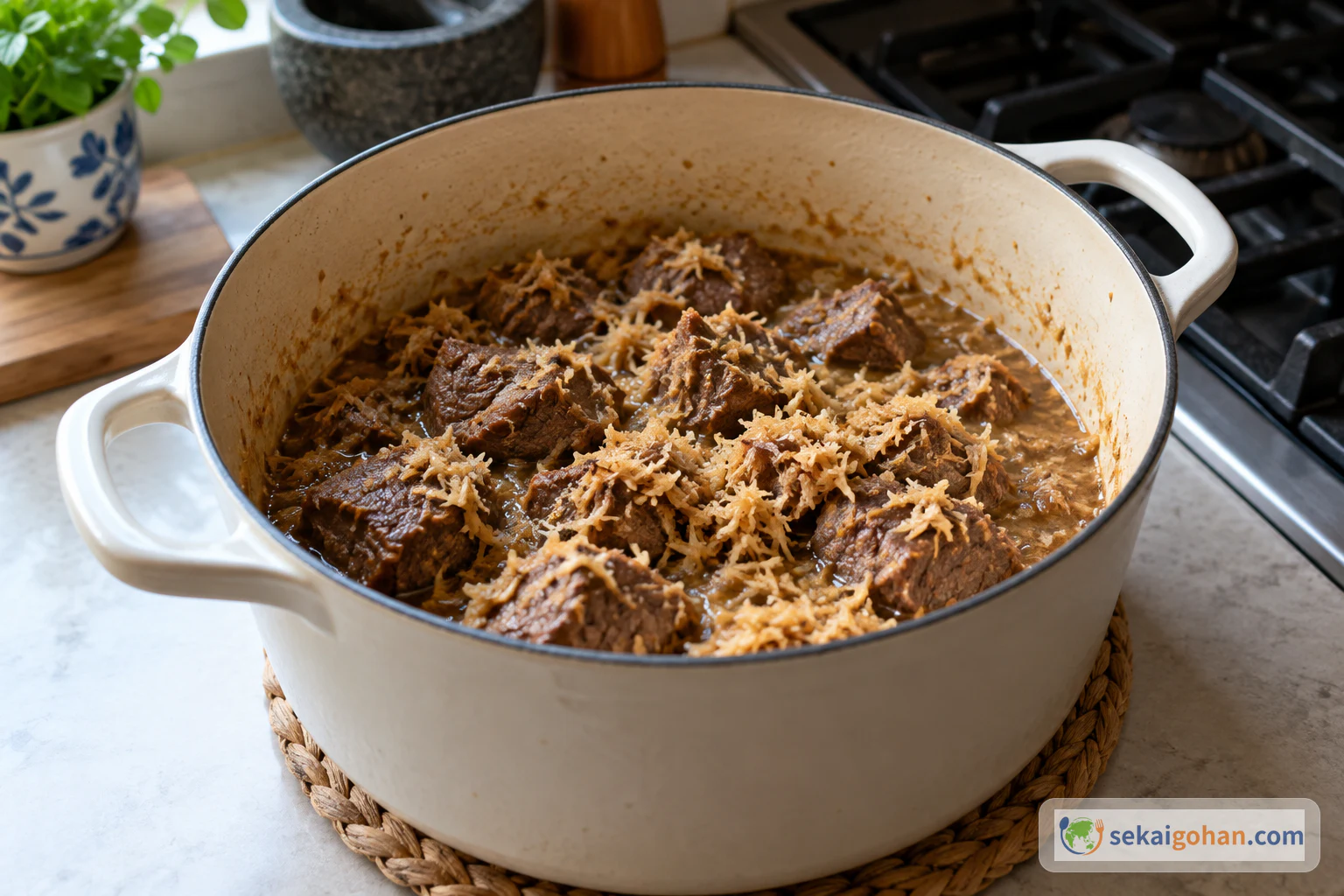
One batch of fried spice paste is split in two. Half goes into a pot with beef, grated coconut and beef stock; the other half becomes a separate sauce with thick coconut milk, curry powder and rice flour. Keep those two paths apart from start to finish.
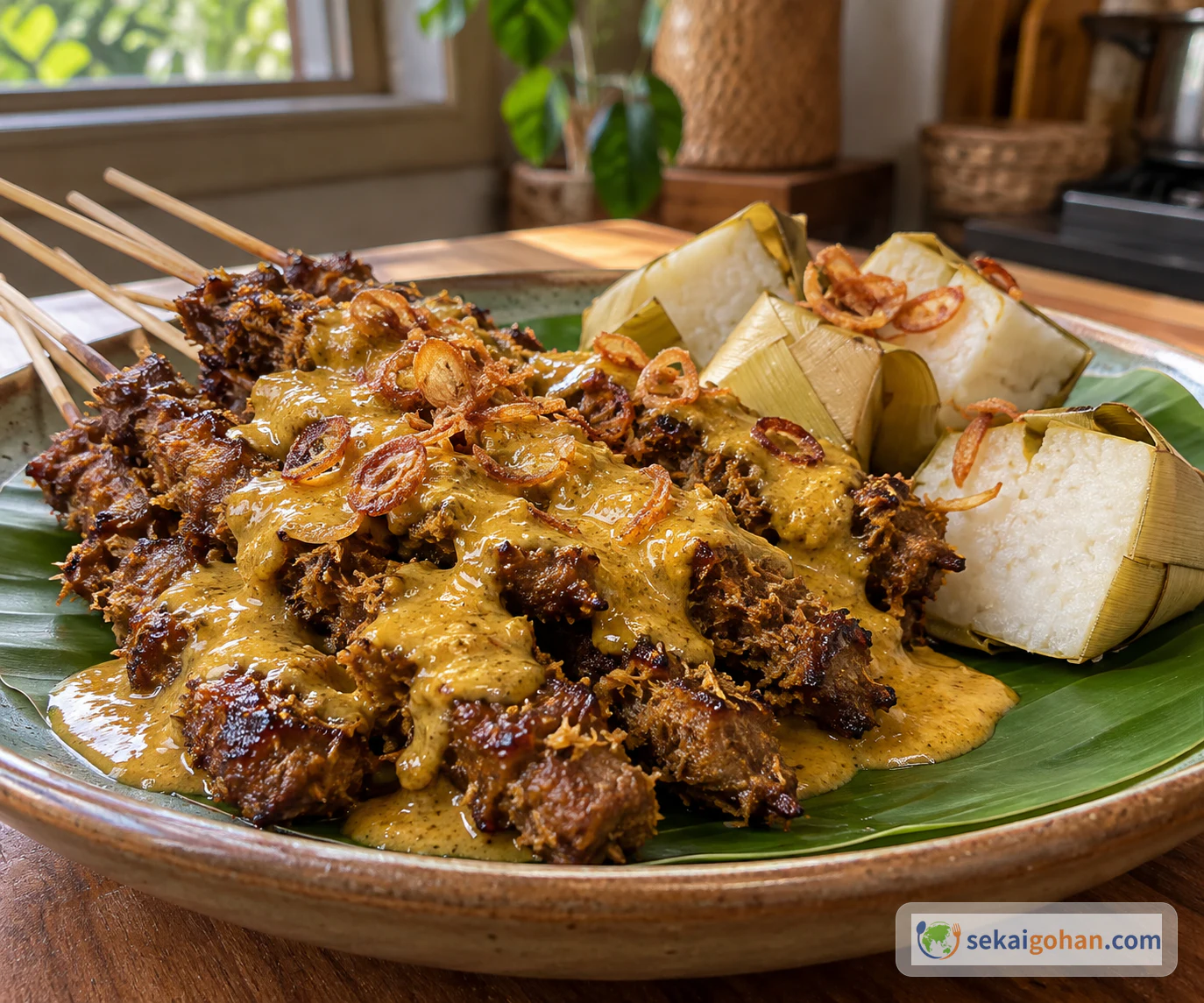
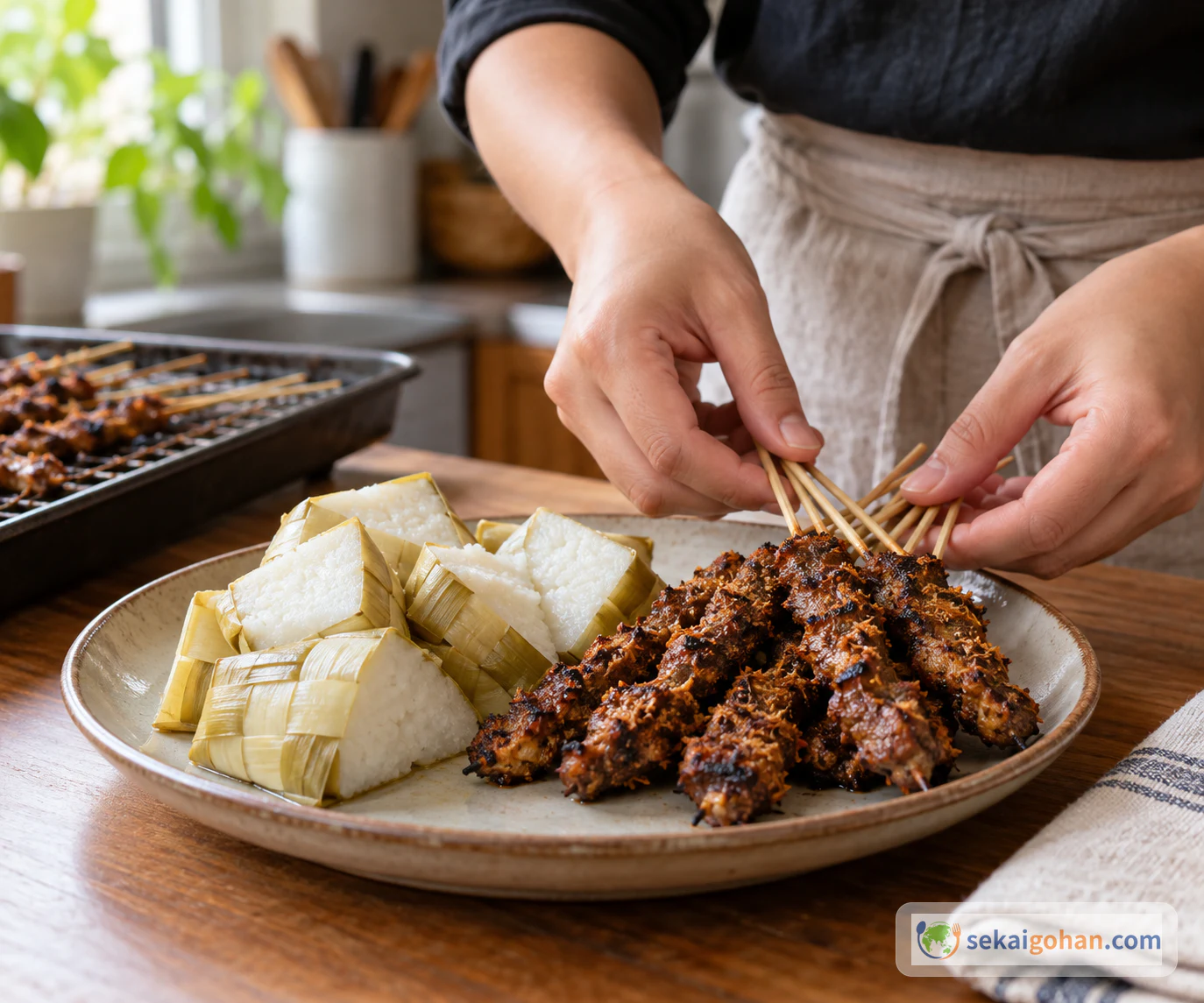
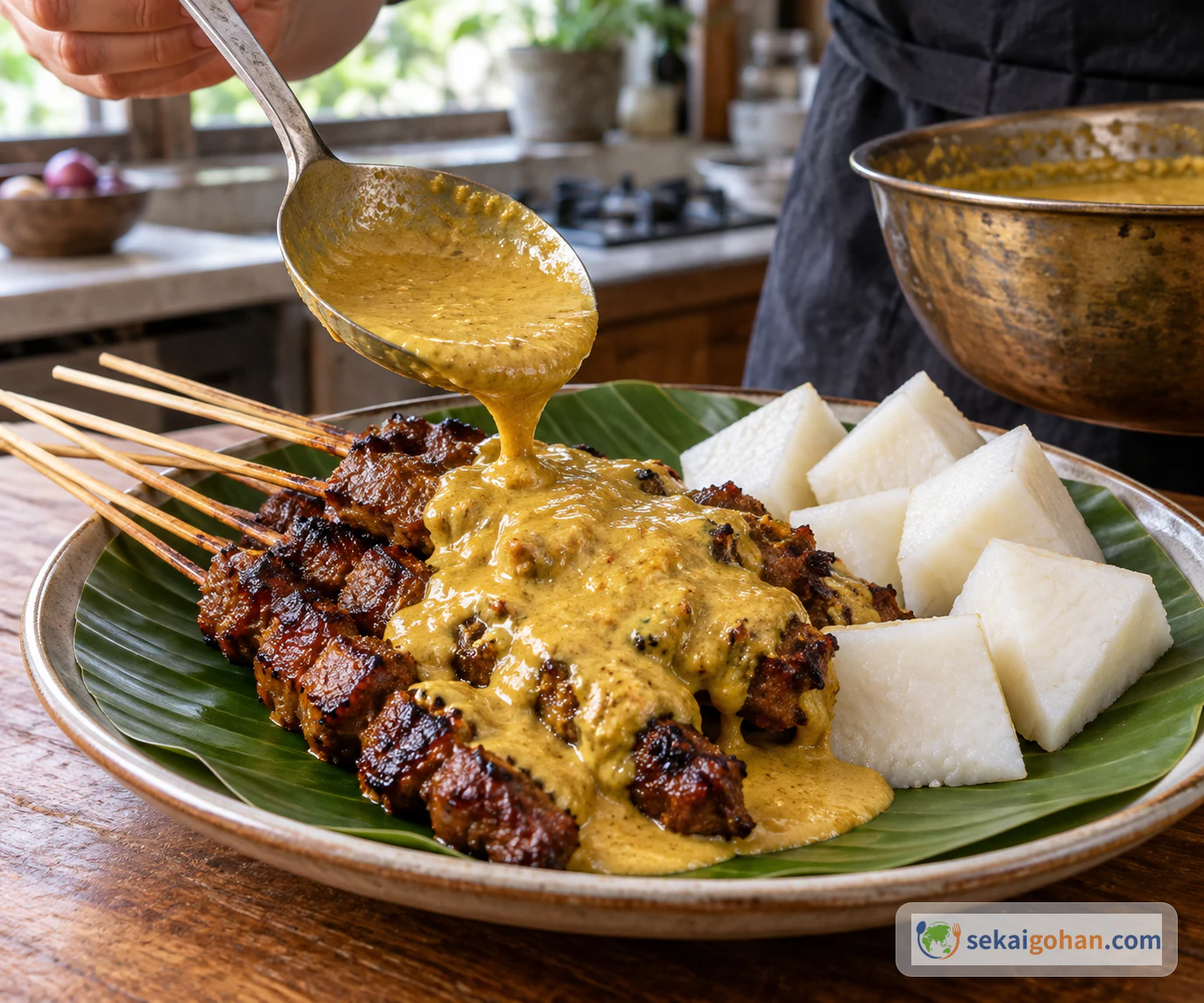
At first glance this is a plate of beef skewers with a yellow sauce. Look closer at how it is built, though, and coconut does two different jobs. Grated coconut cooks with the beef and clings to it, while coconut milk goes into a sauce made in its own pan. A single spice paste, fried once and divided in half, links the two.
The version followed here is a complete recipe published on Cookpad Indonesia by Adintifa (@adintifa) of Pekanbaru, dated 13 September 2018. It is used at its full size, without scaling and without mixing in other cooks' versions. The recipe has not been kitchen-tested by our editorial team. For more dishes from the same country, see our Indonesia page.
A Satay Introduced as Payakumbuh's Own
In a detikFood report by Sonia Basoni, published on 23 July 2022 under a headline that translates as "Not Sate Padang: This Is Sate Danguang-Danguang, a Specialty of Payakumbuh," the vendor Yumra of the Rang Kubang stall describes Danguang-Danguang satay as a Payakumbuh dish. In that interview, Yumra describes a yellow sauce and a coconut serundeng coating on the meat.
That description belongs to Yumra and the report. It is not proof of a single place of origin, an inventor or a date, and this article does not claim any of those. It also describes Yumra's own stall. The serundeng coating mentioned there is not a step in Adintifa's recipe, so the grated coconut below is not roasted first.
The Version Used Here: Adintifa's Beef and Coconut Recipe
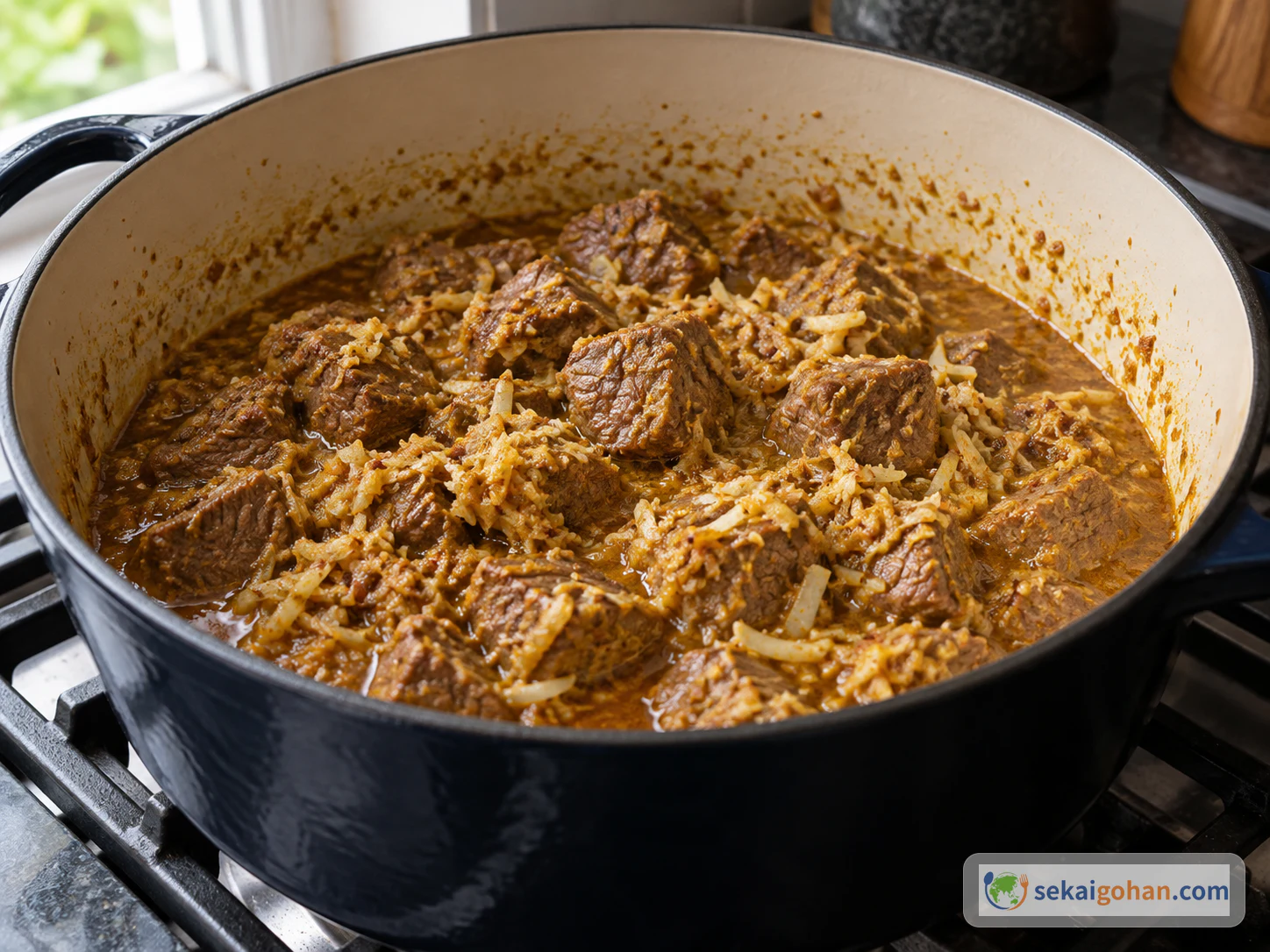
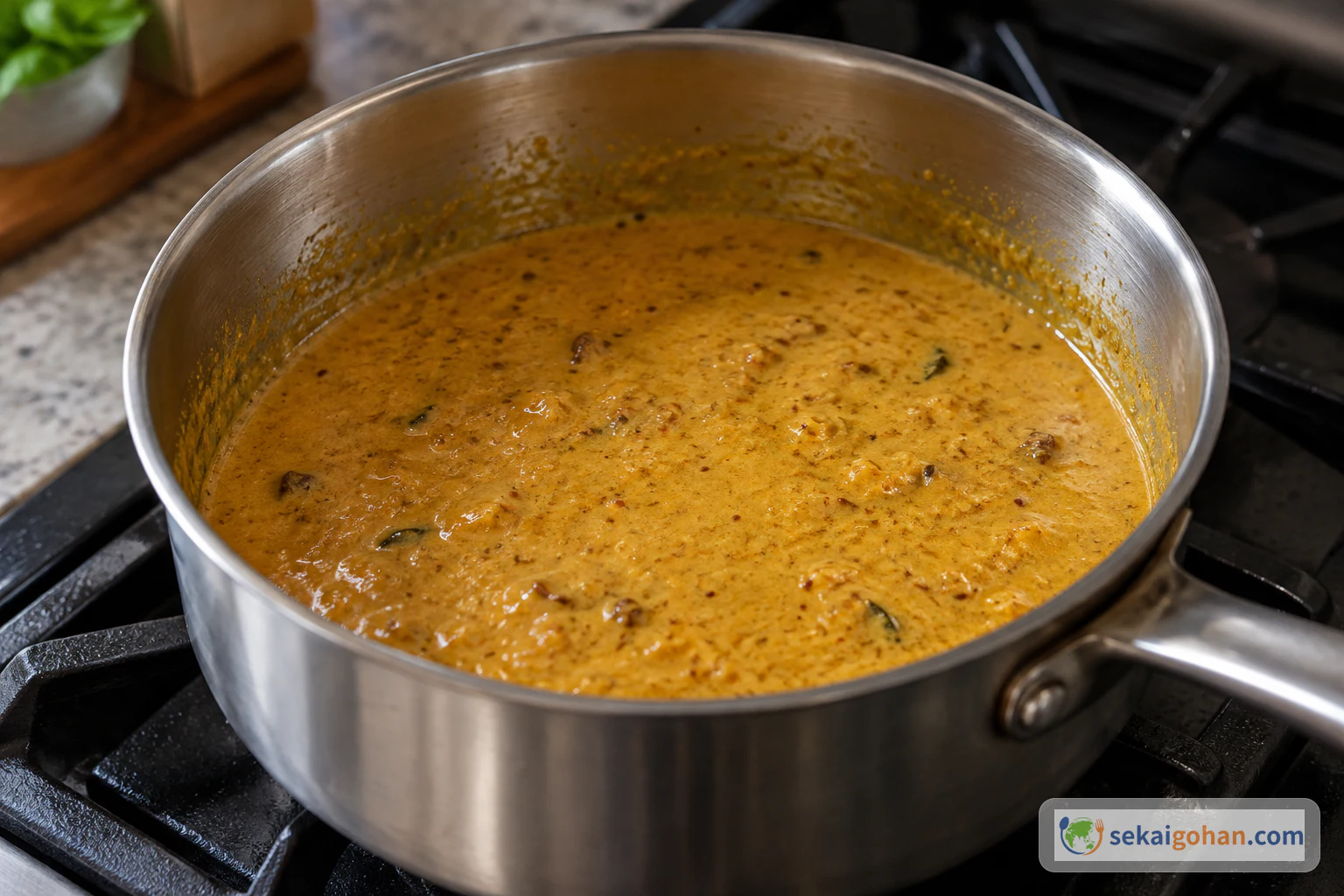
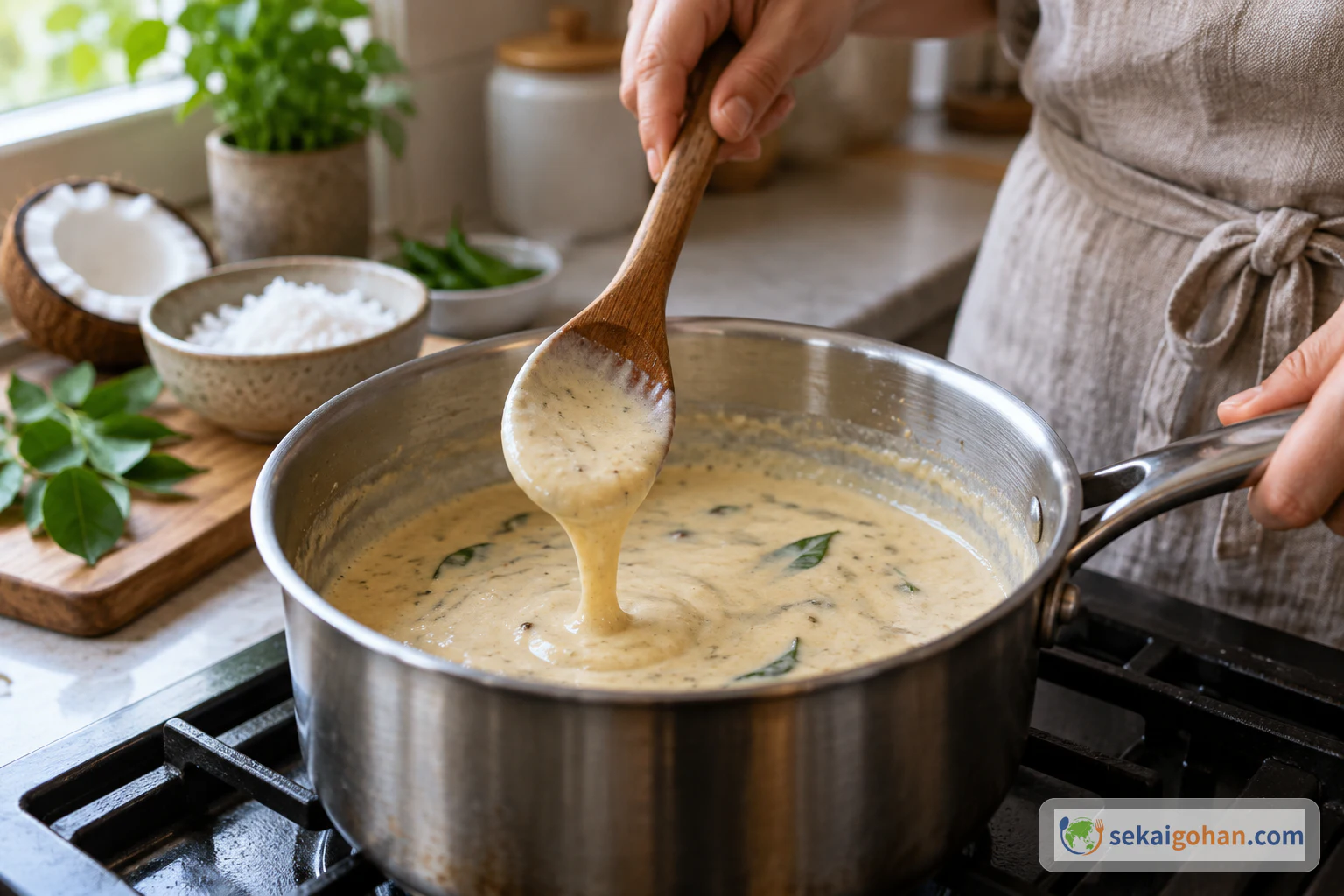
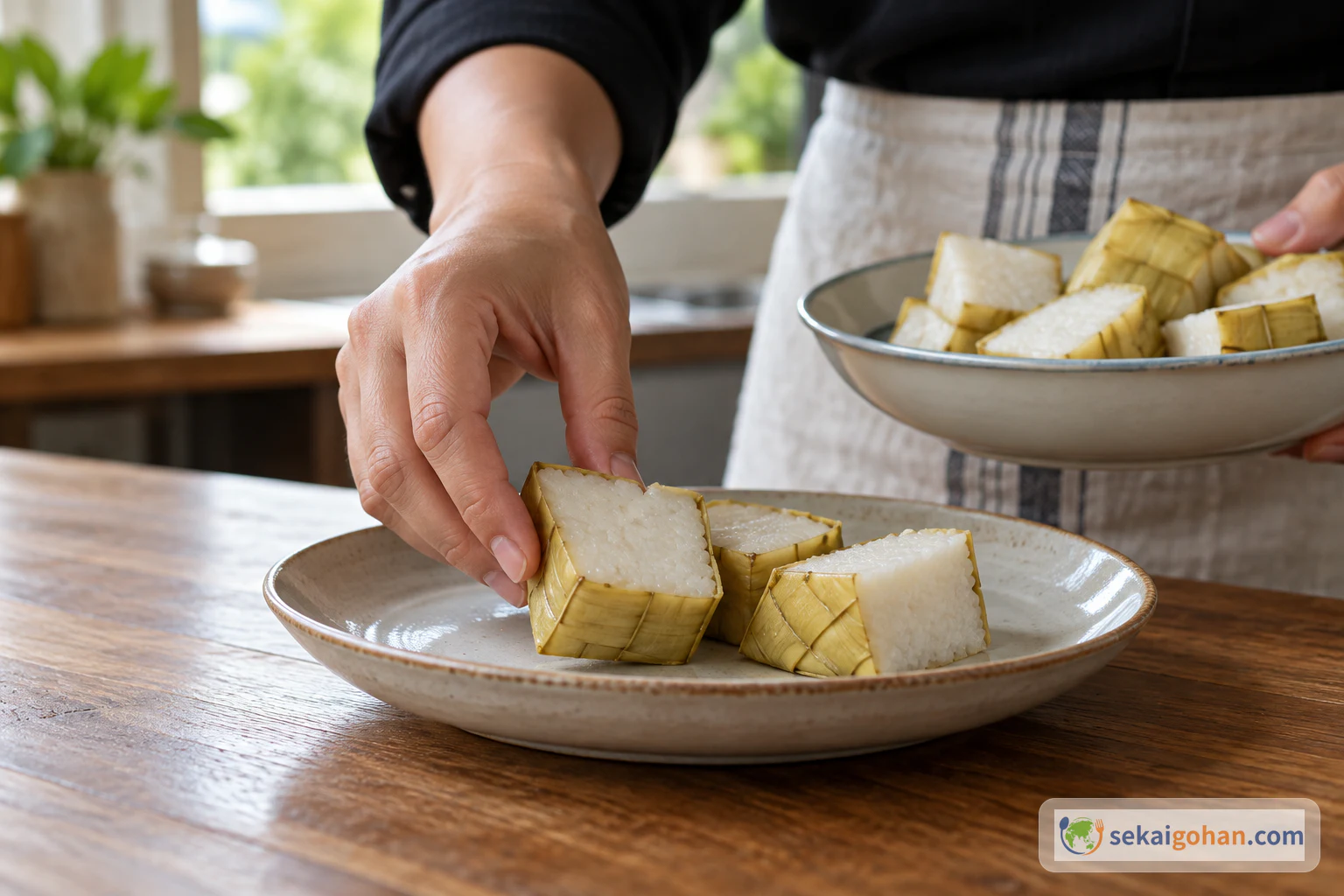
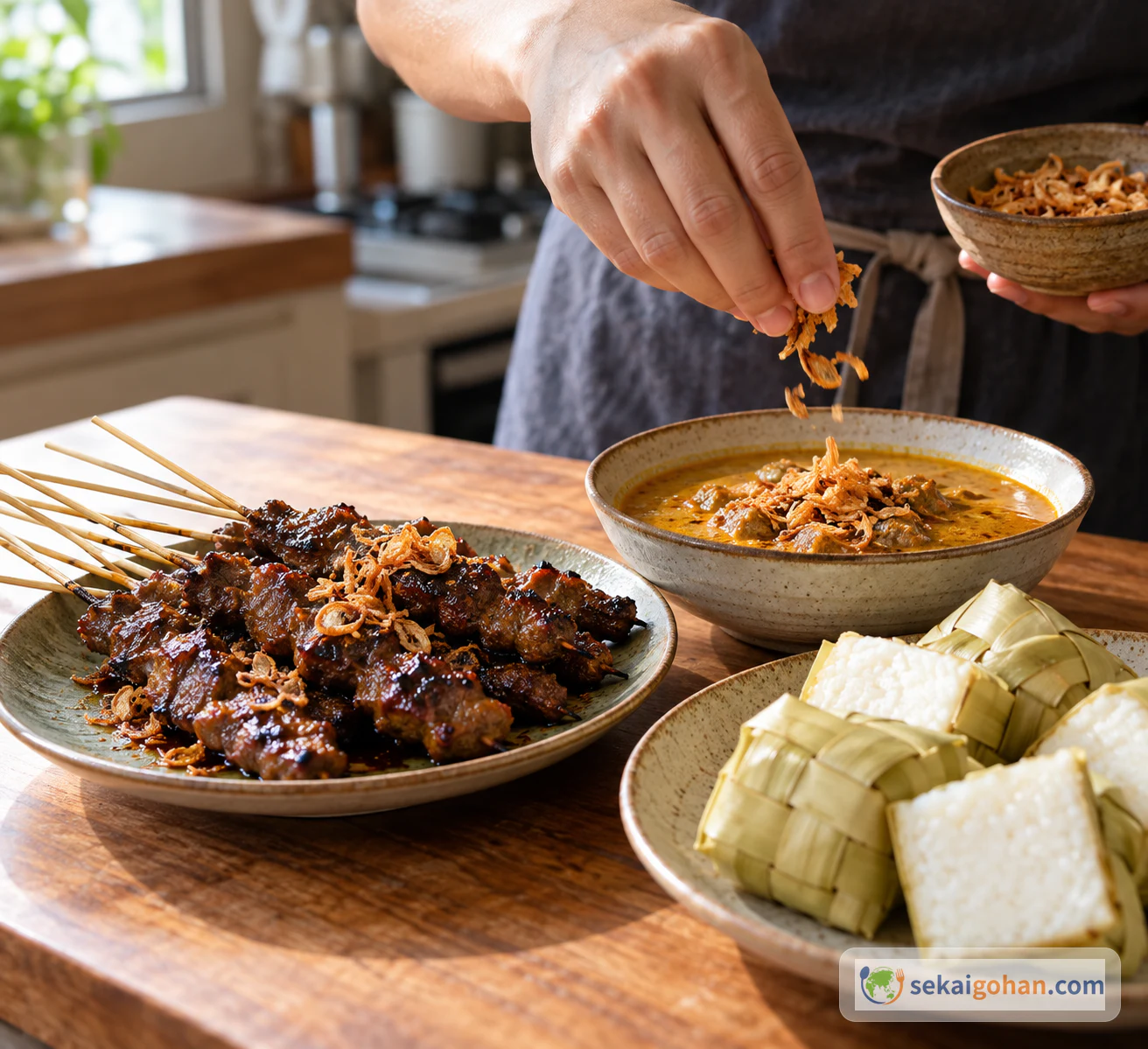
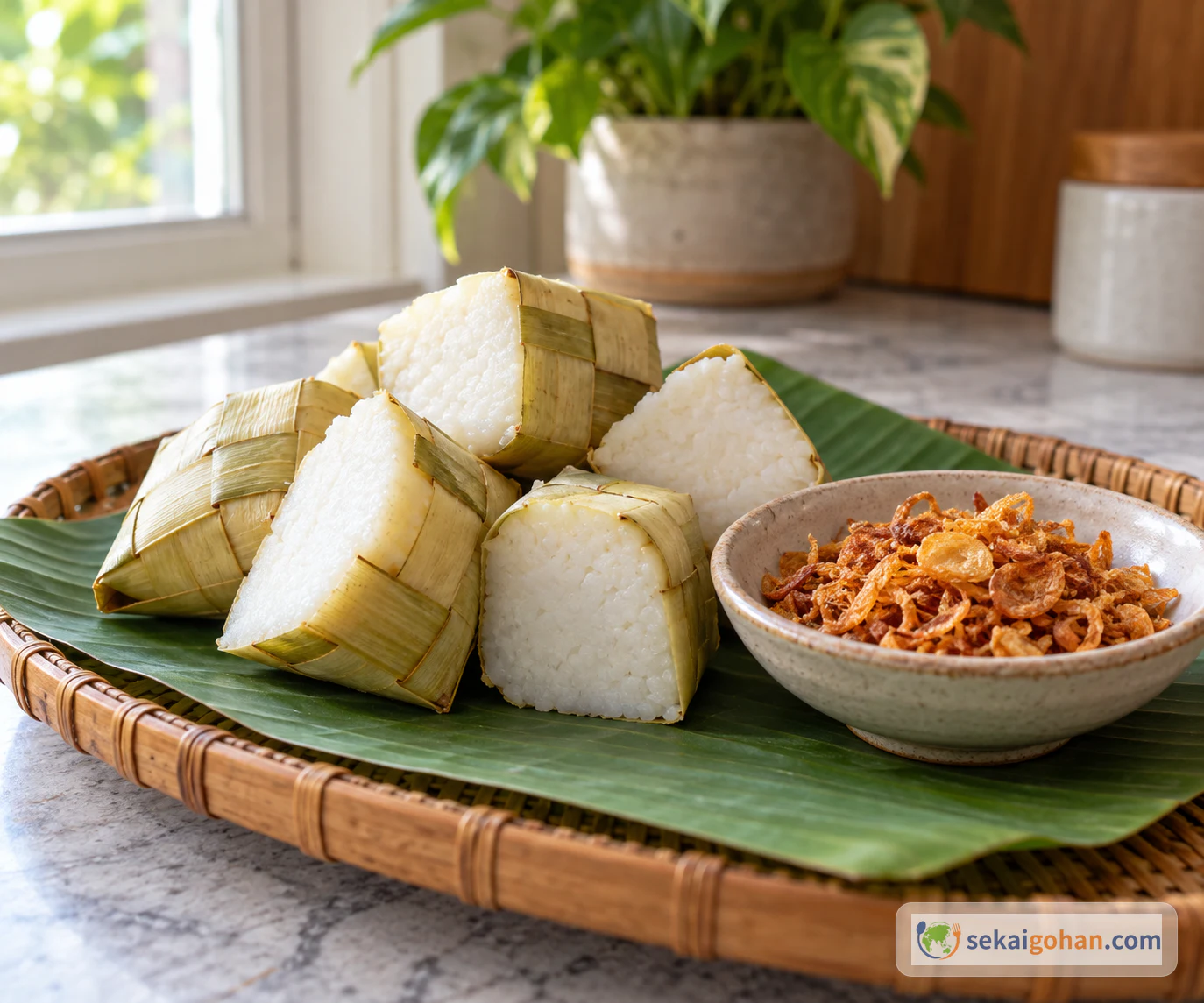
Adintifa's recipe uses 600g diced beef tenderloin, half a slightly young coconut, grated, and 700ml prepared beef stock for the meat. The separate sauce uses the remaining half of the fried spice paste with 200ml thick coconut milk, 1.5 sdm curry powder and 4 sdm rice flour. The author suggests serving it with ketupat and fried shallot. Neither has a measured amount or its own recipe, so both are treated as ready-prepared extras.
The recipe page displays 25–30 skewers, 3–4 pieces of meat per skewer, 4–5 servings and 45–60 minutes. These are the page's own display values, not our measurements, and the page does not break the time down by stage.
Sekai Gohan also has a general Sate Padang recipe. That article also uses 600g of beef, but it boils the meat in 1.2L of seasoned liquid and makes its sauce from 700ml of strained broth and rice flour. It has neither the grated-coconut meat stage nor the separate coconut-milk curry sauce, so the two recipes should not be combined.
How this version has been laid out
A few points were rearranged or interpreted for clarity. The amounts were not changed.
- Sauce ingredients are listed separately. On the recipe page, the coconut milk, curry powder and rice flour appear under the same heading as the ground spice paste (bumbu halus). The method only uses them later, in the sauce. Here they are listed as sauce ingredients so they do not end up in the grinding stone.
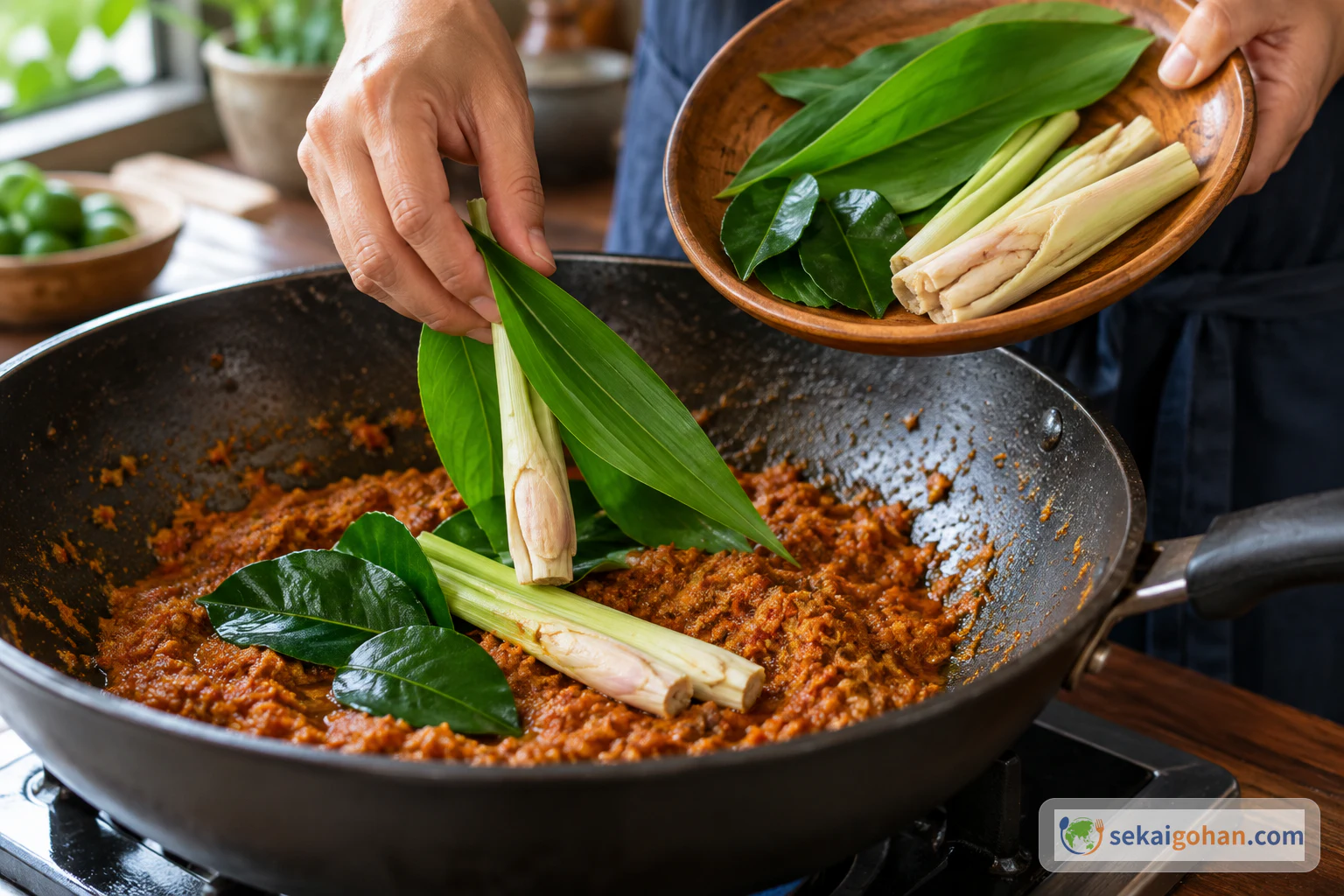
- Turmeric leaves are placed with the first aromatics. Two turmeric leaves are listed, but the method does not say when to add them, and it names lime leaves (daun jeruk) twice. As an editorial reconciliation, the two listed turmeric leaves go in with the lime leaves and lemongrass in step 4. The recipe itself does not state this placement. The leaves are not doubled and not split across two stages.
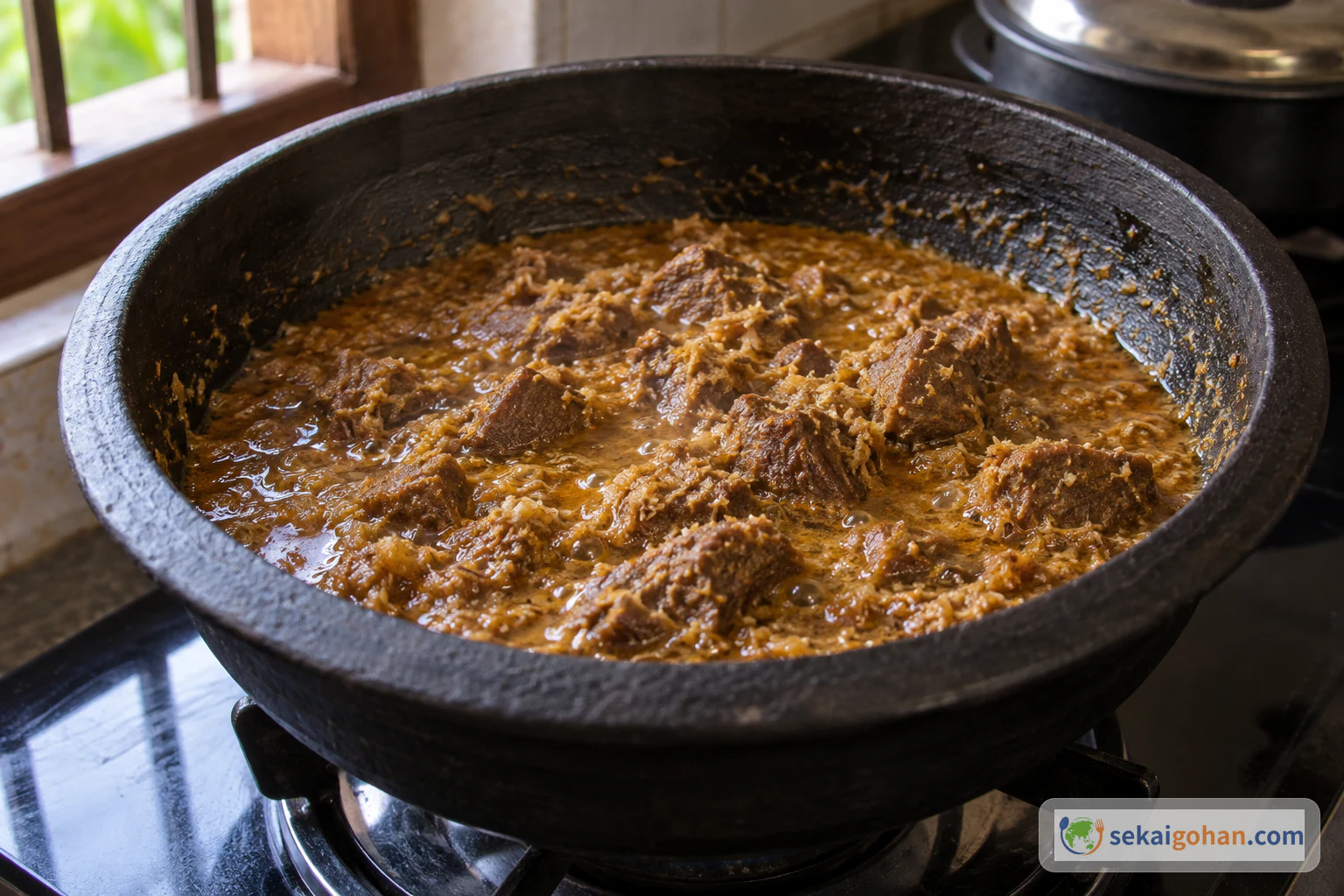
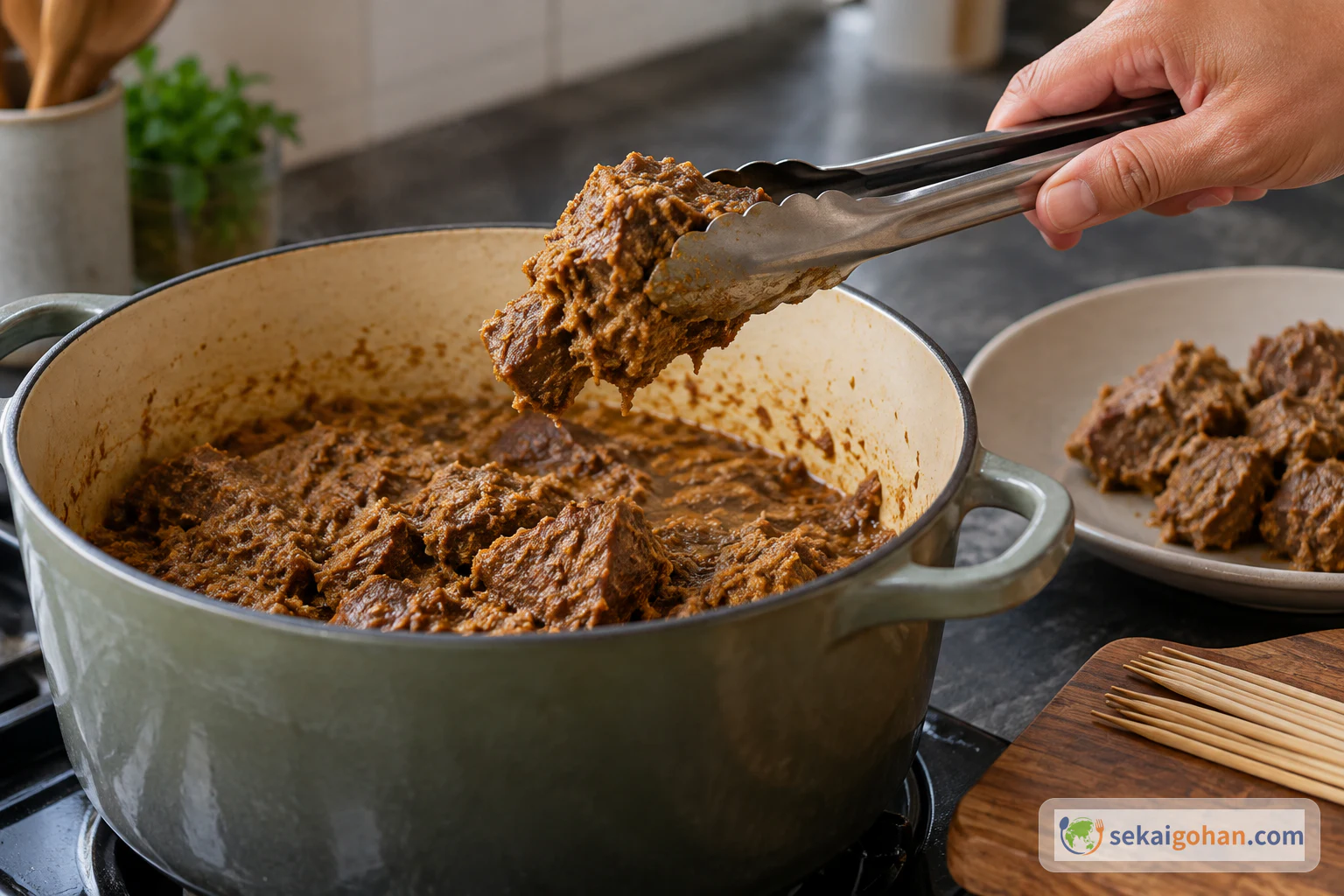
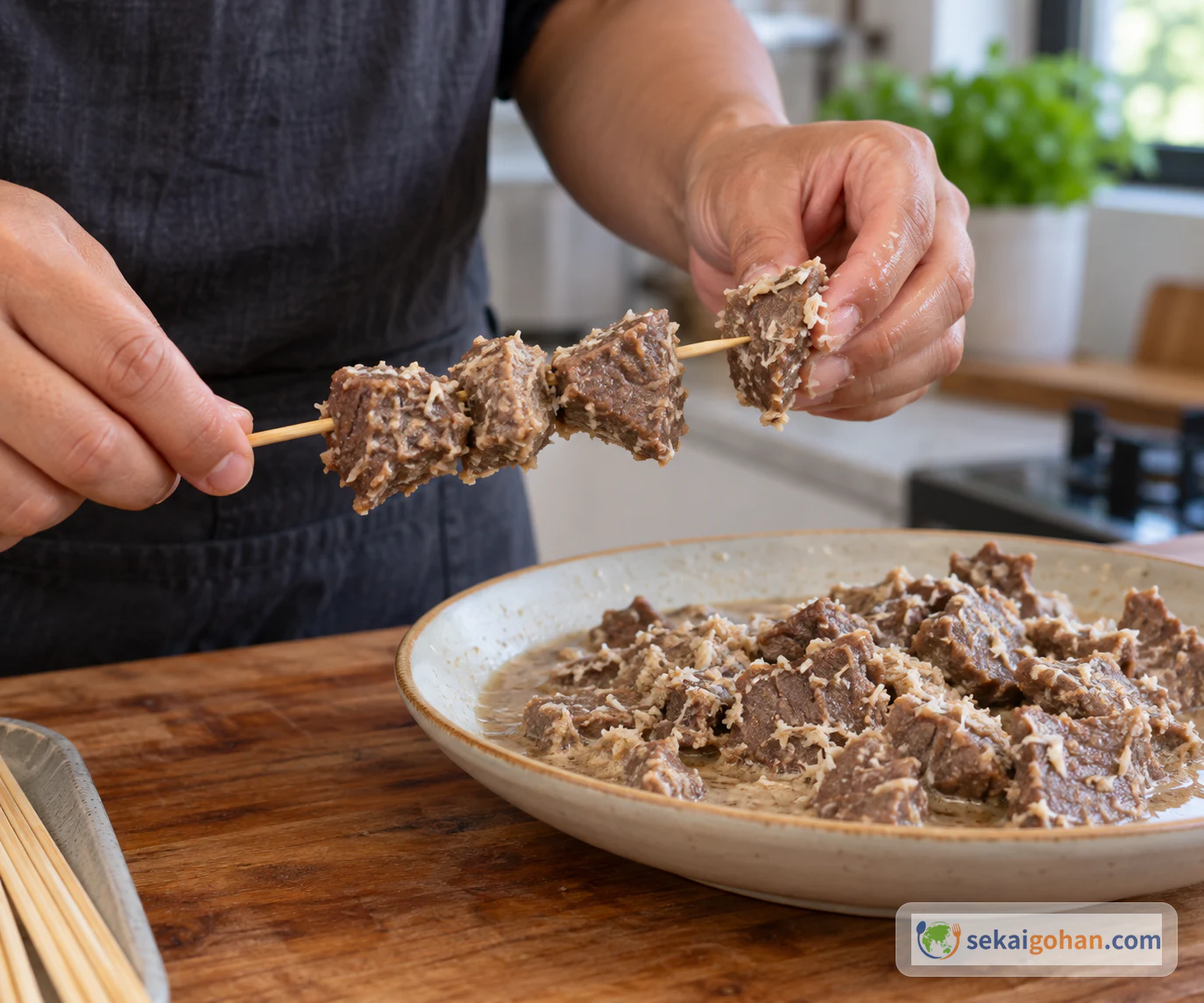
- "Angkat" is read as taking the pot off the heat. The low-heat line reads "Masak di atas api kecil, lalu angkat" ("cook over low heat, then angkat", meaning lift or remove). The phrase does not say what is lifted. We read it as moving the pot off the heat. Lifting the beef out of the pot so it can be skewered is shown as a separate editorial step in step 8.
- Spooning the sauce over the skewers is a presentation choice. The recipe has a separate sauce and suggests ketupat and fried shallot, but it does not say where to put the sauce or how much to use. The plating order in steps 14–17 is editorial.
Ingredients
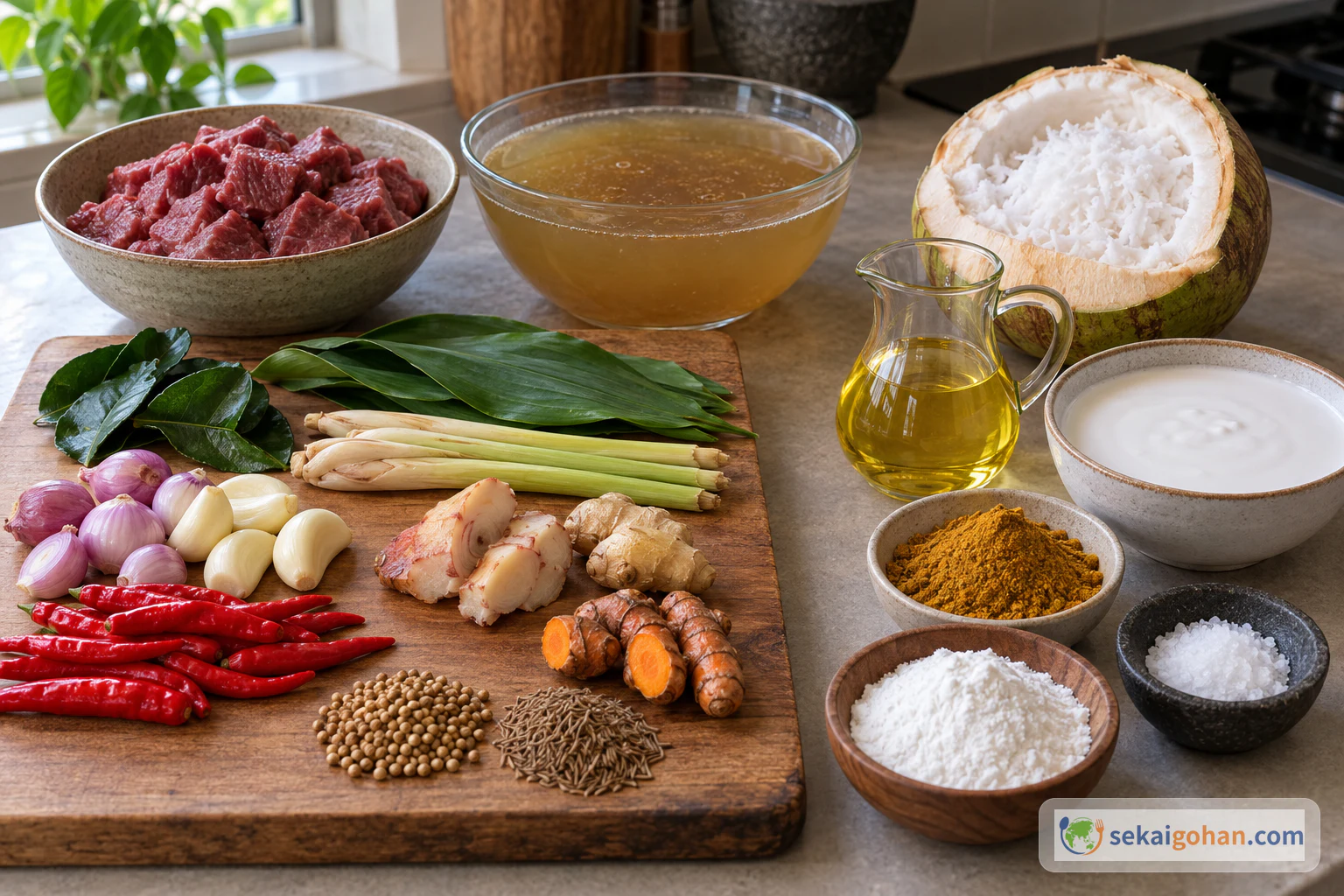
sdm = sendok makan (tablespoon); sdt = sendok teh (teaspoon).
Equipment
- Cutting board and knife
- A mortar and pestle or another way to grind the spice paste finely
- A pan for frying the paste
- Two bowls for dividing the paste
- A pot for the beef stage
- Tongs or a slotted spoon for lifting the beef
- Satay skewers
- A charcoal grill
- A separate saucepan for the sauce
- A serving plate
Choosing and Shopping: What Can and Can't Be Swapped
Use the beef cut, coconut, flour and charcoal grill as listed. Anything you change is your own untested adjustment, not part of this recipe.
- Grated young coconut: Use half a slightly young coconut. Moisture and ripeness vary, and no gram figure is set. Desiccated or fine dried coconut would be an untested change.
- Galangal, fresh turmeric root and turmeric leaves: Look for them in Southeast Asian or Asian grocers. The turmeric leaves are part of this list, and no replacement has been established.
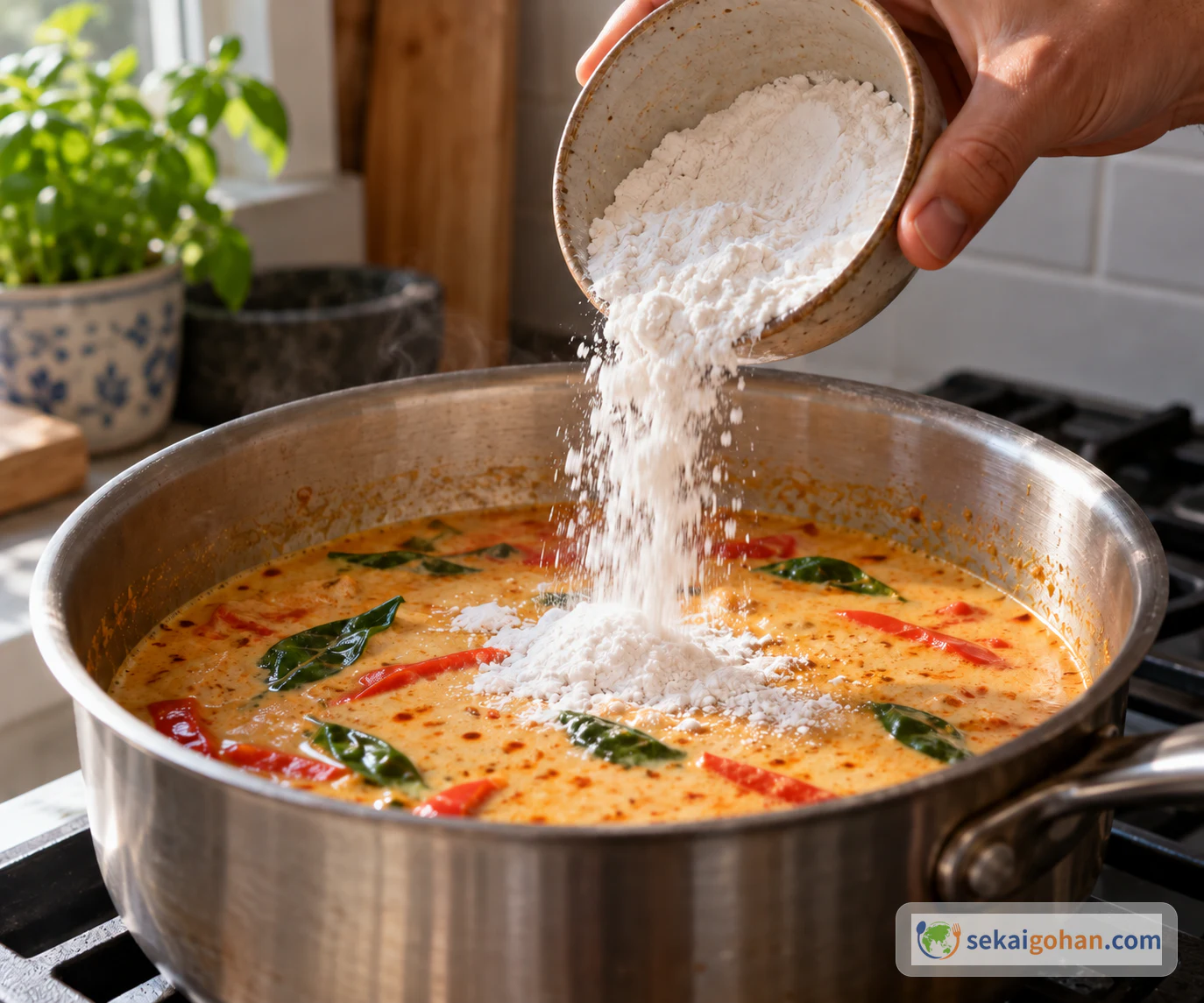
- Rice flour: Use plain rice flour. Cornstarch is a different ingredient. Add the flour directly rather than as a slurry.
- Red chilies: Choose a variety, size and heat level you are comfortable with.
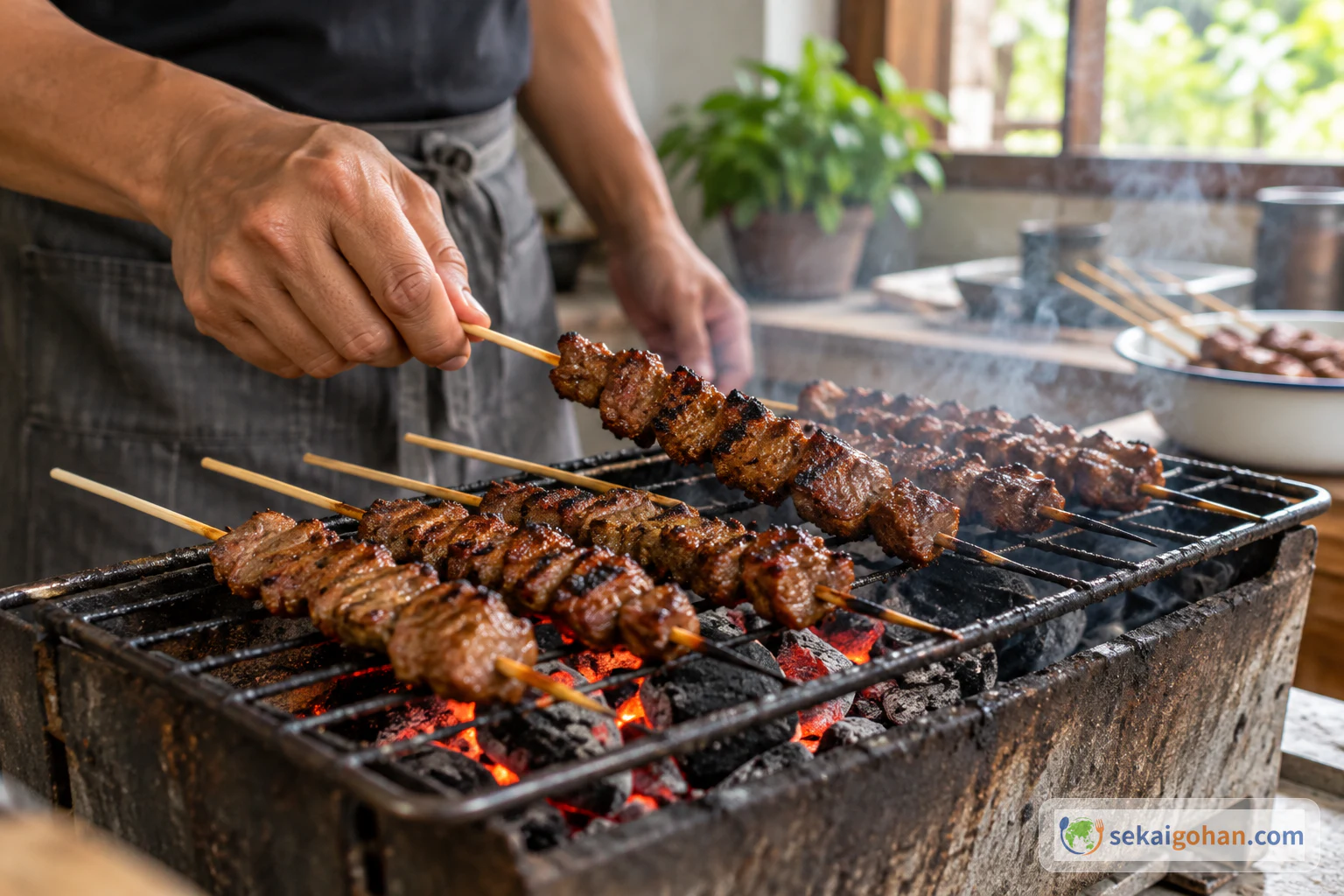
- Charcoal: Grill over charcoal and turn the skewers. A grill pan or oven is not part of this version.
Method: From One Paste to Skewers and Sauce
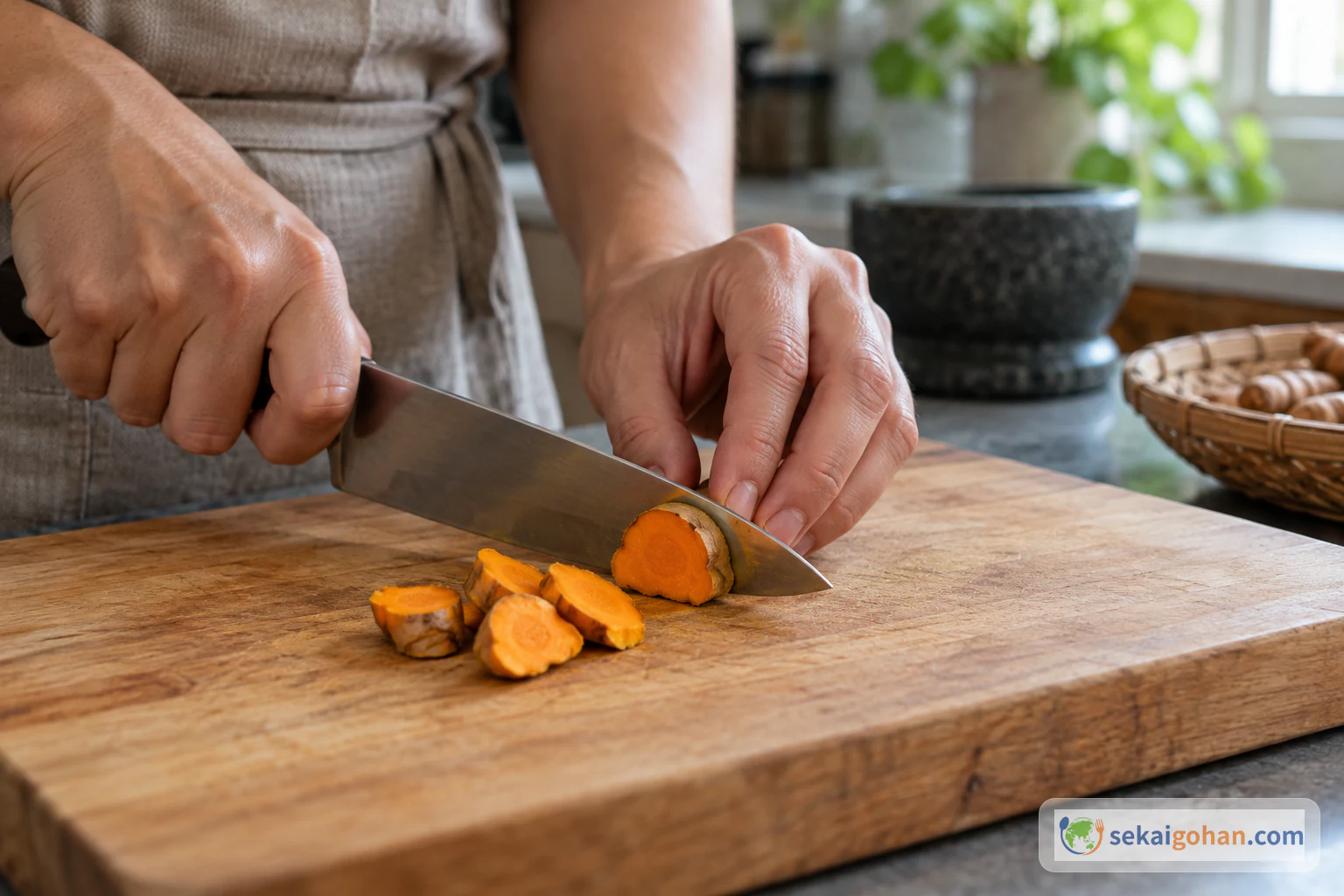
The beef path runs through steps 1–10. The sauce is made in steps 11–13, and the plate comes together in steps 14–17. Go by the description in each step rather than by the clock.
This recipe gives no cooking time, end point or temperature for the low-heat stage or the sauce. The grilling step says only to cook until the meat is done. No food-safety temperatures, storage times or reheating guidance are given here. Follow the guidance of your local food-safety authority when handling and cooking beef.
Easy Mix-Ups and How to Avoid Them
Most problems with this dish come from letting the two paths cross. Before you start cooking, check each of these.
| Mix-up | Why it matters | What to do |
|---|---|---|
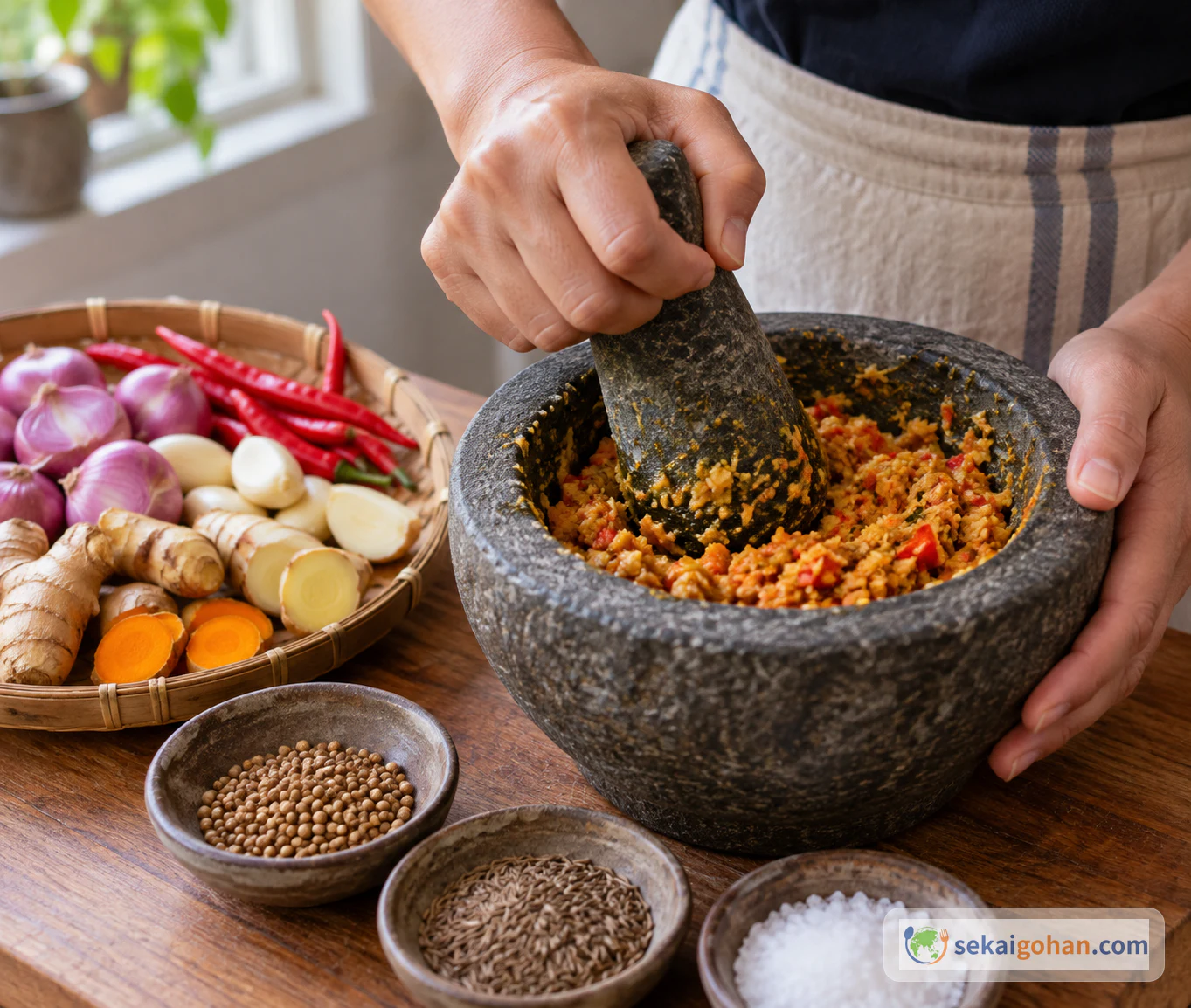
| Grinding coconut milk, curry powder or rice flour into the paste | They belong to the sauce, which is made later | Grind only the paste ingredients in step 1 and keep the sauce ingredients aside |
| Pouring the beef stock into the sauce | The 700ml stock belongs to the beef stage | Make the sauce from the paste, coconut milk, curry powder and rice flour only |
| Adding leaves twice | Lime leaves are named twice in the method | Add the 2 lime leaves and 2 turmeric leaves once, in step 4 |
| Roasting the grated coconut first | Roasting turns it into serundeng, which is a different stall's method | Add the grated coconut straight to the beef pot |
| Making a rice-flour slurry or using cornstarch | It changes the sauce method | Add the rice flour directly in step 12 and stir |
| Using a grill pan | This version is grilled over charcoal | Grill over charcoal and turn the skewers |
How Other Cooks Make It: Variations to Keep Separate
Recipes under this name vary a lot from cook to cook. These versions are useful for comparison, but none of their amounts or methods have been added to the recipe above.
- Chef Hendri Muchlis (also spelled Mucklis), "Sate Padang" blog post. Calls the dish Dangung-Dangung and uses 1kg meat, 2L water, 2 glasses of coconut milk and 25g rice flour. The meat is boiled and roasted coconut is added, but no quantity is given for the coconut, and the spice allocation and satay oil are not specified. Spelling aside, it is a different recipe.
- Ghea Raudha (Padang, 27 May 2020). Uses 500g shin or tongue, marinated overnight in the cold with papaya leaf and pineapple. The meat is then steamed for 40–60 minutes, brushed with oil and grilled, and served with a coconut sauce made with bones.
- Dina (@cook_dinakitchen, 17 July 2022). Uses 500g brisket with a 60-minute papaya stage and a 30-minute marinade. The sauce includes starch and rice flour, coconut milk, 1L water, and curry and tamarind added in split amounts. The meat is cooked on a grill pan.
Adintifa's version uses tenderloin, has no papaya or marinade stage, keeps the grated coconut unroasted, and grills over charcoal.
Frequently Asked Questions
How many grams is half a grated coconut?
The recipe gives half a slightly young coconut, not a weight, so no gram conversion is given here. The weight depends on the size of the coconut and how much moisture the flesh has.
Is the 700ml beef stock used in the sauce too?
No. In this version, all 700ml of stock goes into the pot with the beef and grated coconut. The sauce is made from the other half of the paste, the thick coconut milk, the curry powder and the rice flour.
When do the turmeric leaves go in?
They are on the ingredient list, but the method doesn't say when to add them. Placing them with the lime leaves and lemongrass in step 4 is an editorial reconciliation, not something the recipe says. The recipe also doesn't say how the leaves should be shared between the two halves of the paste.
How long should the beef cook over low heat?
The recipe gives no time or end point for the low-heat stage, and it does not say how much liquid should be left. The 45–60 minutes shown on the recipe page is not broken down by stage. No safe-doneness figure is given here, so follow your local food-safety guidance.
Does "angkat" mean lift the meat or lift the pot?
The phrase "Masak di atas api kecil, lalu angkat" doesn't say what is lifted. We read it as taking the pot off the heat. Lifting the beef out to skewer it is a separate editorial step added so the method reaches the grill.
Do I need to make the ketupat and fried shallot myself?
The author suggests them for serving but gives no amounts or recipes, so they are treated here as ready-prepared extras.
Is the sauce poured over the skewers?
The recipe has a separate sauce, but it doesn't say where to put it or how much to use. Spooning it over the skewers is how it is presented here. You could also serve it on the side.
Sources
- Adintifa (@adintifa), Pekanbaru, Sate Danguang-Danguang recipe, Cookpad Indonesia, ID 5795787, 2018-09-13. The recipe followed in this article: all ingredients and amounts, the method sequence, the low-heat line "Masak di atas api kecil, lalu angkat", the serving suggestions of ketupat and fried shallot, and the page's display of 25–30 skewers, 3–4 pieces per skewer, 4–5 servings and 45–60 minutes. https://cookpad.com/id/resep/5795787
- Sonia Basoni, "Bukan Sate Padang, Ini Sate Danguang-Danguang Khas Payakumbuh," detikFood, 2022-07-23. A report including an interview with vendor Yumra of Rang Kubang, who describes the dish as a Payakumbuh specialty with a yellow sauce and a coconut serundeng coating. Used for attributed regional context only; it is not a measured recipe. https://food.detik.com/berita-boga/d-6194947/bukan-sate-padang-ini-sate-danguang-danguang-khas-payakumbuh
- Chef Hendri Muchlis (Mucklis), "Sate Padang," personal blog. A separate recipe that uses the spelling Dangung-Dangung, with boiled meat, roasted coconut, a coconut-milk and rice-flour sauce, and grilled skewers. Some quantities are missing. Used for comparison only. https://chefhendrimuchlis.blogspot.com/2010/03/sate-padang.html
- Ghea Raudha, alternate Danguang-Danguang recipe, Cookpad Indonesia, ID 12674950, 2020-05-27. Shin or tongue with a papaya-leaf and pineapple overnight marinade, steaming, oil brushing and grilling, and a coconut sauce made with bones. Used for comparison only. https://cookpad.com/id/resep/12674950
- Dina (@cook_dinakitchen), Sate Danguang-Danguang alternate recipe, Cookpad Indonesia, ID 16376513, 2022-07-17. Brisket with papaya and a marinade, a starch and rice-flour sauce with coconut milk, curry and tamarind, and a grill pan. Used for comparison only. https://cookpad.com/id/resep/16376513